Not Really

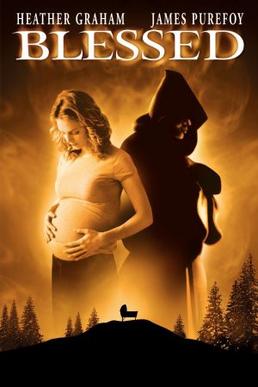
Some horror films just have trouble finding their way.  Blessed is one such movie.  The writing is one problem.  The misunderstanding of religion is an even larger issue.  Samantha and her novelist husband Craig can’t have children.  When he gets a large advance for his first book (dream on) they visit a fertility clinic in upstate New York where Samantha becomes pregnant with twins.  The lake scenery in a light winter (actually in Romania) is the best part of the film.  It’s quite evocative.  The clinic, in any case, shares facilities with a cloning company.  And Craig gets introduced to a tycoon who works in multiple industries, including publishing and, hmm, cloning.  As Samantha grows visibly more pregnant Craig becomes more focused on his writing, neglecting her and visiting the tycoon in the city whenever he can.  It’s implied that they have an understanding, but that doesn’t hold with the ending.

An Italian priest starts to warn Samantha about the evil at the clinic.  Not only that, but the tycoon tells her about his fascination with saints, including Ambrose who killed an angel—Lucifer—whose blood was sealed in a vial recently stolen from the monastery in which it was kept, as per the Italian priest.  That blood made its way to the cloning clinic and so, yes, Rosemary, Samantha’s carrying twin children of the devil.  The priest kidnaps Samantha and prays with her, insisting that she take poison to banish the evil.  He then tries to burn her to death and he also drives into the clinic and sets it on fire.  Samantha survives the fire and her twin girls kill another child at a Halloween party a few years later in Manhattan.

This is one of those movies that tried to improve on Rosemary’s Baby and although some of it is eerie, it’s not really scary and many elements are simply dropped or stuck in for no apparent reason.  The novelty was twin Antichrists who were both girls.  They, like Adrian, appear only late in the movie and the visual cues for what is happening are off.  It’s an interesting attempt to bring science and religion together in horror, but it has trouble understanding the religion it represents.  Quite often in horror, and perhaps other genres, a veneer of religion is used without any kind of research into what any tradition actually believes and/or does.  The, presumably, Catholicism here is strange.  There maybe a scene with the Bible, so I’ll add it to Holy Sequel, in the maybe category.


Class Privilege

A recent article in the New York Times explores something many of us know from experience: your hopes of getting tenure in higher education plummet if you’re from the working class.  One of the causes the article points out (I think I can gift it, if anyone wants to read it), is that working class folks don’t learn networking from their parents.  That was like a lightbulb being switched on.  Schmoozing is so essential when dealing with anyone in power.  I started to learn this at Nashotah House.  My mother taught me always to be honest and forthright.  Employers have walked all over me ever since.  I never learned to schmooze well.  I still don’t do it.  Until reading this article, in my sixties, I didn’t realize that my academic career was doomed from the start.

It’s like this: neither of my parents finished high school.  I grew up poor and working class.  My grades were great throughout high school and college and I was being groomed to be a minister, not an academic.  But I felt the call of academia as soon as I’d acclimated to Grove City College.  I love reading and learning.  I have innate curiosity.  I question everything.  This seems to fit teaching better than preaching.  Before settling on a doctoral institution, I asked my professors where I should go.  Their advice: Europe.  Bad mistake for pre-internet days and a kid who knew nothing about networking.  Edinburgh is a world-class research university.  Its only real connection (at the time) to US schools was Princeton.  Particularly Princeton Seminary, if your degree was from New College.  Otherwise, the professors didn’t pay much mind to American higher education.  Networking, which I didn’t realize you needed to do, wasn’t emphasized or encouraged.

I was hired by Nashotah House because of two factors: they could find nobody else, and I was Episcopalian.  The chances of networking while at a remote, conservative campus in the woods were nil.  I went to conferences, but Ugaritology was a very small field.  I remained an unknown.  I wondered how my friends, if they ran into unemployment situations, always managed to find other jobs.  They knew, apparently, something I did not.  Networking.  Even getting into publishing was rocky for me.  I had two editorial posts for two years only.  I didn’t network or schmooze.  Authors loved me because I was honest and forthright.  Those are working class values.  And, it seems, they will be deficits to advancing in your career.  Be careful before deciding on a doctorate.  It can backfire unless your parents went to college and taught you what to do.


Haunting the House

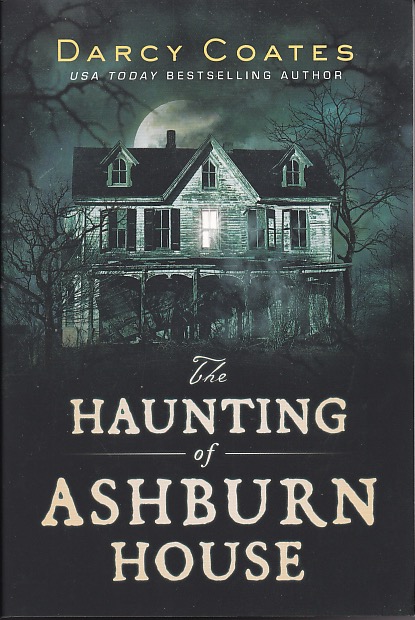
Although it starts off a little slowly, the premise of The Haunting of Ashburn House keeps you reading.  I don’t mind taking the time for a story to unfold.  I know many people want action to draw them in, but I’ve been reading about quiet horror and since it often takes its time, I know to appreciate it.  I’ve not read Darcy Coates before, but as this tale unspooled itself it grew gripping.  Even before the action took off, the situation was intriguing enough to draw me in.  I do quite like a haunted house story.  So, Adrienne has inherited a big old house from a great aunt she only vaguely remembers meeting once as a child.  A writer a bit down on her luck, she’s glad to have a place to live, but she knows nothing of the recently deceased relative who lived there.

Ipson, the town outside of which Ashburn House sits, is peopled with citizens who remember, often incorrectly, the tragedy that took place in Ashburn decades ago.  An entire family, apart from a young daughter, had been slaughtered there.  The daughter, sent to a foster family, returned as an adult to care for the house.  It has many secrets.  The people have been kept away from the house during the aunt’s long life alone there.  Adrienne arrives with little money and no acquaintances, and no knowledge of the history of the house.  She soon discovers that it’s haunted.  Not one to believe in ghosts, it takes some time to convince herself that the occurrences are supernatural.  Once that’s confirmed in a very stark way, much of the rest of the novel unfolds over the course of another day and night.

I don’t remember where I learned of this novel, but I do recall it was on a list of gothic literature.  Indeed, it is gothic.  And it’s a horror story.  The monster—“ghost” is a bit mild—has to be explained, but it fits within the context.  These days to make horror stories work you need to isolate protagonists from phones or “signal.”  Putting Adrienne in a small town, in a house with no wifi, and even partially without electricity, serves this end quite well.  Making her more or less penniless raises a bit of anxiety—such things can happen far too easily in real life.  The story is nevertheless well told and once the monster attacks it becomes difficult to put down.  I don’t remember where I learned about The Haunting of Ashburn House, but I’m glad that I did.


Wooly Sleuthing

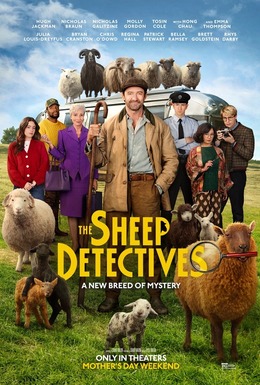
The Sheep Detectives is a family-friendly movie (for the most part) and a sweet story.  I’ll try not to reveal whodunit.  George is a vegetarian shepherd.  He raises sheep for wool, not meat.  He lives just outside the small village of Denbrook, in England.  One night he’s murdered.  The local policeman (singular) doesn’t seem very bright and has to be shown that it’s murder.  The sheep, who loved George, decide to investigate.  (The sheep talk, among themselves.)  George used to read them detective novels in the evening, so they get quite good at deducting things.  Led by Lily they investigate.

One day the sheep head to town.  They can roam freely with nobody suspecting them.  They initially decide on the wrong suspect.  They help the detective come up with a method of investigating by leaving hints for him.  Lily was George’s smartest sheep.  Sebastian is the most world-wise.  And Mopple is the sheep who never forgets anything.  As Sebastian leads Lily and Mopple into the churchyard for the first time, they have the following conversation:

Sebastian: This is the church, where someone named God lives.

Lily: Who’s God?

Sebastian: It’s a bit confusing, God is a shepherd.

Mopple: So he could be our shepherd?

Sebastian: No. Because he’s also a lamb.

Lily: What?

Sebastian: And he’s also invisible. And he’s made of bread. And he damns things.

Lily: Dams things? Like a beaver?

Sebastian: Yes.

Lily: So God is a big invisible lamb beaver, made of… bread?

Sebastian: Yes. And they eat him on Sundays.

The movie is a comedy, of course, but this passage should be exegeted.  Many people believe God lives in churches.  The 23rd Psalm is invoked (“the Lord is my shepherd”), but is complicated by Jesus—the lamb of God.  Of course, God can’t be seen and is therefore invisible.  Made of bread?  Communion, of course.  And the homonymous nature of “damn/dam,” which confuses kids, lead to the conclusion that God might be like a beaver.  This is a fair bit of theological humor for a lighthearted movie.  

The film was based on a novel, written originally in German, but I’m tempted to read it to see if this conversation comes from the book.  In any case, the movie is about acceptance and finding your place in the flock.  And learning not to be mindlessly led to your slaughter—one of the darker themes in the story.  I even enjoyed the good-natured use of “vegetarian” intended as slander.  A fun movie that leaves you with green pastures, it seems to me.  And a message worth considering.


Beautiful Nature

When it comes to gardening, my philosophy is to let nature add the beauty where I lack the artifice.  Repeating patterns please the eye and sometimes unplanted “weeds” form a pleasing patchwork of ground cover, as long as they don’t get too high.  I trust nature to be beautiful in its own time.  There are some places, many actually, were the beauty simply shines.  The best we can do as humans is to try to imitate it.  We all know of scenic overlooks, scenic by-ways, scenic attractions.  When I was young I flattered myself at being handy with a pencil.  I still love to draw, but my years of neglect in favor of words has left whatever skill I had depleted.  Or rusty from disuse.  Our artificial lives (9-2-5, 9-2-5, 9-2-5) prevent much time from being spread between various forms of self-expression.  But I appreciate beauty.

The more academic among us with call it aesthetics.  I tend to think of it in Faustian terms.  I remember well learning in high school that should Faust ever say, “verweile doch, du bist so schön” (remain, you are so beautiful) Mephistopheles will have won.  There are many moments in my life when beauty nearly overwhelms.  As humans, however, we know that should we see it every day it will become prosaic.  We’ll feel the need to find something even more sublime.  Such things lead to concepts of Heaven.  That certainly isn’t the case for my front garden.  Time to spend weeding is about as rare as time to spend drawing, particularly, for the former, when it’s not raining, or too hot, or when a weekend is otherwise not too busy.

We’re nearing the end of the growing season.  The melancholy beauty of autumn is the most poignant turning point in the year.  My mind tends to go to extremes, so when I have to bundle up a little to start my morning jog I begin to worry about heating bills and being chilly until next May.  I’m not one to wish away any season, however.  There’s beauty in the abundance of summer, just as there is in the bleakness of winter.  At a recent art show I was once again reminded that I’m most attracted to painting that capture the essence of autumn or winter.  That hint of snow on the ground under clear blue skies, announcing that change is coming—that too is beauty.  I still have to harvest the weeds that got out of control these last few weeks, looking for the beauty in their persistent existence.


Who’s Calling?

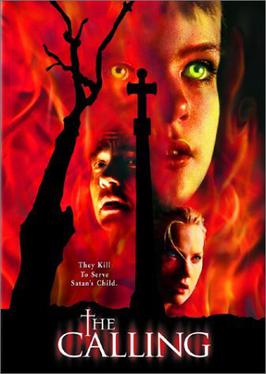
I learned of this movie from Victoria Jaye’s Hell, Horror and Despair.  (She discusses several movies that I’d missed.)  The Calling immediately went into Holy Sequel.  Not because it was a great movie, but because it uses the Bible.  Indeed, it begins with a quote from “Revelations”—the plural is always a sign that someone hasn’t done their homework—and concerns the birth of the Antichrist.  It goes down like this: a young American woman falls in love with a wealthy British television personality and they get married on the Isle of Man.  She gets pregnant on their wedding  night, the same day a young boy is murdered.  As their son grows, he excels at speaking backwards and has an ability to harm others he dislikes without touching them.  And he’s cruel to animals.  Kristie, the mother, is sent away on business to London a lot so the boy, Dylan, is left with her husband Marc.

Kristie notices that Dylan is very close to Marc and she is being excluded from the family.  On her way home after missing Christmas with her family—when Marc crucified Dylan upside-down to prepare him—the taxi driver starts to reveal that Dylan’s father is Satan, not Marc.  Kristie thinks he’s crazy but soon learns her best friend was murdered while she was away.  (Man is an island with a population well below 100,000.)  She begins to suspect something’s not right.  By discovering a piece of another Bible—this is so Holy Horror!—from the taxi driver, she learns that Dylan is not what he seems.  The taxi driver convinces her to kidnap and drown this son of Satan before he becomes the Antichrist.  A spoiler follows.

When she emerges from the Irish Sea after drowning Dylan, Marc shoots Kristie.  In the hospital (she survives) she tells the story to a priest.  Then on television they see that Dylan, three days after his death, and not coincidentally Easter Sunday, is resurrected.  The news tells of how both the Pope and Archbishop of Canterbury are becoming convinced Dylan may be the second coming of Christ, but Kristie flees with the priest as they know he’s the Antichrist.  Now, this isn’t a great movie.  It came out just at the millennium, capitalizing, as Jaye suggests, on the end of the world mania.  Nevertheless, despite the poor acting and inexplicable elements (a parish priest willing to miss Easter Sunday mass to sit with a possibly insane woman in the hospital?) it is a very good example of the way the Bible appears in horror.  I should’ve watched it years ago.


Walking Thoughts

Once, on a rare day off work, I decided to take a long walk.  One of the places to do this in the Lehigh Valley is the Saucon Rail Trail.  At the moment it doesn’t quite reach Bethlehem, so if you start from that end, you go south.  I noticed something on my long walk.  On the northern end of the trail there are informational signs.  One of the favorites that I spotted is this one, on dinosaurs of the Saucon Valley.  Some of the others are town names and commemorations of the rail stations that are no longer there.  There’s one of these in Hellertown and another in Bingen.  Educational signs are one of the simple pleasures in life.  It was a long walk, however, and I was just getting started.  The trail skirts along some wealthy properties.  During the fall, these often display right-leaning signs and banners.  As you head in that direction, the educational signs disappear.

More “private property” signs show up.  If you go far enough, “Residential area: please keep the noise down” (I don’t recall the exact wording) signs appear.  It seems less friendly.  Then “No Loitering” signs.  I was disappointed on my long walk, but not surprised.  My understanding of local politics are that the northern part of the trail leans blue.  Indeed, it too is a residential area, but there were no shushing signs, just educational ones (and the necessary ones about trail rules).  In fact, some property owners put out whimsical, occasionally interactive, diversions to amuse walkers, bikers, and joggers.  The near southern section goes through deep red territory.  The signs are less friendly, at least as far as I went.

I didn’t walk the entire length of the trail; it’s seven-and-a-half miles.  In my post-Nashotah days of shock I used to jog nine miles, but I’ve had a desk job far too many years and my daily jogs are now down to one or two.  I’m curious if the trend continues.  The Saucon Rail Trail used to be part of the North Pennsylvania Rail Road.  There’s a bit of history along the trail.  The Thomas Iron Company used to have a factory on the northern end of the path.  I see from the map that it also skirts DeSales University.  Perhaps, if I ever retire, I’ll be able to work back up to walking the entire distance.  Maybe by then there’ll be more friendly signs than warning ones.  But then again, I could be a dinosaur.


Child Snatcher

Folk horror, like folklore, is a commonplace of the human condition.  We are afraid and some of our fears are deeply rooted.  Some go back to traditional monsters.  The Moogai is an Australian folk horror film.  It’s based on the fact that from the turn of the twentieth century until the seventies indigenous children were taken from their parents to integrate them into white society.  The moogai is a character like the boogeyman that comes to steal children.  Set in present-day Australia with an adult child of one of these stolen children, the movie concentrates on a parent’s fear of losing her own children.  It also sets up modern medicine against folk wisdom.  Sarah is embarrassed by her birth mother Ruth.  She doesn’t like the ideas she puts into her own daughter’s head about the moogai.  At the same time, Sarah’s unable to sleep and has been seeing things not easily explained after the birth of her second child.

This leads to her husband and others questioning whether she’s experiencing from postpartum psychosis or whether something real is happening.  Then her husband sees the moogai while Sarah’s restrained in a psych ward.  When her husband is arrested for breaking her out of the hospital, Sarah realizes that she has to get to her birth mother to destroy the moogai since no “rational” people will believe her.  Using traditional methods, Ruth and Sarah confront the moogai and rescue her children.  In the process, Ruth dies.  Belief comes at a price.

As a horror film this was recommended by the New York Times.  The moogai is shown perhaps a little too clearly to be scary, but his two faces are creepy.  The really valuable part of all this, however, is the folk tradition.  And the “social programming” that stands behind the horror.  The white men stealing children are the real moogai.  It’s a movie with a conscience.  Similar assimilation efforts were made with indigenous peoples of the Americas.  There’s a horror is being told, “Assimilate or die.”  Capitalism, of course, can allow no other systems to survive.  How can you get rich if everyone doesn’t agree to play along?  Movies like The Moogai ask that trenchant question: what if native peoples know something that the power-hunger interlopers do not?  What if there really are monsters out there?  Of course, in the movie the moogai is symbolically white, just as are the government men at the beginning who come to snatch the children from an indigenous settlement.  Heavy lifting by folk horror.


The Death of John Henry

I don’t recognize America anymore.  Born here, and having spent over six decades on this soil, I look out and see a country that looks nothing like the sixties into which I was born.  Work pressures us to use “artificial intelligence” to be more efficient, even as those who know the industry best sound warning bells against using it.  I can’t help but think of the America that used to recognize John Henry.  John Henry is key American folklore about who we are.  Or at least used to be.  An African American, John Henry was a steel-driver building railways.  Threatened when the foreman introduced a steam-powered rock drill, he challenged the machine to a contest and won.  At the cost of his life.  The America I grew up in recognized the power of the John Henry story, even as jobs were already being lost to robots.  John Henry was the hero of that story.

What’s happened in the intervening years?  People have flocked to ease and comfort over the struggle to be human.  Even the most intimate of human occupations, such as writing, are being handed over to algorithms that have never lived a day in their lives.  Averaging together human experience, making us all generic.  We need John Henry’s hammer to come alive again.  Someone to stand up for what it means to be human.  Someone who knows that money isn’t the only thing that makes the world go round.  

Some of us dreamed that after the pandemic employers might realize that most employees worked conscientiously at home.  That perhaps more time off wouldn’t hurt the bottom line.  That we could trust one another.  Then the next plague, AI, hit the headlines.  Even more efficiency!  Even less need for humans!  To what end?  Why are we doing this?  Yes, AI is faster, but is it better?  The environmental costs are staggering.  We’d already reached a tipping point where enough people realized we were harming our home that behaviors had begun to change.  Even in red states.  Now tech moguls are selling their snake oil and upper management can’t live without it.  Instead of rewarding those who work hard they invite them to find ways to make their own jobs redundant.  John Henry saw it coming.  He became the hero of folksongs and legends.  Celebrated in film, animation, and television, we sent the message loud and clear: human spirit can overcome the cold efficiency of machines.  So we find ourselves in a county that feels it has outlived its need for John Henry.  I’m willing to pick up my hammer and join him on the line.

Public domain; image credit: John Henry illustration by Roy La Grone (1942) via Wikimedia Commons

Hope and Reason

Jane Goodall was a scientist for whom I have a great deal of respect.  She earned her scientific credentials in the field before getting them in the university.  And she had no room for materialism in her world.  Studying our nearest relatives in the animal kingdom taught her that animals think and feel—standard science uses that bugbear of “anthropomorphism” to tell us such things are all in our heads.  Evolution would disagree, n’est-ce pas, Mr. Darwin?  The reason I especially wanted to read Reason for Hope was because here Goodall describes a spiritual, indeed, mystical experience she had that won’t be too unfamiliar to those who’ve allowed themselves to be open to the wonders of the universe, even if found in a church.  Her own experience convinced her that there is something more.  Like any reasonable person she didn’t dismiss science but she realized that it can’t quantify everything.  Biologists should understand that, if they get out of the lab once in a while.

This book also tells, in part, Goodall’s life story.  She explains at the end that this was supposed to be a series of interviews with her, but that didn’t work out and she was essentially compelled to write it out.  It’s just a sense, but I intuited that she was probably not too comfortable describing her spiritual experiences.  I can understand that.  Even in a world that (apart from its leaders, elected or not) is becoming more understanding, discussing religious experiences leaves you vulnerable.  Critics are quick to pick up on this and attack one for not being rational.  The myth of Mr. Spock really has us in a Vulcan neck pinch.  Our emotions are part of our reasoning brain and we ignore them at our peril.

Goodall’s life wasn’t one of a series of pleasant strolls through the forest.  She experienced violence and loss.  She saw how cruel both humans and animals could be.  This book stands as a testament, however, that there remain reasons for hope.  Even if we persist in being as foolish as we have at the polls, and if that leads to the destruction of our species, life will go on.  It will recover.  The more we learn of the universe the more certain it is that life is fairly abundant.  It’s not the rarity it was supposed to be when I was a child.  And in a universe full of life, hope is everywhere.  Parts of her account are difficult to read, but Goodall left us with a hopeful message, if we’ll only do our part.


Love and Jealousy

Obsession is one of those horror movies that surprised the industry by becoming super-successful last year.  It seems that those who work in movies just can’t accept that horror can be good.  No matter.  Obsession was discussed a lot and I had it on my list for quite some time.  The premise is fairly simple: wishes can come true.  Those who make them, however, often wish they hadn’t.   The idea isn’t new, but it’s the execution here that makes it compelling horror.  The story follows four young adults who work in a music store.  Baron (Bear) is secretly in love with Nikki, while Sarah—the daughter of the store owner—likes Bear.  Ian is Bear’s best friend and he can talk to him without the pressure of sexual tension.  Ian encourages Bear to confess his feelings to Nikki, but he’s too timid to do so.  Instead he buys a One Wish Willow from a New Age shop and wishes that Nikki would love him more than anyone in the world.

The wish comes true.  The four friends are destabilized.  Nikki, who’d been occasionally going with Ian, suddenly becomes obsessed with Bear.  She spends the night, and then won’t leave.  This might be okay, but she acts in very creepy ways, both when she’s obsessed and when elements of her true self break through.  Their friends soon don’t want Bear to come over because Nikki’s always with him and she’s acting very weird.  One night, when the Nikki under the spell is asleep, actual Nikki asks Bear to kill her.  Bear, in the the meantime, is conflicted.  He finally has the beautiful girlfriend he’s always wanted, but she scares him with her strange behavior and her utter obsession with him.  Her jealousy leads Nikki to kill Sarah.

Since it’s only one wish per customer, Bear buys the last One Wish Willows and asks Ian to undo his wish.  He doesn’t and Nikki shoots him.  Since death is the only thing that can break the wish, Bear is left with an uncomfortable choice.  I’ll leave it at that.  The movie is an intelligent and thoughtful reflection (with some light elements) on relationships.  Human emotions are tricky to navigate and both love and jealousy are quite common in our species.  Many of us experience relationships with uneven levels of love and commitment and, if we’re honest, there’s an element of horror to such situations.  If wishes did come true, we all know, the world would likely not be a happier place at all.  Something to think about.


Djinn Genre

I really don’t like to walk out of an independent bookstore empty-handed.  Many of them, however, are quite small and I have a list to which I try hard to stick.  I do end up getting books I hadn’t intended to, to avoid said empty-handedness, and so I found The Haunting of Tram Car 015 by P. Djèlí Clark.  It crosses various genres with elements of steampunk, horror, and fantasy.  Set in Cairo in 1912, where a system of off-ground trams run, the Ministry of Alchemy, Enchantments, and Supernatural Entities is responsible for keeping the paranormal under control.  Agents Hamed and Onsi of the Ministry are called in to handle, well, a haunted tram.  Their department is on a budget and can’t afford a major exorcism—assuming the haunting is a djinn—and they have to find other means.  Their first attempt fails but ultimately reveals that the entity is an al, from Armenian folklore.

Alk are baby-snatchers.  Hamed and Onsi have to learn how to handle this dangerous entity before it can harm any women.  That’s the basic idea.  The novella introduces the reader to some North African/West Asian folklore and builds on both Muslim and Coptic ideas, as well as non-traditional religion.  It’s a somewhat fun story as well.  The agents resort to some unconventional means to deal with the al, and djinn are a regular part of daily life.  As are androids, called eunuchs.  This is, of course, an alternate reality, but one in which Cairo is a major city along the lines of London or New York.  But with a distinctly North African feel.  And a society that accepts all different races equally.  Women, who are rallying for the vote, are the ones who identify and suggest the solution to the problem.  It’s an optimistic story.

Djinn are often thought of as Islamic versions of demons, but “demon” is a slippery word.  Christians adopted a Greek term that referred to entities both good and bad and made them pure evil.  One of the things this story does is to treat each entity appropriately to its realm.  There’s no lumping everything together into the “evil” basket.  In fact, some of the characters have djinn as business partners and others, it is implied, are basically family friends.  This is a worldview completely different from the way such things exist in our current cultural outlook.  The story unfolds fairly quickly since this is a short book.  There are a few horror elements to it, but mainly it is an imaginative vision of a world poised to celebrate equality, and everyone is better for it.


Read Everything

I’m aware that I don’t think like other people.  This can lead to a strange kind of loneliness at times.  It might also explain why my books never seem to grow wings.  One specific example prompts this post.  When I get interested in a topic, I read every book I can get ahold of on it.  I guess I always think other people are the same way.  Rationally, I realize that’s largely not true.  Many people will read a book, maybe two, and move on.  A certain kind of brain, however, insists that the information must be tested, and tested again.  I’ve written enough nonfiction books to know that each one is an opinion.  There are those who differ in their outlook.  Who would interpret the same evidence differently.  And unless there’s just one book on a topic (it happens!) I’m always inclined to read another.

That came in handy for writing A Reassessment of Asherah.  That was my dissertation, of course.  I read everything written on the old girl that I could lay my hands on.  (Since this was before the electronics revolution, it was a hands-on experience.)  Of course, a doctoral program is the rare chance to undertake that kind of research without having to work at some kind of menial job, or have class prep and grading to do.  Or working at a 9-2-5.  Now I have to be selective regarding how much I read on a topic.  Not having use of a university library, it often means things I can afford.  Reading may be fundamental, but it doesn’t come cheap.  And I see other books, with perhaps minimal cited sources, selling much better than mine.  Again, I don’t think like other people do.

There’s an invisible line at about $19 over which a book is relegated to rabid fans only.  One of my books was priced at $22 when it came out, and I had people at a speaking event apologize that it was just a bit too much to pay.  The going rate then was $16 for most books (it has crept up a couple dollars since then).  Six dollars can make a difference.  For academic publishers, of course, you need to add an extra hundred to make up for the lack of sales.  I wonder why?  In this respect I think like others who publish with academic presses.  We may realize our books aren’t bestsellers, but we know a few more people would buy them if they were priced down in the range of other books.  I guess other people think about books primarily as money-making products rather than the outpouring of an individual’s thoughts and energy.  Depends how you think about it.


Adult Events

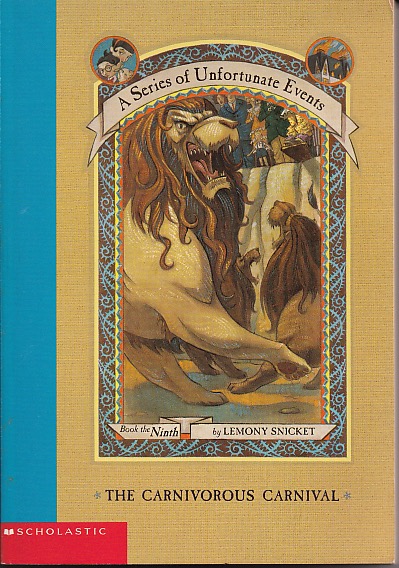
The best children’s material contains winks for adults.  Those of us who grew up with Looney Tunes and then watched them when we were older know that to be true.  I’d forgotten some of the gems in A Series of Unfortunate EventsThe Hostile Hospital has the Baudelaire orphans wanted for murder, Count Olaf thought to be dead, and the children volunteering at a hospital.  A hostile one.  When Lemony Snicket describes one of his hiding places, he notes that it’s in “the Cathedral of the Alleged Virgin.”  That one elicited a full-blown grin.  Another lemony snicker emerged when two of Count Olaf’s associates get to arguing only to stop and acknowledge that they shouldn’t let their personal issues interfere with their work.  Such an adult scenario indeed.

As far as the story goes, this eighth volume is closely connected with the seventh, The Vile Village, in that the children remain under the suspicion of murder.   This began in book seven and carries on here, adding further tension to the tale.  No Mr. Poe comes to their “rescue.”  As the children hide in the eponymous hospital, they discover a sliver of a clue about their parents as they find a photo of them along with Jacques and Lemony Snicket.  Jacques, of course, had died in the last book.  There’s also a new false lead on V.F.D. with the Volunteers Fighting Disease providing comic relief throughout the tale.  And comic relief is probably necessary for kids, since the story does get darker.  Chapter 11 is hilarious, with Olaf’s associates trying to pretend at being doctors, even as the story takes a serious turn.

The children have their hopes ignited that one of their parents survived the fire.  Lemony Snicket enters a little further into the story.  The Baudelaires are now wanted for both murder and arson.  And they can only escape by hiding in the trunk of Count Olaf’s car.  This is the first book in the series where the children don’t actually see Olaf but only hear his voice.  Of course, he’s still following them.  The Quagmire triplets don’t appear in this volume either, having been whisked away (rescued) at the end of The Vile Village.  Re-reading these books as an adult has been a fascinating exercise.  Daniel Handler is certainly a clever, and entertaining writer.  Of course, the events in the book are silly enough for children, and some of the humor is effective even for adults.  Some of the action is too.  There’s pleasure in re-reading some kid lit, especially as an adult.


Waking Up

Moody, gothic, and intriguing.  These are words that might describe The Awakening.  It’s also an ambiguous, somewhat confusing ghost story.  To discuss this some spoilers will be necessary, so please be advised.  When you’re on the lookout for a movie to watch on an afternoon when staying awake is a struggle (which, in all honesty, is just about every afternoon), on a weekend I’ll open my long list of movies to see and compare it against what’s streaming for free on the couple of services I pay for.  Seldom do the list and offerings coincide at all.  In any case, when I find something off-list that looks intriguing I usually check IMDb to see how many stars it’s earned.  On some streaming services four out of five stars will translate to three out of ten on IMDb.  The Awakening had 6.5, which is pretty good.

So, set just after the First World War, Florence Cathcart is a seance buster who doesn’t believe in ghosts and who’s written a book debunking the whole thing.  She’s then invited to a boarding school where a ghost has been frightening the boys, one of them to death.  Her own past is deeply repressed, however.  So deeply that she has a screen memory of an event that never happened to mask it.  After setting up all her equipment she does find evidence of the inexplicable.  Robert Mallory, a teacher and wounded veteran, believes in ghosts.  He says that those who went through the war see them.  He and Florence fall in love—her fiancé was killed in the war—and during the school holiday, she’s left alone with him, Maud the housekeeper, and one student.  Here come the spoilers…

The one boy left behind is the ghost of her step-brother.  Florence grew up in that house and Maud was the housekeeper, and mother of the boy.  Her unhinged father killed Florence’s mother and was trying to shoot her as well but accidentally shot his son by the housemaid.  He then killed himself.  Florence has to remember her past to realize she’s been seeing ghosts she doesn’t believe in.  It’s an eerie film but the plot is bit confusing.  It brings religion into the story, and even the Bible.  The tale of Holofernes’ beheading from Judith is represented in a painting.  Her debunking book is kept next to the Bible.  By the end we’re asking ourselves if Florence is a ghost.  This is a good, spooky film.  A bit ambitious, but it gets more stars than the usual freebie on a sleepy afternoon.