Always Something

I’ve found myself doing unlikely things in my life.  Often this is because I tend to be pathologically early for things.  Once I worked for a small company that didn’t supply me with a building key, despite my crepuscular habits.  One day I arrived before anyone else and the weather was foul.  I had to park some distance from the door and it was locked.  It was raining and blowing so I pulled a credit card from my wallet and tried what I’d seen in the movies.  To my surprise, it worked.  I thought about the irony of the situation since I really didn’t like the job, and here I was breaking into the building to get to work.  This memory came back while setting up for the AAR/SBL Annual Meeting.

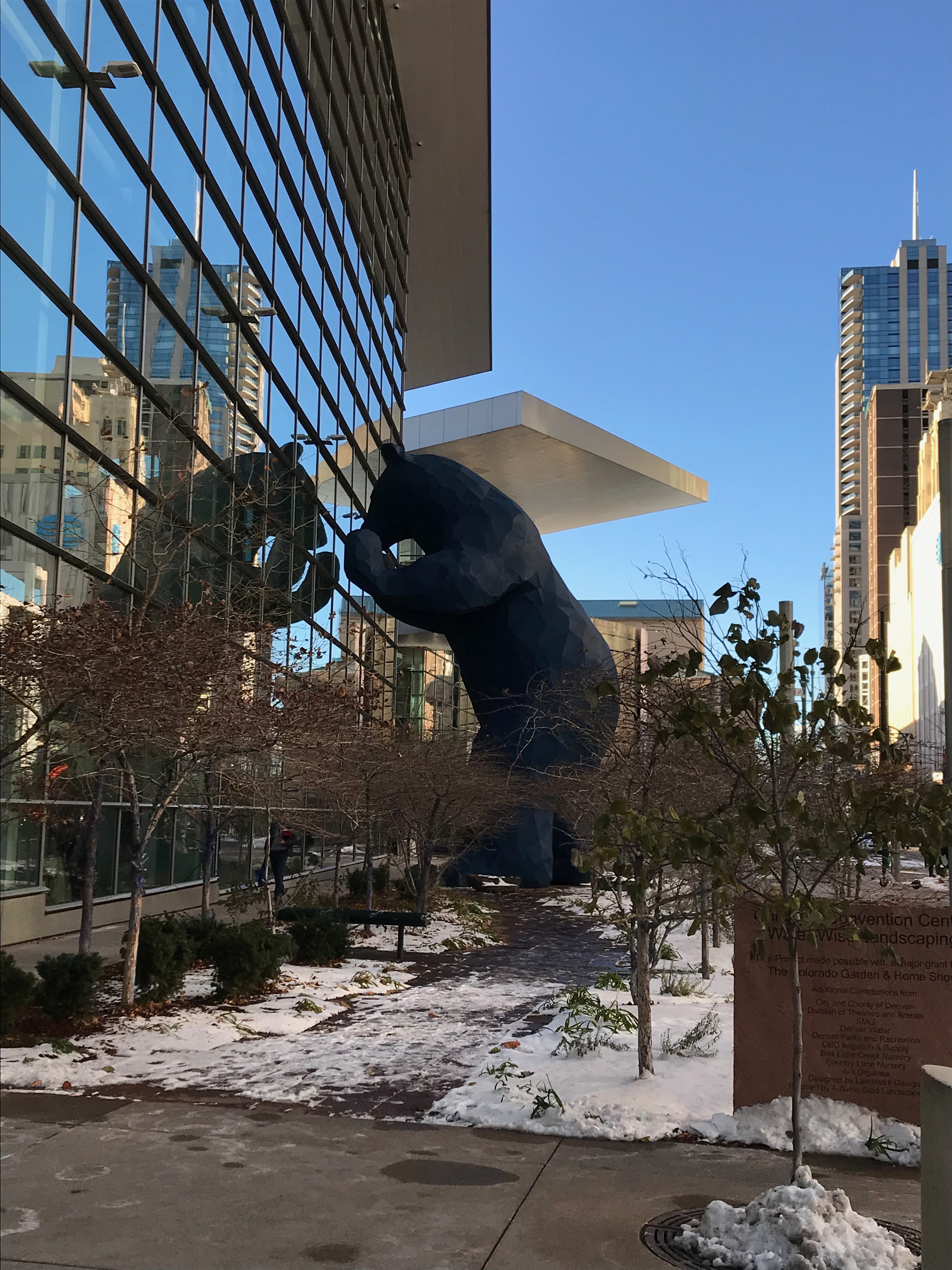
If you attend AAR/SBL you’ll know that access to the book exhibit is keenly sought after.  To get past the security guards before hours, you have to have a color coded “exhibiter” ribbon on your name tag.  Since I was still on Eastern Time, I was awake painfully early on Friday.  I wandered over to the Big Blue Bear and was surprised and pleased to see that the Convention Center doors were unlocked.  I went to the registration table for my ribbon, but they weren’t open until eleven.  I went up the exhibit hall, batted my eyelashes at the guard, and explained that the registration desk didn’t open for three more hours and I wanted to start setting up the booth.  I showed him my name badge, which has the name of my employer on it as well, and he waved me in.

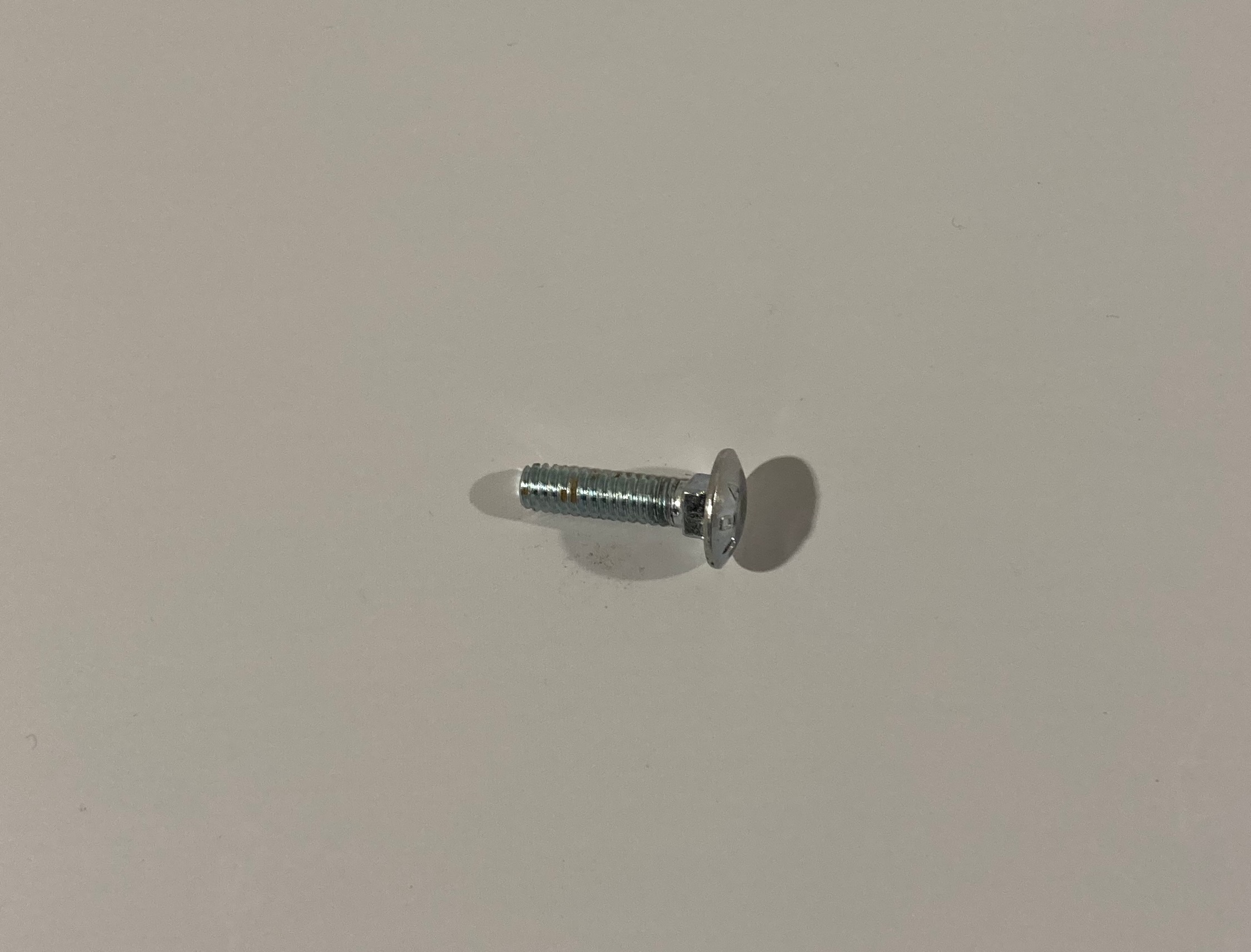
Exhibit halls are quite uncanny places before they’re fully set up.  Boxes are everywhere, carpets are being unrolled over the concrete floors, fork-trucks abound.  I found our booth and realized, having flown here, I had nothing sharp to cut the packing tape.  Perhaps because I’ve been re-reading A Series of Unfortunate Events, I thought, “There has to be something.”  I spied a machine screw on the floor.  The head wasn’t very sharp, but it had a little edge to it.  With some finagling, it could poke through the plastic tape to give me enough of a purchase to leverage my way in.  I think I was the first one in the exhibit hall doing any unpacking, but using a screw to open boxes of books wasn’t, I reflected, as strange as breaking into work in the rain.  But it wasn’t too far behind.

Conference Books

It seems that I’ve become a bit of a hermit since the pandemic.  Air travel feels like a kind of violence to me.  The price to pay for living in a connected world.  At least when you don’t have your own private jet.  I do enjoy traveling by train, but it would take a couple extra days to get to Denver, even if there was local service.  I’m reminded of my first trip to Denver for the AAR/SBL Annual Meeting.  It was a quarter-century ago.  2001.  The 9/11 attacks had just taken place two months earlier.  The Colorado Convention Center was just twelve years old and “I See What You Mean” (the big blue bear) was still a few years in the future.  My reason for attending in those days was to make academic connections.  I was looking for a way out of Nashotah House.

I was ill at the conference that year.  My paper—the earliest start of Weathering the Psalms—was Saturday afternoon and I splurged for a taxi to get me to the  Denver Museum of Nature and Science that morning.  My daughter was really into dinosaurs at that age and I’d promised I’d report on what they had.  In the hall of minerals I began to feel woozy.  Worse than woozy.  I tried to reach a restroom but ended up vomiting in a wastebasket in front of everyone.  I went to the restroom and cleaned up before taking a taxi back to the hotel.  I couldn’t read my paper that afternoon.  I spent Sunday and Monday in bed and flew home on Tuesday.  Then, in 2018 when AAR/SBL was in Denver, I ended up snowbound at the Newark airport.  I slept on the floor and caught a train home the next morning.

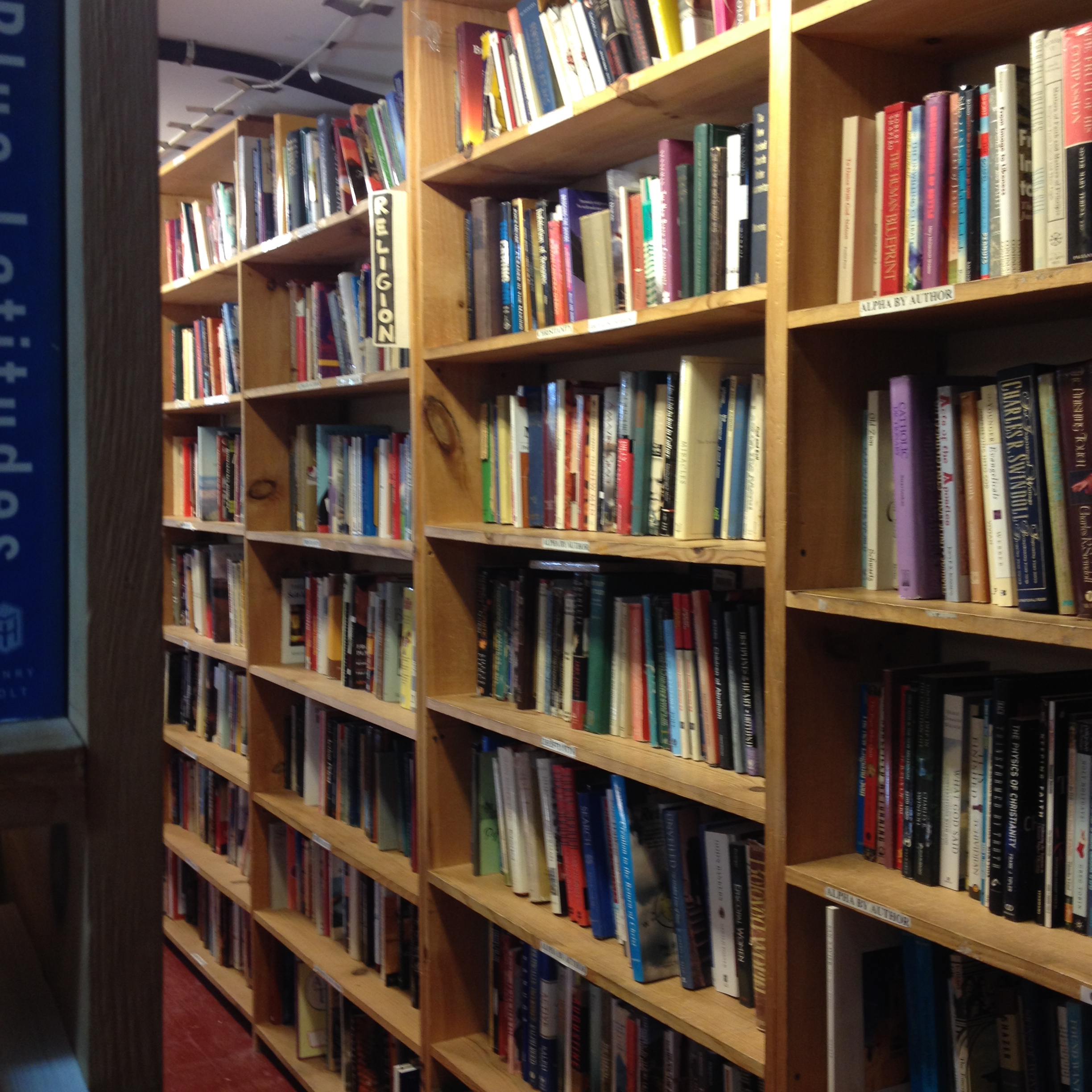
Yesterday the weather was good for flying.  A fellow passenger struck up a conversation in the airport in Allentown—ABE (Allentown, Bethlehem, Easton). It turned out that he welcomed the return to print reading (as opposed to screen reading) as well.  This meant my trip was starting out well.  I’ll be spending the next three days in an exhibit hall full of books.  If everything was electronic I’d be spending the time standing around, what?  A Kindle?  Talking to authors about how they might stuff some “content” into it?  When I write a book I have a specific kind of thing in mind.  And although I may be monkish in my habits, it may be worth it to be surrounded for a few days by others who know what a proper book is.


Mile High Meeting

This morning’s post is a bit earlier than usual.  That’s because I have to fly to Denver for the American Academy of Religion and Society of Biblical Literature annual meeting.  I feel that I’m getting a bit too old for this.  Attending the conference as an editor is a worlds away from attending as an academic.  Being a dark academic, I know the difference.  Many of my friends from the early days have retired.  There are plenty of more senior scholars who still attend, those who’ve been fortunate to have had continuous academic employment for decades.  But they don’t have to be in a booth from 8:30 to 5:30 daily (forget the 9-2-5!), often dealing with unhappy authors, or listening to pitches.  And, of course, in my mind I’m still one of those who pursues learning for its own sake.  I just can’t show it at work.

When I attended with Gorgias Press it was more in the middle between worlds.  The press was small and I did have to spend most of the conference in the booth.  I didn’t have many wannabe authors talking my ears off about proposals, but a few came.  When I started attending for Routledge a few years later, there were more expectations about setting up meetings in advance and trying to lure authors in.  It was becoming a more conflicted event for me.  With my current employer I’m busy pretty much the whole time.  Add to that the worry of how to get from a small, regional airport to one of the few major cities that can host such a large gathering—and having to fly home during the busiest travel week of the year—and the blood pressure starts rising.

The city’s biggest draw to me is the Denver Museum of Nature and Science.  I won’t have time to go there this year, but its dinosaurs and hall of minerals are wonders to behold.  (I went once, when I attended as an academic.)   There is a fairly famous haunted house in Denver, which eventually made its way into The Changeling’s story, or so the story goes.  A certain Russell Hunter claims to have experienced hauntings while in a house on 13th Avenue, but the house has been torn down since.  His account led to the famous horror film, according to locals.  At the conference I won’t have time to look for haunted locations (although I will be staying near 14th Street), and I can’t afford the time to visit the museum.  I’ll have to make do with the supposedly paranormal Denver International Airport, I guess. These are my early thoughts.


Five Nights

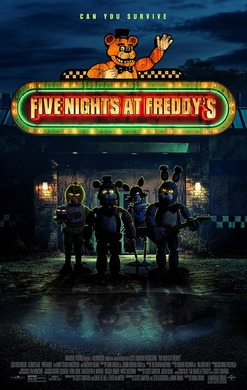
Horror is an endlessly self-referential genre.  Sequels are also essential to keeping the most recognized franchises going.  Some of us like to try to trace the spheres of influence and, if I were a professor of film I’d be writing tons of articles.  Some time back I watched Willy’s Wonderland, and liked it quite a lot.  Then I saw commercials for a number in the Five Nights at Freddy’s franchise.  I wondered if Willy was based on Freddy.  Willy’s Wonderland was earlier but Five Nights at Freddy’s is based on a video game released in 2014, so it could’ve inspired Willy.  Since I have a 9-2-5 and weekends are already too short, I’m not sure I’ll ever figure out the connections.  This may be a long-winded way of saying that I finally got around to watching Five Nights for the first time.

It did quite well at the box office, but critics were unkind.  Other than some fairly large plot holes, though, it works as a horror film.  The movie version (not being a gamer, I can’t speak for that aspect) goes along these lines: Mike’s younger brother was kidnapped when he was a teen.  As an adult Mike has trouble holding down a job but he’s the guardian for his little sister, Abby.  He gets a job at Freddy Fazbear’s Pizza, which is closed but requires a security guard.  The large, animatronic animals still function and Mike uses sleep enhancement to find his brother through dreams.  He meets Vanessa, a police officer with fond memories of Freddy’s.  Children went missing there some time ago.  Spoilers follow.

The ghosts of the children animate the animatronic creatures.  Their bodies were killed in the suits.  Vanessa’s father was the kidnapper.  When the creatures want Abby to join them, her over-protective brother Mike has to fight the head creature, controlled by Vanessa’s father.  The story’s even more complex than that, which may be why the critics didn’t like it.  Visually, it’s quite well done.  With Henson-brand animatronic creatures, the “monsters” look good on film.  The acting is good.  If you’re not familiar with the story, some false leads keep you guessing until near the end.  It’s reasonably scary.  I’m sure I missed a lot for not having been the gaming sort, but I still appreciated the concept and the plot as it was laid out.  Animatronics of various sorts loom large in horror these days, whether as realistic androids or children’s attractions.  They reflect our very real fears of tech that we can’t control.  I find their message compelling.


True Peril

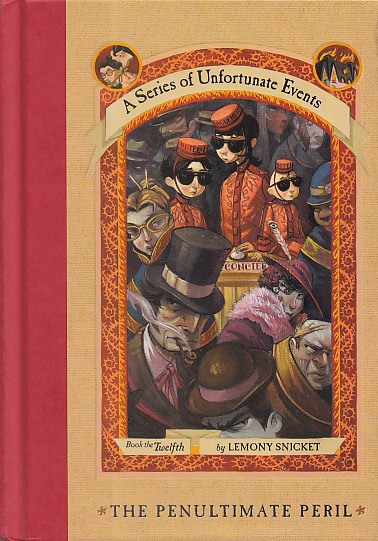
The Penultimate Peril in A Series of Unfortunate Events is, in some ways, difficult to read.  The theme of good versus evil, and how it’s difficult to tell the difference, runs through the book.  The Baudelaires are left to use their instincts to guide them, even when circumstances make that impossible. Their past leads them to distrust adults.  Disguised as concierges at the Hotel Denouement (which is cleverly bookended against Hotel Preludio), they eventually learn that their parents killed Olaf’s parents with poison darts, and as many of the characters from the various volumes converge on the hotel, a mysterious man whose loyalties aren’t explained, leaves the scene with evidence as well as potential answers.  And the children, because of the corrupt justice system, have to start a fire themselves for the greater good.  It is morally vexing.  And heart wrenching to have them escape the way that they do.  It ends on a dark note.

The depth of Lemony Snicket, aka Daniel Handler, regarding literary connections in this series is intricate indeed.  I was always impressed by his use of Poe, but I didn’t know much about Charles Baudelaire until reading A Series of Unfortunate Events the first time.  Baudelaire was Poe’s chief popularizer in France, and he wrote a book of poetry titled The Flowers of Evil.  In The Penultimate Peril, Snicket introduces the idea that the Baudelaires will be flaneurs.  I looked it up on Wikipedia only to discover that the term was first introduced into English literature by Poe and that Baudelaire discussed the story in which Poe used it (“A Man of the Crowd”) in his essay “The Painter of Modern Life.”  These are some intricate connections.  Despite the sad ending, there are many funny moments before that.  Including some aimed at adults.

Throughout the series, Sunny, the youngest, uses words that only her siblings can interpret.  Increasingly as the series goes on, these words are messages to adults.  At one point, before the children go on trial, Sunny says “Scalia” to indicate “‘It doesn’t seem like the literal interpretation makes any sense.’”  What child would get the depth of humor, politics, and social commentary that that one little word dropped there conveys?  And the books keep me adding to my list of literature to read, this volume having suggested Richard Wright’s Native Son.  Children’s books that press learning on the adults reading them are important.  I’d completely forgotten how much the Baudelaires torment themselves over whether they are good or evil.  And how their parents, interestingly enough, are implicated too. The last volume, alas, will have to wait until after the AAR/SBL Annual Meeting this year. On that, further anon.


Angels Aware

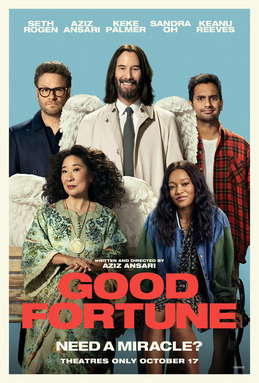
Having triggered myself by watching a horror film one weekend, when my wife and I tried to settle on a movie I suggested a comedy.  That’s how Good Fortune came to my attention.  My initial thoughts went to Michael, the 1996 movie where John Travolta plays the titular angel.  Good Fortune was Aziz Ansari’s director debut, and he was also the film’s writer.  I quite liked Parks and Rec and I have a soft spot for movies with a religious theme.  The basic idea here is that Gabriel (not the archangel) is a low order guardian angel responsible for protecting people from texting and driving.  One of those he saves, Arj (Ansari), is down on his luck.  A wannabe documentary maker, he’s working odd jobs and sleeping in his car.  The problem is that Gabriel is inept.  He’s good at stopping texting accidents, but has no experience directing people’s lives.

Things grow complicated when Gabriel breaks the rules and ends up showing Arj what life is like for his former ultra-wealthy employer, Jeff.  The two switch places, Arj remembers the past, but Jeff does not.  Living the life of the very rich, Arj decides he doesn’t want to switch back.  Jeff regains his memory, but unless Arj agrees—because of free will—Gabriel can’t switch them back.  Gabriel loses his wings and his angelic status.  As a mortal, he has to learn to eat, get a job, and experience human life.  Being a comedy, things end up as they should be.  There are a number of chuckles here, but nothing too profound.  I have to wonder, with my usual caveat, whether a deeper understanding of religion might’ve made the film stronger.

Angels continue to be huge in pop culture.  The problem is, how angels are perceived in the Abrahamic religions is poorly understood by the average person.  Angels are messengers and never, in the biblical world, people with wings.  (Gabriel has wings in the film because, of course, that’s how we tell an angel.  The previous weekend my wife and I rewatched Dogma, and, of course, the angels all have wings.)  Here, as in movies such as A Wonderful Life (which it resembles) angels can give humans a vision of the future.  That makes for good stories, but it doesn’t track with how angels are understood in the biblical context.  I see from a quick search that a few books by McFarland and Wayne State University Press (both publishers known for film studies) address angels in cinema.  I wonder how many of them take the Good Book into account.


Painting Parable

It doesn’t take long to paint a room.  The prep does.  Like filming a movie, where the set-up takes far more time than the actual scene, getting a room ready to paint seems to take forever.  Some people have asked me to do more videos.  Same thing—set up takes so long and I have an unrelenting 9-2-5.  But maybe all of this is a life lesson.  We spend a lot of time preparing for our big moments.  Planning for a trip, say, or opening a box when your published book finally arrives.  I recently set myself the task of painting the ceiling of a small room during the work week.  That room had had a leaky roof that stymied two roofing companies before a third came last summer and finally seems to have solved the problem.  The ceiling, though, had water stains.

Painting while on a ladder when it’s over ninety degrees out, and you don’t have air conditioning, is counter-productive.  I had to wait for a cool stretch of summer, which thankfully came.  Admittedly, I should’ve opened the old paint cans we had before starting the rest of the set-up.  Prep includes a run or two to the hardware store.  While doing the masking I found bits of tape left up from the time we painted the walls of that room.  Even when it reaches the eighties taping around the ceiling can be a trial.  Drop-clothes are their own species of madness.  Radiators are especially tricky, which probably explains why some of them had paint drips on them when we moved in.  If you’re like me, you’re always forgetting something in the tool closet/garage and have to keep running back downstairs to get just one more thing.  Then you have to move the drop-clothes to set up the next shot.  But once you get into the flow of it, the progress is evident.

From another painting job; prep still required.

The painting itself didn’t take that long.  That’s the part that’s actually enjoyable.  For me it’s part of the life lessons.  My father, who was mostly absentee and often inebriated, made a living as a house painter when I was young.  When I was in seminary I picked up a little extra cash by painting a professor’s office.  At Nashotah House we painted a room or two in our own house.  I’ve done a fair bit of painting since buying a house.  I always feel a connection with my departed father when I do.  Those who’ve been more successful than me hire others to do this messy job with its time-consuming set up.  But like many other aspects of life, it’s really the prep where the learning takes place.


Hungry?

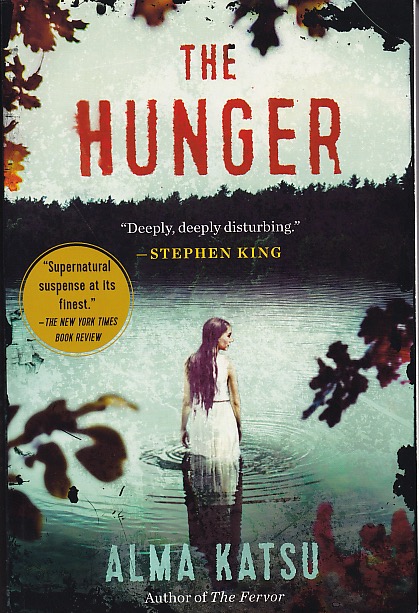
Horror novels based on historical events require a certain finesse.  They also tend to be long.  Up until the last hundred pages or so, I didn’t really like Dan Simmons’ The Terror, but it had an ending that redeemed the long hours of reading the bleak tale.  I wondered if the same thing might happen with Alma Katsu’s The Hunger, although it was only about half as long.  It also had been recommended more than once, so I had high expectations.  I didn’t know what it was about, but opening the cover I discovered it was a fiction based on the Donner Party.  Having read only cursory bits about what’d happened to that unfortunate group, my historian’s antennae began quivering as I read the names of actual people.  To add to the already horrendous events that befell the actual group, Katsu introduces a set of monsters not unlike the wendigo, but with less charm.

Even before the party reaches the infamous Hastings Cutoff that ultimately doomed them to cannibalism and the death of about half the party members, the creatures attack and kill a boy.  Once they take the Cutoff, the attacks become more obvious and some of the party members see them lurking in the night.  They fear fire, however, preferring their flesh raw.  Dissensions among the group are fictionalized to lovers’ spats or affairs and I started to find the narrative somewhat forced from that point on.  I did learn a lot, by reading about what actually happened, as I went along.  Part of my brain wants as much historical veracity as possible, and it wasn’t forthcoming.  Too many improbable things step in to make this tale not scary or disturbing, but pure fantasy.

I’ve disagreed with the critics before.  Everyone has their own taste when it comes to novels, and those of us who read scary books are no different.  To me it seems that the horrors of being snowbound and having to resort to cannibalism are scary enough.  It isn’t really even suspenseful (as the New York Times claims it is) because you know that it will end in tragedy.  The end result of all this is to make me want to read a book on what actually did happen to the Donner Party, which, I suspect, will be frightening enough.  If the connection with wendigo mythology were drawn out, there could be a powerful symbolism here.  Instead, I found the book long, if well-written, and not very scary. I did wonder who, if anyone, would survive.  Historical novels can be written in the horror vein, when handled with sufficient finesse. It’s the burden of being a stickler for history, even in fiction.


Incidental Ghosts

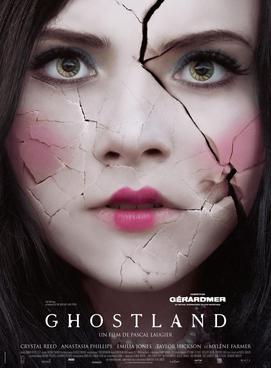
Although it’s a bit too close to torture porn for my liking, Incident in a Ghostland does feature strong female characters.  And it deals with dissociation in a somewhat intelligent way.  The film, by the way, is also known as simply Ghostland.  I don’t remember where I got the recommendation for it, but I would warn off those who are squeamish (and I include myself in that number).  It begins with a dedication to Lovecraft, but the story resembles a different kind of horror.  It begins with a mother moving to an isolated house with her two daughters.  The night they move in, they are attacked by two psychopaths.  Beth, the sister who wants to be a horror writer, has to witness her sister being raped and her mother being stabbed before she wakes from the nightmare many years later.

She converted this childhood incident into her bestselling novel, Incident in a Ghostland.  She’s happily married and has a young son.  When her sister calls her, clearly in the midst of a fit, Beth goes to visit only to find that Vera, her sister, is still living that horrible night over and over.  Things get pretty creepy but Vera manages to snap Beth out of her fantasy of having become a successful writer.  They are both still in the situation where they’re being attacked.  Their mother is dead and the psychopaths dress the teens up as dolls while one of them fondles them, torturing them if they don’t play along.  I’ve stopped watching movies for less.  By this point I was pretty far into it and decided to see it through.  I’m not sure I’m glad I did.

The film has its share of creepy dolls.  It’s also quite scary.  The violence is extreme and unrelenting.  As I’ve noted many times before, I try not to read about movies before I watch them.  I rely on recommendations quite a bit but I didn’t use to write down the recommender, so I’m not sure who, or which website, suggested this one.  I might think twice before following them again.  Cinematically, the movie is well made.  The nod to Lovecraft is a bit of misdirection.  The dissociation seems real enough.  Beth slips back into believing her future as a famous horror writer when present reality overwhelms her.  This seems to be what actually happens when real dissociation occurs.  You keep hoping that the imagined future is the real one.  It may be, but only after getting through the horror of the past.


Big Blasts

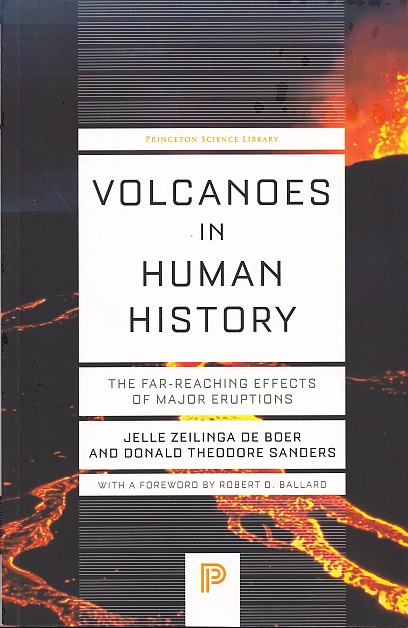
Nonfiction authors have to make decisions when writing books about collected, collective phenomena.  Jelle Zeilinga de Boer and Donald Theodore Sanders had to decide which volcanoes to include in Volcanoes in Human History.  The idea of the book is fairly straightforward—show how those sleeping monsters have sometimes long-term effects on human lives and culture.  Some of the choices were no-brainers: Mount Vesuvius, Santorini, and Tambora, obviously.  Toba, the largest known eruption, fell out of bounds because it went off long before Homo sapiens had learned to write.  Indeed, that eruption almost led to our species’ extinction.  Since I’ve been interested in volcanoes for about the last year or so, this book fit the bill.  It gives several snapshots of what happens when the earth’s mantle starts pushing up into the crust on which we live.  It also has lots of geology in it, some of which I struggled to understand.

The authors begin with the Hawaiian Islands, and the local mythology about Pele.  Then they move on to Thera, which created Santorini and ended the Minoan civilization.  Next, Vesuvius is not only the only active volcano on the European mainland, but its 79 CE eruption was the first written about by an eyewitness (Pliny the Younger).  The chapter on Iceland is more about the various notable volcanic activities but tends to focus a little on Laki.  Then comes Tambora, the most deadly volcano in human history.  Krakatau, also known as Krakatoa, was also deadly but is quite well known, in part because of a book by Simon Winchester.  It’s covered in the next chapter.  Mount Pelée—not to be confused with Pele—in the Caribbean is next.  In 1902 it wiped out an entire town of 30,000 people.  Tristan da Cunha I’ll come back to.  The last one covered is Mount St. Helens.

Tristan da Cunha is a place I’d never heard of.  Located about as far from any continent as you can be in the Atlantic Ocean, it’s occupied by about 200 people.  The founding humans were of European extraction, and the colony grew from 2 to about 300.  In 1961 the volcano that comprises the island erupted, which led to the inhabitants being exposed to modernity for the first time in about two centuries.  I found this utterly fascinating.  All of the chapters have interesting information, but some of it is pretty heavy going concerning geology and plate tectonics, but it does have quite a bit of human interest as well.  It made me glad that I live nowhere near a volcanic hot spot.


Self-Identify

The temptation is surely there.  I imagine it must be especially high for those with common names.  (I often think that parents surnamed Miller or Smith or Jones really don’t do their children any favors by giving them any of the dozens of very common names.)  The temptation I’m talking about here is to give yourself a cute email name.  Believe me, I’ve seen some doozies.  Cute names are fine for family and friends, of course.  When you go to send something to a professional, however, you’ve got to think how it’s going to look.  I can’t speak for all industries, but I know that in publishing what is perhaps valued more than anything else is someone with a professional demeanor.  An email that comes in with a slightly salacious username will struggle.  You need to show that you’re serious.

Names are tricky things.  My stepfather was surnamed Miller.  For high school and college I used his surname.  It was when a wise minister pointed out to me that my professional name (presumably Reverend, at that point) had to be nailed down to be consistently applied, that I had to make a decision.  At that point, in seminary, I legally reverted to my birth name.  I was born Steve A. Wiggins and I wanted to be known as Rev. Wiggins—that never happened, but I did end up as Dr. Wiggins before it was all over.  I once had a colleague, back when email first came out, that used his initials.  They were a combination of m’s and n’s, strung together.  This made it difficult to get the address correct and their handle was eventually renamed to something more manageable.

I suspect some cute namers forget that their moniker looks a bit unprofessional.  Perhaps they don’t care.  It’s certainly their right not to.  When you want to start building a professional portfolio, though, it’s time to consider that perhaps boring alternative.  I’ve also known people to include “Dr.” or “Ph.D.” in their email handles.  Among the profession, however, we tend to use first names unless someone insists on asserting some kind of rank.  Our parents name us.  Email names are a chance to show how we’d rather be known.  I’ve worked for places where emails are automatically assigned as first initial last name (swiggins) and that always looked weird to me.  I preferred those that went with last name first initial (wigginss).  Or better yet, the personal email account that lets you choose for yourself.  Just remember, if you want to be taken seriously, you might not want to go overboard.

Photo by Markus Spiske on Unsplash

Horror Lite

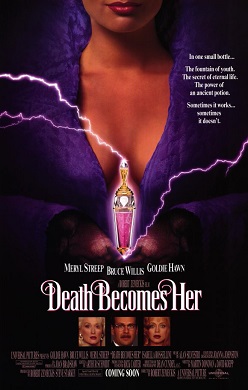
Since movies are endlessly referential among themselves, Death Becomes Her brought to mind other films.  The last time I watched it, over three decades ago, it didn’t stay with me.  Looking for something to fit the autumnal mood, and seeing that it was listed, in part, as body horror, I thought to give it another chance.  In my mind I’d confused it with, of all things, Beetlejuice.  The latter didn’t really capture my imagination either, but the similarities were more imagined than real.  A better comparison might be The Witches of Eastwick, although that film portrays female power in a better light.  Another comparison that came to mind was The Substance, which was much better done.  Death Becomes Her isn’t without its charms, however.  The acting is good although the pacing is a bit slow.  The idea works, but the writing often doesn’t.

Madeline Ashton and Helen Sharp go way back.  When they meet up after a lackluster show in which Madeline stars, Helen’s fiancé Ernest falls in love with Madeline and marries her.  He’s a wealthy plastic surgeon.  Helen, depressed, lets herself go but 14 years later has written a bestselling novel.  At the party, Madeline, who’s concerned about her aging, and her declining career, is amazed to find Helen trim and youthful.  And earning back the attention of Ernest.  Madeline visits a mysterious woman who has an age-reversing formula and she provokes Ernest afterwards, as their relationship has been falling apart for years.  He pushes her down the stairs, breaking her neck.  Helen helps him with a scheme to dispose of her body, but Madeline comes back to life, clinically dead.  The body horror comes in with the abuses heaped on the women’s bodies.

There’s a kind of misogynistic undercurrent that isn’t really counterbalanced by the humor.  Ernest is the victim, mainly because he can’t control his own passion for Madeline.  Then Helen.  In the end, he’s remembered as a noble soul while the women take care of each other but fall apart nonetheless.  There’s some social commentary here, but not as much as comes through in The Substance.  And the empowered women aren’t the winners as they are in The Witches of Eastwick.  The humor isn’t as obvious as Beetlejuice (yes, in my mind they’re still connected).  Over the years Death Becomes Her has become a cult classic, and for some viewers, part of their autumnal viewing.  I did appreciate the gothic castle and the perhaps a little too constant thunderstorming.  It was fun enough, and I’m glad to have some of my memories of what goes where refreshed. Still, women deserve better.


Avoiding AI

I try to avoid AI whenever and however I can.  Being an Apple user, I’ve stopped asking Siri for anything.  Our television isn’t smart.  Our stereo consists of components that don’t secretly conspire with one another.  They use physical cables and have no bluetooth or other software in them.  But with constant “upgrades” on computers, which we have to have because AI is so good at hacking, my daily life has been invaded by Al.  This came clear to me the other day as I was finishing up a short story I’d been working on.  The creative process take time.  I’d started this one months ago.  I get lots of ideas and I start many stories that get dropped when another hook comes along.  Then I’ll remember what drew me to an older idea and go back to finish the neglected piece.

It takes courage to submit stories for publication.  I get a lot of rejections, as most writers do.  That means I go for periods without trying.  Besides, all the journals say you should regularly read them to get an idea of what the editors like.  If you work 9-2-5 and have your own blog, and you like to read full books, this can be difficult.  You can, of course, just shoot into the dark.  But I digress.  I finished a story recently and copied it from my writing software into Pages.  Since I use a Mac, Microsoft Word conversion is the last step before submitting a story.  Most publishers go the clunky Microsoft route.  Up until the day I tried to save said story, I hadn’t realized just how much Al had insinuated himself into my operating system.

When you go to save a Pages document, the default used to be “Untitled.”  That was never a problem for me because I’d go in through the finder and change it manually.  Now Al is “reading” your document and suggesting a title for you.  This particular story had a creative title that existed in my head, but not in the body of the fiction itself.  At least not in any obvious way.  I opened a new document in Pages, pasted my content in and went to save it.  A title that missed the point of my story entirely glowed in the Save As field.  Al wanted to “help” by naming my creative fiction.  If there was a way to turn off AI on my Mac, I would.  I don’t want it.  I try not to use it at all.  With software updates nearly weekly now, how long before the creative process, when done on a computer, is taken over completely? Hey Al, I don’t want, or need, your help.


Another Peeping

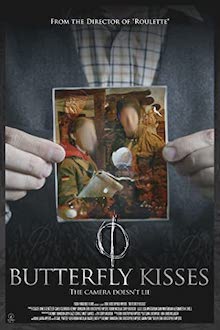
I’ve become a bit cagey about found footage horror films because they often make me queasy.  With my condition, such nausea can last for days so it’s just not worth it.  This is a shame because there are some very good examples of this sub-genre.  I recently met another horror fan in the area and he suggested Butterfly Kisses.  The camera doesn’t move too much, and, he said, it’s a film worth watching.  He was right.  It’s very meta.  It has layers.  And it’s unusual in that it both deconstructs and participates in the found footage to great effect.  To start at the outside and work our way in, Erik Kristopher Myers leads a camera crew that has been hired by Gavin York, a down-on-his-luck filmmaker to film him making a documentary.  That documentary is about two students, Sophia and Feldman, who are making a documentary for college on “Peeping Tom,” a local urban legend.

The set-up is intentionally like The Blair Witch project, setting itself in Maryland, with film students as victims.  Eduardo Sánchez, co-director of Blair Witch, appears in the film, debunking the movie Gavin York is making.  Each of these layers adds potential opportunity for any of the three sets of filmmakers to bend the truth, if not outright fabricate the story.  It’s very cleverly done.  Not only does it include Sánchez, who is a real-life found-footage horror film maker, but it also incorporates Matt Lake, author of a couple of the Weird US books, including Weird Maryland (and Weird Pennsylvania, which I have on my shelf).  In a sense, movies like this warn against gullibility.  In another sense they encourage it since people quite often have trouble distinguishing between cinema and reality.  The layers only add to the veracity.

In case the title seems inexplicable, butterfly kisses are when a person’s face is close enough to brush your own with their eyelashes, causing you to blink.  Peeping Tom is an entity that appears after staring at a certain railroad tunnel for an hour without blinking.  Then, every time you blink after that, he’s a bit closer.  When he finally reaches you, you die.  He uses butterfly kisses to get you to take the last blink.  Throughout the movie doubt is cast on those telling this account, but at the same time, there is enough evidence that you’re not sure, in the movie diegesis, if it might not be real.  And the camera motion isn’t too bad.  It’s effective found footage with a message.


Whose Stars?

Star Trek or Star Wars?  I used to hear this among sci-fi fans.  I grew up with Star Trek in the sixties and saw Star Wars in the theater.  Science fiction can shape our future.  Both for good and for bad.  I’m convinced, for example, that many Silicon Valley technocrats are Star Trek people who grew up emulating Mr. Spock.  No emotion, pure rationality.  That idea has come to stand for the faulty equation of brain = computer.  This is incorrect.  As AI began to be developed, the idea was that if we could rationally program computers with human rational thought, they could be taught to “think.”  They clearly forget pon farr from the episode Amok Time.  Even the full-blooded Vulcans know that logic will break down once in a while.  Even now Al is demonstrating that in real time.

Star Wars, on the other hand, depicted a paperless universe.  Nobody, not even old Obi Wan, or the even older Yoda, is shown with an ancient book.  Reading isn’t part of their life.  Tech is.  This idea, I suspect, helped spur on ebooks.  And audiobooks.  I’ve been a proponent of environmentalism since the seventies.  One of the few areas where I think the exploitation of trees is necessary, however, is in the making of books.  The other day I was in a very hopeful meeting where it was pointed out that there are moves afoot to start limiting screen time.  Get people reading books again.  I’m not really conflicted about this, despite my excessive work on this blog.  I spend very little time on social media.  Apart from this blog it’s maybe ten minutes a day.  I spend, if at all possible, at least an hour reading books each day.

Many analysts tend to think that the internet hasn’t really made human life better.  More convenient certainly.  But better?  There was a kind of exquisite longing to reading about a book in a catalogue, walking to a bookstore, ordering it and waiting a few weeks before receiving it.  Such things caused no harm.  Is it logical to speed things up if we can?  Sometimes clearly yes.  At other times, it’s fun to run amok.  To take a walk without your phone.  To pick up a book to spend an unrushed hour or two reading.  These were pleasures.  Now we turn on our devices and hear about the chaos Trump, Putin, and Netanyahu are causing.  All the deaths and suffering they wreak on the innocent.  Would Mr. Spock say this is logical?  Even Luke Skywalker would pull out a book to escape for a while.

Photo credit: NASA