Writing Life

Writers are a conservative lot, in many respects.  Consider the epigraph.  I’ve written about this before—in modern-day publishing epigraphs require permission to reuse and serve little purpose beyond two negotiable factors: to prove the writer is well-read, and that someone else just summed up your chapter in a single sentence.  Most modern books have stopped using epigraphs, but scholars read old books produced before aggressive copyright laws.  There is a trick you can use, however, that brings an epigraph into the realm of the fair use doctrine.  It involves moving it into the body of your chapter.  Make it a quote.  Comment upon it.  For all their research skills, many academics do not take advantage of easily found advice on academic publishing.  Just ask an editor.

We all, I’m sure, have tunnel-vision.  Life is so incredibly busy and demanding that choices have to be made.  For most academics publishing is part of the rubric for tenure.  Perishing is the only other option.  Been there.  Done that.  Those of us who make a more modest living on the other side of the book sometimes write for different reasons.  We may need to supplement our income (as if academic publishing really ever helps with that!), and thus we must pay attention to the finer details of the business.  Write what people want to read.  Think like a reader.  And, yes, get rid of the epigraphs.  We know you’re smart; you’ve written a book.  Another reason for writing beyond the tenure-dome is the compulsion.  The need to do it.

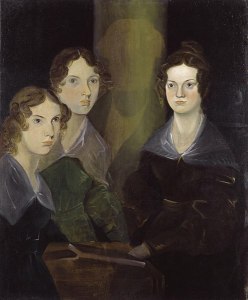
While the struggling artist is a tired trope, it’s also true.  Many of the writers most admired today had lifetimes of struggle and obstacles which often stopped them too soon in life’s tracks.  I often think of the Brontë sisters.  In a family apparently cursed with premature death, living in a time when women writers were rare, three sisters set themselves the task of becoming novelists.  Not one of them lived to forty.  Anne, who wrote The Tenant of Wildfell Hall, made it to twenty-nine.  Emily, author of Wuthering Heights, died at thirty.  Charlotte, who gave the world Jane Eyre, survived to thirty-nine.  They defined, in many ways, the English novel.  And while they lived to see some measure of success in their brief lives, they wrote against the obstacles of life and the specter of early death.  Writing is a passion.  A craft.  And even academic authors provide a favor to the world if they do it well.

Brontë sisters by brother Branwell


Horizontal Thinking

“Theology” is a word that means very different things in different contexts.  I dislike labels in general and I seldom call myself a “theologian” since that implies a systematic or “dogmatic” theologian on this side of the Atlantic.  (And a better paying job.)  In the about to exit Britain “theologian” tends to mean someone who studies religion and can be used regardless of discipline.  In any case, I avoid the use of the title since my interests tend toward the history of religious ideas, not making them into a workable system.  I was a little surprised when I received an invitation from the journal Horizons in Biblical Theology to contribute a piece on horror and the Bible.  The issue in which the article was published (41) has just appeared.  Ironically, invitations to contribute seldom came when I was employed as an academic.  Of course, “independent scholar” is now a fairly common avocation.  Especially in theology.

Horizon

I won’t post any spoiler alerts for the contents of the article—I don’t want to quell the stampede of those eager to read it—but the basic idea is that biblical studies has embraced horror.  Like long-lost cousins, they have come together at last, realizing that they are both pariahs.  People generally don’t know how to carry on a discussion with a biblical scholar, as if those of us who spend time with the Good Book are constantly judging others.  I can’t say as I blame them since that image is reinforced fairly constantly.  Horror scholars, on the other hand, are thought to be weird examples of arrested development—stuck in the juvenile phase.  Social respectability isn’t their strong suit, although horror movies do well at the box office and one of the most successful writers ever is Stephen King.

Religion and horror share more than being associated with troglodytes, however.  Both address primal human fears.  Religion may not be “all about” fear, but a healthy dose of it is.  If life was peachy all the time, would we have any need of religion?  We need help coping with our fears, and religion has a long history of dispensing it.  Knowing we’re going to die, and in all likelihood will experience some suffering before that, whether physical or psychological, is a heavy burden to bear.  Religion has always been there to provide meaning and sometimes even solace.  Horror, or at least the best of it, does so too.  I’m not sure I would call it theological, but if you’re interested you know where to find my latest musings on it.


Self-Convinced

Like many people, I suppose that my own views are right.  All people think this, I suspect, otherwise they’d change their point of view.  Unless they’ve been brainwashed, of course.  Religion has a way of convincing people that they alone are right.  (And perhaps also those who believe just like them.)  I have plenty of experience with this.  Seemingly normal, friendly people suddenly turn on you when you’re not there to defend yourself.  All in the name of religion.  The place, unfortunately, that it’s most found is in “conservative” religions.  With preachers braying about righteousness and being washed in the blood of the lamb the human element is often sacrificed.  Anyone who dares to think differently is going to Hell, and, in most of these traditions, you wish them godspeed.  Then there are those who wish for true dialogue.

Dialogue means, however, that you have to admit you may be wrong.  That’s one of the features the self-convinced fear most.  Ironically, even those who think they’re right can admit that they could be wrong.  Otherwise what’s the point of discussing anything at all?  As Tom Nichols points out in The Death of Expertise, many are offended that someone has greater knowledge of any area than they.  Like it or not, some of us have studied religion, the Bible, and spirituality for our entire lives.  You might not agree with everything such a person says—we often disagree among ourselves—but at least one might admit that a mere Ph.D. counts for something.  Even if on the stock market it simply won’t trade.

Ironically, as a young man I too was self-convinced.  For some reason that I can’t fathom, I decided that if my beliefs were solid they would stand up to the challenge of higher education.  As an undergrad I majored in religion at a conservative college and graduated summa cum laude.  I chose a liberal seminary to challenge further what I believed and came away magna cum laude.  Then the doctorate.  (Edinburgh didn’t offer such trifles as honors; if you made it through the program you should be so thankful.)  Tolerance became a massive part of my outlook, even as I ended up on the faculty of a very conservative seminary.  I was willing to listen, but the same could not be said for those who saw things differently.  Many of whom were far less educated, I say with all due self-abasement, than yours truly, in such things.  As time goes on I can’t help but reflect on this.  Even as I do I know others are completely convinced I’m wrong.


Seeing the Future

Nine.  That’s the number of people before me in line.  It’s not yet 4:30 a.m., and our day began at least an hour ago, but work won’t start for another two.  As the bus pulls up to the stop, I think about work.  Well, like most people I think about work a lot.  You see, I’m often asked about how to get into the publishing business.  There’s a cosmic irony to this because I had never planned to be an editor and never undertook any of the usual training.  The anticipated trajectory of a doctorate in the humanities used to be teaching, which is what I did for many years, but when an educational career slips off the rails in a capitalistic society you have to be willing to learn real fast.  (Fortunately the long years of schooling do help with that.)

I’m sure that I’m not the only person whose career plans didn’t pan out as anticipated.  Back in seminary one night long ago, three friends and I had a “future dinner.”  We prepared a supper and each came as who we would be twenty years down the road.  I recall that I was a world-traveling professor and the author of several books.  “Come on,” my friends complained, “be realistic!”  It’s a bit beyond those two decades now, and I was a professor for many of them.  I have written several books, although so far only three have been published.  World-travel?  Well, that’s been a bit modest in recent years, I have to admit.  One of the other friends I’ve lost track of.  Another committed suicide after graduating.  We really can’t see far into the future.

Publishing is a challenging gig.  My rapid career contortions perhaps prepared me better than I think.  I have a kinship with those who ask about how to get started in it.  Generally we’re educated people who like books and wonder what kind of career you can find with that combination these days.  (There are more of us than you’d think!)  Compared to higher education academic publishing is a small world.  I’ve come to know many more academic colleagues since being an editor than I ever did as a professor.  I have something they want—a reputable venue for publishing their latest book.  Often I have to do a lot of educating since publishing doesn’t work the way that most people think it does.  It’s like being a professor without the status.  No, I didn’t see this in my future.  As I look for a seat on the already crowded bus I wonder how many of these other early risers planned their careers just like me.

Difficult to see where this is going.


Which Shaman?

It’s a strange kind of vindication when you see someone argue your ideas independently.  Even if they understand those ideas in a different way.  I suppose it’s necessary to say that in academia those who have university posts are assumed to be more authoritative than those of us who don’t. That’s not sour grapes, it’s simply a fact.  Some years ago, after having first seen Christopher Nolan’s The Dark Knight, I wrote a post on this blog suggesting that the Joker functioned as a shaman in that movie.  Being a blog by a non-university academic, the post had a few readers, but it is not peer-reviewed and therefore, officially just a matter of opinion.  I have studied religion professionally for decades now, however, and I would still stand by my assessment.

Recently I came across an article that argued Batman was a shamanic figure in that same movie.  It was affirming that another academic had come to a similar conclusion, however, we differ in our interpretation of who bears shamanistic characteristics.  It doesn’t help, I suspect, that shamanism isn’t well understood, and even the name is a bit of a misnomer.  We don’t really have a word for non-major religious practitioners of indigenous populations who may have little in common, so we call them shamans.  Their religious systems are too specific—“granular” is the favored business word these days—to categorize them easily.  And the reason for this is that we think of religions in the light of the large, organized conglomerations that arose in western Asia a couple millennia ago.  It’s difficult to make room for smaller exemplars.

Something larger religions have done is distorted the idea of religion as a local phenomenon.  Communities used to reflect the religious experience those who lived in them knew.  Catholicism divided the world into parishes and even tolerated some differences between them.  Protestantism gave Europeans (and their New World descendants) a set of choices, and towns in America often sport many steeples not because religion draws a community together but rather because it generally tears it apart.  Hierarchical religions are about as opposite of shamanism as Batman is different from the Joker.  They may have similar ends in mind, but their methods are quite different.  The shaman is a figure that leads to spiritual wholeness for the community.  Their methods seem questionable to larger, highly structured religions.  And the unaffiliated trickster may accomplish more than an establishment figure in a local setting.


Science of Compassion

It has been several years now since I’ve been directly (or indirectly) involved in robotics.  During my daughter’s high school years I was active in the FIRST Robotics program, spending some week nights and many weekends supporting the kids—far more clever than me—building and competing with the robot.  It was during this time that I came to know some of the mentors involved.  They knew I was looking for a job in a field not their own.  Instead of wringing their hands like my professorial colleagues did, they made concrete suggestions as to how to go about finding a reasonable position.  Unlike many religion professors, they were willing to go out of their way to help.  It’s a lesson I’ve never forgotten.  A somewhat well-known religious leader is known for having said “by their fruits you will know them.”  So it is.

One of these friends recently sent me a New York Times story about a disabled toddler.  Because of our government’s very compassion health care system, this boy was denied access to a wheelchair.  When the local high school robotics team learned about it they designed and built a motorized chair for the boy.  Again, my point couldn’t be more obvious.  This team did what was the right thing.  They didn’t stand around saying the family would be in their thoughts and prayers.  No, they did something about it.  While the story made me feel good, it also saddened me.  I’ve been part of the religious studies community for at least three decades now.  When I lift up mine eyes to the hills, however, whence cometh my help?

Please don’t get me wrong—I know probably better than most how difficult life and funding can be as a humanities academic.  I also know, however, that humanities are nothing without humanity.  How easy it is to forget that when a tenure-track position opens up!  There are creative solutions possible.  I have suggested them to those empowered to enact them from time to time.  Their response has generally been to explain why it can’t be done rather than giving it the old college try.  In robotics you try to see if it works before deciding it can’t.  Perhaps there’s a message here for those who hear.  Engineers find solutions while many academics find excuses.  There’s any number of reasons not to help the boy get a wheelchair: somebody’s going to have to pay for this, there are other things that demand the students’ time, there are government agencies who already do the work.  Or.  You can try because it’s the right thing to do.  Whose fruit tastes better, I wonder?


Croce’s Lament

So how much time is there?  I mean all together.  I suppose there’s no way to know that because we have no idea what came before the Big Bang.  Those who invent technology, however, seem not to have received the memo.  New tech requires more time and most of us don’t have enough seconds as it is.  Perhaps in the height of folly (for if you read me you know I admit to that possibility) I’ve begun uploading material to my YouTube channel  (I hope I got that link right!). These are cut-rate productions; when you’re a single-person operation you can’t fire the help.  I figured if those who don’t like reading prefer watching perhaps I could generate a little interest in Holy Horror visually.  (I like my other books too, but I know they’re not likely to sell.)

The question, as always, is where to find the time for this.  My nights are generally less than eight hours, but work is generally more.  What else is necessary in life, since there are still, averaged out, eight more left?  Writing has its reserved slot daily.  And reading.  Then there are the things you must do: pay taxes, get physical exercise, perhaps prepare a meal or two.  Soon, mow the lawn.  It may be foolishness to enter into yet another form of social media when I can’t keep up with those I already have.  What you have to do to drive interest in books these days!  I think of it as taking one for the tribe.  Readers trying to get the attention of watchers.

There’s an old academic trick I tried a time or two: double-dipping.  It works like this: you write an article, and another one, and another one.  Then you make them into a book.  I did pre-publish one chapter of a book once, but getting permission to republish convinced me that all my work should be original.  That applies to reviews on Goodreads—they’re never the same as my reviews on this blog—as well as to my YouTube videos.  There’ll be some overlap, sure.  But the content is new each time around.  So you can see why I’m wondering about time.  Who has some to spare?  Brother, can you spare some time?  I’ve been shooting footage (which really involves only electrons instead of actual linear imperial measures) for some time now.  I’ve got three pieces posted and more are planned to follow.  If only I can find the time.


Bookmark This

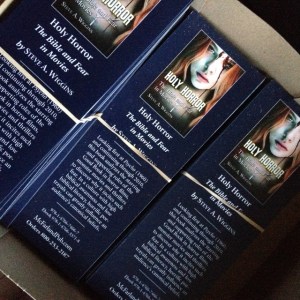
I haven’t forgotten about horror.  In fact, this past late winter my list of must see movies has continued to grow.  I don’t subject you, my kind readers, to endless barrages about Holy Horror since I believe the idea behind the book is novel in its own right and can stand on its own.  The other day I even ordered bookmarks to be made, for free distribution.  Thing is, days are getting longer, and warmer, and people are thinking the opposite of horror just as spring is the equinoctial opposite of fall.  Like a good monster I’m biding my time.  And doing so on an editor’s budget.  (The pay scale’s not the same as that of a professor; believe me, I know.)  Horror’s funny that way—it is seasonal, at least in most people’s minds.

I make the point in the book that fear serves a useful function.  It occurs in other genres quite frequently, although they bear the outcast label less overtly than horror.  Perhaps this gets to the root of my fascination.  Having grown up as part of the pariah social class of the poor, my sympathies are with the genre that often fails to find respectability.  Many of those who criticize horror do not watch it.  Some of these films are quite sophisticated, and the genre blends into other “speculative” categories such as science-fiction and some action, as well as into the more naturalistic thriller.  And thrillers are merely dramas with an elevated pulse rate.  This difficulty of distinguishing genres sharply is one reason Holy Horror addresses some films that aren’t strictly horror.

Work continues apace on Nightmares with the Bible.  Again, the ex-professorate never receives sabbaticals during which concentrated work might be done on books.  In the pre-dawn hours, however, I steadily make progress.  Very shortly an article I wrote for Horizons in Biblical Theology on the topic will appear.  Safely during the spring.  As the days grow longer more of my weekend time is demanded by the outdoors aspect of home ownership, cleaning up after the freezing and thawing of a long winter when infelicities were safely covered under snow.  Sometimes I fear for the progress made on my next book—it is the first advance contract I have ever had—but then I remind myself that fear does serve useful functions.  It’s not called a deadline for nothing.  So even as the darkness fades I prepare for the next round to begin.


Spoken Against

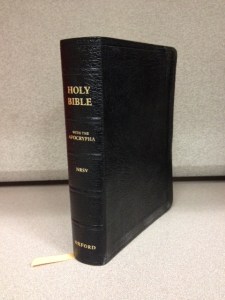
“Antilegomena” is a word that appears more often in New Testament studies than it does in those of the Hebrew Bible.  Still, it’s an important part of the discussion of “the Bible,” especially since Heaven stands at the end.  Antilegomena is the Greek word for “disputed texts.”  You see, when the Bible was being compiled, there were many books from which to choose.  The twenty-seven books generally recognized as the New Testament included several that were disputed.  The Antilegomena included these books: the Gospel of the Hebrews, the Apocalypse of Peter, the Acts of Paul, the Shepherd of Hermas, the Epistle of Barnabas, and the Didache, all fine and good.  But the list continues: James, Jude, Hebrews, 2 and 3 John, and Revelation.  This final half-dozen made the cut, although Revelation is still disputed in some quarters.  All of these books were, however, in some early Christians’ Bibles.  The exact date that the New Testament canon was fixed isn’t certain, but it wasn’t widely recognized until the fourth century C.E., that is, over 300 years after Jesus.

The first time I learned about canonization in college I was shocked.  Like most people raised on the Bible, I believed that it had come, fully written, from the hand of God.  Maybe there was even an autographed copy somewhere.  Grove City College, at the time, disputed the Documentary Hypothesis of J, E, D, and P, but to the credit of the religion department they did tell us about it.  Moses, of course, we were taught, did the actual writing.  But then there was the problem of the New Testament.  There were other gospels, some as old as those that made it into the Bible.  The realization dawned that “the Bible” was much more complicated than I had been led to believe.  And what was up with the Apocrypha?

One of my professors said that the problem with inerrancy is that it proposed a Bible more perfect than God.  I’m not sure that I follow the logic there, but I take his point (they were all “he”s, whoever he was).  The Bible may not be a perfect book  There are parts missing and repeated bits.  It is nevertheless one of many sacred books from around the world, and it is the holy book of much of Christianity.  From the very beginning some of the contents were disputed.  Even as an undergraduate I had some inklings that a journey that involved taking the Bible seriously was going to lead to some strange places.  That single book that had always been presented to me with a definite article—“the” Bible—was actually a book that the earliest followers of Jesus didn’t know.  And they seem to have got along fine, as far as getting to Heaven goes.


You Call That Working?

A recent post of mine on the United Methodist Church got a lot of response (for me, anyway) on other social media.  As I pondered this—I’ve written about the topic many times before—it occurred to me that most people probably have no idea what biblical scholars do all day.  (That is, besides write books that only other biblical scholars read, and teach their classes, or, very occasionally, edit books.)  Biblical studies is arguably one of the oldest academic pursuits in the world and what it boils down to in a word is “contexts.”  We try to understand the multiple contexts of the biblical texts.  Think about this a second: when you pick up a book, newspaper, magazine, or their electronic equivalents, what is the first, if often unconscious, thought you have?  Isn’t it something like “what kind of book, newspaper, etc., is this?”  Is it fiction or non?  Is it reputable or not?  Who wrote it and when?  These are all contexts.

The Bible was written about two millennia ago.  Very little of that original context still remains.  In fact, none of the original manuscripts even still exist.  It was a book written in Hebrew, Aramaic, and Greek.  The vast majority of people in the western world do not read these languages, and so the Bible comes to us in mediated form—translation.  Translation, as any writer knows, is a form of interpretation.  It is not, and can never be, the original.  To figure out what the Bible “means” it has to be interpreted—even just reading it is a form of interpretation.  Biblical scholars want to be able to interpret it in informed ways.  We learn about its various contexts and use them to help us understand.

What did people think like thousands of years ago?  Can you even remember what it was like to look up a distant location without the internet?  Writing letters or dialing a rotary phone to get information on it?  Going to triple A to get maps?  And all of that was only two decades ago.  Life in biblical times was very different than life today.  The people then didn’t understand science the way that we do.  The writers of the Good Book didn’t have any idea that what they were scribbling would one day be considered holy scripture.  They had completely different contexts.  Whether the contexts are historical, literary, or social scientific (we still haven’t figured out an elegant way of saying the latter) biblical scholars use a variety of methods to get to those contexts.  We can’t go in with the answers already in our heads—if we did we’d only find what we were looking for.  At the end we have an answer, not “the” answer.  And so biblical studies continues.


Quoth Hardy

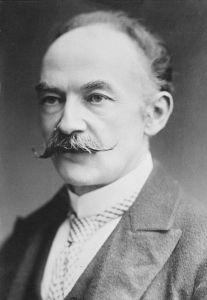
There are days when the quote from an author is the best thing to happen to me.  You probably know those kinds of days—days when there’s nothing really to stay up for so you go to bed early.  Lengthy days when your Muse wins easily any game of hide-and-seek.  You see, I save most of my fiction reading for bedtime.  If I turn in soon enough I can read quite a bit before falling asleep.  Not to sell you a false bill of goods, but that’s not the source of the quote.  It actually came to me from an unrelated email about the Bible.  The quote, while lengthy, comes from Thomas Hardy:

By the will of God some men are born poetical. Of these some make themselves practical poets, other are made poets by lapse of time who were hardly recognized as such. Particularly has this been the case with the translators of the Bible. They translated into the language of their age; then the years began to corrupt that language as spoken, and to add grey lichen to the translation; until the moderns who use the corrupted tongue marvel at the poetry of the old words. When new they were not more than half so poetical. So that Coverdale, Tyndale, and the rest of them are as ghosts what they never were in the flesh.

This comes from a letter to Professor D. A. Robertson of the University of Chicago, dated to February 1918.  Hardy was a known critic of religion, but like most writers of his day he knew the Bible.  Now, I’d never generally put myself on the same page with Hardy, but something similar to this thought had occurred to me long before I saw this quote.  We treasure ancient writing simply because it has survived.  This should be a sobering thought to any of us who try to forge our thoughts into words.  We have no way of knowing if, at the time, an author was considered great.  Merely the passage of time can make writing unfashionable in its age appear brilliant.  Like rocks tumbling over each other at the base of a cataract, they find polish over time.

My particular context for receiving this emailed quote was the King James Version of the Bible.  Often considered sacred in that translation, it was not uniformly well received when first published.  There had been English Bibles before, and since the Good Book is the foundation of western literature, a new translation commanded attention.  It had its critics, but over the centuries the translation itself became holy, whether it deserved it or not.  Similarly, Martin Luther’s translation of the Bible helped to codify the German language.  We shouldn’t be too quick to dismiss Scripture, not for its theology, but for its immense influence on western thought.  As Hardy noted, it may be the passage of time that makes writing great.  Even so we might be wise to pay attention.


Not Your Parents’ Bible

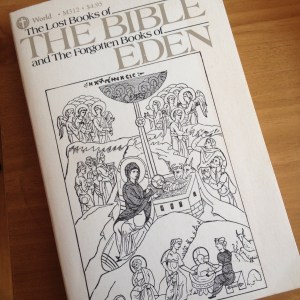
As someone always interested in origins, I reflect on how I’ve ended up the way I have.  I mean, who plans to end up a Bibles editor?  In the grand scheme of a universe with a sense of humor, it’s an odd job.  I grew up reading the Bible, but lots of people do.  Most of them end up with ordinary people jobs.  Obviously, working on a doctorate in the field is admittedly strange, but then, my interests have always been to get to the truth.  The other day I spotted a book on my shelf—the book that arguably started it all.  The Lost Books of the Bible and The Forgotten Books of Eden.  These days I would recognize this for what it is, a cheap reprint of a book published quite some time ago (1926 and 1927).  No “value added content.”  Just a reprint.  But why did this book have such influence?

It was the first time I’d realized—and growing up in poverty with parents lacking college educations you have to teach yourself a lot—that there were other books about as old as the Bible.  The idea fascinated me.  Somehow my fundamentalist upbringing had convinced me the Bible was the first book ever written—after all, its author was God and how much more primordial can you get?  Now this particular book (Lost Books of the Bible etc.) contains some apocryphal Gospels.  Not having a strong grasp on the concept of canon, I wondered why these books had been excluded, or, to use the title conceit, “lost” and “forgotten.”  In college I would learn about the canonical process.  I’d hear more about it in seminary.  There I would learn that even older sources existed.  In the pre-internet days, in a rural town without so much as a public library, how would you find out about such things?

Helmer Ringgren’s Israelite Religion captured my imagination in seminary.  Even there, however, nobody on the faculty seemed to know much about what had come before the Bible.  Harrell Beck told us of ancient Egypt in our classes, but clearly there were further depths to plumb.  I learned about James Pritchard’s Ancient Near Eastern Texts, which I bought at the Harvard Divinity School bookstore.  Other texts went back beyond Holy Writ.  Just how far would have to wait until the University of Edinburgh.  I sometimes wonder if I might’ve taken a different turn here or there had anyone been able to answer my young, unformulated questions about the origins of the Bible and other ancient books.  Now we just have to ask the internet.


The Price Is Wrong

The costs for academic books can seem criminal.  Don’t get me wrong; I work in academic publishing and I know the reasons—or at least the reasons publishers seem to believe—for such pricing.  Still, when I see a book that my little public library will never be able to convince its network that it should be able to borrow, I look at the prices and blanche.  At least the pallor looks good with my skin type, or so at least I’m led to believe.  Why are books so very expensive when so few of them retain any resale value?  Publishing—the information business—is unlike any other.  In fact, it could be argued that the printing press was the earliest internet.  Ideas could be spread more quickly, among those who were able to read, than they could have previously.

These days books are the handmaidens to the internet.  The problem, of course, is that the web contains ideas that haven’t been vetted.  Publishers offer that service, but you have to pay for it.  Books don’t sell like they used to—physical books, I mean.  Inflation, however, ensures that the cost of paying employees is constantly going up.  This is the hidden factor of “overhead”—the cost of doing business.  You need to sell a lot of books to pay a staff.  Not only that, but unlike most “commodities”—I shuddered as I typed that word—books can be returned to a publisher if they don’t sell.  It’s like an entire business model run on consignment.  And the honest truth is—academic authors may want to cover their eyes for this part—very few books sell more that a couple hundred copies.  That means that the per unit cost has to go up.  Next thing you know you’re selling a kidney to continue your research.

I keep a running list of books I’d like.  Some are for research and some are for other pleasures.  The list grows quite lengthy when more and more interesting books get published.  I look at academic books and I wonder if maybe there’s another way.  If they were priced down in the range of mere mortals, would they sell enough copies to meet their costs?  I’m well aware that Holy Horror is priced at $45.  Believe it or not, that’s on the lower end of academic extortion pricing.  Many books on my “must read” list cost three times as much.  Are we paying the price for keeping knowledge solvent?  Or is all of this just criminal?


Qaulity Education

Perhaps it’s from having a stubbornly blue collar, but snobbery has never appealed to me.  While in seminary at Boston University, I applied for a transfer to Harvard Divinity School.  In spite of being accepted, I stayed at my alma mater and paid the consequences.  There’s a strange loyalty among the working class, you see.  And now I’m finally seeing my former mistress, academia, taking a turn toward the lowly but worthy.  The title of a recent article in the Chronicle of Higher Education says it all: “As Scholars Are Driven to Less Prestigious Journals, New Measures of Quality Emerge.  Hmm, why might that be?  The industry mantra, “publish or perish” has grown more aggressive over the years and the number of publishers has decreased.  Your academic net worth, it seems, can no longer be based on how elite you are.

People are funny that way.  We’re very impressed by those paraded before us as successes—as if some kind of magic clings to those who are where we wish we were.  In academia where you went to school matters more than what you’ve proven yourself capable of.  If you attended the “best” schools your work will be accepted by the “best” journals and publishers.  What rarified company you’ll keep!  For the rest of us, well, we have the numbers.  And blue collars aren’t afraid of hard work.  Let the academic aristocracy enjoy its laurels.  Laurels are poisonous, however, for those with an eye open for parables.

Primates, according to those who know them best, can see through pretense.  I often wonder if our political chaos isn’t based on this simple fact of biology.  As a priest I knew once told me, “We put our pants on one leg at a time too.”  This didn’t prevent many postulants I knew from anticipating the day when they would be ontologically transformed.  Priesting, I was informed, would make them better than the laity.  Closer to God.  Here it was, even among the clergy—the desire for prestige.  Chimpanzees will take down an alpha who abuses his power.  Nature has a set of balances.  Tampering with them leads to, well, scholars being driven to less prestigious journals and the like.  The net result, as the Chronicle suggests (if read one way), is that the last shall be first and the first last.  Probably it’s the result of reading too much Bible in my formative years, but I’ve always appreciated parables.


Type Right

Image credit: Rama, via Wikimedia Commons

I’ve mentioned before on this blog that I’d like to get a typewriter.  An old one, without electric capacity.  Clacking keys flying before the dawn.  At first this might seem impractical—why buy a typewriter when almost all publishing is now electronic, at least in one stage of its life cycle?  You type something out and you’re going to have to “re-key” it for the hegemony of technology.  But wait—there is a method to this madness.  I’ve heard it said that good writing is just clear thinking.  That sounds right to me, but with a proviso: good writing is edited writing.  The editor may be someone else, or it may be the author, but the point is that something written, with rare exceptions, improves upon rewriting.  Like ordinary stones in a rock tumbler that come out glistening.  Type it, then retype it.

Back in college I wrote all my papers out by hand before typing them.  (Sometimes three lines of handwriting on each college-ruled line.)  “Keyboard composition,” as it was called then, was shorthand for quick, sloppy writing.  The uniformity of type hides a host of syntactical sins.  I used to see the same thing with student papers prepared on a computer in my teaching days—colorful images and fancy type utilized to mask a lack of engagement.  The paper written and rewritten shows itself to be of a higher standard.  I (or others) notice more errors on this blog when I run out of time for editing, often because work looms.  If I have the time, I edit.  And I actually miss writing my thoughts out longhand.  What I need is a typewriter.

Reading has always been a large part of my job.  Student papers and book proposals aren’t so very different.  Many of both come in what appears to be first draft form.  It’s understandable—good writing takes time not only to hammer out a draft but to think, mull, change angles, and hammer again—and we’re all so terribly busy.  The end result is often worth it.  At this point in Nightmares with the Bible I’m printing out my draft so that I can see what I’ve written.  The handwritten comments come after the keyboard composition, but they still come.  The important thing is that drafts require re-reading.  Better, re-writing.  The niceties of pleasing writing can be added or enhanced by an editor.  When editors write books, other editors edit them.  And as I sit here typing this silently on my computer, I’m imagining the satisfying sounds of a manic typewriter early in the morning.