Fictional Facts

“If you want truth,” Indiana Jones famously said, you need to go to philosophy class. The sad fact is most people have little practical training when it comes to such issues as discerning truth. Some time ago I read an article about how fake news travels faster and is more deeply believed than actual truth. I suspect that’s because the truth is hard. The age-old trope used to be a wizened elder sitting atop a mountain in the lotus position. A lifetime of thinking through the labyrinthian corridors of wishful belief to get to what is finally and unassailably true. Our president, with the full complicity of the Republican Party, is out to dismantle the concept of truth once and for all.

Indiana Jones was contrasting facts to truth in this scene from The Final Crusade. The idea was that facts sometimes make you question truth. In GOP University, however, facts have alternatives. He who bellows the loudest is the harbinger of truth. Never mind that still small voice that comes after the raging wind. The voice that can stop a fiery prophet in his tracks—a man who could raise the dead, for crying out loud—but even his successor called Herod a FOX. In the culture of the shrug, who really cares? Finding the truth is so much navel-gazing. There are real enemies to bomb and somebody has some money that I can take away and claim as my own. To do so we can make up facts as we go along and lies will see us through. With the Evangelical seal of approval.

Even with rumors of a fifth film swirling, I miss Indiana Jones. In his formative days fascists were the enemies, even of the Republicans. Although he was showing his age in Crystal Skull, Jones still couldn’t countenance oppressive regimes. Scientific studies show people would rather believe fake news. We’re hopelessly prone to fantasy, I guess. Even as I volunteered on the archaeological dig at Tel Dor, although I had little money a fedora was required. There was a difference, however. I knew I really wasn’t Indiana Jones. I was digging for facts so solid that they could be held in my hand. Unlike Dr. Jones’ students, I did go down the hall to Dr. Trammel’s philosophy class. Surrounded by the young Republicans of Grove City College, none of us doubted that truth was spelled with a capital T. Now Truth is apparently an artifact buried in the sand, awaiting a hapless archaeologist to bring it to light. Amid all the forgeries that non-specialists can’t tell apart.

Ask an Evangelical

News stories this year have plowed up a frequently repeated question: what’s an Evangelical? This was the subtext to a Washington Post story that declared “Half of evangelicals support Israel because they believe it is important for fulfilling end-times prophecy,” as if it’s news. The media’s a little shy, I get it. Those of us who grew up Evangelical could have told them that at least 40 years ago. As a child I knew that Israel had to be fully restored for Jesus to return. Politics, we thought, were holding God hostage. You see, if the Bible says something, and it’s infallible, then even the Almighty has to obey it. And some parts seem to indicate that Israel has to be restored—interpreted a certain way—before Jesus gets his invitation back.

This Evangelical support isn’t because they love the Jews. No, no. Let’s not get personal about this. It’s because the second coming isn’t coming until the pieces are laid out in order. The Bible’s like a crystal ball, only it’s holy. It can predict the future with great precision. You can be sure someone like Trump is in there someplace, maybe in the passage where an ass speaks. In the 1970s it was Nixon. The wonderful thing about prophecy is that it’s made with interchangeable parts. As Millenniarians know, if you get your year wrong never apologize. Simply recalculate and keep preaching as if nothing happened. The Almighty is a forgiving God. At least to those He likes.

Intellectuals seem to think Evangelicalism is contagious. Well, to be fair, historically it has been. That was the whole point of camp meetings. Most Evangelicals aren’t too shy to tell you what they believe. In fact, their reading of the Bible sort of insists that they do. If you’re too bashful, many of those in the academy (or even formerly so) started out in their ranks. Rare is the biblical scholar who decided on that field of study purely based on intellectual curiosity. There was likely a method to their madness. Yes, of course Evangelicals support any politician who moves the embassy to Jerusalem. Tis a consummation devoutly to be wished. The divine heels have been dragging for a couple of millennia now, so it’s time to get this show on the road. All you have to do is ask an Evangelical. They’re not hard to find; in fact, they seem to be everywhere these days.


Russian Passions

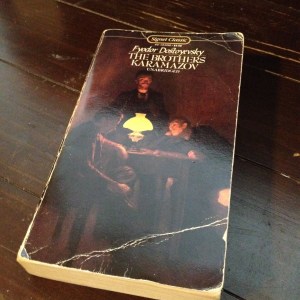
Dmitri didn’t do it; guilty anyway. That’s it in six words. I have to confess my tolerance for really long novels isn’t what it used to be. Blame it on being a child raised by television—every thirty minutes I’m ready for something new. I first read Fyodor Dostoyevsky’s classic The Brothers Karamazov when I was in seminary. Seminarians are an odd breed, and many of them relished the deep, ponderous novels with profound things to say about humankind. The Brothers Karamazov is such a novel. When you’re a student, reading’s part of the job description. As a writer Dostoyevsky gets away with things that’d lead to you failing composition class these days. Speeches that stretch on for chapters, characters taking 100 pages to die, and children talking like adults. It’s a heady mix.

I’ll have to admit that I remembered very little of the story from my last reading. I knew Fyodor Karamazov got killed. I couldn’t remember by whom. All the buzz in seminary was about the famous Grand Inquisitor scene. That’s the part where the Grand Inquisitor interrogates Christ and finds him wanting in the eyes of the church. So daring. So deep! And so early in the book. As I made my way through many heavy-lidded pages, with some dismay I realized that after I’d read the high point of the book I still had 457 pages to go, none of which I remembered from my reading three decades ago. I don’t mean to disparage the classic—I noted and underline several passages as I read. The blame is entirely on me. Still, the endless gloom of personal guilt that hangs on every character, even Alexei—whom Dostoyevsky states outright is his hero—become overbearing at times. This is a nation battened down by Christianity.

Often I’ve expressed the idea that we force children to read great novels before they’re ready to do so, ruining the classics for them for life. I first read Moby-Dick in seminary and I’ve read it several times since. It seems nobody’s really ready for Melville before their twenties. What is the age for Dostoyevsky? I think I comprehended more this time through. There were ideas here that, had I more time, I would likely have enjoyed lingering over. If life were so kind as to allow us the leisure to digest huge books I have no doubt that we would all be wiser, if not more satisfied. Fyodor Karamazov is dead. Alexei is cheered by the school boys. This long journey has itself been the goal.


Call It What You Will

I didn’t even know the House of Representatives had a chaplain. Then Paul Ryan fired him. I wondered once again if evangelicals were interested in religion at all. We all have labels we’d like to claim but lack of legitimacy prevents us from keeping them. My secret wannabe title is rock star, but given that I can’t sing and can’t play any instruments, I have trouble retaining it. Evangelicals, however, have no challengers. They are so flexible they’d make Proteus blush. Such theological promiscuity, traditional religion teaches, will have its comeuppance. If 45 has accomplished nothing else, he’s forced the religious right to show its true, secular colors. Of all the great ironies of the situation none is greater than the fact that “nones” of whatever description hold up the weightier matters of morality better than those most vocal about their faith. Evangelicals, however, control the narrative and claim to do so with God’s own authority. They have few challengers.

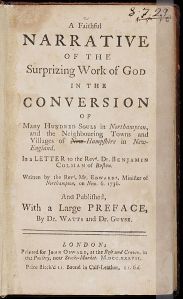
Source: Beinecke Rare Book & Manuscript Library, Yale University via Wikimedia Commons

Then, mere days latter, Rev. Patrick J. Conroy was reinstated by the whiplash GOP. Did somebody warn the religious right that “religious” was part of their name? “Hypocrisy” comes from a Greek root meaning to play a theatrical part. As my stepfather used to tell us, “do as I say, not as I do.” He was a secular man, so his hypocrisy could be overlooked. Noble, even, at times. When those who stake their entire identity on WWJD promote, vocally and enthusiastically, an unrepentant candidate for sinner of the year, you’ve got to wonder if even hypocrisy has lost its punch. How can you reason with people who refuse to reason? We used to lock them away in asylums. Now we throw them into the swamp.

Double standards are the new normal, I guess. Nobody really paid any heed when the fall of the towering televangelists showed, decades ago, that the idol they proclaimed as true religion was rotten to the core. Oh, they made the headlines for a while, but their tumble did nothing to dissuade their true followers. Evangelicals control their own narrative. For many decades now higher education and the media have pretty much ignored religion as a force for social change. Once upon a time Evangelicalism meant change based on ideals that more or less fit the recorded words of the carpenter from Nazareth. Now that its inspiration is the ninth circle below, those who have access to the funds of higher education prefer to put their money elsewhere. Why study something that threatens democracy on a daily basis? Why bother trying to understand Evangelicals? Call it what you will—there’s no way to object to anyone claiming whatever name they want. I should know; I’m a rock star, after all.


Candles vs Demons

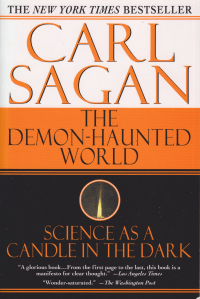
Among scientists who write Carl Sagan has always struck me as one of the more open minded. Dedicated to the scientific method, he nonetheless admits that there are some things scientists don’t know. The last time I was in Ithaca, therefore, I picked up a copy of his tour de force, The Demon-Haunted World: Science as a Candle in the Dark. I wasn’t really sure what to expect—I’ve been researching demons and I supposed they would be addressed in his book, since they feature in the title. Although that is indeed the case, the book is a collection of essays vindicating in various ways the practice and teaching of science. It is quite a scary book. It was also Sagan’s final book published in his lifetime.

Reading this just after Gabriele Amorth’s An Exorcist Explains Demons, noteworthy for its credulousness, The Demon-Haunted World was like whiplash into reality. Back into the realm of observable facts and testable hypotheses, it was indeed like a candle in the dark. Sagan admits that science can’t speak definitively on the supernatural—something that sets him apart from other science writers—but that doesn’t mean we shouldn’t apply scientific thinking anywhere it’s appropriate. And that includes the universe of politics. Published some two decades before the rise of Trump, the book is surprisingly prophetic when it points to the possibility of the rise of fascism in a nation that distrusts science. Indeed, the book shows Sagan clearly worried that an authoritarian, totalitarian government was on the rise. It’s almost preternatural in its accuracy.

The tome is large enough to dissuade a full summary within the word-limits I set for myself on these daily posts, but I can say that this book is necessary now more than ever. Sagan was a celebrity in his lifetime, a “rock star” scientist. Even so he worried about the deplorable state of science understanding among political leaders he met. For many years America has been mired in conservative causes that distrust science implicitly. Another strain that runs throughout this book is the need for education. Not only has America catered to anti-science groups, it has fallen behind much of the rest of the world in science education. Those who claim to make America great again can’t see that their very tactics have made our nation fall behind the rest of the world when it comes to education, across the board. Surely Sagan was right that a good grounding in scientific thinking is the equivalent of lighting a candle. As for the rest of the country it has been getting darker and darker, and our “leaders” have no idea even how to strike a match.


Private Browsing

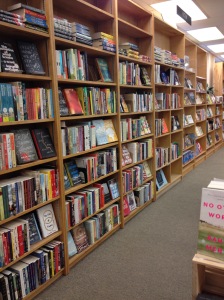
Montclair, New Jersey, is a diverting place. At least it is for me. I used to teach—strictly as an adjunct of course—at Montclair State University. And like many other diverting towns, Montclair has multiple bookstores. On the occasions my wife has to spend a Saturday working in Montclair I often accompany her. If the weather is decent I can walk to both bookstores and have a leisurely browse. Since anything leisurely is rare these days, I eagerly anticipate such trips. Typically I’ll sit in my wife’s work place counting off the minutes until I can leave to get to the Montclair Book Center just as it opens. Used bookstores are a bit like archaeology—you never know what you’ll find, and some of the treasures may be unique. I often have the store mostly to myself, for private browsing.

This time, however, I had another task to accomplish first, before I could go to the first bookstore. By the time I arrived, it had been open for over an hour and there were, surprisingly, plenty of people there. We’re accustomed to hearing that people no longer care for books. While it’s true they won’t bring in the numbers of, say, those wanting the latest video game, it’s also true that on a pleasant Saturday morning an independent bookstore can be a crowded place. It warmed my heart to see so many readers out. And they weren’t all old like me. Younger people talking about the merits of this or that author, browsing in the sections I frequently haunt. Although I found none of the books on my list, I still had that blessed feeling you have when you discover you’re not really alone.

The other store, Watchung Booksellers, is a couple miles to the north, at least by the walking route I use. A small indie, it typically has what modern-day people might be expected to be interested in. I arrived to find it crowded as well. I’ve been there a number of times in the past and usually there are two or three others browsing. This time it was actually a little difficult to get around the small space. Seeing children there made me especially glad. A crowded bookstore is a sign of hope. As we struggle against the forces of ignorance and hatred that seem to have gripped the privileged classes, Saturdays at bookstores doing brisk business are an indication that the future may correct such ill-informed sentiments. Bookstores are termometers of national health, and seeing them busy made my Saturday. It’s worth getting up early just to spend such a day in Montclair.


Academia Dot

The marketplace for ideas is just that. A place of commodity and exchange. We pay our professors good money (and our administrators even better) so that we can be given “goods.” The same is true of the publishing industry. Those of us who write books primarily (I think) think we are expressing ideas we have that we suppose are worthy of discussion. The book comes out. We await reviews. Citations. Exchange of ideas. Oh yes, and royalties. Only the naive think academic publishing will lead to much of the latter in the greater scheme of things. And so many of us turn to for-profit sites like Academia.edu to pedal our wares for free. After all, Academia is offering us a free service, isn’t it? (At least if you can ignore the constant sell-ups to find out who’s been reading your stuff.) But Academia isn’t non-profit. There’s money to be made here among gullible academics.

Oh, I have a page on Academia just like everybody else. Several of my papers, long out of the payout stage for their journals or parent books, are there for free. Academia frequently asks me if I’m sure I don’t want to upgrade—increase my visibility. Make them a bit of lucre on the side. So the other day I was flattered when I received an email about my dissertation from another vendor. I didn’t recognize the sender, but the content of the email made it clear they didn’t recognize me either. It was an offer to publish my original research done at the University of Edinburgh. Problem is, it’s already been published. Twice. Both editions beyond the purchasing power of mere mortals, but still, it’s out there. Academics, I expect, are some of the favorite targets of the entrepreneurial. We, after all, don’t speak that language. We trade in the currency of ideas. We’re easy marks.

I think Academia.edu is a great idea. Often it’s possible for those of us who are unaffiliated to find papers that journals insist on selling for fifteen bucks a pop—considering I can buy an entire book for that much, no thank you—for free. There may be hidden costs involved, but some days I do miss Robin Hood. No matter how many years I’ve been an editor, I can’t stop thinking like an academic. It comes with the territory. You can’t simply forget all that graduate school taught you. One thing most academics haven’t learned, however, is how to interpret the web. Long before our government allowed the freedom of the web to end, not all sites were free.


Updates

So, I’m getting ready to update this website. I’ll give you a warning before things change. Another update, however, is in order. I’ve been promising that I’d let you know when my forthcoming book with McFarland received its final title. Well, drum roll please! The final title is actually the first title I proposed—Holy Horror: The Bible and Fear in Movies. And it has an ISBN: 978-1-4766-7466-7. And a cover design too, but I can’t share that just yet. It is appropriately lurid, matching the subject. But in all seriousness, the book makes a case for the fact that many people understand their religion via popular media. Being a bad boy, I look at it through horror movies.

The title Holy Horror was a play on Douglas Cowan’s excellent book, Sacred Terror. I recall reading that book, starting the night I bought it as SBL, curled up in the swank conference hotel bed, turning pages until I couldn’t hold my eyes open any longer. It had honestly never occurred to me that religion scholars could get away with writing about horror movies. Cowan had the natural advantage of being a Canadian, something I’ve always longed to be. He also has a secure university post. I was, at the time, just a guy trying to feel secure in what seemed like (and turned out in reality to be) a threatening seminary position that was shortly to end.

It may be difficult to understand how horror can be consoling. It can. I’m a squeamish guy. I don’t like blood and gore. I hate being startled. Nevertheless, I took comfort in this genre as my career was falling apart. Holy Horror was a cathartic book for me to write. There’s more than a little metaphor in it. One thing that will become clear to readers is that the Bible is no stranger to horror movies. Ironically, many of them are strangely conservative—Carol J. Clover’s classic Men, Women, and Chainsaws (which I’ve reviewed on this blog) made that point clearly. Horror often has the same message as your typical Disney film, although it’s presently slightly differently. How so? Well, I can’t say very much here or you’ll have no reason to read my book. McFarland does a great job with publishing this kind of title. You won’t find it in Barnes and Noble, and not likely in your local indie either, but it’ll be available on Amazon and these days that’s enough. And before long these pages will change to reflect its coming.


Scientists, Unplugged

Feeling inferior is common among religionists. When cultures list their brightest and best, scientists often top the list and those who specialize in religion are nowhere to be found. This situation gives the lie to the fact that many scientists think about, and are influenced by, religion. That became clear to me in reading Stefan Klein’s We Are All Stardust. Not Klein’s best-known book, this is a collection of interviews with well-known scientists, unplugged. There are many big names in here, such as Richard Dawkins and Jane Goodall, as well as some less familiar on a household level. Klein, himself a Ph.D.-holder in physics, asks them somewhat unconventional questions, with the goal of bringing a more human face to scientists.

When asked directly, scientists admit to thinking quite a bit about religion. Of those interviewed, several are hostile to it while others accept some tenets of one faith system or another. Most of them indicate that either religion or morality plays an important role in society, if not in science itself. The sad part is almost none of them seem to realize that the study of religion can be (and among the university-trained, generally is) scientific. In academia, religious studies is often vaguely tossed in with the humanities, while others would suggest it fits under social sciences—as a sub-discipline of anthropology, for example. Few understand the field, in part because many specialists enter it for initially religious reasons, somehow tainting it.

While I enjoyed the book quite a lot—it was a quick read with plenty of profound ideas—it also had a disturbing undercurrent. The explanation that many of the interviewees gave for why they went into science was “curiosity.” The implication was that those who can’t stop asking questions, and have intelligence, go into science. Again, this feature is true of most academic fields, if they’re understood. Greatly tempted to go into science myself, I simply didn’t have the mathematical faculties to do it. While I took advanced math in high school I wouldn’t have gotten through without my younger brother explaining everything to me. My real concerns lay along the line of ultimates. Learning about Hell at a young age, it made the most sense to me—very curious and scientifically inclined—to avoid going there. To do so, the proper target of my science should be religion. While many scientists in We Are All Stardust are friendly to philosophy, religion is considered a far less worthy subject by not a few. True, religion often behaves badly in public. It doesn’t bring the money into universities that megachurches reap. But unplugged even scientists still think about it.


Knowing It All

Reading about the Trump administration underscores once again the traditional American contradiction of, love of, but mostly hatred toward, experts. When you’re lying on that operating table, you stake your life that an expert is going to perform the surgery. When you buy that airline ticket, you’re banking that the pilot will be an expert. If you’re electing the most powerful individual in the world, you’ll excoriate experts and defer to the guy with the weird hair that says whatever he pleases and has never been a public servant a day in his life. This observation isn’t original with me, of course. I’m only an editor. Nevertheless, the same dilemma comes down to my little world of academic publishing as well. Most academics don’t understand this business—I was an academic at one time and I certainly didn’t—and yet don’t like to bow to the expertise of those who do.

Please don’t misunderstand. I’m making no grand claims to understanding this industry into which I unwittingly stumbled. I have been involved in it for over a decade now and I’m still learning. One of the things I’m learning is that many academics don’t trust experts. In part it’s academic culture. A doctoral program, if it’s a good one, will make you question everything. Sometimes even experts forget when to engage the brakes. When dealing with the experts at a publishing company, many academics doubt the expertise of those who do this day in and day out for a living. Books, however, have measurable sales records. There’s hard data for analysis. Not that it’s foolproof (but what is?), such metrics are time-tested and based on reasonable data sets. Often that’s not enough to convince an expert that other experts know more than they’re revealing. A personal philosophy, but one which I pursue with appropriate skepticism, is that other people should be left to do their jobs. As I frequently note, those who talk to the bus driver, freely giving advice, often make the situation worse for everyone.

The case of religion, however, is a special can of worms. There are no experts in this field, even among those of us who are experts. Had I realized this when I was younger, I’m not sure it would’ve made much of a difference in what I ended up doing with my life. You see, religion is all about ultimates. The big questions. The sine qua non of every single thing. When I read about things like politics, or entrepreneurship, I think to myself, “That’s all fine and good, but at the end of the day, is it what really matters?” If life is a search for meaning, why not grab it by both hands and try to become an expert at it? Some would say that’s the job of the philosopher, but let’s face it, religionists and philosophers deal in the same currency. One is more abstract than the other, to be sure. Still, don’t take my word for it. Please consult an expert.


Americanism

I’m a bit too much of a contrarian to be a regular bestseller reader. I do occasionally bow to curiosity though, and I do have a lot of time on the bus. But that wasn’t the reason I turned to Michael Wolff’s Fire and Fury: Inside the Trump White House. Purchasing this book was a statement. Another in a long line of protests in which I’ve taken part since January of 2017 (and even before). You see, I mourn. I mourn what our country has become. My first indication that I should write (which I of course ignored) was the winning of a statewide essay contest my senior year in high school. The topic of the essay was “Americanism.” My piece was respectfully cynical; I was surprised I won. This was in the days before personal computers and I didn’t think to keep a typed, or even hand-written copy.

The essay was cynical not because I don’t believe in America, but because I do. I’ve been confronted on this issue concerning my blog occasionally. My jeremiads. You see, you only get this fed up with things when you love them deeply. I sometimes rail about higher education, for example, because I care about it. Fire and Fury created in me a—to borrow from the book’s vocabulary—Kafkaesque bewilderment about how a nation based on high principles could possibly sink so low. Politicians are perhaps the most self-serving of human beings, but at least they try to make sure the country doesn’t go off the rails. This train leapt the tracks months ago, and our elected officials refuse to do anything about it, each playing their own angle, hoping personally to come out of it ahead. Worth a jeremiad, I’d say.

I was a Republican in high school. I wasn’t old enough to vote, so that party affliction was never official. When I did register at 18 it was as an independent (remember, contrarian). As a Fundamentalist I was ahead of the Tea Party, at the time. Even with this level of patriotism I wrote an essay taking my country to task. I was raised in a poor family. Told an education would improve my chances, I found myself facing predatory loan officers and others eager to wring my blue collar until it was possible to twist no further. If I had no money, my future money would do. I’d already had a taste of that as a high schooler. That was three-and-a-half decades ago now. I kinda hoped the country might improve in all that time. And I kinda wish I’d kept a copy of that essay as a memento of more optimistic days. Fire and Fury sells so well, I suspect, because I’m not really alone in feeling this way.


Good Company

It’s a matter of scale. If you read this blog chances are you like books. If you like books you probably know about remainders. When you walk into a bookstore and see a shelf or section of really cheap new books, you’ve found the remainders. This happens when a publisher overprints and, instead of pulping books (that hurts even to type!) the remaining stock is sold at just above cost so that retailers can add a small markup and make a marginal profit. Most authors don’t like to see their books remaindered, since it means demand wasn’t as high as the publisher anticipated. Expectation was that the book would do better than it did, now the publisher and bookseller just want to recoup some of their losses. Often there’s a marker stroke across the bottom pages of the book so you can’t return it for the retail price.

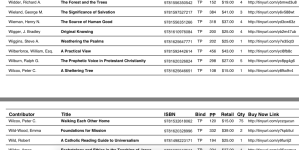
For those of us whose books sell in the double digits, seeing yourself on a remainder list would be kind of a thrill. The other day I looked at Wipf & Stock’s 50 percent off sale to find a copy of Weathering the Psalms listed. Probably it was overprinted for the AAR/SBL annual meeting, since I saw that they did have copies there again last November. If they hadn’t bothered to print out a bunch, I would never be on the remainder shelf in Eugene. I don’t mind because I’m in good company. Looking at the list I feel like I belong in some kind of academic crowd in the reduced bin. There’s a sense of community among the overprinted.

Turnabout, they say, is fair play. I’ve bought plenty of remaindered books in my life. Lately I buy used academic books because the new editions are out of the reach of an independent scholar who isn’t independently wealthy and who doesn’t have access to a university library. If I buy others cheaply, I turn the other page and expect the same back. Most of us who write academic books aren’t in it for the money. We want to be remembered for our contributions to the discussion. We took the many months and years it takes to research, write, and polish a book, and we want others to take an interest in what we have to say. It’s all about the dialogue. It’s all about the community. For those of us who never really found a home among the established academy, publication can mean a lot. It doesn’t matter that the books are sold cheaply—in fact, that’s good, because it means somebody might just read what you wrote. It’s all a matter of scale.


Nightmares with

One of my greatest phobias is that people will think I’m arrogant. Those who know me realize that I’m highly self-critical, as befits a lapsed Fundamentalist. Self-image isn’t my strong suit. So it is with great trepidation that I celebrate a tiny bit at another book contract. Book number three (still not officially titled) now rests with McFarland Books. Shortly after I signed the contract for the book nameless here forevermore, Lexington and Fortress Academic announced a new series: Horror and Scripture. Maybe you know the feeling too. You’ve just done something you’re proud of and then you’re upstaged. My book deals with the Bible and horror films—what could be more Horror and Scripture than that?

The new Lexington/Fortress series has two editors. One of them is a friend of mine. (Monsters and horror don’t often mix with the Good Book, and those few of us interested in such things receive glances askew.) She asked me if I’d consider contributing to the series. This takes a lot of careful thought on my part. I have a sum total of about an hour a day to write, often less. I can read research-related material on the bus, if I can stay awake, but other than weekends—already quite busy catching up from not being home all week—I have very circumscribed writing time. Nevertheless, I do get up at 3:00 a.m. so that I can have that vital hour to write. Why not focus my efforts onto another book? Perhaps insanely, I submitted a proposal. This week a contract came.

In the short span of one year I’ve gone from being able to claim two books to four, almost like a parable. My untitled book is written and submitted. My contracted book is already half-drafted. After my McFarland book I’d already begun work on a sequel, you see. It lacked form and substance, but the proposal forced me to bring it together. Now, barring any unforeseen disaster, I should be able to submit this new book within a couple of years. By admitting this to you, dear readers, I fear I open myself to accusations of either arrogance, or at least greed. It is, actually, rather like this: my wife often tells me “we must cut the coat to fit the cloth.” I don’t have an academic position, but I’ve learned a lot about the publishing industry over the past decade. Research is a constant in my life, as it is with most credentialed people, no matter their jobs. So it is with fear and trembling that I announce my next book: Nightmares with the Bible. Watch this space for cryptic updates as the details unfold. And please don’t think less of me for it.


Teaching Peace

Teachers, preferably unarmed, are some of my favorite people. While the travesty of a government muddles along in the District of Columbia I think back on my own education and wonder what went wrong. I’m sure you knew kids who hated school; I certainly knew plenty. For whatever reason they didn’t want to be enclosed in a classroom with everyone else, learning stuff for which they could see no practical application. Reading doesn’t appeal to everyone. Memories of advanced math still send shudders down my spine. And what was the point of gym class if it wasn’t to make those of us who liked reading feel bad at that awkward stage of life when you discover your body isn’t as well-made as that of others your age? Education isn’t perfect, but it’s what we now need more than ever.

There’s no way that everyone will learn to enjoy reading. We aren’t cookie-cutter people. Thinking, as my own mathematical experiences demonstrated, can be very hard work. No one person knows everything. That’s why, at least in my day, after you reached sixth grade you started to have teachers who specialized in subjects. What I didn’t realize as a kid is how hard these modern-day saints have it. Pay scales are low. Hours are long for those dedicated to being good teachers—the brevity of the school day beliefs the amount of work done after hours. Increasingly our educators have to hold down a second job to be able to survive. The least we can do is learn in gratitude.

School shootings are so tragic because many of the victims are those who haven’t had a chance at life yet. We elect uneducated presidents and wonder what could possibly go wrong. Education, if done right, becomes a lifelong journey. The day that passes without learning something new is the day I come home and go to bed depressed. More than simple evolving, life is learning. Teachers are those who set us off on that track. The young, it is true, have more flexibility in learning. There are more options open to you before your thinking gets set in its way. I ran into seminarians who, no matter how much you’d offer, had already made up their minds. No education required. Perhaps what we need to teach at the youngest possible age is that school never ends. The formal classroom experience may cease at grade twelve, the baccalaureate, masters, or doctoral degree, but the learning goes on. And it’s a good thing, not some bizarre punishment. For that teachers, unarmed, are those to whom we should be grateful. If only we’d be willing to invest in them.


Always Have with You

The place wasn’t meant for a family of six. Properly speaking, it was a one-bedroom house, or hovel. The attic, from which we could see the sky through the roof, was divided into two rooms, with no doors. You had to pull down the stairs in order to climb up there and that trapdoor had to be kept closed in the daytime. The house was heated by a single, oversized gas stove that sat in the middle of the living room—no ducts, vents, or radiators here. The bathroom had only a sink and a toilet. No tub. No shower. The only window that opened was the kitchen window, and before we moved in my mother insisted that my step-father pull out the nails that held the vinyl blinds permanently closed over the windows that would never open. The only reason we weren’t called “white trash” is that we lived above the Mason-Dixon line.

Reading Nancy Isenberg’s White Trash: The 400-Year Untold History of Class in America was, therefore, a little bit uncomfortable. First of all, bullies who care only for the wealthy are nothing new in American politics. Second of all, it reminded me of how, when I was found without a job, no college or university wanted to hire a guy with no connections, despite the Ph.D. That’s business as usual in these United States. What I have realized is that in this nation of self-made individuals, those allowed to make it often start from a class higher than my own. I was a first generation college student, and once my step-father gave in to the pressure to put a proper bathtub in his house, I’d come home to find carp swimming in it. White trash and ivory towers clash, don’t you know.

The saddest part of this book is that nothing has changed. Four centuries on and we still treat the poor with contempt. We love rags to riches stories because they’re so rare. The vast majority of the poor have a very hard existence. Even though, according to government statistics, we were considered a poverty-level family, we had it better than many. True, there were too many cars in the driveway, all of them used—very used, and the house was bulldozed as unfit for habitation immediately after we moved out, but many have it far worse. This book opens some old wounds, but it should be required reading for all politicians. Not that it would make much of a difference, though. The suffering of the poor is just far too easy to ignore as long as there is money to be made off of anyone less fortunate than yourself. That’s the American way. It always has been.