Contracting Something

Book contracts make me happy. After slipping from higher education into the limbo of editing, it took a few years before realizing that not all books have to be academic monographs. For the past couple of years I’ve been silently writing a book intended for general readers. The subject will remain hidden for now, but a contract for the book has arrived and I’m happy. As my friend Marvin says, “for a man being published is about the closest you can come to giving birth.” There’s a bit of truth to that. Several months of thoughts growing in your head finally culminate in a full developed form, capable of surviving outside the confines of your protective mind.
The motivation for many academics to write is “publish or perish.” In my career track I both published and perished. The thing is, I write because I read. It seems unfair to read so much and not to share a bit of what I’ve learned. If you read this blog regularly you know that I have a restless intellect—the kind of thing that in the old days would’ve made you a professor. I no longer have access to university libraries with their arcane journals and massive collections, but reading on the bus is its own kind of research. (Anyone who’s tried to write notes on a bus, however, knows that the research is limited strictly to what can be remembered after a wearisome 90-minute-plus ride in stop-and-go traffic.) A few years back I decided to start writing up what I’d been observing. Slowly a book was formed. The process is not a swift one.

Many people question the ability of editors to write books. No, seriously. Agents are generally only interested in professors, celebrities, and journalists, not those who may have been one of the above once upon a time. That’s why this book contract feels like a small victory. Weathering the Psalms was written for other professors while I was still one myself. A lot has happened since then. I’ve read hundreds of books in the intervening years. Slow study that I am, it took some time before I realized I could begin to analyze all of this and write it in a way the average educated reader could find engaging. Agents declined the project, but now I’ve found a publisher who believes. When you work on your own, like many authors do, finding just one believer is sometimes all that it takes.



How to Talk to an Editor

There are right ways and wrong ways to get your book published. When approaching an editor, there are a few things to keep in mind. For one thing, we’re human. Yes, I know that I have something you want. The usual career track for an academic is Brown, Harvard, dissertation published by a certain academic press with which I’m familiar. I get that. The internet, however, has made publishing into something different than what it used to be. First of all, you can self-publish. Sorting through all the self-proclaimed experts can be a full-time job when you’re trying to find the latest authoritative treatment of a subject. Also, the internet has made research into publishers much easier than it used to be. My first book, back in the day, was simply sent off to a European publisher that specialized in academic monographs in my subject area and then I moved on. Today authors see flashy first books online and want just that. You can have it all, they’re told.

My LinkedIn profile took a definite boost once I became an editor. Now I often think it would be great if someone asking to connect actually knew me. But I digress. One way not to get your book published is to state right on your LinkedIn profile—or other social media—that you have a great book and you’re letting all publishers know. You then invite them to connect on LinkedIn and your book announcement, like a peacock’s tail, is supposed to attract the hungry editor. In reality what attracts an editor is professionalism. Research publishers, find out what they actually publish. That’s pretty easy these days; there’s more than funny videos on the internet. Even browsing titles similar to your own on Amazon can help. Pay attention to the publishers of the books you’re using for your research. If a publisher has done several books in your area they are more likely to be interested in your proposal than a publisher who’s never ventured into those waters.

It may be easy to think of us editors as sitting bored in our lonely cubicles, awaiting the next great thing. The fact is we receive plenty of submissions and we have to sort through them. Treat the subject professionally. Many of us hold doctorates and are keenly aware of hyperbole when we see it. You don’t need to tell the editor your book is ground-breaking. They will make that decision based on the evidence before them. And trust your editor when it comes to things like how a book should be titled or placed or marketed. Publishers—some of which have been around for centuries—daily face the harsh realities of producing books in an era of YouTube and online television. We know it’s difficult out there. Many of us want to help. Some of us write books and have to go through the same travails as other authors in finding publishers of our own. Do your research on publishers. When an editor offers free advice, take it. A little bit of extra work by an author goes a long way in helping a book proposal succeed.


Novelty Religion

Religion is dead. So they say. They have been wrong before. One of the great things the web has given us is book fan sites. There are a number of them, and my wife frequently sends me stories from BookRiot. Often they are lists, and the most recent one is Teresa Preston’s “100 Must-Read Novels about Religion.” As I scanned through the tons of tomes to see which I’d read, it struck me once again just how many novels touch on—at the very least—religion. Many are based on it. That’s because religion is an inherently fascinating phenomenon. We don’t really understand it, and even the staunchest of atheists believe something, no matter how secular. Novelists are those who, successfully finding a publisher, express their views of living on this planet in terms of fiction. It’s often factual fiction.

One of the best bits of advice I can give to academics who want to write for a wider readership is this: read fiction. There’s been a time-honored stigma, of course, outside literary studies, of academics reading fiction. Once, at a conference, I was awaiting an author meeting. It was a small conference so I had taken a book to read between appointments. When my author came up, he asked what I was reading. (I’d cautiously removed the book jacket before taking my novel along, not wanting this topic to come up.) “Just some fiction,” I explained. His eyebrows shot up and he questioned why an academic should be reading fiction at all. I have known academics successful in the fiction market, but they’ve had to use a pseudonym because their real name might discredit their scholarship. We are a divided, perhaps schizophrenic, society.

Not all academic novels, of course, are cases involving religion. Still, it’s often there. I recently finished Annie Proulx’s The Shipping News and Neil Gaiman’s The Ocean at the End of the Lane. Both involved religious themes at various points. This is so much the case that unless it’s really obvious or unusual I don’t always discuss such tropes on this blog. (Although I do register the books I read on Goodreads, yet another excellent book fan site.) If they want to appeal to the deepest of human needs, novels must address religion from time to time. Paying respect to the dead is, after all, a very human thing to do. And should it prove true that rumors of its demise have been greatly exaggerated, we shouldn’t be surprised. Like they say, reading is fundamental.


The Struggle for Relevance

Futility is a specialization of those of us who consider ourselves fans of Ecclesiastes. Thus it is that the blog of an editor gets so little attention among academics. Since you’ve been kind enough to drop in, I’m going to share some secrets with you. Make sure the door is closed. Ready? I want to talk about academic publishing. If you, like me, have written academic monographs, you’ve probably figured out that we aren’t famous yet. What’s going on here? What happened to the day when “I wrote a book” meant something? Like all organisms, academic publishing evolves. Many academics want to write for a wider audience, but sometimes miss the bigger picture. Here are some tips to help out:

If you want to write for non-academics get to know some. A good first step is ditching the jargon. “Prosopography” wasn’t on many people’s SAT vocabulary flash cards. Even if you know how to use a thesaurus to find an archaic synonym to use, don’t assume your reader will do the same. Try reading a novel once in a while. They can teach academics quite a bit about how to communicate. Learning to speak the vernacular is only part of the battle, though. The larger part is learning what is of interest outside the academy. Some things, such as Ecclesiastes, aren’t. Oh, I know, I know! Five years of your life spent on some obscure topic should be worth publication. It probably is. A handful of people will read it (print run numbers would only make you weep). If you want to reach a wider readership, you have to go where people actually live. What’s of interest to them? Hoi polloi. They won’t bite. To write for a wider readership you need to learn what people find interesting and what they simply don’t.

An editor can be your friend here. You see, editors are measured by how well their books sell. We can usually tell at a glance if a topic is in the “less than 200 copy” camp or not. I know that you were taught in your doctoral program to find some abstruse subject never before addressed and research it from every possible angle. Write up your results and publish. A far better way to write for a wider readership is to begin a conversation with your editor. Are you thinking of a book on a specific topic? An editor can tell you if it’s likely to work or not. The idea of writing the book your colleagues said would be hot and then finding a publisher seldom works to everyone’s satisfaction. It’s all about communication. And you, dear readers, now know something most professors don’t.


Bible Belts

The Bible’s been back in the news. Specifically the Bible and politics. Like twins separated at birth. Jeff Mateer, Trump’s nominee for a federal judgeship, has gone on record saying Satan’s plan is working. Perhaps even more stridently, Roy Moore down in the Sweet Home state has been quite vocal that the Christian God is the one who makes America’s laws. Standing on “biblical principles” that have nothing to do with the actual Bible, politicians have found a biblically illiterate population a field of white-headed grain ready for the reaping. As sure as the sparks fly upward. The response in the educated class is predictable. Cut any funding for departments studying religion. Haven’t you heard? It’s dead!

Having grown up in a conservative, religious family, and working my way through a doctorate in a closely related field, I’ve been watching in dismay as the past quarter-century has been marked by decreasing positions in religious studies. If you can pull your eyes from the headlines surely you’ll agree that religion is something we just can’t afford to study. Wasting resources, it is, since if you teach economics you have an actual shot at the White House. Yee-haw! Pull out your six-shooter and celebrate! And no, “yee-haw” is not etymologically related to the name of the deity of ancient Israel. It’s only a matter of time before discovery of who’s been uncovering whom’s nakedness becomes public. Then you just need to say the Bible says nothing about divorce. It’s okay, nobody will bother to look it up. Intellectuals will scratch their heads—why didn’t somebody tell us religion actually motivated people?

Universities (consider the name!) used to be places where the value of all subjects was acknowledged. Of course, where there’s knowledge there’s money to be made. Once you’ve gone to the dark side, there’s no coming back. Departments that don’t earn mammon must go the way of the mammoth. Times have become so hard it’a almost like schools want to open Religion Departments just so they have something to shut down. We’ve got to keep those fields that are actually important going. Never mind if your funding depends on a government increasingly elected on the basis of perceived religious faith. Since the Prosperity Gospel is now in vogue, economic departments are always a safe investment. Slap a copy of the Ten Commandments on the courthouse lawn and follow the crowds to DC. Good thing none of this matters, otherwise me might be in real trouble.


Voting Belief

No one knows the origins of religion. Before the advent of writing we can only guess, based on artifacts. Even in the era of scriveners, nobody jotted down the origin of belief until modern times, long, long after it began. Once writings about religious practice become reasonably clear, we find temples in the service of palaces, and vice-versa. Monarchs needed the validation of deities and priests required the support of the crown. Together they brought the two swords together and managed to keep the unruly masses in check. This isn’t cynical, not necessarily, since it reflects, the best we can reconstruct, how western organized religions began. Power was always part of the picture.

A recent Washington Post story, “The stark racial and religious divide between Democrats and Republicans, in one chart,” by Christopher Ingraham, shows the diametrically opposed pie-charts of self-identified white Christians (Republicans) versus non-white or non-Christian (Democrats) Americans. Such survey results tell us much about ourselves. We vote with our faith (or lack thereof) and not with our rationality. This has long been the piece of the political puzzle that Democrats have failed to comprehend. Not to take away from Barack Obama’s charisma, but people were afraid of Mormon Mitt Romney in 2012. Although conservative, white, and evangelical, Mormons have long been questioned as to their Christian identity by other evangelicals. It would seem, in the light of present circumstances, that understanding the “white Christian” mindset might be the only way out of the morass.

Typically self-defeating, academic institutions have shown little interest in understanding religion among hoi polloi. Long ago they bought into what Peter Berger admitted was his biggest blunder, the idea that religion was dying out. By the time he made that admission, academics had ceased to pay much attention to religion. It has, of course, come back as the ghost that haunts us. Or is it a zombie, once dead and now back to life? The fact is religion was never dying. It is as much of being a human as is driving a car or owning a cell phone. When times are uncertain, we turn to what is perceived as unchanging—religion. In truth, religion is constantly evolving to fit outlooks influenced by science, technology, and social progress. Worldviews change. Our culture is becoming more diverse. Republicans have a natural voting bloc that identifies itself by race and religion. Information about the former is readily available. You’ll need to look a bit harder to find quality information about the latter, no matter how important it may be.


Power in the Blood

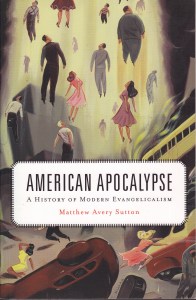
Converts, they say, are often the worst. It matters less what the conversion is to or from, since the zeal of the newly enlightened is impossible to match. The textbook example with religion, especially in America, is Evangelicalism. Those who’ve “found Jesus” are eager and too willing to tell others about it. You don’t often hear, however, of those who grew up Evangelical, but then had second thoughts. Often they disappear quietly. Evangelicalism is a potent force in American life. Intellectuals, embarrassed by it, tend to pretend it doesn’t exist. Or it’s on its way out. No need to approach, with nervous laughter, those who actually believe this stuff. Evangelicals, however, can get presidents elected and their zeal can take away any number of freedoms deemed “godless” by those who may have no more education than the local bartender. Matthew Avery Sutton’s American Apocalypse: A History of Modern Evangelicalism is masterful. Although not comprehensive (the movement is too large for that) this book does not shy from the unifying fact behind radical evangelicalism—the belief that the end is nigh.

Oh, I know. Those of us who are educated have no need to take such nonsense seriously, right? Sutton may change your mind on that. When you realize just how close to disaster after disaster this thinking has led (and continues to lead, under the current administration) us, you might want to take the Fundamentalists a bit more seriously. They constitute the largest religious bloc in the nation. One of the baffling things about them is their protean nature. What’s the difference between an Evangelical and a Fundamentalist? And what’s with the obvious differences between a Timothy LaHaye and a Billy Graham? And where do these people get all their money? (Fundamentalists have always been close to nearly endless, well, funding.) Republican presidents from far before Nixon realized that big business and conservative theology, although strange bedfellows, are remarkably compatible. (Each thinks the other side doesn’t realize it’s being used.)

American Apocalypse is an important book. Written before perhaps the strangest turn in US history last November, it might have helped to show that Trump was a serious threat from the beginning. If only the educated took it seriously. Evangelical antipathy to women’s rights, civil rights for minorities, and socialized medicine run very deep. It’s the Old Boys’ Club with a vengeance. Recent events have shown yet again how important it is to understand these ways of thinking. And those of us with insider knowledge have never been welcome in the academy. That’s okay, though. If I go back to my roots I’ll realize the world’s about to end any day now. Those who’re smart might think about taking equestrian training because I’m sure there will be white horses involved. If only I could get myself converted back.


Citation Anxiety

As a recovering academic, I sometimes am compelled to look when Academia.edu sends me notices. Academia, most of my academic colleagues don’t realize, is a for-profit website that advocates open access. “Open access” (or OA in the biz) is academic trash talk for making the published results of research available for free. It’s a great idea, but it often doesn’t take into account how complex publishing really is. Peer review, printing, and distribution of articles all take money and to make all research free cuts out what those who publish the research can use to fund the venture (with a cut taken out, of course, to make the whole thing worth their while). That’s the way capitalism works. (Look it up under economics.) In any case, not realizing that Academia is also a profit-making venture, lots of us put our published papers on it, making them freely available to anybody who cares.

Once in a while Academia will send its users a flattering notice: “X-hundred people have cited your papers.” Be still, my throbbing heart! Desperate for any attention, most academics (let alone us exes) are thrilled that more than 100 people have read their stuff. So I clicked their link. “309 papers mention the name ‘Steve Wiggins’ or ’S.A. Wiggins’” it cheerfully reads. I know something the robot apparently doesn’t. I’m not the only Steve Wiggins on Academia. There is a slightly older agronomist whose name I share. He’s employed in academia and has more papers than me. And “S. A. Wiggins” could be anybody. My 309 paper mentions shrinks to double digits. Not high double-digits either. Names are hardly unique identifiers. With some seven-and-a-half billion people, there’s bound to be some reduplication. I always tell the few curious to search “Steve A. Wiggins”—with the quotation marks—to find the few, true references.

Taking on the internet is a fool’s errand. This blog gets a few piddly hits a day. I often consider closing it down. Readers don’t share it enough to get any attention. It takes a lot of effort on my part since I write books (both fiction and non) in my hours not at work. So when Academia shows up in my inbox my excitement spikes, just for a moment, and I go on with my other work, which never seems to get done. And then, when I’m sure nobody else is looking, I go ahead and click on the link.


The Rights and Privileges

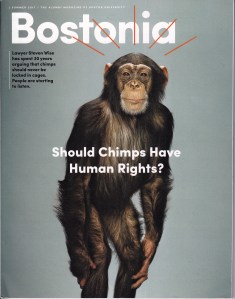
Bostonia is but one of several alumni magazines that makes its way to our humble apartment. Between my wife and I we have many colleges and universities begging us for money while offering us no jobs. Despite being a denied professor I have little time for magazines. I’ve always been a book man. If I’m going to put time into something I want an ISBN to claim at the end of the day. Still, the cover of the Bostonia asks a relevant question: “Should Chimps Have Human Rights?” I have long argued, based on books I’ve read and on personal experience, that animals are conscious beings, like we are. If consciousness evolved, it has to have its roots in other animals, otherwise scientists are positing “special creation,” call it what you will. If animals share consciousness, they should share rights.

People have used animals for as long as they could figure out how to do so. It may have been a two-way street at first, since we’re pretty good at protecting critters we find valuable and who doesn’t like a free lunch? They stick around us. The earliest domesticated animal seems to have been the wolf, which we made into a dog. Other common mammals joined the mule train after that. Humans: they treat you rough, but they’ll make getting food a snap. There’s a kind of consciousness involved already, don’t you think? If they can’t figure out that we’re not going to harm them (at least not yet) then they’re smart enough to keep their distance. Not all wolves became dogs.

Primates, however, are a special case. They sort of look like us. Chimpanzees, especially, act like us. They don’t get human rights because those are reserved for others of our own species. I mean, consider those in charge of the free world! They believe in the right to acquire as much of the world’s resources as they can for themselves. They guard the use of those resources so they can live in unutterable luxury and make everyone else pay through the nose for the very necessities of keeping alive. The masses pay taxes while those who have more than enough do not. We are a domesticated species, it seems to me. Don’t get me wrong—I do believe chimps should have human rights. Other animals too. We’re all connected. But the real question I have, looking at the headlines from Washington, DC, is turned the other way around: should humans have the rights of chimps? Don’t ask me; universities won’t hire my likes when others will bring them greater glory. They’ll gladly accept my money, however. It’s their right.


Night and Day

Jim was aghast. The joke had been entirely inappropriate. I had asked him about the Pentecostal service we’d just left. Jim was my college roommate and had invited me to see what his tradition was all about. I’d witnessed speaking in tongues before, but never on such a scale. That wasn’t what was bothering Jim, though. The minister had told a joke about a demon. It had something to do with a man possessed by a coffee demon. The exorcist declared to the demon “You have no grounds to be in him!” Inappropriate. It might make people think there weren’t real demons. We used to disagree on many points, but remained friends. I lost track of Jim. He dropped out of college to go follow a spirit-filled man in Waco who’d learned Hebrew and Greek without ever having studied them. His concern about that joke, however, raises an interesting question.

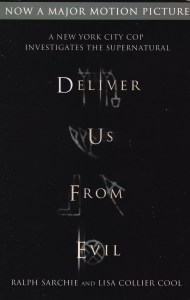
I’ve just finished reading Ralph Sarchie and Lisa Collier Cool’s book, Deliver Us from Evil: A New York Cop Investigates the Supernatural. It’s hard not to like Sarchie. A rough and tumble associate of Ed and Lorraine Warren, he is most sincere law enforcement officer (now, at my age, retired). Openly believing in the supernatural, claiming his traditionalist Catholic faith, he hates demons for the misery they cause both humans and God. I admire such unquestioning faith. At the same time he’s clearly aware of his own foibles and weaknesses—something we might like to see more often in the police force. He doesn’t doubt, however, that demons are real. The concern, however, is that he might sometimes be a bit harsh on non-Christian religions. He admits that he’s not the most studious of demonologists.

No doubt, belief is important. Belief with knowledge is even better, it stands to reason. Problem is, academic or scientific studies on demons are sorely lacking. Sarchie was an associate of the controversial Malachi Martin (whose book Hostage to the Devil I blogged about some time ago). I feel for someone who wants to know more but runs into the limits imposed by academia. Where do you find information if the recognized specialists in a discipline don’t write about it so regular people can read it? It is a real dilemma. A scientific approach would declare the events in Deliver Us from Evil (also published as Beware the Night, before being released as a movie) are anecdotal. This is technically correct. No laboratory procedure exists to confirm something science denies exists in the first place. The only weapon against such a foe is faith. Thinking back to college, I don’t know what happened to Jim, but on this point I’m sure he would have agreed.


Average Reality

One of the stranger dynamics of higher education is its unquestioning acceptance of a one-size-fits-all methodology. Don’t get me wrong—the empirical method works. The only real problem with it is that not all phenomena in the universe cooperate with human observation. It’s something I call the problem of occasional phenomena. Perhaps because of the rancid taste left in scientific mouths by lingering creationism, anything that isn’t slow and regular enough to be directly or theoretically observed simply can’t fit in this old world. The weird, the anomalous, the strange—these open the door to possible spirits and spirits have no way of being measured. At least not yet. The most convenient way to deal with them is to call them superstition and end the discussion right there.

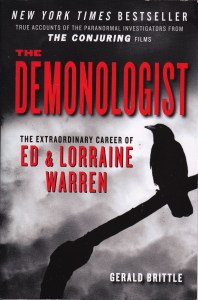
The larger problem is that people see things. Unless said people are scientists, they are considered amateur observers, liable to mistake what they see. The classic example of this is ghosts. From the beginning of recorded history people have claimed to see them, or hear things go bump in the night. Some of the first modern people to make a profession out of exploring such things were Ed and Lorraine Warren. Unfortunately, they didn’t write books about their experiences. Largely because of movies made about some of their high profile cases, there has been a resurgence of interest in the couple and the books originally published by other presses, such as Prentice Hall and St. Martin’s, have been reissued by Graymalkin Media. These are co-written tomes of uneven quality. They’re also like candy—once you start on them it’s hard to stop. Gerald Brittle’s The Demonologist is one such book. More than others in the collection that I’ve read, it concentrates on a single phenomenon that overlaps with the world of religion—demons. Unlike trained religion scholars, however, the Warrens aren’t shy about declaring what demons are (fallen angels) and how they differ from devils (it’s all about rank).

What makes these books so interesting is the dispassionate description of the cases the Warrens investigated. Unless they are pathological in their connection to telling untruths, there’s some very odd stuff that goes on out there. Although they declare once in a while that other religions and their practitioners can also deal with demons, there’s a simple kind of black-and-white view of morality that fits what you might have learned in Sunday School. One of the reasons for this, I suspect, is that most academics don’t take an academic interest in demons. Once they’re filed in the mythology folder there’s no reason to try to figure out what they might “really be.” The Warrens’ outlook, therefore, has become canonical among ghost hunters. They certainly have more credibility in that crowd than most Harvard Ph.D.s. It’s funny what can happen when you refuse to explore what the average person considers to be just as real as the physical world we all think we know so well.


Classical Education

Andrew Dickson White famously wanted Cornell University, unlike what would become known as the other Ivy League schools, to be non-sectarian. Most Ivy League universities were founded as seminaries or with the strong influence of churches. On farmland gifted by Ezra Cornell, in Ithaca, New York, the school became one of the first truly secular world-class universities. As I approached Ithaca over the weekend, my wife told me that the town had once been briefly known by the name of Sodom because the remote location’s reputed notoriety for sabbath breaking, horse racing, and profanity. It is now considered one of the most enlightened towns in the country. Famous for its waterfalls and gorges, one of the cascades is still rejects the biblical slur with the sobriquet “Lucifer Falls.”

Many place names—indeed, much of American culture in general—reflect(s) the Bible. Ours is a culture in denial of just how formative religion has been for who we are. Because of our willful blindness on this point we sometimes run the risk of being entrapped by our heritage. Despite how much we’ve educated ourselves we still see what we want to see. Our religious heritage is often considered an embarrassing family secret rather than the path by which we came to be a civil society. Religion is so frequently portrayed as an evil force that it’s easy to forget just how much we owe it for our evolution. Even education itself had a religious motivation since teaching students to read was often done with the intent that they should read the Bible.

Like nearby Binghamton, Ithaca has a statue dedicated to Martin Luther King, Jr. It bears a biblical quotation from Amos without embarrassment. Ithaca today is a livable, socially conscious community. Recycling is strongly encouraged while cars are not. Hardly a hotbed of immorality, it is one of the great examples of an American college town. Ideas are welcome here. Befitting its classical heritage of education, the city is named after the island ruled by Odysseus, according to Homer. Indeed, Ulysses lies just down the road. Homer (and yet another town in the area bears that name) presented Odysseus as among the smartest of the Greek kings. Like most classical Greeks, Odysseus was only too conscious of how the gods could interfere with one’s life. Instead of denying the obvious, however, religion was recognized as a necessary source of culture. Not that it always has to be taken too seriously. Maybe it shouldn’t be completely ignored either.


Editing Sheep

Many academics I know dismiss editors as just another species of laity put on earth to serve the guild. There’s perhaps some truth to that. Without people to write books—and few beyond the professorate are granted the time and leisure to do so—we’d be without a job. One of the more hidden aspects of being an editor is, however, its prophylactic role. One thing that those of us who’ve written books know is that we get pretty close to our subject. We have to. Writing a book while viewing your topic from a distance is possible, but not desirable. Being too close to your subject, however, often leads to extreme myopia. Many are those who are quick to dismiss editorial suggestions wonder later why their books didn’t do better. Think about it. Editors, by definition, read all the latest stuff.

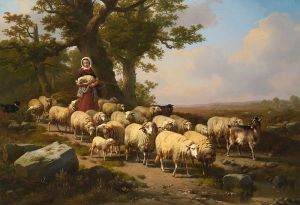
We’re kind of like shepherds, my fellow editors and me. We try to keep the ideas in order. We’re not the owners—the authors are—but without an able shepherd you soon find yourself lacking the sheep that make you wealthy. The benefit of an editor is having dispassionate eyes—often knowing eyes—viewing a nascent book without the love of a parent. Don’t get me wrong—we often have great fondness for those books we didn’t write. We can tell the author something s/he is too attached to the text to notice. We can help the writer avoid mistakes. Not that we’re perfect, but we are critical because we’re rooting for you. Facilitators.

It used to be common for editors to be authors. With the growing atomization of specialization, however, this is fairly rare these days. As a colleague of mine once put it, editors are more like deans than faculty. We look at book budgets and statistics. We face the harsh realities. And some of us were once faculty. I receive dismissive notes now and again, supposing that I’m an English major who made it good. Unlike many editors, however, I write. I’ve sat on both sides of this desk and when I offer advice it’s for your own good. Academics and publishers need each other. For one, without books there’s no promotion. Without books, for the other, there’s no paycheck. Like any shepherd, however, we know that the sheep are the important assets. We shepherd ideas into books. But you have to trust the shepherd to do the job.


Making Prophets

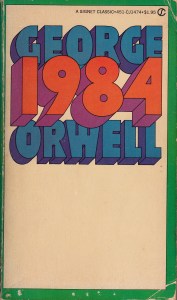
I first read 1984 around its eponymous date. The context is informative. I was a student at Grove City College, a conservative, Reagan-esque school of strong free-market inclinations. Being a first-generation college student I knew nothing of choosing a school, and since my upbringing was Fundamentalist, and since Grove City was a place I’d been many times, it seemed the natural choice. As my four years there wore one, my conservatism became effaced before what should be the effect of higher education. I was reading and learning new things—ideas that in the pre-internet days were simply inaccessible to someone from a small town which had no library, no bookstore, and, to be honest, no charm. How was someone supposed to learn in those circumstances? Largely it came down to high school (for those who finished) in a nearby town, and television. George Orwell saw the potential of the latter far too clearly.

It was in this great conservative bastion that I read 1984—I don’t even remember what course it was for. I do remember vividly the discussion of the Appendix on Newspeak—that it was a danger, a very real danger, to engineer language to prevent free thought. That was conservatism in the literal era of 1984. When that year passed we breathed a collective sigh of relief that Orwell’s prophecy hadn’t happened. Maybe Orwell wasn’t a prophet after all. The thing about prophecy, however, is that it unfolds slowly. Trump may have caught the world by surprise, but the evidence is there that the Orwellian groundwork was being consciously laid from the time of the Clinton Administration onward. Those who seemed to think Ingsoc was onto something good began working in local politics—the level of school boards and state elections, to build a strong conservative bloc. How many states have Republican governors? Go ahead and look it up, I’ll wait.

Progressives blithely moved ahead, making real ethical strides. One problem that they’ve always had, however, is believing that Evil is real. It’s an outmoded idea, fit for Medievalist thinking only. There are, however, very real racial supremacists out there. And avowed, unrepentant sexists. They feel that the great white way has been slighted and they are itching for revenge. Don’t believe me? Turn on the news. This is not your father’s Republican Party. In 1984 the Republicans were warning us about 1984. By the next decade they were actively emulating it. Orwell died paranoid and the world was relieved as his prophecy was harmlessly classified as fiction.


A Kind of Contact

I find myself in Ithaca, New York. Places have a resonance with people, and this is one of those places I feel like I belong. The feeling may not be mutual, but that makes it no less real. At least on my part. Dominated by the presence of Cornell University, this town of waterfalls and free spirits represents everything I value. Education, creativity, and an easy familiarity with nature all have a place here. And Carl Sagan. No doubt astrophysics is far more sexy than religious studies. I didn’t watch Cosmos when it aired, but I knew of Sagan as its driving force. Before being daunted by the math, I had considered astronomy as a career; Denied tenure at Harvard, Sagan came to be associated with Cornell, to Ithaca’s enduring benefit. His house above Ithaca Falls is still pointed out by the locals.

Star status for academics, so I’m informed, is a mixed blessing. Accusations of being a popularizer are flung somewhat liberally at those who know how to explain things to non-specialists. Part of the ivory tower mystique is to remain inaccessible and impenetrable. Teaching, at the same time, is expected to open lost worlds to the curious. Sagan, like Bill Nye—another Cornell star—wasn’t afraid to take his knowledge to the streets. And such receptive streets there are in Ithaca. It’s a place a child of the sixties can feel at home. Looking for fossils in the many gorges, I’m reminded that the old and new are not so different in a universe billions of years old.

The sense of place, while scientifically dubious, is nevertheless real. Part of my ancestral heritage lies in upstate New York. My grandfather, while not a college man, took a couple of courses at what was then Cornell College to launch his teaching career. Following in grand-dad’s footsteps, my own teaching career (which, however, never included Cornell) didn’t last long. Yet somehow we both ended up passing through Ithaca. People on the street. Waiting to be enlightened by stars that shine brighter than my own. Life is a series of places. All, it turns out, are temporary. Rod Serling once said, ”Everyone has to have a hometown, Binghamton’s mine.” He left the nearby town, but he has remained there ever since. Places are that way. I’m in Ithaca right now, but the stark reality of New Jersey awaits at the end of the day.