Nothing But the Truth

Blurbs are the way of the future. It is so much easier to read something brief than to have to wade through an entire article. Is that the way the future’s going? I read the blurbs for Christian Century’s round-up page when it lands on my desk at work, and I find plenty of interesting things there. For example, a recent issue suggested that truth may be getting harder to find. It began: “George Johnson [New York Times was the source] says modern culture is reaching the point at which there are no longer any incontrovertible truths, just competing ideologies and narratives.” It goes on to describe how issues like creationism are less concerned with “truth” than with fitting the world into their view. Likewise, those who object to putting telescopes on Mauna Kea see science as cultural hegemony. In a post-modern world there is no objective truth. Even as a college student I remember learning that if I found the Truth, with a capital T, there was no way to know it was actually the truth. “All truth is God’s true” some professors used to say tritely.

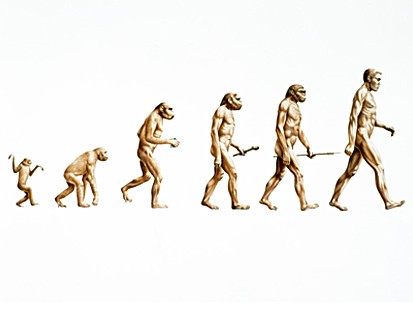
That doesn’t stop those of us who’ve been motivated our entire lives by the search for the truth. But how will we know when we get there? I first learned about post-modernism in my teaching days. Some of its ideas are perfectly logical: we can’t completely share an author’s meaning; words have no meanings, only usages; when we read we bring our own meaning to the text; an author’s intention is not definitive for what a text means. These ideas are deeply disturbing when we look at them closely. Then I began to read that scientists recognize that our brains did not evolve to discern the truth. Our brains evolved to survive, and even a dim approximation of the truth will help us get to reproductive age. In fact, dim approximations of the truth might explain much of our dating behavior. So, we’re led to conclude, there’s no Truth after all. Just “competing ideologies and narratives.”

DSCN2025

I studied a fair amount of philosophy in my time, and I do believe in Truth. That’s not the same as saying I’ve found it, since no one can honestly make that claim. All that we can admit is that we believe we’ve found it. Those who object to evolution say they know the Truth and it is special creation. All the evidence points against it, but all the evidence doesn’t fit the worldview. We lose something that can’t be replaced when we jettison the truth. As soon as I learned about existentialism I realized that it had long been my philosophy—making our own meaning in a world where certainty is unknown. Even those who claim that science will give us the answers have to admit that if faced with ultimate Truth we might not like what we find. We can only believe that it will be good. And hope that we are right.
Scholarly Synchronicity

Simon Parker STH Professor April 2, 1999 PORTRAIT

Simon Parker
STH Professor
April 2, 1999
PORTRAIT

One of the great ironies in my life is having been basically ignored while I was employed in higher education only to have people make overtures to me once I no longer had the resources to undertake the task. I’ve been asked to peer review articles, and write articles and contribute to books. I even had a series editor try to get me to write a monograph. Thing is, I don’t have regular access to a library, and I spend eleven hours a day either at work or getting to and from work. When am I going to find time to write a well-researched book or article? Well, I’ve been working on my Society of Biblical Literature article since May and it should be ready by November. If it weren’t based on pop culture, I could never have managed it under present circumstances. Still, when a colleague asked me to contribute to Simon Parker’s Festschrift I couldn’t say no. Although I didn’t take classes with Simon, he was Academic Dean when I was at Boston University School of Theology. Although I didn’t know it at the time, we shared an interest in Ugaritic studies, and we exchanged articles and ideas via letter when I was in Edinburgh. We became friends. Simon died suddenly the year I lost my job at Nashotah House.

Since that time I’ve written over a couple thousand blog posts, and read a few hundred books, but that’s not the same as academic research. I’ve been worried about what I might contribute to do honor to a scholar and a gentleman. Then I tried looking at some old files from two laptops ago. Of course the new laptop can’t open them (that’s why Scrivener is a lifesaver). I pulled out a paper that I wrote the year I lost my job. I never did finish it, but it was well underway when my confidence began to crumble. After translating it to the new decade, I opened it only to find the first footnote dedicating it to Simon Parker. I stopped, stunned. That can’t be right. When I wrote this I knew nothing of a Festschrift. Then it hit me. I had originally written the article just after I learned of Simon’s untimely death. Do I still believe in signs?

So now I have a base from which to start. I have only a couple months to bang it into shape, and I also have to finish my SBL article. While at Nashotah House I produced an article a year and a second book (published only last year), i.e., the “academic standard.” Nobody invited me to contribute. Now that I have no time, people are finally interested in what I might have to say. Not interested enough, of course, to offer me an academic position, but it does look like the publication record might continue after all. It won’t be what it could have been had I had a library, but I am nevertheless honored. One of the accolades that academics covet is having colleagues care enough to write something for you. I guess that’s been on my mind for a decade in the case of Simon Parker. I only hope that I can do him proud from where I am.


What’s a Bible?

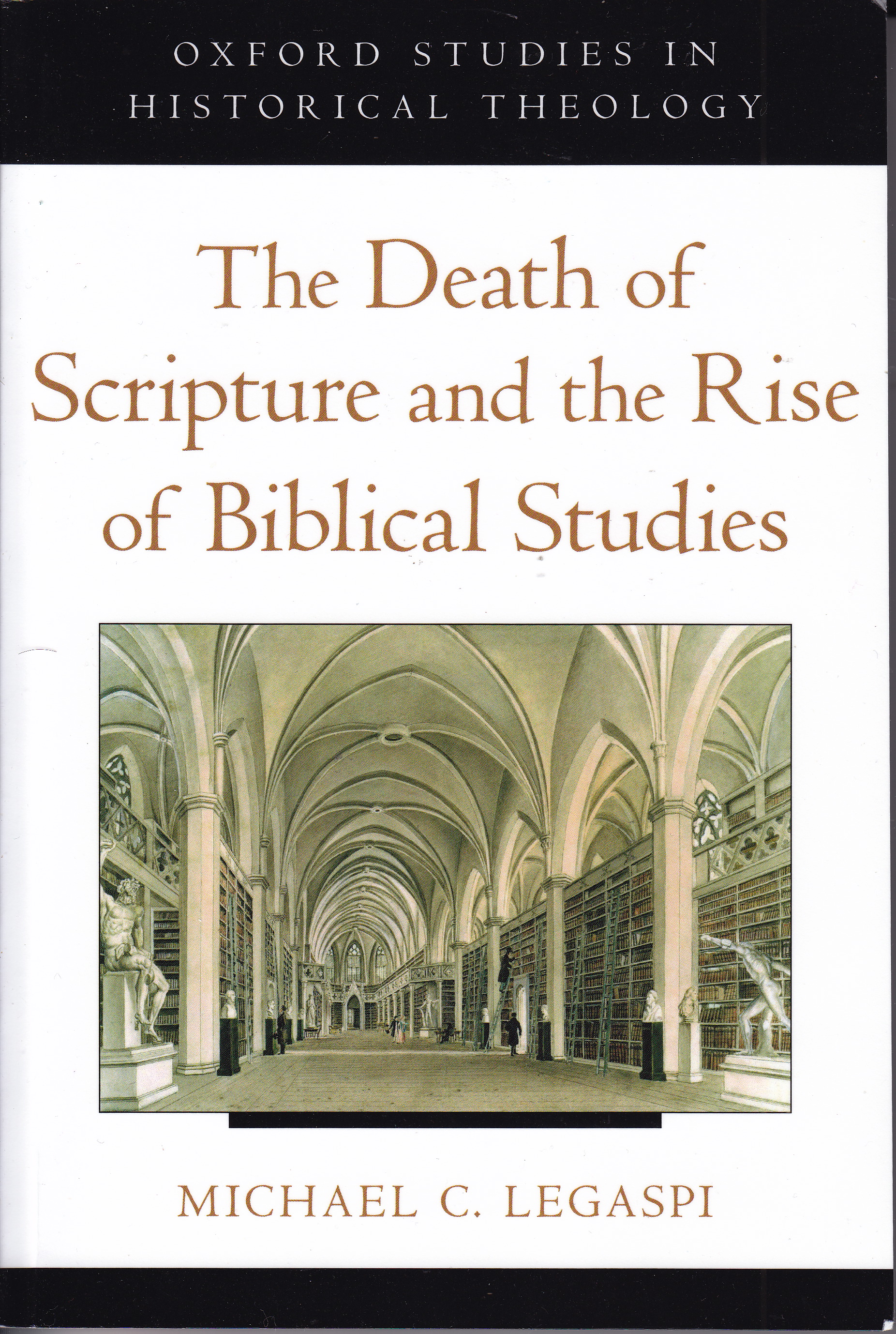
LegaspiWhat is the Bible? This might seem a strange question coming from someone who holds a doctorate in what has sometimes been characterized as biblical studies. Still, it is a valid question. The fact is, very different things are referenced by the word “Bible.” This is made abundantly clear in Michael C. Legaspi’s The Death of Scripture and the Rise of Biblical Studies. Legaspi points out that the Bible hasn’t always been the central force of Christian identification that it seems to have become. Martin Luther was largely (but not solely) responsible for the view that the Bible alone is sufficient for eternal well-being. Historically it had been much more complicated than that. The church had traditions and sacraments, Judaism had Talmud and rabbinic interpretation. The idea that the Bible alone was necessary was more radical than it might seem in today’s secular world. The problem was, the Bible isn’t an easy book to understand.

It has long been recognized that the Enlightenment and the Reformation went more or less together. The mysticism and mystery of “superstition” were bound to fade in the brilliance of pure reason. The Bible, however, still held a revered place, and it had to be studied. The sea change of the scriptural Bible to the academic Bible took place largely in Germany. No surprises there. What Legaspi demonstrates is that this study was closely bound with the university as an organ of the state. Germany didn’t boast the oldest universities in the eighteenth century, but it could claim the most intellectually rigorous. Among its biblical scholars, indeed, perhaps the one who led to the creation of the academic Bible, was Johann David Michaelis. The book is mostly about Michaelis and his influence and background in biblical studies. Clearly, applying university treatment to an ancient text was not going to be Sunday School.

By the time people like me began advanced study of the Bible, the “academic Bible” was about all there was. Many of us with serious training in the field watch in wonder as some (many) theologians take the Bible literally. They use ideas and concepts that biblical scholars have long recognized as artifacts of antique understanding. The problem is once you’ve gone down this path, there’s no going back. You can’t unlearn the academic Bible. So, what is the Bible? Obviously, it’s going to depend on who you ask, but it is clear that no one answer will satisfy all takers, even if they all claim to share a single faith. And should you venture to those hallowed halls of higher education, you’ll find the Bible is studied here, as are dinosaurs and an earth that is a few billion years old.


Hurricane Joaquin

The name Herostratus is deservedly obscure. In fact, I shouldn’t even be mentioning him here. His use as an object lesson, however, seems apt in a country fascinated by firearms and fame. Herostratus was an arsonist of the fourth century B.C.E. who destroyed the Temple of Artemis in Ephesus, one of the Seven Wonders of the Ancient World. He perpetrated this crime so that he would become famous, and he is representative of those who want fame at any cost. So it was that on Thursday a gunman, who shall remain nameless here, shot and killed nine people at Umpqua Community College in Oregon before being killed by police. This individual, upon investigation, had been fascinated by how obscure people gain immediate fame by killing innocents. After a summer of what seemed like endless, pointless shootings, we now have nine more graves of students to mourn, and as a nation we still lovingly stroke our guns.

Society is a dangerous combination of a cult of celebrity and violence. Most of us live our lives in utter obscurity, not being noticed. For many that is the way they want it, but for some it is a pathology. Guns are so easy to find. Police discovered seven firearms in this man’s apartment, in addition to the six he took to campus. Doing the math confirms the madness of a nation that makes guns so very accessible. Even the insane may buy. All it takes is money. The Temple of Artemis was one of the most magnificent structures of all time. It even gets mentioned, in an indirect way, in the Bible. Although it had been rebuilt, the idea had already fermented, without firearms, that fame could be had for infamy. In antiquity the perpetrator’s name was outlawed. Now anyone can find out who he is.

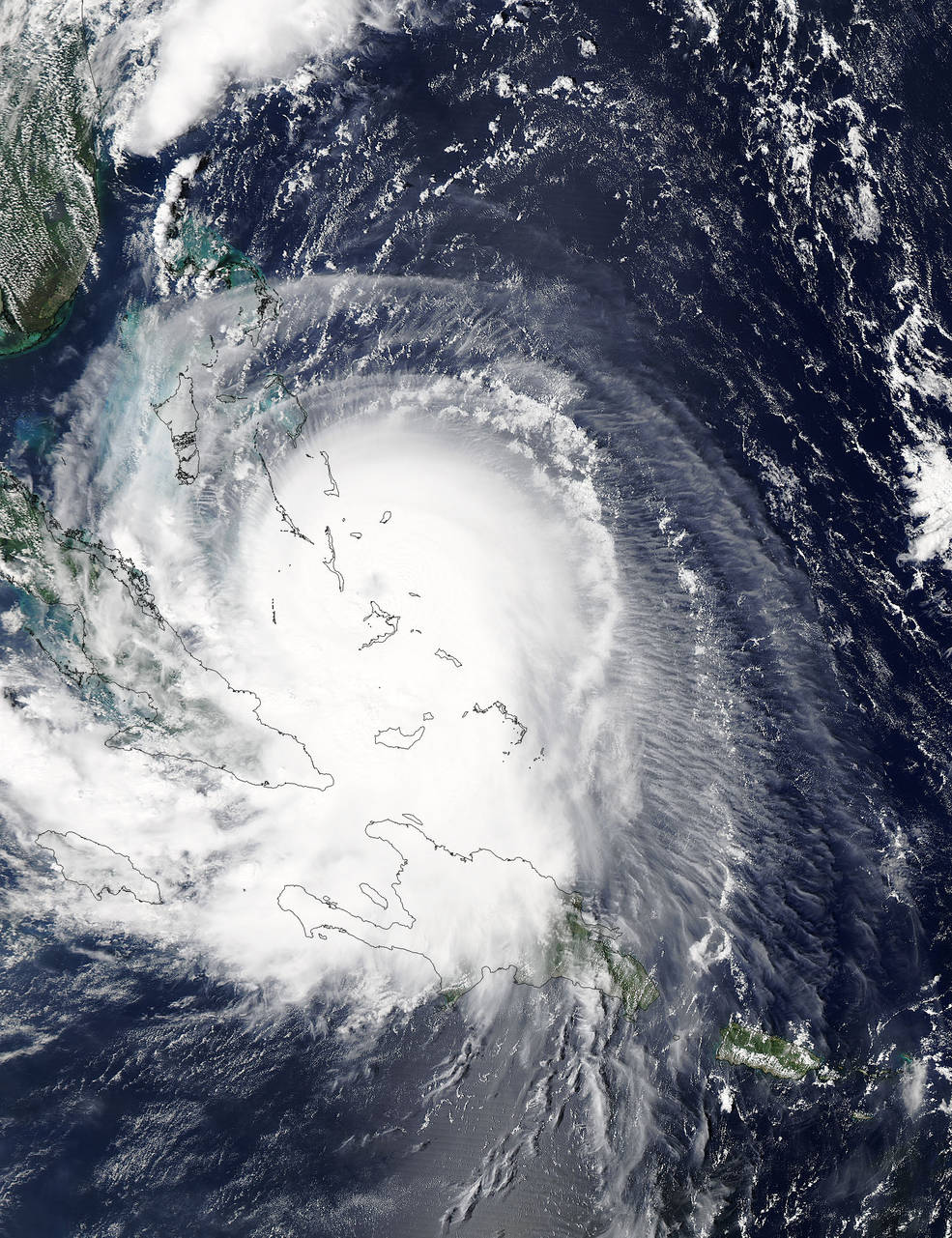
No shooting is without tragedy. Those that take place on college campuses and high schools are especially tragic because education is the only way to move forward from barbarism. Those who went to class on Thursday were improving their minds. Education makes the world a better place. They were, however, eliminated by a nameless man with easy access to weapons and a wish for fame. Perhaps American Idol and American Gladiator should offer a venue for those who wish to slaughter each other in public. It could be sponsored by the NRA. It was the ancient world, after all, that also gave us bread and circuses. Although the hurricane may be veering away, we have already been hit by tragedy, only this one was of our own making.

joaquin.a2015274.1755.1km


Apostle

Apostleposter

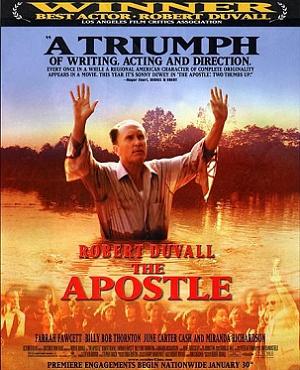
I was teaching in a seminary when Robert Duvall’s The Apostle came out. Seeing the favorable reviews, I put it on my wish-list and somehow it never managed to rise to the top. Perhaps it was because I worked at a religious institution 24/7. Seeing a movie about church felt almost superfluous. Many years on now, my wife bought me the DVD (yes, we’re old-fashioned) and we finally sat down to watch it. I realized, as the preaching started, that I didn’t know what to expect. I assumed that Sonny would be a typical Elmer Gantry-type character, cynical and self-centered, but as I kept waiting for the sneering commentary to come, it never did. The movie didn’t valorize Sonny either—he is a flawed preacher who commits murder out of jealousy and flees the state to start a life elsewhere. Landing in rural Louisiana, he begins building a life doing what he does best—preaching. The local people benefit from his presence, so I was waiting for the cracks to appear, but they never did. The movie is amazingly respectful of Holiness, or Pentecostal religion. It left me quite thoughtful.

Having grown up in a non-denominational setting, the scene of the altar call was one that was familiar to me. Fiery sermons were also something I’d seen before. Theological education, of course, causes one to question much of this, which is why many Fundamentalist churches do not hire seminary graduates to be their clergy. Study tends to refine that ability to let go and have emotion become the substance of the service. Recalling my own childhood, steeped in the Bible and fervent fear of Hell, church was primarily an emotional catharsis for me, not an intellectual enterprise. The problem for me was that I couldn’t stop thinking about it. That’s where it often starts to crumble for those who want to understand emotion-driven religion. It doesn’t mix well with rationality.

The Apostle is made all the more powerful for its use of actual Holiness preachers in the movie. When they’re preaching, they’re not acting. They’re preaching on film. Part of the draw, I suppose, for many viewers is that this is a foreign world. Mainstream church services are often subdued, perhaps even dour, by comparison. They are, however, more rationally driven. The substance of any mainstream liturgy derives in some form from Catholicism. Pentecostalism dismisses all of that, retaining the music and the sermon and the Bible. Otherwise, they are practically different species. The storyline of the movie isn’t anything grand. Preacher commits crime, repents, gets caught. Still, there’s an authenticity to it that makes it compelling. No Jim Jones here. No David Koresh. Just a man, in many ways typical, trying to make his way in the world in the only way he knows how. And that can be inspirational.


Pope-ulation

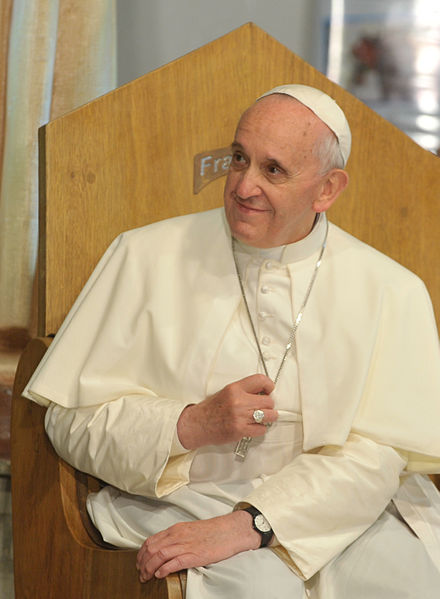
My brother, who art near Philadelphia, recently told me that the City of Brotherly Love began towing cars from the no park zone a week before the Pope’s anticipated arrival. There are those apocalyptic concerns for the commute into New York City this week as well. Papal visits are always big news, but Pope Francis has captured the hearts of many, Catholic, Protestant, and non-Christian alike, because of his obvious and sincere care for people. Mercy, kindness, sympathy, and empathy have long been overlooked in many organized religions, and to have the head of the largest Christian body in the world emphasizing just those things has been a breath of well, spirit. As our world has turned increasingly towards materialism fueled by a rationalism that says this physical world is all there is, a hunger has been growing. People need to be assured that there is some meaning in being people.

Photo credit: Tomaz Silva/ABr

Photo credit: Tomaz Silva/ABr

Theological purity is all fine and good, but it is only, literally academic. We send our clergy to seminaries to teach them to understand the rational part of faith. Many laity may not realize that a Master of Divinity is a three-year degree because it has to allow time for spiritual development. I was unlike most seminarians, having majored in religious studies. Coming into ministry from all areas of life—science, medicine, politics, business—many seminarians aren’t accustomed to taking school time to get in touch with their souls. It is a foreign concept in a world where we’re daily told we have no souls. Pope Francis is a pontiff with a soul. And the world has noticed.

We need those to whom we can look up. We need heroes not only of the action movie variety, but those of more human dimensions as well. Two of the most populous cities in the country are preparing for a kind of epiphany. America has long been a country of laissez faire ethics. Leave it alone and it will all take care of itself. We can all see through that. The northeast coast is bracing for a different kind of hurricane this season. It will mean traffic headaches, for sure, and no doubt many will be chagrined at all the fuss. Still, I have a difficult time seeing this as anything other than a hopeful sign. Perhaps we have a need for religious heroes still, after all.


The Climate of Belief

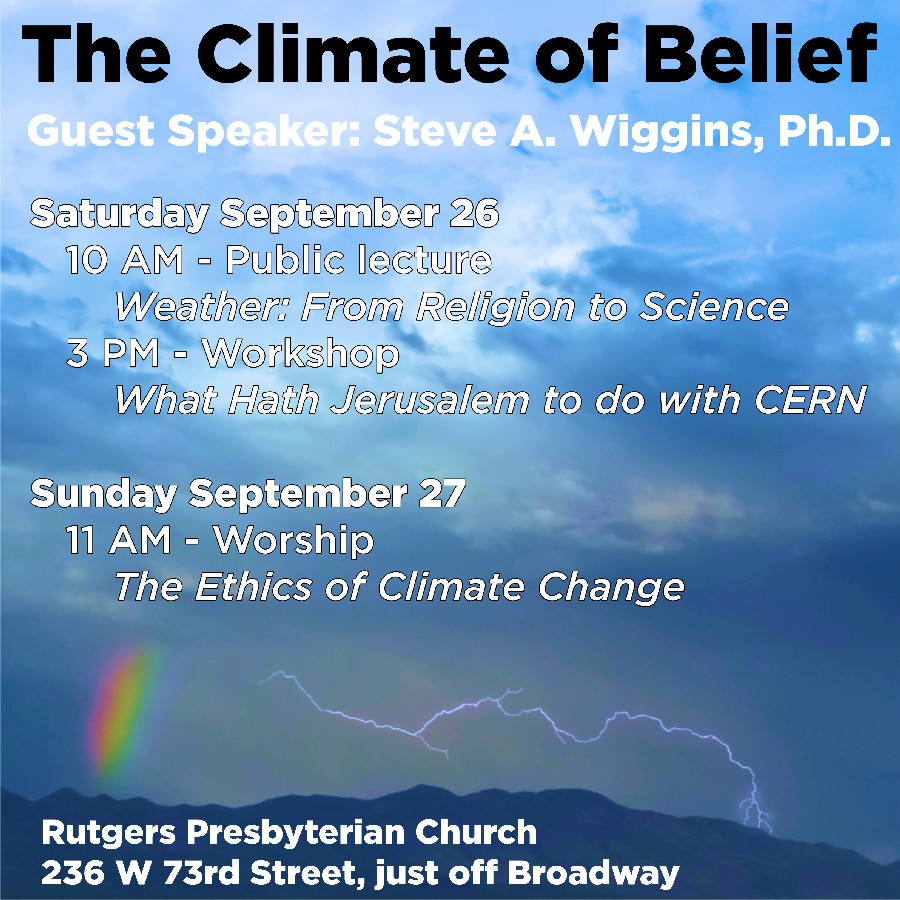
As I’ve noted before, in our culture where an individual voice is hard to hear, those without institutional affiliation are generally considered self-promoting hacks. That’s really too bad, given that so many highly educated people end up in menial positions—our society’s “greatest resources” squandered away behind a counter or sequestered in a cubicle. So it was my great honor to be asked to present Rutgers Presbyterian Church’s Autumn Guest Lecture this year in Manhattan. When I taught at Nashotah House invitations to speak came frequently, even though it was a small school. I even once received an invitation to talk when I was an adjunct at Rutgers University. Since “going corporate,” it seems, I have nothing to say. It really is wonderful to be asked to speak again. Practicing my talk brings back many fond memories. Lecturing is in my blood. The Pastor asked me to come after my book, Weathering the Psalms, was published. Never intended as a best-seller, it has quietly sat on the sidelines, like its author.

weather wiggins ii sml

I suppose a bit of shameless self-promotion might be in order, but of course, I will feel ashamed for pointing out, when it’s all over. If you happen to be in New York City this coming Saturday and Sunday, so will I. Rutgers Presbyterian is located on the upper west side, not far from Lincoln Center and the Museum of Natural History. I’m always glad for an audience. See? Now I feel bad for having said so. My theme over the weekend will be “The Climate of Belief.” In addition to the weather, we’ll be talking about religion and science. Two worldviews that seem to be in constant conflict are not really the bitter enemies they seem to be. I won’t give away any spoilers since then you’d have no reason to come to my New York debut.

Further along, I am scheduled to give a paper at the Society of Biblical Literature annual meeting in the Society for Comparative Research on Iconic and Performative Texts (SCRIPT) session on sensing scripture. My talk on that occasion will be on how the Bible is presented as an iconic book in the first season of Sleepy Hollow. Be sure to mark your November calendars now! It’s not too often that a person with no institution willing to back him gets to speak twice in a year. Someone who’s in a position to hire professors once told me that with so many candidates out there, you have to wait until you fall in love with one. Being a Don Juan, whether in amore or academia, has never been my strong suit. Still, if Elijah is to be believed, even an unamplified voice may carry. I’ll utter my “yop” for those who wish to listen.


Anabaptist Higher Education

There’s strength in numbers. This is a biblical concept as well as a folk saying (although it is worded differently in the Good Book). The power of conviction grows in a group, and that’s a reason that governments fear mobs, particularly angry ones. As biblical fundamentalism began to develop at the turn of the last century, those who opposed modernity found like-minded believers and gathered themselves together to stand on the same side of multiple causes. Not only fundamentalists, but all different religious outlooks—evangelical groups especially. The more “mainstream” and liberal groups, lacking the conviction of feeling like they’ve been left behind as society moves ahead, have felt less need to organize together. This is something the Democratic Party has felt ever since the Religious Right wed the Republican Party. It is an interesting dynamic. Banding together makes you feel like you’re not alone. So it was that the Council for Christian Colleges and Universities was founded. Higher education, which began in the church, had gone directions that made evangelical groups uncomfortable, so their institutions formed a coalition.

A story in the current Christian Century two Anabaptist member schools have caused waves of protest because they have decided that it is permissible to hire same-sex married faculty. Eastern Mennonite University and Goshen College, sponsored by groups known for their primitivism, have surprised the CCCU with their surprisingly open stance. When is the last time the Mennonites made the news? In response, according to the Century, Union University, an evangelical school in Tennessee, has threatened to withdraw from the Council if this infringement is permitted. This is a perfect example of the dilemma faced by those who support higher education, but hold it to evangelical standards.

Homosexuality, over the past few decades, has become recognized as a basic form of human sexuality. As the stigma has begun to evaporate in the light of scientific, psychological, and sociological studies, the consensus has begun to shift in the wider world. With the Supreme Court decision in June (the first decision autosuggested as one Googles “supreme court”) rightfully following the evidence, any government barriers to same-sex marriages was pulled out from under the evangelical camp, and thus the CCCU. Eastern Mennonite University and Goshen College have decided this presents no problem to their educational mission. Some members of the CCCU, it seems, disagree. The Century blurb asks if this is the beginning of the end of the Council. Probably not. Prejudice finds any hidden corner or recess that it can in which to hide and grow, like any fungus. Groups that identify by what they hate are loath to change, no matter how bright the sunshine. Rain encourages the mushrooms into the open, but the sunlight afterwards creates rainbows.

IMG_2363


Galileo’s Tool

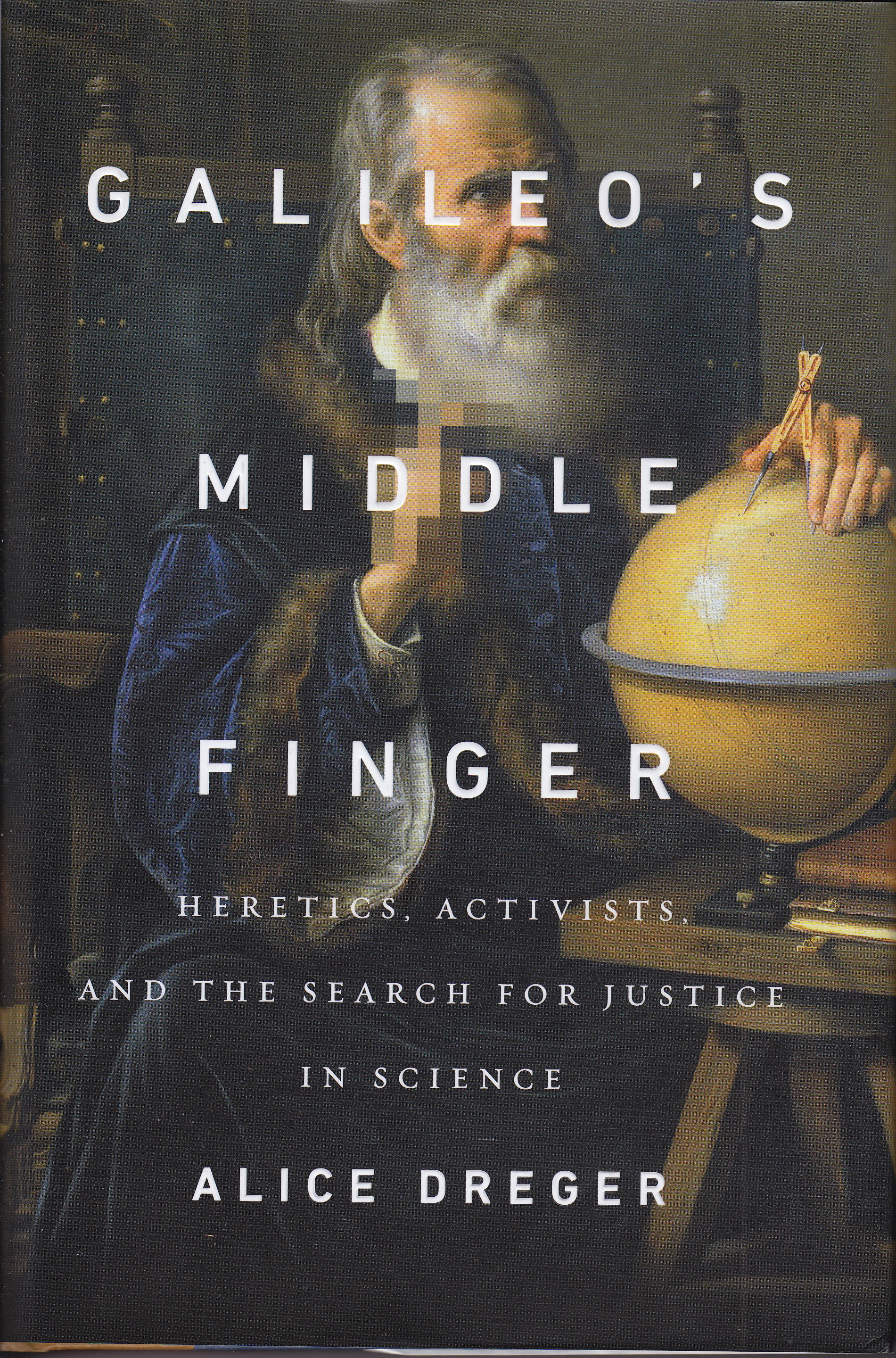
GalileoMiddleEarly in my academic career I got into trouble not because a Harvard professor hadn’t adequately checked his data, but because I had pointed out that a Harvard professor hadn’t adequately checked his data. You see, I was a naive realist. I believed academics were objective, factual sorts who looked for the truth no matter how uncomfortable it was. My honesty didn’t earn me many friends, and I still can’t mention this professor by name because I have seen grown men melt into tears at his name, due to their overwhelming loyalty. By contrast, a fellow Edinburgh student once told me that he disagreed with our mutual dissertation adviser, “on principle.” As the old saying goes, nullius in verba, take nobody’s word for it. Reading Alice Dreger’s Galileo’s Middle Finger: Heretics, Activists, and the Search for Justice in Science drove home a number of important points, one of the most memorable being that academics take real risks when they won’t fudge the facts to fit the establishment’s expectations.

Although this autobiographically revealing book is about as honest as a writer can be, it deals largely with issues of social justice in the context of those who “don’t fit.” Intersex individuals, especially, are treated before they can give consent and live their lives based on other people’s expectations of what their gender “should be.” Like most people I was raised thinking there were only two genders. Science has consistently demonstrated that “gender” is a construct that occurs along a continuum. Some species change gender in their lives. Some have such complicated reproductive techniques that far more than two genders are postulated to make sense of it all. And yet, when it comes to humans, we suppose that we’re either female or male. And religions consistently claim that any sex outside those parameters is evil. We are so naive.

Dreger focuses her attention much more widely in this important book. She shows how universities, constantly becoming more corporate, often don’t support research that challenges their investments, or “branding.” She demonstrates first-hand the character-assassination that academic snipers use so well on those who follow the evidence. She is living proof that education and activism should go together. Intricate and with bizarre loops and twists thrown in, her account of what some people will do to silence others, and get it peer reviewed, saddens me. I’ve always believed that education is the surest way to solve social ills. Education, however, is increasingly being purchased by special-interest groups that protect the establishment. The establishment may no longer be the church, but we need another Galileo, and soon.


Doubting Dawkins

A recent Guardian introspective on Richard Dawkins reminded me of the dangers of idolatry. Dawkins, an internationally known intellectual pugilist, the article by Carole Cadwalladr intimates, is as human as the next guy when you can catch him off the stage. Ironically, it is evolved primate behavior to adore the alpha male, but, at the same time, to prevent abuse of power and to get away with what you can behind said alpha male’s back. We are worshipping creatures, at least when it suits our best interests. Anyone who’s been intellectually slapped down (something yours truly has experienced multiple times) knows that it is an unpleasant experience that one doesn’t willfully seek out. We try to keep out of the way of those who assert themselves, preferring the safer route of just doing what we’re told and apologizing for something we know isn’t really our fault. It’s only human.

Evolution

The media have provided us with ever more expansive ways to build our “experts” into gods. Dawkins, a biologist, has become one of the go-to experts on religion. The media don’t seem to realize that hundreds of us have the same level of qualifications as Dr. Dawkins, but in the subject of religion. Many of us are not biased. And yet, when a “rational” response to religion is required, a biologist is our man of the hour. Granted, few academics enter the field in search of fame. Most of us are simply curious and have the necessary patience and drive to conduct careful research to try to get to the bottom of things. We may not like what we discover along the way, but that is the price one pays for becoming an expert. Those who are lucky end up in teaching positions where they can bend the minds of future generations. Those who are outspoken get to become academic idols.

I have no animosity toward Richard Dawkins or his work. I’ve read a few of his books and I find myself agreeing with much of what he says. Still, a trained academic should know better than to “follow the leader” all the time. (Some schools, note, are better at teaching independent thought than are others!) The academic life is one of doubt and constant testing. Once you’ve learned to think in this critical way, you can’t turn back the clock. One of the things that those of us who’ve studied religion know well is that all deities must be examined with suspicion. Especially those who are undoubtedly human and who only came to where they are by the accidents of evolution. I’m no biologist, but I inherently challenge any academic idol. I’m only human, after all.


Hunter-Gatherers

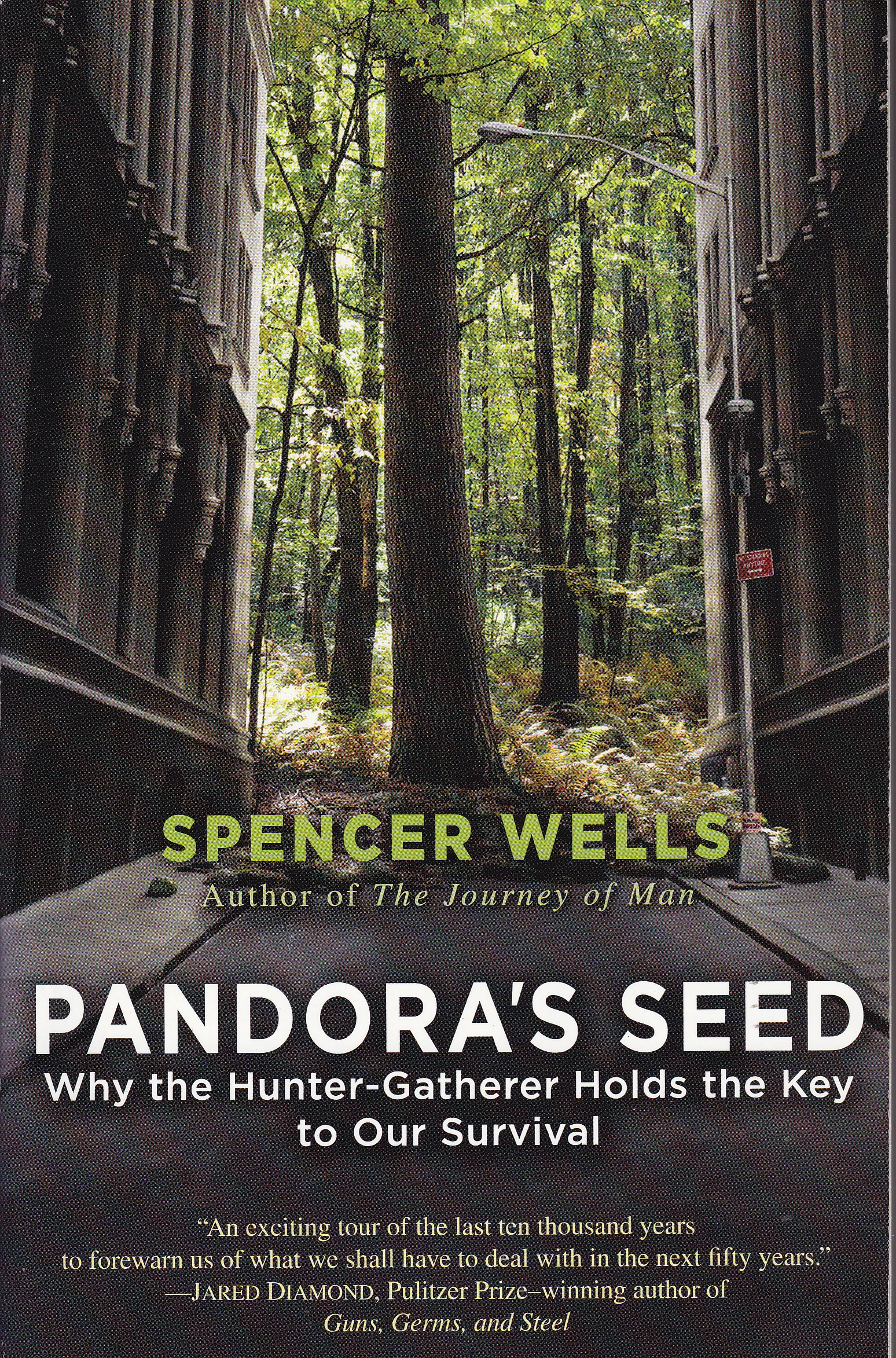
PandorasSeedEvery once in a while I put down my work long enough to look at where we are. It’s often a frightening experience. Not many of us would be equipped to survive the collapse of civilization, despite the many television shows that depict such future anarchy. I suppose that’s why Spencer Wells’ Pandora’s Seed: Why the Hunter-Gatherer Holds the Key to Our Survival was such a compelling book. The more anthropological studies I read, the more clear it becomes that “civilization” has changed us about as much as evolution has. If not more. We have turned into something else, a creature of our own making. Wells demonstrates throughout the pages of this book how, with the first development of agriculture, we began on a track that has made us less healthy, less happy, and more dependent on technology than we have ever been. True, life as hunter-gatherers was never easy. Still, it is telling that they have much more free time than agriculturalists. And, as far as we can tell, they are better-adjusted. They are doing what we evolved to do.

Addressing issues as diverse as from how our diet has changed to genetic engineering, Pandora’s Seed is a wide-ranging and fascinating book. It does show that technology far outraces ethics and our ability to figure out the proper response to complicated questions. We often lack the time to reason things out. And yet, we live in a world where mental illness is set to become the number two natural cause of death within this century. We are profoundly unhappy. We deny climate change although it’s evident all around us. We’ve put into place a global warming that will take a millennium to dissipate even if we stopped using fossil fuels today. We deny that it’s true, we go to dehumanizing jobs, and we eat food that’s not nutritious because it’s the kind we can afford. We lack time and motivation for exercise and disease takes hold. Such a lifestyle even affects our religion.

Tellingly, Wells’ last chapter deals with Fundamentalism. Noting that humans use both logos (logical) and mythos (mystical) thinking for a balanced view of things, fundamentalisms utilize a logos system to try to explain mythos. Violence often ensues. In order to be fully human we have to admit that rationality alone does not solve all our problems, or meet all of our needs. Some of what we require is simply not material. While Wells does not suggest reverting to hunter-gatherer lifestyles, he does suggest that the only solutions to a world of limited material goods (food, fossil fuels, fresh water) that the only way to make civilization sustainable is to learn to want less. Evolution predisposes us to gather more than we need, and certainly, to hear college career counselors talk, we have to want jobs that will bring in more, more, more. The world is becoming smaller, and people are demanding that the greed come to an end. Until that day perhaps the best solution for us all would be to take a walk in the woods and to remind ourselves how we came to be where we are.


Weathering Academia

Come the end of September, I’m scheduled to give a talk at Rutgers Presbyterian Church in New York City. I’m personally very flattered by this because, as it has become clear to me, an academic without a post is mute. I’ve seen colleagues who teach at schools I’ve never heard of consulted by the media—and there is obviously more to it than this—because they have teaching positions. Those of us who used to be professors apparently forgot everything when we take jobs out of necessity. That’s why I’m so flattered. My talk will be on the larger issues behind my book, Weathering the Psalms. I never expected this book to be a bestseller. I knew that it was, in some sense, incomplete. Academic books are the kinds of things you write when you have an academic post. When your day is not programmed with “enter this data, follow up on that book, and when you have time, get other people to write books.” People, of course, with university posts. The rest of us know not whereof we speak.

It’s funny. Back when I was teaching, even if it was only at Nashotah House, I used to be asked to give little talks all the time. It was rare for a year to pass without someone asking me to lead a seminar or share what I’d learned with some august body. That tapered off once I became an adjunct, although a Presbyterian Church in Princeton once invited me to speak because I was teaching at Rutgers (the university). And as I prepare my talk in my free time, I wonder about a society so tied up with name prestige that someone who has something interesting to say is just a crackpot unless a college or university or seminary or think-tank hires them. There are many of us—hundreds, if not thousands—who know as much as our university colleagues about a topic. An individual doesn’t have a name big enough to flash around, so we don’t get asked to share. Keep your hand down and your head down on the desk, please.

IMG_2416

In any case, it has been good for me to come back to the weather and think through some of the larger implications. I’d just had the book declined by a big name academic press when Nashotah House terminated my position. For many years I couldn’t look at the manuscript since it seemed a symbol of my failure. No, the book isn’t everything that it could be, but there is some good information there. The larger implications are actually of some importance here. The weather is studied both by science and by religion. Both understand aspects of it that the other misses. I’m looking forward to exploring this with the good folks of Rutgers Presbyterian who were kind enough to invite a guy with nothing more than a book and an obscure name to come and talk about something that most academic colleagues just don’t notice.


Dog in a Manger

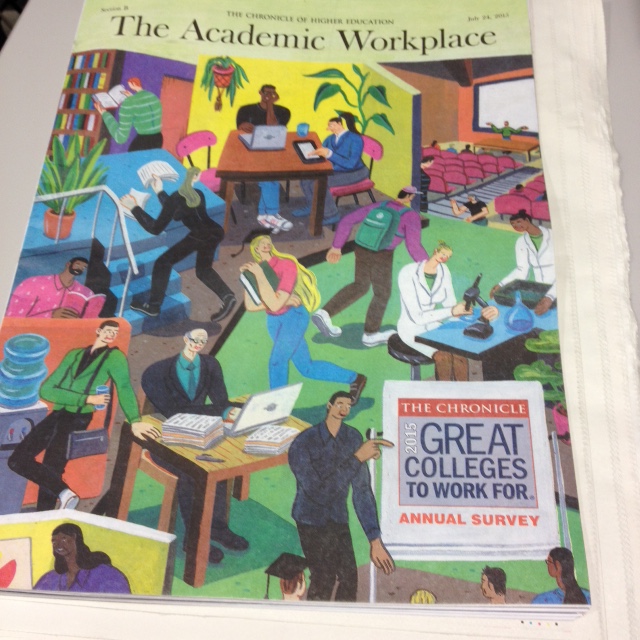
I’m easily amused. I suppose I never outgrew that sophomoric fascination with the little things that seem like big jokes. The other day, for instance, I was given a copy of the Chronicle of Higher Education to read. The supplement featured Great Colleges to Work For; what are we supposed to do with that? None of them have jobs, so why advertise? It’s so funny when those who have a great thing going advertise it, even though there’s nothing to it beyond bragging rights. Those of us who’ve tried repeatedly to get into higher education (and I even succeeded for nearly two decades, in some measure) would love to take a job at even the worst college to work for, but they’re not hiring either. Nobody is. So why does the Chronicle want to remind us that the fruit will always be just out of reach, and that the water will be just too low to sip—even if we’re bathing in it?

IMG_2417

The frustration that settles in when the laughter dies off is because everyone I know agrees that I should be teaching. Colleagues, tenured and not, former students, friends. “Why aren’t you a professor?” they say. Many of my best friends are. Full professors. Sabbaticals. Grants. Time that’s not spent on the bus or in the office. Perks of every sort. Ask them. Or ask the Chronicle. I can’t reach the grapes, but they’re probably sour anyway. I mean, I can’t help it that I spend hours on faculty webpages and see those who made the cut not writing the books I have like jets in a holding pattern over Newark. How can the get written when time is he one thing I haven’t got? (Oh, and money too, but you don’t need so much of that to write.) Any one of those Great Colleges to Work For appear on the advertisement pages? Anyone hiring a warmed over religion professor who reads a hundred books a year? Nah!

Just joshin’ ya. I poke fun at higher education like you can only tease a lover. I’m into exercises of nihilism as much as the next prof. Didn’t old Ecclesiastes say it centuries ago: learning is a zero-sum game? So the academic vehicle that doesn’t boost the number of jobs offered will continue to tell us where we should work, if there were any jobs. Perhaps professors of privilege demand more than I think. Just give me a classroom and a syllabus to teach her by. I’ve done so in very primitive conditions at a college that make no marks on the “Best of” scale. Real world experience, however, doesn’t count. We’re only telling you what you can’t have anyway. Isn’t that better than where you work now?


Interstices

College move-in weekend can be a stressful time. In our particular case it means crossing a couple of state lines and staying in a hotel. Well, I suppose we technically might manage to load, drive, unload, and drive in a day but that seems awfully abrupt. You need time to shop for those supplies that might have run out, wait for roommates to arrive, and spend the last quality time together before facing an empty nest for four months. So we find ourselves in a hotel. It’s the one closest to the university, but it is also the host to some kind of event that draws a lot of people but fails to make internet event calendars. We usually stay at this hotel, and they even emailed us at the start of summer to make reservations early. The clientele this weekend is a cross-section of town and gown. It’s a mixed group. In the hall I see other students about, but there are those here who’ve come for non-academic entertainment, whatever that might be.

The barking started about 6 p.m. I grew up with dogs and most members of my family still have dogs. In fact, evidence points to the dog—the wolf at the time—being the first of the domesticated animals. Before agriculturalists rounded up sheep and goats and cattle, the dog accompanied the hunter-gatherer and both engaged in a win-win scenario. The successful hunt of a large animal left food for both humans and their best friend. Ironically for dog-owning anti-evolutionists, dogs are among the most selectively bred of animals. Looking at a pug, or a maltingese, it’s difficult to conjure up images of the wolf pack. The dog next door, obviously lonely and abandoned, was the small, yippy sort with a high-pitched, insistent bark. It was clear there was more than one in there. And, of course, hotel doors are about the least soundproofed surfaces on the planet. It was like Fifi and company was in the room with us. When I turned in about 10, the barking was still going on, and the front desk said they were trying to locate the guests registered for that room.

What's that shining?

What’s that shining?

I grew up with dogs, and I understand the attachment. I do, however, sometimes wonder about the courtesy of others. Some actions impact other people in direct ways, and sometimes we just don’t think of the consequences. I don’t just mean dogs. Lying awake, listening to distraught pets, I thought of the point of higher education. It is an “industry” in which I have a strong investment. The point of it all is to make our life together on this planet better for everyone. There will always be those who can’t travel without their dogs. There will always be those who have to venture far from home to get the education they want. Can’t there be affordable hotels with doors to dampen the noise just a little bit? Or maybe some of us a just over-sensitive at times like this. Maybe it’s time for me to go back to school to try to figure it all out.


Teaching Vampires

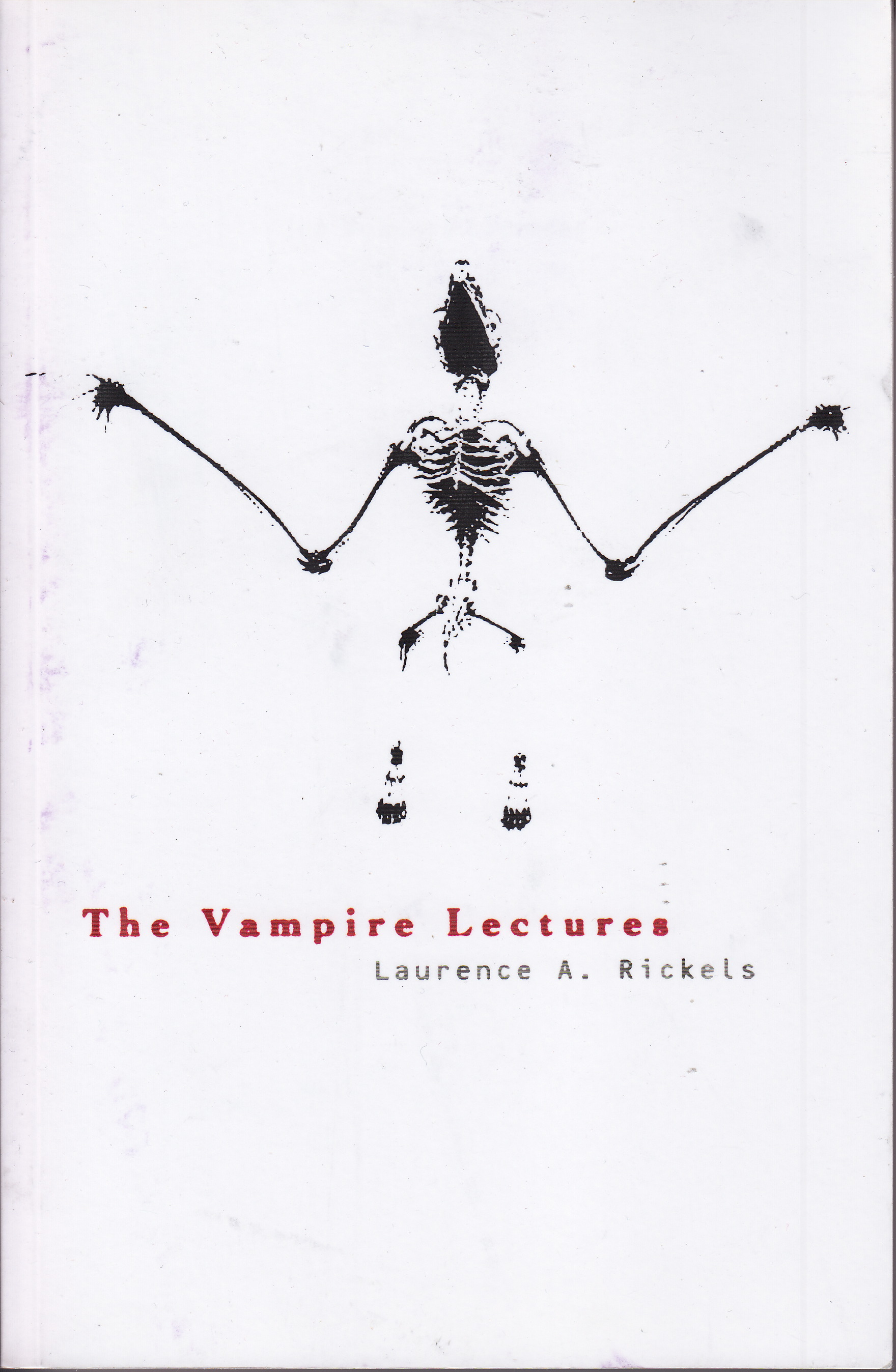
VampireLecturesWhat do you get when you cross German literature, psychology, and the undead? The Vampire Lectures, of course. Laurence A. Rickels, one gets the feeling, must be one interesting guy in the classroom. When I was a student the thought that anyone would take vampires seriously enough to offer college credit to study them was, well, a foreign concept. We all know that there’s no such thing as vampires, or werewolves, or Frankenstein’s monsters, or mummies—wait, mummies are real, but just not animated. In the reigning cultural paradigm, if something’s not real, it’s a waste of time. The human psyche, however, disagrees. The fact is there’s an awful lot of mental baggage that the vampire addresses. So much so that the University of California at Santa Barbara can offer a twenty-six lecture course on the topic. The results are what we have in this unusual book.

Rickels has read widely in the literature of the undead. The vampire’s share of the material goes to Bram Stoker’s Dracula, the novel that defined, in many ways, the modern concept of vampires. The lectures do cover earlier and later literary representations, but when movies began to be made, they started with Stoker. One of the most interesting aspects of the lectures is the utter breadth of movies Rickels addresses. Movies that I’d never heard anyone else mention, let alone analyze, are here, alongside the more famous examples. It becomes clear that vampires have been a favorite of film-makers as well as readers. Culturally they are omnipresent. One gets the impression that Rickels might have an inkling of why we have this fascination, although his analysis is often Freudian, he does come back to the concept of mourning. Vampires (who would’ve guessed?) mask our unresolved sense of loss.

The style of The Vampire Lectures reflects the kind of literary criticism that isn’t always easy to follow. The book has more puns per hour than any other academic title I’ve ever read. Perhaps such serious topics as loss, parental relationships, and sexuality require a good dose of humor to make them less overwhelming. Still, the puns show the shifting nature of the ground beneath your feet when you try to take a topic like this seriously. Not surprisingly, Rickels does spent some time reflecting on the religious nature of vampires. There’s no question that monsters trespass on—or maybe even arise from—sacred precincts. They also occupy similar mental spaces. Perhaps it’s no surprise that as the number of nones grows so do the fans of monsterdom. We need an outlet for our surfeit of fear and loss. Come to think of it, perhaps I need to take a class in this as well.