Autumn Music

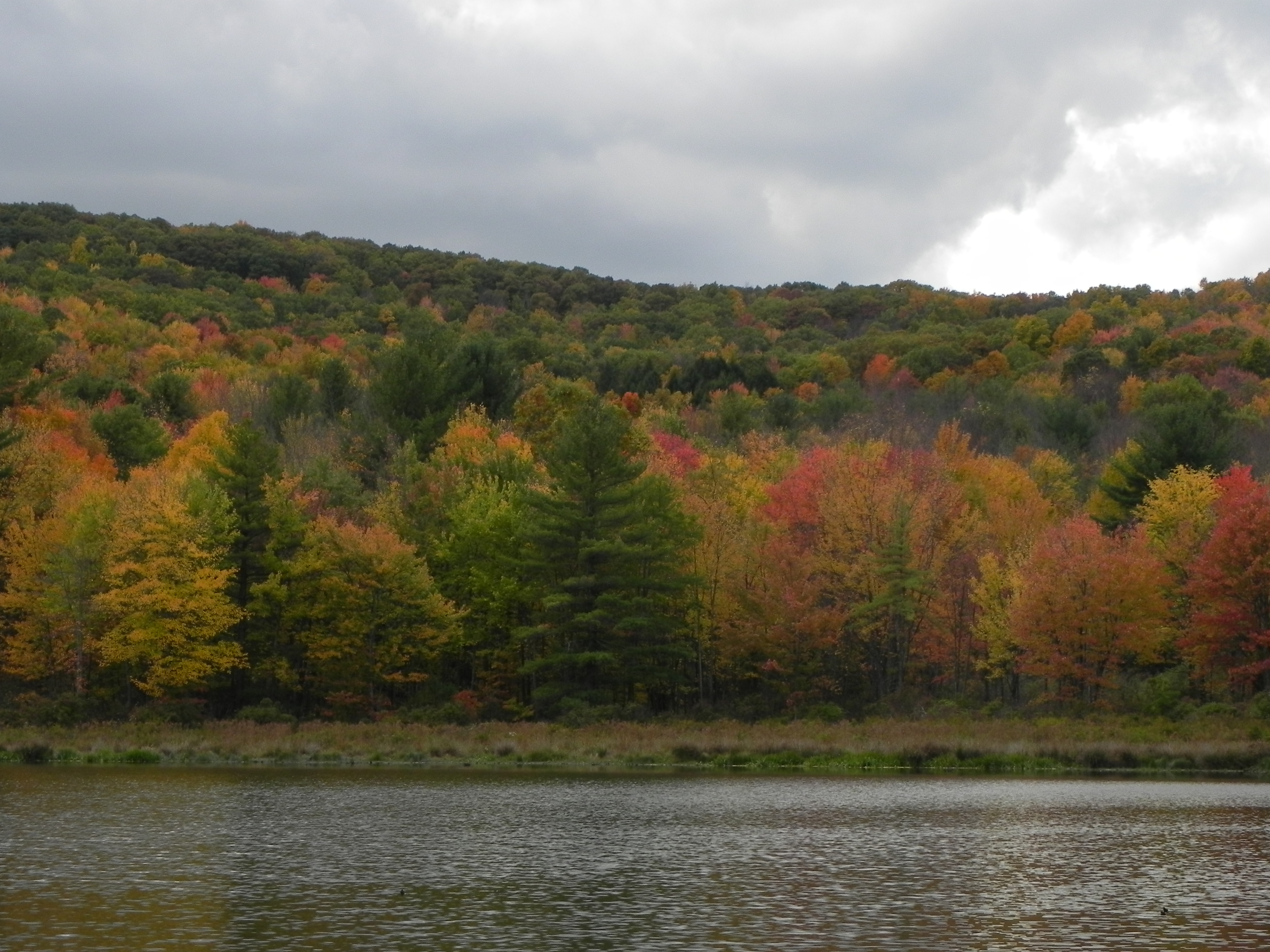
It is an experience as old as humanity itself. At least humanity that started to realize that age, as remote as it may seem, will always eventually catch up with you. This past weekend was Family Weekend at my daughter’s college. Since her school does things up right, there were a variety of events on offer, one of which was an a cappella group concert. A cappella has come a long way since my college days, with students able to use their voices to sound like a band, professionally mixed, and full of energy. Somehow, I don’t recall that much energy from when I was a student. In any case, the inevitable group doing “oldies” took the stage an opened with a song from 1987. Wait. What? Since when was a song of which I remember the first release an oldie? The kids did a great cover, and I suspect in their minds it was really an old song. I was only 25 when it was given to the world. Can I really be an oldie? Outside the leaves on the trees were brilliant, as if on cue for the tuition payers to have their heartstrings wrung. Trees become their most alluring as they are about to die.

Songs, however, have a way of becoming part of you. Back when we were young(er) and idealistic, my wife had thought to study music therapy. Nashotah House, however, decided to change the career trajectories of an entire family in the name of orthodoxy. One of the things she learned in her classwork, prior to being sent back to the work-a-day world, was that patients suffering from dementia can often sing a song from their youth, even if they can’t speak a word. Music gets into our brains in a way that language learning doesn’t, and when we hear that song we are, to borrow a phrase from Bob Dylan (which another of the groups sang), forever young. It is a beautiful wish, endlessly covered and recovered. Watching those kids on stage, I recalled being on the cusp of adulthood myself. Everything seemed possible then. Then a world that others constructed imposed its constraints on me. My hair began to grow gray even as the leaves lit up yellow and scarlet and fire orange.

DSCN4928

Religion is the business of those who are old. Even as a religion major in college I was classed among those old before my time. We think of the hereafter on our deathbeds, not when we’re twenty. For those who teach their children to ponder eternity at a young age, however, that portal is never far from view. My fellow students were looking ahead to careers in all kinds of fields that would make their fortunes and reputations. My modest attempt to bring a younger generation to a more mature outlook faltered at the hands of Fundamentalists, and it was music that helped me through that terrible shock. Little do we think that that song we like so much is marking us indelibly as a child of our age. Time will not relent. We will be the ones, like the trees, showing our signs of age as our children show us where the future lies. And the attitude of that song from 1987 will be, for any who truly listen, forever young.


Small Town Heroes

When World War Three starts I hope someone will let me know. You see, I barely have time to satisfy the needs of employers and tax collectors to get everything done in a day, let alone read newspapers. Or Facebook. I check my page, very briefly, twice a day and get on with the business that I’m assigned in life. But yesterday I had a notice from a high school friend that one of my teachers had died. Since I don’t name people I know here without their permission, suffice it to say I took a current events course with this teacher in either my junior or senior year. Then, as now, I didn’t read newspapers. Given the small town rags available in rustic regions, there was often not much mentioned beyond deer season and local tragedy anyway. Originally enrolled in the regular curriculum, several friends told me, “You’ve got to take Current Events! The teacher is great!” Those who’ve influenced my life for the good were great teachers, and despite my reservations, I took the class. When it came time to sign up for projects, I was a bit flummoxed. What did I know of current events?

Our teacher kindly allowed me to offer evolution as a topic. It was occasionally in the news then. Six of us decided to debate the issue, three for, three against. My religion having held me in a headlock, I was the lead debater against evolution. The day for the debate came and we ran over the bell. Our teacher, with his usual calm wisdom, suggested we continue the next day. And the next. Three days of sometimes acrimonious debate and it looked, from my point of view, as if creationism had demolished evolution. How terribly naive I was. Ironically, I had just posted a piece on evolution yesterday when I saw the notice about my teacher’s demise. The position in my post was a sharp 180 from high school. It was a tribute to the love of education.

Source: Wellcome Images, Wikimedia Commons

Source: Wellcome Images, Wikimedia Commons

I was an outsider in high school. I literally lived outside of town and after school activities were not really feasible. We were poor and couldn’t afford extra-curriculars anyway. I wore a large cross on my chest and although I was shy, I felt that it said all I had to say. My teachers, to their eternal credit, let me explore. In college I learned about Fundamentalism. I had never heard the term although I grew up in it. Gently my teachers nudged me to think more deeply about things. Through three degrees delving more profoundly into the origins of religion, as well as humankind, I came to see the errors of my ways. Had I been forced in high school I would’ve fought back. Instead, a persistent, patient wisdom guided many of my teachers. I don’t know how they recognized that I might be worth salvaging, but they apparently did. They let me speak, they let me trip. Just as I was about to fall they caught me. And I hope, in my own small way, to repay this favor in kind.


Literally Biology

In a New York Times opinion piece on a recent Sunday (ironically, always on a Sunday), college biology professor David P. Barash submitted an article entitled “God, Darwin and My College Biology Class.” Barash notes that increasingly students come to his class thinking evolution is more or less optional. I found the same thing teaching religion classes. When student presentations at state universities addressed Genesis it was fairly common to have a large number of undergraduates suggesting that evolution is “just a theory” and “intelligent” design was a viable option. I tried to show them in class that the Bible does not support the shenanigans that creationists impose upon it, but the message rolled off like rain from an evolved waterfowl. Still, I do have to take exception to some of Barash’s broad strokes. He feels that religion and science cannot coexist. I wonder, however, what he means by religion.

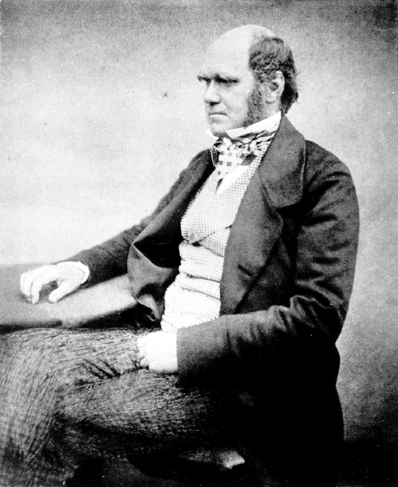
Religion is an ill-defined word. One of the most pragmatic usages I’ve heard is that religion is what people use to give meaning to their lives. Religions may be theistic or a. Religions may be anti-science or pro. Religion, per se, is no threat to science. Fundamentalism is not religion. Fundamentalists use religion to further their ends, which are often political. Since many religions grew up around sacred writings the urge was there from the beginning to take these holy words literally. They gave meaning in a pre-scientific era. Newton, Galileo, Darwin—and even before them Plato and Aristotle—simply shifted the angle of illumination. The problem is that many religious believers feel they have the answers already. New facts only confuse the issue. Left to their own devices such beliefs quietly go extinct.

Charles_Darwin_aged_51

It is only when a conscious decision is made to champion archaic writ against empirical evidence that science and religion join combat. Most religious people in scientifically advanced societies have no problems with evolution or particle physics. They simply show the way the world is. The vastness of the universe should give us all pause, but it does make you wonder which way to point your telescope to spy the almighty. I sympathize with Barash. It is not easy to find many of your students, in either science or religion classes, with their minds already made up. Still, it might help to realize that religion is not the culprit here. Literalism is a kind of mental problem. Until it is rightfully separated from religion we will all be left wasting valuable class time trying to convince students of the facts of life.


Theological Cemetery

Implosion is a word frequently associated with demolition. Implosions are episodes where buildings collapse in upon themselves, in theory, harming no one on the outside. In 1992, as a starry-eyed, fresh Ph.D., I was hired by one of the then eleven Episcopal seminaries in the United States. Each had been around so long as to acquire a feel of almost biblical antiquity—something their governance models appear to reflect. Just over two decades later, the mythically wealthy Episcopal Church is watching its seminary structure implode. It’s not for want of funds, but from lack of will. With shrinking demand for clergy, some had to merge to maintain even their historic names. Others are effacing by degrees. The Nashotah House I was asked to leave was not the Nashotah House where I began my academic career.

General_Theological_Seminary_1890_crop

Within hours of hearing rumors of a mass firing of the faculty of the General Seminary—The General Seminary!—I received confirmations both personal and from the Huffington Post. Eight faculty who had concerns over the Dean committed the (in the Anglican world) unpardonable sin of requesting a meeting with the board of trustees. At Nashotah, I served two stints as a faculty representative to the board of trustees and my nightmares have taken on a different quality since. In the Episcopal system the Dean is also President. Not a whiff of democracy taints these hallowed halls. They claim the title Very Reverend, no matter how appropriate, and some, if they’ve ever read Acton, did it for instruction. There must be incredible power knowing that higher education is in crisis and that faculty with legitimate complaints are only setting themselves up for protracted purgatories of joblessness, should they question you. Trustees don’t want to be bothered with the “formation” that is happening within. O Captain! My Captain!

I am heartsick. This is how Christians treat their most highly educated and dedicated—no one takes a job at a seminary without knowing the risk it poses to a career. A more protracted dismissal of faculty, including yours truly, took place in Wisconsin almost a decade ago. I knew those who lost their jobs—fine scholars and decent human beings—as apocopated visions of a fictional future flashed before the credulous eyes of true believers. Where do discarded seminary faculty go? Back into the arms of Judas? I could not. I admire those wounded healers who returned to the cure of souls. We started, did we not?, with the best of intentions. The church, it seems, forgets that even faculty are human beings. “Enlighten,” the collect for education reads, “those who teach and those who learn, that, rejoicing in the knowledge of your truth, they may worship you and serve you from generation to generation.” Or, barring that, speak the truth, and lose their vocations.


Afraid for God

ReadingLolitaInTehranReading Reading Lolita in Tehran, by Azar Nafisi, is not easy. It is, however, rewarding. Appropriate for Banned Book Week, we might want to remind ourselves what a society that bans books actually looks like. Nafisi, an Iranian teacher of English literature, had broadened her mind and had traveled abroad. When she returned to her home country to take up a teaching post, she discovered that the world you always knew can be very unstable. It can change without you realizing it. (Mene, mene, tekel, upharsin, left even the sages scratching their heads.) The Revolution, as it was known in Iran, brought in the radical conservatism of religious outlooks that saw women as little more than temptations for men. The wearing of the veil was enforced by law. Nafisi was told it was a small price to pay for the greater good. The rhetoric is the same every time I’ve been frisked at the airport, although I’m a lifelong pacifist. In Iran, things were much worse.

Nafisi recounts gathering a group of her women students together after she was forced out of the university. They would meet at her apartment to discuss literature, including Vladimir Nabokov’s Lolita. How must it feel to be a woman reading about a man’s obsession with a girl so young? As Nafisi points out, girls of Lolita’s age are considered marriageable in some Islamic states. It isn’t Islam that’s the problem, it is extremism. When I read about how she became “irrelevant,” I literally shuddered. In my own way too, I had been made irrelevant to higher education by those who felt any means would justify religious ends. And the bookstores in Tehran were closed, for they sold dangerous ideas. The irrelevance of one woman, or even half the population, is a small price to pay for self-righteousness.

“You say you’re afraid for God,” Ellen Hopkins wrote in “Manifesto.” Afraid for the Almighty. Such a strange concept. Fundamentalists of all monotheistic stripes believe in an all-powerful God whom they arrogantly presume to protect. How can a human even conceive such hubris? We feel secure in our Bible-emboldened superiority, challenged when reminded that the Quran, the Book of Mormon, or even Science and Health came later, and by definition supersessionism inevitably takes hold. “Paranoia is in bloom,” Muse reminds us. Missiles fall on Tehran, killing women and children. We elect, however, officials who agree that healthcare for women is politically negotiable. The reason has nothing at all to do with justice. It has everything to do with using a black-bound book for power over those who are just twelve-year olds wondering how any of this is even possible.


Academic Freedom

Azusa Pacific University, 2013. Emmanuel Christian Seminary, 2012. Interdenominational Theological Center, 2012. University of Illinois, 2010. Carroll College, 2005. Nashotah House Episcopal Seminary, 2005. Unfortunately the list could go on and on. Academic institutions in the land of the free and the home of the brave dismissing faculty for saying or writing something that offended their doctrines. This is the land of my birth, and yet I’m still rocked by its permissiveness. That’s not permissiveness in that sense. I was latterly working on a paper called “the myth of academic freedom.” I know too many people for whom that myth has become a reality and all the while the governments, state and national, try to decide on more important issues such as whether or not to give children equal opportunity, our institutions crumble for petty points of pretentious pugilistic piety. Not only books may be banned, but those who potentially write them as well.

“You say you’re afraid for America,” Ellen Hopkins’s “Manifesto” suggests. Academics, of all people, should be afraid. Our society asks us to borrow thousands and thousands of dollars to become experts in some obscure topic only to release us from any possibility of finding employment that allows us to pay off said debt. “I don’t need no arms around me,” but I sure could use a podium in front of me. I am afraid for America. I am afraid for a nation that doesn’t defend its thinkers, instead following the wealthy to the peak of an unscalable Everest.

Academic freedom was once the guarantee that no question was disallowed, no thought anathema. We live in a time of pronounced conservative pushback, where those who feel threatened by knowledge persecute those who dare to think. Ironically in this situation many academics have become complacent. Having a place of your own, and the compunction not to make waves in this bathtub will allow your toy boat to float for many a year. Long enough to reach safe harbor. Beneath the surface shipwrecks lurk and books will never be written. Banned books are easiest to engineer at the aborted career stage. Even a pro-lifer knows that.

They don't write 'em like that anymore...

They don’t write ’em like that anymore…


Horsemanship

Hi ho Silver, away! I’ve been pondering academic freedom. (It was suggested to me that I might discourse on such.) My academic career, three years cold in the grave, seems a long way away. In religious studies it is kosher to fire someone for academic freedom issues. Doctrine permits no challenges, for it has already been decided. This doesn’t only apply to conservative religions, but to academic institutions of all stripes. Nobody likes to be challenged. Somehow, since 9/11 any academic dispute in religion is a potential threat. I have known many academics to have lost their jobs. I also know how it feels to see colleagues go from grace to grace because they have an institution that will vouch for them. I don my black mask and saddle up Silver. Those of us raised in working class families watched that show, you know, religiously. And Gunsmoke, among other campy westerns. Caricatures of good guys versus bad guys. You know the story.

In a moment of self-delusion, I thought I might be asked to deliver a paper at this year’s Society of Biblical Literature annual meeting. I plodded along in my cumbersome way, reading a few books on academic freedom and interviewing a couple of its sacrificial victims. Turns out I was, well, self-deluded. It is probably for the best since I don’t wish to put myself forward as an expert on anything. Still, it felt like arriving at the front desk on that great and terrible day to find out your name’s not in the book after all, and so, where do you go now? Academics are running along as healthily as they always have. I was not raised knowing the difference between a salad fork and a meat fork. Some colleagues insist that universities crave the voice of hoi polloi; the authentic blue collar academic who worked his or her way up from a disadvantaged start through a doctoral program. I know it’s all just fancy talk. Academics are just as xenophobic as the rest of us.

Losing an academic position is easy. It’s like falling off a horse. I speak from experience here, having fallen off a big horse during a canter while helping underprivileged kids at horse camp one summer. It didn’t seem much like the wild west at the time. Seeing the world in a side view of the horse as you’re sliding off has a way of changing your perspective. You know the ground is coming fast. You just hope that your feet have slipped the stirrups. When it was all over the horse whisperer (or whatever they were called back then) publicly berated me for letting the reins fall from my hand. I should’ve slipped them over the saddle horn on my way down. Didn’t I know that the horse might’ve stepped on them? Rubbing my sore backside, I didn’t feel like such a masked lawman anymore. Silver had gotten away. At the dining hall I could feel the uncomfortable stares. Which one is the salad fork again? I never could keep my silver straight.

By Pleasure Island Uploaded by We hope at en.wikipedia [Public domain], via Wikimedia Commons

By Pleasure Island Uploaded by We hope at en.wikipedia [Public domain], via Wikimedia Commons


What I Mean

It might seem, in this world of constant misunderstanding, that we might get along better were it not for the Tower of Babel. I mean, we call it a language barrier, right? So why are some people upset about the extinction of languages? Rebecca Morelle writes of how economic success may be behind language extinction in an article on the BBC science and environment page. There are some—many entrepreneurs—who see no cause for mourning. I have to wonder, though. I cut my academic teeth studying dead languages. Koine Greek and “Classical” Hebrew are no longer regularly spoken, and really haven’t been for centuries. Then I moved on to rediscovered languages: Ugaritic, Akkadian, Epigraphic South Arabian, each sounding more exotic than the last. Would world commerce exist if we were all hampered with Sumerian? We got on fine without the wisdom of the past—why should we even care?

I see politicians, mostly male, arguing in the “most advanced” government in the world, that women shouldn’t be given the full benefits of health care because they misunderstand the Bible. It is easily done. As I told my many students of biblical Hebrew over the years, language is not just words. Languages are ways of thinking. No translation is truly perfect. If you want to understand the Bible, you must do it on its own terms: learn to conceptualize in Hebrew and Greek, then come back and tell me what you think. It is, however, much easier to let King James do the talking. A man’s man. Just don’t ask what he did after hours, right Robert Carr? Something seems to have gotten lost in translation.

Languages are more than just ways of expressing ideas. They are the basis of cultures. When languages die off, cultures soon follow. Do you suppose that everyone on Papua New Guinea goes to work wearing a tie? Just give it some time. We call it progress, and it is inevitable. It has happened even closer to home, for those bound to the States like me. It used to be that academics had a language that didn’t necessarily included economics. The rarified domiciles of words like trenchant and salient and boustrophedon soon became superannuated. What are you trying to sell here? Dictionaries? As business marches unstoppably ahead, consuming all in its path, our lesser languages quietly die. With those languages ideas also pass away. With each demise, the world becomes a poorer place. Maybe it’s time to start building a tower.

Confusion_of_Tongues


The Cost of Being Human

In last week’s Time magazine Joel Stein’s “The Awesome Column,” a humorous endnote for somber weekly news, spoke to me. Although Stein writes as light relief, when he addresses humanities education I have to sit up and take notice. Like being in class all over again. Although Stein is trying to be funny, I find the decline in the humanities to be no laughing matter. I don’t think Stein does either. As an uncle once said to a relative recovering from cancer—you might as well laugh about being bald, what else can you do? The humanities are so called because they are what makes us human. Perhaps it is no coincidence that Stein addresses this in the issue following that which commemorates Robin Williams. As I’ve written before, I don’t consider myself a Williams fan, but I can’t help but associate him with what I consider his best movie, Dead Poets Society. The humanities are what we live for.

I’m a little too nearsighted to claim to see the future clearly, but Stein makes the accurate assertion that our great ideas have tended to come from our humanities dreamers. Presidents and Popes, he notes, have not been drawn from the sciences, but from the arts. Herein, I suspect, many would suggest lies the problem. We are a schizophrenic society (with apologies to those who believe schizophrenic is a slur word). Who wants a warm puppy on your lap when you can have a warm laptop instead? Indeed, you can carry your computer under your arm, in your pocket or purse, or even around your wrist. Instant access to the internet and every other wired person all the time. Isn’t that what we really wanted? But then we come out of the movie theater complaining that the show was poorly written, if technologically flawless. We have just walked out of John Keating’s classroom, methinks.

Is this worth more than just money?

Is this worth more than just money?

“We live in a time,” Stein opines, “when smart people want to discuss only politics, technology, and economics.” Truth be told, the deeper you look behind any of these topics the more boring they become. Politics? Everyone wants to rule everyone else, what’s new there? Technology? Electrons dance better in some substrates, and if we can only get this confusing formula right… Economics? I want what you have, so why don’t we trade? How banal! Anyone who’s ever lost him or herself in a novel, a movie, or a song (even, dare I say, a prayer?) knows that transcendence trumps technology every time. As the weather begins its long decline into a bleak and icy winter, I’ll be sitting here with my laptop on my lap, but I can guarantee that this is one place where I can fully agree with the departed Charles Schultz. Happiness would actually be a warm puppy.


Sentence

Labor Day marks the end of summer. Originally a day to commemorate all that the common laborer has contributed to society, it is now always a slightly melancholy day with the equinox fast approaching and the mighty rays of the sun growing enfeebled. Although the vast majority of us don’t have summers off any more, our employers sometimes devise summer hours to make the monotony of a commuting life a little less onerous. My academic colleagues have all switched their minds back to full engagement as students, lamenting the shortness of summer, stumble resentfully into classrooms to find out what they don’t know. To learn how to be laborers, increasingly. Once upon a time, children, higher education opened doors for you. You would climb that ladder. As an adjunct teaching night classes, I would often pass the janitor cleaning up and I would know s/he was making better money than I was. Labor Day must be upon us again.

Labor_Day_New_York_1882

Unashamedly a populist, I still think of myself as a laborer. In fact, the longer I work in Manhattan the more like my blue-collar upbringing I become. Yes, I have stood in the presence of Lords of the realm, knights in academic armor, and even a Coptic pope. I can mind my p’s and q’s. If you keep your mouth shut, you’ll appear wise even before those who are truly smart. That’s not my wisdom—I paraphrased it from the Bible. I read the Bible daily when my jobs were labor jobs. My first opportunities were heavy work—moving, pulling, brushing, and occasionally smashing. The sun was so hot that I would find a vending machine and down three Mello Yellos in a row. Summer had no time for beaches, but it offered warmer working conditions and a sense of identity.

Labor Day brings us back to work. Summer’s bright grasp has begun to slip, and already the trees have started to yawn. Like the migrating birds I feel the draw to return. Even an animal knows the place s/he belongs. Perhaps we’ve wandered a little too far from the path that should’ve been evident before us. We paid the costs and went to college and found ourselves back where we started. Labor Day is one of those holidays with no religious connections. It is purely secular. Moved from May because of the Haymarket Massacre, we put it at not the beginning of sunnier times, but at the end. I would jealously watch the sun set, but there clouds forecasted to be in the way. Besides, I have to turn in early because tomorrow is just another work day. We only have to hold out to Memorial Day, so let’s enjoy our last taste of summer and wait for its eventual return.


Future of an Illusion

AtlanticHEIf anyone’s premature death has been announced more than Mark Twain’s, it is that of higher education. September’s The Atlantic arrived in my mailbox proclaiming itself the “Education Issue” leading with an article “Is College Doomed?” While I appreciate the headiness of Atlantic articles, they run long and my time runs in the opposite direction. I have to read selectively. Things like paying bills and work vie for my time as well. I flipped it open to the article actually entitled “The Future of College?” by Graeme Wood. Four words in, and I froze. The fourth word is “entrepreneur.” Don’t get me wrong; I’m open-minded. Having seen higher education showing its teeth and claws, I know it isn’t the nice pet that the dean will tell you that it is. Nevertheless, from my viewpoint, the main problem higher education is experiencing right now is entrepreneurial in character. Perhaps it’s old school to say, “if it ain’t broke, don’t fix it,” but it is perhaps the most apt phrase to apply to colleges and universities prior to the twenty-first century. And, in my humble opinion, today, while some vestiges can be salvaged.

Oh, I know I’m a dinosaur. I literally finished my formal higher education last century. Still, the experience worked well enough. I can’t express, even with daily posts on this little blog, how much I learned sitting through bachelors, masters, and doctoral programs. None of the institutions I attended was perfect (although Edinburgh came pretty close), but they were largely faculty led, and they all recognized that their primary function was to educate, not to prep for entrepreneurial enterprises. There were business schools for that. You couldn’t learn dead languages in business schools. Or even great ideas beyond those with an economic twist. What hath Nietzsche to do with supply-chain optimization? Oh yes, the death of God. My mistake.

In my younger years, I had no preconceived notion about higher education. My high school teachers and the clergy in my life encouraged me to go to college, despite the fact that nobody in my family ever had. Even though it was only Grove City College, as soon as I got over the homesickness, I realized I was home. Higher education—my assumptions were challenged. I had to learn to weigh the evidence. By the time I was finished, I had learned to create content as well. And then I started to hear that higher education had one purpose only—to prepare the young for the job market. A place that is too often unthinking and uninspiring. We aren’t educating, we are teaching conformity. And those who don’t have jobs don’t have healthcare coverage. Survival of the fittest. Entrepreneurs by definition. A quarter of a century ago I didn’t even know that higher education was sick, let alone dying. When the future begins with entrepreneurs, however, I’m going to side with Mark Twain, even if he is really dead.


Whether the Psalms

How about that weather? Changeable, isn’t it? I have spent a large part of the last few days going over the proofs for Weathering the Psalms, the book I wrote over a decade ago. While I’m excited with having the validation that comes with publication, I worry a bit about the changes that the last decade has brought. Although I live near some impressive libraries, my time is devoted to commuting and working and anyone who has tried to be a serious scholar as a weekend warrior only knows that it is unsustainable. One element that good research absolutely and uncompromisingly demands is time. When I began commuting into New York City three years ago, I taught myself to read on the bus. As someone who easily gets car-sick, this took an enormous effort, but it paid off in the number of books I’ve been able to finish. There are limits, however. Seriously research-oriented academic books do not fare well on a noisy commute or at early hours. As much as we scholars like to think our books are riveting, try reading them at 6 a.m. Perspective makes all the difference. In short, I had to leave the main body of the text of my book as it was a dozen years ago.

There is a lot of good information there. You notice things by laying out all the Psalms that refer to weather side by side. I can’t tell you those things here, since that’s the point of the book, but suffice it to say, I still agree that the material should be published. One of the main reasons is the change in worldview over the last several millennia. Although we like to complain about the weather, for most of us it is merely the inconvenience of being outdoors that brings it to focus. We spend our days behind computer screens, living a virtual reality. But when we have to trespass outdoors—weather awaits us. For those in the world of the Bible the opposite was true. Indoors was shelter, but not insulated like today’s homes. Most of the day would be spent outdoors, weather permitting. They knew a lot more about the practical aspects than we tend to. We, on the other hand, know the science but have tended to forget the experience.

IMG_1520

My book surveys a cross-section of the biblical worldview (the Psalms) for what it tells us about the weather in ancient thought. I suspect others have begun to explore this since I wrote my humble contribution to the discussion. Today I would have done it very differently, but Weathering the Psalms was written by a scholar isolated in a seminary, literally and figuratively in the woods. The fact that other scholars had noticed the weather now and again showed me that the task, though halting, was necessary. Rereading it is like a time-capsule. These were the thoughts of a younger man, employed full-time in a kind of academic setting. Hopeful that the next job would be worthy of tenure. Believing that there was a next job. But the weather is changeable. Indeed, we know it is unpredictable. Despite its archaic cast, I look forward to Weathering the Psalms and hope that it inspires others who are isolated to keep up the effort. Even if it’s raining.


Nazis with Bibles

Some years back, when the Internet was young, I had just learned about email. Even today it seems incredible that only twenty years ago we still sent physical letters to communicate, and that we used paper maps and telephone books to get information. The main problem with email then was that not everyone was on it. I signed up for an Ancient Near East/Biblical studies discussion group. My barren inbox (being a scholar at a non-prestige school) was suddenly full every day. New discoveries, research ideas, online debates. It was all very exciting. Then someone voiced the fraught question: should we ignore the research of scholars who were later revealed to have been Nazis? The rancor raised forced the moderator of the discussion group eventually to make this a forbidden topic. Because I could not keep up with the inundation of emails and because of the vitriol (do people use the world vitriol anymore?) on the Internet universe, I eventually unsubscribed. Nothing raises hackles like Nazis. Especially in the field of biblical studies, which, naturally enough, revolves around issues of Jewish interest. I saw a blog post recently which brought this whole episode back to mind.

Photo from German Federal Archives, Wikimedia Commons

Photo from German Federal Archives, Wikimedia Commons

The issue of political conviction and professional neutrality is a vexed one. Critical study of the Bible began, to a large extent, in German universities. Biblical studies in higher education was mainly a Christian enterprise, and many of the questions were, well, only academic. If someone was a Nazi, did he (and they were pretty much all he’s) have a hidden agenda? Today the question of agenda is often raised with conservative biblical scholars. Can someone who believes in the Virgin Birth and in Moses parting the Red Sea really interact critically with the biblical text? Just throw that question out there and watch the fun. (It helps if it is tossed out on a blog that actually has readers, rather than my insignificant efforts here.) Who can make the claims for true objectivity? Can a Nazi correctly parse that verb? Do one’s political views gainsay one’s credibility?

We are all children of our environment. Even the most empirical of scientists will admit that true objectivity is not what it seems. We are not, after all, gods. And even the gods seem to have distinct tastes. Evil done in the name of politics seems slightly less heinous than evil done in the name of religion, but people are people and we have convictions sprouting out all over the place. Nobody intentionally believes falsehoods. Motivations are notoriously difficult to untangle. Can’t we all be professional about this? Emotions, however, do play favorites. If there’s any doubt, consider the question of using a person as an experimental subject with no regard for what they feel. We know it’s wrong. We won’t allow it. Of course, that’s in an ideal world. Right now there are more pressing matters at hand, such as how to hire more adjuncts without destroying our credibility. It’s not a matter of wanting to hurt others, it’s just good business. Everything else is merely academic.


Daydream Believer

ReligionForAtheistsI have finally found a book that will sit next to my copy of Marcus Aurelius’s Meditations. In this disjointed age of angry Fundamentalists and even angrier atheists, where people bowl alone and don’t sleep well, Alain de Botton has shined a ray of hope. Well, pessimistic hope, but still, I felt more invigorated by Religion for Atheists than I have by a book for a long time (search my category “books” and you’ll see what I mean). Raised as an atheist, de Botton doesn’t share the rabid fury that converted atheists often exhibit. More importantly, he recognizes that, despite its supernatural teachings, religion got a lot of things right. Basic issues such as kindness and compassion have little place in a society that is built around acquiring as much for yourself as you can. Even his chapter on pessimism rang true.

Subtitled A Non-Believer’s Guide to the Uses of Religion, some might consider the book opportunistic, but de Botton approaches religion from a purely practical and openminded angle: it often works. Religion supports (or supported) education. Numerically most of our colleges and universities in the United States have (or had) religious beginnings or affiliations. Religions also supported beauty in art, architecture, and liturgy. The religious culture provided places to meet others who thought like you, and where you felt safe. It was not afraid to be blunt about values. Many would dispute these positives, tending instead to focus on suicide bombers and child abusers. No doubt these evils also exist, and probably draw their inspiration from skewed religious views. Still, as a sincere outsider can see, religion offers much that society has no backups in mind to replace in this secular age.

In a pointed discussion of influence, de Botton mentions the power of institutions. Secular society has demonstrated repeatedly that it lacks the will to finance higher education. Secularists are terrible at organizing themselves. Reading de Botton’s suggestions for secular institutions, I almost rose from my bus seat and applauded. If Bill Gates or Jeff Bezos would put up the money for an institution on de Botton’s model, I’d be first in line to apply for a place in the Non-Religion Department. (A disclaimer here—although I met Jeff Bazos once, I can’t pretend to know his or Bill Gates’s religious outlooks; I only recognize success when I see it.) In any case, until we learn that one voice alone—no matter how many books s/he sells—cannot change anything substantial, we will be mired in impotence. To influence social change you need the combined resources of an institution. And, choose to like it or not, history tells us that in the long run the most successful institutions have been formed by religions. Alain de Botton has, I believe, given us something to believe.


As a Child

At a certain age, when alumni magazines arrive (and they will), one starts first by opening to the necrology. Who didn’t make it as far as me, after all? There’s a poignancy to it—knowing that at any age we’re vulnerable—but many of us felt a kind of immortality in our younger years that is only belied and effaced with the passing of time. The articles in the alumni magazines feature those who made it better than you, fellow students and faculty who made a genuine breakthrough. You should be proud of having the privilege, they seem to say, of having attended in her or his shadow. But once in a while, those self-serving articles do touch on the issues of the necrology where I always start. Boston University’s most recent edition boasts an article “You Are What You Feel” by Barbara Moran.

Bost

Intellectuals, in what I like to call the Spock Fallacy, frequently suggest that rationality is the whole story. Or at least the better part of it. If the left brain could only just subdue the right, and all decisions could be logical, wouldn’t this world be a better place? Better, maybe perhaps, but not human. We require our emotions for more than just feeling good. Studies suggest that thinking would be difficult, if not impossible, without them. So Bostonia profiles the work of Natalie Emmons, suggesting that ideas of immortality are more than just cultural relics. Perhaps our brains reason eternity for ourselves from some deep well we’ve not yet discovered. Emmons, and co-author Deborah Kelemen, are psychologists who study children’s idea of prelife—where we were before this. It is pretty difficult to imagine the world getting along without us. But the research suggests that intuition, rather than culture, gives us religious concepts such as immortality.

Substituting intuition for an actual essence, however, puts us in that odd place of using a word we can’t define. Scientists frequently fall back on intuition as an explanation for animal behavior that, in most instances, seems to suggest thinking that couldn’t have been acquired the usual way. How do salmon, fish that hardly seem like doctoral material, know to return home and swim upstream? How do newly hatched sea turtles know to crawl toward the water? Birds and butterflies to migrate? Instinct is a handy fallback, for sure. The research of Emmons and Kelemen suggest that children reason (note) prelife based on observations of actual life. The mind is the product of the brain. In my department at Boston University, another set of variables applied, focused mainly on surviving through the other end of the journey. It is with those in mind that I thumb through the necrology and hope, irrational as it may be to do so, that maybe the children are right.