Friends and Dreams

The mind is a labyrinth.  Ever since the time change (especially), I’ve been waking with the weirdest dreams.  One involved someone I haven’t really thought about for years.  Someone I knew in college and who was a close friend, but who’s fallen out of touch.  (And who would likely not approve of my evolving outlook on things.)  Why she came out in a dream is a mystery to me.  It does give me hope, however, that all those things I think I’ve “forgotten” are really still in there somewhere.  A friend once told me that it’s not a matter of “remembering” but of “recollecting.”  He claimed that the memories are still there.  Ironically, I can’t recollect who he was, although I think it was someone I knew in college.

My generation’s ambivalent about the internet.  Most of my college friends I simply can’t find online.  I recall one of my best friends saying he would never use a computer.  I suspect he’s had to backslide on that, for work if for nothing else, but he’s not available online at all.  The same goes for people my age at seminary.  Some I occasionally find through church websites, but honestly, most of them have better pension plans than I do and have retired to become invisible.  We children of the sixties are likely the last generation that might be able to make it through life claiming never to have given in to computers.  It took quite a bit of effort to get me over the reluctance.  One of my nieces set up this blog for me nearly 13 years ago, otherwise I’d still be hard to find.

But minds.  Minds can, and do change.  My mind was dead-set against computers in college.  For one class I was required to do one assignment via computer, and I did that task and that task only.  Seminary was accomplished with a typewriter and snail mail.  Even my doctorate, done on a very old-fashioned Mac SE, was purely a feat of word processing.  Nashotah House was wired during my time there, but that was mainly email.  My mind was slowly changing at each step of the way.  I wasn’t becoming a computer lover, but I was realizing that I was learning something new.  Now I can’t get through the day without writing and posting something on this blog and sharing it on Twitter and Facebook.  And checking email—always email—to see if anything important has come in.  And, perchance, someone I had a dream about might actually email me out of the blue.


Rock the Absurd

Okay, so it was bound to happen eventually.  You see, the internet makes us all interchangeable in a way.  I occasionally lament being confused by various algorithms with other “Steve Wigginses” out there (and there are many).  So while innocently checking my personal email after work the other day I spied a message clearly not sent by one of the many organizations that spam me constantly.  It was an invitation to participate in a conference.  Now, with a 925 job that’s just not possible, but I always appreciate being asked.  Then I read what the conference was about.  Agriculture.  Why were they asking me to attend a conference on agriculture?  Then I recalled, one of the other Steve Wigginses is a professor of anthropology, specializing in agriculture.  Was this an electronic mail mishap?

It also made me wonder if this poor soul (I don’t know him and have never met him) has been receiving email about horror films and wondering why.  His research trajectory has him trying to help people (which is why I wanted to be an academic in the first place) in a real down-to-earth way.  This made me realize the dilemma of other biblical scholars I know who are interested in monsters and horror, but who also realize that we need to help the world.  I can say from experience that it’s a lot easier to do as a professor than it is as an editor.  At least a professor has a platform to stand on.  And all of this brought to mind the theater of the absurd, tying me back to my younger days.

As I started high school I learned about the existentialists.  Looking at my own life, I saw it was absurd.  The times when I start to get down are when I’ve started to take all this seriously.  This Steve Wiggins, in any case, spends his life trying to figure things out.  But he lives in a world where two and two don’t always come to four.  Anyone who’s been inside an organization with open eyes knows the absurdities—large or small—that go on within it.  As old Ecclesiastes says, the race isn’t always to the swift.  That’s biblical and bankable.  So it’s a bit absurd that three (that I know of) Steve Wigginses are or have been professors.  It’s absurd that we don’t all use our full names because most two-name combinations on the web are going to lead to duplicates.  Mix-ups are bound to happen and we should just enjoy the absurdity we see.

Photo by Steven Weeks on Unsplash

Hard to Say

There’s no easy way to say this, so I probably shouldn’t try at all.  Still, I feel compelled to.  You see, I’ve sat on admissions committees and I’ve written my fair share of letters of recommendation.  The former (admissions committees) have a difficult kind of calculus to compute.  Schools need students and their tuition money—this is, after all, the capitalist way.  (Yes, there are alternatives, but boards of trustees have severe deficits of imagination.)  Some schools get around this by being elitist.  Generally they have endowments of very old money and can weather all but the most severe of storms.  Such universities are in the minority and so the rest, and various small colleges, need to compromise from time to time.  Money or integrity?  You cannot serve both God and mammon.

At the graduate level this becomes even trickier.  Grad students bring in more money, and getting into grad school used to (and here’s the difficult part) require what some admissions folks secretly call “special intelligence.”  The paperwork and in-person interview reveal it clearly—this candidate (not always from a privileged background) displays a canniness that suggests they might really have a truly unusual ability to reason things out.  This is someone who should be admitted for advanced work.  But if you apply that principle not only will you be called “elitist,” you’ll also run out of lucre.  The solution is simply economic—let those who don’t have this kind of special intelligence in.  I have seen Ph.D.s after names from schools that I had no idea offered doctoral-level research.  And they legitimately call themselves “Doctor.”

When choosing a grad program—go ahead, call me elitist, but then interview me and see that it’s not true—I knew it had to be at a world-recognized research institution.  I ended up at Edinburgh, and my bubble was already deflated when I told family from western Pennsylvania and they supposed I was going to Edinboro College (now Edinboro University of Pennsylvania), located maybe 50 miles from where I grew up.  I had been accepted at Oxford and Cambridge, however, neither of them could offer scholarships to a penniless Yank, but the famously frugal Scots were far more generous.  And let’s face it, Scotland is more exotic than England.  You have to admit that much.  Of course, the deciding factor was, in my case, money.  You have to wonder if there’s any possible way of escaping it.  From all appearances, mammon wins.


More Dark Academia

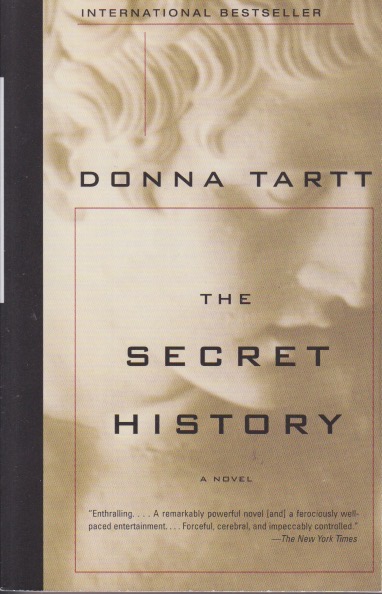
It could be that I’m not smart or sophisticated enough.  Or maybe I’ve just lived a sheltered existence, although I grew up with an alcoholic parent and among a blue-collar drug culture.  Despite this, I attended a “preppie” liberal arts college, but it wasn’t in Vermont.  All of which is to say I had a difficult time getting into Donna Tartt’s The Secret History.  There may be spoilers here, so if it’s on your reading pile, maybe wait to read this.  Then tell me if you don’t agree.  So here goes.  The narrator, a perhaps unreliable Richard, is from a working-class dysfunctional family (check).  He attends a liberal arts college on scholarship (check).  It’s modeled on Bennington (the checks start stopping here).  There he works his way into an exclusive group of five highly intelligent students in a private study Greek curriculum (this is also a partial check).

The days are filled with intensive work in Greek and the nights with alcohol and drugs and cigarettes.  So many cigarettes.  I found myself wondering how such highly intelligent students accomplished so much when they were stoned all the time outside of class.  In any case, with two of the now six students not present—including Richard—they accidentally kill a man during a Bacchanal.  Their professor covers for them.  Then the other excluded student finds out and begins blackmailing the four.  Like the rest of them he’s fond of booze and he begins to let slip what he knows.  Spoiler alert: so they kill him.  This is followed by more drugs and alcohol and when the professor finds out he simply leaves his tenured post to do something else.  A rift develops in the remaining five that ends—another spoiler—the way dark academia often does, with a suicide.

Overall the story is captivating.  Overdone on the substance use and abuse, but it does keep you engaged, once you get through the first hundred pages or so.  I like dark academia, but I also like characters with whom I can sympathize.  Like Richard, I’d gone to what was at the time a selective college from a working class family.  There was drinking even at the notoriously dry Grove City College, and there were drugs.  Perhaps those from elite families indulged.  I hung out with scions of middle-class families (I didn’t know anyone else that was poor) and they didn’t spend their hazy nights under controlled substances.  Having been a professor at a gothic school, and having studied Classics-adjacent, though, I found much of this hard to believe.  It’s a book that becomes better upon reflection than in the actual reading.  Still, I’m sure that I didn’t get it because I’m not sophisticated enough.


Something I Said?

I’m very aware of my own insignificance.  I know that I’ll die and be forgotten, just like everybody else.  Even if I manage to survive by some “Kilroy was here” action, the sun will eventually red giant all of this out of existence.  Still, sometimes I wonder if it’s something I said.  You see, I really didn’t know where to start when I published Holy Horror.  I was an editor myself and thought maybe the secret handshake would earn some kind of attention, but no.  And when I wrote both Nightmares with the Bible and The Wicker Man, both were with established series.  And in latter cases, the editor I was working with (long-term employees, both) left.  Left before the book was published and I was left wondering.  Was it something I said?

Not to brag or anything, but I’ve got about the lowest self-image a person can have.  When life beats you up repeatedly, starting at a young age, you quickly learn your place.  But still, all this leaving.  I’m a member of a faith community (if you want to know which one you’ll need to get to know me personally).  This particular tradition requires a meeting with the minister before joining—something that makes good sense.  The first church where we tried this, the minister was in the process of leaving and couldn’t schedule us in.  Then we moved and in our new area, the minister left about a month after we started attending, before we could meet.  Was it something I said?

I ask this question half in jest.  Still, having a father leave when you’re only two or three, you start to question just about everything.  I’m sure retirements, new opportunities, or just fedupness with the job (which I certainly understand) caused these changes.  But then I was ousted from three jobs in fairly quick succession.  During my interview at Rutgers University the chair of the religion department said “You must feel like you have a target painted on you.”  Leaving is a natural part of life, I know.  As an editor I know that leaving such a post is somewhat unusual because where do you go from here?  Ministers, well, they’re leading the charge during the great resignation.  Maybe they’ll become editors?  As for the rest of us, we’ll just continue to spin dizzily on this globe until old Sol stretches his arms and lets out a big, red yawn.  I won’t be here by then, but wherever I am at that point, I’ll be wondering if it was something I said.


Internet of Nothings

I don’t suppose it’s actually a confession, since my background’s available publicly on my CV, but I do admit to not being a media expert.  As is often said, the British higher education system doesn’t so much make one an expert as it teaches one how to become an expert.  The truth of the matter is, the critical thinking skills of higher education, plus your own reading and analysis, are what eventually produce expertise.  Still, I miss not having taken a degree in media studies and what I anticipate I’d have learned, if I had.  You see, what I miss, even on the internet (which is mainly trying to sell you things), is basic data.  Okay, so Wikipedia has it, but not enough of it.  Not enough to keep up with media, in any case.  I recently came by a couple of series on IMDb that I wanted to know more about.  Neither had a synopsis and neither was on Wikipedia.  The open web search that followed, even with “quotation marks” simply led to blind alleys, where, it turns out, you can buy stuff.

We are producing media at such a rate that keeping up is simply no longer possible.  While I was working on my doctorate in Edinburgh, I tried as hard as humanly possible to find and read everything previously published on Asherah.  I think I did pretty well for pre-internet days.  Now when I try to find everything on a topic I’m limited to the internet, and it simply doesn’t contain enough information.  Take these two series, for example.  No amount of searching brought up anything significant about them.  They weren’t exactly obscure, either.  Information was simply missing.  Like after the 1965 MGM vault fire, the information was just not to be found. 

It may seem impossible to believe, but there remain tons of information, trivial and important, that simply can’t be found on the web.  As a student in religious studies I learned about what used to be called Religion Index One.  It was a resource published by the American Theological Library Association and it listed just about all the articles published on a topic.  (It’s gone electronic now, I believe.)  I keep thinking there most be something like it for media studies.  But the new material keeps coming thick and fast, like a blizzard, and I’m not sure that such an index exists.  I use IMDb a lot, but even that’s not complete.  And nobody, it seems, is an expert on the entire internet.  If you are such a person, please let me know.  I have a few questions about media studies.


Everything

It’s been getting a lot of press, Everything Everywhere All at Once has.  It’s been winning awards and it demonstrates that absurdism isn’t dead.  Absurdism is an essential element of existentialism, the philosophical school with which I most closely identify.  I had no idea others found it so appealing.  This movie’s difficult to encapsulate—the summary on Wikipedia is actually not bad—but it has to do with human potential when living in a multiverse where every decision splits the ‘verse into new bubbles where your actions play out in all possible ways.  And, of course, it’s tax season.  There are clearly elements of The Matrix here, as well as Brazil.  And it’s distributed by A24.  The message is good, as the story plays out.  The images are impressive and confusing and will make you think.

From the time I left home I’ve looked for two main elements in movies—they should make me feel and make me think.  When they do both they are successful.  Everything Everywhere All at Once is successful.  It also reminded me of how healing existentialism can be, which is what drew me to it in the first place.  Life, or to point a finer point on it, consciousness, is absurd.  You can follow the same rules and get different results each time.  And you have to live with the consequences.  If you think about it too much it leads to despair.  I need, and it seems others do as well, to be reminded once in a while that absurdity is endemic in this universe.  How else can we explain Trump?  Existentialism breaks in on reality and I used to self-medicate with Nietzsche and Kafka and Camus.  Lately I’ve been using horror.

The thing about absurdity is that it’s funny.  We may not laugh about what the universe hands us as much as we should.  Existentialism also holds that darker element called dread.  Sometimes that comes to the foreground.  In my own life, I guess I thought getting a Ph.D. from a major, internationally renowned, research university might help.  I had forgotten the role absurdity plays in all of this.  Everything Everywhere All at Once shows the universe, or multiverse, is the ultimate trickster.  There are those, serious scientists, some of them, who believe that each decision does split off another universe and that all possibilities play out somewhere in the multiverse.  Even if that’s true, we’re stuck in this one.  It makes sense, therefore, to laugh at it once in a while.


Library Respect

I didn’t know what to do.  All my life I’d been told “library books aren’t your books—treat them like they belong to somebody else.”  And here I was with a checked-out library book with uncut pages.  This was in Edinburgh, and to make matters more interesting, it was an interlibrary loan book.  What was I supposed to do?  Finally I found the sharpest butter knife in the drawer and carefully cut the edges.  (This was before uneven pages became trendy again.)  Then, some time later I was reading another library book and I found writing in it.  Writing!  Who did this borrower think s/he was, writing in a book that belonged to someone else?  And what was more, the writing was done in ink.

Perhaps some readers get so caught up in a book that they forget it’s not theirs.  As for me, I’ve never been so bold as to think others would want my thoughts in a library book.  That’s what notebooks are for.  Of course, since that experience I’ve found many library books with writing in them.  These days when I have to buy books for research, not being affiliated any more, I tend to get them used.  From libraries often.  I look for the designation “very good” in the description since this specifies “clean” interiors, generally since they were library books.  I’m guessing that those who classify used books operate under the same delusion that I used to—people don’t write in library books.  The most recent three or four ex-library books I’ve ordered (all “very good”) have had ink writing and underlining in them.  You can see this at a glance.

The most recent one arrived the other day and on my initial thumb-through I found the now expected ink markings, but also two pages stuck together by a wad of gum.  This passes beyond the realm of unthinking behavior to criminal, at least in my mind.  Who sticks chewed gum between the pages of a book?  A book they don’t even own?   I did what anyone would do: I checked the book out on Internet Archive and wrote, in ink, the obliterated words in the margin.  I’m the first to admit I’m sensitive about books.  When I buy a new one I try to finish it with no sign that it’s even been opened.  No creases on the spine, no banged edges.  When I fail in this I feel badly, like I’ve hurt a friend.  At least I don’t have to worry about cutting the pages.  And even if I do, I know that it’s a trendy look these days.


The Addiction

I’m an addict.  It runs in the family.  My addiction, though, is learning new things.  Research, it seems, comes naturally to some and not to others.  Like any other activity, some people love it and others, well, don’t.  I think I knew this about my young self, but I didn’t have any context in which to frame it.  Jobs were seen as a kind of necessary evil—you had to do something so someone would pay you and you could buy food and pay the rent.  Nobody in my family could say, hey, that research interest of yours could become a career.  The impetus for even going to college came from a minister who changed my life in many ways, and his encouragement was seconded by several of my teachers.  Many of those I went to school with just stayed in the area and found jobs.

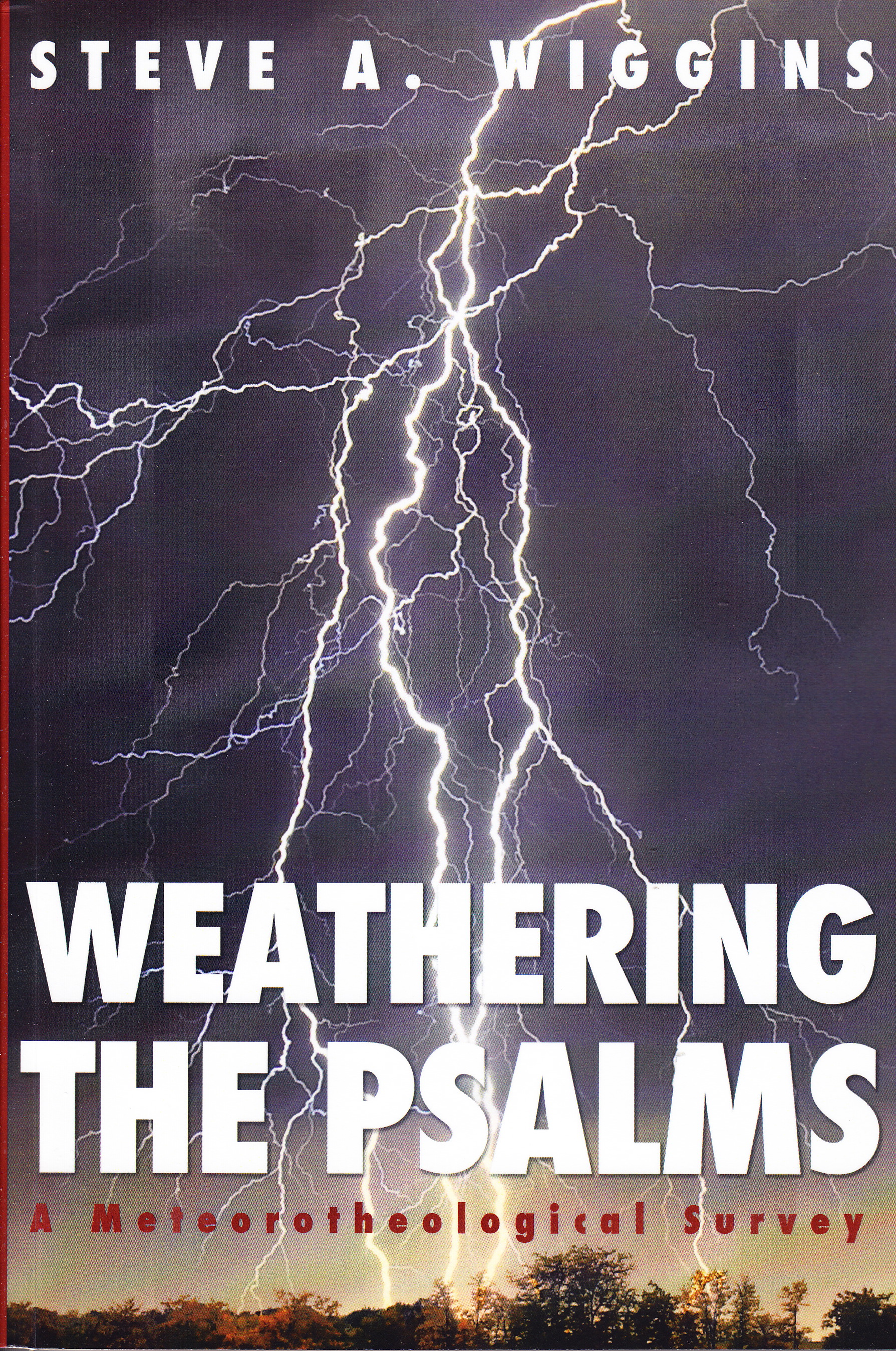
So I get onto a topic and begin to research it.  You soon come to know what Lewis Carroll meant about tumbling down rabbit holes.  It leads to Wonderland.  Always I’m surprised at how little I know.  I’ve learned some new things and that which I thought I knew proves to have been so minuscule that I wonder at my boldness of even trying to write books.  I guess I believe in giving back.  The other day someone asked me to write a follow-up to Weathering the Psalms.  As I told him, that was my plan when I was employed as a researcher.  What happened to my “career” led to my renewed interest in horror.  It just made sense in the light of circumstances.  When that happens, what can you do?  Research it.

There’s a sense, I suppose, in which you end up where you’re meant to be.  If I’d stayed in higher education I’d have had precious little motivation to write about horror and religion.  I had three or four vital research agendas, depending on where I might end up.  I’d have been happy to stay with my semitic goddesses.  I had a second book on that topic well underway.  Fully employed with an optimistic future, I’d given up watching horror.  So much so that I ignored The X-Files when it was running.  So the addiction changes specifics over time, but the drive to learn more underlies it.  Even this morning I learned some mind-expanding things, for me at least.  And I know I will keep coming back although it may cause problems for my career and it gets me nowhere in the larger scheme of things.  I’m helpless when I know my fix is as close as a book.


All About Blurbs

A book recently arrived.  It was unexpected, but when I saw the return address I knew what it was.  My young colleague Daniel Sarlo from the University of Toronto had kindly asked me to blurb his book The Solar Nature of Yahweh.  I’ve known Dr. Sarlo virtually for many years.  He’s engaged me a number of times on issues surrounding my research on solar worship in ancient Israel and Ugarit.  I had a book project in the works on the latter topic when other colleagues suggested going with something biblical for my next book, thus Weathering the Psalms was born.  Books, particularly academic ones, are in constant conversation with one another.  I’ve been writing on horror and religion now for over five years but my material on ancient West Asian religion is just now starting to get noticed.  It’s a funny old world.

One day I stumbled across a blurb lifted off my website for a book from Johns Hopkins University Press.  I was impressed.  First of all, that some author or editor had found my remarks on their book from this blog and that they’d liked them enough to cite them.  Getting blurbs can be a difficult task these days.  Academics are under a lot of pressure and time for such things is at a premium.  The payment is generally a copy of the book.  For some of us, though, it’s a thrill just to see yourself cited at all.  Once you’re no longer an academic you’re easily forgotten.  It has been a number of years since I’ve researched Yahweh and the sun, but someone, at least, still remembers.

Like book reviewing, reading a book for a blurb is one of those things you really can’t talk about pre-publication.  Book production is a slow process.  Like most things in life, it takes a complicated chain of events to lead to something as humble as a printed book.  And you need things like blurbs well before the release date.  As an author you often worry that—even in a field like ancient West Asian studies—your book will be outdated before it’s even published.  Some new find, or new idea might invalidate all that you’ve worked for.  Higher education should be one of the best venues for building humility in a person.  Your great learning is only one example among myriads of other scholars.  It’s a great accomplishment to get a book published in the midst of all that.  And this one, as the blurb indicates, is well worth reading.


Dark Academia

Over the weekend I “dropped” a new YouTube video on my channel (you can see it here, or by visiting my “YouTube” page in this website’s menu).  It ended up getting a little flurry of interest (1,800 views in the first three days), prompting a friend to tell me that if you pay attention to what’s hot on the internet, you can actually get attention.  That makes sense.  What’s so hot?  Dark academia.  Of course, my video really moves to dark academia adjacent, to what happens to real people when they try to teach religion and run afoul of “doctrine.”  There’s a real disconnect here because if you earn a good Ph.D. you’ll be taught to question everything.  If you’re a doctrinal believer, you’ll question nothing.

I stopped posting on YouTube a few years back because my cheap camera no longer worked.  It lost about three episodes I shot and, discouraged and too busy with writing projects, I gave it up.  I started again because I realized my phone was capable of recording and I had a holder that would stop it from slipping.  So why not?  Topics aren’t really a problem, but shooting and editing a video take a lot more than the eight minutes that result from it all.  Finding the time to edit, and learning how to edit in iMovie, are tasks in themselves.  And I’m an old dog.  Still, I miss that classroom audience.  I’ve been told that blogging is passé, and podcasts take even longer to record.

Some people make a living vlogging.  In fact, “YouTuber” can be a profession.  Those who succeed are often young.  And let’s be honest, a middle-aged white guy in a book-lined study is a tired trope.  Well, it is, in reality who I am.  A teacher at heart, I now try to imagine a virtual audience.  When I first started doing YouTube videos I had a very difficult time imagining an audience.  I fumbled a lot—I don’t script my videos.  If you’re interested in scripted I’ve got this blog right here.  The bump in interest in my dark academia post doesn’t translate to my other videos about my books or related topics.  Still, those are the things I know best and so it’s easiest to talk about them.  And possibly reinventing yourself.  I guess that’s what I’ve tried to do here.  Sloppily, stumblingly, but nevertheless, I’ve been changing my identity.  My YouTube channel’s not that active, but if there’s interest I can explore further reflections on dark academia.


Gift Books

The New York Times recently ran a story suggesting that books are not only the ideal gift, but that this has been the case for a very long time.  The article points out that treasured Roman Saturnalia gifts included scrolls, or the books of the time.  Books are the gift of knowledge—who wouldn’t want that?  Also, I’ve been reading about the fact that money can be any medium of exchange as long as it’s agreed upon.  Why not books?  Being an American, it’s often amazed me how intellectuals are held in such low esteem in this country.  We pay our teachers poorly, we mock those who read “too much” (as if such a thing were possible), and we dismiss what experts of many subjects tell us because we don’t like to admit others might be smarter than we are.

Reading, like arithmetic, doesn’t come naturally to people.  We evolved to survive and reproduce and our brains have that prime directive.  Along the way, however, we learned to communicate effectively and cooperate on large ventures.  These ambitions required wrapping our brains around things like advanced math and learning to interpret squiggles written by somebody else.  Kids, full of energy and needing to play, don’t want to sit down to learn these things.  At least most don’t.  In some parts of the world those who do take naturally to such things are celebrated.  Teachers are venerated.  Learning is revered.  Ironically, in this country where some of the best higher education is available, we want to belittle those who attain it.  We prefer to play with our guns.

Now that the holiday season is upon us, however, I think of reading.  I keep a list of books I would like to have.  It’s well over a hundred titles long.  In a good year I can read sixty or more tomes.  It’s an engine that requires a lot of fuel.  Although in all likelihood I’ll never be able to retire, I keep my books against that time when I fear I might become bored.  Or that my mind might start to slip.  Reading is mental exercise.  In my current writing project, I’ve been discovering new connections almost daily.  Often in unexpected places in books I learned about only in recent months.  I write these words surrounded by books.  There are more in the attic, and more in the next room.  I may not ever have enough money to retire, but if we ever decide that books should be currency—and even if we don’t—I’m wealthy indeed.


Split Personality

This may be the way to develop a split personality.  For the majority of my waking hours of the week I’m a biblical studies editor.  I do the usual, boring editorial work associated with that job.  Academics contact me supposing I’m just some Joe who majored in English and who has to pay the consequences.  Once in a very great while the person contacting me knows that I once was a professor as well, but that’s rare.  So I have one part of my life.  When I’m not at work I continue to research (in my own way) and write books, as well as this blog.  Being in “the biz,” I have a fair idea about how to get published in the academic realm.  Ever since Weathering the Psalms came out I realized I could use that knowledge to steer my books toward appropriate publishers, but all of this is very separate from my day job.

A third compartment of this personality is as the closet fiction writer.  I’ve had thirty short stories published (under a pseudonym, for work purposes) and anyone curious about that pseudonym’s life can’t really tap into this one because I have to keep them separate.  I’m also involved in a faith community.  Most of the people there are surprised that I watch horror and write about it, and even write it.  Only two have expressed any interest in reading what I write.  So it is that each of these discrete elements—and they’re not all!—prevent me from being an integrated personality.  I know other religion scholars who watch and write about horror.  Because they’re academics they can integrate it into their profiles in a way a mere editor can’t.  To be fair, they’re misunderstood too.

The possibility of living an integrated life is limited in the workaday world of capitalism.  Companies want you to spend as much time as humanly possible making money for them.  You shouldn’t try to shine any light on yourself, and if you do, well, keep the company name out of it!  Who wants to be associated with some horror pariah?  And yet, statistics reveal about half the population of the United States enjoys horror movies.  A significant number of those people attend religious services or belong to religious bodies.  So what’s a graphomaniac to do?  I write because that’s what I do, and have always done.  I started in fiction and moved to academic and now I blog.  Somewhere in there there’s a person and someday I may discover who he is.


Not Sleepy Yet

Working on a doctorate changes the way you think.  Or at least it’s supposed to.  Easy answers have to be examined closely, and sources critically scrutinized.  One of the side-effects of this is that many Ph.D.s tend to think that only others of that status are able to do good research.  An essential piece of research, however, is passion.  This part isn’t always logical and can’t always be explained.  A recovering academic, I first resisted Gary DenisSleepy Hollow: Birth of the Legend because it was self-published.  I’ve had bad experiences with self-published books before but what I discovered here is that Denis is quite a capable researcher, driven with a passion for Washington Irving’s tale.  The execution may be a little rough, but the data-gathering is very good.  He tries to point out where accounts have problems and attempts, where possible, to resolve them.

Denis is driven by the question of what in Irving’s story is factual, if anything?  This is probably not a question an academic would ask, presuming that fiction is fiction.  Still, there is data.  The first four chapters are very good.  Here he lays out the background to the region, Irving, and stories of headless horsemen.  I learned quite a lot from it.  The final three chapters turn to the main characters of the story—Ichabod Crane, Katrina Van Tassel, and Brom Bones—asking who they might’ve been based on.  The best drawn of these is the first and there’s good reason to suppose Irving based Crane’s situation on that of his friend, Jesse Merwin.  The other two, however, are sketched rather hastily and lots of people have suggestions for who might’ve been behind them.

Clearly aware that authors borrow and make things up, Denis knows that Katrina and Brom may well be pretty much imaginary.  He also knows that Irving did indeed borrow much from previously known stories and legends.  Irving’s real genius was in the way he expressed these stories in colloquial English, making American literature a blend.  Although Irving wrote many books, his fame was largely due to two of his stories published early in his career.  One of those stories, “The Legend of Sleepy Hollow,” has left quite a paper trail and Denis leaves no rock unturned in his efforts to collect data on it.  I’ve read a fair number of self-published books over the years—they’ve been easy to produce since the internet began—and I’m wary of them.  This book, however, is one that I’m glad I found and it serves as a useful reminder that good research isn’t limited to the privileged few in the academy.


Reflections of a Hermit

Although I acknowledge that Covid has made even more a hermit of me—I won’t deny it—and I often complain when I have to travel for work, I generally end up glad that I have.  (As long as I avoid Covid.)  Being at the AAR/SBL annual meeting is like being in a living library.  You meet and talk with so many smart, smart people and their ideas and yours begin to blend in an amazing kind of way.  I suspect that it shows that my books have been written by a guy in isolation.  That is, they could be improved by other eyes on them.  That’s what peer review is about, of course, but there’s something exciting about talking to my monster friends and engaging them about their ideas.  Frequently they will ask about mine.  I’ve even had colleagues mention that they’ve read some of my work.

The only real problem with how this unfolds is that I have so many meetings in a day that I sometimes lose track of the many ideas that crowd into my head.  Hastily-scrawled memos in my notebook—I’m too busy paying attention—mean that only fragments remain the next morning.  Each of them a gem.  (Fitting for Denver.)  When conversation comes around to what I’ve been working on, no matter how obscure it is, my monster friends know the root story and even have ideas that help shape my work.  No one scholar can read everything, and those of us who tend towards being hermits have the limited sources of one human imagination.  When imaginations get together, however, these ideas blossom.  I learn so much from these brief days that I think I might’ve been dangerous if I’d remained in the academy.  The man with an exploding head.

I sincerely hope that I give as well as receive at these meetings.  It’s really unfortunate that we don’t support humanities scholars in this nation.  These are some of the bright stars in our national constellation, yet they struggle with underfunding, and pressures such as “metrics,” as if you can quantify the influence on young brains and the potential future of our collective imaginative life.  Although I grouse, as is perhaps to be expected of an aging hermit, I can’t help but be enriched by the fertile minds I encounter, even if behind a Covid mask.  I’m never quite sure how to thank all these idea-conjurers properly.  I wouldn’t have met most of them had my career not taken the strange turns it has.  Now I realize that even hermits may have many friends.