What Lurks

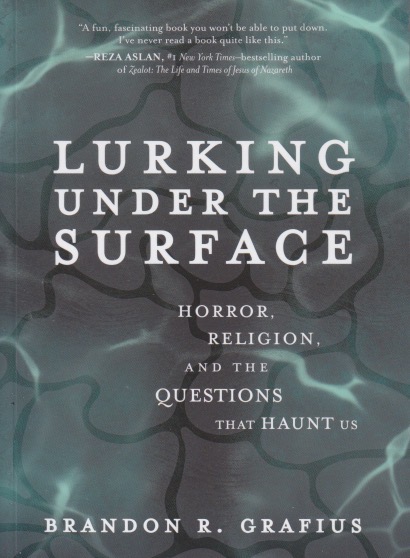
One question that I get asked by those who don’t understand is “Why horror?”  The asker is generally someone that knows I’ve been “religious” all my life, or affiliated with religion—which people think means sweet and light—and who associates horror with bitter and dark.  I know Brandon R. Grafius has been asked such things too, because I’ve just read his Lurking under the Surface: Horror, Religion, and the Questions that Haunt Us.  Like me, Grafius has been writing books on the Bible and horror—I’ve reviewed a few on this blog.  As in my former life, he teaches in a seminary.  People find this juxtaposition jarring.  This little book is Grafius’ struggle with various aspects of this question.  He’s not anti-religion, but he’s drawn to horror.

For those of us familiar with Grafius’ other work, this offers a more detailed explanation of what one religion scholar finds compelling about horror.  Specifically, he shows how various films deal with similar issues to his Christian faith.  The book deals with that for about half its running time, and the other half discusses similar themes in horror.  You get the sense that Grafius has been at this for a long time.  Scooby-Doo seems to have been his childhood gateway to horror and it raised some deeper questions as he explored further along the line.  If you read this blog, or search it, you’ll find such things as Dark Shadows and The Twilight Zone in my background, but then, I’m a bit older.  The point is, being a religious kid doesn’t discount finding monsters fascinating.

As usual with books like this, I’ve come away with several films to watch.  And more angles of approach to that tricky question of “Why horror?”.  A recent post on a panel discussion titled “Religion and Horror” led to an online exchange about religion and fear.  Grafius deals with that here as well, but from a more distinctly Christian point of view.  Although he’s an academic, this book is written (and priced) for wider consumption.  I found it quite informative to hear the story of someone else who grew up with monsters and the Bible.  He had the sense, however, to start addressing this early in his academic career.  We each have different paths to walk and for some of us it will take a jarring experience to chase us back to our childhood monsters.  And being religious is no barrier to that, as this brief book demonstrates.

The Panel

More than one person pointed it out to me, so I guess I must be getting a (small) reputation.  During one of my campus editorial visits I stopped into the center for Religion and American Culture at that venerable institution known as IUPUI—Indiana University Purdue University Indianapolis.  I was immediately impressed and, of course, since I’m no longer in academia I’ve realized that the impact of religion on culture is my real interest in it.  What was pointed out to me, however, was an episode of their “Religion and” series.  This one was held via Zoom and has been posted here, so if you, like me, work, or are just finding out about it, can still see it.  I encourage that behavior.  This particular panel was “Religion and Horror.”

As the word “panel” indicates, it was a moderated group discussion.  The panelists were Douglas E. Cowan of the University of Waterloo, Erika Engstrom of the University of Kentucky School of Journalism and Media, and W. Scott Poole of the College of Charleston.  The moderator was Melissa Borja of the University of Michigan.  What a great way to spend an October afternoon!  It is also good to know that I’m not the only one who’s noticed that religion and horror are similar and even address similar needs.  I’ve read books by Cowan and Poole and have even met the former a couple of times.  No longer a university employee, I largely work in insolation, so it’s great to hear conversation about the kinds of things in my head once in a while.  A number of refrains became obvious during this all-too-brief discussion.

We’ve been conditioned to think of religion as inherently good.  In general, we’ve also been conditioned to think of horror as inherently bad.  As with most black-and-white categories, both of these things get some key points wrong.  Religions, like everything else, have histories.  Those who study those histories learn that much of what’s passed along to believers is intended to make them into repeat, paying customers.  Try teaching in a seminary for a few years and then attempt to dispute that.  And, the panelists pointed out, horror is also a product, intended to sell.  This explains the endless parade of, for example, Halloween movies.  Just when you think you’ve purchased the last one you’ll ever need to buy there’s another.  There was so much squeezed into that one hour that I was glad I was taking notes.  But then, it was a recording—you can see it too, and I urge you to do so.


Former Education

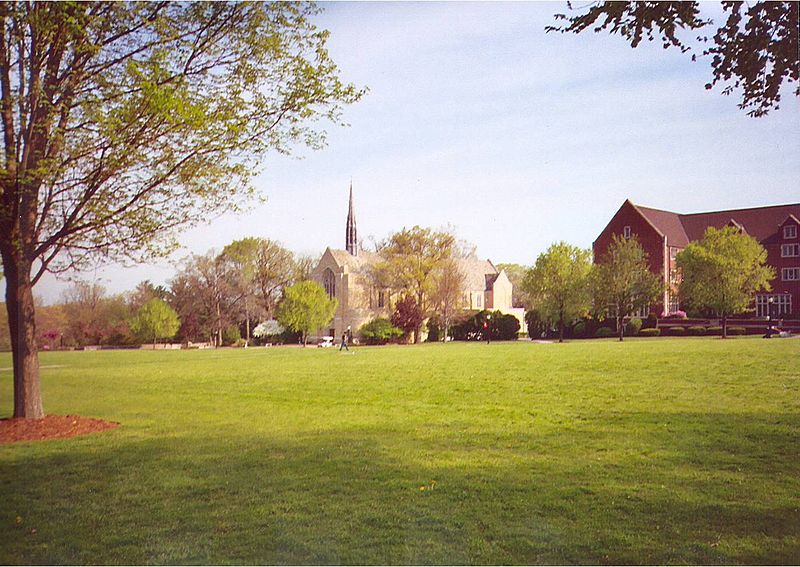
Like most people I don’t have time to sit around thinking much about college.  Once in a while you’re forced into it, however.  This time it was by an NPR article.  I attended Grove City College for a few reasons: it was a Christian school close to home, it wasn’t expensive, and, perhaps most of all, I knew campus because the Western Pennsylvania Conference of the United Methodist Church held its annual conference there.  I’d been several times during high school.  It didn’t hurt that I was a Fundamentalist at the time.  Grove City was a college of the Presbyterian Church and I loved having debates about predestination with professors who actually believed in it.  At the same time, I was encouraged to think things through, which liberal arts colleges are known for promoting. Is it now “conservative arts?”

Photo credit: The enlightenment at English Wikipedia

The NPR story my wife sent me was about how Critical Race Theory is disputed at my alma mater (sic).  I noticed in the article that Grove City is no longer affiliated with the Presbyterian Church.  It’s become much more right wing than that.  At the same time they ask me for money on a regular basis.  What made them think they had to go hard right?  Are they still educating students or are they indoctrinating them?  It reminded me of a sermon I heard at yet another conservative school I was associated with: Nashotah House Episcopal Seminary (or at least it was then).  The priest made an entire sermon about how it was right to be conservative, as if no matter what the issues there was some creed to get behind in staying behind.  As if virtue exists in never admitting you were wrong.

I suspect that my failure to attain a full-time academic position at a reputable school was because of what looks like a conservative outlook, despite the evidence of this blog.  Yes, I grew up Fundamentalist—you grow up the way you were raised.  Hopefully, however, you start thinking after that.  And experiencing.  And yes, using critical thought.  There comes a time when “because I told you so” just doesn’t cut it anymore.  For many of us that’s when we go to college.  If it’s a good one you’ll be encouraged to debate with your professors.  Not one of them has all the answers, I can assure you.  Education is, by its very nature, progressive.  We learn and we continue to learn.  We don’t stand still and say the 1950s was when God reigned on earth.  It wasn’t.  And it wasn’t any time before that either.  Now we know that Critical Race Theory should be taught.  We know Black Lives Matter.  What I personally don’t know is what became of a college that was once conservative, but at the same time, believed in education.


Eclecticism

Eclectic.  An eclectic approach is experiential.  I don’t mean to be obscure here, but I was once an academic.  Let me try to spell this out a little more clearly.  You’re reading along in your academic study—perhaps it was assigned to you for a class, or perhaps you have unusual interests, or maybe you want a deeper treatment than you find in Barnes and Noble or on the internet.  In any case, what you’ll often find is academics like to glom onto a theoretician that they follow.  Applying Derrida to this, Lacan to that, and Bakhtin to the other.  In doing so they establish their mastery over complex theory, and earn their ticket into the academy.  You, the poor, curious reader, are left wading through explanations of the theory when what you really want is the content—the actual subject of the book.

My own work has been rightly accused of lacking theory.  Or, more precisely, not following a consistent theory.  It’s eclectic.  That’s because I believe in an experiential approach to research.  I trust my own experience.  Your experience is different, I know.  Trust it.  We learn things through experience.  Perhaps others were raised by parents who read and thought deeply and introduced their children to Deleuze (and perhaps Guattari as well), but most of us weren’t.  And some of us came to trust both raw logic and intense feeling.  We call it instinct in animals, but in people we expect more.  What’s wrong with being eclectic?  It seems to make sense.  If Foucault had it right, shouldn’t it be obvious to all of us?

What’s always amused me about this is that such theoreticians—and I don’t know how you become one without basing your work on your own experience—come and go like fashions.  Ricoeur was the big name a few years back and now I haven’t seen anybody writing about him for a couple of decades, at least in the fields I’m reading.  I tend to read primary material and think as deeply as I can on it.  Yes, I read others who write on the topic and sometimes I’m even quite taken by someone else’s approach.  Still, my experience tends, alas, toward the Baconian—an embarrassment for a vegan, I suppose—that of gathering information and seeing what makes sense of it.  I read the theoreticians from time-to-time and then I read those not classically considered experts.  We’re all in this knowledge game together.  Even Lévi-Strauss and his school.


Hiding What?

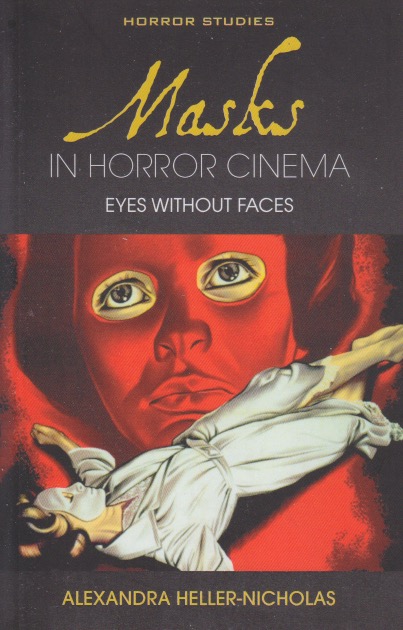
Who are we?  Do we really show ourselves to others, or do we wear masks?  That question applies to horror films as well as to everyday life.  Alexandra Heller-Nicholas addresses this directly in the former context in Masks in Horror Cinema: Eyes without Faces.  As I write about horror films, peer reviewers suggest these more technical studies as means of adding depth to my analysis.  Most of them are revised dissertations and retain the academic language that makes such documents difficult to read in places.  Still, they contain a lot of insight.  I learned a lot from Heller-Nicholas and I was particularly impressed that she took the “shamanic imagination” as her approach to the films she analyzes.  The ritual aspect makes good use of religion and horror connections.  It’s nice to see this catching on.

Masks are more than disguises.  Yes, there’s something theatrical to them and there’s a great deal of ritual to theater.  Ritual and religion aren’t identical, but they are clearly related.  Often masks are discussed as simply a way of hiding a killer’s face.  There’s quite a lot more to it.  This is where the academic analysis comes in.  We can’t explore it in detail in the brief context of this post, but there’s a whole book out there to read on it.  Heller-Nicholas doesn’t feel constrained to major movie releases.  I did that in Holy Horror because I supposed more people would be interested in reading about movies they’d actually seen (most of them anyway).  There are a lot more examples out there.  I’m learning about more all the time.

There are many different masks in horror.  This book looks at several, some metaphorical, but most literal, and what they convey.  Or conceal.  The fact is we mask ourselves for many reasons.  It’s kind of like when we dream—our subconscious seems to know more about who we are than our waking minds do, and we really don’t share our dreams with others.  The mask in horror isn’t worn just by killers.  When it is, however, it often has a shamanic effect, or, as Heller-Nicholas points out, a trickster aspect.  This is very much like how anthropologists approach shamans in traditional societies.  Religious specialists are often tricksters and they provide an important element in cultures that are otherwise beset by rules.  Rationality is important, but so is letting go of it once in a while.  Shamans get away with things the average person can’t.  And it is just one of many masks we wear all the time.


Ode to Auld Reekie

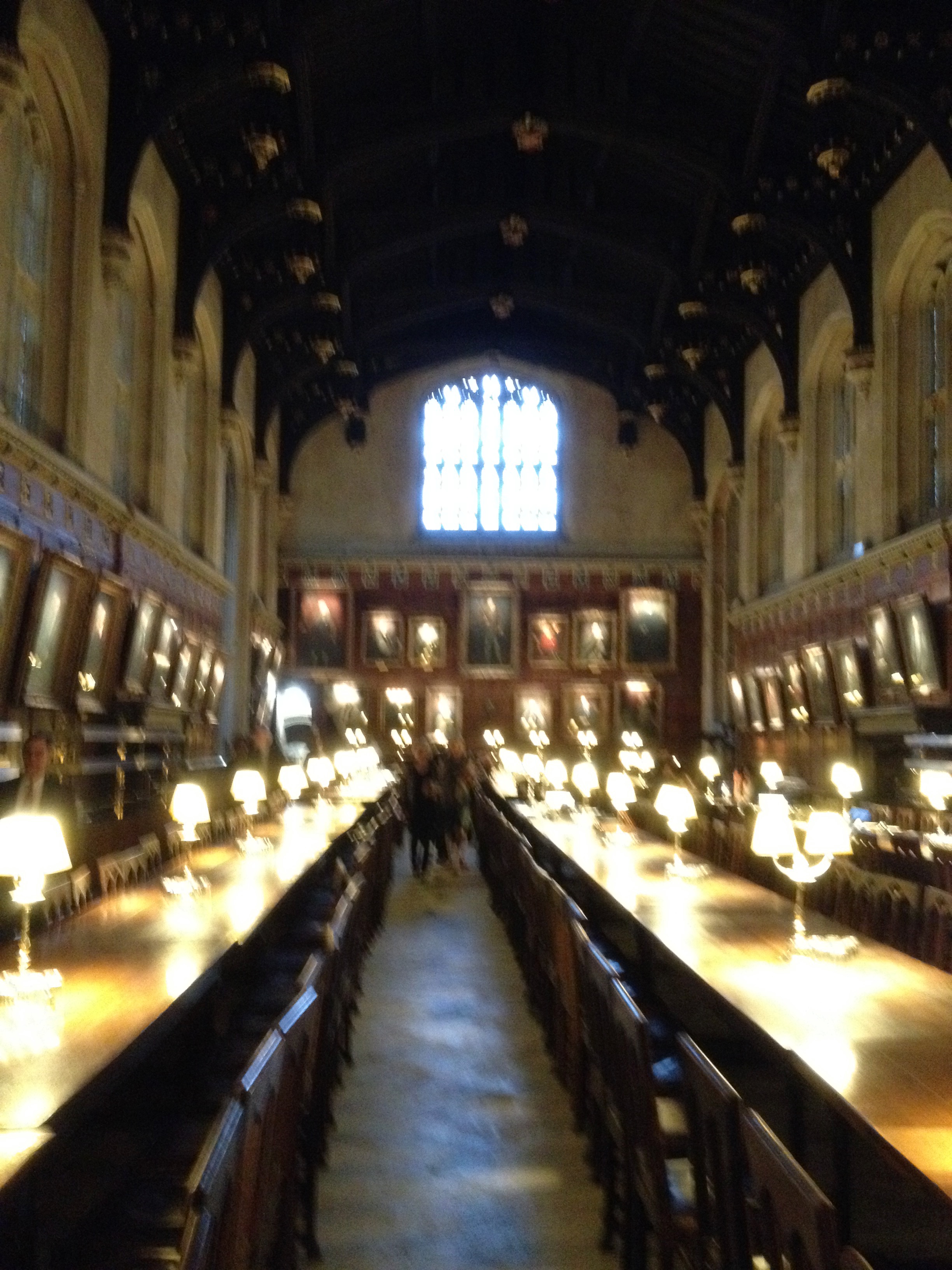
Edinburgh is a sizable city, although not large like New York, more like Boston, but smaller.  Like Boston, it has had an outsized influence globally, even apart from its world-class research university.  I think of the creatives that are from, or spent considerable time there (J. K. Rowling, take a bow) and the many great thinkers who’ve called it home.  Our three years there went by too quickly, but money being what it was (and is) and laws dictating how long we could linger, we had to leave it in 1992.  If you’d have asked us when we were there we’d have told you we’d’ve stay if we could’ve.  We had no money, no car, no television, but we had Edinburgh.  Somehow that seemed to be enough.

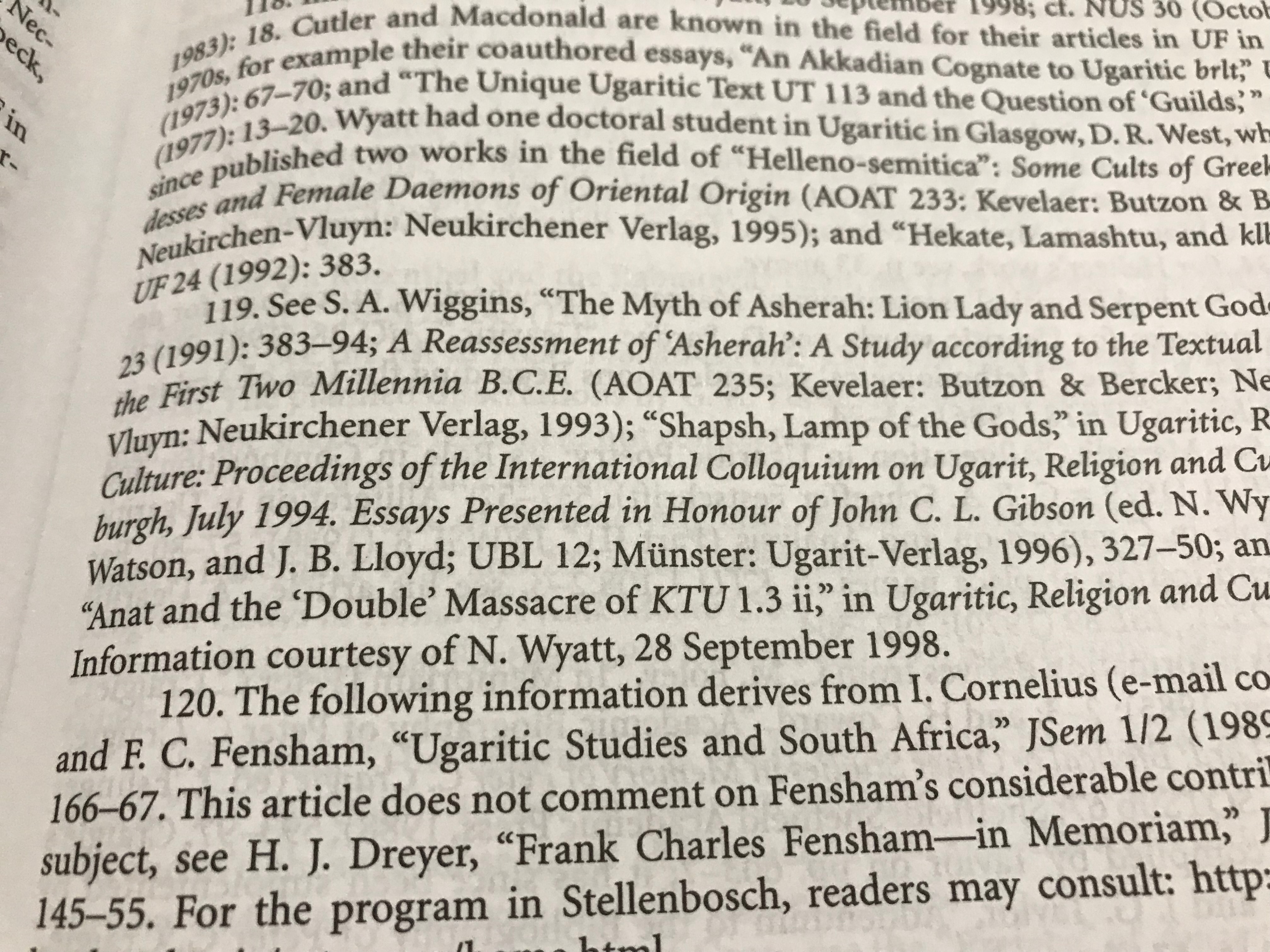
Places have great significance to people, but it’s not reciprocal.  I occasionally find out a famous person was from Edinburgh and say “I didn’t know that.”  Having spent three years and the cost of a doctorate there, I was a mere drop in the Firth of Forth.  I’m frequently in contact with faculty members at the Divinity School for work.  None know that I studied there—I suspect most university folk don’t sit around talking about long-ago post-grads.  Indeed, there may be no faculty left from the time I was there.  New names, new faces, new research agendas appear.  Indeed, you wouldn’t choose Edinburgh as a place to study Ugaritic now, even though there was once an “Edinburgh school” of thought in the discipline (and I can footnote that).

Still, when I hear “Edinburgh” my ears prick up like those of a dog who’s been called.  It is a part of me.  I’ve only been able to return once since our original stint there.  It was a strange sort of homecoming.  Familiar and foreign all at the same time.  Some shops were right where we’d left them, others now merely ghosts in our memories.  Fortunately Edinburgh hasn’t had the building mania that often causes old cities to try to reinvent themselves.  It was already great to begin with.  More and more I hear about the Edinburgh Festival, and the Fringe.  People are starting to notice this jewel in the crown of the United Kingdom.  On a molecular level there may still be a little bit of me there.  We’re constantly shedding, I suppose.  And someday perhaps we’ll be able to return.  It may not remember me, but I can’t forget her.


Express Yourself

Do you ever get excited by an idea only to be let down when it comes to the execution?  I suspect that’s a standard human experience.  For me it often happens with books.  Especially academic books.  I get excited about the ideas that are sure to be lurking between the covers only to discover that the author has unimaginatively fallen into bad academic habits, such as “scholar A says, but scholar B says.”  Just tell me what you say!  Reflecting on this I realize that building a case has become conflated with taking a test.  A doctoral dissertation is a years’ long test.  Your ideas are being compared to those who’ve gone before you—the fact that they’ve published has proven that—and you are expected to show your work.  Did you read Smith?  Have you struggled with Jones?  Is Anderson in more than just your bibliography?

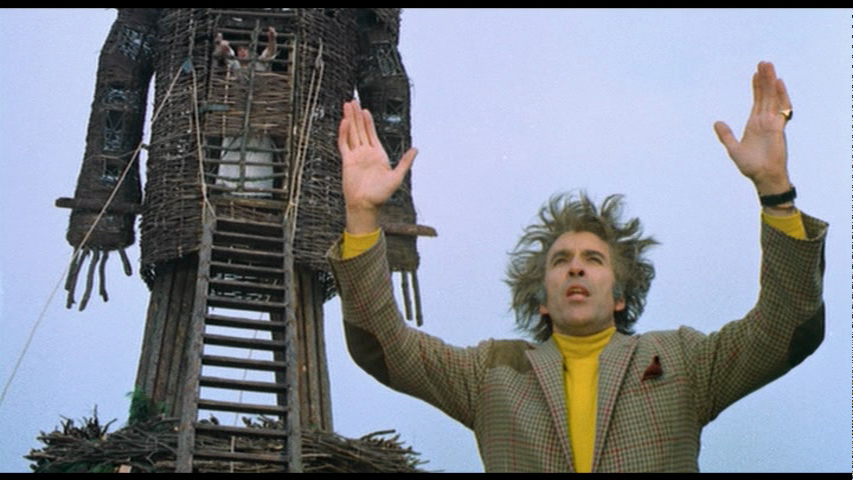
This kind of extended citation leads to turgid writing that slays any interest in the subject by the end of page one.  I’m not alone in this critique.  Some famous academics, such as Steven Pinker, have noted this.  In a not nearly frequently enough cited article, “Why Academics Stink at Writing,” Pinker lays out the bad habits that get perpetuated throughout the modern academy.  It comes down to, in my humble opinion, the fear of the exam.  Test anxiety.  Recently my draft of The Wicker Man came back from peer review.  While the comments of the reviewers were helpful, and quite complimentary, they felt there should be more academic dialogue going on.  I push back at this: if you don’t believe I’ve done the research, why approve the book for publication?  Most academic writing stinks and there’s no reason it should.

I’m a slow reader.  My average rate is about 20 pages per hour.  I know this because my morning routine sets aside about an hour for reading each day, and I note how many pages I consume.  Lately some of the academic books I’ve read have hobbled me down to 10 pages per hour.  I keep waiting for the narrative flow to kick in, something that I can follow and absorb.  Instead I’m learning what everybody else, often except the author, thinks about each minute point of his or her thesis.  Please, just tell me what you think!  I trust that you’ve done the research.  You wouldn’t have been granted a doctorate if you hadn’t.  The last thing I would want from my, admittedly few, readers is for them to close my book and say, “I’d rather be reading something else.”


Footnote Lament

I listened to a presentation on a famous novelist the other day.  It was noted that this writer was a master researcher, having read a lot for each book he wrote.  I don’t doubt it.  This novelist didn’t hold a doctorate, however, which makes even his historical novels suspect in the eyes of the academy.  I often think of the humble footnote.  You can’t read everything on a topic, not if it’s broad enough on which to write a book.  As soon as you send the proofs back to the publisher you’ll inevitably discover a source you’d overlooked.  And critics will delight in pointing this out to you.  I sincerely hope that my next book project will be devoid of footnotes.  There are personal as well as professional reasons for this.  One is that I like to believe what I have to say is important.

You see, the footnote is a way of backing up an assertion.  I remember many years ago reading a piece by a journalist who was scandalized that professors are so pressed for time that they rely on reviews rather than reading the actual book.  That journalist may not have been aware of just how much is published.  As an author you have to learn to say “Enough!”  The work is done and I’m not going back to it.  Footnotes will give you respectability.  Show that others agree with you—indeed, said it even before you did.  One of my great struggles with academia, besides the obvious, is that I’m more inclined toward creativity than your garden variety professor.  I like assert things because I know them to be true.  And those people I’m footnoting, they’re doing some of that themselves.

Finding yourself in a footnote

Academic respectability really comes into its own after death.  Even so, looking back at some of the “giants” in the field you can see that their ideas haven’t aged well.  They were important at the time, but now we look and see their western bias, how they didn’t take diversity, equity, and inclusion into consideration.  They simply accepted the dead white man’s version of the way things were.  They live on in footnotes.  You have to earn the privilege to be original.  Otherwise you’re just some patent clerk or editor and why should we take your word for it?  One of my zibaldones has written inside the cover Nullius in Verba—take nobody’s word for it.  I believe that, and yet I find myself having to put my source in a footnote.


Saints and Freedom

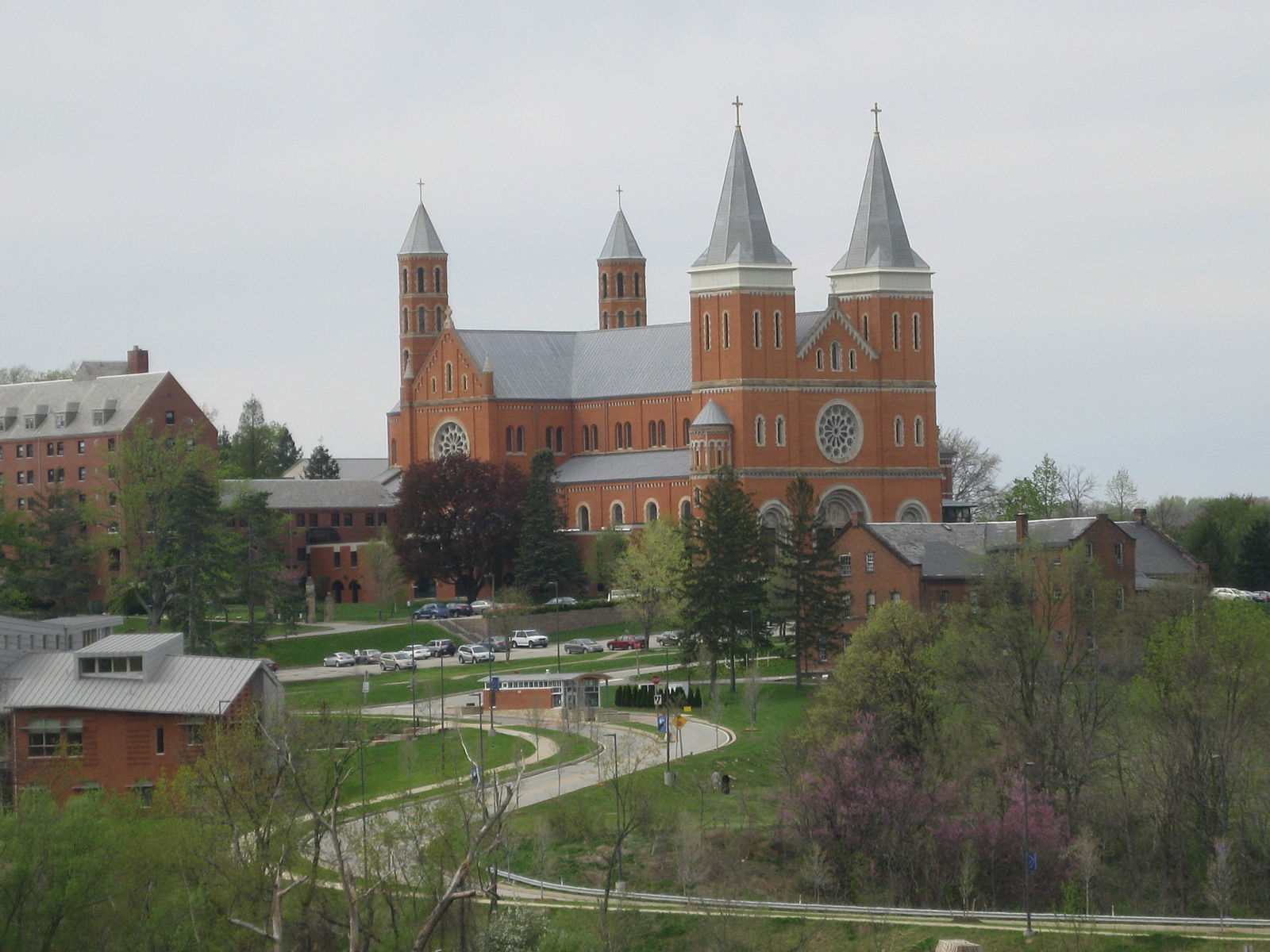
There’s a saying that all elections are local.  I suspect that’s true.  Location is important.  There are famous Americans not recognized in other parts of the world.  And there are, of course, local celebrities.  Having settled once again in Pennsylvania, I’ve taken an interest in local religions.  Although not part of the “Burnt-over District” of upstate New York, Pennsylvania, because of its early laws of religious liberty, has produced some noteworthy figures over the centuries.  And institutions.  When someone mentioned St. Vincent Archabbey, in Latrobe, Pennsylvania, I was curious.  I’m not Catholic and even though I’d considered a monastic life, I really knew little about it.  St. Vincent is the largest Benedictine monastery in the western hemisphere, as well as the oldest in the United States.  

Image credit: Guerillero, via Wikimedia Commons (Copyleft Free Art License)

Latrobe isn’t far from Pittsburgh.  There is a strong Catholic presence in the area.  Like many Catholic institutions, it has a cluster.  St. Vincent College, also in Latrobe, must’ve sent me—in those days, print—a prospectus back when I was looking at schools.  I’ve known about it for a long time.  There’s also a seminary, also called St. Vincent.  Probably it’s largest claim to fame is that the Pittsburgh Steelers use the College (I suspect the seminary has no athletic program) for their training camp.  Monks and football players—they must have some interesting conversations.  I grew up thinking Catholicism was basically some other religion.  Fundamentalists, misunderstanding the basics of history, tend to claim that Catholics aren’t Christians.  Indeed, until the recent politicization of conservative Christianity, they wouldn’t have had much to say to each other.

Catholicism was frowned upon by the early colonists.  While seeking freedom of religion, what they really wanted was freedom of religion for themselves.  In good, charitable Christian fashion, many colonies tried to exclude those that believed differently.  Especially Papists.   Rhode Island and Pennsylvania, however, notably allowed freedom.  I’ve lived in Pennsylvania long enough to know that even legal freedom isn’t protection from those locals who’d rather not have Muslims or Hindus for neighbors.  And in all likelihood William Penn, a good Quaker, probably couldn’t imagine people of “exotic” religions wanting in.  Indeed, the majority of people in this hemisphere weren’t really even aware of “eastern religions” until the 1890s.  The religions here were forms mostly of Christianity and Judaism.  By 1846 the Benedictines could establish a college, monastery, seminary complex in western Pennsylvania.  And it would become the largest and oldest such establishment in a country that still doesn’t grasp true religious freedom.


First Choice

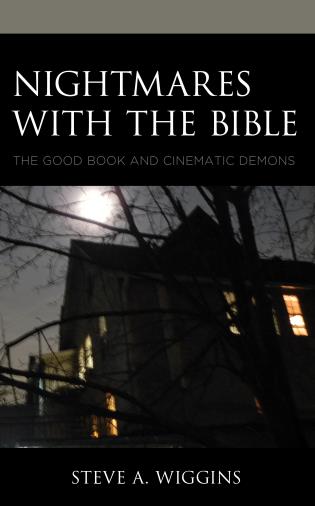
One of the first things I do when I finish a book, unless I know about the author already, is ecosia (google) her or him.  I want to know who it is that wrote this, and the internet’s right there!  So it came as a surprise to see my first (two-star) review for Nightmares with the Bible on Amazon, where the reviewer did no follow-up.  The reviewer is quite upset that I don’t take the Bible literally, but at least s/he bothered to leave a review.  A more positive rating might bring me up to three stars, but I’ve failed classes before.  I’m a big boy, I can handle it.  In any case, if you ecosia me you’ll quickly come upon this humble website that’ll tell you what you need to know.  No, I am no longer a Fundamentalist.  And the book was about demons in movies.  (I was actually searching for reviews of the series.)

I scrolled down.  The named reviews solicited for the book I knew, so I was surprised, and delighted, that further down the page I had a Choice review.  Even a disgruntled evangelical couldn’t bring me down after that!  In case you’re not a librarian, or an academic publisher, Choice is THE periodical librarians use for deciding on which books to buy.  It is very difficult to get a review in it—I work at a prestige publisher and seldom see our books in there.  If you’re a trade author that’s not so important, but if the only sales, or majority of sales, are for libraries, to get a “recommended” status is a big deal.  That’s worth celebrating.

If you’re wondering, authors do not get notified of reviews.  Some editors will let them know (my editor at McFarland hasn’t been in touch for years).  The journals are too busy doing what journals do to send every author a copy of their review.  So I swung by Amazon’s Holy Horror page.  I’ve got four ratings there now, mostly on the lower end of the scale.  If you’ve read it and liked it (not something I assume, of course) a nice review would go a long way.  Disgruntled evangelicals (aren’t they all, these days?) may make the books look bad, but colleagues who’ve read them seem to think differently.  I hold to the publishing adage that there’s no such thing as a bad review, but good reviews feel so pleasant.  I’ve only written one negative book review in my life, and that was because I felt any other would be utterly dishonest in that particular case.  It’s a choice I make because of the Bible: “For with what judgment ye judge, ye shall be judged: and with what measure ye mete, it shall be measured to you again.”


Not a Scholar

It’s insensitive.  And behind the times.  Google Scholar, I mean.  They send me emails telling me that people can’t read my research because I don’t have a verified email.  When I sign on and enter my email, it tells me to enter an institutional email instead.  I don’t have one.  So it sends an error message implying I’m not really a scholar after all.  Like hundreds, perhaps thousands, of academics, I had to settle for a job in the corporate sector.  Unlike some of my colleagues, I still research and write and try to maintain a web presence so I can be found.  Compared to non-academics those of us who’ve been through the system are few.  Even so, this can be an exclusive lot.

There are quite a few academic websites these days.  I’m not sure which is the biggest or best regarded—I’m not verified, after all.  I have an active account on Academia.edu, and recently, to gain access to an article I needed, I joined Research Gate (dot net).  Academia is after me every day to upgrade—they follow the “free cookie” model.  It’s free but if you really want to be discovered you can pay a modest fee for an upgrade.  I suspect Research Gate is the same.  And Google Scholar.  These websites aren’t out simply to promote you for your own benefit.  Of course, real scholars can be naive.  I’ve been in the business world long enough to be suspicious.  There’s no such thing as a free account.

What such websites don’t take into account is that academia is a harsh and punishing place.  Institutions are almost always run by businessmen these days and professors are deemed too expensive to maintain.  (Nobody’s talking about how university president salaries are too high, I notice, but they’re verified.)  To push knowledge forward we get rid of those who’ve dedicated their lives to study.  Those departments that bring in money—greed is not an academic field—thrive.  The academy was founded to further religious knowledge.  Soon study of the law was added, but law was considered something handed down from on high.  Some of us, and not a few, were naive and unverified enough to believe that fields that had been around for a millennia or so would be around for at least long enough to get us through to retirement.  Instead, learning has shifted online.  And to be part of that club, you must be verified.  At least according to Google Scholar.


Sabbatical Request

I don’t know when I became one of them.  It seems that I was pretty busy in my early teaching days, and starting a family.  I didn’t feel, however, that every single minute was programmed down to the second.  I had time for writing, vacation, and family, as well as work.  The other day when I was sending out those reminders to authors that their books are a bit (years) overdue, I realized just how busy they are.  Then I took a moment and considered that I’m not sure how I became one of them.  The people who are too busy.  Clearly buying a house was a big part of it.  I’d been pretty busy before, but now I need to invent time in order to get everything done.  The staycations I allow myself end up with feelings of guilt for all that’s been left undone.

Maybe it doesn’t help that I can see the neighbors out my office window.  When I see one of them weed-whacking or mowing during the day, I think I need to do the same.  But I’m also out of string for the whacker.  I really need to get to Lowes so I can stock up—last time they had only one spool left, which is probably why I ran out.  To get to Lowes I need a weekend.  Preferably not one with temperatures in the high nineties.  And without meetings cutting into weekend time.  And when it’s not raining.  Time is slippery.  Even as I work I often have other things—many other things—I have to do running through the back of my mind.  How did I become so busy?

Speaking only for myself, there’s nothing I’d rather be doing than reading and writing.  I do these daily only by carving out inviolable time for them.  It is costly time, I know, but to me it’s beyond price.  Thinking of these colleagues too busy to submit their books, I think back to my own professor days.  There’s no doubt that I read and write more now than I did then.  There were times (grading, accrediting body visits, commencement, etc.) when there simply wasn’t time to do anything else.  Many colleagues mention health issues on top of all this.  Academics, as those who supply (partially, but responsible for a goodly number of) books, the number published each year truly boggles the mind.  I would try to figure all this out, but I’m afraid I simply don’t have the time.


Who’s It For?

I suspect editors see this all the time.  I also suspect that I’ve unknowingly participated in it as well.  If you’re a book writer, you have to be clear of your readership.  As an academic editor I receive many proposals for books that either cry for popular treatment, but are too academic, or books that are written for laity on topics of interest only to academics.  A writing life is a struggle to find that correct balance.  Particularly for your typical academic.  You see, doctoral programs don’t generally include instruction on how publishing works.  Or in writing.  It’s assumed that any string of 100,000 words from a credentialed expert is worth publishing.  Worse, as Steven Pinker has pointed out, academics are rewarded for writing poorly.  No wonder people are confused!

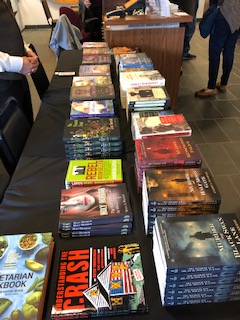
Lately I’ve been on a kick about people not paying attention.  It is important to observe.  When writing a book it’s important to gauge who might want to read your potential book.  Indeed, this is something seldom asked early enough in the process.  Who is this book for?  Will they want to read it?  You see, we have this lone ranger attitude to book writing.  In actual fact, most books you see in bookstores are the clear result of teamwork.  Yes, authors do most of the writing.  In many books editors do quite a bit of the fixing of the writing.  Agents, marketers, publicists, sales reps—there are a host of people behind successful books.  It’s easy to think, while writing, that your book will be a bestseller, no matter how academic.  That you will see it in Barnes and Noble and point it out, ever so casually, to your friends.  That it will sell for less than $20.

It’s important to pay attention to what other people think.  We’re all busy, I know.  We have our own lives to live and plans to enact.  Who has time to bother thinking about who might read their book?  Obviously, other specialists such as themselves.  But how many people is that, really?  With the sheer number of books published each year, are there topics that will draw in thousands, instead of hundreds (or less) of buyers?  Writing a book naturally makes you think the topic is important—vital, even.  It’s easy to transfer your personal interest onto the masses.  My advice, for those few who ask or care, is to think carefully about who you wish to reach.  Be honest with yourself.  And try to think from the point of view of somebody else.


Ravens and Teachers

Humans, it is claimed, have a theory of mind.  What this means is that we know what others are thinking, or better, at least we can anticipate what they might be thinking.  This allows us to be self-aware and live in a complex society.  We can see someone else and infer what’s going on in his or her noggin.  This is often considered a uniquely human trait, but I’m not sure how widespread it is.  You see, I frequently run into the situation where someone expects something of me without telling me.  It happened just recently with an organization to which I belong.  I’m a very busy person.  I suspect most of us are—not having time to accomplish everything we need to get done.  If someone wants something from me I have to be told what it is and I have to be told in detail.

One of the things my students always said was that I was a good teacher.  The reason for this, I think, is that when I explain something I back up a bit before the beginning.  I try to assume no knowledge on the subject before going in a bit more deeply.  This method works because of my personal theory of mind.  These people wouldn’t be taking a class on this subject if they already knew the stuff I could assume.  For understanding something new, things have to be explained thoroughly.  That doesn’t mean taking a lot of extra time, but it does mean not assuming others know what I know.  For many people this is difficult.  We’re all busy.  We tell others “Do this,” without explaining what exactly “this” is.  The results are predictable.  It happens all the time in work emails.

I’ve recently written of teachers and ravens.  The effective among the former understand the value of full explanation.  The latter have a theory of mind that allows them to go as far as to try to fool others by giving not enough information.  We might learn a lesson either by sitting in the classroom of the former or by watching the ravens that skulk on the edge of civilized areas.  What they have in common is the ability to realize that others operate with limited information.  In order to learn, information has to be conveyed and conveyed well.  Even now colleagues at work are surprised at when I explain something that it’s done thoroughly and clearly.  When I receive information it’s often piecemeal and frustrating.  The reason, I infer, is that we don’t spend enough time paying attention to either our teachers or the ravens.

Image credit: Wikipedia Commons, public domain

Paperback Nightmares

I’m not assertive.  My voice is not loud and even when I have strong opinions I like to let others have their say.  Those of us who’ve been beaten down too many times can be like that.  So it took a lot of courage to ask.  “Is it possible that Nightmares with the Bible might be issued in paperback?”  You see, I know that “academic” books almost always sell the copies they’re going to sell in the first year.  Some follow-up sales continue into years two and three, but beyond that it’s about done.  And I also know that when authors ask for a paperback it almost never sells as well (or even more poorly) than the hardcover.  I’m hoping the paperback of Nightmares will buck this trend because it published into the pandemic.  That was a game-changer.

When you’re worried about staying alive you might not feel like reading about demons.  Of course, what better time to do so is there?  Paperbacks are often produced, in academic settings, to appease authors.  I have long believed—and this flies counter to the orthodoxy of the publishing world—that if books were initially published in paperback and priced affordably they would sell better.  The fear is that the higher priced hardcovers wouldn’t be purchased by libraries.  Librarians would, oh tremble, purchase the reasonably priced paperbacks and rebind them for less expense than the stratospheric price put on a 208-page monograph.  Publishers are often afraid to try anything different.  Assured sales are a blessing that can be bankrolled.

I’m hoping, once the paperback comes out, to do some more promotional work on it.  This blog was started long before I had books to flog.  It’s free content for those who like the less sweet kinds of treats in the bowl.  I do appreciate the occasional free advertising I can do.  It’s my hope that there’s always something to learn offered with it.  Successful content providers can make a living doing it.  Others pay for the privilege.  I often ponder what will happen to this blog when I run up against the size limits of my WordPress account.  The next level up, commercial, is beyond my price range.  Perhaps, like a phoenix, it will be time to start all over again when that moment comes.  In the meantime I’ll reuse images as often as I can, because each new one takes a byte out of my account.  And when it’s all said and done, Nightmares will still be available in print. Hopefully in paperback next year.