Christmas Lights

How many people read a blog on a major holiday?  The process of writing takes no vacations, however, and I often think of holidays as a time to write.  It doesn’t really matter if anyone reads it; writing is our witness to the cosmos that “Kilroy was here.”  Even if most of us have no idea who Kilroy was.  So I find myself awake earlier than most children on Christmas morning.  My long habit of rising early to catch the bus hasn’t been easy to break.   I creep down the stairs and water the tree before turning on its colorful lights.  I make a cup of coffee and wash the dishes left in the sink after a festive Christmas Eve.  And I think.  There’s always the thinking.

The meaning of Christmas, as the holiday classic tells us, eludes Charlie Brown.  Linus van Pelt gives one rendition—that of the Gospel of Luke—as the canonical meaning, but in my experience it shifts during a lifetime.  Christmas, after all, is one of a host of solstice celebrations.  My thinking these days is that it’s all about light.  Shimmering angels, glowing stars, light coming into the darkness.  These ideas seem to have, for the most part, Zoroastrian origins, but they’ve been thoroughly appropriated and, in true American style, commercialized.  The news headlines read how disappointed retailers always are.  The take could’ve been bigger.  Capitalism relies on Christmas to make the third quarter.  Light in the darkness, in its own distorted way.

As I sit for these quiet moments in the glow of only a tree, I think of those for whom the holiday has become a kind of disappointment.  Not a cheery Christmas thought, I know, but an honest one.  As families grow and diversify the childhood Christmas of excited children scrambling under the tree to excavate the next gift for me starts to fade.  Our economic system separates, and the dearth of days off around the holidays makes travel back to childhood homes difficult.  We do the best we can, but the fact is the sixties (speaking for me) are over.  Our reality is colder and darker than it used to be.  I part the curtains and look for any sign of dawn.  It will be a few hours yet before the sun brightens this winter sky, but then, that’s what the holiday has come to mean for me.  At least this year, it is the hope of light returning.  And that, alone, makes it a holiday.


The Night before Reading

Like many people bound to their circumstances by work (and now a mortgage) I see travel to far-off places is a dream.  On my personal bucket-list is Iceland.  Perhaps that’s a strange place to yearn for in winter, but it’s on my mind today because of Jolabokaflod.  I’ve posted on Jolabokaflod before, but in case the concept is unfamiliar I’d summarize it by saying Icelanders, who are exceptionally literate, give each other books on Christmas Eve and spend the dark hours reading.  For the past three years I’ve taken part in a reading challenge that lists a book in translation, and invariably I choose one by an Icelandic author.  Publishers in Iceland, being less corporate than our native species, accept books for publication somewhat more readily—I’ve been shopping a novel around for nearly a decade now and I’ve read worse.  If it doesn’t jack up the dollar signs, so nobody around here’s interested.

I’m sure it’s not all sweetness and light in Iceland.  I suspect, for one thing, it’s hard to be vegan there.  Then there’d be the need to learn Icelandic.  The nights would be even longer in winter, but then, those long nights would be filled with books.  I sometimes imagine how different America would be if we loved books that much.  I remember well—as you may also—the classmates who grumbled about “having to read” as part of their school curriculum.  And this began well before high school.  Young people’s bodies are full of energy and they want action (which can be found in books, I might add) and new experiences (ditto).  Our culture feeds them the myth that such things lead to happiness.  Instead, they find sitting still tedious.  When life leads them to commute, they fill bus time with devices.

The other day I had an electrician in our house—the previous occupants had some strange ideas about power distribution.  He, as most visitors do, commented that we have a lot of books.  I’m beginning to feel less apologetic about it than I used to.  We have books not only because it’s been part of my job to read, but because we like books.  One of the painful memories of 2018 was the loss of many volumes due to a rainstorm that flooded our garage right after our move.  It still makes me sad to go out there, remembering the friends I lost.  Nevertheless, it’s Christmas Eve, at least in my tradition, and the thought of books combined with the long hours of darkness brings a joy that I’d almost characterize as being Icelandic.  At least in my mind.  Jolabokaflod might well be translated, “silent night, holy night.”


Solstice Musings

Should my posts of late be castigated as against the Christmas spirit I would rely on Andy Williams’ song, “The Most Wonderful Time of the Year” in my defense.  “There’ll be scary ghost stories,” the crooner sings amid images of cheer and celebration.  What may not be appreciated by my less sober celebrants is that the long nights of winter have as close an association with ghosts as they do with the numerous religious holidays that fervently pray for the return of the light at this time of year.  In merry old England, which along with Germany developed the modern concept of Christmas, the holiday was observed with evening ghost stories as is well represented by Charles Dickens’ A Christmas Carol (likely the source behind Williams’ lyric reference).

So I read about ghosts when the light begins to fail.  Or at least that’s my excuse.  When Ghost Hunters took to the air in 2004 the world became aware that electronic devices can pick up anomalies and other ghost-hunting groups began to appear.  Alan Brown, apparently curious about this development, wrote Ghost Hunters of New England as a field guide of sorts to paranormal investigators.  The book divides the region by states and includes the answers to survey questions asked to each of them.  The result isn’t especially inspirational, however, as these groups share in common the obvious absence of scientists.  It may be that professional scientists fear the career impact of such associations, but as is the case in many academic disciplines, their lack of participation simply erodes the credibility of science in the eyes of many.

Human investigation of the world has reached a point where many academic specialists can no longer communicate effectively with the average person.  I work in academic publishing and it is clear that many specialists simply do not recollect the level at which those without advanced training read.  We therefore see the rise of hoi polloi as self-appointed experts.  If scientists won’t investigate ghosts, plumbers will.  And since, no matter what science declares, many people experience ghosts, they will listen to those who at least seek answers.  The problem with books like Brown’s, of course, is that if a fad fades the groups disappear leaving the information outdated.  A couple of the groups were interesting enough to send me to the websites listed only to find the domain name for sale and the ghost hunting shingle removed from the door.  Still, the book had some useful information for those willing to consider the possibilities.  After all, the nights can be awfully long in December.  And there’ll be scary ghost stories…


Reflecting on Light

Now that we’re approaching the winter solstice, light is pretty much on the minds of those of us in the northern hemisphere.  Or lights.  The use of Christmas lights and Hanukkah lights may have symbolic value to the religions that promote them, but both also reflect the pagan use of sympathetic magic to bring back the light.  Human beings tend to be visually oriented, and many of us feel the increasing darkness deeply.  Days are brief enough to be awake for the entirety of daylight’s duration, and then you still have to get home after work.  After dark.  All our enlightened hours are spent for the benefit of the company.  It takes its toll.  And so we string holiday lights, bringing cheer into the preternaturally long hours starved for illumination.

Although the snow hasn’t stayed around here, I did notice an interesting reflection of light outdoors the other day.  The windows of a house were casting a light-shadow on a fence that had the look of a cross.   It took some convincing to assure me that this was pareidolia—the assigning of intentionality to random “signal.”  We see faces where they don’t really exist, and when we see crosses in this evangelical haven of America we have to assume they’re intentional.  Sometimes, however, they’re simply a trick of the light.  The sun has a low angle this time of year, and the light that is otherwise scattered back into what is wonderfully termed airglow—the natural illumination caused by sunlight as its luminosity brightens the daytime sky—is focused lower.  Light takes shape and sometimes it seems religious.


In New York City, where repeated patterns are pervasive, such reflections often appear on neighboring buildings as “X-Files” symbols of Xs in circles, giving the city a mysterious look.  Out here, however, they appear as crosses.  You see what you want to see.  Or, sometimes you can’t help seeing what appears utterly obvious to credulous eyes.  I’ve had people insist that crosses like this are intentional.  In reality, they’re a natural result of rectangles reflecting the morning light when the sun follows its low profile ecliptic during the waning of the year.  That doesn’t mean that it can’t be read for something else, of course,  Religion is all about interpretation.  Light forms patterns and seems strong enough to banish darkness.  And given how many hours it’s dark these days, I’m willing to take what help I can get.  The solstice will soon be here.


The Dots

Connections have always fascinated me.  Maybe it’s because life is a random stream of stuff constantly thrown at you that makes a mockery of any plans you might try to implement.  Me at Nashotah House?  Really?  Nevertheless, these events shape us and everything that happens thereafter is seen in light of them.  So when connections occur amid this continual flux, I sit up and take notice.  For example, I had never thought of moving to eastern Pennsylvania.  Now, around Christmastime, I find myself not far from Bethlehem.  Bethlehem was so named because it was founded on Christmas Eve by Moravians who’d settled in the area.  Although not counted among the most numerous of Protestants today, Moravians had a profound effect on the founder of Methodism, John Wesley.  In fact, he met Count Zinzendorf, whose name appears on this handsome plaque in historic downtown Bethlehem, at a pivotal moment in his own spiritual journey.

Having grown up Fundamentalist, the United Methodist Church would not have been our choice, although we had unwittingly attended one of the Methodist offshoots—the Church of the Nazarene—from time to time.  In one of those unplanned things, we found ourselves in Rouseville, Pennsylvania, where the only Protestant church was United Methodist.  Once ensconced in the UMC it was my plan to become a minister in that tradition.  That led me to Boston University School of Theology where I first learned about the Wesley-Zinzendorf connection.  It was also there that I met my wife.  And subsequently joined the Episcopal Church.  Why?  John Wesley had been adamant that his followers not drop out of the church in which he was an ordained priest.  I was only following instructions.

Had that not happened I would never have had my first, and so far only, full-time academic job.  Nashotah House was conservative, and I was not.  We nevertheless had a connection.  Growing up I’d barely heard of Wisconsin, let alone planned to live there.  When Nashotah no longer required my services my career had to change as well.  None of this was in the plan.  Who plans to move to New Jersey?  And now everyone thinks of me as an editor, a fallback position if there ever was one.  Since I work in New York City, moving back to my native Pennsylvania wasn’t really on the agenda.  An outside agent led to that.  So I find myself near Bethlehem in the Christmas season, staring at Count Zinzendorf’s name, which I first heard of in a seminary now far away.  Connections, even with those long gone, are always worth noting.


Evangelical Angels

Angels are everywhere at this time of year.  The Christmas stories of the gospels of Matthew and Luke have made them an indelible part of the tradition.  It’s not unusual for entirely secular individuals to be decorating with them and they are generally without controversy in public displays of holiday spirit.   A colleague once asked me why Americans were so credulous when it comes to a belief in angels—the numbers of believers are quite high, statistically.  I wonder if it’s because we need them.  Considering that the Republican Party is the Evangelical’s party, it’s no small wonder that even atheists embrace angels.  We all could use a little help from on high.  This time of year, such hope can be disguised behind tinsel and bows.

America must seem a strange country to those who immigrate (or had immigrated, when that was possible).  We wear our religiosity—and this is not the same thing as true religion—not only on our Christmas trees, but even on billboards by decidedly secular highways.  It’s as if even all the things America stands for, such as love of money, guns, and automobiles, only hold together with the saccharine glue of a sickly sweet religion.  A Bible-believing nation that has no idea what the Bible actually says and lauds a president who breaks at least a commandment a day and gains no reprimands.  We have shown our red neck to the rest of the world and yee-haw we are proud of it.  And we got the Good Book to prove it.

After all this shakes out we’ll be needing some angels, I suspect.  My colleague felt that sophisticates, big city skeptics, ought to be more willing to dismiss unenlightened beliefs such as those in spiritual beings.  The thing is, spiritual beings serve a very useful purpose.  They keep us honest—and I don’t mean in an Evangelical way; I’ve seen Evangelical honesty and it’s as corrupt as the Devil.  No, I mean that angels are important to show that we have hope.  Maybe they are secular angels—even the Bible doesn’t give any description of them at all, so how can you tell a secular from a religious angel?  That lack of pedigree doesn’t mean we don’t want them watching over us.  Belief is an important part of being human, secular or not.  The billboard space tends to go to those who want your money, and that applies to the ones that appear to be religious as well.  If this is the way the religious behave, we’d better hope there are angels everywhere.


Russian into Things

It’s the holiday season.  The people I overheard at the bus stop the other day were discussing shopping on the bus.  It can be a long trip from here, and evening traffic out of New York (ironically) is quite heavy this time of year.  Bored commuters, sitting on the bus with their phones, shop.  I couldn’t help but notice that I was the only one with the overhead light on during the fully dark ride home this week.  At one point the driver seemed to think it was a mistake on my part and snapped it off.  I carry a book light with me for just such eventualities, but I had that odd feeling one gets when everyone else got the memo but you didn’t.  In any case, I was reading a physical book, not shopping.

Then I read about a book I need for my research.  Problem is, I don’t have an institution, or a wealthy sponsor, so I often buy books used.  Back in my teaching days Amazon was new, and the idea of buying books online foreign and unfamiliar.  Now you can’t find a bookstore when you want one.  In any case, this particular book was on offer on eBay.  Now, I haven’t used eBay for quite a while.  I never think of it as a place to find reading material, but there it was.  Who would’ve thought research would ever lead in this direction?  The price was reasonable, so I signed in as a guest and placed my order.  With out of print books like this you run the risk of price-gouging or sudden unavailability—the independent researcher’s nightmare.

When the confirmation page came up, I couldn’t help but notice that the header was in Russian.  I wondered if Trump’s dream had really finally come true, or if the eBay on which I ordered an out-of-print book was really a trap.  How do you find out?  Who do you tell when your current government is completely at the beck and call of the Russian government?  I was in a brown study for a while.  The book, used, on Amazon was listed at over a thousand dollars, and this for a paperback published in 2009.  People will pay quite a lot for certain books, even if they don’t retain their resale value.  Ideas, it seems, are worth more than money.  But we no longer have a government to protect our interests.  Not even research, it seems, is safe any more.

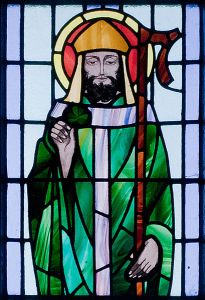
If you squint, he could be St. Nick


Christmas at the Bus Stop

I had to make one of my periodic treks into New York City this week.  Unlike most years when a warm spell comes after the onset of winter, we’ve kind of fallen straight to the heart of the season this year and those of us standing in line for the bus were experiencing it via wind chill.  The cold got some regulars to talking about Christmas.  Although I’m not the oldest one who makes this long trip, the majority of the commuters this far out have yet to attain my years.  Those chatting at the stop had kids at home that still believe in Santa Claus.  It made me recall how we trick our kids with all kinds of quasi-religious folkloric figures, but also how seriously some adults participate in the mythology as well.

Among those chatting, the leaving out of cookies and carrots was almost canonical.  The cookies are for Santa, of course, and the carrots for the reindeer.  The more I pondered this, the more it became clear that this is a form of thank offering.  The story of Bel and the Dragon, in the Apocrypha additions to Daniel, tell of how priests leave out food for an idol.  The offering is gone in the morning and the credulous worshippers assume the statue has eaten it.  Religious offerings, except those entirely burnt up, were often used to support priesthoods.  Santa has his elfly acolytes, of course, but the priesthood for his cult is that of parents eager to make Christmas a special time for their children.  Capitalism’s big pay-off.

Then one of the commuters mentioned how she had her husband leave a footprint in the fireplace ash to add verisimilitude to the ruse.  We never had a fireplace when I was growing up, and I often wondered how Santa got in when we had no chimney to come down.  In any case, my hazy morning mind thought once again of Daniel and Bel.  The way that wily Daniel exposed the fraudulent priests was by sprinkling—you guessed it—a fine layer of ash around the offering after the priests had “left” for the night.  In the morning he showed the people the footprints of the deceptive heathens to the people.  The statue hadn’t eaten the food after all!  Serious consequences followed.  Christmas, despite its commercialization, brings fond childhood memories to many of us, and we’re reluctant to let that go.  The one man in on the discussion (it wasn’t me) said that when he was growing up they had a somewhat different offering.  “My dad,” he said, “told us to leave Santa a beer and a sandwich.”  This guy’s name might’ve been Daniel.


Christmas Time

As children we can’t wait for Christmas because we’ll be getting things.  Now that I’m older I try to avoid the frenzy building up to the holiday, although I look forward to the vacation days that I’ll cash in to take time to be with family rather than business.  It’s not that I don’t like holidays—it’s just I’m no fan of hype.  Still, now that December is nearing, and Thanksgiving has reminded us that work isn’t everything, I can feel the anticipation.  Yesterday I attended the Christkindlmarkt  in Bethlehem.  Amid the backdrop of the truly colossal, rusting stacks of the former Bethlehem Steel plant, this is a seasonal event with nothing but good spirit.  People of all descriptions were crowded into the massive event, but rudeness and complaining were strangely absent.  Everyone seemed to be having a good time.

When I worked at Nashotah House, the atmosphere for Advent was austere.  We weren’t really encouraged to look forward to Christmas, bringing a tree home before the 24th was frowned upon.  It was a time to reflect on our sins, not to anticipate our rewards.  Still, I had a kind of epiphany among the secular crowds seeking to get into the spirit of things yesterday.  Bethlehem is a city that has known hard times.  Its industrial base eroded away, residents were left unemployed and wondering about a very (and increasingly) uncertain future.  Recasting itself as the Christmas City is a way of throwing new light on a holiday famous for its commercialism.

Christmas can be about resurrection.  It’s a season to think of birth.  It matters not if the mother is a virgin or if the child is for an exclusive sect.  People throng here for hope.  Beauty in the midst of ruin.  Some businesses clearly spend all year building up to Christmas, selling ornaments so delicate that I feared even to look too hard at them lest they shatter.  Handcrafted goods that represent the livelihood of others who compel strangers that art is worth more than money itself.  Wandering through the four tents of booths, the feeling of resurrection was palpable.  We were all here seeking something.  Loosening the grip on the wallet just a bit.  Wanting to make others happy for a while.  Birth is the symbol of hope.  Advent, it seems, need not be a dreary season of wallowing in unworthiness, awaiting a mythology taken too literally.  The proof of the goodness before us is just down the road in Bethlehem.


Post Thanksgiving

Yesterday morning, like many others mesmerized by the commercialization of holidays, I had the Macy’s Thanksgiving Day Parade on the television.  I can only speak from my own experience, of course, but I know that growing up poor we used to watch this, and that my wife’s family, from different circumstances, also watched it.  The friends with whom we ate our main meal watched it, and given the advertising revenues, I imagine many other people tune in every year as part of the holiday tradition.  What struck me were the testimonials just before or after the commercial breaks.  Celebrities shared what they liked about the holiday and many of them, unsurprisingly, focused on food.  Many indicated that overeating was pleasurable.  I began to think of what it means to be a nation of foodies.

Not everyone is of a cenobitic sensibility, but focusing on the food seems to be paying more attention to the finger pointing at the moon than to the moon itself.  Commercials for television shows of sweaty, nervous chefs wanting to be recognized as the best cooks in the world struck me as somewhat decadent.  Like many professionals I’ve had occasion to eat in “fine restaurants” from time to time.  Do I remember the food for long afterward?  No.  More often I recall the people I was with.  What we talked about.  The food, chefs may be pained to hear, was incidental.  There were deeper issues afoot.  If the internet’s any indication, I’m in the minority here.  Foodies rule.

Special foods on holidays are, naturally enough, a holiday tradition.  Many have their origins in the changing foodstuffs available as the seasons wend their way through their invariable cycle.  Thanksgiving is like the ancient festivals of ingathering—the celebration of plenty ahead of the lean months of living on what we’ve managed to store for the season when winter reigns.  Some animals cope by hibernating until food becomes available again.  Others scavenge their way through chilly, snow-covered days.  Gluttony, however, isn’t primarily a sin against one’s body; it’s the sin of taking more than one’s fair share.  Unequal distribution of wealth is a national sin that grows worse each year.  On Thanksgiving there are many people who don’t have enough to eat.  Jobs can be lost through no fault of one’s own, and want can haunt late November just as readily as jouissance.  Driving home we passed a shopping mall brimming with cars after darkness had fallen.  The larger holiday of Black Friday had begun.


Centuries

Although it may not be obvious, history marks us as hopelessly shortsighted.  As a species we’ve only been keeping written records for about four millennia.  History, as we know it—without the intervention of gods—is an even more recent phenomenon.  Since living a century is a rarity (although becoming more common), a hundred years seems like a very long time.  Our lives spin out over a brief span of active decades until we run out of energy and let others make the important decisions.  We hope, against hope, that they will have learned from our collective mistakes.  Learning isn’t always our strong suit as a species.  In just one century we forget and arrogantly refuse to read our history.

One hundred years ago the War To End All Wars ended.  World War One was a slaughter on a scale unimaginable, involving nations around the world distrusting each other and hating one another enough to threaten all the advances of millennia of civilization.  When the war was over we thought we’d seen the last of conflict.  Two decades later it started all over again and the Second World War wiped out millions of lives.  The aggressors, known collectively as fascists, were strong nationalists, believing in racial superiority and privileged rights for those in power.  When that war ended, just about seven decades ago, a stunned world took little for granted beyond the awareness that fascism was, at least, gone for good.

Today we stand on the brink of a chasm that spans one century.  Fascists are in power in the United States and elsewhere.  International tensions are running high and the “leader of the free world” openly eschews reading history.  Protests against the war in Vietnam were largely prompted by the real-time coverage on television.  Now we have a world-wide web, but no basis for truth beyond the tweets of madmen.  For many people the decade-and-a-half that they spend in school seems a long time.  We used to believe that it took that long to learn what our restless youth need to survive in a complex society.  We teach them, among other things, history.  The need to learn from our past is perhaps even more important than technology.  My generation of academics, reaching over half-a-century now for many of us, has been taught that lifelong learning is the value we must instill in students.  Given that we’ve collectively had a century to learn, and that we’re still edging toward the same collapsing precipice, a hundred years seems not nearly long enough.


Leftovers

It looks like I forgot to click “publish” yesterday, so my blog post never appeared.  With apologies for doubling up, I need to complete the trilogy today.  So here goes…

Unlike All Saints Day, which, we were told, was a day of obligation, All Souls Day, today, was not.  It was kind of a leftovers day.  Ironically, it developed into Día de Muertos—the Day of the Dead—along with Halloween and All Saints.  Yes, there are many who declare, and rightly so, that Día de Muertos is something different.  It is and it isn’t.  Cultures around the world have always felt that at this point in the year something odd was going on.  The carnal summer was becoming the spiritual autumn.  Thoughts of those who’d died come back.  So it is a three-day celebration—not officially recognized in the United States (it would interfere with business, which is, as we all know, a thing not to be imagined)—has become a commercial boon.

Still, not being among the saints, I have to wonder if the leftovers—All Souls—are somehow second-class citizens in the afterlife.  Does the social stratification we experience daily here carryover to there?  The view of Heaven among the poor is generally one of comfort and equality.  Fairness, which is in very short supply down here, will finally see the end of the moral arc of the universe, to borrow from a departed sage, bend toward justice.  And sharply.  The idea is ancient and powerful.  Primates of other species don’t object to having leaders.  They do, however, reject leaders who abuse power.  And so it is that we’ve evolved beyond that.  Civilization teaches us our place.

The Day of the Dead has become commercial, along with Halloween.  Why not stretch out the profits, which, after all, come from the leftovers?  There is a capitalist vision of Heaven, you see, and it is one we see working out on earth these days.  Those with money take power and use their money to buy more power that in turn leads to more money for them.  We call it “making a living.”  Those who are wise, however, recognize something deeper in Día de Muertos.  It is the time when we welcome family home, indeed, when family becomes more important than job, or status, or power.  It is a very human, if supernatural, holiday.  All Souls, it seems, has received less than its fair share of attention.  The Day of the Dead, in its own way, warms up those leftovers.


November Novina

One of my New Testament professors was fond of saying early Christianity was exclusive so that people would want to join.  “If everybody could be a Christian,” he suggested, “why would anyone want to be?”  There is a snob appeal to such a country-club approach to religiosity (although I believe it to be false) that has somehow come to be attached to All Saints Day.  As the holiday that spawned Halloween (or so some say), All Saints seems to hold us the exclusive members of a sect that began with radical equality.  The slight was addressed in All Souls Day (tomorrow), when the rest of us might have a chance of being remembered.

There was a death in my extended family yesterday, of someone not much older than me.  I won’t reveal the personal details here, but I do ponder the coincidence of his passing so close to All Saints.  When we’re gone, we hope, people will remember our good, opposite to what Shakespeare suggested might be the case with Julius Caesar.  There are those who touch our lives for good, be it loudly or softly, and we tend to think of that good as who they were.  But sainthood?  Isn’t that a bar too high for anyone to achieve?  And if we think we’ve made it, even that very thought is enough to disqualify us.  Some sects of Christianity treat any member as a saint, but that leaves little to which to aspire.

Carlos Schwabe, Death of the Undertaker; Wikimedia Commons

For the rest of the world this marks the beginning of November—that month when cold settles in along with longer nights, but no reduced working hours.  We are approaching the holiday season, for we need some help to make it through times when loss can feel so close at hand.  The veil separating worlds—something science has tried hard to dismiss—was believed to be more permeable at this time of year.  All Saints was a bright day of upbeat music and glory, while All Souls followed in black and more somber tones.  That’s kind of like November.  I grew up, as did my departed kin, without the awareness of these holidays of transition.  Protestants sometimes miss the complexity traditional Catholicism had carefully grown.  At Nashotah House this was a day of obligation (although they all were, really), and we’d be invited to add names to be recited in mass.  I have a name or two to add this year, and I like to think anyone should be free to join.


Halloween Mood

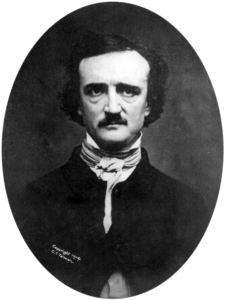
As America becomes scarier and scarier, I appreciate the fact that I grew up loving Halloween.  I don’t know why the dark mood appeals to me—I don’t like being scared, and I certainly don’t want others to suffer.  It’s more the mood that appeals; think of it as Halloween in the abstract.  I begin to feel it in August when I walk into stores already beginning to stock their black and orange wares.  It grows stronger through September as the dark comes on noticeably earlier each day, culminating after an October of anticipation.  Unlike some consumers of horror, what I’m after is the mood.  I started reading Poe as a young person, and “The Fall of the House of Usher” remains my favorite short story.  It’s the mood.  The narrator riding his horse through the woods toward dereliction.  There’s a sublimity in it that’s hard to match.

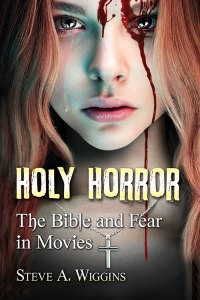
Yes, I watch contemporary horror.  I even write books about it.  Still, it’s difficult finding others who share my sensibility concerning horror.  I don’t like the jump scares or the gore.  I’m after the mood.  Poe knew about mood—he wrote stories that maintained it throughout.  A kind of beautiful hopelessness.  It’s a feeling in the air around Halloween when it’s clear nothing is going to stop the leaves from falling and the onset of a long and lonely winter.  Writers will shiver in their garrets, allowing their thoughts to flow despite the pale sky and feeble sun that is the only hope of continued life on this isolated planet.  Halloween tells us there is a spirit world no matter what the scientific authorities say.  It’s a world you can feel, but you can’t find it rationally.

Masquerading is a theme in some of Poe’s work as well.  We, as social beings, tend to excel at it.  We hide our real feelings so that others won’t hurt us, or so as not to hurt them.  We all know the childhood feeling of putting on that Halloween mask that permits us to act as we really feel, within limits.  Even as a Fundamentalist, I knew the catharsis of masquerading.  I read Poe and I understood him in my own way.  As an Episcopalian, I saw how fear of death was hidden behind All Saints and All Souls.  Masquerading.  Halloween was the Eve of All Hallows, but it usurped the master in its own form of beautiful dereliction.  The holidays following this are more comforting and heimlich, until the solstice comes to remind us that light will return, no matter how feeble at first.  We need Halloween.


Banned Wagon

In celebration of Banned Book Week (go ahead, let your hair down!), I thought I might muse about some good news.  Since I already posted on my banned book (Slaughterhouse Five) I need another angle of approach.  One of the less envious aspects of being an editor at an academic press is being yoked to facts.  Many authors have a basic misconception about numbers in their heads.  They think their book will sell on the scale that Barnes and Noble, such as it is, will stock them on the shelves.  I have to admit that I dream of walking into a bookstore and finding one of my titles on the shelf—and I know it’s not likely to happen.  Those of us who work in publishing see the hard figures, how many copies have actually sold.  And the results can be quite sobering.

The news isn’t all bad, though.  I ran across an article by Andrew Perrin titled “Who doesn’t read books in America?” and the way the question was phrased made me think.  I’m used to thinking of it the other way around: how many people read, or buy, books?  I once read that about 5% of the US population constitutes the book-buying market.  Now, that is a large number of people, even if it’s on the smaller end of the overall spectrum, but Perrin’s article from the Pew Research Center states that only 24% of Americans state they haven’t read a book, whole or in-part, over the past year.  This, I think, is cause for celebration.  It means more of us are reading than are not, even if we don’t always finish the books we’ve started.

Think of it like this: whether print or electronic, people know to turn to books for information.  Oh, there are all kinds of details I’m leaving out here—the safeguards of a reputable publisher over the self-published manifesto, as well as the self-published brilliant book over what managed to squeak through the review process at a university press because an editor felt the pressure of a quota—but the numbers are encouraging nevertheless.  Looked at this way, more people are reading than are not.  And the best way to promote books is to suggest they should be banned.  That’s why I don’t despair of the shallow books praising Trump—if they’re banned they become prophetic.  Academic books, my colleagues, don’t sell as many copies as you might think, even if they’re not banned.  The good news is, however, that we haven’t forgotten whence to turn for knowledge.