The Grind

I’m headed back to New York City after a staycation of almost two weeks. Even shifting standard arising time back only an hour from 4:00 a.m. seems cruel and unusual punishment this morning. New York is a very different place to go for work than it is for play. Serious New Yorkers, of which I am not one, tend to avoid the fun places visitors go. Times Square is simply a venue from which the hike to work begins. Most of the buildings are gray and dedicated to the making of money. My thoughts go back to my one transgressive trip in over the holidays to see a show. How different New York was then! Ethereal lights, sublime music, and the magic of story. Today it will be unsmiling crowds surly to make cash flow again. The concrete underfoot today will be much harder.
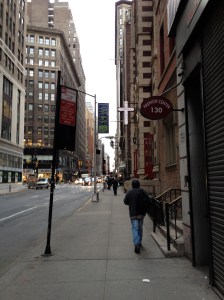
When I come in with family I feel less cold. New York can be very lonely for such a crowded place. Indeed, it isn’t unusual for me to go for days with no one at the office saying a single word to me. That’s the kind of place Manhattan is. Too many humans to be humane. Unless you’re here to play. Such play is, however, costly. Magic never comes for free. The holiday lights will still be up here and there. Warm memories of the past few days will linger for a little while. Soon the steel and cement will be the only realities once again. Soft skills meet the cold razor of cash with predictable results.

It seems to me that I’m yearning for boyhood once again. Those first tentative years of learning about life are all misleading. Suddenly it dawns on you that good will is reserved for the holidays and the remainder of the year is dedicated to money and things others deem as important. The bus is approaching, but the last time I was in the city was for fun. Today I won’t even glance at the theater district as I dodge cars to get out of Times Square as quickly as possible. There will be the all-too-familiar lines at the Port Authority during rush hour this afternoon. I’ll leave work wondering how a city can possibly be so schizophrenic. Yes, I’ve been profoundly happy in New York City. I’ve also been ground down to the very nub by the exact same place. Such is the nature of a world where money reigns.
2017 in Books

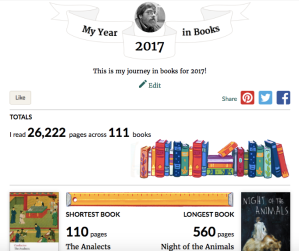
At the end of each year I think back over the books I’ve read in the past twelve months. Since I don’t blog about every single book, I use Goodreads to keep track of my numbers. I pushed my reading challenge at that site to 105 books for last year, and the meter stopped at 111. In 2018 I’m planning on reading some bigger books, so I’ll scale the numbers back a bit, I think. In any case, what were the most memorable books of 2017? It’s perhaps best to divide these up into categories since the number of books has become unwieldy. I’ve written a book about horror movies, and much of this year’s reading has been in support of that. Since my book addresses, among other things, possession movies, I’ve read several tomes on the topic. Noteworthy among them have been the three books by Felicitas D. Goodman that I read over the year. J. H. Chajes’ Between Worlds was exceptional, and Jeffrey Burton Russell’s The Devil, was likely the overall best on the topic. Also noteworthy for purposes of my book research were Catherine Spooner’s Post-Millennial Gothic and Monstrous Progeny by Lester Friedman and Allison Kavey.

For books on religion, Stephen Prothero’s Religious Literacy was an important start. Amy Johnson Frykholm’s Rapture Culture and James William Jones’ Can Science Explain Religion? addressed aspects of the topic that will continue to bear further exploration. God’s Strange Work by David L. Rowe and American Apocalypse by Matthew Avery Sutton stand out in my mind as a memorable treatments of William Miller, and of understanding American religion respectively. Chris Hedges’ American Fascists is remarkably urgent and should be read widely, especially since he has shown where current political posturing will lead if it’s not stopped cold. We will be struggling against a situation like Nazi Germany for many decades to come, and forewarned is forearmed.

It wasn’t all doom and gloom, however. Much of the fiction I read was excellent. Bill Broun’s Night of the Animals, Auður Ava Ólafsdóttir’s Butterflies in November, Robert Repino’s D’Arc, Matt Ruff’s Lovecraft Country, Christobel Kent’s The Crooked House, and Leah Bobet’s An Inheritance of Ashes all stayed with me long after I read them. And of course, Neil Gaiman’s The Ocean at the End of the Lane. Some non-fiction read just as engagingly. The autobiographies by Carly Simon and Bruce Springsteen were deeply engrossing. The Hidden Life of Trees by Peter Wohlleneben and John Moe’s Dear Luke, We Need to Talk were great guilty pleasure reads along with Dani Shapiro’s Still Writing, W. Scott Poole’s At the Mountains of Madness, and Mathias Clasen’s Why Horror Seduces. The latter title brings us full circle. I suspect that’s appropriate for rounding out a year. Many of the other books were also quite good; I tend to rate books favorably. Read the revolution—make 2018 a memorable year with books!


Let the Memory

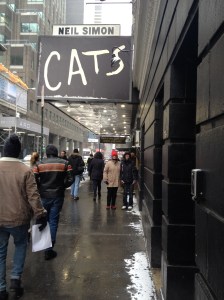
One of the rare and long-anticipated treats of being near New York City is the prospect of a live show. For practical reasons we don’t go to shows very often—years separate the occurrences—but once in a great while we manage to afford such a boon. Yesterday we attended the penultimate performance of the Cats revival on Broadway. The experience was transcendent. I’ve seen the movie version a number of times, and over the years I’ve caught a few live performances here and there. For whatever reason, this musical speaks to me. Although it doesn’t really have much of a plot—it’s more a series of vignettes—it is about redemption and being comfortable in one’s own skin. T. S. Eliot was a poet who knew spirituality intimately. Andrew Lloyd Webber, no one needs me to say, writes stirring music.

Cats, unlike many shows I’ve seen, requires athleticism as well as vocal ability. The performers are in nearly constant motion as they play out their roles, often with acrobatic flourishes. Most of the parts are for the young, while those dwelling on the experience of older characters—Gus, Grizabella, and Old Deuteronomy—tend to be recollections of youth as a commodity that slips away leaving as residue the wisdom that comes with age. It’s quite biblical in that respect. Even the old can appreciate back flips and double cartwheels and the grace of ballet. For this particular production the lighting stood out as an integral part of the story. Illumination, I might add, is a powerful metaphor.

In our family discussions afterwards, comparison with other versions dominated. Although my wife and I saw a community theater production long ago (placing us, I reluctantly suppose, in the ranks of the older characters), our main introduction was through the filmed adaptation. Again, like the Bible, we tend to think of canonical versions. This is how it should go. Because of both its running time and its demands on the players, not all vignettes are included in each production. The character who narrates the story may change. Choreography is adjusted. Each show, as is the case with live theater, is a little different. Standing in the snow on a cold, New York City December afternoon awaiting the opening of the doors, we wondered what would be changed. The original Broadway run had ended while we lived in the Midwest, so this was both our first exposure but also our fourth rendition over the decades. None, it turns out, could be called canonical. That, however, took nothing away from the inspiration of the event unfolding before our very eyes.


Ancient Perspectives

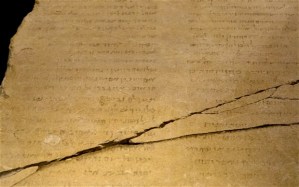
Around the holiday season, on social media, stories relating to the Bible tend to pop up. When my wife mentioned a New York Times story about “Gabriel’s Revelation” on the second day of Christmas, I was suspicious. The story, which was nearly a decade old—the internet keeps things in circulation far longer than those old library tomes consisting of physical newspapers bound together—describes the unprovenanced inscription as predicting a messiah will rise after being dead for three days. I assumed this meant evangelicals would be overjoyed, but it turns out that the artifact, if authentic, predates the New Testament. That means that it can’t be traditionally ascribed as a prophecy, since it’s not in the Bible, and therefore it becomes a threat because it suggests Jesus’ story isn’t unique.

Image credit: The Telegraph, from Wikimedia Commons

This is an interesting dynamic. A potentially important ancient artifact can only have value if it’s in the Bible or proves the Bible “true.” When that happens the faithful crow about how the evangelical position was right all along. If such a document implies that the gospels were borrowing from widespread cultural assumptions, however, it becomes just another unimportant bit of junk from days gone by. Confirmation bias, of course, is something in which we all indulge. Nobody likes being wrong. The difference is that the scholar is obliged to admit when the evidence overthrows his or her position. New options have to be considered.

Since I was between jobs in 2008 when the inscription was announced, it escaped my notice. Now that nine years have settled the dust a bit, there seems to be no sustained case for declaring Gabriel’s Revelation a forgery. Neither does it appear to have changed Christianity at all. The period known as that of Second Temple Judaism has shown itself to have been rich in messianic expectations. We know little, historically speaking, of Jesus of Nazareth. We know from the Dead Sea Scrolls that some were expecting a messiah along the lines of what Jesus was said to have been. But those documents aren’t part of the magical book that contains the truth, the whole truth, and nothing but the truth. In as far as they back the Bible up, they are celebrated. When they call the Good Book into question, they are rejected. I have no idea whether Gabriel’s Revelation is authentic or not. It seems pretty clear, however, that a faith that’s based on one unquestioned source might be more fragile than even other artifacts that have managed to survive, somehow, from ancient times.


Unidentified Angelic Phenomena

Few topics have to be approached as gently as space aliens. Those who’ve seen UFOs are subject to an immediate ridicule response partly generated by the belief that galactic neighbors, if any, are simply too far away to get here. So when the Washington Post runs not one, but two stories in the same week about the subject of UFOs, without a hint of snark, it’s newsworthy. I’m in no position to analyze the journalistic findings, but I do consider the idea that other species might be more advanced than we are not at all unlikely. Look at what’s going on in Washington DC and dare to differ about that. Human beings, now that we’ve rid ourselves of deities, have the tendency to think we’re the hottest stuff in the universe.

I’ve admitted to being a childhood fan of science fiction. Space stories were always among my favorites in that genre. When I learned in physics class that travel faster than the speed of light was impossible, I was sorely disappointed. I also learned about the posited particles known as tachyons that do travel at such speeds. This to me seemed a contradiction. Or at least short-sighted. If our primitive physics suggests that some things can travel faster than light, why limit our ET visitors to our technological limitations? This wasn’t naivety, it seemed to me, but an honest admission that we Homo sapiens don’t know as much as we think we do. The universe, I’m told, is very, very old. Our species has been on this planet for less than half-a-million years. And we only discovered the windshield wiper in 1903.

Around about the holiday season people’s thoughts turn to heavenly visitors. What would the Christmas story be without angels? (For the record, some evangelical groups have historically claimed UFOs were indeed angels, while others have called them demons.) The idea was championed by Erich von Däniken, if I recall correctly from my childhood reading. Where angels might come from in a post-Copernican universe is a bit of a mystery. As is how they’d fly. Those wings aren’t enough to bear a hominid frame aloft, otherwise we’d see flying folks everywhere, without a two-hour wait at the airport. Then again, belief in angels almost certainly will lead to ridicule among the cognoscente of physicalism. The presents have been unwrapped, and angels have been forgotten for another year. And who could know better what’s possible in this infinite yet expanding universe than “man the wise,” Homo sapiens?


All Is Bright

As a Christmas present to myself I finished my third book yesterday. I’ll be posting details once the title is finalized. And “third” is only an approximation. I wrote another non-fiction book before this one which I decided not to send to publishers. That “fourth” book joins the six completed but unpublished novels resting on my hard-drive. Writing, for some of us, is a way of life. Not a way to make a living, mind you, but a way of life nevertheless. Literacy is a gift too often taken for granted. It’s easy to forget that the rapid scientific and technological progress that we’ve made has only come about since the invention of the now nearly defunct printing press with moveable type.

Among the first books printed was the Gutenberg Bible. This was a book of progress, as difficult to believe as that may be. You see, the Bible wasn’t always a means to enslave. It was once a tool of liberation. As I try to steer my thoughts from politicization this holy day, I can nevertheless not neglect to reflect on how Holy Writ has been weaponized. We’re warned to keep Christ in Christmas although we know the story isn’t history. Scripture becomes a blunt object of superiority and supersessionism. We sometimes forget that sacred time is a gift, no matter what anyone believes. Literature has built this world for us—some sacred, some secular. Our proper response ought to be celebration.

I now awake on Christmas morning—from long habit—at a time I would’ve thought a boon as a child. In the pre-dawn stillness of 4:00 a.m., sleeping in for me, I think about the great gift of quiet time. This is my writing time. Book three is done, and books four and five are already in the works. For those of us who write as readily as we respirate, this morning stillness is a gift. Time to compose, arrange thoughts that will only be scattered in the coming busyness of the day. The means are quite different than those employed by Johannes Gutenberg, and the results will be read by far fewer people. None of that really matters, however. Today is a holy day because it involves writing. Angels, shepherds, and wise men may come later with the stories we tell of how this day began, but remember they are stories. And no gift should be taken for granted. Not even the unbroken silence of 4:00 a.m.


All Is Calm

For those who prefer their solstice celebrations in Christian flavor, today’s Christmas Eve. As various denominations warn us to keep Christ in Christmas, secular NORAD provides a radar tracker to follow Santa through the skies. One hopes he’ll be cautious over North Korea this year. He may skip the White House altogether. And yet some will insist that there was no Christmas before Christ. But there was. Celebrations of the lengthening of the days began when humans reached temperate zones, at the very least. Prehistoric monuments throughout the British Isles were aligned with the sun’s position at solstices even before the Bible was scribbled on its first bit of parchment in warmer climes far away. We eagerly await the light.

Many religious traditions tell of that light within. Quakers, Unitarian Universalists, and some Asian religions focus on the divine spark, or secular light, within humankind. We are light-bearers, no matter what our religion. Back in my Nashotah House days, when Evening Prayer was a communal, daily expectation, the hymn Phos Hilaron, “gladsome light,” or, in the more liturgical mode, “O gracious light,” was the part that moved me most. We observe the coming of darkness with the hope that light might somehow continue. When days grow brief our hope grows fervent that the light will miraculously return. That it does so by the working of nature makes it no less of a wonder. We have been living in nighttime, and that light within us seems to flag at the persistent gloom. Then solstice. Christmas Eve captures that light in angelic voices.

Those who insist it’s all fake—the Tiny Tim crutch of feeble minds—need only look at NORAD today. The defense system built to keep the northern hemisphere safe from the endless winter of the nuclear species today shows a mythical object streaming across the stars with good will and cheer. Not just for Americans. Not just for Christians. Not just for true believers. No, Christmas Eve, the solstice, is for all people. Not just men. All people. Perhaps I’ve let my guard down just a little, and I’m letting my naiveté show just a bit much, but I do believe in that light. It may be that the tilt of the planet’s axis makes it inevitable, but a night when shepherds are startled and a woman brings hope to the entire world, we bask in what we deem a silent and holy night, knowing dawn will bring a longer day. And hopefully a world at peace.


Remembering Catherine

Literature has been on my mind lately. Although I’ve not read all of Charles Dickens’ oeuvre, he’s been in my consciousness what with the new movie and somewhat older book, The Man Who Invented Christmas. Those who analyze literature sometimes claim Dickens invented the modern novel. In my unprofessional opinion, however, the roots go back a bit further than Boz. Still, it’s an enviable position to hold, even if it’s just in the minds of admirers. Dickens came back to me yesterday in one of those apparently random emails from WikiTree. WikiTree is a genealogy website to which I’ve contributed from time to time. I have no famous ancestors, so WikiTree sometimes helps me borrow them. Turns out I’m 28-degrees separated from Charles Dickens.

Perhaps their algorithms are getting better, or perhaps one of their robots is reading my blog (goodness knows few actual people do!) but the connections are getting closer. I posted earlier that I’m 37-degrees separated from Bob Dylan and 43-degrees from J. R. R. Tolkien. I’m closer to Dickens than to either of these famous individuals. This is the beguiling aspect of genealogy—it shows how unexpected connections can be part of our unknown background. The maze back to Dickens is through my grandmother on the Tauberschmidt line. This is the one of the four grandparental lines for which I have the least information. Nobody in my family even knows my great-grandmother’s name. She died young and, as with women in that era, was known in census records only by her husband’s surname. I may never learn who she was.

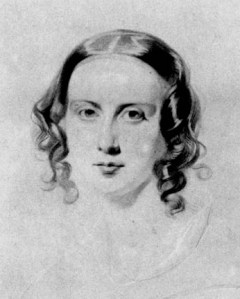
Although the reason for women changing surnames makes sense in its historical context, it is one of the great injustices of both gender equality and history. Signs are indicating that society is finally waking up on this point: women are half of the human story. As a dabbler in fiction writing, knowing that half the story is untold is a troubling phenomenon. Reading about Dickens I learned that he left the wife of his youth for a younger woman. Although such things are common, my reaction was to wonder who Catherine Thomson Hogarth might’ve become, had women had the opportunities they’re starting to have today. She was, after all, from Edinburgh. She has biographies, but not nearly as many as her feted husband. And if my math’s correct, I’m only 29-degrees separated from her. And this may well be the more important connection; the story untold.


Wise Women

At a neighborhood holiday gathering the topic of a local living nativity came up. This year they need some wise men (don’t we all!) and some of the women mentioned that wise men should have beards. As the wearer of an old growth facial forest, I became the subject of a couple of queries—could you be a wise man? I replied that I wasn’t smart enough, but in the back of my mind I was attending the last church nativity play I’d been in. It was at the Church of the Advent, Boston’s high Episcopal establishment. I was cast as a centurion and was directed to deliver my lines woodenly. Being who I am, I did as I was told. I was invited to the cast party on Beacon Hill anyway. It was one of my few brushes with society folk in Boston.

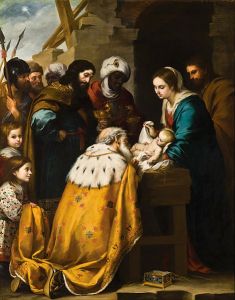
Like many boys raised in church, I’d been cast in such plays before. One of three boys each born just one year apart, I was assigned the role of wise man along with my brothers. Far too young to grow a beard, I wore a costume made by my mother and carried a jar from a science experiment as a gift for baby Jesus. Being poor, we had no gold—or even frankincense or myrrh—lying around. In school we’d done this science project where a solution grew crystals up the inside of an ordinary coffee jar and out over the top. Stain it with food coloring and you have a gift fit for a king. So the illusion went.

The Christmas we celebrate today isn’t based too much on fact, but it is a prime occasion for plays. It’s a dramatic story, although the New Testament has to be bent and twisted to make it all fit into the comprehensive narrative of proselytizing playwrights. The king nobody recognizes being born in a barn. The creator of the universe being rejected by the very world for which he (the baby was always a boy) was responsible. The story is as timeless as Dickens’ Christmas Carol, and it’s enacted thousands of times each year in churches large and small across the country. Is there any reason that, as long as we’re straying into realms of imagination, the wise visitors shouldn’t be female? The ability to grow facial hair has little to do with any kind of intelligence. In fact, we’d be much better off right now with a woman in charge.


Inventing Christmas

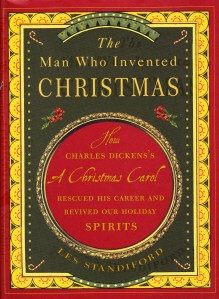
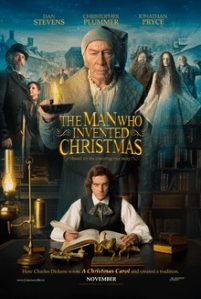
While not always classified among the most intellectual of writers, Charles Dickens was a complicated man. Able to conjure words that reflect emotions, often making readers laugh and cry, he was the undisputed bestselling author of his day. This holiday season the movie The Man Who Invented Christmas explores one of the probable reasons for Dickens’ celebrity—the resuscitory success of his first holiday novel, A Christmas Carol. The film was based on a non-fiction work by the same title, written by Les Standiford, subtitled How Charles Dickens’s A Christmas Carol Rescued His Career and Revived Our Holiday Spirits. As an author who found early fame, it might seem counterintuitive to those of us who’ve never found any that Dickens’ career would need rescuing. In the publishing world, fame has to be sustained since few books keep on selling and selling. And Dickens didn’t always help himself.

Dickens’ choice of Christmas as a theme was, obviously, driven by his own warmth regarding the season. As Standiford makes clear, however, it was also driven by money. Like many in today’s world, Dickens had established his comfort at pecuniary liability—he lived on credit. He also supported other family members and although he cared for the poor he often resented those who cost him money through irresponsibility. Christmas was a time when, he hoped, people might be encouraged to give. Some of that money, naturally, would go toward the purchase of his book. Although the story was secular, it gained the approbation of many in the church—it encourages thinking of others and being generous. Complicated.

As we get closer to Christmas this year, it seems that Dickens’ message bears loud and constant repeating. Here in the States, our government has taken on a decidedly Scrooge-like cast when it comes to the poor and unfortunate. Indeed, “bah, humbug” might well be the new motto of the Grand Old Party. Shown evidence of the guilt of the miser in chief they only claim that those who discover such truth are lovers of false truth, such as claiming that the poor really suffer with want. They close ranks to ensure that the downtrodden can never vote them out of power and claim that Bob Cratchit’s problem is that he’s lazy and Tiny Tim is a burden on the misunderstood wealthy who only ever wanted to help others. A huge difference is that Dickens knew his novel was fiction. This holiday season the ghosts visiting us will be the emaciated spirits of democracy past, present, and future, and that of human decency.


Popularity for Purchase

I only watch the Macy’s Thanksgiving Day Parade with one eye. Since my office is just two blocks from the store, it’s a little too much like work. Still, I can’t help but hear the music and announcements. Is it just me, or are most of these floats and balloons trying to sell me something? Okay, so it takes a while for the light to dawn—it is Macy’s parade, after all. This is the kickoff to the holiday shopping season. Santa Claus is the greatest shopper of them all. We are a nation that defines itself not by what it can produce, but what it can consume. Conspicuous wealth. Showing what you’ve got. I’m afraid I just don’t get it.

Those of us who grew up poor, so the thinking goes, should want to display our accomplishments like a peacock. We should want to show others that we’ve made it. That we can play the spending game just like everybody else. We’ll always have the poor with us, so why not demonstrate to them the vapidness to which they can aspire?

An old-fashioned guy, I check my email on a computer. Gmail divides my messages up into three tabs so that I can pay attention to people who actually want to contact me. The third tab is reserved for those seeking my money. Sitting in a waiting area, I decide to check my email on my phone. It says I have close to two-thousand messages. It’s that third tab. I tend to ignore it since I already know what everyone wants me to play. The messages in tab three build up to biblical proportions while I try to figure out how to handle all the other things I have to do.

Not only did I grow up poor, I was also a small guy. That meant when teams were being picked in gym class I was always among the last selected. I’m not aggressive. The indigent know their place. My religion taught me that this was about right. Seeking for one’s self instead of for others is wrong. Although I’ve been through advanced training since then, those early lessons remain with me. When those who have goods to offer discover my email address, they crowd it full, hoping that I’ll be one of many to spend the little I earn on them. Instead, I remember standing on the vacant lot while the neighborhood kids are dividing up into teams. The lines are getting small, and I’m awaiting someone to notice my potential. Of course, they’ll have to wait until I get through all of this email because, in reality, I’m obviously quite a popular guy.


Inventing Breaks

Breaks are good for many things. Time with family and friends. Hours of non-bus time for reading. Watching movies. So it was that we went to see The Man Who Invented Christmas. It really is a bit early for my taste, to think about Christmas, but the movie was quite welcome. Being a writer—I wouldn’t dare to call myself an author—one of my favorite things to do is talk about writing. Watching a movie about it, I learned, works well also. The conceit of the characters following Dickens around, and refusing to do what he wants them to should be familiar to anyone who’s tried their hand at fiction. My experience of writing is often that of being a receiver of signals. It is a transcendent exercise.

Not only that, but in this era of government hatred of all things creative and intellectual, it is wonderful to see a film about writing and books. The reminder about the importance of literacy and thought is one we constantly have to push. If we let it slip, as we’ve discovered, it may well take considerable time to recover. Getting lost in my fiction is one of my favorite avocations. Solutions to intractable problems come at most improbable times. Although publishers tend to disagree with me, I find the stories compelling. In the end, I suppose, that’s what really matters.

On an unrelated note, this is the second movie I’ve seen recently that attributes non-human actors their real names in the cast listing. What a welcome break from the blatant speciesism that pervades life! Animals have personalities and identities. Humans have often considered the privilege of being named to be theirs alone. True, animals can’t read and wouldn’t comprehend a human art form such as cinema. But when they communicate with each other, they may well have names for us. The beauty of a story such as A Christmas Carol is that it reminds of the importance of generosity. We should be generous to those who take advantage of our kindness. Our time. Our energy. We should also be generous to those who aren’t human but are nevertheless important parts of our lives. The movie may have come too early for my liking, but the holiday spirit should never be out of season. If we’ve made a world that only appreciates kindness because much of the rest of the year is misery, it means we’ve gone too far. Films can be learning experiences too, no matter the time of year.


Spinning Wheels

That warm, secure feeling of being home for the holidays never goes away. Admittedly Thanksgiving takes on a different cast for those of us who are vegetarians becoming vegan, but it’s not about the food, really. It’s never been only just about the food. Thankfulness as a way of life seems to hard to obtain when your own government has turned against all the principles that once made America a wonderful nation in which to have been born, but it doesn’t mean you can’t be grateful. As a commuter, I’m especially thankful for time. Each day’s normally spent riding a bus, working, and riding again. Over the past several days I took a train to Boston for the AAR/SBL annual meeting, and then a long train ride back. Followed by a single-day drive to Ithaca and back. I’m thankful for a little time not to be on the move.

Among the many memories for which I’m grateful is a mountain road that divides Glen Kinglas and Glen Croe in Scotland. Known for its splendid view, it’s one of many places that I have had the privilege of visiting. Although sitting still, here in my chair, I recall yet another busy day of driving with friends. Poor graduate students all, we nevertheless knew the value of good company and taking little for granted. As someone who grew up poor, I had managed to move to Boston, travel to Israel and work on a dig, and now I was living in Edinburgh, working toward a doctorate in one of the world’s great universities. That afternoon, however, I was out viewing what the wider world had to offer. The name of the viewpoint on the A83—from which that world all seemed visible—was “Rest and Be Thankful.”

The name speaks volumes. New Jersey certainly isn’t Scotland. My job is not that for which I trained. I continue to live as if I were a graduate student while friends have purchased houses and furnished them nicely. Today none of that matters. I’m not on a bus, train, or plane. I’m not glued to my seat in an automobile. I’m thankful to have some time to sit and reflect. Catch up, perchance, on a little bit of sleep. Unstructured time is perhaps the rarest commodity in a capitalistic society. Today I have it in relative abundance. No turkeys have lost their lives on my account and I’m able to rest and be thankful. There’s still a long way to go, but for today I’ll enjoy family and stillness. And I am thankful.


All Hallows Eve

I can tell that I’ve been far too busy when I don’t have time to prepare for Halloween. I don’t mean commercially—running out and buying decorations and the like—but mentally. For reasons perhaps only understood by psychologists, Halloween is my favorite holiday. I love the comfort of being with my small family on Thanksgiving and Christmas, huddled inside while the cold whistles against our windows. The sense of relief at not having to go to work even though it’s a weekday, and that increasingly rare luxury of simple breathing space. Still, Halloween takes me back to a childhood with which I resonate in a way against which other holidays only vibrate in sympathy. The days are undeniable darker. My fears, I’m told, are not unfounded. I wear a mask and am free to be myself.

Commuting prevents me from getting out to see the decorations for which some neighborhoods have become notorious. The large, billowing, air-filled frights, however, are just hot air. Even the younger generation at the office, whispering among themselves that this is also their favorite holiday, decorate their cubicles in a way that’s more cute than chilling. No, I’m not a fan of gore—this is more subtle than that. Those who’ve long dwelt with existential angst are connoisseurs of dread. We know, for example, that it will be many months now before we step out into the morning light or come home from work able to see our way clearly. The shades of darkness aren’t always the same. There’s a texture to them. To prepare properly, you need time. The very commodity of which I’m being drained.

Those who know me as a mild, “uncomplicated” sort of person don’t know me. They’ve only become accustomed to the Halloween mask that I wear almost constantly now. Life can do that to you. Instead of the creepy novels which generally crowd my autumn, I’ve been spending time with the existentialists, listening to them reflect on death and its meaning. Or lack thereof. Religions, of course, hurl themselves into that void offering plans of escape. And yet in October that man who walks his dog before dawn wearing a white bathrobe sure looks like a ghost to me. And I’m standing on this street corner utterly alone as the wind blows down the avenue, chasing frightened leaves past me, sending a chill down my spine. I’m looking forward to sitting on a bus to get out of the cold. I’m complicit, I realize, in the death of Halloween.


Nicholas of Myra

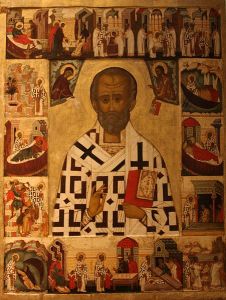
It may be a little early to start thinking about Christmas, but archaeologists don’t often worry about timing. A piece in the Washington Post announced something of potential interests to hagiographers everywhere—Saint Nicholas may still actually be in his tomb. According to the article by Cleve R. Wootson Jr., bandits broke in and stole the relics of the saint centuries ago. In fact, they took them to Bari where a thriving cult grew up around the giving bishop. It seems, however, that they got the wrong tomb. If the analysis is correct, Nicholas of Myra is right where they put him sixteen centuries ago.

Photo credit: Bjoertvedt, via Wikimedia Commons

None of this, however, impacts Christmas as we know it. The relationship between the historical Saint Nicholas and Santa Claus is a wide-ranging and fascinating one. Stories of generosity surrounded Nicholas during and after his earthly life. It took centuries of evolution to get from that to what we now accept as standard Christmas mythology. In the early—pre-rampant capitalist—United States Christmas wasn’t much observed. It was even illegal in some places. Too Popish to appeal to the dissenter sensibilities that made up the colonial majority, the holiday season simply did not exist. It was, in the words of C. S. Lewis, “winter without Christmas.” For those of us who grew up with warm memories of presents, special foods, and days off the obligations of school, such an existence is difficult to imagine.

The feast of Saint Nicholas falls on December 6. Because of its proximity to the revisionist birthday of Jesus on December 25, the gifts of the Magi and the storied presents of Nicholas to families in need eventually merged. The holy days eventually became spending days and the whole jumble of Yule and other solstice celebrations got mixed into a wonderfully tolerant holiday. And all this time we thought Saint Nicholas was missing. He was missing in his own grave.

Miracles are attributed to the relics of saints. I suspect they work even if the wrong bones are plundered. Belief is like that. Historically, little is actually known of Nicholas of Myra. Little is known of Jesus of Nazareth, for that matter. The holiday that grew up in the wake of those willing to give, and to give to those who were undeserving, is a lesson that seems to have been interred with their bones. “So let it be with Santa,” you can almost hear Mark Antony say, standing before Congress, itching to slash any safety nets so one-percenters can have the happiest holiday season ever. Yes, Saint Nicholas is well and truly dead.