Northern Ghosts

It is the time of year when respectable publications can, in a half-serious way, address the unconventional. The New York Times, for example, recently ran a story on ghost hunting in Norway. Andrew Higgins points out that Norway, among the most secular nations in the world, has come under the spell of ghosts. In a country where church attendance and religious belief seem to be endangered, there is a growing belief that people might somehow survive this mortal coil. Since such a story has to come off as bemused, we don’t get any indication that people have good reason for believing in ghosts—as one of the officials in the story says, they represent something that isn’t “generally accepted as existing at all.” But I wonder if that’s true. Scientifically, in our heads, there just doesn’t seem to be any room in this godless world for ghosts. Skeptics ask questions like “why do they wear clothes?” or “how can a soul remain behind if we have no souls?” Who told you that you have no souls?

Even with the constant materialist discourse of only physical reality, some ghosts cases have been very well documented. So have some hoaxes. People have the spirit of being tricksters, and that doesn’t always help when it comes to understanding the unseen. The point that the article is making, however, is that ghosts seem to be filling a need that the church hasn’t. Church has long been understood as being trapped in the past—concerned with issues deemed irrelevant by people who are just trying to get by in the world. I’ve heard hundreds of sermons in my life and remember less than ten. What is it that we’re trying to do?

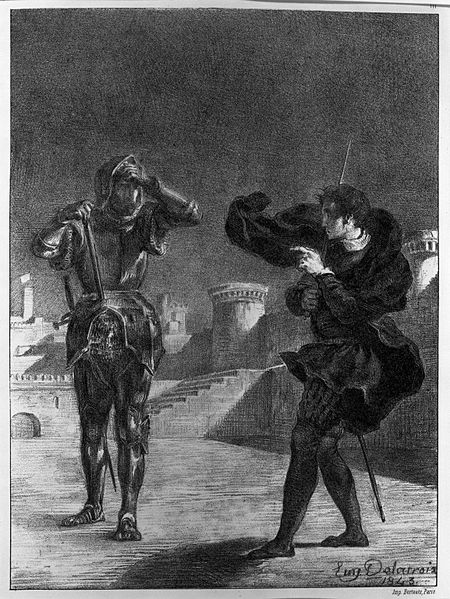
Eugène_Delacroix._The_Phantom_on_the_Terrace,_Hamlet

I don’t know if ghosts exist. Many days I’m not sure what reality is, because if it is simply crawling out of a warm bed into a cold apartment before 4 a.m. so that I can go to work, I’m not sure this isn’t some kind of afterlife already. And maybe not the best kind. I know that as soon as people began to record their thoughts in writing, ghosts have been assumed to exist. Despite Ghost Hunters and other popularizers, vague traces are caught by enough people that we can legitimately wonder about the narrative we’ve been fed that says if it can’t be measured it can’t exist. There isn’t a nation in the world where people don’t see ghosts of some kind. Why should Norway be any different? And we wouldn’t even be asking this question if Halloween didn’t provide us with a buffer that makes forbidden topics chic.


Legend Quest

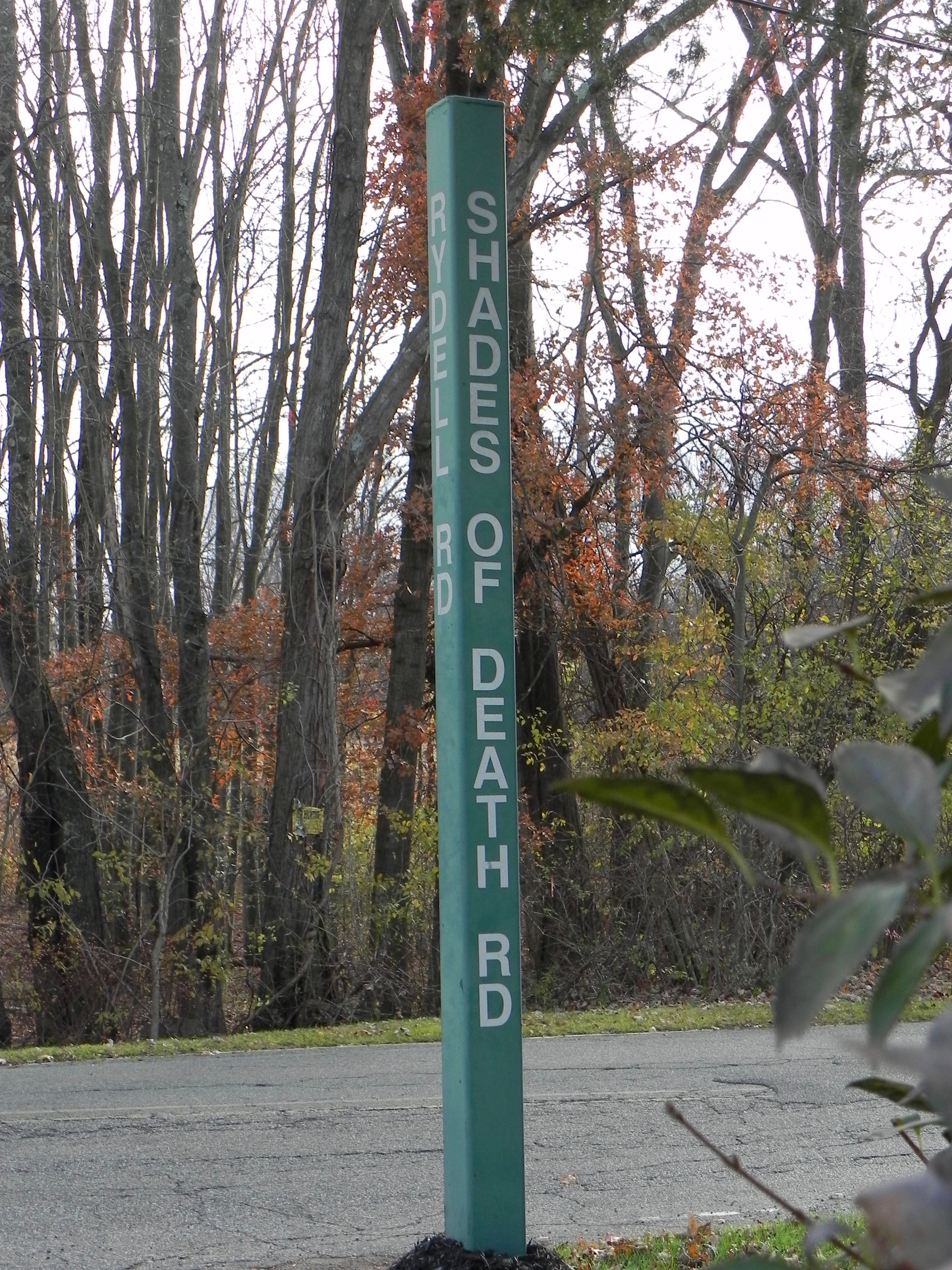
Legend questing is often considered a teenage pastime. Getting away from the mundane, or the oppressively normal, such road trips often lead to a place of spiritual significance, whether religious or secular. New Jersey, whose unofficial state song is about getting out, has its share of questing destinations. Reading Weird N.J. from time to time, one gets an introduction to such destinations handily served up in magazine fashion. The weird, as some scholars have noted, has roots in the religious—the uncanny. At times it is something about the physical landscape. Sometimes an historical event led to this status. Sometimes it’s just a name. Finding accurate information about Shades of Death Road, in Warren County, New Jersey, is somewhat of a fool’s errand. Although my wife and I aren’t teenagers anymore, on Halloween we decided to visit the reputedly haunted location.

2015-10-30 21.08.22

The area is not easy to locate, even in a state with as much road cover as the Garden State. Still, it is a beautiful road, once found. Huge boulders from the nearby Jenny Jump State Park—a place with its own legendary past—interspersed with old trees come right down to the edge of the road. A gorgeous lake, called Ghost Lake, also delights the passer by. The road signs, which are frequently stolen, were nowhere to be seen on our trek. It is, however, easy to see that in days before hermetically sealed cars with auto-lock doors that practically drive themselves such a locale may have brought danger to mind. Local legends claim it as a haunt of highway men, not a few of whom were hanged among its many trees. It was a partially sunny afternoon as we drove along, and lawns were decorated with faux graveyards and ghosts floated down from trees. It was a pleasant way to be haunted.

The typical legend quest involves getting out of the car and engaging in some kind of ritual to see if anything happens. Since this was a spur of the moment trip, I hadn’t done my homework to find out what manner of incantation should’ve been said. Had I prepared, I would’ve had to have selected from the many disparate legends that circulate around the road. Even in the sunshine with little traffic, the place could easily stoke some unexpressed fear. Although the road was named long ago, for reasons that no one truly knows, it maintains its mystique. Curvy, and in places with the roadsigns heavily vandalized, it is clear that a more modern sort of danger might lurk here after dark. Nevertheless, as we emerged back onto a road with a less dire name, I couldn’t help but smile. Shades of Death Road ends at Hope Road. And that, surely, is no accident.


The Day After

I don’t mean to be insensitive. Sometimes I get so busy that I don’t even look at the date for days at a time. This can’t be good, but I was surprised when the anniversary of 9/11 caught me completely unawares this year. That’s the kind of summer it’s been. Not acknowledging 9/11 to New Yorkers is like making ethnic jokes—it’s inherently offensive. The City is always subdued on this date of infamy. Coming the same week as Labor Day this year, I think my timing was just off. In my family, September was always the month of birthdays. My present to my brother of the 12th was late in 2001. I wanted to find something old. Something solid. Something time-honored. I wanted a sense of stability to return to a chaotic world. Being an inveterate fossil collector, I went to a local rock shop and bought him a fossilized cepholapod shell. It wasn’t much, but it was a message and a metaphor.

Today, being a birthday and a day after, feels a little like an apology to me. At the time of 9/11 I knew a few colleagues teaching in New York, but in 2001 I’d not really known the city. I’d visited a few times. I was still employed, although my personal career trauma was, unknown to me, already underway. And looking at the state of the world some fourteen years later, I wonder how much better things are. We haven’t suddenly improved, and as a nation we seem more deeply divided than ever. Candidates who resemble their caractitures more than actual people frighten me. The rhetoric is a sermon of doom. Have we all forgotten how that morning felt?

Television reception was poor, or it may have been the tears falling from my eyes as I watched, at the safe distance of Wisconsin. We’d just sent our daughter off on the school bus and now wanted her back home. I called my brother in Pittsburgh in a panic. The news had said a plane had crashed in southern Pennsylvania somewhere. It seemed the the possibilities of horror were endless that day. And yet. I awoke yesterday fretting over work. My mourning routine was harried and frantic. I didn’t even know what day it was. I glanced a paper headline on the way to work and realized that I’d overslept a tragedy. Some scars never heal. Those wounds cut by religion are the deepest. So we find ourselves on the nexus of a tragedy, a birthday, and a new year. How we respond is entirely up to us.

Time2Remember


Hello, I’m Not In

I recently received two “out of office” replies to my own “out of office” message. Being a fan of futility in all forms, this struck me as a great paradigm for the modern age. Email has made vacation superfluous, of course. I was actually out of town moving my daughter back to college, so email was not high on my list of priorities. When I’ve tried to leave work without putting on a message explaining that I’m not there (I tend to respond to emails quickly for an editor, so I’m told) I’ve been politely informed that it is rude not to let people know you’re away. Or computers. My non-message prompted a non-messages from other vacationers’ email accounts, and when I returned, I had to read them as well as the original email that had received my impersonal reply. Both had sent their replies, despite their out of office messages. This is indeed a brave new world.

It is a world where human interaction is optional, at best. Our industry grinds away making devices and services that people will buy with electronic money sent over a network that no one really controls. And we think nothing of it. Business has blinded us to how meaningless humanity has become. Business runs for business’s sake. Even so, we’re asked to check our email when we’re on vacation, in case something important comes up. I used to think vacation was important. It is the sop we’re thrown for working jobs that lack the visceral appeal of growing our own food and relying upon ourselves. Thoreau on the web.

Benjamin_D._Maxham_-_Henry_David_Thoreau_-_Restored

Science fiction is the great predictor of where we might go. Most of it is completely fiction, or course, but some manages to catch glimpses of the truth. Skynet, or even the Matrix or Hal, have sent messages to us. Machines that think are devices we don’t understand. We haven’t even defined consciousness to a level that satisfies anyone. We know it because we feel it. Oh, I’m not really an alarmist about all that. I do wonder, however, where we are headed when technology races ahead while the humanities are disparaged. All those who emulate Spock seem to have forgotten that his appeal is that he’s half human. We build our aliens to specification. And they now pass polite greetings when they speed past each other on the cyber-highway with no laws.


By the Time I Get to Phoenix

I remember when flying involved going to a travel agent, explaining where and when you wanted to go, and how much you could afford. The agent would contact airlines, get you your best price, and you left knowing that you’d just have to show up at the airport maybe half an hour before your flight so you got there before they closed the door. For our vacation trip, my wife used priceline.com. I’ve used it for business travel myself, but when I am going for work, certain strictures apply. For this trip, expense was a major factor. We flew, outbound, to Spokane, Washington via Seattle, on Alaska Airlines. Since our final destination was Spokane (at least for the air portion of the trip), that involved a bit of back-tracking, but, being Alaska Airlines, who could really complain?

In order to make the trip affordable, we flew back on a different airline (I’m still not sure if it was American or U. S. Air; both reference the same entity, apparently) via an alternate route. Whichever airline it was had a hub in Phoenix, so we flew from Spokane to Phoenix before heading back to Newark. I’d visited Phoenix on Routledge business, but I didn’t spend much time in the airport. It became clear from this trip, however, that the Day of the Dead is a big deal for tourists. Given the popularity of Halloween, I suppose that’s not so surprising. Nevertheless, the sheer volume of Day of the Dead merchandise was stunning, considering that these were, for the most part, impulse, carry-on items. Figurines of various sorts comprised the most popular arrays. Skeletons, fully dressed, engaged in many quotidian activities, although deceased.

IMG_2394

Amid the many daily scenes, I spied a last supper tchotchke. Skeleton Jesus and twelve skeleton disciples gathered around a table for a final meal. Maybe just a little too late. While not a theologian, I couldn’t help but wonder about the implications of this. I know little about the Day of the Dead beyond its association with All Souls Day. The last supper is set up in the Gospels as the grounding, in some way, for a divine plan or redemption. In other words, it doesn’t work if the principals are dead. Already jet-lagged and fuzzy-headed, I couldn’t think to take out my wallet. I really can’t afford baubles in any case, yet there was something profound to think about here. For some reason the market will bear much more in an airport than it will in no-fly zones. Still, as I struggled to stay awake all the long way to Newark, I couldn’t help but think that this was an appropriate image to signal the end of a much needed vacation.


Growing Green

It was bound to happen sooner or later. I married into a family of singers, and when we gather at a cabin in the woods, singing breaks out. In the drought-tormented northwest, under an extreme fire ban, there was no campfire, but that doesn’t stop the music. Once campfire songs begin, “Green Grow the Rushes, O,” always appears. I’m no singer, but I spent a couple years as a camp counselor, and many years before that as a youth conference attendee in the United Methodist Church. I know the song by heart. Usually it is now a sign for the adult males to sneak back to the cabin rather than endure the twelve repeating verses. Nevertheless, the question invariably comes up: what do the words mean? We have a couple of lists, here and there, explaining the lyrics, but the fact is the origins and meaning of the carol are obscure. It’s origins appear to be England, but the countdown of twelve verses contain imagery that is Christian, Jewish, and pagan. Over time, many of the verses have, like most oral tradition, undergone corruption. In many respects, it is almost biblical.
While it might be fun to run down all the verses and discuss their potential meaning, that is a task best left to a day when I have my computer working again. With limited internet access and an iPhone from which to post, full-scale exegesis is a daunting task. One aspect of the song, in any case, is clear—it is generally accepted to be a Christian catechetical tool. Repetitive and, especially before adulthood, fun, the song rewards those with strong memories for such obscure phrases as “April rainers,” “symbols at your door,” and “bright shiners,” in the proper order. After the song is over the teaching begins.
I have a book of camp songs from my counseling days, and it suggests a hermeneutic key to the song. My wife studied musicology, and she provided a somewhat more authoritative source. Then, of course, there’s Wikipedia. On some of the verses there is a general consensus, but most are open for debate, with some seeming to point to pagan origins. Tied up with the fact that the song is, in some places, connected with Christmas, this blend of Jewish, pagan, and Christian ideas comes as no surprise. The age and origins of the song are unknown, but it features references to Greek deities, Jewish laws, and Christian miracle stories. Musicologists have had a crack at the song, and surely will examine it again. The strangeness of the lyrics suggest a mystery to explore. Some mysteries are still to be found around the campfires of the north woods on a summer’s night.


The Reign of Rain

I’m on vacation for a week. My job is such that taking vacation is becoming a rare commodity, what with precious few allotted days and move-in, move-out schedules of a collegiate child, and so on. And also company policy about keeping employees in the office between Christmas and New Year. Anyway, now that I’m here I should be kicking back and enjoying the beautiful lake and getting out to do the things inmates of the city seldom do. It has, however, rained every day that I’ve been here. Not all-day rains, of course, but just enough that plans have to be interrupted or changed at the last minute. I end up sitting in the cabin playing Solitaire when I should be out getting some fresh air. So it goes.
Ironically, I am staying in the drought-stricken west. The western United States, I learned when researching for Weathering the Psalms, has been ensconced in a decades’ long drought. In fact, prior to my family trip here it hadn’t rained in quite a while. Our arrival with the clouds was, after all, mere coincidence. Still, it’s hard not to take the weather personally. I know that the weather is larger than any one person’s needs or desires. I also know that water is a commodity even rarer than vacation days, largely because of our misuse of the limited supply that we have. California’s plight has been in the news. We have large cities in water-challenged environments and people treat water like there’s no end to its abundance while the opposite is the case. Just thinking about it makes me thirsty.
There are many things a person can go without, some of which feel absolutely essential at the time. Many vacations, I know, are extravagant. Fancy hotels, high-priced entertainment, exotic locations. Work can feel so crushing that vacation my become the one island of sanity in the midst of a hostile ocean of obligation. For me, vacation is time with family in a stripped-down, natural setting. Of course, we do indulge in some of the comforts of home, but having nothing in view outside the window beyond that which nature dictates is a transcendent experience. From where I sit, I can see nothing of human artifice. I do see clouds, however. I know that more rain is on the way. And I know that it is a gift, complain as we might, of the highest magnitude.


God, As a Hobby

Just as I was awaking from a night of loud fireworks and multicultural bonhomie, my wife showed me a full-page ad in the New Jersey Star-Ledger. A red, white, and blue page entitled “In God We Trust,” the ad wants nothing more than to convert the nation to conservative Christianity. It is sponsored by Hobby Lobby after all. Dividing the quotes that spangle the page into “Founding Fathers,” “Presidents,” “Supreme Court Justices,” “Supreme Court Rulings,” “Congress,” “Education,” and “Foreign Opinion,” prooftexted quotes are given inadvertently showing by their grasping nature that America is a godly country. The Hobby Lobby is not known for its critical reading of either Scripture or history. George Washington, Thomas Jefferson, and Benjamin Franklin, Deists all, are quoted at the height of their rhetoric, making it seem as if they were evangelicals out to build a Christian nation.

new doc 10_1

When I was growing up, there were no Hobby Lobby stores in my area. Although I was a religious child, I would have found it a bit odd that hobbyists were not focusing all their attention on the weighty matter of eternity. Instead, making money seems to be the name of the game, and once you’re comfortably over-compensated the Lobby part of the name comes to play and God reenters the picture. We all know that the Hobbyists wish to have the Bible right next to the capital, if they can’t get it prominently placed in the Oval Office. Policy (the ad cites all three branches of government, as well as education) should be based on the Bible, although we think of ourselves as a land of opportunity. Opportunity for whom?

Starting with a quote ripped from the context of Psalm 33 (“blessed is the nation whose God is the Lord”), the ad doesn’t exegete this at all. Nationalism as we know it did not exist when this Psalm was penned. The author had what would become Judaism in mind, not evangelical Christianity. But then, appropriation of other peoples’ pasts is kind of a hobby. Pick and choose. Take what you find attractive and leave the rest behind. It works for history as well as for the Bible. After all, it doesn’t take historical probity to lobby the government. All that’s required is a surfeit of money. And the best way to achieve that, it seems, is to take up a hobby rather than trying to think through the issues with a mind honed by a solid education in Bible and history.


Only Takes a Spark

Fireworks have been the main event for Independence Day celebrations ever since I was a child. The fourth of July is a day for playing with fire. As a child I remember spending the meager allowance I had on sparklers and snakes. I haven’t seen one of those ash snakes for decades now, but the impression they made remains strong. A plug of some kind of carbonish material—you’d light the top with a match and it would flame and hiss and start to grow into a long, twisting exoskeleton of ash. They left a blackened circle on the sidewalk, and when they were cool enough you could try to lift the fragile snake in your hand, but it almost always broke apart before blowing away in the breeze. We also wasted our money on smoke bombs with their multi-colored smoke, but we never had actual firecrackers. Given the trouble we could make with an ordinary roll of caps, that was probably a wise decision on our mother’s part. All of this, however, was just a prelude to the fireworks.

As I sat under a cloudy sky last night wondering why every July fourth seems to rain, it occurred to me that fireworks are a violent form of celebration. Indeed, they are designed to imitate the sounds of battle—before the nuclear age—and we all know the thrill of when the loud, bright burst of pure light sends a shock wave through you. It is like a canon rocking your soul. Like many stirring experiences, fireworks had religious overtones from the beginning. Invented in China, fireworks were used for religious festivals. They were believed to be effective at driving away evil spirits and bring good fortune. Pyrotechnics, however, clearly have military applications as well. It is this strange nexus between religion and violence that makes, I suspect, fireworks displays so compelling.

IMG_2287

The local display here in Somerset County, New Jersey, was impressive for a region without large cities. I couldn’t help pondering the strange aesthetics of contained violence as the colorful explosions took place over my head. Illusions, I know. We always talk afterward about whether some of them are meant to represent anything. Did you see a smiley face, the United States, or even New Jersey? It depends on your angle of view. Is this a religious display or a celebration of violence? Looking around at the amazing diversity of peoples gathered here in this park with me, I feel strangely satisfied. I hear languages I don’t understand, and see people from all over the world here for a good show. Although thousands of us try to get to our cars at the same time, spirits are positive, for the most part, and all go home in a celebratory mood. Maybe the ancient Chinese were right and these pyrotechnics do drive away evil spirits after all.


High Places, NJ

The “high place,” in the Hebrew Bible, was a source of constant vexation to the “orthodox.” Scholars have long puzzled over what was meant by the term, the assumption early on being that they were geographically the highest points around. Although that interpretation no longer holds the sway that it once did, the concept of the high place has remained. I suspect that’s because there’s something mystical about being at the highest point around. July 3 was a rare holiday for everyone in the family, so this year we headed to High Point State Park. High Point is the geographical highest point in the state of New Jersey, up near the New York border. It’s not as high as the mountains you might see in the western part of the country, but at the top there is a panorama that gives unbroken visibility in 360 degrees. Except for the tower.

DSCN5093

Towers are just as biblical as high places. They are very human and always contain at least a small element of hubris. Nature may have said thus far and no further, but we can go higher. And those of us with the inexorable will to climb, must go up. The view from the top isn’t very good since the windows are steamy and the mildew makes you a little leery of getting too close, but the climb is intensive, even for those used to stairs. Nevertheless, a kind of light-headed giddiness attends standing at a point higher than which you cannot go. I pulled out my altimeter to discover we were 1690 feet above sea level. In New Jersey you can’t get any higher. Were there angels up here? How close to Heaven were we? Towers are irresistible as the mythical builders of mythical Babel knew. And although we couldn’t see Manhattan from here, I knew that just across the river taller towers stand.

DSCN5109

One World Trade Center stands at a symbolic 1776 feet, higher than we were at the moment. It was, after all, the requisite holiday to celebrate independence that brought us here in the first place. The vistas that we could see, however, were relatively undeveloped, a rarity for the state of New Jersey. If we had the time, we might have been able to get out into nature itself instead of these structures that humans build to mask the fact of our own limitations. Maybe that’s what high places were all about in the first place. Every day I walk past the Empire State Building on my way to work. I can see it if I find an office with windows. Over my head up here, on the very top of New Jersey, I see a bird soaring. I think of Melville, and Ahab, and Manhattan. Slowly I begin my walk down to lower places.

DSCN5099


Father’s Day

DadI’m not completely stupid.  I know that the Father’s Day ads with which I’ve been peppered all month are nothing personal.  They’re intended to tug at the sentimental heartstrings and get me to spend some money on dear old Dad.  As one of the generation for whom computers were a new household commodity well after college was over, I know that I’m part of a fairly large demographic of middle-age users.  I do wonder, when I see these ads, how many other readers ponder the fact that their fathers have died and that Father’s Day is an occasion as much of mourning as it is of celebrating.  While I know, dear reader, that you’re not my therapist, my father died many years ago after a lifetime of separation from my brothers and me.  I can’t claim to have known him, except in unguarded moments looking into the mirror at the blue eyes he contributed to my genetic code, along with other aspects I can only imagine.
 
Father’s Day can, of course, be a day to honor the memory of, as well as buy things for, dad.  Holidays, however, aren’t really holidays without the changing of hands of lucre.  Although I never tried to think much about it, I never spent a Father’s Day with my father.  I know I’m not alone in this, but many are the days when I believe I would have benefited from a bit more instruction than I received on that front.  “Majoring in religion is not the best career choice,” might have been one of those nuggets I could’ve done with hearing.  The women in my family seemed  to think it was okay.  Even one of my dad’s ancestors was a clergyman.  I like to think that fathers might be able, in some cases, to see farther than their sons.  Call it male bonding.  Call it being a man in a post-patriarchal world.  Call it confusion.
 
I’m all for honoring parents.  I also tend to think people are basically good and that by far the majority of people try to do what they think is right.  They may not have much with which to work, but they try.  I can also think of better ways of honoring them than spending money.  Maybe we could try restructuring society so that those who start out with little might have resources available to move ahead.  If some father’s child has obvious gifts, might we not offer a way for that child to use them and thrive?  As a father myself, I can think of nothing that would make me happier than to see my child have better prospects than I’ve had.  Instead I see a society of one-percenters encouraging us to spend a bit more since, after all, fathers measure their worth in stuff.  The stuff that really matters, at least for this father, include those no longer here as well as those who are yet to inherit.


Work Weekend

It’s a Saturday and my wife’s at work. She’s worked five days already and will still be at work tomorrow. I’m lazing in bed until 5 a.m. when I hear the neighbor’s alarm clock from upstairs. An hour later I see him headed to his car, dressed for work. I think about the concept of weekend and how it apparently means nothing any more. Well, I’m not at work, so it must mean something, but it’s not what it used to be. Don’t get me wrong—when I was a professor I gladly worked through weekends. Indeed, I was working pretty much all the time. I was paid to be a thinker, and I can’t shut this thing in my head off. My current job, however, is a 9-to-5 with expectations of more, but not entailing any extra compensation. Overtime? You lucky one, you’re “exempt!” And don’t forget to take your laptop home, in case something comes up in the middle of the night. (I do read the timestamps on my emails.)

The weekend is a religious idea. Ideal, even. We have the biblical concept of the Sabbath to thank for our free Saturdays, when they come. Christian beliefs about resurrection to account for Sundays. Days originally set aside for worship. Time off work is worship now. When else will we get the laundry done? Groceries bought? Floors swept? I leave before six each day and arrive home near seven at night. To keep up my Manhattan lifestyle I have to awake before four and head to bed at eight. If I had an extra minute to access my memories I might think this a little odd. I used to have time to write books. Where did that go? Vacation time? You have to be at the airport two hours early so you can be frisked for a plane that’s inevitably late. You get five days off, and two will be spent traveling. Work waits for no one.

1912_Lawrence_Textile_Strike_1

I guess it’s no surprise that those who argue that we should abolish religion have jobs that either they love or that don’t require weekend hours. They have time to examine this gift horse minutely in the mouth. You know, we don’t have to have days off. In olden times, or even today on farms, the concept of a weekend is only academic. Those whose jobs are just work to keep an imprisoned soul in its weary body are, after all, expendable. Perhaps I’m just too weak. The occasional three-day weekend rejuvenates me to a degree that’s almost frightening. I wonder why we can’t add holy Fridays to our list of days to worship. There is a price to be paid for neglecting time to reflect. I can’t imagine Pharaohs and kings wanting to grant any more time off, however. We all know who we’re really working for, and it’s not the one who gave us our weekends in the first place.


The Land of Who?

“Parochial” is a name we small-town types dread. Growing up with television, which gave us a magical view into New York and California, as well as other cosmopolitan locales, we could easily feel the accusations of being small-minded and unsophisticated. Although I never wanted to move to the New York City area, I did decide to get away to Boston, then Europe, to be educated. I didn’t want anyone accusing me of being an intellectually challenged rustic, just because of where I happen to have been born. People around my home town, however, aren’t as closed minded as portrayed. Well, not always. You see, apart from conferences where some institution or corporation foots the bills for hotels, I tend to stay in more reasonably priced places when I travel. Even on the road I can’t sleep in, so I find myself chomping at the bit for the breakfast area to open in the morning. Sometimes I’m the first one there.

On a visit to my hometown in the not too distant past, I happened into a breakfast conversation in media res. A local back in town for a holiday weekend was vociferating his views in stentorian tones that could be heard down the hall. The television in the breakfast room, as always, was on. Apparently a story had been shown that teed this old-timer off. His daddy had been a local policeman and he just couldn’t understand why blacks were rioting about unfair treatment at the hands of the police. I cringed as I filled my coffee cup. “They ought to be gassing them and reading their rights later,” he lamented. An older couple, also returning to the area from their home in Baltimore, seemed to agree. I tried to find a corner out of earshot. Unsuccessfully. I could barely hold in my indignation. We were all Caucasian here—what did any of us know of racial profiling, deep-seated prejudice, or being prisoner in our own country? “Why don’t they just stay home?” he said. Home, ironically, of the free.

DSCN4676

I could see that he was elderly and afraid. The media—likely Fox news—had instilled a kind of terror in him that could only be assuaged by reliance on force. The world his daddy knew. I was also reared here. It was pretty much a white town, but some of my best friends growing up were the few African-American kids in my school. My small-town mother taught me not to judge anyone by the color of their skin. The hotel I’m staying in is run by an Indian family. The local stores now reveal a healthier mix than that in which I grew up. I wanted to tell this fellow parochial patron that we need not be afraid if we only seek justice. The region in which I grew up has become more homogenized, and I believe we’re all healthier for it. Until, however, civil rights are truly rights for all, we need to stand with those who’ve been clearly wronged, even if at personal cost. That’s something I learned growing up in this small town.


Mother for a Day

In a world set on tearing itself apart because of its differences, there is one thing every single person has in common. We all have a mother. In societies enamored of domination and competition, we take one day out of the year to stop and remember those who gave of themselves so that we could live. We place this day on a Sunday, the most passive of days when it will not interfere with regular business. We give chocolates, flowers, fruit-baskets, and then go back to the same usual grind come the next day. At the risk of gender stereotyping here, I do wonder how much wisdom we must miss by relegating our mothers to the background.

Growing up, we all know, is inevitable. We need to release ourselves “from the apron strings” and learn to cope in a hostile world. Not only do those overseas, different from us, wish us harm, but even our neighbors become our competitors and although friendly, we look for a way to find our advantage. Motherhood is a reminder that there is another way. Families, at least ideally, are built on cooperation. A willingness to set aside our own personal agenda for that of those for whom we care deeply. Used to be that the largest families (before family became a weapon used by religion) were those best placed to succeed. You had a set of people who shared a common mother, who united in a cooperative venture. Capitalism has little room for such a dynamic. It’s “each man for himself.”

Although churches around the country will mention mothers in their services today, Mother’s Day is a secular holiday. Hindus, Buddhists, Muslims, and Mormons all have mothers. Many religious groups, however, do not. Just last week some Roman Catholic women were ordained as priests here in New Jersey. Of course, the “mother church” disowned them, as priesthood is a male prerogative. Mother’s Day is not on the church calendar. It grew out of the Civil War with the sad realization that, left to their own devices, men will make wars that pit brothers against one another. Although I am stereotyping again, I have a hard time imagining a mother who would do such a thing. Mother’s Day should be an opportunity. Not only should we thank or remember our mothers, we should take to heart what motherhood means. I can’t help but believe the world would be a better place for it.

DSCN1941


Google Me This

Technology frequently flummoxes me. Although I use it daily, it changes more swiftly than I can hope to. Working for a British company, for example, my computer seems to be a loyalist. It supposes that it is in the United Kingdom even as it sits on my desk in New York. I’m told this has something to do with a mystical key called an “IP address.” When I search Amazon, prices come up in pounds. When I google something, I’m told that European laws restrict certain searches. And, interestingly, I discover that Google’s icons of the day have a British theme.

GoogleI’m assured Google is a fun place to work. One of those enlightened companies that believes reducing stress and increasing enjoyment of employees leads to good results. Were that all companies so enlightened. In any case, the famous Google logo is often decorated with a commemoration of the day. This past week, two such icons appeared on my UK searches. The first commemorated Nessie with something like the 81st year of her appearance. The icon puckishly showed Nessie to be a fake, a submarine actually piloted by aliens. Later that same week, on St. George’s Day, a dragon appeared on the icon. I began to wonder about this reptilian connection. If lake monsters are real, many make the claim that they must be plesiosaurs, their dinosaur cousins that most resemble them. St. George, clearly a character cut from the same cloth as Hadad, slays a dragon—an equally mysterious reptile.

We tend to associate dragons with evil, although in world mythology they appear equally as often as harbingers of good. Human interaction with reptiles has always been fraught. Somewhere along our evolutionary track we must’ve shared a common ancestor with them. Even today some responses, such as fight or flight, are referred to as those occurring in the “reptilian brain.” In Genesis 3 the serpent slithers in. According to Revelation, at the other end of the canon, the snake is still there at the end. It was only happenstance that Nessie and George’s unnamed monster appeared in the same week, I suppose. Nevertheless, there is a deep connection between them and us. We can’t seem to get away from them, even should we flee across the ocean.