Bookends

There is something extremely satisfying about bookends. Bookends are those events that bracket moments of our lives and give them a frame, a perspective they would otherwise lack. If my readers will indulge my recollections of my trip to Britain for a day or so longer, some of this may become apparent in esoteric ways. Our kind hosts in London live in Highgate. Our first bleary-eyed morning in the city we wandered to Highgate Cemetery. This burial ground is divided by Swain’s Lane and that makes it frightfully convenient to charge separate admission fees for the two halves. Both, however, are worth the pounds dropped to gain entrance. Our first visit was via tour group on the western half of the grounds. The ornate—indeed grand—architecture of this necropolis bespoke the mysterious connection between the living and the dead. Tycoons are buried there, as is the non-conformist Michael Faraday, a name that lingers on from my childhood physics classes.

Highgate Cemetery West

Just before leaving to board our flight back to the States, we completed the bookend by visiting the eastern half of the cemetery. Here the most famous residents seek eternal rest. The most famous of the dead on this side is Karl Marx. Visitors speaking Cyrillic or Sinitic languages milled about, but even an American idealist might find some grounds for admiring a man who felt deeply about the plight of the workers in society. Just across the lane lies Herbert Spencer, one of the founders of sociology. Less than two minutes will take you to the grave of Mary Anne Evans, known to the literary world as George Eliot. She is not far from Douglas Adams, inventor of the Hitchhiker’s Guide to the Galaxy. Across the path from Adams rests Anthony Shaffer, writer of both Sleuth and of the screenplay of The Wicker Man.

Highgate Cemetery East

Perhaps it seems macabre to travel such a distance only to bookend a visit with treks to Highgate Cemetery. Death, however, is the ultimate bookend to life, with each generation shoring up those that come after through its unique perspective on what has brought us here. Not even a visit to Westminster Abbey is complete without paying respects to the most noteworthy of the Brits found both within and without its walls. This trip to England will remain in my memory as the pilgrimage bookended by the solemn parentheses of death. With such august company, however, one might have less to fear from that final veil that all must face.


Pharaohs of Stonehenge

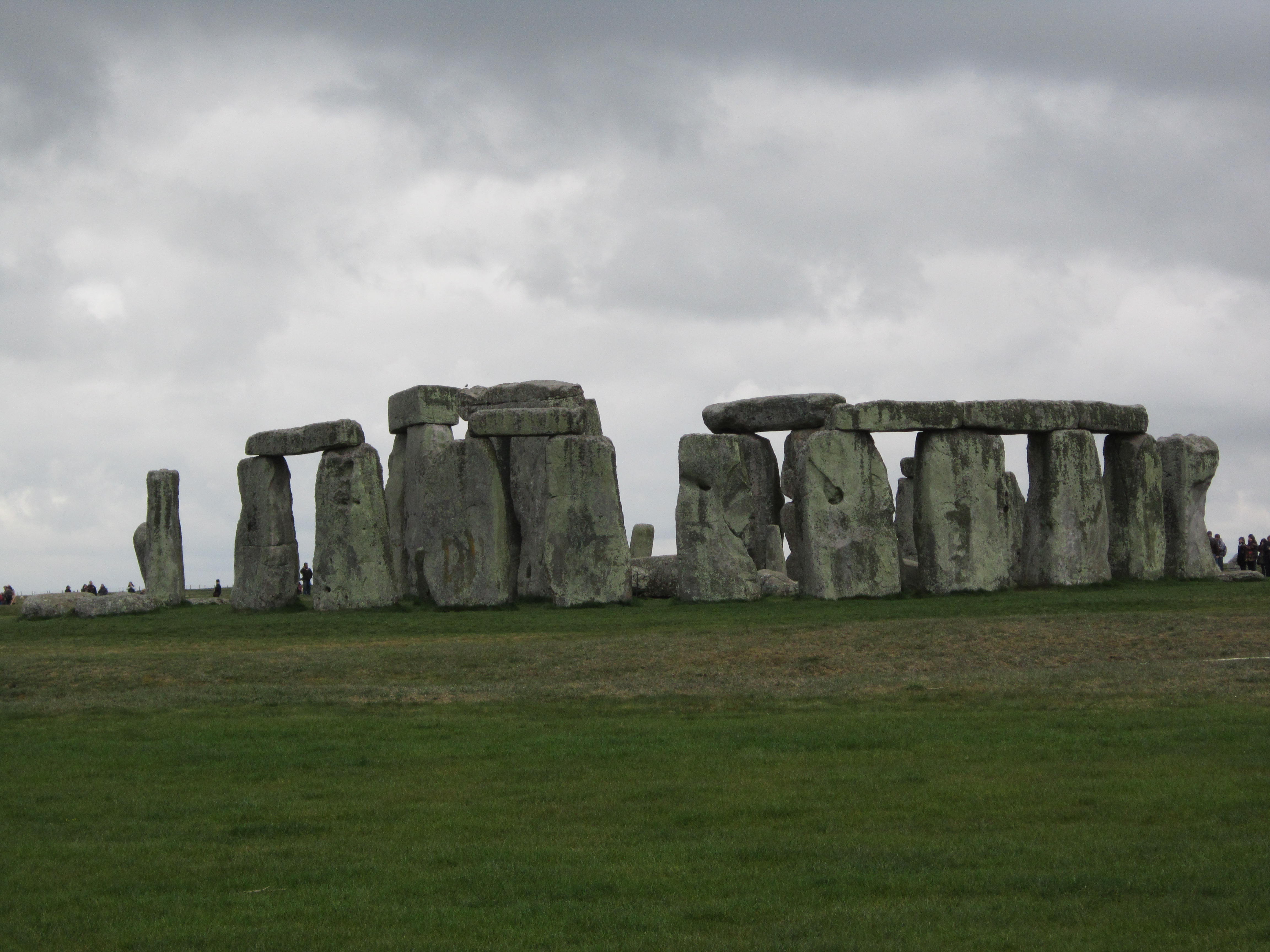
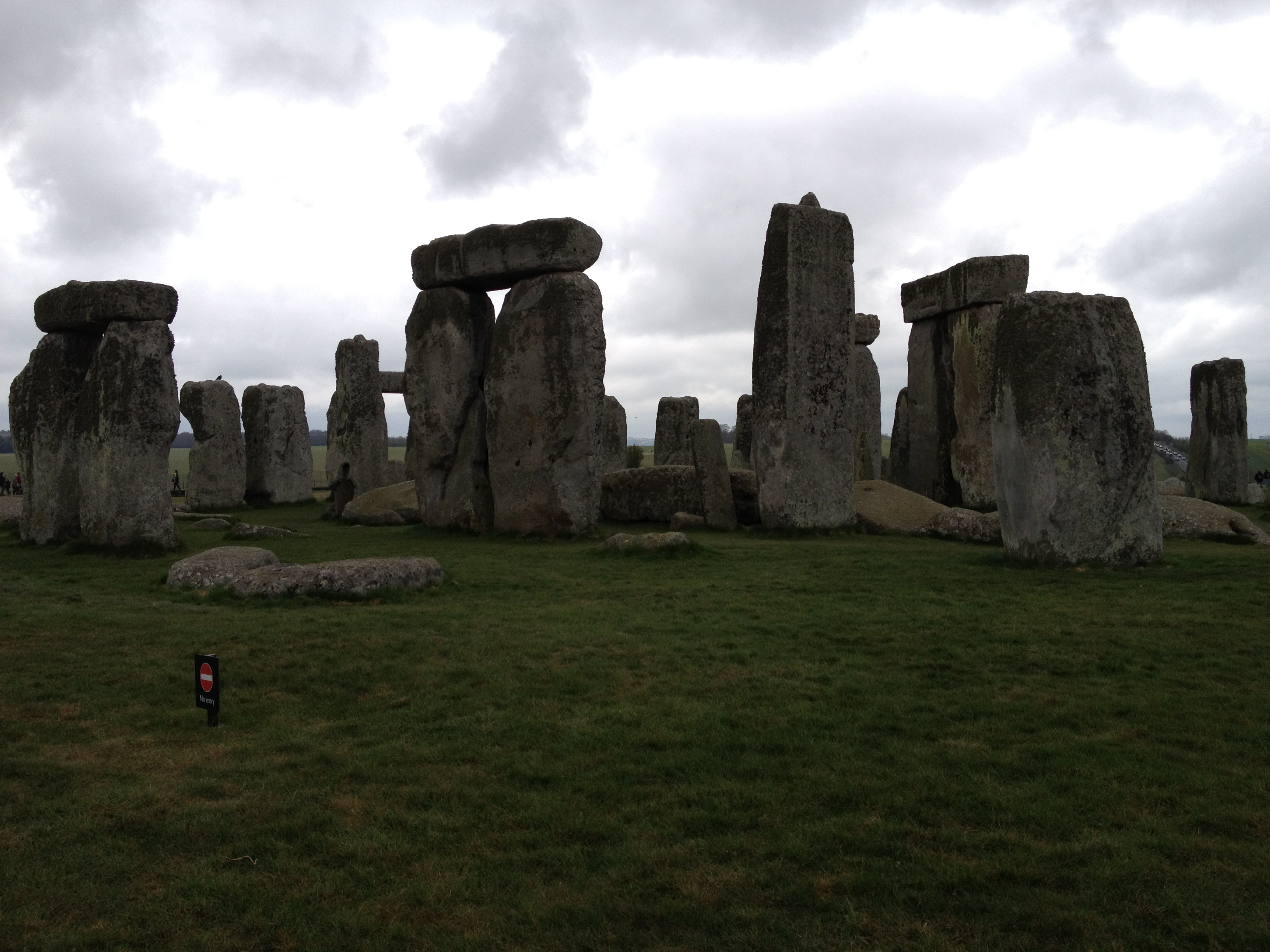
Stonehenge on Easter Sunday is a remarkably popular place. Tourists from all over the world crowd the pathway around those ancient stones as if they hide some arcane secret in their tumbled, massive form. Stonehenge may be the most iconic location in Britain, surpassing even such modern structures as Westminster Abbey and St. Paul’s Cathedral. Far pre-dating the art of writing, the purpose and nature of Stonehenge involve considerable speculation, but given the unquestionably costly years of labor required to plan, dig, transport, and align the monument, it stands to reason that it must have been religious in nature. One of the standard—perhaps even hackneyed—critiques of archaeological interpretation proves true in this case: if you can find no sensible reason for it, it must be religious.

The main phase of Stonehenge, the one that incorporates the iconic monoliths instantly recognizable today, came under construction some six hundred years after the pyramids of Egypt. In the case of the latter we know their language and we know the motivation behind the structures. More than just buildings to demonstrate the power of the king, they were celestially aligned portals to the afterlife. Although the Egyptians had no word for religion, the pyramids were as religious as the great temples that would soon surpass them in the energy consumption of the empire. In England of the time, we know no names, nor even an accurate assessment of the “nationality” of the inhabitants. Even nations, as we know them, did not yet exist. The builders of Stonehenge surely had something close to our concept of religion in mind. Otherwise, like the great cathedrals of millennia later, it would have been simply a waste of time and resources.

Wiltshire Downs on the Salisbury Plains is studded with ancient locations of significance. On the near horizon, among the eternal green of the English countryside, are dozens of barrows where people of unknown significance are buried. In that respect Stonehenge is emblematic of the individual struggle for eternal recognition. The name Menkaure stirs instant recognition among few. His pyramids stand as eternal monuments to a decidedly faded greatness. Stonehenge and its environs hold the remains of unknown numbers of unknown nationality bearing unknown names. It symbolizes the fate of us all. Yet on Easter, many believers in resurrection crowd in and gaze in awe at a pagan monument to human striving that no one truly understands.


Good Morning, London

First of all, Virgin-Atlantic Airlines gets a gold star in my book. Having flown quite a bit over the past six months, I’ve been reminded on just how stingy airlines can be, making even a brief flight a test of endurance. They are very generous with full body scanners and less so with basic human services, such as food, entertainment choices on long flights, and a sense that you’re doing anything other than propping up a flailing, deregulated industry. Virgin-Atlantic demonstrated that air time need not be torturous. So, with many choices of movie to watch, on Good Friday, I decided on one of my favorite genres of religious movie—the vampire flick.

I have been anticipating Dark Shadows for well over a year now, but I had heard nothing about Fright Night. Really, in many ways Fright Night was an unremarkable vampire movie, but then again, watching on a plane is maybe not the place where one would expect the gothic mood required for full enjoyment. Nevertheless, the full range of religious cures of vampires was present with one notable exception: crucifixes. Crosses abounded, but here on Good Friday I saw no corpi. There was holy water, so clearly it wasn’t purely Protestant sympathies that led to the abandonment of crucifixes in the movie. In any case, crosses were only a minor deterrent in this scenario. What finally dispatched the chief vampire in this case was a traditional wooden stake. Which, somehow reminds me of typical airplane food on most airlines.

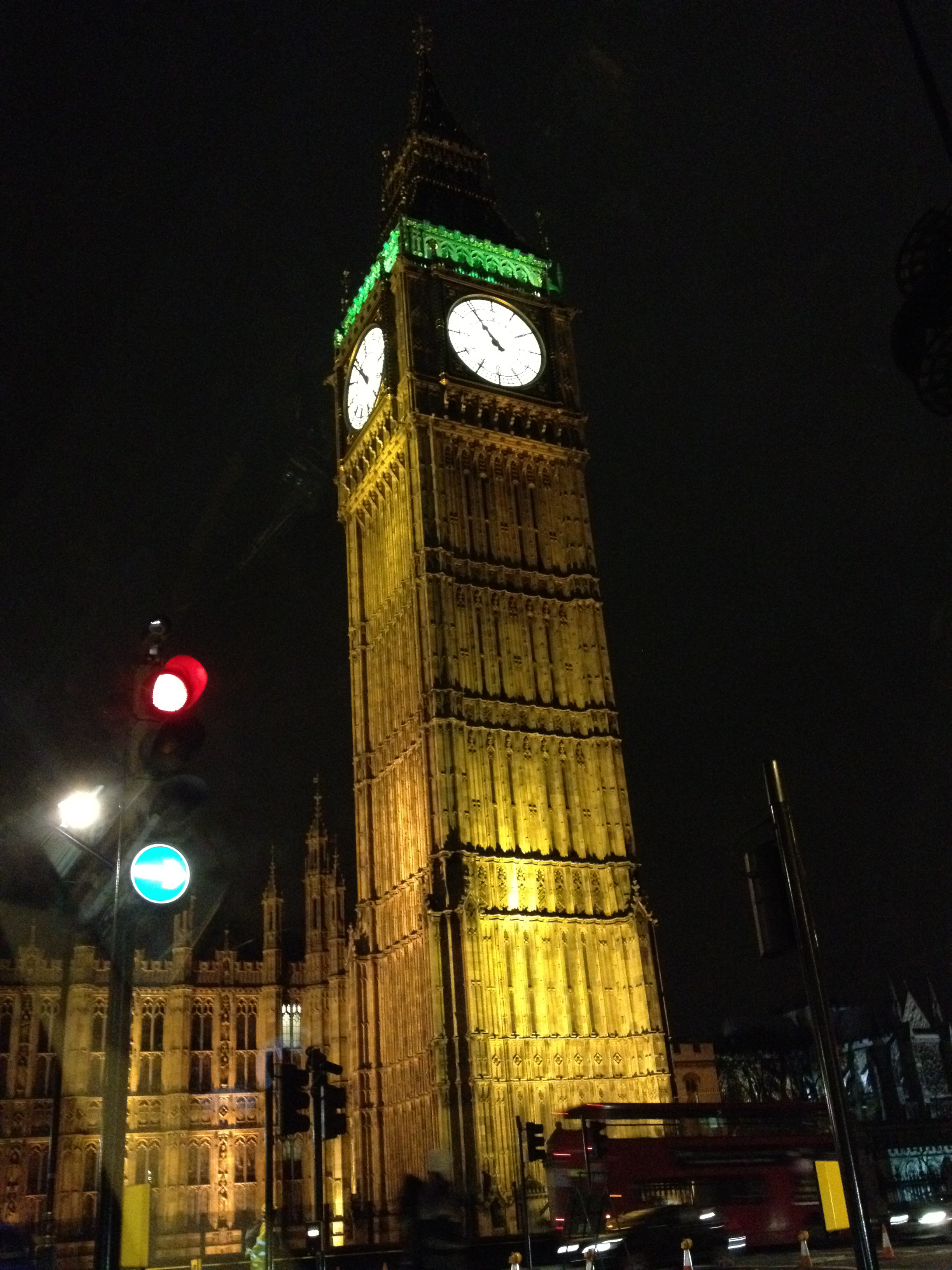
Driving around a secular London dressed in religious garb, St. Paul’s Cathedral lit splendidly in the night, was a reminder of the hold Christianity still has on even non-religious culture. It was kind of like the corpus-less crucifix in the movie. The inspiration behind the great gothic stylings of Big Ben and Parliament arise from their long association with Christian culture. On the streets people were milling about London late in the evening, not apparently fresh from church, standing in the shadow of Westminster Abbey and happily snapping photos. This may be a montage of disparate images colliding in my jet-lagged mind, but somehow virgins, vampires, crucifixes, and churches seem to fit naturally together.


One of Us

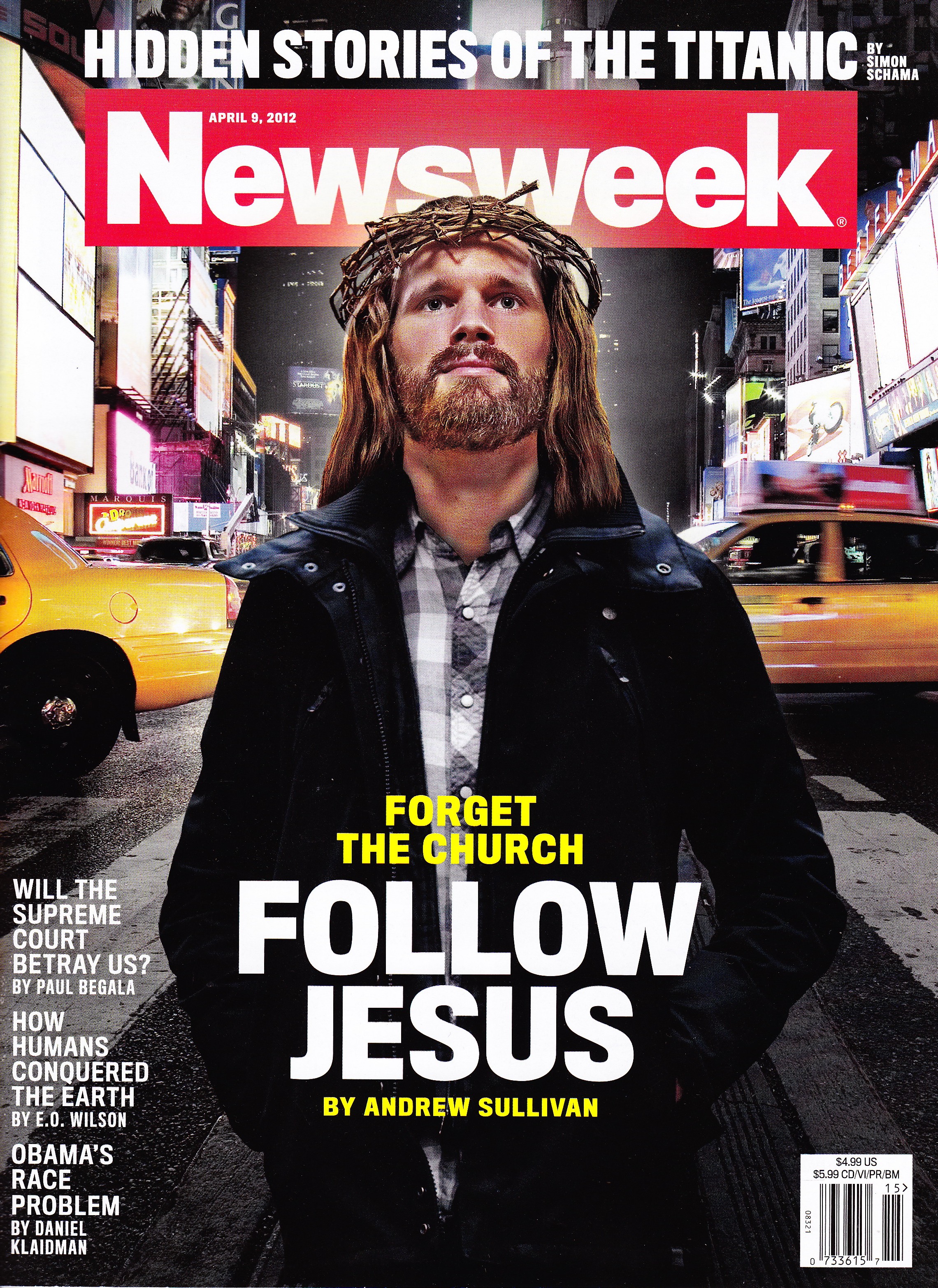
I suspect quite a few people are thinking about Jesus today. He does seem to be in the public consciousness with appearances on both Newsweek and the Watchtower. Newsweek, I have to admit, was an impulse buy. I’m flying to London today and I wanted something light to bring on the plane, so why not take Jesus along? I’ll have to report on the contents later. What caught my attention was the contemporary, very Caucasian Jesus standing in what appears to be Times Square. Since I walk through here a couple times a day, the immediately striking aspect is how unremarkable this would be. Perhaps that’s what the cover artist was going for, but people who think they’re Jesus—or at least a close approximation—are hardly rare. It seems that many of them are interested in running for president. Many others run Megachurches. Very few live on the streets.

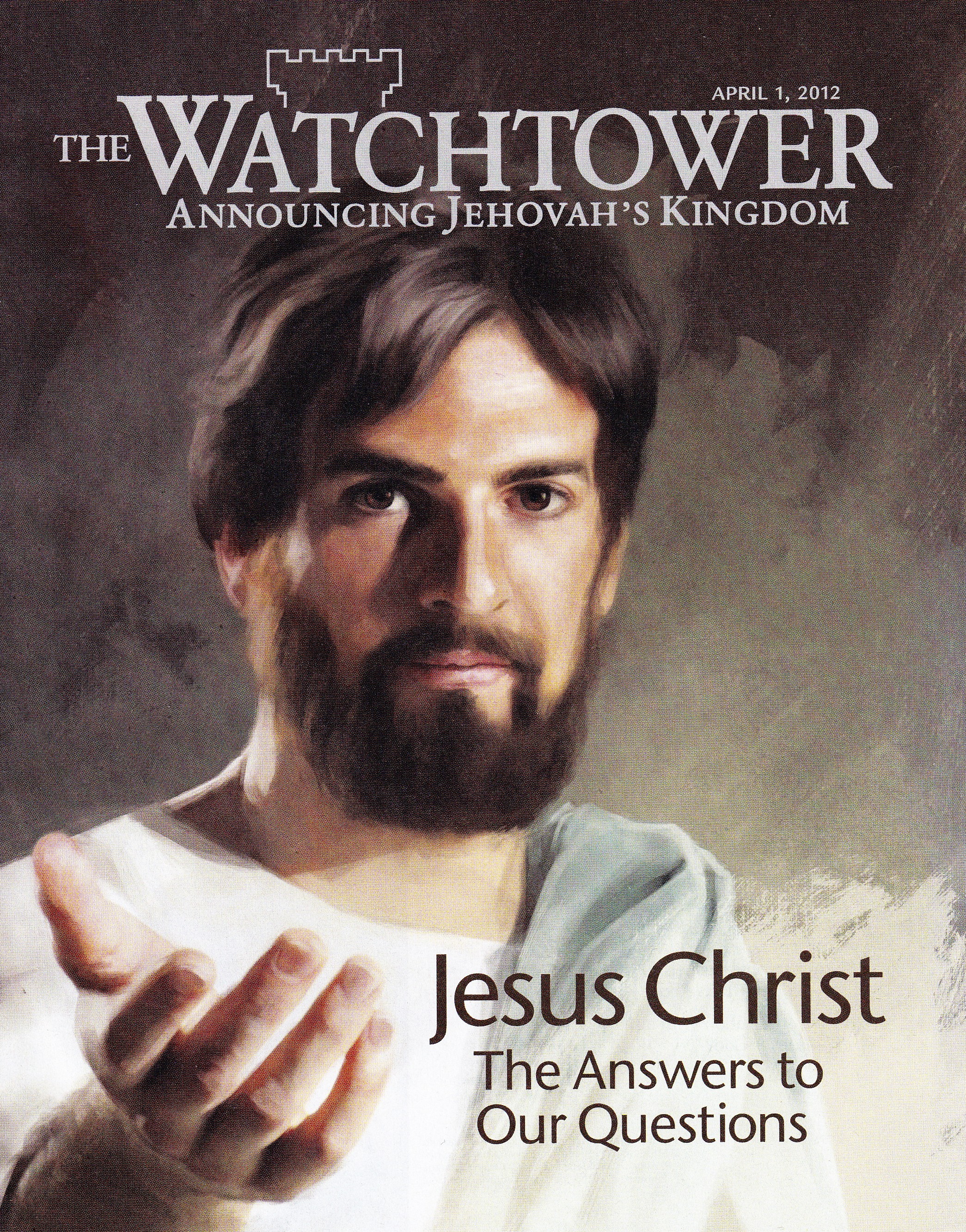
My Jehovah’s Witnesses friends stopped by recently. I used to chat with them when I was unemployed, but I’m no longer home during missionary hours. This edition of Watchtower also features a very Caucasian Jesus, but one who wears his hair in a style no first-century Jewish man would have. He has been stripped of his own faith heritage just as surely as the blue-eyed Jesus on Newsweek. The funny thing about Christianity is the chimera they make of the human half of Jesus. This is one part of the Bible nobody wants to take literally. Does Jesus need to look like us to effect salvific results?

It is often said that beauty is skin deep. One has to wonder just how profound faith is as well. People seem to be better at believing what they see. When it is time to consider what God might look like, we inevitably consult a mirror. Where is the comfort in an all-powerful being that looks like he’s not one of us? Well, maybe we could ask women what it’s like. For all the variables in Jesus’ appearance, he’s always male. Funny, so are the people who profit most from promoting his brand. Maybe my ideas are just taking a flight of fancy. The rest of me is on a flight as well. And I have no idea what the captain looks like.


Robot Crossing

With my new job I haven’t been able to be as active on our high school’s robotics team this year. Not that I ever contributed much beyond moral support, but there is a very profound satisfaction at seeing teenagers concentrating on such technological marvels and building self-esteem. Yesterday was spent at a regional competition. Noisy, colorful, chaotic—it was like being a teenager again myself. I overhead engineers talking during the course of the day about the great technological marvels of the future made possible by robots. These people have no apocalypse hidden among their endless optimism. We’ve got robots on the ocean floor and rolling around on Mars, snaking into our bodies even down to the cellular level. No end of times here, only forward motion. I know that computers now define my life. If I miss a day on this blog I grow dejected; one of my biggest worries about going to Britain later this week is how I will continue posting from overseas. But I sometimes feel as if our love of technology will be our undoing.

Experts—of which I am not, I hasten to add, one—tell us that within a lifetime artificial intelligence will be indistinguishable from real intelligence. As I watched the robots playing basketball (this year’s FIRST Robotics challenge), I began to wonder about the motivation of our robot slaves. Humans are driven by biological and emotional needs. Robots, as far as we can tell, do not want anything. It is a vacuous life. Yet as the robots played basketball all day, I noticed they didn’t suffer the obesity problems so evident among humans, nor the weariness that accompanies having to awake before dawn to catch a school bus to the competition. They are built for a purpose and they stick to it. Even as I watched hours of competition, I began to miss my laptop—driven by my own emotional needs as I am. I begin to wonder who is really the slave here.

Last night my family participated in Earth Hour. We try to do it every year with a kind of religious fervor. Turning off all electronics, including lights, we sit in the dark and talk by candle light. There is a profound peace to it. As my daughter commented on how spooky the shadow play could be, I imagined our ancestors who had no choice but to rely on pre-electric light in drafty houses where real wild animals still prowled the dark nights outside. How quickly that would become a trial for us. The same thought occurred to me as I watched M. Night Shyamalan’s The Village again last weekend. We are helplessly tied to our technological advancement. We might like to get away from it all for a few days or weeks, or even months. But we want the comfort of knowing that the robots are waiting for us when we turn back to reality again. Perhaps no apocalypse is needed after all.

Robot crossing


Spare Change

The vernal equinox snuck up on me this year, and I learned that it can also be what those in medieval Europe used to call a “dismal day.” The sun was out and the temperature was unseasonably warm, but beginning with breakfast and all the way until bed-time, things just didn’t go according to plan. My mother had been admitted to the hospital, and I live some 600 miles away. When I called to see how she was doing, I spoke with a bureaucratic nurse who could neither “confirm or deny” that she was even there. I wasn’t aware that my mother had connections with the military, government, or covert operations. When I said I was just looking for my mother I got read the riot act including—this is the truth—having the Hippocratic Oath cited at me. I think, in all honesty, it might be spelled Hypocritic. Don’t get me wrong—I think it is important to protect people’s rights, and I sure the duty sergeant—excuse me, nurse, was only worried about lawyers and lawsuits. We have constructed a country so insidious that a boy can’t talk to his own mother. Eventually she put my call through to the patient’s ward where one of the patients answered the phone and went to find my mother for me. We call it civilization.

I’m not the most technical of guys. Think about it—I majored in very dead languages. When my wife surprised me with an iPhone for Christmas, my brother-in-law kindly agreed to get in on the surprise and took care of the details. We went into the Verizon store after the holiday and switched the phone (with the phone number I’ve had for years) into my name. Nearly four months later, when I tried to change some plan details, both he and I had to call Verizon several times to get the mess straightened out. One of the communications giants seems to have made itself so technical that it can no longer understand a simple request. When the Verizon representative asked if I understood the user agreement I said yes. Have you ever read one? No one without a law degree could possibly understand. Even Moses didn’t have a cell phone. I had to spend an entire evening getting my own phone back under my own name. Our society has taken what should have been a two-minute phone-call and made a mini-series of it.

So, is it because the vernal equinox is so early this year that my world went haywire for a day? We live in a society where it is nearly impossible to prove you are who you say you are. And children are not allowed to speak to their own mother. Lawyers have taken the law meant to shield us and made a bludgeon of it. Communications experts obfuscate. It may seem random, but these two phenomena have the very same evil as their root. They are twin trunks springing from greed. The nurse can’t put me through because a lawyer may sue. My phone number can be reassigned to my name, with added costs, approved by lawyers that only corporate giants can afford. Human need has been reduced to terms of cash. The trees are budding. The air is warmer. Flowers are in bloom. But it certainly doesn’t feel like spring to me. That chill you feel is cold, hard cash. We are all just spare change.

The weight of a human soul, legally.


Saints and Snakes

I am not now, nor have I ever been, Catholic. So why am I wearing green today? It could be that a drop or two of Irish blood courses through my veins from a stow-away great-great-grandmother, or the assurance that, as an American mutt some Irish must have gotten in somehow. Or maybe it is more than that. From my youngest days, even before I knew of my family history (and nobody had bothered to inquire), I still wore green on Saint Patrick’s Day. Getting off the bus at school and seeing so many people with otherwise so little in common coming together to wear shades of green on the same day was somehow inspiring and made me feel like part of something larger than myself. It was a day of fun, and decidely not one of doctrine or repressive decrees about women or homosexuals or even Protestants. It was a day of unity.

Can a day based on church mythology ever long remain a day of peaceful inclusion of others? In college I met militant Protestants who insisted that orange be worn on Saint Patrick’s Day to stand in solidarity with the Protestant minority. I heard news reports of gays being excluded from otherwise festive Saint Patrick’s Day parades in major cities. Maybe the snakes driven out of Ireland have lodged themselves in the souls of those who plant divisiveness—but it occurs to me that I’m being unfair to the snakes.

In a tiny time capsule of twenty-four hours, Saint Patrick’s Day is a miniature paradigm of the ambivalence that we call religion. At its best it draws people of all backgrounds together for a celebration as large as life itself. At the same time, it is the ultimate in exclusion—the statement that we are special in a way you are not. Green, the color of Ireland, is an apt symbol for the day. In the planet world, the large swaths of earth seen from high above, green is the color of life. Each spring the shooting forth of green is eagerly awaited as the plant kingdom reveals to us that a refreshing change is in the air. Among many animal species, however, green stands for illness, and perhaps impending death. So here I am wearing green—not Catholic, not plant, not wishing to make unequal divisions. It is just like a religious holiday to celebrate ambiguity.

What's love got to do with it?


Leap Day

Why isn’t Leap Day a holiday? From ancient times early civilizations that used a solar calendar realized that the 365 day year doesn’t really work out. (Must have been a calculation error in the divine calculus on day one, I suppose.) Even though the solstices and equinoxes come and go with astronomical regularity, the earth’s orbit around the sun is a little out of sync with its wobble on its axis. The difference doesn’t make itself very apparent in a year, or even a decade. If you let it keep going, however, the calendrical months, like the seasons themselves, begin to migrate. Given enough time January would become summer in the northern hemisphere. Intercalary solutions ranged from adding extra days to saving them up, in some cultures, and adding an extra month to the year. The error of the gods then slipped back into mathematical precision. The one thing that the ancients recognized in common was that this extra time was a gift, a day to be celebrated. In the modern, post-industrial world, it is just another day to go to work while politicians get an extra day to campaign.

Time is perhaps the greatest theological challenge. People have limited time. Since we seek pleasure and comfort—even when we don’t attain it—most of us prefer to remain alive to try again. We sometimes forget how great a gift this is. One of my favorite songs growing up was Jim Croce’s “Time in a Bottle.” But alas, time is a bandit—as Jim Croce’s tragically short life illustrates a little too well. As the ultimately unrenewable resource, time reminds us of the folly of politicians and the fickleness of fame. Wasting time is the greatest sin imaginable.

Above all, time is a religious problem. Faced with human mortality, all religions address, in some way or other, what happens after the end. When time runs out. We can’t conceive this world without us, but as the calendar implacably shows, it’ll get along just fine. That’s why today should be a holiday. It is a freebie—one of those rare, saving up for a rainy day moments when after four years of scrimping we’re given a new day. It has celebrate written all over it. Time is a bandit, robbing us of the sensibilities of our ancient, cultural forebears who used this time to party while we use it to labor. “Time in a Bottle,” it is said, was written for Croce’s son A. J. The son is a musician like his late father. As I sit here hearing the seconds tick away on the clock, I realize that every great once in a while the bandit gives as well as takes. In that light, every day is a holiday.


Ashes to Ashes

It was just a small blurb in the paper. Down at the bottom of page 17, it could have been easily overlooked. “Alleged witch killed by being set on fire” the small headline stated. And the date was 18 February 2012. This sad incident took place in Nepal. The story notes that “Each year hundreds of women in rural Nepal are abused after being accused of being witches.” Just last week, to the scorn of many, Cologne, Germany reopened the case of Katarina Henot, a woman burned as a witch 385 years ago. Katarina Henot was declared innocent because of the efforts of a priest to raise awareness of the persecution of women around the world. Five days after the story hit the news, Theganidevi Mahato was burned to death in Nepal. Although some called the action in Cologne a publicity stunt, it was anything but. We need to put names on those we continue to allow society to brutalize. Katarina Henot and Theganidevi Mahato, separated by 385 years and many, many miles, both died for the insanity that equates tragedy with women.

How blithely the word “witch-hunt” spills off the tongue. Each time we invoke it, the very phrase trails the ghosts of many thousands of women made to pay the price for society’s paranoia. The answers to why such tragedies occur may never be fully understood, but the events are preventable. The key is education. Even in the most advanced culture in the world, as we like to style ourselves, we heap contempt upon education, claiming that teachers barely work and that professors get paid for doing nothing. We have fallen into the fallacy that one size fits all—not all jobs can be measured by the wicked, black dip-stick of the oil industry, or the quick-cash-and-crash of the stock exchange. Education is a lifelong process, and as the political ridiculousness we constantly hear reminds us, lessons must be endlessly repeated until they sink in. Too many people think it is just easier to burn witches.

Witch-hunts arise when societies are stressed. Scapegoating is one of the most unfortunate legacies religion has left us. Evidence points to the scapegoat as being earlier than the Bible, although it takes its characteristic form there. We hear how the sins of the people were transferred to the goat on a day not so different from Ash Wednesday, to be symbolically born away where the animal would die instead of us. Somehow we’ve come to believe that burning the representative of our neuroses will somehow cure our society. Does it? Has it ever? This day as millions of Christians contemplate their sins and wear ashes on their heads, I suggest that we think of the women whom religion has allowed to become its victims. Whether due to the superstition of a remote village in Nepal or the irrational fear of “civilized” Europe with the blessing of the church, we’ve let scapegoating go too far. And those who’ve been killed are not the nameless females of forgotten times, but are the Katarinas, Theganidevis, Marys, and Rebeccas who were just as human as their neighbors.

What are their names?


Wassailing

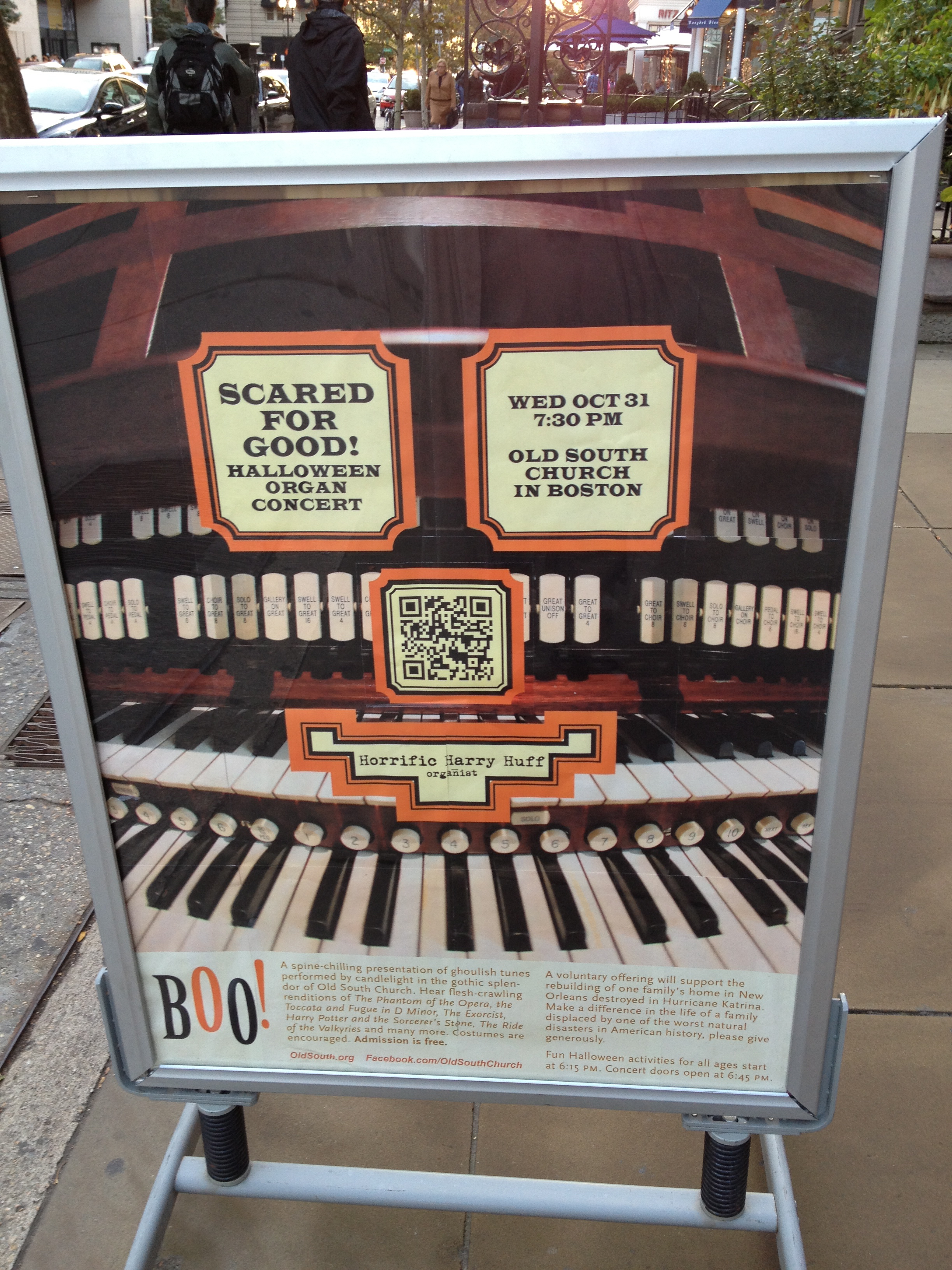
It was a nippy 42 degrees with a chill January breeze cutting through the brightly garbed crowd of maybe two-dozen stalwart souls. There were Molly dancers holding hands and skipping in a circle. Smoke from a bonfire caught the breeze as a woman with a painted face sang about the circle of the sun. The whole event had a Wicker Man sort of feeling to it, but participating in an ancient tradition is strangely fulfilling. A basket on the table held pencils and paper on with instructions to write your wish and burn the paper in the bonfire so that “Your message will travel into the cosmos.” The bare apple trees were seasonally pruned and discarded branches littered the ground. It all sounds suitably pagan for a Sunday afternoon in New Jersey.

Having grown up in a rather sheltered small-town environment I never even heard of wassail until planning for my December wedding nearly twenty-five years ago. A low budget affair with the reception in a church basement, my wife decided not to offend Methodist sensibilities by serving wassail, a spiced cider drink generally associated with Christmas. As I learned this midwinter, wassailing has a deep and mysterious ancestry that is a mix of pagan and Christian traditions. One aspect of wassailing is associated with Christmas carols and is based on the tradition of the wealthy sharing with the poor during the holiday season (a practice clearly extinct these days). The second type of wassailing goes back to nature religion and the blessing of the apple trees. It was observed on midwinter, which, before the Gregorian calendar, fell on January 17. At Terhune Orchards the festival fell on the 29th this year.

After watching the Molly dancers and sending our wishes up to the cosmos in the bonfire, one of the orchard proprietors gathered the crowd, now having about doubled to fifty, to sing the Somerset Wassail and then to make noise to drive out the evil spirits. This the crowd did with enthusiasm. We were then asked to recite the wassail prayer, printed on a signpost for all to see. Bread was passed out which we dunked in cider and hung on the naked apple trees. After a final blessing we headed to our car to preserve our own wassail. In England’s apple-growing regions, wassailing the trees is still practiced with a sincerity that marks the deeply mysterious. Some Christian sensibilities, I’m sure would be offended, but this ancient custom, like leaving a tree to stand in the midst of a plowed field to propitiate the spirit of nature, goes profoundly into human consciousness. I, for one, will lift a cup of cider and join the ancient rite to brighten a winter day.


Unorthodox Accreditation

While going about my editorial duties, I found myself directed to the webpage of the Antioch School of Church Planting in Ames, Iowa. Okay, I’ll admit that the fact that I spent the holidays in Ames may have been what actually motivated me to look. Over the past twenty-some years I’ve spent many holidays in Ames, but I never knew of this particular institution. I had been checking up on somebody’s status when I found the Distance Education and Training Council. The DETC is an accrediting body. In a world where we can’t take anyone’s word for it—especially not a bunch of academics’ many words for anything—we have invented accrediting bodies. These watchdog groups maintain the high academic standards that we like to mix well with our beer and football to make the American college experience. The DETC, however, scopes out remote education programs. Often these schools have no campus. The ASCP is accredited by the DETC.

So I poked around Antioch for a while. The name is taken from the ancient Syrian city where the early Christians first earned their title. It became clear in a fraction of a second that this accredited program is an ultra-conservative answer to seminary education. How to get what looks like a regular degree to improve your indoctrination. Instead of being bemused (one seemingly appropriate response), I was actually a little bit disturbed. Education occurs every day in non-structured ways. I can get a whole life lesson just walking across Times Square. When we want standards of comparison, however, we rely on tried and tested schools to offer us degrees. When a program that supports opinions that run counter to the educational system’s standards gets accreditation, we all need to watch out. Somebody call the Bureau of Weights and Measures!

The distrust of academia often does not apply to such self-promoting schools. Americans tend to love self-made doyens who bring education down-home. As far as I could tell from the website, the Antioch School is an extension of a local Bible Church that is intended to provide future clergy with home-baked degrees. That in itself isn’t a problem, of course, but when the wider public doesn’t know the inner workings of higher education, and generally distrusts it, who’s to say whether any degree is valid or not? Aren’t all bachelors created equal? Not really. Accrediting doesn’t prevent abuses from slipping through the system—I’ve seen it happen firsthand, right under accrediting teams’ noses. It is a game we play. You can earn a master’s degree or a doctorate in planting churches. And if you ask me, that’s the same thing as getting a degree in planting corn, only much less scientific.

No way through this maze.


Bible Review

The Christmas edition of the New York Times Book Review begins with the Bible. Appropriate enough for a book that gave us “in the beginning” and the Christmas story in the first place. Reviewed by Marilynne Robinson, the Pulitzer Prize winning novelist, the Bible is presented as the unacknowledged source of much of our literary culture. It is a message that bears repeating every now and again, since the Bible itself is often equated with those who thump it instead of trying to comprehend it. The Bible is often guilty by association. Like any book, it has parts that we wish weren’t in it, but that is only problematic for those who think of the Bible in authoritarian terms, a book that must be rebuilt into modern culture, jot and tittle. Taken alongside other ancient writings, however, the Bible is a fine example of human evolution. It represents a segment of our developing culture. And, every now and again, atheist and evangelical should acknowledge, the Bible gives us profound insights.

Robinson’s article mostly focuses on reiterations. The Bible’s influence is deep, and in the English literary world, nearly universal. What authors have written in the past—and what they are still writing today—bears the stamp of the Bible. It was the first formative book in western culture, and to dismiss it completely is to throw away a valuable part of our selves. At the same time, even so able a writer as Robinson can’t escape the subtle supersessionism that coheres to the mythic reading preferred by a large cross-section of society. The Bible is a self-referential text, but the Bible does not know that “the Bible” exists. Books that eventually made it into the collection were written without an awareness that they would become authoritarian tomes millennia down the road. Modern believers still invest the books with the mystique of divine authority, often in subtle ways.

A point made by Robinson should be read by those aspiring presidential candidates super-bussing their ways across Iowa. “Moments of the highest import pass among people who are so marginal that conventional history would not have noticed them,” she writes of the biblical narrative. The vast majority of us are marginal in this sense. Those in seats of power frequently forget that it is the unassuming compliance of those further down the food chain that lends them their power. The Bible is nearly always on the side of the oppressed. The Bible, however, can also empower those deprived by the crass world of politics. It must be rescued first. Once they are done kissing babies and shaking hands, once they settle in their opulent offices built with the money that would have otherwise gone to those babies, politicians forget the basic truths of the Bible. As long as it can be thumped once in a while, however, they will keep it in the bottom drawer until it is needed again. Only by dealing with the Bible sensibly can its abuse be stopped.

There is, I hear, balm there.


Silent Might

Iowa is a state for reflection. For many years Christmas in Iowa was a family tradition, but living on the east coast makes such pilgrimages rare. On Christmas Eve in Ames, we drove past a Nazarene Church decked out for the holiday with a sign reading, “Jesus Came for You.” Perhaps I watch too many movies, but the images that came to mind were of Rambo and The Terminator—menacing figures who’ve sought out their victims for revenge. Coming for you was a threat rather than a promise. Who can forget Arnold’s “I’ll be back”? Was the child who came sent with a mission of punishment or of peace? To hear presidential candidates and other evangelicals tell the Christmas story, it is clearly the former—the Rambo of God who blows away the sins of the world—that we should expect. The Prince of Pieces.

That version of Christianity that likes to present itself as the default, the natural form of what the church has taught all these years, has a strong current of threat running through it. God never shows up unless there is a problem—an absentee father only too swift to remove his ample belt to begin a sound thrashing. Religion often thrives in the context of menace. Teaching that people are evil by nature and only good when under promise of Hell, such believers understand the coming of Jesus to be cause for fear and alarm. According to Luke, the angels began their message with “Fear not.”

How Christmas is understood reflects on the view of Christianity that believers choose. For the advent and arrival of an emissary can be cause for celebration or of fear. In some mangers the infant conceals a cudgel and woe to those who suggest equal treatment of all or a non-literal reading of favorite prooftexts. This time of year stands as an excellent test of what this child will grow up to be in the minds of his latter-day cohort. What arrival should we anticipate? If it is the Jesus of the politicians and evangelicals, we only have to look at the headlines to discover the answer.

What child is this?


England’s Christian Gift

As much a part of the holiday season as Santa Claus and baby Jesus, the Salvation Army bell-ringers are out in full force. As I drop a quarter in the bucket, I ponder the strange lineage of this denomination. When the cheerful holiday shopper convivially donates spare change, few, I suspect, know that they are supporting a church. The Salvation Army is one of the bewildering number of denominations to spring from English Christianity. The Church of England, small in the United States, but imperial in much of the world, grew amid a religious unrest that spun off countless dissenters. We all know the story of Henry VIII and his not-so-merry wives. His political move to focus the official religion of England on the crown led to the Puritan resistance. Puritans left England for the Netherlands, and then on to America where they flocked to New England to develop into Calvinistic Congregationalists.

Meanwhile back in Amsterdam, some of the English Separatists evolved into Baptists. Baptists were also congregational in polity and also found the religious freedom of America to be appealing. (Now they select our elected officials.) The Puritans had helped develop the Presbyterian movement as well, with dissenters in Switzerland. Still at home in Britain, the Church of England waffled between Catholicism and Protestantism for some time. The evangelical fervor that emerged with the Wesley family led to the Methodist Church, which remained attached to the Church of England until its founder’s death. In America the Methodist Church grew rapidly. During the era of religious revivals the Adventist movement grew out of Methodism, as did the Church of the Nazarene, the Holiness movement, and Pentecostalism. All of them today are major denominations. Even the Anabaptists tip their wide-brimmed hats in the direction of the English dissenters. The Plymouth Brethren, inventors of the Rapture, were another English-derived denomination, as were the Wesleyan Churches.

What does all of this have to do with the Salvation Army? The Salvation Army was founded in London by a Methodist minister, William Booth, and his wife Catherine. The movement adopted quasi-military mythology and ranks, and soon grew into a church of its own that supported what would later become the Social Gospel cause. Known primarily for their charitable works, they are yet one more splinter from the tree of English Christianity. Perhaps the Christmas tree is an appropriate analogy for the Christianities to spring from Henry VIII’s loins. Like the pine’s many branches, each with its ornaments, Christianity in England sent its twigs in all directions. Counted together, the descendants of English Christianity far outnumber any other Protestant grouping. Just a thought to share while waiting for the quarter to drop.


Darkest Night

One of the more endearing of human weaknesses is our fear of the dark. For those who live north of the equator, we have just experienced our longest night. It is no coincidence that the religious holidays that occur in winter feature light. In our helplessness against the encroaching darkness, we light our Christmas trees and Hanukkah candles, adding just a bit more light to the world. Among the oldest of all holidays is the day that marks the birth of light’s resurrection. One need not be a pagan to appreciate the solstice and the inherent hope it bears for the return of the sun.

In this season we often see signs and hear laments about the absence of Christ from Christmas. Jesus was not born in winter, according to our best reckoning. One of the carols that drives me mad with distraction is “In the Bleak Midwinter” with its maudlin description of “snow on snow on snow”—clearly written by someone with limited experience of winters in Israel. Christmas falls near the solstice because people have from earliest memory recognized the sacredness of this season. When Jesus was born nobody knew he was to become so famous as to have one of the most popular Facebook pages ever, and so nobody thought to write it down. Even the Gospels the disciples never give a rousing chorus of “Happy Birthday” while on the dusty highway. What we’re celebrating is that night will not reign forever.

Having evolved to favor our eyesight, but lacking the standard mammalian nocturnal nature, we feel vulnerable in the dark. Even if Jesus hadn’t been born we’d be celebrating at this time of year. It might have been the re-living of the mythic Golden Age of humanity under Saturn that the Romans called Saturnalia, or it might have been the rejoicing over the resurrection of the beloved god Balder among the Norse. We might have had to wait until the days were noticeably longer to fete the goddess Brigid with the Celts at Imbolc, but we would have marked the occasion. Instead of cursing the pagan darkness, as the saying goes, we would light our feeble candles as a sign of hope. The reason for the season is the fact that the longest night is over and once more our days will slowly return light to our lives.

Here comes the sun