Zombie Jesus

It must still be October. Despite a snowstorm before Halloween (one of nature’s trick-or-treats), all the signs are still there. My daughter showed me a Venn diagram yesterday, during a whole-day marathon of putting plastic around our drafty old windows, showing the intersection of three “monster” traits: resurrected from the dead, local townspeople fear and revere him, and convert as many mindless followers as possible. The creatures that inhabit this eerie universe are Dracula, Frankenstein, Zombie, and, where all three intersect, Jesus Christ. Obviously this was just for a laugh, but interestingly, one of the traits of Penn Jillette’s book, God, No!, is his rather frequent reference to Jesus as a zombie. Then I clicked over to Religion Dispatches, and the lead story is headlined, “Praying to the Zombie Jesus.” Ours is a world of mindless, quick connections where the compelling idea of resurrection has lost its appeal. Despite our religious culture—or perhaps because of it—we have come to see Christianity as just one more peddler of a wonderful, disturbing idea.

As regular readers of this blog know, I find the abuse of religious ideals inexcusable. Using one’s faith to beat another down is just plain wrong. Nevertheless, to focus on the folkloristic aspect of resurrection (or perhaps it is a metaphor) is to miss what drew the very earliest followers to Jesus. Before the idea of rising from the dead came a message that people should love each other and treat one another with respect and dignity. By the end of the first century of the common era, or perhaps as early as Paul, that idea grew to be a quasi-magical resurrection from the dead. No longer were women counted as equals among the followers of Jesus, and no longer were wealthy compelled to give it all up. Paul’s faith looked to a future world, beyond death, and was willing to consider this world, well, to be polite, crap. The reasons for this transformation are legion: the persecution that Christianity was undergoing, the failure of an apocalypse to take place, the disenfranchisement of the believers. They needed something to look forward to.

Zombies are likely a passing fad. When we start seeing books of zombie Christmas carols, zombie haikus, and zombie apocalypse survivors’ guides, we seem to be reaching the peak of the plateau. The zombie is mindless, rapacious, and entirely selfish. It will not go away. It is the perfect denizen of October. When I stare into those uncomprehending eyes, and see the disturbing lack of compassion and the desire to consume human brains, I start to make connections of my own. Analysts often describe zombies as the ghoul of the common folk. But all these characteristics taken together suggest that perhaps the month in which to expect zombies is November. Surviving another snowpocalypse, earthquake, and hurricane, the human spirit is difficult to dominate. And yet, when the polls open up in the darker season of the year, zombies will rise. The plastic on my windows does nothing to stop these chills.
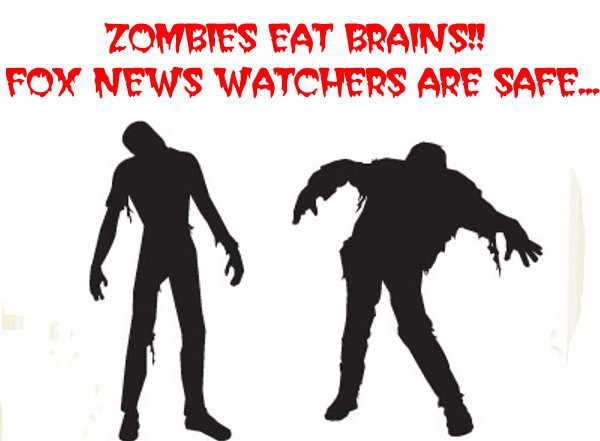
Borrowed from a friend's site


Zombie Reality

The origins of zombies notwithstanding, they are the autumnal monster of choice in a post-modern society. They are the symbol of secular resurrection—no faith commitment is required, no pristine, moral lifestyle. Resurrection happens to you by accident, a chemical, a disease, cosmic radiation—whatever the cause it is not divine. And the zombie is fair game for the release of violent aggression; already dead, there is no moral imperative to keep them alive and well. Each year the mass of zombie walks increases where children and adults alike become the living dead for a day. Macabre? Indeed. It seems that the very word “macabre” may have come into English from Hebrew. Hebrew words are based (mostly) on triliteral roots, words with three unchanging consonants. The Classical Hebrew word for “grave” is based on the root q-b-r. The prefixed m is often the preposition “from.” Macabre, morphed through Latin and French, could go back to the root meaning “from the grave.” Literally, the source of zombies.

Resurrection is among the most poignant of human hopes. Religions often assure us that death is not final, but we can never know that this side of the veil. Those we love go away, we hope, to a better place than this. It is no surprise that the largest zombie walk in the country is in Asbury Park. We can imagine better. Why can’t God?

According to Wade Davis, there is a powder that vodoun priests use to zombify a person. This involuntary treatment does not actually prolong life, nor does it really resurrect the dead. It is, like many religious treatments, a show of faith. In The Serpent and the Rainbow Davis describes how psychosomatic attacks span the globe. All they require is belief. If a person believes in curses or the evil eye, the results can be physical and fatal. We create our own reality. Over the weekend I watched What the Bleep Do We Know? again. I sometimes showed this movie to my classes. Here physicists and gurus together affirm that we create our own reality moment by moment.

Zombies have migrated from the realm of religion to secular society. It is hard to imagine our modern world without them. They are cut from the same cloth as All Souls Day, reminding us of our mortality and suggesting that there might be something more. It is a reality we create ourselves.


Haunted Purgatory

Halloween season is a time for both pagans and evangelicals alike to tremble. Our usual local “haunted house” for charity being closed this year, my family went to the local haunted farm last night. In a nation where few of us grow up on farms, the agricultural world is already a foreign environment. And corn is a scary plant when it dries out, especially at night. The Creepy Hollow part of the farm tour was a long, rambling stumble through a corn field where costumed actors jump out at you or just as ominously shake the cornstalks as you walk by in the dark. Senses that we have long ignored leap to full attention, scanning for any possible fright. At nearly a mile long, this haunted trail was pretty intense, and I’ll admit to being glad to have seen the open field at the end. One of the props along the way was a haunted church. As I’ve noted before, religion and fear often stride hand-in-hand.

Earlier in the day, my wife had pointed out an article in the Huffington Post about the dilemma many evangelicals face when their kids want to celebrate Halloween. A holiday of Catholic and pagan origins (both feared equally by the truly staunch evangelical), Halloween is a season of dangerous influences. In response, some groups have started their own “Hell Houses” designed to show kids the horrors of Hell as they walk through a putatively non-fiction version of fear. The intention seems clear enough, although a little odd for a religion that claims to be based on love. The Hell Houses are part of an alternative holiday called “Jesus Ween” and people are encouraged to give out Bibles rather than candy. At least they got the scary book part right.

In an unrelated yet relevant story, Time projects that the seven billionth person will be born on October 31. I remember when there were just four billion of us, and my teachers began pointing out the stresses we place on our environment. Of course, those who co-opt the identity of being “pro-life” advocate for as many of our species as possible—less for God to pour out love, but better to populate Hell, apparently. The Roman Catholics share this petard with the evangelical camp, as Monty Python made famously clear in The Meaning of Life. We have overcome (largely) nature’s control on our expansion, and as Halloween, or Jesus Ween, races nearer, we have less to fear from chainsaw-wielding maniacs than we do from Bible-bearing clones who claim it is divine mandate to stress our own planet to death.


Cenobic Marvels

Among the most explicitly religious of horror movies, Clive Barker’s Hellraiser series exploits biblical themes and tropes to blur distinctions between sacred and sacrilege. Not a fan of gratuitous gore, I began watching the series after reading Douglas Cowan’s Sacred Terror. Cowan utilizes this particular series to illustrate how deeply the religious mythology may reach, awaiting the fourth installment before finally having an explanation. Curious, I have been making my way through slowly. October seems a good time to consider the unsettling aspects of human nature, so I watched the third installment, Hell on Earth, this weekend.

Funnily, I do not find Pinhead particularly evil. Perhaps that is the intent. His eyes seem too kind to be a true villain. As the leader of the demonic Cenobites, he leads the curious down the path of exploration to ultimate destruction and, appropriately enough, Hell. The Hell presented throughout the films, however, is the true desire of the victims. They stumble upon a puzzle box, but when it is opened the curious find themselves trapped. The very use of monastic ideals as emblematic of Hell is surely a commentary on the futility of self-inflicted means of grace. Does not the flagellant at some level enjoy the pain? Where is the religious value in that? In Hellraiser III, Joanne runs to a Catholic church for help with Pinhead in pursuit. As any horror fan knows, the church is never a haven against evil. Pinhead makes himself a parody of the crucifixion while a helpless priest tries to defend God.

Horror films are a remarkably successful genre. At least one aspect of the appeal is the unabashed use of religion. Conditioned by the old films such as Dracula, the early twentieth century taught us that the church kept us safe—crucifixes always used to work against vampires! By the end of the century that vision had shifted. The church of the early twentieth century was a preserve of male power, a place where men made the rules and abused the rules and no one questioned them. As the century progressed, we became wiser. And more vulnerable. By the dawn of the new millennium, when such movies as Hellraiser III were being filmed, the security of the cloister had itself become a source of fear. October is the season of reflection on the transience of summer and ease. Perhaps it is also the season to reflect on how our perceptions of religion are ever shifting as winter wends its way toward us once again. And Mr. Barker will be standing there to remind us that we each create our own Hell.


Buying Salvation

October is upon us. The telltale signs are all there: trees just starting to turn, gray skies that hide an intangible menace, a coolness in the air, and Halloween stores sprouting like mushrooms. Halloween is a holiday with incredible sales appeal, I suspect, because people are still, at some level, very afraid. We evolved into who we are from a long history of being prey as well as predators. Fear governs many of our interactions in social settings, although we prefer to call it more abstract names such as “rule of law” or “peer pressure.” Deep down, we are afraid. Halloween allows us to wear that fear on our sleeves. And it isn’t just the Celts who made this confession; Día de los Muertos developed independently, giving us a different flavor of the same emotion. Savvy marketers know that where a human concern lies, there will be the purse-strings also.

Commercialization of religion—the fancy word is “commodification”—is as close to American religious experience as you can get. We live in a religious marketplace. Various religious groups offer their wares, sometimes obviously, sometimes subtly. Often the underlying motivation is fear—fear of displeasing deity, fear of eternal torment, fear of reincarnation. We are afraid and we don’t know what to do, so we try to buy our way out of it. Other times the Madison Avenue approach works. Consider the Crystal Cathedral, or even the great medieval cathedrals of Europe. These are tourist destinations, architectural marvels that draw us in. The message is still pretty much the same: the deity will get you unless you give back. How better to show respect (that is fear) than erecting a massive, complex, and very expensive edifice to the angry God?

It is simplistic to suggest that religion boils down to fear, but when all the water evaporates, fear is certainly evident among the residue. Next to the overtly commercial holiday of Christmas the most money can be coaxed out of Americans at Halloween. Or consider the appeal of horror movies. Love them or hate them, they will draw in big money at the box office. In a society that sublimates fear and tells its citizens that unimpeded growth is attainable, Halloween is the most parsimonious holiday. Perhaps the most honest, too. A full month before the creepy sight of naked trees and chill breezes that sound like screams whistling through their bare branches, the stores begin to appear. When Halloween is over they will be dormant for eleven months of the year, but like the undead they are never really gone. Only sleeping.

A parable.


August Ancestry

Lugh

Now that August is in full swing, it is appropriate to think of Lugh. It would have been more appropriate, I suppose, to have considered him on Lughnasadh (August 1) but I’m afraid I missed the deadline. August is the only month with no officially recognized holidays, either lighthearted or serious, in the United States. Back in Celtic Britain the first of August was one of the quarter days, or days when the rent was due and religious festivals were celebrated. When Scotland was Christianized, Lughnasadh was kept under the name Lammas-mass, a festival of the first harvest of the year. The Christian correlation became the deliverance of Peter from prison or Saint Peter in Chains.

Lugh was, without doubt, one of the most important gods of the Celts. It has been suggested that the Celts understood their gods not to be transcendent beings of a different order than humans, but rather as their own ancestors. They apparently believed that gods came from great humans. Lugh is a warrior god, and occasionally god of the sun. His favored epithet is “long arm” or “long hand,” indicating his felicity with spears and swords. So widely was he known that many important cities were named after him, including Lyon in France, Vienna (known by one of his epithets), and perhaps even London itself. When Romans conquered the Celtic lands, the festival in August was that of the Caesar from whom the month takes its name, Augustus. Apart from the minor Christian festival of Peter in Chains, the month of August was simply forgotten as the seat of holy days.

The origins of gods differ in diverse cultures. The assumption of most people today seems to be that gods exist as an ontological reality and we reverence them because of their factual existence. The Celts, on the other hand, grew their own gods in the tradition that a noble human was worthy of veneration and full of undying power. Lugh may have been one such person. If he was, he has been lost in the heavy haze of hoary antiquity. He comes to us today in August, but more often in March. The word leprechaun is an Anglicized version of the Irish phrase “Lugh the cobbler” (one of his many associations). As such he is remembered every time we pour ourselves a bowl of Lucky Charms.

Part Lugh, part Potter


A Midsummer’s Daydream

Solstices and equinoxes are among the earliest religious festivals in the world. While there is no means of proving this, the signs are fairly indicative; ancient peoples were close watchers of the sky. Like many other species of animals, they used subtle clues to help them determine which direction to go at what time of year. Once agriculture developed, the sky contained the key of when to plant and when to harvest and when to thank the gods. It is no surprise that when the classical religions developed many of their festivals centered around, especially, the equinoxes and the winter solstice. Did they even bother with the summer?

The summer solstice tends to get lost in most modern festive calendars: it is summer, a time when we are busy relaxing—the crops are in the ground, firewood need not be gathered just yet, and life is perhaps just a tiny bit easier (except for those poor kids who still have to finish out the school year!). No cause for wonder that this particular holiday (traditionally Midsummer) is most evident in northern Europe where in just six months days will be dreadfully short and very cold. Midsummer celebrates light, fertility, and healing. Some traditions claim that witches meet on Midsummer as the sun begins, once again, its inexorable journey south (from the northern hemisphere perspective) nearly to disappear in the dark December.

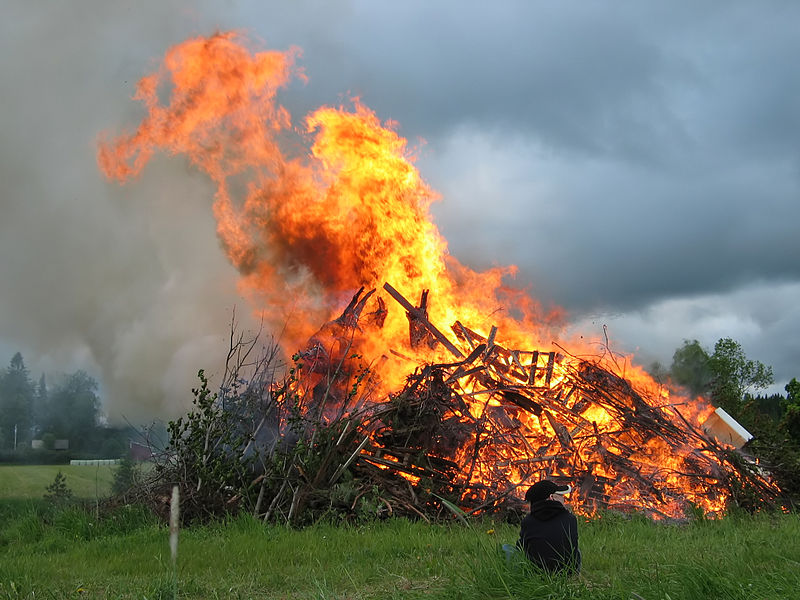
The modern day Midsummer celebration held by reconstructionist Neo-Pagans is Litha. The name is borrowed from the Venerable Bede but the observance of the solstice is certainly authentic. It is often celebrated with fires to shorten the already apocopated night. It is the time when darkness is at bay. It is perhaps telling that the major religions have little to add to days of relatively carefree existence. People need their religion when things go bad, but when the struggle is minimized we might leave angry gods behind for a while and just bask in the ease of it all. But, as the Neo-Pagans and witches know, the longest day of the year also foreshadows the darkness that, until this day next year, will never again allow us as much light.

Northern European Midsummer's bonfire


Triskaidekaphobia

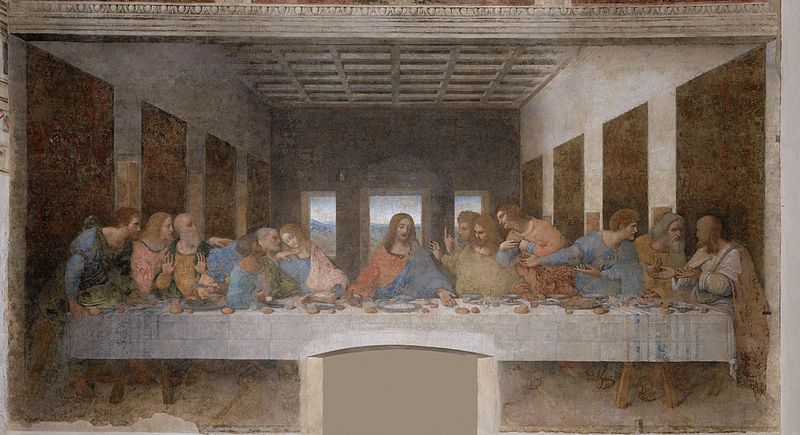
Friday the thirteenth. The very concept awakens images of horror movies and inauspicious happenings. An interview with a Psychology professor at Rutgers recently discussed this unusual phobia. Mike Petronko of the Graduate School of Applied and Professional Psychology had this to say: “Exactly how this got started is difficult to say, but the belief appears to date back to ancient times. Often, superstitions are rooted in religion. Some folklorists believe the fear may stem from the Last Supper, when, according to Christian belief, Jesus and his 12 disciples gathered for the final meal, which set the stage for his crucifixion, on Good Friday.” There is no doubt that the origin of the superstition is religious and that Fridays earned their notorious reputation because of Good Friday. Even today, as any Roman Catholic can tell you, Friday dietary requirements differ from those of other days.

But wasn't this a Thursday?

Thirteen is a little harder to pin down. It is a prime number after ten, but then, so are eleven and seventeen. It may have its unlucky associations back in the old Mesopotamian base-six numerical system. Once you reach past the first doubling of six you meet thirteen. Even today hotels are designed with no thirteenth floor, although pasting a fourteen over the actual thirteen is merely for psychological relief. Mathematics insists thirteen follows twelve. As Petronko notes, the fear is real. Airliners do not have row 13 and hundreds of millions of dollars of revenue are lost because so many people refuse to engage in regular practices (such as flying) on Friday the thirteenth.

Religion and fear are not strange bedfellows. In fact, religion, in its earliest origins, seems to have been a coping mechanism for fear. People are afraid of many things – that is the curse of consciousness. We can anticipate eventualities that will never materialize. We imagine them happening to us. Religion seeks to placate those forces that are beyond our control. We may lay claim to a highly advanced and technologically sophisticated society, but millions of people are anxiously awaiting the end of this day. Rutgers, like most universities, hardly sees the need to fund the study of religions. Nevertheless, our very culture belies that indifference. Many people are afraid today and we still don’t even know why.


Gothic Mother’s Day

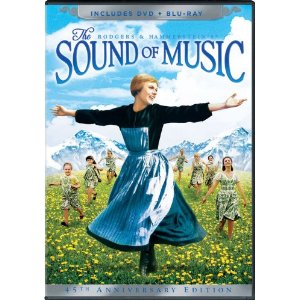
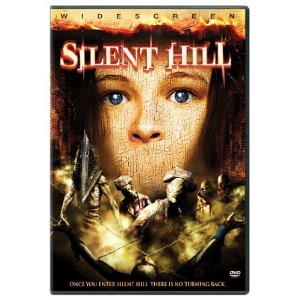
What does Mother’s Day have to do with horror films and religion? I serendipitously discovered last night. I generally run a few years behind the media, reading books after they come out in paperback and watching movies when I find a copy of the DVD. Last night as a family we watched The Sound of Music. I’d never seen this show until after I was married – musicals were not popular in my blue collar neighborhood growing up. Of course, I am now a veteran viewer. Last night, during mother’s choice evening, I noticed that if the music were removed (itself a weird concept) The Sound of Music is actually quite gothic. The interior settings, the use of shadow, the dark, Nazi threat, the stonework of the gloomy abbey – all of these things add up to a disturbing collage. In the mood for something more baldly gothic, I stayed up to watch Silent Hill.

I tend not to research movies before watching them since it reduces the visual impact. For those films based on books, I generally read the book afterward to see what was “really going on.” Silent Hill, of course, is based on a video game. I do not play video or computer games; “Pong” may have been my last serious attempt at doing so. Silent Hill, therefore, was a complete unknown. The gothic element did not disappoint, and as Sharon, the adopted orphan, began her sleepwalking scenes being shown beneath a lighted cross in the night, I knew that religion and horror were once again coming together. Indeed, the driving force behind the gruesome story is a religious cult on a witch-hunt that is set in a village based on Centralia, Pennsylvania. The cult, believing those who are different are witches, seems to enjoy the medieval pastime of barbecuing them. Centralia’s ongoing mine-fire was used to great effect. Rose, Sharon’s devoted adoptive mother, of course, rescues her daughter. The line in the film is “Mother is God in the eyes of a child.” (There is the Mother’s Day tie-in.)

Having been invited to present an adult forum to a local church on Christian themes in popular cinema, I have been recharging my attempts to test my hypothesis that what truly frightens people is religion. Silent Hill would support this hypothesis. I did not miss the significance of the names: “Rose of Sharon” is a popular biblical trope. The impotent father is named Christopher. Centralia’s predicament is often vividly compared to arcane ideas of Hell. And mother’s are, in the eyes of many children, saviors. Perhaps that last point is why we celebrate Mother’s Day on a Sunday. Although films such as Silent Hill may not make the best family viewing, even here where religion destroys, the divinity of motherhood is underscored.


Mary in the Sky with Sequins?

Shortly before Easter in the district of Yopougon in the Ivory Coast, a large group of Christians saw the Virgin Mary against the sun. UFO enthusiasts saw an alien in the same event. Several eyewitnesses ended up blind after staring into the sun. The video of this purported miracle is available on YouTube,

but even watching the “miracle” on a dim computer monitor hurt my eyes. If you want to see Mary, I suggest a good pair of Ray-Bans. The alleged vision occurs a couple of minutes into the video – let the audience reaction be your guide if you decide to watch. All that I saw was what may be categorized as an optical illusion or pareidolia, although it does look a bit like a walking person. Objective information on this miracle is decidedly lacking on the web.

I never pretend to have the answers on unexplained phenomena. I find human arrogance amazingly resilient despite all that we still don’t comprehend. In the midst of all that might exist out there in the 99.99 percent of the universe we haven’t explored, I remain skeptical that we know all there is to know. One thing is certain, however; if something unknown appears in the skies some will call it Mary, others Jesus, and yet others an angel. (Conspiracy theorists claim it is Project Bluebeam.) Religious belief and paranormal belief are close cousins. Both involve explaining something that science cannot yet comprehend. If the figure were moving any faster, I might be inclined to accept that it is Carl Lewis.

In an unrelated story, it seems that the Allen Telescope Array of the Search for Extraterrestrial Intelligence (SETI), Frank Drake and Paul Allen’s baby (anticipated by Carl Sagan), is being shut down. Earth-based governments are reassessing spending priorities and finding a cosmic big sibling who might help us out of our mess down here has become a luxury we can’t afford. ET may phone from home, but on this end the receiver will be off the hook.

Religions tend to bolster the self-importance of human beings. While I believe we are ethically and morally bound to help one another, I find it difficult to believe, when looking at the way governors are operating today (Christie one of Time’s 100 most important people? Christie eleison!) that Homo sapiens are anywhere near the top of the cosmic intelligence scale. I just hope that if it is Mary in the sky with sequins that she remembered to bring her SPF 2012 sunscreen along.


Aftermath of Easter

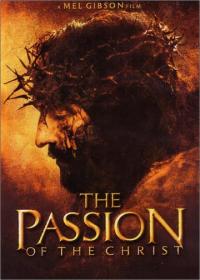
Holidays, it seems, are increasingly overloading themselves with baggage. Not only are many of them thinly veiled celebrations of materialism, but many are now being tied to “issues.” As I survey the aftermath of Easter as I saw it this year, it becomes plain that even the message of self-sacrifice and hope springing eternal can be co-opted. The Fellowship of Catholic University Students at Montclair State University hosted a screening of Mel Gibson’s The Passion of the Christ last week. An outcry of biblical proportions flooded university discussion groups over what was deemed cultural insensitivity. Gibson’s version of the gospel failed to impress me when I saw it, stressing as it did Gibson’s sadomasochistic torture scenes in an effort to raise a few welts over “Christ-killers.” Back at Nashotah House I was regularly on the preaching rota. (I’m not now nor have I ever been ordained in any denomination. I have, however had preaching experience going back to my high school years.) My final sermon asked whether we should accept theological truths from a loose cannon of an actor. These physical accidents may have had more than a little in common.

Conversely, my first sermon at the seminary – the very year I was hired, and several years since my last pulpit performance – featured Abraham Lincoln. Nashotah House was a bastion for disgruntled southerners at the time; they were often the only ones conservative enough to fit the seminary’s profile. My admiration of Lincoln was expressed in an innocent expostulation on the merits of freedom. Afterwards I was drawn aside and admonished, being informed, “not everyone here believes Lincoln was a hero.” Lincoln was assassinated on Good Friday, a point that has not escaped those who note that the Civil War began 150 years ago this month. Those at Nashotah who disliked my words felt that I was disparaging the south. With roots in South Carolina, I indeed was not. Slavery is wrong in any ethical system that will stand up to scrutiny. Those who believe in equality, however, often pay the ultimate price.

Holidays do not always bring out the best in us. We need the respite, and we have the Jewish community to thank for coming up with the Sabbath that has led to our weekend lifestyle. Each weekend rival churches fill up with those who believe others to be wrong. Religion seems to have failed in its quest to unite. A colleague at Montclair cited the quotation of uncertain attribution: “having a war about religion is like having a fight over who’s got the best imaginary friend” – this was in the context of the screening of Mel’s Passion. The fact is, when it comes to religion nobody knows the correct answer. The humble response one would like to imagine is the mutual encouragement to continue to strive for the truth. More likely than not, the response is someone will select their weapon of choice and try to prove their point of view the old fashioned way.


Conscious Cats

To pass yet another rainy Saturday, and to celebrate Earth Day, my family went to watch Disney’s African Cats yesterday. An avowed nature-film junkie as a child, I watched Mutual of Omaha’s Wild Kingdom on a weekly basis and have supplemented that fare with nature films throughout my life, when possible. It disheartened me a little to learn that some of the adventures were spliced together from different filmings, but I always believed every word avuncular Marlin Perkins said. After all, the show ran on Sunday nights, and who’d dare lie on a Sunday? Noting the humor even as a child when Marlin Perkins would stand back as Jim Fowler wrestled the anaconda or outran the crocodile, I could not get enough of authentic nature footage. As a child, wildlife sightings were limited to squirrels and rabbits, a number of birds that looked disconcertingly similar, and many, many bugs. Once a king snake slithered down an alley down the street, and we felt like Marlin Perkins, keeping our safe distance.

A trend in recent years has been to anthropomorphize animal films to engage children’s interests. So it was with African Cats. Each lion and cheetah family was described in human terms with human motivations, longings, and emotions. It is clear from watching many, many episodes of Zoboomafoo with my daughter (we even saw the Kratt Brothers live at a New Jersey Greenfest a couple years back) that animals genuinely do experience emotions. Anthropomorphizing them, however, has always disturbed me. I’ve been a vegetarian for well over a decade now, believing that animals have the same right not to be eaten that I fervently hope they respect in me. But placing them in the same level of consciousness as humans increases the suffering in our world a little too much. Both lions and cheetahs die in this G-rated movie. That is the unfeeling course of nature. Suffering comes at the level among humans of being aware of this misfortune, and taking it to heart. Theodicy is among the most intractable of theological problems.

Today as millions of Christians celebrate resurrection, my thoughts are with the animals. African Cats shows incredible footage of millions of wildebeest migrating, but packages them as mere prey for the hungry lions. What of the inner life of the wildebeest? In our society where the few lions demand the best while countless prey animals go about their daily grind, eking out a living from an unfeeling earth, the subtle message was almost overwhelming. Yes, the vast wildebeest herd can spare a member or two to predation. What if that member is you or me? It is the trick of numbers and the curse of consciousness. I respect and admire our animal co-inhabitants of our planet, but without the myth of resurrection isn’t giving them consciousness just a little bit too cruel?

James Temple's cheetah from Flickr, via WikiCommons


Good Earth Friday

In a rare superimposition of holidays, today marks both Earth Day and Good Friday. These two special days are a study in contrasts, yet both are holidays that look forward and hope for salvation. Good Friday, the culminating drama of Holy Week, is often paradoxically treated as a day of mourning. If Christian theology be correct, humanity would be Hell-bound without it. Yet many of the faithful weep as if for Tammuz, knowing that resurrection is just two days away. Earth Day, much more recent in origin, is much more ancient in importance. Biology as we know it, whether human or divine, would have no place to call home without Earth. Earth Day began in 1970, but every day is an Earth day for most of us.

Still buzzing with 1960’s activism, on the first Earth Day 20 million demonstrators got involved and helped lead the way to the Clean Air Act, the Clean Water Act, the Endangered Species Act, and the founding of the Environmental Protection Agency. People cared. This was before fashionable complacency set in. Whatever. Today citizens of the United States get stirred up about very little. Good Friday may represent a school holiday for some, others may even go to church although it is not Sunday. But get worked up? Hardly. Legislators in our country drag their feet like spoiled children when it comes to reducing emissions (many politicians positively treasure their emissions) or paying for cleanup of what we’ve done to our planet. Let our children inherit the dearth.

While bully governors seek to slash and burn, it is the responsibility of more reasonable individuals to try to repair the damage their leaders do. This is the spirit of Earth Day. Our leaders make the mess, those of us who care try to do something about it. Good Friday shows what happens when an idealist challenges the imperial status quo. Long-haired liberals get nailed, and guys in expensive suits cut themselves bigger and bigger checks while orphaning those who get in their way. Gaia was never crucified, but that doesn’t stop Neo-Cons from trying to rape her. Just a year on from Deepwater Horizon and oil companies argue they are legally within their bounds not to permanently seal off caps that “meet regulations.” Their friends the politicians politely look the other way. If things are going to get better I suggest that we leave official policy hanging on a cross and do our own best effort to save our mother’s life.

Careful, it's the only one we've got.


Educating Religion

The delicate dance engaged in by “church and state,” despite its apparent grace, includes many awkward stumbles and gaffs. Nowhere is this more apparent than in higher education at state-sponsored schools. I teach in two large state universities and the spring semester is winding to its accustomed close in both. The religious calendar of Judaism and Christianity, however, is just winding up. Based on a lunar calculation, the date of Passover is a moveable feast that takes Easter along with it. A late holiday season complicates the end of the semester when many students are held captive by religious leaders insisting that they cannot attend class during this most sacred of seasons. I’ve had many students missing class this week with final exams just around the corner. The students are, however, the innocent victims.

Religions are generally famous for unwillingness to compromise. I have both Jewish and Christian students who attend class despite the holidays while others find the requirements of enforced celebration more pressing. I do not pretend to have an equitable answer for this dilemma, I simply feel myself being squeezed between two colossal forces: the demands of the academy and the requirements of the faiths. Even state universities recognize the liberty of conscience and regulate excused absences for religious holidays. The information missed, however, cannot be easily acquired so close to the end of term.

This jumble of conflicting demands is particularly evident in a Religion Department. Teaching a subject that many – including not a few deans – assume is How to be Religious 101, a lowly instructor is beset with the weight of ecclesiastical and rabbinic decree while trying to educate the young about their own backgrounds. And if grades are not stellar due to missed lectures, it is the teacher who must be blamed. No great wonder, I suppose. We see shifting blame as a repeating pattern among our political and business leaders as well. It is always somebody else’s fault. Oblivious, “church and state” continue their waltz and gather their funds while a few toes get stepped on as the first full moon after the vernal equinox exerts its firm pull on all believers.

In the light of darkness