Sol Invictus

Perhaps for abject fear of paganism, western civilization has avoided holidays associated with the summer solstice. Being the lightest day of the year in a frequently dark northern hemisphere, it was naturally a time to celebrate the victory of light over darkness. While the winter solstice insinuated itself into the complex of Christmas holidays and Easter became intricately intertwined with the vernal equinox, the summer and autumn holidays were rejected.

This neglect of the powers of light coincides to some extent with the orthodox Christian rejection of Gnosticism. The Gnostics, able dualists like their Zoroastrian predecessors, celebrated the victory of light over darkness. Remnants of their theological outlook survived in the canonical Gospel of John and the always questionable Revelation. Ancient societies throughout the world recognized the summer solstice because, regardless of its name, the sun was acknowledged as a powerful deity. On this day the sun is at its height of strength, banishing darkness for longer than any other day of the year. It is a day not to waste.

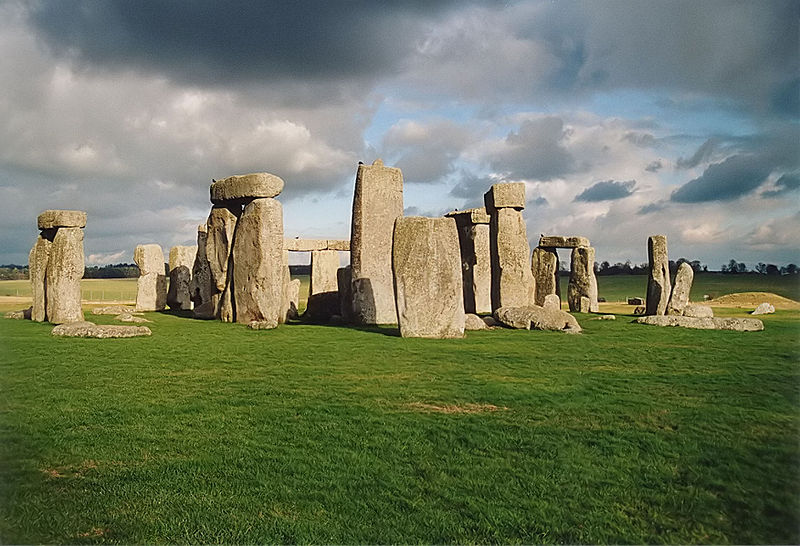
Christianity has preserved some minor holidays for the summer season, but with the advent of a leisure-based society where summer is a time to take it easy, if not cease work altogether, the solstice lost its grip. Perhaps because light is so abundant already in the longer days as winter wends its way into spring and summer and lingers pleasantly until the vernal equinox, summer itself is simply holiday enough. Those adhering to the ancient religions nevertheless gather at sites like Stonehenge and Maeshowe, or even Egypt’s famous pyramids to consider the unending influence that our special star holds for its most imaginative planet.

The stones of summer


Patriarchalism or Party?

Father’s Day is a “holiday” I treat with great ambivalence. Having barely known my own father, I applaud those dads who devote enough time and energy to their kids to earn a day of recognition. On the other hand, in a society that continues to foster privileges for men in the market and labor worlds, I wonder if men need their own holiday. I suppose one must separate “father” from “men,” since the day is the celebration of an ideal rather than a gender.

“A good man is hard to find,” so the old saying goes. Maybe that’s why there was never a father’s day in the ancient world. Anyone reading the ancient myths, the way that many fathers behaved, well, it’s no wonder they weren’t celebrated! Cronos, in some traditions Cybele’s husband, actually ate his own children. Not much of a motivation for celebration there. Were the gods made in the image of the metaphorical fathers?

In the United States the first Father’s Day was observed in Fairmont, West Virginia in July 1908. It has been suggested that a mine disaster that had killed over 350 men nearby was the inspiration for the day. About two years later in Creston, Washington, Sonora Smatt Dodd celebrated her father who’d raised six kids mostly by himself. President Woodrow Wilson was famously celebrated by his own family, and President Calvin Coolidge proposed the holiday in 1924. An early supporter of Father’s Day was the politician William Jennings Bryan, famous for his stand on what he understood as family values. President Lyndon Johnson set the day as the third Sunday in June. Father’s Day only became official in 1972, under President Richard Nixon. Still, it seems to be a day established by men for men, smacking a little too much of the self-congratulatory.

Back before cell phones were invented, Father’s Day was the biggest day of the year for collect phone calls. Perhaps that phenomenon is the essence of the holiday. From those to whom more is given, more should be expected.


Monday Morning of the Soul

Western society is much indebted to the Hebrew Bible and the culture it has engendered. Nowhere is this more evident than the now hallowed concept of the weekend. Most of our time increments are determined by the movements of celestial bodies – the sun marks our days and years, the moon keeps our months rolling along. But the seven-day week is a bit of an anomaly. We know that the ancient Babylonians experimented with the seven-day idea, but it was the Hebraic concept of the Sabbath that provided us with a regular day off.

Ancient agrarian societies knew no “days of rest.” The old saying, often attributed to nineteenth-century American farmers, states that your cows require milking, even on the Lord’s day. Life in ancient times, for most individuals, was a daily slog, repetitive, long, and repetitive, of struggling to survive. The idea that you could take a break from survival to relax and not work simply did not equate. A break from survival is the same as death. When ancient priests – city-dwellers, no doubt – decreed that Saturday was a special day because even the Almighty needs a little Miller-time, well, the idea caught on. Society, once it had become sufficiently urbanized, could allow one day off a week.

Fast forward to the Christian contribution. Early followers of Jesus were Jewish and therefore already sold on the Sabbath concept. The resurrection, they asserted, took place on Sunday, so it was appropriate to worship on that day as well. A two-day worship minimum had been established. To many ancient folks this looked like laziness with a religious blush. Nevertheless, it caught on. Now many of us in a leisure-based society, with white-collar work that usually can handle being put off a couple days without immanent starvation or over-lactation, live for the weekend. Constraints of doing it for “the man” are off, we are free to be who we really are. Two-sevenths of the time, anyway.

Religions have given the world special gifts. As another dreadful Monday morning forces us out of bed early and focuses our eyes on a distant Friday afternoon, we should remember to thank Judaism and Christianity for their combined worshipful sensitivities. If it weren’t for them, we would have endless weeks of Mondays.


Holy May Days

The first few weeks of May are peppered with holidays, some religious, some secular. As my regular readers know, I’ve been working on a book about holidays for kids, so I showcase a few pieces on this blog, on occasion. Instead of providing several posts on May’s holidays, I’m combining the first three special days into a holiday compendium for early May.

May Day (May 1) is, in origin, a religious holiday. It is an ancient, pre-Christian Celtic holiday called Beltane, it celebrates fertility, and it is a day that workers throughout the world fight for fair treatment. Sometimes it is associated with Communism. So, where do we begin to unpack all that? To start with, May Day is a cross-quarter day (Groundhog Day and Halloween are two others). Cross-quarter days fall halfway between the solstices and equinoxes – the days that mark the change of seasons. Ancient Europeans believed that cross-quarter days allowed spirits of the dead and other supernatural beings into the human world, as can be seen in the Germanic Walpurgis Night (April 30-May 1). Although named after a saint (Walburga, d. Feb. 25, 779) Walpurgis Night has deep pre-Christian roots in northern Europe. It celebrates the coming of May, or summer, with huge bonfires lit at night. It Germany it was also called Witches’ Night (Hexennacht) because it was believed that witches gathered on Brocken mountain to await the coming of May. The Celtic May 1 is Beltane. For the Celts Beltane marked the start of summer and it was one of their two major holidays (the other comes around Halloween). Like the Germanic tribes, the Celts lit bonfires on Beltane. Druids would light two fires to purify those who would pass between them. In Ireland people would dress their windows and doors with May Boughs and would set up May Bushes. These were signs of the returning fertility of the earth. This tradition survives in parts of the United States in the form of the May Basket. May Baskets are filled with treats and are left at someone’s door. The tradition is to knock and run, but if you get caught, the gift recipient gets to kiss you! These days, however, an unexpected basket at the door is more likely to result in a call to the bomb squad, so let your sweetie know ahead of time if you plan to give a May Basket!

Today is Cinco de Mayo, and like most things Hispanic, it is misunderstood by many Angelos. Frequently Cinco de Mayo is represented as Mexico’s day of independence. What it actually commemorates, however, is a historic battle. Napoleon III’s French Army was in Mexico in 1862. These guys were in the state of Puebla where an outnumbered Mexican force under 33 year-old General Ignacio Zargoza actually beat them on May 5. In the States, Cinco de Mayo is becoming a day to showcase Mexican culture, kind of like St. Patrick’s Day is for Irish culture. The Battle of Puebla is not Mexico’s independence day – that falls on September 16 and often escapes notice in the United States.

And, of course, Sunday is Mother’s Day. People around the world celebrate their mothers at various times of the year, but many don’t realize that this holiday goes back to the ancient Near East. Cybele was an ancient goddess associated with all things motherly. Originally from the Levant, the Greeks and Romans believed her to have been from Turkey (Phrygia). She had a festival day at the vernal equinox. Although there is no direct connection with the date or form of our Mother’s Day, it is possible that this annual recognition of an exceptional mother gave people the idea for Mother’s Day. Whatever it ancient origins may have been, Mother’s Day as we know it started in the United States as a protest against the Civil War. Many women believed war to be wrong. During the Civil War Anna Jarvis organized Mothers’ Work Days (as if they didn’t already have enough to do!) to improve sanitation for both armies. Julia Ward Howe wrote the Mother’s Day Proclamation, which was a document calling for the end of the war. The idea was to unite women in protest and bring the conflict to a close. After the war ended Anna Jarvis’ daughter (who had the same name as her mother) campaigned for a memorial day for women. Because of her efforts, a Mother’s Day was celebrated in Grafton, West Virginia in 1908. After that various states began to observe Mother’s Day, and President Woodrow Wilson made it a national holiday in 1914, ironically the year the First World War began. It is celebrated on the second Sunday in May.

For whatever spirits, political ideals, or goddesses you admire, May is the appropriate time to celebrate.


Mother’s Day and Earthquakes

It is Earth Day, a holiday that all the world should join hands to celebrate since it is secular and concerns all people. Except the religious. Theologies are inured to common celebration; any admission that others might be right is a chink in the implacable armor of conviction. So it was not such a great surprise when an Iranian cleric this week blamed Iran’s earthquakes on women. Fuming like Eyjafjallajokull, the imam cited immodesty on the part of women as leading men to temptation and the very earth whose day we celebrate shakes in rage. Why it is that the burden to prevent sexual temptation should fall on women alone is unfathomable. If men have such trouble controlling their urges perhaps they ought to explore real estate on Mars, although it is doubtful they would be happy there.

The earth, our common home, was conceived to be female by many ancient societies. The Greeks of the Classical era called her Gaia and gave her the honor of being the earliest deity to emerge from Chaos. In the Bible, desexed and depersonalized, the earth was constructed on the first three days before any living inhabitants cluttered its pristine surface. With the drive of Christian conviction that this unruly mother should be subdued under human dominion the industrial revolution began a process of disrobing and dismembering Gaia, an impersonal “it” to be exploited. The Bible could be cited as demanding such action; we were commanded to take control. And our religions provided the ethics to underscore our mandate.

If not for the second great awakening in the 1960s, Earth Day would never have found its fundamental expression. We would continue subduing and dominating, as per Genesis 1, until the great white man above would be forced to send his son on a great white horse to end it all. But the earth is our mother. The missing woman from the all-too masculine Trinity. Instead of blaming her daughters for the unstoppable lusts of her sons, and instead of repeatedly defiling her to keep up with the Republicans, we should take a moment today to honor her. She is the only such mother we have.

Son, behold thy mother.


The Passover-Easter Complex

Some years back I completed an unpublished book for young readers on the holidays. This project was undertaken because most holidays have a religious origin and because I could find no comparable source for kids to learn this information from a reliable source. Unfortunately publishers have showed little interest. Rather than waste the effort it took to write the book, I have been installing segments here, on the Full Essays page of my blog. Since it is Easter for many Christians today, I have added the next installment: the Passover-Easter Complex. It begins like this:

No doubt the most complicated set of holidays are those that surround the changing of the seasons – the solstices and equinoxes. Among even those holidays, the Passover (Jewish) and Easter (Christian) complexes are especially complex. Like most major holidays these celebrations have very interesting roots. Problem is, it is hard to know where to begin! We’ve already started with Mardi Gras, but that is kind of a festival on its own. To really get started, we have to turn back to the calendar (again?).

Easter, like Passover, is a “moveable feast.” That doesn’t mean playing musical chairs while you eat! It means that the dates change depending on the moon, so to figure out the date you have to (you guessed it) look at the sky. (Actually, these days you can look on the web or in many books used by churches to figure it out. But work with me here, let’s pretend it is, gasp, before these things were invented!) Two days of the year have an equal amount of day and night all around the world, when the earth stands up straight on its axis. Marking the beginning of spring and fall they are called the vernal and autumnal equinoxes. (“Equinox” means “equal-night,” “vernal” means “green” or spring, and “autumnal,” duh, “in autumn.”) Back when people had no TV, this was a big thing! Not only was it cool to have equal day and night, in the spring it meant days were finally getting longer and warmer. For ancient people it meant that light was winning the struggle with darkness.

Read more…


True Metaphors

I have a bad habit of taking road signs metaphorically. Not that I ignore the instructions, it is just that I consider their wider implications. While I was a tormented layman at Nashotah House I was pleased to see a road sign go up along the county lane that led directly to the main campus entrance. “Detour Ahead” it read in its reflective orange glory. I knew immediately that it was a metaphor for my life.

Yesterday as I drove to New Brunswick (New Jersey) for a student’s thesis defense, a large traffic sign that allows its message to be programmed and changed easily sat beside the road. “Expect Delays” one screen read. The next tersely stated, “Church Services.” Yesterday was, naturally, Good Friday, but I couldn’t help reading a bit more into this curt nugget of truth. My mind wandered to Galileo, Bruno, and Darwin. And to thinkers who nudge conventions outside the sciences. In fact, to societal progress itself. I thought of how often human good has been blocked by the agency of religious believers. When something new and beneficial is discovered it has to go through an approval process longer than that of the FDA – by the Church. Is this new information dangerous to doctrine, to preconceived notion? Will it damage our power structure? Can it be permitted?

Back to Joseph Campbell. Raised in the context of a Christian culture, Campbell did not believe any one mythology – he believed all mythologies. He keenly felt the loss that society incurred when it forfeited its mythic heritage and jettisoned its gods. Are we better off without them or not? The answer is still unknown. Perhaps the most appropriate traffic sign of all is “New Traffic Pattern Ahead,” and the most damning is “One Way.”

The ultimate heresy


Virgin Goddesses and Human Fathers

Several years ago today I became a father. I try not to say much about my family online because I am old enough to be cautious about this brave, new, virtual world I post in just about every day; yet being a father is a life-changing experience like no other. The absentee father – something I personally experienced – sacrifices one of the most fulfilling aspects of life. Unless you’ve been there, you can’t understand it.

Today’s paper raises the question of whether celibacy is related to the continuing scandal of sexually transgressing priests that continue to come to light. Men who are not fathers but are called “Father.” Men, sworn by duty never to give in to human nature, appointed as spiritual guides to the masses who have succumbed to the dictates of biology and society. The church denies any connection. Could it do any differently? Two thousand years of frustrated men might storm heaven itself!

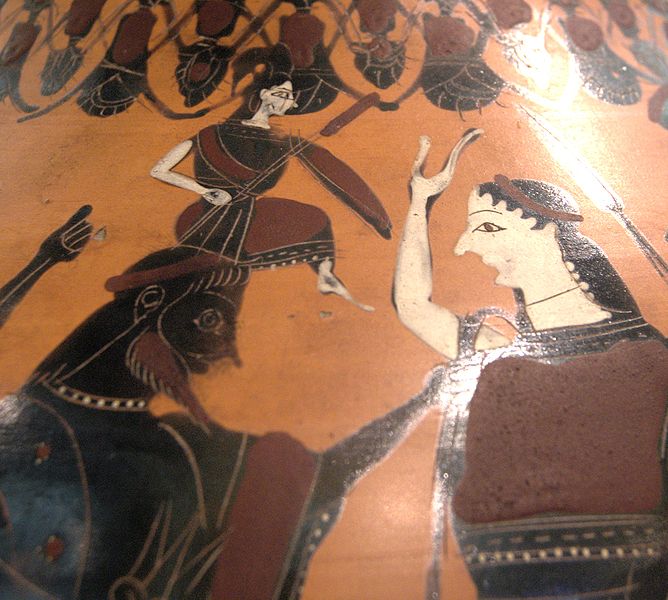
Among the most admired deities of the ancient Greeks were the virgin goddesses Hestia, Athena, and Artemis. Their divinity radiated through their self-sufficiency and self-determination; no god needed complete them. Goddesses had an integrity that few gods ever attained. We don’t read of virgin gods; Zeus was famous for his affairs, as were most masculine divinities. Many gods kidnapped or deceived women to slake their lust. Yet the virgin goddesses were formidable and truly worshipped. By restoring the virginity of Mary, the church constructed its own virgin goddess as a paragon for all to emulate. Priests were to be like the mythically chaste Joseph, longsuffering and self-abnegating. But they are mere mortals. Why not let religious leaders truly become fathers? It has forever changed my life for the better. Perhaps it would be healthier than chasing mythical virgin goddesses?

Athena, most chaste


Holi Holidays

I am the first to admit that I know far too little about Indian religions. As I teach Ancient Near Eastern religions every year, it becomes clear that much of our own modern, western religious tradition owes a debt of gratitude to the ancient traditions of the Far East. Zoroastrianism, substantially connected to early Indic religions, had an immense impact on the major monotheistic faiths that grew out of the ancient Near East.

So it was that I was pleased to see a story in the local paper about the upcoming Hindu festival of Holi. I know little about this festival other than it includes a celebration of color. Having grown up a little too attached to television, a device that was black-and-white in those days, I have retained my fascination with color and the emotion and power it conveys. When color television came to our home, it was an epiphany. Reading about human cognitive development it is impossible to ignore the impact color has on Homo sapiens and their outlook on the world. A master film-maker may convey depth and feeling in the absence of color, but once color is added, the story becomes vibrant. I took my family to a New Shanghai Circus performance at the local community college last night. As stunning as the acrobatics were, the vivid colors definitely enhanced the experience.

While at Nashotah House I found myself being consulted on color. The classrooms were being painted, and as Academic Dean I was asked what the color scheme should be. I consulted a friend who works in architecture, and she gave me a book about the “feel” of colors. My advice was overruled, but a new sensitivity to color had been awakened. Strangely, later that year a local public school brought me in as a consultant on classroom color. My engagement with color is purely subjective, but I know if I see a certain shade of blue I can be literally transfixed by fascination. My minimal exposure to Holi has opened a new window on religion for me. Color. It is an aspect of life to be celebrated.

Courtesy Louisiana State University


St. Valentine’s Day

In keeping with my holiday series for young people, I present here my lighthearted essay on Valentine’s Day. This holiday was actually the starting point for the book project. My daughter had to do a school paper article on the holiday and had a difficult time finding information on the history of Valentine’s Day that was suitable for children. I starting writing this book at that time since there was nothing on the market. Still isn’t. In any case, here goes —

Hearts and cupids and tasty candy are a long way from the origins of this holiday! To get a grip on St. Valentine’s Day we have to go back to the Romans again. Remember that the Romans took over the known world in the first century B.C.E. Nobody has accused the Romans of having a great sense of humor! Like most empire-builders they had the serious business of looking out for their own best interests in mind.

Before Constantine (if you skipped New Year’s Day, there’s more there) the Romans worshipped lots of gods. Their religion didn’t really have a name, but it had plenty of gods, gods to spare even! So when they conquered the land where Jesus would show up, Judaea (aka “Israel”), they didn’t really need any more gods. There were so many religions around, in fact, that the Romans hated new religions.

One of the favorite Roman sports was killing Christians, because Christianity was a new and illegal religion. By a remarkable coincidence two guys by the name of Valentine were priests in the early days of the church. Although St. Valentine’s Day gets cootie points for some, the name actually means “valiant.” Well, these two Valentines were both traditionally killed on February 14 in the 200s (C.E.). So Valentine’s Day starts with blood and gore!

Read the rest here (under Full Essays).


Inter-species Prognostication

Groundhog Day is a holiday easily forgotten by all but Bill Murray fans and residents of Punxsutawney, Pennsylvania. The day, however, has a role deep in European folk religion that was reflected in the “cross-quarter days.” From ancient times, the four days of the year that fall precisely between the solstices and equinoxes were known as cross-quarter days, based on the day of the month that rent was due in England (“quarter days”). The Celts recognized this cross-quarter day in early February as Imbolc (later Christianized as Candlemas). Part of the folk religion held that animals had special powers on cross-quarter days, and that fair weather on Imbolc meant that more wintry weather was on the way.

In America, where Groundhog Day has its original burrow, the tradition began among German immigrants. The first historical reference to Groundhog Day was made in 1841 in Morgantown, Pennsylvania. By 1886 Punxsutawney had its groundhog Phil and the tradition has continued ever since.

Although it is a lighthearted holiday, I always tell my Hebrew Prophets class (which begins near Groundhog Day) that this is a form of socially accepted prognostication. Few believe that a marmot can predict the weather, but we like to believe that winter is on its way out when the cold starts to feel old and stubborn and we are ready for a few sunny days. The old tradition states that if Phil doesn’t see his shadow he won’t dash fearfully into his den and spring is on its way. Fact is, spring falls six weeks from Groundhog Day, so no matter what the rodent says, spring is on its way. Ancient religions always stress the hope that nature will continue as it has in the past and that spring will follow winter as it should. It is nevertheless a fun day to watch the largest member of the squirrel family amble out of his heated burrow, no doubt confused by all the furless bipeds standing around with cameras, and play the prophet for his fifteen minutes of national fame.

The world's hairiest prophet?


Important Days

A few years back, during that nightmare called the Bush Administration, a petition was going around to try to prevent the United States from going to war in Iraq. A phone petition was put in place to encourage those against the war to telephone the White House and peacefully make their convictions known. I decided to call in. Since I worked at Nashotah House, I had forgotten that Martin Luther King Day was a national holiday (the seminary did not commemorate it). I telephoned the White House from my office only to receive a recorded message stating that the offices were closed because it was “President’s Day”! I hung up astonished. Our own government did not know what day it was (in retrospect, not such a surprise —).

A couple of years later while I was working on my book of holidays for children, I recalled the incident. It still strikes me as very odd, given the importance of today’s commemoration. I am including below my brief write-up for Martin Luther King Day from my still unpublished book:

One of the few national holidays in the United States to honor an individual is Martin Luther King Day. There are only three individual based holidays – Washington’s Birthday and Columbus Day are the other two. Martin Luther King Day is observed on the third Monday of January, and it had a hard time making it through the government process of becoming an official holiday. It seems like old prejudices die hard, since the bill proposing this holiday was introduced in 1968 but was not signed into law until 1983!

Martin Luther King Day is the only national holiday commemorating an African American individual. While school kids are probably just grateful for a day off so soon after the Christmas holidays, this holiday stands out as important for many reasons. Perhaps the main reason is that the United States were united around the idea of freedom, a basic right for all in this country.

Martin Luther King Jr. was born on January 15, 1929. His story of a courageous, non-violent challenge to unfair practices in the United States is an inspiration to all who care about justice. King was a Baptist minister and a main leader of the Civil Rights movement. He was awarded the Nobel Peace Prize in 1964 for his example of peaceful protest; King was the youngest person to have ever been awarded this honor. He was assassinated on April 4, 1968. Even so, this holiday was not officially observed in all 50 states until 2000.

The federal government (pay attention!), that is, the government over the whole country, has the right to set holidays. Anyone who works for the federal (national) government gets the day off. Individual states, however, can decide if they will observe the date as a holiday or not. That is why some state workers get a holiday off while those in another state do not.

The United States stands for equal rights for all citizens. King stands as a symbol for that belief and his life shows that sometimes it takes everything you’ve got to make sure that the right thing is done.

Another factoid about this holiday is that it shows just how different holidays can be from one another. Some are fun while others make us think.


A Sigh for Cybele

As we fall out of the holiday season into that distinctly chilly and sometimes cheerless February, Cybele comes to mind. Over the past several weeks I have added posts focused on the holidays associated with December and January. In the course of my research for a children’s book on American holidays (not published), I was astonished at how frequently Cybele appeared among the origins of current holiday practices. Having researched ancient Near Eastern mythology long enough to complete a doctorate in the field, and to write a book on an ancient goddess (Asherah), the lack of reference to Cybele in my sources was unexpected. I pushed this question mark to the back of my mind, but as I was reading H. P. Lovecraft’s story “The Rats in the Walls,” I found Cybele once again.

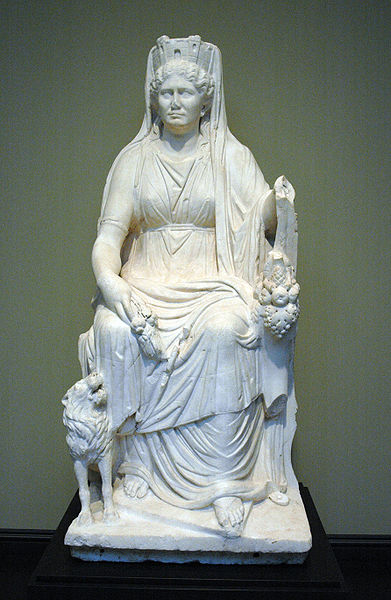
Cybele eventually became a major Roman goddess, although she was never among the Greek Olympians. Her importance shows in her connections with several Roman festivals and practices of antiquity, some of which have survived even to the present. Greco-Roman adherents to Cybele worship considered her to have been of Phrygian origin. Many scholars, however, see in her name and character echoes of a Semitic goddess named after Gebal, or the native name for Byblos in Phoenicia. If so, she is one further piece of the puzzle connecting the classical world with that of the fertile crescent.

Wikipedia Commons Cybele

A standard title for Cybele was Magna Mater, or “great mother.” As such, she was frequently associated with the earth itself, widely considered to have been a primordial female deity in the ancient Near East. In many respects she resembles Asherah, although the two are never explicitly identified. In myths where she is associated with Atys (later Attis), she becomes the spouse of a “dying and rising god.” She is prominent in festivals around mid-March, at the time of the renewal of fertility in the Mediterranean basin. Matronly, stolid, and powerful, Cybele lurks in the background of religious sensibilities. Her association with spring offers something to look forward to as the overly long, yet short, month of February starts to become visible.


The Blessing/Curse of Janus

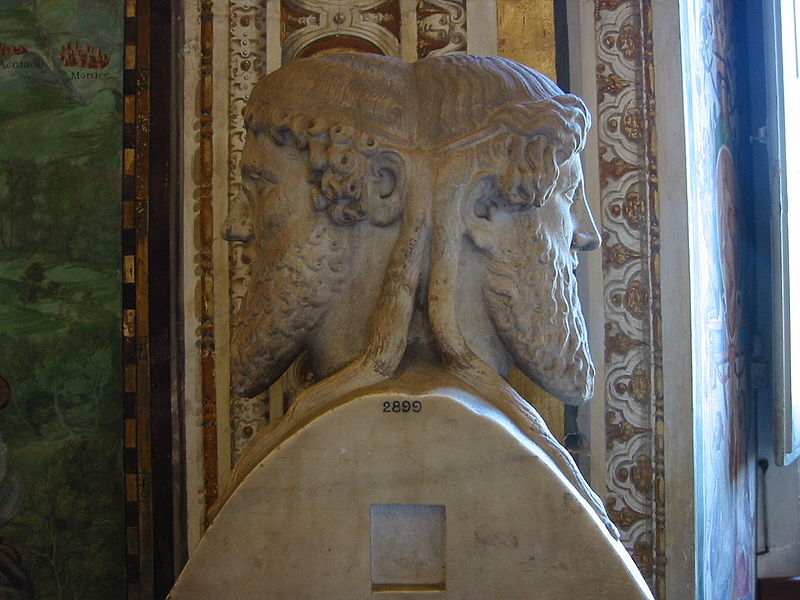
Janus wonders about January

As the world stumbles into another new year, my thoughts turn to Janus. The namesake deity of January (since the Romans gave us a winter New Year’s day), Janus is a poorly understood ancient deity. Since he is overseer of beginnings and endings of all sorts, he is often portrayed with two faces or heads — one facing forward and the other facing back. There are no attendant mythological stories to this god, although he appears to have been very important in early Roman religion. He comes to mind as I prepare to teach a course on mythology that I haven’t prepped for since Oshkosh; my brief holiday break has been spent reading classical mythology.

Not only to we face a new year, but the beginning (or ending, it matters not which to Janus) of a new decade. Looking back over the muck-up made of the first decade of the twenty-first century, often because of religious extremists, I wonder what Janus sees down the road. There are many who feel optimistic about our firm bridle on technology and its ability to make our lives easier. Some of us believe that society has lost its appreciation for the classical study of the humanities and that we have lost our way because simplistic religion has seized the reigns from sensible mythology. In an age of information clutter, there is no one able to synthesize reason out of any of it. Perhaps it is the human condition.

Janus likely originated in the Ancient Near East. Once he reached Rome he continued to evolve into a major deity until eclipsed by the Olympians (many of whom first appear in the Ancient Near East as well). Not ironically, religious tolerance and religious intolerance both seem to have derived from the Near East also: Cyrus the Great’s declaration of religious freedom emerged in the midst of theocidal demands on the part of jealous gods. Now as we stand on the brink of a new decade, Janus only knows which way the unfeeling pendulum will swing.


Happy Circumcision Style New Year!

2009 ended with a blue moon. Last night’s lunar display (for those who could see the satellite) was the second full moon in December, one of the accepted definitions of a blue moon being the second full moon in any one month. Apart from its cool beauty of mythological fame, the moon is a timepiece to rival any Rolex or even Timex. Many ancient peoples lived by lunar calendars since the 28-day units of lunar time were regular and much more obvious to the layperson than solstices or equinoxes. A full moon is hard to miss.

Last night's blue moon from Wikipedia Commons

The marking of time is a religious activity. The date of Easter is still set according to the full moon; Easter falls on the first Sunday after the first full moon after the vernal equinox. Since Passover is a moveable feast and since we don’t know the year of Jesus’ death, Easter is a mathematical shot in the dark. It is regular because of the steady cycles of the moon. Time is a non-renewable resource, and since religions are generally concerned with what happens after death, time gains a sacred blush. Few holidays are truly secular in origin.

New Year’s is one of the most important holidays in the ancient world. There, the proper observance of seasons meant correct planting and harvesting times, and the possibility of survival. Living very close to the land, people required the assurance of the gods that their meager returns for labor led to enough food to survive. Keeping the gods happy as the new year began was essential. In the United States, New Year’s Day was observed on March 25 until 1752. It was observed on the supposed date of Gabriel’s annunciation to Mary that Jesus would be born. If you want to understand the title of today’s post, you’ll need to take a look at the Full Essays page and read the New Year’s Day section from my as-yet unpublished book for teens on the holidays. It does have a religious basis, as does circumcision itself.