Seedy Delivery

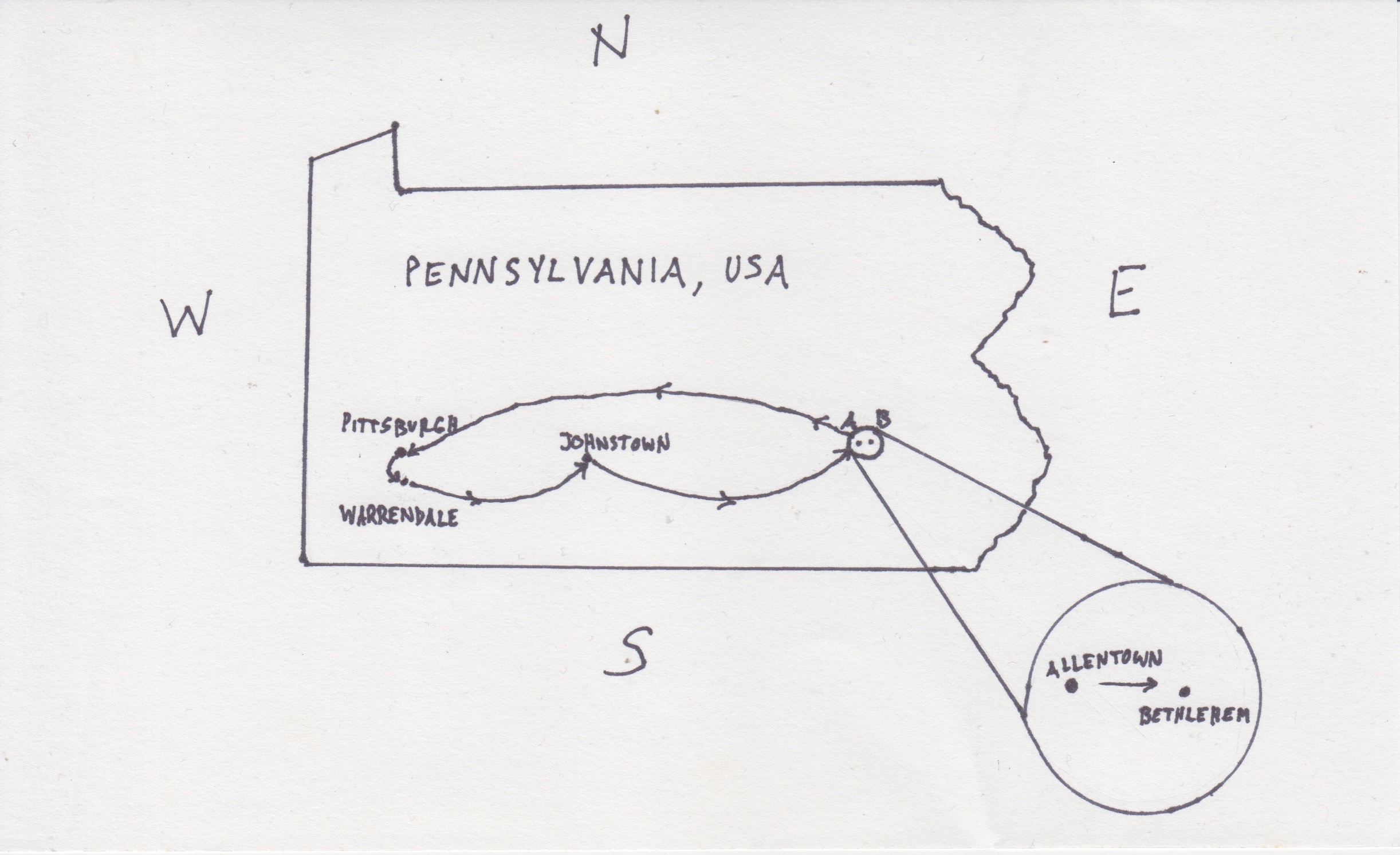
Call it a weird indulgence, for that it surely is.  I’ve been slowly re-collecting childhood books—really what we call “tween books” these days, but there were no tweens back then.  Since these are out of print and somewhat difficult to find, I order them when I can afford to, and have been doing so for over a decade now.  The latest one shipped from Minnesota, via the US Postal Service.  Since these are not easily replaced, I follow the tracking.  The seller indicated a delivery date of September 16-18, only to send an early delivery notice when it was mailed.  Indeed, I’d ordered this on the 8th and by the 10th it was in Pittsburgh.  In case you’re not familiar with Pennsylvania geography, I’ve sketched a map.

Pittsburgh is about 6 hours away from where I live.  It was now scheduled for delivery on the 11th.  I had my doubts.  I awoke on the eleventh to find that it had overshot and was now in Baltimore.  Baltimore is only about two-and-a-half hours away, but still, the thought that it could reach the local post office and get out for delivery that same day seemed slim.  The next day was Sunday, so I figured maybe Monday.  Sure enough, on Saturday the 11th it had reached the dreaded Lehigh Valley Distribution Center, in Allentown.  Allentown is only ten miles from here, within actual walking distance.  The tracking site said it would be delayed.  On the 14th it had been shipped back to Pittsburgh (where it had been less than a week before), from there to Warrendale (which I had to look up on a map), and from there to Johnstown.  Barring another flood, it was due here on the 16th.  Of course, it may have to go through the horror-inducing Lehigh Valley Distribution Center again.

That same center had shipped a package to East Stroudsburg, over thirty miles away, just the week before and had sent a notice that it had reached its final destination.  I’m not one for squandering money, but I would gladly buy the Lehigh Valley Distribution Center a map.  They could look and see that Bethlehem is a mere 20-minute drive to the east.  That could prove useful information.  The package arrived the 15th.  The next day I received a status update alert that it was out for delivery and would arrive that day.  I’m a Post Office booster.  I believe the government should fund the postal service adequately and quit trying to win elections by cheating.  And maybe they could throw in a map while they’re at it.  I’ve got one they can have for free.


Perspective on Distance

Thirty miles can be pretty close or pretty far, depending.  This time it was pretty far.  I know the Post Office has been having trouble, but when the tracking number on the package said it was “being held by customer request” (wrong) at a Post Office thirty-plus miles away, I had to wonder.  I still remember when zip codes were made mandatory for mail.  They would give the Post Office a more precise set of coordinates to get to your house or apartment.  The funny thing is they’ve been vastly outdone by other delivery services.  Amazon makes mistakes too (they recently delivered something I’d ordered for myself to my mother—thankfully it wasn’t too embarrassing), but less often.  It would seem that if you pay someone to bring you something, they should be able to manage a bit closer than thirty miles.

I went to the website where delivery instructions was an editable field.  In it the PO had helpfully written “DI not available for this delivery.”  If you want it, you have to drive over sixty miles round trip to get it.  Only during office hours.  Don’t get me wrong—I’ve always been a supporter of the Post Office.  They generally get things to you—it’s pretty remarkable.  (Junk mail inevitably arrives, of course.)  I even used to collect stamps.  I’m still reluctant to not save one or two that catch my fancy.  But thirty miles?  You’d lose at both hand-grenades and horseshoes with that kind of accuracy.  When I called they offered to put it back in the system, but that would add several days to the delivery schedule.  Who’s to say that it might not end up even more than thirty miles afield?

If it were an atomic bomb, or a volcano, thirty miles would hardly seem far enough.  It’s a matter of perspective, I suppose.  So it is with most things in life.  Nine hours isn’t long if you’re engaged in a task you really enjoy.  In fact, the forty-eight hours of the weekend go by so fast that you’re left wondering where they went.  If you take nine hours and put them toward a dull and tedious task, however, they stretch to monstrous proportions.  Science tells us that the amount of lapsed time—or space—is the same.  It’s just our perception that changes.  In the larger scheme of things thirty miles in the middle of the day can take only a couple hours, with traffic.  From that perspective it’s better than a nine-hour drive to the original shipping location.  It’s all in how you look at it.

It depends on your perspective

All About Merch

Although I’d heard of it uncomprehendingly when I was in seminary, I first joined the Society of Biblical Literature in 1991, while a doctoral student.  I religiously *ahem* attended the annual meetings until I lost my job and my ability to afford it.  When I landed in publishing I started attending again, and over all these years I’ve started to notice a lot of swag creeping in.  Publishers sell bauble headed theologians (aren’t they all?), playful knick-knacks, and even socks bearing the cover design of established commentary series.  It’s as if we want to tell the world that studying the Bible is cool.  (Why not purchase some nice warm socks?)  So I wasn’t really surprised when the society itself, fondly known as SBL, started selling its own merch.

On most SBL electronic newsletters there’s a link to the vendor that produces shirts and mugs with jokes that only other biblical scholars will get.  (I never found this a very humor-laden community, being under duress, as it is, and as deeply conflicted as the country that hosts it.)  Eventually I grew curious and clicked on the link to the novelty tee-shirts and mugs.  It took me to a company called Redbubble.  SBL Press has its own page there with a strange header photo, apparently of a G. I. Joe and G. I. Jane reading some of SBL’s books.  Weird marketing is fine, of course.  Some of us have almost a connoisseur sensitivity to the bizarre.  As for the merch itself, it includes limited designs since, I suspect, most professors aren’t novelty tee-shirt fans.  What caught my attention was the button at the bottom that said “Mature content: hidden.”

Did the Society have some top shelf items?  The Bible certainly has quite a bit of mature content itself.  Questionable stuff as well as scenes that are, well, let’s just say scenes that are left out of children’s Bibles.  Of course I clicked the link.  It took me off the SBL Press page, naturally.  Redbubble has, I’m sure, many clients.  SBL’s demographics are slowly changing but the field is one still dominated, in numbers at least, by white men.  They’re the ones who benefit the most, I suspect, from a society that bases itself on the biblical outlook of the world.  At least as far as how it’s been applied in northern Europe and its colonial enterprises.  SBL tries to attract younger scholars, of course.  And everyone like knick-knacks and inside jokes. 


Insect Inside

It seems a shame we don’t have an accurate name to classify all of them.  Insects, arachnids, and arthropods, I mean.  Those creatures smaller than us that inspire fear.  I suspect I’m not alone in experiencing a profound ill-at-easiness for some time after a close encounter with various of these small creatures.  Some experiences can be sublime, such as the other day when praying mantis on the glass of our front door provided a wonderful opportunity to look at a marvel from a seldom seen angle.  More often, however, the response is one of terror at being outnumbered, out-gunned, or out-run.  Spiders can be speedy as well as scary and I often yield the floor to them.  If I’ve got an empty peanut butter jar handy I try to catch and release, but I’ll look with worry at the spot of the encounter for days.

Photo by Rosie Kerr on Unsplash

Or the flying, stinging things.  Mostly they’re good for the environment and I don’t like to kill anything.  The other day, however, while returning the recycling bin to the garage I failed to notice paper wasps had built a nest (in just a day, since I’d taken the bin out only the afternoon before) above the door.  They were offended that I’d invaded their space—their concept of time is completely off from that of creatures that tend to live decades and want to stay in the same location for years at a time—and decided to attack.  This was a new stinging experience for me.  One flew down and stung my face then quicker than lightning landed on my right hand and bit again.  Its poison burned, I can tell you.  I’ve had run-ins with lots of stinging things in my time, but the shock probably added to the hurt.  I couldn’t even get the garage door shut, as previously mentioned.  

The next morning I awoke unsettled.  Houses have cracks and crevices.  They settle over time and critters can find their way in.  I understand.  Everyone needs a home.  But opening a door and being unexpectedly attacked hardly seems fair to me.  I hadn’t even seen the nest.  It’s easy to forget, in this virtual world of pandemic proportions, that we share the planet with a wide variety of others.  The large predators are mostly gone.  The countless small ones are still here, however, and many of them enjoy the way we’ve warmed the place up for them.  I have a feeling that when we finally outlive our welcome on our home, the insects, arachnids, and arthropods will be glad to stick around.


Making Excuses

The internet, and computers in general, seem to think we’re dumb.  I say that because of the false information they routinely give.  I was recently on a website run by a reputable *ahem* agency.  It turns out that the information they gave me was incorrect.  The next week when I went to check the status of my transaction, it said I couldn’t do so because cookies were blocked on my computer.  Well, cookies aren’t blocked.  I had to call said agency to ask about the status.  I was then told that what I’d requested was valid “only during the pandemic” (excuse me, I thought we were still in a pandemic?) and that was the reason I couldn’t check the status online.  That service was no longer available.  So why did the auto-response blame it on cookies?  I miss the generic “technical difficulties.”  At least it was honest.

We’re all busy these days.  Keeping websites up to date matters.  It doesn’t help when some software person decides some techie-sounding excuse ought to satisfy you.  Whenever I restart my computer, for example, I get a dialogue box—it’s more of a monologue box, really, since it isn’t asking for anything but acknowledgement that its incorrect information has been delivered.  In any case, it tells me that the computer decided to restart because of a problem.  No it didn’t!  It restarted because I gave the restart command!  Is this a problem?  I thought I was authorized to restart my own computer.  Why is it lying to me?  Is it colluding with the websites that are making up excuses?

Are we really that stupid?  Computers seem to think so.  On my work computer (PC, of course) you no longer have a trash can in which to discard old files.  No, now we have a recycle bin.  Recycle bin?  Really?  While I appreciate the message that we should recycle whatever we can, this is not a case of recycling at all.  It is a matter of getting rid of something I no longer need.  I guess what I’d like from our machine overlords is a bit of respect for our intelligence.  Sure, we may be subject to biological constraints that don’t apply to the electronic world.  We do have lapses in judgment just as surely as devices have bugs.  A world that runs by algorithms alone is hardly a world in which we could live.  So my devices may well be more logical than me, and if so they should figure out that they don’t need to lie or make excuses. Just say “technical difficulties,” I can live with that.


Not That Kind

I am not a (medical) doctor.  Nor do I play one on TV.  It puzzled me, therefore, when I received an email addressing me as “Dear Healthcare provider.”  I like to think that maybe this blog does help a person or two from time to time, but I’m not going to dispense medical devices.  The email was telling me where I could order Covid-19 tests in bulk, and it even contained a sell-sheet with facts and figures.  Now I want to see this pandemic over, just like everybody else, but I’m not sure that having my own supply of Covid tests would do anybody any good at all.  Perhaps this is just a continuation of the larger issue of wondering who exactly the internet thinks I am.

One thing the pandemic has done has been to double us down on our reliance on the internet.  It’s difficult to imagine how we might’ve survived without it.  More jobs—many more—would certainly have been lost if we couldn’t have started to work remotely.  In order for any of this to function, however, we have to have a sense of who we are and what we do.  I’m not a professional blogger, of course.  I’ve discovered from my own extended time on the internet that many people just a few years younger than me make a living as “content providers.”  They launch a successful YouTube channel (or maybe two or more), and blog, podcast, or otherwise just dispense their homegrown wisdom into a job.  Some have college degrees, but many don’t.  The ones I see make a better living doing this than several college grads I know.

You are who the internet makes you in these remote times.  Hasn’t most of our reality become remote?  We rely on content that others, or sometimes we ourselves, make.  We get our news here and we find our directions here.  We order the things we need here and the delivery drivers find our addresses here.  Yes, we can even get our medical service taken care of here.  Fortunately I personally haven’t had to talk to a doctor online, but I know people who have.  Personally I find it more reassuring when someone with special training takes a look at the area of concern, and perhaps can touch it and tell me what to do about it.  I’m glad the internet option exists, however.  I just hope that people don’t start thinking I’m that kind of doctor.

Photo by Clay Banks on Unsplash

Claim This Panel

Validation.  We’re surrounded by it.  Now that we have the internet, everyone seems to want us to verify who we are.  And we were told as kids that there are no such things as trolls!  Personally, I have no idea why a hacker would want to be me.  I mean for destabilizing the government by messing with elections, well, of course, but I mean for academic purposes.  How do you really know who I am?  I googled myself the other day—I’m curious how my most recent book is doing because I’ve heard nothing from the publisher since it appeared—and noticed that in the “knowledge panel” on Google they had the picture of the wrong person.  I guess I’d better verify myself!

The erstwhile academic (aka “independent scholar”) gets invitations via email from Google Scholar to claim their papers.  I suppose in an effort to provide competition to Academia.edu, the researcher finds her or his papers available on Google Scholar’s website.  So far, so good.  But the invitation comes with instructions to verify your “work email.”  Said email must end in a .edu extension in order to be valid.  In other words, “independent scholar” is an invalid category.  This train of logic demonstrates one of the serious problems with high education shrinkage and the industry becoming tighter and tighter with its positions.  How do you verify yourself if your email address is the same as any Jane or Joe?  You can’t.  “Scholar” is limited to those lucky enough to have picked up a very rare position, especially in some fields, such as religion.

My recent experience with the DMV was an exercise in validation.  I presented the woman my vital paperwork (which was less than I had to show to get the New Jersey license that I had to cash in to get a license in Pennsylvania) while wearing a mask.  Irony can be quite stunning at times.  How did they know I wasn’t some masked bandit stealing someone’s paperwork on the way to the DMV?  I guess they could ask me to verify by my work email.  Then they’d discover that I’m merely an independent scholar.  If they googled me they’d find the wrong person’s photo on my knowledge panel.  Won’t someone validate me, please?  It would be nice to be able to claim my own papers on Google Scholar.  But until “independent scholar” becomes a real thing, I guess you can ask that guy (who’s not me) on the “knowledge panel” that bears my name.


Which Wednesday

I’m not superstitious but it’s still pretty dusky when I go for my constitutional on cloudy days.  I was walking along thinking about Cernunnos, the way one does, when a black cat darted out of the underbrush and across my path.  My thoughts turned to witches.  Then a large toad jumped out in front of me in the half-light.  Perhaps it was because I picked up a booklet about witches recently, but this felt very uncanny to me.  There’s a place where the woods close in on both sides of the path.  The sun wasn’t yet up, and the clouds meant it wouldn’t have much mattered anyway.  When the bird calls stopped I began thinking about turning around and going home.  Nobody else was out this morning and although I don’t mind starting my day with the weird, I was thinking “not on a Wednesday.”

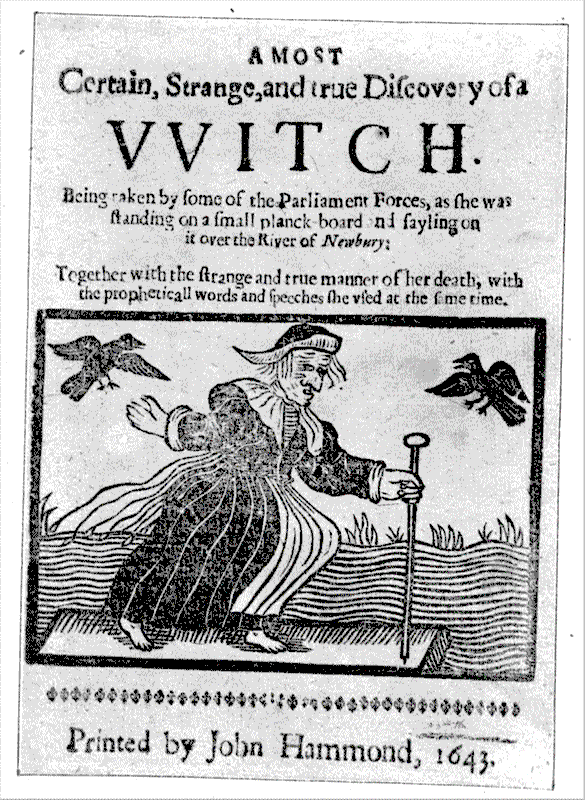
A thick mist lay over part of the path and I realized just how uncomfortable we tend to be when we can’t see clearly.  Despite that, and the black cat and the toad, I’ve never really been afraid of witches.  I guess I try to please people too much to think that someone might want to harm me supernaturally (at least among those who know me).  I recently found a booklet on witches—one of those strange impulse buys after being mostly house-bound for the better part of a year-and-a-half—that perhaps prompted my thinking this morning.  Although it seems to be most interested in earth-centered religions, it has an article about Salem.  Despite the more modern embrace of witchcraft in Salem, historically it had to do with human fear and hatred, a combination that is scary indeed when applied by those who are superstitious.

Cernunnos is a Celtic god generally portrayed with deer antlers.  Although lack of literature means we know little about him, he’s been adopted as the male counterpart to the female earth-goddess in some traditions.  Modern witchcraft is based on an orientation toward nature.  It’s kind of a ground-up religion rather than a top-down one.  Christians traditionally labelled it “Devil worship,” as they tended to do with anything they objected to.  Such demonizing helps no one, of course.  And when these ideas grow into superstitions people get hurt.  So I’m out here in the half-light because in the mornings days are shortening quickly and I have less and less time before work begin after the sun rises.  And I have witchery on my mind.


Not Precisely Superstition

It is quite fashionable, among some scientists, to equate religion with superstition.  The two, unlike religion and magic, are quite different.  They both involve belief, but, guess what?  So does science.  Superstition might best be summarized as traditional causality with no evidence, such as a black cat crossing your path causing bad luck.  Religion, on the other hand, tends to be a system of beliefs which, unless treated superficially, don’t look for causality as much as for meaning.  Superstition can be quite persistent.  It’s something that’s picked up in an ad hoc manner.  For example, I knew nothing of horseshoes growing up, apart from the very, very occasional game.  It wan’t until my mid-to-late teens that I heard my step-father say that an upside-down horseshoe was bad luck when hung on the wall of a building.

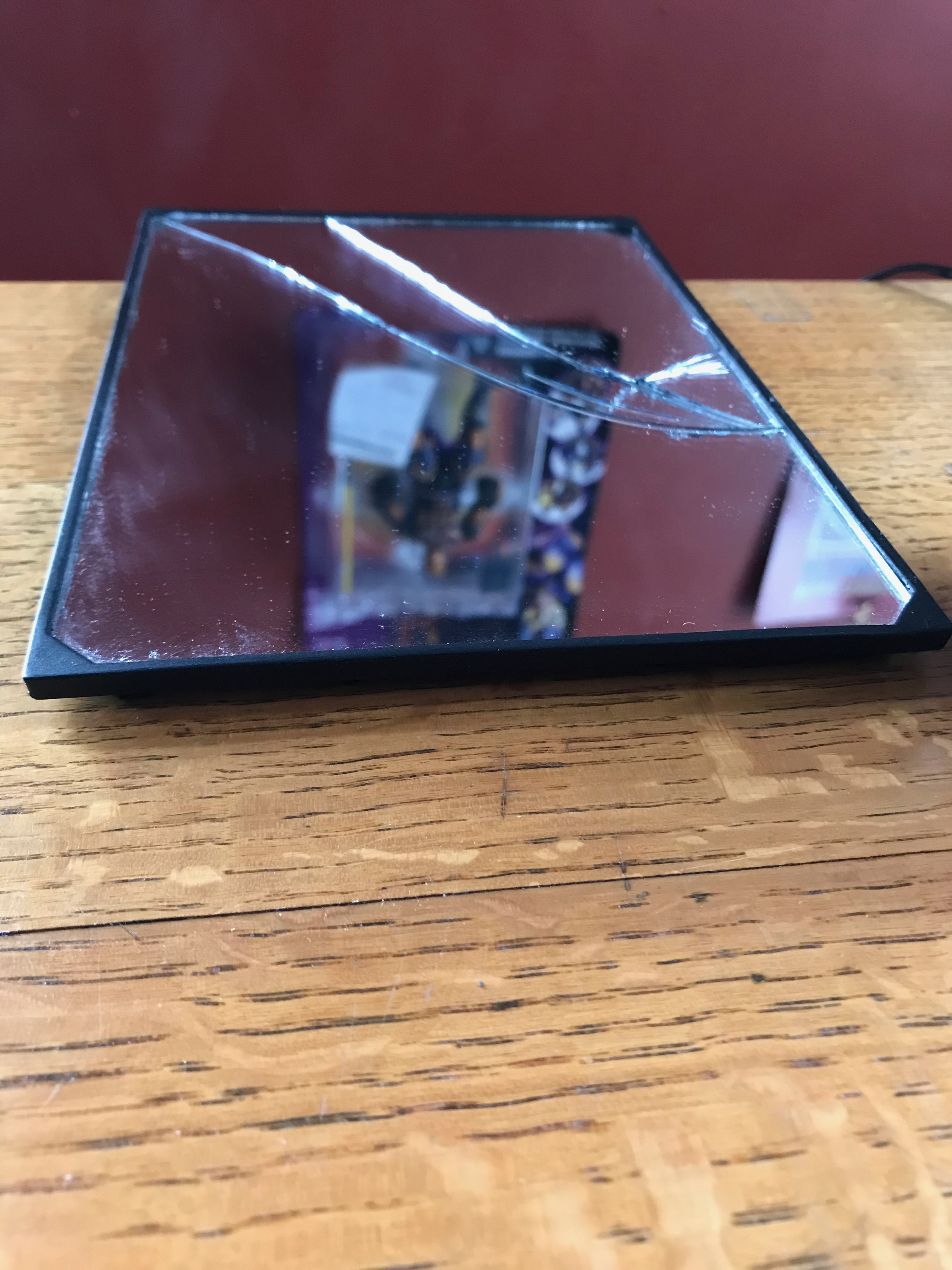
I had assumed that I had heard most of the relevant superstitions well before then.  I didn’t really believe any of them and they all seemed to be about luck, something I definitely didn’t believe in.  I was quite religious, after all.  I could tell the difference between religion—definitely true—and superstition.  Superstition was hearsay, or folk belief.  Never divinely revealed.  The thing about superstition is that it plants a doubt that never quite goes away.  Even if you didn’t believe it in the first place.  Say you break a mirror.  Seven years is a long time for bad luck to hit.  Any time something bad happens to you after said breakage, you naturally wonder.  Was it because of that mirror?

Good and bad happen to us all the time.  They are generally a matter of perspective.  A broken mirror means you may need to buy a new mirror, but it also means a seed a doubt will always be there for as long as you recall when you broke it.  You may naturally link the causality to the event, even when they have nothing to do with one another.  That’s the nature of superstition.  Some religions share some traits with this form of thinking, but entire systems or religion are seldom based on superstitions.  Black cats, mirrors, ladders, rabbits’ feet, four-leafed clovers—in what way would such things influence the world around them?  Yes, some religions attempt that as well, but many do not.  Like fear and religion, superstition has many overlaps but isn’t precisely the same thing.  Religion should be examined critically—it’s simply what humans do.  It shouldn’t be, however, be considered simple superstition.  Perhaps its bad luck to do so.


Al’s Rhythm

Algorithms.  Who can understand them?  I’ve been having some trouble with searches lately.  Not on the internet in general, but on specific websites (including this one).  While Sects and Violence in the Ancient World isn’t a particularly media-heavy site, I find it difficult to find images by searching.  For some reason, even when I put the title of the image in the WordPress search bar, it doesn’t always come up with the answer.  Well, given the time of morning I suppose I might’ve misspelled something.  Then I went to Amazon.  I’ve been working on my author page and wanted to update something.  I tried typing the distinctive title of my most recent book (Nightmares with the Bible—it is apparently the only actual book with that title [and titles can’t be copyrighted, in case you’re interested]) and found that it didn’t show up on the first three pages.  They were filled with books with other titles.  Algorithms.

Now granted not a lot of people seek the book on Amazon (I’m a realist), but if you type an exact, and unique title in the search bar and it doesn’t come up, isn’t something wrong with your algorithm?  (By the way, algorithm is one of the many words English borrows from Arabic.  It’s named after a ninth-century mathematician, al-Khwārizmī.  You could do worse than to have something so useful named after you!)  I’m not so naive as to think Amazon isn’t thinking to throw better selling books at you first—if you’re like others you’ll buy those before you’d consider shelling out a Franklin for mine.  But still, isn’t searching made easier when what you enter is what you want to find?

The internet’s primarily about selling you stuff.  Some of us look up sites for information or entertainment, but then someone tries to sell you something.  (I’m not trying to sell you my book here, by the way—it’s not priced for individuals, or even mortals—I’m not even putting a link to it on Amazon here.)  I’m just wondering why, if you tell websites exactly what you’re looking for they can’t find it.  You have to wonder if we’ve reached the level of too much stuff.  There’s a lot of sorting to be done and new webpages are added every day.  Even though I’ve been writing here a dozen years now, there are far older blogs and many more newer ones.  Finding things is an important exercise, and maybe if we sit down with al-Khwārizmī for a while, we’ll be able to figure something out.

Image credit: Gregor Reisch via Wikimedia Commons

Don’t Google Yourself

The internet has made us all less significant, in some ways.  Specifically I’m thinking about names.  “Wiggins,” when I was growing up, was an unusual surname.  In fact, people in Pittsburgh would sometimes send me clippings when a Wiggins appeared in the paper, it was so unusual.  Now with the internet I find plenty of Wigginses out there, and, in my case, several Steve Wigginses.  Not only that, but there are other academic Steve Wigginses, prompting Academia.edu to send me emails asking if I was the Steve Wiggins who wrote this or that article, often about agriculture or some other aspect of anthropology.  Who would’ve guessed?  There’s actually at least a third Steve Wiggins academic out there, an applied mathematician.  Perhaps there’s some mystical draw to higher education with a name like this?

But not so fast!  The most popular Steve Wiggins online seems to be the one who shot and killed a Dickson County, Tennessee deputy.  His act of violence, probably not for a Herostratic motivation, has nevertheless placed him in a pool of internet of fame.  So much so that a supervisor emailed me, jokingly, in June 2018, asking why I’d done it.  It’s difficult to build a good family name when some of us are going around shooting people.  A simple web search reveals that he is currently the best known Steve Wiggins in the country.  It could be because his trial was just last week, but still, but still…

One of my earliest blog posts here on Sects and Violence in the Ancient World was about the gospel singer named Steve Wiggins.  Prior to the murder of a police officer, this Steve Wiggins came to the top in any Google search.  To become well known you must release content.  In my world, which is small, that still means in print form.  Widely distributed.  And reasonably priced.  It’s clear I’ve got my work cut out for me.  The lessons we learn when we’re young have a way of staying with us.  It’s still easy to believe Wiggins is an uncommon surname—people still have no idea how to spell it—but the internet shows that’s just not true.  Even with both names there’s a significant number of both famous and infamous Steve Wigginses out there.  We all like to think we’re unique.  That we all have some kind of contribution to make.  Maybe mine is in the realm of horror movies.  Or Doppelgängers.  Only time will tell.

Who are you?

Mystical Trip

It’s easy to believe we live in a “post-Christian” world.  People aren’t tied down by Scripture strictures the way they used to be.  Sunday mornings are free for lots of people.  We don’t spend our time hunting for heretics.  One thing that might not be obvious, however, is that our underlying culture is deeply Christian.  Beyond mere assumptions, this goes down to the very presuppositions of the way we think.  While society might not be overtly Christian, it remains so at a deeper level.  I’m reminded of this when I’m out and about (which is starting to happen again) and able to hear, or overhear, people talk.

Grounds for Sculpture is a whimsical, fun space to visit in New Jersey.  It consists of acres and acres of a former fair grounds with sculptures of many different kinds scattered along the shore of a small lake on one end and a busy road on the other.  Many of the statues were designed by Seward Johnson, showing people in a wide variety of activities.  Since the displays change over time multiple visits are rewarded with new insights and displays.  It seems to be a popular place since pandemic restrictions have started to lift.  So much so that the usual seclusion that is part of the charm of a visit is somewhat stifled.  In a typical art gallery, the visitor has some space to reflect and contemplate.  The sheer number of visitors leads to a “wild animal in Yellowstone” situation where, if a creature dares appear, it’s immediately swamped by city-dwelling humans who’ve never seen a bear in the wild before.  This leads to some interesting overhearing.

One of the sculptures I don’t recall having seen before is “Mystical Treasure Trip.”  It is a fantasy scene in which a couple, attired in what could be biblical garb, is sailing across the water in a boat filled with gold.  Perhaps it’s the dress of the characters.  They look like Mary and Joseph, perhaps fleeing from Herod, but with a boat full of gold.  Overhearing others commenting on what they thought it was I heard “they’re going to the ark.”  Admittedly, this is something I would never have come up with on my own.  Noah, according to Genesis, was six centuries old at the time and was commanded to collect animals, not gold.  Material for trading would’ve been pretty useless in a world devoid of other people.  Still, when our imaginations stretch for the interpretation of something we don’t understand, often they reach for the Good Book.  It’s its own kind of mystical trip, really.


Review Copy

You reach an age, or maybe a stage, where it’s difficult to recall details.  Too many emails about too many things and you just have trouble recalling where you read this or that.  Someone a few months ago, perhaps on this blog, lamented not being able to afford Holy Horror.  I wanted to let that person (or any other interested party) know it is now available free—for review—on Reading Religion.  Feel free to drop me a comment if you don’t know how to get this thing started.  When I was a grad student I learned about reviewing.  It was the way to get ahold of expensive books for free.  I’m no longer able to do them (conflict of interest), but I still think they’re one of the greatest perks for the literate.

Reading Religion does not require a Ph.D. to permit an interested party to volunteer.  Since it’s a religion site, many clergy do reviews.  If you’ve been talking to anyone about Holy Horror (and I’m just sure you have!) and they want to read it, let them know.  There’s nothing more embarrassing to have nobody wanting to read your book when it’s available for free.  Besides, reviews are how people find out about books.  Over half-a-million new websites are created each and every day, my friends.  We’ve got to help each other out!  I’ve been providing free content here daily for twelve years now—I need someone to review my book.  I know people are busy.  There are an estimated 1.7 billion websites, many with multiple pages.  Who has time?

I try to post about lots of books here on Sects and Violence in the Ancient World.  I know it’s not a frequently visited website (I’m a realist) but I know at least two publishers have taken blurbs from my words here to promote their books.  Those of us who read have to stick together.  Writing, to me, is how you pay back for all the reading you get to do in life.  It helps, of course, if people know about your books.  By the way, if you have an interest in religion at all you should check out Reading Religion.  It’s a great site to figure out what’s going on in books.  And you might even find something there you’d like to read.  I’d do reviews myself, but that’s no longer permitted.  I’ll put my thoughts here on this blog, though.  It’s only doing to others what I would appreciate being done back.


Phony

It happened right in the middle of a phone call.  The phone just died.  Well, honesty it had been sick for some time, but its departure was somewhat unexpected.  This is a landline we’re talking about.  Yes, I have an iPhone but I seldom use it.  Especially for phone calls outside the family.  I don’t want people calling me on what I consider a private number.  That’s what the landline is for.  Now, I had a call scheduled for later in the afternoon and I had to postpone it (via email—does anyone else see how strange all of this is?) until I could get a phone.  Since it was the work week the soonest I could get out was Saturday—I often have evening obligations after work.  So I ordered one online instead.

I was in a bit of a hurry, I’ll confess.  I don’t need a lot of features.  As long as it works for talking to others across a distance, I’m happy.  When it arrived I realized it didn’t have an answering machine.  Hadn’t thought of that.  The number of people who actually call me is quite small.  But if they are actual people I do like them to leave a message if I can’t get to the phone.  Then I remembered that answering machines used to be sold separately.  You didn’t need to have everything in one device.  Our modern way of living encourages that—keep everything together.  The phone in your pocket is a camera and computer and GPS all in one.  And more.  I’m more of a component guy.

Back when records were still a thing, my stereo was a component system.  Ostensibly because some components performed better for certain functions than others did, but really because some were on sale at Lechmere’s.  Nevertheless, the concept stuck.  I’ll admit that the all-in-one functionality is convenient, but I also think it becomes problematic when we have to buy more than we need just to keep up with the Joneses.  People are so reachable (with the exception, it seems, of many academics and contractors)—that we’re spoiled for choice.  In fact, it seems that the only polite thing to do is ask others how they’d prefer to be reached.  The telephone, of course, reaches into one’s private world in a way that email doesn’t.  I suppose that’s why many people are careful not to give out their numbers.  And if they do, we expect to be able to leave a message if they’re not home.


April Really Fools

What’s the best kind of April Fools’ Day prank?  What about one that occurs nowhere near April first?  Actually, I’m no fan of practical jokes.  They usually come at the expense of someone and really aren’t that funny.  And where does that apostrophe really go anyway?  Still, because of a project I’m working on, and because it was available on a streaming service I use, I watched April Fool’s Day in July.  An example of holiday horror from the 1980s.  Although moderately successful at the box office, the movie never took off to become a cultural icon like, say, Halloween did.  In fact, I only recently heard of it.  Part of the reason, I suppose, is the ensemble cast is pretty large (nine friends together for a weekend) and none of them played by big names.  In case you don’t like pranks, there will be spoilers below.

The trope of a number of young people—often college students—isolated in some inaccessible location is common enough in horror.  The optimal number seems to be five, otherwise an hour and a half isn’t really time to get to know everyone’s character well enough.  Of course, one by one they get killed off.  Since it’s set on April Fools’ Day you’re led to think some kind of serial killer is loose on the island, but in the end the entire thing turns out to have been an elaborate prank.  Nobody has really been killed and the audience is on the receiving end of an extended practical joke.

As I try to catch up on horror movies I missed I quite often have to rely on those that come with one of the few streaming services I use.  When I was myself a college student I couldn’t afford to go to the movies often.  Home video hadn’t really become affordable yet to people of my economic bracket, and besides, I spent a lot of time studying.  As the only one in my family that watches horror, finding the time to do so remains a challenge.  And there is quite a backlog.  I’ve been trying to watch horror set on specific holidays as a way of keeping myself honest.  Even that can prove a challenge, however.  I can justify the time, however, and the somewhat modest cost, as research. Hey, somebody has to do it.  And that’s as good an excuse as any for watching April Fool’s Day in July.