Weathering Frights

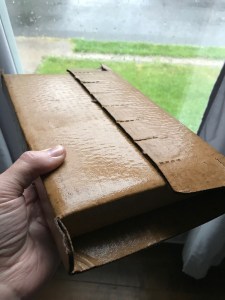
It reminded me of a nightmare.  The box, containing a book, was soaked through.  A sudden thunderstorm had come before we knew the box was even there on the porch and memories of several boxes of rain-ruined books came back uninvited.  Water and books just don’t mix.  This particular book, I knew, was Peter Thuesen’s Tornado God, which I had ordered back in December and which has just been released.  The irony wasn’t lost on me.  My own second book, Weathering the Psalms, was a rather inelegant treatment on a similar topic and I’ll discuss Thuesen’s book in further detail here once I’ve read it.  The point is that no matter how arrogant we become as a species the weather just remains beyond our control.  The rainbow at the end of this small storm was that although the packaging was soaked, I found the box before the book itself had time to get wet.
My research, ever since my first book, has largely been about making connections.  The weather is so quotidian, so common, that we discuss it without trepidation in casual conversation.  It is, however, one of the most dangerous things on our planet.  Severe storms kill both directly and indirectly.  Cyclones, typhoons, and hurricanes can do so on a massive scale.  So can their dramatic opposite, drought.  Snow and melting ice caps also threaten life, as do floating chunks of ice in chilly oceans.  It’s no wonder that the weather has been associated with gods from the earliest times.  Even today literalists will say God is in the sky although meteorologists and astronomers can find no pearly gates when they look up.  We just can’t shake the idea that weather is some kind of reflection of divine moodiness.

As weather becomes more and more extreme—it’s already a system that we’ve tipped seriously off balance—I suspect more and more people will start to assign it some kind of divine agency.  This June we’ve already gone from shivering mornings with frost on the roof to nights when sleep is impossible because it’s so warm and humid, all within a matter of a couple of days.  And this isn’t that unusual.  Wait’l the gods really get angry.  Weather is closely related to the water cycle, of course.  We can learn about such things from books.  We can’t take them out during a storm, however, and homeownership is all about keeping water out, or only in prescribed locations indoors.  When the delivery driver leaves a box on your porch, however, it remains within reach of the storm gods.
Qohelet’s Washcloset

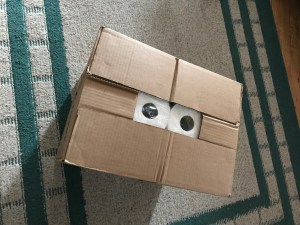
Cast your bread upon the water, as Ecclesiastes says, and it will come back to you when you need it.  Since bread is a common slang word for money, and since the toilet paper has arrived that I ordered two months ago, I see the truth in this.  Paper spent for paper to use.  While I’m pretty sure that’s not what old Qohelet exactly had in mind, it is the reality in which we live.  There are experts that tell us the toilet paper shortage isn’t due to panic buying, but over eight weeks into this crisis and the shelves in Target and grocery stores still look like Mrs. Hubbard’s cupboards.  All those people working from home must need more fibre in their diets.  Or is it less?  I can never remember.  What other than bread satisfies?  Clearly toilet paper does.  And the fact that the nearest yeast, according to Siri, is in Tennessee, clearly has nothing to do with panic buying.  Nothing at all.

People will go to any lengths to prove that we’re rational beings.  We don’t like the image of being the panicky herd beasts we are.  When I first realized the crisis was hard on us, it was March 16.  That was my first grocery store trip where beans were as rare as moral Republicans and we still can’t find pasta or flour around here, even with stores stocking daily.  The announcements on the loudspeaker beg buyers to get only what they really need, and leave some for others.  The thing about panic, though, is that it’s anything but rational.  It’s based on emotion washed in the myth of scarcity.  It also shows what an unregulated economy soon devolves into.  I’m sure many people rationalize panic buying as “just until things get back to normal.”  Vanity, vanity, says Ecclesiastes.

Instead of the myth of scarcity we should believe in the myth of normalcy.  That should’ve ended, for any reasoning being, in November of 2016.  It isn’t normal for a prosperous nation to offer up someone who clearly has no governing ability for the most powerful office in the land.  Two months into the largest crisis we’ve seen since the days of FDR and the White House response has been the null set.  Meanwhile, I ordered toilet paper from abroad on March 16.  The ship slowly made its way across the Pacific from China where, I understand, toilet paper is abundant.  I’m just glad that there’s a rational explanation for all of this.


Still Evolving

Evolution, the 2001 movie, I mean, is good escapism.  Thinking back on 2001, instead of a space oddessy, another piece of news—another national crisis, in fact, dominated.  The film kind of slumbered in the background until we could sort out what it meant to live in, ironically, an unsafe world.  That’s precisely what the movie was about.  I wasn’t thinking that when I recently pulled it off the shelf.  I was simply wanting some fantasy to relieve the daily pressure of living in stress mode.  Besides, it has some of the best alien monsters you could hope for in a comedic setting.  Soon, however, the parallels began to appear.  A source of contamination from outside.  A growing threat.  A government that doesn’t know what to do and that can’t admit its mistakes.  It all seemed eerily familiar.  Dr. Allison Reed is even from the CDC.

Life isn’t constant crisis.  Funnily enough, when Democrats are in office there seem to be far fewer of these large-scale troubles.  “There will be signs,” I guess, “in the sun, moon, and stars.”  The thing about signs is that we’ve left the reading of them up to Fundamentalists.  And Fundamentalists don’t believe in evolution.  Or science.  Or modernity.  Idealizing medieval thinking does come with a price tag.  So I reach for the remote.  While the government has lots of money that it spends on its own volition, the crisis grows.  The alien menace is set to spread across the country.  Although beginning in a different geographical location, all that red on the map sure looked familiar to me.  How little has changed in the last two decades.  Evolution came out before smartphones even evolved.

Meanwhile, practically unnoticed, the U.S. Navy has been saying UFOs are real.  The story, muted and subdued—we’ve got more immediate concerns, such as getting reelected—has been on major reputable media.  When they land on the White House lawn we’ll ask the aliens if they have respirators and masks aboard.  Preferably the kind with face-shields.  In the movie the monsters are aliens.  They’re like an infection, and even hazmat suits can’t keep you safe.  The solution, of course, isn’t fire-power, but a good shampooing.  Now I know you still can’t go to the salon in lots of places, but washing up at home seems to be pretty good advice.  We put the movie on for simple escapism, but there’s no escaping the fact that we now live in an alien environment.


I Saw Three Letters

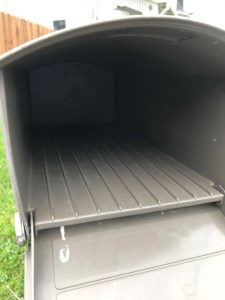
For some reason I seem to have less time during lockdown than I had during whatever the opposite of lockdown may be.  Still, papers pile up and I have to sort and file them.  That’s when I saw three letters.  (You know, I like the Post Office.  I always enjoyed going to our local as a kid.  There was an air of expectancy, even before Amazon.  And stamps were a kind of passport to another reality.)  Once in a very great while I receive something interesting in the mail.  These three letters were examples.  Mostly they were examples of how little companies, and even the United States government, actually knows about me.  I keep going to the mailbox hoping the toilet paper I ordered from China has come.  Instead, strange letters.

One was written entirely in Spanish.  Now I’m no “English first” fan—I’ve spent far too much of my life learning other languages to suspect that one is superior to others—but my Spanish isn’t exactly pristine.  I wasn’t really even sure what the letter was about, and I wondered how my surname in any way suggested I needed a different language in which to do my business.  I don’t know why I saved the letter.  Maybe I figured I’d get around to translating it some day.  When there’s time.  A second letter was from a former employer of some seven years ago, informing me that I had been assigned a new password for the network.  Now this surprised me.  When said company asked me never to return, they intimated that I had to relinquish all proprietary information.  I wasn’t to try to get back into their systems.  In fact, it was their blocking of my account at work that was, in hindsight, the first hint that I was no longer an essential worker.  A couple weeks later another letter told me the previous missive had been a mistake.

The third of the letters came from our own government, if that’s what you can call it these days.  It explained to me that if I looked into my bank account I’d find some money they had magnanimously decided to return to me from the thousands and thousands I have given them unstintingly over the four decades I’ve been working.  This letter, like much from the government, really served no purpose.  Well, it was entertaining because it had a facsimile of 45’s signature on it.  And the toilet paper hasn’t arrived yet, so I think this particular letter may be very useful indeed.


Is It Real?

I’ve been reading an ebook and I feel lost.  I resorted to the ebook because I was invited to join an informal virtual bookclub.  Book discussion group may be a more accurate description.  Since I don’t see many people this seemed like a good idea.  Although I often take recommendations, reading a book someone else chose is kind of an infringement on my already crowded “to read” list, but connection is connection.  The problem was I couldn’t get a physical copy of the book delivered before the first meeting.  I struggled with whether or not to buy the ebook for hours.  I just can’t get over the feeling that I’m paying for something that can disappear at the next upgrade and all my effort in reading it will have been lost.  I’m a book keeper.  (Not a bookkeeper.)

After a morning of angst, I finally clicked on “buy.”  I’ve been reading the book but I’m finding it disorienting.  When I read an actual book, I quite often take a look at the physical object and assess it as I’m reading.  Appraise it.  Who is the author again?  Who published it?  When?  In the ebook world that information is obviously available, but it’s not where I expect to find it.  And there’s the matter of pages.  I measure my progress of book reading by the location of my physical bookmarks.  I can tell at a glance to the top of the book how my progress is.  A slider bar just doesn’t do it.  I click out of it and check on Amazon.  How many pages does this book actually have?  Why does my e-version have a different number?  Won’t that confuse the discussion?

I don’t feel so guilty about marking up an ebook, I’m finding.  Highlighting in a print book always annoys me—I don’t want some previous owner telling me what I should remember.  This ebook won’t get passed on to anyone else (that’s the genius of the business model—the ebook isn’t available for resale, which more durable, actual books are).  As I’m doing this I recollect that I’ve only ever read two ebooks before, both fiction.  They didn’t make much of an impact because it was only in writing this post that I remembered them at all.  The world of the coronavirus has taken its toll, I guess.  I’m reading an ebook and I can’t wait to finish so I can get my hands on the real thing again.


Open a Book

With all the talk of premature “reopening” one development does seem to bring cheery news.  Germany and Italy, it is reported, are considering experimenting with opening bookstores.  Bookstores, at least in the United States, tend not to be crowded except around the winter holidays.  More importantly, they are places to go to find printed knowledge—not the internet knowledge that shifts by the second.  This cheers me because it shows that people still trust books.  With all the talk of going digital, which is okay, we sometimes forget that the human experience of reading has, for the last several centuries, been book based.  I’m as guilty as the next guy for looking trivial stuff up on the internet.  I always feel uncertain, however, if I don’t check it against a book.

Nielsen, the people who used to bring you television ratings, also track books at point of sales.  One of their findings is that books have remained solid sellers throughout the pandemic.  Granted, a lot of them are children’s books—it’s one way to entertain the stay-at-home kids—but several categories have fared well.  Books on staying in shape, and survival, and how to do things we used to know how to do (planting a garden, or making bread) have boomed.  I suspect people have felt some comfort in reading.  Books are reassuring.  They’re a sign of normalcy.  Having said all that, I’m not sure I’m ready to go back into a physical bookstore just yet.  Infection rates have slowed down around here, but they’re still high.  And other people who miss bookstores as much as I do might form a crowd.

Bookshop.org has arisen to give back to independent bookstores.  Yes, the prices aren’t what you’ll find on Amazon, and yes, you’ll pay for shipping, but they support your local indies.  This doesn’t seem to be a bad idea during a crisis.  One of the more charming aspects of the Lehigh Valley is the number of bookstores in the area.  I am looking forward to an “all clear” when we can emerge like post-apocalyptic survivors and stand blinking in the sun.  In my vision of that day, there will be birds singing and trees leafed out.  The air will be clean.  We’ll stare at our neighbors, assured that if we accidentally brush against them, or stand too close in line, we won’t do so at the risk of exposure.  I’ll stand there for some time acclimating to the new reality.  And then I’ll head for a bookstore.


Bug Eyes

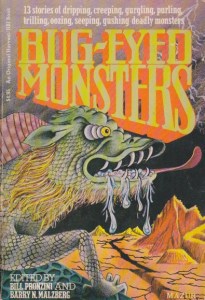
Science fiction and horror are close kin.  Once relegated to the cheap rack of “genre fiction,” both have now developed considerable literary sophistication, perhaps in the wake of their ability to bring in money.  I used to attend used book sales.  Two of the big ones in central Jersey were the Bryn Mawr sale, held just outside Princeton, and the even larger Hunterdon County Friends of the Library sale.  Both were springtime events and highlights on my calendar.  I always had a list with me when I went, but there were also so many books I’d never heard of and that looked fascinating.  One such book was the science fiction anthology, Bug-Eyed Monsters, edited by Bill Pronzini and Barry N. Malzberg.  The garish cover was half the appeal, and, well, monsters go without saying.

Although I’ve mostly moved to the horror end of the spectrum, there were some good stories here.  Bug-eyed monsters were a staple of 1950’s sci-fi, gracing the covers of pulps, often menacing women with their tentacles.  Some of the tales here share that kind of wide-eyed wonder at the sheer power of imagination, while others are much more subtle.  Monsters, of course, lurk between genres, bursting into consciousness when something unexpected is discovered.  They also have strains of religious awe associated with them.  That’s obvious in a couple of the stories as well.  Since I’m trying to read through my own books while stores are closed, I decided to spend some time with my monsters.  The problem with story collections, however, is you can’t discuss them all in the short format to which I limit myself here.  Besides, some of them I didn’t like.

Monsters deserve to be treated with respect.  In the “golden age” of sci-fi they were often played for titillation.  Most of the monsters in this collection are from outer space.  Some are homegrown, generally in the scarier tales.  We are afraid of those who are different.  Monsters, as more than one of these stories indicate, can be more humane than humans often are.  It’s no surprise that they tend to represent the foreigner, the person whose culture and appearance are different than our own.  Titillation apart, these narratives often ask us to stop and consider what might happen if we really did listen.  Would we not improve ourselves if we could learn from those we fear?  In these days of government-approved xenophobia, perhaps we should dust off our copies of the old genre fiction.  Even in those days we were encouraged to be open minded like our monsters.


Begging Your Question

I still remember when I first consciously heard it.  The phrase “begging the question,” I mean.  I was a doctoral student at the time and one thing you do in grad school is ask a lot of questions.  I asked my advisor what the phrase meant.  “Asking a question when you’ve already assumed the answer,” he replied.  I’ve been writing quite a lot about feedback loops these days, and this was yet another of them.  Begging the question, in other words, is a fallacy where the asker isn’t seeking an answer, but is attempting to persuade another of a pre-decided outlook.  The concept is subtle, but important.  That’s why it disturbs me that most academics these days use the phrase “begs the question” when they mean “asks the question.”

I’m afraid I don’t have statistics here, but I read academese all day long—it’s my job.  I can’t footnote where this occurs but I can attest that it happens all the time.  Whenever I read “begs the question” I stop and reason it out.  Does the author mean “begs” or “raises” or “poses” or “asks” the question?  Begging a question isn’t the same as raising or posing or asking it since the latter three indicate an answer is being sought.  Precision in thinking is difficult work.  It can give you a headache.  We all fail sometimes.  Perhaps that’s why we eschew it, as a society.  It’s much easier to beg the question.  Still, doesn’t that mean this valuable concept is in danger of losing its, well, value?

I realize that posing such a question makes me sound like one of those old guys who says, “back when I was a youngster…” but the fact is the educational system in the United Kingdom made you ask lots of questions.  In a way that’s unheard of over here, where money assures your credentials, I knew two students who failed out of the doctoral program at Edinburgh when I was there.  One of them an American.  It wasn’t just a matter of laying your money on the barrelhead and walking out the door with a diploma.  I’ve read certified copies of dissertations (not from institutions in the United Kingdom) where Zeus was spelled “Zues” (throughout) and the biblical seer was called “Danial.”  Now, I suppose that raises the question of the value of degrees where you don’t even need to spell your subject’s name correctly.  Begging the question is a fallacy, not a synonym for asking.  And I know that if your thesis begs a question then you’re barking up the wrong tree, but that won’t stop you from landing a job in the academy.


Look, Don’t Touch

It’s spooky.  Going to the grocery store, I mean.  In the best of times I don’t get out much, but since groceries are only really in supply (somewhat short) after senior hour, and since I’m an early riser, I head to Giant at 7:00 a.m.  Nobody’s talking to anybody else, unless the check-out line is long.  Even then it’s brief.  Most people (including myself) are wearing rubber gloves and face masks.  I’m pretty sure I’ve seen this in a horror movie or two.  As in The Body Snatchers, we’re afraid of each other, not knowing who might be “one of them.”  Gun sales, meanwhile, are booming.  Since I get in once the seniors have checked out the toilet paper and high fibre cereal are decimated.  I’m glad I’m vegan because most of that stock remains untouched.

The funny thing is daily life for me is otherwise pretty normal.  I’m an introvert who normally works from home and has no one beyond family check in on me.  I don’t normally buy out the grocery store, however.  I don’t hoard.  (Yes, I have a lot of books but they’ve been bought slowly, over many years.  And only one copy of each.)  So it seems that when non-introverts are forced inside they hoard.  And purchase firearms.  Or maybe I’m missing something.  I think back (if I can) to before this all started.  Going to a crowded grocery store on a Sunday afternoon where nobody was wearing gloves.  You could see their faces.  There was chatter.  Now when we get home we’re supposed to leave our groceries outside where the squirrels will get them before we do.  Then we disinfect them and wash our hands before and after washing our food.

A work colleague in New York City reported seeing grocery delivery individuals wearing hazmat suits.  We can’t see with whom we’re dealing any more.  The truth about introverts is that we’re social creatures as well.  We just require smaller doses than most.  That doesn’t mean we all want to live on a desert island.  Our quietness is a mask, you see.  We observe.  We try to help when we can.  That’s why it’s me in the grocery store.  My special talent is waking up early.  I’m not yet a senior, according to public transit or grocery shopping guidelines.  My hair is turning gray, though, and my beard is white.  You won’t see it though, if we pass in the grocery store.  Like everyone else, I’m wearing a mask to get through this crisis.


Not Sterling

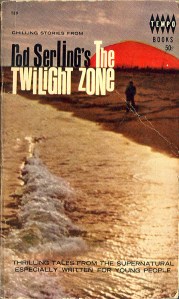
Only indirectly has the coronavirus pandemic influenced my decision to read books of short stories.  Indirectly because bookstores are closed and I have several such volumes gathered here at home.  This particular collection includes a book “especially written for young people” called Chilling Stories from Rod Serling’s The Twilight Zone.  This is a book I had as a young person, discarded, and then regretted discarding.  I have to say that most books I discard I eventually regret.  When you’re young and moving from apartment to apartment, though, you can’t keep all your books.  Anyway, I re-acquired it several years back.  The book doesn’t list an author.  Instead, the title page says “Adapted by Walter B. Gibson.”  Gibson was best known for writing The Shadow series.  The end result is that I don’t know who wrote the stories in this book.  They have the ideas of Rod Serling, but the writing isn’t in his style.

When I buy a book (I got this one used on the internet, back when it was young) I like to know the author.  WorldCat lists Serling as the author, but the book was published pre-ISBN days, back when publishers could be a bit less than transparent about such things.  Other websites put Gibson first under authors, followed by Serling.  The publisher, Tempo Books, was an imprint of Grosset & Dunlap, which eventually came under the Random House/Penguin umbrella.  Originally publishing primarily children’s books, Tempo lists this book for young readers, although as an adult reader I wonder if it could appeal to young people today.  There’s no sex and any violence is really implied rather than explicit, but there’s some adult-level subtlety going on.  Books for young readers are much different these days.

Just recently my daughter introduced me to the increasing sophistication of levels of book genres.  Like most readers and writers I’m encouraged at how young adult books have taken off.  A future generation of readers is cause for hope.  There are now “new adult books.”  These are targeted at those college aged or just over.  Unlike young adult titles they’ll have sex and adult language.  My Twilight Zone book lacks these, and it also lacks the sparkle of Serling’s teleplays.  Serling was a playwright and screenwriter.  These stories clearly contain his ideas but not his ability.  I didn’t know that as a child.  I do know that I never finished the book before now.  One of the reasons, I expect, is that it didn’t really seem like I was reading Serling, even to my young self.  Still, ghost stories during a pandemic have their own appropriate place, and who doesn’t want to be young at heart?


Occam’s Disposable Razor

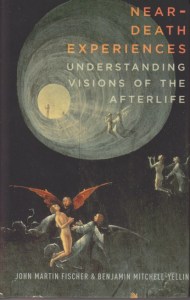
Since new books are kind of rare right now, I’m reading through some of those I’ve collected but haven’t actually read.  One is Near-Death Experiences: Understanding Visions of the Afterlife, by John Martin Fischer and Benjamin Mitchell-Yellin.  I bought the book because the topic, as addressed by a university press book, is interesting.  Fischer and Mitchell-Yellin approach the subject as philosophers.  Their main focus is on the widely accessible and successful books by Eben Alexander and Todd Burpo.  Also the somewhat less well known efforts of Jeffrey Long and Pim van Lommel.  (Instead of taking up blog space with all these titles, just email me if you’re curious, or read my Goodreads post.)  Applying standard scientific methods to spiritual experiences isn’t easy, and Fischer and Mitchell-Yellin are clear that they aren’t trying to take the value out of Near-Death Experiences (NDEs), but rather they are challenging how these authors try to make them authentic.

Philosophers parse words finely.  The authors show that “real” is not the same thing as “authentic” and demonstrate how some of the more spectacular NDEs can possibly be explained by science.  Those who’d temporarily died might’ve caught onto things that happened just before or just after brain activity ceased or restarted, for example, and then misremembered them.  As a still-living guy who can’t remember where he left his wallet half the time, misremembering is an authentic reality.  Still, I couldn’t help but wonder.  Science and religion ask different questions.  One of the mainstays of scientific method is Occam’s Razor—the solution that requires the least mental gymnastics to explain something is the most likely to be true.  Many times this razor is flashed in the face of those trying to make a religious case for something.

Ironically, the authors here dismiss Occam’s Razor.  They state that sometimes the more complicated solution is the right one.  I happen to agree with them on this, but it proved a real distraction in reading the book.  Many scientists use the exact opposite argument against spiritual things.  It also struck me that a book so brief (less than 200 pages) would necessarily struggle to explain a complex phenomenon convincingly.  Trade books, such as those by Alexander and Burpo, aren’t meant to be held up to the stiff standards of peer review.  They are meant for selling lots of copies.  Their authors aren’t philosophers.  It’s almost a mismatch in categories.  Some academic presses are now publishing on NDEs and asking plenty of questions about them.  It’s no surprise that philosophers favoring physicalism would do the same.  It seems a little hairy, however, to do so with Occam left firmly in the shaving kit.


Distance Education

As an exile from academia, I do feel for my employed colleagues who are having to learn distance education techniques on the fly.  I do also feel compelled *ahem* to note that I was trained in online teaching long ago at Rutgers University.  The school declined to hire me then, and I’ve had no offers since.  Now it’s become fashionable for academics with virtually no online experience to look to the hills—whence is their help to come?  It’s not very often that I can claim to have been ahead of the curve.  In fact, I’m usually so far back that I don’t even know there is a curve.  Mismatches like this (someone who’s always been good at teaching, and trained to do so online, who’s been deemed exile-worthy while the unprepared now brush off their virtual bona fides) occur all the time in history.  It’s one of the things that makes it interesting.

Higher education isn’t a luxury.  I disagree with President Obama that all people should go to college, though.  Not everyone needs to.  Everyone should be able to attend, however, if they feel compelled to do so.  There are a number of myths about it that politicians of all stripes should seek to dispel.  One is that the more education you get the higher salary you’ll be able to demand.  As a Ph.D. holder I know that is decidedly not the case.  There are plenty of manual labor jobs that pay better than the options open for a humanities Ph.D. earner.  I also know that universities don’t tell new doctoral candidates this fact.  The old ways are changing.  I’ve often wondered if the collapse of civilization would be slow or rapid.  Living through it I now can see it looks slow from the inside.  Future historians will need to assess for future readers how it looks from the social distance of chronological clarity.

Historically crises have helped people pull together.  This one seems only to have divided us further.  If our government knew how, it could now model kind and considerate behavior.  It doesn’t know how.  The selfish often don’t comprehend how the wellbeing of others can affect their own.  Some companies are beginning to realize that customer loyalty after the crisis may depend on reasonable treatment at at time like this.  For others it’s more difficult than house-training a new puppy.  Nobody wants to go into exile.  When you do, however, you can’t help but notice how it changes your view of things.  Ironically I was hired away from academia the very year I had completed my training in distance education.  I can image how it might’ve been.  But then, I’m living in a land not my own.


The Essentials

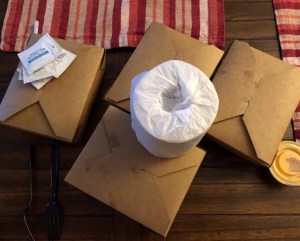
The current crisis, in my mind, dates to Thursday, March 12.  That particular day, at least in my socially distant location, the pandemic became a panic.  Decisions were made to have employees work remotely.  Zoom or Skype meetings were substituted for the face-to-face variety.  Church services were cancelled.  There was a run on toilet paper.  This final aspect has me really vexed.  Why toilet paper?  Experts say if we kept to our usual buying habits there would be plenty for everyone, but the survivalist mentality kicked in and people began hoarding.  If the apocalypse was coming, they wanted to go down fighting with clean underwear on.  We were in Ithaca the next day to see my daughter.  We ordered out from a local restaurant.  When we got home we found a role of new toilet paper in the top of the bag.

According to my amateur dating technique, we’ve been in this state for 13 days now.  Toilet paper, tissues, and paper towels are nowhere to be found.  I looked on Amazon.  They can get you toilet paper, but you’ll need to wait until May.  Why?  Ironically, because it’s being shipped from China.  Yes, the nation where the pandemic erupted has toilet paper aplenty.  Here in the greatest [sic] nation in the world, there’s none to be found.  What does this tell us about a country that self-identifies as “Christian”?  Whatever happened to “if someone demands your coat, give them your shirt also”?  Or perhaps more to the point, “turn the other cheek”?  How has a nation of Bible believers responded to a crisis?  By becoming selfish.  By stockpiling toilet paper.

I’ve spent a lot of time camping.  I’m fairly comfortable with the ways of nature.  Like most other people I prefer a nice, private restroom with all the accoutrements, but if bears can do it in the woods, why can’t we?  I have my Boy Scout guide right here.  But it suggests using toilet paper.  If books could be ordered, I suspect How To Poop [this is the family friendly version] in the Woods would be a current bestseller.  Trump says he wants everyone back to work by Easter, but the toilet paper ordered from Asia won’t even be here by then.  And will offices have access to some secret stash that only those who buy in bulk can find?  Hoarding makes any crisis worse, but this particular one seems especially mean spirited.  It makes me realize just how great America has been made.


Frankenstein’s Family

The story of Frankenstein has many unexpected twists and turns.  I’m currently reading a book about the writing of the novel—something I’ve done a number of times before.  There was an aspect of this story that hadn’t really caught my attention too much, but then, circumstances changed.  Suddenly old information became new.  It all started with a missed opportunity from childhood. 

It was a real puzzle.  Although my grandmother lived with us her last years, I never knew the name of her mother.  There had been hints.  My grandfather’s book with birthdays in it listed the first name, so I had a Christian moniker and birthdate only.  She’d died young, I knew, somewhere in the Washington, DC area.  This had been the state of my knowledge for many years.  My grandmother died before I was a teen, and before I took any interest in the family story.  I knew her heritage was Germanic, her father having been a first-generation American.

So young Mary Shelley (technically Godwin) was on a tour of Europe with her lover Percy.  Although they both came from distinguished backgrounds, they were cash poor.  Running out of money they made their way back to England as cheaply as they could.  They passed near Castle Frankenstein along the way, although there is no record that they actually visited it.  The name seems to have stuck, as does the story that they potentially learned about a mad scientist who’d lived in that castle.  This scientist was a theologian who dabbled in alchemy and experiments with dead bodies.  I know what you’re thinking—it’s like a puzzle piece we desperately want to go in this place but its fit’s ambiguous.  We’re not sure how much of this Mary Shelley knew.  The alchemist’s name was Johann Konrad Dippel.  I’d read about him before.

I’d spent nearly an entire summer some years back working on my grandmother’s family, finding little.  Just two years ago I did a casual search on “Find a Grave,” and to my surprise, I found my great-grandfather.  I knew it was him because his second wife’s name matched information from all the family records.  The cemetery record, in Maryland rather than DC, had his first wife’s name.  It was that easy.  After decades of searching, a few keystrokes revealed the mystery.  When it also listed her parents, the significance of her mother’s maiden name—Dippel—escaped me.  Now I have no way of knowing if this is the same Dippel family of Castle Frankenstein, but it put flesh on the bones of my long-standing interest in monsters.  Seeking them out may be the same as learning family secrets.  Perhaps it always is.


Green Dilemma

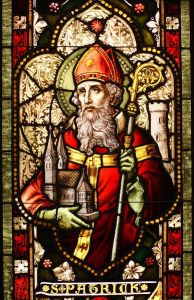
It’s a dilemma.  I face it every year.  I don’t have green to wear and it’s St. Patrick’s Day.  For your average run-of-the-mill citizen, this might not be an issue—but I do have an Irish heritage (in part), and so it’s a heartfelt concern.  The reason I don’t have green has less to do with fashion (consider the source!) than with my clothing purchasing practices.  First of all, I like to make my clothes last.  Fabrics can be quite durable.  They aren’t mechanical and therefore don’t break down often.  I don’t live a rough-and-tumble life, so tears aren’t really a problem.  The end result is that I keep my clothes as long as they’re functional.  When they begin to wear out I go to the store and examine the clearance racks until I find something in my size.  That means color selection is often a matter of very limited options.

Once in a great while I have landed something green.  I still remember a green shirt I had in college.  It served me well for more than four St. Patrick’s Days.  It long ago succumbed to overuse, however, because I wore it on other days as well.  And let’s face it, when I make one of those infrequent trips to the clothiers’ shops, this particular holiday’s not on my mind.  Unless, of course, I go shopping in March.  Back when I lived in Boston it was easy to get your Irish on.  I bought a bright green silky (I don’t know if it was real silk) tie with white shamrocks on it.  It was probably down at Faneuil Hall.  It had been a bit outlandish to wear to work in New York City, though.  Indeed, at work staid dress was by far the most common code.  Consequently it hung unused in my closet for years.

When we moved a couple summers back, I noticed my green tie had faded to bronze.  I thought it went the other way around.  In any case, my last truly green clothing article was no longer green.  Yes, it still has shamrocks, but I’d feel even more ridiculous trying to rock a bronze tie and pass myself off as Irish.  It won’t even pass for gold.  Of course, I work from home.  I’ve practiced social distancing long before it was a trend or a government mandate, whichever it is.  The only people to see my lack of green would be my wife and daughter, and perhaps a Jehovah’s Witnesses that might stop by.  But still, even minor celebrations are anticipated at times such as this.  Although I won’t be going out today I’ll probably be spending some time in my closet and reflecting on the true heritage of my Irish forebears.

Perhaps St. Pat shops like I do?