How To Study

As much as I critique Calvinism, I participate in its hardness sometimes.  For instance, when I was employed in higher education I would’ve considered reception history—the kind of research I’m now doing—soft.  My doctorate consisted of learning to read dead languages and trying to make sense of ancient religions where tons of lacunae existed.  It was rigorous mental work.  More modern studies, however, often look at the human (softer) side of religion.  There are any number of approaches: gender studies, sexuality studies, disability studies, and plenty involving the social sciences.  I was taken aback, however, when I first encountered fat studies.  This is apparently a thing now.  As far as I know it hasn’t been applied to biblical studies, yet.  The title is intentionally somewhat derogatory, rather like queer studies adopted a term at first intended to disparage, but later taken as a token of pride.

Fat studies is a field that considers the acceptance of all body types, and the prejudices against those who might be called “overweight.”  We’ve begun to reach a period of acceptance of difference—well, we had been getting there, until about three years ago.  Academics are keen to explore implications of just about anything, and considering those who face acceptance issues due to weight, or body mass index (BMI), suggests itself.  The media likes to cast us into various crises: an obesity crisis, an anorexic crisis, substance abuse crises, and satanic panics.  Each of these crisis points eventually leads to some form of study.  We want to understand this inherent complexity of being human.  Some feminists expressed surprise when masculinity studies became a thing some years back.  Being male, I see that the only way to break down seeing my own gender as normative is to put it under the microscope with all the others.

Because of historical developments, a particular subset of the human race came to see itself as the measure of all things.  I doubt this was intentional, but over time the male of northern European persuasion, particularly the Protestant variety, came to be seen as the textbook human.  He stood about six feet tall and tended to fit a certain BMI.  He was straight.  Like a ruler.  All other humans were measured against him.  This system of privilege is breaking down.  Some, as we can see in Washington, are reluctant to let it go.  Difference, however, is endemic to any species.  And males are no more normative than females.  Or those attracted to their own gender.  Or who change gender.  Or who weigh more than others.  Until we learn to accept all humans, it’s only right that we study our assumptions.  There will always be those who look at dead languages and some day we may want to study even them.

Morality, by Contract

So, maybe it’s the crazy wind that was blowing around here all day yesterday, but I’m beginning to wonder about corporate sanity (if there is such a thing).  Specifically, I’ve been hearing about more and more contracts with ethics clauses written into them.  This is downright weird.  Does the signing of a contract make one ethical?  It’s like that silly page that comes up on some workplace servers saying you’re very naughty if you’re not the person you’ve logged in as.  We all know that.  That’s why hackers hack and the rest of us comply.  But legislative morality?  Via contract?  The notion is strange because ethics relies on an agreed-upon set of standards.  If Trump has taught us anything it’s that there’s no agreed-upon set of standards.  Some of us can honestly say that we weigh our own ethics every time we do anything.  Send me a contract and see!

The first time I saw an ethical behavior clause it was in a contract from a Christian company.  They wanted no business dealings with the corrupt, misbehaving, and one might guess, pagan sort.  When such a contract is sent to a business, it means that said business will monitor the morality of all its employees.  That’s something I certainly wouldn’t want to be in charge of.  Rationalization is too easy and far too human.  Let the one without sin cast the first whereas.  Well, one would think that a Christian company might take that point of view.  The way some Christians have treated me over the years makes me shudder at the advantages taken.

This idea seems to be spreading out to secular companies as well.  You read about contracts with ethical clauses in them—anyone who’s not ethical will have no qualms about signing a contract stating s/he is!  Why offer a contract at all if someone’s morals are in doubt?  One of the things you learn from taking ethics courses (of which I had several) is that, beyond widely agreed-upon standards (it’s wrong to kill, for example, or take something that belongs to someone else) the details quickly fade to gray.  People find ways of living with themselves while trying to survive in society.  An ethics clause in a contract suggests I should live by the standards set by the issuer.  It attempts to vouch for my future behavior without knowing my future circumstances.  I’m all for ethical behavior, and I try to abide by my own moral code daily.  It’s just that putting morality into contracts implies thinking poorly of the party of the second part.  Better to add a sanity clause.

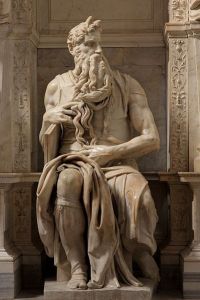
Photo credit: Jörg Bittner Unna, Wikimedia Commons


Amendments

Funny thing about freedom of speech.  It doesn’t really exist in a capitalist system.  Words, I suspect the powers that be know, are extremely potent.  Any system that brooks no rivals will insist on silencing dissidents.  And not just on a national scale.  Several years ago I was interviewed by a Catholic magazine for an editorial position.  I was between jobs and this looked like a good fit; in fact, the woman who arranged the interview told me that if this position didn’t work out they’d likely be able to find a different one for someone with my particular skill set.  When the power that was interviewed me, however, he noted that I had a blog.  “If we hire you, you’ll need to take it down,” he said.  It would confuse readers who might think I was speaking for the Catholic Church.  My candidacy did not proceed.

In a job I would eventually get, in academic publishing, a similar concern was expressed.  Although I hold an earned doctorate from a world-class research university, my opinions might be mistaken for those of some true authority.  Problematic.  This issue keeps coming up.  I write fiction and publish it under a pseudonym.  Sometimes I think about coming out of my literary closet, but the issues pour in hard and fast when the door’s opened.  What would those who read my nonfiction (both of them!) think?  Would I discredit myself because I have too much imagination?  What would an academic employer say?  If I ever went back on the ordination track, would a congregation of any sort understand a clergy person who thinks such things?  I get enough flak from writing about horror films.

The fact is, freedom of expression is very, very limited.  Capitalism measures all things by the bottom line and anything that might cause that trend to waver is forbidden.  Lack of team spirit.  If you want to publish, don’t work in publishing.  It’s like saying (if I might be so bold) that you shouldn’t teach if you earn a doctorate, because you might actually contribute to what we hopefully call knowledge.  This dilemma has become an entrenched part of my psyche.  I grew up innocently writing fiction.  I completed my first stories about the age of 12 or 13.  I was eventually groomed for the ministry and so the fiction had to be set aside as one of those “childish things.”  Was it?  Perhaps.  More likely though, it was simply a lesson that I would find repeated throughout my adult life.  Give lip service to freedom of speech, but don’t ever use it.


Geocheating

So, we geocache.  Not as much as we used to, but over 15 years ago my family and I began the sport and really got into it for a while.  Geocaching involves using a GPS to find a hidden object (“cache”) so that you can log the find.  It’s all in good fun.  The organization that hosts the website also offers the chance to log “trackables”—these are objects with a unique identifier that you sometimes find in caches and you get credit for logging your find.  There are no prizes involved.  We started several of these “travel bugs” ourselves, years ago.  If you started one you got an email when someone logged it, and you could see how far around the world your little bug had gone.  For many years we’ve not heard much about any of ours and assumed them to be MIA.

Recently I started getting several email notices about a resurrected travel bug.  It was as if someone had finally found a cache somewhere deep in the Sahara where it’d been hidden for a decade.  Then I had an email from a fellow cacher, in German.  I figured it must be serious.  The message was that a Facebook page was publishing trackable numbers so that anyone could claim to have found them.  One of ours was on that list.  I went to the page to look.  It said, “Let’s face it, it’s all about the numbers.”  And they proceeded to list hundreds of numbers so that you could claim to have “found” the pieces with your posterior solidly sunk in your favorite chair.  This is annoying not only because we had to pay for the trackable dogtags, but also because it was cheating.  I said as much on the page only to have my comment blocked.

How sad is it when people cheat at a game when there’s no gain?  All they do is claim to have done something they haven’t, for no prize or recognition.  A fun family pastime falls victim to the internet.  Ironically, geocaching was really only possible because of the internet.  It required a place where players could log their finds in a common database.  Facebook, continuing its potential for misuse, allows someone to spoil it.  I, along with my unknown German counterpart, reported the page to the powers that be.  But since we live in a world where the powers that be don’t recognize any rules beyond inflating their own numbers, I shouldn’t be too optimistic of any results.  I guess this is how Republicans play games.


Search Yourself

I was searching for someone on the internet (surprisingly, not myself).  Since this individual didn’t have much of a platform, I looked at MyLife.com.  Such sites draw in the curious and you soon end up paying (I suspect) for any salacious information such as arrest or court records.  In any case, what stood out is that we all presumably have a meter on the site that shows whether we’re good or bad.  It’s like a Leonard Cohen song.  Call me old-fashioned, but that’s what religion used to do.  Some forms of Christianity (Calvinism comes to mind) tell you that you can never be good enough.  Others are more lax (Episcopalians come to mind), as long as you go to mass enough and feel some guilt for misdeeds, you’ll get in.  All the various groups, however, have metrics by which you’re measured, largely based on what you believe.

The odd thing—or one of the odd things—about religion is that it is now categorized as what you believe.  Historically religions began as a kind of bellwether of what you do rather than what you believe.  The two are related, of course.  The motivation behind an action might well be good while the end result is less so.  Secular justice regularly seeks to answer the question of why someone did something.  Was there malice involved?  Aforethought?  Was it an unfortunate accident?  Religion drives over this ground too.  Without getting into the many shades of gray that are morality, value judgments as to the goodness or badness of an action (or a person) were traditionally the purview of religion.

The internet itself has become a kind of god.  We turn to it for all kinds of answers.  It’s both a Bible and encyclopedia rolled into one.  When we want to know something about someone we google them.  Some of us have tried to control the narrative about ourselves by making websites.  (This, of course, presumes others will be interested in us.)  Social media also injects us into larger arteries of traffic.  People judge us by what we post or tweet.  Often without ever meeting us or getting to know who we really are behind our physical walls.  So this person I searched had left little to find.  Scraps here and there.  I didn’t believe everything I saw on MyLife.  After all, not everyone wants to subject her or himself to the constant scrutiny of the connected world.  Maybe it’s a religious thing.


Droning On

According to the New York Times (I don’t have a link, but Google will bring it up), nighttime drone formations have been reported by law enforcement in the Midwest.  These obviously precision formations fly over small towns and prairies in Nebraska and Colorado.  Now, I write what I consider to be horror fiction, but this is downright scary.  We know our government is keeping tabs on us using all kinds of technology, and this could be a government program.  It could also, as the article points out, be the mapping project of some corporation (which can be scarier even than the government), seeking natural resources to exploit.  Twice this past year I’ve spotted mapping cars with their camera-stalks protruding from their roofs, multiple spider-eyes recording roads and their surroundings.  Smile—you’re on candid camera!

At least you could see this kind.

Please don’t think that I suppose myself important enough to be spied upon.  Heck, I can’t even get job interviews and my books don’t sell.  Still, I am concerned about surveillance.  I’ve seen articles suggesting that facial recognition software is now being used by some governments (notably China’s) for keeping track of “people of interest.”  I’m more a person of disinterest, but I thought nothing of pausing long enough for the camera at Heathrow customs to record my face and scan my passport as I entered the UK in June.  Coming back the same thing happened in Newark.  And people wonder why I won’t go into the full body scanners at the airport.  Some bits of personal information, particularly those down south, I’d like to keep out of government hands.

Watching the X-Files again has reawakened my suspicion that there are too many secrets.  Yes, I know the X-Files are fiction.  Still, we know black budgets are as real as the electronic money our banks tell us we have.  And some places aren’t even accepting cash any more.  I have no idea why fleets of drones may be flying over the Midwest, but the fact that it’s happening at night raises all kinds of worries.  The X-Files had us looking for UFOs, but drones come from a far more threatening species.  Technology has no controls built in.  Kids these days can run virtual circles (and very precise ones at that) around my generation.  Listening to them talk tech makes me think English might be a foreign language after all.  Nobody requires a permit to fly over your head and take a look.  While they’re up there, I wonder if I could convince them to take some pictures of my roof.  Those on Google maps don’t give enough resolution to tell the roofers where they should focus next.


New Year Reading

Childhood has a powerful draw.  I first started reading Dark Shadows books when they were published for (I kid you not) 60 cents.  I got them for cheaper than that at Goodwill.  Every time I read one I wonder what my young imagination found so compelling in them, but in an effort to trust my younger self I keep on.  So I read Marilyn Ross’ Barnabas, Quentin and the Witch’s Curse.  The book doesn’t really say anything about a witch’s curse, providing as it does some of the backstory for Quentin.  If you aren’t familiar with that background, and you want to be, Barnabas is a vampire and his cousin Quentin is a werewolf.  Both were made so by curses, a plight the Collins family has long faced.  

In recent years I have read the 19 volumes in the series preceding this one.  They tend to be formulaic, and often show the signs of having been written quickly.  W. E. D. Ross is sometimes listed as the most prolific Canadian author ever.  He wrote over 300 books, mostly in genre fiction.  It’s no wonder many of them sound the same.  Still, I have to admit that both from watching Dark Shadows and from reading these novels as a kid, I liked Quentin.  Yes, he was smug and self-confident, but as a werewolf he had the ability to become someone else.  Unlike other books in the series, this one focuses on Quentin and points a pretty heavy finger to him being a Satanist.  That seemed pretty harsh to me.  There’s a difference between being the victim of a curse and being a Devil worshipper.

Now I know I shouldn’t take this as belles lettres.  Ross is not remembered as a great stylist, master of character development, or for being all that creative.  Dark Shadows was a soap opera—one of the more intelligent of the genre—and there’s only so much you can do with it.  Satanism was a cultural concern in the 1970s.  In the following decades it would bloom into an outright panic.  I’m pretty sure that I never read this particular volume when I was young.  Even now as a relatively mature man I found the implications somewhat disturbing.  The Scooby-Doo ending doesn’t do much to ameliorate the undercurrent of evil.  Quentin always seemed like such a sympathetic character to me.  Maybe it just goes to show what happens when you go for a quick read rather than choosing a book of substance.  Childhood can be that way.


Writing Prophets

So I was sitting at a table with two writers I’d just met.  It was at the Easton Book Festival and since I’m new to the area I was very aware that I didn’t know anybody.  I was also aware that my book, Holy Horror, wasn’t on anybody’s radar screen, despite it being mid-October.  As we were talking my two interlocutors mentioned the advances they’d received for their books, one of whom was able to buy a house with said advance.  As I listened I kept my mouth shut, because that’s polite, even though my jaw was slack.  The other person hadn’t been able to buy a house, but after writing on a topic so obscure I can’t remember it, had been able to do something noteworthy with the advance.  My royalties from Holy Horror wouldn’t have covered the cost of this dinner.

In the weeks following the festival—always busy with AAR/SBL looming, then Thanksgiving, then December—I began some soul-searching.  What was I doing wrong?  I also did some web-searching.  One of the articles that came up, written by a business writer, suggested pulling up your socks and getting to it, demanding money for your writing.  I don’t see anywhere to put a coin slot on this blog, which is more of a labor of love than anything anyway.  Then the kicker came.  This business writer cited Hosea 4.6, “My people are destroyed for a lack of knowledge,” as the basis of why people would pay for content.  Now pardon me for taking things a little literally, but I doubt Hosea was in the business of giving business advice.  The knowledge people lack, in context, is knowledge of Yahweh.

Now here I was back on familiar territory.  I’ve taught classes on Hosea, and this intriguing prophet was commenting on Israel’s lack of knowledge of God’s ways.  There were some folks akin to prosperity gospelers back in the pre-Gospel days, suggesting that if you kept God happy rewards would roll your way, but history had other plans.  Israel fell to the Assyrians shortly after Hosea’s time, his writing advice apparently unheeded.  As I revise Nightmares with the Bible for publication—the reviewer felt it was too tradey—I have to wonder about my conversation back in October.  Neither book of my conversation partners was one of broad appeal.  In fact, the second was rather technical.  They had, however, been paid for their work.  Academic publishing is built on the paradigm that the writer already has a university job and doesn’t need the money.  Hosea also said, if I recall, something about what happens if you sow the wind.


Assume Nothing

You know what I’m talking about.

It’s rude.

Disorienting, isn’t it?

One of my greatest bêtes noires is the email that only gives enough information to frustrate or irritate.  I get them all the time, mainly from business-people.  Look, I know you’re busy.  We’re all busy.  A single-sentence email that doesn’t explain anything is rude and exasperating.  One of the reasons, if I might speculate, that I always received very good teaching evaluations boils down to a simple trick: good explaining assumes little on the part of the listener/reader.  When I write an email, for work or for whatever life outside work is called, I explain why I’m emailing and I use common courtesies such as “Dear X,” and “Best wishes.”  They take me all of seconds to type, and they make the receiver, I believe, feel human.

The other day I sent such an email and received a one-sentence response that assumed I knew a lot more about the topic than I did.  It frustrated me so much that I had to write this blog post before going back to it and asking, yet again, that sender explain (in this case) himself.  What was he trying to say?  Who was he, even?  I’d been asked to contact him by someone else.  I had no idea who he was (I briefly explained who I was in my initial email).  Electronic communication, IMHO, even if brief, need not be rude.  If we’re all that busy maybe it’s time to step back and consider that life’s too short for generating hurt feelings and generating negativity.  Emails without niceties are rude.

Of course, there are people you know well and that you contact frequently.  I still try always to give them the courtesy of opening, body, and closing.  I grew up in the generation of letter writing.  One thing even businesses knew in those days was that rude behavior lost you customers and/or clients.  Now in Generation Text rudely apocopated emails are standard and I have to wonder if anyone’s done a study on how much business money is wasted on the time it takes to recover from receiving a rude email.  The writer may not be intending to be rude.  Many of us were taught growing up that a “please,” “thank you,” or “I’m sorry,” went a long, long way in avoiding hurt feelings.  Go ahead and call me a snowflake.  But remember, it’s December.  So I’ve just had to spend a quarter-hour of my busy day writing this rant before responding to an email that made me mad by its brevity.  I’m not a texter, and I think I’m discovering why.


Making Memories

I’m a little suspicious of technology, as many of you no doubt know.  I don’t dislike it, and I certainly use it (case in point), but I am suspicious.  Upgrades provide more and more information to our unknown voyeurs and when the system shows off its new knowledge it can be scary.  For example, the other day a message flashed in my upper right corner that I had a new memory.  At first I was so startled by the presumption than I couldn’t click on it in time to learn what my new memory might be.  The notification had my Photos logo on it, so I went there to see.  Indeed, there was a new section—or at least one I hadn’t previously noticed—in my Photos app.  It contained a picture with today’s date from years past.

Now I don’t mind being reminded of pleasant things, but I don’t trust the algorithms of others to generate them for me.  This computer on my lap may be smart, but not that so very smart.  I know that social media, such as Facebook, have been “making memories” for years now.  I doubt, however, that the faux brains we tend to think computers are have any way of knowing what we actually feel or believe.  In conversations with colleagues over cognition and neurology it becomes clear that emotion is an essential element in our thinking.  Algorithms may indeed be logical, but can they ever be authentically emotional?  Can a machine be programmed to understand how it feels to see a sun rise, or to be embraced by a loved one, or to smell baking bread?  Those who would reduce human brains to mere logic are creating monsters, not minds.

So memories are now being made by machine.  In actuality they are simply generating reminders based on dates.  This may have happened four or five years ago, but do I want to remember it today?  Maybe yes, maybe no.  It depends on how I feel.  We really don’t have a firm grasp on what life is, although we recognize it when we see it.  We’re further even still from knowing what consciousness may be.  One thing we know for sure, however, is that it involves more than what we reason out.  We have hunches and intuition.  There’s that fudge factor we call “instinct,” which is, after all, another way of claiming that animals and newborns can’t think.  But think they can.  And if my computer wants to help with memories, maybe it can tell me where I left my car keys before I throw the pants containing them into the wash again, which is a memory I don’t particularly want to relive.

Memory from a decade ago, today.


Job’s Jobs

Many years ago, after Nashotah House decided it no longer required my unique outlook, I bought a book.  (That’s my default reaction.)  This book was on how to write killer cover letters.  I don’t remember the title or the author, but I followed the advice, well, religiously.  It got me nowhere.  Business tricks, at least historically, don’t work in academia.  Sitting at home, pondering my sins, I flipped to the chapter on advice to take if none of the rest of this was working for you.  Here’s where the human side began to show through.  Have you been eating onions or garlic before your interviews? it asked.   Do you need to lose weight?  Try dressing nicer.  It occurred to me that the business world lacks the imagination required for denying jobs.  And besides, who was getting any interviews before which I shouldn’t eat garlic?

Business advice is, in a word, shallow.  It assumes that if you’ve got the goods there’s no reason you won’t get hired.  Reality is a bit more complex than that.  I often ponder how people simply go for what they want.  They reach for the biggest piece without pondering the repercussions of their actions.  I see it in my small world of publishing all the time.  Those who are “hungry” (read “greedy”) succeed.  Those who wait behind to help others simply can’t compete.  So the cover letter book did get that part right.  Is it possible, however, to devise a society where everyone fits?  Not all are created equal, perhaps, but do we have to reward those who seem to care only for themselves?  Let them eat garlic.

The cover letter book, in the end, never really did me any good.  I found my way into publishing by being willing to aim low.  I’ve written many cover letters since leaving Nashotah House, and only two ever led to a job.  Those who work in business, what with their concerns about readers’ aromas and weights, seem never to have considered the intricacies of the intellectual job market.  What strikes me as particularly odd is that there are plenty of smart people out there, and yet they haven’t organized to offer alternatives to the greed-based structure on which our work lives are based.  They can’t, it seems, gaze beyond capitalism as a mechanism for helping individuals lead productive lives.  Business operates on the principle of replaceable parts, many of which happen to be human.  And even those who know how to write can’t hope to compete against those who prefer cogs that know to avoid onions.


Faithful to Monsters

“Since childhood I’ve been faithful to monsters. I’ve been saved and absolved by them because monsters are the patron saints of our blissful imperfections.” Guillermo del Toro’s quote came to me via my colleague John W. Morehead’s wonderful Theofantastique (actually its Facebook page).  I get the sense that those of us in the field of teratology parallel play a lot.  At least I console myself that way because so few monster sites link to my blog.  Nevertheless, I have great respect for del Toro and his drive to bring monsters into the mainstream.  His quote, however, hits upon a central theme of what I try to do here and elsewhere—reflect on what monsters have to do with religion.

Notice the religious language (obviously intentional): faithful, saved, absolved, patron saints.  Monsters are indeed self-reflections, and they play on the same field as religion does.  Often at the same time.  Religion, even in the best of circumstances, entails fear.  If everything were fine all the time, what need would we have of it?  Instead, aspects of life we don’t cherish or anticipate come at us.  Winter comes far sooner than we expected.  Monsters lurk in that brief season between summer and winter, that autumn of the soul.  They know us quite well.  Our weaknesses are evident to them.  But as del Toro notes, they absolve.  And more readily than any Episcopalian.  The religion of monsters is fierce and forgiving.  When we watch them on the screen, we’re watching the drama of, in del Toro’s nomenclature, salvation.  If we didn’t require saving, again, why would we need religion (or monsters)?

Being faithful to monsters again bears comparison with the divine.  Should you become one of the lost while the 99 don’t require any assistance, your monsters will come find you.  In fact, that’s what they most specialize in.  What are dark nights of the soul without a little company?  It’s not sacrilegious to map the divine world with that of monsters, for any language regarding such high stakes beings must be metaphorical.  Our standard version of God is often a large human.  Generally he’s male, and he doesn’t always display compassion, although capable of doing so.  Monsters may be creatures of our own imaginations.  They are cast large on the screen since they too stand in for those to whom we owe some tribute for this is not a safe world in which to raise your kids.  Guillermo del Toro understands; we should listen.


Wisdom of Trees

Stepping out of the airport the first thing I noticed was the palm trees.  I’ve traveled to this area enough times that I shouldn’t be surprised, but I always am.  And since we are creatures of the culture in which we’re raised, palm trees inevitably make me think of Gilligan’s Island.  We grasp for culture to help us make sense of this odd world of negotiating other people and, like many children born in the sixties, I was raised on television.  Gilligan’s Island (somehow appropriate training ground for attending AAR/SBL—it actually featured a professor) was as close to seeing a palm tree as I ever got, being raised in a very humble household.  To me, palm trees were as much creatures of fantasy as the monsters that populated the movies I watched on Saturday afternoon.

My first experience of a real palm tree was in Israel, 1987.  I’d signed on as a volunteer at Tel Dor, an archaeological dig near Haifa.  Then, as yesterday, I encountered palm trees—so alien and yet so natural—at the airport.  Welcome to Tel Aviv!  And so we think of palm trees as being part of paradise, a place where it’s always pleasantly warm and although well-watered it doesn’t rain too much.  Trees symbolize our culture.  Although back home in the northeast most of the leaves are down from the hardwoods, the region is also defined by its large plants.  Trees do that for us.  Spreading high over our heads, with dense cellular structure that makes them heavy, trees have always been attractive to our species.  And they can help us define, at a glance, where we are.  “Paradise” derives from a Persian word for “garden.”  Even in arid zones they value their trees.

Looking out my hotel window I see the bay.  In the bay stands a marina.  Back home most boats are shrink-wrapped by now and I’ve already seen smaller bodies of water start to freeze over.  Paradise has no ice.  For the castaways, being on the island was always a challenge, but never a terribly serious one.  Thurston Howell III used his money (useless where there’s nothing to buy) to try to assert his influence.  Everyone treated him with respect, always calling him “Mr. Howell.”  In that paradise, however, one of the two characters (who had names) referred to always by title, the professor—the skipper, of course, was the other one—was the person looked to for guidance.  If anyone would figure out a way to be rescued, it would be the academic.  I’ll be spending the next few days on an island with mostly professors.  And when it gets too intense I’ll look at the palm trees and remind myself that this is paradise.


Speedy Delivery (SD)

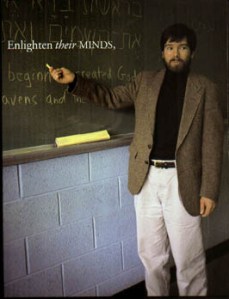
Ritual, no matter what scientists say, is deeply woven into the fabric of human psyches.  It may be either the warp or the weft, but it’s downright basic.  I was reminded of this on my hurried and slow trip to San Diego yesterday.  I always wear the same shirt when I fly to this conference.  This isn’t superstition, but rather it’s a case of sticking with something that works.  I don’t often wear turtlenecks, and one reason is that they seldom fit well.  More years ago than I care to admit (I’m wearing the shirt in the photo below, which was taken at Nashotah House nearly two decades in the past) I found a navy blue turtleneck from Land’s End (this is not a sponsored post, although it probably should be) that works perfectly.  Even today it fits snugly around the neck after hours of wear.  Maybe ten years back I bought a black turtleneck from the same company and after pulling it over my head, it gaps something awful.  I tend only to wear it around the house.  The original still does the job.

I was ready to drive myself to the airport yesterday and I grabbed a quick lunch at home.  Part of said lunch involved opening a ketchup bottle probably nearly as old as the shirt I was wearing.  (I’m sure you can see where this is going.)  I ended up looking like a murderer, which is not something you want to try to explain to a TSA agent.  I quick threw said ritual shirt into the washer and the drier buzzed at the same time as my phone did for when I had to leave for my two-hour-ahead check-in.  This remarkable shirt was dry and ready to serve.  Maybe you can see now why I’m so ritualistic about clothes.  I also opt-out of those Star Trek scanners at the airport.  This means I get lots of governmental pat-downs.  It feels more authentic when you have actual hands running down your body—at least it’s honest.

The TSA agent commented that you don’t see many turtlenecks these days.  I explained that it’s good for flying because I’m always cold on planes.  As this stranger’s hands were rubbing down my chest, I was wondering how many times this shirt has been felt up by the US government.  It has no pockets to pick, and besides, at airport screenings everything is stowed in my carry-on, including wallet.  At midnight San Diego time, I checked into my hotel.  East coast time said I’d been awake 24 hours because who can really sleep on a plane?  Once my patted-down body reaches 3 a.m., Eastern Time, it wakes up.  In these circumstances it’s good to know I can rely on that shirt in my drawer.  That’s what rituals are all about.


Geography Lesson

As someone who eschews easy labels, I’m always conflicted when someone asks what my doctorate is “in.”  Universities have departments, of course, and different academic fields have differing standards of what qualifies you as an expert.  My Ph.D. was mainly in the field of history of religions, but focused (all such project must be narrow) on what is best called ancient West Asian cultures.  Recently someone showed me a website with free geography quizzes on it.  (I post the link here with the caveat that this can be very addictive.)  This friend asked me how good my Asian geography was.  I knew that once I got east of Iran I was going to be in trouble.  Some countries, such as Russia, India, China, and Japan are hard to miss, but the others I was properly humbled over.

I tried the quiz again and again until I could point to any of the official Asian nations with a fair degree of accuracy.  Eurasia is a very large landmass, and when you consider that it is, apart from human-made canals, attached to Africa this is a lot of space to label.  Considering that many isolationist politicians can’t correctly find smaller countries on a map without an app, I started to realize just how lopsided the world is.  Many more people live in Asia than populate the “New World.”  They actually have more space than we do here, but much of it is too cold or too dry for comfortable living.  Still, I considered that if I’d had this quiz as a kid I might’ve known my geography much better than I do.

As I’m preparing to attend the American Academy of Religion and Society of Biblical Literature Annual Meeting in a few days, I recall priding myself at knowing all fifty states of my native country.  I’ve been to all but five of the lower 48—Alabama, Kansas, Oklahoma, New Mexico, and Nevada have eluded me (the conference never meets in them and I don’t have friends who’ll put me up for free in them).  But at least I know where I haven’t been.  

After trying my hand at Asia on the app, I attempted Africa.  Let’s just say I still have a lot left to learn.  And unlike when I was a kid, I look forward to taking quizzes.  Work interferes with web time, though, and learning modern countries isn’t the same as knowing where Hatti or Elam used to be.  Religion, after all, forms borders just as impermeable as mountains, oceans, or deserts.