Remaining in Shadow

Some people want to be found.  Others don’t.  Those of us who are curious shade into those who are frustrated when we can’t find someone.  People have been around for a relatively long time now, and we’ve been giving each other names because “hey you” only goes so far.  Even so, unique names are rare since, it seems, the majority of European-derived folk had something to do with smithies.  Nevertheless, the internet offers to help us find people.  I was searching for someone the other day but that person, despite publishing nearly daily on the interwebs, has a very common name.  And he styles himself without even a middle initial.  (He may not have one, I know.)  The point is, perhaps he doesn’t want to be found.  I run into authors like this—they assume their high-level monograph is sufficient fame.  You can’t find them online.

I recently joined Bluesky.  I’d like to leave Twitter, but I still have a large number of followers there (for me), although they seldom interact.  Publishers look at things like the number of X followers you have, so until Bluesky surpasses Twit, I’ll need to keep both going.  On Bluesky more people introduce themselves to you.  At least when you’re new.  Not a few are looking for relationships, sometimes of the sexual kind.  (I find that occasionally on what is called X, but mostly in the account under my fiction-writing pseudonym.)  These are people who want to be found.  The internet, strangely enough, has driven us further apart.

America has always been a polarized place, but the web has sharpened the border.  Indeed, it has militarized it.  I remember the days when meeting people actually meant going outside and stopping somewhere else.  Society had rules then.  Two topics of forbidden discussion were religion and politics.  It was easier to make friends with those rules in place.  Since I’ve chosen to put myself out there on the web, my choice of field of study does tend to come out.  And it’s one of those two forbidden topics.  Since my career goal has occasionally been ministry (still is from time to time), putting religion into the equation is inevitable, for those who really want to get to know me.  Social media is a strange country, however.  I tell new conversationalists on Bluesky that I have a blog, but it doesn’t seem to lead many people to my dusty corner of the interweb.  And it still gets me no closer to finding that guy with the tragically common sobriquet.  He may not want to be found. 

Sherlock Holmes seeks someone without the internet. Image credit: Sidney Paget (1860 – 1908), Strand Magazine, public domain, via Wikimedia Commons

Somehow Inevitable

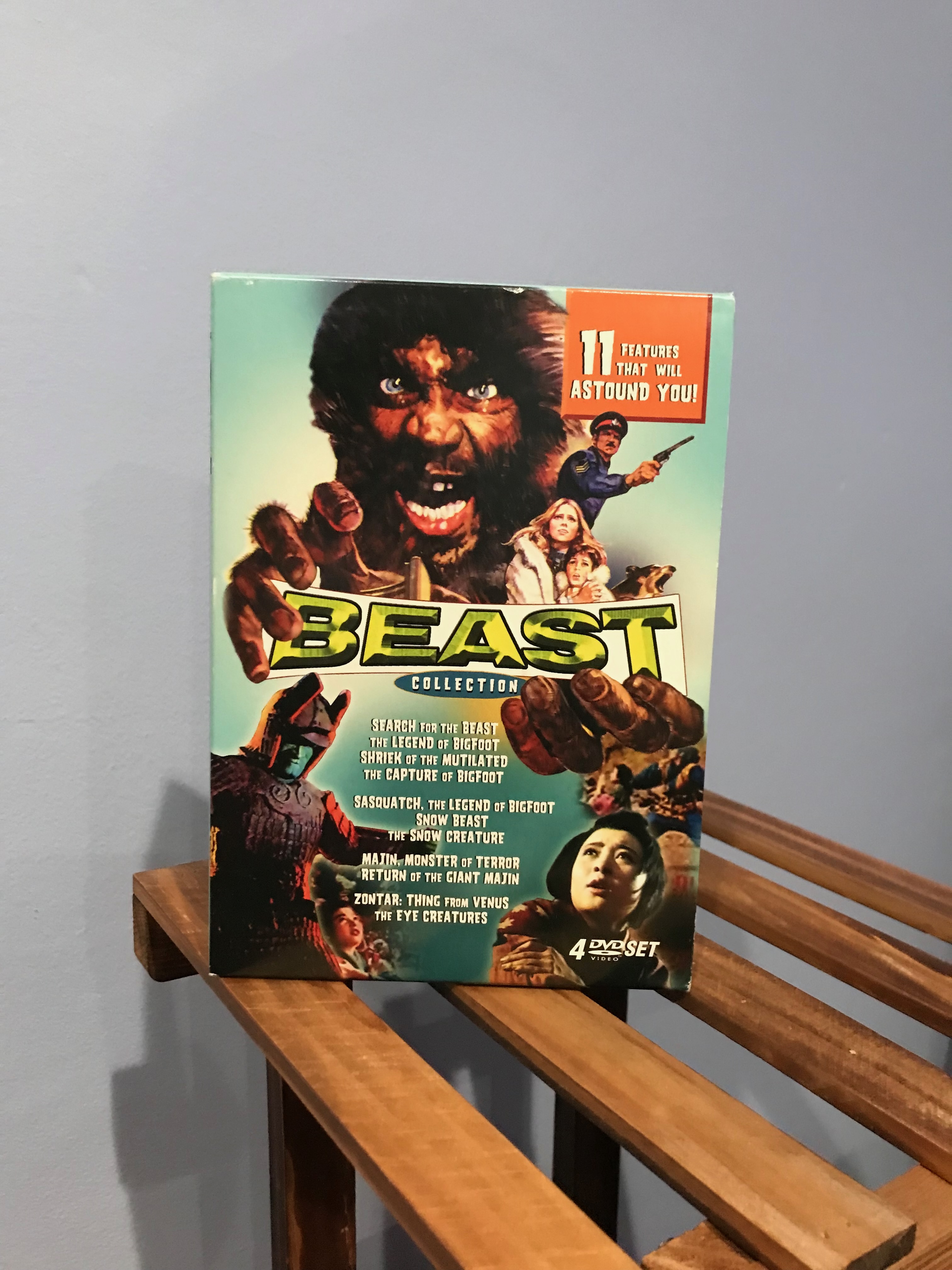
You had to expect me to write about Zontar: Thing from Venus.  I bought the “Beast Collection” set to see it many years ago.  In those days I tried to watch the movies through, in order but I didn’t make it through the first disc, even.  Well, now my perspective has changed—I figured I bought this to see Zontar, and Zontar I must see.  You do know that he controls people, right?  Zontar is a notoriously bad movie.  I saw it on television as a kid, and it may have even been close to the first run since it was made for television.  It’s actually a remake of a cheap Roger Corman movie, so it is a cheap remake of a cheap original.  Nostalgia, however, does funny things to a guy.  Although I saw it half a century ago, I remembered some lines precisely.  Television does funny things to young minds after all, I guess.

In case none of the injectapods has found you yet, it goes like this: Zontar, from, well, Venus, is a bat-like monster with three eyes.  He befriends an earthling outsider scientist, through laser communication, and commandeering a satellite, which becomes a passable flying saucer, lands in  a cave from which he takes over the small town of Jackson, which has a military base and plans to take over by having a general assassinate the president.  Meanwhile, his scientist friend directs Zontar to the four people that he needs to take over the world: said general, the sheriff, the mayor, and his best friend scientist, Curt Taylor.  Things don’t quite go Zontar’s way, despite most of the movie’s running time showing him totally in control.  It feels like it’s a lot longer than its 80-minute running time.

Still, I have to agree with the TV Guide review that says it isn’t as bad as everyone says.  Yes, it is a bad movie but it does have a few redeeming features.  Some of the scenery is nice, and you even begin to care for some of the characters.  The rogue scientist’s wife—despite her constant nagging—is the first person who tries to kill Zontar, and she does this for love.  When Zontar gets her you feel a little sad.  At least I did.  You see, the injectapods haven’t reached me yet and I still have human emotions.  Ironically, it is just such things that drive me to rewatch movies like Zontar all these years later.  And the movie ends with a voice-over moral of the story.  Those 80 minutes weren’t completely wasted.


The Search Continues

This movie’s so bad there’s a backstory.  Years ago I was really wanting to see Zontar: Thing from Venus.  This was before streaming, and I found it as part of the “Beast Collection,” a set of 11 movies for less than the price of one regular first-run DVD.  I watched a few other movies in the collection, but before long it got shoved to the back of a shelf and forgotten.  I remembered it recently because another collection I have was missing a movie, Snow Beast.  I wondered if it might be part of this otherwise forgotten set.  It was (this really encouraged me because maybe my memory is still much better than I sometimes suppose).  In any case, one of the other movies—one I’d never seen—was Search for the Beast.  I figured, why not?  This is a film that fails on every level.  And I mean every single one.  It really should merit a Wikipedia page, just for being so bad.

So, a professor in Alabama goes in search of the beast in the Okaloosa mountains.  The budget for the movie must’ve been a matter of pocket change.  Anyway, the beast has been “killing” anyone who ventures into the mountains and the professor wants to prove it exists.  He’s backed by a guy with money, who isn’t explained at all, and his university office is less well equipped than an average undergrad’s dorm room.  He takes a female grad student with him but his financier, unbeknownst to the benighted professor, hires a bunch of beefy guys with assault rifles to go along, although they’re only going to take pictures.  Of course the professor sleeps with the grad student but then the head of the tough guys kidnaps her as the beast kills off the tough guys’ heavily armed posse.  Turns out the local hillbillies are, apparently, trying to mate the beast with the women who come into the woods.  It’s worse than I’m describing it.

There is some chatter on the internet about this groaner, so I’m sure that I’m not the only one who’s seen it.  Someone recently asked me how such movies even get made.  Well, anyone with a camera can shoot a movie.  Of course, getting paid screen time (or video distribution) is another story.  I doubt the makers of this film made much money off of it, but since other suckers like myself have discussed it online, the producer, director, writer, and actor Richard Arledge, has the last laugh.  His work is being talked about, no matter if nobody has a good thing to say about it.  Of course, I wouldn’t have ever seen it at all, if I hadn’t had a hankering for Zontar: Thing from Venus all those years ago. 


CSI: Backyard Edition


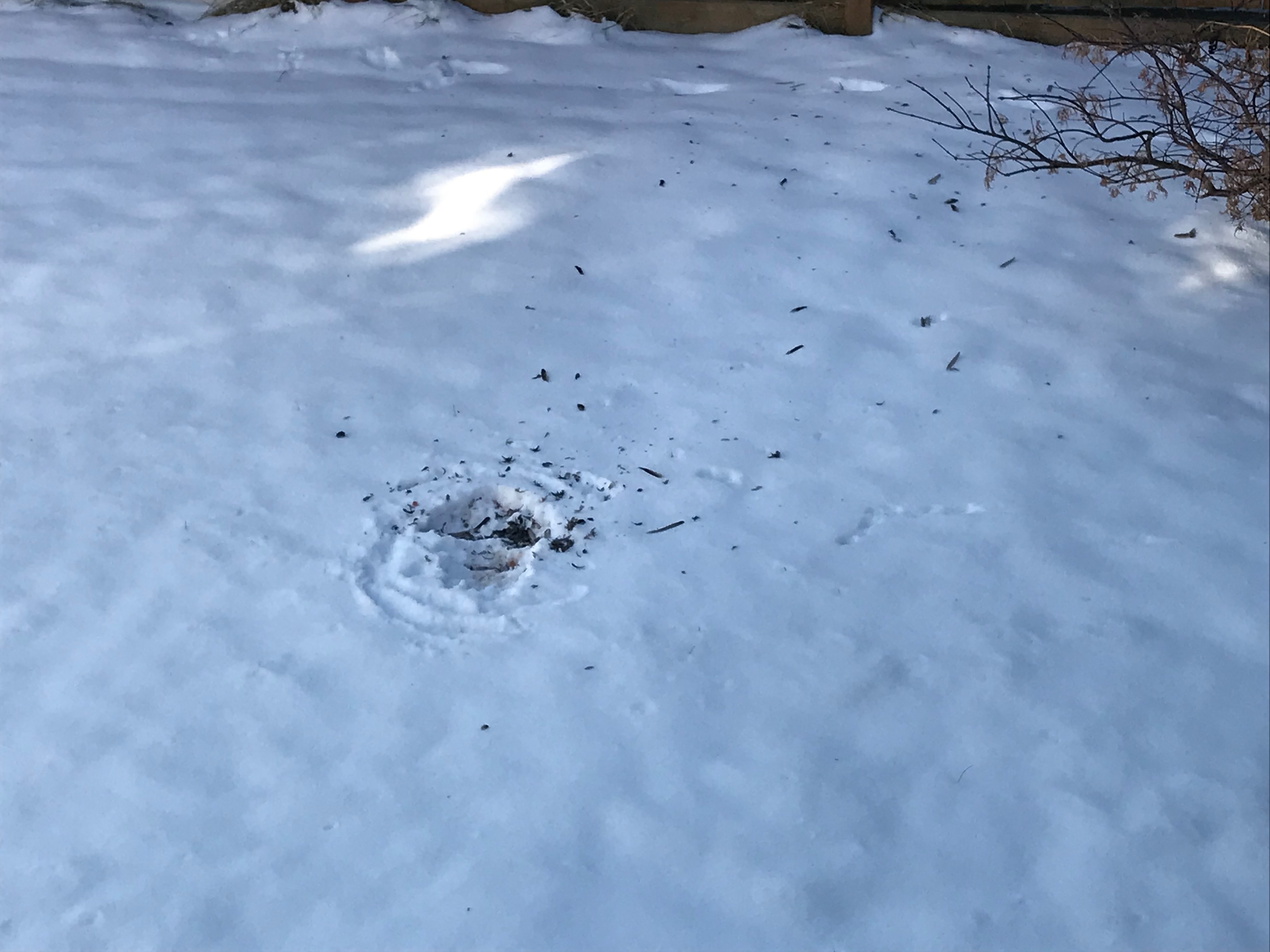
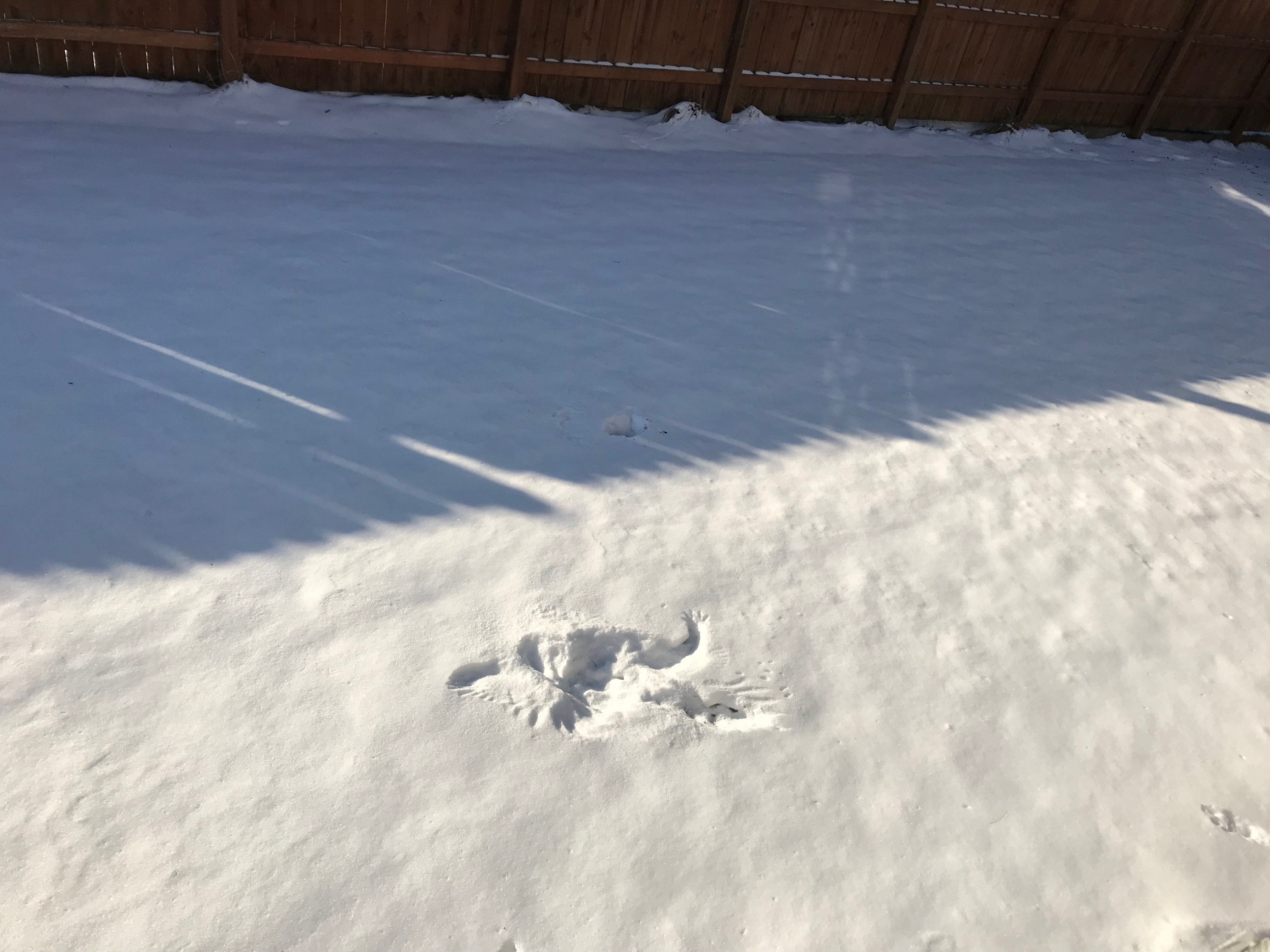
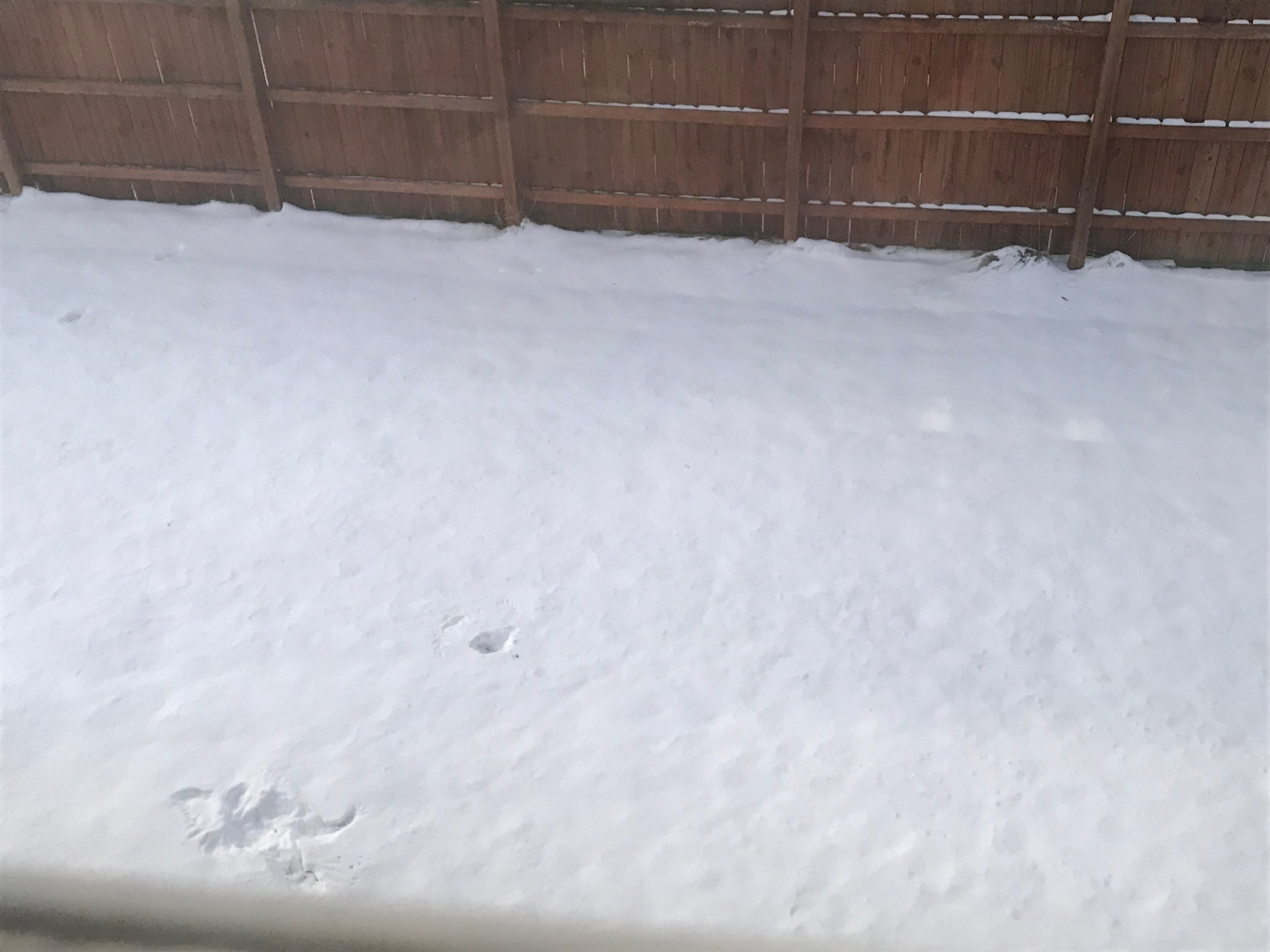
Dateline: January 24.  Location: Backyard.  It was clearly a crime scene.  There were prints in the snow.  Blood.  Signs of a struggle.  The marks hadn’t been there the evening before, so I knew I was looking at a recent offense.  Two indentations in the snow, about 10 yards apart.  Too far for a small animal to have leapt.  A third impression, closer to the second.  Clear feather imprints in the snow.  Earlier on the day in question, I had observed a hawk in the white pine across the street.  Two angry blue jays strafed the interloper, but he appeared unintimidated.  He fluffed his feathers and surveyed the area, including, I presume, my back yard.  In his own time he left, in an unmarked flight.

In the morning, rabbit tracks.  The first impact had been violent.  Debris had been raised from under the snow blanket and scattered toward the southwest.  No footprints leading away from the site.  This led me to conclude the victim had been lifted into the air.  But why the second impact site?  There had been a struggle.  The victim, presumably of the Lepus genus, had tried to make a stand.  The second impact site had bits of blood toward the west.  Neither of these first two scenes of investigation bore any indicative hints to the identity of either the victim or the perpetrator.  I did not have the means to test the blood.  No tracks led from either impression.  The third site clearly involved a struggle.

Impressions of feathers, spread at least two-thirds of a meter across, remained clearly visible in the snow.  Between these wing prints evidence of a scuffle.  Perhaps an argument ensued.  No feathers or fur remained on site.  I had to piece this together before the snow began to melt.  What I am labeling site 1, the initial strike, was near a bush under which rabbits are frequently observed to rest.  A hawk, confident of its ability, swooped down in the night and apprehended the rabbit.  The victim fought back, enforcing an unscheduled landing.  Site 2.  Blood was drawn.  Site 3 was an easy rabbit’s leap from site 2.  Perhaps the rabbit escaped.  The wing and claw marks on the snow suggest that the victim did not survive this third attack.  No solid physical evidence could be recovered.  It was just too cold outside to go and look personally.  I am not paid enough to do that kind of work.  Or I could have it backwards.  Site 3 could be the initial strike, but my reconstruction seemed more likely  Either way, the backyard would, however, never feel safe again.


Meanwhile, on Earth

Low budget doesn’t always translate to cinematic disaster, but in The Crater Lake Monster, it unfortunately does.  I have a soft spot for those who attempt to make movies but don’t succeed the way that they’d hoped.  The Crater Lake Monster is poignant in that respect as the production company, Crown International, apparently messed up the financials and insisted on cutting scenes that helped to make a bit more sense of the story.  The actors are certainly not those at the top of their game, but the stop-motion plesiosaur isn’t half bad.  The story itself doesn’t seem to support its tonnage, however.  A meteor crashes into Crater Lake (not the famous one).  Some months later a monster begins attacking people after it eats up all the fish.  There are a handful of characters who are concerned, and some just casually passing through.

The sheriff, at first skeptical, becomes a believer after seeing with his own eyes.  The doctor, who examines a victim’s body, thinks there’s something in the lake.  A couple passing through on their way to Vegas see the monster up close and survive, but their trauma is so great that they can’t talk about it.  A pair of guys who rent out boats to fishers are having trouble because there’s no fish left.  And a pair of archaeologists from “University Extension” insist that the creature should be kept alive since, well, you don’t often come across dinosaurs.  They also figure out that the hot meteorite incubated a fertile plesiosaur egg that had been at the bottom of the lake for millions of years.  There’s even a story of a liquor-store robber thrown in.  The robber’s only tied to the plot by getting eaten by the monster.  The monster is finally killed by the sheriff with a bulldozer.

Some of the people that worked on this film, especially the stop-motion crew, had some recognizable chops in the biz.  One of them had worked on that childhood Christian kids’ show Davey and Goliath, and another was concurrently working on Star Wars and went on to work on Jurassic Park.  Meanwhile, Crater Lake is so bad that it’s a bit surprising that it hasn’t really become a cult classic.  Creature features are a guilty pleasure.  With a bit of coaxing, and financing, this one might’ve been made passable.  Who doesn’t like to see the underdog achieve some success?  Of course, it did come out the same year as Star Wars, with its budget, and clearly couldn’t compete down here on Earth.


Bottoming Out?

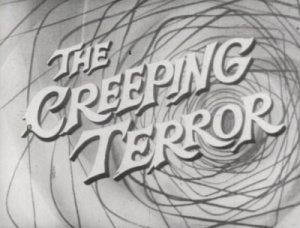
It was an honest mistake, I swear!  I had remembered reading in Stephen King’s Danse Macabre that The Creeping Unknown was worth seeing.  I’d known about this movie under the title The Quatermass Xperiment since I was a tween.  The problem when you grow up with no money in a small town is that you don’t have access to such things.  Then a friend gave me a DVD of The Creeping Terror.  I thought it was The Creeping Unknown.  The disc hadn’t spun too many revolutions before I realized I was watching what may be the worst movie ever made.  Many reserve that for Plan 9 from Outer Space, but believe me, this is much worse.  The story of a couple of aliens sent to eat people to transmit to their superiors what our weaknesses are, it seemed to me that the main weakness is nobody thought to run from this slow-moving monster, except one guy who just abandoned his girlfriend to it. (Apparently girls don’t run.)

Like that other baddie, The Beast of Yucca Flats, the audio was not preserved so nearly all of the film is a voice-over by an authoritative-sounding announcer.  There are a few dubs, but they aren’t well done.  And then extended scenes of young people at a dance (have you ever heard of just filling up time?) are intercut with perhaps the slowest monster attack in history.  There’s so much not to like here.  The poor acting.  The plot nearly as dimwitted as Trump.  The stock footage of a rocket launch run backwards to make it look as if it’s landing.  The sheriff making out with his wife in the patrol car while “on a break” from looking for the monster.  The instrument panels from beyond our galaxy with Arabic numerals and Latin letters.  You find yourself hoping for the Apocalypse so you won’t have to watch the rest, and it’s only 74 minutes long.

Somehow it comes as little surprise that the director (also producer, editor, and star), under the name Vic Savage, disappeared never to be heard of again.  The film’s main financier, had to try to put the movie together for release.  (He also had a role in the movie.)  There is, as I’ve mentioned often before, an aesthetic to watching bad movies.  I’ve ended up seeing many of “the worst of all time” in my spate of movie viewing over the past three or four years.  This is the first time it has happened by mistake.  I do have to say that it’s easier to appreciate a bad movie when you can see that it’s coming and prepare yourself accordingly.  The Creeping Unknown remains elusive.


A Christmas Parable

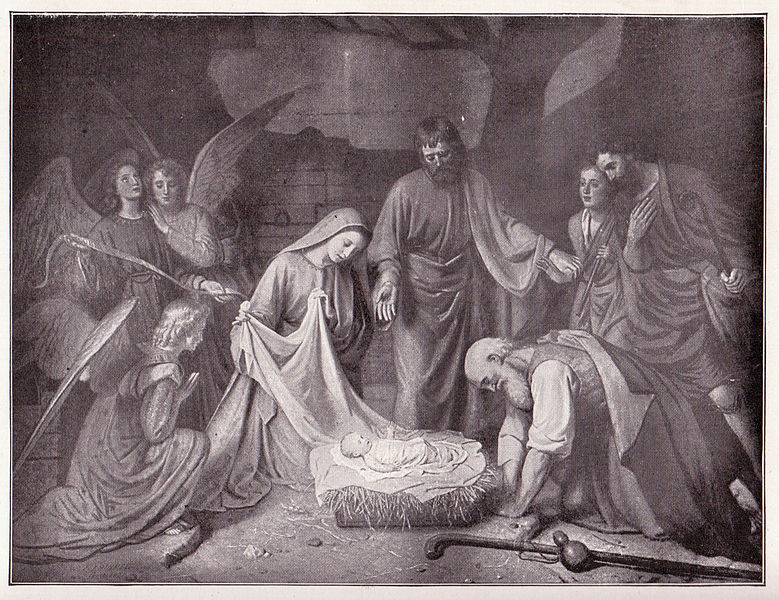
And it came to pass in those days, that there went out a decree from Donald Trump that all the world should be taxed.  2 (And this taxing was first made when American troops were pulled from Syria.)  3 And all were to be taxed, every one to help build a wall.

4 And Joseph had just bought a house in Nazareth, but had to go into the IRS office, unto the city of record, which is called Bethlehem; (because he was of the county of Northhampton:)  5 To be taxed with Mary his espoused wife, being great with child but no insurance.  6 And so it was, that, while they were there, the days were accomplished that she should be delivered at St. Luke’s. 7 And she brought forth her firstborn son, and wrapped him in swaddling clothes, and laid him under a bridge; because there was no housing for them in Bethlehem.

8 And there were in the same country soldiers abiding in their bases, keeping watch over their radar by night.  9 And, lo, drones appeared before them, and the glory of aliens shone round about them: and they were sore afraid.  10 And the ETI said unto them, Fear not: for, behold, I bring you good tidings of great joy, which shall be to all people.  11 For unto you is born this day in the city of Bethlehem a Democrat, which is the Prince of Peace.  12 And this shall be a sign unto you; Ye shall find the babe wrapped in swaddling clothes, lying under a bridge in Bethlehem. 13 And suddenly there was with the UFO a multitude of the heavenly host praising democracy, and saying,  14 Glory to the American ideal in the highest, and on earth peace, good will toward women and men.

15 And it came to pass, as the drones were gone away from them into heaven, the soldiers said one to another, Let us now go even unto Bethlehem, and see this thing which is come to pass, which the ETI hath made known unto us.  16 And they came with haste, and found Mary, and Joseph, and the babe lying under a bridge.  17 And when they had seen it, they made known abroad the saying which was told them concerning this child.  18 And all they that heard it wondered at those things which were told them by the soldiers.  19 But Mary kept all these things, and pondered them in her heart.

20 And the soldiers returned, glorifying and praising democracy for all the things that they had heard and seen, as it was told unto them.

Image credit: The Harmsworth Monthly Pictorial Magazine, Volume 1 1898-9; public domain via Wikimedia Commons

Those Who Know

I felt a little bit odd being asked.  A local school invited me to be consulted on classroom decoration.  I took a total of one class in interior design as an undergrad and that hadn’t been my highest collegiate grade.  So why were they asking me, of all people?  Let me put this into context for you.  It was in Wisconsin.  I’d been the Academic Dean at Nashotah House for a few years and had served for a few on the Parent Teacher Organization, one as president.  While at Nashotah I’d been tasked with making the three classrooms more appealing—choosing paint colors and replacing drapes that had been falling off their hooks since I’d arrived a decade ago.  But I believe the real reason that I was asked for a consultation was that I was a professor.  Yes, a professor of Hebrew Bible, but a professor nonetheless.

Such requests, no matter how mundane, ceased immediately when I had to take a job in publishing.  People don’t turn to an editor as an expert.  (Not even most academic authors—trust me on that.)  We like to put people in neat categories.  Boxes.  Professors are smart, so when we need advice we seek them out.  Whether or not they know anything about the topic.  I was even assigned to teach accredited courses in fields that I’d never studied.  It was a heady feeling, I have to admit, being treated like my position qualified me to speak on “ships and sails and sealing wax” and everyone listened.  What has always struck me as odd is how abruptly this stopped.  Even among church folk.

When I was teaching I was frequently asked to address adult education classes on Sunday mornings.  I had arcane knowledge that priests and ministers wanted me to share.  Once I began working as an editor I had someone from a church in Princeton contact me to ask if I could recommend someone else to do such a course.  They were somewhat taken aback when I suggested that I had some expertise in the area.  I’ve even had other academics, in the same field in which I taught, react with total surprise that I know something about the discipline.  I have a sneaking suspicion that the ease of categorizing people has been substituted for actually getting to know someone.  It’s easier to call, or email, the local university—or even, in my experience, a small, obscure seminary—to find the expert you want to consult.  You’d like to think that we might be able to ponder a little more deeply.  But trust me, you don’t want to ask me about interior design.


Hungry Eyes

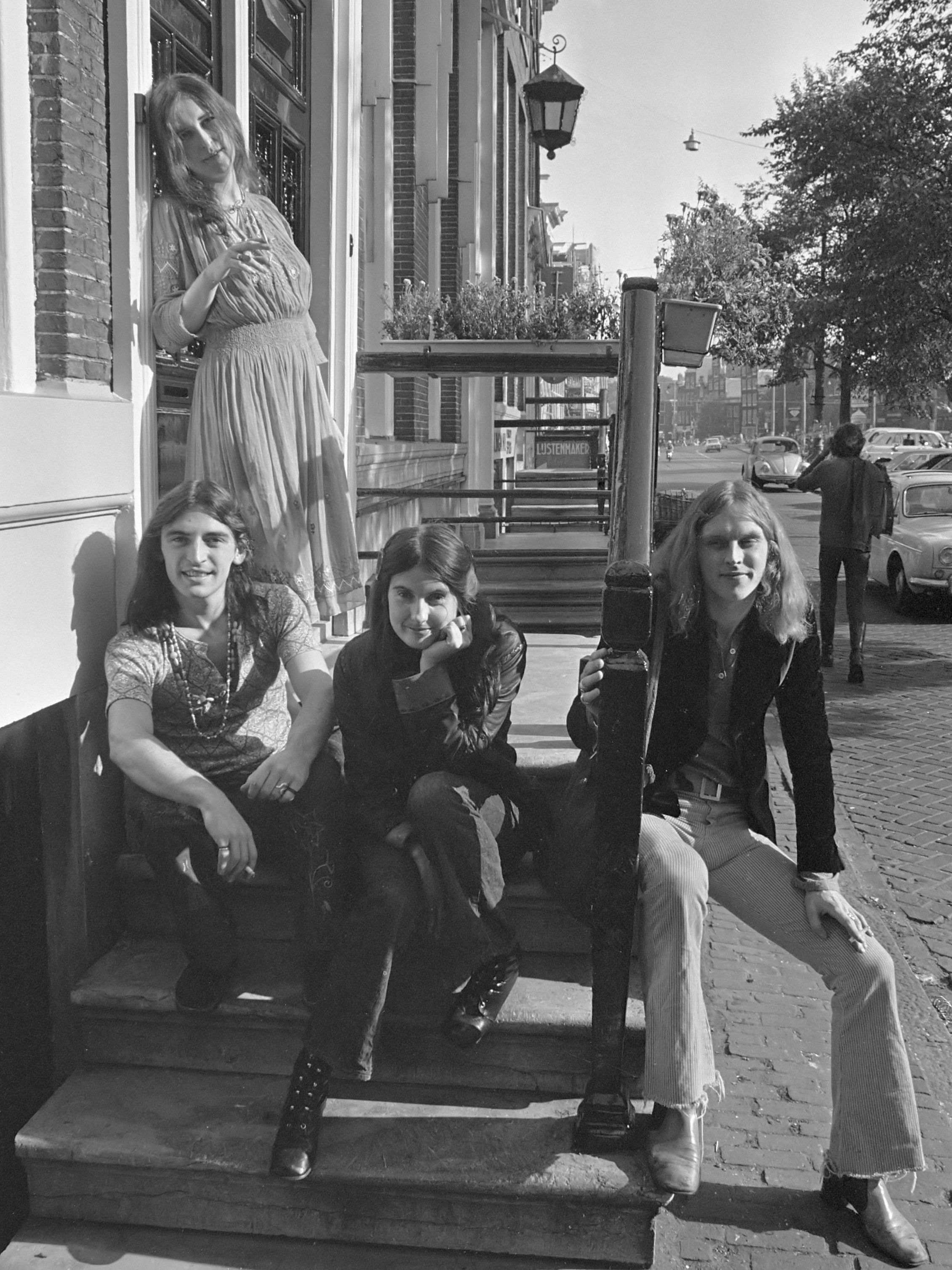
They’re watching.  All the time.  I may be a quasi-paranoid neo-Luddite, but I have proof!  Who’s the “they”?  Technology nameless here forevermore.  So my wife and I attend Tibetan singing bowls once a month when we can.  It’s the night I get to stay up late even though it’s a “school night” and get bathed in sound.  Our facilitator is a kundalini yoga instructor.  To those of you with experience, you know what that means.  At the end of each session we sing the “Longtime Sun” song.  Each and every month the next morning I groggily look it up.  I know it’s a recent song (hey, I’m in my sixties) but I can never remember by whom.  So for the record it was written by Mike Heron of the Incredible String Band and it’s part of a piece called “A Very Cellular Song” on the 1968 album The Hangman’s Beautiful Daughter.  (Now I remember!)  Okay, so I’ve got that out of my system. (I must add that this is disputed, with some claiming it’s an old Irish blessing. But note, AI only complicates the issue because it doesn’t do actual research.)

Incredible String Band: Image credit—Bert Verhoeff / Anefo, under the Creative Commons CC0 1.0 Universal Public Domain Dedication, via Wikimedia Commons

So how’s that proof?  Well, there’s an unconventional website I check daily.  Are you surprised?  Really?  To get headlines I have to reload it daily and the ads sometimes refresh.  I checked this site a mere five minutes after searching “Longtime Sun” for maybe the fifth time and the ads in the refreshed page were for singing bowls.  Just five minutes earlier I’d been searching a hippie tune and already they were preparing ads for me.  You see, “Longtime Sun” is a standard of many (I gather from the interwebs) kundalini yoga classes.  So much so that it’s commonly said that this is a traditional Tibetan song.  Well, I suppose to call it “Very Cellular,” or even “Hangman’s Daughter,” might harsh the experience a bit.

Kundalini yoga is very esoteric stuff if you read a little more deeply.  For me such reading is an occupational hazard, so I’ve read enough to know that many respectable people might be a bit shy upon hearing the details.  That’s not to say that it’s ineffectual on the level of singing bowls.  I have great respect for esotericism, although Hinduism isn’t in my background.  But if “they” know what kundalini teaches, what kinds of ads might begin to show up on the websites I visit?  What’s truly amazing is that a web search for a specific song brought up an ad for something that would be puzzling, were a reader innocently wanting to find out about “A Very Cellular Song.”  For academic purposes, for instance.  Of course, they know, you can merch anything.  You can trust the internet only so far. And they are watching.


Hiding Kirk

I recently saw—don’t ask where—a U.S. Space Force officer dressed in camouflage.  How fitting for a Trump-era agency.  I should think a Space Force uniform should be all black, maybe with little white dots on it.  Rather like my black lawn furniture that got in the way when I was cleaning my paint sprayer full of white paint.  I often wonder about our love affair with feeling safe.  Perhaps my own phobias have reached such a level that they’ve cancelled each other out.  If I was trying to hide in space, I think I’d try to look small, and dress in black.  Camouflage, which is based on colors found down here, probably wouldn’t do so well for the other planets of our solar system.  Or even the moon, for that matter.  And I personally think I might trust the aliens not to have earth-like issues.  After all, we think it’s okay to let machines think for us.

I grew up quite the sci-fi fan.  I read lots of books in that genre and enjoyed science fiction movies almost as much as my beloved monsters.  I used to watch that show, UFO in the 1970s.  The one with the interceptors with a huge missile on their noses.  I wasn’t really worried about aliens trying to invade.  Perhaps these days I think it might be better than the tedium of daily existence in the 9-2-5 world.  In any case, if we must have a Space Force, ought they not dress for the job?  I’m pretty sure I’ve got some tin foil in the kitchen with which to construct my hat.  Let’s look the part—that’s all I’m saying.

Photo credit: NASA

While all this is going on speculation has been growing about water on Mars.  There’s a good chance we may find it.  (We can always hope that if Elon Musk makes it to the red planet that he will take Donald Trump with him.)  If we are looking for invaders, though, we probably have to go further afield.  That’s alright, dynamic duo, we’ll get along without you.  Perhaps in the interim someone will realize that, dressed in earth green camouflage, our Space Force will surely stand out against the surface of Mars, or wherever they might go.   Unless it’s a planet very much like earth.  That houses intelligent life.  Maybe the beings there feel safe, knowing that their space force—for surely they will have one—is dressed in black.  Or at least, their life really is intelligent.


Prophetic Cookie?

I have no idea if they really exist in China, but the Chinese fortune cookie is ubiquitous in the United States.  I’m assuming that China isn’t tracking them to know where Americans eat, but I do often wonder about what’s inside.  Many years ago I noticed that the “fortune” aspect had dropped out.  Predictions weren’t made any more and your typical cookie had an anodyne, but sometimes witty reflection in it.  They might’ve been called “aphorism cookies.”  Well, that all changed for me after a meal that included said cookies.  I was surprised to see an actual prediction, and, not only that, but one that was strangely apt.  It reads, “You will make important academic connections in March.”  Considering that academics make up a minuscule part of the population, that seems oddly specific, doesn’t it?  And with a date—March.  This differs qualitatively from “Leadership is action, not position.”

There are other future-oriented prophecies in cookies, of course.  “You will become known for your generosity.”  (Gee, that’s nice.)  Or “A short vacation is in order for you.”  But I’ve decided to hang onto this academic fortune to see if it might come true.  I do have many, many academic connections, of course.  That’s part of my job.  And I was an academic myself in my palmier days.  But what seems strange to me is that many people reading “academic” in a fortune would automatically dismiss it, I suspect.  An important academic connection, no less.  Knowing a professor, from my experience, often doesn’t help in getting you anywhere.  I value their friendships, of course, but it hasn’t sold more books.  Or got me that teaching job I still covet.

Will the cookie prevail where other measures have fallen short?  I have to wait a few months to find out.  And more importantly, I have to remember this fortune.  I can, I suppose, put it on my bulletin board amid the Sleepy Hollow and other mementos and hope that half a year from now that I’ll recollect this little post, and that little cookie.  Of course, if someone offers me a job at a local college in March I’ll consider the deal sealed—the cookie was wise.  If nothing apparently happens, however, I’ll still have to wait beyond that to see if something emerges from my many daily interactions with academics.  Maybe one of them will truly be listening.  That’s the thing about predictions—they’re as much interpretation as they are prognostication.


Seasonal Poe

The more I read of and about Edgar Allan Poe, the more convinced I become that he wasn’t as associated with horror in his own mind as he has become.  As one of the earliest American writers, he has become the icon of those who wrote on the dark side.  His contemporaries—Washington Irving, Nathaniel Hawthorne, and Herman Melville—did as well, but it was Poe who became iconic.  On a recent trip to Michaels to take in the seasonal ambiance, Poe’s presence was difficult to ignore.  I wasn’t prepared to shoot a photo-essay (I’m not sure how they feel about such things in a store, in any case) so I didn’t photograph all the pieces.  “The Raven” is frequently referenced, with typewriters with the poem emerging and large, ominous black birds about, but Poe himself also appears.  There are, of course, painted busts of Poe.

But Halloween has grown more whimsical over the years.  Arguably for my entire life it has been primarily a children’s holiday, but many have noticed that those of us who grew up with Halloween have retained adult interest in it.  Part of this is no doubt commercial since the captains of industry have learned people will spend more on Halloween than any other holiday except Christmas (I do discuss this in my forthcoming book).  And indeed, the Headless Horseman appears quite a lot as well.  Irving, however, isn’t there on the ground.  Poe is.  The whimsical part comes through in showing the humor of the season.  For example, although Poe is shown in the noble bust format, he’s also portrayed (fully clothed) on the toilet.

Finally, there were figurines of a fanciful tombstone of Poe.  They even got the dates correct.  Now, there’s more to be said regarding the comparison with Irving.  You can find the Headless Horseman on the toilet as well (along with Dracula).  You can find the Horseman in bust format as well.  When it comes to tombstones, however, the fictional Ichabod Crane shows up alongside the nonfictional Poe.  That casts a certain light on Irving’s most famous story.  I’ll save that for another post, however, since authors are expected to repeatedly plug their books.  I left Michaels strangely reflective.  Poe-themed merchandise is fairly typical any given year, but since we’re having our first Halloween party in some years, and since I’ve been exploring Poe’s range as a writer, this clear abundance of Poe as an icon gave me pause.  As if I were coming within view of the melancholy house of Usher. 


Science of Convenience

One thing I’ve noticed about employers is that they’re all for science, except when science contradicts capitalism.  Then they become all mystical.  I had a situation illustrate this particularly well with one of my many employers.  Touting everything to be “evidence based,” they liked to refer to the science behind their reasoning.  Then a study came out demonstrating, scientifically, that more breaks actually increase efficiency in learning and working.  Suddenly silence from management. Crickets chirped.  This observation was just as “evidence based” as daily operations, but it was ignored because, well, it would be giving too much to employees.  You see, science that benefits the upper levels of management is one thing, but by the time it trickles down, well, you know.

American culture is based on the premise that you need to drive people to work as hard as possible.  Perhaps anecdotally, the Covid-19 pandemic showed that workers at home were just as, if not more, productive than they were after enduring an often horrendous commute to get to the office.  Once pandemic strictures began to lift, however, it was all “we want you back in the office.”  Bosses like to look out over seas of employees in their cubicles and feel the surge of the galley master with his whip.  You need to keep workers in line, you understand.  That’s the way capitalism works.

I often wonder where the world would be if superpowers didn’t have cultures based on greed.  One of the seven deadly sins, or capital (!) vices, the worship of personal gain stands behind capitalism as we know it.  And we’ve seen the results.  A shrinking middle class as those with all the wealth make plutocracy out of what was intended to be a democracy.  (Of course, the wealthy founders of the country probably didn’t have a real grasp of what life was like for the poor, even at the start of things.)  Capitalism is good at using aspects of all human endeavors in order to increase its reach.  Science is one such tool.  Religion is another.  Science says more time off is good, and can increase productivity in our current world.  Religion says greed is evil.  These are the parts we’d like to ignore.  Even the Harvard Business Review suggests a four-day work week is beneficial.  Business leaders are skeptical, of course.  Skepticism is one of the elements of science.  And science can be very profitable, if it favors those who hold the reins of power.

Photo by Alex Kondratiev on Unsplash

Dictionary Dreams

“Lord, now lettest thou thy servant depart in peace.”  Thus begins the venerated Nunc dimittis, familiar from so many years of chanting evensong at Nashotah House.  It comes to mind when I’ve reached a milestone I never dreamed of attaining.  One that makes me feel as if I’ve accomplished my life’s work.  Strangely, it didn’t occur when my name ended up in a study Bible’s front matter.  But a friend recently sent me a note that immediately brought old Simeon’s words to mind.  I have been cited in the Oxford English Dictionary.  My book Weathering the Psalms is quoted (in the web version) under “simile.”  I have no idea how examples are selected for the OED.  It used to be scraps of paper sent in by astute readers, but I suspect things have changed.  How my obscure book ended up there, I haven’t a clue.

There’s an irony here as well.  Like most academics clueless about publication, I initially proposed Weathering the Psalms to Oxford University Press, assuming they published such things.  It was turned down on the basis of a reviewer—one or two I know not—that I later met at a social function, where he was clearly embarrassed.  I really just wonder how the OED found the book to cite in the first place.  In terms of copies sold, it has been my most successful book, but that’s not saying much.  As far as I can tell, it’s only sold less than 400 copies (the royalty statements don’t have the total and I haven’t received a check in years).  I guess all things in the world are connected, whether we notice it or not.

Those who know me personally are aware that validation is a huge thing for me.  I suspect that is true of most people who grew up in difficult circumstances and who managed—and this is never a certain thing—to pull themselves out.  Having been fired from my long-term teaching post (where I was working on this book) only made me want to prove myself more, I guess.  Insignificant things like getting a Choice review for one of my books (which continues to sell poorly) and having that behemoth of a dictionary notice that I used a fairly common word in a fairly common way do tend to release the endorphins.  It’s like maybe someone noticed that I’ve passed this way.  Maybe there was a reason for trying to capture the Wisconsin thunderstorms in a book about the Psalms.  Maybe there’s a reason each working day there concluded with the Nunc dimittis.


Second One

Twice in a week.  I heard (actually read) a term I’d never encountered before.  It’s one of those rare beasts—an “academic meme.”  It means nothing to most normal citizens, but it has already achieved currency in academia and on various web platforms.  What is it?  “Reviewer 2.”  Or “Reader 2.”  If that means nothing to you, you’re normal.  If you wonder, however, what this is about, read on.  (Since my posts average two readers, it seems, this is an appropriate topic.)  When universities and/or editors do their jobs, they rely on peer review.  The idea is simple enough—two recognized experts (sometimes three or more) are asked to read a dissertation, an article, or a proposed book.  They then provide their opinion.  “Reader 2” (or “Reviewer 2”) has become shorthand for the one that torpedos a project.

Getting academics to agree on anything is like the proverbial herding of cats.  Academics tend to be free thinkers and strongly individualized.  (Perhaps neurodivergent.)  I know from my nearly fifteen years of experience that the most common results when you have two reviewers is two different opinions.  Often polar opposite ones at that.  One suggestion for the origin of “Reader 2” is that some editors, or dissertation committees, wanting to spare an author’s feelings, put the positive review first, followed by dreaded “Reader 2.”  Others suggest that it’s just a meme and that over time (internet speed) the meme came to mean “Reviewer 2” was harsh and mean spirited.  The thing is, once a meme is out there it’s difficult to stop.  Now, apparently, a generation has made “Reader 2,” well, a thing.

This has been floating around for a while, apparently.  I only heard it recently and it occurred to me that I’m missing out in the new academia mystique that the internet has created.  My most popular YouTube video is one I did on “dark academia.”  I wasn’t aware this is a hot topic among the internet generation.  There is a good dose of the unknown regarding what goes on within those ivory towers where the majority of people never go.  My own experience of academia was gothic, as I explain in that video.  I have a follow-up ready to record, but outside academe finding time with a 9-2-5 and a lawn that needs mowing and weeds that just won’t stop growing, well, that’s my excuse.  Whether it’s valid or not will depend upon your assessment, my two readers.