On the Rocks

This universe is indeed a mysterious place. You don’t have to believe in the paranormal anymore to see it. A look at the headlines makes my point. There are those, however, who do look at the genuinely strange, and once in a while this realm crosses paths with that of religion. A friend pointed me to a story on Mysterious Universe about floating rocks. Apparently this story is going to be on the mainstream Travel Channel, so it’s not completely bonkers. It caught my attention because it’s about rocks. While of decidedly poor qualification to be a rock-hound, I have more than a passing interest in geology. Itinerates shouldn’t collect rocks, but I can’t help myself. Anyway, I’ve been known to go to publicly open mines and tap away with my rock hammer hoping to find some not-so-hidden treasure.

According to the story, there is such a publicly open mine in Arkansas. Crystals (I expect quartz) are available for surface excavation, for a fee. Then the owners, the Murphys, noticed the anomalous rocks. Since they are conservative Christians (this is Arkansas after all) they feared what powers might be behind rocks that don’t obey the laws of gravity. The mine didn’t get closed and hushed up because of an unusual source of inspiration. An article by Billy Graham on divine mysteries led them to keep the mine open and to allow for investigation. Once the Travel Channel comes out with its program Crystal Mine is sure to experience an influx of business. Mainstream scientists, one expects, will not be among them.

The universe is vast. We haven’t explored all of our own planet yet (we’re kind of busy destroying it at the moment, so if you don’t mind…) and yet we gleefully claim what’s impossible. I don’t know if there are levitating rocks in Arkansas, but I do think we’ve been a bit hasty about some of our conclusions. We may yet find things that will force the concepts—the laws—to change. Consider gravity, which seems particularly relevant in the case of floating rocks. Sir Isaac Newton (devout theist that he was) ending up having to relinquish the “correct” explanation to Albert Einstein. Some have been so bold as to suggest that maybe even Einstein might not have gotten the whole skinny on gravity. We continue to learn. Levitating rocks are indeed strange. Not so strange, however, as Billy Graham being the one to rescue an anomaly for the world to see.

Survival Instructions

When the apocalypse comes—present political antics assure it more than any biblical prophecy—I fear for the survivors. This post is for them. I presume you’ll get the internet back up and running quickly; it is, after all, humanity’s most important achievement. I know you’re hungry, but first a bit of history. (Sorry, I used to be a professor; it’s how my mind works.) The trendy drinking glasses that some restaurants used to use were called Mason Jars. They were originally for home canning. You see, in summer when the earth was generous, we’d have too much food. Judging from the state of my refrigerator, it’s impossible to keep it fresh for more than a few days. So people invented canning. You’ve probably found a stash of cans, which is why you’re reading this post. These glass cans came with a pretty obvious screw-on lid, under which was a sealed lid that you could pop off with a thumbnail if you were desperate enough. Food awaits.

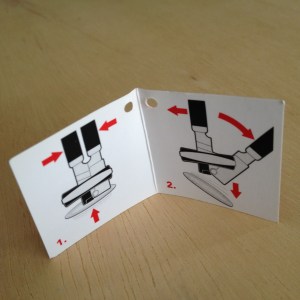
Then a metal canning process was invented. To open a metal can you need a special tool called a “can opener.” Since I’m sure all electric can openers were destroyed in the apocalypse, you’ll need to know how to open a can with the items at hand. Do not panic. If any Swiss Army knives have survived (and I’m sure they have, if anything has) you can use one of those. Unfortunately, describing how is more a job of poetry than prose. Besides, I don’t have a webcam to record myself, or my disembodied hands, doing it for you. You might find a commercial can opener a better option. Be careful, they break easily. If you find some in the ruins of a store take them all—you’ll need them. Got one? Okay, now here comes the tricky part.

You need to use this device to open the can to get at the goodies inside. I’m writing this during a rather paranoid and poorly educated period of human history, so please bear with me. It is your salvation. Even the simple can opener has to be sold with wordless instructions in my era. I am here posting those instructions. Follow these two simple steps, numbered conveniently “1.” and “2.” You will have food for your starving bellies soon enough. And while you’re slurping down whatever sweet or savory goodness is inside that metal container, maybe you’ll pay heed to a bit of friendly advice from someone who didn’t survive the dread end of the world: when enough of you find each other to need to elect a ruler, please be sure that whoever it is knows what she’s doing. One thing you might look for is someone who at least knows how to use a can opener.


Citation Anxiety

As a recovering academic, I sometimes am compelled to look when Academia.edu sends me notices. Academia, most of my academic colleagues don’t realize, is a for-profit website that advocates open access. “Open access” (or OA in the biz) is academic trash talk for making the published results of research available for free. It’s a great idea, but it often doesn’t take into account how complex publishing really is. Peer review, printing, and distribution of articles all take money and to make all research free cuts out what those who publish the research can use to fund the venture (with a cut taken out, of course, to make the whole thing worth their while). That’s the way capitalism works. (Look it up under economics.) In any case, not realizing that Academia is also a profit-making venture, lots of us put our published papers on it, making them freely available to anybody who cares.

Once in a while Academia will send its users a flattering notice: “X-hundred people have cited your papers.” Be still, my throbbing heart! Desperate for any attention, most academics (let alone us exes) are thrilled that more than 100 people have read their stuff. So I clicked their link. “309 papers mention the name ‘Steve Wiggins’ or ’S.A. Wiggins’” it cheerfully reads. I know something the robot apparently doesn’t. I’m not the only Steve Wiggins on Academia. There is a slightly older agronomist whose name I share. He’s employed in academia and has more papers than me. And “S. A. Wiggins” could be anybody. My 309 paper mentions shrinks to double digits. Not high double-digits either. Names are hardly unique identifiers. With some seven-and-a-half billion people, there’s bound to be some reduplication. I always tell the few curious to search “Steve A. Wiggins”—with the quotation marks—to find the few, true references.

Taking on the internet is a fool’s errand. This blog gets a few piddly hits a day. I often consider closing it down. Readers don’t share it enough to get any attention. It takes a lot of effort on my part since I write books (both fiction and non) in my hours not at work. So when Academia shows up in my inbox my excitement spikes, just for a moment, and I go on with my other work, which never seems to get done. And then, when I’m sure nobody else is looking, I go ahead and click on the link.


New Religious—Bang!

Religion, no matter what the skeptics say, gives us something to believe in. Even those who claim no religion believe in their non-religion. We can’t escape belief. It’s no surprise, then, that new religions constantly emerge. As people find new things—or events—meaningful, and they come together around the phenomenon or episode, a religion eventually emerges. Take the example of the Chelyabinsk meteorite. On February 15, 2013 a resounding explosion rocked Chelyabinsk. What was likely a former asteroid had headed for Russia (which they seem to prefer almost as much as Donald Trump) and became a meteoroid (the name for meteors while they’re still in outer space). Once it entered the earth’s atmosphere and became a meteor proper, it superheated and exploded in the sky—a phenomenon known as a bolide. For those of us who’ve experience them, bolides are unforgettable. Once the pieces of the exploded meteor hit the earth they became meteorites.

Image credit: NASA/ESA, public domain

Meteors are an everyday occurrence. Any time you see a shooting star—which you can do any clear night—you’ve seen one. Large, exploding meteors are rare. Shortly after the Chelyabinsk meteorite fell, according to Astro Bob, the Church of the Chelyabinsk Meteorite formed. This group did not wish for the main body of the surviving meteorite to be raised from Lake Chebarkul, where it fell. Their protests became religious as they chanted, prayed, and sang. A new, if temporary, religion was born. Astro Bob goes on to say that religions and meteorites are no strangers. Indeed, up until the Middle Ages and even a little beyond, it was believed that rocks could not fall from the sky. A meteorite, then, was a sign from either God or, well, you know who. When the impossible happens religions are quick to follow. Astro Bob’s story was written in 2013, so he doesn’t declare the fate of the Church. The meteorite was raised from the bottom of the lake in October of that year.

New Year’s Day in 1987, while I was home from seminary on break, putting a puzzle together with my brother, our house shook. A loud boom accompanied the shock wave. We ran outside to find the neighbors staring at the sky, and a few casting a wary glance toward the petroleum refinery in town. The news later that day told us a bolide had exploded nowhere very near us. We were within the shock wave, and those fortunate enough to be outside that January saw a flaming meteor in the daytime sky. I remember it well thirty years later. I already had a religion at the time (Methodism, starting to tend toward Episcopalianism) so my plate was already full. It was nevertheless a dramatic event, and when your world is literally shaken, you will naturally look for something to believe.


Sweet Tooth

I don’t have a sweet tooth. I count that as a personal flaw, but the fact is I don’t seek out sugary snacks. Still, who doesn’t enjoy a nice chocolate once in a while? My wife and I attended a local chocolate tasting event recently. This was a new experience for me. Being of working class vintage, I tend to look at comestibles in a purely pragmatic way—food is for eating. It shouldn’t taste too bad, and ideally it should be healthy. Between meals I seldom think about eating unless the time stretches too long and hunger kicks in. I’ve read a couple books about chocolate, however, and I was curious what I might learn.

Apart from learning the disturbing fact that much American chocolate isn’t really technically chocolate, it was an enjoyable evening. The proprietors of Carol’s Creative Chocolatez know their stuff. The event began with a history of cacao beans. Native to the Americas in the equatorial regions, it was only after Columbus’s fourth voyage that Europeans discovered chocolate. Indigenous peoples used cacao beans as currency, and chocolate was the food of the gods. Its technical name, Theobroma, means just that. When Columbus appeared, a white man with European garb, and horses (as well as exotic diseases), he was ironically thought to be the returning god of chocolate. Instead, he took the previously unknown delicacy to Europe where various means of preparing it began. Eventually we ended up with the sweet, sugary variety that is considered standard today.

Theobroma plants contain a compound that creates feelings of euphoria. Chocolate, in other words, rewards you for eating it. It’s easy to see why indigenous peoples assigned chocolate its own deity. It’s also perhaps not surprising that what was mistaken for a god became a deadly plague. While Europeans were mostly interested in gold during the early period of exploration, they eventually realized that exotic foods and spices could be almost as good as gold. Chocolate, the food of the gods, could be mass produced and degraded and sold as an addictive treat to children. Such we do with our divinities. If only obesity were the same as obeisance! Instead, we are presented with a treat that tastes good and makes us feel happy. Like most gifts of the gods, it’s best enjoyed in small quantities. Even a little gold will go a long way. And after this evening, I think theology may help to explain the fascination with Theobroma.


Might As Well Read

During my recent travels I had a layover at Sea-Tac Airport. Since I don’t get out much, I always find a walk through the airport a way of measuring what other people find important. At least in a circumscribed way. When you’re traveling you’re limited in your options. Most airlines have addressed passenger ennui by offering devices with electronic entertainment. Instead of an in-flight movie, you’ll have choices of what you want to do, courtesy of the endless magic of in-flight wifi. So the thinking goes. Airports, it would stand to reason, will offer plenty of travel-size diversions. The kinds of things you’re allowed to take onto a plane but which won’t or can’t be used to harm others. A sign at Sea-Tac reads “Books. Food. And yes, beer. Just ahead.” An interesting choice of offerings.

I was strangely heartened by the pride of place given to books. Yes, people still find the book on a plane satisfying. Stories have a way of drawing us in. Making us forget that we’re in a cramped space filled with strangers and recirculated, pressurized air. Books have the ability to take us far away. It’s a magic that movies can’t always achieve. Books leave more to the imagination. I recently rediscovered this on a solo trip across the Atlantic. I used the opportunity to read a novel cover-to-cover. The impact was incredible. For those six hours I was on the ground, following the adventures of young people caught up in the liminal zone of adventure and love. It was a powerful experience.

On my daily commute I tend to read non-fiction. Perhaps it’s the result of earning a doctorate, or perhaps it’s the stigma of enjoyable reading being “fluff.” The great majority of books I read this way teach me a lot. I read about many different subjects, and have recently learned to make commuting time a type of research exercise. But then, a cross-country plane ride is different. While an evening commute from New York City can stretch to three hours or more, that’s fairly rare. Instead, air time is unbroken time. I look forward to it with the prospect of a good novel. Airports are one place where hoi polloi don’t mind hanging out in a bookstore. Yes, the fare will be mostly bestsellers, but anything that gets people to read is a good thing. And, of course, if that doesn’t work for you there’s always beer. Just ahead.


Spice of Life

So it finally happened. Sean Spicer, I mean. Resigned. It must’ve been an impossible job, lying for a liar. The art of lying requires a knowledge of what’s true in order to be effectively done. Since truth is a commodity decidedly rare in Washington, DC, and imports aren’t reliable, to be a liar’s liar takes some considerable skill. Now, all people lie from time to time. Politicians more than most. If you’re too naive to believe that, well, I’m the president of the United States. Tweet. QED. I was in Washington the day of the inauguration from Hell. I was there for purposes of participating in the Women’s March the next day. A curious family member attended the inauguration and swore to what the cameras revealed—it was poorly attended. The next day the otherwise muddy mats—why they chose white I’ll never know—revealed the line where the crowds had stopped the day before. It wasn’t very far back, if I believe my own eyes.

The doleful night of nights, Sean Spicer made his first press appearance. It was the best attended inauguration ever, he lied. Those of us in DC at the time stared at the television screen in disbelief. Shortly after that we were informed that “alternative facts” revealed the way the president preferred to view reality. It has stayed that way pretty much ever since. The amazing thing is that Spicer lasted this long. Trump appointees come with a short shelf life. Behind-kissery will only get you so far. The funny thing was to watch the interweaving of untruths as Spicer spouted a falsehood only to have Trump trump him with yet a different post-truth answer.

The problem with dishonesty is that it quickly snowballs. In the case of the present administration it started well before January and the season for snow. Now it’s July and the melting is picking up speed. Past presidents, as bad as some may have been, seem to have had, at least to a reasonable degree, the greater good of the country in mind. Now we’ve got a commander-in-chief who takes everything personally and who can’t keep a press secretary even after he bans cameras from the room. And still his supporters think he’s doing a great job. Meanwhile, Spicer’s made a celebrity of himself. His resignation comes as no surprise since Trump staffers constantly find themselves living the lie. And for those Tea Partiers who still support 45, it would be a good idea to learn what it means to “bear false witness.” Oh, and the Bible says “thou shalt not” just before that.


Fishy Business

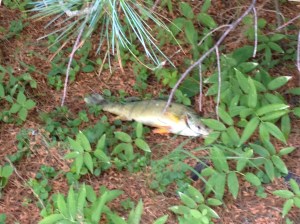
There’s bound to be a logical explanation for how it got there. After all, this is private property and people have been here all day long. Somebody would have noticed if fishermen had stomped up this boardwalk, dropping their catch along the way. There’s no place to dock a boat. And yet here it is in all its Fortean glory. A fish out of water. Literally. It’s a perch, I think. About eight inches long. Forty yards from the nearest water. Other than the flies all over it, it looks in good shape. As if it were out for a swim in the dry air and lost its way back to the nearby lake. I’m sure there’s a logical explanation, but I can’t help but think of Charles Fort and his witty takedown of conventional reasoning.

In addition to fish, this lake also hosts ospreys and bald eagles. Just yesterday morning I saw one flapping above the water looking for breakfast. And one of my relatives saw an eagle struggling with a fish the other day—an issue of maintaining air-speed velocity when fully laden, I think—only to have to catch and release. Could that have happened twice? Raptor drops the slippery, heavy fish and can’t fit under the pine trees with that wingspan to pick the thing up. Possibly. It’s not the most fun explanation, but it will do when logic’s non-negotiable.

Charles Fort, the great anomalist, is perhaps most famous for his irrepressible insistence that rains of fish had a more exotic explanation than a tornado sucking them up only to drop them far from water. In his puckish way, he wrote how such “damned facts” were explained away by convention. Fort liked to hold the door open for the wider possibilities. Meanwhile we’re stuck here with the unarguable reality that there’s a dead fish by the boardwalk, far from water and a logic that makes me ask, if it fell from a bird’s talons why does it look so perfect? No twigs or pine needles picked up from its heavenly plummet. No obvious injuries to its piscine flesh. Even had some disgruntled fisherman rowed up unobserved and flung a perch as far as he could, the thing would’ve had to’ve had quite a spiral on it to’ve made it this far from the lakeshore. Science works by sweeping the facts outside the norm off the table. I’m not saying there’s anything paranormal about this fish, I’m just wondering what Fort would’ve made of it, beyond a free lunch.


Of Fancy

Later today—at this time of morning the use of the word “day” feels ironic—I’ll be on a plane heading out of civilization. Well, to be more precise I’ll be flying to a place from which I can drive out of civilization. Airports only serve cities, after all. Until we get individual drone service to remote locations I guess we’re stuck with jets and their inconveniences. I have to admit I’m more nervous than usual about this. I’ve been reading the stories about airline thugs who, like terrorists, beat and drag passengers off the plane. I try to take extra care to choose an undesirable location on the jet—next to the restroom, for example, or really near an engine—so that an airline employee would rather wait for the next flight than to sit here. I remember when flying used to be fun.

One year I’d lingered a little too long with my girlfriend and I had to rush to Logan Airport to catch my flight to Pittsburgh for the holidays. Arriving maybe half an hour before my scheduled flight, like a pre-murderous O. J. Simpson I ran through the concourse with nary a TSA agent in sight. To the what I am now sure was annoyance of the other passengers, I arrived at the gate just as the door was closing. With a sigh they let me board. I tried to ignore the angry stares of those already seated and belted. We all made it to Pittsburgh, however, in time to celebrate with our families. Now flying means adding at least two hours to your travel time so that you can get through security that makes you feel no more secure. I’m frisked and prodded and made to feel guilty for doing nothing more than wanting to get away from civilization for a while. We call it civilization anyway.

The wait in the airport is the hard thing. They’ll offer wifi, but you’ll have to pay for it. I’ve trained myself to read on the bus, but when you’re awaiting the announcement of your flight when you’ll have to line up just like at the Port Authority, it’s difficult to concentrate on your book. You don’t want to be lost in another world when they call your zone. There are, after all, airline employees hovering, seeking empty seats. I remind myself at the end of this ordeal a lack of civilization awaits. This is why we do it, and there’s a reason we call it getting away. Time to end this flight of fancy and head toward an actual flight that will be anything but fancy.


The Consequences of Being Smart

A few years ago my wife bought me a smart phone. Being lifelong Mac users, the iPhone was the model of choice. I don’t have the intense connectivity issues of the young, I guess, so I don’t use it for texting or surfing the net. It’s great for holding bus tickets, though, and navigating in unfamiliar places. I’ve grown quite used to the convenience of having the internet in my pocket. Such a smart device. Naturally, one smart device in a family will breed others. We all have iPhones now. Like most Apple products they’re hermetically sealed and have few moving parts. The user need not know what goes on inside. It’s the very definition of a black box.

Then my wife’s phone went rogue. Suddenly it stopped picking up 3G signals (these are older models, after all). Now, you can’t just open up a black box and look inside. Even if you could I’d have no idea what I would be looking at. So I called tech support. My wife keeps music and photos on her phone, so we didn’t want to lose anything. Little did I realize that I’d just committed two-and-a-half hours of my life to phone repair. Before I was done, I would come to know six discrete people at differing levels of intimacy as we worked together to figure out what might make a black box tick. I spoke to Apple support and our service carrier. They put us back through to Apple support, and they had to call us back because the process was a lengthy one. In the end, it worked. The phone was restored to its former glory, but I had lost one of the very brief evenings I have.

One of the typical sci-fi, or apocalyptic, scenarios is the person or civilization that builds something s/he it can’t control. Like a biblical plague, we’ve unleashed a technology that makes our lives oh so much easier but ever so much more complicated. In addition to our professional expertise, we all need to understand, to some degree, technology. Technology and deity have begun to share blurred lines. It’s as if many believe it will save us. At the end of the day, however, we have to assert that it is here to serve us. We are the gods and technology represents the lowly beings we’ve created to do our bidding. Then again, those who read ancient stories know what happens when the gods create a servant race. I’m lucky that all it cost me was two-and-a-half hours, and not some even greater sacrifice.


Fishers of Cars

The car was drunkenly weaving across lanes in substantial traffic along Interstate 80. Erratic driving that, although not breathalyzer confirmed, suggested impaired operating. It’s something you never like to see. We stayed behind the vehicle, knowing that it was safer to keep such a car in view rather than attempting to overtake it when the driver veered into the left lane. Since the same muted colors recur on vehicles these days, we needed a quick way to identify this driver at a glance. The Jesus fish on the rear served the purpose well. This situation struck me as a kind of parable, although it really did happen. One of my brothers is a driver by profession. He often tells me that if someone cuts him off in heavy New Jersey traffic, more often than not the car bears a Jesus fish. WWFD?

The ostensible purpose of the Jesus fish is to witness to the world “here is what a true Christian does.” While the New Testament, if I recall, indicates that the true believer puts others before him or herself, the rule of the road is somewhat less spiritual than that. None of us are saints when we get behind the wheel. We’ve got places to go and the drive isn’t really much fun with thousands of other cars bunging things up constantly. Still, if you take the extra effort to put that Jesus fish on your car, aren’t you signaling that this driver holds her or himself to a higher standard? Or maybe the fish is a talisman, like “Baby on Board,” that will somehow protect from the careless, aggressive driver thinking only of self.

The irony here is not that the driver is making poor, or aggressive decisions behind the wheel—let the one without sin cast the first stone—but rather that s/he implicates Jesus in the act. There’s a ready, steady market in evangelical paraphernalia. The WWJD bracelet keeps the question within sight much of the time—but keep your eyes on the road! One of the main problems with the Ichthys symbol is that it is generally on the rump of your car. Out of sight, out of mind. As you finish that last drink before climbing in behind the wheel, the fact that your personal Lord and Savior is being announced to the world may just slip your sodden mind momentarily. The real question is whether a car is the best place to announce your religious commitments. It was the the man in front of the fish, after all, who said “do unto others as you would have others do unto you.” Except in heavy traffic, of course.


Science of the Immaterial

One of the truly frustrating things for the honestly curious is a lack of good resources. Specifically here I’m talking about ghosts. More generally, about the supernatural. “Don’t worry,” laugh the reductionists, “there’s no such thing.” But some of us are seriously curious. Those who are willing to admit candidly the events of life will eventually confess to things they can’t explain. People have been seeing ghosts since at least the Stone Age, and yet finding a serious, non-dismissive approach to the topic can be annoyingly difficult. Curious about the background to the film The Conjuring, I wanted some kind of objective treatment to the Perron family haunting. One of the girls involved has written a three-volume treatment, but that will take some time to get through. So I turned to the investigators, Ed and Lorraine Warren.

The Warrens were (Lorraine is still alive) some of the world’s first ghost hunters. Self-taught and deeply religious, they referred to themselves as demonologists. Lay Catholics, they couldn’t perform exorcisms, but they could assist in them. Apart from the Perrons, they investigated Amityville, the haunted doll Annabelle, and the Snedeker house, and many other famous cases. A guilty pleasure read, Ghost Hunters, written by Robert David Chase, along with the Warrens, thumbs through several of the investigations. When all is read and done, however, people who claim to know better accuse the hauntings of hoaxing and since there is no arbiter, the curious are left with that unsatisfying state of “he said, she said,” but no real answers. Ghost Hunters contains a potpourri of cases, mostly of demonic possession. Nothing about the Perron family, though.

No doubt much of the hoopla around reality television ghost hunting is clever marketing and nothing more. Even the acclaimed Ghost Hunters were caught gaming the system a little on their Halloween specials. That doesn’t stop people from seeing ghosts, however. Some academics have attempted to address the issue and soon find themselves in untenured positions (so much for freedom of speech) or mocked by their more “serious” colleagues. What ever happened to old fashioned curiosity? Materialism isn’t the only show in town, is it? We need treatments of the subject that move beyond the anecdotal. It’s difficult to get a ghost into the machine, apparently. Science hasn’t figured out a way to study the immaterial yet. Until it does, those who want to know the truth will be left relying on those who make a living by addressing questions even empiricists fear to ask.


Remember Ronnie?

Listening to Comrade Trump, I wonder what it is the GOP really wants. My doublethink may be fuddled a bit, but I’m old enough to remember a guy called Ronald Reagan—champion and darling of the Republicans, some of whom say he was the greatest president ever—who stood firmly against Russia and its designs on this country. Now there is clear evidence that, no matter what the Comrade-in-Chief personally did, his inner circle has been dancing with Putin and they’re more than just a little tipsy. And the GOP stands up and cheers. I don’t know about you, but those who voted for Trump have to be wondering where they laid their Russian dictionaries about now. The Red Scare has come to town and Ronnie’s rolling in his presidential tomb.

The utter stupidity of not seeing when you’re being played astounds me. Look, I’m not the most worldly guy—I taught Bible for goodness sake!—but even I can see when a senator’s smirk says “sucker!” Where were the Trump supporters in the 1980s when we were against everything the Russians were doing, and that’s when they had Gorbachov leading them out of communism? It’s enough to make an old believer in common sense like yours truly crawl into a bottle of vodka and never come back out. Of course, in my days at Nashotah House some in the Episcopal Church were having their own fling with Russian Orthodoxy. Even to the point that the refectory was ordered to serve borscht. I personally didn’t see the charm in it.

I’m not the greatest nationalist alive. Borders, which are artificial, cause far more problems than they solve. You might call me a communist, since that’s in vogue these days. Nevertheless, if we wanted another country to decide our fate for us, I wouldn’t have chosen Russia. My personal choice? Vatican. As the smallest nation in the world they seem to have the best leader on offer. Pope Francis at least has a serious concern for the poor and needy at heart. There are those, after all, who argue that JFK, our only Catholic president, was even better than Reagan, as hard to believe as that might be. There seemed to be a little kerfuffle about missiles in Cuba, I seem to recall, but let’s let bygones be bygones. We live in a world of Newspeak and tweets. And if I didn’t know better, I’d say this borscht tastes a bit off to me.


The Birds

While waiting for the bus, now that it’s light out that early, I like watching the birds. They have complex interactions and so many different styles of flying. They have ways that are a closed book to our species. From human eyes they seem so playful that it’s difficult to believe they participate in a struggle for survival. Evolution tells a different story, of course. Living not far from the great human nest of Newark’s Liberty Airport, it’s not unusual to see an engineered flying machine soaring high over their avian heads. Which, I wonder, are the better fliers? Birds, after all, evolved. Flying wasn’t planned, as far as we can tell. Although not so much around here, some birds don’t even fly.

I once read—many years ago and I can’t recall where—that if a person were to fly they would need an enormous chest to beat the very large wings they’d need for lift-off. Birds, apart from being naturally aerodynamic, have hollow bones which make them a touch fragile, but less tied to gravity. Our planes and jets, unlike the escape vehicle in Chicken Run, don’t flap. Bernoulli’s law keeps them aloft, along with some meticulous engineering and heavy fuel consumption. Humans may imitate nature, but they supersede it when they can. Still, I have to wonder why, if birds were a special creation as our literalist friends claim, God didn’t make them more like a plane.

Holding your wings out stiff all day, I’ll allow, would get pretty tiresome. Still, if you’re designing a critter to fly you might as well go with the best parts available, right? If not, I’m going to have a talk with my mechanic and ask for some of my money back. Birds, for all their charm, are very good illustrations of evolution at work. Dinosaurs taking to the air is so poetic that it has an organic feel. Flying is a great way to escape your land-bound predators. That step from long leaping to flying may be a doozie, but it seems to explain the shape of birds better than any intelligent design. Among bipeds, though, only one claims the place of being god-like in shape. Having said that, there are some flaws that a good biomechanical engineer might address. But then, who said God majored in engineering? When I went to college I was firmly under the impression that he’d majored in religion. And that, as many engineers might suppose, is for the birds.


O Absalom

It feels like confession every time I go to get my hair cut. I sit in the chair and a girl younger than my daughter looks perplexed when I explain it’s been a few months since my last shearing. “Forgive me, daughter, for I have sinned…” Haircuts take too much time is the truth of it. I’ve never been one to worry overmuch about outward appearances. I’m an internal kind of guy. I’ve never liked shaving and I can’t really see giving up ten more minutes of my busy morning than I have to, only to hover a sharp blade near my already beauty-challenged face. No, the scissors trim takes just a few minutes once a week or so, and everything’s good for a few more days. But the haircut is more on Absalom’s time schedule. Frankly, I just don’t think about it. Suddenly hirsute.

Absalom’s hair was both his pride and his fall. Usurping the kingdom from David, Absalom had a head of hair that left the girls screaming. Then, routed in the forest, his head got caught in a tree. The Bible doesn’t say specifically that it was his hair, but use your imagination. In antiquity, hair meant something. Alexander the Great was known for his luxurious locks. Even the word “Caesar” means “hairy.” Hair was considered a natural head covering, a kind of piety that required little effort. Ironically in evangelical circuits the Roman haircut and clean-shaven look predominated. I had a job after college that required me to shave my beard since “customers don’t trust a man with facial hair.”

But I’m not into hair for the fame. I just don’t have the time. Weekends are scarce and short and I’ve got a lot to do. I’ve got a book that needs publishing and a life that needs living. I can do it with long hair. I can’t do it without time. Absalom spent his free time plotting. His coup was the result of careful planning. I’m sure he didn’t stand there outside the city gates thinking, “people would like me better if I had short hair.” Quite the opposite. In this country of clean, biblical living, however, we’ve opted for the razor and scissors. I’ve had people ask if a beard is hard to keep clean, as if I’m a dirty old man under these silver strands. Hair and beards can be washed and be as hygienic as any person can be in New York City. I just take care to duck when I go under trees.