System Reboot

I think Steve Bannon has already taken over my computer. How else can I explain everything stopping in the middle of a word, fingers flying, building up to some rhetorical flourish and suddenly the screen goes blank. Windows that I’d forgotten I had open reappear only to shut down. A brief message appears telling me that an “update” is being installed. I don’t mind do I? After all, it’s the middle of the night. Who’s watching in the middle of the night? We all know who the real president is, but why he’s interested in my muddled musings is anybody’s guess.

You see, I live a regimented life. You have to when your bus arrives before 6 a.m. I crawl reluctantly from my bed at 3:30 for one purpose only—to write. The commute and work take about 14 hours of the 24 I’m allotted every day, and I’m told that 8 of the remaining should be for sleeping. That doesn’t leave much time. So I skimp on the dozing part and get up to scribble my thoughts when, traditionally, demons are a-prowl. I need my computer to be with me on this. Kind of difficult to post on a blog without it. Not that I enjoy my early morning violence to the soft fabric of dreamland. My fellow early morning commuters know what I mean. Every day there’s a car just pulling up to some bus stop as the driver’s put on his blinkers, indicating he’s pulling out. I know some folks roll out of the bed, into the shower, and onto the bus. Some continue their sleep on the bus. I can’t blame them. I’m Manichaean about my day. It’s either asleep or awake. I don’t nap, so I need to write when I’m most awake. Just after 3:30 a.m.

How do I know it’s Steve Bannon? It’s only a guess really. I’ve heard that Mark Zuckerberg and Bill Gates keep a piece of opaque tape over the camera of their laptops. Why anybody’d want to see a confused, morning-headed, middle-aged guy with his mouth hanging open, wondering what’s just happened to the blog post he was writing is beyond me. But then I’m no expert in national security. In this year of 1984 we’re all threats to the powers that be, I guess. Thing is, I can’t remember what I wanted to say once the laptop restarts half an hour later. And that’s probably the point.

Image credit: Nirwrath, Wikimedia Commons

Image credit: Nirwrath, Wikimedia Commons
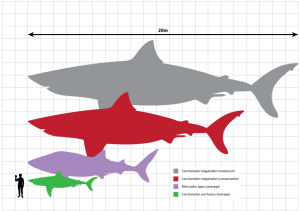

Monks and Keys

Whoever doesn’t understand that something being free doesn’t mean people won’t buy it is pleasantly naive. I write this as someone who once worked for a publisher who routinely sold books that were reprints of material freely available online, where you could print out a PDF at very little cost. Being a bibliophile, however, I understand the sickness that makes one want to purchase a printed, bound book form of what you might otherwise get for nothing. One of the gifts under the tree that I can’t wait to explore thoroughly is the print form of Atlas Obscura. I found the website (where the contents of the book are free) through a friend and although I have little free time, a fair amount of it when it does occur, is spent on this website. The same friend recently sent me an entry I’d missed about a town in Austria that is looking to hire a professional hermit. Wait. What? Hermit for hire? This raises so many questions that it’s worth the three minutes it would take to read the post.

Perhaps oddly, the offer from Saalfelden is strangely compelling. Apparently the competition for the post is considerable. Here I sit with a laptop in front of me, happily married, a family man, and thinking about a hermitage. As my family can attest, I still display monastic tendencies even in a somewhat conventional life. The concept of self-denial was strongly instilled in me during my youth. That means that many of the things I like the most I very seldom have. I rise early and go to bed early and eat plain food in a cheerless cubicle at work. I may as well have taken a vow of silence for as little as I say on any given work day. Where is Saalfelden anyway?

stanthony

No, I don’t really have what it takes to be a monk. There is, however, much about the self-denying lifestyle that recommends itself during this era of extreme self-absorption. There is much to be commended about thinking of others before yourself. As an ideal it is to be welcomed and applauded. In application it’s tougher than it sounds. I can’t walk across Manhattan without having to assert my desire to hurry along to work over the needs of those sleeping on the streets without getting paid for it, or even those who amble along on obviously painful legs and feet. Perhaps a cave in a mountain is s spiritual retreat, but it can also be a way of hiding from the needs of the world. There is a balance here and self-serving can take many forms. Even in a cave, the needs of the world require our thoughtful attention. Some of us just aren’t cut out to be monks.


Samaritans, Good and Otherwise

It’s the coldest day of the winter so far. I’m noticing this because I’m standing on the shoulder of the New Jersey Turnpike counting the NJ Transit buses that are flying by at highway speed. It’s been a morning of irony so far, which explains why I’m standing out here instead of sitting inside the broken down, but still warm bus right next to me. I felt the cold while waiting at quarter to six for my bus to show up. Thankfully on time. It’s very empty this morning; I’m maybe the fourth passenger. Somewhere along Route 22, miles later, the bus gives a distress cry. Ironically, the engine is hot. The temperature outside is in the single digits. Also ironically, the radio on our bus isn’t working, so the driver has to call dispatch on his smart phone. Meanwhile, the engine cools down enough for him to try it again. We’re fine until we pass exit 15 on the Turnpike.

While I try to think of others before myself, I sit near the front of the bus—the first or second row. That way when it’s time to get off I don’t have to wait for dozens of people to wake up, stretch, and slowly shamble into the aisle. (If you think that’s an exaggeration, you don’t commute by NJ Transit.) “The first shall be last,” the Good Book says, and I believe it. I lost count of how many of the company’s buses have zoomed past, but when one finally stops, I’m person number 8 off the bus. The Good Samaritan driver stops me outside his bus. “Sorry, no more seats. No more standing room.” No room in the inn. My driver urges the long line behind me to get back on the bus, where it’s warm, to wait. I was first, now I’m last. That’s why I’m standing out here in the cold. As I approach the bus I see all the first several rows are filled by those first back on the disabled bus. They will be the first to be offered a ride by the next driver along this road to Jericho.

winter

The guy behind me, now in front of me, comes to the same conclusion and waits outside too. At least we both have beards. I’m thinking of Jesus’ words about the end of the world. “Pray it won’t come in winter.” Out here, all prayers are frozen. At least thirty NJ Transit buses buzz by creating their own wind chill before another stops. I want to be first because I paid more for my ticket than those who sat further back on my bus. In fact, I could rent a small apartment in many places in the country for what I pay a year for a bus pass. I wonder if that’s what it means that the first shall be last. Or maybe my brain’s just frozen, since it’s the coldest day of the winter so far.


Size Does Matter

While not exactly a Luddite, my grasp on technology is tenuous. I grew up in what may be the last generation where computer use was considered optional—I made it through a master’s degree without ever using one, and could have managed my doctorate without. Like many of 1960s vintage, I resisted computers at first, somehow believing that the status quo ante would ante up and resist the technobabble that was already beginning to bubble just beneath the surface. I never really had a clear idea what a byte was, or how a simple 0 or 1 could be used to convey complex information. I heard about “blogs” but had no idea what they were. Next thing I know I found myself writing one. To my way of thinking any kind of log is essentially a “once a day” thing, although I know bloggers who post remorselessly all day long. At the beginning I was confused until a friend gave me some advice: don’t write too much in any one post. Keep entries down to about three to five paragraphs, and between 300 and 500 words. That way, he intimated, people will look at it.

Recently, wondering why amid the millions and millions of pages available on the web, mine gets so few hits, I read something by an “industry analyst.” (That phrase makes me shudder, but this is no place to be squeamish.) Want more hits? he provocatively asked, followed by—here are the tips. One of his first bits of advice was write longer. At least three times longer than I do (1,500 word minimum). I don’t know about you, but I often think of such things in holistic terms. That’s a lot of words to ask someone to read. If you’re going to put that much together, you’d better have something really profound to say. You’re asking for an investment.

Those of you who know me will understand that multiplying words is not an issue. In addition to this blog I write both fiction and non-fiction books and stories (the vast majority of which have never been published). I answer a simple question with a 50-minute lecture. In other words I have other words. I just tend not to think that you necessarily want to read them all at once (or at all). It’s obvious that size does matter. I can’t help being disappointed when I open a post and find I haven’t the time to read it because it’s just too long. Life’s not fair in its allotment of time. As usual, I err on the side of caution. I value your time to take up too much of it here.

Image by Scarlet23, Wikimedia commons

Image by Scarlet23, Wikimedia commons


2016 in Books

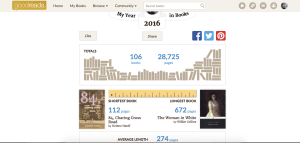
As is my custom on this last post of the year I’ll be revisiting the books that made an especial difference to me in 2016. I record most books I finish on Goodreads, and I welcome friends in that venue. I draw on their recollection for what I’ve read and all of the books I mention here have individual posts on this blog. Use the search function. It’s free!

screen-shot-2016-12-30-at-4-50-39-am

The first important book was Scott W. Gustafson’s At the Altar of Wall Street. If you missed this one, it is well worth your time. Economics has become a religion. If you doubt that, look at 11/9 and tell me so. Philip Gulley’s The Quaker Way was also an early read that’s worth revisiting. November has made many of these books more important than they seemed at the time. Whitley Strieber and Jeffrey Kripal’s The Super Natural will expand the minds of those who allow for unconventional possibilities. And Marc Bekoff’s Minding Animals will remind us we’re not alone on this planet. The Soul of an Octopus by Sy Montgomery was a book I really couldn’t put down, and a nice complement to Bekoff. Marcelo Gleiser touched a chord with The Simple Beauty of the Unexpected, a book worthy of anyone who wants to consider how science and humanity might cooperate for everyone’s benefit. While not really a reading-through book, Tristan Gooley’s The Lost Art of Reading Nature’s Signs is important and worthy of attention.

In the realm of monsters, Elizabeth Baer’s The Golem Redux was a fantastic introduction to a Jewish legend that I revisited in three more books over the year. Several other monster books followed, but especially memorable were Carol Clover’s Men, Women, and Chainsaws, and Maya Barzilai’s Golem—please be patient with me regarding this one. I haven’t written a post on it yet, since an official review has yet to be published. Alexandra Petri’s A Field Guide to Awkward Silences won her an instant fan. I’ll read anything she writes. I didn’t give Alice Miller’s The Drama of the Gifted Child the attention it deserves. It’s kind of a personal thing. Kyle Arnold’s The Divine Madness of Philip K. Dick was utterly fascinating, looking at another person Miller would have found intriguing. Also on the topic of writers, Melville’s Bibles by Ilana Pardes spoke deeply to me.

For fiction, highly recommended are Amy Tomson’s The Color of Distance, Peter Rock’s My Abandonment, Emily St. John Mandel’s Station Eleven, Toni Morrison’s, The Bluest Eye, Pete Hamill’s Snow in August, and Jennifer McMahon’s The Winter People. Less profound, but thoroughly enjoyable were Jonathan L. Howard’s Carter and Lovecraft, and Jasper Fforde’s The Woman Who Died a Lot (reading anything by Jasper Fforde is time well spent). My childhood favorite, Lester del Rey’s Day of the Giants retains its magic.

According to Goodreads, I finished 106 this year. Along the way I finished the 2016 Modern Mrs. Darcy reading challenge. Many of the books were excellent, and this shortlist represents those that idiosyncratically stick out in my mind. Please participate in a show of hope for the future: make 2017 a year of reading.


Build a God

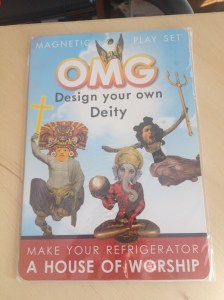
One of the more amusing gifts to find its way under my tree was a Design Your Own Deity magnetic play set. Since I have roughly only this brief holiday break for play in the entire year, I hope to make the most of it. Nevertheless, things like this always suggest something a bit more profound than they were possibly intended to do. The origin of deities is, by its nature, an unresolved question. Partly it’s because regardless of the reality of gods, religions are human constructions. Claims for revelation are frequently made, but the implementation is always our own. We can’t help but think that divinities are motivated by the same kinds of things that people are. I suspect that’s because we make gods in our own image.

img_3116

Historically there are few religions that were admittedly made up. We tend to treat with scorn more recent religions since we’ve become skeptical of a make-your-own deity talking to a person in the post-Enlightenment world. It’s much easier to believe if we say it happened long, long ago. Before we had the reassuring uniformitarianism of science, much could be left to the meddling of deities. Once we had a naturalistic paradigm, the door seemed to have slammed shut on supernatural explanations. Gods, who had been persons, now became symbols and symbols seemed to be less important than the real thing. Hadn’t we been designing our own deities all along? Now don’t we feel silly!

One of the common misconceptions of modernity is that ancient people weren’t very smart. We believe that because they lacked our technology. Looking at the way technology now demands most of my time, I wonder if that’s right. In the light of gadgets, deities have been squeezed out. I’m quite aware that the career choices I’ve made—involved with thinking about gods in some description—are hopelessly outmoded in the technological world. Still, as I look at the political landscape I see that we are still in the process of making our own deities. My play set includes some pretty exotic divinities. One that it seems to be lacking is Mammon. Of course, it’s best not to offend the currently reigning god, even if it is just a symbol.


Lap of Luxury

How terribly rude. I was right in the middle of a sentence when my word processor shut down. Then my computer. A system update. It’s 4:00 a.m., the time I usually upload my blog post. You have to understand that I get up at 3:30 so that I have time to write. My laptop assumes nobody is working “in the middle of the night.” I would’ve thought my fingers on its keys would’ve given it a clue. Now it tells me I’ll have access, new upgraded system installed, in 25 minutes. Doesn’t my laptop have all my personal details when it comes to shopping? You’d think it would know all my personal habits by now. I mean, this is the way I do it every day. Right now my concerns are secondary. This system update can’t wait. I wasn’t even given a choice. Power nap for Apple.

What disturbs me most is that my computer reads every word I type, yet it still thinks I’m just like everybody else. Who’s awake and writing at 4:00 a.m.? And I thought we had a rapport, my laptop and me. I was the Skipper to his Little Buddy. The Agent 86 to her 99. The Will Robinson to its Robot. I guess I had it backwards all the time. The brain on my lap doesn’t agree with the brain in my head. If I can’t get my writing done now, it won’t get done at all because at ten minutes to six I’ve got to be on that bus. New Jersey Transit doesn’t offer working overhead lights much of the time, let alone wifi. It’s now or never. My coffee’s already gone and the next thing on my daily agenda is the shower. I always come up with ideas in the shower—I need my Little Buddy waiting for me when I rush out to write them down.

newchair

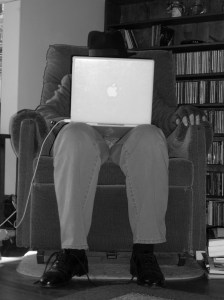
Who’s sitting on whose lap? How could I have gotten something so very basic so terribly wrong? In ancient times the one sitting was superior to the one standing. When the computer’s sitting on the one sitting we know who’s really in charge. Let the one with eyes to read understand. I’m a busy man, but my Little Buddy—my Skipper—is busier. When’s the last time I read a paper map? Opened a phone book? Wrote an actual letter? I can hear those bus wheels rumbling. Excuse me, but my master is calling.


Daily Bread Plus

I have a confession to make. I’m not a foodie. These days such an admission is tantamount to a venial sin, but the fact is I’m one of those who eats to live, not lives to eat. Still, like many people I’m concerned about whence my food comes. I can’t grow my own and just about all of it comes wrapped in plastic. Thus I found a BBC article my wife sent me to be of great interest: “An uncanny mixture: God, alcohol and even cannabis” by Kait Bolongaro. Focusing on monasteries and their brewing and distilling traditions, Bolongaro uses the foodie angle well. People want to know where their grub comes from, and the current interest in knowing the location of the source plays well into this. European monasteries have long been known for their production of alcohol. Even Jesus drank wine.

I’m no connoisseur of spiritous liquors, but the story is quite interesting. Many people don’t realize that monastic orders, in addition to praying and not having sex, also support themselves through industry. Many make goods to sell. Those in this article make booze. As Bolongaro points out, the fermentation and distillation process is an exacting one. In fact, it is a science. In the case of Chartreuse only three monks know the secret formula. They control the temperatures and conditions remotely, by computer. And I thought Bible Gateway was the only place the religious spent their time.

IMG_2642

Science and religion actually have a very long history of cooperation. Gregor Mendel, whose work gave Darwin’s theory of evolution by natural selection its actual mechanism, was a monk. Other religious have been close observers of nature and processes. There is no commandment against good beer, as many Teutonic brothers would no doubt point out. But to get it right you have to know your chemistry. As the article says, some things can’t be rushed and monastic life lends itself to such slow processes. The rest of us in our secular pursuits rush through life far too fast for religion or science. Contemplation requires “down time.” Time off the clock. The kind of time, we’re told, that simply doesn’t exist any more. The story, after all, appears in BBC Business. I’m no foodie, but I have to confess that the cheese and pretzels purchased from the Amish in Lancaster do tend to taste better than those that come wrapped in plastic. There may be a religion to science after all.


House of Unsure

DSCN0216

It’s that spooky time of year when nights have surpassed days and the chill in the air suggests an oncoming period of bleakness. Leaves are raining down off the trees and strange sounds fill the dark. So when a friend sent me an article on The Vintage News entitled “Website ‘Died in House’ can tell you how many people have died in your home & how” I had to look. At the story, I mean, not the actual website. You see, I’m not sure if I want to know too much about those who lived here before me—or died here before me. Like many people near a major city, we rent. I’ve never owned property (never had a job that paid well enough to do so) and as a renter you’re limited in what you know about your home. We’ve lived in our current situation a decade now. Of the four families in the two houses that make up the property, we’ve been here by far the longest. The house, however, has been here even longer. Has someone we’ve not met?

We live in a rational age, but we still fear ghosts. Belief in the lingering spirits of the departed goes back to the earliest written records and, we have every reason to suppose, far before that as well. We just can’t seem to shake that feeling, no matter what our rationality tells us. I didn’t go to the actual website, but Vintage News reports that it is a paid service. You want to check your address, you’re going to pay. And the results only go back to 1980. I don’t know about you, but to me it seems there’s a lot of years before that to wonder about. I mean, I was in high school in 1980 and there were lots of houses in my town that looked pretty old even then. If you’re going to pay to learn about ghosts, you want to be sure you’ve got the older periods covered as well.

I’ve lost track of the number of places I’ve lived. Some of them have been fairly old and some I have been curious about. Would I want to know if anyone had actually died there? I’m not so sure. One of the seminary houses I lived in had a spooky, neglected feel. I never saw anything that most people would characterize as a ghost, but I knew nothing of the history of the place when I moved in. It never occurred to me to ask. Now you can ask. A few keystrokes and a few dollars and you can learn if your house has “that kind” of history. The question is, with the increasing hours of darkness, and the wind whistling through the gaps around the windows, do you really want to know?


Subterranean Homesick Blues

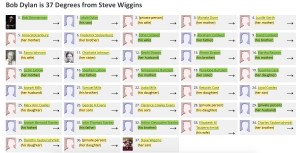
When Bob Dylan was changing American music I wasn’t really in a place to notice. I was too young, living in a small town, and the member of a church suspicious of that kind of music. We didn’t listen to the radio at home, so I only really discovered who he was when I was in college. I’d heard many of his songs by then, of course, I just didn’t know the persona. So when the news broke that Dylan had been selected for a Nobel Prize in poetry he stunned me yet again. As someone who has always wondered if he’s made any contribution at all, let alone a significant one, this seemed like one of those roads a man walks down before he’s called a man. A mensch. A person who matters. I was pleased, then, to learn that I’m only 37 degrees of separation from the great man himself.

It was probably something like this desire to be significant that led me to genealogy in the first place. My wife had done significant work on her family tree, and apart from a college project in anthropology I’d done little. While at Nashotah House I began to work on it. I managed to make some connections and take many of my lineages (pedestrian, all of them) back a ways. One of the results of this was I posted some information on WikiTree. I had intended to put much more there, but since leaving academia I also seem to have misplaced anything resembling free time. The loss of summer is the hardest to bear for a man whose very pulse is divided into semesters. In any case, I received an email from WikiTree this week with the following chart, showing how I’m attached to Bob Dylan.

screen-shot-2016-10-22-at-5-22-00-am

Now, I didn’t ask for this connection to fame. I received the email unsolicited, blowing in the wind, as it were. I’m not sure I’ll be able to handle all the hits that are sure to follow such a public revelation. Fame, I’m told, can be quite a burden. The one important thing this chart tells me, however, is that we’re all connected. I suspect there are some famous people much closer than 37 degrees from me. Melvin Purvis, “the man who shot John Dillinger” was married to one of my great aunt’s sisters or something like that. Some of my southern cousins even got to visit his gun-lined house. Fame, as it will, rests rather on the side of John Dillinger. And Bob Dylan. If we were to cast the net wide enough we’d see that we’re all related and therefore shouldn’t hate one another. I would say “we are family” but I think that might be a different artist’s song.


Tell It Straight

Apparently there is a burgeoning interest in swearing. Not necessarily in doing it, but in studying it. Over the past couple of years I’ve easily found a book every twelve months that devotes itself to the topic. After I finished reading the most recent one, my wife pointed me to a story on The Guardian that deals with the same topic. The story by Benjamin Bergen, “Well, I’ll be… There’s a real science to cussing and blaspheming but beware,” springs from his book on the subject, which I’ve not yet read. Interestingly, Bergen points out that there are four main classes of “bad words:” those that misuse religious concepts and names, those dealing with sex, words that denote various bodily effluvia, and finally, slurs. Today the final category, particularly when it comes to prejudicial slurs, is often considered the most offensive. Religious swears aren’t what they used to be.

800px-rembrandt_harmensz-_van_rijn_079

Why concern ourselves with such things? For me, I suspect, it is because of laws. Yes, laws. The religion in which I was raised was all about what you could or couldn’t do. One of those species of forbidden activities was swearing. Problem was, I didn’t know what all the words were. How could I not say them if I didn’t know them? And how could I know them if somebody didn’t say them? This vexed my young mind. I thought perhaps I should keep a written list, but this would be hard to explain if anyone ever found it. To make matters worse, some of the words were not swears sometimes and other times they were. “Hell,” referring to the fiery place, was not swearing unless you instructed someone to go there. Other uses beyond the literal were swearing. An ass was fine if it was an animal, but not if it was on an animal. And if you added one consonant that you couldn’t even hear onto a structure built to hold back water you were in hot water. Who made up these rules? The Bible didn’t say much about it.

In high school I heard there were seven words that you couldn’t say on television. Since we didn’t watch George Carlin I didn’t know what they were, but by this point I had collected more than seven. When I finally did hear his shtick (quite recently, at that) it contained some words I didn’t expect which, while rude, were never considered “swearing” on my canonical list. So it is we find ourselves with no definitive rules about what not to say. Professors are writing books about such things and even after having read some I’m no closer to my definitive list than when I started. It’s all a matter of laws, I suppose. Only the rules keep shifting. Best just to keep my mouth shut.


Big Dreams

giants_and_freia

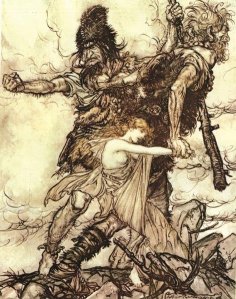
The giants are back! Or at least they were here. According to the internet, and we know that that never lies. Every now and again a story breaks that some discovery of giants has been found in some archaeological or paleontological context. A little poking around, maybe a visit to Snopes, and I go home disappointed. It’s the Cardiff Giant all over again. Still, the stories are fun. A friend sent me a piece from Ancient Code entitled “A GIANT footprint has been discovered in China.” The pictures look impressive until we get to the one where the footprint is as large as a fully grown man. We are back in the land of modern myth.

The idea of an era of giants is strangely compelling. The Bible isn’t the only ancient document to suggest this scenario. In fact, Holy Writ seems to have borrowed the idea. Fast forward just over a millennium and Geoffrey of Monmouth will tell us there were giants in Britain before the more civilized genus of our own arrived and treated the giants to a Brexit. Such tales permeate history with the fanciful period of really big guys from the past. We’re not half the men we used to be. Literally. Just don’t look too close at the Photoshopped evidence. We live in a world where “Photoshopped” is actually a word. A world where visual evidence is like a cow plop. It’s there, but what you want to make of it is up to you. I was never a big newspaper reader, but at least you knew if a reputable rag paid to have millions of copies printed the story had a good chance of being true. I wish there had been giants. Reading the news today, we seem very petty indeed.

Any number of explanations have been proffered for why ancients believed in giants. Perhaps they found fossilized dinosaur or mammoth bones. Admit it, except for to a biologist, a femur looks pretty much the same whether it comes from a giant reptile or a moderate-sided primate. Economics of scale. Or look at those Egyptian pyramids. Sure looks like they had a hand from a really big brother. But in our strangely less and more gullible age, lingering doubts remain. The Bible says there were giants on the earth in those days. The mechanics of gods mating with human women are blamed, no matter which laws of physics have to be broken. For the literalists way down along the Paluxy River in Texas we were walking with dinosaurs back in the day. Too bad no fossilized cameras have yet been discovered.


What Did You Say?

inpraiseofprofanityThis driver and this passenger had interacted before. Unpleasantly. You could feel the tension mount when the passenger watched carefully to see who the driver was as the bus pulled up to Door 1. Although bus routes change drivers somewhat frequently, there is a regular driver to my route and this passenger, like a cat sensing the visit of a nasty relative, wanted to see if it was safe to come out. It was the driver he didn’t like. He got on anyway. An argument started, since he always sits in the front seat, just across from the driver. A profanity worked its way into the conversation. “No blasphemy on my bus!” the driver warned loudly. I couldn’t help but smile. I’ve sent author contracts from respectable academic presses where the author has to sign that nothing libelous, blasphemous, or obscene will be included in her/his book. Blasphemy still sets some people off.

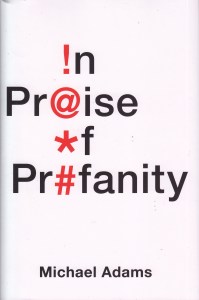
Michael Adams’ In Praise of Profanity isn’t an easy book to read on the bus. The dust jacket can be removed, and that’s a plus, but the guy who sat next to me on last night’s commute took a good, long leisurely look at the page I was on. Bad bus etiquette, but then so is falling asleep leaning on the stranger next to you (which he also did). Speaking of bad things, In Praise of Profanity makes the reasonable case that there are no “bad words.” Bad intentions, to be sure. Bad choice of when to utilize certain vocabulary, certainly. Bad words inherently, no. And the book will take you into some strange places to demonstrate this. The section on bathroom graffiti makes the point nicely.

Adams does discuss, briefly, the religious objections to classical profanity—taking God’s name in vain. Having grown up with all kinds of circumlocutions (more technically, I learned, euphemisms) for interjections one must not say, it was interesting to note that nearly all our pseudo-swears go back to violating this prohibition. Even “Jiminy Cricket” was a not so subtle riff on the name of the carpenter from Nazareth. Gosh, golly gee. All three disguised blasphemies. Being a linguist Adams takes this particular analysis with a healthy dose of fun, but there are many people I know who would be quite offended by this study of the vulgar way vulgar people speak. At the same time, looking at what words like “profanity,” “obscene,” and “vulgar” mean, we might need to head back to the lexicon to learn just what species of blasphemy it is to which my driver objects.


My Fellow Americans

It’s important to keep the old gods happy. By now everyone probably knows that Stephen King composed a tweet suggesting that Donald Trump was Cthulhu. In response an angry tweet came from Cthulhu himself, since, as we know, he declared his intention to take over the world long before Trump. Cthulhu is no stranger to this blog, being the brainchild of H. P. Lovecraft. As I’ve suggested before, however, it is really the internet that gave life to the ancient one. His name is instantly recognizable to thousands, perhaps millions, who’ve never read Lovecraft or his disciples. In parody or in seriousness, the worship of Cthulhu is here to stay.

I’ve often wondered if the internet might participate in the birth of New Religious Movements. In an era when a completely unqualified plutocrat can run for president just because he has other people’s cash to burn, anything must be possible. Cthulhu, as we all know, lies dead but dreaming beneath the sea. His coming means doom for humankind, or, at the very least insanity. It seems that Stephen King might be right on this one. I’m getting old enough to recognize the signs; after all John F. Kennedy was president when I was born. I’ve seen the most powerful office in the world devolve into a dog-and-pony show where lack of any guiding principle besides accrual of personal wealth can lead a guy to the White House. At Cthulhu’s tweet indicates, reported on the Huffington Post, at least he’s honest. Unlike some political candidates, many people believe in Cthulhu.

img_2791

Perhaps the interest in Cthulhu is just a sophisticated joke. Long ago I suggested to a friend of mine in Edinburgh that perhaps the Ugaritians were writing funny stories (i.e., jokes) on their clay tablets, imagining what future generations would say when the myths were uncovered. Like Cthulhu, they were the old gods too. Like Cthulhu, there are people today who’ve reinstituted the cult of Baal and the other deities that would’ve led to a good, old-fashioned stoning back in biblical days. New Religious Movements are a sign that we’re still grasping for something. Our less tame, or perhaps too tame, deity who watches passively while charlatans and mountebanks dole out lucre for power must be dreaming as well. Of course, Lovecraft, the creator of Cthulhu, was famously an atheist. Belief is, after all, what one makes it out to be. At least Stephen King’s father reinvented his surname with some transparency. And those who make up gods may have the last laugh when the votes are all in.


Hi Ho, Hi Ho

I’ve been writing about reading. No surprises there, I suppose. My wife recently introduced me to BookRiot, and I wish I had more time to spend there. A recent post by Aisling Twomey describes how reading on her Tube commute helps keep her sane. Here is a good case of convergent evolution—I came to the same conclusion after about a week of what turns out to be about three hours a day commuting to New York City. We didn’t move to my current location to work in Manhattan. My job was in nearby Piscataway. It was only when a headhunter found me a job at Routledge that I began the daily trip. The problem is I get terribly car sick. To this day I can’t read in a car. Some days I can’t read on the bus either. Gradually, however, I trained myself to do it, and the results have been worth it. Ms. Twomey has read over fifty books this year on her London commute. I suspect my commute is a bit longer since I’ve read a few more than that. Still, we tilt against the same windmill, so we need to appreciate the dedication it takes.

I was talking to someone the other day who was complaining about cell phones. She said, “I used to read a lot. I worked in a book store. It was great.” Her cell, she said, gave her a stiff neck from constantly looking down. And a sore thumb from swiping and texting. And yet, she lamented, she just couldn’t stop. Books may well be a vice. I’m as bad as any addict. I have no idea how many books I’ve read in my life: the number is in the thousands rather than the hundreds, I know. And even the books I regret, I don’t really regret. Reading is a coping mechanism.

img_0670

One of the things that the traditional ancient religions all have in common is books. Not all of them treat sacred texts the same way, but they all have some form of sacred writing. There was an implicit sense, I believe, from the first stylus on clay, that something truly special was going on here. Holy, even. Writing is one of the great joys of life. Reading is another. Both are sacred professions. In a way it seems a shame to have to be forced into a commute in order to find time to read books. Still, the constant flow of new material has a life-saving quality to it. I can’t imagine spending fifteen concentrated hours a week texting. I don’t know that many people to text. The ones I do know I know through their books. And they’re very good company on a long ride.