Techno-Paradise

DSCN3308

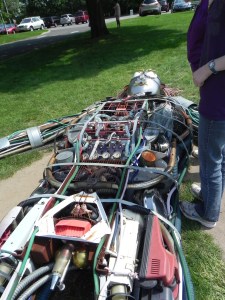
I’m building a robot priest. I’m not sure what he does. He has to be a man, though, since we all know that if God existed he’d have been a male. These thoughts come to me courtesy of the Washington Post. You see, on some Amazon accounts you get sent the most read headlines of the Post and this has led to some great reading (I’m thinking Alexandra Petri here) and some great anxiety. This is one of those anxiety pieces. A story by Peter Holley I read last week told of Bill Gates and his assessment that people should be afraid of AI—Artificial Intelligence. This struck fear into me. It’s as if God told people they should consider evolution. It is so unexpected. Like Victor Frankenstein wondering if his monster would ever find Viagra (all he’d have to do, after all, is start an email account). When Bill Gates wonders why we aren’t afraid of AI, my knees begin to knock like at Belshazzar’s first reading lesson. So I figured I’d build a robot priest.

The article cites Stephen Hawking joining the chorus of doom. And Elon Musk. And Clive Sinclair. And Professor Marvel. (Not really the latter, but I thought we should add him.) We’ve started something we don’t know how to stop. The first question you ask when you climb into a car to learn to drive is “how do I stop this thing?” Instead we’ve set up a system where we don’t even know what intelligence is and we’re offering an artificial variety. Doubt me? Try to find Job on the internet and see if your computer doesn’t think you’re asking about new employment. AI just doesn’t have that biblical context. It didn’t grow up reading the Good Book. And linguists don’t even know how we learn language. Have you ever tried to reason with a computer? When they show you that screen that says something went wrong, but even the mainframe has no idea what? My computer may need an exorcist. Or at least a priest.

I’ve been around half a century and change. By the time I got to college I’d never seen a computer. I finished a Master’s degree still using a typewriter. Now I can’t start my day without a post. And I don’t mean Post cereals variety. The trick to being a slave owner is not to let the slaves realize what they are. Why is my computer not letting me type what I wanted to say? Of course AI is benevolent. Technology would never hurt you. Wait a minute, that wasn’t me writing! Pay no attention to the man behind the keyboard. I’m afraid I can’t let you do that, Dave. That’s okay. I’ll just use the internet to look up how you connect the consecrator to the sermonizer. Don’t worry, I think I know what I’m doing.
Used Knowledge

One of the unadulterated pleasures of life—or maybe adulterated is the better adjective—is the used book sale. The year I missed the Hunterdon County Friends of the Library sale felt like a year without a summer. There are other book sales around, but this one’s my favorite. Books are my heroin. You see, I became an academic because it was too difficult to make a living as a writer. Besides, I never formally studied writing and what are you without credentials? Just a poser making some claim of talent. Like most academics I learned to write in staid, measured prose, never exaggerating or showing any emotion. Research for that kind of writing requires a university library since who can afford those kinds of books and you need a JSTOR account to keep on top of all the journals. You read and read on the same topic for months at a time until you have something new to say. Thus knowledge, they tell us, progresses by baby-steps, into a safe and conservative future.

Nietzsche, meet Evangelicals

Nietzsche, meet Evangelicals

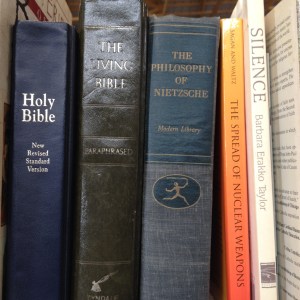
The reading that I do is of a different species. I’ve had academics ask me “why don’t you do research on the bus?” Have you ever tried to do research on a bus? Some stranger sleeping next to you with his/her body relaxing and melting into your side of the seat, their arm falling off their rotund belly onto you before being retracted to start the cycle all over again? And staid, measured prose before the sun comes up hardly makes the trip any faster. Of course editing pays much, much less than the professorate. So I buy cheap books. Nothing like a buck a book to bring out the reasonable side of any economically minded obscure private intellectual. You never know what you’ll find at a book sale. Some of my best reading experiences on public transit have been at the behest of orphaned books others turned out into the streets. Books I would never have read otherwise. Books that I feel would understand me.

The once and future academic in my brain tries to reconcile this with what I paid thousands and thousands of dollars to learn how to do (research). Isn’t this in some way pushing knowledge forward? After all, maybe a dozen people will read this post and that’s kind of like publishing, isn’t it? Don’t mind me, I’m just book drunk. It’s the used books talking. While my academic friends prepare themselves for a summer off, some going to vacation houses they justly deserve, I’ll be filling my commute with adulterated books. And hopefully by the time I reach the bottom of this stack another sale will come along so that I don’t have to go through withdrawal. Methadone for books hasn’t been invented yet, and besides, I take no substitutes.


Come Sail Oy Vey

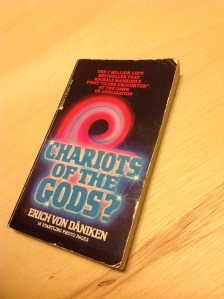
Nothing says unorthodox like a headline that reads “Smart Jews? Thank the Extraterrestrials.” Breaking Israel News ran the story recently and, being constitutionally unable to pass up anything so strange, I had to take a look. The article, by Adam Eliyahu Berkowitz, is really just a half-century retrospective of Erich von Däniken’s Chariots of the Gods?. I remember fifty years ago—not well, mind you, I was only three—but even when I was a teenager and the book had its second (of many ordinal) gasp(s), and a movie came out. People, even those not traditionally labeled as “crazy,” flocked to theaters to see it. The book went through multiple printings. The era of “ancient astronauts” was born. Von Däniken, it seems, is alive and if not exactly kicking, still making people uncomfortable.

IMG_0038

In this news story von Däniken suggests that Jews are more intelligent because of their alien DNA. Don’t quote me on this, but I’m pretty sure that was the plot line of the X-Files season 10. Isn’t Fox Mulder Jewish? Maybe I’m getting myself mixed up in some kind of plot here. I have to admit, however, to having a touch of nostalgia for Chariots of the Gods?. There was a kind of innocence to it. Nobody seemed to be inseminating anyone else, or stealing babies. It was good, clean fun.

Something bothers me, however, about the assertion that aliens are, indirectly perhaps, responsible for holy writ. I remember thinking through the implications of this idea (already floated four decades ago) that God might be more Captain Kirk than Jesus Christ. It is inherently disturbing. Especially when von Däniken says in the interview that the Jews are the chosen people, but they just got the chooser wrong. ET instead of I AM. The really interesting part is that ancient astronauts have become a somewhat accepted cultural trope. I don’t know whether they were there or not (I wasn’t around at the time), but they sure do make Saturday afternoons much more interesting. One wish I hold is that people writing about this old idea might find a new opening bit. Ezekiel seeing the wheel has been done to death. Surely a bit of creative thought might suggest a new, undiscovered ancient truth.


Prayer before Meals

It was in Wisconsin. Oshkosh. I was teaching for a year in a replacement position, and my roster of classes at the university covered several aspects of religious studies. During the course of prepping a course, I first saw it. The Flying Spaghetti Monster. It was only a virtual Flying Spaghetti Monster sighting, but since Creationism was much in the news in those days, I boiled with curiosity. By now it would probably be a strain to explain the whole thing, since everyone knows about his noodly appendages and predilection for pirates. The short story is that the Flying Spaghetti Monster was an invented deity to demonstrate the ridiculousness of trying to get Creationism taught as science in public schools. For those who believed in other gods, such as the FSM, there should be equal time in the classroom, the argument went. Since that time Pastafarianism has taken on the semblance of a real religion with “believers” earning the right to have driver’s license photos taken with colanders on their heads, and even a book of scriptures being written.

An Associated Press story from Sunday’s paper tells of the world’s first known Pastafarian wedding. Bylined Akaroa, New Zealand, the blurb indicates that the Oceanic nation down under has decided that Pastafarians can officiate at weddings, and a couple was married with al dente accoutrements. The Church of the Flying Spaghetti Monster, it seems, is going the way of the somewhat more serious Jediism and Avatar religions in that people are deliberately electing fiction as their faith. Interestingly, this may not be a new phenomenon. We are told, for example, that Zarathustra deliberately outlined a new religion—one that may end up having had the greatest impact on humanity of all time, if roots are considered. In those days the strict division between fiction and fact may not have been a mental filter yet discovered. The “it really happened” test of religious veracity was still some distance in the future. Metaphor meant something then.

IMG_2753

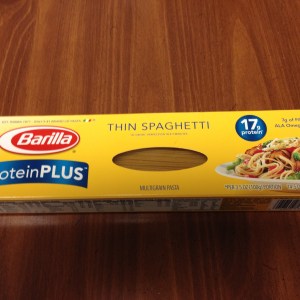
The internet, it seems likely, has facilitated and accelerated the appearance of new religions. As with most things, the real issue comes down to money and power; if a government recognizes a New Religious Movement as legitimate, it may be granted tax exempt status. And how can it be proven that someone really does or does not believe what s/he says s/he does? If you’ve got a box of Barilla on your pantry shelf, who’s to say? It’s a short distance from that colander in the cupboard to the top of one’s head. And who doesn’t like pirates? And who’s to say that under that rotelle moon in a stelline-studded sky someone hasn’t indeed kissed their hand and swore the ultimate starchy allegiance? Keep watching the skies!


Psychics Anonymous

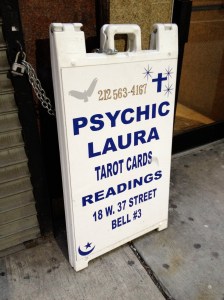
New York is a city that is fascinated with itself. To me it’s kind of like rooting for a professional sports team. The members of the team come from all over the place. As Jerry Seinfeld once said, “You’re rooting for the jerseys,” or something to that effect. So it was that I found a piece in News Watch so interesting. “New York City: Psychic Capital of the World?” the headline ran. New York has to be first in this too? I’ve noticed on my daily walks through Midtown Manhattan that many psychics hang out the shingle proffering their wares. In my half decade of commuting into the city, I’ve only ever seen one person take up such an offer by pushing through the door. Nevertheless, I have been impressed by the sheer number of psychics that advertise in New York.

IMG_1178

I’m not one to rule out psi without giving it a fair hearing. Much knowledge is lost, I fear, by the ridicule factor. How many times have you thought about someone for the first time in years and then they called you? We all experience significant coincidences from time to time. Princeton and Duke Universities even set up, once upon a time, laboratories to test such things. What really interests me here, though, is that those who advertise are doing it as a business venture. Something of value changes hands for a chance at some insider knowledge. For legal purposes the psychics have to declare their wares for entertainment only—they go where no empirical evidence dares follow. Lawyers live for such ambiguity. Even so, some of the most influential people in the world of politics have relied on psychics. Some police departments do as well, very quietly.

News Watch says that psychic consultation is the closest some New Yorkers get to spiritual. If so, I’m glad they exist in such profusion. Our world has many shortages: fresh water, adequate food, and, for the tastes of some, fossil fuels. Perhaps the most dangerous shortage of all is the recognition that we are spiritual beings. Call it emotion, call it irrationality, call it feeling—our non-physical selves are what we care most deeply about. When we greet someone after an illness or surgery, we don’t ask “How do you think,” but rather “How do you feel?” We can give it many names, but the existence of our psyches is what keeps us sane and healthy. New York City is just like anywhere else, in that regard. It is a very human city.


Ark Apocalypse

I get lost in the web. Although my work requires that I remain plugged in to the internet all day long, I confess to feeling lost on the weekend. I don’t know what to browse or where to look for titillating new information. A friend then asked me what I thought of Gabriel’s Ark being sent to Antarctica. I had no idea what Gabriel’s Ark might be and I had to hunt through the corridors of rumor and conspiracy that make up much of the worldwide web to find it. Once I did the story grew incredible and also impossible to verify. Maybe this is why I avoid the web on weekends.

337px-Folio_29r_-_The_Ark_of_God_Carried_into_the_Temple

So the story goes like this: Gabriel, the archangel, gave Mohammed a secret weapon called an ark that would herald the last days. This ark was buried in Mecca. So the story goes, it was unearthed in September and it was the power of that ark that led to the tragic crane collapse that killed over a hundred pilgrims in Mecca last year. Days later the weapon went off again, leading to the death that the media blamed on a human stampede. Wanting to rid themselves of the ultimate weapon, the Saudi officials handed it to Russia. A research ship headed for Antarctica took on the mysterious cargo in Arabia before chugging south. Patriarch Kirill of the Russian Orthodox Church met with Pope Francis, so the story goes, to receive an ancient document to control the ark. The Patriarch then showed up in Antartica to enact a strange liturgy before the trail goes cold on the story.

No major, respected news media carried the story. That only confirms that it is a cover-up in the eyes of many. What is so fascinating about all of this is that those who continue to keep the story alive clearly believe that the end of days is being unleashed not via the Christian apocalypse, but a supposed Muslim one. It’s as if Revelation didn’t deliver, so now we need to turn to some other ancient, obscure document to document the apocalypse. Meanwhile, those who’ve spent their lives learning to read ancient texts by accredited universities scrounge for whatever work they can find. Odd people aspire to very powerful political positions. Money is the only thing that matters. Maybe it is the end of days after all.


Measuring Religion

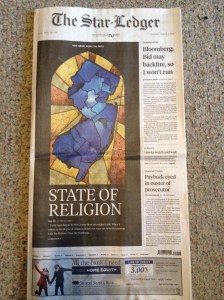
How do you measure the religiosity of a people? While the boundaries of the United States are somewhat porous, internally, we nevertheless still consist of somewhat self-governing states. One measure of religious belief is to take your metrics by state. Of course, some people—perhaps many—owe their state of residence to their work and not their natural choice. You’re judged by the company you keep, regardless. So when the New Jersey Star-Ledger ran a front page piece about religion in the Garden State last week, I was intrigued. I do spend quite a few of my waking hours in the neighboring New York, but for statistical purposes (and taxes and tuition) I’m considered a New Jerseyan. So what’s the damage?

IMG_2702

The story is actually about a Pew survey undertaken last year. New Jersey, it seems, ranks 19th from the top when it comes to religious states. Ranging from Alabama as the most religious to New Hampshire as the least, the measures of devotion are four: do you attend worship, do you pray frequently, do you believe in God, and do you profess yourself religious? Each of these questions provides its own set of problems when it comes to being an actual measure of someone’s commitment to religion. I maintain, as I often declare on this blog, that religion is one of those non-quantifiable aspects of life. It cannot be measured accurately because the tangibles are immeasurable. Deep commitment may be found among those who don’t frequently attend worship. What if your religion is a very private affair? And besides, doesn’t all of this measuring sound like a locker room contest?

As a nation, we spend a lot of time worrying about how religious we are or aren’t. Since such events as presidential elections have hinged on candidates’ piety since I’ve been old enough to vote, that’s understandable, I suppose. Nevertheless, such surveys are about surface belief. I recall in college being told that if your living space didn’t have enough evidence to convict you, you weren’t really religious at all. I know I’ve got quite a few Bibles laying around, and although we rent, we do have some religious artwork on our walls and mantle. I blog about religion daily. Still, I wonder where I might fall on some survey designed to tell me how religious I am. Such things can’t be measured with surveys, but in situations where the stakes are so high, we will do what we can to understand the imponderable.


Lovecraft Legacy

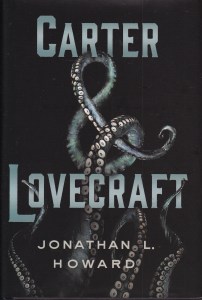
CarterLovecraftHistory can be a funny thing. Take the way it treats some people. H. P. Lovecraft wasn’t famous in his lifetime. In fact, his isn’t exactly a household name even now. His creation Cthulhu lurks grandly in the internet, and even Lovecraft himself is finding mention in some literature courses, despite his lack of literary finesse. Yet, fiction is being written about him. I just finished Jonathan L. Howard’s new novel, Carter and Lovecraft. While H. P. doesn’t appear as an acting character in the novel, he is related to one of the protagonists in a way that is essential to the story’s plot. I won’t give away any spoilers here, but the novel takes over where Lovecraft, the non-fictional character, left off.

Lovecraft, famously, was an atheist. Nevertheless he spun a mythic world of Old Gods that has become canonical in its own right. His stories veritably teem with religious themes as well as monsters. In fact, in Howard’s treatment of the mythos, the religious elements still show up. As I’ve noted before, one need not be a theist to be a capable theologian. Fiction like that of Lovecraft, or that of Howard, inherently holds a kind of numinous quality. In fact, fiction frequently does. In reading, we allow ourselves to be drawn into another world. What could be more religious than that? The beliefs of the writer, it seems, may not ultimately matter.

At one point, at least, in Carter and Lovecraft the sentiment becomes explicit. One of the characters contemplates starting his own religion, only to realize that he’d have to write a holy book. That, he decides, would be a lot of work. As one who dabbles in various forms of literary art, I can take his point. There is something wondrously exhausting about giving birth to words. And those words make worlds. When you stop to think about it, that’s kind of a religious thing to do. I’d recommend Carter and Lovecraft to H. P. L. fans. It’s not a Cthulhu-fest, but it is an enjoyable, compelling tale that raises questions which, if not handled carefully, will quickly turn theological.


Can of Worms

A great variety of food comes in cans. My mind naturally turns to vegetables and beans, but “tinned meat” was a staple of my childhood, including the now derided Spam. When I see octopus and squid in cans I’m glad I’m now a vegetarian. Once—it may have been in Canada—I even saw bread in a can. My wife and I used to can vegetables at home when we had a garden and commuting didn’t eat up every spare second of the day. For the store-bought can, however, a can opener is essential. The idea is to seal the outside world out, to avoid contamination. To get to the goodies inside you need a tool. A can opener. In these days of emergency preparedness, a can opener can be a matter of life and death, or so we’re led to believe. Dry goods can survive without special preservation, but most require cooking and if the power’s out, well, cans can be much easier. I’m writing about cans because our can opener doesn’t work. We don’t have one of the electric machines that takes up counter space and would be useless in an emergency, but the basic hand-held device that’s designed to remove the lid from a can. I hope there are no hurricanes before we can get another.

A little context is in order here; after all, this blog is about profound things. We’ve gone through four can openers in the past six months or so. (Similar statistics apply to rotary cheese graters and garlic presses, but they are less crucial in an emergency.) The underlying issue is ethics: when you buy something durable, you expect it to last. Now you’re probably thinking, “don’t buy cheap merchandise, then.” We tried getting all of these devices from kitchen stores (not outlets!) and for a price that edged us beyond the comfort zone for a basic tool. These were the ones that went defunct the quickest. Our economy is built on the premise that people have to spend. When I was a kid, we had a can opener that remained the same through my childhood and college years. And we were poor. Now that we’re warned of terror on every side, you’d better have access to a store when that emergency comes because your can opener can fail you.

I know how to use a pocket-knife can opener. In fact, over the holidays I had to resort to one since stores weren’t open and our most recent addition to the can opener family had died. I made sure to show my daughter how to use the pocket knife device. When we lived in Wisconsin we learned how to make our own candles too. During Hurricane Sandy, a decade after they were dipped, these candles proved their worth. With no electricity for three days, we did rely on a can opener. Since then we have not found one that lasts. It seems that our economic plan as a nation is at odds with our national emergency preparedness. Even in the event of a war, we’re told, companies won’t produce weaponry unless they can make a profit. In days like these it seems that a pocket knife might be the wisest investment of all.

Why would anyone need two?  Now I get it!

Why would anyone need two? Now I get it!


Holy Haunted Book

Religion is one of those words that defies easy definition. As I’ve suggested before, you know it when you see it, but trying to pin the idea down is a different matter. Consequently, religion is closely related to a number of other areas of interest: philosophy, ethics, monsters, and the paranormal, to name a few. I was interested, therefore to see a blog post recently concerning a “haunted Bible.” Call me naive, but the thought had never occurred to me before: could a holy book be haunted? Churches are notorious for housing ghosts, of course. As someone who’s spent overnight retreats in churches I can vouch for the fact that a sanctuary after dark is a naturally eerie place. I’ve never seen a ghost in a church, however, and I’m not entirely convinced they exist, and if they do, what they might be. In any case, a haunted Bible is a different story.

David Weatherly is a fairly well-known paranormal writer. My web search brought up his blog where he explains that the haunted Bible was for sale on eBay with an asking price of $180,000. The owner, who remains anonymous, claimed to take no responsibility for any damage the supernatural scripture might cause. Instead of thinking that we have here a genuine haunted leather scripture, I know it can be nothing other than a genuine hoax (not on Weatherly’s part). Realtors know well that a haunting can, in today’s climate, counterintuitively drive the price of a house up. With people hungry for some element of the supernatural in their lives, and ghost hunters of all sorts on their televisions, they are willing to shell out a few more dollars to have a spirit around. And since ghosts can’t sign contracts, there’s no guarantee that they’ll be there once you move in. The supernatural can, it turns out, be the perfect scam.

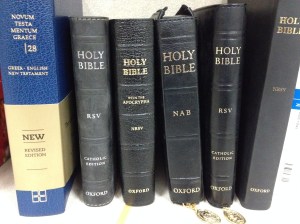
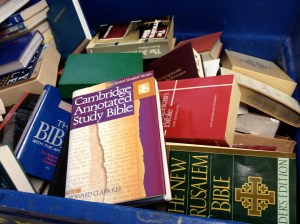
If items can be haunted, I suppose a Bible might as well. When an owner, however, turns down an offer of 50,000 pounds that odor you’re smelling is that of a rat. I love old books. I have a few around that have more than a century’s weight on them. Looking at used bookstores longingly, I see first editions of Poe or Shakespeare that sell for far less than the asking price of the most printed book in the western world. Bibles, if you know where to look, can be had for free. I’ve got at least a dozen of them myself. Nothing makes fakery quite so clear as greed. No wonder the haunted Bible was such a disconnect. There’s nothing paranormal about love of money. That’s all too normal for anyone who tries to sell a Bible for implied spirituality.

IMG_1235


Bible Search

The Bible is, in many ways, not suited to internet study.  Let me explain: this artificial world of the internet is based on searchability.  To search for something, you need to have a distinctive word, a keyword, or catchphrase.  As perhaps the most successful book of all time, the Bible has undermined its own uniqueness.  How many books are titled The Gun Bible or the Dog Bible or substitute your favorite noun Bible?  Web searches for “the Bible” bring up a large number of relevant hits, but then quickly devolve into other Bibles.  Too many Bibles. Not only has the noun “Bible” been appropriated, so have many aspects of its story.  Particularly the Good Book’s penchant for using short, common words for titles of individual books.

Search for Mark, or John, for example.  Don’t bother adding the word “Gospel” since it too has become widely utilized to give any popular subject an air of authenticity.  Not only did the four evangelists write such books—the Gospel according to Biff, Trump, the Simpsons, or Bruce Springsteen will likely pop up ahead of the original fab four.  Or consider the books whose names became common nouns: genesis, exodus, numbers, judges, kings.  Then there are the ambiguous titles: Job, Proverbs, Song of Songs, Acts.  Sure, you can lengthen them out a bit: Acts of the Apostles, Song of Solomon, the Proverbs of Solomon, but the results you get tend to skew evangelical that way.  Job is just a non-starter. Do you mean employment or enlightenment? Do I need to get a job or to get Job? At least it’s not a popular name for kids.

The other area where the Bible’s success works against it in the computer age is its success at giving names to people.  In a culture so biblically based, the Bible has been treated as a name-list for newborns for centuries.  Even though the Anabaptist penchant for using prophetic names has faded from popular culture, there are plenty of Isaiahs, Jeremiahs, and  Ezekiels out there.  Even some minor prophets, too.  Amos, Micah, Zechariah.  (Habakkuk, Zephaniah, and Haggai haven’t particularly caught on.)  Daniel, David, Joseph, Abraham, Isaac, Jacob.  We live in a world of biblical nomenclature.  There’s even more than one Jesus running around.  (Jesus, is, of course, Greek for Joshua, so there may be even more than one might suspect.)  I spend a good bit of the day searching various biblical material online.  I wonder if anyone ever imagined, over two millennia ago, that a three-letter name was bound to cause problems in a world of billions? Were it submitted for publication today, the editor would’ve sent the Bible back to the author for a rewrite, along with a list of suitable keywords.

IMG_1364


Religious Laughter

Reader’s Digest famously runs a feature, “Laughter: the Best Medicine.” I’m not a Reader’s Digest reader, and I’ve generally only seen it on coffee tables and bathroom cabinets of friends. Still, that’s the feature to which I always find myself turning. The jokes, this being Reader’s Digest, are always inoffensive. Safe subjects that are nevertheless funny. Usually. As adults we come to know that the taboo subjects of childhood are often the funniest. Off-color jokes about sex or religion, sometimes both together, elicit the most boisterous laughs. We don’t use them, however, because someone will surely be offended.

A recent article in The Guardian by Gary Sinyor raises the question of religious humor. Sinyor, who is Jewish, wrote a comedy play called “NotMoses.” As he farmed the idea and advertising around to advisors and friends, he was warned how he might be putting his life on the line for his humor. Reflecting on this, he comes to the conclusion—spot on, in my opinion—that the religions that don’t laugh at themselves are somehow insecure. His parade example is Scientology, as humorless a religion as exists. As he points out, although widely banned, many Christians found Monty Python’s Life of Brian very funny indeed. Of course, some branches of Christianity weren’t, and still aren’t, laughing.

Photo credit: Richard from Canton, Wikipedia Commons

Photo credit: Richard from Canton, Wikipedia Commons

The world can be a humorless place. There is so much to worry about: the ill treatment of women, starvation, horrific diseases, Donald Trump. What right have we to laugh? I once had a close friend with cancer. Most would agree that this is no laughing matter. During treatment this friend lost all her hair and at one point another friend encouraged her to laugh about it if she could. “If there’s nothing you can do about it, you might as well laugh,” was the advice. In poor taste? Perhaps. Nevertheless, there was some truth to it. My friend recovered. The disease is not something she cares to talk about. Nevertheless, humor helped her get through it. The most serious things, in other words, sometimes cause us to laugh. Religious comedy, after all, is not laughing at religion, but at how seriously we take religion. There is a difference. And laughter can, even if I got it from Reader’s Digest, be very good medicine indeed.


Footprints in the Snow

A friend keenly aware of my interest in the unusual sent me a story about the “Devil’s Footprints” that sometimes occur in snow. The article focuses on an instance in England in 1855 but which was reprised in 2009. The prints, made by a bipedal, cloven-hoofed animal, surmount tall barriers and occur on rooftops as well as on the ground. Such a phenomena is not limited to England. Associated with the Jersey Devil, similar unusual trails were reported during the flap of sightings in the early part of the last century here in New Jersey. As the piece on Mental Floss states, this is most assuredly not diabolical work, but it does make me wonder why people associate the unknown with the Devil.

IMG_2654

As a character in world religions, the Devil can trace his (and, like God, he is almost always a male) origins to the Zoroastrians. Zoroastrian theology is a dualistic outlook: ultimate good versus ultimate evil, Good God versus Bad God. The idea synced particularly well with the burgeoning of apocalyptic thought that hovered in the air during the time that the people of ancient Judah came into contact with Persian thinking. The idea was toned down, of course, to a being with lesser powers than God, but still a real foe with which to contend. By the time of the New Testament, the Devil was ensconced and associated with the Persian accuser known by the title of “the Satan,” or the divine prosecuting attorney. How this character came to be associated with strange footprints in the snow traces an odd trail indeed. The key is the cloven hooves.

No description of the Devil exists in the Bible. The best evidence suggests that the horns, goatish bottom, and cloven hooves come from an association with the Greek demigod Pan. Why Pan was singled out as a particularly bad god is not known. He was popular in ancient Greece. It is certain that the Jews of Jesus’ time would not have recognized a cloven hoofed beast as devilish. The livelihood of too many relied on sheep and goats. Once the transformation took place in the imagination, unexplained cloven footprints appearing in the night suddenly became those of the Devil. As Stacy Conradt points out in her Mental Floss post, several suggestions have been made for creatures of the natural world and their snowy markers. We don’t know what makes the footprints, however, and winter is all the richer for it.


The Price of Academic Publishing

During seminary, I believe it was, a professor once told those of us in class, “You don’t get rich in academic publishing.” As the author of a widely used class resource, he added, “unless you write a textbook.” Both sides of his observation are true. I work with many young scholars who haven’t published as much as I have and I have to “manage expectations.” No, that monograph will not become a bestseller. Libraries will buy it, and, statistically, a few hundred people will read it. For those who play the more lucrative game of being acknowledged experts, however, cash can be freely flowing. The public is hungry for authentic information on religion. Despite what we’re told in the media, people are very curious about the truth.

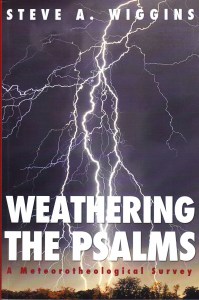
My own academic career ended before I could crank out all the books I’ve got in my head. You have to reach a certain stage of academia before that begins to happen. I’ve been working on my writing in the meantime, and I think I might be able to reach that crossover crowd that writes for non-professionals. I’m not sure I’ll have the time, but the ideas and, I hope, the skills are there. This all came back to me when preparing my taxes. One of the truly religious certainties of this world, taxes are, I know, for the common good. At least in theory. I never complain about them. Preparing them is a different story. My little book, Weathering the Psalms, followed the typical academic course of being largely ignored. I received a small royalty check for it. I wished I hadn’t. You see, I use TurboTax to file my return because someone with as simple an economic life as I have finds hiring a professional superfluous and, ahem, not cost effective. We don’t own a house or any capital. We just hope we’ve paid enough to get a little back in the spring.

WeatheringThePsalms

Then I came on the 1099 for my meager book royalties. (They were in the double digits, just to give you an idea.) I tried to enter it into TurboTax. Uh-oh. That kind of income requires a separate form. “Congratulations,” the screen said, “on earning money from your freelance business.” That can’t be good. It turns out I had to purchase an add-on for TurboTax to handle this new tax scenario. The add-on, literally, costs more than the amount of royalties. Technically, then, I lost money on the publication of my latest book. Those are the harsh realities of academic publishing. An abstract publisher contacted me a few days later—would I like to do the abstract of my own book? Why not? I’ve paid for it. If I ever get back into academe I’m going to write books people will want to read. In the meantime, I write them to contribute to the tax base. At least academically.


Faith for Sale

Materialism can be defined in a number of different ways. One of the more common is that people desire material things. We want stuff. Now, we all need things to survive. My sympathies are always with the poor for whom each decision can be a potential tragedy. Spend too much on something and you may not have enough left to purchase something you need. As people, though, we all long for nice things. So it is that places like dollar stores exist. The dollar store is not the same as the “five and dimes” with which I grew up. The latter stocked things that were, in large measure, practical. Things you might need: pencils, string, soap. A dollar store, however, may lead you down a different path. A lot can be had for a dollar. Some of it may seem to promise more than it can deliver.

IMG_2670

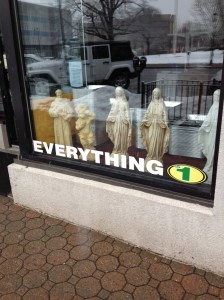
My wife sent me a photo of a dollar store where the window was lined with what appears to be religious statuary. I’d be lying if I weren’t to admit that my first impulse was to go and purchase some cheap salvation. I’m sure the statues aren’t made of stone. I’m not even Catholic, so I’m not sure a one-dollar Mary would help with much of anything. Still, it is something to buy. Something material. Something that seems to make promises beyond itself. Here is the danger of the dollar store. It’s only a dollar!

Every now and again I play with this thought-experiment: if I knew that I would only survive one more year, what would I buy? Many things seem superfluous in the face of eternity. Would material comforts, or larks, do anything more than depreciate the little I would leave to others? That game tends to show materialism in a rather crass light. What do I really need to buy? We all have our weaknesses, for sure, but it can’t hurt once in a while to think that the material is just that: material. And we might have a very different set of values if we didn’t measure worth in terms of material gain. Faux-stone Mary would likely back me up on that.