Grim Where?

An inordinate amount of my childhood time was spent on television. While the device of the day had been around for a decade already, I was among those who grew up learning that watching was easier than reading. Like most children, I took the path of least resistance. I watched. As a teen, however, I rediscovered reading and from that time television began to take a back seat to books. When the great switch-over to digital occurred we didn’t get a conversion box, and we could never really afford cable for as little TV as we watch. When a program gets commended, or if nostalgia takes too great a toll, we can always purchase programs—the price of watching television without the commercials. So it was that I began watching Sleepy Hollow. Very quickly in the first season the monster of the week trope was established as the plot grew more and more tangled. The Bible was so prominent in that season that I wrote an academic paper on it.
Sleepy_Hollow_-_Title_Card

Over the past few months my wife and I have been working through season two. The DVD version was delayed and we only watch on weekends. Recently we finished the eighteen episodes of the second installment. Clearly the budget had improved over the first season, but the Bible, it was also clear, had diminished. Throughout the first season the driving motif of the story was that biblical “prophecy” (from the book of Revelation) was unfolding in Sleepy Hollow. This is what one scholar has termed a “local apocalypse.” Throughout season two, however, the end of days is shut down. Molech, its architect, is killed. The headless horseman is less Death than a jilted lover. The second horseman, War, loses his armor and dies.

Magic, however, along with special effects, take on an increased roles. Instead of turning to the Bible to solve problems, the most helpful book to have on hand is a grimoire. Sleepy Hollow, which is anything but what its name suggests, is full of monsters. Powerful magic is required to contain them, and, it seems, the Bible is no longer needed as a tool to take down evil. Perhaps there is a parable at work here. I was drawn into the series by its biblical literacy, as well as its literacy in general. More action has been introduced, and fewer books. It’s a pattern I’ve seen before. I suspect I’ll watch season three presently. When I do I’ll be casting a wistful eye on the stack of books I have yet to read, and I’ll be wondering if reading may not have become easier than watching.
What You Pay For

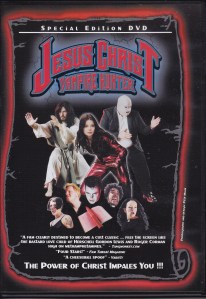
VampireHunterWhen a friend pointed out the easily missed 2001 film, Jesus Christ Vampire Hunter, (well before Seth Grahame-Smith came up with the same role for Abraham Lincoln) I knew I was duty-bound to see it. As regular readers know, although I’m not a fan of gore or violence, I have a soft spot for vampire movies. Vampires, although often evil, are frequently presented as conflicted characters. As former humans they have some level of sympathy for their victims, while at the same time, all people are objectified for the vampire. We are food. This low-budget, independent film didn’t promise to deliver on many levels, but as the end credits show, they did shoot enough film to be able to cut out a few bloopers. The story, in as far as there is one, has Jesus fighting lesbian vampires in modern-day Ottawa (where the film was shot).

Not that the film was serious enough to invite critical dialogue, I did wonder what Jesus had to do with the whole thing apart from the shock value. There were a few cute moments, as when the “atheists” pile, clown-like, out of a car for an extended fight scene, but the lead could have been any character apart from one scene where a miracle does occur. Jesus fights with his fists, not with supernatural power. Tossing in Mary Magnum and “professional wrestler” El Santo, the movie came close to the screwball level of Attack of the Killer Tomatoes. It’s difficult to critique a film where logic isn’t held accountable for the plot—the only thing to keep the film going is the action of a particular scene. And that, as I’ve intimated, can’t be counted on.

Interestingly enough, Jesus is treated throughout the film in a positive way. Although he doesn’t use supernatural powers, he is the “good guy” and is even tolerant of alternative lifestyles as long as love is the basis of relationships. The movie is biblically literate, using the Good Samaritan in a scene that underscores the accepting nature of the new millennium Jesus. The vampires don’t add much to the lore of the monster. They can be out in daylight because it is cheaper to shoot film that way, but the plot does come up with an explanation for it. Vampirism, at the end, can be healed by prayer, and when Mary Magnum, El Santo, and Jesus go their separate ways at the end, we are left wondering what all the fuss was about.


Death by Molasses

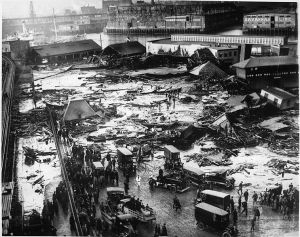
Ninety-seven years ago today, 21 people were killed by molasses. Even having lived in Boston, I had never heard of the Boston Molasses Disaster. Credit for my awareness has to go to my wife, who read me the story from the Oxford Companion to Sugar and Sweets. I had no idea that molasses had been weaponized. The sweet sap, apart from making cookies, can be fermented into ethanol, used for munitions manufacture. In the North End of Boston a hastily constructed tank holding about 2 million gallons of molasses burst on this date in 1919, creating a sticky, 25-foot-high wall that raced through the North End at 35 m.p.h., killing those unfortunate enough to have been in the way. According to the Companion, 150 others were injured.

BostonMolassesDisaster

We’ve all heard about the slowness of sap in January. Apparently the temperature had risen to above freezing this particular day, after several days of seasonal chill. The tank containing the heavy fluid burst under the strain. I have to admit that visions of walls of water have always frightened me. The images of the Boxing Day Tsunami back in 2004 were horrifying. I’d read of pilgrims to Petra (if you’re not familiar with Jordan, think of the crevasse through which Indiana Jones and company ride at the end of Last Crusade—that’s Petra) being drowned by sudden meltwater from distant mountains suddenly filling the canyon without warning, and shuttered. Having walked Hezekiah’s Tunnel without a flashlight, such images can be all too real at times. Would the offending wall made of molasses have made it any better or worse?

The tragedy is that the event is so little remembered today. I’m sure long-time residents of Boston still tell the tale of death by confection, but why don’t we hear of such things in the natural course of things? I suppose there are too many disasters to follow them all. Millions had just died in the nightmare of the First World War. The strange fate of those individuals killed by molasses might easily be overlooked, despite the fact that the goo had more victims than the Boston Massacre and the Boston Strangler combined. Maybe it’s just that things seem to move a little more slowly in January, but I feel as though I’d missed a part of history about which I might have been informed if I had more of a sweet-tooth.


Local Lore

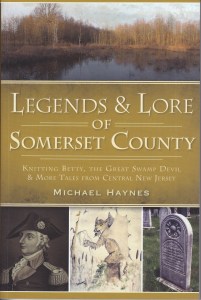
SomersetOne of the true joys of having more than a day off work at a time is the privilege to spend days reading. Although I read on the bus as a matter of course, it is a defined time, and editing isn’t as much reading as most people think it is. While doing research for my Sleepy Hollow paper, the question naturally arose: where did Washington Irving get the idea for the headless horseman? According to Irving’s biographers, the story was not an uncommon one. Headless ghosts are not unique, and he wrote the story while living in Europe as part of the serialized Sketch Book of Geoffrey Crayon, Gent. There is no practical way to know where he first heard the story. During my research I heard of a local source: Legends and Lore of Somerset County (New Jersey), by Michael Haynes. In this little compendium of stories of my current county, there is a claim that Irving learned about the story right here in New Jersey, where a traditional headless ghost rides. Again, it is impossible to say where he got the idea, but people like to feel that their local traditions are important enough to engage a major writer’s imagination.

Haynes presents several other regional tales that may rival the Jersey Devil and give ghosts a location just down the road. I suspect most places have tales of ghosts and mysterious beasts. It is always interesting to find out about those lurking in your own neighborhood. Scholars are now beginning to turn their attention to the sanctity of space. Location is very important to mobile beings like ourselves. The place where we find ourselves becomes “our place” and with the patina of time, often a personally sacred space. Tales of what happened here often take on the cast of the supernatural.

Local history has always held a deep fascination for me. Any region that I know, in a sense, intimately, is a region that has become part of my personal history. My region of Pennsylvania, for example, defines me although neither of my parents, or their parents were born in that state. And Massachusetts, Michigan, Scotland, Illinois, Wisconsin, or New Jersey, places I’ve lived, have become somehow alive with history. Legends and Lore of Somerset County contains tales that are not always believable in the workaday world we inhabit, but that’s the beauty of sacred space. Going beyond the mundane is entirely the point. Although Washington Irving may or may not have first heard of the headless horseman here, we have that legend, and there’s only so much that history can do to remove such a claim.


Top Predator

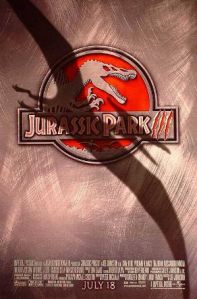
Jurassic_Park_III_poster

The reboot of Jurassic Park, Jurassic World, has been on my mind. Back in the early days of this century I hadn’t bothered to see either Jurassic Park II or III. The original, despite its faults, was like a childhood dream come true. I’ve always felt that dinosaurs (along with vampires and pirates) made for the best movies, although space has to be right up there in the top since 2001 (not the year, the movie). Since the summer I’ve made a point to carve out time to finish out the holy trilogy of dinosaur flicks. I liked the character Dr. Malcolm in the original, but he should’ve never been the main character of the sequel. The Lost World almost lost my resolve to see the series through. The story was unvarying: humans meet dinosaurs, dinosaurs chase humans. New and innovative means of trying to contain or exploit them try to demonstrate the evils of hubris and greed, but dinosaurs always prevail. Jurassic Park III was a bit better, going back to the original formula but adding something bigger than Tyrannosaurus Rex—the Spinosaurus. It was unbelievable, however, that a paleontology doctoral student couldn’t recognize it, thinking it a mere Suchomimus. At the turn of the century, new dinosaur finds had suggested that Spinosaurus was larger than T-Rex, and the movie reflected the new top predator of the time.

It is the little boy in me that keeps me coming back for dinosaurs. Some of my favorite toys were cheap, molded plastic dinos, and when my daughter was young we bought her all the more realistic (and pricey) Safari versions. When I get to the store, I still stop and look at the species we never acquired and make a wish. I think it’s because dinosaurs represent something we can never have. Species that grew to enormous size and had armor-like skin, and even, if some paleontologists are to be believed, considerable intelligence. Of course, that may just be the movie talking. In a world where all things are equal, we’d never stand a chance against dinosaurs. They are like reptilian deities.

When Amanda Kirby (ironically, the only adult to be addressed by first name in the movie by new acquaintances; the males are called by their titles even after they’ve been through several dinosaur attacks together) sees the incubators at the compound, she says, “So this is how you make dinosaurs.” Dr. Grant (let’s give him his title) responds, “No, this is how you play God.” Playing God is a trope as old as science itself. Planting crops to grow where you want them to grow is playing God in its own way. Creating uncontrollable forces that can destroy you seems to be a uniquely human trait. And so my imagination is drawn back to dinosaur days. Those who make the movies tug on wishes that any mere creature would have: to create its own gods and somehow manage to survive them. Hubris, it seems, is just as human as dreaming of dinosaurs.


Feasting

In addition to music, Christmas has also been associated with seasonal foods. Unlike today, when we think of foods primarily in terms of either fast food or culinary sophistication, Christmas dishes of yesteryear often had religious symbolism. While singing an English carol, for instance, you might hear of figgy pudding. I tried my first when living in the United Kingdom and it was nothing like the images its name conjures. It is more like a dense cake made of raisins and dried fruit, set aflame to burn off the brandy. Sometimes it is topped with holly. According to an interview on NPR, the Christmas dessert, in addition to taking weeks to make, contains thirteen ingredients, to symbolize Christ and the apostles. The holly is to represent the crown of thorns, and the flames the passion. That’s a lot of theology to stomach. (In seminary I had friends who used food analogies for theological purposes, but I suspect they didn’t know it was such an ancient tradition.)

Christmas cheer, I would’ve been shocked to learn as a child, generally involved spirits. For example in A Christmas Carol, Charles Dickens reverses his entrepreneurial relationship with Bob Crachit over a bowl of smoking bishop. I had always supposed this was a kind of soup or stew, but, again NPR comes to the rescue with a piece about Christmas drinks. Smoking bishop was made of port, and, according to the NPR story by Anne Bramley, is of the class of Protestant drinks called “ecclesiastics.” These were various alcoholic drinks named after Catholic church offices that Protestants used to poke fun at the ecclesiastical hierarchy of the Catholic tradition.

Christmas

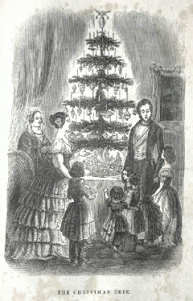
A Christmas Tree primer

It is difficult to conceive of anything more basic than food and drink. All living things require nourishment. It stands to reason that when religious sensibilities began to appear that they would certainly be associated with the necessities of life. Holidays, as necessary breaks from the mundane, offer opportunities for bringing theology to the table. The most basic of ingredients, as any observer of biblical holidays knows, can contain more than just nutrients and roughage. There is a symbolism in what we eat. In these days when it is fashionable to declare religion nothing but stuff and nonsense, it can’t hurt to stop and look at what might be on our plate or in our cup before declaring it to be mere animal nourishment.


Away in a Manger?

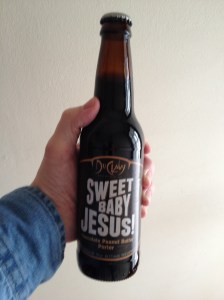
The holidays are a time for getting together. At a friend’s house over the weekend, we were talking about nativity scenes. I mentioned a story about how a nativity scene had been missing the infant Jesus and he said he’d be right back with a solution. I have to admit that I’ve never seen Sweet Baby Jesus porter before. “Place that in your manger,” he said. I assume this is a seasonal brew, intended to draw the semi-religious toward a kind of holiday cheer. Now, blasphemy in a bottle is nothing new. In fact it’s quite common, I expect. Nevertheless, a bottle that says “One sip and you’ll claim the name” might be offering a salvation that it simply can’t deliver.

IMG_2642

Growing up, Christmas never had any connection with drinking. My father was an alcoholic, and inviting this particular spirit to the holidays seemed misguided. Still, I recognize that in many cultures tipples were a way of coping with the excessive periods of darkness. Even in these days of ubiquitous artificial lights, I find that the darkness just outside bears a considerable weight. We festoon our houses with colorful lights to ward off the night. We prepare special foods to take our minds from the bleakness outside the window. And yes, some turn to Sweet Baby Jesus to offer its own kind of shine.

The holidays mean many things to many people. The commercial aspects appeal less and less as the years go by, but having some time off work to be with family and collect my thoughts grows more important each year. What makes a day holy, I expect, is that you have things that are otherwise difficult to find. Life, for many, is a long series of denials of what they really want. When the holidays come, they indulge. Who am I to begrudge someone else of what makes their ordinary days sacred? Who indeed?


Factor Fiction

An article on CBS that my wife sent me tells how Costco mistakenly labelled a shipment of Bibles as fiction, setting off a tweet-storm. Some offended, some applauding, a 140-character barrage ensued as Costco apologized. What was the fuss about? As a person who has experience with both fact and fiction, it has become clear to me over the years that these categories are not nearly as sharply defined as they might appear. We make labels to help us categorize a confusing reality. Our brains, nevertheless, easily accept fiction as fact, at least for purposes of getting along in the world. The earth is spinning, right now, at over 1,000 miles per hour. We don’t perceive it, and in fact, it took not a few deaths and apologetic clerics before it was admitted that evidence we don’t feel proved the case. Each day we choose to believe the fiction that we are holding still and the sun goes overhead. Is anybody tweeting about that?

One of the angry bird calls pointed out that Costco (which apparently now has an imprimatur) doesn’t label their Qurans as fiction. How many Christians have read the Rig Veda and not wondered whether its proper label fell on that side of the pricing gun? The matter of fact or fiction is one of opinion. Even those books bearing the label of non-fiction are interpretations of evidence. When it comes down to ultimate truth, where it lies is always a matter of faith. Who buys a Bible at Costco anyway?

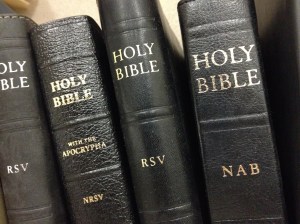
IMG_2634

When I was a child and Amazon did not exist, buying a Bible was itself a kind of sacred act. You wouldn’t think of going to Wal-Mart to do such a thing. You went to the Christian bookstore (or, I suppose, if you grew up in a city, a secular bookstore might do). You talked to clerks who knew the differences between versions. The place smelled of leather and velvet. It was a place dedicated to the truth. Costco is a big box store. Buying in bulk implies something. Ironically, those who angrily tweet about the Bible’s label don’t seem to realize that Bible selling is big business. You won’t find much in the way of small publishers’ literature in such a store. Next to your giant cartons of cereal and immense packages of diapers, why not tuck in a Bible as well? When you get home you can tweet about how much money you saved buying eternal salvation in bulk.


Forward Planning

Smallmindedness bothers me.  Now don’t get me wrong, I don’t claim any great intelligence for myself.  I’m just an average guy who thinks too much.  No, the smallmindedness that I despise comes in capitalist colors.  More specifically, it comes in the form of business-speak.  This is a language in which I make no claims of fluency, but in which I am forced to converse from time to time.  I believe there is a secret coven of businessmen hidden in a dark board room determined to make themselves sound intellectual by cobbling together polysyllables.  Business is, at the heart of it, really simple.  I want your money; how little can I give you for it?  They call economics the dismal science for a reason.  In any case, the other day I was confronted with the phrase “forward planning.”  It was like one of those moments when you walk into the wrong room and you’re disoriented for just a second or two because what you see is not what you expected through that door.  Forward planning.  What other kind of planning is there?  Backward planning?  Victims of time have no choice in the matter.
 
I’m bemused by the ubiquity of “best practices.”  No, thank you.  I prefer to use worst practices.  Of course we all want to do things the best way possible.  Putting insipid neologisms in the way is not how one achieves it.  What’s wrong with just saying what you mean?  Oh, I forgot—the guys in the shadowy boardroom.  There’s nothing like lingo to substitute for depth.
 
At a campus book sale a few weeks ago, I found a copy of the Compact Oxford Dictionary.  Fully aware that any word can be instantly searched online, I hefted the two, heavy volumes and for six dollars walked out with over a million words.  People on campus looked at me funny.  Someone even asked why in the world would I buy a dictionary?  There are plenty of answers I could give.  I could say that I like the feel of something solid in my hands when I practice scholarship.  I could say that it impresses people when you show them how small the type is.  I could say that I have some leaves I’d like to flatten effectively.  The truth, I suspect, you’ve already divined.  I bought these books because no matter how much you look, you won’t find “forward planning” listed anywhere as a legitimate concept.

IMG_2618


R’lyeh Reality

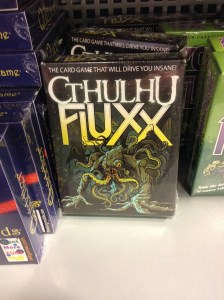
It’s always a sign that I’ve been too busy when I lose track of Cthulhu. Few created deities receive the attention of the web like the terror dreamed up by H. P. Lovecraft. The internet has created an environment, like the bottom of the sea, where the old gods may lie dead but dreaming, ready to reawaken. It was with great pleasure that I was pointed to Cthulhu for America. At last, a presidential candidate who is willing to admit that he is merely a myth. His agenda of destruction and domination is not at all hidden. If only real politicians would be so honest!

In a world with millions of diversions, it amazes me that Lovecraft’s nihilistic creation has taken on such popular interest. Perhaps it’s because those of us who grew up with monsters have now reached a dubious sort of adulthood where we are bossed around like children and given only those limited freedoms that capitalism will allow. We can’t go into public places without seeing heavily armed guards in fatigues. We can’t get into work without electronic chips in cards to keep us safe from those of our own nation. We can’t fly without being scanned like a week-old loaf of bread. We can’t even store our own files on our own personal computers any more since some software company would rather charge us for the privilege. At least Cthulhu says what he wants. Orwell may have had his Big Brother, but Cthulhu is an obvious overlord who wants nothing but his own satisfaction.

IMG_1551

Watching the circus of candidates vying for position, I can’t help but think of Rome before the fall. Historians are still debating the causes—lead poisoning may be too easy a way out. Perhaps it is, as Lord Acton declared, the result of power itself. Those who taste it can’t stop eating it until every microscopic crumb is devoured. It’s shameful to watch. I’m embarrassed when Dumb and Dumber sounds intelligent next to the utterances from political talking heads. Cthulhu would have none of it. Although the website is a parody, it, like all myths, is truer than what we often call reality.


Bucking Star

Entitlement comes in many forms. Culturally we’ve been sensitized to substituting “holidays” for “Christmas,” although the reason we spend money at this time of year is well known. Although technically not a Christian nation, the United States has a large number of Christian believers and always has. Charles Dickens certainly participated in the invention of Christmas, but the commercial aspect is very much an American thing. So much so that we can’t wait to get Thanksgiving out of the way to dip our fingers into Black Friday, a holiday in its own right. Starbucks has, for many years, shifted to a banal, neutral winter-themed cup design, to get customers into the spirit of spending. Who really needs to pay five dollars for a cup of joe? Wrap it like a present and the cash flows more freely. So the tempest in a coffee pot over the “war on Christmas” by choosing a simple red (and by default green) cup design became front-page headline news recently. Had we dissed the Almighty or the babe in a manger by going red?

Religious groups feel increasingly threatened. Not everyone thinks globalism is a good thing. We try to educate our children, but many religious groups insist on home schooling to avoid the contamination of an open mind. Any act, no matter how trite or banal, may be perceived as an attack. Nobody seems to think that stopping in to pay so much for a cup of coffee may be a sin in its own right. The economy has tanked and bumped along the bottom ever since I’ve entered the professional sector. And yet, Starbucks has flourished. No matter how down you are, a little arabica stimulus can’t hurt. It has, apparently, become the bellwether of how Christmas-friendly we really are.

IMG_2605

Ironically, the Christmas decorations begin appearing in stores before the spectre of Halloween. Stop in to pick up some last-minute scares and you’ll find them on the bargain rack as the red and green tide take over the valuable shelf-space. We gleefully move from one spending holiday to another. And in the midst of it all, we stop to complain about the design of our coffee cup? I try to avoid disposable items whenever I can. I don’t collect holiday cups from coffee vendors. I wonder what all the fuss is about when the world is full of so many serious problems. If I sound cranky to you, there’s a good reason. I haven’t had my morning coffee yet.


Book Deaf?

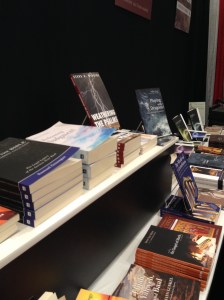
It’s Tuesday morning and I have been listening to authors pitching their books for three solid days now. Truth be told, I am a bit jealous. I’ve got a few more books in me yet, but research time simply does not exist in the world of capitalism and its discontents. Not that I envy being on the author’s side of the table—I remember how it felt to pitch Weathering the Psalms to several editors and to receive an icy “no” in response. I think now I begin to understand. Yesterday one of my appointments asked if I was “book deaf” yet. It was a term I’d never heard, but I immediately knew what he meant. Editors hear pitch after pitch. I pull out my phone and look at my calendar and see a new project every half-hour throughout the day, but no, I’m not book deaf. In fact, I have to constrain myself to keep my credit card firmly inside my wallet. Being surrounded by books is like being in a jungle teeming with deadly animals.

IMG_2614

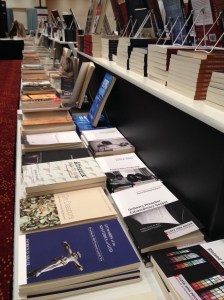
From the exhibitor’s booth, Tuesday is a day of relief and worry. Most of the papers are over at AAR/SBL, and most of the participants have already left. As at any conference, fair, or exhibit, we are strictly forbidden from taking down the booth before closing time. We stand about, straining our ears to hear that first transgressive ripping of strapping tape from its roll, indicating that someone in another booth is being naughty. We’re tired, weary even, but not book deaf. Never book deaf.

IMG_2615

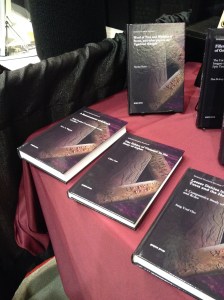
In my unguarded moments I sometimes think that maybe some day I’ll have a book here that others will clamber to find. Maybe someone like me will prowl to a pre-selected booth with a specific title firmly in mind, and that title will bear my name. I suppose it could happen, although it isn’t likely at this point. I hear each pitch and more. I hear the dreams and deep desires of every author. We want to be heard. We want others to think us respectable, honorable even. There are publishers out there who will publish anything. They will accept books to fill catalogues and websites and you’ll never hear from them again. Still, you’ll find some interesting things if you wander by their table. And if someone sees that you’re an editor while you’re browsing you’ll never turn a deaf ear. This is what religion scholars live for. Books are our reality.

IMG_2617


Ports of Call

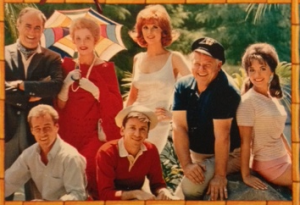
“Just sit right back and you’ll hear a tale,” so began far too many evenings of my childhood. Well, although as an adult it may seem that the time was ill-spent, Gilligan’s Island was the induction to popular culture that I had to undergo some time. The series has aged well; we bought the DVDs (speaking of aging) as soon as they came out and watched them all, multiple times. But what must it really be like to be on a boat, and for more than a three-hour tour? Here’s where I’m lucky in my extended family. A cousin, who is much younger, has been working as a musician on a cruise ship for a couple of years, and has recently started a blog. If you’ve ever wondered what it might be like to be a singer on a vacation vessel, check out David Tarr’s take. He has a more realistic outlook than Ginger did, although seeing Tina Louise in person was still quite a thrill, back when she stopped into the local Borders. Back when there still was Borders.

TheIsland

It seems to me that we don’t often enough take the time to wonder what other people’s lives are like. We are a myopic species. Apart from the occasional educational tour in school, we don’t have much opportunity to consider what it feels like to be someone else. I grew up in a working class family that lived at the poverty level. I didn’t get along with my step-father, but I have, in the years since he died, thought back on his perspective. He worked long hours, had little education, and was very patriarchal. When he was too old to do his duties as a laborer, he took a job running an elevator in one of the five-story buildings in a nearby town. I once went to visit him on duty. He was sitting in the tiny cube of a metal box, waiting for the very rare customer. I asked if I could bring him something to read, something to do, to pass the hours of tedium. No, he replied, he didn’t want to miss any calls from potential passengers. What must it be like in the head of such a man?

The internet has given us a chance to learn the lives of others. David is living a young man’s dream, with the good and bad. We have lost all hope when such things are no longer possible. Too soon we find ourselves chained to a desk, 9-to-5, working to make money for others. Dreams are strictly forbidden, at least on work time, which is the only time there is. Somewhere on an ocean, there is a ship. It may take a three hour tour, a three week cruise, or a three month voyage. It is more than a ship, regardless. It is the people on board, and their lives, and hopes. I’m not sure of the course charted for me. I suspect it has no cruises to exotic climes. It has, however, writing written all over it, and that is one thing I share with a talent cruise singer in my extended family.


Make Believer

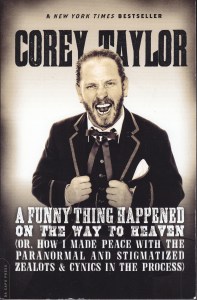
SmthgFunnyMy brother is way cooler than I ever hope to be. While I was busy learning all a tween and teen could about the Bible, he was listening to Lou Reed and David Bowie and Black Sabbath. Since the “door” between our rooms was only a curtain, I heard the forbidden sounds and, despite myself, had to admit that I liked what I heard. In fact, I once gave a lecture on Christian influence in secular rock music, and found many students staring at me in surprise for knowing so much about such debased music. In any case, when my brother recommends a book I know it will always be an adventure. Thus I came to read Corey Taylor’s A Funny Thing Happened on the Way to Heaven: (Or, How I Made Peace with the Paranormal and Stigmatized Zealots & Cynics in the Process). I didn’t want to admit to my brother that I’d never heard of Corey Taylor and that I couldn’t identify a Slipknot song even on Spotify, but the book sounded interesting, blending as it does bad-boy attitude with ghost hunting. November seemed a perfect time to read it. It could lead to some street cred on the bus.

It is difficult to distrust people like Taylor who write with absolutely no pretension (I’m a working-class kid, too). You know that what you’re getting is the real deal. It is also clear that like my brother and many rockers, Taylor is of above-average intelligence. Being smart can sometimes feel like a curse, and Taylor lashes out in several ways during the course of his narrative. He finds it odd to be an atheist who believes in, and has personally experienced, ghosts. I’m not sure that he would find it comforting to know that such a position is not at all as rare as he seems to think it is. Science deals with neither gods nor ghosts, and the average person is left to their own devices to decide who might speak with authority on such issues. Where are we supposed to look when scientists refuse to address such things? Personal experience is a powerful influence.

As with most books by opinionated, brash extroverts, it is difficult not to find yourself liking the writer. Trust may be too strong a word, but I do believe that Taylor writes without guile. After all, people have experienced ghosts for as long back as we’re aware. Why should it be any different for a celebrity? Is Taylor’s house haunted? (Or, more accurately are his houses haunted.) That’s a question no one can answer with certainty. Ghosts are beyond our realm of knowledge. Although plumbers can use scientific instruments, until actual scientists try to explain the immaterial we will be left to choose whom to believe. A metal singer can know just as much as a priest. Or even more, depending on the context.


Upgrade Downgrade

I don’t have to have the latest toys. In fact, I am happy to stay with what I have as long as it works. I’ve been a frugal lad all my life. The increasing demands of technology worry me. Nobody has to tell me that I keep odd hours. Waking up between 3:00 and 3:30 is hardly normal. Since I post on this blog before I go to work, I get up and turn on the computer, ready to write. As I learned three laptops ago, if you don’t keep your updates updated, you soon find yourself unable to do anything on the web. With my last laptop, whenever an update notice came, I immediately acquiesced. “What humble work I have to do, sir, pales in comparison to your mighty plans.” Now updates begin automatically. Most often I have no say in the matter. In fact, the first thing I saw when I started up my most recent computer was a message saying that a software update was ready to install. So what does all this have to do with my insomniac habits?

2015-11-07 18.47.57

Computer companies assume nobody is getting up and working at 3 a.m. While we’re sleeping our computers are making their electronic deals and sending out their electronic handshakes. We mortals need our slumber. I don’t even know what half this software on my computer does. I know that if it’s out of date, problems are sure to arise. So when I awake to find my computer’s too busy to accommodate me, I wonder how to post on my blog. Some updates politely run in the background, but others necessitate that I turn off the software I actually know how to use until it’s done updating. By the time it’s finished, I’ve forgotten what I was going to write. The computer now determines what might be expressed. When something goes wrong, we’re forced to learn its language. We’re in its country now. Technology is its national language, by law.

Once I was told that travel faster than the speed of light was impossible because of navigation. If you can’t see what’s in front of you because you’re traveling as fast as anything can, how do you know you won’t run into a planet, comet, or software update? You have no means of getting feedback in time to react. It strikes me that we’re already traveling well beyond the speed of light. I grew up writing without a typewriter. I wrote stories and articles on paper with lines, using a pen or pencil. Now I rely on my devices to store my ideas, but they’ve got other plans. I have to wait until they’re done to do my work. Of course, we must conform. At 3:30, human, you should be in bed. My advice to you, dear reader, is this: don’t wake your machine at the witching hour. You might not like what you find.