Vox Humana

You know how it is when you get a song stuck in your head? This is one of the few scenarios that will actually lead me to buy music. I have very specific (some would say “odd”) tastes in music. I love the originals. Long ago I ceased listening to “Christian Rock.” It was a thing when I was attending a Christian college, of course. Many who feared the terrors of the drugs and sex part felt they could be slightly rebellious with the rock-n-roll side of things by listening to various groups that pounded out evangelistic messages with electric guitars and overheated amps. There were, however, amid those groups pretending they were a saved Metallica, some real artists. Somehow some of the songs of Daniel Amos came to my mind. I had all four albums of the ¡Alarma! Chronicles—still do up in the attic somewhere—but we left most of our sound system in Wisconsin. I hadn’t bothered to buy a new needle for my turntable, and I’m not sure I still have the patch cables to connect it if I did. It’s been at least a decade since I heard Vox Humana. The internet made it too easy.

VoxHumana

To understand my quest, you have to imagine the context. It was 1984. I was a rising senior in college and I hadn’t seen much of the world. Having grown up in humble circumstances, I didn’t have money for travel or many material things. When my roommate took me to visit his house and he introduced me to a friend who had a room dedicated to sound equipment and albums, I felt as though I was on another planet. Daniel Amos’s Vox Humana had just been released. Our host slipped it from its yellow cover and played it with all the blinking green and red equalizer lights flashing and I was completely blown away. It was Christian music unlike I’d ever heard. In fact, it was ahead of much of the pop music of the time. As soon as I got back to campus I ordered it from the Christian bookstore. The songs still come back to me when I least expect them to.

Call it a guilty pleasure. My theological outlook is lightyears away from what it was when I was an undergraduate. I still haven’t seen much of the world, but what I have seen of it has changed me in ways that there’s no means of reversing. Although I really can’t afford to be buying music—we’re only paying for electrons any more—I just couldn’t help myself this one time. It’s no longer the ‘80s, and the 1950s sci fi movies DA references in the lyrics are closer in time to the album’s initial release than that release is to me now, but still large swaths of the lyrics are imprinted in my mind, taking me back over the decades. It’s the music of my youth. And it was edgy then. It sounds more conventional, perhaps even old fashioned now. Still, when you get a song stuck in your head, pagan or Christian, there’s really only one thing you can do about it.

UCB

The Flying Spaghetti Monster came onto my radar while teaching at the University of Wisconsin, Oshkosh. I was teaching a course entitled The Bible and Current Events and the controversy over teaching Intelligent Design had been gaining steam. As I addressed the evolution section of the course, I became aware of the Flying Spaghetti Monster and his noodly appendages. The Jesus fish had recently evolved to a Darwin fish, and the Darwin fish was being eaten by a Jesus shark, then I finally saw the Flying Spaghetti Monster on somebody’s bumper. I looked it up online and discovered a whole mythology had been developed to go with this parody of a religion. It was lighthearted and funny and had an obvious purpose—to challenge the equally bogus claims that creationism is science. Now, I don’t try to change anyone’s religion. If someone finds creationism comforting, well, the United States is based on freedom of religion and who am I to dictate what someone else believes? The problem is creationists often don’t share that courtesy and try to get their religion taught in public schools as science, which it isn’t. The Flying Spaghetti Monster was their nemesis.

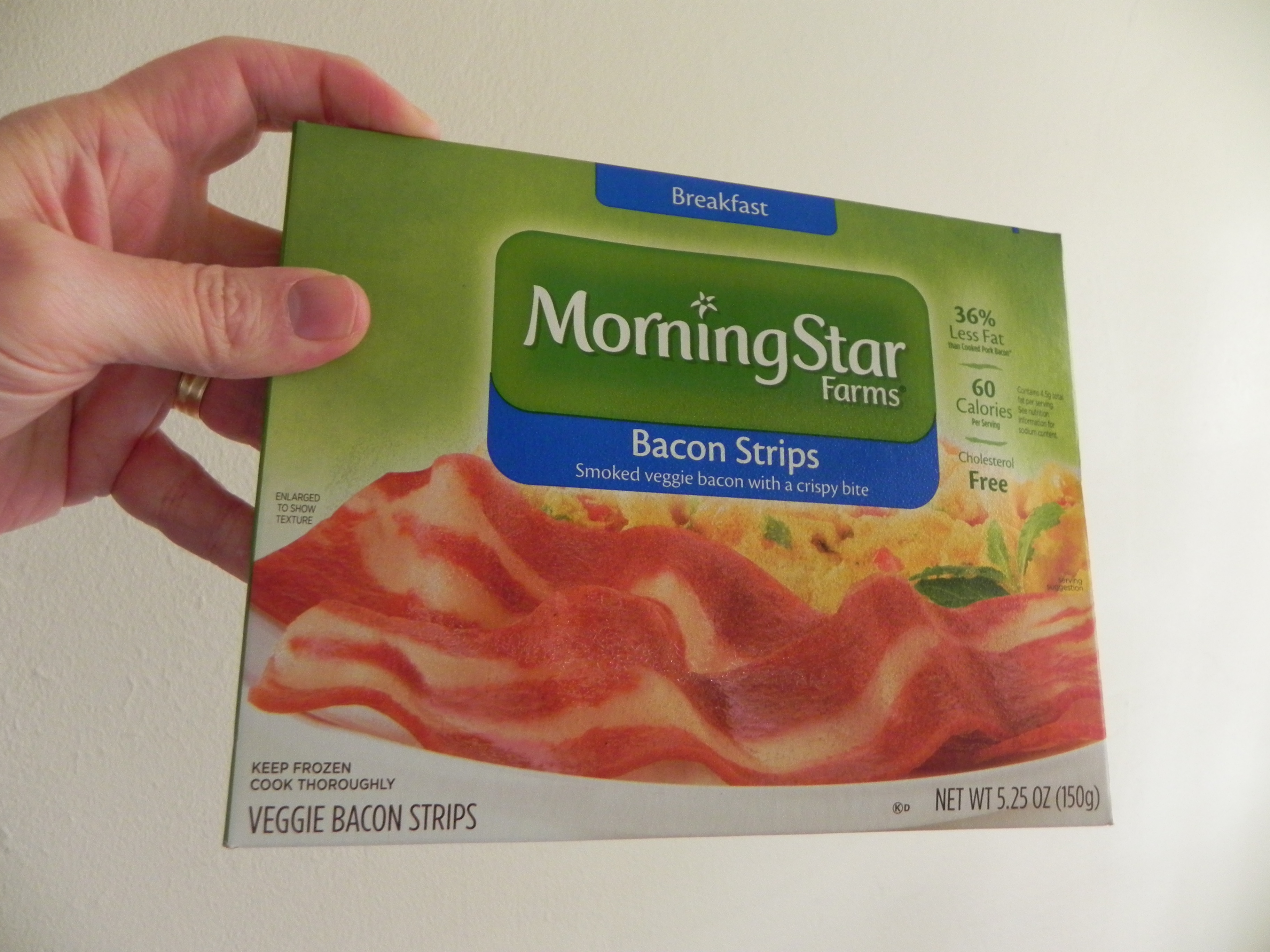
Over the weekend, when I actually have time to do a little surfing, I came across the United Church of Bacon. Noticing the similar food-based theme as the Flying Spaghetti Monster, I decided to check it out. It seems to have become a cottage (cheese?) industry to start your own anti-religion. A look at the United Church of Bacon’s website reveals it to be the brainchild of Penn Jillette of Penn and Teller, and friends. As usual, the voice of Teller is not heard. This is a legal church which performs many of the services of traditional religions, but without the belief. Bacon, it seems, is the ultimate reality here—to quote the church on a billboard: “Because bacon is real.” They have nine bacon commandments and an impressive list of charitable works.

Looking over all of this material, I wonder what the mainstream churches might take away from all of it. For one thing, the obsession that Christian denominations have had for centuries with correct belief has become a kind of albatross. Petty differences in theology tend to lead to hatred in the name of the prince of peace. Another is the repeated emphasis on giving has taken its toll. The United Church of Bacon openly advertises that they give money, they don’t take it. While few clergy become fantastically wealthy, it is no surprise that most bishops or those of equal rank never seem to go hungry or drive cheap cars. If entertainers are rich, it is because they offer something worth paying for. And for those of us who are vegetarians, the UCB offers the alternative of praising vegetarian bacon. You are, after all, what you believe.

Heretic?

Heretic?


Christian Cookie

During my childhood and adolescence, we didn’t eat out. Of course, food didn’t cost nearly as much then, and it was cheaper to cook raw ingredients at home than it was to buy something exotic that someone else had made. I clearly remember our first trip to McDonalds—it seemed so strange to buy food already prepared. It was so unusual that we went with our neighbors in a kind of exploratory posse, discovering this strange world of pre-cooked food. College, eventually, introduced me to the idea that, if done reasonably, eating out could be a reasonable choice. Particularly if you were wanting to impress a girl. Still, most of my meals were in the dining hall, and trips to restaurants were generally reserved for special occasions. Although Chinese food was known to me, it wasn’t readily available in rural western Pennsylvania. I did encounter my first fortune cookie in college.

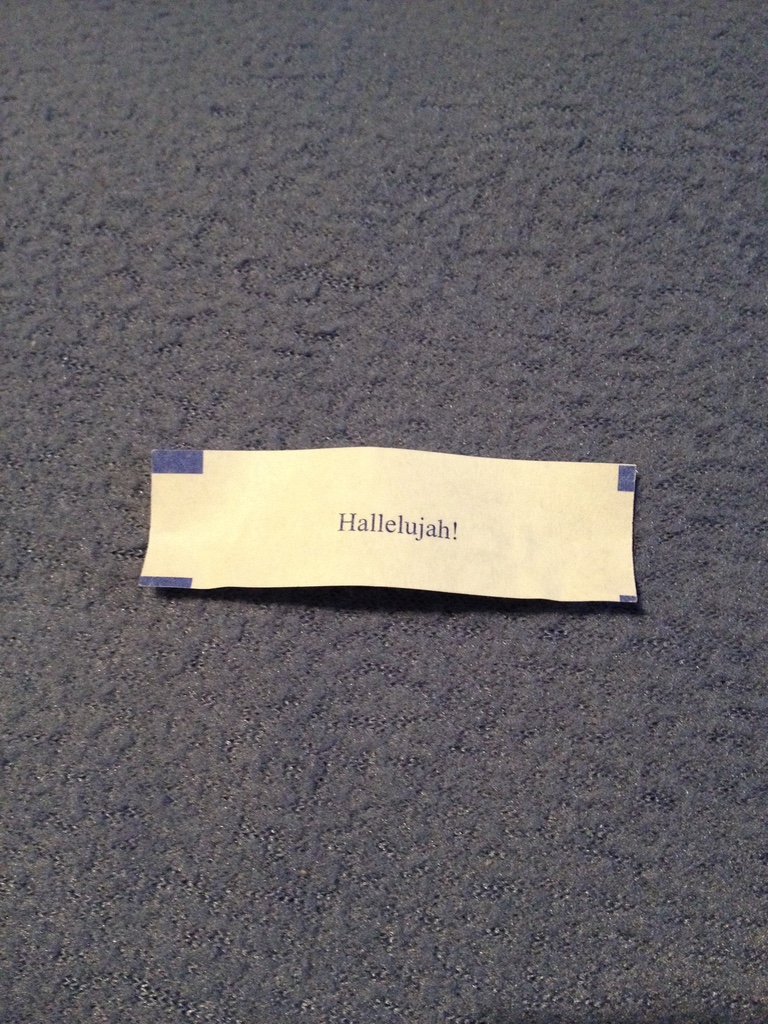
thumb_IMG_2185_1024There was something vaguely unsettling about a cookie that could tell your future. Prophetic comestibles were relatively unknown to me. Of course, the whimsical aphorisms seldom indicated any misfortune. They were more like horoscopes, harmless and often amusing. Recently we had carry-out Chinese. I’d noticed that over time fortune cookies had become more and more banal and less and less predictive. They claimed to know something about the world and I was supposed to believe because, well, would a cookie ever try to steer you wrong? My wife cracked open her cookie to find the “fortune” a single word: “Hallelujah!” An evangelical dessert? Was she destined to win the lottery? Perhaps we should play the lucky numbers on the next Powerball?

This really shouldn’t be bothering me, but what exactly was that cookie trying to tell us? It can’t be easy, I realize, to come up with millions of bits of advice so that those who often eat out don’t get the same prediction twice, but what if a Buddhist had ended up with this sweet? Or a Confucian? “Hallelujah” is, by its nature, a Judeo-Christian expression. Even so, it only occurs in two books of the Bible: Psalms and Revelation. My sneaking suspicion is that my culture is being pandered to. A bit of internet research revealed that Chinese fortune cookies are actually a Japanese recipe and were likely invented in the United States. They date back to the 1890s, at the earliest. I guess I shouldn’t be surprised then, at my wife being evangelized by her dessert. She does work for the Girl Scouts, after all, and they know a thing or two about the amazing abilities of the humble cookie.


Chain Gang

When I first joined LinkedIn, the notes about adding connections you didn’t actually know were pretty dire.  People could trash you behind your back, ruining career opportunities.  It turns out that I don’t really need any help ruining career opportunities, so after a couple of years on the social network I started adding people if they had a legitimate reason for wanting to know me: they were academics, they were religion specialists, they were in the book business.  I still wonder why investment bankers and others who must have better things to do with their time bother to ask me to connect.  It’s not like I have anything to offer beyond adding a number to their 500+ connections.  It stokes my perpetually low self-esteem to think that maybe 500 people would like to be connected to me, at least electronically. Low risk friendship—I’m not going to bad-mouth anyone.
 
LinkedIn, like most social networks in this highly visual age, offers the opportunity to post a picture.  I don’t have many pictures of myself, and even fewer that I like.  Still, I picked a selfie I snapped in Herald Square after an overnight flight from Phoenix to New York.  I was meeting someone in town and I look a little worse for wear, I suppose, since I can’t sleep on planes.  Nevertheless, there’s enough of my character there to give people the idea of who they’re linking up with.  The other day I was scrolling through suggested people with whom I might want to link.  A surprising number of people blur their pictures, so they look like just about everything did after that flight from Phoenix.  Then there are those who select an image that is meant to be funny, or whimsical.  I was surprised when I saw Jesus’ face above the name of a priest.

430px-Durer_selfporitrait
 
Don’t get me wrong; I’ve got enough theological sophistication to know that many clergy wish people to “see Jesus” when they look at them.  To set Jesus as your personal image, however, seems a bit presumptuous.  Of course, I may be missing something.  Perhaps Jesus sent a connection request to this priest, with the offer to use his likeness.  Still, I find it ironic to suppose that anyone would consider themselves worthy to use the image of their deity as their own.  Growing up, I was taught that people shouldn’t name their kids “Jesus” (we knew no Hispanics in our small town), but then I learned that “Jesus” is just the Greek form of “Joshua” and I realized there were an awful lot of Angelos in trouble too.  Don’t mind my rambling.  It’s probably just sour grapes.  I haven’t received any invites from any deities on LinkedIn, so I’m feeling rather like any guy who has only 500+ connections.


Cheesy History

It has been a few years since I’ve taken any courses on ancient history, but I took quite a number of them while preparing for my doctorate. Staring at my Dominos pizza box, I wonder if I must have missed class they day we covered ancient pizza. Actually, Dominos has been emphasizing cheese of late. Perhaps the least healthy ingredient in your typical pie, when you order you can “cheese it up,” and if you want breadsticks on the side, you can add cheese to those too. The box is whimsically decorated to sing the praises of cheese. Don’t get me wrong; I spent nearly a decade and a half in Wisconsin and I do like cheese. But perhaps this is just a little, well, too cheesy?

Dominos

The side panel suggests (to an increasingly gullible population) that “Ancient Egyptians might have been the original cheese experts.” The iconography depicts a man milking a cow, a man churning butter, and a man holding aloft a piece of what seems to be Swiss cheese. Maybe it’s Emmental. There are no women involved in this scene of making holy cheese. The man milking the cow has a distinctly European look. The man churning or stirring the cheese looks to my eye like a native American—are those feathers on his head? A Wisconsin Egyptian? The Egyptian holding the cheese aloft looks to be a priest or perhaps the Pharaoh. His uraeus is clearly visible. Rays emanate from the cheese like the life-giving solar disc of Egyptian myth.

I’m probably a fool for looking for footnotes on a pizza box, but I wonder whence this information comes. The mind of some ill-informed marketer? An opiate, or cheese-induced, dream of historic proportions? Perhaps those of us with training in these areas have not done due diligence in our teaching of the facts. Or perhaps I’m making a mound of cheese out of a mere crumb. It’s all in good fun, but I know that eventually it will make its way into term papers and other fast-food inspired versions of reality. We all know what to expect from the owners of the leaning tower of pizza.


Recycle This

Like nearly all unfortunate white collar workers, the computer provided for me at my job is a PC. I don’t know the brand—that’s not important. When I want to delete a document, I’m asked if I want to move it to the “recycle bin.” Okay, I’ve been an environmentalist since I was a teenager. Growing up in a small town, recycling was a foreign concept, vaguely communistic even, but I could understand that limited resources would run out. Living paycheck to paycheck, that was perfectly clear. The town where I grew up still doesn’t offer recycling, but having a recycling bin on a computer screen? Are the electrons from my documents indeed being recycled, or is this just a way to make me feel good about throwing away something somebody spent hours putting together? It seems such a tautology to me.

This recycled world can be a scary place. I was a victim of identity theft once. Thankfully I hardly have enough to steal that the thief got away with very little before the credit card company found him. It meant having to go a few weeks without purchasing power, and a possible stain on my ratings. One merchant didn’t want to refund the charges, although it was clear that they were illegally made. So we recycle our sensitive material with the greatest care. It has to be shredded first. We had one of those home shredders that took hours of time to feed in “up to six sheets” at a time (two was the actual limit), and before you knew it the weekend was over and you had bags full of bird nesting and you still had to take them to the recycling place. So our local community, we learned, participates in a shredding drive. My wife and I went a few weekends ago and it was so popular that we were turned away at the gate. The line was too long and the trucks were almost full.

This past weekend I tried again. I had to drive to a new location where, I kid you not, the traffic pattern had to be changed to accommodate all the shredders. I was kind of glad in an impatient sort of way. I’d brought a book to read, anticipating such a wait. I was a bit anxious, however, with a police officer watching. I mean I had a book to my face in traffic, after all. At least it wasn’t a cell phone. The line crept along until I was finally admitted. I had six bags of confidential stuff in the trunk, and I was glad to have the chance to have my personal life obliterated by the huge, roaring trucks. As I inched to the front of the line, the check-in lady asked me what town I was from, and in response gave me a handful of papers that I would only have to recycle. I thought of my recycle bin on my desktop at work. There seems to be no end to disposing of the information that defines our lives. Some would call it a tautology.

C58E576D-BA75-4991-AA88-B095BBED4E1C copy


Brain Dead

I’ve been thinking about brains (is there any more existential thing to do?). Reading a book this week about the mind (see Thursday’s post) probably has something to do with it. And also having finished a book on zombies maybe contributes as well. You see, I find it strange when scientists assume that we can figure out all the answers with our limited brains. Although we are endlessly fascinated by them, neuroscientists have long noted that they do have weaknesses—they (brains) are easily fooled, and, for those who find no room for the mysterious in the universe, we’ve made up gods to keep us company. We know that relative brain size—relative to body mass, that is—is a large factor in intelligence, but we seem not to imagine the possibility of larger brains than those we carry around. I suppose it’s not without reason that alien brains are disproportionately larger than our own, according to the standard image of the “grays.” We don’t like to think there’s something smarter than us hanging around. It’s a frightening thought.

Screen Shot 2015-05-02 at 5.35.48 AMOn the more earthy side, brains have been the usual fare for zombies in one sub-division of the zombie movie neighborhood. George Romero gave us flesh eating as a paradigm, but eventually zombies settled on brains. This was on my mind as I finished the epic Strangers in the Land that Stant Litore kindly sent me in Kindle form. I’d read What Our Eyes Have Witnessed on my own, and the author wanted me to read more. Litore’s zombies are more in the canonical Romero sector—they eat flesh and their bite conveys zombiehood. Strangers in the Land takes its base story from the book of Judges. Only Deborah becomes a zombie slayer. Brains aren’t eaten here, but they must be destroyed for a zombie to—what? Redie? Full of colorfully drawn characters, the story rambles through the countryside of ancient Israel, plagued with zombies. It is the brain that keeps a zombie going.

While I have to stand by my recurring assessment that the zombie is a hard sell in novelistic form (here goes my mind again! Reading a book gives your brain too much time to focus on the utter impossibility of bodies missing organs or vital tissue to move, or “live,” even with a brain) Litore is onto an interesting idea here. Looking at it metaphorically (as surely he intends it) helps. Perhaps I just miss the lumbering revenants of Return of the Living Dead calling out “Brains! Brains!” The Bible, however, is endlessly open to reinterpretation. What Our Eyes Have Witnessed was post-biblical. This current installment moves us into the realm of reception history. I’ve been researching reception history and the undead for a few months now. I have some conclusions to share in an academic paper a few months down the road, but for the time being, I’m still trying to figure out brains. Or maybe I’m just out of my mind.


Google Me This

Technology frequently flummoxes me. Although I use it daily, it changes more swiftly than I can hope to. Working for a British company, for example, my computer seems to be a loyalist. It supposes that it is in the United Kingdom even as it sits on my desk in New York. I’m told this has something to do with a mystical key called an “IP address.” When I search Amazon, prices come up in pounds. When I google something, I’m told that European laws restrict certain searches. And, interestingly, I discover that Google’s icons of the day have a British theme.

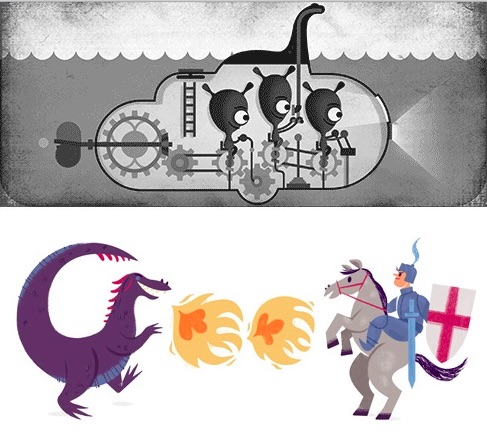
GoogleI’m assured Google is a fun place to work. One of those enlightened companies that believes reducing stress and increasing enjoyment of employees leads to good results. Were that all companies so enlightened. In any case, the famous Google logo is often decorated with a commemoration of the day. This past week, two such icons appeared on my UK searches. The first commemorated Nessie with something like the 81st year of her appearance. The icon puckishly showed Nessie to be a fake, a submarine actually piloted by aliens. Later that same week, on St. George’s Day, a dragon appeared on the icon. I began to wonder about this reptilian connection. If lake monsters are real, many make the claim that they must be plesiosaurs, their dinosaur cousins that most resemble them. St. George, clearly a character cut from the same cloth as Hadad, slays a dragon—an equally mysterious reptile.

We tend to associate dragons with evil, although in world mythology they appear equally as often as harbingers of good. Human interaction with reptiles has always been fraught. Somewhere along our evolutionary track we must’ve shared a common ancestor with them. Even today some responses, such as fight or flight, are referred to as those occurring in the “reptilian brain.” In Genesis 3 the serpent slithers in. According to Revelation, at the other end of the canon, the snake is still there at the end. It was only happenstance that Nessie and George’s unnamed monster appeared in the same week, I suppose. Nevertheless, there is a deep connection between them and us. We can’t seem to get away from them, even should we flee across the ocean.


Plainly Ghosts

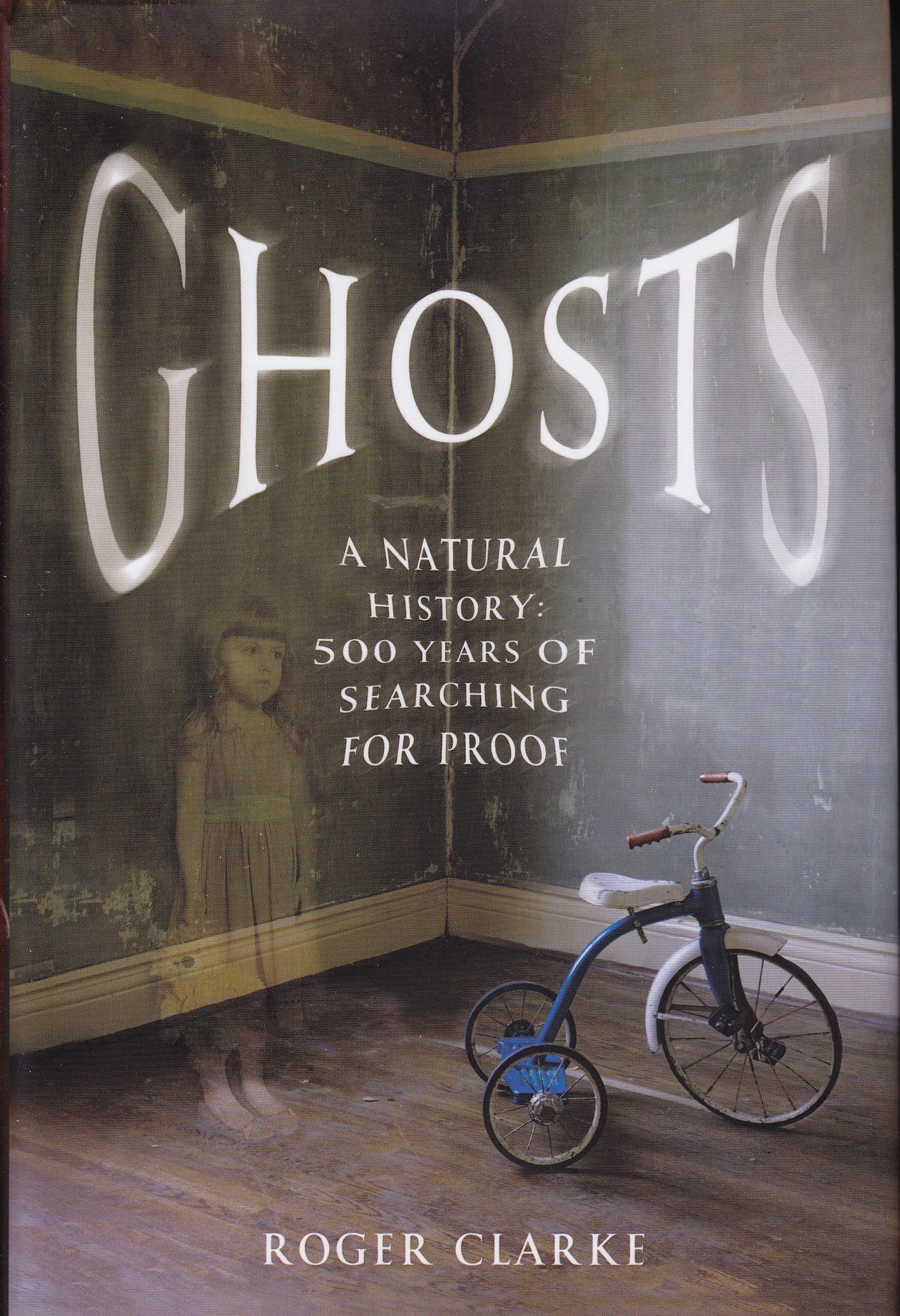
GhostsSometimes I’ll buy a book and secret it aside to read later as a kind of reward for making it through some heavier material. Research monographs don’t always do the job for which they are required in the commuter’s life—keeping me awake on a long and tiresome bus ride. I look forward to the book that has more appeal, and I don’t want to rush through it right away. I picked up Roger Clarke’s Ghosts, A Natural History: 500 Years of Searching for the Truth in Princeton’s wonderful Labyrinth just after Christmas (the traditional time, I learned, for telling ghost stories). Now that spring is more or less firmly in place, and I’ve gotten through some erudite studies that I might use for an academic paper or two, I picked it up to pass the time on my weary ride. As regular readers will know, ghosts have long been a preoccupation of mine, but one on which I’ve always been ambivalent. Clarke doesn’t set out to prove anything here. His book is more experiential than agenda-driven. He begins with the simple observation that people do see ghosts.

Lamenting that he himself has never seen one, Clarke sets out upon a partially autobiographical explanation of where this fascination began. Being from the United Kingdom—often cited as the most haunted country in the world—he goes through some of the more famous accounts with a sharp eye. Crying shenanigans when they’re obviously there, he questions how one can claim that any one country is more haunted than another. More importantly, he notes how seeing ghosts is a marker of class. Historically, the rise of the middle class led to the death of the ghosts. The rich and the poor see ghosts more often. Those in the middle associate such sightings with poor education, while those who are most educated and refined take ghosts for granted. It is only with the rise of reality television, the true opiate of the middle class, that ghost belief has become acceptable in the broad center.

Clarke also frames his work against the religious background that Catholics, with their belief in purgatory, had room for ghosts in their theology. Protestants tended to see anything reported as a ghost as a demon, since the soul either went to heaven or hell after death, meaning that there’s no ghost left to wander around. While doubtlessly skeptics exist, I have always been intrigued that even hard-nosed scientific views of the paranormal world tend to go a bit softer on ghosts than they do on cryptids and aliens. I suspect that’s because ghost reports have been around as long as written records and, presumably, long before. People have always seen ghosts, and in such large numbers that it is difficult to simply call them names and say they’re foolish. Yes, we may be a credulous lot, but we can still find books like Ghosts at a reputable bookstore. And we can tuck them away as guilty pleasures to take the chill off an otherwise very dull ride.


Saving Face

Although it has been commented upon in Rate My Professor, my beard is not intended to be impressive. In fact, it’s not really. Since I was quite young I dreamed of being a bearded man. I don’t know why. My father and my step-father were clean-shaven. The pictures of Jesus with which I grew up, however, seemed to suggest that a kindly man must be a bearded one. Nature deemed, however, that my facial hair would be less impressive than that of many boys I knew in high school who were already contending with five o’clock shadow. I never liked shaving. To me, nature dictated that men should be bearded, and who was I to combat nature? Except for a brief stint when I had to make a living in retail, I’ve worn a beard since I’ve been able to do so. I don’t fuss with it, trying to make it something it’s not. It is simply who I am.

339px-Epicteti_Enchiridion_Latinis_versibus_adumbratum_(Oxford_1715)_frontispiece

So when my wife sent me an infographic from the Washington Post about religious beards, my curiosity was piqued. It actually makes me a little self-conscious, I have to admit. I vehemently dislike anyone commenting on my appearance. There’s also something vaguely sexual about facial hair, coming as it does with the onset of puberty (a few years later in my case). Looking at the ways various religious groups condone facial sculpting, I couldn’t help but think that traditionally religions have said, to borrow a phrase from Frozen, “let it go.” Or let it grow. God and nature are one here. Genetics may determine what kind of beard may grow, but it takes religions to say it is God’s plan. For me, standing before a mirror before dawn, scraping my face with a very sharp piece of metal while I’m still yawning hardly seems civilized. Wash and go seems much more natural to me.

In the biblical world, the beard was a symbol of experience. Lifespans in those days were precarious. Guys surviving to my level of whiteness were revered. Today we are considered scruffy and lazy and unwilling to play by the rules society has set. I suppose it’s no accident that I was always a fan of John the Baptist with his unkempt appearance. Like Elijah before him he was a man of the wilderness. As nature made him. I last shaved in 1988. Were I to do so again, I fear what I might find underneath. Harrell Beck, before he died, once said to me, “you’ll never shave it off.” Although once I did, he has proved himself among the prophets. Just don’t say anything about it to me since, like religion, to me it is a very private thing.


Strange Days

The flight from London to New York is eight hours. Although I always travel with books, sometimes the selection made before the actual reality of time on a plane turns out to be too academic. I read academic books on my daily commute from New Jersey to New York and back, but these trips are not so drawn out as the long flight across the Atlantic. Since my flight was departing Terminal 2 at Heathrow, I had trouble finding a bookstore. There are stores that sell books, but having been to Blackwell’s the day before, the selection was not inspiring. I wandered to the magazine section. Magazines can be good travel fodder since they don’t demand the rigors of a monograph, and glossy pictures always add to the appeal. But what to buy?

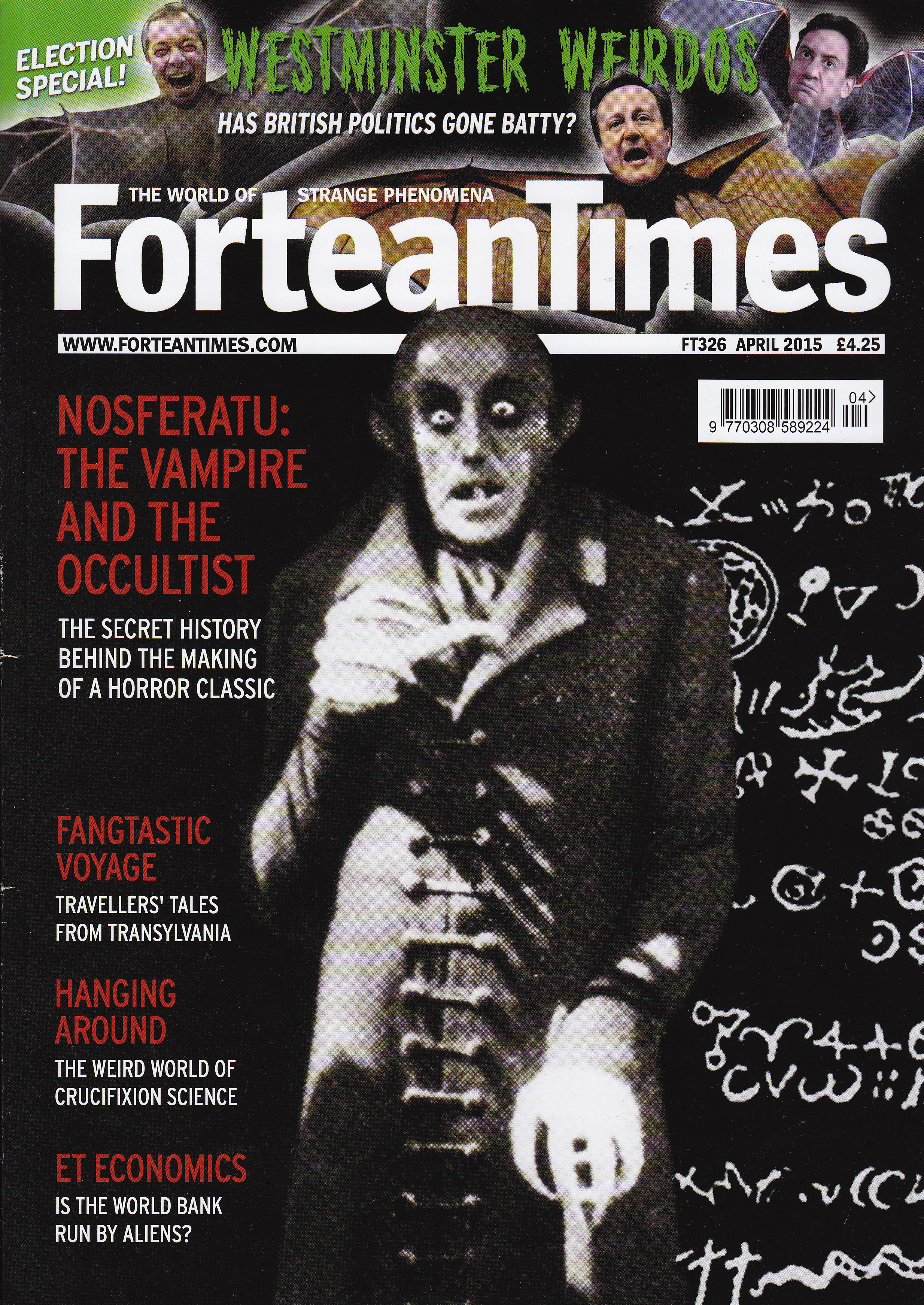
ForteanTimesLooking over the covers, I found one featuring vampires. It turned out to be the Fortean Times, but since I had a row to myself on the plane, I couldn’t see the harm in having a magazine about strange phenomena. I’d never actually read an issue of the Fortean Times before, although I had a general idea of what to expect. While it may seem odd, there is a pretty solid connection between the paranormal and religion. I’ve noticed this for years. Reading through the Fortean Times, it was clear that others have made the connection as well. Many of the articles, including the ones on vampires, touched on obvious religious themes and motifs. This was so much the case that I began to wonder if any kind of solid wall can be erected between the two.

Religion, broadly conceived, tends to be concerned with the non-material world. Its claims tend to defy empirical verification, and its subject matter is often at odds with science (at least in the mainstream). The paranormal is open to scientific investigation in that it tends to be based on secular claims. Like religion, however, it tends to dwell in the non-material realm. After all, vampires coming back from the dead is hardly a phenomenon that is readily recorded with any instrument beyond a Hollywood movie camera. Still, most religions are hostile to the paranormal, and investigators of the paranormal may be unconnected to religion. Both, however, are an engaging recipe for a long flight. Especially if nobody is sitting in the row next to you.


With My Luck

I wish I didn’t believe in luck. I guess I’m just not lucky that way. And I’m not alone. Of all the “superstitions” that haunt the human psyche, luck is among the most pervasive. We either have windfalls that make our lives easy, or, like many of us, a series of unfortunate events against which we constantly have to struggle. We call it luck. But is it real? William Ian Miller wrote an intriguing piece called “May You Have My Luck” for a recent Chronicle of Higher Education Review. There’s nothing as mysterious to me as the hapless professor. I mean, they have it all, right? Educated at fine schools, cushy jobs that pay reasonably well, interviews on documentaries, jobs that among the rarest on earth? Who wouldn’t want that kind of luck? (I am also a believer in myth, so that also must be taken into account.) The reason I raise luck here, however, is that Miller’s article again and again returns to religion. I don’t think it’s intentional. It’s just unavoidable. Luck, no matter how we define it, goes back in some way to the favor of the gods.

We all know people that we think of as lucky. Success seems to follow on success for them. They are at the right place just at the right moment, and their lives seem to be easy and not so full of stress as those of the rest of us. Most people, as Miller observes, have middling luck. Things go our way sometimes, and then they don’t go our way at others. My fascination, however, lies with those on the other end of the spectrum. There are those who seem to get very few breaks. They may do all the right things, follow all the wisest advice, work harder than anyone else, and still end up on the bad end of luck’s roulette. Ironically, they may be religious people to boot. Their deity, according to their sacred traditions, is the most powerful entity in the universe. And yet things don’t go their way. We call it luck. Is it more powerful than the divine?

This question, or more properly, conundrum, lies behind any concept of luck. Shifting to the paradigm with which I’m most familiar, does God direct luck or does luck exist independently of God? Does luck even exist at all? Is it just the name we give to a series of random happenings in retrospect and which have no inherent meaning? Ah, that seems to be the very point! Meaning. What do these things that happen to us mean? Whether or not we believe that life has any meaning, our minds are biologically programmed to seek it out. Very few of us are content to find only food, shelter, and air to breathe. We want something more out of life. We may not be able to name it, but whatever it is, we could conceivably call it meaning. We are looking for a purpose to our mere existence, even if we don’t believe in it. Gods or no gods, we are left trying to discern what they require of us. And whether we find it or not, it seems, is purely a matter of luck.

Photo credit: Joe Papp, Wikipedia Commons

Photo credit: Joe Papp, Wikipedia Commons


Holi Daze

It’s pretty white out there. For many parts of the eastern United States it has been a season of snow on snow on snow (why does that sound familiar?). The wisdom back in old white Wisconsin was there’d be three snows on the crocuses. This year the crocuses have remained buried, even in New Jersey. Judging from the number of people not driving, it looks like most people had a snow day yesterday. The color white has often been treated as a symbol of purity in various religions, but today is also the celebration of Holi, a Hindu festival of color. I’m no expert on Hinduism, but I do find the concept of a day of color to be immensely appealing. Anthropologists trace its roots to some fertility festival, but the fact is, we could all use some color right about now.

DSCN5027

Winter technically lasts, in this hemisphere, until the vernal equinox. Religions around the world have festivals to celebrate this slow turning of the seasons, and the lengthening of days. A long while back I wrote a little book on the holidays. In it I tried to find the basis for various holiday colors. We all know red and green clash, but when we see them together we think of Christmas. Black and orange make a standard Halloween combination, and red by it self suggests St. Valentine, while green alone gives St. Patrick his identity. A more recent addition is black and silver for New Year. Easter, coming in the spring, however, is a celebration of color. We don’t dye the eggs just one hue—it has been a long winter and we celebrate its close with a burst of color. Even the staid old Episcopal Church reverences the liturgical seasons with distinct colors. In other words, colors mean something.

Years ago a friend recommended Jasper Fforde’s Shades of Grey (this was before Fifty Shades of Grey took over the world). It quickly became one of my favorite novels. It’s all about color. Apart from a few years under the influence of a friend with a strong personality, I’ve always been a subdued haberdasher. I tend to wear understated colors because I don’t like people commenting on the way I look, or, even for that matter, looking at me. I enjoy public speaking, but having someone single me out on the street or the bus has always felt distinctly uncomfortable. Still, I think we may have lost something that Holi has retained. Color exists to be celebrated. And shared. It is so important that commerce and trade apparently stopped last week to figure out the color of a certain dress. I may not be a Hindu, but I think I might wear my brightest shirt today to welcome color back to the world.


Whack-A-Prof

My Ph.D. was conferred in 1992. Not by design, I’ve held several jobs since then. One thing I’ve noticed over and over is that supervisors enjoy knocking down the egghead. If you don’t know me you’ll have to take my word for the fact that I’m quiet, not self-promoting, and actually uncertain about many things most people seem to take for granted. Even in the classroom I never used my education to appear superior to students—education is about all of us learning together. At least ideally. I do know some people flaunt their doctorates. A friend told me of customers pulling into the gas station and insisting on being addressed as doctor. (It might help to know that in New Jersey you are not allowed to pump your own gas.) My friend wryly noted, then they don’t even fill the tank. I had my own similar experience working in a camera shop in a Boston suburb. A patron had “Ph.D.” printed on her checks after her name. Company policy was that the signature had to match the printed name exactly, including title. This particular customer, proud to have Ph.D. flashed before your eyes refused to sign it after her name. When the police had to be called, as per company policy, many of us stared sheepishly at our feet as she signed the cursed three initials and declared she would from then on take her custom elsewhere.

Some of us pursue advanced degrees because we have no talent for anything else. I’m a born teacher, and I have always found the classroom the most congenial environment in which to be. I have had several bosses, however, who seem to think that knocking the Ph.D. down shows just how clever they are. I don’t claim to be smart. I never have. I am a hard worker, I read a lot, and I try to make sense of what I read. Some of the smartest people I know have the least formal education. It’s rare that I don’t assume the janitor knows more than I do about any given topic. (Well, maybe Asherah is a place where I can claim some specialist knowledge.) Otherwise, I take your word for it.

Our culture, however, enjoys putting those in higher education in their place. I hear the conversations behind closed doors. While I don’t claim to know very much—in fact, the longer I’m alive the less I claim to know—I do know that America doesn’t value its educators. It’s not just the professorate. Teachers, those to whom we entrust the very future, have been perennial scapegoats for society’s ills. We don’t pay them well, and many of them have to take second jobs in the summer to make ends meet. I guess we showed them! Who’s the smart one now? I can’t claim to know much, but it seems to me that education is one of the pure goods in society. We can’t make progress without learning. Gifted teachers should be esteemed—not pampered, but appreciated. Of course, I can feel better about myself if I show that I know more than you do. The only cure for that, I suggest, is more education.

Photo credit: Anna Frodesiak

Photo credit: Anna Frodesiak


Parallelism?

An article in Mother Nature Network that a friend sent me suggests that “Parallel worlds exist and interact with our world, say physicists.” The article, by Bryan Nelson, discusses quantum mechanics and the many-worlds interpretation that suggest that these worlds interact. Perhaps they explain the anomalous happenings so often reported in this world. I find the “many interacting worlds” idea compelling. We all know, whether or not we’ll admit it, that strange things sometimes happen. It may be that interacting multiverses can explain some (although I somehow doubt, all) of this. Everything I read about quantum physics suggests that it is weird and we just can’t understand how it’s possible. That’s the kind of universe I’m glad to live in. Still, I wonder.

The many interacting worlds hypothesis suggests that at every juncture, every decision, in some universe we went a different way. Should I go right or left? And as I made that left turn, some me somewhere else went right. The problem is perhaps the sheer number of variables. The many decisions I’ve made, and I’m just one person, have multiple possibilities. Each of these possibilities links and intertwines with even more possibilities. It’s not hard to believe that this universe revolves around me and my petty problems. Add to this the variables of the billions of others who share the planet and soon I start to grow dizzy. Does each and every one of these take place somewhere, somewhen? And who are we to think that we even know what two possibilities might be? What if I type an e instead of an i? What will my post say in an alternate universe? At what level of insignificance do I finally admit utter ennui and say that life in this universe I know is just too full to admit of any others? Of course, anyone looking at my bank account knows I have no experience with large numbers.

Parallel worlds have always fascinated me. I suspect that deep down I know this can’t be all that there is. In some universe my Ph.D. led to a real teaching post. I wrote all those books that are rattling around inside my head. I attained tenure and showed the world that a kid from a blue-collar family with no connections can actually make something of himself. In another world I’m the one laying in the cold on the streets of Manhattan begging quarters from the other me, looking worried as he races to and from work every day. Or maybe this whole thing is just a dream I’m solopsistically having. Of course, if you’re reading this you’re welcome to my dream. Or any other universe that you might choose. I only ask that if you allow me into yours, may I please have tenure? I’d really like that universe best of all.

IMG_1577