Sporting Chance

IMG_0997

I didn’t watch the SuperBowl last weekend. In fact, I haven’t had television service for over two decades now. I don’t really miss it too much since I don’t have time to watch TV (the commuting life leaves time only for sleeping and working, except on weekends). Still, for special events, I think, it might be nice to see things live. (My wife raises this point every time the Olympics roll around. I seem to recall them being every four years, but now it seems they’re seasonal, and about twice as frequent. Could it be that advertising revenues are really that important? Maybe I missed that, not having television…) Even when I have managed, over the last couple of decades, to pull the SuperBowl onto a fuzzy, snowy screen, it was for one major reason—the commercials. I wonder what that says about a society? I now spend precious weekend time watching commercials on YouTube, sometimes having to watch a commercial for the privilege of watching a commercial. The substance without the fluff of the actual entertainment.

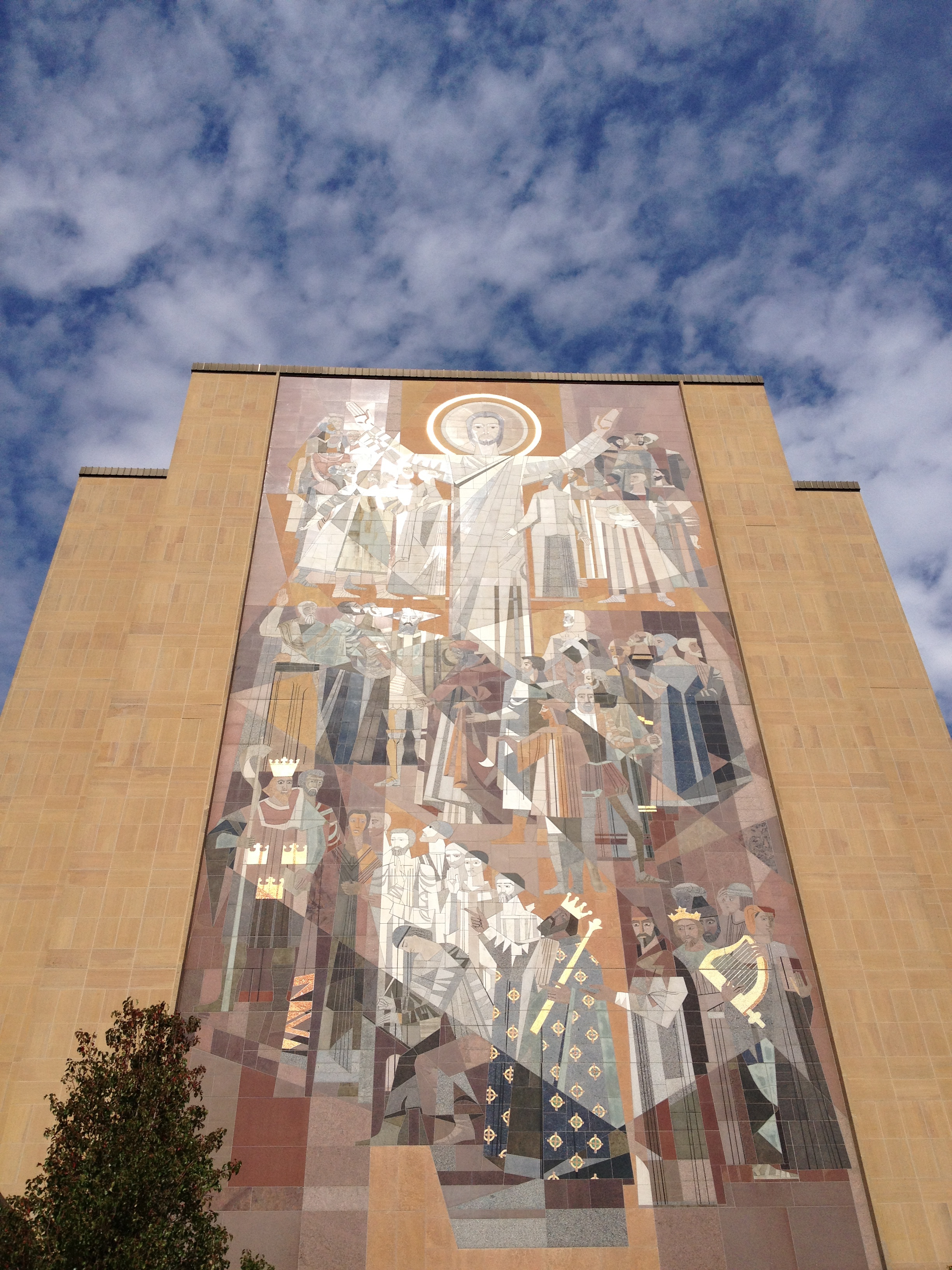
So it was that I saw the Mophie commercial about the apocalypse (here’s the link, in case you’re as entertainment-challenged as I am). So as the world comes to an end, the weather goes even more wonky than we’ve already made it go, Fortean fish fall from the sky, dogs walk their owners and priests steal plasma television sets. Then the punchline, God’s cell phone dies and the end of the world ends. It isn’t the shock of seeing an African-American God—Morgan Freeman led the way there with Bruce Almighty—but rather the technique, the divine delivery, if you will, that is the shock. Not even God is anything without his cell. (I wonder when we’ll see a Latino woman as God? Dogma came close, but not quite.) Is the smartphone really not the deity here?

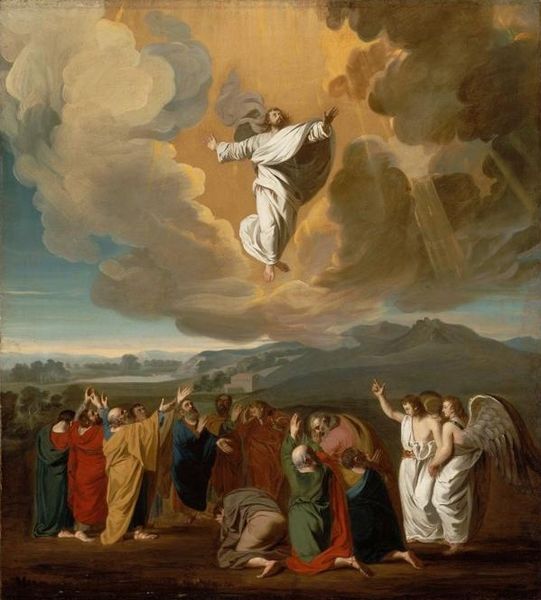
God, it seems, has become a null concept. I don’t mean because of different racial or gender presentations, but I do mean that the concept itself is completely up for grabs. God, according to Anselm of Canterbury, is that being greater than which nothing can be conceived. In fact, God seems to be that which people worship, more of a Tillichian ultimate concern. A wired world should, in theory, be a world headed toward peace and equality. If we know what’s going on everywhere, shouldn’t we be doing our best to ensure that it is fair and just? The truth of the matter gives the lie to such optimistic musings. I would hate to confess just how much my phone bill is every month. Even without the “triple play” (no television) it is the biggest expense after college tuition and rent. And it goes on, in saecula saeculorum. When I pull out my smartphone, I gaze upon the face of the Almighty. And perhaps that’s a good thing, because how else would I entertain myself without television?


They Might Be

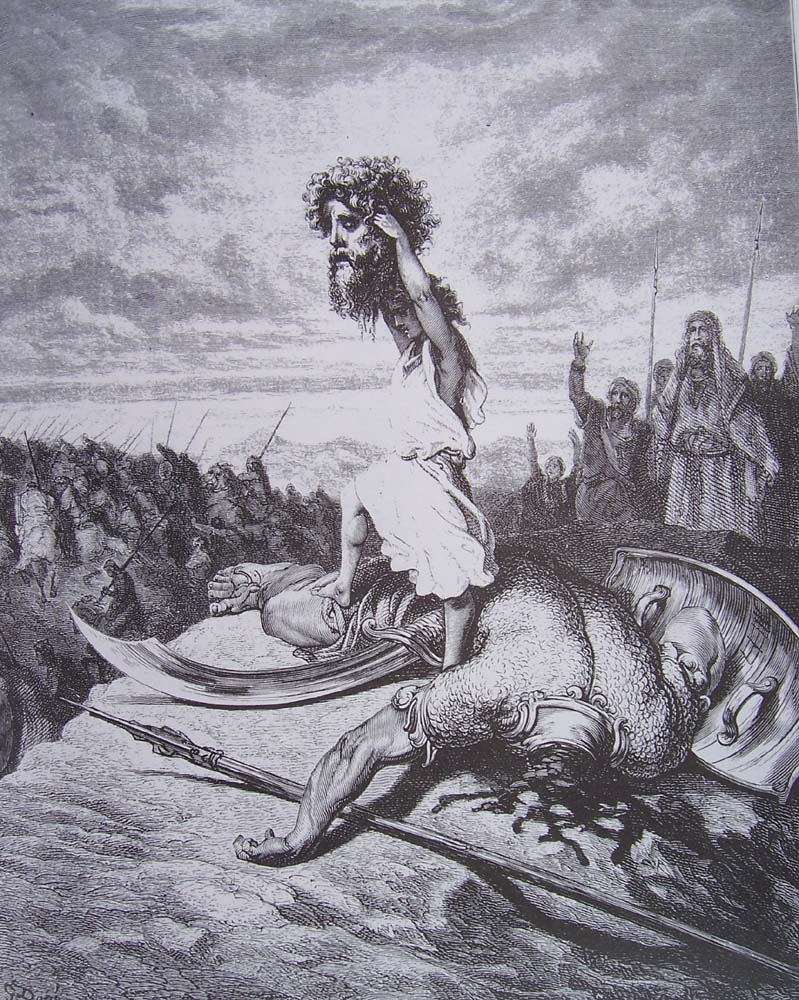
Last week I mentioned that a letter-writing friend had sent me two articles from the 1868 Prescott Journal newspaper. Some time ago I did some research into the history of newspapers since many of the stories from the early days of the medium seem difficult to accept. Perhaps it was a more credulous time, or perhaps newspapers were a form of entertainment as well as information, but the occasional hoax made its way into the pages of even reputable papers. I’m always surprised how many tales involve a kind of biblical literalism, whether stated or not. The second story from the aforementioned Wisconsin newspaper has to do with a giant skeleton unearthed at the Sauk Rapids. At ten-foot-nine, this veritable Goliath was estimated to have weighed some 900 pounds when alive. This prodigy sparked some piety in the writer, who concludes by stating, “We hope ‘642’ [the article doesn’t hint at the referent here] may learn humility from this dispensation of Providence, and that a view of the ‘femur’ and ‘fibula’ of this deceased stranger, may teach him the futility of all attempts at fleshy greatness in these degenerate days.”

Quite apart from the pious closing, the idea that giants once inhabited the earth is indeed biblical. Studies have been undertaken that speculate on why people of antiquity believed in giants, and one of the more plausible explanations has to do with the discovery of megafauna bones. Not having a conceptual world wherein dinosaurs or mammoths might fit, giant leg-bones and ribs, for example, look pretty much like those of people. Only much larger. Whatever the reason, people all over the ancient Mediterranean believed in an era of giants, and that belief made its way into the Bible as well as into Greek mythology. Only, if the Bible says it, it must be true, no? And so, finding giants in the earth is not to be unexpected.

Goliath_Bible

Interestingly enough, this craze of finding giants has not ceased. The internet keeps bogus photos of unearthed giant skeletons alive and the explanations we’re given amount to proof of the flood. After all, the Bible says giants came before the flood, and if Noah wasn’t a giant, well, they had to have been wiped out, right? But then they show up again later in the form of the Anakim or Goliath and his kin. The question of whence the giants 2.0 came is not answered, but if it’s literally true then there should be no surprise if one should turn up in Wisconsin. After all, other oddities have turned up in that same state, some of which still defy explanation in the rational world of the twenty-first century.


Ancient History

In the white heat of rhetoric, my word processor froze up. I don’t have much time for writing with my commuting schedule, so the full forty-five minutes lost between the typing of a letter “s” that apparently caused the meltdown and being able to access my text was lost in a prayer that my work hadn’t been lost. I remember the days when everyone used Microsoft Word and there was this joke going around about the Devil and Jesus being tested on their computer skills. I can’t remember the joke but I do recall the punchline: “Jesus saves!” So it was in those days that you had to hit “save” every few minutes or your work would be lost. Many laments could be loudly heard of students having lost an entire paper because they’d forgotten their prophylactic “save”s. I found that working on a Mac that such problems weren’t always so bad. But then, system upgrades became more frequent. Two programs that you needed open simultaneously, Word and Internet Explorer (called something else in those days, but I can’t remember what), were a sure recipe for mutually assured destruction. The memory required would freeze even an Apple to its core, and so the systems gurus made improvements and things got better.

Of course, those of us who’ve spend the Gross Domestic Product of a small country on Apple devices have been lulled to complacency. Over the years (since the fiasco of the original iMac) we’ve come to learn that Apple will save our work, and that crashes, while infrequent, will bring our files back onto the screen after recovery. You really don’t need to save since autosave is capable of being the messiah of all computer files. Then the gurus upgraded the system. For the past several months I can’t run a word processor and internet browser simultaneously on my computer without freezing up the system. Imagine my chagrin when, having less than an hour to write, copy, paste, and post my blog entry for the day, my word processor decides that it doesn’t recognize the letter “s.” Of course, Apple long ago stopped being compatible with Microsoft Word. Those of us who used both Macs and Word cheered when the two finally became compatible about a decade ago, but in the battle for computer supremacy, we no longer have that option. My Mac can open Word files and save documents as Word files, but it can’t run Word. Instead it runs word processors that don’t recognize that most rare of characters, the insidious “s.”

So I went to back up my files over the weekend. I keep some files on a memory stick (so called) because they take up a lot of space and I don’t use them that often. The memory stick failed in the middle of a save (doesn’t Jesus save anymore?) and I spent an entire Saturday trying to recover files that were already saved. According to some Christian traditions, once saved, always saved. You can’t be unsaved. After losing an enormous amount of work that equated to many hours of precious weekend time, I’m beginning to have my doubts about my faith. Using Pages, Apple’s version of Word, is sure to lead to a crash. This has been happening since at least September. I get systems upgrades more frequently than calls from telemarketers. I really don’t ask for much. I’ve got about an hour to get my writing done in the morning and I would really, really appreciate it if forty-five minutes of that hour weren’t taken up by Pages trying to recognize the letter “s.” After all, not even Jesus can save without it.

In the beginning was Word...

In the beginning was Word…


White Carrots

Acronyms are useful in a complex world, although they are frequently opaque to outsiders. Taking a new job you’re found constantly swimming in an alphabet soup of abbreviations that can drown you as easily as ABC. Each the church has them. As an undergrad religion major at a Presbyterian school I had to memorize TULIP (Total Depravity, Unconditional Election, Limited Atonement, Irresistible Grace, and Perseverance of the Saints), all of which but the last I had to reject on the grounds of sanity. As aids to memory they can serve as mnemonic devices, or they may simply be frustrating caricatures of reason. In any case, we all know them. In universities departments or divisions are known by acronyms, local businesses and landmarks may be as well. The internet has only speeded the process up, with countless abbreviations, some of which are definitely NSFW.

IMG_1889So it was that I learned an acronym that is current in the publishing industry. I always thought of the parsnip as a rather curious root vegetable, somewhat like a white carrot. As a child I severely disliked them, but I’ve come to appreciate them, roasted and glazed, as an adult. The word itself is somewhat fun to say: PARSNIP. It is also an acronym of things publishers, particularly those who publish textbooks in English as a second language, have to avoid. PARSNIP stands for, according to the popular explanation, Politics, Alcohol, Religion, Sex, Narcotics, Isms, and Pork. Interestingly to me, at least four of these things have their traditional taboo status because of religions. Clearly Religion is one of those, but restrictions on Alcohol, Sex, and Pork are also based on religious rules. One could argue that Narcotics also fits into that category as well. As I’ve mentioned many times on this blog, religion, substances, and sex are all deeply intertwined.

One of the curious things about this is that our post-Christian society has declared that religion is not worth discussing, or even learning about. We slash religion departments from universities and then wonder why we can’t discuss things like sex and alcohol, without which our society would apparently collapse, freely in other cultures. When I was a child, reading MAD magazine, I quickly learned two things that adults didn’t discuss were religion and politics. The list has grown since that time, but apart from the fact I have no idea which Isms are to be avoided, I see PARSNIP as the white carrot of religious taboos. And politics. In this secular world, we’ve become very politically correct, although we really shouldn’t mention politics in that phrase. Now I’m wondering if maybe I should reevaluate TULIP after all. At least the first part.


Get Me Jesus on the Line

The letter is the greatest casualty of the internet. I sometimes obsess about how little time people put into their emails, often coming across as gruff or short. I always start mine with a greeting and end them with a closing followed by my name. Of course, I’m from an older generation where communication was initiated with respect. Getting an actual letter is now, however, occasion for great wonder. A friend recently mailed me a couple of fascinating articles from the Prescott Journal, a Wisconsin newspaper. Dated to 1868, the articles actually post-date Nashotah House, but still count as when Wisconsin was rather more pioneer than Pioneer territory. Both articles involve what might be termed “scams” today. Newspapers in the nineteenth century were notorious for sometimes perpetrating hoaxes, and at other times falling victim to them. Still, as the only sources we have for some of these delightful tales, it is difficult to check them out beyond the fact of noting that the amazing stories have been subsequently forgotten.

One of the stories was wired in from San Francisco, the article claims. A certain F. Wilson was applying for copyright on a letter he acquired near Iconium, written by Jesus. As my friend noted in her letter, this is perhaps the earliest case of a rock inscribed “turn me over,” promising some kind of reward. Wilson claimed to have found, under a large (implied) rock, a letter written by Jesus. The rock could not be turned, despite reading “Blessed is he that shall turn me over,” even by a group of men. Then, according to folkloristic protocol, a small child turned it unaided. The letter underneath, although written by Jesus, was signed by the angel Gabriel. The letter contained the ten commandments, a note from Jesus answering a missive from King Abrus, an account of Jesus’ miracles, and a description of his person. The story doesn’t tell if the copyright application was successful.

Newspapers were a form of entertainment a couple of centuries ago. Of course, some four decades earlier than this story Joseph Smith had claimed to have found documents to which he was led by the angel Moroni. He published them and, although lynched some 24 years earlier, had nevertheless done pretty well for himself, as his followers would continue to do. Why not cash in on the new religion craze? After all, this was California, and even in the woods of Wisconsin some religious zealots had started an institution that would grow strong enough to displace dreams and livelihoods. What struck me most reading this story was just how little things have changed. Outlandish religious claims are still credulously accepted by the gullible. And the web encompasses the entire world. This story though, must be true, because it came to me in that most magical of forms—an actual letter.

"Don't forget to look for my letter!"

“Don’t forget to look for my letter!”


Holy Food

One of the undisputed benefits of working for a publisher of a wide variety of academic books is the opportunity to learn about different topics that might otherwise I might never have considered. For example, given the recent popularity of food studies (and this is probably fodder for its own post) authors have been producing micro-histories of specific comestibles. One that was recently featured in a YouTube short is peanut butter. One of the saddest food allergies, to my way of thinking, is that of the peanut. Peanut butter is such a singular symbol of childhood that it is a shame it is also such a potent poison for many. I grew up thinking that George Washington Carver invented peanut butter, but although he certainly was an innovator of peanut cultivation and disseminator of recipes, he was not the inventor. Peanut butter has been around for a long, long time. The modern food product is probably attributed to Marcellus Gilmore Edson, a Canadian who milled roasted peanuts into a kind of semi-liquid and received a patent for it.

What makes peanut butter a fit topic for a blog on religion is the work of John Harvey Kellogg. Kellogg was awarded a patent for a processing technique that led to the peanut butter we recognize today. Kellogg, whose name is more often associated with breakfast cereals, was an early vegetarian. Much of the impetus for his food experimentation goes back to the fact that he was a devout Seventh Day Adventist. The Adventists, biblical literalists, believed in promoting health through eating wholesome foods. Peanuts, a great source of non-animal protein, were seized upon by Kellogg as an alternative to butter, as well as a theologically satisfying food. Not only a food producer, he was also a promoter, and we eat breakfast cereal today largely through his efforts. For many, the day begins with a biblically inspired food.

IMG_1878

On kicks of nostalgia, or when I forget to buy a vegetarian alternative, I still take peanut butter sandwiches to work for lunch. I never considered this a religious activity, although my own vegetarianism likely has religious, as well as humanitarian, roots. In this post-religious age that we inhabit we sometimes forget that many of our most basic behaviors go back to religious beliefs. Sure, the promoter of peanut butter may have stumbled upon it without having fallen under the spell of Ellen G. White’s teachings, but the fact remains that Kellogg’s religion and his commitment to health were deeply intertwined. And the next time I reach for the Skippy or Jif or Peter Pan, I’ll be, in my own way, acknowledging the power of a religion I don’t even believe.


Worn Out Religion

Truth claims are integral to religions. No one would join a religion not declaring itself to be true. Some months ago, I posted about the store True Religion that had recently opened at our local mall. I’ve always found such branding odd—surely the store wasn’t proselytizing those who had religious commitments to buy its jeans. Or perhaps it was trying to lure in the increasing generation of nones. I have seldom felt any kinds of truth claims applied to my apparel. I buy clothes at reasonable prices and wear them until they are no longer fit to be seen in public. Even then I continue to wear them at home until they simply grow too holey to be of utility. I seldom have clothes left in good enough shape to donate, and I’m only fashion-conscious in terms of a decade or two between stints of buying what’s on the bargain rack. Religions, of course, sometimes do dictate what it is appropriate to wear. Leviticus famously declares that fabrics of mixed fibers are an infraction. Perhaps True Religion carries only single fiber-fabrics? I guess I’ll never know.

IMG_1868_2

Since our local mall has mostly clothing stores (few whimsical shops appear any more), I seldom go. There is an Apple store, and since our family has used exclusively Apple products since the 1980s, we do have to stop in from time to time. On my most recent trip, I noticed that True Religion, right across the corridor from Apple, had gone. “There’s no more true religion,” my daughter quipped. I couldn’t help but think about the implications of all this. Surely this was not the first religion to die. Disused churches have been converted into businesses for years, and some religions die out entirely rather than just fade away like an old pair of jeans. What is the message, however, when a claim of truth is made, only to be closed down by the exigencies of finance alone? Something disingenuous is going on here.

Religions not only make truth claims. They also convey a sense of promise. If you believe, you receive something in return. But what does it mean to believe? Driving home we passed the Elks Lodge. Once, when my daughter received a certificate of merit from the Elks, we were invited to an award ceremony there. The president of the lodge, doing a bit of proselytizing, mentioned that very little was required to join the Elks. “You do have to believe in God,” she said. How do you measure such a belief? Did she mean to say “you have to say that you believe in God”? The Elks are, after all, not a religion, but a community organization. Although True Religion is gone, the Elks, with their minimal commitment to faith, are still around. My clothes are perhaps a bit too worn to join the Elks, but what else is there to do when there is no more true religion?


Monster Map

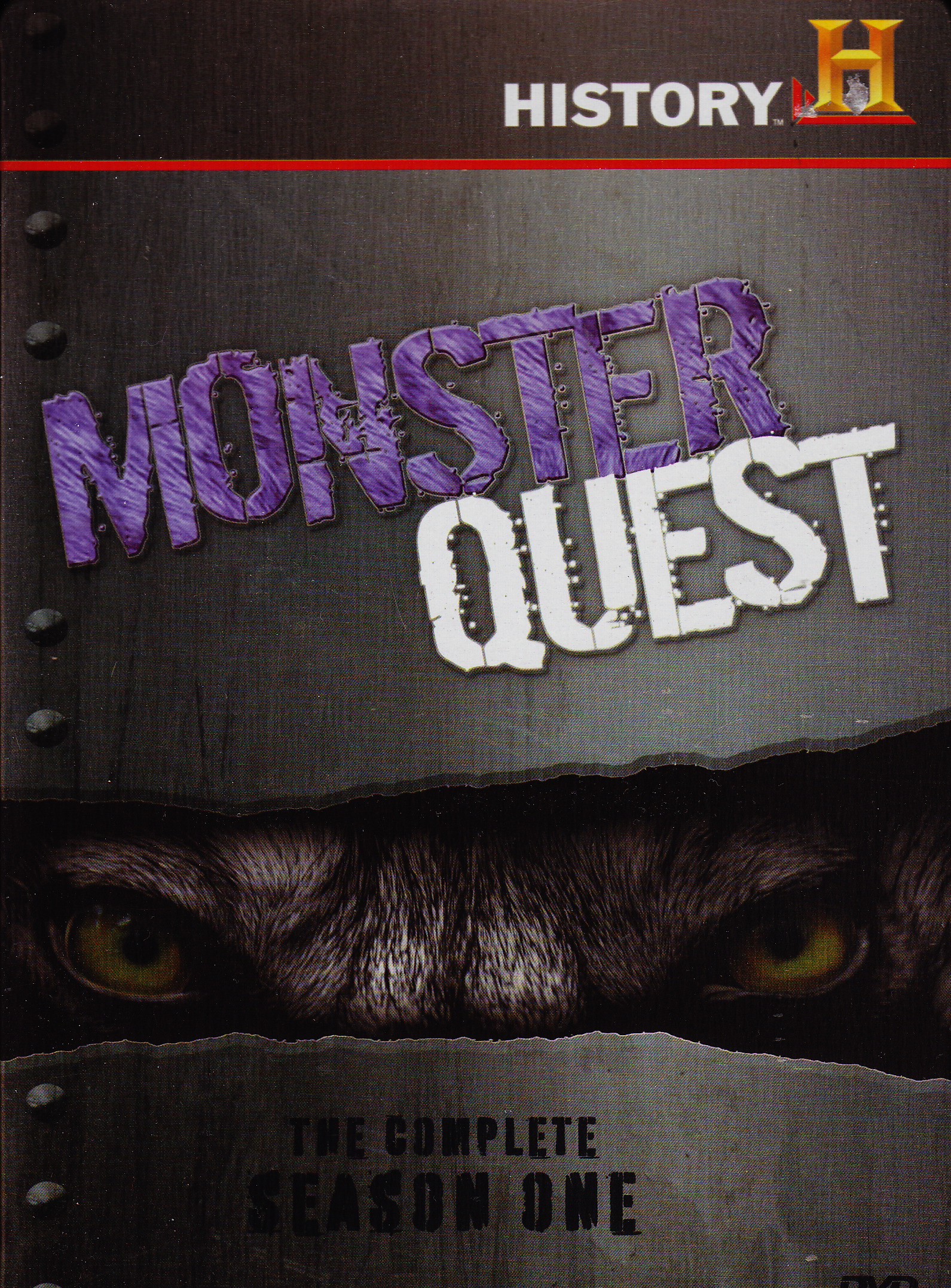
Monster QuestMonsters are becoming more mainstream. Or at least it seems that the ridicule factor, with which I had to deal as a child, has moderated a bit. A friend recently sent me a link to Hog Island Press’s Monsters in America map. No doubt, skeptical persons will dismiss such whimsical charts as a load of hooey, but people continue to see unusual things. Although we don’t subscribe to any television service, it has become clear that ghosts and Bigfoot have become pretty standard fare for reality shows. Lake monsters still make appearances from time to time, and since we aren’t always watching the waters, nobody’s terribly surprised. And who knows what’s flying below the radar at night? People have believed in monsters from the very earliest of times. We, however, live in an age when belief can’t exist without proof, and our world of the plausible has shrunk because of it.

Another problem here is the definition of “monster.” The traditional monster was pure fiction—werewolves, vampires, and zombies simply don’t exist. We tell scary stories about them because it’s fun to be afraid when we know there’s really no such thing. American monsters, on the other hand, are based on eyewitness reports, reliable or not. I grew up literally on the edge of the woods in a rural town and never saw anything cryptozoological in nature. At the same time I learned that it’s difficult to see everything in the woods. I would’ve never guessed, for instance, that the number of deer and bear that were shot each season were only a small representative of their populations. The woods, it seemed, should’ve been much more crowded.

Those who’ve spent time in the woods know that nature doesn’t reveal everything easily. Looking at the Hog Island Press chart, I notice some new creatures (to me) and some surprising omissions. Wisconsin and Michigan, both heavily wooded and (I speak from experience here) areas of strangeness, seem devoid of the creatures so commonly reported. Linda Godfrey has written extensively about the dog-men (or werewolves) not uncommonly reported in both states. I suppose that in making such a map there is an embarrassment of riches. People see things all the time, and urbanites have a difficult time identifying species the naturalist finds, well, natural. One need not be credulous to enjoy the monsters of the natural world. It is fun, in any case, to consider the possibilities, now that monsters have gone mainstream.


Biggest Buy

It isn’t really that much of a specialty item. You see, we live in an older apartment and three-pronged outlets were mostly reserved for kitchens the last time the place received any kind of upgrade. I’m not sure which century that was, but here in the twenty-first, we have lots of electrical toys, and of course, they come with grounding plugs. We needed an outlet for a device, but the nearest plug was yards away. Well, it seems that extension cords are now fire hazards, so you need to use a power-strip. Your typical power strip, as I came to learn, has a six-foot cord. (Although I said “yards,” I meant more than a couple.) So I drove to Best Buy. I can’t remember the last time I was in one. These “buy it large,” “consume excessively” kinds of stores aren’t really my style. I never believed the consumer myth, but I figured these large appliances must require surge protectors or power strips, right? And surely not all houses have conveniently located plugs.

Photo credit: Myke 2020, Wikipedia Commons

Photo credit: Myke 2020, Wikipedia Commons

I am neither a large man nor a fetching woman, but it became clear that I was practically invisible in the store. Trying to get the attention of anyone on the blue-shirted staff was impossible. Even walking right up to someone with purpose wasn’t enough. I did notice, however, that the blue shirts were fairly adept at helping the female clientele. Eventually I found the surge protectors, etc., in their aisle—up to eight feet in length. I tried for another 20 minutes to find help, but the kind of help I need, apparently, doesn’t come in bulk. Maybe on a couch. I went home and within minutes found what I needed on Amazon. I would have it in two days.

Bulk buying, in my humble opinion, is an ethical issue. I’ve stopped going to Home Depot, and even Staples and Barnes and Noble are final resorts. What I’m looking for can’t be found in such places. Besides, nobody wants to stop and direct a bearded, perpetually confused-looking guy. We live in a culture where worth is measured in comestibles and durable goods purchased in bulk. Those with the most buying power are the gods. I can’t even drive by Costco without a substantial delay on a Saturday morning. I don’t need very much to get by. Still, come to think of it, I could use a power source that is conveniently located. And perhaps, some day, a culture more interested in quality than quantity.


Like a Virgin

Having more than two days in a row when I could be both home and awake, led to some premature spring cleaning over the last few days. One of the artifacts discovered among the piles of “deal with it later” things was a booklet that was likely an impulse buy—a stocking stuffer or perhaps a whimsical birthday giftie. In our house it could have only been directed at me since it was a little book about Virgo. I have never, even in my most experimental modes, considered astrology to be anything but pure fantasy. I do, however, realize that it is just as old as astronomy, and ancient peoples firmly believed that the sky had unseen influences on everyone. Still, the calendar dates during which you are born can’t provide personality traits any more accurate than gross generalizations. Two of my brothers and I are Virgos, and we are very different personalities, despite having grown up together.

Still, curiosity compelled me to take a few minutes to look at the guide by Teresa Celsi and Michael Yawney. It begins with a brief introduction to astrology, and as I thought about it, I realized that there are indeed people who take it seriously. Long ago I recognized that the criticism “ridiculous” (apart from being offensive) is never an adequate antidote to religious belief. Many elements in conventional Christianity, and other mainstream religions, fall into the similarly implausible realm. There is a kind of science to astrology—labeling and categorization, observation and recording. I still don’t believe it, but I can see how it might appeal. And I thought I could recognize myself in the Virgo the booklet described. Yes, some of that was definitely me. Then I got to the bit about a Virgo’s house being neat and tidy, and how people appreciate it. We live in a small apartment and visitors (who are few) are more inclined to make sure their immunizations are updated after leaving, rather than praising our housekeeping skills. Fact is, clutter doesn’t bother me that much.

Virgo2

The majority of the little novelty book was about relationships, of course. I still remember the days when “what’s your sign” was considered an acceptable pick-up line, at least if movies are to be believed. I couldn’t remember my wife’s sign, and was surprised to read, when I found it, that we might encounter some conflict, should we decide on a permanent relationship. We’ve been married for 26 years with barely a raised voice in all that time. Maybe it’s because I’m a Virgo. Or maybe it is because we are more the agents of our own destiny than the stars. Nevertheless, it would be a comfort if we could pick up a chart and know what our lives might be like. It’s easy to see why astrology has taken on the quality of a religion for many. Please excuse me but, according to my nature, it is about time to get back to my cleaning.


M Is for Mary

While pre-celebrating Christmas with some friends recently, the topic of cats came up. This really isn’t surprising since two of the families present had been members of the local 4-H cats club. For a while cats were ubiquitous on the internet, but since I have so little time to browse the web anymore, I’m not sure if that’s still the case. Nevertheless, being near Christmas, someone narrated a story I’d never heard before. Tabby cats (like many jungle cats) have a distinctive marking in the form of an “M” on their foreheads. The legend suggests that on the first Christmas a tabby cat was in the manger. Seeing a mouse trying to crawl into the trough were baby Jesus lay, the cat killed the mouse, earning the thanks of Mary, who kissed it on the forehead, bestowing her characteristic M. It is a nice story (apart from the point of view of the mouse, I suppose)—an etiology to explain an evolutionary development in fur patterns.

Blessed is M...

Blessed is M…

Shortly after that my wife sent me a story on the BBC about the oldest inscribed human artifact. Zigzag marking found on a fossilized clam shell from Indonesia suggest that Homo erectus was an abstract thinker, I’m told. The markings, which must at least be 430,000 years old, predate the earliest known human markings by 300,000 years. If accepted by anthropologists this evidence could rewrite all of human history. We had no idea that Homo erectus had time to doodle on shells. Looking at the photos accompanying the BBC article, I couldn’t help but notice they’re in the shape of an M. Perhaps Mary kissed these shells too? So etiologies begin.

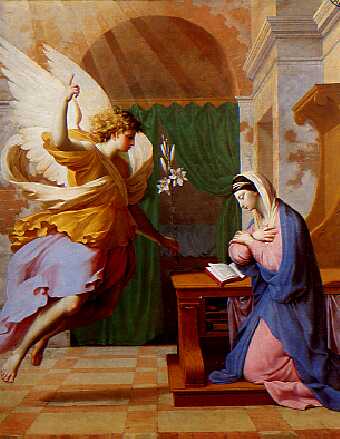
If you’ll pardon me for attempting to brush off my training in ancient languages, Mary of Nazareth was likely born into an Aramaic-speaking family. Her name, Mariam, would have been spelled with mem, which, although representing water is some scripts, took roughly this form: מ (assuming the Imperial Aramaic alphabet). If Mary were both historical and literate (the latter, at least, is doubtful) she would not have recognized the tabby’s distinctive mark as part of her name. It would have been an abstract symbol. Of course, God, being a natural lover of cats, may have had the Greek alphabet in mind, where the letter mu gives us our classical capital M. Mary, however, would probably still not have known what to make of it. We love to attribute significances to perceived patterns. The tabby’s distinctive M, as well as Homo erectus’s early exercises in penmanship present us with opportunities to continue making myths. And we should keep the myths in Christmas.


Harboring Hopes

I am not what you’d call a fashion-conscious man. I literally still wear clothes I had in college. Most of them are petty much for around-the-house, given the condition they’re in, and although I wear jeans less, I have never really tried to “change my look.” I wear my hair (now grayer) the same way I did in high school, and most of my clothes, realistically, come from my teaching days. As I walked along the Seaport Village walk here in San Diego, a group of red-shirted workers, on break from unloading a truck, called out to me. Now, I know better than to talk with strangers, but working class types are my people. I am from a deeply blue collar background, and I feel that I have much more in common with them than with the priest who’s handing me a pink slip. Or the average professor. So I stopped. “Are you a professor?” one of them asked. In honesty I answered, “I used to be.” The fellow turned to his companions and said, “I knew he was a professor.” Turning back to me he said, “of what?” This is the part where crickets start to chirp and a tumbleweed blows by. “Religion,” I confessed.

This led to a spirited debate between two of the men. The one who called out told me that he’s now a Christian. He was raised Catholic but after having been out on an “effing ship like that” (the USS Midway) he found Jesus. One of his companions began arguing that religion was a terrible thing—causing people to insist that they are right and others are wrong. He argued that faith was fine, but as soon as you start calling it a religion, problems arose. I put my hand up to shade myself from the late afternoon sun. I was far from home, and I had no idea what these men wanted from me. Was I supposed to give them the answer to which was the true religion? Maybe they just wanted to be heard. I demurred and encouraged them to continue seeking. As I walked away, one of them said, “that’s a smart man.” The first said, “I told you he was a professor.”

What does a professor profess? While waiting for my plane in Newark, I heard two religion professors (actual, and ancient) discussing the fact that they’d retired. “But I want to keep on teaching,” one said. Without, I thought, considering that you’re keeping younger scholars from finding gainful employment. Yes, teaching is enjoyable—I know nothing like it—but there can be other outlets for sharing your wisdom. My wife has recently taken to MOOCs (Massive Open Online Courses). There are community events where you might not get paid, but your wisdom would be providing a service. And you’d be opening the door for others. Sounds like a religious thing to do, instead of being selfish or self-important. Or then, you could just walk along Seaport Village. Rather than turning away from the common worker, answer him or her when he or she calls out to you. It is the way of true teachers.

IMG_1809


Doodle Dandy

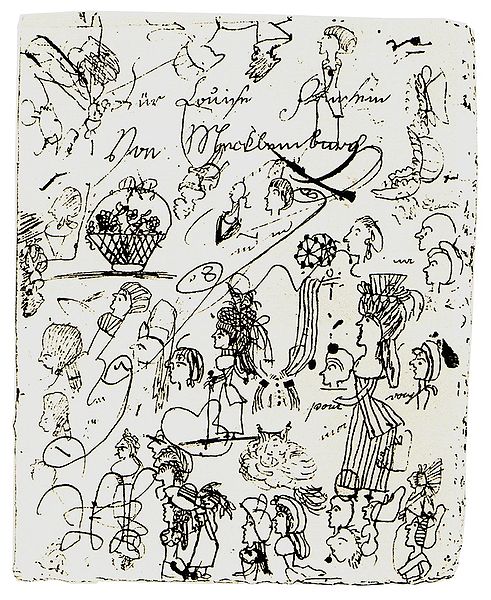
Deep in the stacks of the New College library at Edinburgh University, I came upon a book in the open shelves with a date of 1611. Once the staff had been notified, this book, which had simply aged in place over the centuries, was quickly moved to special collections. It is the dilemma of many a writer that books seldom see the light of library reading lamps. This episode came to mind as a friend shared an interesting story about doodles. Historian Erik Kwakkel has one of the most enjoyable jobs in history (seems appropriate). His research takes him to old books, and by “old” I mean handwritten, to look for pen trials—how pens were tried out before serious writing began. A lot may be learned from not just the words, but how they were formed. A different friend I knew was working on the forensic study of the order of stylus strokes in cuneiform writing. It was completely fascinating. With the right tools, you can find out in just what order strokes were made in clay, their depth, and a host of other information such as the right- or left-handedness of the scribe. Writing reveals the writer. In any case, Kwakkel has a great excuse for looking at doodles.

491px-Luise_KritzelzeichnungOne point in this fun story, however, struck a serious note with me. Scribes were, in final copy, expected to be completely anonymous. Their labor was to go unremarked through history. We owe them some of our greatest treasures, and in a bizarre back-formation, modern scholars give these anonymous scriveners names such as “the tremulous hand of Worcester,” in a vain attempt to recover them. In rare instances we are given the names of scribes. Some may have been creators as well. Most will remain forever nameless. Those who love books may be excluded from them by their very love.

There once was a joke that went around that asked “what do you call a writer who actually has a job?” The answer? “An editor.” In the old days, anyway. Now you can earn university degrees in publishing and editors very quickly vanish into the background, like the ninjas of literacy. Like those ancient scribes who, perhaps bored by the rote task of copying out somebody else’s words, left little doodles behind in the margins as their own attempt at immortality. In many ways this blog is my chance to offer a few doodles to the world. I used to be (and still hope to be) a content producer, but now I understand that content has no room for doodles. The serious business of publishing is all about showcasing the author whose ideas are worth spreading. Oh, there’s a subtext here, all right. A palimpsest, one might say. However, like the anonymous doodlers of history, many of us scribble away awaiting future discovery, long after our names are irrecoverable.


Empire State

Hegemony is a funny word. In studies of antiquity it is commonly found since it denotes the “Leadership or dominance, especially by one country or social group over others,” according to the Oxford English Dictionary. Today it has a vaguely imperialist taint, although it doesn’t necessarily require that one nation actually pillage another’s wealth or resources. The idea that people are, and should be, free is pretty much assumed in developed nations. Or so at least our rhetoric dictates. The word hegemony came to mind, however, as I saw an interview with a corporate leader. He was discussing how his company had budgeted for technology development on an increasing scale, to catch up with current developments, and then leveled the tech expenses off after that so that the business could move into its prime objectives. The reality was vastly different, however. Each year’s budget saw increasing technology costs and it shows no signs of slowing down. Every industry, it seems, will have to keep devoting larger and larger shares of its budget to technology. Hegemony.

It’s not that any one company is solely responsible for our obeisance to technology, so this hegemony has no head. It is the idea of progress gone wild. Last year as I set out for the American Academy of Religion and Society of Biblical Literature annual meeting, a notice popped up on my laptop that a software upgrade was available. Since I file that I required was no longer accessible unless I updated, I clicked through all the agreements and provisos that I can’t understand and began the upgrade. Download and installation time measured in hours rather than minutes and I soon had to interrupt the process to get to the conference. This had consequences that nearly led me to becoming utterly lost in a part of Baltimore I’d been warned to avoid. The gods of technology demand their due. Now, less than a year later, I can’t access certain files unless I upgrade again.

Don’t get me wrong—I’m not a complete Luddite. I enjoy the instant gratification of finding information in seconds through a web search, but I’m not always sure that I can believe what I read. Technology means photos can be manipulated, sounds can be fabricated, facts can be created, all with no basis in reality. I used to have students ask me if such-and-such a fact they’d read online was true. Facts, it appears, are now negotiable. Nobody’s really in charge, it seems. Instead we are lead by the vague idea of progress, a new god with technology as its prophet. Even now I know people who think they never use computers but they drive without realizing their car is full of them, and turn on the television not realizing that the tech is no longer chip-free. Meanwhile those in the technology industry seem to have plenty of extra cash around, while those of us in the humanities ponder whether the ancient hegemonies have really changed at all. Let me look that up on the internet, once this upgrade is through.

600px-Astronaut-EVA


The Joy of Tech

In the age of Steampunk, New Jersey is among the world capitals. Indeed, today is the second day that the International Steampunk City will be inhabited in Speedwell, home of the telegraph. For yours truly, Steampunk is an escape. Alternate realities often look better than the pedestrian one we’ve inherited, so we like to look at the world through steamy lenses and imagine how it might have turned out differently. New Jersey, in the spring, also hosts the Steampunk World’s Fair. Perhaps we have more pressures to escape here in the Garden State. Imagination is certainly in no short supply. I attended the International Steampunk City last year and decided that I’d like to be a part of it. Knowing a thing or two about ancient technology, I thought I might share a bit with the Steampunk crowd. What is Steampunk without tech? Some ancient technology, although not very well known, is perhaps of even greater influence than we might imagine.

One of the connections that is easily misplaced in this era of purely scientific advance, is that technology was devised in the service of religion. At least in the early days. The greatest architectural achievements came under the aegis of temple building. Domes, arches, and eventually flying buttresses that could hold tons of stone high over your head—these were to please the gods. We can’t imagine Stonehenge as anything other than a capitalist venture these days, a way of drawing in the money. Of course, ancient builders knew of the financial benefits as well; temples were often the equivalent of ancient banks. Still, beneath all the pride of accomplishment there was the belief that the gods were somehow pleased with our innovation. Perhaps we’ve just done away with the convenient myth. Steampunk often has a religious underpinning. Many of the stories I’ve read touch on our ancient mythologies. Only, in fantasy, there are different possible permutations.

We sometimes think that technology is a modern phenomenon. Actually, it is quite ancient, as far as human culture goes. The first “computer” was invented around about the first century. Since it didn’t have an obvious benefit to the control of the masses, however, no technological revolution took place. The steam engine was, in nascent stages, invented also in ancient times. Until we learned, however, that it could be enslaved to make certain industrialists rich, we had no need for it beyond a diverting toy. Technology does not take hold without a deeper purpose. Every now and again I get a little paranoid knowing that I carry a telephone that knows my exact location at all times. As if I were important enough for anyone to care. Then the feeling passes and I open my iBooks app and turn to my latest Steampunk novel. I am a slave. I wonder what innovations there will be at International Steampunk City this year that might change the world. Only the imagination will limit the possibilities.

DSCN4341