Mr. Bean

Edamame.  I remember distinctly the first time I had it.  I was at the house of Alvy Ray Smith, co-founder of Pixar (shameless name drop), by the courtesy of Neal Stephenson (another).  It was a book club discussion and although I don’t remember who else was there, I was certainly the least distinguished person in the room.  Someone had brought edamame to share.  I’d neither seen nor heard of it before.   I popped a pod in my mouth and began to chew.  After ruminating a few moments, I figured this cud wasn’t going to break down and when others put their—relatively intact—pods in the discard bowl, a lightbulb clicked on.  Sheepishly, I pulled my mangled pod from my mouth and slipped it, I hoped unobtrusively, into the bowl.  If anyone noticed they were too sophisticated to say anything.  Blue collar through and through.

I repressed that memory, which is strange.  I tend to remember, and replay, the embarrassing things I’ve done.  This memory slipped, however, until our daughter reintroduced me.  She was in college, or recently out, and she showed us how to do it.  When that pod hit my tongue, the memory sprang back.  Edamame has become a standard of our house since then.  In case you’re unfamiliar, you put the pod in your mouth, keeping hold of one end.  You extract the beans, generally by using your teeth as an immovable obstacle—like artichoke leaves.  Discard pod, chew and swallow.  We sometimes dress ours up with a sauce.

The last time we had edamame, however, one of the beans shot to the back of my throat while the other two laughed.  I couldn’t tell which way, but it was clear the renegade bean was going down on its own.  I spent the rest of the evening worrying that I’d aspirated a bean.  Aspiration becomes more common as you age—something about nature trying to send us a hint, I guess—but I didn’t cough at all.  No wheezing started.  No pain.  Probably I swallowed at the last possible second.  If I did it was reflex because I couldn’t think what to do.  The next day, with no ill effects, it seemed funny.  Amusing enough to remember a time when really accomplished people were interested in what I had to say.  That time has largely departed, like an empty edamame shell.  But the memory remains.  There are hidden  hazards to eating edamame, it seems.


Which Mountain?

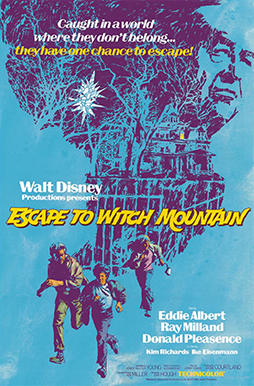
Disney movies—and I still think of Disney primarily as a movie studio—were part of my childhood.  A small part, but there nevertheless.  We didn’t go to theaters often but we caught some movies on television (do you remember eagerly reading TV Guide to find out what was going to be on that week?).  We did watch The Wonderful World of Disney and some of their series—I recall the one ones on Daniel Boone and Davy Crocket.  Still, I missed a lot.  I didn’t see Mary Poppins, for example, until I was in college.  So the other day I got curious about Escape to Witch Mountain.  I’d not seen it as a child and never saw any reason to watch it as an adult.  I’ve been taking a break from bad movies, and, as it turns out, Disney.  So there may be spoilers below, in case you’re waiting to see it.

I didn’t know the backstory or the plot, so seeing this the first time I wasn’t sure what to expect.  The movie shows its age (I was a mere lad of twelve when it was released), but the story is interesting.  Tony and Tia are adopted but have to be sent to an orphanage.  We quickly learn that they have “powers,” and that adults like to exploit such things.  A wealthy villain has his fixer pose as their long lost uncle to get them to his house, under his control.  The children realize that they must escape to, well, Witch Mountain.  Actually, that takes some time and a sympathetic adult who can drive.  In the end it turns out that they’re aliens, not witches.

Not cheery like many Disney films, Escape to Witch Mountain, although you know it will end well, has a fair bit of tension.  Especially scary is the mob mentality that takes over the locals when they start their literal witch hunt.  Armed and dangerous, those who want to preserve the uniformity of small-town mentality are serious about their convictions.  As usual, they focus on the enemy without getting to know who, or what, they really are.  Obviously, there are larger issues to consider, as there are when anyone has an advantage.  But the kids, aliens, are sweet and mean nobody any harm.  All they want is to get back to their people.  Can humans, however, ever be satisfied knowing that there are others out there more advanced than we are?  Perhaps there’s a reason for cover-ups, after all.  Disney often says more than it’s given credit for saying.  Even if I missed it until now.


Adulting

Young professionals that I know often say adulting sucks.  Quite a bit of the time I tend to agree with them.  The 9-2-5 makes just getting along difficult, at times.  I’m sure there’s software to ease some of the woes, but you have to learn how to use it.  And that takes time.  Time I’d rather spend writing or reading.  For example, to get a small break on state taxes, if you work from home, you need to calculate your office space and then how much it costs to exist in your house for the year.  When I remember to do so, I can look utilities and mortgage up in Quicken.  Sometimes, however, when a book in my mind is distracting me I just tot all this up on the back of an envelope.  Then I need to type it in so my accountant can see it (taxes are far too complicated for mere mortals) and, I can’t underscore this too many times: numbers are adulting.

Photo by Tyler Easton on Unsplash

I’m an idea person.  The 9-2-5 (numbers!) that keeps you in front of a computer all week long means that things pile up.  Weekends seem too short to spend on numbers.  But you’ve got to balance that checkbook.  And even tot up the number of hours you give to “the man” each day.  What could be more adult than accounting?  Don’t get me wrong—at times numbers can be interesting.  Numbers, at their best, are philosophical.  One squared is one.  When you square any number greater than one, it increases.  One doesn’t.  And you can’t divide by zero and get zero for an answer, as handy as that’d be from time to time.  These abstract concepts come in useful but adulting involves serious numbers.  Numbers that imply liquidity.  Cash flow.  

Time is made up of numbers too.  If a social event comes up on a weekend, there goes your grocery and cleaning time.  And writing a book takes a tremendous amount of time.  It’s a second job on top of the other one you work 9-2-5.  All of this makes me think of those TIAA-CREF ads that showed prominent professors and captions that said “Because some people don’t have time to think of money.”  Or something similar.  That’s what I’m talking about.  Adulting is all about money.  And money must be taxed.  And you have to keep track of where it all goes.  I’m sure Quicken could help me with this, if I had time to learn it.  (We pay for it after all.)  But I’m kind of busy writing this book…


Easter Fools

One of the most interesting aspects of Easter is its peripatetic nature.  It wanders around the calendar awaiting the first Sunday after the first full moon after the vernal equinox.  By definition it’s always in spring, but it can range widely as to when it actually falls.  This year it meets up with another unusual holiday—one with very uncertain origins.  April Fools’ Day is poorly documented and understudied.  This is one of the reasons I find holidays so fascinating.  Scholars seldom take them seriously and, well, April fools.  Who’s going to look into that?  When working on The Wicker Man (which is about holiday horror), I found there was little to find about April Fools’ Day.  There’s no agreement as to why it’s called that or how it started.  I have a pet theory, but no evidence to back it up.

Image credit: Heinrich Vogtherr the Younger, public domain via Wikimedia Commons

We tend to think of April Fools’ as a day for practical jokes.  Indeed, the horror movie based on it is a big, long practical joke.  I wonder, however, if it goes back to my other old avocation, the weather.  The weather led me to write a book as well, of course.  For those in the northern hemisphere—particularly up in the more temperate parts of that hemisphere—April can indeed fool.  Around here it’s been decidedly cool for spring after a real warm spell a couple weeks back.  One year while living in Wisconsin we took a family trip for my wife’s mid-April birthday only to end up playing mini-golf in the snow.  April fools, you see.  We’re not out of the woods yet, regarding winter.  This understanding of seasons makes me think April Fools’ Day evolved from a statement about the weather.

Irish Celts believed spring began at Imbolc, at the start of February.  In that viewpoint, summer begins on May Day (Beltane), just a month away.  Now that Easter has fallen on the last day of March we’re left with an April bereft of official holidays, other than April Fools’ Day.  In fact, work-wise it’s a barren period from Presidents Day, in mid February, through Memorial Day at the end of May.  Just as the weather’s warming up to make the occasional long walk through the woods a magical journey of discovery, we’re confined to our offices—virtual or physical—gazing longingly out the window as nature invites us out to play.  Well, April fools, does it not?


They Come in Batches

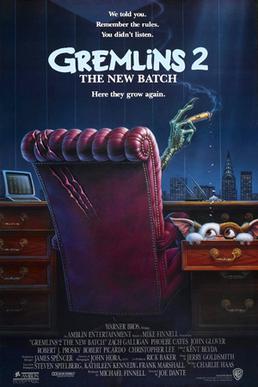
There’s horror and there’s comedy horror.  And then there’s just plain silly.  Gremlins 2: The New Batch falls into that last category but with the strange factor that it’s silly without being funny.  There are a few smirk moments, and sometimes the self-parody approaches clever, nevertheless it’s bad.  It’s a big budget bad movie.  The idea that the gremlins try to take over New York City is funny, at first, but other than Phoebe Cates and Christopher Lee, they don’t seem to know this is a satire of Gremlins.  I guess not knowing about the plot—I tend not to read reviews about movies before I see them—I was expecting something more like the first one, which I thought was pretty good.  The only reason I knew the movie existed at all was that the Blu-Ray version of Gremlins comes with The New Batch.  The late eighties and early nineties I was spending holed up in Edinburgh working on a Ph.D.  We didn’t have much money and didn’t see many movies.  We had no television (there is, or was, a television tax in the UK), so I never heard of the sequel.  

I presume we all know the three rules of mogwai, and needless to say, they immediately get broken.  The eponymous new batch takes over the Manhattan tower of Daniel Clamp.  His high-tech building needs no gremlins because the technology already doesn’t work well.  The high rise houses, among other things, a genetics lab where Christopher Lee camps it up, but which means the gremlins have access to formulas that allow them to grow wings, tolerate sunlight, and become spiders.  Sound silly?  You betcha.  One of the gremlins is even able to talk.  I watched with increasing stupefaction. 

Bad movies and cult followings are the peanut butter and jelly of cinematography.  Some bad movies never attain cultdom, but I can see why this one has.  The big budget ensured glitz and special effects.  Even the self-awareness to have Hulk Hogan being able to control the gremlins in the theater with a threat almost gives the movie an art film feel.  The horror, mostly based on the fact that there are monsters, is tightly constrained.  Although I felt increasingly like I was wasting my time as the movie went on, upon reflection I can see why some people have glommed onto it.  It may just have edged over into the so bad it’s good category.  I’ll need to think about it.  And avoid eating after midnight.


As We Know It

The end of the world, as we know it, is really more recent than we think.  Yes, Christians of a certain stripe have been looking for the second coming since the first leaving, but that detailed map of how we’re living in the end times, courtesy Hal Lindsey, is a new thing.  Here are the fast facts.

First and second centuries, Common Era: early Christians tended to think Jesus would “be right back.”  When that didn’t happen they began to look in the Bible for reasons why and started to develop theologies to cover the bases.

Late Antiquity to the Middle Ages: settled in for the long haul, theologians developed eschatology.  Although that sounds like a disease, it’s actually a system for thinking about how the end of the world will come down.  There were conflicting theories.  The two main flavors were premillennialism and amillennialism.

Early Modernism: Protestants came along and searched the Bible for minute clues to make into a system.  In response, postmillennialism became a thing.  Now there were three options.  Various phases were discussed: tribulation, resurrection of the dead, and the already-met millennium.

1820s: William Miller, a Baptist minister, began number-crunching and figured the end of the world would take place by 1843.  His followers, “the Millerites,” continued on after what was called “the Great Disappointment.” 

1830s: John Nelson Darby, a Plymouth Brethren leader, came up with Dispensationalism, a scheme that divides history into eras, or “dispensations.”  He thought we were living near the end of that scheme about 200 years ago.  The idea of “the rapture” was added to the other phases.

1917: Cyrus I. Scofield, published the Scofield Reference Bible.  A man with little formal education (and a “colorful” background), he applied Darby’s dispensations in his Bible, giving the United States a road map to the end times.

1970: Hal Lindsey, a seminary educated evangelical, published The Late, Great Planet Earth.  It became the best selling book (classified as nonfiction) for the entire decade.  New ideas, such as “the Rapture” and “the Antichrist” began to be read back into the Bible.  The book was made into a movie.

1976: David Seltzer, a Jewish screenwriter, penned The Omen.  The movie made use of Lindsey’s adaptation of Scofield’s adaptation of Darby’s ideas.  The wider public, seeing it on the big screen, believed it was about to happen.

2000: the world still didn’t end, either with a second coming or Y2K, as many predicted.  Round numbers will do that to people.  It didn’t stop predictions of the end of the world.

2012: the Mayan calendar gave out.  A movie was made.  People believed. Apocalypse averted.

2024: you fill in the blanks.

Image credit: Albrecht Dürer

Verb Choice

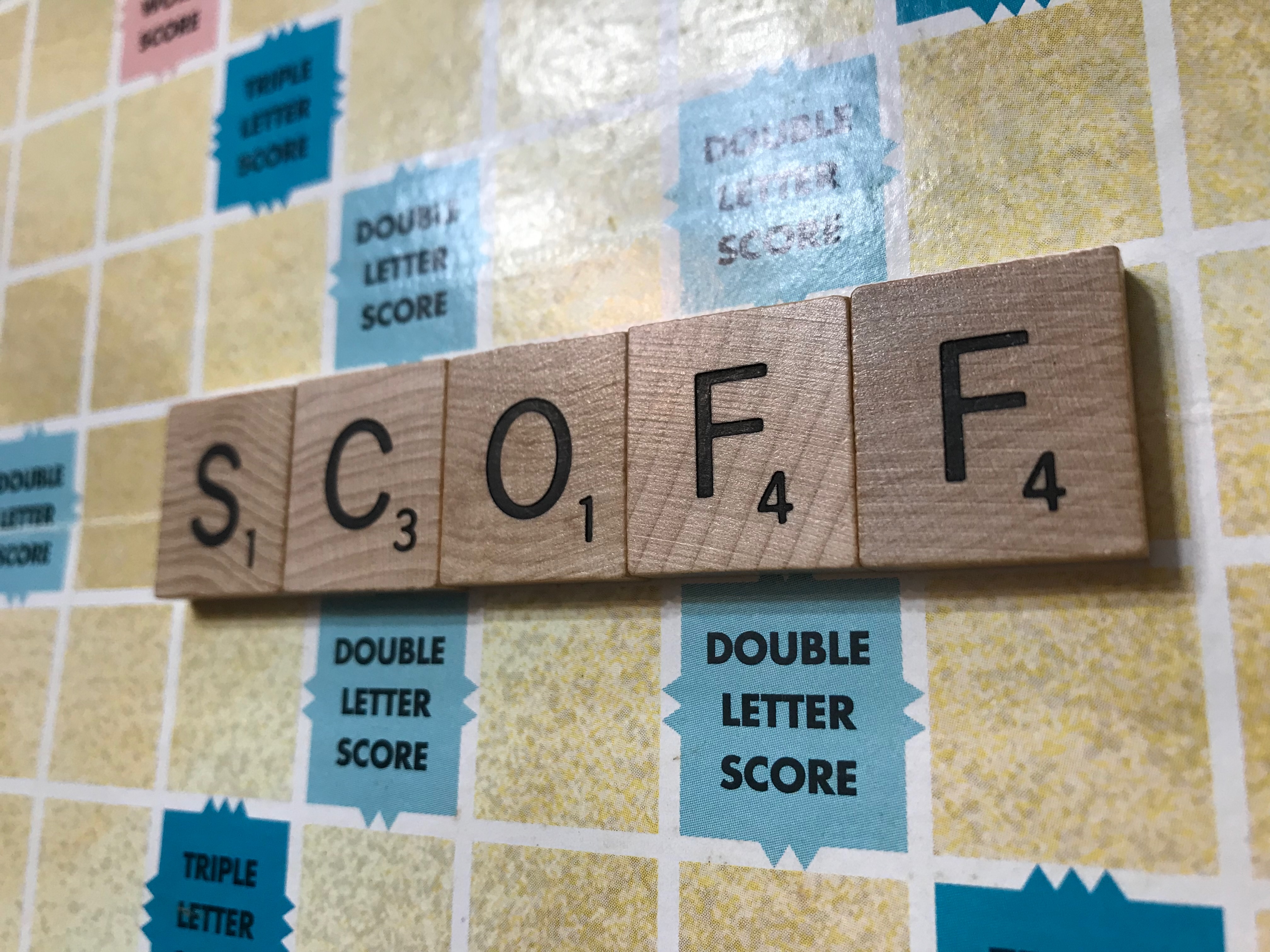
I can’t remember who started it.  Somehow, though, when I watch movies on Amazon Prime, the closed captioning kicks in.  I generally don’t mind this too much since some dialogue is whispered or indistinct.  I also presume some kind of AI does it and it makes mistakes.  That’s not my concern today, however.  Today it’s word choice.  Humans of a certain stripe are good at picking the correct verb for an action.  I’ve been noticing that the closed captions often select the wrong word and it distracts me from the movie.  (Plus, they include some diegetic sounds but not others, and I wonder why.)  For example, when a character snorts (we’re all human, we know what that is), AI often selects “scoffs.”  Sometimes snorting is scoffing, but often it’s not.  Maybe it’s good the robots don’t pick up on the subtle cues.

This isn’t just an AI problem—I first noticed it a long time ago.  When our daughter was young we used to get those Disney movie summary books with an accompanying cassette tape (I said it was a long time ago) that would read the story.  Besides ruining a few movies for me, I sometimes found the verb choices wrong.  For example, in Oliver (which I saw only once), the narrator at one point boldly proclaims that “Fagan strode into the room.”  Fagan did not stride.  A stride is not the same thing as a shuffle, or a slump.  Words have connotations.  They’re easily found in a dictionary.  Why do those who produce such things not check whether their word choice accurately describes the action?

So when I’m watching my weekend afternoon movies, I want the correct word to appear in the closed captioning.  Since the nouns generally occur in the dialogue itself, it’s the verbs that often appear off.  Another favorite AI term is “mock.”  Does a computer know when it’s being mocked?  Can it tell the scoff in my keystrokes?  Does it have any feelings so as to care?  AI may be here to stay, but human it is not.  I’ve always resented it a bit when some scientists have claimed our brains are nothing but computers.  We’re more visceral than that.  We evolved naturally (organically) and had to earn the leisure to sit and make words.  Then we made them fine.  So fine that we called them belles lettres.  They can be replicated by machine, but they can’t be felt by them.  And I have to admit that a well-placed snort can work wonders on a dreary day.


Web Dark

I know, I know.  My hours are odd, but I’m not the only one awake at this time.  So home alone one weekend—hands slapping sides of face, mouth gaping open—I decided to go grocery shopping at six, when the store opens.  It was a frosty morning and I hadn’t yet shaken the chill from getting out from the covers and throwing on clothes before the thermostat fully awoke.  I checked the store website.  Hours: six to eleven.  Off I drove.  Not trusting any kind of authority, really, I was glad to see several cars in the parking lot.  I gathered my reusable bags and approached.  The sliding doors weren’t welcoming that morning.  I tried the other side since sometimes they lock the south doors until later.  Same results.  Then I saw the hours: seven to eleven.  Trust no one.

I had an hour to wait and the car was still cold.  I drove back home, pondering the unreliability of the web.  At least with a phone book you could take a big, thick tome in and point to the ad—“it says six a.m.!”  Websites are, of course, not always updated.  Maybe the six a.m. opening was a pandemic thing.  (I’m still waiting for the web to tell me the pandemic is over.)  Somebody, however, didn’t bother to update the website.  And I was shivering.  Steam coming out of my ears would’ve been welcome to warm my fingers at this point.  Now, I know that neglected things fall apart.  Abandoned houses can have trees growing through them, for goodness sake.  But if you’re a colossal food chain can you not pay to have your website updated?

Broken links lie scattered like glass shards across the internet.  The other day I tried to check out an independent small publisher only to land on the entry page to a porno site.  The publisher had gone under and the domain name sold.  Look, all I want to do is get groceries and get back home so that I can get my weekend activities underway.  I may be on my own for the day but that doesn’t mean I’m planning to waste my time.  Instead I have to go back home, back the car into its slot, unlock the back door (which is friendly), put my hands on the radiator for a few minutes, and then turn around, go out, and try again.  I suppose I could use the time to surf the web, but honestly, I don’t really trust what I might find there.


Upon Further Occlusion

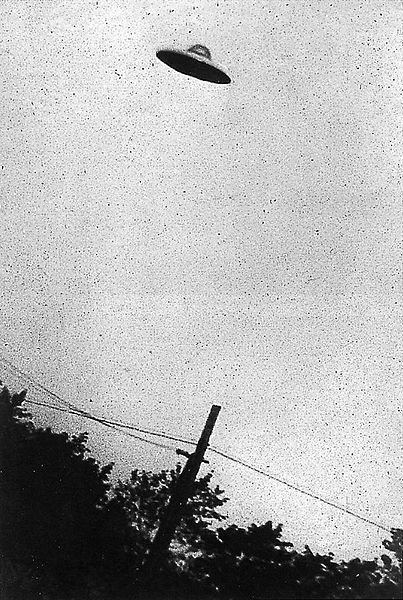
Admittedly the source is GBN, but the headline is irresistible: “Nasa ‘quietly funding’ theological conferences amid ‘demonic’ UFO fears.”  Essentially an interview with Nick Pope (no relation to “the Pope”), the story posits that NASA has been spending on theology because of fears that UFOs might be demons.  Nick Pope is a recognized ufologist, but the story doesn’t state where he acquired the information on NASA’s spending habits.  Pope did work for Britain’s Ministry of Defence, and has had a long-standing interest in UFOs.  And some US congressional members have stated that they believe said UFOs are demons.  I’d still like to see some documentation, however, before accepting that NASA’s paying for conferences in a discipline that’s on decline in academia.  Seems a little difficult to believe.

It also seems like this would be a more exciting theological conference than the one I attend.  Perhaps even stranger than UFOs is the use of the word “theology.”  In British English the word tends to mean what “religious studies” means in these (still) United States.  American English understands theology to be a distinct part of religious studies—the discipline that is occupied with philosophical questions within a specific tradition.  The one probably most familiar is Christianity, where historical theology and systematic theology are often on seminary curricula.  I’ve noticed more and more Jewish and Islamic theology cropping up in recent years.  I always take pains to say I’m not a theologian (in the American sense).  Maybe it would just be easier to consider UFOs.

Image credit: George Stock, public domain via Wikimedia Commons

There’s no doubt that theology gave us demons.  One of the points I was trying to make in Nightmares with the Bible is that that’s not entirely true.  Demons came first, and theology later.  People have, historically, always believed there were other entities that behaved with intelligence.  Generally they were more powerful than mere humans.  It was really only around the time that Christianity began that such entities were coded as purely evil.  Those who posit that UFOs are demons really aren’t up on their theology, which makes me wonder what kinds of conferences NASA is spending its money on.  If it is.  This seems plausible because the government often spends on things that are unexpected.  I personally would like to see a bit more of it funneled towards education, but I’m just one voter.  In any case, if there are such conferences, and if they’re British style theology, please put me on the mailing list.


Castle Dreams

It’s a real problem.  If you’re a passionate collector you eventually run up against the space issue.  A New York Times piece tells how a couple that collects puzzles had to buy an Italian castle to house their collection.  I appreciate their passion, but I operate on a more modest budget.  We bought our house going on six years ago.  Like many people raised in poverty, I’m a bit of a packrat.  When you’ve experienced a life of not being able to afford things, you tend to keep everything.  That’s an economic reality.  You spent money on this and you don’t want to waste it.  Add to that the passion of a collector and you could have a real problem.  Castle-sized.

When we were searching for houses the market was poor.  It still is.  Although a recent trip to Somerville, where we used to live, revealed massive amounts of new apartments—we were literally stunned—buying a house remains difficult.  (But all those apartments!  When we moved to Somerville in 2006 there were only a few units available, so I guess that was before it became popular.)  And we specifically needed a house where you could keep books.  (I do periodic purges and end up feeling full of regret afterwards.)  Our house has a large garage with storage space.  Not an Italian castle, but the principle is the same.  Only our garage has been taken over by aggressive squirrels.  We can’t yet afford to have the roof rebuilt (with solar panels because we have beautifully unimpeded southern exposure); we can’t lay up books where squirrel and mildew doth corrupt, so I guess we might have to consider a castle down the road.

My escape fantasy would probably be Ireland, however.  They speak English there and they have castles.  And Scotland’s just across the way.  Although I spent my doctoral years in Edinburgh, my ancestry leans more toward Ireland.  And Germany, but although they have castles I’m not sure I can revive my German well enough to get along there.  No, Ireland might be the best choice for my castle-buying dreams.  Of course, those of us who grow up poor do dream of castles.  I read about them in books.  And books beget books—this seems to be an inescapable law of nature.  I do wonder if Irish castles have problems with squirrels, though.  If I’m going to make this work it’s going to require quite a bit more money.  And thought.  It’s a real puzzle.

Photo by Reid Naaykens on Unsplash

Sticky Thoughts

It’s a common problem.  You need to stick two things together.  Perhaps you don’t have welding or soldering equipment lying around the house so you buy some glue.  Now, I don’t know if you’ve been in an adhesives aisle recently, but the choices are overwhelming.  Not only that, but ephemeral.  I mean the bonding action has improved since I was a kid, but the problem is I can’t use glue fast enough.  Like the old-fashioned White Out, you open a container and use it as quickly as possible because it’s going to dry out.  I was reminded of this when I needed to stick some fabric to plastic (don’t ask).  I tried some Elmer’s left over from when my daughter was in middle school sometime in the second Bush administration.  That didn’t work.

Then I found a bottle of Gorilla glue.  The problem is that it sticks to itself.  So much so that I couldn’t get the bottle open.  I could see there was some liquid life in there, but the top half of the contents seemed to have congealed and clung to itself.  That wouldn’t work.  I eventually found a tube of plastic glue and since one of the pieces for my project was plastic, I figured that’d work.  Still, it made me wonder about the conscience of those who make adhesives.  Surely they must know the mindset of, “oh, I’ve got lots of stuff to fix, so I better buy a reasonable size bottle.”  Only, the fixing comes at widely spaced intervals and the glue can’t last that long.  Various Crazy Glues are the worst.  They’re one-time openers, just like White Out.

My most recent trip to the adhesive aisle brought a moment of clarification.  Although I try to reduce waste, one company (not a sponsor), was selling little, tiny tubes of Crazy Glue.  Single-use units.  And you get six/eight per shot.  That works for quite a few applications.  Still, I’ve got a number of half-full (I’m an optimist) bottles of various glues that can’t seem to get over themselves.  I guess the lesson we’re to take home is buy in small quantities, even though the unit cost is higher.  You can always buy two, no?  Things don’t break at convenient times, unfortunately.  You run to the closet to see what glue you’ve got.  Then you drive to the store to get some that’s not all gummed up in the bottle.  It’s a dilemma.  Just like that nagging question of why someone’s trying to stick cloth on plastic.


Not The Sting

Why do we make the decisions we do?  Watch the movies we do?  I have to confess that for me a number of strange factors combine to make for some weird choices.  For example, Invasion of the Bee Girls is difficult to explain apart from compounding oddities.  One is that Amazon Prime auto-suggested it too me (for free).  Yes, I have a history of watching bad movies and this definitely fits that bill.  Fuzzy-headedness during my weekend afternoon slump time probably played into it.  Along with the fact that I’d been researching bees and that brought the movie The Wasp Woman back to mind.  Wasp woman, bee girls?  It’s free and I’m not going to be able to stay awake otherwise.  The movie is about what you’d expect from a low-budget 1970s sci-fi horror film.  It did make me think I should read about movies before I watch them rather than after.

Nevertheless, I’m trying to develop an aesthetic for bad movies.  If you’re a regular reader you’ll know that I have a fascination with Ed Wood and his films.  I even read a book about him and also read a book on why it’s okay to like movies that we tend to label as bad.  No matter how you parse Invasion of the Bee Girls, it’s bad.  The acting, the writing, the plot.  Still, some of us have a taste for films from the seventies—it’s kind of a nostalgia trip since I was really only becoming aware of the odd world of science fiction about then.  Nicholas Meyer, who wrote the initial screenplay wanted his name removed after he saw the changes that’d been made.  That should be telling you something.

Meyer, while not a household name writer, did pen some good detective stories about Sherlock Holmes, and wrote, uncredited, both Star Trek II: The Wrath of Khan and Fatal AttractionInvasion of the Bee Girls has a somewhat salacious plot that fits the Zeitgeist of the seventies of which I was unaware, growing up.  The seventies were my sci-fi high point, it was good escapist material for someone living in a situation less than ideal for day-to-day living.  I watched, for example, Killdozer about that time and thought it was great.  Now that streaming is how we watch, the amorphous internet has a record of what we’ve seen and then recommends products for us based on our record.  I really thought we outgrew being tracked all the time.  Little did any of us know that it was only getting started in high school.  And as long as you have a penny to spend, those who track us will try to figure out how to take it.  You could get stung.


A Footnote

I was recently compelled to use footnotes.  I don’t mean the clever asides that capable writers sometimes utilize to spice up subjects by making points off topic.  No, I mean the kind with author, date, title, city, publisher, page number.  I deal with footnotes daily—it’s an occupational hazard.  As a recovering academic I’m trying to get away from using footnotes on everything from grocery lists to daily meeting reminders.  Cite your sources!  That’s the kind of rhetoric that’s pounded into the heads of bright young people, often preventing them from learning to think for themselves.  At this stage of my life a footnote is more often trying to find someone who agrees with what I’ve observed for myself.  Hmm, did anyone ever say that before?  If so, where?

My concern goes down to the level of cities.  Yes, cities.  Standard format requires you cite the city in which a book was published.  This ridiculous pre-internet artifact had a purpose originally, but I have worked for two international publishers and I can tell you two related, and perhaps contradictory points: employees can tell which office a book is from: New York or London.  And unless you work for said publisher there is almost no way for you to know.  So if a publisher has offices in a dozen cities, you need to write a dozen of them in your footnote.  Does this sound like a rational thing to do?  Don’t get me wrong—it’s important, very important to cite the publisher.  But it’s not like there are a ton of presses around with the exact same name.

There’s a move among some reference experts (refperts, if you like) to do away with the city in footnotes.  It’s a reasonable guess that Cambridge University Press is pretty widely recognized.  And that Cambridge is located in Cambridge.  Or course, there’s a Cambridge in Massachusetts, and I hear there’s a university there as well.  In any case, if you don’t know where a publisher’s located, there’s a remarkable invention called the internet where you can look it up!  Pedanticism comes naturally to academics, I suppose.  Had I not been one I would probably have had no reason to write such an anal post as this.  Still, there’s a larger point: when is one able simply to assert what one knows?  I frankly don’t remember the page on which I read most facts I point out in my writing.  Often I notice them myself and recognize them as facts when there’s good, solid evidence.  Of course, I really should footnote that.  If I can remember in which city the appropriately named Random House is located.

How do you footnote this?

Drac Ops

Just don’t ask, okay?  Like most things in my life, I discovered Dr. McNinja way past when it was popular.  Who knows?  Maybe it’s still popular.  I’m not the best judge of that kind of thing.  I’ve read a few graphic novels in recent years, generally when someone lends them to me, or when a movie I like is based on them.  Now, the thing about Dr. McNinja is that it started out as a webcomic.  People younger and more with it than me have shown me other people younger and more with it than me making a good living web cartooning.  They don’t have 9-2-5s and they live, going by their videos, in nicer houses than I do.  So when someone suggested I look up Dr. McNinja I found an old-looking website saying it was no longer online.  The author had published it in book form.

Even though I work in publishing, I find it difficult to tell if a book is out of print.  We live in that strange purgatory where IP (intellectual property) can be kept on life support until copyright expires without ever really having to print more books when they run out of stock.  They’re never truly out of print.  I’m guessing that’s what happened when on Amazon you see that only used copies are available.  So which McNinja to select?  The one with a cover that riffs off Plan 9 from Outer Space, of course.  That movie keeps coming back into my life.  It’s one of Fox Mulder’s favorites on the X-Files.  In any case, I was hardly prepared for the amazingly creative imagination that Christopher Hastings has.  If you start with Operation Dracula! From Outer Space you’re entering the story in media res, as the academics say.

I confess to liking Teenage Mutant Ninja Turtles when it first came out.  These days the exoticism of eastern Asia is frowned upon by academics, but it’s still there in Christopher Nolan’s Batman Begins, so why not?  In case you’re wondering, there is a reason behind all this.  I can’t tell you at the moment, however.  I can say that if you’re looking for a wild, wild story with lots of unexpected twists and turns, Dr. McNinja will not fail to win approbation.  I’m dithering on whether to go back and start from the beginning—these print volumes are becoming collectors’ items, it seems.  And no matter how much fun it is, reading graphic novels always feels like cheating to me.


Strangers

Okay, so I like to think that I’m a reasonably intelligent person.  I can drive a car.  I’ve read over two thousand books.  I have been blogging for nearly a decade and a half.  Why can’t I figure out this password thing?  My brother has a blog on WordPress too.  His posts are quite different than mine, but I always like to read them since we think a lot alike.  Anyway, I wanted to leave a comment on a recent post he wrote.  You’d think that’d be easy since this blog is also hosted on WordPress.  (I’m the one who suggested WordPress to him.)  When I went to post the comment I received a dialogue box basically asking “and who might you be?”  When I gave my web credentials it wanted a password, but it wasn’t clear which password it wanted.

An actual word press; image credit: DANIEL CHODOWIECKI 62 bisher unveröffentlichte Handzeichnungen zu dem Elementarwerk von Johann Bernhard Basedow. Mit einem Vorworte von Max von Boehn. Voigtländer-Tetzner, Frankfurt am Main 1922, public domain via Wikimedia Commons

Like most human beings alive today I have more passwords than atoms in a typical tardigrade.  With a brain over sixty, trying to recollect them all in an instant, well, let’s just say that ain’t happenin’.  As I laboriously lumber through all relevant passwords (I’m pretty sure they don’t want all the unique ones I use at work, in addition to my private accounts), it rejects each and every one.  You see, WordPress is funny.  My own account, now 14 years old—maybe that’s the problem—those teenage years!—doesn’t recognize me at times.  Indeed, on my own blog (and I have a paying account) it sometimes blinks its virtual eyes and says, “and who might you be?”  I try not to take this personally.  I mean, we’ve only known each other for years.  And all I want to do is put a supportive comment on my brother’s blog—we share the same surname, and even the same web host.  What could be so difficult about that?

I’m pretty much logged into my WordPress account constantly.  I post every day.  There’s over 5,300 mini-essays of about 400 words.  That’s over 2 million words.  Is this relationship really so one-sided?  I’m trying hard not to let my aporripsophobia get the best of me here.  Just tell me which password you want!  And, if I can use it to log into my own WordPress account, why won’t it work for the WordPress accounts of family and friends when I want to make a comment?  We’ve been together for so long, do you really not know me any better than this?  Hey, I think I need a private moment with WordPress—you can check out my brother’s blog while you wait…