Lions Among Men

Facial follicle emasculation, i.e. shaving, has some interesting religious implications. A recent Associated Press story highlighted this when students at Brigham Young University began a protest against the ban on beards at the school. Shaving has a very long pedigree but, as one who doesn’t shave I feel obligated to point out, not as long a pedigree as not shaving. Nobody knows for certain where or when shaving began, but it has been suggested Egyptian priests began the tradition. Others suggest it was an attempt among some early societies to control lice. Homophobic religions, it used to be, promoted beards as signs of masculinity. Alexander the Great, however, noted that beards are easy to pull during battle, although, for those who don’t fight it isn’t such an issue. Of the major monotheistic religions, Christianity is the only one that generally promotes shaving as the norm, and here it is only the practice in the western branch of the religion. Eastern Orthodox churches still retain bearded clergy. It has been suggested that the Roman preoccupation with shaving led to early Christian preferences for this practice, and there may be something to that.

Having an old-growth beard (I last shaved over a quarter of a century ago) I have often found myself in the minority. While beards—mostly highly styled or glorified stubble—are making a bit of a comeback in New York City, they are still not as common as the alternative. In one of my many preprofessional jobs (that of a bag-boy at a Pittsburgh grocery store) I was told I had to shave. “Customers don’t trust a man with facial hair,” my manager told me. Delving into this a bit, I was told that beards mask the facial nuances that an honest man wants to show. What’s a beard trying to hide? Watching what clean-shaven presidents and Wall Street moguls get away with as “honesty,” I think I’ll stick with my beard, thank you.
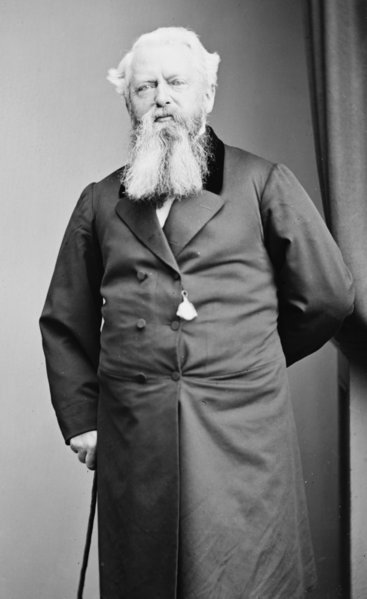
I'd trust this man.

I’d trust this man.

Evangelical traditions, such as Mormonism, I long ago noticed, wish to control nature. Lawns must be manicured and trees, with their sloppy abundance of leaves, must be few and carefully spaced. Faces should be rid of the hair that Jesus and the disciples were said to wear, and clothes must be neat and tidy at all times. It’s an image thing. Among the evangelical crowd, those with beards keep them neatly trimmed, tamed, and penitent. For me, scraping my face with a cold bit of metal first thing in the morning is about the least civilized thing I can imagine. Spending too much time shaping and toying with DNA’s dictates seems to go against nature. Much of my beard may have gone white, but I have nothing to hide. Neither orthodox nor evangelical, my beard simply represents what it means to be human. Trust me.


Trisagion

Irony is all around. When we hook words up into phrases or titles they often take on unexpected connotations. I often see the sign for Jesus’ Bookstore on a highway not far from here. I didn’t know the Lord sold books. In this economic climate, I hope he’s diversified his portfolio. One of the other ironies of life is that as soon as I started getting mailings from AARP (aarrpp, indeed! Retirement is a myth!) I also started to receive advertisements for funeral homes. While you’re planning for retirement (hah!) why not plan for the next step beyond? It is more certain. A nice, long sleep sounds good right about now. So I didn’t ignore the flier from the Mausoleum of the Holy Spirit. What’s not to like about that?

Mausoleum

That name, though. Mausoleum of the Holy Spirit. What sense of that troubling little preposition “of” is intended? Has the Holy Spirit been buried here? Or is it the of of ownership? One should probably be concerned with whom will be around the premises if one is to spend the rest of eternity there. Where your treasure is, there your heart will be also. The drawing of the mausoleum indicates that this is an effort at fund raising. We certainly prefer our graves to be whitewashed. That is the biblical way.

“We sincerely regret,” the reverse reads, “if this should reach any home where there is illness or sorrow, as this was certainly not intended.” In a world of ubiquitous illness and sorrow, such must be a risky proposition from the start. Also, one might note, if one is not Catholic. Are those not welcome at the eucharistic altar welcome at the Mausoleum of the Holy Spirit? What if one has a down-payment? Isn’t all of life a down-payment on eternity? In this day of facile information sharing, it isn’t unusual to have people you don’t even know wishing you happy birthday online (by the way, it’s not). It seems we’ve now gone to the other extreme to anticipate a happy death-day. That is, if I’m reading that preposition correctly.


Dirty Words

I don’t have any bumper-stickers on my car. As clever as I may think any particular one to be, driving down the highway is not the place that I want other drivers to get ticked off at me. A more judicious use of turn-signals would be my preference over mass-produced witticisms. I suspect that most readers know of my liberal leanings. Some have even bothered to inform me that they no longer read my musings precisely because of this. On the information superhighway, unlike the real highway, you can just click off and not be annoyed anymore. My bumper, therefore, will stay clean. While in a parking lot recently I saw a bumper-sticker reading “Not A Liberal.” I had to ponder this a bit.

IMG_1589

I grew up conservative, although, as working-class folk, we didn’t label ourselves with that word at home. I wouldn’t have even known what it meant. Liberal, in its basic form, has to do with generosity and being respectful of others. The media has built it up into a kind of evil juggernaut that intends to take over the safe, unchanging world of religion and politics. I wonder how liberal became a dirty word. Who, among your friends, would want to remain so if you disrespect their views and refuse to show generosity? I get the sense that even conservatives are liberal with their friends. When I walk past the homeless sleeping on a subway vent to keep warm, I wonder if conservatives ever read the parable of the good Samaritan. What bumper-stickers would the homeless wear?

A polarized society had better prepare for the big chill. In my admittedly limited experience, people come in a continuum of positions, not just one extreme or the other. It makes better news, however, when we divide into camps, the more clearly to spar with one another. What separates us is more important than what brings us together. Yes, I grew up conservative. I continued, however, to grow up. I suspect in some things I am still conservative, while in many I am liberal. I’m not sure what I’d put on my bumper-sticker. What do I want people to know about me while I’m driving? I think it might be better to suggest “I Respect You,” than an implied “I don’t like your views.” Then again, since it happens so often, I now look for a Jesus fish automatically when I’m cut off in traffic. Be careful of what you put on your bumper, because dirty words are in the eyes of the reader.


Cuneiform Lover

I’m busy. Too busy most of the time. You see, I used to be able to keep my mental files neatly in order. Recall was swift and efficient. I suppose that was back when I was doing the job for which I’d been preparing my entire life. Then a midlife, unexpected career change shifted things a bit. That mental file that you always kept here has now been shunted over to there. I suppose I always knew this was coming, and that’s why I started writing things down. Of course, this led to stacks of papers and a whole series of notebooks that follow varying forms of logic. “Commonplace books” as they used to be called. Then computers. I never used a computer until after my master’s degree. My wife showed me how. And then writing ideas down became pretty easy—who could ever afford more than one personal computer? And since they were as heavy as a small television (cathode-ray tube variety, of course), you always knew where you’d find it. Then laptops. iPads. iPhones. Something called “the Cloud.” A computer on my person at all times and I still can’t find that ruddy file, and has anybody seen my phone?

I wrote an important (for me) paper back in 2012. Just two years ago. I remembered vividly typing it on my laptop, working on it for weeks. Recently I wondered where I put it. I searched my laptop. Not there. I must have backed it up. Checked my backup files, on CD. Not there. Where did I put the thing? Although a Luddite at heart, I don’t delete old files. Please, tell me I didn’t do something like back it up on a floppy disk! I can barely remember when we used those. No, no, it was much more recent than that. Was it on this laptop or the one before? Maybe I stored it on the hard disk of the antiquated one. When you get a new computer (or at least when I do) it is such a rare occasion that you don’t bother backing up every single little loose file on your old machine—there’s too much shiny new stuff to admire. But the file wasn’t there. Finally I attached a terabyte backup, admittedly overkill for someone of my limited mental ability, and searched. Although the icon said it was on the terabyte drive, the file was actually on the Cloud, and since I hadn’t updated my software in a while, I was denied access.

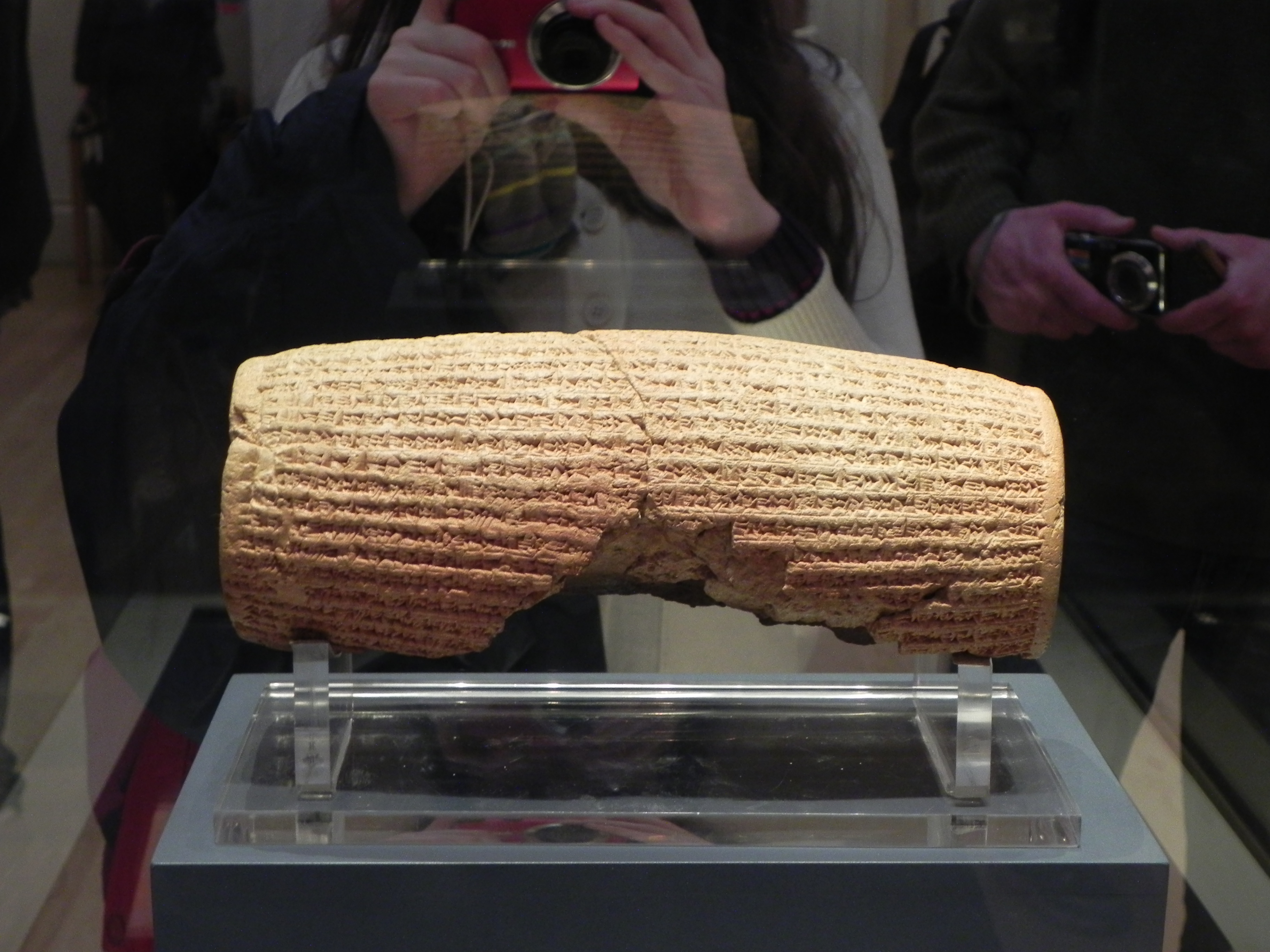
I learned to write with fallible pencil on cheap, lined tablet paper. Back when tablets were paper. Our ancient ancestors started the process by writing on clay. For some five thousand years this pressing stylus unto substrate method worked fine. All of scared writ was scrivener-mediated that way. When computers were new you stored your files on floppies. At least you knew where they were. Now dialogue boxes ask me questions in a language more obscure than Sumerian and quickly shuttle my files off to I-don’t-know-where, assuring me that I’ll be able to get them back. Honestly. As long as I remember to upgrade my system, which will, of course, require periodic outlays of substantial sums of money. You can choose not to pay, but your documents are with us. I’ve still got some clay here, and a sharpened flint taken to a twig will make a stylus, old school. And clay tablets have been known to last for millennia.

DSCN1816


Ironic Icons

The Annals of Improbable Research every year offer up the Ignobel Prize for research that is bound to raise a condescending smile from the perspicacious. Ever practical Americans are given a bemused nod by the European for taking on the stranger side of science. This year’s Ignobel went to a group studying why banana peels are slippery, but a BBC Science and Environment report also mentioned a study of the phenomenon of pareidolia. For many years I have found the tendency to see faces where they don’t exist—signal amid the noise—to be closely tied with religious evolution. (The book that started me down this path was Stewart Guthrie’s Faces in the Clouds.) Indeed, the BBC reports the group was investigating the brains of those who see Jesus and other specific figures on toast and other venues of visual “white noise.” Not surprisingly, they found that the figure seen often relates to the religion of the viewer. Buddha gets around as much as Jesus does.

Ironically, many religions, particularly in the monotheistic mold, tend to find images problematic. According to the Bible, the true believer would not make or seek images at all. The great iconoclasm clash in late antique Christianity was, at least in part, a dispute over the role of images. Anyone who keeps an eye on the religious news knows that images of Mohammad are a particularly touchy subject. The Ignobel awards may not be the best place to look for explanations, but the University of Toronto team found that the function of finding faces is pre-human and is hardwired into our brains. Seeing Jesus or Buddha before Jesus or Buddha were born? Creatures with faces evolved the knack to identify faces.

IMG_0040

But why religious faces? The report on the BBC doesn’t go into that level of detail, but it is the salient point. Finding faces makes sense. Why we find religious faces is far more interesting. Guthrie suggests this might be the origin of religion itself—first we see the faces and then we give them names. We see what we expect to see. And maybe the religious tend to expect an epiphany more readily than the non-religious. The non-religious less seldom report seeing such faces. Indeed, the word pareidolia is still generally eschewed since it admits of one of those things we find somewhat embarrassing about being human. And yet it happens to us all. The face staring back at you from your morning toast may not be Jesus, but chances are that face will be religious.


Bargain Basement

Signs, in my experience at least, lend themselves to being over-read. How often a heedless moment suggests something more than was intended—signs try to say too much in too few words. Indeed, poets rather than marketers ought to be sought. I found myself in Barnes and Noble recently, since Borders is gone. In all fairness, I attended two independent bookstores as penance afterward. Nevertheless, in the corporate atmosphere of the last major brick-and-mortar chain, I saw a sign. Several, actually. One of the most obvious is how many tchotchkes the store had, as opposed to wall-to-wall books. Barnes and Nobel has never been particularly imaginative in its selection of floor stock, but now it is a great place to buy toys, electronics, and coffee. Maybe pick up a book as an afterthought on your way out.

IMG_1550

The front space just inside the door of a bookstore is prime real estate. Publishers have to pay extra to have their books displayed immediately inside the doors—something they reserve for sure-fire rapid sellers. The average customer will walk in, down the center aisle and there they will find promoted (and demoted) items, laid out on their own tables. So it was that I saw a sign reading “Religion & Spirituality Bargain Priced.” In fact, they’re free. Not the books, but religion and spirituality. Even in this secular world, people are not shy about buying books in these categories. Step into the religion aisle sometime. You may be surprised how much you find there. In fact, those who track the industry often include Christian books as a third major category besides fiction and non. We trust those who know enough to write books about such matters. The Bible, despite its detractors, is a bestseller by any measure.

Do we, however, value religion and spirituality? So often religion is portrayed as the root of all extremism while spirituality is relegated to the weak-minded. The science section generally takes up only half the shelf space of religion. People want to know what it’s all about. The rates are anything but bargain priced. Some religion may indeed be simple, but most religions are unexpectedly complex. Those who engage them seriously know there is more to life than just fact and fiction. There are middle grounds and outer limits. There are places that have yet to be discovered, let alone explored. We are in the infancy of intellectual awakening. Of course that shows in how quickly we’ve abandoned our bookstores and gone off after less weighty things. If you have a moment, though, on your way to the coffee bar, you might pick up some religion cheap, and who knows where it might lead?


Horsemanship

Hi ho Silver, away! I’ve been pondering academic freedom. (It was suggested to me that I might discourse on such.) My academic career, three years cold in the grave, seems a long way away. In religious studies it is kosher to fire someone for academic freedom issues. Doctrine permits no challenges, for it has already been decided. This doesn’t only apply to conservative religions, but to academic institutions of all stripes. Nobody likes to be challenged. Somehow, since 9/11 any academic dispute in religion is a potential threat. I have known many academics to have lost their jobs. I also know how it feels to see colleagues go from grace to grace because they have an institution that will vouch for them. I don my black mask and saddle up Silver. Those of us raised in working class families watched that show, you know, religiously. And Gunsmoke, among other campy westerns. Caricatures of good guys versus bad guys. You know the story.

In a moment of self-delusion, I thought I might be asked to deliver a paper at this year’s Society of Biblical Literature annual meeting. I plodded along in my cumbersome way, reading a few books on academic freedom and interviewing a couple of its sacrificial victims. Turns out I was, well, self-deluded. It is probably for the best since I don’t wish to put myself forward as an expert on anything. Still, it felt like arriving at the front desk on that great and terrible day to find out your name’s not in the book after all, and so, where do you go now? Academics are running along as healthily as they always have. I was not raised knowing the difference between a salad fork and a meat fork. Some colleagues insist that universities crave the voice of hoi polloi; the authentic blue collar academic who worked his or her way up from a disadvantaged start through a doctoral program. I know it’s all just fancy talk. Academics are just as xenophobic as the rest of us.

Losing an academic position is easy. It’s like falling off a horse. I speak from experience here, having fallen off a big horse during a canter while helping underprivileged kids at horse camp one summer. It didn’t seem much like the wild west at the time. Seeing the world in a side view of the horse as you’re sliding off has a way of changing your perspective. You know the ground is coming fast. You just hope that your feet have slipped the stirrups. When it was all over the horse whisperer (or whatever they were called back then) publicly berated me for letting the reins fall from my hand. I should’ve slipped them over the saddle horn on my way down. Didn’t I know that the horse might’ve stepped on them? Rubbing my sore backside, I didn’t feel like such a masked lawman anymore. Silver had gotten away. At the dining hall I could feel the uncomfortable stares. Which one is the salad fork again? I never could keep my silver straight.

By Pleasure Island Uploaded by We hope at en.wikipedia [Public domain], via Wikimedia Commons

By Pleasure Island Uploaded by We hope at en.wikipedia [Public domain], via Wikimedia Commons


Disco Duck

From the Roman Empire, Holy or otherwise, to the British Empire upon which the sun once never set, human endeavors are inevitably temporary. We like to think we’re making lasting contributions. Not so long ago Phil Robertson could make claims on vast amounts of media attention for his homiletical, gun-toting brand of family values. Despite not being a television watcher, even I was drawn into the drama as Happy! Happy! Happy! became a bestseller. Perhaps because my pursuit of religion has never earned me three such exclamation points, I read the book to find the secret of success. It is a combination of unquestioning belief and a willingness to blow the heads off of ducks in flight. Not that I would know about such things. The Dynasty made its way into Time magazine and other media outlets as the most interesting thing reality television, which is anything but, could throw at us.

Then Phil made a statement that set many viewers off. Mistaking intolerance for true religion—rather a constant in the algebra of faith—Robertson expressed his views on homosexuality and the ratings began to slip. Last year as I walked into a department store, I found Duck Dynasty bobble-head dolls and even fake Dynasty beards for those with no gumption to grow their own. Golf balls and beer glasses and all sorts of merchandise. Yes, you could partake of the good life without even cocking or pumping your shotgun. Other members of the family wrote books. (I have friends who produce quality literature who can’t find publishers.) We love the self-made genius of a simple guy and his make-believe world. Happy. Happy. Happy.

IMG_1503

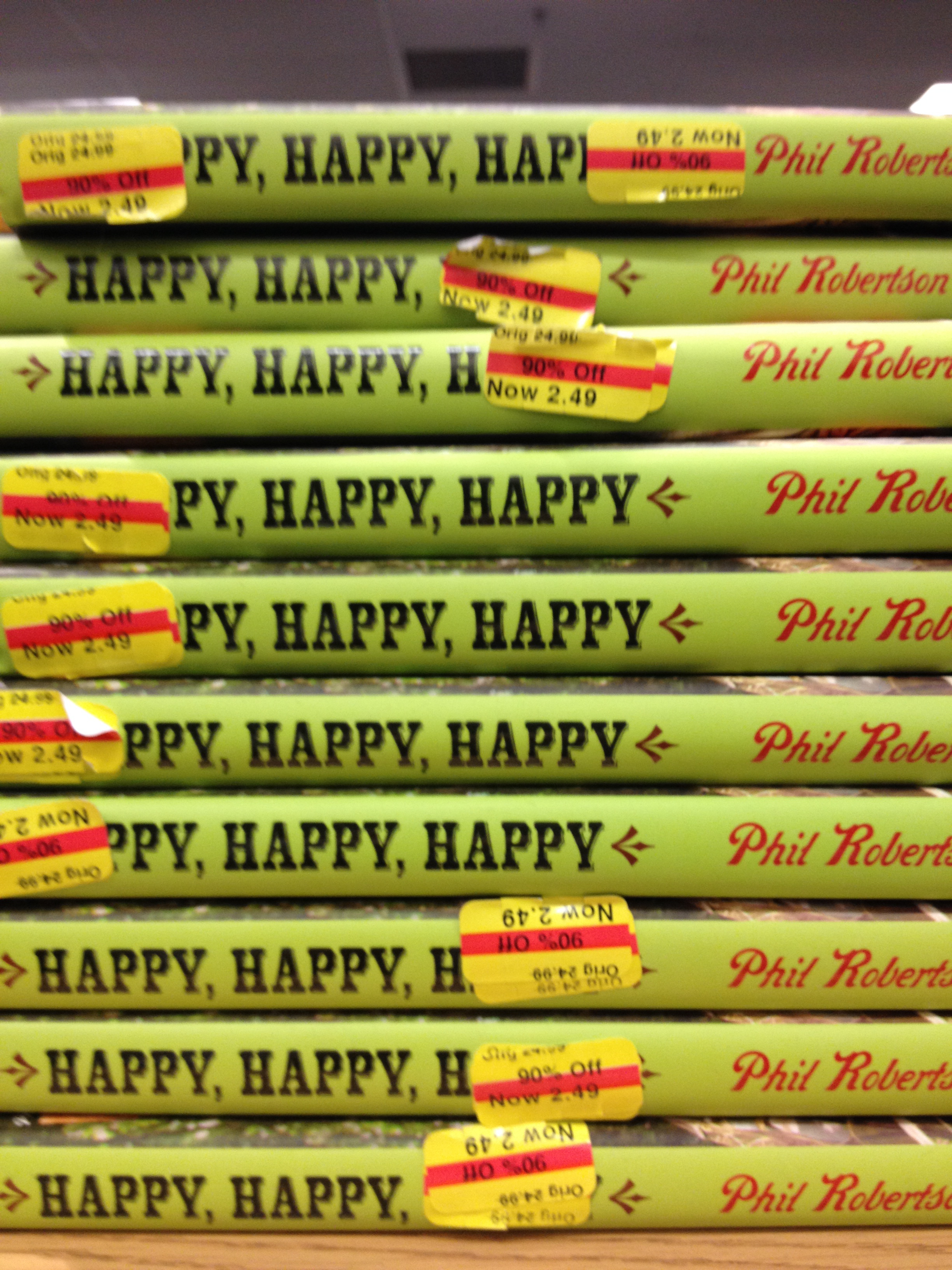
It has been some time since I’ve seen Duck Dynasty mentioned in the media. I wandered into the same department store this year to find stacks of Dynasty merchandise drastically reduced. You could buy Phil Robertson’s memoirs for even less than Amazon prices. In bulk, if you desired. My historically inclined mind turned to the great empires of antiquity. Did Alexander, I wonder, really know what he wanted? What about when you finally reach the ocean? What is off on the other side? Once you’re out of sight of land, you’ve lost your control back home. Next thing you know, Diadochi have fractured everything. The gods of empire, it seems, don’t have it all together after all. Happy? Happy? Happy?


Retro Progress

LittleOrleyIn these days of high technology, remembering childhood might be seen as cowardly nostalgia. When driving my daughter back to college, however, sometimes I need a little nostalgia. So it was that we passed a pleasant couple of hours listening to Little Orley stories told by Uncle Lumpy. Having read ancient history for years, I don’t mind saying that I was a devoted fan of Captain Kangaroo as a child, and Mr. Green Jeans was one of the reasons. Before the Captain, Green Jeans (Hugh Brannum) had recorded a set of radio stories about Little Orley, beginning in 1946. (Lest readers get too driven by nostalgia, I wasn’t around for the original broadcasts.) In the small town of Franklin, Pennsylvania, across the state from where Brannum died, our library had a record of some of the episodes from his radio show. As a child I listened to these tales so much that I still have parts of them memorized to the word. The web brought Little Orley back to me, and now anyone can purchase the tales that I had gone for decades without hearing. Driving through eastern Pennsylvania on an emotionally laden journey, Uncle Lumpy seemed the perfect fare.

A few facets of the program struck me anew. Little Orley stories, for those unfortunate enough never to have heard them, are tall tales about a farm boy that involve all manner of hypostatized natural phenomena. Animals, plants, the moon, clouds, and even pancakes talk and act like humans. Or gods. Orley encounters these all with no hint of surprise, and yet goes to church on Sunday and Wednesday night for prayer meeting. The God in these stories is anything but a jealous deity, sharing the stage with a king of the oceans, lakes and seas that can transform a person to a fish, or with mysterious voices that can make a boy a worm and a worm a boy. Leprechauns gambol through the woods, and snowmen amble about trying to help with farm chores. Stories like these in the Bible are now considered factual, right Balaam? In the 1940s they were standard fantasy for children.

Now we’ve come to an era of biblical literalism that fears and despises challenges to the single God of sacred writ. In Little Orley, however, a message of tolerance (with some notably politically incorrect caricatures) predominates. Orley is time and again in situations where those who are different should be, and inevitably are, treated as equals. Even God gets some help from talking bats who ring the bell to bring the faithful to church when the sexton breaks the bell-rope. Change, I know, is inevitable. As these miles disappear behind me, I can feel it keeping pace, eventually to eclipse me. Progress is good, but sometimes the way ahead is best found by looking back in wonder.


Secret Religion

Recently I read an article about a religion called Sabbateanism. I’d never heard of it before, so I turned to the collective wisdom of the human race—the Internet—and came away only more confused. There are so many religions in the world today that no one person can rightfully claim to be an expert on them all. The Sabbateans, it seems, are a secret sect, so not being able to learn about them should not be surprising after all. A Google search soon suggested reading about Illuminati and I realized I was once again in the realm of the conspiracy theory. A few months ago my wife and I began reading a book on the Freemasons (we both have grandparents who were Masons, so it has always been an area of interest). The book, however, was so convoluted that we had to give up. As Poe long ago realized, the best place to hide something is in plain sight. As I pulled up to a stoplight recently, I noticed the car in front of me had the masonic emblem hidden as a decal on its brake lights. Was I on the road to enlightenment?

Sabbateans, it seems, can be traced back to a seventeenth-century rabbi called Sabbatai Zevi, who lived under Muslim rule. Apparently he converted to Islam, but was also recognized as a messiah (there have been more than a few) and his followers went underground. We are told, at least by Wikipedia (where the article suffers from lack of verification) that several groups resemble, or may have derived from, the Sabbateans. It should come as no surprise that a secretive religion would be difficult to verify. That’s the whole point. Most religions claim that a certain small cross-section of believers has some esoteric knowledge that the rest of us lack. It would be difficult to claim any kind of authority if they didn’t.

Conspiracy theories are endlessly fascinating. Whether it is the Bilderberg Group or the Rosicrucians, we’re just sure somebody’s holding out on secret knowledge and power that keeps the rest of us in the dark. Mainstream religions, which tend to train their clergy in mysterious seminaries with arcane knowledge, have always been critical of secret societies. Catholics claimed Masons to be heretical, while Protestants claimed them to be too Catholic. Every religion, however, has its secrets. Umberto Eco and Dan Brown (it hurts just to use those names together in the same sentence) both recognized the appeal of the conspiracy theory in popular literature. The Illuminati, I’m told, are largely taken as a joke on the Internet. In my quieter moments I tent my fingers and consider: that’s just the way they’d want it to be, isn’t it?

Who is this man?

Who is this man?


Cowboys and Demons

Cowboys_&_Aliens

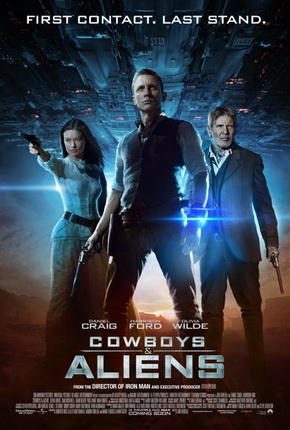
Cowboys & Aliens finally came down into my price range. For movies I’d have to view alone, I generally wait until they appear for free on some online movie service or for less then ten dollars at Target. I’ve been waiting for this one since 2011, but my patience paid off. Inspired, so the rumor goes, by the Roswell incident, the film follows the adventures of some old western stereotypes as they encounter the superior power of aliens. The aliens, it seems, are just as materialistic as humans, coming to the old west in an extraterrestrial gold rush. They abduct humans to learn their weaknesses (which really seems superfluous given the technological imbalance between the species) and anger a number of ornery hombres in the process. Then we have an old-fashioned shootout with ray guns versus bows, arrows, and bullets. Human devotion, however, defeats the evolved armor and flying machines of the—well, what are they exactly?

The cowboys scratch their heads, not quite having the consarned concept to categorize these flying machines and their occupants. The local preacher, who is a pretty handy shot, tries to help the confused cowboys, who settle on the term “demons” to describe the extraterrestrials. We forget that in the early part of the last century other galaxies had not yet been discovered, and although we knew of other planets, there was assuredly no way to get there from here. Ugly things that come from the sky are demons. This doesn’t lead to a whole load of speculation—nobody suggests praying to take care of the menace, although the Native Americans resort to a religious ritual to unlock the mystery of where the demonic hoard is hiding. Through her resurrection we discover that Alice is a good alien, planted in the town to stop the invaders from doing to the earth what they did to her planet. And winning the heart of Jake Lonergan (whose very name suggests lone gunman to insiders) along the way.

Since the movie is three years old, I won’t worry about spoilers—if you’re inspired to watch for the first time, however, you might want to do so before finishing this. When Alice figures out how to stop the alien mining operation for good, Jake is left, for the second time, with his woman being killed by demons. Woodrow Dolarhyde, realizing that the outlaw Jake isn’t such a bad guy after all, seeks to console him at his loss. At the end of the movie, in a camera angle that goes from Woodrow to Jake, the focus falls on the cross atop the local mission as Woody says, “She’s in a better place.” All aliens go to heaven. Literally. With echoes of the X-Files, Cowboys & Aliens is sufficient for a dark night where demons and angels are a little too close to tell apart.


Fear of the Known

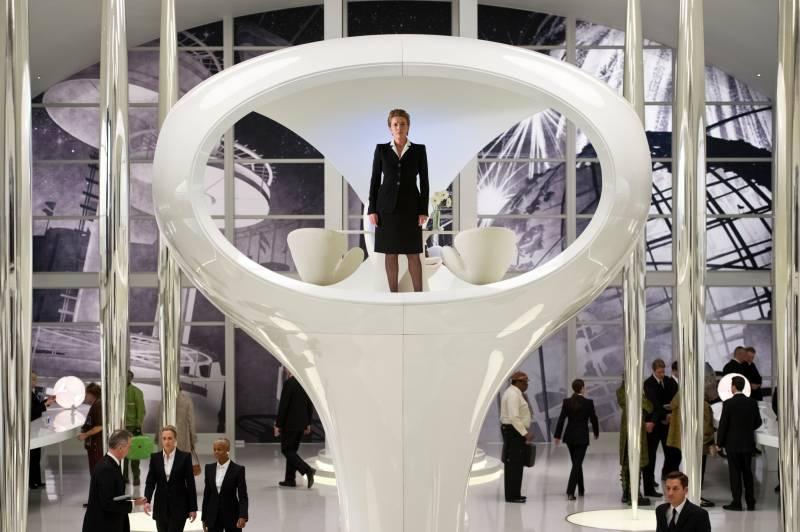
Social media has become the new reality. Not that rumor ever had much trouble before the internet, but now our cultural memes explode so fast that we have to be wired constantly to keep up. And what we see makes us afraid. The other day I came across a story on channel 7 WSPA website out of Spartanburg, South Carolina. I don’t suppose I have any business needing to know what was going on in South Carolina, but the headline “Mysterious ‘woman in black’ spotted in Tennessee” got my spidey sense going (or my Men in Black sense, but that’s just a bit cumbersome). Was this a female urban legend who shows up after UFO reports and warns the witnesses to keep quiet? The truth is much more mundane. She’s a woman, dressed in black, walking south from Virginia, currently in Tennessee. Police say she has a name and she’s from Alabama. Since she’s all over social media, however, people are worried.

She’s on a Bible mission one woman has claimed. A Blues sister in black? Others claim she’s from an Islamic nation. Some implicate the Pentagon. When someone exhibits unusual behavior our minds turn to religious causes. Why would a person dress in black and walk down the highway? It’s just not done! Must be religion. On YouTube apparently a video shows her arguing about religion with a man in a Wal-Mart parking lot. Where’s the element of surprise there? If there are any firmly fixed social markers they are surely Wal-Mart and religion. Time to be afraid.

Scarcely a day passes when I’m in New York that I don’t see someone doing something peculiar. It’s the new normal. I suppose religion is sometimes the motivation, but I wouldn’t know. The gospel can be pretty difficult to identify definitively these days. You can’t trust someone just because they dress in black any more. After all, we’ve seen agents K and J battling aliens on the big screen since 1997 and there doesn’t seem to be much preaching involved. There is conversion, however, and just a dash of conspiracy theory. That’s more like American-style speculation. Internet fame is remarkably easy for some. Put on your black and walk down the road. And if you see Johnny Cash along the way, there will be no doubt that this is newsworthy indeed.

Bible-thumper or alien?

Bible-thumper or alien?


Pierogdolia

One of the memorable scenes from Men in Black is when the Arquillian takes Gentle Rosenburg to a restaurant for pierogi. One need not be an alien, or even Polish, to appreciate these dumplings, and a few weeks ago I found myself at a restaurant that offered pierogi on the menu, and I had to bring the leftovers home. When I was reheating them the next day an epiphany of sorts transpired. Now, when I prepare pierogi, I use the more healthy boiling method. The restaurant, however, fried them, leaving characteristic browning. As I flipped the reheating dumplings, a case of pareidolia occurred (prompting the title to this piece by both my wife and daughter, on separate occasions). A discussion of whose face this was ensued. Charles Darwin, Karl Marx, Abraham Lincoln, and Charles Dickens were all suggested, but those attuned to religious thinking know that when a face appears, it must be that of Jesus. Well, a man’s face with a beard, in any case. If it’s female, it must be Mary.

IMG_1454

Pareidolia was always a winner with students, in my teaching days. Our brains are so attuned to finding faces that we actually design them into houses and cars and appliances. We like to see a friendly face. Now in my brain I know this is just fried dough, but my eyes are telling me this is a face on my dinner plate. The tendency is so closely tied to religious sensibilities that we can safely rule out any number of candidates. Of course, if I were to see this same phenomenon in a different culture, my referent would likely be completely different. Still, we seldom see news stories of Buddhists, say, finding Siddhartha Gautama’s image in foodstuffs. (Although, in all honesty I once found a water stain on a saucepan that looked very much like I imagine Confucius appearing.) Is there a deep-set need in our religious culture to find assurance in unlikely places? Are we that insecure?

Apart from the perennial favorites of breads (toast, tortillas, and now pierogi), images of “Jesus” show up in garden shrubs, water stains under highways, clouds, and even stingrays, prompting, a few years back, a website entitled “Stuff that Looks Like Jesus.” Now, I seriously doubt that some kind of transubstantiation has taken place on my dinner plate, but the appearance of a face on my food is always cause for reflection. Food is so essential to animal survival that it is perhaps strange that such images don’t occur more often. It is perhaps ironic that we hear most about it from a leisure-based culture with a cult of food fetishes. I don’t know who showed up on my pierogi, but the evidence is now long gone so it will have to remain a matter of faith.


World Cup Runneth Over

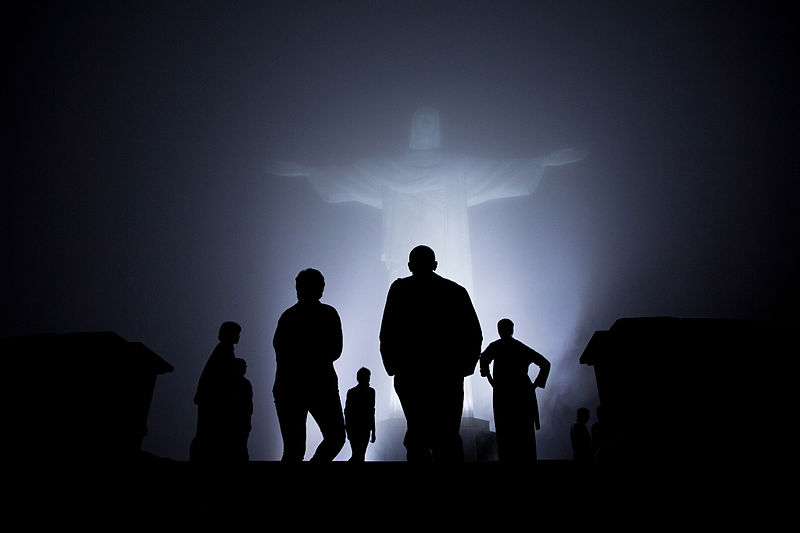
I’m not a sports fan of any description. I guess the message, “it’s just a game” sank in rather well as a child. Nevertheless, I was curious when some friends invited us over to watch the World Cup finals. New York City has been abuzz over the last few weeks, and if my walk home takes me past a bar in the city, I almost always have to cross the street to get around the crowds standing outside. So, I’ve been a little intrigued. It perhaps helps that some considerable primordial Teutonic blood makes its home in my ancestry. Hey, but it’s only a game. As a sometime jogger, it was interesting watching these guys running themselves ragged for 120 minutes, but what makes the World Cup worthy of a blog on religion is the sheer amount of religious imagery that pervaded the Brazilian broadcast of the event. Several lingering shots on Christ the Redeemer backlit by a halo-like sun preempted footage of the game. When night fell, the shots show Jesus looking down to watch the game.

800px-Obama_family_in_mist_in_Rio_de_Janeiro

The Argentineans, it would seem, should have had the spiritual advantage. With a pope in the Vatican, and a fan or two even dressed up like the Holy Father, the match taking place in some of the most Catholic territory outside of Rome, you might think some blessing would have been ambient. As the game ended Christ the Redeemer was lit up in rainbow colors and the Germans held the trophy high. Perhaps this is just grousing coming from a guy who’s lost as many times as I have, but it seemed that there could have been a bit more bonhomie on the part of those who managed to make their way to the final for what was, throughout, a very tight game. Perhaps they were just exhausted, but a smile for the camera might have gone a long way. They only lost by one.

During the match, as the director chose scenes of Christ the Redeemer, the announcers could be heard saying, “shouldn’t we be watching the game?” A profound, yet utterly human reversal of the usual evangelical trope of keeping one’s eyes on Jesus. But the millions around the world tuned in were not interested in Rio’s most famous landmark; rather, they wanted to see what was happening down on the ground, in real time. Heaven has its place, no doubt, but it should not interfere with matters of worldly importance. For many, some sociologists tell us, sports serves the function of religion. While extremely fit men run themselves to exhaustion, a kind of worship is taking place down on the field. Looking up to the icon on the hill, it is crucial to remember that it is just a game.


War in Heaven

Van_Helsing_poster

Van Helsing, about which I’ve posted before, is not a great film, but it is perhaps the closest that modern cinema has to offer for my childhood Saturday afternoon viewing. Vampires, werewolves, and Frankenstein’s monster all appear together in a ménage à trois that Universal would’ve been proud to own in the 1960s. With lines cribbed from some of the Universal originals, plus some less believable chatter from Steven Sommers, the campy film is unrelentingly in dialogue with religion and its monsters. Indeed, the plot revolves around the church’s plan to save humanity from monsters by the employment of the eponymous van Helsing. I’ve probably seen the movie half a dozen times, and I’m a bit embarrassed to admit the this is the first time I’ve stopped to wonder at why, unlike Bram Stoker’s van Helsing, the one in the movie is named “Gabriel.”

It should’ve been obvious at the first viewing, but this time I was watching the movie with the intention of parsing its theology. In medieval Roman Catholic angelology, there are seven archangels. Two of them (or three, depending on whose Bible you are reading) are named in Holy Writ. Gabriel is, of course, one of them. The movie also shifts Dracula from being son of a Wallachian nobleman to being the “son of the Devil” (clearly by adoption). The Devil’s gift of resurrection (with which the movie is rife) comes with the vampiristic curse. And the climax of the film has the leader of God’s army (“the left hand of God”), Gabriel, battling the son of Satan. This is none other than the war in Heaven of which the Bible speaks. The leader of the archangelic army is actually Michael, but having “Mike van Helsing” as your lead just doesn’t carry the gravitas of Gabriel.

The movie opens with Dracula claiming that science has triumphed over God, and yet the mythology of monsters prevails. Frankenstein’s creation is morally pure, being a loving child of science, and the church declares him anathema. Throughout the movie all the monsters claim to want is to live, to survive. In fact, they are already resurrected. The werewolves get the dog’s share of the theology, however. They are infected or cursed rather than reborn. The war in Heaven has come to earth as angels and demons battle for supremacy. In the end, it is the human family chosen by God that goes extinct. I’m not sure all the theology adds up at the end of the film, but again, that is the very nature of mythology. And a film that can bring back a careless Saturday afternoon really doesn’t need to make sense at all.