Secret Life of Clouds

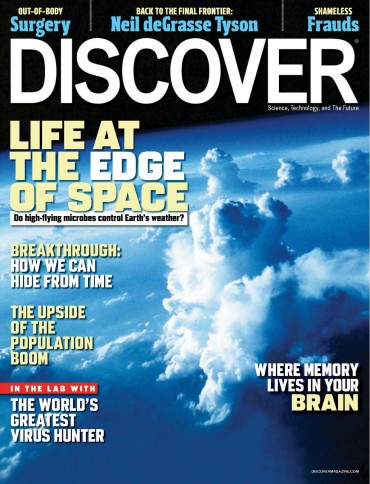
As April showers linger into May, I am reminded of April’s issue of Discover magazine. I picked up a copy on my way to Santa Barbara, and although much of it is beyond me, the article about microbes causing rain seems apt on days like today. Although I move in small circles, I hear many people commenting on how weird the weather has been this year. Mornings cold enough as to require a winter jacket, and evenings where a light sweater is almost too much. And the rain. Now, I realize that weather is always a decidedly local phenomenon, but apart from the rare reader in Antarctica or the Atacama Desert, we all know rain. In the biblical world the rain, as with so many inexplicable things before the birth of science, was in the provenance of providence. God sent the rain as a kind of blessing to a parched land. Thunder and hail, however, we sure signs of his displeasure. Discover suggests that maybe the answer lies in some being that is tiny rather than astronomically large.

The question that has frequently eluded answer among meteorologists is why some rain clouds rain while others don’t. No one really knows what the trigger might be—thus cloud seeding has often been a hit-or-miss proposition. Douglas Fox explores the possibility that, in his words, “The Clouds Are Alive.” Scientists can now measure the microbial life that survives in the sub-frigid temperatures high in the atmosphere above us. Amazingly we continue to discover that where we once thought conditions were too hostile, life manages to thrive. When I was a child scientific orthodoxy declared deep ocean trenches near volcanic vents far too acidic for anything to survive. Now we look at the clouds and see life. Not exactly the angels some theologians expected to find hovering above, but life nonetheless. And if the microbes are there, they might survive on a world as chilly as Mars (which, I hear, is even chillier than our apartment in winter).

One of the favorite gaps for the famous God-of-the, is the weather. As a symbol of what is beyond human control, indeed, the largest perceptible environment in inner space, the sky remains aloof from our tampering. Even so we’ve found ways to pollute our firmament. And now we’re discovering we’re not alone up there. The idea that the clouds are full of microbes sounds more like a Stephen King plot than an intelligent design. Actually, it is good old evolution in action. Life is surprising in its ubiquity. We’d once convinced ourselves that it was rare and could only thrive in environments similar to ours. Now we know that even on a terrestrial scale of survival, we are wimps. Every cloud, they say, has a silver lining. Little did they suspect that the light might be shining off of microscopic life.
The life from above
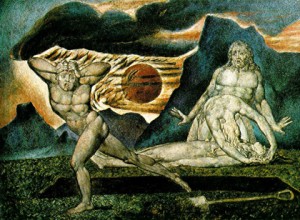
Razzing Cain

Generations of literalists who’ve had their eyes opened by reading what the Bible actually says have stumbled over Cain. His murder of Abel is fine—predictable even. The problem is what happens after that. Since he has murdered his brother, the only other human born so far, Cain seems prematurely concerned about “every one that findeth” him killing him. Seems unlikely that Eve, or even Adam, would like to kill the only surviving child they have. Yet God puts a mark on Cain. Presumably his parents would recognize him, so why is Cain literally a marked man? Rather than Omega Man survival techniques, Cain focuses his attention on kick-starting his love life.

Cain’s wife immediately raises the issue of where the girl comes from. Those who like to call themselves literalists have to back-peddle a little and suggest that since, according to Genesis 5 Adam and Eve had other children, this must be where she derives. Of course, she would in such a scenario, be his sister. Extraordinary circumstances call for extreme measures, but even so, literally, there are no other people yet. Cain is old enough to kill his brother and the next child born, according to the narrative, is Seth. Seth is explicitly a replacement for Abel, and really he doesn’t do Cain any favors in finding a wife. The story here simply slips out of character and gives us a world already partially populated.

As I was tweeting Genesis 4, it occurred to me that immediately after marrying, Cain builds a city. Cities only sprang into existence to allow for mutual protection with the diversification of labor, following on from the agricultural revolution. One of the main characteristics of cities is population. Genesis 4 has only Adam, Eve, Cain, his wife, and Enoch. It may be the smallest city in history since the entire human race could have easily fit into one modest house.

The stories of Genesis are etiologies—tales of origins that have no ties to historical incidents. Cain represents the urbanites, the city dwellers who will always somehow find ways of irritating God. In our urban culture where most people are born in towns or cities, we have lost touch with the life of the nomadic pastoralist. We are, however, merely following the literal path that the Bible lays out for us. As we shall shortly see, the children of Cain and Seth are the same.

Cain just can't figure it out


Degradation

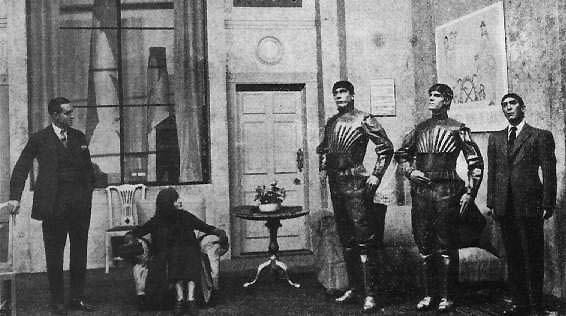
Having felt like an automaton in the realm of higher education, I was occasionally overwhelmed by the number of students and lack of resources. One of my fervent beliefs is that multiple-choice tests do not really demonstrate what a student knows, but playing the numbers, I sometimes had to resort to them. Being an adjunct, I didn’t have access to Scantron, so I devised a method of stacking the sheets precisely and grading them with a power drill. It was my one bit of notoriety at Rutgers—I was the guy who graded with a drill. All the while, however, I knew that a truer method would be to allow students to write for themselves. Even that, however, is going the way of automation. A recent story in the Chronicle of Higher Education reveals that student papers are sometimes being graded by robots. Real robots. The truly scary part of the story is that the robots provide grading almost indistinguishable from the professor, a species quickly becoming obsolete. I tell myself not to panic.

“Don’t panic,” of course, was the catch-phrase popularized by Douglas Adams in the Hitchhiker’s Guide to the Galaxy. In a world overwhelmed by forces we can’t hope to understand, panic is a natural enough reaction. Adams gave us Marvin the Paranoid Android. Higher education has given us the paranoid professor. Parents who pay extraordinary—mythologically high—tuition rates often ask me where all that money goes. It certainly doesn’t line the pockets of humanities professors; indeed, many of the classes are taught by adjuncts who are the penny dreadfuls of academia. I don’t know where the money goes. I do know that university presidents and football coaches are not wanting for material goods, but even their greed can’t account for the entire greenback drain.

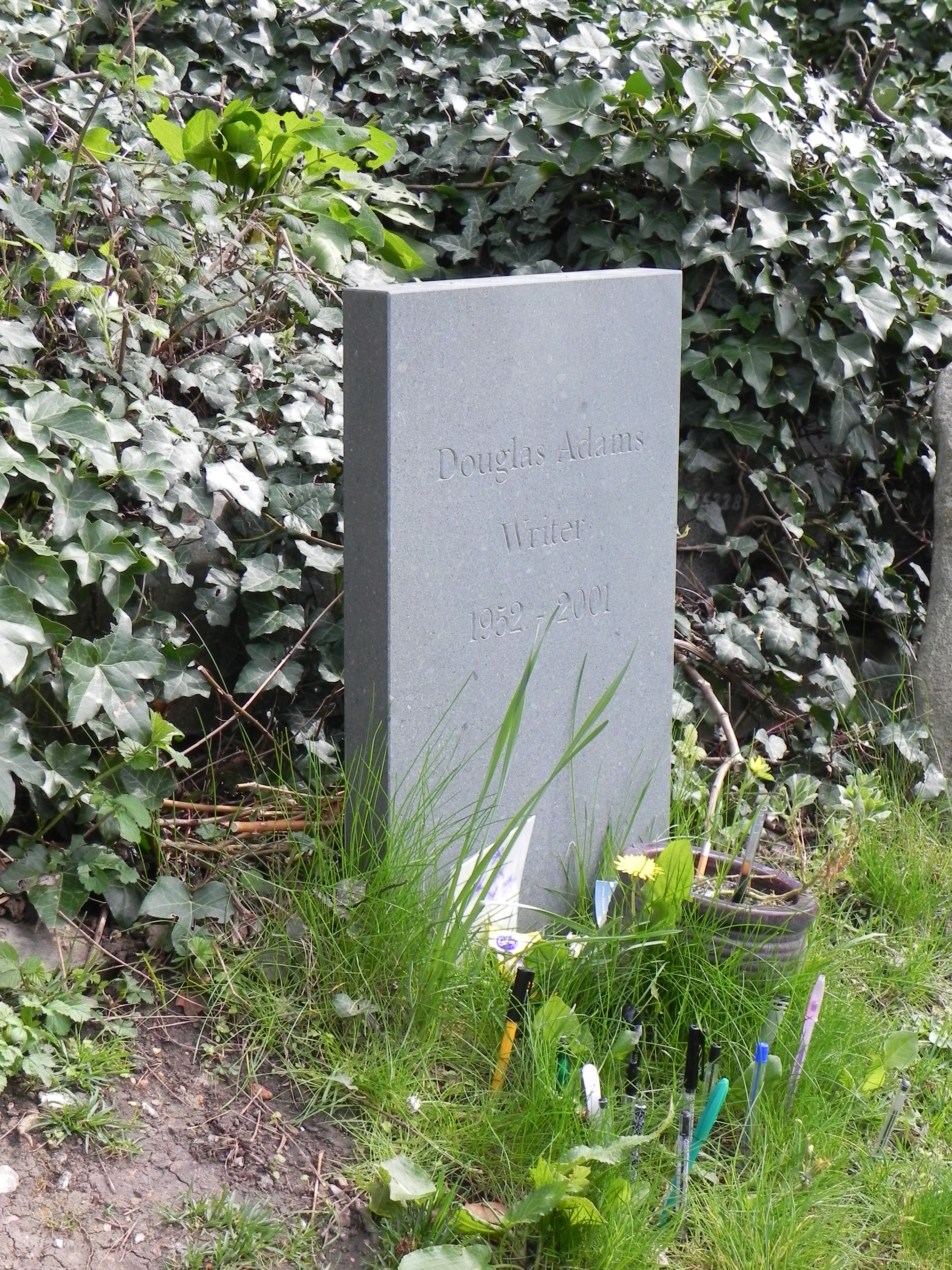
If I were still a professor I’d be tempted to ignore the sage advice of Douglas Adams about now. Courses can be covered by an overwhelming army of competent adjuncts, and grading can be contracted out to robots. Students really don’t even need to come to class any more as distance education has taught us. College becomes little more than an excuse to drink while away from home with a hefty tab being picked up by the folks back home. Higher education may have had the seeds of its own destruction always planted within itself. We’ve confused technology with the desire for increasing comfort and ease of lifestyle. It was only a matter of time before universities caught up. Standing by the grave of Douglas Adams in Highgate Cemetery I’m thinking that his bizarre vision of the future was more sensible than what has actually evolved in our culture. That, and I’m glad I learned to use a power drill.


One of Us

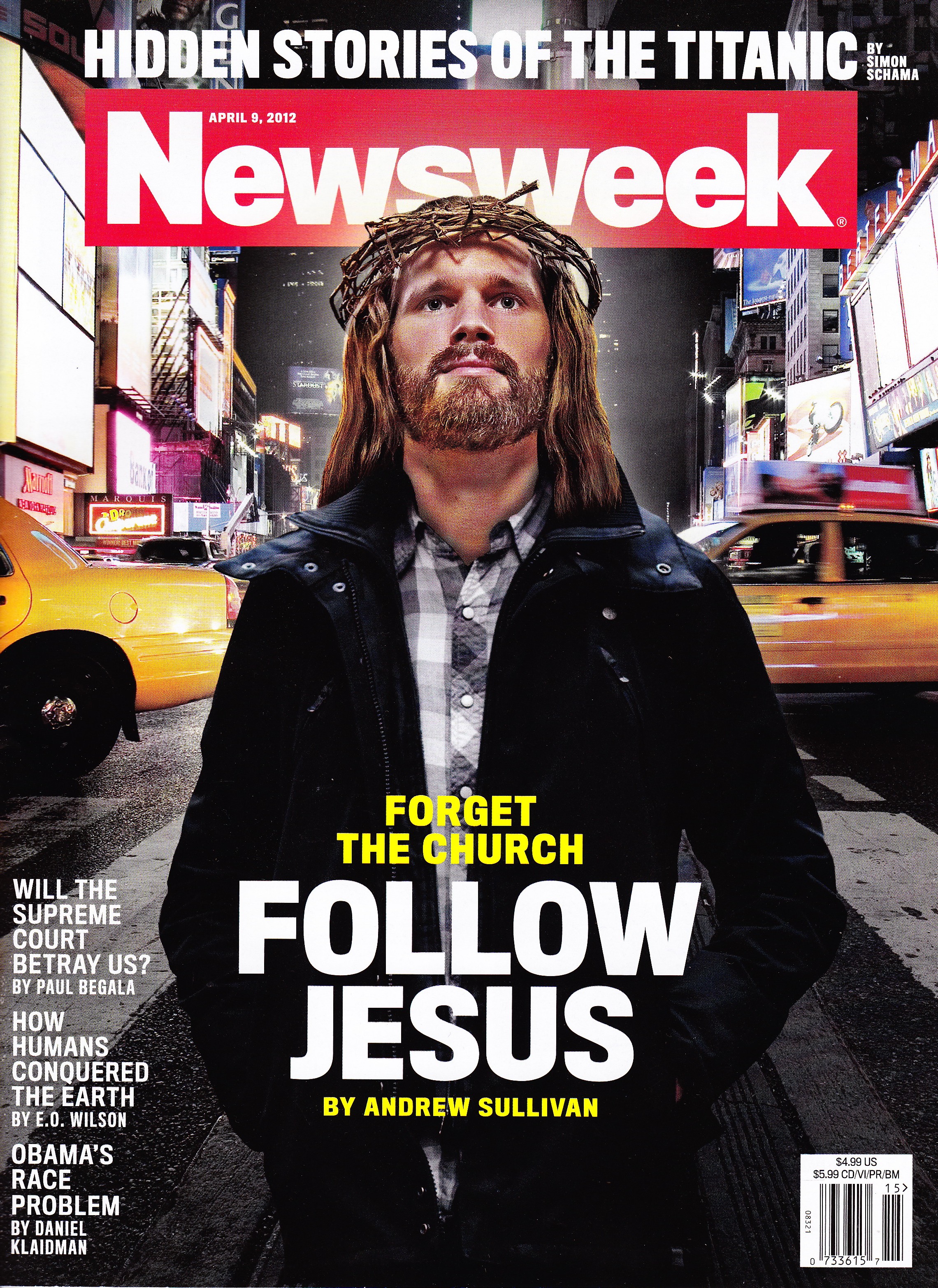
I suspect quite a few people are thinking about Jesus today. He does seem to be in the public consciousness with appearances on both Newsweek and the Watchtower. Newsweek, I have to admit, was an impulse buy. I’m flying to London today and I wanted something light to bring on the plane, so why not take Jesus along? I’ll have to report on the contents later. What caught my attention was the contemporary, very Caucasian Jesus standing in what appears to be Times Square. Since I walk through here a couple times a day, the immediately striking aspect is how unremarkable this would be. Perhaps that’s what the cover artist was going for, but people who think they’re Jesus—or at least a close approximation—are hardly rare. It seems that many of them are interested in running for president. Many others run Megachurches. Very few live on the streets.

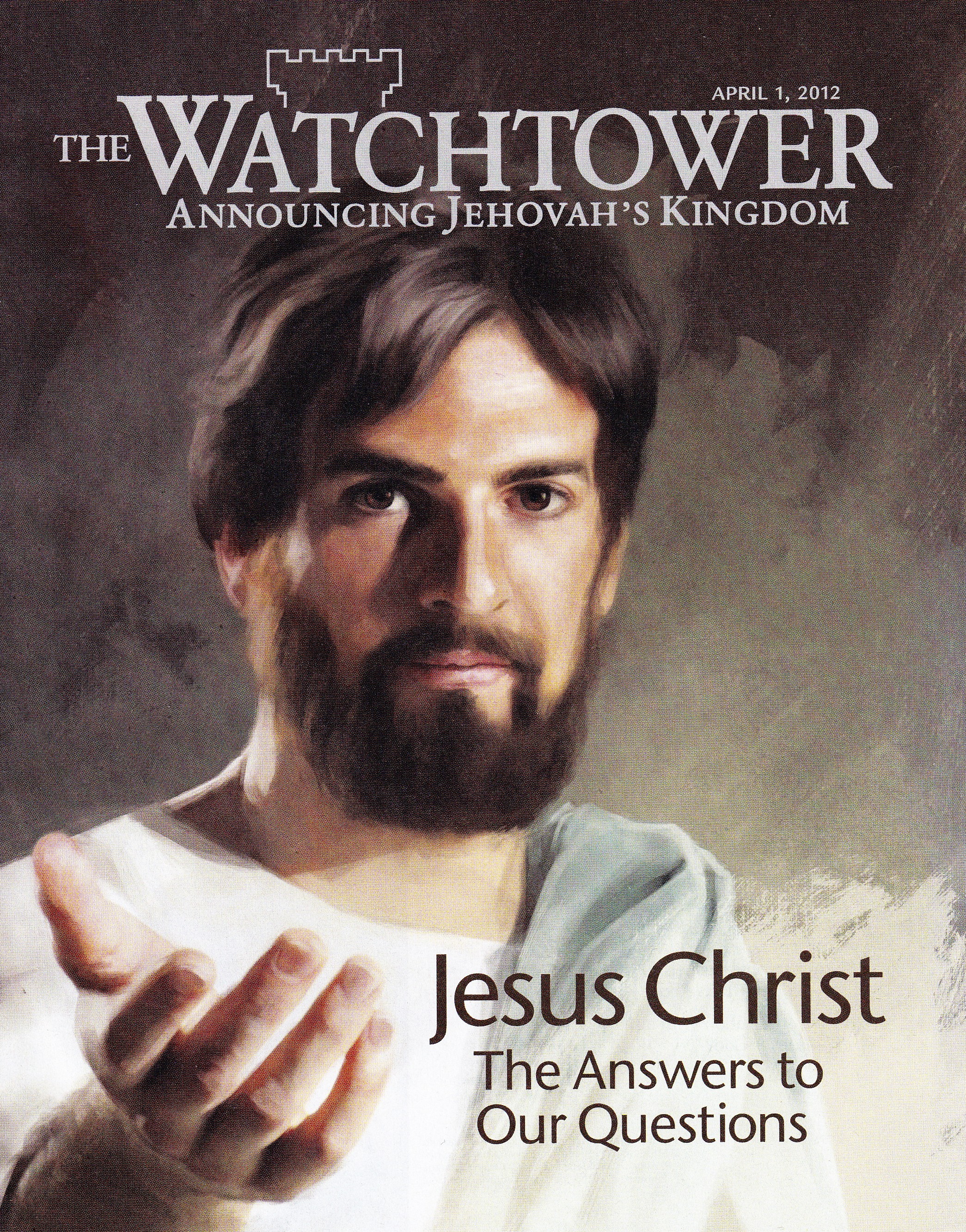
My Jehovah’s Witnesses friends stopped by recently. I used to chat with them when I was unemployed, but I’m no longer home during missionary hours. This edition of Watchtower also features a very Caucasian Jesus, but one who wears his hair in a style no first-century Jewish man would have. He has been stripped of his own faith heritage just as surely as the blue-eyed Jesus on Newsweek. The funny thing about Christianity is the chimera they make of the human half of Jesus. This is one part of the Bible nobody wants to take literally. Does Jesus need to look like us to effect salvific results?

It is often said that beauty is skin deep. One has to wonder just how profound faith is as well. People seem to be better at believing what they see. When it is time to consider what God might look like, we inevitably consult a mirror. Where is the comfort in an all-powerful being that looks like he’s not one of us? Well, maybe we could ask women what it’s like. For all the variables in Jesus’ appearance, he’s always male. Funny, so are the people who profit most from promoting his brand. Maybe my ideas are just taking a flight of fancy. The rest of me is on a flight as well. And I have no idea what the captain looks like.


Disputed Territory

Revisiting a childhood home can be a bittersweet experience. As my wife reflects on the first house she remembers going up for sale, we are glad that we spent the holidays there one last time a few months back. In my case sentiment is a little harder to find. The three residences I recall from a fractured childhood all bear the same distinction: they were torn down after we left. All that remains of my youth is three parking lots. Things are a lot more level now than they were back then. Whenever I visit the area, however, I still slow down the car and remember. Memory, whether singular or collective, makes a geographic location a sacred space. We rented when I was growing up, so those spaces that I think of as mine were occupied by others before and after us. (The razing did not take place immediately after we closed the door for the last time.) Whether those others—strangers to me—consider the place special I have no way of knowing.

Holy, holy, holy?

In other cases the sacral nature of a place is hallowed by tradition. Say “the Holy Land” and most people will know that you’re referring to what is now Israel/Palestine. I only traveled there once, but was privileged to stay for about six weeks. Working on an archaeological dig is a rite of passage for young biblical scholars (for such I was at the time), and weekends were spent visiting the places I’d read about since I could first remember. One of the most jarring aspects of the holiness was the evidence of violence. Cars burning by the roadside. Bombs going off in a post office in Jerusalem. Sounds of heavy artillery lobbing explosives through a blue sky during the sunny afternoon. A place so sacred as to be continually baptized in blood. Humans, human memory, are what make a place sacred.

All of this comes to mind with the political posturing of New Jersey governor Chris Christie visiting Israel. God knows New Jersey has enough problems of its own, but it is a relief not to have him hanging around for a while. Nevertheless, what has Trenton to do with Jerusalem? One thing the Middle East doesn’t need is one more bully. Pushing, shoving, crusading, shooting, and bombing haven’t worked for that elusive peace. What value can our dauntless leader add to this unholy mess? Maybe I’m just old fashioned, but I thought governors were supposed to take care of their own problems at home and leave international schmoozing until they got to the big offices. Maybe the race for a GOP nomination isn’t over yet. The most sacred space in this country is a white house that gets sold to the highest bidder every four years. At times there is more wisdom to be found in a parking lot.


Too Tired or Not too Tired?

An article in the current Discover magazine ponders invisibility. Sight is actually the perception of certain wavelengths of light, and by bending particular wavelengths around an object it can be rendered invisible. There’s nothing really new there, as anyone who’s heard of the Philadelphia Experiment knows. The next step of the quest, however, is to determine if, by sending parallel light rays at manipulated speeds, an event might be rendered invisible. Event in this sense of the word currently denotes an event on a cyclotronic scale, an incredibly miniscule and inconceivably brief occurrence. Since humans are endlessly inventive, the corollary is naturally what might transpire from there as larger events are targeted and rendered clandestine. Could an historic event be lived out in (or engineered into) complete obscurity? It sounds like science fiction, but these questions are being asked in the workaday world in which we live.

Messing with history is related to fooling about with time. Twice every year we attempt to manipulate the standard determined by our sun and human convention to set clocks forward or back to maximize daylight at certain hours. We are rendering times invisible. Every year when I groggily adjust to the new time scale, I grumble about how wasteful it really is. Being one of those people who wakes up before the alarm clock goes off (I had never even heard the alarm on my current clock), twice this week I have found myself startled awake by the foreign beeping next to my head. In disbelief I stare at the 4 a.m. displayed in placid blue digits floating in the dark. Well, changing three time zones the day before setting clocks ahead probably didn’t help, but I wonder why we don’t just leave time alone.

Waiting for the bus in the dark, a silent kind of joy begins to grow as daylight creeps into those murky morning hours. Then we fool about with time and plunge those on the verge of daylight back into the darkness. Just that one hour leaves a nation yawning uncontrollably for a couple of weeks until our bodies adjust to the new schedule. Why can’t we leave time alone? People are never satisfied with time as it is, but since we can’t seem to stop it, perhaps we can render select portions of it invisible. The potential for abuse seems awfully large to me. Let’s put it to a vote. If we are going to make one historical event disappear, I suggest we do it twice annually. And those events would be the insane toying with time by setting our clocks ahead and back. Excuse me, but I feel another yawn coming on.


Dreadful Dander

When it first appeared, mash-up literature seemed strangely novel for such a derivative art form. I read Pride and Prejudice and Zombies with some amusement, but a nagging suspicion kept asking if I was being fair to the genius of Jane Austen. At the same time, I like zombies. A lot. I decided to give the genre another try with Coleridge Cook’s mash-up of Franz Kafka’s classic, The Metamorphosis. During a long, late-evening flight from Los Angeles to New York, I finished The Meowmorphosis with a sense of dread. Instead of seeming funny, the idea of trying to make light of Kafka’s profundity felt like a devaluation to the classics of existentialist writers. Nobody writes like Kafka, Camus, and Durrenmatt any more. These are writers who welcomed me to an adulthood that seldom makes sense, but which is often generous with pain and angst.

The story of The Metamorphosis is well known. In the Meowmorphosis, obviously, Gregor Samsa is transformed into a kitten and is thrown into the same dilemma. The book takes a detour into Kafka’s The Trial along the way, and my memory of The Castle is rusty enough that I may have missed if it was referenced as well. Kafka’s work passes over from the entertaining to the profound. Perhaps that is the mark of classic writers—they seldom make a career of their literary efforts, for most people who read do so for entertainment. The Metamorphosis is not easy going. Perhaps that’s why I reacted so viscerally to Kafka’s truly horrendous bug being presented as a fluffy kitten. The idea is funny, but Kafka seldom smiles.

My reaction shed some light on the concept of sacred writing. Historically, the first book to receive that accolade seems to have been the Bible. Specifically, the Torah. There are sacred writings older, I know, but the reception is what makes a book sacred, not its words. Anyone who has read the Bible knows that it is a mixed bag of profundity, tedious lists, and literary beauty. Even Fundamentalists seldom quote 1 Chronicles 1-9 with the same ardor as Genesis 1-11. It is our reception of texts that make them sacred. Perhaps Christianity was premature with its insistence on closing the canon. Some of the best literature, the most inspirational words ever to be penned, lay centuries in the future. Our world would likely be a better place if sacred texts continued to keep their borders open and would admit texts that had passed the test of time. In any honest Bible including the twentieth century, The Metamorphosis would find a place. What a world it could be.


Leap Day

Why isn’t Leap Day a holiday? From ancient times early civilizations that used a solar calendar realized that the 365 day year doesn’t really work out. (Must have been a calculation error in the divine calculus on day one, I suppose.) Even though the solstices and equinoxes come and go with astronomical regularity, the earth’s orbit around the sun is a little out of sync with its wobble on its axis. The difference doesn’t make itself very apparent in a year, or even a decade. If you let it keep going, however, the calendrical months, like the seasons themselves, begin to migrate. Given enough time January would become summer in the northern hemisphere. Intercalary solutions ranged from adding extra days to saving them up, in some cultures, and adding an extra month to the year. The error of the gods then slipped back into mathematical precision. The one thing that the ancients recognized in common was that this extra time was a gift, a day to be celebrated. In the modern, post-industrial world, it is just another day to go to work while politicians get an extra day to campaign.

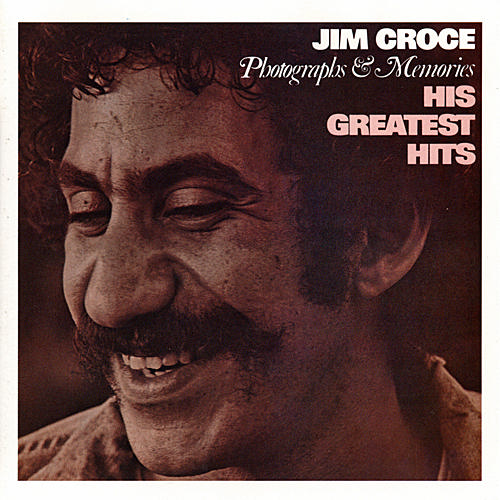
Time is perhaps the greatest theological challenge. People have limited time. Since we seek pleasure and comfort—even when we don’t attain it—most of us prefer to remain alive to try again. We sometimes forget how great a gift this is. One of my favorite songs growing up was Jim Croce’s “Time in a Bottle.” But alas, time is a bandit—as Jim Croce’s tragically short life illustrates a little too well. As the ultimately unrenewable resource, time reminds us of the folly of politicians and the fickleness of fame. Wasting time is the greatest sin imaginable.

Above all, time is a religious problem. Faced with human mortality, all religions address, in some way or other, what happens after the end. When time runs out. We can’t conceive this world without us, but as the calendar implacably shows, it’ll get along just fine. That’s why today should be a holiday. It is a freebie—one of those rare, saving up for a rainy day moments when after four years of scrimping we’re given a new day. It has celebrate written all over it. Time is a bandit, robbing us of the sensibilities of our ancient, cultural forebears who used this time to party while we use it to labor. “Time in a Bottle,” it is said, was written for Croce’s son A. J. The son is a musician like his late father. As I sit here hearing the seconds tick away on the clock, I realize that every great once in a while the bandit gives as well as takes. In that light, every day is a holiday.


Christian Underworld

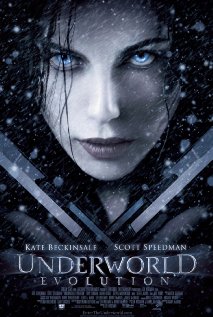
For constructing a mythology teeming with monsters, I must doff my metaphorical hat to the Underworld series of movies. Unrelentingly Gothic and stylish, I’ve watched the first two installments a number of times, but I have yet to see the last two (the latter of which is still currently in theaters). I have to admit that seeing Kate Beckinsale in her werewolf hunting gear two stories tall on midtown electronic billboards is some enticement to catch up with the story. Over the weekend I rewatched Underworld Evolution, number two in the set, to refresh my mind of the story. Quite apart from the implicit religiosity of vampires, the Underworld movies, while eschewing crucifixes and religious origins for vampires (which Bram Stoker’s Dracula by Francis Ford Coppola narrates to an explicit extent), nevertheless partake of the power of religion amid all the shootouts and weird transformations.

In Underworld Evolution, Marcus, the son of the original vampire, in a scene straight from Christian mythology, has the devil rebelling against his creator. As he is killing his powerful yet ineffectual father, Marcus predicts the beginning of a “new race created in the image of their maker—their new god. Me.” As he says this he has his own creator impaled on a demonic bat wing. Running him through with a sword he states, “And the true god has no father.” I admit I’ve been trying to read some post modern treatments of monsters, and this kind of reversal fits well with the conflicted outlook of the twenty-first century. Who is god? The good or the evil? The old certainties have grown gray and blurry. No wonder some people are uncomfortable.

Perhaps the most religious element in the film, however, is blood-memory. Blood is a cheap commodity in horror films, but it represents, in the Abrahamic traditions, life. In the Christian sense drinking communion wine is to consume the blood of Jesus, or at least to remember his death (the fancy word is anamnesis). Vampires, in Underworld Evolution, remember the lives of those whose blood they drink. The taking of life has a sacramental quality to it here. To a world less immersed in a Christian worldview, this concept might seem more macabre than it already is. Monsters often take their cues from the gods. So on a February weekend some of this feels terribly familiar. It may be a small underworld after all.


Rising to The Abyss

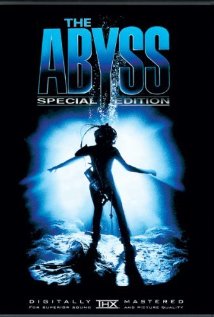
The name James Cameron has become almost synonymous with epic, large-scale adventures that suggest improbable world with stilted dialogue. The first Cameron film I watched with the awareness of his direction was Titanic. Last night I watched The Abyss for the first time. Of course, I’d heard quite a bit about the film since its release over two decades ago, and I had to satisfy my curiosity. The Abyss turns out to be a prognostication for Titanic as well as Avatar, what with the fascination Cameron has for sinking ships, friendly aliens, and impossible love reconciled. In fact, many of the characters presented in The Abyss appear to reincarnate in Cameron’s latter films under different names, but in similar circumstances. The reason the film is worth mention on a blog about religion is its heavy reliance on traditional Christian imagery of the afterlife, projected into the abyss (turning Dante on his head).

When the crew of Deep Core investigate the sunken submarine USS Montana, crew member Jammer sees what he thinks is an angel and goes into shock that lands him in a coma (just to awake at the right time to save the day). The theme of personal sacrifice and resurrection (the Christ syndrome, we might call it) is acted out by both Lindsey Brigman and her husband Bud. Lindsey drowns herself so that she can be resuscitated, with the intention of saving both herself and her estranged husband. In his turn Virgil (aka Bud-everyone get the subtle reference to Dante here?) disarms a nuclear warhead (by snipping a single wire!) by diving beneath the capacity of his oxygen supply, texting his now adoring wife that he knew it would be a one-way ticket down. Then the aliens arrive. The whole light at the end of the tunnel trope becomes factual as the aliens-angel hybrids flutter over and take Virgil to safety. In case you missed the biblical references, they part the water and you get the strange suspicion that Moses is lurking behind the scenes somewhere.

Of course, some of these ideas will be fresher in viewer’s minds from Titantic and Avatar, but the theme of resurrection following self-sacrifice is a staple of Hollywood. It is the right combination for a feel-good movie, even if it ends up being sad. Perhaps it is the mark of living in a secular nation that has its origins in a Christian worldview. The battle of our religious status as a nation rages on, but the fact is, no matter how free we are with our religion, we will flock to movies where the protagonist willingly sacrifices him(less frequently her)-self with the reward of new life. This is not a Cameron trope, it is a United States self-image on the large screen. The technical gaffs of the underwater world of The Abyss may be many, but the film captured the imagination of many Americans, paving the way for the enormous success of Titanic and Avatar. Despite our tough exterior and willingness to start wars, we like to think of ourselves as the ultimate Christians.


Virtually Divine

So I decided to try virtual reality for a while. I have been reading about the influence technology has on religion, so I thought a trip to Wikitude would be instructive. Now I don’t want to sling lingo like I’m some sort of real techie, but Wikitude is an app that shows the artificial worlds of virtual reality in your immediate environment. Many of us live our day-to-day lives without realizing that we are surrounded by powerful, invisible beings who can only be seen through electronic eyes. We have given our physical world an imaginary overlay that may turn out to be more real than reality itself. So I clicked on Wikitude and took a peek around my office on Third Avenue. Wikitude shows those things that I would have called “dialogue boxes” as a kid, but that now stand in for overlays against any mapped reality. In Manhattan there are many, many of them. I clicked on the one nearest my finger. It read, “A monster is destroying the city.” Like it read my mind.

In some ways I never got over the naïve realism I grew up believing. I first read about avatars in Neal Stephenson’s Snow Crash. Back then the idea of virtual worlds was still pretty new, and although Norman Spinrad and William Gibson had played with the idea earlier, the Snow Crash version is what stayed in my head. Avatars, I knew from my research on ancient religions, came from very early Indian belief. In what we now casually call “Hinduism,” some believed that gods came down and walked among us as avatars. Christians would later call this “incarnation.” In virtual reality, we are the gods and we descend into the world of human making as embodied electronic versions of ourselves. The idea, however, goes back to one of the most ancient religions in the world.

I’m not sure I feel safe in this virtual world I’ve discovered. I was relieved when I clicked on Wikitude the next day to find the menacing monster nowhere in sight. But is it really gone? The physical world has no shortage of ways to frighten the very sensibilities out of us. Many of them go by the name of religion. In this world, I can’t just click off the screen and be safe. It used to be that our simple, domed world had a divine bowl above it with a loving, if often very stern, parent watching over us. Now we have become that god, creating monsters and worlds to house them. Maybe that is the best answer to theodicy yet. When we create virtual worlds, we always include evil in the picture. Perhaps it has always been thus with the gods.

Reality or not?


Revealing the End

I knew the end of the world was near when I saw the phrase “butt crack” in the Chronicle of Higher Education. As I turn over the February page in my 2012 Apocalypse Survival Guide calendar, I find that the Romans predicted an end of the world to arrive at 634. B.C.E. I’d say the Romans are still waiting, but they are long gone, the only residue remaining of their empire being the Vatican and its spiritual, rather than political, power. So why did the Romans think the end was near? It had, according to my calendar, to do with a dozen eagles being seen at once. In the spirit of Hal Lindsey we can parse that vision a bit. 634 was just 32 years after the infamous 666 B.C.E. Of course, no one knew it was 666, or even B.C.E. for that matter. Nevertheless, when God picks his super-three he stays with it. Thirty-two turns out to be nearly the traditional age ascribed to Jesus, but minus one year. Keep that in mind.

Eagles make occasional appearances in the Bible, but since God is a forward-thinking deity, the reference is surely to the United States! And how many colonies were there originally? Was it not 13? Again, the significant number is off by one. In some cases we might count this up as poor arithmetic, but with the subtle destroyer of the universe we know it is not only intentional, it is also significant. So, Rome saw the 12 eagles—the United States—in 634. What they really meant was the Maya, obviously. That would account for the missing one, since central America is less than the greatness that is the United States. And besides, there were twelve apostles, but when Judas was replaced by Matthias there were 13. What more proof do we need? These dozen eagles were indeed a divine sign. Only the world did not quite end in 634.

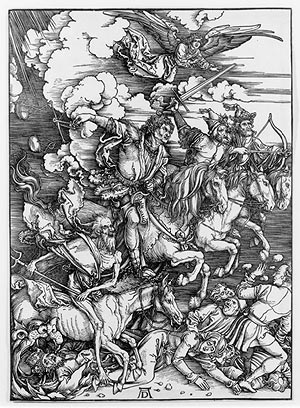
Maybe the problem was with the Julian calendar, or maybe the eagles were just confused. As my calendar says, “Antichrists been and gone” and yet we are still here. The transient nature of apocalypses never dampens the truly hateful spirit. We can’t comprehend this cobbled-together doomsday without at least trying to understand the evangelical despising of the world. This view is based on a quasi-biblical determinism that emphasizes God’s ultimate plan to destroy the universe that is only revealed in piecemeal fashion throughout select books of the Bible. But God is like a mystery writer who sadistically leaves out the last chapter of the book. The tension is unbearable. How much more before we begin to crack? But isn’t that what started this whole apocalypse in the first place?

The horsemen close in


Wassailing

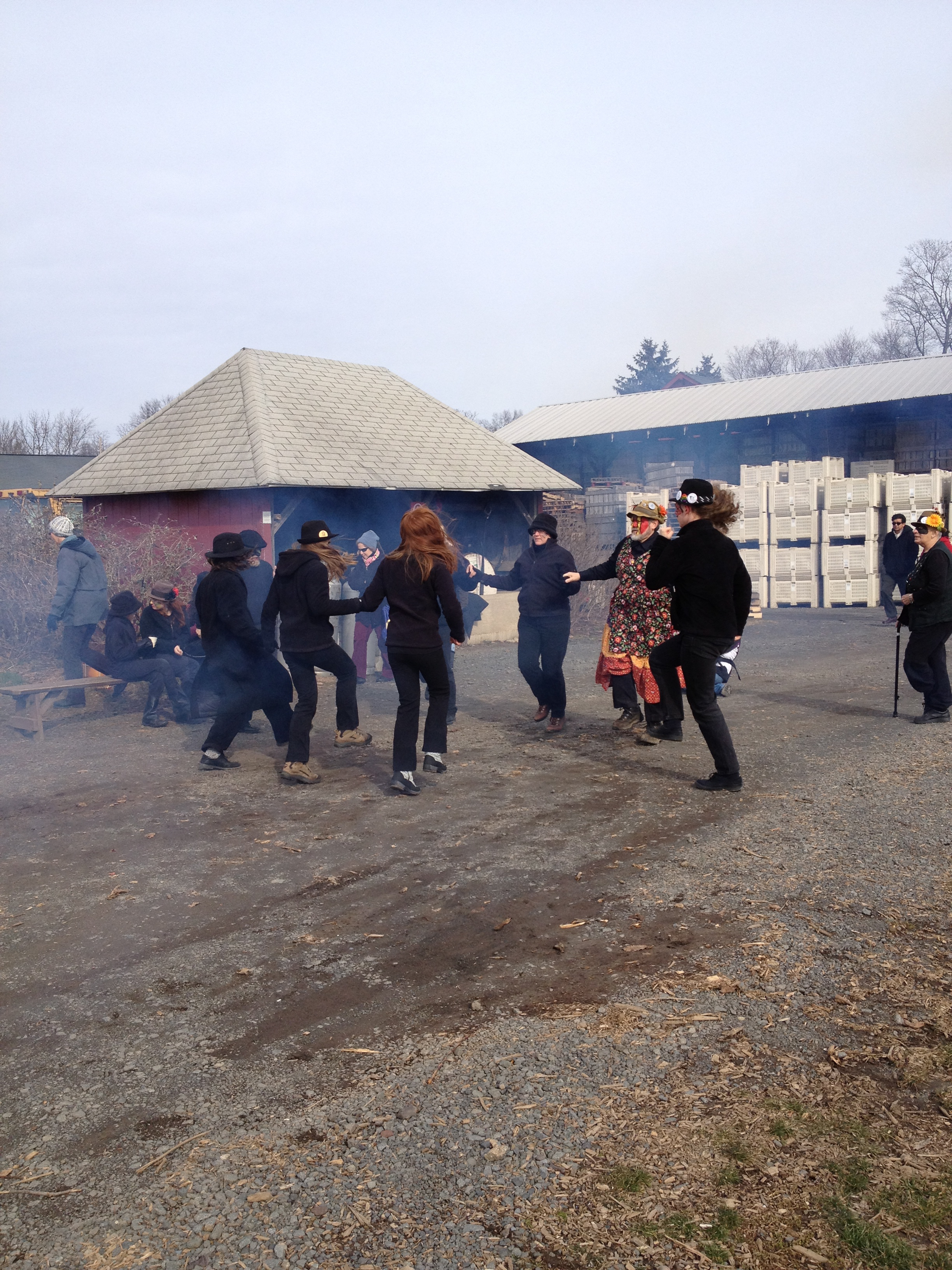
It was a nippy 42 degrees with a chill January breeze cutting through the brightly garbed crowd of maybe two-dozen stalwart souls. There were Molly dancers holding hands and skipping in a circle. Smoke from a bonfire caught the breeze as a woman with a painted face sang about the circle of the sun. The whole event had a Wicker Man sort of feeling to it, but participating in an ancient tradition is strangely fulfilling. A basket on the table held pencils and paper on with instructions to write your wish and burn the paper in the bonfire so that “Your message will travel into the cosmos.” The bare apple trees were seasonally pruned and discarded branches littered the ground. It all sounds suitably pagan for a Sunday afternoon in New Jersey.

Having grown up in a rather sheltered small-town environment I never even heard of wassail until planning for my December wedding nearly twenty-five years ago. A low budget affair with the reception in a church basement, my wife decided not to offend Methodist sensibilities by serving wassail, a spiced cider drink generally associated with Christmas. As I learned this midwinter, wassailing has a deep and mysterious ancestry that is a mix of pagan and Christian traditions. One aspect of wassailing is associated with Christmas carols and is based on the tradition of the wealthy sharing with the poor during the holiday season (a practice clearly extinct these days). The second type of wassailing goes back to nature religion and the blessing of the apple trees. It was observed on midwinter, which, before the Gregorian calendar, fell on January 17. At Terhune Orchards the festival fell on the 29th this year.

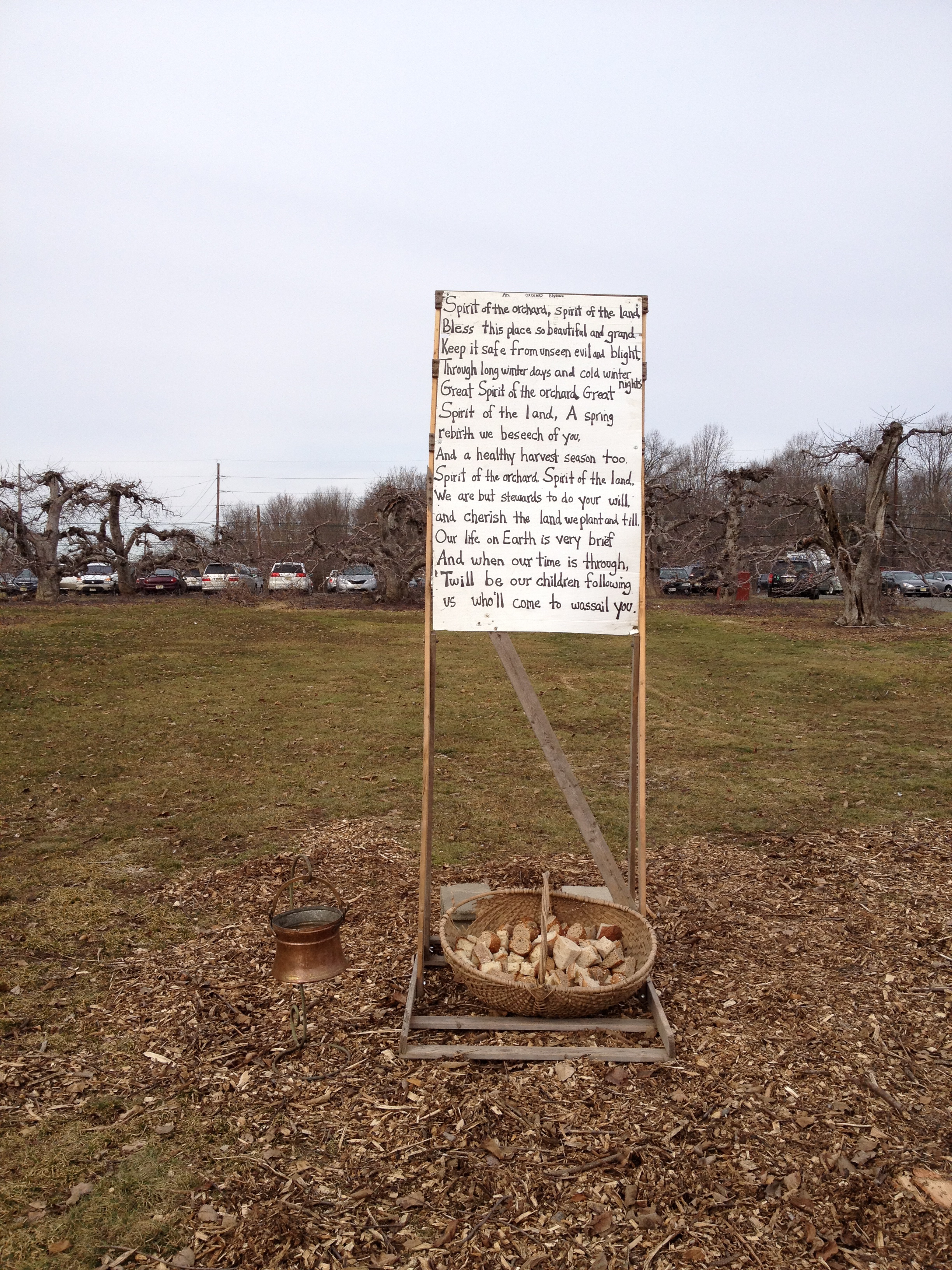
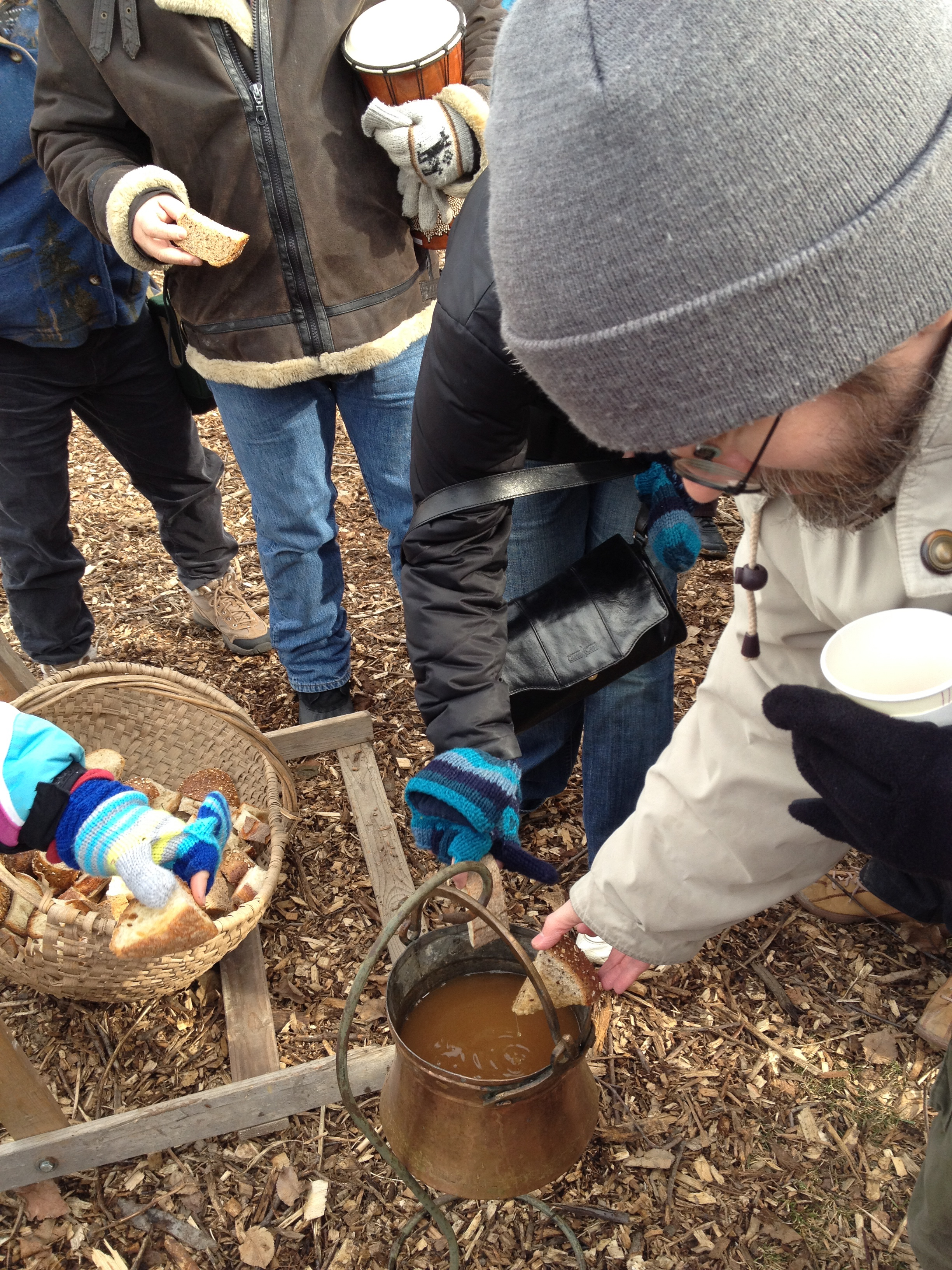
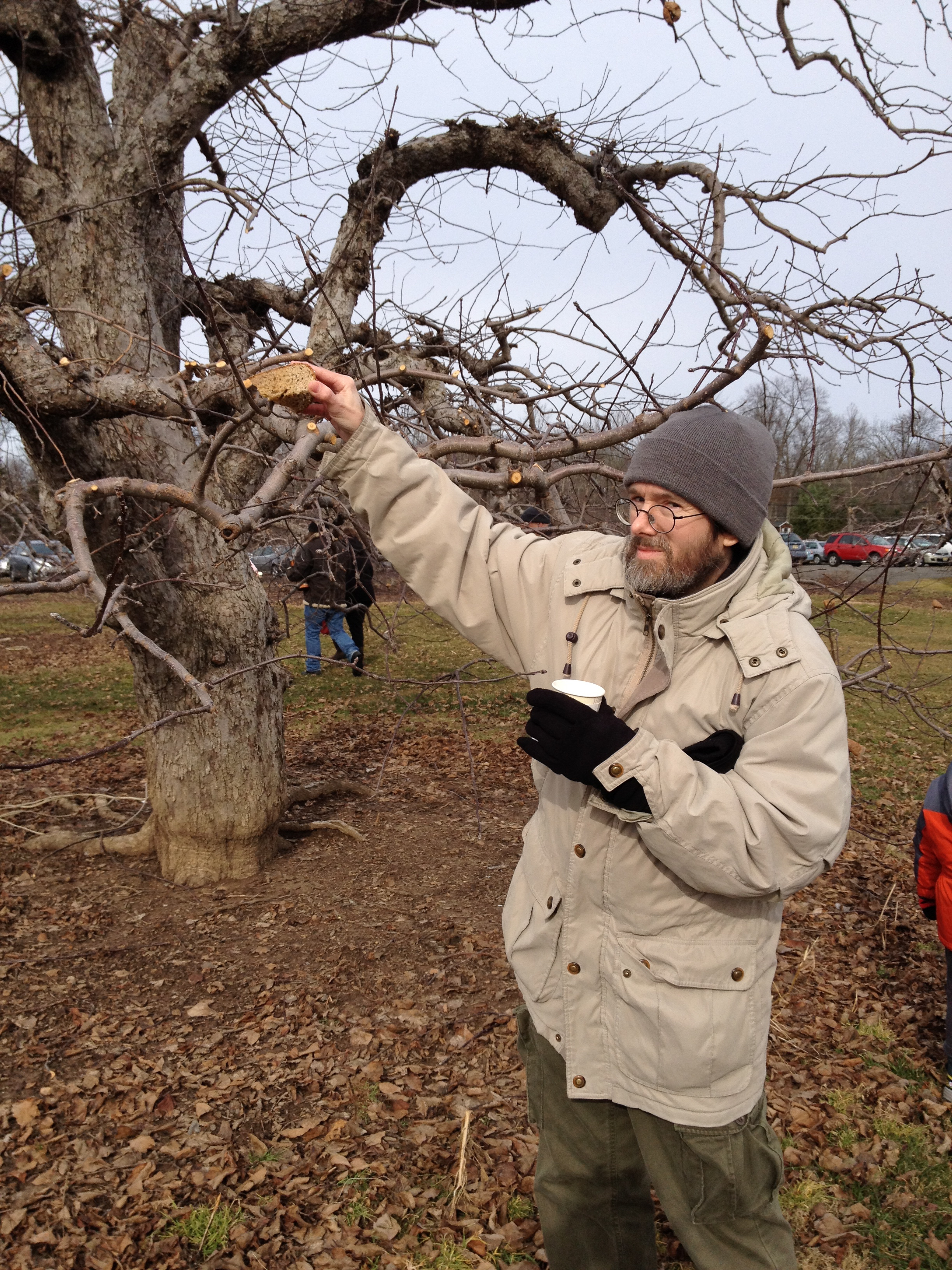
After watching the Molly dancers and sending our wishes up to the cosmos in the bonfire, one of the orchard proprietors gathered the crowd, now having about doubled to fifty, to sing the Somerset Wassail and then to make noise to drive out the evil spirits. This the crowd did with enthusiasm. We were then asked to recite the wassail prayer, printed on a signpost for all to see. Bread was passed out which we dunked in cider and hung on the naked apple trees. After a final blessing we headed to our car to preserve our own wassail. In England’s apple-growing regions, wassailing the trees is still practiced with a sincerity that marks the deeply mysterious. Some Christian sensibilities, I’m sure would be offended, but this ancient custom, like leaving a tree to stand in the midst of a plowed field to propitiate the spirit of nature, goes profoundly into human consciousness. I, for one, will lift a cup of cider and join the ancient rite to brighten a winter day.


Tweeting the Bible

I have an underused Twitter account. My life isn’t so interesting that I need to give my few followers (fewer even than those who read this blog) updates throughout the day. In fact, I mainly use it to let my Tweethearts know what I’m blogging about on any given day. While reading a book on the influence of technology on religion (more anon) it struck me that one of the more interesting aspects of biblical studies is the fact that the well never goes dry. For those who read sacred texts, there is no end of interpretation. I’ve addressed this before on this blog—religion is as individual as each believer. The more I read biblical interpretations, however, the more I see the subtle textures and layers that readers find in the text, despite what most religious leaders desire. And I don’t restrict this to the Bible—any sacred text can be read in multiple ways. The Bible, however, has been foundational for this person that I’ve become, and so I’ve decided to do some close reading.

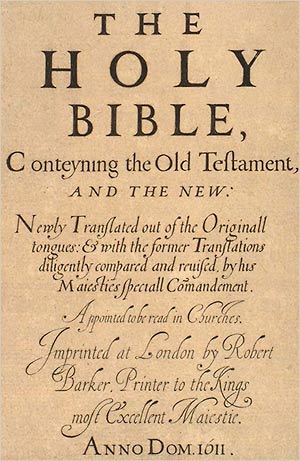
I’m going to tweet the Bible. (If you are one of my rare followers, don’t worry—read on.) I’m going to tweet the maximum 140 characters per message once a day. For this task I will be using the King James Version, arguably the most influential book ever written in the western world. Doubt me? Watch a presidential candidate debate. Or google Girl Scout cookies. Why am I doing this? Well, I wonder what the Bible says when it is broken down into byte-sized nuggets. At character 140 I will stop, and the next day I will begin where I left off the day before. This exercise will be a way of looking at the Bible from a fresh angle. Besides, it’s been a few years since I’ve read the entire KJV. I don’t pretend that nobody else has thought of this—I’m sure there are many Bible tweets out there. I’m curious, however, at 140 characters a day how long it will take, and what will emerge. Yes, I know that there are mathematical whizzes out there who could calculate the answer in a matter of seconds, but I just have to see for myself. The doubting tweeter.

A new look at an old book.

There may be occasions when I fail—isn’t the Bible about forgiveness anyway? In my job I travel quite a bit, and sometimes Internet access is dicey. Most hotels, however, still sport a Gideon Bible, so resources should be no problem. It will be an adventure, and the Bible could stand some adventure these days. Besides, interesting pericopes will give me something to blog about occasionally. For those who haven’t been subjected to years of higher education on the Bible (or other texts), a pericope is a passage cut out from its surroundings. It is the favorite of televangelists and other proof-texters who prefer to not to face the larger implications of reading the whole Bible in its context. I like to think of this exercise as Internet hermeneutics. So let the adventure begin. If you are really bored and want to follow a glacially paced Bible reading, my Twitter name is stawiggins. When interesting observations emerge, however, I will let my blog readers know as well. In the technical age, life is tweet.


Who Knows?

While I have nothing less than respect (and just slightly less than utter awe) for my alma mater of Edinburgh, I cannot help being bemused at times by the alumni magazine. Between my wife and I, when we fail to cover our tracks adequately, we receive almost as many alumni magazines as exclusive credit card offers. Anybody intelligent enough to graduate realizes that these magazines are attempts to raise money, but they maintain the illusion of giving actual news. Thus it was I found myself facing a pithy piece stating in no uncertain terms that “Near-death events are ‘tricks of mind.’” The rationale given is that psychologists at both Edinburgh and Cambridge have decided it is so.

Now, I’ve never had a near-death experience, nor do I really ever want to. I don’t know what to make of the stories of those who claim to have “crossed over.” The problem is, there can be no winner to the argument of authentic experience versus mind trick. Those who know, by definition, can’t tell. Each side has good points to make. Some religions, particularly those of western orientation, tend to offer an afterlife anyway, so when someone appears to have slipped over the edge and claims they saw a great light, well, why not? Scientists often make the equally valid point that the rapid images that occur in the brain may seem to stretch on into minutes or hours and may incorporate images that our culture lends us of what to expect when the darkness falls. The near-death experience is, they say, final jolts of electrical “noise” just before brain activity ceases.

Some things we just can’t know, even if we attended Edinburgh. “Near-death experiences are not paranormal but are triggered by a change in normal brain function, according to researchers.” So the article says. There seems nothing paranormal about death—it is as natural an event as exists. It is common to us all, including pets and pests. The “paranormal” is the idea that something continues after death. If that something includes a deity or two, it becomes “religious” rather than “paranormal.” Whether religious, psychological, or paranormal, intelligent people continue to debate what is actually happening to those who have been briefly dead and have the medical records to prove it. For my part, if there’s something on the other side, I hope it’s a lot like Edinburgh. Maybe with a few less alumni magazines, however.

Life, and then this.