The Power of Pyramids

One of the benefits of teaching is the constant refreshment of ideas presented by students to air out the stuffy closets in minds that tend to close around academic orthodoxies. Each field of studies has its sacred shrines not to be disturbed, and none more so than the field of religious studies. That’s why I appreciate the openness of student minds. This summer I was introduced to the alleged Bosnian pyramid that I posted about some months back. Having reviewed the statements of both archaeologists and geologists it is easy to see how what looks like a pyramid might not be a pyramid at all. Some experts even theorize that the pyramids of Egypt took their inspiration from the shape of a natural desert mountain.

Wikipedia's photo of the "Bosnian Pyramid"

As we were winding up our classroom discussion of Egyptian mortuary cult and its awe-inspiring pyramids, another student asked me if I had heard of the Okinawa pyramids. I hadn’t. Back in my student days I recall a professor entering my Egyptian Religion course after having just read a book on the mystical power of pyramids wherein the author claimed that dull razors placed under a small-scale pyramid would come out sharpened the next morning and other such nonsense. We all had a good laugh and got onto the serious business of comprehending the fascinating world of Ptah and Atum. When I first heard the phrase “Okinawa Pyramids” I had to fight down the immediate flash of embarrassment of unrestrained academic laughter should I be found even considering such a proposal.

I have always, however, listened to those willing to ask about even the most anomalous incidents of history. Two years back I had a student share the “helicopter hieroglyphs” of ancient Egypt with me, despite a fully understandable reading of signs that can look like a helicopter to the uninitiated. The Okinawa Pyramids, however, were different. As the student whipped out his laptop and pulled the images up from the internet, I was intrigued. These were not pyramids, but rather monolithic blocks 60–100 feet below the surface of the ocean near Japan. My amateur study of geology has taught me that many species of rock naturally have squared fractures along various planes and facets, but the number of offset angles and the profusion of the squared edges forced my mind open just a bit. What is more striking yet is that there is no Wikipedia article on this formation at all, despite its discovery in the 1980s. Most intriguing of all is that the complex seems to have sunk at the end of the last ice age, thus predating even the pyramids of Egypt. Even the stepped pyramid of Djoser.

Is there evidence of a pre-civilization civilization under the coastal waters of Japan? I am not qualified to decide. I feel safe in saying that whatever is there is not a pyramid, but I am impressed by the photos and the relative silence about them even on the web. Since the best photos are copyright protected, I’ll provide a link for anyone wishing to creak open a dusty mind-closet and wonder about the implications.

Biblical Lyres

lyrelyre

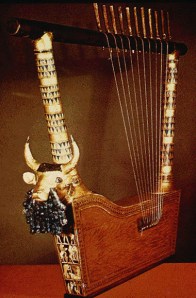
The head of Ur’s bull harp stares at me from the article announcing Penn Museum’s “Iraq’s Ancient Past: Rediscovering Ur’s Royal Cemetery” exhibit down the road in Philly. Despite recent questions of the ethics of laying off yet more academics, this exhibit beckons to those of use who’ve only ever seen pictures of the famous finds from the ancient world that we’ve spent our lives reading about. Penn’s museum is famous for its holdings from Sumer, and I’m trying to scrape together the change to go and take a gander.

Still, I was not surprised to see that the biblical angle was tied into the article as well. “The royal tombs of Ur (the city believed to be the home of the Bible’s Abraham) date to 2,600 to 2,500 B.C.” it reads. The article doesn’t go as far as to state that Abraham, not historically attested, if he ever lived, dates to at least a millennium later than Sumer’s heyday. No, Abe never strummed that beautiful bull-headed harp nor thought on Isaac as he stared at the “Ram-in-the-Thicket.” The only way to get the paying public in, however, is to play the biblical card. Were it not for Abraham, however, Sumer would likely have remained the orphan child of early antiquity.

Among the great civilizations of the Ancient Near East, Sumer failed to make it into the Bible. Its Mesopotamian successors Babylonia and Assyria marched into Holy Writ when they sacked Jerusalem and Samaria, and even the Hittites merit a mention with Abraham’s poignant loss of Sarah. Sumer was a civilization that stood on its own. No Bible story was necessary for any to see its greatness, yet there was no public interest without biblical bating. Nevertheless, this is a road-trip worth the taking. It will be nice to see the glory of Ur, even without Abraham lurking in the shadows.


Who Inherits What Now?

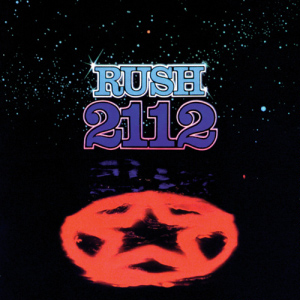
Grading exams is not my favorite activity, so when forced into it by psychopomp and circumstance, I attempt to select appropriate axe-wielding music to accompany the venture. My music collection is modest, so often I have to go back to the classic eras of rock for something that fits the mood. Recently I selected Rush’s 2112. I have a long, if tangential connection to this album. Afraid of its pentagram imagery and heavy metal sound (to my young ears) when it came out in the mid 70s, I only listened to it when my older brother put it on the stereo, and then only furtively enjoying it. Looking back now, I often wonder how any of us survived the 70’s styles and outlook — they feel dingy and hopeless in many corners, while sloppy and simplistic in others. Some of the music, however, has proven timeless.

Rush

After the instrumental prelude, the first words on the album are from the Bible: “the meek shall inherit the earth.” This particular statement is among the most easily ignored in the Gospels, just as the meek are easily ignored on the earth. With all the trumpeting and bellowing that sound from self-righteous commentators beating their religion beneath them like an over-taxed war-horse, it is plain to see how the meek might simply get in the way. This particular verse from the Sermon on the Mount, however, is one of the reasons that I cannot give up all faith in traditional religions. It sets the perfect juxtaposition between greed and selflessness out in full light for all to assess. Thus say the priests of the temples of Syrinx.

There was a time when rock became self-righteous to the point of caricature; but Rush’s 2112 was not such a place. The meek inheriting the earth is sticking it to the man unlike any other biblical dart can. And it is probably a good thing to queue up when I’m having to face the onerous task of grading exams once again.


I’ve Been Meming to Tell You . . .

There’s a tag game going on among the blogging community in an attempt to get a new meme going. Perhaps in payback for my researching memes for years, I was tagged by Dr. Jim of Dr. Jim’s Thinking Shop to reveal something about myself you wouldn’t normally guess. Now, I’m not much of a tag player, but I am a good sport, so I’ve been trying to think of something I wouldn’t mind letting the world at large know.

A little background first: I am a pacifist. When I had to register for the draft back in the Dark Ages I learned how to sign on as a conscientious objector. I don’t kill bugs in the house. Even the scariest looking ones I capture in a jar and release in the wild. In Wisconsin we used humane mousetraps and any captured rodents received a complementary automobile trip across a river a few miles away so that they couldn’t tunnel their innocent way back into our kitchen. I believe life is a good thing.

So far anyone who knows me could have guessed most of that. The new meme to be added is this: I am a good shot. With guns. I am not some gun-slingin’ ranger, but on the occasions when I’ve been invited to heft a sidearm and let fly, I’m not a bad shot.

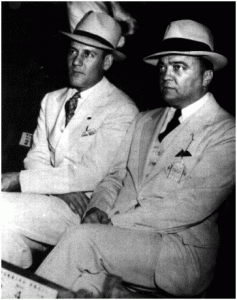
melvin-purvisHow far back does this go? It’s hard to say. I am related to Melvin Purvis, J. Edgar Hoover’s “Little Mel,” probably the most famous FBI operative in history. Purvis was responsible for tracking down such characters as Baby Face Nelson, Pretty Boy Floyd, and John Dillinger. Less famously, he married my father’s aunt. My cousins who saw his house before he died (apparently shot himself accidentally while cleaning a gun) tell me that it had a grand entrance hall lined with guns. Well, I’m related by marriage, and as much as I’d like to blame my short stature on him, it just won’t wash.


Little Mel with J. Edgar Hoover

Little Mel with J. Edgar Hoover

Probably more to the point, I grew up in redneck territory. The first day of deer season was a school holiday (not kidding here), and my high school had a rifle range in the basement. This latter point is unbelievable in the shadow of Columbine, but it is true. When I worked as a janitor in the school I saw the (by then disused) range with my own eyes. All boys were required to pass a course on gun safety before going to high school. Every week we sat in the Junior High School auditorium with Mr. Meade, the very masculine gym teacher, while he lectured about the parts of a gun, how to use one, and general safety issues. I shot my first rifle before I was twelve.

A typical day in seminary

A typical day in seminary

Well, there you have it. A pacifist who knows how to shoot. Now, I’m not sure if anyone on my blogroll plays tag or even if most of them read my humble attempt at a blog. If you’re out there reading this, I would tag my following colleagues: Wulfila of the Lonely Goth’s Guide, Alan of Feeling Finite, James of Kethuvim, Stephen of Biblische Ausbildung, and Daniel of O. McClellan. Let the meme-pool remain ever refreshed.


Clothes Make the God

What is it with gods and clothes? Today’s news announces that Rob Halford, the Metal God, vocalist of Judas Priest, has just revealed his own Metal God Apparel line. Now, I try to be equitable, but isn’t metal all about sticking it to the establishment? Isn’t designing your own line of clothing the most establishment-worthy enterprise ever? Where have the rebels gone?

Whip not included

Whip not included

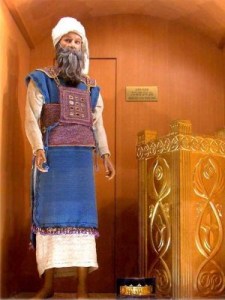
No sooner are people getting the hang of things in Eden than God marks designer clothes first on their list of accessories. Gods seem to be impressed with dressing the part. The Bible details what priests, and especially the high priest, will wear in the temple/tabernacle. Such location-specific wear indicates a very deep awareness of sacred space that pervades most religions. More than that, however, the clothes themselves are highly symbolic. Although modern readers may not be able to come to any consensus on the “symbology” (oh that word!) of each and every ephod and tinkling bell, we can be assured that nothing about the priestly garb was accidental. Indeed, Exodus informs us that God selected the fabrics himself.

Judas Priest, meet High Priest

Judas Priest, meet High Priest

So I’m not so shocked that the Metal God has made his preference known in the line of apparel appropriate to wear to the worship of this particular deity. As I watched a motorcycle club in their well-worn leather roar past me in my timid mini-van this weekend, I was reminded of the power of clothes. We may not be born with the body we want, but if we dress it up right, others might be made to believe that we’re gods too.


Of Cats and Goddesses

During one of my periodic forays into current Asherah lore on the web, I discovered a new breed of cat. Well, actually, I didn’t discover it, I just became aware of it. Because of a misspelling on a website I learned that the Ashera (trademarked name!) is the most expensive cat in the world, retailing for $22,000. A blend of three species (the mind boggles), the African Serval, Asian Leopard, and domestic cat, this feline comes in at least three varieties, including the especially appropriate Royal Ashera. If you’ve come into an inheritance and want to waste a few grand, take a look at Lifestyle Pets to see the wonder.

According to Kirta she has a temper!

According to Kirta she has a temper!

Curious, I searched to find if anyone would tip a hand as to where the name of the cat was derived. Choosing the name of the queen of the Ugaritic divine world seemed a little too much coincidence for me, but then again, homophones happen. When the Prince of Egypt, Dreamworks’ answer to The Ten Commandments, was released, I had several people ask me why the Israelites were singing about “Asherah” after they crossed the Red Sea. I had to watch the movie very closely, but I figured out that they were singing “I will sing,” which, in Hebrew, sounds suspiciously like “Asherah.” I never did discover Ashera’s origins.

Cats, however often maligned as associated with witches and vampires and other creatures of the night, are certainly among the most divine of domesticated pets. If I were free to purchase an animal companion the Ashera would be in the ranking (after I’d won the lottery, of course). Whether intentional or not, who would not want to own a cat named after the only goddess to be mentioned in connubial relations both to El and perhaps even to Yahweh? (The latter association, like the naming of the cat, is entirely open to question!)


Devil Went Down to Jersey

I have to confess to being a fan of Weird NJ. For those of you not fortunate enough to live in New Jersey, Weird NJ is an unconventional travel-guide published twice a year, celebrating the strangeness of the state. Ironically, I discovered Weird NJ while living in Wisconsin. I was attending the 150th birthday celebration of a couple of friends (combined ages, not paranormal!) where one of the gifts was the then recently published Weird Wisconsin. After the original magazine had caught on, books about individual states were commissioned and this was the first one I’d encountered. My wife knows that look in my eye, so on my birthday that year I had my own copy. Even though it is written for a decidedly non-academic readership, I learned more from it than most textbooks I’ve read. When New Jersey loomed large in our future, I added the book version of Weird New Jersey to my growing collection and soon came to rely on it as a repository of local folklore and interesting places to visit.

Thanks to Matt for permission to use his art, see Matt Can Draw for more!

(Thanks to Matt for permission to use his art, see Matt Can Draw for more!)
This short flight of fancy relates to religion in a very decided way. Within the pages of these publications many locations (popular with teenagers, I’m guessing) bear the moniker, “Devil’s —“ where the space may be filled by any number of nouns: Footprint, Kitchen, Pit, Pathway, Tree, or even Tea Table. This decided interest in naming places after the dark lord seems whelming, even for New Jersey, home of the infamous Jersey Devil. The need to have an evil entity to explain the darkness in our lives is very powerful. Certainly it is not limited to New Jersey as the well-known examples of Devil’s Tower, Devil’s Lake, and Devil’s Postpile attest (although mistranslation may frequently be responsible). Those cultures bound by a monotheistic outlook mark their fears with the Devil.

A relative latecomer to the Bible, the Devil had not been available for earlier attributions of evil. Thinkers of the pre-diabolical period reached widely varied conclusions as to who or what caused the troubles they experienced. Some blamed God while others simply accepted the vicissitudes of circumstance. (Then again, they didn’t have New Jersey as a frame of reference.) Once the Devil entered the picture, the problem of good and evil took on a sharper focus. That sharp distinction, however, frequently belies human experience where issues and situations are seldom as clean cut as they seem.


Sternutation Salutation

Perhaps it’s the specter of swine flu or perhaps it’s the onset of the autumnal allergy season, but sneezing is unmistakably prevalent. While meeting with one of my students this past week, I was asked why people said “God bless you” after someone sneezed. Immediately my mind went back to the explanation I’d learned in some history class that superstitious folk in less enlightened times supposed that your soul flew out your nose and mouth during a sneeze and wished to ensure a safe transition of a person’s spirit back inside. Others trace the phrase to the period of an early plague when Pope Gregory had Kyries sung at sneezes to prevent the spread of disease (although plague was not really characterized by sternutation as much as buboes). Still others continue the myth that one’s heart stops during a sneeze and the comment is simply a verbal defibrillator of sorts.

In my mind a cough is much more sinister than a sneeze, but we have no standard verbal accompaniment to coughs. The same is true for hiccups, belches, or, God forbid, something even worse. How does the humble sneeze achieve a status so as to invoke the divine? Soul-spewing aside, sneezes are naturally violent events. Some medical experts clock dramatic sneezes at up to 650 m.p.h., inciting the question of how we might harness such energy. Unlike coughs, hiccups, burps, or — ahem — other expulsions, the sneeze solely involves the respiratory tract. In the ancient world breathing is life. The standard measure for viability in the Hebrew Bible is not a beating heart or even a functioning brain (a relief to many Republicans), but breath. Those who do not breathe do not live. The sudden loss of breath via a sneeze could be cause for alarm.

Zeus seconds the motion

Zeus seconds the motion

The humble sneeze is even mentioned in the Bible, although the “God bless you” part is not. In 2 Kings 4.35 Elisha, emulating his master Elijah, revives a dead child. Significantly, when the child reanimates, he sneezes seven times. He is breathing, but not yet out of danger. In ancient Greece it was supposed that sneezes were messages from the gods, a kind of Hellenistic “Amen!” to eloquent rhetoric to which the gods just couldn’t hold their applause. No one knows just when “God bless you” was attached to the sneeze, but it is difficult for those accustomed to remark on sternutation to hold still. Even in classes of 70 students or more, a sneeze out there in the audience is always followed by a “bless you” from across the room. Whether it is a message from God or a harbinger of H1N1 I’m just not sure.


Lost and Found

As a young lad I was fascinated by the supernatural. This may explain, but in no wise excuses, my choice of a career in religion. As I grew in years and skepticism, this interest began to feel like a security blanket in a college dormitory — an embarrassment to be jettisoned as quickly as possible. Along the way, of course, I’d given away what I thought to be the detritus of childish fantasy, including my collection of cheap, pulp fiction, tending toward the Gothic.

As I grow more ancient, and more observant, I see that sometimes the impetuousness of youth cradles a profound wisdom. Sometimes we do get it right the first time. I still haven’t figured out if that’s the case with me, but it seems to be a hypothesis worth the exploration. Part of my current search for reality is the reassessment of my childhood learning in the school of classical Gothic fiction. The books are no longer as cheap as they used to be, and when I take them out in public I hide them inside a larger, more academic book so that no one really knows what I’m reading. As a friend once observed, people think that those of us who hang out in the religion sections of Borders are immediately suspect. More so the adult toting a beaten-up paperback written for a teen readership a number of decades ago.

One of my lost memories was a juvenilized version of Rod Serling’s Stories from the Twilight Zone. I had shoveled my copy off to Goodwill along with many other shards of my childhood when I “grew up.” The memories of the angst that the very cover generated in me led to a frantic online used book hunt a few years back. Inside the stories seemed flatter than I’d recalled, but the larger ideas they generated were still worth paying attention to. Perhaps the real lesson is that childhood should not be dismissed as wasted time playing and indulging in carefree amusements. Our childhood proclivities, it now seems, preset the trajectories for our lives. So I still have a quasi-career in a religion department, and I have a copy of a book that started me asking the bigger questions.

Anybody else remember this?

Anybody else remember this?


Bosnia Jones meets Egypt Jones

Scholarship is a remarkable human achievement; so many people from countless backgrounds sparring over ideas with comparatively little bloodshed should be applauded. In the political and religious worlds where armaments are often thrown into the mix, well, the results are colorful but often less kind. I was reminded of this when one of my students recently showed me a copy of a letter regarding a somewhat outlandish claim by Sam Osmanagic (see Momma Maya: Is It the Apocalypse Already? for more on him). Osmanagic, who is studying for a doctorate, has recently added another hapless cause to his dossier of unlikely mysteries of the human past. Investigating Visocica, a hill in Bosnia, Osmanagic has concluded that it is really a pyramid.

The letter to which I referred, written by the irrepressible head of the Antiquities Council of Egypt, Dr. Zahi Hawass, is very gentle. Hawass, a kind of self-styled Egyptian Indiana Jones, notes in a letter to Archaeology magazine, “What was found there is really just a mass of huge stones, evidently a natural geologic formation.” He does, however, also note “His [Osmanagic’s] previous claim that the Maya are from the Pleiades and Atlantis should be enough for any educated reader.” Interestingly enough, Osmanagic is a self-styled Bosnian Indiana Jones, and he has written a book arguing for the pyramid option. Meanwhile, most serious scholars are more circumspect about the claims of any Indiana Joneses. After all, to quote Raiders of the Lost Ark, “archaeology is not an exact science.”

I am sometimes challenged by those who discover that I read such things as Drosnin (see Edoc Elbib Eht) or Osmanagic, but despite my objections to their conclusions that I inevitably reach, I want to hear them. Scholarship suffers from silencing the maverick voices. I have never ascribed to the principle that a person has to have a Ph.D. to be credible; often the reverse is true. I have met many Ph.D.s barely worth listening to while some of the most profound thoughts I’ve encountered came while I was working as a janitor’s assistant, listening to my boss. He was a man who engaged in physical labor that afforded him time to think. No, I do not buy Drosnin or Osmanagic’s conclusions, but I applaud them. Scholarship would be dull if not for those willing to take chances out there on the edge of credibility. (And wearing cool hats while doing it.)


Six-Word Memoirs

The story is told of Ernest Hemingway who once wrote a six-word novel “For sale: baby shoes, never used.” The beauty of this anecdote, whether factual or fictional, is that the mind fills in the rest, blooming full of ideas either tragic or hopeful, supposing what led to this circumstance or what might have happened after. The idea of extreme conciseness has caught on in many aspects of our society; in advertising and marketing it is called a hook, on television it is a sit-com, and in my classes it is a term paper. There is now an industry developing in six-word biographies — publishers print books full of them — and it seems there will be no end to conciseness. (My favorite is Larry Smith’s Not Quite What I Was Planning: Six-Word Memoirs by Writers Famous and Obscure, now available in a revised and expanded edition! Exponential conciseness!) My problem is there are too many six-word biographies that suggest themselves. Life seems to be made up of them. A while back my wife challenged me to come up with one. Slightly missing the concept, I came up with six:

Missed the first day of school.

Spit that out of your mouth!

The B-I-B-L-E.

The position has already been filled.

Please help; will work for books.

Can’t count either.


Who We Were

Once upon a time there was no world-wide-web. The only computers in existence were industrial-sized military and research-based units that kicked off enough BTUs to heat Bar Harbor. Those of us interested in religion found our information by stalking shadowy library stacks and clawing through ancient tomes of arcane information. If someone wanted to find you, they shoved a letter in the postbox and trusted that the U. S. government knew where you were. I never used a computer regularly until I began my Ph.D., and then it was only a glorified typewriter, qwerty on steroids.

Suddenly I found myself in the technological age. Jobs were announced online and the preferred method of communication was email. Cell phones hadn’t hit big yet, but you could search for someone online using search engines that weren’t really engines at all. And then the information could be displayed in color, for those who could afford it! Pictures could be uploaded, but this took about an hour per shot on dial-up. Within a decade everyone trusted internet information like their best friend. Somewhere along the way I searched for my own name, figuring Wiggins to be somewhat unusual. To my surprise, I found another Steve Wiggins, and one involved in religion, no less. To my horror, he turned out to be a Christian rock musician! Now I began to wonder, as my career bumped along the bottom of the academic deep-ocean floor, never finding that fabled full-time teaching career that is said to exist, if I might be the victim of mistaken identity. Have deans and department chairs searched for “Steve Wiggins” and brought up my internet Doppelganger?

Not me! Notice the fancy hair, brown eyes and lack of a serious beard.

Not me! Notice the fancy hair, brown eyes and lack of a serious beard.

Technology has changed even the way we practice religion. It has changed the way we perceive reality. As I sit here blogging away, still seeking that mythic fulfillment of an academic job that will pay the rent, I wonder what the other Steve Wiggins is doing. Has his career suffered from being cross-wired with that of a liberal ex-professor who has an interest in ancient goddesses? Maybe miracles do occur after all!


Athirst for Knowledge

A couple of years back, when I was still with Gorgias Press, a colleague pointed me to a website advertising Ugarit Cola. (A product of the Ugarit Trading Company, not far from Latakia, Syria. Their logo boldly features the image of the two boys suckling a goddess found among the royal ivories of Ugarit. Guess what they’re pulling down! Check out their website for more information on this environmentally friendly soft drink producer.) It seems that yet another gift bestowed upon the world has its origins near those of the alphabet: the sweet, sticky, carbonated, yet refreshing elixir of kings — cola! (You can’t drink the Syrian water, in any case.) Ugarit Cola reminds me of my days volunteering at Tel Dor under the hot Israeli sun, and passing the afternoon by trying to down a Maccabee Beer or two. Named after Judas Maccabeus (“the hammerer”), the name, although not the taste, has remained near the top of my favorite tipple title list, along with Skullsplitter, Bishop’s Finger, and He-Brew (Exile never tasted so good!). When my former boss returned from Syria last year he wasn’t allowed to transport the beverage on the plane, but he did bring me a label off the bottle.

The real real thing

The real real thing

In the parts of the world where poverty is a reality for far too high a percentage of the population, the exploitation of what should be one of the world’s most famous ancient cities is but a venial sin. These were, after all, the people who gave the Greeks a workable alphabet. And the color purple! Why not celebrate with a cola? At least they are trying to do something about it!

Sitting around dusky tables with colleagues at professional conferences back in a former life, I used to discuss the amazing disappearance of Ugarit from the cultural radar screen. Apart from a low-budget Indiana Jones knock-off movie entitled “Jack Hunter and the Lost Treasure of Ugarit,” the city has failed to excite the modern imagination. My colleagues and I decided that what was needed was a scandal. The Dead Sea Scrolls, boring by comparison, have done very well by finding a scandal to hook onto. So today’s assignment is to invent a scandal for Ugarit! Perhaps an Ugarit Cola bottle might be unearthed there, making the Ugaritans the inventors of cola. (For the real story of cola, however, see Tom Standage’s excellent A History of the World in Six Glasses, Walker & Company, 2005.) Or it may take a miracle and the Bible-reading public might begin to wonder about one of the best resources available for understanding the Hebrew Bible that has ever been unearthed. Better pour yourself a cold one; this could take some time.