I P.M. therefore I A.M.

While I seldom have occasion to count beyond ten, I sometimes think the 24-hour clock would be a better option.  Since we have to face another major time malfunction (AKA switch to Daylight Saving Time) this coming weekend, I’m thinking about time.  That, and I recently had someone ask me to set up a noon Zoom meeting.  A nooner Zoomer is fine with me, but each time I have to ask is it “a.m.” or “p.m.”?  Parsimonious websites rather snarkily (but correctly) say that it’s neither.  It’s that liminal changeover between ante-meridian and post-meridian.  It, along with midnight, stands outside the a.m. and p.m. system.  Thankfully I don’t have many meetings at midnight, but still, a 24-hour clock, such as military folk like to use, makes sense.  A meeting at 12:00 would always be noon, and 24:00 would always be midnight.

I tend to wake up around 3:00 a.m.  I admit that it’s convenient to mark 3:00 p.m. as the 12-hour awake point in my day.  I could easily adjust to do the same at 15:00.  In fact, my watch—yes, I still use one—has the 24-hour timescale in smaller print just inside the more legible 12-hour one.  I’m sure that we can all count to 24.  Wouldn’t it make sense, in the service of ending confusion about a.m./p.m.?  (Not to mention having to type in all those periods!)  The way we divide time is arbitrary.  The reason that we settled on twelve actually hearkens back to the official title of this blog, namely the ancient world.  The ancient Mesopotamians had a base-6 counting system, unlike our base-10.  When time came to be divided into hours, it was done on a base-6 system, giving us 12 hours of light and 12 hours of night.

Such ancient ideas as these are very difficult to change.  We can’t even seem to agree that if Daylight Saving Time is such a good idea, why don’t we keep it all year round?  I suspect most of us adjust to gradual change more easily than that sudden loss of an hour of sleep.  Even the added hour in the fall doesn’t make up for it.  If we can’t change something that’s obviously that flawed, how can we hope to agree that having 13 to 24 added to our clocks would be better?  Or maybe just round things down to 20, for our base-10 system?  Yes, hours would be longer but maybe we could negotiate fewer of them for work.  But I’m just dreaming here.  And it’s not even p.m. yet.


Foresight

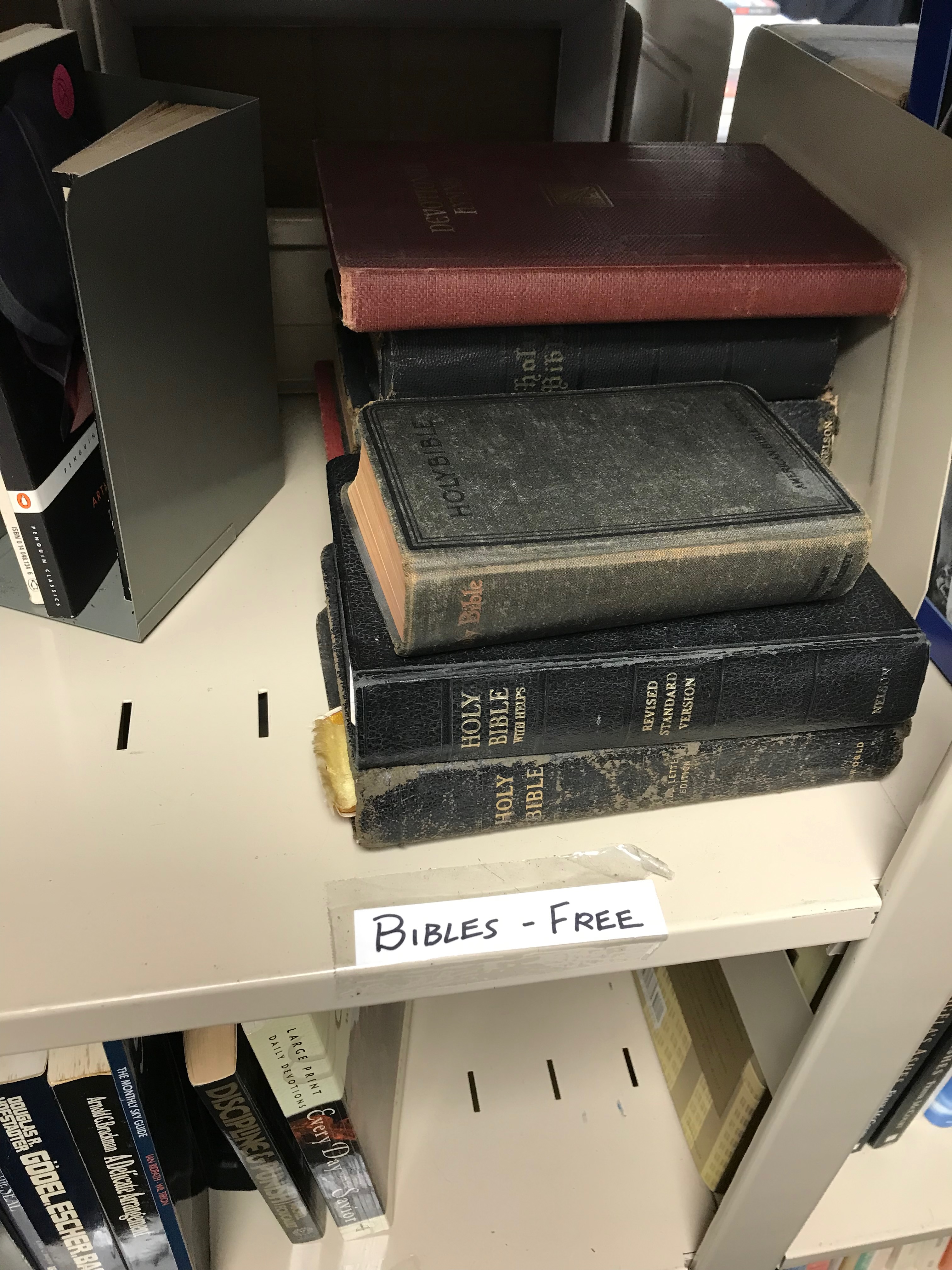
God wasn’t thinking of search engine optimization (SEO) when he was writing the Bible.  First of all, he doesn’t seem to have considered that all the nice, short names he used would soon become the most common in the western world.  And he didn’t give all the characters last names.  Job is particularly egregious because you could be searching for employment and not a complaining old man (you can always find one of the latter here!).  Perhaps he wasn’t aware at the time just how popular his book would become so that just about everything in it appears on some twenty-million webpages and you need some distinctive keywords for SEO.  And this unfortunate high profile has also led to knock-on search problems.

I quite often have to search for bits of the Good Book together.  “Pentateuch” isn’t so bad because it’s a bigger word that most people don’t use every day.  But what about “historical books”?  It’s two words and search engines begin scouring the web for pages that have both words.  And there are plenty of historical books outside the Bible.  Writings?  Poetry?  Even Gospels is used all over the place.  I had to find something about the Catholic Epistles the other day.  My search engine found plenty of places with both words, but not linked together.  (I know the quotation mark trick, but bear with me here as I’m trying to make a point that will perhaps lead to divine intervention.)  I tried again with Pastoral Epistles but the same problem arose.  This is the burden of being so important that everyone copies you.

It’s the price of success.  God surely must’ve foreseen that.  The problem is that Holy Writ predates the internet by so many centuries.  Those who’ve determined how searching works have redefined our lives—have given us new commandments.  Thou shalt not put commas in titles, for example.  Thou shalt use distinctive keywords.  Pity the fool who must find information on a biblical character with only one name.  Perhaps that name is John.  Or David.  Or Mary.  Sure, you can add qualifiers but they’re all common words as well.  The Good Book is a victim of its own success.  And for containing all the prophecy that it does it is truly amazing that not even the creator of the universe didn’t see this coming.  We live in a world driven by tech and although the Bible had a direct role leading to that world, you wouldn’t know it by your standard Google search.


Weathering the Winter

Although it’s been cold out, in many ways this feels like the year without a winter.  Around here we’ve had no real measurable snowfall and temperatures have generally hovered around 40 F, mostly cloudy.  I get cold easily, however, so I need to know how to dress for jogging.  During a warm spell I looked at WeatherBug.  It’s my go-to app for such things.  It told me the current temperature was 49.  Since it’d been in the sixties the day before, that was believable.  Then I glanced at our outdoor thermometer.  It read 39.  A ten-degree difference is significant for jogging, so I called in a third party.  Weather.com said it was 40, much closer to my actual feeling of things—it was chilly inside that morning.  WeatherBug also said it was cloudy, but Weather.com disagreed.  A glance outside showed thin, hazy cloud cover.

Now, I know apps can’t cater to individual needs, but it does seem that WeatherBug was using projections rather than real-time information.  Either that, or somebody was standing too close to the thermometer at the local reporting station, and perhaps breathing on it.  I’m not one of those people who rely on my phone for everything.  I do use it for navigation and snapping quick pictures, but until today I also used it for checking the weather.  I’ve been surprised how often WeatherBug tells me it’s sunny out when I can see nothing but clouds.  Sometimes looking out the window is the best way to learn what your individual weather is like.  Weather is terribly local.

The capriciousness of weather is one of the main factors that led me to write Weathering the Psalms.  Another, of course, was the hope that an academic post might actually consider a guy like me.  The weather has always been a source of personal fascination.  The threat of severe weather, particularly in the Midwest, was a source of naked awe.  I remember standing outside in Illinois with the wide, expansive horizon all around, and staring straight up to a brewing storm cloud thousands of feet overhead.  I didn’t need an app to tell me to take shelter.  Or that time in Wisconsin when a weather system led to repeated, identical cycles of storms that lasted days, leading to localized flooding with rain following a clockwork regularity.  Even then I was a jogger, and for a jogger knowing the weather in advance is important.  These days all that majestic sky drama comes via a device that fits inside my pocket.  It seems we’ve lost something, even though we’re safer this way.  At least within ten degrees.


Something I Said?

I’m very aware of my own insignificance.  I know that I’ll die and be forgotten, just like everybody else.  Even if I manage to survive by some “Kilroy was here” action, the sun will eventually red giant all of this out of existence.  Still, sometimes I wonder if it’s something I said.  You see, I really didn’t know where to start when I published Holy Horror.  I was an editor myself and thought maybe the secret handshake would earn some kind of attention, but no.  And when I wrote both Nightmares with the Bible and The Wicker Man, both were with established series.  And in latter cases, the editor I was working with (long-term employees, both) left.  Left before the book was published and I was left wondering.  Was it something I said?

Not to brag or anything, but I’ve got about the lowest self-image a person can have.  When life beats you up repeatedly, starting at a young age, you quickly learn your place.  But still, all this leaving.  I’m a member of a faith community (if you want to know which one you’ll need to get to know me personally).  This particular tradition requires a meeting with the minister before joining—something that makes good sense.  The first church where we tried this, the minister was in the process of leaving and couldn’t schedule us in.  Then we moved and in our new area, the minister left about a month after we started attending, before we could meet.  Was it something I said?

I ask this question half in jest.  Still, having a father leave when you’re only two or three, you start to question just about everything.  I’m sure retirements, new opportunities, or just fedupness with the job (which I certainly understand) caused these changes.  But then I was ousted from three jobs in fairly quick succession.  During my interview at Rutgers University the chair of the religion department said “You must feel like you have a target painted on you.”  Leaving is a natural part of life, I know.  As an editor I know that leaving such a post is somewhat unusual because where do you go from here?  Ministers, well, they’re leading the charge during the great resignation.  Maybe they’ll become editors?  As for the rest of us, we’ll just continue to spin dizzily on this globe until old Sol stretches his arms and lets out a big, red yawn.  I won’t be here by then, but wherever I am at that point, I’ll be wondering if it was something I said.


Bad Movies

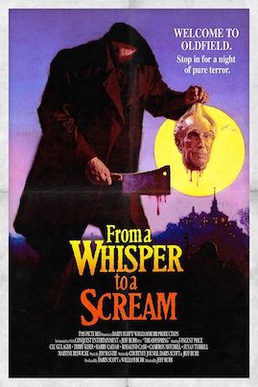
I watch bad movies so you don’t have to.  Maybe that’s my ticket to retirement (it certainly isn’t working the usual way).  In any case, my habit of trying to find something “free” on a network I already pay for often leads to films that keep me awake on a drowsy weekend afternoon, but really don’t offer much else.  Sometimes you learn something nevertheless.  I recently watched From a Whisper to a Scream.  It was free and got more than five stars out of ten, but I didn’t really work for me, even with Vincent Price.  A vignette movie, it presents four episodes from Oldfield, Tennessee, making the claim that it’s a place infected with evil.  The first involved necrophilia, with consequences.  The second—more in a moment—was about eternal life.  Lovecraft’s circus comes to town in the third, and the fourth is about the founding of the town during the Civil War.  Of course, the framing is a “bonus” mini-story as well.

The second episode, “On the Run,” has a wounded ne’er-do-well, shot by some southern rivals, falling into a swamp boat.  He’s rescued by an older African American who lives alone in said swamp.  Noticing him practicing hoo-doo (cue The Skeleton Key), the miscreant soon figures his rescuer has found the secret of staying alive forever (which he has).  Naturally greedy, the petty criminal “kills” the African American and ransacks his shack for the secret potion that keeps him alive.  Being horror, the dead come back and the owner of the shack returns to punish the white man who is trying to steal what he already has.  The Black man had given him the potion to bring him back to life.

There’s a bit of a parable quality to this particular story.  Each vignette predictably has the evil-doer punished, with the exception of “Lovecraft’s Traveling Amusements,” where the Black woman owns those who work her carnival.  And she gets away with it.  None of the characters, apart from the Black man in the swamp and the children in “Four Soldiers,” are really sympathetic.  Religion does also come in the Civil War segment since, drawing cues from Children of the Corn, the kids have created their own god.  So, a diverting film, if not a great (or even a good) one.  This was Vincent Price’s last true horror film, making it worth seeing for that reason alone.  His role is limited to the framing story which, as we might expect, becomes part of the collection of horrors from Oldfield.


Local Haunts

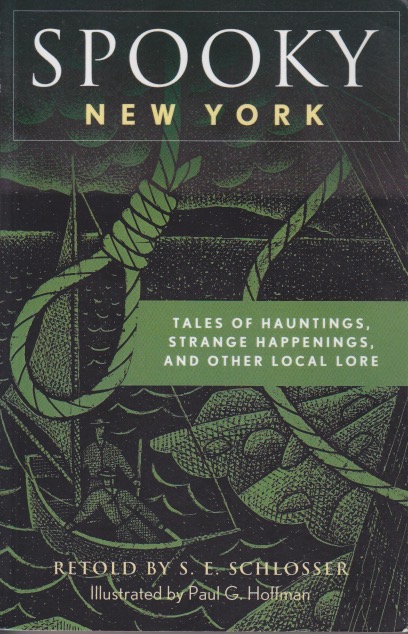
Local color.  It’s what makes travel so much fun, even if not to someplace exotic.  I’ve lived in five different states and two different countries and one thing each place had in common was local lore.  Since I’ve been a stranger in most places I’ve moved, I’ve picked the lore up primarily from books.  Fortunately there are as many people willing to write them for the also many people like me who are willing to read them.  S. E. Schlosser is a storyteller.  We have Rutgers University in common, but her book, Spooky New York, focuses on the state next door.  The book contains retold stories, or as the subtitle states Tales of Hauntings, Strange Happenings, and Other Local Lore.  New York isn’t unique in having such stories, and some of them are clearly regional variants—I heard some of them set in Wisconsin, for instance—but there’s a guilty pleasure in reading such accounts.

Although most of us are raised being told “there’s no such thing as ghosts,” that “truth” doesn’t stick for all of us.  I don’t know if any of the ghosts in this collection are real; folklore deals with that—shall we say—twilight zone that lies between quotidian existence and the weird.  Strange things do happen, but not on any kind of scientific schedule so they can be anticipated and quantified.  And some of them have been seen and reported by many different people.  These stories include such tales.  While they range the length of the state they concentrate in the east.  I’m sure, however, that if you spent enough time talking to the locals you could scare up ghosts from across the Empire State.

Many of the tales are set in New York City.  Having commuted into New York for about seven years, one thing became clear to me.  Even with the tall, modern towers and sophisticated, wealthy trappings, it can be an eerie place.  Around this time of year I would arrive in Manhattan well before sunrise.  Walking the predawn streets to the office showed Gotham in a different light.  Even the few times I went for lunchtime strolls to clear my head, I sensed there were millions of untold stories here.  Some gothic, some haunted.  Schlosser tells several such New York tales.  She includes some from literature but most of those probably go back to stories told by the locals before having been fixed onto paper.  This book will help set the mood, even if you live in the next state over, or anywhere that ghosts roam.


Of Ewes and Groundhogs

I need more time to prepare for Imbolc.  Or Groundhog Day, whichever you prefer.  Candlemas for you Catholic holdouts.  February 2 has the trappings of a major holiday, but it lacks the commercial potential.  Too many people are still working their way out from under Christmas overspending and tax season is just around the corner.  Still, I think it should be a national holiday.  My reasoning goes like this: since the pandemic our bosses now have our constant attention.  They’re in our bedrooms, our living rooms, our kitchens.  I see those midnight email time stamps!  We’re giving them a lot more time than we used to and seriously, can they not think about giving us a few more days off?  Some companies strictly limit holidays to ten.  

Can’t recall where I found this one…

Others, more progressive, have simply dropped the limits on paid time off.  And guess what?  The work still gets done.  I could use a day to curl up with a groundhog, or to go milk my ewes.  (Being a vegan, perhaps I could just pet them instead.)  What’s wrong with maybe two holidays a month?  (We don’t even average out to one per month, currently.)  I always look at that long stretch from March, April, and nearly all of May with some trepidation.  That’s an awful lot of “on” time.  (Our UK colleagues, of course, get Easter-related days and a variety of bank holidays.  Their bosses, I understand, would rather go with the more heartless American model, but tradition is tradition, you know.)  What if I see my shadow and get scared?  What am I to do then?

Imbolc is part of an old system for dividing the year into quarters that fall roughly half-way between equinoxes and solstices.  I go into this a bit in my book, The Wicker Man, due out in September.  That movie, of course, focuses on Beltane, or May Day, but the point is the same.  Look at what happens when you deny your people their holidays!  You’d think that the message that showing employees that you value them makes them more loyal might actually get through.  Businesses, however, have trouble thinking outside the box.  Take as much as you can and then ask for more.  What have they got to lose by giving out a few more holidays?  Otherwise each day becomes a repetition of a dulling sense of sameness.  Rather like another movie that focuses on this most peculiar holiday.


Toil et cetera

Few items are as necessary for modern day life than a functioning toilet.  If you live in town and don’t have an outhouse your other options are pretty limited.  Religion scholars tend to know quite a bit about what goes on in toilets, so I’ve repaired my fair share over the years.  When we had a leak in a fill valve, I had to wait for a weekend to do the repair.  I figured half an hour and thirty dollars at most.  I left it for an afternoon project.  Once I got the new fill valve installed, there was a problem.  The tank wouldn’t fill with water.  It had been clear that the faulty part was the fill valve, as it was hissing and sputtering and there were no leaks into the bowl.  I made a late trip to Lowes for another valve, following the logic that the one I’d bought earlier must’ve been defective.  It didn’t work either.  We had to flush by buckets of water.

Sunday after church I rushed to Lowe’s since, logic dictates, it has to be the flush valve that was the problem.  These are the only two parts inside a toilet tank that require repair.  So I got the tank off, and after running to the hardware store to buy a specialized tool to get the nut of the valve off, I learned that “fits 99% percent of toilets” left that troubling 1 percent for a reason.  Our toilet was special.  The parts were not standard size and neither my local hardware store nor Lowes had the parts in stock.  If we wanted a working toilet that day we would need to replace the entire thing.  So we went toilet shopping.  Hauling a toilet up the stairs is something I hope never to have to do again.  By late Sunday afternoon my half-hour, thirty-dollar project had turned into a multi-day, three-hundred dollar project.  I followed the installation instructions religiously, but, of course, it leaked.

I ended up having to call the local plumber we’ve got on speed-dial.  We’re in our fourth year in our house and we had plumbers here at least six times.  I picture their office assistant grimacing each time our number comes up on their caller ID.  The plumber came and, apart from generating serious tool envy on my part, demonstrated how everything from the soil pipe up had been misinstalled by over-confident DIYers.  I try not to cut corners with plumbing or electrical.  Despite how easy it is to install, or even repair, a toilet, you have to have the correct foundation.  And even scholars of religion need to admit when they’re in over their heads.

Read the fine print.

Virtually Taxed

Nobody ever explained it to me.  DVDs, with no moving parts, can still go bad.  Having amassed a library of them over the years, and storing them the recommended way, I nevertheless come across several that have “damaged” areas—like a skip in a record—that confuses readers to the point that the movie simply isn’t enjoyable to watch.  The other day my wife had a hankering to watch one of those movies.  I checked our two streaming services and it was only available for rent, or “purchase.”  I still can’t wrap my head around buying something that doesn’t exist with money that’s purely electronic.  And people don’t believe in the spiritual world!  Well, I bit the bullet and clicked to “buy” the movie—perpetual access is what we call it in the biz.  We watched and all was well with the world.

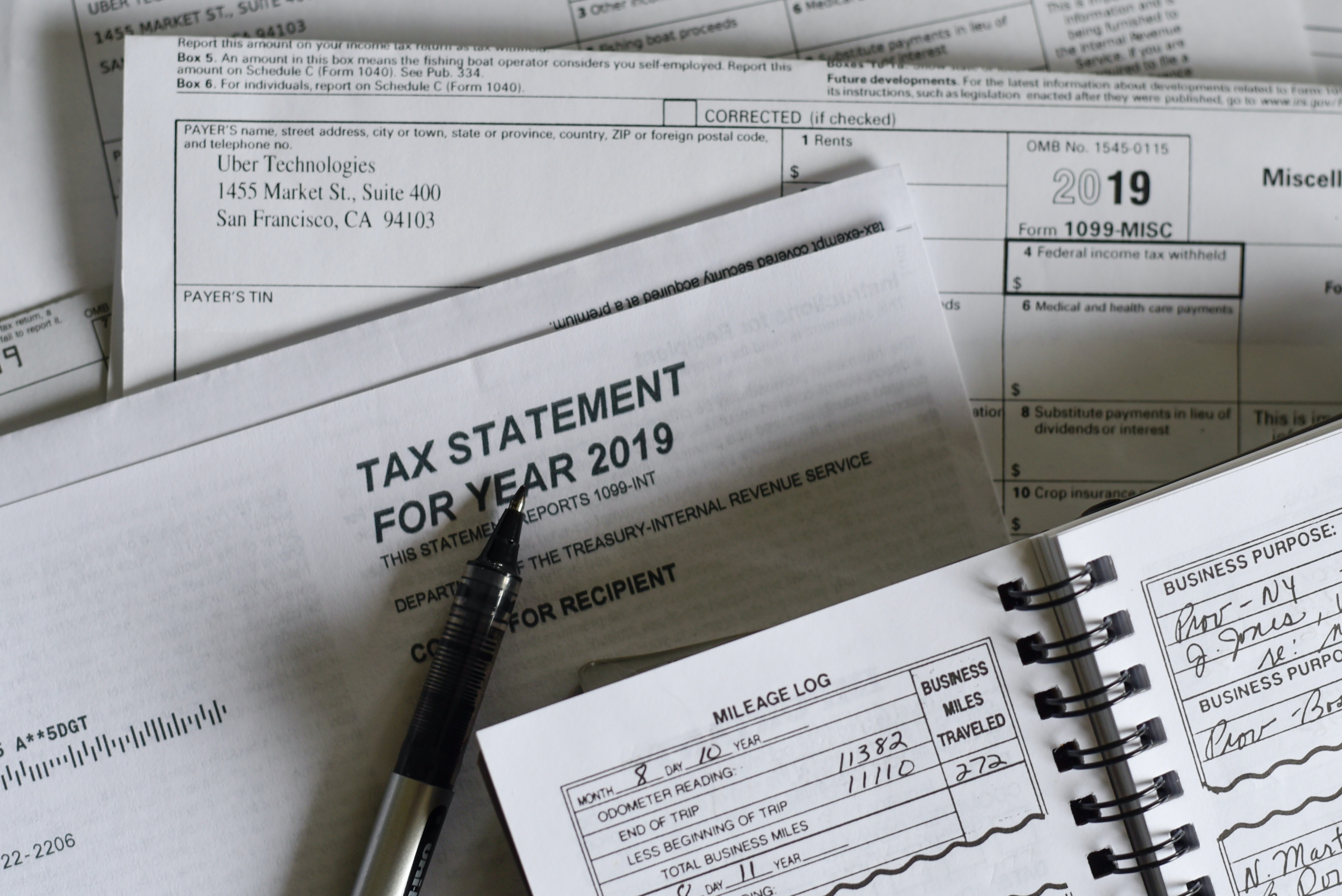
The next day when I went to file away the receipt, which came in the form of an email, I noticed that we’d been virtually taxed for this virtual purchase.  It never occurred to me before that when you’re buying electrons configured in a certain way, that this is a taxable event.  And your tax is based on the state in which you live.  If you’re in a place with no state tax—New Hampshire, I’m looking at you—these electronic purchases will save you some money.  The funny thing about this is the system works only because we believe in it.  The skeptic who says “What, exactly, did I just purchase?” raises a valid question.  Despite current trends, I don’t mind a bit of clutter.  I can always find the physical object I’m looking for.  It’s the electronic ones that give me trouble.

Our world is becoming less and less substantial.  More and more virtual.  Some of us prefer the corporeal sensations of the hunter-gatherer world.  Feet on actual ground, hands on actual book.  Or DVD.  Whatever.  The cloud, with its taxes, strikes me as distinctly odd.  Politicians can virtually live in a state—Dr. Oz wasn’t, and isn’t, a resident of Pennsylvania—so can I virtually move to New Hampshire and not pay taxes on my electronic purchases?  I’ve always wanted to live in New England, but my jobs have never allowed it.  There’s something about this physical universe, and house prices being what they are I can’t see a move anytime soon.  To deal with this reality I guess I’ll stay where I’m physically located and just watch a movie.

Photo by Olga DeLawrence on Unsplash

Not Relic

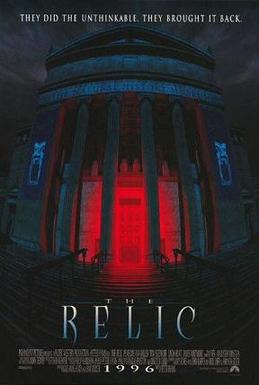
Someone somewhere sometime recommended The Relic to me.  I can’t recollect who, where, or when, so I’m not sure in which direction to point the blame.  (Or maybe they recommended Relic…)  Weekend afternoons are drowsy times, and rather than sleep, I prefer to watch movies.  Those on my wish-watch list don’t often coincide with what’s on the streaming services available to me, so I try to recall those recommended to me at some point.  I mean, The Relic sounds like it should be good: a Meso-American god that’s part lizard, part beetle, and part mammal rampaging through a major museum?  Well, what’s not to like?  Monsters are usually fun.  This one requires hormones from the hypothalamus to survive, so it beheads people to get at their brains.

Now, if you’re not a fan this will sound goofy to you.  The thing is, in the right hands such a film could be very good.  I hear that the novel upon which it’s based is.  Unfortunately the script and the acting don’t really hold up.  The sciencey explanation doesn’t make sense—the evolution from eating certain leaves is too rapid, outpacing even the monsters in Evolution.  And when we learn that the mammal DNA comes from a human, it raises the question of whether indigestion was mistaken for evolution.  Of course, the monster—shown a little too early—is a chimera.  Since it’s part bug and part gecko it can walk up walls, which is admittedly pretty cool.  But the holes in the plot don’t ever really get filled so it’s a lot of running through tunnels in the dark with flashlights.

When I read the description that it involved a god-monster I thought I’d figured out why it’d been recommended.  Religion and horror share gods and monsters, so I thought maybe something would’ve been made of this.  The scenes where the carving of Kothoga is being prepped make no sense—you use carving tools to excavate fossils, not statues—and we learn nothing of this intriguing deity beyond that it was released to eat your enemies brains and when it ran out of brains, it dies.  Of course, it can eat leaves as well.  Ironically and paradoxically, the film makes me want to read the novel to get a fuller explanation.  The combination of gods and monsters is rich territory to explore and when those making a movie credit the audience with enough intelligence to make this work, it might be enough to keep you awake on a drowsy weekend afternoon.  Or it might keep you awake even if they don’t.


Forgot Again?

I’ve noticed a pattern.  I’ve been posting daily on this blog for over thirteen years now.  During the past two of those, several days (including the day before yesterday) have gone without a post.  It’s not that they haven’t been written—no, I have a surplus of ideas—it’s because of the pattern I mention.  I know that early morning is a bad time to be active on social media.  Few others are awake and by the time they are many, many more posts come on top of my meager efforts.  So in my reptilian brain, I think, “Maybe I should wait until about 6:30 to post—you know, when people are awake.”  My reptilian brain tends to rise between three and four (sometimes earlier) and so I really do believe people are shaking off sleep at around 6:30.  I think this although my family repeatedly assures me it’s just not true.

In any case, I load up my daily post on WordPress before starting work, which I also do early.  The pattern for the days I forget to post is this: something sets off my early morning schedule and I forget to click “publish” before getting engrossed with work.  I guess I need a blog posting alarm clock.  For example, two days ago I had an early author call from someone in Europe.  I don’t mind early calls,  as long as they’re pre-arranged, but that meant I had to jog early so that I could get dressed in time—I don’t like meeting someone for business for the first time wearing sweats.  By the time I’d jogged, changed, and wolfed down breakfast, I’d forgotten to click “publish” for the post already loaded up and ready to go.  Any interruption to my schedule can do this.  Just last month I forgot because election results were coming in.  I need that alarm clock.

Posting daily is a happy part of my routine.  I’ve done in when I have a flight out of the country later in the day.  Or when I’m overseas, I make sure to post ultra early Eastern Time (presuming I’m flying east) to make sure I get one post in each day.  If I fly west I post ultra early local time so that I can keep it about the same time as usual, or else I post later than usual—time zones flummox me.  (So far those western flights haven’t been out of the country, I would note.)  When I forget to post, however, I’m home and something disrupts my morning schedule.  Those who live by the clock, I’m told, die by the clock.  And when that happens, I’ll probably have a post loaded but I hope I’ll be forgiven if I forget to click “publish,” even if my alarm clock does go off.


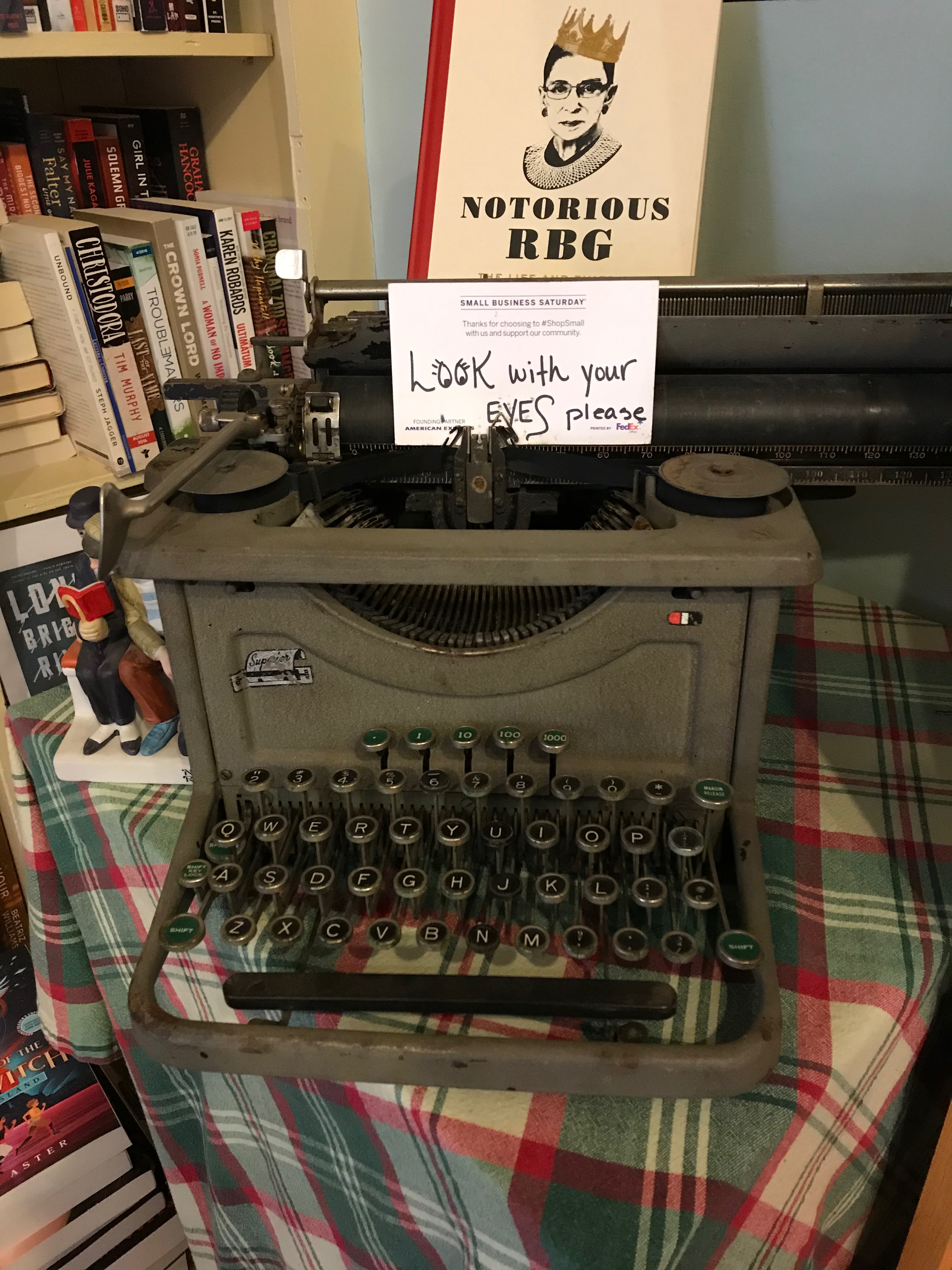
ABC 2 QWERTY

I thought this was over after school.  Sitting in a class with a long list of names, always coming in last—or very nearly so—because my name began with W.  Even now, however, it still happens at work.  If there are a limited number of places at an event, just try to register with a W (or X, Y, or Z) name.  Even if you get your name in first, you automatically drop to the bottom of the stack for many electronic lists (AI knows the alphabet, right Hal?).  This got me to thinking about the alphabet.  Alphabetical order is, of course, neither fair nor random.  It follows strict rules and it must in order to work properly.  The assignment of alphabetical order, however, is arbitrary.  More than that, it is a teaching tool cum organizing principle.

Consider your basic keyboard.  It’s used far more often than the alphabet and if we went in QWERTY order, Ws would always be near the front of the list.  Problem is, although our fingers know the keyboard well, who can recite it?  Maybe we need a mnemonic device like “Quite well, early riser, thank you…”   Someone at some stage laid out alphabetic order.  The earliest known abecedaries seem to come from Ugarit.  That doesn’t mean they were invented there, but it also doesn’t mean they couldn’t have been.  We don’t know what the criteria were, but interestingly enough, what we transliterate as w came about sixth place.  The order is largely recognizable to modern schoolchildren, although they had fewer letters and some of them we don’t have.  W was in the middle but closer to the head of the class.

An Ugaritic abecedary

There have likely been psychological studies done on the mental state inflicted by always being last, or near the end.  Granted, a good part of it is because of the gospels, but I wonder if my tendency to think others should go in front of me is a life-long socialization of being a W.  Growing up in a town with few “exotic” names, I don’t recall ever not being last.  There were teachers who would divide by height, but that’s even worse because I’m not tall.  Could it be that something as random as scratch marks made on clay by some priest or scribe in illo tempore, thousands of years ago, led to such a blog post as this in the early twenty-first century?  All I know is that my projects at work still get bumped because kindergarten politics still hold.


Doppelgängers

Maybe this has happened to you.  Two names get stuck and mixed up in your mind until you consistently can’t tell them apart.  Jeff Bridges and Jeff Daniels are two very different actors.  About five years apart in age, they’re both white men, but they play very different roles from each other.  What’s worse, I’m a real fan of a Jeff Daniels movie or two (ahem), and one I watch every year.  When it’s over I inevitably think it was a Jeff Bridges movie.  I’d let this pass as aging gray matter but for one thing—I recently read a book on movies where the author made the same error.  So I tried to exegete it.  Why such a mistake?  They’re not exactly doppelgängers, after all.

Okay, so they’re about the same age.  They don’t look alike and their movie personae are very different.  I tend to think it’s the euphony of the names.  Jeff, followed by a two-syllable last name that ends in s.  As I was talking this through, I said “Both last names begin with a bilabial.”  My daughter corrected me, “D isn’t a bilabial,” she rightly pointed out.  Okay, well, they occur near each other in the alphabet—they’re both in the first four.  What I’m struggling with here is how at least three of us (I had this conversation with someone else years ago who also admitted to confusing the two), have this issue.  And it’s not just the Jeffs.

Back in seminary, the song “Bruce” got a lot of airplay.  By Rick Springfield, it was a lament that he was mistaken for Bruce Springsteen.  The two both play rock (duh) and they were both born in 1949.  Their last names begin with “Spring,” but “steen” and “field” are quite different.  Not to mention Rick and Bruce.  I sometimes think fame is just a mosh of pop culture that gets stuck in our heads and thoughts go around and around like a washing machine until those we don’t really pay attention to end up blending.  And also, famous white guys about the same age with somewhat similar names, have to put up with imperfect doppelgängers.  (Or is it doppelgängeren?)  Academia.edu seems to confuse me with the Steven Wiggins who is an Economics professor at Texas A & M. Or is it the Steve Wiggins, Agricultural Economist at the UK Overseas Development Institute? Since I can only guess from their photo, we seem about the same age.  None of us is famous, but that doesn’t prevent doppelgängers from finding you.


Day Two

You have your suspicions when you first spot them, but you have to wait to confirm it.  You’re flying in mid-to-late November and they’re concentrated around one particular destination.  They won’t be the only ones going there, of course—families with kids, late vacationers, others traveling for business—but they will be among them and you can learn to spot them.  The attendees of the American Academy of Religion and Society of Biblical Literature annual meeting.  Pre-pandemic there were reliably about 10,000—a biblical myriad—of them.  We’ll have to wait to get the figures on them this time around.  In any case, I make a game of spotting them at the airport.  Well, if you’ve got a connecting flight you need to wait until the final leg.  It’s possible some got on with me in Allentown, but I didn’t spot any likely candidates.

The male of the species is easier to identify at a glance.  Bearded, serious demeanor, slightly out of touch when it comes to fashion.  Incongruously sometimes they’re wearing jeans but you know that’s just their traveling raiment;  once they arrive and get tweeded up they’ll be easier to place.  Otherwise you can identify them on the path by their talk.  If they enter into discussion with a seat mate or someone walking to the baggage claim or getting onto the public transit, or even in restaurants, they will speak of strange things.  Their language will grow technical and their frowns will be discerning.  They are assessing, you know, assessing the ideas that don’t fit with their personal theories about samsara, or Origen, or Jeremiah.  And they don’t mind saying so, right out in public.

As important as I know religion to be, and as much as I know that to understand it deeply you must spend years and decades studying it, I sometimes wonder just how others must view us.  I still dress like them, although I travel in my tweed because it makes my suit-bag too bulky to pack it.  On the plane I read an actual book (likely about religion, but that’s not a guarantee), and once in a while someone who hasn’t realized that the conference is over will want to talk business in the airport while waiting for a flight when all I want to do is pull out a novel and try to get the shop talk out of my head for a little while.  This is the unusual experience of attending AAR/SBL.  I’m sure there’s enough material here for a sociological study, but I think the sociologists have conferences of their own to attend.


Dangers of Bookmarks

So you’re a busy person and you don’t always have time to act on something immediately.  Or you have to wait until the next billing cycle to afford something.  Daily life comes at you like a Russian missile, so you need to leave reminders around so that you don’t forget.  For me, those reminders often take the form of tabs.  On my browser I leave at least a dozen tabs open to remind me of things—I’ve got to get those cartons ready for mailing to recycle; thanks for reminding me.  I actually look forward to being able to click a tab closed because that means I accomplished something.  There are so many things to do and time is so rare.  Then the inevitable happened.

I was leading a Zoom meeting and I had to keep track of attendance.  Since I was leading I didn’t want to stop in the middle and write a bunch of names down, so I took a screenshot.  My poor laptop got confused and kept the screenshot on top.  Since the screen shot showed all the open windows (it’s not just the browser that’s open, but all the writing projects in the two different programs I use as well, all in various stages of completion), I couldn’t tell how to click out of the screenshot.  I couldn’t see the actual Zoom meeting or if someone was raising her or his hand.  I tried to keep the discussion going while trying to get Zoom back to the front.  I began clicking any window shut that I could.  Finally Zoom reemerged.

After the meeting I had to examine the carnage.  My browser had been closed and when I reopened it, the option to restore all closed tabs from the last session was grayed out.  I would have to rebuild my tabs from memory.  It was because of my overwrought memory that I’d kept those tabs open in the first place!  Before going corporate, when I could take my time and pay attention, I had a very good memory for things like this.  (As a professor I had time to act on things during the day instead of constantly thinking “I’ve got to get back to work.”)  Now too much is happening all the time.  I’m having Zoom meetings after work when I normally get my day to day business done.  So I’ve added a new task to all the others—trying to reconstruct my lost tabs.  Yes, it’s a classic “first world problem.”  At least that’s what I think it’s called—let me open a new tab and check.

A different kind of bookmark