Literary Detective

A writer’s life can take many forms.  Alexandre Dumas, for example, (the father, just to be clear) had tremendous success with his novels The Three Musketeers and The Count of Monte Cristo.  Due to the politics in his lifetime, he was exiled and repatriated.  Of the upper classes, he had many affairs.  And finally, in 2002, was reinterred in the Panthéon in Paris with the president of the nation renouncing past racism.  You see, his father was a creole born in Haiti and apparently for that reason he’d been denied burial with France’s other luminaries.  I’ve been reading early European and American novels lately.   I just finished Dumas’ lesser known The Woman with a Velvet Necklace, which was originally published together with some other “stories” (this one alone is over 200 pages) in French, of course.

The story itself seems to have been based on a short ghost story by Washington Irving titled “The Adventure of the German Student.”  In brief, a student meets his dream girl in Paris during the revolution.  She wears a cloth necklace and when it’s removed her head falls off.  Tracing the origin of Dumas’ version on the internet took considerable detective work.  It involved learning the book in which it was originally published (long out of print), translating the title into French, and reading the French article in French Wikipedia since there’s no English article on it.  The story was originally published in 1850, some quarter-century after Irving’s tale, and logic compels one to conclude that either Dumas knew Irving or that Irving was using an old French ghost story that was in circulation at the time.

Since few internet sources exist on the novel, its origins remain somewhat of a mystery.  The French Wikipedia article doesn’t address them.  We know that Washington Irving was a writer appreciated both in America and Europe, having spent many of his years living in the latter.  We also know that Irving borrowed the basis of the story from materials he picked up while traveling.  There’s more literary detective work to be done here, but we live in an age when literary scholarship is devalued (it doesn’t bring in money) and until someone who’s an academic gets on this trail, Dumas’ use of Irving will always remain speculative.  The novel itself does reveal, after the first forty or so pages, why Dumas was a popular writer.  He has a way of drawing the reader in.  The story itself is odd and sad but has a message.  And, as it turns out, a mystery as well.


Living Through Writing

I’ve perhaps lived too long to be a great writer.  Of course, most of my fiction remains unpublished, much of it read and rejected by editors younger than myself.  I can’t help but notice that Poe died at forty and Robert Louis Stevenson at forty-four.  Emily Brontë at thirty.  All of them today considered literary geniuses, they caught publishers’ attention back when they weren’t such juggernauts as they are today.  Even the humble online literary magazine gets too many submissions and the editors advertise their quirky tastes.  Not that I’m any Poe, Stevenson, or Brontë.  I wonder if their awareness of the greater likelihood of dying young might’ve fueled their work.  Perhaps at a subconscious level.  I know, for example, that the pressure created by having to start work early leads to some of my own best writing, knowing, as I do, that time is limited.

Shortness of time is a great motivator.  One thing authors require is time, however.  If you roll out of bed, scarf down breakfast, then logon to work (how the world has changed!), you may have time at the end of the day but I’m so exhausted by work that I simply can’t produce anything at night.  I have to do my writing before the worries and pressures of work kill the inspiration.  I mean that literally—I can feel it dying as the worries of those seeking tenure, and the issues with which they surround themselves, suck the very vitality of my mind.  Serve and protect.  And although I’m not exactly old, I’m not young either.  I’ve outlived many and, to my way of thinking, it’s because I’m here for a reason.  It seems to have to do with writing.

You see, writing is a main identifier.  I was asked to take a survey recently by a group that wanted to identify people’s main sources of self-identity.  They asked about things like gender, race, sexual-orientation.  The usual suspects.  The survey wasn’t crafted, however, by a writer.  If it had been they’d have known that that is a category unto itself.  Those of us who write know that we are writers, whether published or not.  Whether famous or not.  It’s more than a profession—it’s an identity.  Sometimes we have to keep it quiet since those who hire others want the categories that identify themselves by to be race or gender or social status.  The writer may not be motivated by money.  Many work well but may not identify fully with their “job.”  They may, in fact, be watching the time slipping away and wish they were writing instead.


Becoming American

Image credit: John Wesley Jarvis, via Wikimedia Commons

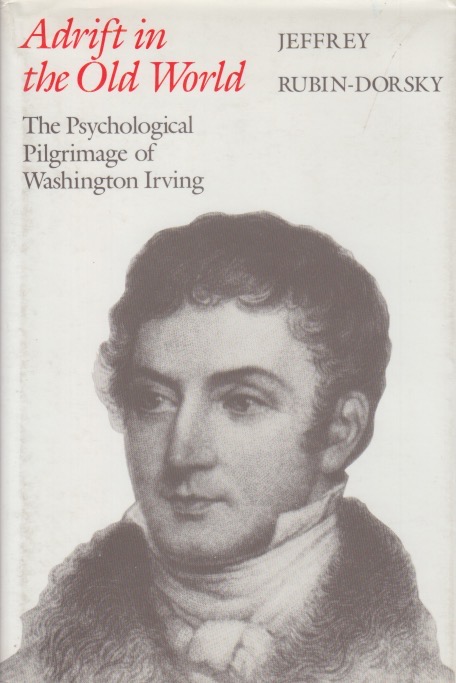
I love reading literary scholars if they write accessibly.  William L. Hedges did, mostly, in Washington Irving: An American Study, 1802–1832.  There were several moments in my reading when I had to pause and consider the connections he was making.  This was his only book of note, but noteworthy it is.  You see, as a young person I had a difficult time figuring out what I was supposed to be as an American.  I read a lot about Europe and considered the various identities in the long histories there.  I tended to read European literature while having a lifelong soft spot for Poe.  Over time I began to read more American classics—ironically this wasn’t much part of my formal education in rural Pennsylvania.  Mostly I picked things up on my own.

Hedges, nevertheless, ties many of these things together in discussing Irving’s writing.  As he did so I started to realize that an American is a distinct kind of being.  Now, intellectually I’ve known that since childhood.  I was born and raised here, after all, as were the generations before me.  Still, recognizing the guilt of taking someone else’s land, it has taken many years to appreciate the literary accomplishments of the various writers who helped shape our national identity.  Hedges addresses many aspects of this through his analysis of Irving, but he’s at his best when he’s tying him together with Poe or Melville.  These early American literary lights offered a view of a nation haunted by history, but also funny at the same time.

This book was published three years after I was born.  Of course, I really didn’t start reading about Irving until about a decade ago.  You get the sense that he wasn’t sure of himself as a writer, but like many of us he had a thin skin when it came to criticism.  You see, writing is putting yourself out there for others to see.  It’s only worth doing if you believe you have something to say and you want others to hear it.  For many writers that means being discovered after death.  Today many make livings writing acclaimed novels.  They can only do so, however, because Irving and his generation suggested something new: you didn’t have to have a traditional job and just write on the side.  You could, if chance cooperated, create literary works that others would purchase and support yourself that way.  And then, more than a century after you’d gone, someone else would write about what you had written.  Thankfully, sometimes accessibly.


The Original

A dozen years ago, I had a novel under contract.  I write my fiction under a pseudonym, of course.  I was thrilled because I had never seen the conceit (in the sense of “concept”) anywhere before.  For once, I was going to be first in line.  But then the editor who’d responded “Loved it!” left the press.  After dithering for about a year, the publisher decided not to publish it.  This was a small, independent press—I wasn’t anticipating it would be a New York Times bestseller.  Then I saw a weekend add in the New York Times—just recently—touting a novel with the exact same concept as mine as “original” and worthy of being read.  Ironically, just the day before I had once again submitted my novel to an independent publisher.  I can’t blame the author, of course, but the system doesn’t work for everyone.

After the killing of my darling, I naturally tried to find another publisher.  I have been trying for twelve years.  I’ve been pushing the idea as original and of general interest.  Editors and agents disagreed about the “of general interest” part.  In fact, I’ve had rejections from nearly 100 literary agents over the years, one of them responding that I was a good writer but they couldn’t see where the story was going.  Maybe I didn’t handle it as well as this new book, with its glittering endorsements, but a guy likes to get credit for his work.  Now if it ever does get published I’ll be considered a copycat.  You see, my main driving force as a writer is originality.  My published stories are unlike others I’ve read and most of them go through multiple rounds of rejection before some editor “gets it.”

The publishing industry, however, is a strange one.  Most publishing houses want work that imitates bestsellers since they’re a known quantity.  Money in the bank (or what banks used to be).  The internet has changed that a bit, but not completely.  It does mean those skilled at such things as self-publishing can sometimes challenge the hegemony of the big five.  It also means a lot of sub-standard fare is out there as well.  I’m a little late establishing a literary reputation it seems.  Although being raised poor does qualify me as “diverse” it’s not in any way visible.  It is obvious if people get to know me because the poverty mentality never goes away.  So my novel has been waiting while the same idea occurred to someone else (not straight white male) and has received notice.  So I follow and hope to learn.


Book Writing

Not everyone wants to write a book.  A great number of people, however, do possess that desire.  Or that desire possesses them—that’s often more accurate.  For some it’s because they have ideas that feel compelled to share.  For others it’s the sense of accomplishment of having successfully strung together thousands of words and seen them encased between covers.  For still others it’s economic—books can be sold, and if done well, can become a living.  There are surely other reasons as well.  Since I read a lot, I frequently wonder about other authors’ motivations.  Often, I suspect, it’s because they underestimate how difficult it is to navigate this path to success.  You have to come up with an idea that is unfamiliar to your target readership—free advice: no book appeals to everybody—that has a hook that will make them want to read it.

I’ve read books where this hasn’t been thought through well.  Love them or hate them, this is what major publishing houses do well.  They figure out what likely will have appeal.  They make mistakes, of course.  Everyone does.  Still, they have a solid track record that makes them the hope of writers who have the burning need to, well, write.  One of the cases where this becomes an issue is where an author tries to be funny.  There is a lively market for humorous books, but if you’re trying to convey serious information but you find yourself cracking jokes along the way, you’re going to confuse, rather quickly, your readers.  What are you trying to do?  Make me laugh or teach me something new?  What should I prepare for when I pick up your book?

Don’t get me wrong—I clearly haven’t figured all of this out myself.  I do think that the combination of a doctorate (which teaches advanced research skills), and editorial work (which teaches how publishing works), should be a winning combination.  Ideally, anyway.  What I find is that it does make me approach books critically.  I look at the publisher.  I ask myself, what is this book trying to do?  You see, to read a book is to enter a relationship.  The book has an author.  That person is sharing what she or he has thought about.  By publishing it, they’re inviting you into intimate spaces.  That’s why I tend to be gentle in my book reviews.  I know the hunger.  I too feel compelled to write.  And if I don’t get the mix right, I would hope that any readers might, if they reflect on it, see that this is merely an awkward effort to begin a conversation.


Sleepy Once More

I think this is the last of my recent nostalgia reads for a while.  When trying to recapture the feeling of watching that first season of Sleepy Hollow without actually spending all the hours necessary to do so, the spin-off novels are a quick fix.  Keith R. A. DeCandido obviously has quite a bit of experience of writing novels that tie into pop culture.  Many of us were pretty enthralled and impressed in 2013 (already a decade ago!) when Sleepy Hollow first came on the air.  This literary member of what was an emerging new legend is a novelized episode that is slotted into season one, referring back to what had happened earlier in the season without betraying the cliff-hanger ending for the 2013–14 run. Sleepy Hollow: Children of the Revolution is a guilty pleasure read and a jaunt back to a decade that now seems long ago.

Here the story involves an attempt to resurrect (one of the main themes of the show) the witch Serilda of Abaddon.  Serilda had her own night in the moon earlier in the series (the episode “Blood Moon” was dedicated to her).  This novel asks, what if a coven of her followers, one of them a former policewoman, tried to bring her back?  It does so by using historical scenarios—much like the series—such as Washington’s crossing of the Delaware, and impregnating them with magical subtexts.  Here there are congressional awards that have been secretly engraved with runes.  George Washington knows about them, of course.  When brought together they can transform Serilda into a real monster.  Remember, Moloch was still an active concern in the first two seasons of the show.  In the present day, these artifacts have been regathered by the coven, and you can guess that all Hades will break loose.

I often ponder how, with the series Sleepy Hollow, the story began to fall apart when the Bible fell out of it.  It was in the process of tying together great American mythologies such as Irving, Revolutionary-Era history, and biblical self-identification.  These formed a compelling net that brought in many viewers.  Season one ended with two of the four horsemen of the Apocalypse in Sleepy Hollow, and a third had been nodded toward earlier in the series.  Instead of finishing out that line of thought, the storyline dispensed with Moloch and gave the headless horseman a head.  The plot ran out of steam.  Books like this demonstrate that there was other fertile ground to plow.  Had the original conceit kept intact, we might still be watching it.  Of course, novels like this are good for reliving those days a decade ago.


Old Library Books

There’s a quiet joy to it.  Even if they have other people’s markings in them, books I obtain ex libris are among my personal treasures.  They bring back memories of reading library books—learning new things.  For a fleeting moment when reading my current used, ex-library book, I was taken back to a night long ago.  The youth group at my local United Methodist Church had occasional sleepovers in the church itself.  Despite being a small town, folks were okay with mixed genders (with chaperones, of course) doing this.  We were even allowed to go into the sanctuary at night.  Churches are scary places in the dark.  We would sit there and talk about nothing in particular, the way teens do.  And I always brought a book.

On one sleepover I was working on a term paper on—don’t laugh—vampires.  I’d been researching with the limited resources of Oil City High School’s library, supplemented by the Oil City Public Library.  I still remember the exact book I took along.  Although awaking ultra-early only developed with me during my commuting years, I’ve always been an early riser.  (The early teen, or tween, years excepted.)  I remember waking up before everybody else, returning to the sanctuary, sitting in our usual pew, and reading about vampires by the light of dawn coming through the windows (which were only modestly stained with off-whites and yellows).  And feeling profoundly happy.  Friends were asleep downstairs and I was curled up with a library book.  What more could you ask?

Many such memories linger as I age.  But my current reading of a marked-up library book brought something else to mind.  Many such books have marks near the beginning that quickly peter out.  As if most readers never made it past the introduction.  I’ve stopped reading a book or two in my time, but generally I need to get past page 10 or 20 before I’m willing to make that call.  I often find that a book’s introduction is one of the best parts—especially in academic books.  Authors try to draw you in with intriguing ideas and then, at least in my field, get technical once you reach chapter 1.  Honeymoon’s over.  The mind of the person, however, who marks up a library book and then suddenly stops intrigues me.  Perhaps I’m just feeling nostalgic this morning, but reading a withdrawn library book, with its soft pages and old book smell, is one of life’s great gifts.  Even if it’s not about vampires.


Love’s Life

One of the things about literary classics is they open themselves to reinterpretation.  It’s often a lot of fun to trace these.  Andi Marquette is obviously an educated writer.  Her The Secret of Sleepy Hollow is one of those reinterpretations that has a unique take on the tale.  Set in modern times and featuring a member of the Crane family—Abby—as a graduate student, this story brings the tale into a contemporary context.  Abby meets another graduate student—Katie—in Sleepy Hollow and the two fall in love.  It turns out that Katie is a member of the Van Tassel family, thus bringing the two main families of Washington Irving’s “Legend of Sleepy Hollow” together again.  There’s even a headless horseman.

Like the biblical book of Ruth, this is a gentle tale of women’s love.  There’s no overt violence, no heads get chopped, but two women love and care for one another.  Many of the more modern repackaged versions of Sleepy Hollow tend to go for the violent, sometimes drug-fueled tales of bored youth in a small town facing an angry ghost.  Here the interest is more literary, a gothic romance.  The fact that it’s a lesbian love story makes me wonder why so many people have trouble with others’ love lives.  People are prone to curiosity about sex—that’s a simple fact.  What isn’t so simple is that mores based on culturally specific ideas from millennia ago don’t stand the test of time and yet cause misery in modern lives because they can’t accept what we now know—sex and love are anything but simple.

Marquette’s book is marked by that anxiety.  When people discover a love that’s often misunderstood, they face ridicule or worse.  The book of Ruth provides a good guide here—the acceptance of a normally forbidden love can bring good and happiness to people in what is often a difficult world.  There’s trouble enough—there are headless horsemen out there—that we don’t need to be causing more by judging the loves of others.  Even a cisgender heterosexual can understand that.  Life is complicated and we all try to find our way through.  Love is one of those things that can help to make it more bearable.  I found The Secret of Sleepy Hollow compelling in that way.  It may not be a literary classic—few books are—but it takes on a complex topic intelligently and with heart.  It’s a new take on an old story that still fits the modern world.


Off with Their

“Heads, I win,” is common enough as a call for flipping a coin.  That element of chance plays through Regina Janes’ Losing Our Heads: Beheadings in Literature and Culture.  You see, John the Baptist has a lasting place among the beheaded—indeed he’s featured on the cover of the book.  And since Janes is looking at the topic in literature and culture, you can’t very well leave John out.  I wonder what it says about humanity that there are so many other possible examples to include that this book is a mere sampler.  Applying literary theory to the process, it becomes, well, theoretical at points, but still it’s an eye-opening book.  Even if not always comfortable to read.  The first few chapters, which cover the development of European beheadings, aren’t sweetness and light.  There’s more happening here than meets the eye.  These heinous acts set the stage for symbolism, however.

The material on John the Baptist is fascinating and insightful.  It’s ironic, in some ways, that Jesus’ cousin is perhaps most famous for being beheaded.  He also sheds light on his more famous family member through literary parallels.  And, of course, it doesn’t end there.  The idea gets picked up and explored by others in various art forms.  You don’t really want to look, but since they’re there in the illustrations, you do.  Then the book moves on to African stories.  Playing off Conrad’s Heart of Darkness, Janes gives voice to African authors who explore beheading within their own cultural contexts.  All this goes back, historically, much further than John.  Indeed, beheading is part of very early myths as well.  It does make you stop and think.

I read books like this looking for clues.  There’s a larger object in mind.  And some of the insights I found were in examples afforded only a paragraph here or there.  I read this book because of a journey of which a colleague sent me through an innocent enough discussion.  There’s a reason we talk of excitement as “losing our heads,” and for some of us that excitement is research-laden.  Naturally squeamish, I’m an odd one for watching horror.  There’s something more to find here, however.  Although gruesome at points, you learn something from wandering through this museum of heads.  And when looked at through different lenses (of course, Freud is there) new perspectives emerge.  Beheading is violent and yet it’s been a part of human culture for a very long time.  There’s much to ponder here.


Recalling the Story

Remembering how a story goes.  That’s one of a book’s functions, particularly if a tale’s complex.  Running a season behind, I was one of those enamored of Sleepy Hollow when it first aired from 2013 through 2017.  In fact, that was the first story that I tried to explore, somewhat academically, in the horror genre.  At the time I hadn’t realized how many spin-off media had come out, based on these new characters.  I recently read The Secret Journal of Ichabod Crane in which Alex Irvine provides the service of summarizing the first season through the conceit of the main character’s secret diary.  It has to be secret because in the series he’s never shown keeping a journal, and the title explains why we’re just finding out about this now.  (Or then, since it was published while the series was still on the air.)

Reading it reminded me of just how complex the plot was.  I suspect that’s one reason so many people were taken with it.  Week-to-week you weren’t sure where it was going.  And the plot integrated religious themes from the first episode on.  That’s what first drew me to my current research trajectory.  The show wasn’t perfect, and some plot elements grew tired after a while, but overall it was compelling.  Mixed with the natural comedy of someone from centuries past trying to learn how to get along in a rapidly technologizing world provided light moments amid the death and bloodshed.  And, of course, the pairing of the patrician but progressive white man with a young black professional in the fight against evil was novel and necessary.

Irvine’s book is rather like the novelization of a movie.  In terms of hours, however, a television series outstrips the maybe two hours of a typical film.  A lot has to be left out, including scenes in which Crane wasn’t present, although he was pretty steadily in the camera’s gaze.  Initially suspected as a criminal, he had to be kept under pretty close watch, so his was a good perspective for a journal.  Its secrecy continues the trope of hidden documents that ran throughout the series.  Another aspect was that it addressed the Hamilton era when that show was becoming immensely popular.  And Sleepy Hollow was quite literary, with references to books from early writers.  There was a lot to like about the show.  It burned itself out in four seasons, though, and after season two there would seem to be little need for any further secret journals as the story grew even more complex.  This one, however, is a good reminder of how the story goes.


More Dark Academia

It could be that I’m not smart or sophisticated enough.  Or maybe I’ve just lived a sheltered existence, although I grew up with an alcoholic parent and among a blue-collar drug culture.  Despite this, I attended a “preppie” liberal arts college, but it wasn’t in Vermont.  All of which is to say I had a difficult time getting into Donna Tartt’s The Secret History.  There may be spoilers here, so if it’s on your reading pile, maybe wait to read this.  Then tell me if you don’t agree.  So here goes.  The narrator, a perhaps unreliable Richard, is from a working-class dysfunctional family (check).  He attends a liberal arts college on scholarship (check).  It’s modeled on Bennington (the checks start stopping here).  There he works his way into an exclusive group of five highly intelligent students in a private study Greek curriculum (this is also a partial check).

The days are filled with intensive work in Greek and the nights with alcohol and drugs and cigarettes.  So many cigarettes.  I found myself wondering how such highly intelligent students accomplished so much when they were stoned all the time outside of class.  In any case, with two of the now six students not present—including Richard—they accidentally kill a man during a Bacchanal.  Their professor covers for them.  Then the other excluded student finds out and begins blackmailing the four.  Like the rest of them he’s fond of booze and he begins to let slip what he knows.  Spoiler alert: so they kill him.  This is followed by more drugs and alcohol and when the professor finds out he simply leaves his tenured post to do something else.  A rift develops in the remaining five that ends—another spoiler—the way dark academia often does, with a suicide.

Overall the story is captivating.  Overdone on the substance use and abuse, but it does keep you engaged, once you get through the first hundred pages or so.  I like dark academia, but I also like characters with whom I can sympathize.  Like Richard, I’d gone to what was at the time a selective college from a working class family.  There was drinking even at the notoriously dry Grove City College, and there were drugs.  Perhaps those from elite families indulged.  I hung out with scions of middle-class families (I didn’t know anyone else that was poor) and they didn’t spend their hazy nights under controlled substances.  Having been a professor at a gothic school, and having studied Classics-adjacent, though, I found much of this hard to believe.  It’s a book that becomes better upon reflection than in the actual reading.  Still, I’m sure that I didn’t get it because I’m not sophisticated enough.


What People Like

It must be like showing up at a party wearing a flashy shirt that somebody else is also wearing.  Embarrassing, no?  A few years back I read Brian Jay Jones’ biography of Washington Irving.  As you may know, I recently finished Andrew Burstein’s.  The two were published within a year of each other, but both after a seven-decade gap in such biographies.  I suspect the renewed interest in Irving sprang up in the surge of public interest after Tim Burton’s Sleepy Hollow appeared.  Movies have power.  Books, especially big books, take a long time to write.  I don’t know if Jones and Burstein were aware of each other’s efforts or not.  Both are quite good, but they do stand as a testament to how fame can be fleeting.  Irving is infrequently taken as a genius writer today but he started more than one big thing.

What I’m particularly interested in is how Burton’s film seems to have kickstarted a new millennium interest in this old story.  I recently had a discussion with a couple of folks who felt that movies were too manipulative to be enjoyable.  Of course, nobody forces you to watch a movie, but I have found that they are powerful ways of influencing people.  And society.  Movies have been one of the more impactful forms of fiction media, spawning ideas that can change society.  Indeed, they may be modern mythology.  I wouldn’t yet make that exalted claim for Sleepy Hollow, but for those who follow such things, it has influenced the way we look at things.  And we can learn something from paying attention to them.

The Headless Horseman Pursuing Ichabod Crane by John Quidor

I suspect that is one of the perennial mistakes of higher education.  Assuming that something is popular means that it shouldn’t be worthy of scholarly attention.  If we want to understand what it means to be human, rather than just raping and plundering our planet until we choke it to death, we need to consider what it is that appeals to people.  What are the Classics if not the popular literature of antiquity, dating back to the time before most people could read?  What do we lose by trying to understand what motivates others?  There are those who spend their money on such things, after all.  Consider game developers.  They rake in the money because that’s what people like to do.  We don’t mind being manipulated, as long as we do so voluntarily.  We’ve wandered away from Irving at this party, but it does seem that Burton’s movie kickstarted our interest in America’s early wit again.  We ignore what interests hoi polloi at our peril.


The Young and the Headless

Young adult literature is sometimes fun to read as an adult.  In addition to going swiftly, compared to much “adult” literary literature, it has a way of evoking what life was like when we were younger.  Or at least it can.  Sticking with my Sleepy Hollow kick, I read the first volume of the series “The Hollow” (later “Sleepy Hollow High”) by Christoper Golden and Ford Lytle Gilmore.  This volume, Horseman, posits the return of the headless horseman to Sleepy Hollow in the modern day, triggered by the return of some of Ichabod Crane’s unknowing descendants.  The story follows brother and sister team Shane and Aimee Lancaster, who’ve just moved to Sleepy Hollow from Boston.  Although full of unexplained happenings, the book conjures the emotional turmoil of teenage years well.

While I normally try to read within my usual age level, the occasional foray into tween, young adult, and now, new adult lit is a fun escape.  One of the mysteries of aging—and I certainly didn’t think of this myself as a young person interacting with my elders—is that you remember what it was like to be at the various stages of life you’ve passed.  When you’re young you’re discovering things for the first time and there’s a revelatory aspect to them.  I can’t make universal claims, but in my experience life just gets more complicated the longer you live.  We yearn for the simplicity of younger times when, for example, you just paid the rent, went to work, fell in love, and did your own taxes.  As an adult you find all of these things hide complexities that often hide even more complexities within themselves.  Why not throw caution to the wind and spend a weekend reading a young adult novel?

I’m undecided about reading the rest of the series.  This story quickly drew me in, but the other volumes are now published only in ebook format.  And I suppose I should do some more serious adult reading as well.  Actually, I’ve been plugging away at a novel written for adults by an author my age, but it’s long and, well, involved.  Kinda like life itself, I suppose.  One of the things I’ve noticed about modern engagements with “The Legend of Sleepy Hollow” is that they tend to skew towards a younger crowd.  Maybe I can recapture a bit of my own youth that way.  I’ve known the story since my youngest years but have only recently really began to pay attention to it as, well, I guess I have to admit, an adult.


Learning English

English is a difficult language to learn.  Growing up monolingual, I was able to pick up German, Greek, and Hebrew (and other semitic languages) without too much trouble, through intensive schooling.  I have to wonder if those learning English as a foreign language don’t have a much more difficult task.  The other day I was looking at a document in Icelandic (don’t ask), and marveling how I simply couldn’t penetrate it, although it is Indo-European.  Then I sat down to read an article in English.  The topic was of interest to me but it was clear that the content wasn’t written by native speakers.  Indeed, it turns out the authors were from an Indonesia university.  The journal was published by an Indonesian press.  It’s peer reviewed, but those who run it aren’t native English speakers.

Interestingly enough, although the article wasn’t in the field in which I was technically trained, I was able to follow what the authors were saying.  Partially it was because of my familiarity with the topic, which I’d read about before, but partially it was that you can read English without the direct and indirect articles that are our usual guideposts, and with the wrong verb tenses and declensions.  It is possible.  You wouldn’t want this, I suspect, if you were building a rocket carrying people into space, but it isn’t that much different from trying to read the instructions that come with most devices that are manufactured in nations where English is a foreign—very foreign—form of communication.  I admire their pluck.  I still recall enough German that I can get through some documents without generating more gray hairs, but I wouldn’t dare try to write to someone in it.  Nein.

Languages are fascinating elements of human culture.  Although there was no literal tower of Babel to create them, our species, in isolated areas, learned a variety of different ways to communicate verbally.  It’s only with travel that these isolated groups met and generally they try to talk, unless they simply kill strangers on sight.  We want to understand one another.  We all know that our language learning skills are at their peak during our very youngest years.  Brains get ossified into using one language to think and as you age it’s harder to pick up new ones.  Still, we have that old isolationist tendency hardwired as well.  Us versus them.  And if we can’t understand we quickly distrust.  Language study is probably one of the best ways to ensure peace.  If we can’t do that, at least we can try to read our language through the eyes of someone who’s made the effort, even if it’s difficult for us.


More Scary Stories

There might be a disconnect.  As a child the stories I had read to me were either Bible stories (Archway Books) or wholesome Easy Readers.  I think that was pretty typical in the sixties.  We didn’t have a lot of money but an abundance of respect for the Bible, so the former by far predominated in my literary experience.  As any kid will do, I thought this was normal.  There was a stir in the kids’ world two decades later, in the eighties, when Alvin Schwartz began compiling scary folklore and retelling it for children.  His Scary Stories to Tell in the Dark series has been challenged or banned from the start.  Most parents don’t want to admit that their kids like scary tales.  We didn’t direct our daughter’s reading much when she was old enough to pick Scholastic Books, and one time she wanted Scary Stories.

We were a bit shocked, not by that, but when a relative got us started on Roald Dahl.  His somewhat macabre children’s books were fine.  One of them, however—and I can’t recall the title—it’s packed away in the attic—was stories for older kids and it was so gruesome that I had difficulty making it through.  Not for me, but thinking about it from the perspective of a young child.  I recently had cause to read In a Dark, Dark Room and Other Scary Stories, again by Schwartz.  The copy I read wasn’t an original edition, but had illustrations, in color, by Victor Rivas.  I tried to think how scary such tales must be for kids who don’t know them already.  These illustrations were humorous, which helps, and tended toward Victorian or Edwardian style. Encountering such ideas for the first time, however, could leave an impression.

We tend to find olden times scarier than our own, it seems.  Partially this is correct, I suppose.  Science has helped us delay the inevitable by ameliorating many things that were formerly deadly.  At the same time it has helped those interested in such things to develop even deadlier weapons.  Mass shootings have become more common, to be mingled with the quotidian horrors of daily life.  Ghost stories hardly seem to be the most scary thing anymore.  I don’t know the answer to when kids are psychologically ready for scary things.  I still recall our neighbor—she was a few years older than we were—telling my brothers and me scary “true” stories that happened in the woods just across the street.  Those were in the “innocent” days before printed ghost stories for kids, but they gave me nightmares even so.  It was, however, the machinations of “Bible believers” that led me back to horror as an adult.  It’s kind of a disconnect.