Ushering In the New

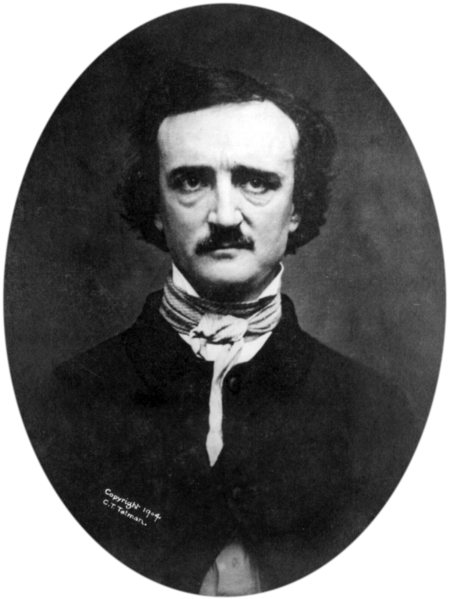
I’m not at all certain I’ll finish it, but at my daughter’s suggestion I watched the first episode of Netflix’s new series, The Fall of the House of Usher.  This isn’t set in Poe’s day.  The action is in the present and it opens with a funeral for three of Roderick Usher’s children.  What’s particularly striking about this funeral is that the priest’s homily is composed of lines from Poe.  I think we all know that Poe is undergoing a great surge of popularity these days, but this series seems not content just to name characters and companies after Poe’s names, but it also weaves his thought deeply into the fabric.  It uses his images in literal ways that add depth to the plot.  I’m not sure that I can spare the time to watch it the whole way through, but I’m sorely tempted to do so.

With C. August Dupin as the Assistant District Attorney, the series ties Poe’s ratiocination stories in with his horror tales.  Like most recent media efforts, the cast reflects diversity in many ways.  This diversity isn’t the reason the house of Usher is falling, but it’s because of disloyalty.  The family owns an unscrupulous company that has shown disregard for the suffering it causes, buying its way out of legal difficulties.  (This part is quite realistic and one can’t help but to think of Trump and others like him who simply buy injustice.)  But someone in the Usher family has decided to speak out.  Dupin won’t reveal who it is, so Roderick and Madeline Usher put the family up to the task of rooting out, and killing, the informant.

Perhaps with some time off over the holidays I’ll be able to catch more of the series.  It intrigues me, however, that Poe is being used essentially as scripture.  Literally.  The priest’s homily fades into the background as the surviving family members check in on each other, but his words are drawn from a variety of Poe’s writings.  I’ve long felt that our canon of scripture is too small.  Inspired literature did not cease to be written in the second century.  As someone who has listened, and still listens to sermons, it’s clear that the Bible alone isn’t a source for knowledge.  I haven’t read all of Poe—he left a massive paper trail through his life—but what I’ve read sticks with me and hearing him as sermon material makes me think I need to try to find time in coming weeks to pick up another episode or two.


Bears Repeating

I read Robert C. Wilson’s Crooked Tree before I began this blog, I guess.  I remembered it being better than it seemed this time around, but it works as a horror novel.  In fact, the first third or so was quite unnerving, although I’d read it before.  After that the plot tends to require greater suspension of belief.  But then again, American Indian horror has come a long way since then.  Wilson, according to the limited information about him online, isn’t an Indian.  These days publishers are very concerned with appropriation—something that wasn’t an issue back in 1980.  And these days the work of Stephen Graham Jones, who is both a Blackfoot and an excellent horror writer, raises the bar considerably.  But Wilson is honest about the situation in his laying out of the novel.

Axel Michelson is a lawyer and he’s working to preserve the fictional Crooked Tree State Forest and prevent development.  Many of his colleagues and neighbors in Michigan are Indians, and so is his wife.  Axel’s efforts are hampered by a sudden onslaught of black bear attacks.  The description of the first three or four are scary enough to dissuade you from ever going camping again.  Axel’s assistant is an Ottawa and and he and his family suspect a bearwalk is involved.  This is the reason I read the novel the first time.  As a Native American folkloric monster, the bearwalk is difficult to uncover.  There are a couple more novels—one of them hard to find—that feature the tales, and there’s a university press book on folklore that has some accounts.  Not much more is out there that I can locate.

A bearwalk is a kind of shape-shifter.  A spirit that can control bears, in this case.  Axel becomes the white savior who uncovers the ancient ritual to stop the bearwalk, which has taken control of his wife—his main motivation for stopping it—while the Indians can’t figure out what to do about it.  They do tell him about the ritual, but mourning the loss of their culture, they fear it’s gone forever.  Meanwhile the bear attacks continue but once the shock of the first few attacks has worn off, they don’t scare so much.  There’s also a lot of supernatural involved, mostly drawn from native traditions.  It seems clear that, like Axel, Wilson did quite a bit of research on American Indian folklore.  He treats the Ottawa culture with respect and wrote a novel that might’ve had more influence than it seems. It’s well worth the read the first time around.


Author! Author!

It happened in Salem.  In 1861.  The classic American card game, Authors, was published.  G. M. Whipple and A. A. Smith devised the game, which has remained available ever since then.  It’s one of the few games I remember having as a kid.  We, of course, had the Bible Authors game as well, which I’m kind of nostalgic for, but not enough to see if it’s on eBay.  The object of Authors, an early form of “Go Fish,” is to collect sets of four cards for each author.  Each card lists a different work.  Poets are represented by poems, of course, but prose authors mostly by books.  I have to confess to having eBayed this some time back and having beetlebrowed my family into playing it with me.  I noticed, however, a few curious omissions.

Edgar Allan Poe isn’t among their number.  Neither is Herman Melville.  Rather strangely, they included Shakespeare—centuries earlier than the others—and Alfred, Lord Tennyson.  The only female is Louisa May Alcott when there were perfectly acceptable Brontës in the room, as well as Jane Austin.  The game reflects its time.  A couple years back I was in Michaels—you know, the arts and crafts supplies store.  In fact, Michaels is one of those places for family outings, for families like mine.  (We tend to be creative types.)  While I’ve never been into scrapbooking, I walked down that aisle and found a set of stickers labeled “Literature.”  Two authors were represented: Shakespeare and Poe.  People smarter than me have argued that worldwide Poe is probably the best recognized American author.  I think it’s safe to say Shakespeare occupies a similar role in Britain.

Poe had fallen afoul of many in America because of an intentionally damning obituary by Rufus Wilmot Griswold, whom Poe had named his literary executor.  If it weren’t for Poe nobody would likely know Griswold’s name today.  In 1861, when Whipple and Smith were inventing their game, Poe wasn’t really considered worthy of emulation, largely because of Griswold.  He wasn’t the kind of guy you’d want your kids to be too curious about as you tried to teach them about literature.  Authors has gone through over 300 editions over the years.  I’ve never seen any of them (apart from Bible Authors) other than the Whitman edition from my childhood.  Each time I pick it up, smell the cards (go ahead—try smelling your Kindle), and thumb through the authors I feel like I’m missing something.  Go fish.


Black Bird

Although we prefer typecasting—it’s so much easier!—Edgar Allan Poe had both depth and width as a writer.  He penned funny as well as scary, love poems and detective stories, even something like a scientific treatise.  One thing I’m sure he didn’t anticipate was his name being suborned for cheap horror movies.  Roger Corman is a Hollywood legend—a good example of a guy making it in the film industry on his own terms.  He paired Vincent Price with a number of Poe titles that had little to do with the actual works of the writer.  One that oddly stayed with me since childhood is The Raven.  This was well before I’d read the poem.  It’s funny how very specific things will stick in your mind.  I remembered the strange hat Price wore.  And I remembered—misremembered, actually—Price using a spinning magical device with sparklers.  Misremembered because that was Peter Lorre’s character, not Price.

That was it.  I didn’t remember that Boris Karloff was also in the film.  I was too young (as was he) to recognize Jack Nicholson as well.  Although I watched The Twilight Zone, I didn’t realize the script was by Richard Matheson.  This film was loaded with talent, but it really was goofy.  I recollected Price was a magician, but I didn’t know this was a rather silly battle to become chief magician.  Lorre’s ad libbed lines were surprisingly funny, even after all these years (I was about one when the film came out).  Surprisingly, the movie did well at the box office, despite its taking a sophomoric approach to perhaps Poe’s most serious poem.  

I’d avoided watching it again for all these years because of that sparkler scene.  I’m not sure why that particular moment wedged itself so firmly in my young brain.  It seemed so not Poe that I couldn’t get back to the movie, apparently.  With Price and Lorre camping it up—Karloff was, by all accounts, most professional as an actor—and Nicholson uncharacteristically timid, the cheap special effects, it’s obvious that viewers enjoyed a good laugh at this one.  It’s not true to Poe, of course.  It’s true to Roger Corman, however, a filmmaker who knew how to deliver cheaply and quickly and still earn some money at it.  I’d last seen The Raven about half a century ago.  I may be tempted to watch it again, after having seen it as an adult, but if I wait too long I’ll need to leave that duty to someone who’s read this and who isn’t afraid of sparklers. 


Who’s Knocking?

I’m by no means alone in enjoying Stephen King novels.  I’ve read a fair number over the years.  I was put on alert for The Tommyknockers by a scholar who pointed out some of the religious elements in it—again, not rare in King’s oeuvre—but I’d never heard of it before that.  I’m not really a good fan boy, I guess.  In any case, I saw a copy with the shiny copper of King’s name worn off at a library book sale for a buck.  It sat on my shelf for many months because, well, it’s long.  I finally pulled it down in October only to discover that it wasn’t my favorite King story.  For one thing, it’s simply too long.  For another, the characters aren’t the easiest to cotton onto.  If you’ve not read this one and you plan to, a spoiler of two might slip out but I’ll do my best not to ruin the ending.

I think horror when I think King, although I know it’s unfair to typecast authors like that.  Tommyknockers is more King’s hand at science fiction.  Well, at least it has a space theme, which is generally a cue for sci-fi in my book.  Bobbi Anderson discovers a buried flying saucer on her Maine property.  With the help of an alcoholic friend (Jim Gardener) she begins to excavate it.  The saucer, which has been buried for millions of years, is reactivated by their interaction with it and soon the entire town of Haven, except those with a lot of metal in their bodies—like Jim, are under its power.  They invent advanced gadgets (and weapons) using power from the ship and standard batteries.  They begin physically transforming into something less than human.  Jim, mostly immune, tries to help Bobbi out but he, along with a fairly extensive cast of disposable characters, are powerless to stop things.

Like most King novels, it’s well written.  Like some of his other material, it’s over-written.  Having had my own written work chopped down  (and, let’s face it, I’m now an editor), I see places where cuts could be made.  As with any long book, however, I’m left feeling a bit lonely now that characters I’ve read about nightly for many weeks are gone.  Even though I really had a difficult time evoking much empathy for them, hey, they’re people too.  Or so it seems.  Such is the magic of fiction.  Besides, there are bits of the old King horror still present in the book.  I know it won’t ever be my favorite King novel, but it won’t stop me from reading another, when I have the time.  Hopefully the next one will be a few pages shorter.


Biggest Book

As a bibliophile it’s kind of embarrassing to admit that I’ve only just learned about the world’s largest book.  If you’re like me you’re probably imagining an enormous tome that required acres of trees and fifty-five-gallon drums of ink to print.  But that’s not it at all.  This particular book is located in Mandalay in Myanmar.  If I say it’s a religious text you might be clued in that it represents the Tripitaka, or Pali Canon.  These are Buddhist scriptures.  They are extensive, as scriptures tend to be.  I’m certainly no expert on religions in that part of the world, but it’s clear that the world’s largest book, as a monument, required a massive amount of effort to put together.  Housed at the Kuthodaw Pagoda, the texts were inscribed on stone housed in 729 stupas that are stunningly beautiful.  (Take a look for other photos online—it’s impressive!)

Photo credit: Wagaung at English Wikipedia, published under GNU Free Documentation License

The monument was completed in 1868.  When the British invaded southern Asia, however, there was much looting and damage was inflicted on the shrine.  It was eventually repaired and still stands as the largest book in the world.  It’s no real surprise that this honor would be relegated to a religious text.  Bibles of all sorts become symbols and their symbolic nature often supersedes what’s written inside.  The idea of the sacred book has an unyielding grip on the human psyche, whether we think the book comes from God or an enlightened human being.  Indeed, the sacred itself is an integral part of being human.  When one group wants to dominate another, it often goes for its sacred artifacts.  Cathedrals as bombing targets in the Second World War demonstrate that well enough.  Ironically, we’ve ceased paying much attention to the sacred but we still revere it.

Books represent the best of our civilizing nature.  They’re ways of coming to see the point of view of others.  It really is a privilege to read.  Banning books is, in its own form, a crime against humanity.  Those who ban almost inevitably end up promoting yet more sales of the offending book.  I often see books that make me angry or upset.  My knee-jerk reaction is to want to deface them—this is a human enough response.  But taking time to reflect, I realize that these writers are entitled to their opinions, benighted though they may be.  A civil exchange of ideas is essential to getting along in a world with billions of different opinions.  Every nation should have a monument that shows its love for books.


Mystery of Poe

I’ve read my fair share of books on Edgar Allan Poe, but I have to say that Mark Dawidziak’s A Mystery of Mystery: The Death and Life of Edgar Allan Poe is perhaps the best.  Like Dawidziak, I realize that writers, as well as other historical figures, come to be who we need them to be.  This book, which pinwheels around the unsolved cause of Poe’s death, is probing of his life as well.  His younger years and his likely psychological profile as a child who never felt he received the love and affirmation that he required, really spoke loudly.  This explains much of his behavior, which was often contradictory and didn’t serve his own best interests.  Today Poe is an icon of horror, but as this wonderful book explains, Poe was so much more.

People are often typecast.  We have limited time and our own lives are so crowded with stuff we have to do that, as a matter of survival, we need to “profile” others.  I’m constantly reminded of this when I spend time with people (which is not often), particularly those I know well.  I leave realizing that I don’t know them as well as I think I do.  I’ve only seen the surface, or just below, if I managed to engage with any depth.  My own involvement with Poe goes beyond memory.  As in a dream, I don’t know when I was first exposed to him or his writing.  Still, I know that I’ve had a lifelong “parasocial relationship” with him.  I suspect that many of us who appreciate his writing do.  Well, back to the book.

A Mystery of Mysteries begins near Poe’s death, setting the stage.  The chapters then alternate, going back to a chronological treatment of his early life, and then picking up the narrative of his death.  Along the way, a compelling portrait is painted.  Like the majority of us who write, Poe didn’t find much recognition in his own lifetime.  Of course, he died young, but his lifestyle might well have created that situation, regardless.  Jealous of others who received more attention, Poe knew he had a special intelligence that was unappreciated.  It still is.  Yes, Poe has many, many fans, but many, I suspect, don’t have a good idea of who he was as a human being.  For as much as he wrote, Poe didn’t really give us reliable details of his own life.  Dawidziak ends with some well-reasoned speculation of Poe’s cause of death.  But I won’t tell you what he suggests because I want you to read this excellent book.


Witching Season

I can’t be sure I understood White Is for Witching, but Helen Oyeyemi’s novel grew on me once I started to piece together what was happening.  A long sit in a waiting room finally got me hooked.  This is an odd story that’s quite a bit about atmosphere.  Miranda Silver and her twin brother Eliot, live in the Silver family house (through her deceased mother’s side) with their father.  They run it as a bed and breakfast, but Miranda’s ill.  She suffers from pica—a disorder where a person eats indigestible items rather than food.  Her mother, who died young, and her mother, and grandmother, continue on in the house, but not as ghosts proper.  They are more a controlling presence guiding the way for the lost daughter who, it seems, is destined to join them.

Miranda’s not an unreliable narrator because she’s never the narrator.  Sometimes it’s her brother, other times it’s her girlfriend, and other times it’s the house itself.  Oyeyemi’s writing is compelling, and she’s great when she takes the narrative thread and runs with it.  The fault is entirely mine, of course, but I prefer a straightforward story where I’m not confused from the start.  I recently put a book down because I was confounded about the issues raised.  I’m flummoxed enough by life itself so that when I want to sit down and read I prefer something that makes sense.  Or that I can follow.  The novel has a wonderful gothic atmosphere and the tragic young woman definitely has shades of Poe.

My compulsion to read appropriate books in October led me to White Is for Witching.  It’s set in England, however, and having lived in the United Kingdom for three years I know autumn there is not the same as fall in North America.  That’s not the fault of the story, of course.  The tale is textured and complex, exploring avenues of madness and isolation (it’s set in Dover and Cambridge).  The part where Miranda falls in love with Ore, at college, becomes quite gripping.  There’s some confusion as to why her twin brother acts as he does, with one of the narrators suggesting that he’s unreliable.  There are speculative elements but no ghosts seen clearly.  And race is obviously an issue.  It’s not the central issue (beyond the author perhaps suggesting something by the title).  There’s a lot going on here.  Normally I don’t read synopses before reading fiction, but this is a case where that might be helpful before indulging in this moody, thoughtful tale.


Learning too Late

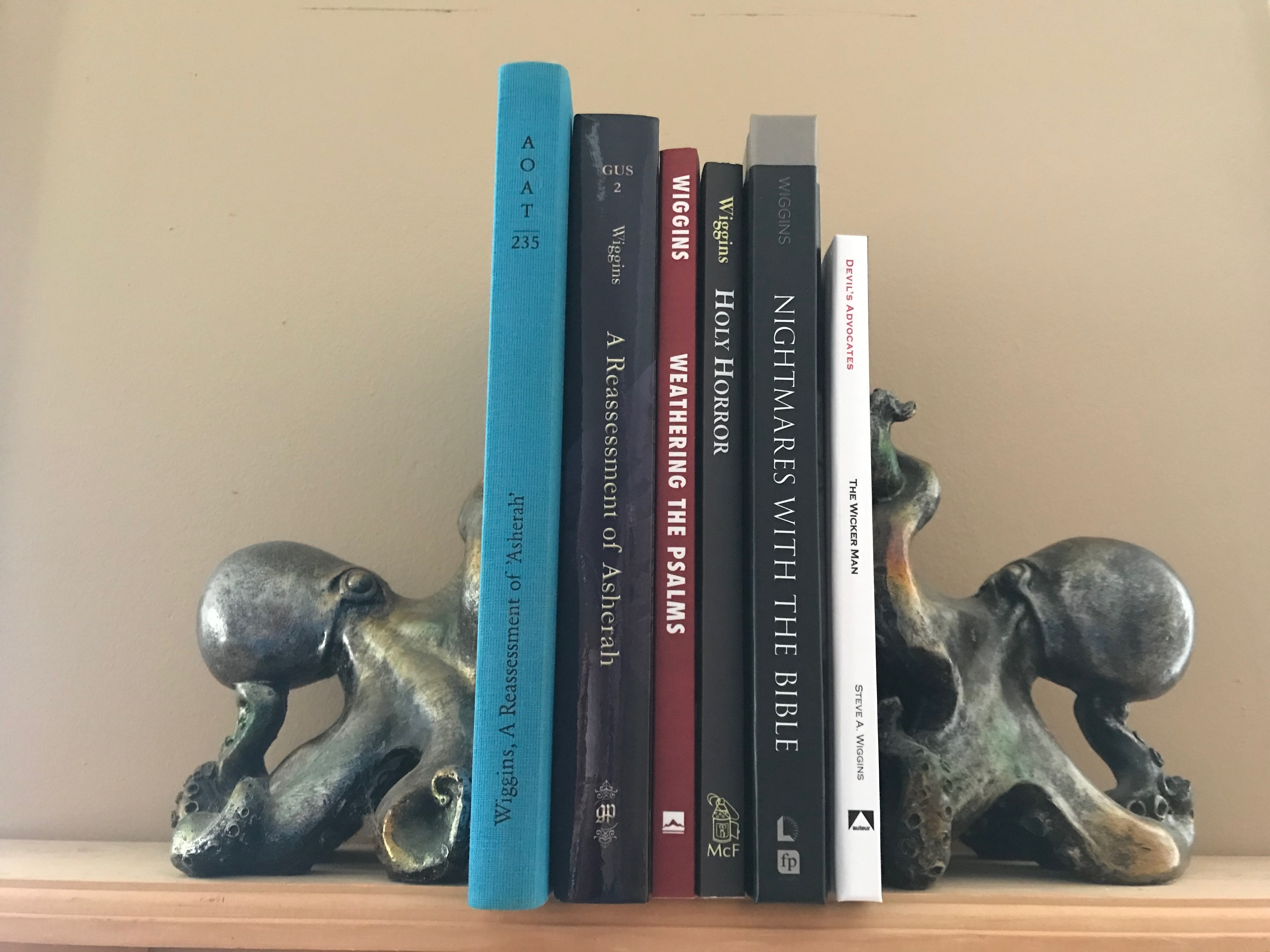
Threads of this, crumbs of that.  My life has been a grasping at small bits.  I know the things I like, but which circumstances keep me from.  Nobody is paid to read only, and writing brings in so very little money.  I’ve read Edgar Allan Poe since I was a child, but I haven’t read all of his written works.  (The same is true of the many other writers I admire.)  When I wrote Nightmares with the Bible, I tried to tie the theme of demons to Poe.  I began a chapter with an epigram from “The Raven”—“And his eyes have all the seeming of a demon’s that is dreaming.”  At this point in my life I had not read, or if I had I’d forgotten, “Alone.”  Not published in his lifetime, Poe wrote the poem at 21.  It ends with words that would’ve been appropriate for my Nightmares venture:

From the lightning in the sky

As it pass’d me flying by—

From the thunder, and the storm—

And the cloud that took the form

(When the rest of Heaven was blue)

Of a demon in my view—

Some printed editions end the poem with a period.  The ambiguity of that final em-dash, however, would’ve made particularly well the point I was struggling to convey.  Demons are not what we think they are.  As I continue to read about The Exorcist and its impact, it becomes clear that media mediates reality.  That view of demons has become canonical, but many, from Poe both backward and forward, have wrestled with them.  Not every entity with which we struggle through the night ends up blessing us in the morning, disjointed hip or not.  “Demon” is a very slippery word.  And concept.  In a materialistic world we boldly claim there are no such things.  As Poe wrote, “Of a demon in my view—”

There’s more going on beneath the surface than most people would be able to guess.  This is perhaps why I have a penchant for staring at the ocean.  Misunderstood, certainly.  But never, I hope, shallow.  There are great depths to be explored, but as the ocean teaches us, humans can’t stand the immense pressure at the bottom of the sea.  No, our lives are more like the bits and pieces of seashells plucked from beaches.  We don’t have the whole picture.  All writing reflects a stage on a journey.  Those who embark must earn their keep as they go.  And finding validation after the fact is one of the small joys of life that keep the traveler moving forward.


Something Wicked

There comes a morning each year, pre-dawn, that it happens.  I crawl out of bed and things feel slightly chilly.  The furnace hasn’t been turned on yet, and ever sensitive to cold, I put on long sleeves and slippers to do my morning writing before the sun.  I start getting a powerful hankering to watch my autumn movies.  This year when that happened, in September, I finally watched Something Wicked this Way Comes.  Now, Disney isn’t a studio known for its horror films.  Over the years, however, they’ve produced some family-friendly efforts toward the scary end of the spectrum.  I tried to make the case in Holy Horror (and a list on IMDb agrees with me) that Pirates of the Caribbean falls into that gentle horror category.  I’ve read established writers on horror claim that The Watcher in the Woods was the movie that frightened them most.  I don’t think Something Wicked falls into that category, but I can say I liked it better than the novel.

And that’s saying something, because it was written by Ray Bradbury.  Bradbury’s stories were an integral part of my childhood.  In fact, much of my fiction writing is modeled on his work.  I didn’t really care for the novel Something Wicked this Way Comes, which I read last year.  The film is an improvement.  And it had a tortured way to the silver screen.  It began as a short story.  Bradbury himself adapted it into a screenplay anticipating a role for Gene Kelley.  This was in 1958.  When that didn’t pan out, he wrote it as a novel.  Filmmakers began to show an interest in the early seventies, but the movie didn’t come out until 1983, after Disney bought the rights and took over production.  The screenplay is mostly Bradbury and the soundtrack rips off Star Wars more than once.

Bradbury could get a little too nostalgic about boyhood.  His yesteryears seem far too innocent to me.  Although, having a few scenes where Jim shows curiosity about sex was a bit racy for Disney, I should think.  Jonathan Pryce does a fine job as Dark, and the mood isn’t bad for family-friendly fare.  I was never much of one for carnivals.  I can’t do rides and it’s easy to see through the games you can’t win and even if you do your prize is cheap.  Other entertainments always appealed to me more.  Still, the film sets a mood, and that’s generally what I’m after when the mornings begin to feel chilly and I’m looking off into another winter.


Starting October

October’s a difficult month to quantify.  When it rolls around I get in the mood for certain books and movies, but I like to see and read new things.  I check lists to see what others recommend for what I hope is a similar mood.  A book that kept coming up was Roger Zelazny’s A Night in the Lonesome October.  Published thirty years ago, it’s not exactly new, but it was new to me.  It’s a humorous story, told by Snuff, a dog.  But not just any dog—he’s a player in a game that takes place when the full moon lines up with Halloween.  There’ll be spoilers hereafter.  The game involves two sides deciding the fate of the world, and each has the usual monsters lined up.  Dracula, the wolf man, Frankenstein’s monster and others are involved.  One side tries to awaken Lovecraft’s Old Gods and destroy the world while the other side tries to stop them.

Each chapter is a day in October and what the game is is only slowly revealed.  The antagonist for all of this is really the parson.  It turns out that he’s a minister for the Old Gods’ true believers.  Various monsters or players are killed and Sherlock Holmes is hanging about, trying to solve the mystery.  The story’s really a mash-up of several characters from yesteryear.  It’s not scary, nor is it particularly moody.  It’s a good example, however, of how religion and horror, even if it’s comedy horror, work together.  The Old Gods are an existential threat and require clergy to perform the correct rituals.  Roger Zelazny was fond of using characters from existing mythologies in telling sci-fi-ish stories, and this fits that writing mode.

This is an enjoyable story, but my October mood isn’t only a monster one.  Set in England, A Night in the Lonesome October doesn’t really have the leaves, pumpkins, and ghosts of my melancholy season.  Also, the humorous aspect is fine, but acts as a distraction from what I generally seek.  This is a magical time in northern climes.  Of course, I read a good deal of this while traveling to and from South Carolina, so getting the right mood was tricky when it’s beach weather and the flowers are still in bloom.  October means different things to different people, I know.  I’m still looking for the novel that manages to encapsulate my experience of it.  There’s something difficult to quantify about it, and that’s perhaps what I need to define.  


Poe’s Charleston

The first thing that came to mind, apart from family, when I learned we were coming to Charleston, is Edgar Allan Poe.  I learned about Poe from my brother at a young age and he may be the earliest author I recognized.  Over the years I’ve visited his birthplace memorial in Boston, his college dorm room in Charlottesville, his house in Philadelphia, and his grave in Baltimore.  I did visit Richmond a quarter century ago, but I had a migraine that day and couldn’t think straight.  When I heard “Charleston,” I immediately recalled that Poe had been here.  He was stationed at Fort Moultrie on Sullivan’s Island, not far from where we’re staying.  As in many cities that Poe called home, he’s become a favorite son of Charleston.  I knew we wouldn’t be able to see all the haunts—I don’t think the larger family shares my fascination—but we got a start before the reunion began.

The first stop was the most tenuous.  Rumor has long had it that Annabel Lee, of Poe’s last complete poem, is buried in the cemetery of the Unitarian Church.  The cemetery is renowned for its flora, which are kept largely untrimmed to match original wishes.  It proved an atmospheric place even on a sunny day.  Then it was a trip to Fort Moultrie itself, where Poe would’ve wandered as a young man.  The thick walls and largely subterranean emplacement would’ve been impressive in the days before modern warfare.  In fact, with the large military presence here, war seems an accepted fact of life.  We didn’t have time to find the Edgar Allan Poe Library, but we were honored to eat in his presence at Poe’s Tavern.  This spot makes it into travel books not because Poe ate here, but because its decor is all Poe-themed.

This journey has been a voyage of discovery.  Our first night in Charleston I had probing dreams about my father.  They actually began a couple days before our flight.  Like Poe, my father had a problem with alcohol.  Like Poe, I never really knew him personally.  Although Joseph Campbell’s overblown, I believe he’s right that the hero’s journey is the search for the father.  Critics sometimes complain that they don’t understand my integration of Poe in my nonfiction books on horror films.  My only defense is that something deeply personal is going on.  This odyssey began over half a century ago, in my childhood, and coming here, I knew that I had to meet the man and claim my heritage.


Beautiful Vampire

It’s been a quest years in the making.  I first found the Dark Shadows novels by Marilyn Ross at the Goodwill Store in Seneca, Pennsylvania.  The series had recently finished its television run and, as this was a used book bin, and limited in size, you could never tell what you might find.  My teenage self, fascinated by vampire lore, eagerly read those I could find.  I got rid of the volumes I had when I attended college and began to miss them when I was old enough to admit such things.  It took at least fifteen years to locate all of them, and now, for the first time in my life, I have read the entire series.  Barnabas, Quentin and the Vampire Beauty isn’t always easy to find.  I certainly hadn’t read it before.  Not that it’s high art—the campiness shows through the gothic setting from time-to-time—and yet it’s an accomplishment.

This particular story again shows some development from what had gone before.  The vampire beauty is a young woman tricked into having weight reduction surgery in Switzerland.  The surgery, naturally enough, transforms her into a vampire.  She needs help so she seeks out Barnabas Collins, which leads her to Collinwood.  From there a set of adventures head toward the typical climax of this series of books.  Nevertheless, W. E. D. Ross seems to have shown some improvement over the thirty-two novels in the series.  This story seems less similar to others in the series as a whole.  Quite a bit of effort is spent on trying to find a vampire cure, but for Adele Marriot rather that Barnabas Collins.

I have to wonder if Ross knew this would be the last Dark Shadows book he would write for the series.  He did write other gothic fiction, and even a novelization of the movie, House of Dark Shadows, but the initial series ends with a kind of knowing that we’ve reached the end of something.  Was he told by someone at Paperback Library, “Hey, we’re pulling the plug on the series” or did he simply run out of steam?  The daily television show ran for about 1225 episodes.  This original novel series had far fewer.  Still, the thrill of hunting all of them down, lining them on my shelf, and then reading them in order was a rare pleasure.  It was a recapturing of, perhaps even a completing of, part of my childhood.  It may have taken decades to accomplish, but an accomplishment is an accomplishment.


Banned Monk

One of the strange things about gothic fiction is that, although often set on the continent, the early practitioners—inventors, if you will—were English.  Three names among them stand out in many treatments of the genre: Horace Walpole, Ann Radcliffe, and Matthew Lewis.  I’ve read the former two and have long supposed I should read the latter’s The Monk.  This 1796 novel made the author famous, but it is long.  And written in the often florid style of the age.  Still, there are plenty of swoons and thunder-plagued nights.  Set in Madrid with a cast of closely related characters, the novel has a twist ending that I did not see coming, which is pretty amazing considering that the book has been out for over two centuries.  (I may have read about the ending before, but had forgotten, if that was the case.)

The novel intertwines two stories that revolve around Antonio, the eponymous monk.  A paragon of righteousness, he heads an abbey in Spain and all are in awe of his piety.  Until sex breaks through his vanity (so we are told; his piety was based on too high a self-regard).  Once seduced, he can no longer maintain his status as chaste, and this sets in motion a tragedy that will leave innocent people dead and lives ruined.  Lewis, it’s famously known, used the novel to critique excesses of the church.  Its power, the novel demonstrates, corrupts.  Still, at the end I was left feeling sorry for Antonio.  He was set up by the Devil and his chances of winning were quite slim from the beginning.

Although PG-13 by today’s standards, the novel scandalized English society when it came out.  The sex scenes were too explicit for the day, especially since they involved the clergy.  The story has quite a leisurely layout, and only after 200 pages (in the edition I read) does the supernatural enter the picture.  Once it does the pace begins to pick up.  The weird thing is, despite its length, this story works.  It’s considered a classic—although often dismissed because gothic literature generally is—it nevertheless delivers.  Antonio is shown to be subject to weakness, and while vain, not inherently evil.  He’s a victim of human vulnerability.  Readers in the late eighteenth century couldn’t see beyond the sex, but there is a tragic human story here.  Castles, abbeys, ghosts, and subterranean passages, murder and torture, it’s gothic through and through.  Although it took most of September to get through it, it feels like I accomplished something worthwhile.  And I finished just in time for Banned Book Week.


Ravens and Autumn

In need of some diversion, and seeking some way to celebrate the equinox, we made our way to Mount Gretna.  With a population of less than 300 souls, Mount Gretna is remote and an area of natural beauty.  But that’s not why we’re here.  Each year the Mount Gretna Theatre—housed in an open-air playhouse—puts on an Edgar Allan Poe performance in the autumn.  I’m not sure if it’s always titled “Nevermore,” but it is this year.  And it’s a fine evening for an outdoor performance.  The show is a walking tour of seven Poe vignettes.  A guide starts the evening by telling us a murderer is on the loose and Dupin (for Poe invented the detective story genre) warns us to trust no one.  I’m thinking this will be a murder mystery, but the first vignette is adapted from “The Fall of the House of Usher.”  My favorite short story, I smile at the choice.

The next venue—we’re walking around the parameter of the playhouse now—is from “The Masque of the Red Death,” which has taken on new significance with Covid.  These, by the way, are single actor vignettes.  We’re then led to a saucy woman who performs “The Black Cat” with a subtle humor.  As she’s led away, a madman leads us to a corner of the building where he retells “The Telltale Heart,” and you begin to realize just how much Poe wrote about revenge and guilt and murder.  We’re then led to the only two-person vignette for a retelling of “A Cask of Amontillado.”  A haunted young man crying “Lenore” next recites “The Raven,” from which the evening takes its name.  The final vignette is the only unfamiliar one in the lot, based on Poe’s humorous—if politically incorrect—stories, “How to Write a Blackwood Article,” and “A Predicament.” (Set in Edinburgh, no less.)

It’s a beautiful September night in a delightful wooded setting.  The fact that it takes some effort to get here is part of the draw.  The actors clearly enjoy themselves and the stories are told in such a way that it doesn’t matter that we’ve read them all before.  Once back home, I learn that the playhouse is in a borough founded by the Chautauqua Society.  I think how times have changed and that it was quite a world that supported adult education institutes.  Chautauquas are found around at least the rural parts of the country.  Founded by a Methodist minister, Chautauqua was a wholesome competitor to Vaudeville, offering entertainment as well as education.  I feel I’ve been both educated and entertained as we climb back in the car in a Pennsylvania night on the eve of the autumnal equinox.