Mirror Gothic

I have a soft spot for gothic novels.  I get the sense that Rebecca James set out to write the most gothic novel ever in The Woman in the Mirror.  Although the supernatural persists in the background throughout the novel, it’s mainly the reflection of two women who encounter the mysterious Winterbourne Hall, high on a cliff over the Atlantic in Cornwall.  Rachel Wright, in the present day, is a self-made woman.  Overcoming the life of being raised an orphan, she has opened a successful art gallery in New York City when she receives an unexpected letter informing her that she’s inherited an expansive property in England.  Not knowing who her parents were, this is a world-changing surprise, so she heads to Cornwall to find her past and to figure out what to do with her inherited property.

Her story is intertwined with that of Alice Miller.  An English woman from two generations past (I’ll come back to that), Miller grew up with a bully for a father and a desire to make it on her own.  She’s hampered, however, by a past secret.  She takes up employment as a governess at Winterbourne where a Rochesterian Jonathan de Grey is lord of the manor.  His two children, fraternal twins, require keeping and the last governess threw herself off the cliffs—you see what I mean by most gothic—so Miller takes the post.  The massive house, however, has a strange effect on her.  Not only on her, we learn, but on most of the women who live there.  The final housekeeper, however, does seem to be immune, perhaps because she’s older.

The story is slow paced, with a fair amount of romance thrown in.  Both Rachel and Alice have lost lovers and are coping with their pasts.  They never meet, of course, being from separate generations.  Perhaps this is just the perspective of an old geezer, but putting Alice Miller in, presumably, her twenties in 1947 doesn’t really seem long enough in the past for the story to unfold as it does.  I couldn’t help but think that this makes her about my mother’s age and I would have to admit that my own daughter is old enough to inherit an estate while having already become a successful artist in Manhattan.  The timing just seemed a little off to me.  The perfect gothic novel seems to require some Victorian aspects, in my opinion.  Nevertheless, this story becomes quite gripping toward the end.  If you want a modern-day gothic romance, you’ll likely enjoy The Woman in the Mirror.


Iron Age Angst

Browsing can lead to unexpected finds.  Such is the magic of bookstores.  Most of the books I read are recommended to me either through online sources or from people who have an inkling of my tastes.  Often such books are on the long side.  While I don’t object to really getting into a book, like most people I wonder where the time goes and a short read gives you a sense of accomplishment.  So it was that I was browsing a local bookstore for something brief.  I came across Ghost Wall by Sarah Moss.  The back cover bore no BISAC info telling the genre, but in this case the blurbs convinced me that I’d find this a rewarding read.  It’s not horror, but it has a sense of doom about it.  There may be some spoilers below but I won’t give away the ending.

Told from the point of view of Silvie, a teenage minor, it recounts a college anthropology experiment on the moors of northern England.  Silvie isn’t one of the students, but rather a high-school-aged daughter of a bus driver enamored of Iron Age Britain.  A professor has three students set to live part of the summer like Iron Agers, and Silvie’s father has brought her and her mother along to do “the women’s work.”  Yes, he’s a chauvinist and he has violent tendencies.  He clearly wishes he’d lived in “simpler” times.  I suspect what makes a novel like this work is that many of us know people like the father.  Hard, angry men.  As the story unfolds we witness his abuses and the clueless professor simply continues play-acting Iron Age.  Until they get the idea of sacrificing a victim like the bog people of northern Europe.

The style is spare, like Cormac McCarthy’s The Road.  As one of the blurbs says, there are echoes of Lord of the Flies as well.  What do groups of men get up to when unleashed from civilization?  It took me some time to figure out, since this is entirely first-person narrative, that there are only three students—one woman and two men.  With the chaperones it’s two men and a woman.  This uneven power structure raises its own questions.  Meanwhile Silvie is coming of age, beginning to realize her own sexual awakening.  Her best role model is the co-ed among the group since her working-class mother lives in fear of her husband.  The story is compelling and a bit scary.  It’s also a rewarding read that won’t take a month or more to finish.


A Bookseller’s Son

Be kind.  One of the best reasons, apart from innate rightness, is that we don’t know the burdens other people carry.  Yes, some will tell us and others will not, but one thing is certain: we all bear scars.  I met Andrew Laties because of the Easton Book Festival that he organized.  Andy is half-owner of Book and Puppet Company, an independent bookstore in that town.  A colleague of mine from Lafayette College introduced us back in 2019.  Whenever I go to Easton I stop in the store and pick something up.  Andy has kindly slotted me into each annual Book Festival, except last year, because of a burden I happened to be carrying.  I recently finished his book, co-authored with his son Samuel, Son of Rebel Bookseller: A Very Large Homework Assignment.  Andy had revealed one of his burdens before I read it, and I appreciated the slight cushioning of the shock.

Samuel is a posthumous co-author.  I have had friends—too many—who have lost children.  It is a devastating blow.  I’d casually chatted with Andy for five years without realizing he had this to bear.  This book is an unflinching stare at the unfairness of life.  You get a good idea of what Sam must’ve been like, through his writing and his father’s description.  His brilliance is evident, even as we learn of his mental illness.  The two often go together, and even contemporary successful authors, such as John Green, have  revealed their mental struggles to the world.  There are many great writers, like Edgar Allan Poe, who clearly had some issues.  The stigma must disappear.  Our culture would be so very poverty-bound without it.

Son of Rebel Bookseller is available on Bookshop.org.  Or, if you’re in Easton you can stop into the shop.  The title makes reference to Andy’s previous book, Rebel Bookseller, which I mentioned here a couple years back.  This, however, is a much more personal story.  An anguish screaming to be released.  Something that I’ve picked up on during editorial board meetings at work is that books by authors with a compelling personal story have something special about them.  They may not end up published by the Big Five, and they may really find only a local readership.  That doesn’t mean, however, that they can’t have an impact.  The vast majority of books have limited readerships, and some of them are far more important than those that line bestseller lists.  And this one reminds me once again the importance of kindness, and striving to be as humane as a human can be.


Though This Be Madness

Shakespeare could turn a phrase, alright.  Along with the Bible he’s one of the two most unwittingly quoted sources in the English language.  But he liked to borrow ideas.  Writers have always done this, and it came home to me again watching Robert Egger’s The Northman.  My wife and I intended to see it in the theater two years ago—life gets too busy even to get out to a movie, it seems.  So we had to settle for Amazon Prime.  In any case, I don’t read about films in advance and I avoid trailers when possible.  I couldn’t help hearing, however, that it was a viking revenge story.  Still, it wasn’t until my wife said, “Isn’t this like Hamlet?” that I made the connection—Amleth.  Hamlet.  Scandinavian. Danish.  Okay, so The Northman is based on the legend of Amleth which is the direct basis for Shakespeare’s Hamlet.

Like all of Egger’s feature films so far this one is meticulously researched and very moody.  More than once it made me glad that we live in a civilized society, such as it is.  Those of us who were the runts of our family litters know that bigger kids often get their way by dint of physical intimidation.  The vikings—and this was a good representation of a berserker—took what they wanted because they could.  But Amleth couldn’t have what he really wanted.  He witnessed, as a child, his uncle murder his father, the king.  Said uncle takes the throne and the queen and Amleth vows revenge, but what can a young boy do?  Then as an adult, he’s told by a seer that he made a promise so the viking heads home to exact revenge.

The Northman really isn’t a standard horror movie, although Egger’s previous two films fall into the genre fairly handily.  His next project is Nosferatu, after all.  And The Northman isn’t a retelling of HamletHamlet was a retelling of Amleth, and this is another retelling.  Those who’ve been following Egger’s rise know that his films are intelligent and melancholy and literate.  They also have a way of disturbing that peaceful acquiescence that comes after viewing a less thoughtful movie.  It would probably have made even more of an impact had we been able to get to it in a theater.  If it weren’t for Shakespeare most of us probably wouldn’t know the story of Amleth, but Norse mythology has a way of remaining relevant, despite the fact that we tend to credit the ideas to others.  Just check the name of the day of the week and see if that’s right.


Le Fanu Fans

Sheridan Le Fanu is sometimes called “the Irish Poe.”  He was a contemporary of Poe but his name doesn’t bear the same cultural cachet.  He wrote a number of stories that are classified as “horror” in today’s genre settings, and one of the most famous is Carmilla, known as the lesbian vampire story.  Le Fanu didn’t use that terminology himself, that I know of, but Carmilla is a vampire and she does have fondness for other females.  I’ve watched a few lesbian vampire movies (I mentioned Theresa & Allison recently), since they give a distinctive taste to the lore.  I don’t generally research the free movies I watch beforehand, so when I saw The Carmilla Movie, I figured it was likely based on Le Fanu (it is) but I didn’t realize that it was a follow-up to a web series with the same characters.  Nevertheless, it’s a pretty good story.

Set in the modern day, with a cast of young people doing things for a living that weren’t options when I was growing up (internet content provider, starting a paranormal investigation business—I was laughed out of school for admitting I was interested in this stuff before the X-Files made it mainstream), the film updates Le Fanu’s story.   Carmilla has become human and has a girlfriend.  But then Carm starts to revert to vampire status.  (Fortunately there’s soy-based blood for her to drink—did I mention this is comedy horror?)  Although this is comedy horror, it’s not a silly story.  There are plenty of humorous asides, but you still feel for the characters and want them to overcome the evil they face.  Here that evil is a past that has to be rectified.

I found The Carmilla Movie to be intelligent and fun.  There are some genuine horror elements to it, and I suspect that being familiar with the web series might help answer a few head-scratchers for us non-initiated.  In general it seems that such independent films as this serve to raise the bar on movies as a whole.  The flip side is, however, that you can’t easily tell if a movie is a studio release or a television movie, or even a web movie without doing some research ahead of time.  Amazon Prime—my go to service—doesn’t distinguish them.  All I know is that if a movie is one I have on my watch list, I’m going to have to pay for it.  Carmilla was free and worth the time to watch.  And it’s good to see Le Fanu getting some deserved air time.


Fear of Spiders

To anticipate, “mygale” is French for “tarantula.”  I learned about Mygale, also published under its English translation, or else Serpent’s Tail, from a Goodreads review.  It’s increasingly difficult to find good, short books.  I knew little about it other than it is a “thriller” by Thierry Jonquet.  The book contains one of the most cleverly drawn plots I’ve encountered in some time.  I also believe it could slip into the horror genre.  I’m reluctant to say much because the pieces are revealed so intricately that to summarize would be to ruin the effect.  I will say that if you’ve seen The Skin I Live in you know the basic idea already.

I will opine that this story demonstrates that a book need not be excessively long to be a good novel.  Some of us appreciate the economy of language that illustrates Pascal’s famous quote, “I have only made this letter longer because I have not had the time to make it shorter.”  My first relatively descent novel was about 230,000 words, or, in other words, well over 400 pages.  The publishers I half-heartedly queried said it was too long.  When writing short stories I quickly learned that many journals only take them if they’re under 3,000 words, some only under 2,000.  As a result, I began writing short.  That’s not exactly true.  I write the story as I want to tell it, then I cut it down.  Again and again.  Short seems to be the fashion in the internet age.  Ironically, the books on my too read shelf all seem to be quite long.  That’s why I decided to give Mygale a try.

I’m glad I did.  The story may not be for the most squeamish, but it’s certainly not blood and gore.  It’s a little confusing at first, but it comes to make sense.  And the ending is somewhat satisfying.  It’s not happy by any means, but it’s well told.  Some classify it as science fiction, but there’s nothing too impossible about it.  It’s set in France around the 1980s.  No space ships or ray guns to be seen.  Genres can be tricky in the face of creativity, but the final act, if you will, reveals this to have been horror all along.  Well, I hope I’ve been able to give a sense of this book without giving any spoilers.  Talking around a subject comes with years of classroom experience, I guess.  I will say the spider isn’t literal.


Clergy Problems

I believe Revival is the most recently written Stephen King novel I’ve read.  It was pretty good—it certainly scores high on the religion and horror scale, although it takes quite a while to get to the horror part.  Part of the problem for me is that I liked Charles Daniel Jacobs.  I tended to relate more to him than to Jamie Morton (the narrator/protagonist).  Perhaps this was because, like Jacobs, I studied to be a Methodist minister.  And like him, came to have a rather different view of what is really going on in the world.  He’s clearly King’s villain, however.  Or “fifth business” as he’s termed in the novel.  The secret lightning he seeks turns out to be a kind of MacGuffin.  I was curious to know more about it.  The novel, as is typical, has several subplots but the main one is how Jamie and Charlie face what’s after death in a tragic climax.

Charlie starts out as a Methodist preacher.  When his wife and son are tragically killed, he becomes a huckster who actually has tapped into an electrical power that can heal people.  It often, however, leaves bad aftereffects.  Jamie, who knew him as a kid, is cured by him from a heroin addiction.  Their paths continue to cross over the next fifty years or so—this is a longitudinal story—as Jamie comes more and more to distrust his childhood hero.  Charlie can use electricity to perform wonders and it make him rich.  He wants more, however.  He wants to see beyond death to assure himself that his wife and son are in a better place.  It seems to me that that motivation isn’t a bad one.  The only way he seems a villain is that he doesn’t really care for other people.

The story is well told but it doesn’t have the same “classic” feel as some of King’s earlier novels.  He well understands, however, that horror and religion belong together.  I haven’t read all of his novels—not by a long shot—but clergy aren’t rare and when they’re present they’re implicated in the horrors, or in this case, responsible for them.  These are important insights, as others have also noticed.  Revival is one of those books that requires some reflection.  It certainly feels like something written by a man facing the limitations of the aging process.  And not necessarily at peace with it.  Ministers sometimes do go bad—they’re only human—but they can also lead to real change.  I, for one, am interested to hear what King has to say about it.


One Another

Like much of the other information that I’ve managed to pick up in these six decades of wandering the planet, my knowledge of horror is self-taught.  In truth, I’m an eclectic reader—my various, periodic obsessions generally stem from books I’m writing.  For my unwinding time, however, horror stories seem to do the trick.  Nobody I know in person reads horror, so my recommendations are generally the results of other books I read.  That’s how I found Thomas Tryon’s The Other.  Although I’d only learned of it recently, it has been a classic in the field for many decades.  After having read it, I can see why.  And unlike many fiction works with an afterword, this edition has one worth reading.  Maybe you’re unfamiliar with the novel?  If so, in brief, it’s about twins.  It’s about twins.

Identical twins.  Holland and Niles Perry were born over the cusp of midnight, giving them different birthdays while still being the same age.  Unlike stereotypical identical twins, however, Holland is evil and Niles is good.  As the novel unfolds it contains some twists that, if like me you haven’t heard the story, really do work.  They live in a small town in Connecticut with their widowed mother, older sister and brother-in-law, maternal grandmother, and a couple of domestics.  An aunt and uncle, along with a cousin, settle in.  (It’s a large house.)  Family dynamics are strange and the locals grow increasingly impatient with Holland’s antics.  The Perry family is, however, long established and well respected.

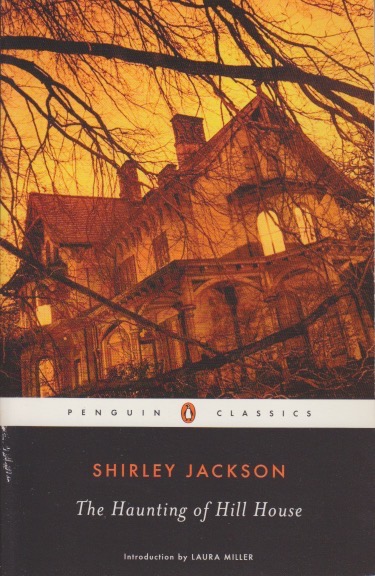
Doesn’t sound very scary, does it?  That’s the genius of the work.  It’s a slow burn but when the fuse reaches the powder it leaves you trembling.  Nobody taught me how to find and read horror.  I’m still pretty much a novice and it seems that novels these days tend to have weight problems.  I was glad to find The Other wasn’t excessively long.  It shows that literary horror is possible as well.  Like Shirley Jackson, Tryon received acclaim for his work.  (And like Jackson, his novel doesn’t balloon out to over four hundred pages—something of a rarity these days.)  I guess I’m just a bit surprised it took so long for me to find out about this one.  I don’t want to give any spoilers because this is a beautifully constructed novel and knowing what happens might deter other readers.  I wouldn’t want to do such a disservice to a book I wish I’d known about when I was younger.


In Praise of Libraries

It felt like a rare, and momentous moment in a young writer’s life.  While working at Routledge I happened to notice that the New York Public Library did not have a copy of A Reassessment of Asherah in their catalogue.  The first edition was published in Germany, so I wasn’t surprised that it was not there.  Gorgias Press, however, had published a second edition and few people were citing it.  I contacted the office on Fifth Avenue and offered to donate a copy.  A librarian contacted me and we set up a time.  I went between the stone lions (Patience and Fortitude by name), met my contact, and handed my work over without ceremony.  He seemed genuinely glad to have the book and I felt like I’d made a small contribution to a big city.

When I need a pick-me-up I look at WorldCat.  WorldCat is a conglomeration of library catalogues where you can find just about any book, including obscure ones, such as mine.  I recently hopped on to see how many libraries had Holy Horror.  (The answer is 90.)  While there I decided to check my others.  Nightmares with the Bible registered 68.  These numbers aren’t bad considering neither publisher markets the books and they’re priced too high.  The Wicker Man is still new and is only in 42.  What surprised me was when I looked back.  A Reassessment of Asherah is in 305 (total for both editions, one being in the New York Public Library).  What really surprised me was Weathering the Psalms, which 324 libraries claim.  Since it’s priced under $30, maybe there is something to the idea people will buy books if they can afford them.  As an editor I know that sales of monograph over 300 are considered successful.  Two of my books qualify.

Publishers don’t share sales information.  I can look up those at my current publisher, and I can check some on Nielsen’s BookScan (now called NDP BookScan), the service publishers use to get an idea of other publishers’ sales.  That’s the same Nielsen that does television ratings, by the way.  Searching my own titles there is too depressing, so I stick to library catalogues.  Libraries are feel-good places.  (I couldn’t help but notice that Princeton has all my books—thank you, Tigers!  The seminary has my first two, but the university has my books on horror films.)  I can just feel all the ideas in the air.  And I’m humbled to have contributed to them in a way, no matter how small.


Dark House

Last year I completed an odyssey that began over a decade and a half ago.  I finished reading the Dark Shadows serial novels by Marilyn Ross.  Not because they were great literature, but because they were an important part of my childhood.  Slowly, over the years, I regathered the books and read them until the whole series was done.  One of the used book sellers was offering a collection of the books, and although the collection had some duplicates of what I’d already found, it contained some of the more difficult to locate titles.  When it arrived, I found it also included House of Dark Shadows.  This novelization wasn’t part of the series, and like most things in my life, I can’t claim to know everything about Dark Shadows.  As a child I didn’t know there had been a movie, let alone a novelization.  (I bought the books as I happened to find them, at Goodwill and watched the TV show.)

In the present, I’d just finished Octavia Butler’s Parable of the Talents and felt that I needed something lighter for my next fictional project.  House of Dark Shadows proved a better read than most of the series books, perhaps because it was based on a movie script written by the screenwriters.  Marilyn Ross was actually William Edward Daniel (W. E. D.) Ross, and he wrote more than 300 novels.  His Dark Shadows oeuvre became repetitious in its dialogue, across the series.  His characters always seem to say “at once” instead of “immediately” or “right now.”  I’m pretty sure the word “mocking” appears in each of them—certainly the latter ones—multiple times.  Having the script must’ve really helped keep those trademarks to a minimum.

Of course, now that I’ve read the novelization I need to go back and watch the movie again.  It’s been almost two years and some of the details escape me.  It’s largely because the movie goes “off script” from the long-running daily show (and the other novels).  I also realized that Tim Burton’s Dark Shadows movie was really a kind of reboot of House of Dark Shadows, unfortunately screen written by Seth Grahame-Smith as a comedy.  I’m no expert on Dark Shadows, just a reasonably enthusiastic fan in search of a lost childhood.  The movie makes the premise of the series untenable—both can’t exist in the same world, so it’s kind of a Dark Shadows multiverse, rather than a simple universe.  And it’s very complex.  I’d need to start again at childhood to become an expert in it, but at least now I’ve read all the books.


Playing Authors

My family looked at me funnily, but not for the first time.  With a holiday gift card I’d ordered a book on the card game Authors that I’d blogged about recently.  You see, there’s not a ton of information on it on the web, and it was a formative influence in my life and I wanted to know more.  I suppose it’s typical for someone raised as a fundamentalist not to immediately think of evolution, but Authors has evolved over the years.  And quite a lot.  For one thing, you can’t copyright an idea and other game-producing companies made their own versions of the original game.  And what I’d assumed had been the original (since it was the one I had as a child) was only one of many versions.  The book even documents the Bible Authors game I’d mentioned.  My real interests included that age-old question—did it ever include Edgar Allan Poe?

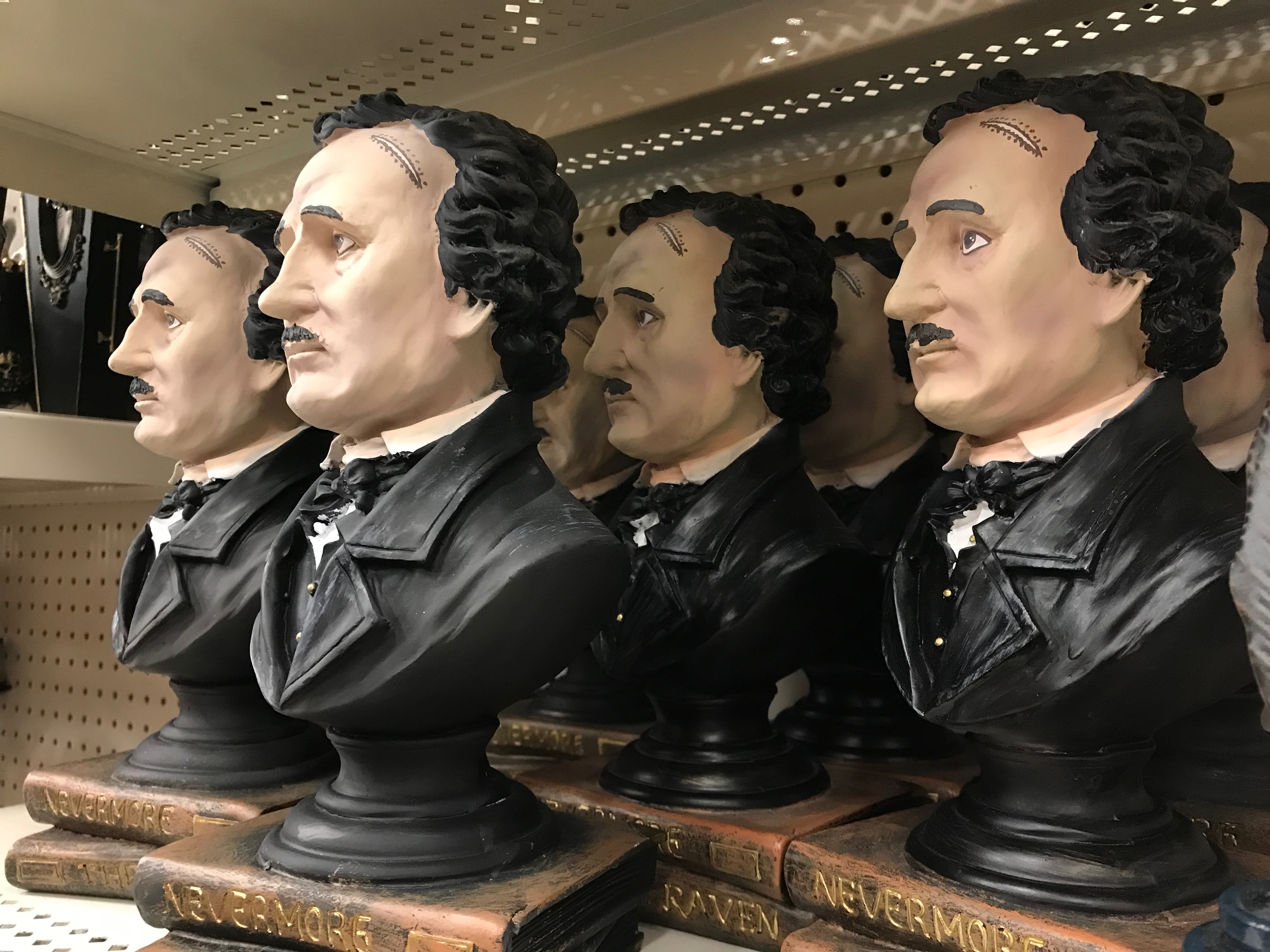
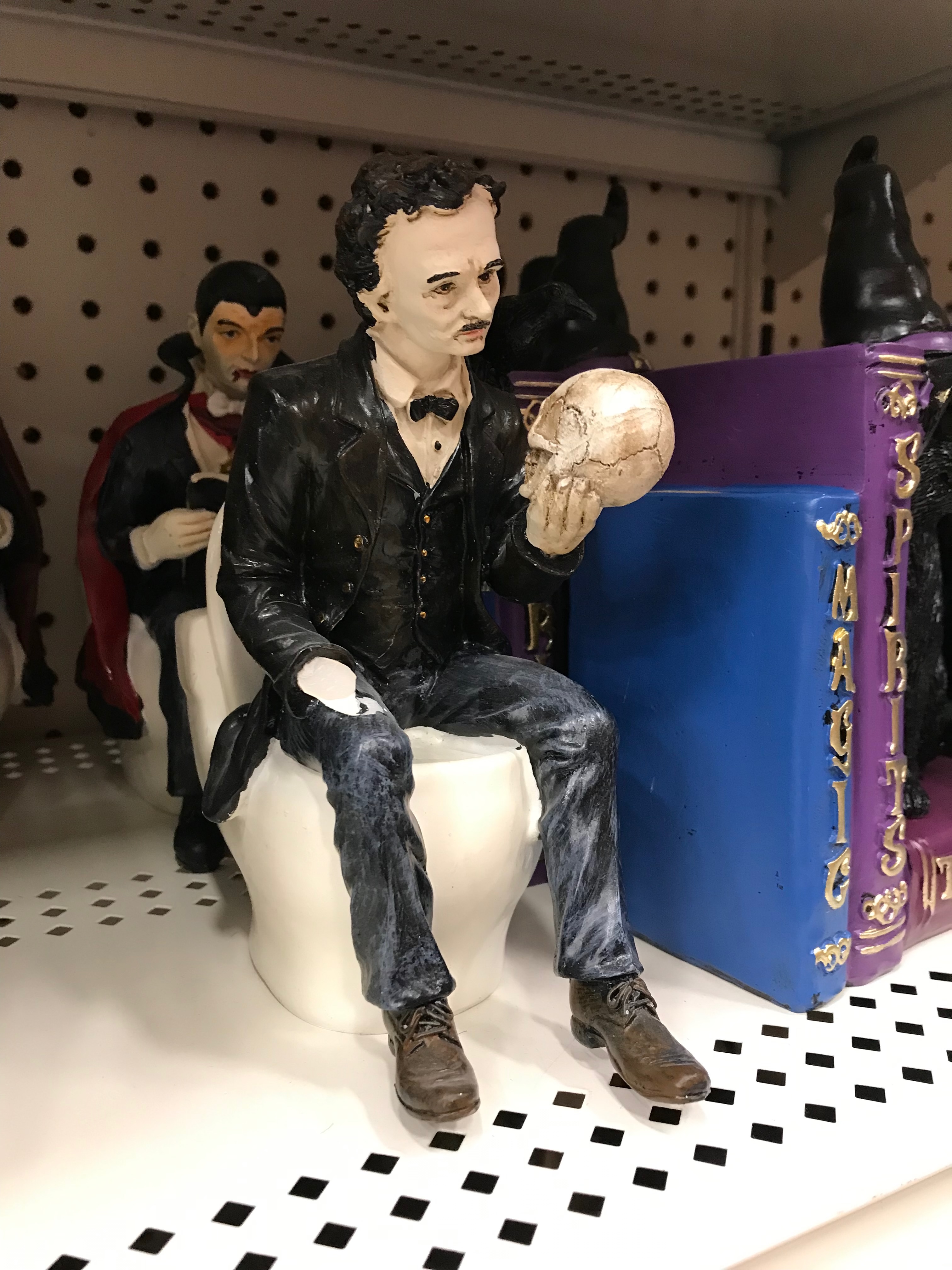
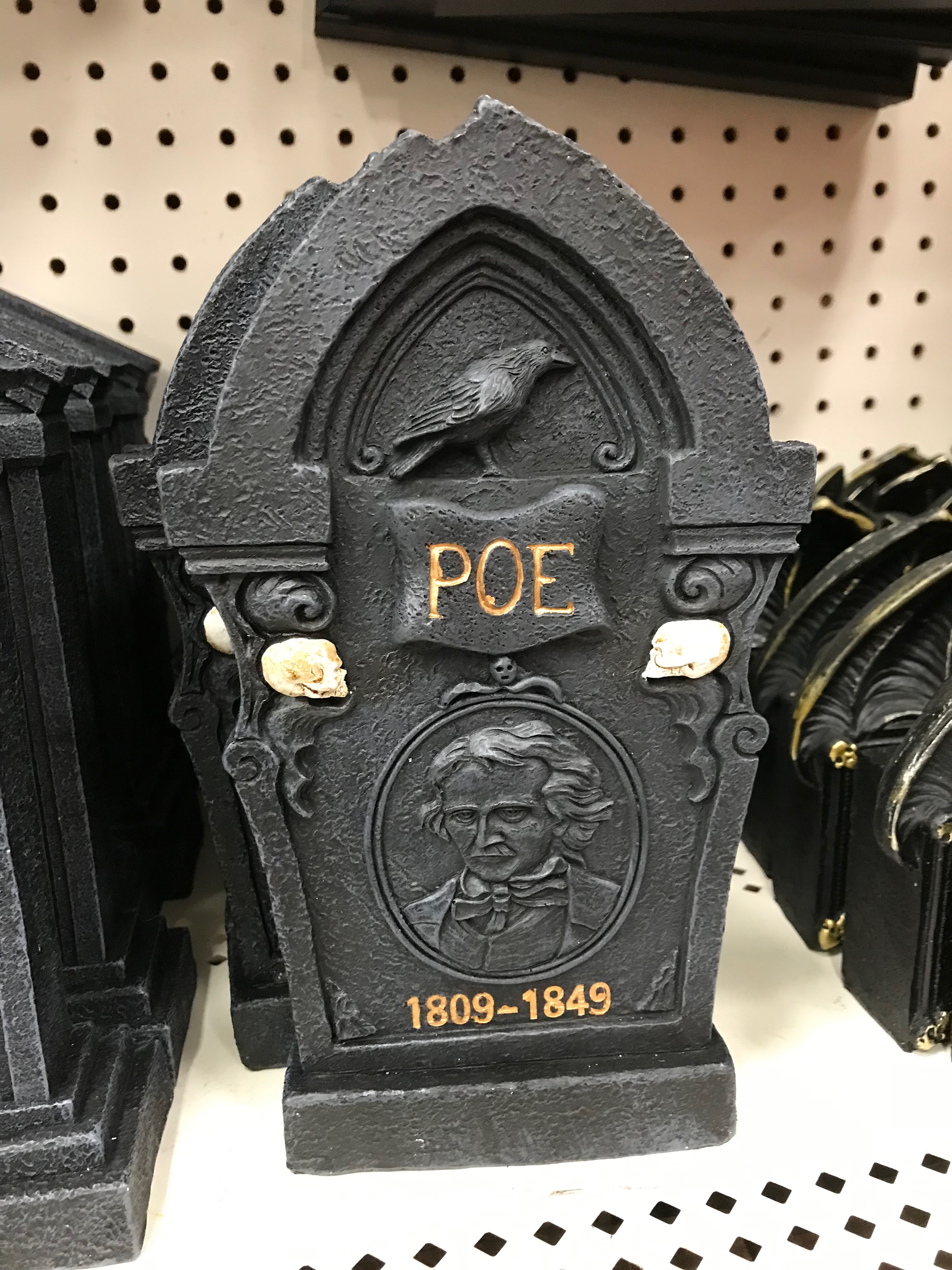
Today is Poe’s birthday.  It’s fair to say that he’s one of the most recognizable authors in the world now.  He also had a tough time being accepted.  This book, which I haven’t read through—it’s more of a reference book, in any case—points out that Poe was indeed included in more than one edition of the game.  He isn’t one of the strongly recurring authors (which include several of whom I’d never heard).  This is the fate of writers.  Reading about Dickens lately, I came to realize that even after several best-selling novels (at numbers that would make any modern publisher gloat), he was effectively living off debt until well into his forties.  And he died at 58.  He was famous, but until his final years not what you could consider wealthy.  

Another realization dawned.  Writing for a wider readership means getting away from academic publishers.  I had an agent interested in my current book project for a couple of months before he decided it wasn’t for him.  I’ve also come to see that several authors I respect, and whose books are priced below $20, have published with presses that aren’t part of the Big Five.  And they earn some profit from their efforts (unlike academic publishing).  In other words, becoming an author of either fiction or non, often involves book sense that I’ve been slow to gain.  At the Easton Book Festival a few years back I met several local writers who were putting additions onto their houses with the royalties they earned.  I’d published three books at that point and was turning my pockets inside out hoping for forgotten spare change.  Authors is a game.  Those who are included are those who figured out how it’s played.


Truthful Fiction

Octavia E. Butler is a name I’ve known for some time.  Various people, most of whom I don’t know, had recommended her books, particularly Parable of the Talents.  It turns out to have been one of the scariest novels I’ve ever read.  It’s not horror—it’s science fiction.  It’s scary because it’s just too plausible.  The first inkling I had that something was amiss was when I read how Andrew Steele Jarret ran for president to “make America great again.”  Jarret pretends to be Christian to get the vote and America suffers terribly when he’s elected.  I flipped back to the copyright page.  1998.  I read on anyway.  It’s not too often you find a sci-fi book about someone starting a religion.  And named after a biblical story, as well.  I was doing fine until Jarret’s supporters destroyed Olamina’s peaceful community and enslaved the survivors.

It’s all just too plausible.  Of course, there’s a lot going on here.  Butler was an African-American whose ancestors had been slaves.  The religions presented in the book are a bit too black-and-white, but the followers of Christian America behave like many followers of Trump.  Butler saw this two decades before it happened.  The slavery part of the book was difficult to read.  There was so much pathos here, so much deep memory.  Although Olamina is a flawed character, she is a visionary with the best interest of the human race at heart.  This dystopia is perhaps a little too close to reality.  Those who recommend the book say that it’s hopeful, so I kept on reading.  And yes, there is a hopeful ending.  Getting to it left me floored.

Religion defines us.  In the growing materialism—false, as anyone who feels deeply knows—the idea that a story could be built around religion seems unlikely.  Butler has done that, and done it in spades.  I was surprised to learn that she’d studied at the Clarion Workshop, not far from where I grew up.  Being from an uneducated family I never heard of the Workshop until I was an adult.  And besides, it left Clarion, Pennsylvania for Michigan before I even got to high school.  Still, it gives me a sense of connection with a woman who saw more than many did.  Although Parable of the Sower is earlier, I’m not sure that I have it in me to pick it up.  At least not right away.  I’m still trembling a bit from Butler’s second parable.


No Agency

I’ve worked in publishing since 2006.  That seems like a goodly time, but the industry is a complex one.  I started trying to publish again around 2010—losing my job at Nashotah House sent me into a tailspin in that regard, although I wrote a novel or two in the meantime.  My first post-dissertation book was published in 2014.  I soon learned that academic publishers each have their strengths and weaknesses.  Most have trouble with marketing—people just don’t know about your books.  (And can’t afford them if they do.)  If the publisher won’t advertise, well, the voice of one ex-academic isn’t very loud.  So I wrote on.  My sixth book has existed in draft form for a few months now.  I know that to get a publisher who knows how to market you often need an agent.  I also know that as an unknown writer it’s difficult to get an agent’s attention.  I finally found one, however.

Agents change books.  Mine asked me to rewrite yet again.  All of my books have been rewritten multiple times, so this was par for the course.  I had to leave out a lot of the stuff I liked.  Then the agent changed his mind.  Hey, I get it.  Agents live off the advances their authors get so if they don’t see enough zeroes they shy away.  That’s just how it works.  I’ve found what looks like a good publisher (not an academic press) but I couldn’t simply go back to the version I really liked—I’d made improvements for the agent—so I had to blend the two versions together.  The problem is, that’s difficult to do on a computer.  I know from working in publishing that side-by-side comparative screens in word processing programs are difficult to find.  Of course, if you just print both versions out all you need is a table and a red pen.

I wasn’t born into the computer era.  Flipping between two screens doesn’t come easily but printing out two three-hundred-page manuscripts is time and resource consuming.  So I’m flipping screens.  I hope to finish this book soon because the next one is already brewing and I really can’t wait to start getting the ideas out.  And I even have a publisher in mind—one that doesn’t require an agent.  I don’t think agents really get me.  Or maybe I’m just not a “commercial” enough thinker.  There are plenty of presses out there, however, and if you do your research you can find a home for this project that’s taken years of your life.  It’s just difficult to do the screen flipping.  But then, I’ve only been doing this for about a decade.  I’ll get the hang of it soon.


Ninth Day of

I read Les Standiford’s The Man Who Invented Christmas back in 2017 and learned a lot from it then.  Some of what I read on the bus, however, has faded a bit with time and I was curious to read it again in the light of the reading I’ve done about Washington Irving.  Irving was a bit older than Charles Dickens and had, it seems, given Dickens the idea of writing, first, a sketch book (Sketches by Boz), and second, writing about Christmas.  From what I’ve read about Irving, he had a cautious liking of Dickens but wasn’t terribly impressed.  Standiford does note that it was Irving who suggested an American tour to Dickens (it didn’t turn out well) but he (Standiford) indicates that Irving was a staunch fan of his English colleague.  Were I able to spare the time, I would follow footnotes and read letters to see if I could get to the heart of the matter.  Of course, I’ve become much more interested in the history of modern literature in recent years.

It would be difficult to overestimate the influence of Dickens in English literature.  As Standiford points out, he helped to invent novel publication as we know it.  Although he took up the gauntlet of international copyright (something Irving had earlier understood as important), he became internationally famous partially through pirated works.  We still use the phrase “What the Dickens” to express surprise. (It turns out that the expression predates Charles—now that’s influence!)  As Standiford notes, however, we’ve passed the era when a single author can have such great influence.  Dickens was a singular talent and read by vast numbers of his compatriots and also grew a respectable readership in the United States.  He also had a great deal of influence on how we celebrate Christmas.  I was this time looking for Irving lurking in the shadows.  And I found him.  Dickens was an enthusiastic fan of Irving.

Standiford brings Irving into the discussion often, but also perpetuates the association of “It was a dark and stormy night” with Edward Bulwer-Lytton (who did use it) without mentioning that the phrase originated with Washington Irving.  One gets the sense that Irving was completely eclipsed by the work of his young fan, Charles Dickens.  Standiford mentions Irving quite a lot in this little book, but it’s about Dickens and not his American colleague, of course.  And Standiford also notes that crediting Dickens with the “invention” of Christmas is overstatement.  The story is nevertheless fascinating.  To me this second reading underscored the importance of Irving for the Christmas holidays, and also how terribly difficult it is to make a living as a writer.  I’m glad I came back to it, even when life otherwise threatens to be too busy for re-readings.


Reading 2023

As has become my tradition, I’ll end the year reflecting on the books I’ve read.  For a variety of reasons this is the first time in nine years that I haven’t cleared seventy books.  (I ended up one shy.)  But looking back over what I read, I may see some logic behind this.  Many of the books were academic, and specifically, academic in fields outside my formal training.  That also means they generally didn’t make it to my list of favorites.  2023 was also unusual in that it wasn’t until about late spring that I started to read books I really enjoyed.  The first on my list of memorable titles is Andi Marquette’s The Secret of Sleepy Hollow.  This was followed by a couple other fiction titles, Grady Hendrix’s Final Girl Support Group and Gina Chung’s Sea Change.  Those ended up being my favorite three fiction titles of the year.

For nonfiction, I finally read John Hersey’s Hiroshima, memorable, if terrifying.  Also along the lines of history, I found Lesley Pratt Bannatyne’s two books Halloween and Halloween Nation, to be particularly good.  Mark Dawidziak’s Mystery of Mysteries may well have been my favorite historically-oriented book of the year.  Donna Kornhaber’s Silent Film: A Very Short Introduction was also quite well done.  I always enjoy books on horror films, and two on The Exorcist were noteworthy: Nat Segaloff’s The Exorcist Legacy and The Exorcist Effect by Joseph P. Laycock and Eric Harrelson.  Why It’s OK to Love Bad Movies by Matthew Strohl, which I read a bit earlier in the year was also quite good.  By far the most helpful book in a personally troubling year was The Boy, the Mole, the Fox and the Horse by Charlie Mackesy.

In years past I’ve generally had more commendable books on my list.  I did, however, finish the last three Dark Shadow’s novels by Marylin Ross, reaching the bucket-list item of having read the entire series.  I also found Jessica Verday’s three-volume series strangely memorable, although written for young adults (found here, here, and here).  While the number of books I really enjoyed wasn’t as high as in some other years, these highlights make me optimistic regarding 2024.  I used to follow the Modern Mrs. Darcy’s reading challenge guidelines, until they stopped being published, and now I find myself left to my own devices, for the most part.  Much of my reading is driven by research, and I suppose I should also mention that my own fifth book was published in 2023 as well.  I don’t expect it’ll be anybody’s favorite, but it is nevertheless an honor to be part of the conversation.