Not Quite Quetzalcoatl

It must be difficult to write the same basic story over and over.  And nostalgic adults like me can be tough critics as we try to recapture faded childhood glories.  Those memories fade like afternoon shading into evening, but still I can’t help myself.  Marilyn Ross wrote 33 gothic tales of Dark Shadows in the spinoff series from the long-running television program, and I’m determined to read them all.  In small doses.  The one, Barnabas, Quentin and the Serpent is actually a bit distinct.  The writing is still journeyman, that of a tired potboiler author, but the plot offers something a little different.  As in the last volume reviewed, Barnabas is free from the vampire curse for a time, allowing him to emerge in the daylight.  And his arrival at Collinwood is actually dramatic and well-timed.  The story is set in the nineteenth century.

Gerald Collins, a professor of archaeology, unexpectedly inherits Collinwood along with his daughter Irma.  They head to Maine from Mexico taking exotic creatures with them, including a dimetrodon that escapes and tries to eat them.  The story revolves around rumors that the professor caught and transported back a flying serpent.  At Collinwood (and let’s think about this a minute—if you add up the body count from all the novels you’ve got to wonder why there’s been no federal investigation) people start to die and reports circulate of a flying snake.  The professor’s going to be driven out of town because angry villagers think he brought this creature back with him.  It’s all very melodramatic.

As in the last novel, Barnabas acts as a detective.  Quentin, who is the werewolf cousin, manages to allude detection by disguising himself.  Even Barnabas is fooled.  The story tries to avoid invoking the supernatural—there’s no such thing as flying serpents—while allowing a werewolf to perpetrate a hoax.  It’s all good fun (except for that body count).  There’s a bit of vim here from our weary journeyman writer, but there are nine novels yet to go in the series.  Writing a series seems to be smart money.  Children (and I first read several volumes of this series as a child) like to complete things and can be loyal series fans.  I never read the full series when I was younger; they were haphazard finds at the local Goodwill book bin.  Of course they were still being published at that time.  I have to admit that I’m curious where it will go from here.  And I do miss Barnabas as a vampire.


A Day with Books

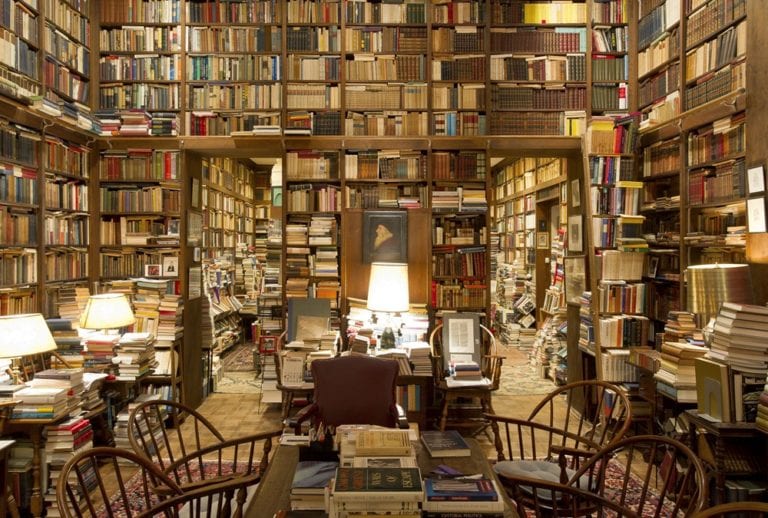
A day with books.  Is there any better kind of day?  Before I lapse into poetry I want to put in one more plug for the Easton Book Festival.  Today is the last day for this year, but keep an eye out for next October.  And you can still catch the videos from this year’s session on the Festival website.  Writers can be skittish creatures, you see.  We spend time alone and try to get our thoughts into words.  We don’t always have regular gatherings.  That’s what makes book festivals, well, festive.  I didn’t want to appear in person to plug Nightmares with the Bible—it’s too expensive.  As a friend said, “What’d you do to make it that expensive?”  I was glad, however, to be in person to interview my friend and colleague Robert Repino.  The interview will be posted on the Festival website.

An unexpected pleasure is finding acquaintances that you didn’t know were writers.  As I said, some of us spend most of our time alone.  And even for someone who spends so much time with words it’s difficult to describe the species of euphoria that talking about books evokes.  It makes me wonder why we don’t do it more often.  Since the pandemic is still with us—the pandemic that interrupted the natural progression of the Book Festival, which began in October 2019—in person events were held outdoors.  It was a bit on the cool side yesterday, with some sprinkles of rain, but few sensations match spending a day outdoors in October.  If you’re not in this area, please support your local book festival.  If you don’t have one, maybe talk with your independent bookstore owner.  It can happen.

As I’ve mentioned before, many of us who write make very little money at it.  When people ask why we do it, pointing to events like the Book Festival supply the reason.  Call it fellowship, or communion, or just a gathering of the hive mind, but finding the other book lovers in your community is a worthy way to spend a Saturday.  Book and Puppet has the distinction of hosting the event, with support from Lafayette College and a few local sponsors.  It’s also the only bookstore in which I’ve seen my actual books on the shelf.  I know it’s a sacrifice to order stock that moves slowly.  Halloween, however, is nearly here and that’s the crowd for whom I tend to write.  Why not spend a day with books?  It’s the best kind of day.


EBF

The third annual Easton Book Festival is underway.  As part of it Eric Ziolkowski, the chair of the Religious Studies department at Lafayette College, interviewed me about Nightmares with the Bible.  You can watch the interview here.  And be sure to check out the other offerings of the EBF—it’s hybrid this year so much of it is online for those who can’t make their way to Easton.  We’re all looking forward to the day when the festival can be in person again, as it was in 2019.  As part of tomorrow’s program I’ll be interviewing my friend Robert Repino about several of his novels.  That event will be live and outdoors, but I suspect it will be posted on the festival website later.

The EBF is a shining example of what books can do for a community.  People have been turning back to books with the pandemic.  Those of us in the publishing industry are keeping an eye on this.  While academic usage has shifted to electronic, the wider market has been favoring print books because, well, people like books.  Andy Laties, one of the proprietors of The Book and Puppet Company, has spearheaded efforts to continue this celebration of books even as a pandemic has changed the way we do everything.  Easton isn’t a huge city, but the Lehigh Valley is a book-friendly place.  When the will to organize book lovers exists, wonderful things can happen.  Books can build a community as well as be a community.

A friend recently said that the problem with writing books is that too many people do it.  I don’t see this as a problem.  Many self-published books do far better than those I’ve sent through more traditional channels.  They may put pressure on traditional models, but pressure isn’t always bad.  The route to publication is actually full of roadblocks—some accidental but many intentional.  One of the largest barricades is the fact that the publishing industry is a rather small one.  Major publishers have been monopolizing for years, bigger companies buying out successful smaller ones, so that the highway to publication now has many toll booths that require exact change.  There have always been those who can find their way through by an alternate route.  There’s nothing wrong with wanting to be part of the conversation.  If you’re near Easton come on out in person—bring a mask—and see what’s happening tomorrow.  If you’re not in the area take a look at the free content online.  I’m sure you’ll find something you like.


Kindred Spirit?

Possession stories have a poignancy to them that perhaps other horror stories lack.  The loss of self-control is a frightful thing.  Lisa Tuttle sets this up well in her novel Familiar Spirit, a tale that has recently been reissued.  The threat against a young women—the usual target of possession—leads to some scary moments here.  As the story unfolds Sarah has to deal with personal loss as she learns that the house she’s just rented is inhabited by an unfriendly spirit that seems to be a demon.  This is a haunting story that features a strong protagonist who ultimately has to decide what she really values most.  It’s a book that stays with you.

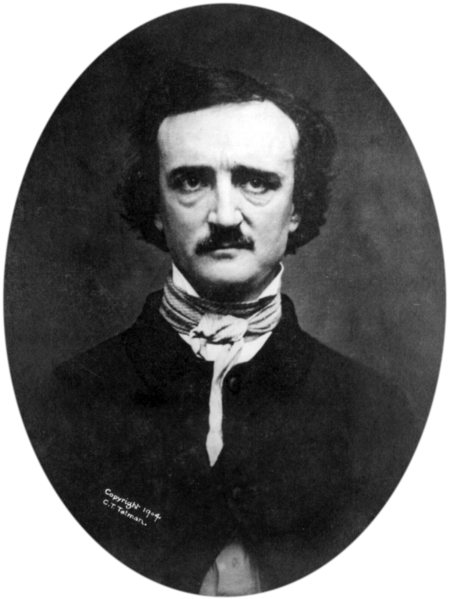
I discovered Tuttle by reading a book on female horror writers some time ago.  One of the points I make in Nightmares with the Bible is that female victims of possession match Poe’s dictum about the most poetic topic being the death of a beautiful woman.  That may sound sexist to modern ears, but Poe was a product of his time and he was a keen observer of what made stories memorable.  Possession has largely become a female phenomenon over the centuries.  The biblical stories about possession tend to have male victims, but by the Middle Ages the balance had shifted.  That gender imbalance continues today.  A friend recently asked whether shifting awareness of the gender as not strictly binary might change this in the future.  It’s a fascinating question, especially since we really don’t know what demons are.

Possession is a clash of the unknowns, which is fertile ground for fear of the unknown.  Feminist studies have begun to share space with studies of masculinity and both have been joined by analysts who study gender as nonbinary.  I suspect many of us really didn’t know about such things before the internet began to bring them to our attention.  Many people don’t want to accept such facts.  The world is easier to live in when everything is black or white, male or female, this or that.  Most things, we’re beginning to learn, are on a scale.  Human society, as it takes this into account, will inevitably, if slowly, change.  The old guard (angry white men, mostly) refuse to accept facts, trying to equate them with the person with the loudest voice.  This too is a kind of possession.  I don’t want to give too many spoilers for Familiar Spirit, but if you’re like me it’ll give you many things to think about.


Dark Academia

Genres can be slippery things.  Those of us who dabble in fiction sometimes find it difficult to describe what we do.  Writing is individual expression and it may have elements of this and that.  Given my disposition, much of my fiction has some horror features but I tend to think of it as something else.  My wife recently sent me an article on Book Riot about the genre Dark Academia.  The piece by Adiba Jaigirdar begins by asking the question of what exactly dark academia is.  The label conjures up books about something untoward happening in the halls of learning, and that certainly qualifies.  It’s difficult to be more precise because it’s different things to different people.  Some of my fiction, in my own mind, falls into that category.  Things go wrong in higher education all the time.  Why not preserve it in fiction?

I’ve attended, and worked at some gothic places.  The contemporary university, such as Rutgers—although it’s old by American standards—has continuously modernized and although I don’t know it’s history well, I suspect gothic was never its aesthetic.  The same is true of Boston University where I went to seminary.  Edinburgh University, while also modernizing, has retained much of its gothic feel.  That’s certainly true of New College, where I studied, in the heart of the medieval old town.  There’s a gravitas to such dark settings.  They invite strangeness.  My first teaching job was at the intentionally gothic Nashotah House.  Although I didn’t agree with the politics I loved the setting.

I seem to have slipped from Dark Academia into Gothic Academia.  Indeed, it’s difficult to keep the two distinct in my mind.  When I taught I maintained the tweed jacket and somewhat disheveled look of someone who has something else besides grooming in mind (this is entirely genuine).  Indeed, that’s one of the great charms of higher education.  You need not constantly worry about each hair being in place—they’ll take care of that when they shoot the movie.  Not many people, and probably a diminishing number given the state of things, experience full-time life in academia.  It can be well lit and modern.  If done right, however, it should take you into odd places.  Discovery is generally messy.  Perhaps that’s part of the dark of dark academia.  When we use our brains we end up in unexpected places.  I’m not sure I understand dark academia, but I have a feeling that I’ve lived it even without my fiction.


Banning Banning

Banned Book Week gets me all aflutter.  There have been years at I’m so busy that it slips by before I notice it, but each year I try to incorporate it somehow into my reading challenges.  This year my book was Scary Stories to Tell in the Dark, by Alvin Schwartz and Stephen Gammell.  Yes, it’s a young readers’ book.  Most banned and challenged books are.  Why censorious adults feel the need to keep ideas out of print is pretty obvious in these Trumpian times.  (Please note, dear Republicans, many Democrats criticize Biden on a regular basis; we do not worship him.  American Marxist my donkey!)  Book censoring only serves fascist tendencies.  Ideas will find a way to be born, regardless.

Scary Stories, of course received a shot in the arm by Guillermo del Toro and his interest in making a movie based on it.  The stories themselves are drawn from folklore—they’re populist, you might say—and reflect what passes around from perhaps less insane times.  As an adult a reader tends not to find these stories frightening.  For one thing, many of them are stories we’ve heard before.  For another, life has already thrown many scary things at us.  Not only that, but we try to ban books to make adulthood even scarier.  You see, folklore doesn’t go away just because children are kept from the books.  These stories find the gaps just as water does.  They get told in the dark.  Instead of trying to censor them we should try to talk about them.

Adults’ own discomfort with ideas such as death and decay often stand behind our efforts to “protect” our children.  Then they reach maturity not prepared for the adult world of sex, exploitation, and dying.  Our modern comfort-based lifestyle tries to shut away the unpleasant aspects of existence.  Books, however, are the food of the imagination.  To ban them is to try to suppress the truths that authors have uncovered.  Growing up in a conservative household, we weren’t subjected to censorship.  I couldn’t afford many books, but my mother never said “No, you can’t read that.”  Some of my early reading faced uncomfortable facts.  I read both Jaws and The Godfather long before I ever saw the movies.  I read Scary Stories to Tell in the Dark as a form of solidarity with young minds.  There are benefits to learning to deal with fear early on in life.  And Scary Stories, even if not so frightening, has an appropriate place in it.


Festive Books

The Book and Puppet Company, a small independent bookstore in Easton, Pennsylvania is unique.  Other bookstores may have puppet shows and other forms of theater.  Others may have the obviously tasteful and intelligent selection of books.  Others offer items other than books.  Book and Puppet is unique in at least three ways.  First, and most (I promise) self-serving, it is the only bookstore in the world with Holy Horror on its shelves.  I know how it got there, which ties into the second unique feature—the Easton Book Festival.  The Easton Book Festival is the brainchild of the third unique element, the store’s owners—Andrew Laties and Rebecca Migdal.  

So let’s piece this all together.  The Easton Book Festival launched in 2019.  Being local to the event, I volunteered to present because Holy Horror had missed Halloween in 2018 when it came out, and it was still technically a front list book.  As with any event that wishes to grow, the Festival was extremely inclusive.  Despite its price point Andy had ordered copies to have on hand to sell.  He assigned me to a panel discussion and even gave me a time slot to talk about the book.  The event was one of the highlights of my true calling—being a writer of books.  Weathering the Psalms was less expensive but more technical.  Holy Horror is for a general readership, although the publisher sees it differently and prices it accordingly.  You have to start somewhere.  In any case,  it was part of a book festival that contains memories that still make me glow.

his year, like many events, the Easton Book Festival (October 16-24) is going hybrid.  As we start to regather, is there any better place to coalesce than around books?  Wouldn’t the world be a better place if that were true?  A recent visit to the shop led to a conversation that seems likely to result in a chance to plug Nightmares with the Bible, the more expensive sequel to Holy Horror.  Well into the writing of my next book, my attention has momentarily turned from demons to more human horrors.  Nevertheless, books are what my lifelong goal has always been.  I thought that I would be writing as a professor, but even editors can make some modest contributions, I hope.  Regardless, since much of the Festival will be online, it’s accessible from the comfort of your chair.  Why not tune in?   In any case, supporting your local bookstore will do nothing but improve society.


Reading Memory

I recently wrote about writing too much (as if such a thing were possible).  After posting that I thought of how much the same can be said of reading.  I like to believe that whatever I’ve read is stored in my brain somewhere, rather like my writing on all those external drives.  I get some hopeful hints of this when a fragment of something read long ago suddenly reappears.  It’s good to know it’s there somewhere.  What brought this to mind is that a book I’m currently reading used a significant term.  Overly confident as I only am when reading, I figured I’d remember where it occurred.  A few days later I’d forgotten.  “No problem,” I thought, “the index.”  Indexes are never perfect and I’m always amazed by what strikes me as being so important failed to make the author’s cut.  So it happened.

This particular book was compactly written, but even so, it was more than sixty pages ago.  It took a few days of skimming, and finally going through line-by-line to find the word again.  It was a capitalized word and I thought mere skimming would be able to pick it out.  No such luck.  Part of the problem, I suppose, is that since I’ve left academia I’ve pretty much stopped writing in books.  I always did it in pencil, but still—there’s something about that pristine page so carefully typeset and laid out.  Well, if I had all the time in the world I could re-read those first sixty pages again, but I don’t have time to read all the books I need to, so I grabbed my old Pentel and began marking the spots I wanted to remember.

When we age it’s recall that suffers.  I tend to think the memories themselves are still there, sometimes distorted, sometimes altered, but present.  Books, after all, can be reread.  If I read something while commuting to Manhattan, there is a good likelihood that some of it was occluded by the worries of work lying ahead, coupled with the anxiety of catching the bus back home at the end of the day.  Not to mention anything that might’ve been happening in real life—that place outside of work that you really care about.  I’m glad for the commute reading; I regularly read over 100 books a year.  You couldn’t take notes while on a New Jersey Transit bus, though.  It’s not possible to read too much, but reading memory, it seems, is a sometimes a scarce resource.


Mental Health

Dark Shadows was a formative part of my childhood.  I don’t recall specifics, or even how I found out about it, but I do recall watching it after school and being completely taken by it.  When I do the math I realize I had to have been watching it primarily before I was ten, and then after that I started reading the books when I found them in the used bin at the local Goodwill where they usually cost a quarter or less.  Now they’re collector’s items.  That fact doesn’t change the reality that they are journeyman writing through and through.  William Edward Daniel Ross, under the pen name Marilyn Ross, wrote thirty-three novels in the series as part of his oeuvre of over 300 books.  The stories are formulaic and feature odd word choices, but they are gothic.  Sometimes gothic is just what you need.

Barnabas, Quentin and the Scorpio Curse is a fun romp through a period when Barnabas has—with no explanation in the novel—overcome the vampire curse.  It introduces some Collins cousins who come to an asylum conveniently located next door to Collinwood where murder breaks out and mayhem ensues.  I have to keep reminding myself to put my critical faculties aside when I read these guilty pleasures.  There are gaps and incredulities that are simply glossed over, and that’s part of the world in which they take place.  Astrology plays a part in this episode, as the title indicates.  It features a psychologist who, it would seem, doesn’t know how to do background checks.

The truly scary part of this Scooby-Doo tale is that the protagonists, Diana and Barnabas Collins, aren’t believed because they’re voluntarily admitted to the asylum.  Mental illness is a serious matter, of course, and it can be difficult to diagnose.  The difficulty here is that it’s used simply to dismiss what Diana observes.  Time and again, as the Scorpio murders continue she’s dismissed as “a mental patient.”  It’s all part of a plot, of course.  It does raise serious issues, though.  In the late sixties and early seventies there was a real stigma attached to mental illness.  There still is, in fact.  Ironically, the more we learn about mental disorders the more common they become.  Just about everyone has some neurosis or worse.  In our efforts to define the “normal” we dismiss those with actually diagnosed conditions.  We’ve come a long way since then, but we still need to work at dispelling the stigma.  One way to do it is, I suppose, to put conflicted vampires into the mix.


Witches of September

I’ve never read any John Updike before.  I understand that his novels foreground religion, which I didn’t realize.  I have watched The Witches of Eastwick, in movie form, a time or two.  In fact, I wrote a bit about the film in one of my books.  This got me curious to read the novel and I found a copy at a used book sale up in Ithaca some months back.  Now that September’s here, it seemed like an opportunity to see what the original story had to say about witches.  There is a problem, of course, in having watched the movie first.  Not only does it tell you which actors the characters should look like, but it also predisposes your orientation to what will happen.  In this case all that will mislead you.

The movie centers on Jack Nicholson’s Darryl Van Horne—like most Nicholson movies, his character takes over—whereas the novel is definitely centered on the three witches, Alexandra, Jane, and Sukie.  They don’t fall into the background, but neither do they always work in concert.  The movie tells, in other words, a very different story.  Updike’s literary treatment focuses on female characters and the mischief they cause.  Nor is it entirely clear that Van Horne is demonic, as in the movie.  A church features prominently in both versions, amusingly Unitarian in the novel, with Van Horne not upstaging the sermon but giving an invited one himself.  No fear of sacred places here.

The wrath of the witches isn’t directed toward Van Horne either.  A character left out of the film, who marries Van Horne and whose brother is his real target of affection, is hexed and killed by the witches instead.  In many ways this could be construed as a kind of gentle horror story, although it’s never marketed that way.  I kept waiting for certain scenes in the movie to be narrated, as it were, in the flesh.  This led to the revelation that these scenes were invented for the cinematic version.  Both novels and movies are stories.  When shown on the big screen, we expect them to be adapted.  My personal preference is for the film to present the same story.  It can’t always be done, of course.  In this case the movie left some questions open that I hoped the novel would answer.  Since the stories are so different, the questions remain.  I have a feeling I’ll read more Updike down the road, but I’ll avoid watching the movie first.


Bookshop

I still remember when I first heard of Amazon.  It was getting on in my years at Nashotah House and one of my students, a former university faculty member that I’d know prior to his decision to attend seminary, mentioned that’s where he ordered books.  I used the internet with caution in those days and I still ordered books by mail directly from publishers.  My library grew slowly back then, in part because faculty pay wasn’t exactly competitive.  Amazon quickly grew to the point that it became a household word, and, like Google, became an internet giant.  Publishers have felt the pressure from Amazon’s bargaining power and, arguably, its market dominance led to the downfall of Borders.  Despite my love of independent bookshops, I do miss Borders still.

I don’t have a similar, singular memory about Bookshop.org.  It may very well be because I found out about it online and studies have shown that online learning is less effective than the old fashioned way.  We put up with it because it’s convenient and we can cram more stuff in that way.  It’s all about getting more.  In any case, I do recall that I was impressed with what Bookshop was doing.  At a recent seminar I learned it was even better than I’d previously heard.  The organization supports independent bookstores so that when things become more normal again they’ll still be there.  The book industry is a rather strange one, and it operates a little differently than many others.  Places like Bookshop really do help when one vendor becomes too dominant.

Reading widely is a form of education, and the key, it seems to me, is to get books people find interesting to them.  I stopped by a local independent on a recent Saturday to find it quite full.  The weather was good, of course, and lots of people were out and about.  Still, nothing is quite as encouraging as finding a bookstore doing good business.  When that happens it’s clear society is improving itself.  I’m trying to make a habit of stopping by Bookshop before the default of ordering on Amazon.  Amazon clearly has the logistics of delivery down to a science, but the world is a less rich place for not having physical bookstores in it.  Making one’s name synonymous with the product on offer is a sign of success, at least on the business side.  Balance, however, is important too.  And that’s where the Bookshop story has to fit.


Existential Horror

It’s a strange and disturbing novel.  I leaned about Kathe Koja’s The Cipher from a book about women horror writers that I read some time ago.  I figured I’d get around to reading it eventually and now that I have I’m wondering what I just read.  In that regard it reminds me of House of Leaves by Mark Z. Danielewski, which I really didn’t find that scary.  The thing about Koja’s novel is that it leaves you feeling empty.  It is perhaps the most nihilistic fiction I’ve ever read.  A slow build to nowhere and really no explanation either.  If you like your coffee dark, this is a story for you.  It’s a story of slow decline and loss of self.  In that respect it’s pretty scary.

One of the points I made in Holy Horror—although it’s about movies instead of books the same principle applies—is that different things scare different people.  The Cipher is existential horror.  There really aren’t any moments of sudden gasps of surprise—this is a train you can see coming—but that doesn’t mean the inevitable is pleasant.  My edition comes with an afterword by Maryse Meijer that really helped name the horror.  There are no heroes here, as she points out.  These are characters who get themselves into bad situations and sometimes don’t even know why they do what they do.  As I said, this is existential horror.  It all swirls around an unexplained “Funhole” that takes over the characters’ lives.

Everyone in this book is working class and creative.  They don’t find any recognition, of course, because that’s the way of working class life.  They do, however, find meaning in the art they make, after work.  Indeed, as everyone gets more and more drawn toward the Funhole one of the worries that constantly hangs over their heads in the face of sometime truly supernatural, is work.  When to quit your job because something not natural is taking over your life?  Who’s going to pay the rent?  In my own existential crises, I often think that capitalism with it’s unvarying nine-to-five certainly doesn’t help.  When something extraordinary happens, you’d better hope it’s not during a weekday, or if it is you’d better have some vacation days you can cash in.  So it is that the young characters here, drinking and dreaming, have to come up with some way of dealing with an unexpected existential threat.  I’m trying not to give too much away.  This is unlike any other horror story I’ve ever read.


Fear of the Other

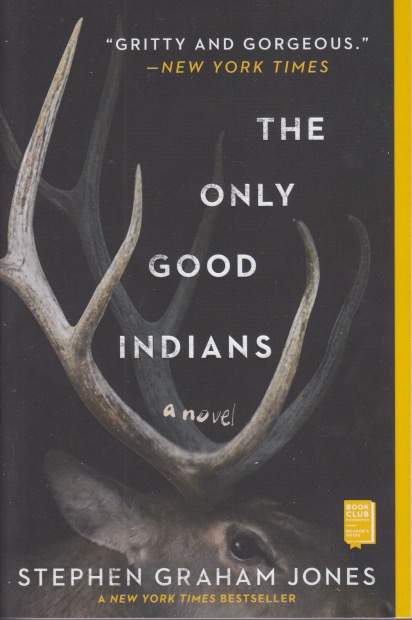
Two things: I’ve been reading about and materials by American Indians lately, and I learned about Stephen Graham Jones through a video of him reading one of his stories.  I was immediately hooked.  It seems to me that those of us who’ve gone through trauma—either personally or ethnically—are disproportionately represented among those who like horror.  I’m not suggesting a simple equation, but simply noticing a trend.  Jones has been winning awards as a horror writer and I was anxious to get started.  Night of the Mannequins didn’t disappoint.  Jones is a member of the Blackfeet nation and, according to the author bio, a real slasher fan.  This story isn’t really a slasher but it is an exploration of what happens when an idea takes over someone’s life.

More about growing up in Texas than being First Nations, it follows a group of teens who find an abandoned mannequin and a practical joke that goes terribly wrong.  It’s a story will a real feel for what it means to grow up beneath the middle class.  The realities for those who do are somehow quite different than from those who can take some measure of financial security for granted.  It also makes a good setting for horror stories as the protagonist tries to figure out what’s going on without the aid of authorities and adults.  It makes for a compelling read.  Jones’ no-nonsense style draws you in and it doesn’t let you go.

The book is fairly recent and I don’t want to give too much away.  I do often think about how a writer’s personal experience leads to the books s/he writes.  The horror genre is wide-ranging and can be deep and intelligent.  Despite its brief extent, there’s a lot of depth here.  The straightforward writing style gives the book verisimilitude.  You could see this actually happening.  Monsters, after all, are frequently in our minds.  That doesn’t make them any less real.  Mannequins tend to inhabit the uncanny valley—they’re human and yet, at the same time they’re not.  There are aspects of growing up in “white” culture that must suggest the same to those who’ve been and who continue to be, oppressed by that culture.  There is a real fear to being controlled by others whose intentions, it must be clear by now, are to make themselves rich.  The world is a richer place, however, for having books by Stephen Graham Jones in it.  I’ll be coming back for more.


Not Archives

There was a historical Dracula.  The cognomen of Vlad Tepes, or Vlad III of Wallachia, Dracula’s association with vampirism surprisingly dates back only to Bram Stoker’s Dracula.  And much of what I read about Vlad III as a child has been reevaluated, with much of it being reassigned to exaggeration.  (I often wonder if this isn’t part of the reason so many of my generation have become conservative—it can be unsettling to have the certainties with which you were raised topple like so many dominoes.)  In any case, I started reading about vampires when I discovered our high school library had historical books on them, and so I recently picked up Raymond Rudorff’s The Dracula Archives at a book sale, despite its lurid cover.  The reason?  The back cover classification is “nonfiction.”

Clearly that was a marketing ploy, and although the book cost me merely pennies on the dollar for a mass-market paperback from that era (1973), I was a little disappointed to find it was a novel.  I figured it out within a page.  (You have to understand—at a book sale the normal rational faculties don’t always apply.  Anyone who’s been to a library book sale in Scotland knows that little old ladies throw elbows to get at a book they want, and you have to think fast if you’re on the fence.)  So The Dracula Archives is intended to be the prequel to Dracula.  Mirroring the latter, Rudorff’s work is comprised of diary entries and letters, slowly building up a fictional identity for Stoker’s titular character.  It isn’t as fast paced as the cover blurbs indicate, but it does manage to sound historical although it’s clearly not.

Reading such a book during a crisis of truth makes me question the marketing wisdom of the back cover label.  Yeah, it’s kinda cute, I admit.  And Trump didn’t seem like a national threat in the seventies.  But still, the mixing of the fundamental category of book (fiction or non) doesn’t seem quite fair.  Of course, caveat emptor applies to small purchases as well as large.  I go into book sales with a list, and I try to limit myself to it.  But then, I’ve not heard of every book—not by a long shot—and finding an unknown treasure is part of the draw.  Raymond Rudorff wrote several books but hasn’t merited a Wikipedia page yet.  This one is by far his most famous novel.  It’s a fun read and a reasonable prequel, but it won’t likely scare anyone as much as Republican politics do these days.


Paid Reading?

It’s like when you slowly pull a cotton ball apart.  Interrupted reading, that is.  Some people never cotton onto reading—we’re all different—but some of us find it such a beguiling exercise that we neglect other aspects of life so that we can engage it.  Almost an altered state of consciousness.  That moment when you have to close a good book, though.  There’s nothing else like it.  It’s difficult to pinpoint whether images or words make up the continuity a reader experiences.  For me it’s like a continuous conversation.  Since my life may be too regulated (“nine-to-five” jobs are like that), every day at work begins with interrupted reading.  If you’re awake early, you’ll find there’s no other uninterrupted time like it.  No librarian has to shush anyone at three a.m.

My job is largely reading.  It’s also a good deal of customer service.  As an author myself I guess I get that.  Content is what the world wants, and if you find a writer who does what your press likes, well, you try to keep her happy.  Why doesn’t enforced reading feel like reading by choice, though?  It’s that reading before work that feels like the pulling apart of fibers that’ve organically grown together.  By nighttime, which is still light in summer, it’s not so much pulling apart cotton balls.  Bedtime reading is more like stumbling through a forest.  When you come to that part of the path you know you’ve been on before—perhaps multiple times—it’s time to put the book down and hopefully reboot.

There may be jobs which consist entirely of reading for pleasure.  If there are I never learned about them in high school or college.  I have a friend who’s a musician.  Many years ago I asked him what he like to play for fun.  He looked at me and said “Music, for me, is work.”  I have to believe that somewhere deep inside he still found it enjoyable, but I instinctively grasped what he meant.  Once you take your passion and convert it into a source of income the magic goes out of it.  Once I get out of work the thing I want to do immediately is read, but what I want to read. And although studies show that the reasonable way to get your best work out of your employees is to give them more time off, employers tend to disagree with the data.  The more hours you put in the more “dedicated” you are.  But then, some of us are in publishing because we love to read.  But even now, as work time approaches, the cotton ball begins to shred.