Finding Poe

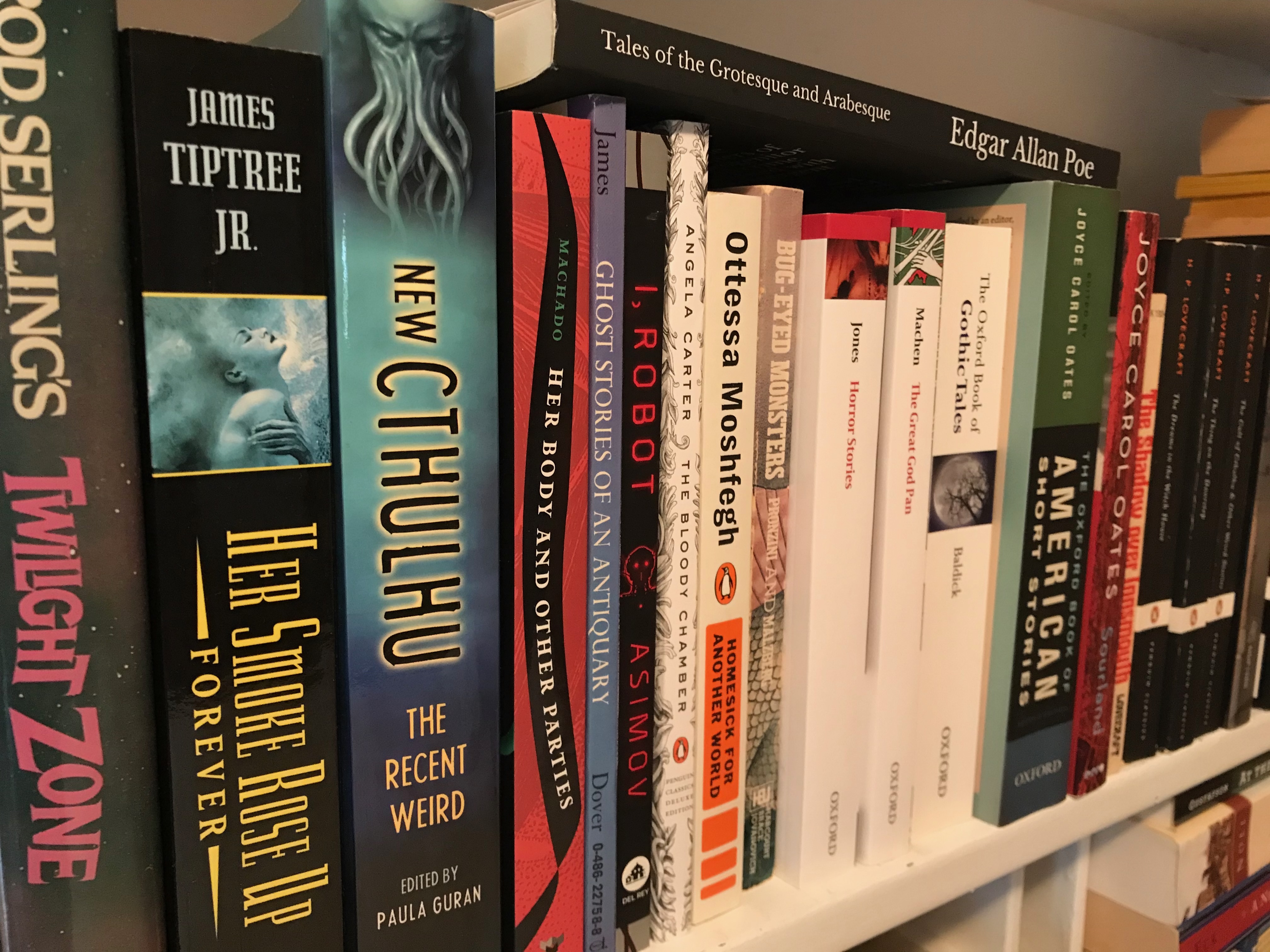
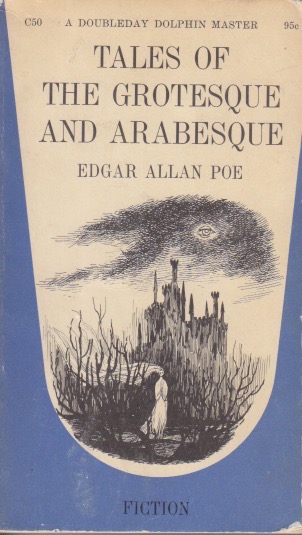
A gift a friend gave me started me on an adventure.  The gift was a nice edition of Poe stories.  It’s divided up according to different collections, one being Tales of the Grotesque and Arabesque.  This was originally the title of a collection of 25 stories selected by Poe himself in 1840.  I realized that much of my exposure to Poe was through collections selected by others such as Tales of Mystery and Terror, never published by Poe in that form.  I was curious to see what Poe himself saw as belonging together.  I write short stories and I’ve sent collections off several times, but with no success at getting them published.  I know, however, what it feels like to compile my own work and the impact that I hope it might have (if it ever gets published).  Now finding a complete edition of  Tales of the Grotesque and Arabesque turned out to be more difficult than expected.

Amazon has copies, of course.  They are apparently all printed from a master PDF somewhere since they’re all missing one of the stories.  The second-to-last tale, “The Visionary,” is missing.  I searched many editions, using the “read sample” feature on Amazon.  They all default to the Kindle edition with the missing tale.  I even looked elsewhere (gasp!) and found that an edition published in 1980 contained all the stories.  I put its ISBN in Amazon’s system and the “read sample” button pulled up the same faulty PDF.  Considerable searching led me to a website that actually listed the full contents of the 1980 edition I’d searched out, and I discovered that, contrary to Amazon, the missing piece was there.  I tried to use ratiocination to figure it out.

I suspect that someone, back when ebooks became easy to make, hurried put together a copy of Tales of the Grotesque and Arabesque.  They missed a piece, never stopping to count because Poe’s preface says “25” tales are included, but there were only 24.  Other hawkers (anyone may print and sell material in the public domain, and even AI can do it) simply made copies of the original faulty file and sold their own editions.  Amazon, assuming that the same title by the same author will have the same contents, and wishing to drive everyone to ebooks (specifically Kindle), offers its own version of what it thinks is the full content of the book.  This is more than buyer beware.  This is a snapshot of what our future looks like when AI takes over.  I ordered a used print copy of the original edition with the missing story.  At least when the AI apocalypse takes place I’ll have something to read.


The Cycle

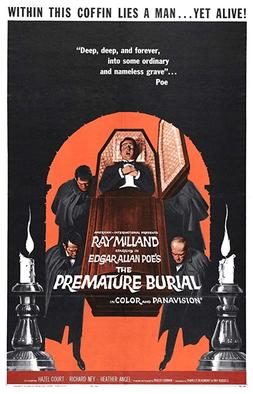
The last of the Roger Corman Poe cycle was The Tomb of Ligeia.  I haven’t seen all eight films in the set, at least I don’t think I have.  A couple don’t sound familiar to me but I didn’t keep track of all the movies I watched growing up.  Although critics were, well, critical of a number of the films, at least three of them weren’t bad.  In that number I would count Ligeia.  The usual problem with making Poe films is that Poe wrote short stories.  Getting them to the length necessary for a feature required padding, sometimes by borrowing against some other Poe tales.  Ligeia isn’t too far off from Poe’s original and although Corman reportedly didn’t want Vincent Price in the star role, because of his age, he pulls off what seems to me a winner.  Atmospheric, and well-acted, the story is a touch slow, but manages to bring in some solid horror themes.

I’ve been pondering Poe as a horror writer lately.  I suspect that the master himself would’ve been surprised, and probably not pleased with the characterization.  Yes, he wrote stories that would become horror hallmarks, but his fiction output included detective stories (a genre he invented), something akin to science fiction, drama, and comedy.  Some of his funny stories retain their humor today.  I suspect that one reason he became remembered as a horror author was H. P. Lovecraft’s adoration of him.  Lovecraft wrote mostly what we consider horror today, although there’s variation there too.  But since Lovecraft saw the horror, so did others.  When Corman began shooting movies he soon fell into the horror trend and, known for that genre, incorporated Poe.  By the end of the sixties, Poe was a horror writer.

What makes The Tomb of Ligeia work is Price’s tormented performance of Verden Fell.  His Byronic character is caught in the realm between death and life.  Unable to free himself from Ligeia, and she, unwilling to renounce her will, they are caught in a belief that a local declares blasphemy while Verden calls it “benediction.”  The theme of resurrection—presented mostly in the form of Egyptian artifacts—is an inherently religious one.  The setting in a ruined abbey—original to Poe—also plays into the sublimated resurrection theme.  Critics didn’t care for the movie, but separating Corman’s Poe cycle out over time allows a viewer to consider each piece separately.  In this light, this appears to be one of the best three.  Of course, I haven’t seen all of them yet.


Not Kid’s Stuff

Sometimes when I go into a bookstore I don’t find anything on my list.  (My list is pretty strange, and it includes many older titles.)  I feel strongly about supporting bookstores, however, and I search for something I would like to read.  So I found Lydia Millet’s A Children’s Bible.  I hadn’t previously heard of it but it was in the speculative section and it wasn’t 400 pages or more.  It turns out that it’s set at an indefinite time but it seems to be not too far in the future, when global warming has really kicked in.  A group of kids whose parents are affluent, but not ultra-wealthy, are spending the summer at a large house on the coast.  You get the sense that this house is a lot further inland than the present east coast.  The parents are childlike in their hedonism, whereas the kids really despise their constant drinking, drug use, and general lack of care.  The kids are independent and try to make their own way, but then a massive hurricane hits.

In the aftermath, the kids run away.  Society has broken down, however, with bands of roving armed men breaking in and taking whatever supplies they want.  They find the compound the children are using, setting this almost as a horror story.  I won’t say anything more about the plot because that might give too much away.  Astute readers know that it isn’t possible to say definitively what a book is about, but I would say this is almost a parable about global warming—it has “parable” written all over it.  Irresponsible adults have let this happen and the children have to figure out solutions.  And yes, there is a Children’s Bible in the story and it plays a part in the plot.  I have to admit the the title is what first caught my attention.

I don’t know Lydia Millet’s other work, but this was not exactly an enjoyable novel, it seems like an important one.  I’m glad to have read it.  The kids in the novel, the older ones, are skeptical of the Children’s Bible when it’s introduced.  Two of the younger kids, see it as providing direction on how to survive in science-versus-nature world.  All of the kids here are incredibly prescient and precocious.  The adults are unable to adjust to the changing world and although the Bible remains with the children it leaves the reader with the haunting question of what comes after Revelation.  This is a book that would benefit from serious pondering.


Local Gothic

One of the most valuable aspects of the humanities is the range they give the imagination.  As an undergrad from a small town, I was astonished at the range of courses available in a liberal arts college.  Even so, I took only two in the literature department.  I wish I’d taken more.  You see, as someone who grew up poor, my reading has often been budget reading.  Used books found by chance and cheap editions in department stores of a town lacking bookshops.  I soon found that Gothic literature met my needs.  Alan Lloyd-Smith’s American Gothic Fiction: An Introduction is, as you might guess, a series book.  One of those books by an outsider analyzing a different culture’s literature, it is nevertheless quite good for the most part.  Until it decides, as many literary studies do, to go all theoretical.  Prior to that it’s very engaging.

For me it’s less the ideas than the mood of Gothic literature that I find engaging.  It creates a cozy feel, and when I read about Poe, Melville, and Hawthorne, I feel a sense of belonging.  Gothic transformed when it emigrated to America.  Lloyd-Smith does a great job of demonstrating how castles and cathedrals gave way to a landscape built by Native Americans, and an unexplored frontier.  How literature in America tended toward the Gothic from the beginning and even up to the point this book was written, hadn’t really effaced much at all.  Such things are inspiring to me.  It jumpstarted my own fiction writing again.  One curious feature, however, is that the book doesn’t discuss “The Legend of Sleepy Hollow” at all, other than a passing reference to Burton’s film.  There’s quite a lot on Poe and company, Charles Brockden Brown, and some of Charlotte Perkins Gilman.  Even Toni Morrison makes an appearance or two.  (He does cover Southern Gothic also.)

While this is clearly intended as a classroom book—wide, wide margins for note-taking, introductory level until chapter six—it is worthwhile reading for any curious adult interested in American literature.  My life has been a search for my tribe.  For many years it was a very religious search, that, unfortunately led to rejection that left me searching for a new home.  The horror community has been somewhat welcoming, and there’s something Gothic about that in its own right.  In any case, reading about Gothic brings its own melancholy joy.  I mostly enjoyed this book and learned quite a lot from it.  And, of course I bought it used.


In Public

Mere days after my dentist appointment I had occasion to be back in the waiting room.  Of course I had a book with me.  Then my attention was caught by either a patient or someone waiting for a patient.  This man had not one, but two books with him.  He was poring over one of them, which was an older hardcover, like an academic.  Since I’d just posted about seeing nobody reading books, I felt I needed to publish a kind of, well, not exactly retraction, but reflection.  The sight of this man, about my age, was profoundly hopeful.  I have no idea who he was and waiting rooms are not generally where I choose to introduce myself.  I do sometimes weigh, however, the demerits of interrupting someone reading with the merits of meeting another reader.  We reading sorts can be private people, although reading in public marks us.

The book I happened to have had a bright, trade cover.  His were more somber and academic.  How could I, whose reading looked facile (it was not, but it looked like it might be) approach someone perhaps awaiting a root canal, who had some serious reading to do?  Two hardcovers bespeak serious business.  This made me reflect on another occasion in Easton.  Again, I was waiting for someone and it was summer so I sat outside on a curb, at the traffic circle, reading a book.  It was actually Toni Morrison’s Beloved.  Evening was falling.  A couple of coeds, or they seemed to eyes from my age, stopped and asked what I was reading.  I explained, and, unaccountably, they seemed never to have heard of Morrison, but were interested.  It was a teaching moment.

Back to the dentist office.  Had I missed out on the opportunity for a free lecture?  If this man were a professor, he’d likely have talked gladly about his work.  One thing I learned from being a professor myself is that people rarely ask about your work.  Yes, colleagues in the same field do, but even at Nashotah House with its small faculty, nobody seemed interested in the research of their colleagues.  As academic dean I even tried to institute a faculty seminar where we could read a paper and discuss it.  I was the only one who ever volunteered to do it.  In retrospect, it might’ve been a lost opportunity, that waiting room visit.  I’ve attended many medical appointments in my life, and finding a fellow reader at one of them was a bit of a silent gift.  I was glad to have been proven wrong.


Gothic Illumination

A mere month ago I had never heard of Sally Sayward Wood.  She has seldom received much attention, and it may be in part because her literary finesse wasn’t quite that of her compatriots.  Wood, however, was the earliest American woman to write a gothic novel.  She was also Maine’s first novelist.  I learned of Julia and the Illuminated Baron from a rather unexpected source, but my interest in the history of horror meant that I knew I would have to read it.  Original printings are extremely rare, but the University of Maine has brought them back into circulation.  Julia was published in 1800 and it is old-style gothic.  Set in France, among the aristocracy, it has gloomy castles, dastardly villains, and damsels in distress.  The story also involves an extremely complex set of titled gentry that end up being fairly closely related by the end of the novel.  Well into the story (after about 150 pages) it grows somewhat exciting, but the denouement is something you can see coming, though.

What is really striking about this gothic romance is the extreme vitriol served up to the Illuminati.  In particular, Wood seems quite affronted by their atheistic outlook, stating rather boldly that without Christian sensibilities that morals can’t be preserved.  This wasn’t an uncommon view around the turn of the nineteenth century, of course.  The Enlightenment had begun to take hold and not a few people were very concerned about the implications.  Social change must be slow, if it is to have lasting impact.  Quick change leads to reactionary backlashes, as anyone who looks at history knows.  Still, this makes Wood’s villain particularly nasty.  Perhaps even more surprising is that such biases continue today.

Gothic was an important part of early American literature.  It owes quite a bit to its European forebears, but it developed into its own form in the New World.  When she does mention America, Wood ladles praise on George Washington.  She was born, of course, before the Revolutionary War, when Maine was still part of Massachusetts.  All of this makes me feel somewhat less of a pariah, knowing that the early American tradition was part of the family tree for horror.  In today’s parlance gothic might seem far from the slasher, but without gothic we’d never have had our classic ghost stories that first gave people the frisson that begged for further expression.  Julia and the Illuminated Baron is a bit too satisfied with the wealthy overlords of the second estate.  It is a work of fantasy, however, of one of the earliest American women to try her hand at fiction.


In Praise of Paper

There’s an old saying that the tech industry might consider.  “If it ain’t broke, don’t fix it.”  I’m thinking books.  I work in an industry that’s running after ebooks, sometimes at the expense of actual books.  You know what I mean—the kind printed on paper.  With a cover.  An object.  What techies don’t seem to understand is that something happens to you when you’re reading a book.  It changes you.  Curled up in a chair with a half-pound of bound paper in front of you, you become absorbed.  Chair, person, paper.  All one.  And you’re taken somewhere else.  I’m not saying that reading online isn’t valuable.  Clearly it is.  The experience, however, isn’t the same.  Industry moguls express surprise at vinyl’s return.  They shouldn’t.  It wasn’t broke either.

After reading a meaningful book I’ll carry it around with me for days like Linus’ security blanket.  Its mere presence reminds me that something profound happened to me while I was spending time with that tome.  Especially meaningful books I hesitate to shelve away with the others.  No, I want them to hand to remind me.  To bring back, at a glance, the fascination they engendered.  Let’s call it enchantment.  Capitalism removed enchantment from the world.  In the heat of materialism’s fervor, it made all alternatives irrelevant.  That’s what’s driving the ebook craze.  Hey, I’m fine if you like to read on a piece of plastic, but please leave the option of paper for those who prefer to truly get lost.

I spend most of my waking hours (and all of my sleeping ones) surrounded by books.  When my eye falls on one that I really enjoyed, I take a nanosecond pause to appreciate it.  We all have to decide how we’ll spend our time on this weary old planet.  A good deal of it will be work, and if we’re lucky it will be doing something we enjoy.  Otherwise we have roughly five hours of waking time five days a week to squeeze in the necessary and the enjoyable.  Some will go out and party with friends, others will stay home and read a book.  Many will use devices to fill the time outside the office, whether alone or with friends.  I tend to be in the book crowd.  I’m not embarrassed by that.  Books have been good to me.  Very good.  They say reading is fundamental.  I would add that reading a real book is life itself.


Toothsome Books

A visit to the dentist always entails a certain amount of anxiety.  Will the sins of my mouth have caught up with me?  Are my sleepy nights’ brushings thorough enough?  Is that spot where I declined to have a false molar replace the missing one causing any problems for the teeth above?  That kind of thing.  In any case, I like our dentist.  The town we live in, which is small, has four dentist offices.  The one I selected is run by three women and instead of always getting the same mouth doctor, on a standard visit you meet with the one who has an opening in her schedule.  I like to support women-owned businesses.  But still, the anxiousness.  Something happened on my last visit that may help.  I’ll try to remember it.

Unlike anyone else I’ve ever seen, I always take a book with me for those minutes in the waiting room.  I have so much that I want to read and so little time, so as long as I’m cashing in a sick day, I might as well get some extra reading done.  Since it’s summer, I didn’t have a coat in which to leave my book, so I took it back to the room with me.  They’ve never said anything about me taking up a little of their medical counter with a book, so I figured it was okay.  The hygienist did the x-rays and cleaning, then the dentist stopped in.  I had never seen this particular doctor before, and she began the conversation by asking what the book was about.  Now, as strange as it may sound, I have wondered why nobody ever asks about the book I inevitably have.  I take books to every medical appointment—I’m not a magazine reader—and in all these years no one has asked me.  Until now.

This wasn’t just a polite query either.  She asked whether I thought it was good, and even suggested some similar things I might want to read.  It was, in fact, a literary conversation.  As I walked home (teeth are fine) I pondered how rare this is.  I’ve told people that I write books and the conversation usually dies when I say what they’re about.  Of course, I don’t go around reading copies of my own books.  I already know what they say.  I guess I miss a literate society where people discuss the books they read.  I do it on this blog, and on Goodreads, but engagement is low.  At least next time I won’t be afraid to go to the dentist.


Not Content

I write books.  When I want to “create content” I do it on this blog.  (And a few other internet sites.)  These aren’t the same thing.  I find it distressing that publishers are trying to drive us to ebooks where content can easily be changed, as opposed to print books.  The shelves of this room are lined with books and the technology doesn’t exist to come in and change “data” without my knowing it.  Facts are secure in print, right Ilimilku?  I’m not looking forward to a Star Wars future where there’s no paper.  I was born in the last century and, perhaps, I’ll die there too.   You see, when you write a book you have a project in mind that has an endpoint.   It may change and shift as you write, but you know what a book is and that’s what you produce.  It gets shelved and you move on to other things.  (At least I do.)

Content is something different and the creative process behind it also differs.  If I find something wrong after the fact, I go into my past posts and change it.  I’m not afraid of admitting I’m wrong.  The point of this blog is to share ideas with the world, not to write a book.  (Although, I confess that I would not say “no” if someone in publishing wanted a selection of worthwhile posts for a book… just saying.)  It amazes me how publishers have pretty much gone after the money and have forgotten what the creative process is like.  Of course, they’re having to figure out how this whole internet with free content plays into it too.  But still, my book writing uses a different fold in my gray matter than my blog writing does.  All of it feels pretty different from writing fiction too.

These things together adds up to a writing life.  I have a ton of “not for publication” writing.  This is something different again.  I suspect it will never be read by anybody, moldering away on some old hard drive after some AI-induced apocalypse.  I write it for of the same reason, I suspect, that people used to spray-paint “Kilroy was here” on things.  The book of Job, it seems to me, was the preservation of words that someone simply had to write.  We know the framing story is folklore.  But those who have words to carve with iron on lead, or engrave on a stone to last forever.  It’s more, I hope, than just “creating content.”


Book or Movie?

I’ve read a few of Paul Tremblay’s novels.  He’s a horror writer with literary style—often a tough sell (at least in my experience.)  Horror Movie is a compelling read.  The conceit is that a group of young people decide to film, well, a horror movie.  Things go awry, but not in a funny way.  The story unfolds interlaced with the screenplay and with the overlay of the modern remake in the works.  It’s easy to get lost between the narrative account of what happened in the original shoot and what’s happening in the script.  Tremblay uses this technique very well, blurring the reality and movie aspects in a way that’s got to be intentional.  I particularly like his asides about the redeeming value of monsters.  I won’t say too much about the plot since you may want to read it yourself. It does riff on the “cursed movie” trope.

The truly remarkable thing to my regular readers will be that I finished a new book within a month of publication.  Normally I run a couple to several years behind.  And this novel contains several winks and nods to other horror movies.  It pays to know the canon.  In that sense, it reminds me of the movie Scream, one of the more self-aware horror classics.  (I have had Scream out for watching again for several weeks now, but time has a way of slipping away.)  Tremblay, like Stephen King, taught before becoming established as a horror writer.  Maybe there’s hope for some of yet!  I started writing novels in middle school—perhaps there’s still time.  That seems to be one of the themes of Horror Movie, by the way.  It has many elements of a parable.

I found Tremblay’s first horror novel, A Head Full of Ghosts, about four years after it was published.  Indeed, I was working on Nightmares with the Bible at the time, so a book about possession was appropriate.  Horror Movie is more a monster tale but it’s also about movies and reality.  This is territory I often traverse since, it seems to me, movies are more than mere entertainment.  Good ones are, anyway.  And like some other books I’ve read lately, this one is also a reflection on fame (something I wouldn’t know about).  How it’s not what it’s made out to be.  In other words, if you’re willing, Horror Movie is the kind of novel that will make you think.  I appreciate that Tremblay is giving us thoughtful horror and I’m looking forward to trying to keep up.


Following Irving

I’m growing fond of staycations.  Maybe it’s because I’ve become such a creature of habit that major disruptions seem daunting, but I still like a change of scenery with my family.  We settled on the Poconos because of, well, a chocolate factory.  More on that anon.  In any case, said location was near Honesdale, Pennsylvania.  Before setting out we learned that Honesdale is one of those quaint downtowns that has made it an island of culture in a sea of red, if you get my drift.  While researching things to do we learned about Irving’s Cliff.  This is an overlook of the town from a bluff atop one of the many hills.  What really caught my attention is that the Irving was none other than Washington Irving, the author of “The Legend of Sleepy Hollow.”  This cliff was a view he enjoyed, so it was named after him.

The view from Irving’s Cliff

Honesdale is a small town.  Less than 5,000 people call it home.  Growing up in western Pennsylvania I heard about more affluent people going to “the Poconos” out east.  It was a “romantic” getaway for some lucky high schoolers while the rest of us had to use our imagination regarding what such a place might be like.  Of course, living just south of the Poconos now we’ve driven through them many times, but we never stopped to linger here.  As I tried to commune with the spirit of Irving on his cliff, it occurred to me that he had been a world traveler.  Nipping across the border from his native New York to Pennsylvania must’ve been no big deal.  Still, he wrote incessantly and the locals obviously appreciated that a famous writer had tarried in their town.  Standing here, I knew the view he took in was quite different.  The hills would’ve been here, but a much smaller town and, above all, no cars.

My forthcoming book on Sleepy Hollow will have a thing or two to say about Washington Irving, of course.  It’d be a fool’s errand to try to follow in his footsteps, just as it would be to try the same for his namesake George Washington.  Besides, I was born in a western Pennsylvania town visited by our first president.  Although we couldn’t afford accommodation in Honesdale itself (it is a quaint town), we checked into our hotel knowing that “Washington Irving slept here.”  And when you’ve spent a few years writing a book about a guy’s work, well, a staycation to a place where he had one is worthy of comment.


Cryptid Caper

I don’t recall how it got on my fiction reading list—I probably saw it on Goodreads—but I picked it up because it was short.  And surprisingly, multiple copies were in Barnes and Noble.  Since James Daunt bought the chain out it has definitely improved.  In any case, Hunter Shea’s To the Devil, a Cryptid looked like it might be a fun romp, and if it turned out that I didn’t like it, well, it was short.  Ads in the back keyed me in that this was a part of a series of horror novels about cryptids.  Besides, I like to support publishers that aren’t part of the big five.  I’d just finished reading a five-hundred-pager, so something under two was very welcome.  The title seems to riff off the horror flick To the Devil a Daughter.  As much as I try to keep up on my cryptids, I was unfamiliar with the Goat Man.  And I did like it, by the way.

So, the real Goat Man is mostly associated with Maryland, but in Texas, where the novel is set, there is the Lake Worth Monster.  This seems a good fit for the cryptid part (whether intentional or not I don’t know).  A bunch of kids messing around with Satanism decide to sacrifice a goat in the woods where a Goat Man cryptid is said to live.  Something goes wrong and the goat fuses with a guy trying to break up the ceremony and mayhem ensues.  Lots of bodies torn apart in this version of the Lone Star State.  Still, the story is fun.  I’ve been writing cryptid fiction for years, and this may be a targeted demographic, but that doesn’t prevent this from being a good horror novel.  Particularly interesting is the resolution.  I’ll try not to give too many spoilers, but the next paragraph reveals something.

How do you stop a demonic, bulletproof Goat Man?  You call in a priest to do an exorcism.  The truly remarkable part of this is that the priest is treated sympathetically.  None of the characters are religious.  And of the two main young people who survive, you really don’t expect them to be found in church.  The story isn’t intended to be believable, of course.  The Goat Man is an urban legend.  Urban legends are often difficult to tease apart from actual cryptids sometimes.  Cryptids remind us that there’s still more to be discovered in the world.  And I may have just discovered a series of stories that work for a quick fix.


Empowerment

Recommended as a worthwhile contemporary gothic novel, Alix E. Harrow’s The Once and Future Witches is a feminist tour de force.  Set in a world similar, or perhaps parallel, to ours, it follows three witch sisters in 1893.  The sisters are estranged, having been raised by an abusive father, and each has found her own way to New Salem.  The old Salem had been destroyed after the witch trials.  The three find their lives drawn together, not even knowing the others are there.  But there are also still witch hunters.  None worse than Gideon Hill, the leading candidate for mayor.  I’ve long known that books written after Trump are often fairly obvious for the hatred that oozes from political leaders.  This is one such case.  The story is one of female empowerment in the face of constant male opposition.  It goes fairly quickly for a book its size.

It’s an enjoyable read but it grows, well, harrowing towards the end.  You come to like these three very different sisters and appreciate the gifts they offer to their world.  Men, however, make the rules and often they feel that women have no place in making decisions for the public good.  I’m amazed at the number of people who still believe this.  It makes novels such as this so important.  Women with power are crucial examples to present.  The three sisters may cause mayhem, but it is generally good for the city.  When men are in charge, things tend to get repressive.  Sound familiar?

Conveying the gist of a 500-page novel isn’t a simple task so I’ll simply say that this isn’t a conventional witch story.  There’s never a question that witches are good, but capable of doing bad things.  In other words, they are pretty much like all of us.  That’s not to deny that some people become evil and that such people will gain ardent, blind followers.  The characters are memorable and likable in their very humanness.  As far as genre goes, this is a magical realism novel.  As you get drawn into Harrow’s world it becomes believable.  It’s a book that should be widely read and its plea for tolerance must be heard.  I can think of other comparisons—others have also conveyed that an unquestioning religion may become evil unintentionally.  Such conversions aren’t the kind publicly discussed, but they do fit with human experience.  I’ve intentionally left out spoilers since I want to encourage readers.  It certainly has left me thoughtful.


Number Six

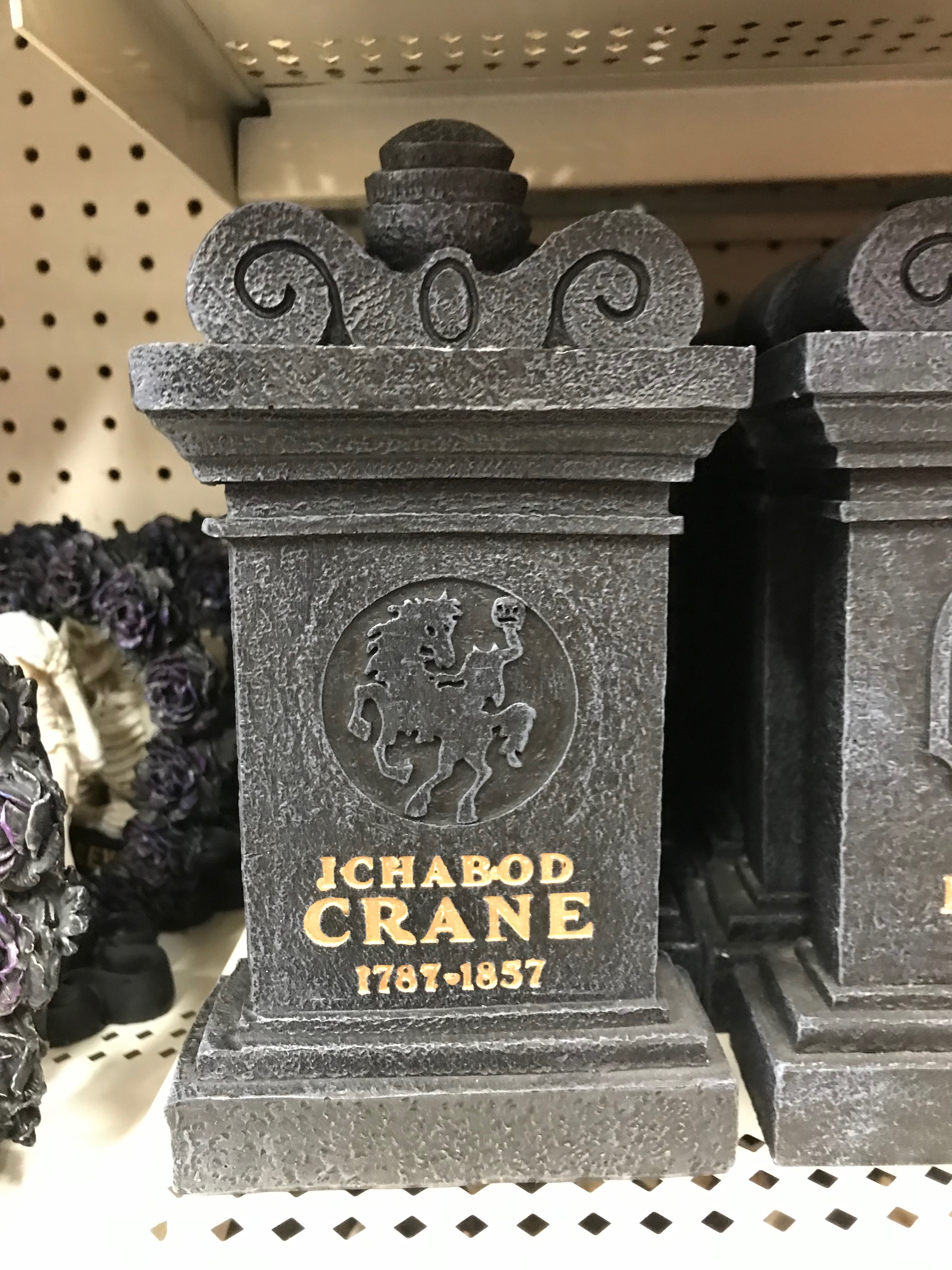
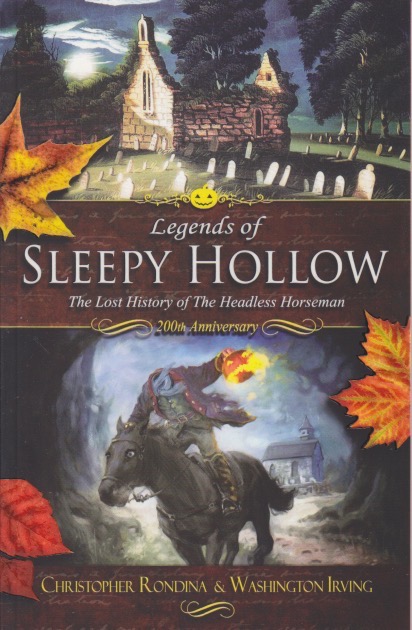
Signing a book contract always makes me happy.  There’s a validation to it.  Someone thinks my thoughts are worthwhile.  And now I can reveal what it’s about.  Regular readers likely already have some inkling, due to the number of times I referenced Sleepy Hollow over the past couple of years.  I’ll provide more details closer to the time, but it struck me back when working on Holy Horror that few resources exist for “The Legend of Sleepy Hollow,” despite its status as such a well-known story.  An agent or two agreed with me that the topic was good but they really weren’t sure it was a commercial project.  This despite the fact that Lindsey Beer is slated to write and direct a reboot of the famous 1999 movie.  It seemed that a book on the topic available at the time might sell.

John Quidor, The Headless Horseman Pursuing Ichabod Crane, public domain via Wikimedia Commons

I tried a number of independent publishers that don’t require agents.  I learned that most of them won’t even reply to your emails.  It seems that to get published by any trade publisher you have to be already famous.  Or maybe my idea’s just not good.  Weird.  Finally I found a university press that thought it might be a good fit, and it occurred to me that McFarland, who recently dropped the price on Holy Horror, would be a good press for this kind of thing.  McFarland made an offer first, and yesterday they sent a contract.  Hopefully the book will be out next year.

This is quite a personal project.  The story is one of my early memories—most likely due to the Disney version of the story, and most likely as seen on television.  My treatment is, as in all of my books, idiosyncratic.  I look at things differently than other people do.  And I’ve been looking at Sleepy Hollow for half a century or so, and I’ve read quite a lot about Washington Irving and the Hudson Valley.  I don’t want to say too much since others write more swiftly than I do and some presses speed books along.  For the time being I can enjoy that rare feeling of having a book contract and an editor who’s excited about my project.  I do hope that the next book, number seven, might find a trade publisher.  What’s it about?  Well, I’m working on two at the moment, and it depends which reaches book length first.  And I can’t say anything since someone may scoop me.  So I’ll just bask a little bit before starting another work day.


Fear of Big Books

I have to get over my fear of big books (I can’t find an official name for this and so I’ll coin machrysbibliophobia—and why did my autocorrect replace this with machrysbibliophobmia when there’s no such word?  It’s a scary world where my fears go unnamed—go, aporripsophobia!)  I’ve read many large novels with payoff (several by Stephen King and Neal Stephenson) and plenty of nonfiction from which I’ve learned a ton (perhaps literally).  But still, when a book I really want to read is big, I tremble.  I try to decide how to justify the time.  Now, I know I don’t have to justify time reading—that’s a constant activity.  I think it’s more a question of caesura, places to stop and perhaps claim credit for work done.  I’m not a fan of multiple volumes since that drives prices up.  Maybe just say it a bit more succinctly?

In my case—and I can only speak for myself—it’s all about a sense of accomplishment.  The distinct, discrete book that I’ve jammed into my gray matter along with its companions.  Some of us are driven by the shot of joy that accompanies completion.  I have a few compendia of authors/genres I really like.  I dip into them but never quite seem to have the time to finish them.  You see, recently watching the X-Files got me thinking about Charles Forte.  I have a compendium of his four books and I read Book of the Damned right through.  But I’ve got three more to go.  How are you supposed to count that on Goodreads, without its own ISBN?  Or the collected fiction and poetry of Poe.  It’s nice to have it all in one place, but will I ever read it cover-to-cover?  I tried once, really I did.

Scary books

As I write this I just started a big book.  It’s on a topic I really find fascinating but I’d been putting it off for some time because of my machrysbibliophobia.  I’ve been entrenched from before page 1.  I know it’s going to take me quite a long time to finish it—I have a job that takes its pound of flesh daily, and even when I do get a day off, well, mowing season is here.  And the porch needs painting again.  Maybe if non-Catholic monasteries were a thing I’d have time to devote to the reading I really must get done before my time’s up.  I like big books, but I’m also afraid of their ramifications.  Enough so even to name my fear.