Nightly Entertainment

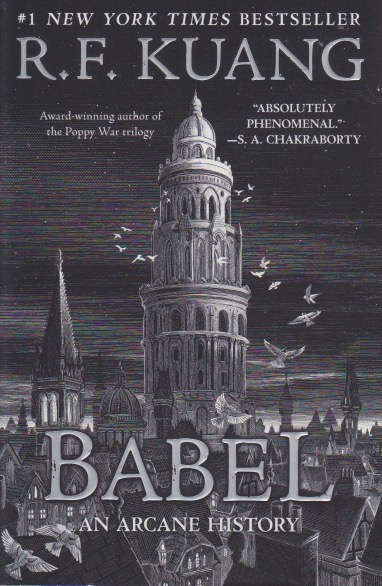
A list of most gothic recent books, I believe it was, that suggested The Night Circus by Erin Morgenstern.  It’s a big book—over 500 pages—so I decided I’d wait until autumn to get underway.  It ended up taking most of September and half of October to finish it.  Since I prefer to start fresh, I had no idea what it was about.  A night circus, of course, as the title indicates.  It is set in the late Victorian period, although I’m not sure all the turns of phrase in the book were current at that time.  There may be a few spoilers in the description, should you want to go out and read this yourself first.  I mention that because something that only becomes clear near the end is a pretty good starting place for giving an idea of what the story’s about.

A very old man (who doesn’t look or act old) is a very accomplished magician (not the stage variety).  One of his students becomes very proficient and the two begin a rivalry that involves each setting a protege against that of the other.  It is a contest, we eventually learn, to the death.  The younger magician selects a daughter he didn’t even know he had, while the original teacher selects a young man without prospects.  The battleground on which these two duel is the eponymous night circus.  Each tries to outdo the other in creativity and wonder.  The circus is open only at night (hence the name) and is fueled by actual magic.  A cast of characters gets introduced, and they’re very well drawn.  In my experience of reading the book, they drew me back in because you pretty much liked most of them and with magic involved, well, you never know.

The novel was gothic in the Victorian setting and in the sense that there is an ancient contest underway here that interrupts into the then present.  There aren’t spooky castles, however, or really even damsels in distress.  The women characters are all strong and resilient.  The writing is lively and the resolution is satisfying.  The real draw for this book is the writing and the complex story that doesn’t overwhelm or leave you feeling too lost.  It’s a magical realism with boundaries and offers a good message that magic is all around, if we only open our eyes to it.  It’s a good book to get lost in for a few weeks.  I appreciated the fact that the villains weren’t the focus and the violence was mostly implied.  It kept me turning pages, gothic or not.


Them Apples

Although I’ve had this book as long as I can remember, I’d never read it.  Not the whole way through, until now.  As I kid I read Ray Bradbury when I could.  I’m sure I read a story or two in Golden Apples of the Sun, but I didn’t approach the entire collection.  I was drawn in at this late age by “The Fog Horn.”  This is the story that lay behind The Beast from 20,000 Fathoms, that classic of Harryhausen, the other Ray.  It’s been years since I’ve seen the movie, but the story was on my mind and I kept going.  Some of Bradbury ages well, while other stories, not so much.  The designation of his tales also changes over time.  As Stephen King says in Danse Macabre, Bradbury didn’t so much write science fiction (as the cover of this edition declares), even if the people occasionally get into rockets.

I realized as I read just how much my early writing style was influenced by Bradbury.  My stories were vignettes like these, not as accomplished, of course, but without lots of violence.  And with horror elements.  But it kept coming back to me how Bradbury’s characters, even the time-traveling ones, are stuck in the button-down forties and fifties.  I naturally overlooked this as a child but all these decades later and the strict binaries of, for example, men’s and women’s worlds, comes through on every page.  When women are the main characters, they’re usually not very flatteringly drawn.  The same goes for caricatures of races, although Bradbury is sympathetic he also uses stereotypes.  And many of the stories in this collection are just about everyday events, not a speculative element in sight.  Maybe I did try to read it through as a kid, but lost interest.

Writers struggle against irrelevance.  Those who look to the future sometimes get it right but often don’t.  And some reflect a present that we’d rather not acknowledge.  Of course, when I’m writing fiction I tend not to think in these terms.  The story simply takes you over and you can’t help being a refugee from the year in which you were born.  This is especially evident when Bradbury casts a rosy lens back toward childhood years.  As a child myself I had no idea that Bradbury was a time traveler from the twenties and thirties.  His childhood was nearly over by the time my mother was born.  It was a different world.  Some of his stories managed to transcend time and its for those that I keep reading him.


Waking Poe

It’s personal and it’s deep.  My appreciation for Edgar Allan Poe, that is.  I’ve read a few biographies of him over the years, but my engagement with him feels more like that of a boon companion.  Still, I learn a lot from looking at him from different angles.  (And yes, he will be in my forthcoming book.)  Jonathan Elmer’s In Poe’s Wake: Travels in the Graphic and Atmospheric caught my attention but I can’t remember exactly how I heard about it.  This was a case where the back-cover copy won me over, noting as it does, that Poe’s image is everywhere.  Still, I approach things as an historian.  How did this lead to that?  And I must confess that I’m not a great fan of heavily theoretical work (I see plenty of it).  As soon as I see Deleuze, my eyes begin to glaze over.  Do we have to go there again?

All of which is to say Elmer’s book is erudite and, at times, quite academic.  I learned a lot from it, particularly the first two chapters.  Much of the rest of it was a bit too theoretical for my plebeian tastes, but I was still learning as I went.  I hope.  I guess I was thinking it would be more of a history of how Poe ended up, for example, on the cover of Sgt. Pepper’s Lonely Hearts Club Band.  Or how the Baltimore Ravens got their name.  Or even how the Ultima Thule daguerreotype became so ubiquitous.  These may well be impossible questions to answer, even as some of us are fool enough to rush in and try.  In academia, the theoretical is a much safer approach.  It impresses Deans and others in the department.

I occasionally listen to famous people talking about fame.  How it destroys some people and obliterates aspects of others’ lives.  Poe was reasonably well known during his lifetime, but not famous on the level that, say, the internet can instantly make you.  Or even TikTok.  Even back within my lifetime (which, I gather, is about the same as Elmer’s) Poe’s influence has grown dramatically.  His was a household name in my childhood, at least among a certain type of reader.  It wasn’t unusual to find people who’d never heard of him.  I suspect that is also true today, but Poe looms large over October and even the New York Times nods in his direction when the days grow shorter.  Like most writers, Poe isn’t who we think he is.  Elmer’s book does indeed explore his wake, and it is one that continues to cause waves over the centuries.


Victorian Inspiration

Some stereotypes hold the truth.  Since we couldn’t afford a vacation this summer, we arranged a couple of our versions of “staycations.”  For us that means driving some place a couple hours away, staying in a hotel for a night or two, and exploring a new place for the weekend.  We’ve done that to explore the Lancaster area and a couple of times to the Poconos.  When possible, and affordable, we like to stay in unusual places rather than the typical hotel.  For example, around Lancaster we try to book a caboose at the Red Caboose.  Since those are expensive over the weekend, typically we have to take a vacation day or two to do them before the weekend proper sets in.  On a trip to the Endless Mountains region, we stayed at the Victorian Charm Inn in Towanda.  This is a converted ten-bedroom house from the late Victorian era.  Not a typical hotel, it’s an inspiring place to stay.

What I mean by stereotypes is that such places inspire me to write in their genres.  After staying in the Red Caboose, I typically write fiction about trains.  I’d been on a gothic kick when we stayed at Victorian Charm and indeed, it inspired gothic writing.  Not that we could’ve afforded it, but when we were looking for a house, I really wanted to buy a Victorian.  We looked at a couple but neither one had been well kept up.  I thought they would inspire my writing.  Perhaps it would get old, living in such a house and reading Poe and other Victorian writers, but I wonder if it might have led to more gothic stories.  The fiction I do write tends to draw from my experience of living in various places.  Victorian mansions have a feel to them.

Writing is mostly a matter of discipline, rather than inspiration.  All writers, I suspect, crave inspiration.  I know that I do.  When I awoke to a thunderstorm in a Victorian mansion I experienced something that had never happened to me before in real life.  It made me wonder what it would’ve been like to have been able to live in such a place.  The cracked plaster, the faded elegance.  The nooks and alcoves.  An honest-to-goodness fainting couch.  And who knows?  Perhaps a ghost or two.  Our house was built in the Victorian Era, but by those of much more modest means.  It is an inspirational place to write, but it’s also the place associated with work.  That’s why, in stereotypical behavior, we need to get away on the occasional staycation.


Seasonal Poe

The more I read of and about Edgar Allan Poe, the more convinced I become that he wasn’t as associated with horror in his own mind as he has become.  As one of the earliest American writers, he has become the icon of those who wrote on the dark side.  His contemporaries—Washington Irving, Nathaniel Hawthorne, and Herman Melville—did as well, but it was Poe who became iconic.  On a recent trip to Michaels to take in the seasonal ambiance, Poe’s presence was difficult to ignore.  I wasn’t prepared to shoot a photo-essay (I’m not sure how they feel about such things in a store, in any case) so I didn’t photograph all the pieces.  “The Raven” is frequently referenced, with typewriters with the poem emerging and large, ominous black birds about, but Poe himself also appears.  There are, of course, painted busts of Poe.

But Halloween has grown more whimsical over the years.  Arguably for my entire life it has been primarily a children’s holiday, but many have noticed that those of us who grew up with Halloween have retained adult interest in it.  Part of this is no doubt commercial since the captains of industry have learned people will spend more on Halloween than any other holiday except Christmas (I do discuss this in my forthcoming book).  And indeed, the Headless Horseman appears quite a lot as well.  Irving, however, isn’t there on the ground.  Poe is.  The whimsical part comes through in showing the humor of the season.  For example, although Poe is shown in the noble bust format, he’s also portrayed (fully clothed) on the toilet.

Finally, there were figurines of a fanciful tombstone of Poe.  They even got the dates correct.  Now, there’s more to be said regarding the comparison with Irving.  You can find the Headless Horseman on the toilet as well (along with Dracula).  You can find the Horseman in bust format as well.  When it comes to tombstones, however, the fictional Ichabod Crane shows up alongside the nonfictional Poe.  That casts a certain light on Irving’s most famous story.  I’ll save that for another post, however, since authors are expected to repeatedly plug their books.  I left Michaels strangely reflective.  Poe-themed merchandise is fairly typical any given year, but since we’re having our first Halloween party in some years, and since I’ve been exploring Poe’s range as a writer, this clear abundance of Poe as an icon gave me pause.  As if I were coming within view of the melancholy house of Usher. 


Return to the House

I’ve read Shirley Jackson’s The Haunting of Hill House before.  It might’ve been before I started this blog, or it might’ve been before I started writing about the books I’d read.  Either way, when I search for a post on it, I don’t find one.  This is a classic novel in the genre, but I found it rather sad both times I’ve read it.  Eleanor is such a compelling, abused and discarded character.  But in case you’re unfamiliar with this psychological horror story, here are the basics: Hill House is haunted.  A professor, Dr. John Montague, somewhat hapless, decides to gather a couple of sensitives to try to investigate the hauntings.  He plans to write a book about it.  The two women he invites, Eleanor and Theodora, both had some psychic or Fortean experiences.  The owner of Hill House insists that a member of the family be present, so Luke, a carefree young man, joins them.

The house “manifests” in various ways, but the occurrences while they’re there, center on Eleanor.  Eleanor lives with her domineering sister after having been a caregiver for her dominating mother.  She’s never been able to develop her own self, and she desperately wants to be accepted.  She’ll lie to make that happen, but not maliciously.  In fact, she’s quite childlike.  While the half-hearted investigation takes place, the others begin to suspect Eleanor may be behind the events, or some of them.  Then John’s insufferable wife arrives with her pretentious friend.  Eleanor acts out, doing a foolhardy stunt that leads the others to dismiss her from the house.  The story is creepy, but, like Mary Shelley’s Frankenstein, more like sad.

I decided to re-read it as autumn began to be felt in the air, and I had read a couple other of Jackson’s novels that I remembered better because they were more recent in my experience.  Quite often this story is compared to Henry James’ The Turn of the Screw, another ambiguous ghost story involving a young lady who wants to be accepted.  These characters are compelling in a  Poeseque kind of way.  Critics complained of my using Poe’s observations in Nightmares with the Bible, but these stories, by a woman and a man, are further exhibits in the case.  They add a poignancy to the events because even as we’ve made some progress in women’s rights we still have a long way to go.  No one doubts that Jackson’s writing is laced with metaphors.  None of her characters can be considered “normal.”  And yet, it’s the house that brings it all out.  It’s a story worth pondering again.


The Paw

Okay, in the spirit of my epiphany that commenting may apply to short stories as well as to collections, I thought I’d muse on W. W. Jacobs’ “The Monkey’s Paw.”  Somewhat like Washington Irving, as a writer Jacobs was known primarily for this story.  Like “The Legend of Sleepy Hollow,” this tale has taken on a life of its own.  I recently read it for the first time, and I wasn’t exactly sure how it would end.  I knew the basic premise: somebody ends up with an exotic monkey paw that grants wishes, but the wishes, as is often the case, turn out poorly.  There’s a kind of morality to such stories, of course.  People shouldn’t rely on wishes for their happiness and any windfall has its consequences.  What makes this a horror story isn’t the magic, however.  It’s what we expect to see because of it.

Image credit: Maurice Greiffenhagen illustration from The Lady of the Barge, 1902; public domain via Wikimedia Commons.

If you haven’t read the tale yourself, it goes roughly like this: an older couple and their working age son have a guest stop by their hovel of a London home.  The guest served in the British Army in India and it was there that he acquired the eponymous paw.  He sadly tells his friend that no good can come of it and they should destroy it (they snatch it from the fire when the friend tosses it there).  Of course, they don’t really believe it will work.  The son suggests they wish for 200 pounds, to pay off their house.  He then leaves for work.  Later a stranger stops by to tell them that their son has been killed in an accident at the factory.  Denying responsibility, they nevertheless offer 200 pounds to help with the hardship.  The grief stricken mother then insists they wish their son would come back.

This is prime real estate for horror, of course.  The son had been badly mangled in the machinery at the factory.  I won’t spoil the third wish, and besides, you’ve probably read it before.  The story has been retold countless times, with changed settings but always the same message—be careful what you wish for.  Jacobs was able to make a living from his writing.  This is increasingly a rarity today, of course.  Nevertheless some eight decades after his death, outside the circle of literature scholars, he’s known for one short story.  Prior to reading it I couldn’t have even told you who wrote it.  This isn’t a bad way to make a mark on the world.  Those of us who write often put much of ourselves into our stories, and to have even one of them remembered would be an honor indeed.


Grotesque and Arabesque

My last post about Edgar Allan Poe’s Tales of the Grotesque and Arabesque led a couple of readers pointing me to places where the missing tale (“The Visionary”) could be read online.  That fact is beside the point.  I have sitting next to me an omnibus edition that contains, in print form, all of Poe’s tales and poems.  Poe deserves to be read in print.  No, the point of that previous post was that I wanted to read a print version of Tales of the Grotesque and Arabesque through so that I could observe a couple of things: the stories Poe thought his best at the time, and to read several Poe stories I never had.  Also, it was an exercise of ratiocination.  So I found a used copy online that contains the full contents, unaltered, of the original printing.  Such a book may be still in print, but given the constraints mentioned in my previous post, it cannot easily be found.  So on to the stories.

A great number of the stories contained herein are funny.  Poe was quite capable of humorous writing.  Some of the stories verge on science fiction.  Others demonstrate his incredible breadth of reading.  He wrote smartly about ancient history—fictionalized, of course—and about astronomy.  He wrote a story about the end of the world, which adheres, in some measure, to the “biblical” account known even in his day.  The stories are erudite and often obscure.  They are seldom read, or at least discussed among Poe’s horror tales.  I’ve been pondering horror as a category quite a lot as of late.  It’s clear that during his lifetime Poe was not a “horror writer” as we know such authors today.  He was a brilliant, and imaginative interrogator of the world in which he lived.  Reading this book all the way through was an epiphany.

Poe’s writings are in the public domain.  There are websites, easily found, where all of his stories may be located for free.  There are some writers, however, that I believe have earned the honor of being read as they were published—on paper.  Until recently I had only a couple of editions of paperbacks of Poe’s stories.  They were mostly tales I had read multiple times, here and there.  I even break out the omnibus edition now and again when I want to read one of his stories that aren’t in the other collections.  Tales of the Grotesque and Arabesque has expanded my view, which often happens when I read Poe.  And that is a high compliment to any author, just like reading them in paper form.


Whole Books

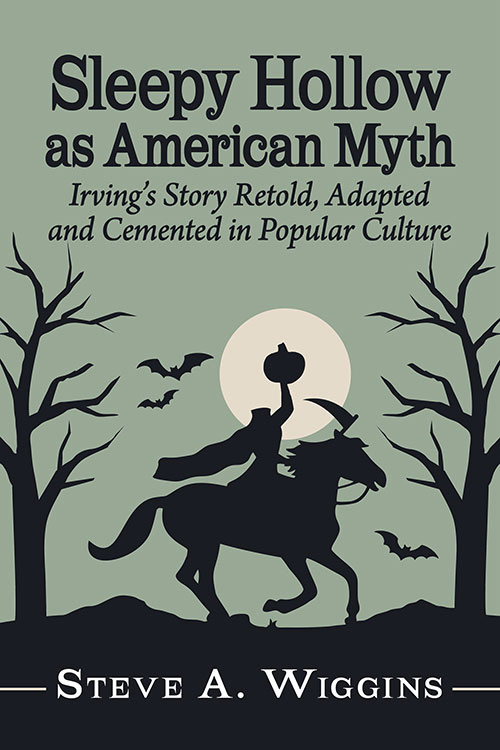
One of the many peculiarities of my thought process is that I’ve tried to discuss only “whole pieces” on this blog.  In other words, as a “consumer” of media, my self-imposed limit has been discussing only whole books rather than a single short story.  Or the entire run of a television series rather than an individual episode.  The startling contradiction occurred to me that my latest book is an extended study of a single short story.  You see, Washington Irving was no novelist.  As America’s first famous writer, his fiction came in the form of short stories—sketches, he called them—and so to write a book on Sleepy Hollow meant focusing on a short story.  I love to read short stories.  I’ve always waited to talk about them here after finishing the book I found them in.  Maybe it’s time to discuss stories, or individual episodes here as well.

“The Legend of Sleepy Hollow,” many people are surprised to learn, is not a novel.  It’s often presented that way in telinematic adaptations.  The story, published as part of a collection of stories in 1820, is only 12,000 words in length.  Now, if you don’t work in publishing that figure may mean nothing to you.  There is no scientific way to parse these things but short stories tend to run from a few hundred words to about 15,000.  The next major category, the novella, is generally said to start at about 17,500.  You’ll notice there’s a gap there, between the two.  This is the strange territory sometimes called the “novelette.”  That’s because many modern fiction publishers cut the short story off at 7,500 words, and that leaves a gap of a literal myriad of words.  7,501 to 17,500 is the novelette, according to some.  And for the sake of completion, the novella tops out at 40,000 words so anything longer is a novel.

Irving wrote before these fine distinctions existed.  He wrote and people read.  Poe fell into a similar category.  He was known to have written only one novel,  The Narrative of Arthur Gordon Pym of Nantucket, but some of his short stories are long.  “The Unparalleled Adventure of One Hans Pfaall” stops just shy of 19,000 words, a novelette in today’s nomenclature.  My own fiction writing has been shaped by the fact that many magazines (even online, non-paying) top stories out at 5,000 words.  Some even at 3,000.  If you’ve ever tried to get a novella published, you’ll know why you shouldn’t even try.  All of which is to say maybe it’s time I start giving myself a break and talk about short stories.  Or an interesting episode.  If I can wrap my brain around it.


Finding Poe

A gift a friend gave me started me on an adventure.  The gift was a nice edition of Poe stories.  It’s divided up according to different collections, one being Tales of the Grotesque and Arabesque.  This was originally the title of a collection of 25 stories selected by Poe himself in 1840.  I realized that much of my exposure to Poe was through collections selected by others such as Tales of Mystery and Terror, never published by Poe in that form.  I was curious to see what Poe himself saw as belonging together.  I write short stories and I’ve sent collections off several times, but with no success at getting them published.  I know, however, what it feels like to compile my own work and the impact that I hope it might have (if it ever gets published).  Now finding a complete edition of  Tales of the Grotesque and Arabesque turned out to be more difficult than expected.

Amazon has copies, of course.  They are apparently all printed from a master PDF somewhere since they’re all missing one of the stories.  The second-to-last tale, “The Visionary,” is missing.  I searched many editions, using the “read sample” feature on Amazon.  They all default to the Kindle edition with the missing tale.  I even looked elsewhere (gasp!) and found that an edition published in 1980 contained all the stories.  I put its ISBN in Amazon’s system and the “read sample” button pulled up the same faulty PDF.  Considerable searching led me to a website that actually listed the full contents of the 1980 edition I’d searched out, and I discovered that, contrary to Amazon, the missing piece was there.  I tried to use ratiocination to figure it out.

I suspect that someone, back when ebooks became easy to make, hurried put together a copy of Tales of the Grotesque and Arabesque.  They missed a piece, never stopping to count because Poe’s preface says “25” tales are included, but there were only 24.  Other hawkers (anyone may print and sell material in the public domain, and even AI can do it) simply made copies of the original faulty file and sold their own editions.  Amazon, assuming that the same title by the same author will have the same contents, and wishing to drive everyone to ebooks (specifically Kindle), offers its own version of what it thinks is the full content of the book.  This is more than buyer beware.  This is a snapshot of what our future looks like when AI takes over.  I ordered a used print copy of the original edition with the missing story.  At least when the AI apocalypse takes place I’ll have something to read.


The Cycle

The last of the Roger Corman Poe cycle was The Tomb of Ligeia.  I haven’t seen all eight films in the set, at least I don’t think I have.  A couple don’t sound familiar to me but I didn’t keep track of all the movies I watched growing up.  Although critics were, well, critical of a number of the films, at least three of them weren’t bad.  In that number I would count Ligeia.  The usual problem with making Poe films is that Poe wrote short stories.  Getting them to the length necessary for a feature required padding, sometimes by borrowing against some other Poe tales.  Ligeia isn’t too far off from Poe’s original and although Corman reportedly didn’t want Vincent Price in the star role, because of his age, he pulls off what seems to me a winner.  Atmospheric, and well-acted, the story is a touch slow, but manages to bring in some solid horror themes.

I’ve been pondering Poe as a horror writer lately.  I suspect that the master himself would’ve been surprised, and probably not pleased with the characterization.  Yes, he wrote stories that would become horror hallmarks, but his fiction output included detective stories (a genre he invented), something akin to science fiction, drama, and comedy.  Some of his funny stories retain their humor today.  I suspect that one reason he became remembered as a horror author was H. P. Lovecraft’s adoration of him.  Lovecraft wrote mostly what we consider horror today, although there’s variation there too.  But since Lovecraft saw the horror, so did others.  When Corman began shooting movies he soon fell into the horror trend and, known for that genre, incorporated Poe.  By the end of the sixties, Poe was a horror writer.

What makes The Tomb of Ligeia work is Price’s tormented performance of Verden Fell.  His Byronic character is caught in the realm between death and life.  Unable to free himself from Ligeia, and she, unwilling to renounce her will, they are caught in a belief that a local declares blasphemy while Verden calls it “benediction.”  The theme of resurrection—presented mostly in the form of Egyptian artifacts—is an inherently religious one.  The setting in a ruined abbey—original to Poe—also plays into the sublimated resurrection theme.  Critics didn’t care for the movie, but separating Corman’s Poe cycle out over time allows a viewer to consider each piece separately.  In this light, this appears to be one of the best three.  Of course, I haven’t seen all of them yet.


Not Kid’s Stuff

Sometimes when I go into a bookstore I don’t find anything on my list.  (My list is pretty strange, and it includes many older titles.)  I feel strongly about supporting bookstores, however, and I search for something I would like to read.  So I found Lydia Millet’s A Children’s Bible.  I hadn’t previously heard of it but it was in the speculative section and it wasn’t 400 pages or more.  It turns out that it’s set at an indefinite time but it seems to be not too far in the future, when global warming has really kicked in.  A group of kids whose parents are affluent, but not ultra-wealthy, are spending the summer at a large house on the coast.  You get the sense that this house is a lot further inland than the present east coast.  The parents are childlike in their hedonism, whereas the kids really despise their constant drinking, drug use, and general lack of care.  The kids are independent and try to make their own way, but then a massive hurricane hits.

In the aftermath, the kids run away.  Society has broken down, however, with bands of roving armed men breaking in and taking whatever supplies they want.  They find the compound the children are using, setting this almost as a horror story.  I won’t say anything more about the plot because that might give too much away.  Astute readers know that it isn’t possible to say definitively what a book is about, but I would say this is almost a parable about global warming—it has “parable” written all over it.  Irresponsible adults have let this happen and the children have to figure out solutions.  And yes, there is a Children’s Bible in the story and it plays a part in the plot.  I have to admit the the title is what first caught my attention.

I don’t know Lydia Millet’s other work, but this was not exactly an enjoyable novel, it seems like an important one.  I’m glad to have read it.  The kids in the novel, the older ones, are skeptical of the Children’s Bible when it’s introduced.  Two of the younger kids, see it as providing direction on how to survive in science-versus-nature world.  All of the kids here are incredibly prescient and precocious.  The adults are unable to adjust to the changing world and although the Bible remains with the children it leaves the reader with the haunting question of what comes after Revelation.  This is a book that would benefit from serious pondering.


Local Gothic

One of the most valuable aspects of the humanities is the range they give the imagination.  As an undergrad from a small town, I was astonished at the range of courses available in a liberal arts college.  Even so, I took only two in the literature department.  I wish I’d taken more.  You see, as someone who grew up poor, my reading has often been budget reading.  Used books found by chance and cheap editions in department stores of a town lacking bookshops.  I soon found that Gothic literature met my needs.  Alan Lloyd-Smith’s American Gothic Fiction: An Introduction is, as you might guess, a series book.  One of those books by an outsider analyzing a different culture’s literature, it is nevertheless quite good for the most part.  Until it decides, as many literary studies do, to go all theoretical.  Prior to that it’s very engaging.

For me it’s less the ideas than the mood of Gothic literature that I find engaging.  It creates a cozy feel, and when I read about Poe, Melville, and Hawthorne, I feel a sense of belonging.  Gothic transformed when it emigrated to America.  Lloyd-Smith does a great job of demonstrating how castles and cathedrals gave way to a landscape built by Native Americans, and an unexplored frontier.  How literature in America tended toward the Gothic from the beginning and even up to the point this book was written, hadn’t really effaced much at all.  Such things are inspiring to me.  It jumpstarted my own fiction writing again.  One curious feature, however, is that the book doesn’t discuss “The Legend of Sleepy Hollow” at all, other than a passing reference to Burton’s film.  There’s quite a lot on Poe and company, Charles Brockden Brown, and some of Charlotte Perkins Gilman.  Even Toni Morrison makes an appearance or two.  (He does cover Southern Gothic also.)

While this is clearly intended as a classroom book—wide, wide margins for note-taking, introductory level until chapter six—it is worthwhile reading for any curious adult interested in American literature.  My life has been a search for my tribe.  For many years it was a very religious search, that, unfortunately led to rejection that left me searching for a new home.  The horror community has been somewhat welcoming, and there’s something Gothic about that in its own right.  In any case, reading about Gothic brings its own melancholy joy.  I mostly enjoyed this book and learned quite a lot from it.  And, of course I bought it used.


In Public

Mere days after my dentist appointment I had occasion to be back in the waiting room.  Of course I had a book with me.  Then my attention was caught by either a patient or someone waiting for a patient.  This man had not one, but two books with him.  He was poring over one of them, which was an older hardcover, like an academic.  Since I’d just posted about seeing nobody reading books, I felt I needed to publish a kind of, well, not exactly retraction, but reflection.  The sight of this man, about my age, was profoundly hopeful.  I have no idea who he was and waiting rooms are not generally where I choose to introduce myself.  I do sometimes weigh, however, the demerits of interrupting someone reading with the merits of meeting another reader.  We reading sorts can be private people, although reading in public marks us.

The book I happened to have had a bright, trade cover.  His were more somber and academic.  How could I, whose reading looked facile (it was not, but it looked like it might be) approach someone perhaps awaiting a root canal, who had some serious reading to do?  Two hardcovers bespeak serious business.  This made me reflect on another occasion in Easton.  Again, I was waiting for someone and it was summer so I sat outside on a curb, at the traffic circle, reading a book.  It was actually Toni Morrison’s Beloved.  Evening was falling.  A couple of coeds, or they seemed to eyes from my age, stopped and asked what I was reading.  I explained, and, unaccountably, they seemed never to have heard of Morrison, but were interested.  It was a teaching moment.

Back to the dentist office.  Had I missed out on the opportunity for a free lecture?  If this man were a professor, he’d likely have talked gladly about his work.  One thing I learned from being a professor myself is that people rarely ask about your work.  Yes, colleagues in the same field do, but even at Nashotah House with its small faculty, nobody seemed interested in the research of their colleagues.  As academic dean I even tried to institute a faculty seminar where we could read a paper and discuss it.  I was the only one who ever volunteered to do it.  In retrospect, it might’ve been a lost opportunity, that waiting room visit.  I’ve attended many medical appointments in my life, and finding a fellow reader at one of them was a bit of a silent gift.  I was glad to have been proven wrong.


Gothic Illumination

A mere month ago I had never heard of Sally Sayward Wood.  She has seldom received much attention, and it may be in part because her literary finesse wasn’t quite that of her compatriots.  Wood, however, was the earliest American woman to write a gothic novel.  She was also Maine’s first novelist.  I learned of Julia and the Illuminated Baron from a rather unexpected source, but my interest in the history of horror meant that I knew I would have to read it.  Original printings are extremely rare, but the University of Maine has brought them back into circulation.  Julia was published in 1800 and it is old-style gothic.  Set in France, among the aristocracy, it has gloomy castles, dastardly villains, and damsels in distress.  The story also involves an extremely complex set of titled gentry that end up being fairly closely related by the end of the novel.  Well into the story (after about 150 pages) it grows somewhat exciting, but the denouement is something you can see coming, though.

What is really striking about this gothic romance is the extreme vitriol served up to the Illuminati.  In particular, Wood seems quite affronted by their atheistic outlook, stating rather boldly that without Christian sensibilities that morals can’t be preserved.  This wasn’t an uncommon view around the turn of the nineteenth century, of course.  The Enlightenment had begun to take hold and not a few people were very concerned about the implications.  Social change must be slow, if it is to have lasting impact.  Quick change leads to reactionary backlashes, as anyone who looks at history knows.  Still, this makes Wood’s villain particularly nasty.  Perhaps even more surprising is that such biases continue today.

Gothic was an important part of early American literature.  It owes quite a bit to its European forebears, but it developed into its own form in the New World.  When she does mention America, Wood ladles praise on George Washington.  She was born, of course, before the Revolutionary War, when Maine was still part of Massachusetts.  All of this makes me feel somewhat less of a pariah, knowing that the early American tradition was part of the family tree for horror.  In today’s parlance gothic might seem far from the slasher, but without gothic we’d never have had our classic ghost stories that first gave people the frisson that begged for further expression.  Julia and the Illuminated Baron is a bit too satisfied with the wealthy overlords of the second estate.  It is a work of fantasy, however, of one of the earliest American women to try her hand at fiction.