Echoes

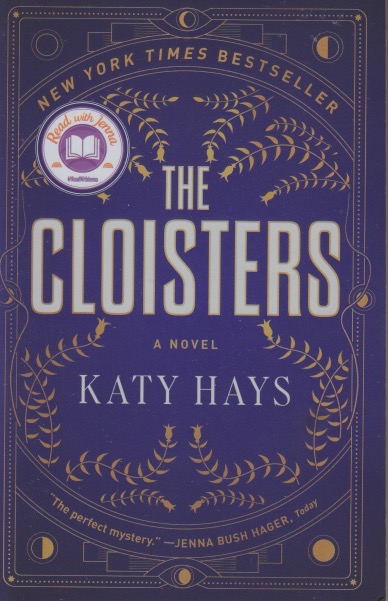
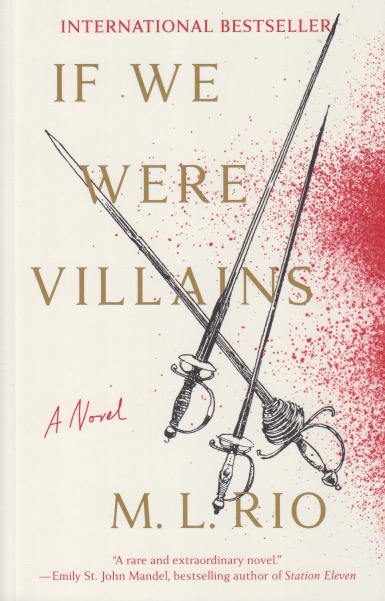
Among the first books I read that might be considered Dark Academia was P. D. James’ Death in Holy Orders.  That was so long ago that I don’t remember when, although the inscription tells me it was purchased in 2002.  There’s no mystery as to why.  There was buzz at Nashotah House when the novel came out.  It was about a murder at a conservative Anglican seminary with few students.  It seemed very much like Nashotah House to some there, so I read it.  Now, I’m not a fan of murder-mysteries.  I’ve read nothing else P. D. James wrote.  I had no idea who Adam Dalgliesh was.  The book was a New York Times bestseller.  Reviews were mixed, and among fans of Dark Academia it is scarcely noticed.  Still, Dark Academia is still in its toddlerhood.  Its boundaries aren’t clear and it overlaps with other genres, as most modern genres do.  There may be spoilers below.

In a very complex plot (mystery writers like to show off in that way) a rich seminarian at St. Anselm’s, dies by suicide that was strange but not really suspicious.  His wealthy stepfather receives an anonymous letter suggesting foul play and super-sleuth Adam Dalgliesh of Scotland Yard is brought in. After the suicide, an old housekeeper dies of an apparent heart attack.  But then an Archdeacon is murdered in the chapel (here was the frisson at Nashotah House).  Since there were visitors on the isolated campus at the time, and the Archdeacon was not liked by most people there, it becomes a whodunit with conflicting motives, one of which is to see the seminary closed.  It owns artifacts worth millions, and, it seems, someone stands to inherit.  Dalgliesh and his team pick through all the clues and, of course, figure out the guilty party.

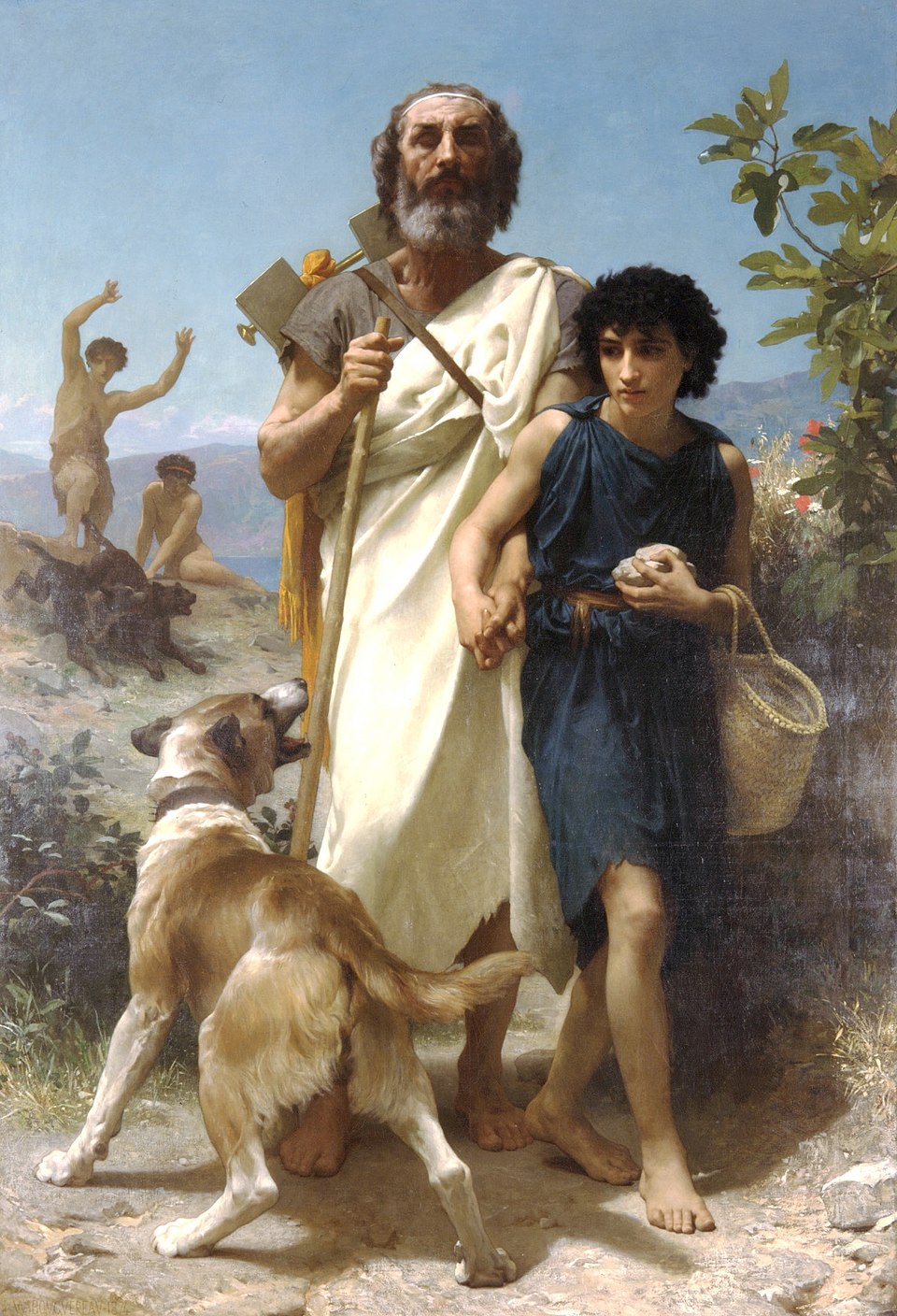
Even at the end the motivation seems odd.  There is a kind of Dead Poets Society letter of confession about preserving the arts.  The murderer is a professor of Greek.  These elements definitely cast the book into the realm of Dark Academia.  Still, it’s primarily a detective novel, and I suspect that’s why many fans of Dark Academia haven’t yet come upon it.  I do recall, upon first reading it, that it felt real enough.  I was living in a setting not unlike that of the novel and small seminaries do have big secrets.  This time through I was less impressed.  Super-sleuths are just too smart, which means their writers have to be exceptionally clever.  The setting suggests something wrong in the educational world, however, and that is true enough.


Lovecraftian Advice

It seemed natural enough to follow up Stephen King’s On Writing with H. P. Lovecraft’s famous essay “Supernatural Horror in Literature.”  This piece, widely quoted, is available online but it is lengthy and I wanted the convenience of not reading it on a screen.  What can I say?  I like to turn pages.  I found a print copy, along with two other, shorter Lovecraft essays in Supernatural Horror in Literature & Other Literary Essays.  This was published by Wildside Press, which added a brief introduction by the speculative writer Darrell Schweitzer.  The text of the main essay was obviously computer-read—a couple reading errors remain—but it is clear enough to read.  Like Poe before him, and King following, Lovecraft put down some of his thoughts on the craft of writing.  Interestingly, Lovecraft is seldom considered as a producer of belles-lettres, but he is world famous as a horror writer now.

The essay itself is worth reading.  Mostly it is a summary of what Lovecraft felt was worthy weird fiction.  I tend to agree with much of what he says here, as would be evident were anyone to read my own fiction writing.  I can’t say that I learned this at Lovecraft’s knee.  I only discovered who he was when I was teaching at the University of Wisconsin Oshkosh.  I did not have literary friends growing up; my reading tastes were determined by myself, largely based on what was available at Goodwill any given week.  Nobody I knew read Lovecraft and although his books may have been in that bin, he wasn’t really someone I’d have known to keep an eye out for.  As a child I didn’t think of myself as a horror reader.  I liked monsters, and vampires were among the most immediately recognizable.  My brother, if I recall, got me started on Poe.

When I began writing fiction, probably around twelve or thirteen, it was weird fiction.  One of my other influences was Ray Bradbury.  I agree with Lovecraft that, to be interesting, fiction often requires a speculative element.  I do read realism, of course, but I really enjoy tales with a bit of supernatural.  It’s useful to read Lovecraft’s ideas about influential writers.  I’ve got my homework cut out for me.  I can certainly recommend this edition for anyone who wants to read this lengthy essay in print form.  The one thing that struck me as weird was the cover design.  It features a woman wearing a strapless dress in a cemetery.  Lovecraft famously didn’t really have women as one of his main themes, and his women characters are among his most inaccurately drawn.  Still, it’s best not to judge a book by its cover.


Questioning Paradise

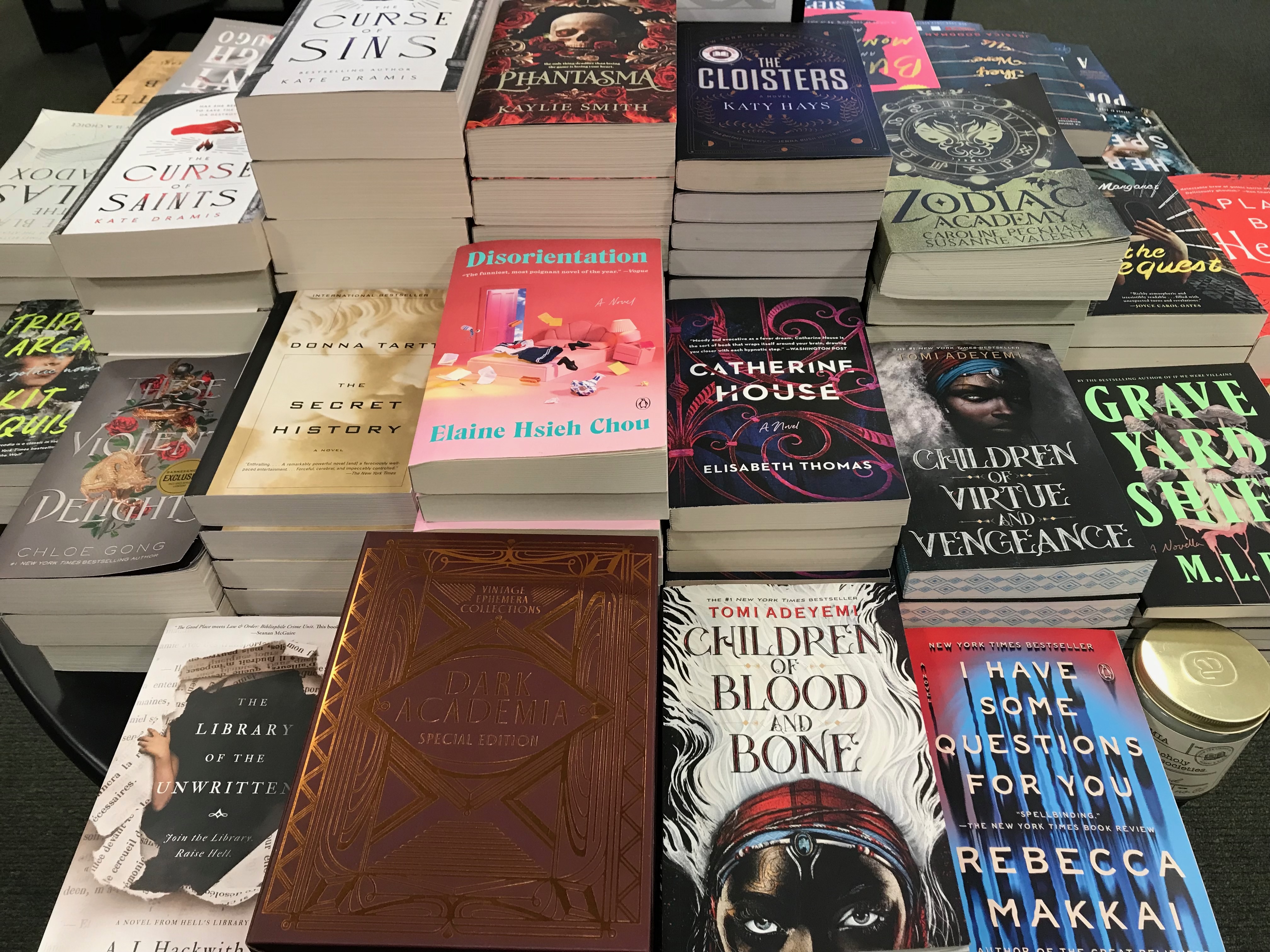
The term “dark academia” is somewhat difficult to define.  It is a rather new aesthetic, but it has been the topic of books and movies for some decades.  Among the books often considered dark academia is Susanna Clarke’s Piranesi.  Since it’s one of the shorter exemplars of the genre, I recently picked it up.  A bit disorienting at first, it is the story of a fantasy world where oceans flood the lower floors of an elaborate labyrinth in which two people live.  The narrator (or more properly epistolist) is one of the two.  We come to learn that he is actually the only full-time resident of this world.  And that this world was conjured from the world in which the rest of us live.  It takes Piranesi, the narrator, about 70 pages to realize that something isn’t quite what he’s been led to believe.

The writing is beautiful and the world-building is fine.  It would be possible to set an entire novel in this world, but, like most paradises, it wouldn’t satisfy.  Indeed, there’s almost a biblical recognition of sin and human character.  The voyage of discovery that Piranesi undergoes is both encouraging and dispiriting.  Having a world in which one’s needs are met, and where most danger can be avoided by careful observation, seems desirable.  There’s a sense of inevitability in Eden as well.  The human psyche requires challenges and exercise.  To remain in paradise would have been stultifying, if without danger.  I’m not sure if Clarke intended that in her novel, but I definitely encountered it there.

But what does this have to do with dark academia?  I asked myself that question along the way.  The creator of this world was, at one point, an academician.  Such are the kinds of people who attempt to build perfect worlds.  The darkness comes from the fact that this world is not what it seems to be.  It comes with a very high price.  Even so, it is compelling to those who find it.  Its creator is a cold and scheming individual.  Unlike some such stories, we don’t hear much of the university life that gives the genre its name, but the classical setting is much like what universities once taught.  And when they go wrong, this genre suggests itself.  I don’t want to reveal how the story ends.  It gets pretty exciting about halfway through and I had misguessed a few things along the way.  In many ways it feels like fantasy, but it also dips into the academic world gone wrong.


Learning to Write

If you’re not famous as a writer, nobody asks you for advice on improving their game.  Part of that is simply having a writer’s outlook.  We all have our own ideas about how it’s done.  I admire the work of Stephen King.  He’s a gifted storyteller and his books often deal with the kinds of things I think about.  I had his book On Writing on my reading list for years.  What finally got me to read it was finding it in a local independent bookstore and wanting to support said venue.  I found it both helpful and a little scary to read.  This is part memoir and part instruction manual by someone who isn’t full of ego, despite his success.  Egoism isn’t uncommon among writers, but King realizes that many people have talent, but not all know how to bring it to any kind of success, no matter how modest.

I really enjoyed reading the memoir parts.  Indeed, I wish I could’ve read them when I was, say, in college.  My own trajectory as a writer might’ve turned out differently.  His instructive sections are also helpful, but the part about finding an agent is hopelessly out of date.  The internet has made doing so both easier and more difficult.  Too many people now flood agents’ offices with pitches that you practically need an agent to get you an agent.  I know this from experience.  Nevertheless, King’s advice generally feels quite solid.  And it’s encouraging to hear of the commonalities we share in our upbringing.  Writers often begin in less-than-ideal situations.  If we can struggle out of them, some can find success in writing while others manage to do it on the side (this isn’t my day job).  But write we do.

As with most of King’s books that I’ve read, this one went fairly quickly.  Not every book that I read makes me feel eager for reading time, but King always does.  In part, at least with On Writing, it’s because I can’t help but wonder if I’m doing this right.  During the course of reading his book, two more rejection letters came for my fiction projects.  Any writer knows that you have to deal with lots and lots of these.  King started earlier, but, like me, he kept his rejection slips.  Eventually I ditched mine because they’re too discouraging.  And I still submit to what has become, since this book was written, a very, very crowded fiction market place.  Still, this is an encouraging book, offering advice from someone who knows what he’s doing.  It’s a shame I waited so long to read it.


Another Level

Jack Finney is probably best remembered as the person who came up with the idea for The Invasion of the Body Snatchers.  His book, The Body Snatchers, was the inspiration behind the two movies based on it, as well as various knockoffs.  The Third Level is a collection of short stories he wrote.  I’ve been trying to introduce more short stories into my literary diet, and this one was recommended by Stephen King in Danse Macabre.  Specifically, he mentioned it as being more like what The Twilight Zone should’ve been than much of what Rod Serling wrote.  Now, I’m an unapologetic Rod Serling fan.  This is based on memories from childhood when I watched the show and, let’s be honest here, wished he could be my father.  I already had a taste for the unusual and sometimes macabre, and so I was curious what King thought might do Serling better.

The Third Level was labeled as science fiction, but sci-fi and horror share more than a boundary or two and at least four of the stories have nothing sciency about them.  As a collection it’s good in the same sense as a mature reading of Ray Bradbury is good.  I would’ve liked this—probably loved it—as a kid.  I was reading, however, for The Twilight Zone.  There are some good twist endings here, but not all the stories have them.  A couple of them are pretty straightforward whimsical romances.  Many of them feel very much like they were written in the forties and fifties.  A couple of the stories, late in the collection, I really liked.  They were a bit more Zonish than some of the others.

One of the problems in writing a brief post on a collection—and no collection is uniformly great—is that it’s difficult to give a sense of the whole.  So instead I’ll just focus for a minute on the last story, “Contents of the Dead Man’s Pockets.”  This one shows the power of Finney’s descriptive writing and it caused physical reactions I seldom get when reading.  It involves a man climbing out on an eleventh-story ledge to reclaim an important bit of paper that blew out the window.  More than once I almost had to put the book down.  Fear of falling is deeply embedded in the human psyche and Finney is able to probe it for more pages than I was comfortable reading.  Well done, sir.  Overall, the collection is good to have read.  It won’t change my mind about the Zone, however.  It reached me a little too late to do that.


Oblong Box

When Borders was closing—a sad day in the annals of American readers—things were marked down.  On one venture to a remaining store somewhere in New Jersey, where the checkout line snaked like one of those around a Times Square theater before the doors open, I picked up Edgar Allan Poe Complete Tales and Poems.  Poe has, of course, been in the public domain for many decades so anybody can publish his works.  I did attempt to sit down and read through this behemoth that contains 73 short stories, but stumbled at “Hans Pfaall,” the first.  This story is really a novelette, in today’s measure, coming in at nearly 19,000 words.  (It took Tales of the Grotesque and Arabesque to get me through it.)  So I’ve been content to dip into it now and again to read one of Poe’s stories.  In print. When the mood hits.

I read “The Oblong Box” in preparation for watching the movie.  I had never encountered this story before, and I prefer to read the base before attempting the latter adaptations (particularly by AIP).  The problem with reading Poe from this remove—in the light of his reputation—is that even the title tells us the box is a coffin.  How it is to be used in Poe’s tale may be unknown at first.  Here Poe divides his characteristic obsessiveness between the narrator and Mr. Wyatt, his temperamental artist friend who is newly married.  Wyatt, the owner of said oblong box, takes it on a voyage by boat from Charleston to New York.  The narrator obsesses over what might be in the box, being kept in a cramped stateroom rather than in the hold.  A storm leads to a shipwreck and rather than be rescued, Wyatt binds himself to the box and leaps into the ocean.  I won’t put the reveal here, but you get the idea. Today the title gives away Poe’s original twist.

There are still many of Poe’s stories that I haven’t read.  I’ve had enough of a head start, however, that I may eventually make it through those he published.  I’m aware that some of them may be funny, and some are tales of ratiocination.  Some may be completely unexpected.  Like many writers, Poe’s reputation is based on certain of his most well-known tales.  But also like most writers, his interest ranged fairly widely.  And he had that sense of “what if” that tends to drive those of us who write in a similar vein.  But these days we know that if we see an oblong box we’ll already have a pretty good idea of what’s inside.

Photo by Tom Oates, 2013; This file is licensed under the Creative Commons Attribution 3.0 Unported license. Attribution: Nabokov at English Wikipedia

Gray Matter

It seems to me that I was living in Boston the last time I read Oscar Wilde’s The Picture of Dorian Gray.  That was long enough ago to have forgotten almost everything except the central premise that everyone knows.  Recently, I had been reading some analysts who consider it a kind of horror story.  Wilde was a great and notable wit, not typically cited as a horror writer.  More recently I’d seen the novel classified as dark academia.  Since there are no students, and there’s no school in the novel, that genre seems forced.  In any case, it is a classic and I was curious about what I had forgotten.  The dialogue regarding morals stands out rather boldly, with traditional Christian values being the gold standard.  In his own life Wilde was known to flaunt these things, but in his story they stand mostly unchallenged.

At the same time, it is a book about seeking redemption.  Toward the end, Dorian regrets the lifetime of evil he’s led.  He wants to turn over a new leaf.  Corrupted from an early age by Lord Henry Wotton, he learned to live a cynical and self-centered life.  He shut out the feelings and needs of others for his own pursuit of pleasure.  As an old man still appearing young, he comes to have his regrets.  Although Wilde didn’t really live long enough to reach this stage in his own, he seems to have understood psychology well enough.  He even tried to have a half-year Catholic retreat.  Length of life often trails regrets in its train.  Of course, for Gray it is too little, too late.  He has made his mark on the world, but it hasn’t been for good.  His final act is a stab at redemption, but the novel gives no hint whether he achieved it or not.

Whether intentional or no, the novel considers the fact that we all wear masks.  And we do so for much of the time.  And there is a bit of horror involved in discovering that we aren’t who we pretend to be.  The real Dorian Gray was locked away in an attic room while his life of dissipation  led to the ruin of many.  The witty dialogue maybe makes this a comedy horror.  At times it seems to get in the way of the mood of the story, but it never stopped the novel from making a similar impression to the nearly contemporary Dr Jekyll and Mr Hyde.  Late Victorians knew something that we, as a society, seem to have forgotten.  The attics of some prominent individuals surely have portraits that belie their appearance on the ubiquitous screen.


Thankful Time

Thanksgiving’s late this year, for which I’m thankful.  I must be nearing retirement age because I really could use a little more time off.  Of course, I’m a big fan of holidays and I wish our late capitalistic system might throw a few more bones to the dogs.  Autumn is always my favorite season.  In September I feel the migratory urge of the classroom, but that’s an unrealized desire now, so I set my eyes on Labor Day and Indigenous Peoples’ Day.  Some of the more progressive employers give the latter off.  From there I can see Halloween, although it’s often a working day.  Still, it’s Halloween.  It’s yet a long stretch from there to Thanksgiving, but if I’m careful with my vacation days I can take a few long weekends as stepping stones to this four-day weekend.

I’m not being sarcastic or facetious at all.  I don’t believe I could survive the calendar year without the holidays and I am deeply, deeply grateful for them.  Capitalism seems to have a death grip on the idea of people as “assets”—a brand of thinking that should be buried with a stake through its heart.  People are people and we work for a living.  We don’t sell our souls for health care and a roof over our heads.  The internet has increased productivity immensely, but most companies are reluctant to consider the costs of overwork.  When you can check your work email from 6 a.m. to 9 p.m., for those of you who can stay up late, don’t you think that a few more holidays might prevent burnout?  Do assets burn out?  Engine parts have to be replaced when they wear out.  Why are we so slow to learn the lesson?

Today we reflect on the things for which we are thankful.  Even in difficult times there are many.  I’m thankful to live in a world with books in it, for one.  On those rare days off I read, trying to catch up with an ever-growing stack of intellectual stimulation.  And I try my best to contribute to literary life, although my books appeal to few.  I’m thankful for hope.  Without it this last year would’ve been impossible.  And I’m thankful for family and friends, whether actual or virtual.  This is an interesting world that I’ve come to inhabit.  The more I learn the more there’s left still to learn.  And with Thanksgiving so late this year, Christmas is less than a month away.  I look ahead and I’m thankful.


Suitable Genre

As I muse over genres, it seems that “low-budget Lovecraftian horror” might be an—ahem—suitable one.  This is perhaps because Lovecraft has trouble being taken seriously as a literary writer and his stories are so easily parodied.  I watched Suitable Flesh unaware that it was a Lovecraftian (low-budget) movie.  I’ve seen quite a few of these over the years and they can be pretty fun.  This one was somewhat enjoyable.  Based on Lovecraft’s “The Thing on the Doorstep,” it’s a body-swapping, possession fest that involves two psychiatrists who have been friends forever but who both become victim of a nameless possessing entity.  It took some adjusting to believe Heather Graham in her lead role here—she doesn’t strike me as the Lovecraftian type.  She does seem to enjoy her role, nevertheless.

Lovecraft famously didn’t write many women.  He was xenophobic and a racist.  He didn’t much enjoy being married.  Modern films (and even novels) based on his works tend to redress this situation, sometimes creating a little disconnect with the white-male Lovecraftian universe.  Still, the story is fun.  Dr. Elizabeth Derby (Graham’s character) encounters a young man whom she supposes is schizophrenic.  In actuality, his body is being taken over by an entity that had possessed his father.  While possessed, the patient begins an affair with Dr. Derby and that leads to her also being a target of possession.  Although not considered a comedy it does seem that part of the story has an inherent humor about it.  Some consider it camp.  Lovecraft’s mood is difficult to translate to film.

Although cinema existed during Lovecraft’s lifespan, his writing wasn’t influenced by the possibility of film conversion.  The monsters are too enormous and the concepts too broad.  The real fear here, apart from the gross-out effects, is that of losing your identity.  The whole centers around a psychiatric ward where the supernatural events aren’t really accepted by the science that reigns.  People end up dying because the supernatural is inadmissible.  In this aspect, it shares some of the overarching concepts of some great horror.  The Exorcist, for example, derives a great deal of its energy from the fact that modern people have great difficulty in accepting that a demon could actually exist and science doesn’t seem to be working.  There are plenty of other examples of this.  Lovecraft’s stories bring us close to this realm, although Lovecraft himself was an atheist.  Maybe that’s one of the reasons his works are difficult to translate to film.  Or maybe something larger is going on.


Still Sleepy

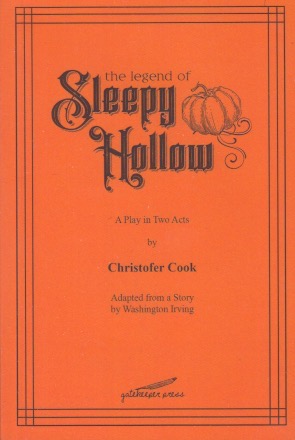
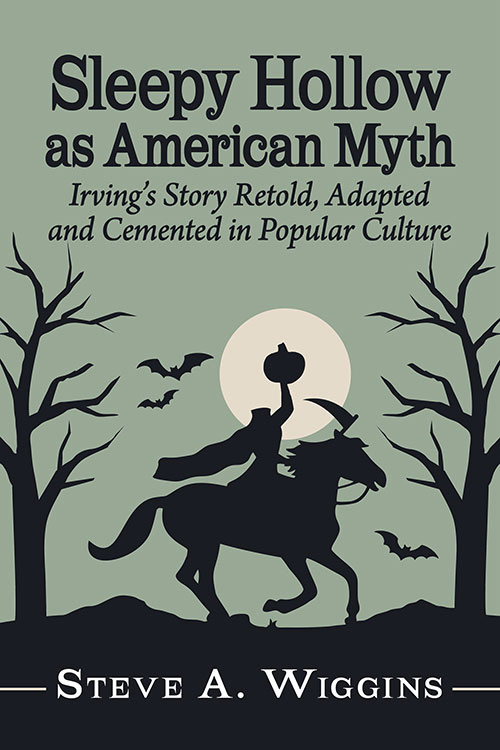
One thing I quickly learned when beginning work on Sleepy Hollow as American Myth was that the story hadn’t really been studied too much by those with academic training.  There are some exceptions, of course.  Another thing I swiftly picked up is that many people who wanted to write on the legend chose the method of publishing the public domain story with a variety of annotations, essays, and other additions, to make a salable book.  Often these are self-published and not always immediately obvious to the researcher as to whether they contain anything important or not.  I had not run across Christopher Rondina’s Legends of Sleepy Hollow: The Lost History of the Headless Horseman until well after my manuscript was submitted.  I found it in the bibliography of a ghost-hunter version of Sleepy Hollow that wasn’t even published by the time I was going into production.  (It doesn’t even have an ISBN.)

I do have to say that Rondina’s variety of this composite genre isn’t bad.  He includes Washington Irving’s story and expands it with an introduction, and brief chapters considering any historical background that there may be.  He also adds a chapter on modern media of the story that includes one television adaption that I failed to find for my book.  Interestingly, after I’d written the manuscript I discovered Joe Nazare’s similarly annotated version, also with a number of the media I’d analyzed in it.  I’d actually corresponded with Nazare earlier, having discovered his website.  Not wanting to discuss what my book was about until after I sent it in (others have more time to write, perhaps, than I do) I didn’t mention our common interest and didn’t discover his annotated version until it was too late to include as a conversation partner.

Self-publication has perhaps become inevitable since standard publishing is difficult to break into.  And the internet gives anyone the ability to self-publish without too much effort.  It does, however, make doing research a bit more difficult.  I determined early on that I could not review every annotated version of Irving’s story.  I selected a few of the most promising and moved on.  Both Rondina and Nazare had interesting things to say about the tale, and it’s a pity that they weren’t discoverable until after the fact, at least to me.  I like to give credit where credit is due, but any ideas that seem similar to these two sources in my book will have to stand as examples of convergent thinking on the part of fans of the “Legend of Sleepy Hollow.”  I know there are many other fans out there and I hope they find the resources they need to understand the story just a bit better.


Premature

The last, for me (but actually the third), Roger Corman Poe Cycle film is The Premature Burial.  Released the same year as Tales of Terror, it departs from the other Poe films in not starring Vincent Price.  Indeed, this is because it was originally not an American International film, but was later brought into the fold.  This particular story by Poe doesn’t have the superstructure of this film at all.  Indeed, Poe’s tale is spare, beginning with reported events of premature burial and ending with a first-person fictional account.  The movie does have a quote or two from the story, as well as the elaborate preparations that the narrator, in the movie the protagonist Guy Carrell, undertakes to be able to escape his mausoleum.  In the movie Carrell has to be an aristocrat, so as to afford such a fancy contrivance.

Although the screenplay was written by Charles Beaumont, a frequent Twilight Zone contributor, it lacks pacing and contains some improbabilities.  The theme of grave-robbery is also prominent and doesn’t fit well with what actually happens in the plot.  Since the movie is over sixty years old it’s safe to say that it involves a twist ending.  The marriage—missing in Poe—of Emily Gault to Guy is a ruse to get the family fortune by murdering Guy by fright.  Emily exploits his fears of premature burial (his father suffered catalepsy)  to lead to his own premature burial.  The grave-robbers, however, visit Guy that night, not realizing that he was only catatonic.  Guy then takes his revenge, only to be shot by his sister when he attempts to kill an innocent family friend.

Fitting for the Victorian era, Poe used the theme of premature burial in a number of his stories.  “The Premature Burial” is the tale that contains Poe’s famous quote, “The boundaries which divide Life from Death, are at best shadowy and vague.”  This remains true even going on two centuries later.  Accounts of Near Death Experiences (NDEs) complicate our simple binary of life and death.  The movie is, of course, coded as horror and is part of the suggestive string of interpretations that cast Poe as a “horror writer.”  Corman had been growing a reputation as a director of horror (but he, like Poe, worked in other genres) and it was this recasting of Poe into what was developing into a mature cinematic genre that partially solidified the writer’s reputation.  Premature Burial isn’t the best of the series, but I do feel as though I’ve accomplished something by finally having watched all of them.  Or have I?


Won’t Tell

This one is pretty darn close to too tense to read before bed.  I don’t remember how I found out about Ivar Leon Menger’s What Mother Won’t Tell Me.  That’s usually a pretty good sign that I found it in a bookstore.  Those are still places to linger while trying to find something a bit different.  This one is a page turner, but also one that I’m not quite sure how to classify.  It may be horror but the “monsters” are all humans.  I almost don’t want to describe the plot because it is so exquisitely suspenseful.  When I’m reading to get sleepy, I often find myself trying to grasp pieces of a story that are floating away like dandelion fluff, unable to put them back together.  Then I know it’s time to close my eyes and re-read a paragraph or two tomorrow.  That never happened with this one.

I think I can say this much without giving it away: Juno lives on an isolated island in a lake with her parents and younger brother.  The parents warn them of the murderous strangers who are seeking them—the father was a states’ witness against a powerful criminal family—so the children must never be seen on the island.  If anyone happens to come, they must hide and remain quiet until they leave.  They have to practice drills in case this ever happens.  It gets pretty creepy, from nearly the first page.  I would also advise against reading the back cover copy, since it will give some of it away.  I tend not to read the copy until after I read a book—you just never know what they might let slip.

This is a story about perseverance and discovery.  Discovery that is full of tension.  It’s a reminder of how precarious childhood is.  There are plenty of twists in the story and chapters generally end with information that creates a tension that the next chapter will only partially resolve.  The end result is a story that pulls you along and is pretty chilling.  I’m not sure if I’d call this horror or not.  If there’s a good case for a thriller being a separate genre, this could be useful as evidence.  Even if it’s not horror, it is likely to appeal to many who read in that genre.  There’s nothing speculative about it.  Perhaps that’s why the story scares in the way that it does—this could happen.  What happens?  Like mother, I won’t tell you either.


Personal Publishing

I recently joined the Greater Lehigh Valley Writers Group.  I haven’t really met any other members yet, although I know one from another local community.  By my reckoning, this is the fourth writers’ group I’ve joined and I do hope it leads to some friendships.  I like talking about writing.  I read Blurred Lines by Scott Christian because he’s a person I recently met and he kindly gave me a copy.  A collection of poems and stories, it’s a small book but a deeply personal one.  I guess that’s one reason that I like talking about writing with other people—it is deeply revealing.  There are those who write as a job, and there are those who write because they must.  This book falls into the latter category.  Some of us are compelled to write down what we experience, whether it be in poetry, fiction, or fact.

Self-publishing can be a way of expressing what the publishing industry suppresses.  I once told a group that it’s a little disturbing how much power publishers have in determining what people can read.  I write “can” intentionally.  Only the biggest in the industry have the financial wherewithal to get books into bookstores (where readers congregate like bees on a warm day in October) where they’ll be laid out on tables and priced to move.  Like many others, I began my writing in academia.  It took some time before I realized that academic prices are a deterrent to readers.  Breaking out of that mold is also difficult.  At the same time, publishers have resources to devote to marketing that an individual seldom has time for, or the reach to accomplish.  So it goes.

Another review of Nightmares with the Bible has appeared (this one in Catholic Biblical Quarterly).  While not glowing, it does recommend reading the book, despite the fact that the publisher has no interest in paperbacking the series and it takes a great deal of motivation for even me to spend that much for a book.  Yes, I can understand self-publishing.  It is a writer’s chance to get their voice heard.  Even some famous authors—Mark Twain comes to mind—had to get their start by paying to have their books published.  Some of us write because we can do no other.  We have thoughts and feelings to share.  And I keep joining local writers groups looking for the rare person who will talk to a stranger about that most intimate act we call writing.  Reading such a book is a very personal thing to do.


Short Story

I often reflect on how little I know.  No matter how much I read there is more to be read.  Works worthy of time but sacrificed to circumstance.  I was recently reading a short story by Poe that I’d never read before.  As others have noted, Poe was a prolific author of a great deal of forms—poems, a novel, letters, a scientific treatise, literary criticism, and, of course, his stories.  I came to know his stories through cheap collections available in my small town, mostly not along the lines of those Poe himself selected.  Indeed, editions of his own chosen works, such as Tales of the Grotesque and Arabesque, before the advent of internet-based publishing, were difficult to come by.  Original editions cost many thousands of dollars.  Poe isn’t alone in this category—short stories are an unusual genre.

I know from personal experience that finding a publisher for a collection of such stories is nearly as difficult as finding a publisher for poetry.  Publishers are looking for money, of course, and like Poe, all writers produce stories that interest some but not others.  The novel is safer, and even today’s amazing writers have to find success as novelists before publishers will offer volumes of their short stories.  Tis a pity, really.  I have many volumes of short stories on my shelves, including some of Poe’s, but for some reason publishers tend to cram such volumes so full that they become unwieldy.  Intimidating almost.  It leads to that feeling of existential dread that I felt approaching War and Peace—would I indeed survive to finish it?  (I did, but that is such a Poe-like question I had to employ it.)

The short story is an important literary form that is singularly difficult to publish.  I have managed to find homes for about thirty such pieces, but many more have failed to move even just  the internet critics.  Those that have been published have brought no income at all.  In Poe’s day, an author attempting to make a living could not afford to give away their life’s blood.  Indeed, Poe’s older contemporary Washington Irving struggled with pirated copies of his works being sold overseas (he spent a great deal of time in Europe).  Like Poe, Irving excelled in the short story, or sketch.  We’re often at the mercy of editors who select the stories for us, making them available.  I suspect there’s much that we miss by not stepping outside their personal tastes regarding what to include.  Or, just as importantly, exclude.  Some day, perhaps, I will have read all of Poe’s short stories.  Until then, I’ll find them when necessary.


Ichabod’s Body

Maybe you’ve noticed this.  When Halloween comes around, the Headless Horseman and the Legend of Sleepy Hollow reemerge.  There’s a reason for that, and I discuss it quite a bit in Sleepy Hollow as American Myth.  Right now there seems to be quite an interest, or maybe I’m just noticing it more.  For example, a local theater where we saw a Poe performance last year is offering a Headless Horseman show this year.  Articles have recently been appearing on Tim Burton’s Sleepy Hollow movie, given that it was released 25 years ago—online discussion, however, is often eclipsed by the Fox television show by the same name.  And before it switched over to Christmas decorations, Michaels had its share of Sleepy Hollow merchandise.  Halloween and the Headless Horseman go together.  (Read the book to find out why!)

One of the tchotchkes I picked up at Michaels was Ichabod Crane’s tombstone.  In the many renditions of Washington Irving’s legend, Ichabod is treated as the protagonist of the story.  Although Tim Burton’s movie wasn’t the first to have Crane survive, besting the Horseman, the old wives’ tales, according to Irving, had him spirited away by the Horseman.  That’s why I found his gravestone so interesting.  The dates on it (1787–1857) indicate, at least according to this recension, that he died at seventy, surely not the victim of the attack that took place around the turn of the century.  If you’re not familiar with the original story, Irving set it “some thirty years since” the 1820 in which the tale was published, putting the events around 1790.  Burton shifted this to 1799, partially, I suspect, because that was two centuries before the release of his movie.

I do wonder where the maker of the Michaels tombstone got their information.  According to their reckoning, Crane would’ve been but three years old in 1790.  Of course, the story never tells us his age.  Since it is intimated that he relocated and became a judge after dabbling in politics, all of which would seem to indicate that he was a somewhat young man at the time of the tale.  To make Sleepy Hollow scary, though, having Crane cut off in his youth would seem to be more in keeping with the spirit of the season.  Of course, Sleepy Hollow is a legend that has become mythic through its many retellings.  Enough of them that someone could write a book about it all (ahem).  And this is the time of year to ponder it.