The Young and the Headless

Young adult literature is sometimes fun to read as an adult.  In addition to going swiftly, compared to much “adult” literary literature, it has a way of evoking what life was like when we were younger.  Or at least it can.  Sticking with my Sleepy Hollow kick, I read the first volume of the series “The Hollow” (later “Sleepy Hollow High”) by Christoper Golden and Ford Lytle Gilmore.  This volume, Horseman, posits the return of the headless horseman to Sleepy Hollow in the modern day, triggered by the return of some of Ichabod Crane’s unknowing descendants.  The story follows brother and sister team Shane and Aimee Lancaster, who’ve just moved to Sleepy Hollow from Boston.  Although full of unexplained happenings, the book conjures the emotional turmoil of teenage years well.

While I normally try to read within my usual age level, the occasional foray into tween, young adult, and now, new adult lit is a fun escape.  One of the mysteries of aging—and I certainly didn’t think of this myself as a young person interacting with my elders—is that you remember what it was like to be at the various stages of life you’ve passed.  When you’re young you’re discovering things for the first time and there’s a revelatory aspect to them.  I can’t make universal claims, but in my experience life just gets more complicated the longer you live.  We yearn for the simplicity of younger times when, for example, you just paid the rent, went to work, fell in love, and did your own taxes.  As an adult you find all of these things hide complexities that often hide even more complexities within themselves.  Why not throw caution to the wind and spend a weekend reading a young adult novel?

I’m undecided about reading the rest of the series.  This story quickly drew me in, but the other volumes are now published only in ebook format.  And I suppose I should do some more serious adult reading as well.  Actually, I’ve been plugging away at a novel written for adults by an author my age, but it’s long and, well, involved.  Kinda like life itself, I suppose.  One of the things I’ve noticed about modern engagements with “The Legend of Sleepy Hollow” is that they tend to skew towards a younger crowd.  Maybe I can recapture a bit of my own youth that way.  I’ve known the story since my youngest years but have only recently really began to pay attention to it as, well, I guess I have to admit, an adult.


Learning English

English is a difficult language to learn.  Growing up monolingual, I was able to pick up German, Greek, and Hebrew (and other semitic languages) without too much trouble, through intensive schooling.  I have to wonder if those learning English as a foreign language don’t have a much more difficult task.  The other day I was looking at a document in Icelandic (don’t ask), and marveling how I simply couldn’t penetrate it, although it is Indo-European.  Then I sat down to read an article in English.  The topic was of interest to me but it was clear that the content wasn’t written by native speakers.  Indeed, it turns out the authors were from an Indonesia university.  The journal was published by an Indonesian press.  It’s peer reviewed, but those who run it aren’t native English speakers.

Interestingly enough, although the article wasn’t in the field in which I was technically trained, I was able to follow what the authors were saying.  Partially it was because of my familiarity with the topic, which I’d read about before, but partially it was that you can read English without the direct and indirect articles that are our usual guideposts, and with the wrong verb tenses and declensions.  It is possible.  You wouldn’t want this, I suspect, if you were building a rocket carrying people into space, but it isn’t that much different from trying to read the instructions that come with most devices that are manufactured in nations where English is a foreign—very foreign—form of communication.  I admire their pluck.  I still recall enough German that I can get through some documents without generating more gray hairs, but I wouldn’t dare try to write to someone in it.  Nein.

Languages are fascinating elements of human culture.  Although there was no literal tower of Babel to create them, our species, in isolated areas, learned a variety of different ways to communicate verbally.  It’s only with travel that these isolated groups met and generally they try to talk, unless they simply kill strangers on sight.  We want to understand one another.  We all know that our language learning skills are at their peak during our very youngest years.  Brains get ossified into using one language to think and as you age it’s harder to pick up new ones.  Still, we have that old isolationist tendency hardwired as well.  Us versus them.  And if we can’t understand we quickly distrust.  Language study is probably one of the best ways to ensure peace.  If we can’t do that, at least we can try to read our language through the eyes of someone who’s made the effort, even if it’s difficult for us.


Local Haunts

Local color.  It’s what makes travel so much fun, even if not to someplace exotic.  I’ve lived in five different states and two different countries and one thing each place had in common was local lore.  Since I’ve been a stranger in most places I’ve moved, I’ve picked the lore up primarily from books.  Fortunately there are as many people willing to write them for the also many people like me who are willing to read them.  S. E. Schlosser is a storyteller.  We have Rutgers University in common, but her book, Spooky New York, focuses on the state next door.  The book contains retold stories, or as the subtitle states Tales of Hauntings, Strange Happenings, and Other Local Lore.  New York isn’t unique in having such stories, and some of them are clearly regional variants—I heard some of them set in Wisconsin, for instance—but there’s a guilty pleasure in reading such accounts.

Although most of us are raised being told “there’s no such thing as ghosts,” that “truth” doesn’t stick for all of us.  I don’t know if any of the ghosts in this collection are real; folklore deals with that—shall we say—twilight zone that lies between quotidian existence and the weird.  Strange things do happen, but not on any kind of scientific schedule so they can be anticipated and quantified.  And some of them have been seen and reported by many different people.  These stories include such tales.  While they range the length of the state they concentrate in the east.  I’m sure, however, that if you spent enough time talking to the locals you could scare up ghosts from across the Empire State.

Many of the tales are set in New York City.  Having commuted into New York for about seven years, one thing became clear to me.  Even with the tall, modern towers and sophisticated, wealthy trappings, it can be an eerie place.  Around this time of year I would arrive in Manhattan well before sunrise.  Walking the predawn streets to the office showed Gotham in a different light.  Even the few times I went for lunchtime strolls to clear my head, I sensed there were millions of untold stories here.  Some gothic, some haunted.  Schlosser tells several such New York tales.  She includes some from literature but most of those probably go back to stories told by the locals before having been fixed onto paper.  This book will help set the mood, even if you live in the next state over, or anywhere that ghosts roam.


In Praise of Cardboard

There’s an irony to it.  Using single-use plastic bags to ship books.  Now I know better than to stereotype book lovers, but I suspect it’s safe to say that those of us who order books like paper.  And we are probably well aware that paper recycles more easily than single-use plastics with heavy, preternaturally sticky labels attached to them.  You see, much of the clutter about our house is our reluctance to just throw away things that can be recycled or reused.  There are rules for prep, however.  Labels are supposed to be removed from plastics and judging from my experience, I need to be doing more pushups to do so.  Some are stuck on so well that it stretches and distorts the plastic like the face of a movie monster, still without coming off.  What’s wrong with a box?

Books arriving, snug in a box

Apart from being easily recycled, boxes prevent books from getting banged up in transit.  I often receive books so tightly cased in plastic that removing them must be like pulling off snug leggings when it’s really humid out.  There’s an almost obscene quality to peeling off something that tight.  And getting the label off?  Forget it.  Boxes are better.  We tend to reuse many of them—they’re good for sending fragile gifts to others.  Or storing other single-use plastic pieces for use in art projects.  (Lids often can’t be recycled.)  As long as the paper’s responsibly sourced, cardboard has environmental benefits.  Besides, I suspect books prefer the feel of paper on their skins.

I’m not a very good consumer, but I do have a soft spot for books.  Even as reasonable grocery chains are phasing out single-use plastics, many book sellers are picking up the slack, it seems.  I know we have developed civilization to such a point that our lifestyle is impossible without plastic.  Indeed, the very keys on which I tap out these thoughts are made of plastic (at least Macs use metal casings for their laptops, or some of them, anyway.)  I have this nightmare that I’ll get something in the mail, or worse, a visitor at the door, telling me that they’ve pieced together, from all the fragments of labels still on plastic bags, that I’m the one who’s been turning them in for recycling without properly removing the sticky paper.  I know that I won’t have any viable defense—I don’t have the time, resources, or tensile strength to do the job properly—and all I’ll be able to say is, “I prefer boxes.”


Valentines and Bombs

So what was I thinking, posting about bombs on Valentine’s Day?  Regular readers know my fascination with holidays.  Valentine’s Day is another one of those that simply gets plowed under by the sharp shares of capitalism.  We work on Valentine’s Day, of course, after waking to news of yet another multiple shooting at a university.  Is it any wonder that we think about bombs on Valentine’s Day?  As Tina asks, what’s love got to do with it?  In 2016 we were taught that the politics of hate is how elections are won.  Surveys consistently show Americans favor stricter gun laws but congressmen love money more.  Maybe love does have something to do with it after all, Ms. Turner.

Love, it seems to me, was the best thing Christianity had going for it.  While the Gospels aren’t entirely consistent on this point, the figure we call John (not the Baptist) focuses on it.  Jesus spoke of, indeed, insisted on love.  “God is love” some radical went so far as to write.  But love gets in the way of selfish agendas.  We can wave Bibles around, and hold them up for photo ops, but they do no good that way.  Besides, love might, in some instances lead to sex.  And we know that Augustine won that argument centuries ago.  We don’t have a widely recognized holiday celebrating that dour saint, however.  Perhaps we should take a cue from the fact that nobody knows which Valentine yesterday really commemorates.  Isn’t love best when it can even be anonymous?

Photo by Jamie Street on Unsplash

I often ponder why it seems so difficult for people to love universally.  Yes, we do annoy each other.  Yes, we have conflicting agendas.  If, however, we pause for a moment and consider we’ll see that other people have feelings just like us.  They too want to be loved and appreciated, and held by those closest to them.  This is not a bad thing.  What’s so wrong with love, after all?  We pour money into the military industrial complex and try to regulate who can love whom.  And we say we’re living the religion touted by the New Testament.  I always try to keep Valentine’s Day special.  It can be tricky on a Tuesday when work will bear its inevitable load of problems to solve.  Still, if we all paused when we faced a people-related frustration on Valentine’s Day, and said to ourselves (saying it aloud would only cause problems) “I love you” to the person causing our frustration, I wouldn’t have been thinking of bombs on Valentine’s Day.


How To Build a Bomb

We see footage of the tragedy in Ukraine.  Or the miles and miles of film documenting World War II with its hell from the skies bombings.  Bomb after bomb after bomb.  I recently wrote of how tragic this is in the light of the Turkey-Syria earthquake.  Just a few days before that, the New York Times ran an interest piece on how bombs are made.  Now, there’s no excusing it, but boys seem to like explosions.  Although I’m a pacifist, I was fascinated by how long the process is and how specialized the work, to make a bomb (technically a shell, but the result’s the same).  And then we see the footage and realize all this time, money, and technology are going into objects to be shot at other human beings.  Rise and kill.

It is an indictment of our species that we spend so terribly much on destroying others of our own kind.  Some of this is evolution, surely, but some of it is consciousness gone awry.  Nobody wants to be the victim of somebody else’s bombs.  At the same time, there are different political philosophies in the world and our history has made us distrust, and maybe even hate, one another.  I think of Putin and his hatred of the west.  And then I think how close we are.  From mainland to mainland, Russia and Alaska are only 55 miles apart.  If you include the islands, that figure drops to 3 or 4 miles.  And an entire ideological world.  This is such a strange fiction we’ve created.  

Some experts tell us that our systems of allowing strong men to rise to the top (and note, female belligerent national leaders are quite rare) will inevitably lead to war.  Of the making of bombs there is no end.  These guys in the news story require bomb making to take home paychecks to support their families.  Even now there are war zones throughout the world where it’s not safe to wander because of ordinance.  Some of them are even here in the United States.  On a visit to a friend in West Virginia we went to Dolly Sods Wilderness area.  It’s rugged and wild and beautiful.  Once used as an area for military training, unexploded ordinance still exists there.  Visitors are warned of this, of course.  But there are other mined and fought-over areas where the innocent are still killed long after the war has ended.  As an adult boy I’ve become less impressed with explosions.  If you live long enough, ideally, you should begin to understand life is a gift, and not something to be thrown away.  Or taken by someone else’s bombs.


Life Lessons

Most of us know a bad movie when we see it.  Some of us walk away.  The rest of us linger and wonder.  Some weeks ago now I watched Ed Wood’s Plan 9 from Outer Space.  “So bad that it’s good” is the mantra often chanted about it.  I lingered because of Ed Wood.  While it’s somewhat fictionalized, Tim Burton’s Ed Wood is itself an odd movie.  It performed poorly for a Burton film starring Johnny Depp.  Critically, however, it was praised and it eventually became a cult film about a cult film.  Or films.  Mainly, I suspect, because Ed Wood is such an interesting figure.  He was a man who wanted to make movies—knew he was meant to make movies—but never got the backing he needed to make them.  He did it anyhow.

Ed Wood starts with Glen or Glenda.  Written and directed by Wood, who also starred in it, this movie was about cross-dressing.  In real life Wood’s mother used to dress him up as a girl and although he was heterosexual, Wood became a transvestite.  This was, of course, in the days when such a thing was scandalous.  Making all of this surreal, and poignant, Wood had befriended an unemployable Bela Lugosi—known to be a drug addict—and had him star as God in the movie.  The next film Ed Wood focuses on is Bride of the Monster.  Again starring Lugosi, this one has a giant octopus in it and heads toward horror territory.  The film about a filmmaker ends with his notorious Plan 9 from Outer Space, the last film in which Lugosi appears and which was financed by a Baptist church.

Ed Wood ends before Wood becomes a poverty-stricken alcoholic and dies in his fifties.  There is a poignancy both to the stories of Wood and Lugosi that also applies to many people in life.  People who know, without a doubt, what they should be doing with their time on earth but who are kept from it by those, who like Lugosi’s God, pull the strings.  We all have limited time and as we grow older we realize that spending it doing a job that’s a drudgery is really a kind of crime.  Would Ed Wood have become a famous director if he’d been backed by the money to produce the movies he wanted to?  We have no way of knowing.  What we do have, however, is a tribute by a talented film maker to a fallen colleague, and that, it seems is the best part of human nature.


More Scary Stories

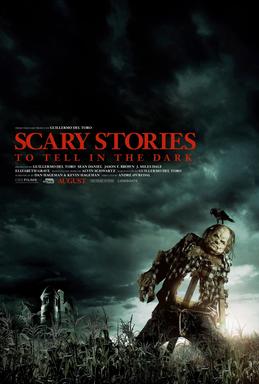
There might be a disconnect.  As a child the stories I had read to me were either Bible stories (Archway Books) or wholesome Easy Readers.  I think that was pretty typical in the sixties.  We didn’t have a lot of money but an abundance of respect for the Bible, so the former by far predominated in my literary experience.  As any kid will do, I thought this was normal.  There was a stir in the kids’ world two decades later, in the eighties, when Alvin Schwartz began compiling scary folklore and retelling it for children.  His Scary Stories to Tell in the Dark series has been challenged or banned from the start.  Most parents don’t want to admit that their kids like scary tales.  We didn’t direct our daughter’s reading much when she was old enough to pick Scholastic Books, and one time she wanted Scary Stories.

We were a bit shocked, not by that, but when a relative got us started on Roald Dahl.  His somewhat macabre children’s books were fine.  One of them, however—and I can’t recall the title—it’s packed away in the attic—was stories for older kids and it was so gruesome that I had difficulty making it through.  Not for me, but thinking about it from the perspective of a young child.  I recently had cause to read In a Dark, Dark Room and Other Scary Stories, again by Schwartz.  The copy I read wasn’t an original edition, but had illustrations, in color, by Victor Rivas.  I tried to think how scary such tales must be for kids who don’t know them already.  These illustrations were humorous, which helps, and tended toward Victorian or Edwardian style. Encountering such ideas for the first time, however, could leave an impression.

We tend to find olden times scarier than our own, it seems.  Partially this is correct, I suppose.  Science has helped us delay the inevitable by ameliorating many things that were formerly deadly.  At the same time it has helped those interested in such things to develop even deadlier weapons.  Mass shootings have become more common, to be mingled with the quotidian horrors of daily life.  Ghost stories hardly seem to be the most scary thing anymore.  I don’t know the answer to when kids are psychologically ready for scary things.  I still recall our neighbor—she was a few years older than we were—telling my brothers and me scary “true” stories that happened in the woods just across the street.  Those were in the “innocent” days before printed ghost stories for kids, but they gave me nightmares even so.  It was, however, the machinations of “Bible believers” that led me back to horror as an adult.  It’s kind of a disconnect.


Irving the Writer

From the Library of Congress, via Wikimedia Commons

No writer is “on” all the time.  I often marvel that, with the busy lives they lead, they manage to finish any books at all.  Even so, not all are uniformly good.  Following up a biography of Washington Irving with a book by that eponymous title, this was my first foray into the Twayne’s United States Authors Series.  Written by Mary Weatherspoon Bowden, this volume (Washington Irving) seems fair-minded and honest about Irving and the irregularities of his writing.  My impression, not having read all his work, is that he started out great and became good further down the line.  Not that I’m in any position to judge.  We read and we like what we like.  Bowden pretty much goes through all of Irving’s writings—sometimes story by story—giving a sense of what they’re all about. (The book was released in cloth with no real cover image, so enjoy Irving’s smile instead.)

As famous and influential as Irving was, his reputation as a writer has been in decline for many decades.  One reason for this is that his first major twentieth-century biographer, Stanley T. Williams, apparently despised him.  So much so that he wrote a two-volume biography demonstrating his faults as a writer.  This demolition job meant that works like Bowden’s had to try to counter the prevailing opinion of Irving’s ability.  Bowden shows how carefully planned out many of his works were without denying that Irving had to try to make money from his writing.  The thought at the time seems to have been that literary pursuits were best left to the wealthy—those with leisure to indulge in letters.  Irving showed that it was possible to write your way to a reasonable living.

Of course, not all of his writing is that good.  And several volumes of it are “history.”  Today you have to earn an advanced degree, or at least a masters, before you can pass yourself off as a historian.  Irving did it the old fashioned way.  He read as much as he could get his hands on and synthesized it.  Today he’s not really remembered as an historian, or as a statesman.  He’s known as the author of a few, mostly brief, American classics.  Even though Bowden writes of Irving appreciatively, she doesn’t really inspire you to run out and read all his work.  He did have a tremendous output for the time and was an extremely influential author.  Nevertheless, others came and surpassed him, even as they were his contemporaries.  Still, it seems there ought to be some credit in being first, and some integrity in actually managing to live by the written word.  Irving is worth another look.


No Doubt

The mind inclined toward doubt is in for a rough ride in an evangelical childhood.  I recall vividly my many, many hours struggling against doubt, trying, crying, praying for certainty and faith.  Many, many dark nights of the soul.  Attending college and seminary I learned of the others in history who struggled the same way, or at least similarly.  I also learned that doubt is natural and healthy, it protects us from falling headlong into the many snares and traps the world continually sets for us.  Blind faith, as I recently quoted from Kurt Vonnegut, is dangerous to everyone.  I was thinking about this again the other day as there was something I fervently wanted to happen but I just couldn’t bring myself to believe would actually come to pass.  My mind isn’t built for blind faith.

Given that, it probably isn’t any surprise that I went into religious studies as a field, even though it’s a dead end.  I still believe it’s vitally important, but that’s a belief much of the world doesn’t share.  It’s one of the few fields of study where a doctorate leaves you without job prospects if you don’t get a teaching post, if you’re not ordained.  And should doubters be wearing clerical collars and preaching to those who want to believe?  Belief is malleable.  It changes over time and it does so via its constant interaction with doubt.  It leads to a life of second-guessing and constant reassessment.  I suppose that’s why I’m baffled to see politicians with less education being so cock-sure that they’re right about things.  I doubt they know what they’re talking about.

Institutions take on lives, like people do.  Although I disagree with the treatment of corporations as individuals by law, still, I understand the thinking behind it.  The church, for example, grew to be a very powerful force in the fourth-century Roman empire.  These collective individuals had vested interest in keeping that power as the church grew more and more influential.  That dynamic still exists where even a small, non-denominational group gathers and asserts that it alone is right.  All you have to do, it tells its members, is believe.  Don’t doubt.  And if you do doubt you’ll be excluded.  Exclusion is difficult to bear.  But even doubting Thomas has hundreds of churches named after him.  Each, no doubt, has many true believers as members.  And on the outside mingle the doubters.


Natural Disasters

Like many, my heart goes out to those in Turkey and Syria suffering through the destruction and aftermath of a major earthquake.  Such natural disasters often bring out the best in people—empathy, love, and offers of support.  They lead to both tragedy and human warmth.  They also give us pause to reflect, if we will, on our worst behaviors.  Rescue efforts have been hampered, in Syria especially, by a weakened infrastructure, caused, at least in part, by foreign bombing.  And yes, the United States was part of that.  People who now feel our sympathy only months before faced death from us.  What is it about our species that makes us want to destroy one another through our own technology but then turns and wants to help when a “random” act of nature occurs?  We must prefer death on our own terms.

Image credit: Luca Comerio (1878-1940), Corpses of victims of the earthquake in Messina, via Wikimedia Commons

For me, part of this is reflected in how the so-called “culture of life” treats liberal social causes as the “culture of death.”  Those groups that support “the culture of life” are against abortion but desire no controls on gun ownership.  This is the same basic principle—we want to cause death on our own terms.  We want to play God and decide who is worth saving and who should be destroyed.  I have no doubt that if, say, a tornado destroyed an entire city block outside a convention center where the NRA was meeting that those at the conference would rush out to try to help find survivors.  When they reconvened, they would try to figure out how to protect their “right” to own and collect assault rifles.  Is this “culture of life” really worth preserving?

Meanwhile the people of Syria and Turkey are suffering.  Thousands are dead, winter is setting in, and Covid is still out there.  They need our help.  The amount we spend on aid will, however, pale next to the amount we spend on bombs, drones, and missiles.  I have to wonder if we never really stop to think about what we’re doing when we engage in behaviors that destroy others.  That weeping mother outside an earthquake-collapsed building could be the same mother outside a missile-collapsed structure.  With natural disasters we know that we all stand a chance of being victims.  We feel for those caught in the way.  Once politics enters the picture, however, and we have the ability to control who lives or dies, everything changes.


Pumpkin Season

A creature feature with a moral.  Not a bad way to think through ethical dilemmas.  You see, we don’t have a lot of extra money lying around, so when I need a pick-me-up I try to find something free to watch.  Well, free because I subscripted to Amazon Prime years and years ago for the free shipping and now it involves “free to me” streaming on select titles.  Often I learn about movies from browsing and that’s how I came across Pumpkinhead.  I’ve learned my lesson about just clicking through without checking it out ahead of time.  It turns out the Pumpkinhead, apart from having major studio backing, was pretty favorably reviewed back in 1989.  My wife and I were in Edinburgh at the time, newly wed and trying to concentrate on doctorates.  I hadn’t been bumped back into horror yet.

In any case, what is this moral?  What is this movie?  Set in the unnamed rural south, the movie involves the accidental death of a good, honest man’s son.  Some city slickers, hot rodding on dirt bikes, accidentally run the boy down.  This good man visits the local witch, against the advice of the locals, and she raises a demon for him—the eponymous Pumpkinhead—to get revenge on the meddling kids.  The moral comes in where the witch warns him that such revenge comes at a terrible price, and it does.  The man and the avenging demon begin to merge and his desire for revenge leads to his own demise.

Religion plays a role in this film as well.  One of the locals, wanting to help the final girl and her boyfriend—the only ones left alive out of the six city folk—takes them to a ruined church, figuring that a demon won’t enter hallowed ground.  He’s not exactly right about that, but an extended shot of the religious imagery makes you think about the nature of revenge and what it means in a Christian context.  Besides being the first film role for Mayim Bialik (only 13 at the time), it also spun off two sequels.  Being a good student at the time, I was completely unaware of all of this.  I learned about the film while trying to stay awake one winter afternoon and trying not to spend any money to do so.  Not a great movie, it nevertheless does feature repentance and it explores the consequences of being driven by a desire to get back at others.  And the monster isn’t bad either.


Scraps of Paper

My wife is a saint.  She doesn’t throw away the little scraps of paper on which I write notes to myself.  They’re everywhere.  And this even though I carry around a notebook to capture ideas.  Sometimes I left it in the pocket of another pair of pants, or on the bedside table.  And I need to write something down.  Soon the scrap is filled with vital info (at the time) and eventually gets mislaid.  When it’s found I need to go over it line by line to see if something remains crucial or if it was just prosaic (get oil change, set up eye doctor appointment, etc.).  You see, ideas can strike at any time.  I keep a commonplace book inside the door in case they do when I’m out jogging.  I now keep a separate notebook on the bedside table in case something occurs as I’m falling asleep.  And, of course, I keep my little zibaldone with me (when I’m wearing the right pants).

Those who believe electronics will save us suggest putting everything in a notes app.  The problem is that I have several.  I do most of my initial writing in Scrivener.  When it’s time to share either with a publisher or a colleague, I convert it to Pages, and then to Word.  But my devices also have Notes, which I can see synced on my phone.  That makes it handy for shopping lists and such.  Then there’s also Text Edit, which I use for rtf documents.  Where an idea gets saved depends on which app I’m using at the moment.  More scraps of paper, virtually.  I need to write it down so I remember what’s where.

All of this led to a rather embarrassing situation the other day.  As usual, I’m at work on another book.  Since writing about horror isn’t something I was trained to do, I have to do quite a bit of bibliography building along the way.  This is the kind of thing you learn in higher education, so no worries.  The thing is I had started a bibliography in one app and began writing the book in another.  I’d very nearly finished a draft of the book when I just happened to scroll through the folder where my former bibliography was kept.  I was stunned to learn I’d already done this work since I didn’t remember recording this at all.  I suppose the solution would be to record all my thoughts.  But that would be too dangerous.  And besides, when would I have time to review them all?  I guess I still prefer scraps of paper, even if they’re sometimes electronic.


Everything

It’s been getting a lot of press, Everything Everywhere All at Once has.  It’s been winning awards and it demonstrates that absurdism isn’t dead.  Absurdism is an essential element of existentialism, the philosophical school with which I most closely identify.  I had no idea others found it so appealing.  This movie’s difficult to encapsulate—the summary on Wikipedia is actually not bad—but it has to do with human potential when living in a multiverse where every decision splits the ‘verse into new bubbles where your actions play out in all possible ways.  And, of course, it’s tax season.  There are clearly elements of The Matrix here, as well as Brazil.  And it’s distributed by A24.  The message is good, as the story plays out.  The images are impressive and confusing and will make you think.

From the time I left home I’ve looked for two main elements in movies—they should make me feel and make me think.  When they do both they are successful.  Everything Everywhere All at Once is successful.  It also reminded me of how healing existentialism can be, which is what drew me to it in the first place.  Life, or to point a finer point on it, consciousness, is absurd.  You can follow the same rules and get different results each time.  And you have to live with the consequences.  If you think about it too much it leads to despair.  I need, and it seems others do as well, to be reminded once in a while that absurdity is endemic in this universe.  How else can we explain Trump?  Existentialism breaks in on reality and I used to self-medicate with Nietzsche and Kafka and Camus.  Lately I’ve been using horror.

The thing about absurdity is that it’s funny.  We may not laugh about what the universe hands us as much as we should.  Existentialism also holds that darker element called dread.  Sometimes that comes to the foreground.  In my own life, I guess I thought getting a Ph.D. from a major, internationally renowned, research university might help.  I had forgotten the role absurdity plays in all of this.  Everything Everywhere All at Once shows the universe, or multiverse, is the ultimate trickster.  There are those, serious scientists, some of them, who believe that each decision does split off another universe and that all possibilities play out somewhere in the multiverse.  Even if that’s true, we’re stuck in this one.  It makes sense, therefore, to laugh at it once in a while.


Urban Tiger

Many things are universal.  Ghosts, for example.  What ghosts do and how they behave, however, can be culturally specific.  The Jangsan Tiger is sort of a ghost and sort of a creature, and it has a religious backstory.  Of course, I’m referring to the Korean horror film, The Mimic.  I found it while looking for Mimic on Amazon Prime, but that definite article made this one free and it had received pretty good ratings.  Released by the careless trespass of a murderer, the Jangsan Tiger stalks a family that really just needs a break.  The parents, Hee-yeon and Min-ho, lost their son five years ago.  They move to Mt. Jang with their daughter (Joon-hee) and his mother, believing that the distance from Seoul will do them some good.  The Tiger, however, has other plans.

Apart from the well-timed jump-startles and stings (this movie “got” me more than once), the story is filled with pathos.  Parenting is probably the biggest emotional gamble a person can take.  The Jangsan Tiger imitates voices and convinces its victims that it is someone they love.  The children actors are particularly effective and their crying is difficult for any parent to watch.  This is horror that pulls at your heartstrings.  The family, as expected, begins to crumble under the pressure.  Religion comes into it because a shaman, ostracized from society, had summoned the Jangsan spirit in a kind of Faustian bargain.  He sacrificed his daughter and now that he’s released again, sacrifices others who are lured into the cave on Mt. Jang.

Interestingly enough, the actual mountain Jangsan—the movie is based on an urban legend—is in real life the site of an active mine field.  Somehow this moves the film from urban legend territory into that of parable.  Many of the scary stories we tell our children are intended to keep them safe from dangers they really can’t comprehend.  Adults plant minefields to make the land unsafe.  The real tiger prowling those lovely hills is one that walks on two legs.  And what that monster craves is human sacrifice.  Now, I can’t claim to understand the entire plot of the film.  Between subtitles and the lack of cultural experience, I’m merely a spectator to something that feels deeper than just a movie.  Those who spend time with horror know that it’s often sophisticated and intelligent.  It’s a genre that appeals to both the mind and to religion.  There’s a reason the shaman stands between worlds.