Former Education

Like most people I don’t have time to sit around thinking much about college.  Once in a while you’re forced into it, however.  This time it was by an NPR article.  I attended Grove City College for a few reasons: it was a Christian school close to home, it wasn’t expensive, and, perhaps most of all, I knew campus because the Western Pennsylvania Conference of the United Methodist Church held its annual conference there.  I’d been several times during high school.  It didn’t hurt that I was a Fundamentalist at the time.  Grove City was a college of the Presbyterian Church and I loved having debates about predestination with professors who actually believed in it.  At the same time, I was encouraged to think things through, which liberal arts colleges are known for promoting. Is it now “conservative arts?”

Photo credit: The enlightenment at English Wikipedia

The NPR story my wife sent me was about how Critical Race Theory is disputed at my alma mater (sic).  I noticed in the article that Grove City is no longer affiliated with the Presbyterian Church.  It’s become much more right wing than that.  At the same time they ask me for money on a regular basis.  What made them think they had to go hard right?  Are they still educating students or are they indoctrinating them?  It reminded me of a sermon I heard at yet another conservative school I was associated with: Nashotah House Episcopal Seminary (or at least it was then).  The priest made an entire sermon about how it was right to be conservative, as if no matter what the issues there was some creed to get behind in staying behind.  As if virtue exists in never admitting you were wrong.

I suspect that my failure to attain a full-time academic position at a reputable school was because of what looks like a conservative outlook, despite the evidence of this blog.  Yes, I grew up Fundamentalist—you grow up the way you were raised.  Hopefully, however, you start thinking after that.  And experiencing.  And yes, using critical thought.  There comes a time when “because I told you so” just doesn’t cut it anymore.  For many of us that’s when we go to college.  If it’s a good one you’ll be encouraged to debate with your professors.  Not one of them has all the answers, I can assure you.  Education is, by its very nature, progressive.  We learn and we continue to learn.  We don’t stand still and say the 1950s was when God reigned on earth.  It wasn’t.  And it wasn’t any time before that either.  Now we know that Critical Race Theory should be taught.  We know Black Lives Matter.  What I personally don’t know is what became of a college that was once conservative, but at the same time, believed in education.


Reading Algorithm

I appreciate help.  I really do.  It’s easy to feel overwhelmed in this world and others offering to help out are welcome.  But you do have to wonder about algorithms.  They seem to lack human sympathy.  And perhaps the ability to count.  Every year I enter the Goodreads Reading Challenge.  I would read without it, of course, but having that extra pressure doesn’t hurt.  Because of my convoluted mental makeup, I try to get things I have to do done early.  That means I want to finish my reading challenge before I have to.  In my commuting days I read about 100 books per year.  When I stopped commuting I had to bring that number down by about half—frankly, I don’t know where the time went, but I do spend more awake time with my family, which is good.

So I’ve settled on setting my Goodreads goals at about 50-60 books per year.  I often exceed it, depending on how many big books, or ponderous academic tomes I read.  Lately I’ve set the goal at 55, which is just over a book a week.  That seems doable to me.  This year I achieved that goal in September, but that doesn’t stop me from reading, nosiree!  I’m currently somewhere near the 60 book mark and I’ll keep going.  Now the help I was referring to is this: Goodreads typically sends an encouraging email in October suggesting how to meet your goal.  My message showed, via tracker, that I’d already met my goal, but telling me I could still meet it with these suggested books.

The books suggested are fine, I’m sure.  And that this message was sent via some formula that I have no hope of being able to comprehend, I’m also sure.  An algorithm, however, doesn’t feel for you.  I’m relieved to have the goal behind me and to continue pressing on regardless.  I could use some help in getting the lawn mowed, should an algorithm like to apply.  I particularly resent having to do so while wearing a jacket and stocking cap.  It’s time for the grass to be settling down for its year-end nap, isn’t it?  Or maybe an algorithm could do my job for me.  I guess that’s not funny, because that fate has befallen many humans, I suppose.  Maybe the solution is simply to read more.  That’s not a bad thing, but I don’t need an algorithm to get me to do it.


No Donations

They’re after my blood.  In fact, they repeatedly call on my work phone asking for it.  But when I go in they won’t take it.  There are blood shortages, I know.  My wife and I used to be regular donors.  Then we moved to the United Kingdom for my doctorate.  Although largely vegetarian even then, Britain came to be under the “Mad Cow” disease scare just at that time.  Bovine spongiform encephalopathy seems to have been caused by adding filler from other animals to cattle feed.  Naturally vegetarian cattle—vegan as adults—were being fed animal by-products.  Anyone who lived in the United Kingdom during the height of the scare is banned from ever donating blood in the United States, no matter how severe the shortage.  That doesn’t mean they won’t continue to call and make you feel guilty for not donating.

Image credit: C. W. Love, public domain via Wikimedia Commons

Medical care is culture-specific sometimes.  We once knew a woman who was a medical doctor in Sweden but who could not practice medicine in the United States.  At least not without undergoing extensive medical retraining.  I think of wonderful organizations such as Doctors without Borders where medically trained people help out those in less developed nations.  Nations may be a necessity, but nationalism quickly leads to problems, many of them major.  I realize that mixing medical techniques can cause complications, but I wonder if sometimes we go too far.  And I often think about the medical problems caused by consuming too much meat.  Raising cattle and hogs, especially, leads to huge environmental problems.  There are better ways.

It’s been about five years now since I’ve been more or less fully vegan.  Eating options have expanded enormously in that time.  There are plenty of options for eating out, although most restaurant chains still seem to equate the practice with consuming animal products.  For me the process was gradual.  While living in Scotland in the late eighties to early nineties we cut most red meat from our diets.  When my daughter turned out to be a natural vegetarian, I joined her.  After several years living that way (over two decades now), I finally made the leap to being vegan.  Animals should have rights.  Nature can be cruel, I know.  Still, to exploit other species for our gain and their sacrifice bothers me.  I like to share.  I even like to donate blood.  I’m still asked to do it and am turned away when I show up at the door.  I can’t help but to think there’s a better way.


Past Knowing

It’s like watching a fall in a movie in slow motion.  You know you can’t really stop it, as much as you’d like to.  We see the collective world pieces moving into place for a third world war and thinking people worldwide are wondering why countries such as Italy and Sweden are electing hard right candidates.  Especially when Russia is invading countries at will.  I’m no politician and I resent having to be drawn into political topics, but at times you just have to say something.  Even if it won’t change anything.  Parts of the Bible are like that—witnesses simply wanting it to be noted.  Something seen, something said.

My family wasn’t political as I was growing up.  They pretty much just voted Republican, being in a rather Pennsyltuckyish county.  When I was nearing voting age I asked my mother about the political parties.  We’d learned about hawks and doves in school, and having been taught that Republicans tended to be those who started wars I wondered why Christians voted for them.  She really didn’t have an answer for me and I later came to realize that as a certain segment of Protestantism is actively attempting to bring about the second coming, this fits the plan.  One way to do so is by initiating wars—environmental degradation is another—because they believe it’s all going to end soon anyway.  Although Jesus advocated for peace, they choose war, ironically, to bring Jesus back.  That was the start of my journey to the Democratic party.  War serves no purpose.

In democracies worldwide right-wing parties are propagandizing heavily to urge nationalism.  Separatism.  Fear of the stranger.  Many in Russia believe Putin’s rhetoric that Ukraine is a dangerous threat to the largest country in the world.  China, the largest country in terms of population, feels threatened by the small island nation of Taiwan.  Borders around much of India are disputed.  The control of resources, in thrall to capitalism, makes people want to close borders and watch out for their own.  At least their own that are members of their party.  From my perspective it’s difficult to see a peaceful way out of this.  Even the world’s oldest democracy falls prey to the propaganda of a known swindler.  Human society is complex.  We have enough resources to meet the needs of all except the greedy, but it’s the greedy who run for office.  We have, it seems, forgotten the last century entirely.

Photo credit: Remember, public domain via Wikimedia Commons

Eclecticism

Eclectic.  An eclectic approach is experiential.  I don’t mean to be obscure here, but I was once an academic.  Let me try to spell this out a little more clearly.  You’re reading along in your academic study—perhaps it was assigned to you for a class, or perhaps you have unusual interests, or maybe you want a deeper treatment than you find in Barnes and Noble or on the internet.  In any case, what you’ll often find is academics like to glom onto a theoretician that they follow.  Applying Derrida to this, Lacan to that, and Bakhtin to the other.  In doing so they establish their mastery over complex theory, and earn their ticket into the academy.  You, the poor, curious reader, are left wading through explanations of the theory when what you really want is the content—the actual subject of the book.

My own work has been rightly accused of lacking theory.  Or, more precisely, not following a consistent theory.  It’s eclectic.  That’s because I believe in an experiential approach to research.  I trust my own experience.  Your experience is different, I know.  Trust it.  We learn things through experience.  Perhaps others were raised by parents who read and thought deeply and introduced their children to Deleuze (and perhaps Guattari as well), but most of us weren’t.  And some of us came to trust both raw logic and intense feeling.  We call it instinct in animals, but in people we expect more.  What’s wrong with being eclectic?  It seems to make sense.  If Foucault had it right, shouldn’t it be obvious to all of us?

What’s always amused me about this is that such theoreticians—and I don’t know how you become one without basing your work on your own experience—come and go like fashions.  Ricoeur was the big name a few years back and now I haven’t seen anybody writing about him for a couple of decades, at least in the fields I’m reading.  I tend to read primary material and think as deeply as I can on it.  Yes, I read others who write on the topic and sometimes I’m even quite taken by someone else’s approach.  Still, my experience tends, alas, toward the Baconian—an embarrassment for a vegan, I suppose—that of gathering information and seeing what makes sense of it.  I read the theoreticians from time-to-time and then I read those not classically considered experts.  We’re all in this knowledge game together.  Even Lévi-Strauss and his school.


After It’s News

We live our lives by the news cycle.  It tells us what to think about and worry about, often beyond our local, daily concerns.  And sometimes we forget about yesterday’s headliners.  If you’re curious about whatever became of actual Hurricane Ian, I can tell you.  He’s been hanging around here.  Oh, he’s a mere shadow of his former self, becoming just a low-pressure system sitting off the Atlantic coast between New York and Philadelphia.  And spinning, and spinning, and spinning.  Around here we haven’t seen the sun since last Thursday.  The rain has been intermittent, but yesterday it was pretty much all day and he’s set to continue dominating the skies here at least through today.  Your typical hurricane, if there is such a thing, just keeps moving until it reaches unpopulated areas and nobody cares any more.  This one has been a long-term guest.

With the first few days of lassitudinous rain we had maybe an inch.  Rainfall spat and sputtered and sprinkled.  Yesterday it began to really come down and as I write this it’s too dark to tell but I can hear it splashing on my windows.  The toadstools popping up in the yard are impressive.  As has been the wind and below average temperatures.  I’m wearing my winter-level protection and dodging raindrops on my morning jogs.  Some days I’ve had to delay them for the water.  Not too many other people are out taking their exercise, I notice.  The Weather Channel’s taken to calling it just a low-pressure system, but we’re on a first-name basis now.  Ian is still very much a thing.  At the end of “daylight” yesterday the rain gauge read about three inches.

The thing about these “unusual” storms is they’re becoming the norm.  Global warming has been affecting us for years now, even as we deny it exists.  Our summer around here was very hot and very dry.  The dry was okay by me, but the heat prevented any outdoor work or play for a good deal of the time.  Days when you’d stay inside and try your hardest not to move.  We had maybe one or two days of transitional weather then boom, straight to November.  The leaves around here are still mostly green although they’ve been starting to change more readily now that October’s arrived with December in it’s train.  Forecasters tell us, like Annie says, the sun will come out tomorrow.  Around here we sure hope that’s right.  I wonder what else is happening hidden behind the news?

Not Ian, but you get the picture

Subconscious Humor

It’s good to know your subconscious has a sense of humor.  What with all that’s going on in the world these days, God knows we could use a laugh or two.  At least a smirk now and then.  One of the less-anticipated aspects of becoming old and wise is disrupted sleep.  Our bodies did not evolve for the 925 schedule, and the “eight hours a night” trope is more naturally along a pattern of sleep for maybe four hours, get up for a while and get things done, then sleep for a few more hours, until dawn.  That doesn’t fit well at the office, so we try to cram all of our sleep into one unbroken stint.  When you’re young that’s often not a problem, at least in my experience.

Then you reach a certain age when, with no discernible change in habits, you have to visit the restroom in the middle of the night.  Modern people, of course, have a lot on their minds, so after that mid-night pee it’s difficult to get back to sleep.  For those of us who can’t break the long-term commuting habit, any waking after midnight is likely to be the end of a night’s sleep.  Once you get tired enough, however, you tend to overpower the full bladder and snooze on to the usual rising time.  (For some of us that’s earlier than it is for others, but that’s immaterial.)  This is where the subconscious starts to play its role as the comedian.

Mildly thalassophobic, I tend not to go out on very deep water, especially in small craft.  To be fair, I don’t live too close to the ocean and I don’t own a boat of any kind, so this often isn’t an issue.  One of my biggest traumas in college was meeting the “swim a length of the pool” requirement for graduation—I understand that’s now been abolished.  I nearly didn’t make it, but the last semester as a senior I had a private show—which must’ve been funny—for the swim coach.  So when I need to pee and I sleep through the middle of the night, I have deep water dreams.  I’m on a small boat in an ocean.  Sometimes I see paranormal geysers bursting from the surface and wonder what they are.  Then I wake up and dash for the bathroom.  Hey, it could be worse—my subconscious could find a humorless way of waking me.  Meanwhile, it probably wouldn’t hurt to take some adult swimming lessons.

All that water…

More Excuses

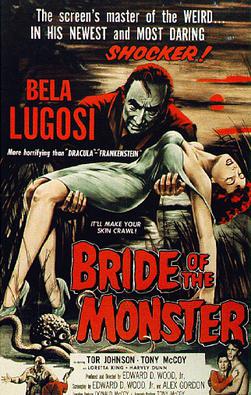
Perhaps it was my Shingrix-addled brain—but we all know that’s an excuse—I decided to watch Creature (1985) and Attack of the Giant Leeches (timeless) over the past couple of days.  The former was a decision made when not having the energy to read, I could still search Amazon Prime for “free to me.”  I was all set to start Attack of the Giant Leeches when I scrolled over Creature only to learn it would be free for only eight hours more.  I recalled, somewhere in the haze, that a movie called Creature was on my watch list, and since time was running out, I clicked play.  Clearly a knock-off of Alien, with even a Sigourney Weaver stand-in, it was one of the most badly written films I’d seen in a long time.  I was surprised to learn it’d had a theatrical release.

A crew stranded on Titan, one of Saturn’s moons, finds a creature—one that looks like a down market version of Ridley Scott’s nightmare—that feeds on unsuspecting astronauts.  Still, the surprises kept coming.  The impossibly pretty women and rugged men of the crew seemed unlikely.  And was that Klaus Kinski trying a move on the security officer that he wouldn’t have survived if he’d tried it on Sigourney?  And how was it even possible that this was nominated for the Best Horror Film of 1985 at the Saturn Awards?  Okay, granted 1985 wasn’t a banner year for horror, but Creature really doesn’t seem to hit the bill for “best of” category—but it was over 25 years after a classic.

Attack of the Giant Leeches is obviously the lesser of the two movies, but it falls into the category of “so bad it’s good.”  The leeches are clearly people in rubber suits, and the caricatures of the hooch-swillin’ swamp-dwellin’ lazy ole homeboys is just too good to pass up.  And the fact that it’s just over an hour long is a bonus when you’re having trouble keeping your eyes open.  Those black-and-white sci-fi horror films of the fifties sure take me back to more innocent times (not the fifties, and the film isn’t all that innocent).  Given that both movies were free on Prime, and given that my head was fuzzy from my vaccine, I counted this as a worthwhile effort at staying awake.  We seem to have come to a more sophisticated era, in many regards.  Such films can’t compete with their modern-day counterparts and even streaming companies are producing their own these days.  There’s something to those older films, however, and maybe it’s helped along by a shot in the arm.


Lost Day

There’s a continuity of life and we’re used to it with only small, regular interruptions, such as a night’s sleep.  Each day builds on the previous one with plans being fulfilled, projects attempted, and yes, work.  Then something happens to disrupt that and it’s like starting over again.  I imagine (and feel for), for instance, those who’ve lost everything to Hurricane Ian are going through it.  They are reassessing and rebuilding, even as around here we’re beginning to get some of its rain.  A break in continuity may be smaller, however, and on an individual scale.  I had, for example, my first Shingrix vaccine in January.  Never having reacted to any vaccine before I was completely caught off guard when the next day I couldn’t get out of bed.  But more than that, I knew this was a two-part vaccine, and I was going to face this again.

I kept putting it off.  I needed to have a day when continuity could be broken so that I could recover.  That’s always tricky because I’m busy all the time.  I’ve got a book manuscript under a December deadline and I have to work every weekday.  Yesterday I took a personal day and had Shingrix 2 after work on Thursday.  Yesterday was a lost day.  Although I knew this was an important vaccine, like the various Covid vaccines I’ve had, I wasn’t ready for the consequences.  With short periods of wakefulness, I slept until 1:30 in the afternoon, unable to do anything.  Feverish, I couldn’t read without falling back asleep.  Working on my book was out of the question.  Meanwhile, emails kept coming in, asking for this or that.

The lost day takes some time for recovery.  It’s not nearly so bad as those who’ve lost their homes and communities because of this massive storm that’s tapping its outer fringes on my windows right now.  Still, I have to try to remember where I left off.  Amazingly, after sleeping for some seventeen hours, I was nevertheless ready for bed at the usual time last night.  The nurse who gave me the vaccine assured me that it was better than having the actual disease.  I don’t doubt that.  Those I know who’ve had shingles warn that it’s nothing to mess with.  Still, I sit here slightly stunned this early Saturday morning, wondering where I left off before all of this began.  The continuity has been temporarily broken, and I lost a day in there.  I’d forgotten what it’s like to sit in a chilly room before sunrise with a tabula rasa before me.  But I do recall that I have a final manuscript due in a couple months.

Photo by Estée Janssens on Unsplash

Opinion Piece

There comes a time, I hope, when the opinion of someone with over four-and-a-half decades of intensive reading experience, might matter.  I say this because I’m constantly struck by those whose opinions actually count, and how little they often are to be considered experts.  For example, I watch YouTubers young enough to be my children treated as experts.  A little probing sometimes shows that their qualifications are the ability to get people to look at them.  Click that like and share button.  If enough people do like and share, you can be an expert.  Or take opinion columns in newspapers.  I notice the headlines for some of these in the New York Times.  They are opinions only, and yet the prestige of one of the great American newspapers stands behind them.  These are opinions worth listening to.

The popularity contest is an old and venerable tradition.  I wasn’t popular in school and wasn’t voted “most likely to” anything.  Meanwhile, those chosen as the likely leaders and novelists and beauty-pageant stars generally don’t get too far along that road.  As Bruce Springsteen sagely noted, those “Glory Days” pretty much all end up back in high school.  But as Bowling for Soup observes, “High School Never Ends.”  We like to look at the confident, the well-adjusted, the narcissists.  Their sense of entitlement carries over into hoi polloi.  The quiet and self-reflective sometimes get noticed, particularly after they’re gone.  The Thomas Mertons and Thich Nhat Hanhs.  The household names, however, are those who loudly claim they should be heard.  Just because they think they should.

Another part of this complex equation is finding a subject that interests people.  In my case, I know lots of people are interested in horror, but I also know that there are many experts out there.  Ironically, I still have people ask me about ancient West Asian religions—this is a field where you need to be immersed to stay on top of what’s going on.  The books and articles you have to keep reading are dense and heavily footnoted.  The articles are located in journals not always easily found.  Don’t get me wrong—I still miss it.  Ironically, now that I can’t keep up people are starting to ask my opinions on it.  Perhaps the same will happen with horror and monsters, but long after I’m able to respond effectively.  Experts on social media learn to monetize their interests so they can spend full-time at it.  And that does, in fact, make them experts in the very specific field of being an expert.

Photo by Markus Winkler on Unsplash

The Daily Show

Long ago—over a dozen years now—I decided this blog would receive daily updates.  Some of the more successful blogs out there receive multiple daily updates, but I’m just one guy, and a working stiff at that.  When you do something every day a couple of contradictory things happen: one, you get better at it (if you’re a Gladwellian, it may take almost three decades, but the principle holds), and two, the quality varies.  I’ve long noticed this about daily ventures.  (I’ve also lately begun to realize that even daily shows take time out to refresh.)  I used to stay up to watch David Letterman (that seems impossible to believe in my current time warp).  When he was good he was very good, but when he wasn’t it was painful to watch.  You can’t be “on” every single day.  Emotions are funny that way.

Over the past year or so I’ve taken to occasionally binging on “Good Mythical Morning”—a YouTube daily show starring Rhett and Link.  These North Carolinians are inherently likable.  They’re a couple of guys who, in many ways, refuse to grow up.  They’re smart, and often funny.  And extremely popular.  Their channel has approaching 18 million subscribers.  They have off days, as do we all.  Sometimes I wake up feeling so contrary in the morning that I’m not sure I’m the same person who crawled into that bed only hours before.  Some days I don’t feel like writing a blog post.  On other days I feel like writing several.  What perhaps stands out to regular readers, if only one or two, is that some days you’re off.  So tragically human.  So wonderfully human.

I’ve often wondered if this is just a condition of life.  Pets, for example, have off days too.  I suppose the difference is that those committed to a daily show have put themselves out there so others can see them.  On one of those aptitude tests I took in high school the results suggested I should’ve been an entertainer.  Instead I took a religious and scholarly approach to things.  Maybe because I’m a middle child I always felt that nobody really paid attention to me.  So here I am, a baker’s dozen years out from writing daily on religion, ancient West Asian topics, books, and horror.  And sometimes current events, when I  feel like it.  If you’re taking the daily show route, you need to be aware that, despite the ennui, not every day will be the same.  Even someone as successful as Letterman knew that.


Tuning Up

Climate change is marked by its erratic behavior.  I can relate.  Nevertheless, one of my favorite things in the whole wide world is the slow transition of summer to winter.  Autumn includes that honeymoon time between air conditioning and furnace when you have perhaps a month of reasonable utility bills.  After that hot summer we had around here, this weekend showed why we call it “fall.”  I awoke yesterday morning only to feel the indoor temperature slipping into winter range.  (Seriously.  The furnace isn’t on yet.)  It was 41 degrees outside, a full five degrees lower than projected.  There’s a subtle insidiousness to morning chills.  I tend to wake around three or four, but that’s not the coldest part of the night.  No, that comes just before sunrise.  Morning connoisseurs know that.  It’s always coldest before the dawn.

Weather forecasting is a dicey business, not for the faint of heart.  When it’s getting uncomfortably chilly, a degree or two can make a difference.  You see, I get out of bed, throw on some lounging clothes, and go into another room where I won’t disturb anybody.  That means if I underestimate how cold the house will be, I’ll spend some time shivering until those who awake on normal schedules get up.  That, or I have to wear a jacket indoors.  I’m not above that, of course, but it’s only September.  Honeymoon time.  Global warming doesn’t mean it’s going to be hot all the time.  So all of this has me thinking about winter already.  It’s only September and I’m already wearing fingerless gloves.

I’m extremely sensitive to cold.  I attribute it to a case of mild frostbite I had as a teen.  The cold didn’t bother me so much before then.  My brother and I, dutifully awaiting the school bus, stood for the required half hour or so at the bus stop.  It was bitterly cold and there was no bus shelter.  When we were finally allowed to head home the pain was incredible.  My extremities are still chilled at the slightest suggestion.  On all but the hottest days my feet can count on being cold.  The  morning skies were a beautiful blue yesterday, suggesting that the predicted cloudiness of the previous night had not performed, allowing full radiational cooling.  Yes, global warming is real and all of us alive today will be dealing with it for the remainder of our time here on earth.  That doesn’t mean it’ll always be hot outside.  It does mean the honeymoon may be over. 


Ode to Auld Reekie

Edinburgh is a sizable city, although not large like New York, more like Boston, but smaller.  Like Boston, it has had an outsized influence globally, even apart from its world-class research university.  I think of the creatives that are from, or spent considerable time there (J. K. Rowling, take a bow) and the many great thinkers who’ve called it home.  Our three years there went by too quickly, but money being what it was (and is) and laws dictating how long we could linger, we had to leave it in 1992.  If you’d have asked us when we were there we’d have told you we’d’ve stay if we could’ve.  We had no money, no car, no television, but we had Edinburgh.  Somehow that seemed to be enough.

Places have great significance to people, but it’s not reciprocal.  I occasionally find out a famous person was from Edinburgh and say “I didn’t know that.”  Having spent three years and the cost of a doctorate there, I was a mere drop in the Firth of Forth.  I’m frequently in contact with faculty members at the Divinity School for work.  None know that I studied there—I suspect most university folk don’t sit around talking about long-ago post-grads.  Indeed, there may be no faculty left from the time I was there.  New names, new faces, new research agendas appear.  Indeed, you wouldn’t choose Edinburgh as a place to study Ugaritic now, even though there was once an “Edinburgh school” of thought in the discipline (and I can footnote that).

Still, when I hear “Edinburgh” my ears prick up like those of a dog who’s been called.  It is a part of me.  I’ve only been able to return once since our original stint there.  It was a strange sort of homecoming.  Familiar and foreign all at the same time.  Some shops were right where we’d left them, others now merely ghosts in our memories.  Fortunately Edinburgh hasn’t had the building mania that often causes old cities to try to reinvent themselves.  It was already great to begin with.  More and more I hear about the Edinburgh Festival, and the Fringe.  People are starting to notice this jewel in the crown of the United Kingdom.  On a molecular level there may still be a little bit of me there.  We’re constantly shedding, I suppose.  And someday perhaps we’ll be able to return.  It may not remember me, but I can’t forget her.


Fictional Truth

In honor of Banned Book Week I read Sherman Alexie’s The Absolutely True Diary of a Part-Time Indian.  Funny and poignant, it tells the story of Arnold Spirit Junior, a Spokane tribe boy on the reservation.  Born with a disability, he nevertheless overcomes adversity to become both a good student and excellent basketball player.  I suppose you’d classify this as young adult literature since the protagonist is a teen and many of the issues are those of kids in that age group.  Although it’s funny, and the illustrations underscore this, there’s a realism that account for various people wishing to ban it.  First of all, it reminds readers that white men put Indians on reservations and, despite our national guilt about this, we still refuse to do anything to try to lift them out of poverty.  And, like most boys his age, Junior likes to talk about sex once in a while.

Fiction can be the most nonfictional form of writing.  Junior describes the realities of reservation life.  Alcoholism, poverty, and violence are part of his everyday experience.  He attends far more funerals than his white counterparts.  This particular point gave me pause.  A New York Times article that appeared pointed out, statistically, that American Indians had much higher death rates from Covid than many other demographics.  It was like the genocidal introduction of European diseases during the “age of discovery.”  I suppose people would’ve grown curious and explored their world, regardless of the distorted Christian belief that they were to take it over.  At least we could’ve treated those we met with respect, as equals.

I think about the missionary mandate quite a lot.  Based on an undying literalism, it became an excuse for behaviors explicitly condemned by Scripture itself.  There’s a real danger when conviction comes with guns.  At least modern-day missionaries try to help those they’re attempting to convert with hospitals and medical care.  Still, that doesn’t help the American Indians.  They still struggle and our policies still ignore their problems.  Their plight stands in the way of capitalistic exploitation.  And when an Indian writes a fun book, honest about the experience of his people white critics begin to raise their voices to ban it.  How do we think the situation of the Indians will ever improve if we refuse to listen?  And what better time to get people to listen but when they’re young enough not to have been corrupted by our system of entrenched unfair treatment?


All Things Being

“Equal” and “night,” in their Latin forms, give us the word “equinox.”  Today we enter the darker half of the year.  Interestingly, of the so-called “quarter days”—the equinoxes and solstices—this is the only one for which we have no ancient indications of celebration.  Like a birthday that goes by unnoticed, this feels odd.  Why, among the set of only four days—longest, shortest, and two equal—did this one fail to be noticed?  Well, perhaps noticed, but not celebrated?  The failure of ancient records may be one explanation, and perhaps other, near dates of note subsumed it.  In Judaism, for instance, Rosh Hashanah and Yom Kippur come around this time.  The ancient Celts celebrated August 1 and November 1, or thereabouts.  September is a particularly busy time.

Harvesting, in many places, gets its real start in September.  In more modern times, school starts up again.  Work schedules once more take priority and those “relaxed” summer hours are a thing of the past.  It’s easy to overlook this seemingly insignificant day.  It is important nonetheless.  For those of us who watch horror, it’s now more easily explained—it’s darker and that brings on one of the most primal of fears.  Halloween is coming, and if you haven’t prepared already, discounted pricing on picked-over merchandise will begin in coming days.  More and more houses will prepare for the haunted season.  Around here leaves are just beginning to change, but in more northern latitudes they’re well on their way already.  Pumpkins are already on hand at grocery stores and farm stands.  The days of summer sweet corn are over.

Not all holidays receive equal attention, of course.  Less romantically inclined adults simply work through Valentines Day.  And who even notices May Day anymore?  If you don’t spend money on holidays they don’t seem to count.  Who goes out and buys things for the forgotten autumnal equinox?  Nevertheless, many people say that fall is their favorite time of year.  It has a trickster element to it.  You awake and have to throw on some extra layers, but by mid-afternoon short sleeves may be sufficient.  Hurricanes may come ashore.  Some days will feel like winter, and others summer.  Transitions are like that.  The autumnal equinox signals the inevitability of winter but also the yearning and melancholy of the shortening days when color springs to light once again.  Forgotten or not, today is the harbinger of things to come.