PTSD

In a recent post on BBC Health, James Gallagher discusses ancient Assyria. What can ancient Assyria have to say about modern health, beyond the occasional liver model used in haruspicy? Post-Traumatic Stress Disorder, of course. As Gallagher notes in his article, PTSD was diagnosed after the Vietnam War. That doesn’t mean it wasn’t in existence long before then. In fact, it stands to reason that if people experience it now, they likely experienced it during traumatic events then. War is among the most horrific and tragic activities in which humanity engages. Men, in the days of Assyria, sent to kill other men in the hundreds, and thousands, could not have walked away from the battlefield unchanged. There are those who seem not to suffer, but the majority of us know that, no matter how just the cause, it is simply wrong to kill others. On a massive scale it can only be worse.
Trauma

Trauma

Multiple stresses, I would contend, go undiagnosed. I have known those who’ve experienced significant loss—a job, for example, in an economy that makes future prospects dim—who begin showing the same kinds of symptoms. They are, of course, not diagnosed with PTSD, but are simply told to either buck up or go see a shrink. “Pull up your socks,” as they say in the UK. I wonder, though, if it is that simple. People throughout history have been capable of inflicting great stress on one another. Sometimes it becomes so normal that we don’t even recognize it. The forcing of loss and resultant terror of future deprivation is a daily affair. The civilization we’ve been is so complex almost to demand this kind of horror. We may not be sent to the battlefield to kill others, but we are daily faced with situations that cause us great pain, often for prolonged periods. And we wonder why people aren’t satisfied.

Please don’t misunderstand me. I have no doubt that the level of stress faced by those who survive war is severe. I don’t make light of it. Being a pacifist, I do believe there is a solution to war that involves education instead of fighting, but I don’t in any way suggest that those who suffer aren’t suffering in reality. They are. Sometimes they can no longer function in society. We institutionalize, cut funds, then send them out on the streets. This is nothing new. As Gallagher points out, soldiers in antiquity weren’t professionals. All healthy men, apart from the one-percenters of the day, served in armies on a rotating basis. One thing, however, has not changed over the millennia. War today remains as unnecessary as it was then. If we could turn our attention to improving the lot of the 99 lost sheep, the one already found might, to its surprise, be much better off if all were accorded ample care.
Monsters of Science

ScienceOfMonstersMaybe it’s the ebola in the air, or perhaps the gas from all the midterm elections verbiage, but I’ve been on a monster run this October. I just finished Matt Kaplan’s The Science of Monsters: The Origins of the Creatures We Love to Fear. It is a charmingly written book, at parts approaching the finesse of Mary Roach. Beginning with the ancient Greeks (and sometimes stepping back into the world of the Bible or the Mesopotamians) Kaplan examines the major categories of monsters and tries to offer scientific explanations for why people came up with them. It is a keen conceit and it is deftly handled. Noting that animals sometimes got jumbled in the fossilization process, he offers explanations for creatures such as the Chimera, Griffon, and perhaps even the Sphinx. Some of the unlikely episodes are quite fun to visualize as well, as when a snake slithers over a tar pit where a goat got stuck and was eaten by a lion that also got stuck. Beast after hideous beast he brings down to analytical size, sometimes convincing even this old monster lover.

One of the problems, however, is that science often doesn’t comprehend the symbolic nature of mythical thought. Quite apart from sheer creativity—and it does exist!—some of the material in Kaplan’s analysis would have benefited from having a mythographer’s look. For example, demons do not suddenly appear as monsters in the Middle Ages. Kaplan knows this, but that’s where he starts. The ancient Mesopotamians knew of them very, perhaps, too, well. And Lilith isn’t even mentioned when discussing succubi. Still, there’s a great deal of interesting conjecture here, and some scientifically, if not mythographically, viable suggestions on whence vampires and werewolves. As expected, modern sightings of cryptids are simply swept off the table, but I almost shouted aloud when I read that he gave credence to Wade Davis’s work on Haitian zombies.

The larger question here is one of approach. Do monsters lend themselves to scientific explanations at all? The case that elephant/mammoth skulls might suggest a cyclops seems reasonable enough, and the occasional dinosaur bone that represented a giant in ancient times is entirely possible. (Who can tell one femur from another anyway?) But the monster is primarily a creature inhabiting the shadowy realms of religion and psychology. Our fears are seldom directed toward science, although, now that I’ve read his chapter on “The Created” I’m not so sure. Constructing backward toward the unknown is always a dicey proposition, as those of us who’ve studied history of religions know. We may be able to find the genesis of modern monsters, but, admittedly, the fun for most of our scary friends is that they are mysterious. Impervious, as it were, even to science.


What I Mean

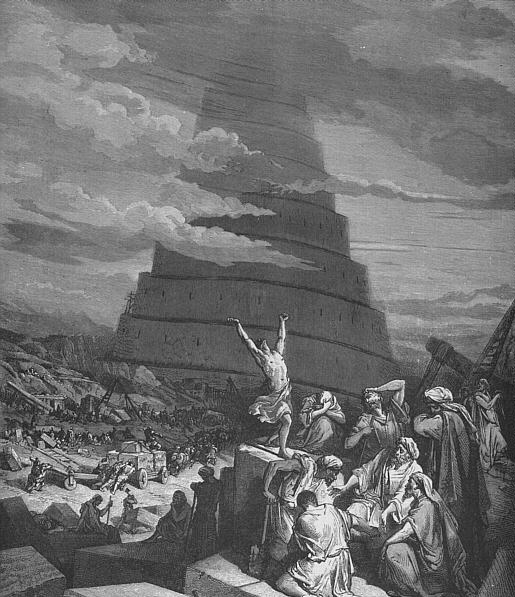
It might seem, in this world of constant misunderstanding, that we might get along better were it not for the Tower of Babel. I mean, we call it a language barrier, right? So why are some people upset about the extinction of languages? Rebecca Morelle writes of how economic success may be behind language extinction in an article on the BBC science and environment page. There are some—many entrepreneurs—who see no cause for mourning. I have to wonder, though. I cut my academic teeth studying dead languages. Koine Greek and “Classical” Hebrew are no longer regularly spoken, and really haven’t been for centuries. Then I moved on to rediscovered languages: Ugaritic, Akkadian, Epigraphic South Arabian, each sounding more exotic than the last. Would world commerce exist if we were all hampered with Sumerian? We got on fine without the wisdom of the past—why should we even care?

I see politicians, mostly male, arguing in the “most advanced” government in the world, that women shouldn’t be given the full benefits of health care because they misunderstand the Bible. It is easily done. As I told my many students of biblical Hebrew over the years, language is not just words. Languages are ways of thinking. No translation is truly perfect. If you want to understand the Bible, you must do it on its own terms: learn to conceptualize in Hebrew and Greek, then come back and tell me what you think. It is, however, much easier to let King James do the talking. A man’s man. Just don’t ask what he did after hours, right Robert Carr? Something seems to have gotten lost in translation.

Languages are more than just ways of expressing ideas. They are the basis of cultures. When languages die off, cultures soon follow. Do you suppose that everyone on Papua New Guinea goes to work wearing a tie? Just give it some time. We call it progress, and it is inevitable. It has happened even closer to home, for those bound to the States like me. It used to be that academics had a language that didn’t necessarily included economics. The rarified domiciles of words like trenchant and salient and boustrophedon soon became superannuated. What are you trying to sell here? Dictionaries? As business marches unstoppably ahead, consuming all in its path, our lesser languages quietly die. With those languages ideas also pass away. With each demise, the world becomes a poorer place. Maybe it’s time to start building a tower.

Confusion_of_Tongues


Esau and Jacob

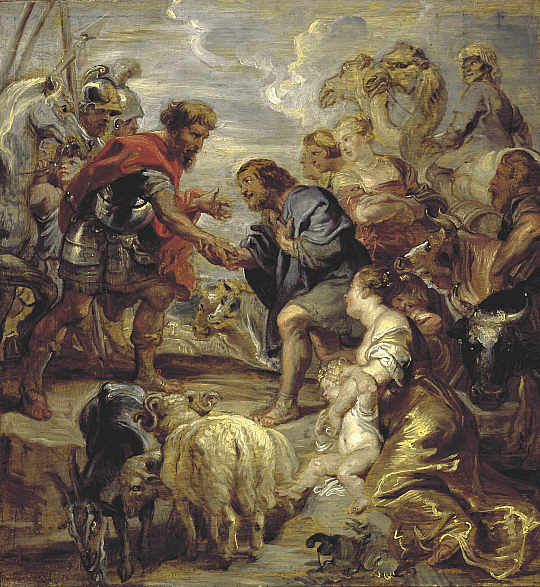
“Jacob have I loved, but Esau have I hated,” at least according to the recollection of Paul in Romans. One of the most poignant scenes in the Hebrew Bible is the story of Esau. Born as the elder brother, in ancient times one could expect certain privileges. Yes, Esau sold his birthright to his brother over a rumbling stomach, but he still knew that the blessing—the true gift—was still his. That, however, Jacob took from him by deception. Isaac, their aged father, was blind but wanted to bless his firstborn before he died. While Esau was out hunting, Jacob slipped in, in disguise, and stole the blessing before fleeing to Iraq. In Genesis 27, Esau came in as instructed only to find the blessing gone. His weeping has never ceased through the ages as his father blessed him with a sword. Years later, Jacob returned to find his brother a wealthy and powerful man. A man who forgave and forgot. But Paul remembered.

Rubens, The Reconciliation of Jacob and Esau

Rubens, The Reconciliation of Jacob and Esau

Hate is a strong word. As a child the worst punishment I can recall came from saying that I hated someone. That word was worse than a swear. Hatred was not worthy of a loving god. Like Esau, however, we don’t stay young forever. By our sword we make our living. For some of us that sword was the written word that we were told was sacred. The image of big, hairy Esau weeping before his blind father disturbed me. He’d done nothing wrong. In fact, he was simply doing what his father asked him to do when his brother snuck in and took something that my young mind couldn’t even parse out from the birthright earlier bargained. Clearly, however, it was important.

Upon returning home six chapters later, Jacob fears Esau’s righteous wrath. He knows his brother has legitimate cause to hate him. Esau, however, aware that he has enough, welcomes the prodigal home with open arms. There is enough to go around. Even today, with the will to do so, the hatred could be removed. This is a metaphor, not literalism. Genesis is, after all, not history. Stories, however, can convey what facts cannot. Millennia have passed and myths have come and gone. In the simple, if primitive justice of my childhood, you dare not say you hate your brother. Having grown up with brothers I learned that despite conflicts that inevitably arise, hatred is never the answer. Esau forgave, according to Genesis 33. And the land was wide enough for all.


Sign of Jonas

A century ago today, the world erupted in war. Those who engaged in World War One are pretty much all gone now, but the war to end all wars has left its scars across the globe. We showed ourselves we could do it. We could drag, through our accumulated frustrations, just about every nation into open conflict. The costs were astronomical, but we didn’t learn a thing. Just a couple decades later we were back at it. Nations taking provocative stabs at other people. Keep on poking and people, being what they are, will eventually hit back. So on this anniversary of the start of the First World War (awaiting a sequel, perhaps from the start), I’m reading about the extremists in Iraq destroying Jonah’s tomb. Poke. Poke. Well, it is more a loss to fellow Muslims than it is to those who take the Bible seriously. Jonah is a nice story of a prophet (rather blithely retold in the Washington Post) who probably never existed. If there was a Jonah he wasn’t fish food, that we know for sure. The tomb of Jonah is like that of an unknown prophet. The symbol’s the thing.

In the story in the Washington Post, Justin Moyer laments that “anything in the Bible” might be destroyed in these circumstances. I wonder how you can destroy something that never happened. Doing so, in any case, is liable to start a war. It really doesn’t take that much. The last century has taught us little. Don’t get me wrong—I’m not in favor of destroying ancient landmarks or parts of a region’s history. But if we misattribute its importance to something sacred, or biblical, it will be far too simple to start a row. You see, Jonah converted Nineveh, according to the Bible. The Assyrians became good Yahwists, despite the historical record. Those who destroyed his tomb likely had conversion on their minds as well.

As these thoughts were taking form in my head, I happened upon the page of GETS Theological Seminary, which, as far as I can tell, is in China. On the banner across its homepage was a picture of its mission field. Is that the United States? Of course, if you read the description you’ll see that the world, in toto, is the mission field they intend. Still, it is a little bit of a shock to see yourself counted among the heathen. I’m sure, had Jonah really existed, that the Assyrians would have been just as shocked. They were as moral as any other militaristic society. And today my thoughts are on militaristic societies. The First World War definitively changed everything from that fatal moment it began, a century ago today. It was the first, but not the last, loss of humanity’s innocence. We would invent newer and crueler ways to kill each other in greater numbers. Blood would become the true currency of the last hundred years. Maybe we should keep a weather-eye out for a fish-swallowed prophet after all. The world could perhaps stand a bit of conversion.

f11w


Lord Have Mercer

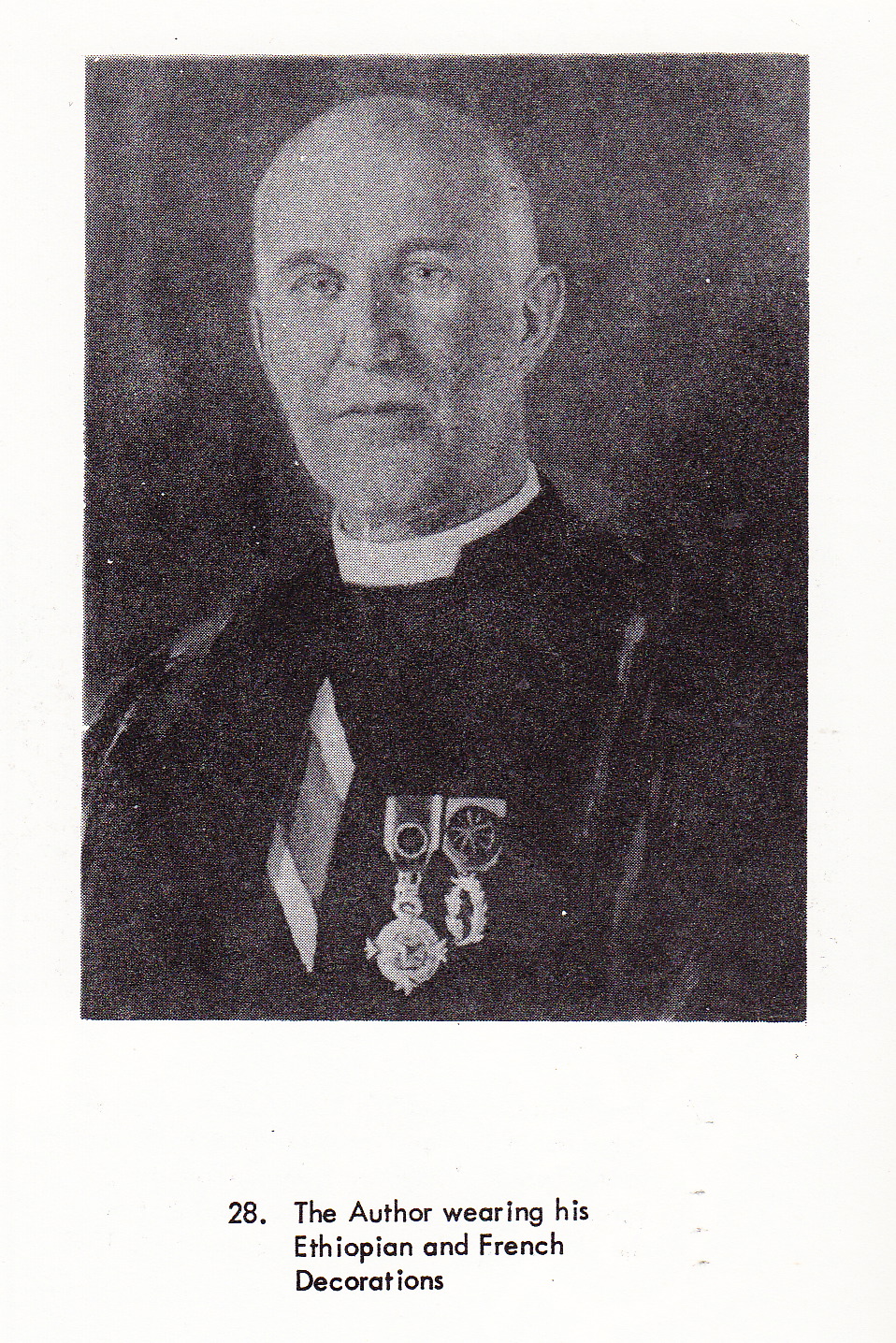
Samuel Alfred Browne Mercer was an Assyriologist who failed to establish an academic legacy.  I quickly learned, when consulting his The Tell El-Amarna Tablets that his work was considered inferior, and that it would not have been published, had it not been for his wealthy wife.  Not a very ringing endorsement for a guy who wrote a grammar of Assyrian.  It was a little odd, then, in the library at Nashotah House when Mr. Tolan was clearing out shelf space, that he asked me if I would like a copy of Mercer’s autobiography.  The library had two and, well, needed more shelf space.  I thanked him for the slim volume and took it home to read.  The little book is self-published, and it had been typed with a sans serif font, something rare for a published volume in those days.  It had been annotated by hand, I presume by the author.  And it told a most interesting story.
 
Mercer, I was to learn, had been a student at Nashotah House.  Now, in my days at the seminary the internet had not yet made it that far into the backwoods of Wisconsin.  We eventually did get a dial-up connection and we thought we were so twenty-first century.  In any case, Nashotah House, when it finally established a website, did nothing so vainglorious as to list noted alumni or faculty.  The only two I ever heard praised were Gustaf Unonius and Michael Ramsey, the former for being the first graduate, and the latter as an adjunct instructor (and, incidentally, the Archbishop of Canterbury).  Samuel A. B. Mercer, as he styled himself, would not likely have raised even a unibrow.  He had written a couple of books on a learned topic, but had failed to impress.  Reading his life story was somewhat intimate, however.  He tells of riding on the top of a train in Russia to get from city to city with little money, and of visiting Ethiopia where, it seems, he was convinced the Ark of the Covenant might just be.  Had I not studied Akkadian and read about Assyriology, I might not have ever come across his name.  We were, however, touching at an odd juncture.
 
Not even rating a Wikipedia article, Mercer disappears into obscurity after his informal accounting of his life.  He apparently had a wealthy wife (home life is not the focus of his brief story), and a lasting desire to spend time in Kush.  Although it has been years since I’ve read his story, I recall that he did have a life of adventure and a little intrigue.  Maybe we were spiritual kin after all, for we each tried and failed to make an impression on an ivory tower world where those who tarry too long at Nashotah are deemed among the least important of academics.  After all, even the relatively comprehensive list of institutions of higher education on the University of Texas website (and Texas and Nashotah have a lasting connection) fails to mention the seminary.  Its little library, nevertheless, does hold evidence of a lost life-story or two.

SABMercer


To Thine Own Self

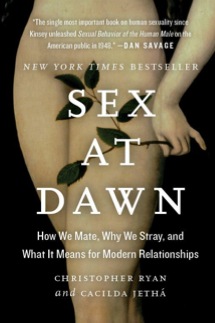
sexatdawnAmong the books that I would rate very important, Christopher Ryan and Cacilda Jethá’s Sex at Dawn would need to be on top, or nearly so. As I’ve often stated on this blog, religion and sex are very closely related. Every religion, in some way or another, intimates itself into sexuality. Like religious belief, however, it is something about which we blush, look at our feet, and politely change the subject. Perhaps it would be helpful to shift focus, then, to the subtitle: How We Mate, Why We Stray, and What It Means for Modern Relationships. Well, not even that reaches the depths to which this book plumbs. Ryan and Jethá actually peer back deep into prehistory and look at the changes that agricultural life brought onto humanity. Comparing that information to conclusions drawn from evolutionary theory and serious biological study, they derive a picture of a much more equitable culture for which humans clearly evolved. Agriculture, and just plain culture, changed all that.

With culture, you see, comes the materialist idea of possession. Hunter-gatherers, even today, are the best sharers in the world. Their generosity isn’t noble, as Ryan and Jethá point out, but entirely practical. In addition, their lives are longer, healthier, and happier than those of the modern, stressed-out, perpetually frustrated, “cultured” individual. We are constantly trying to get ahead, and own more. Of course, we don’t want to mention or think about the fact that when we die, all that ownership will mean nothing. We invent complex laws that so only our biological (we think) offspring will carry on that legacy until the last bit is parceled out so fine that all that remains is a name that few will remember millennia down the road. For that we suffer nearly constant frustration. I’ve not read a book in decades that made me want to throw all of this off and head out to the woods, sharpened stick in hand. (Problematic, since I’m pretty solidly vegetarian.)

Some of the larger implications, however, that Sex at Dawn doesn’t address, are the roles that religion plays in problematizing what we’ve evolved to be. Of course, sex scandals in churches are referenced, since they are such crucial evidence. What is overlooked, for the purposes of the book, is that religions have always tried to define and control sexuality, at least since the dawn of agriculture. We don’t often consider that agriculture, in addition to making us fat, and lazy, also gave us organized religion. It may be that religion came first, but it only grew into a coercive social force with the temple culture of ancient Sumer, and it has been with us ever since, dictating who may love whom, when, and for what purpose. Sex at Dawn is not for those who are set in their ways, nor for those who take a one-size-fits-all attitude toward life. For the rest of humanity, however, there is hope that perhaps we can learn to be a little more true to what nature intended us to be, and to understand that nature may be many things, but it is seldom evil.


Floaters and Swimmers

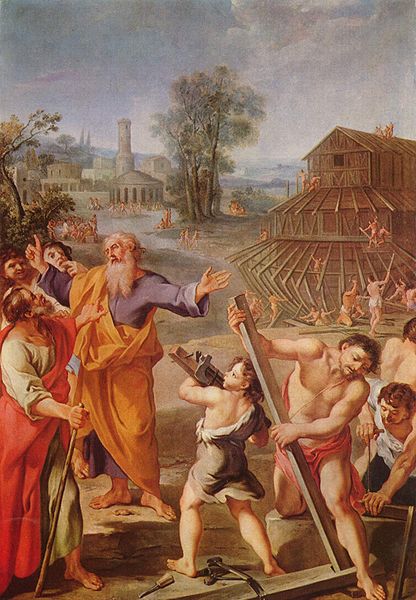
Noah seems to have found a renewed audience these days. Nothing like a major motion picture to make even one of the most famous biblical characters even more notable. And the spin-off stories are now considered news as well. One of the many impossible stories of the Bible, the ark, as scholars have long known, would not have been a physical possibility. Quite apart from the building in days before metal smelting was invented, there was the problem of volume. Since evolution is ruled out de rigueur, each separate species had to have been represented, since no changes are allowed from that time to this. The sheer number of them, especially since new ones are being discovered even now, was deemed impossible to fit on an ark of even biblical dimensions. Add in the food necessary for 150 days, especially considering the carnivores, and the human-power required to care for all those beasts (only eight are permitted by Genesis, and Noah was 600 years old at the time) and you get the picture. Then Mesopotamian flood stories even older were discovered. It was quickly recognized that this was a myth with a larger message to tell.

Now, according to geobeats, and to the relief, I’m sure, of Russell Crowe, physics students at the University of Leicester have calculated that the ark could have floated. The story, in a one-minute sound bite, is a little shy on details. The students used the biblical cubit, and figured there were 35,000 distinct species at the time. I’m not sure where that number originates, but it doesn’t take into account how Noah got the koala’s to swim from Australia. According to present evidence, the earth is home to about eight-million-seven-hundred-thousand different species. And since they can’t evolve, that’s an awful lot of swimmers.

According to the university website, this was not intended as an exercise in biblical literalism. “The aim of the module is for the students to learn about peer review and scientific publishing. The students are encouraged to be imaginative with their topics, and find ways to apply basic physics to the weird, the wonderful and the everyday,” according to Dr. Mervyn Roy, the instructor. The students, working the math angle, didn’t expect the results to work. That they did surprised everyone. Except Noah, one presumes. The story makes clear that the number of animals was used to calculate mass, not dimensions, so squeezing all the beasts in might have been quite another chore altogether. Miraculous, one might say. As for me, I am waiting to see that pair of koalas swim from Darwin to the Persian Gulf, and then back again once the waters finally recede.

Don't forget to see the movie!

Don’t forget to see the movie!


They Call it Civilization

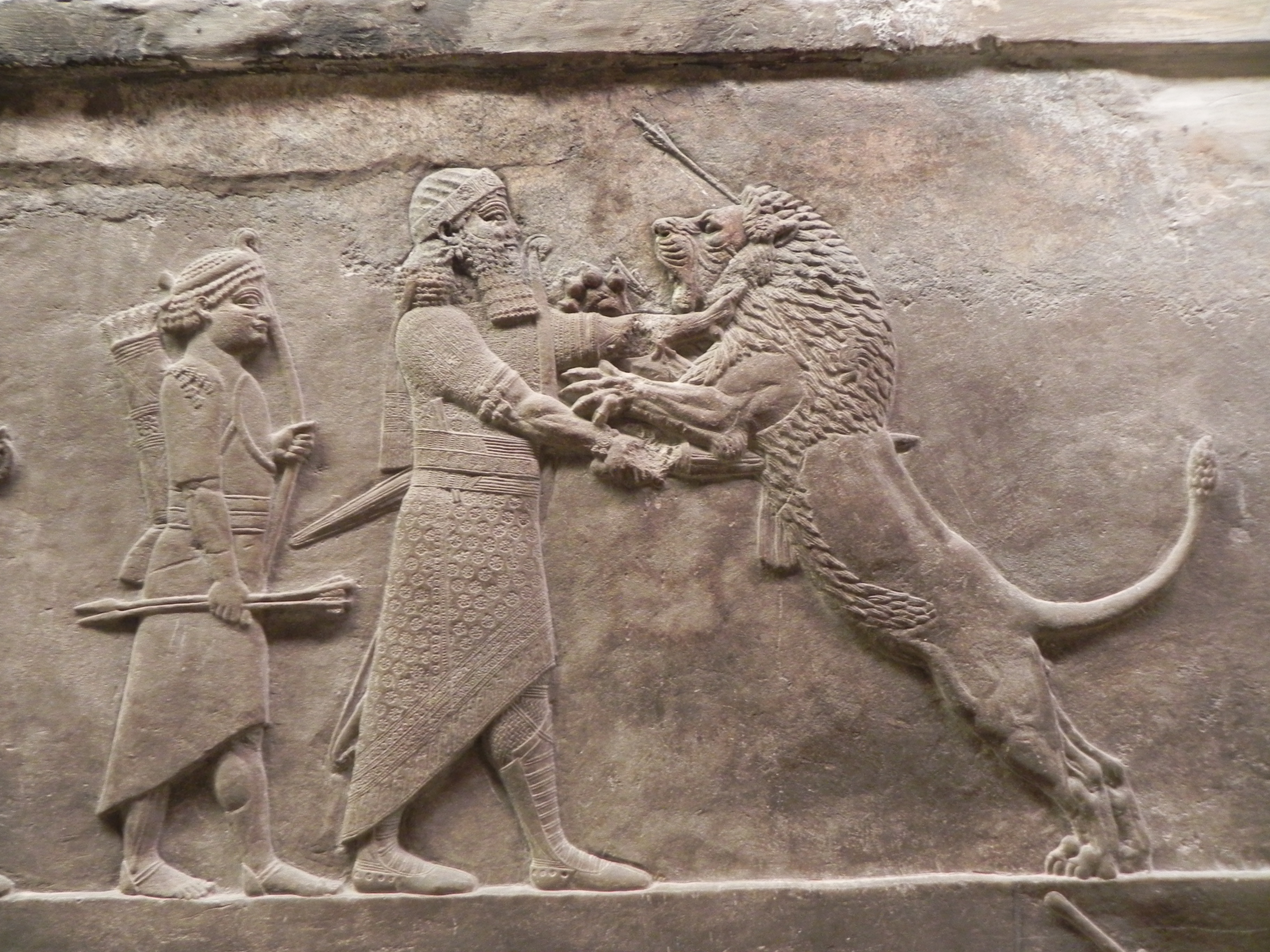
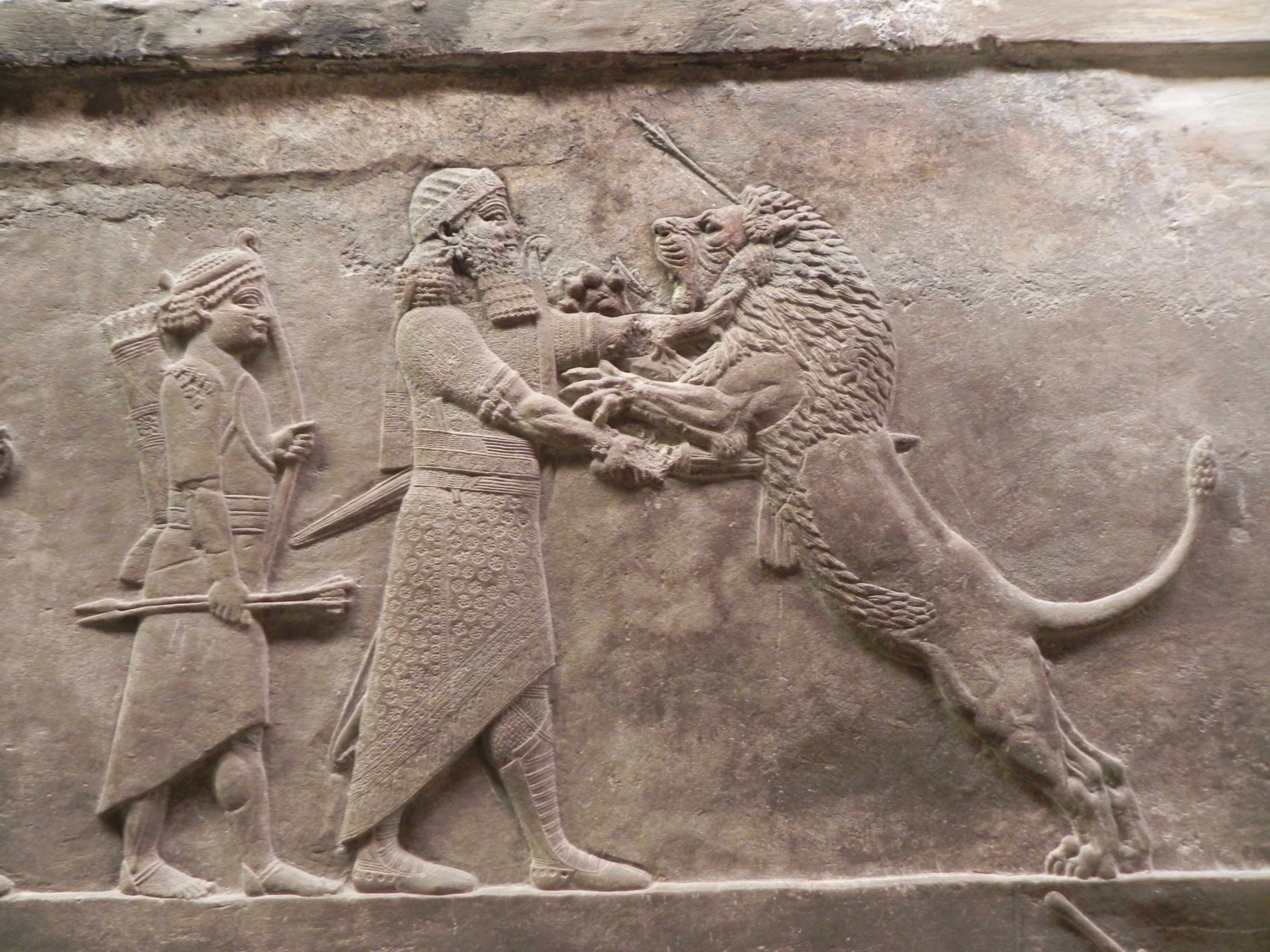
An interesting article about the Assyrians appeared in last week’s Guardian, On Art blog. The piece by Jonathan Jones, describes a piece of ancient Assyrian art on auction that the British Museum is not interested in buying. Having toured the Assyrian galleries a time or two, more’s the pity, but Jones puckishly suggests that the museum may be afraid of the curse inscribed on the piece. We all know of the story of ancient artifacts that come with value-added supernatural attributes—it’s a standard staple of Hollywood horror. Jones knows, however, that the museum isn’t really afraid of a curse, but he does display an interesting attitude toward the Assyrians. You see, the Assyrians were conquerors. They knew how to intimidate potential enemies long before their armies ever set out on the move. The imagery displays powerful men, ripped and ready, killing lions in hand-to-claw combat. Jones rightly points out that some of this is disturbing. What strikes me as interesting is a probably unintended subtext.

DSCN1837

“Assyrian art is certainly awe-inspiring – but perhaps not civilised,” Jones writes. As if civilization necessitates politeness. Perhaps it should, but civilization began in the very region south of ancient Assyria, among the Sumerians who were a culture emulated by later Mesopotamians. There is no doubt that the Mesopotamians gave us many of our beloved Bible stories, in their original, unedited form. They gave us organized religion, writing, and the wheel. Comparing the Assyrians to the Egyptians and Greeks, Jones suggests they were uncivilized. I would beg to differ. The Egyptians and Greeks could also be quite violent. The Assyrian aesthetic was a bit different, to be sure, but there is a raw beauty to it. And I have to wonder why, from our western perspective, what comes out of Iraq seems to hint at something insidious or sinister.

I’ve always been a fan of the Mesopotamians. Since a Ph.D. program only lasts so long (for those of us perpetually struggling to make ends meet), I did not have time to indulge my Assyriological fantasies once I learned of them. I was deep into Ugarit, and although I loved the tales of Asherah and Baal, there was something more ancient, more powerful, lying to the east. I often thought that if I could’ve had more time, my interests would’ve definitely drifted toward the progenitors of civilization. Yes, some of the art-work is deeply troubling, but the Assyrians, indeed, the Babylonians and Sumerians, looked at the world from the viewpoint of cultural creators. Civilization involves violence, no matter how we try to hide it. When I stand in London, taking in those Assyrian reliefs I see an honesty that is carefully hidden by the Egyptians and Greeks. And I think I prefer to know the truth of the situation, curse or not.


Flood of Fancy

Years ago I was approached to write a book about Noah. There was still some hope at that time that I might find a university job and that my words would have more credibility than just any old internet hack. At the time I’d read just about every book about Noah that had been written—and there weren’t that many. Biblical scholars, beyond tying the story to its obvious Mesopotamian sources, have long relegated the tale to the nursery school of biblical drama. Sure, it’s a great story, but what serious scholar takes an interest in a great story? Well, I outlived my academic job and it looks like Noah is going to have the last laugh. We’re told that the Pope has been tweeted about the movie by Russell Crowe and that several Islamic nations have already banned it. According to Today Darren Aronofsky, the director, is more interested in getting non-believers into the theater than trying to please the faithful. Well, let’s face it. A movie based strictly on the Bible would have to be pretty preachy.

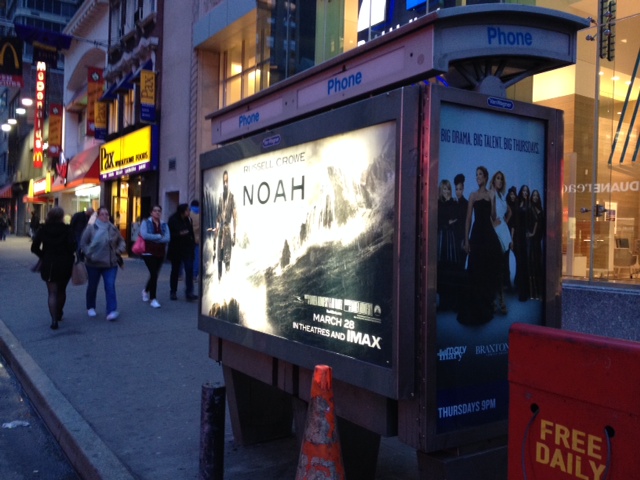
The bigger draw seems to be this: our society is simultaneously deemed secular and religious. Americans go to church. They also respond to surveys that they believe in God, the Devil, Heaven, and Hell. They also act as if none of this were true. Business practices tend to be anything but caring, and we show no concerted effort to make sure basic healthcare is offered to all our citizens, let alone the millions who are daily suffering and dying elsewhere in the world. We don’t want to reduce our emissions as a real flood—a literal flood—is on the rise on a global scale. Maybe we’re waiting for a biblical-scale miracle to save us. Noah’s face stares out at you all across Midtown. Judgment is upon us.

NoahMovie

Action films draw male viewers. Religious movies draw females. Aronofsky and Crowe have the winning combination. No gender-bias for a secular-religious nation that has enough loose change to spend a weekend at the movies. The biggest complaint is that it isn’t the Bible. I have to admit I’m kind of enjoying the hype, despite the fact that I never received the chance to write that Noah book that was next on my agenda. If I had, now it might have enjoyed the sales that Irving Finkel’s The Ark Before Noah—scheduled for release three days before the movie—surely will. Timing has never been my strong suit. Of course, money can be its own sort of flood, and many more drown in it than in the literal waters of a secular-religious society. According to Genesis a raven was released to fly about looking for land. The Crowe might have been a better choice since movies, as we all know, improve upon the book.


Past Imperfect

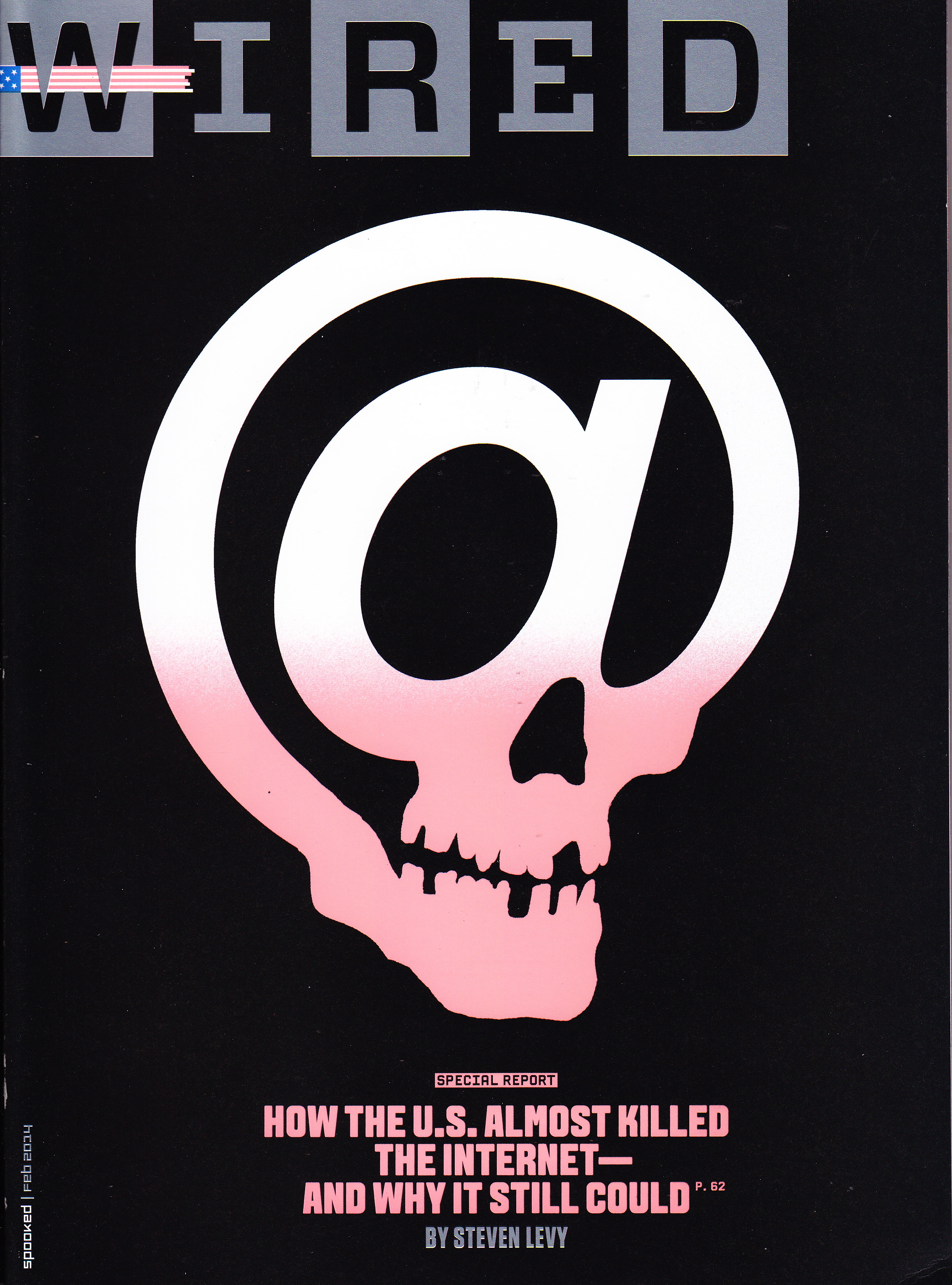
WiredPastReligion is inextricably tied to the past. So when I noticed an article in Wired entitled “The End of Then: Past? Present? Online, It All Runs Together,” by Paul Ford, I determined to read it once I could figure out whence that musky aroma arose. Maybe it is just my imagination, but the order of the major advertisements in Wired seems like a pre-packaged sexual scenario. Near the beginning of the magazine is an aromatic ad for Chanel for men. A few pages on is a more than full-page ad for Viagra. A few pages on is a short piece on Trojan lubricants, followed coyly by that rare cigarette ad. (I’m probably reading too much into this, but I’m a creature of the past.) Where was I? Oh yes, the End of Then. Ford’s point in the article is that the internet has made access to the past incredibly facile. Anyone with a portal into the web can find scads of information about the past, making past and present indistinguishable in a sense. My thoughts turn to the future.

The future seems to be the true unknown country. Not long ago I saw a story on the internet about how scientists conclude time travel to be impossible because we have not found messages from the future on the web. But we have found the past. Or have we? Ford mentions our fascination with Babylonian tablets, and suggests future historians will be equally intrigued by our continuous electronic chatter. But I turn back to that clay tablet. Those tablets, many of which were already in the deep past well before the Bible was scrawled, preserved what was important for a pre-industrial society: receipts, court records, and myths—the stories of the gods. And their command to build a round ark, at least according to Irving Finkel, whose book seems not to be available in the United States. Those myths, adapted to biblical proportions, have long been in the public domain, and yet, are they really in any sense present? Try giving students a quiz and find out.

We have a past that will always remain inaccessible. The present, for better or worse, is all we’ll ever have. Religion, however, is tied to the past. True claims are based on historical events, some less believable than others, that are permanently out of reach. We can watch how religions play out in the present and decide later. In the future. But the past haunts us forever. I, for one, had thought that cigarettes were on their way to extinction. But I need to put this edition of Wired down because that cologne ad is making me dizzy. And it leaves me wondering about future prospects and what religion has to do with any of it.


Dagon Cthulhu

Cthulhu has taken over the world, thanks to the internet. I wonder what H. P. Lovecraft thinks as he lies dead, but dreaming under the loam of Providence. A lifetime of struggle to gain recognition as a writer left him without much of a following, relegated to pulp magazines for low brow and Innsmouth-dwelling mentalities. Now everywhere from Davy Jones’ face in Pirates of the Caribbean to car bumpers in any parking lot, Cthulhu has awakened. My wife sent me a photo of a couple of such bumper-stickers recently: “Arkham’s Razor,” reads one, “The Simplest Explanation Tends to Be Cthulhu.” “Nyarlathotep is my co-pilot” reads another. I first discovered H. P. Lovecraft through bumper-stickers.

Lovecraft

Back in my post-graduate days in Edinburgh, I had decided to write my dissertation on Dagon. This seemed a reasonable topic as no serious, book-length treatments of this elusive, Mesopotamian deity existed. My advisors talked me out of it, however, noting that material on Dagon was so scarce that it would be extremely difficult to scrape enough together to call it a dissertation. A few years later, it turns out, an academic book on Dagon finally appeared, but the fact remains that he was, and is, a major deity who somehow mostly disappeared from the ancient records—the victim of chance finds and perhaps more aggressive gods. For my birthday one year my wife bought me a bumper-sticker with a “Jesus fish” that had the word “Dagon” inside. I posted it on my office door in Oshkosh and the department chair asked me what the tentacles were meant to represent. An web search indicated that the Dagon was not the biblical “fish god” but the Lovecraft reincarnation. I had experienced an epiphany.

Lovecraft, although an atheist, knew his Bible. I once wrote a scholarly article on the Dagon story in 1 Samuel 5 where the Philistine statue of Dagon falls down, decapitated, before the captured ark of Yahweh. This is the sole narrative involving Dagon in the Bible, and it concludes by saying only Dagon’s “fishy part” was left intact. Lovecraft took this obscure Bible story and built an entire mythos from one of its characters. Cthulhu, Dagon, Nyarlathotep, Shub-Niggurath, and their companions have risen from the deep, and encircled the world in an electronic web. The fact that kids who’ve never read Lovecraft can identify Cthulhu at a glance, attests to his power. Even Batman fans who cite Arkham without knowing that it was originally Lovecraft’s creation keep the master alive beyond the grave. Isn’t that what resurrection is really all about? Even if a writer has to be discovered through bumper-stickers.


Best Nowledge

Back in the day when paper books ruled, New York City used to be known as the publishing capital of the country. Even though many publishers still call New York home, a depressing lack of interest pervades the city that never sleeps (sounds like it could use a good book). Although I’m no fan of Barnes and Noble, it is just about the last presence left of the brick-and-mortar-style bookstore. When news arrived this week that one of the large New York branches of B&N was closing, a sense of despair settled in. I love my indie bookshops. I literally went into mourning when Borders shut down, even now the sight of a vacant Borders can make me weep. A walk though any trendy mall will reveal no books to be found, and I go home perhaps fashionably dressed and smelling vaguely of perfume but sad nonetheless. Perhaps it is because the book is/was the culmination of one of the most important technologies of all time: writing.

Technology, as we think of it today, is largely electronic. Circuit-boards, nano-chips, embedded in sealed cases constructed in sterile rooms where the humans are more protectively suited than a surgeon. Isaac Newton once famously noted that if he’d seen further than others it was because he’d stood on the shoulders of giants. One of those unnamed giants invented writing. Dragging a stick through clay would probably be considered decidedly low tech these days, but the person who realized that a crude scribble of an ox-head with dots next to it might indicate how many cattle you were selling was a giant. We have no idea who the scribes were who wrote down the first narrative stories of gods and heroes, but the process resulted in a still largely anonymous Bible that is used to decide public policy even today.

There’s no doubt that books take up space that electronic gizmos don’t. Storage has been an issue for libraries constructed before publishing became a major, competitive industry. But electronic books have their problems too. With the ease of self-publishing, you never know who is really an expert without researching the author. Often on Amazon I find an intriguing title only to see that it has been produced by any number of self-publishing software platforms that indicate only the author’s own word for his or her expertise. I wonder what happens when people who don’t know to assess information in that way take anecdote for fact. Where are the shoulders of giants? Perhaps I’m just old-fashioned, but the world without bookstores looks a lot like the stone age to me.

Alas, Babylon!  (Photo credit: Lovelac7, Wiki Commons)

Alas, Babylon! (Photo credit: Lovelac7, Wiki Commons)


The Ethics of Swallowing

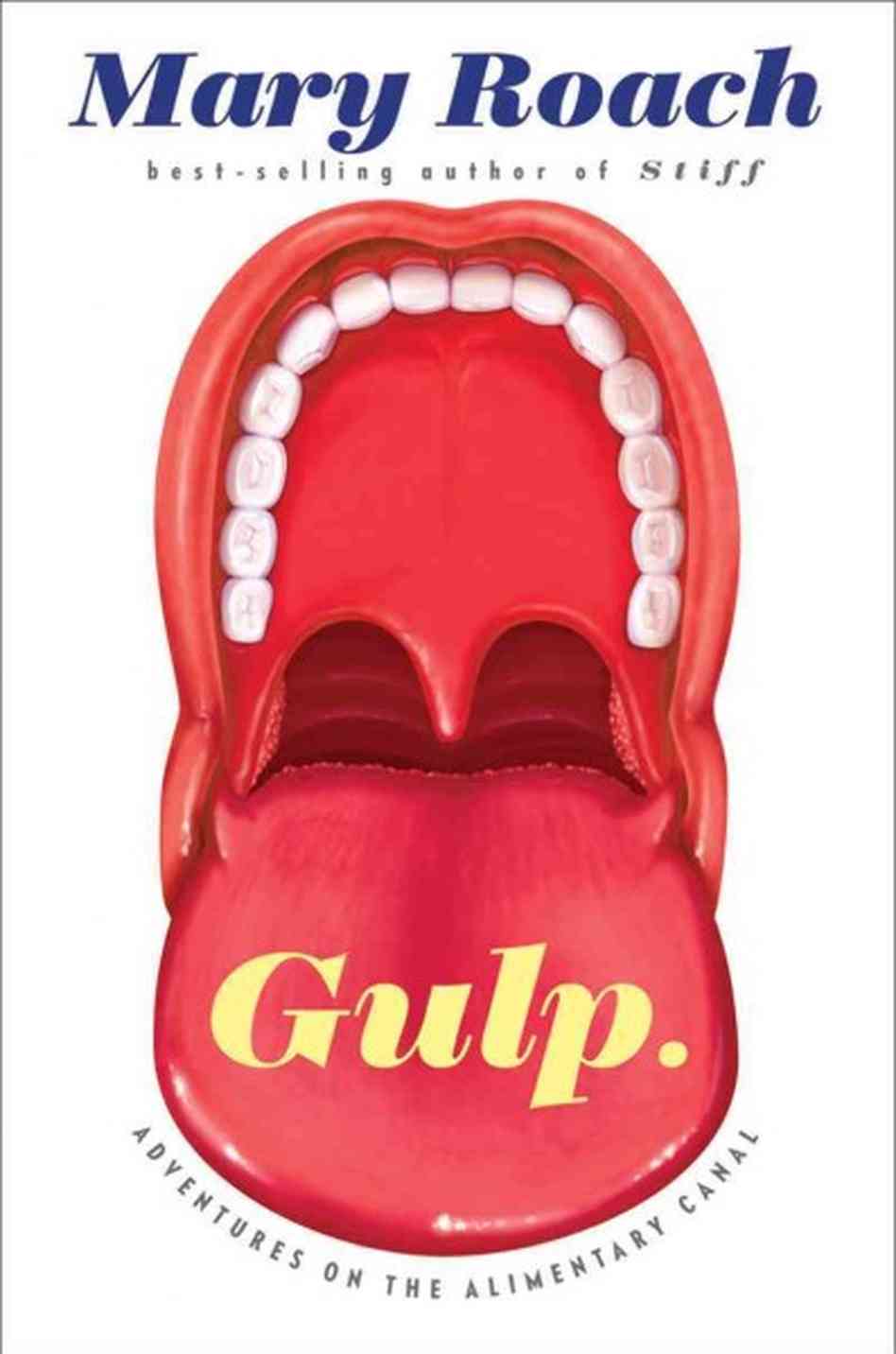
GulpMary Roach never fails to please. I first discovered her during a jaunt to my local, lamented Borders (not a weekend passes when I don’t mourn the chain’s closing anew) on an autumn evening when Spook leaped out at me (metaphorically) from the science section. I have read layperson-digestible science since I was in junior high school, having been a charter subscriber to Discover magazine. I was, therefore, amazed when I realized an author with some scientific credibility would take on the topic of ghosts. This was followed by Stiff, Bonk, Packing for Mars, and now, Gulp. The subtitle of Gulp, Adventures on the Alimentary Canal, captures the flavor of this book about eating. While some live to eat, we all eat to live, and it makes perfect sense that religion could come to shine a little light in this facet of human existence. Actually, although Roach doesn’t emphasize it, the ethics of eating has become a major interest in embodiment theology over the past few years. Food and faith, it turns out, are closely connected.

In Gulp, the one instance where religion comes into major play regards, ironically, rectal feeding. Roach points out that the question of its effectiveness had been part of discussions of fasting in the contexts of convents. Some traditions in various religions advocate denying oneself food as an act of penance or contrition. The question of whether nourishment taken without the satisfaction of eating counted, however, is one that the church took up. Characteristically not making a definitive answer, the practice mutely continues. Roach notes that clergy have been among the avowed supporters of colonic irrigation as well, making one wonder why the upper half of the alimentary canal has typically caused religions so much trouble. Of course, Roach is not writing about religion, but about eating. But still…

Religion, broken out abstractly from everything a person does, is a modern phenomenon. In fact, it is questionable whether religion can even be considered as a phenomenon of ancient societies at all since it was so thoroughly integrated into everything a person did. When priests separated themselves from laity, at least as early as ancient Sumer, the idea that one class of people could handle the requirements of the gods while the rest of us got along with the secular business of living life took hold. But religious specialists still maintained control over morals. Food, in a world of unfair distribution, will forever be an ethical issue. Instead, most religions have brought the focus down to the individual. What you eat may very well reflect your religious beliefs. Whether we feed the world or not we have, unwisely, left to politicians. As I ponder this indigestible topic, I recommend reading Gulp for a bit of relief from the serious business of the ethics of eating.


Sail Away With Me

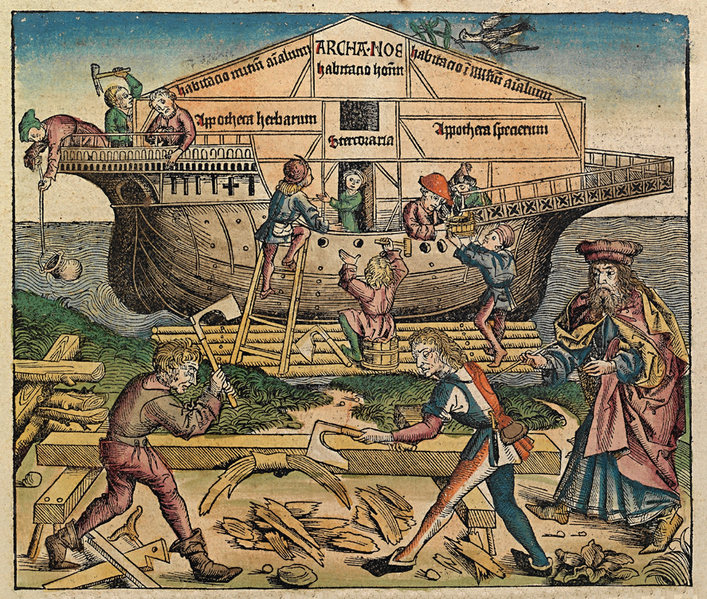
Fascination with Noah’s ark is never-ending. It represents the salvation of life in the face of deadly catastrophe, the concern of the divine for humanity, and cuddly animals we put in our children’s cribs. I suppose, however, I properly shouldn’t call it “Noah’s” ark, because the story predates Noah by some time. The Mesopotamian cultures seem to have been the original flood mythographers; more specifically, the Sumerians first gave shape to the tale. Perhaps in anticipation of his new book, Irving L. Finkel, curator of Mesopotamian artifacts at the British Museum, is quoted as saying the ark was disk-shaped. In a story that is sure to catch the attention of Ufologists, the argument is made that a newly translated text reveals the ark to have been a floating saucer. Why does Styx come to mind?

This past weekend I discovered Ancient Origins, a website purporting to give information about the ancient world. The story of the round ark appeared there recently. The author of the piece, April Holloway, suggests something that has been on some people’s minds all along—maybe the ark was real after all, but we’ve been looking for the wrong thing. Holloway doesn’t outright say that, but the article hints that this may be more than a myth. Usually the dividing line between myth and history is drawn at the biblical borders. According to those bound with faith commitments, pagan myths continue right up until Moses. Once they enter the covers of the Holy Bible they become history. We have known for decades now that the story of the ark was borrowed from other ancient cultures. We also know that the world, physically, in any case, could never be entirely flooded and come out of it looking like our world. Ours is a somewhat drier history, watered by wonderful myths.

707px-Nuremberg_chronicles_f_11r_1

Some Christian groups use the flood story as a paradigm for the rapture—the belief that Christians will be rescued, animal-like, before the worst unnatural disaster ever hits the planet. (Although “planet” may be a misnomer—no biblical writer knew that we orbited the sun on a roughly spherical rock with a molten center.) Earlier Christians saw the ark story as a metaphor for the more spiritual salvation of the faithful in a godless world. There is a strange kind of security in this story, like knowing that you don’t have to go to work for an entire week. And so we can’t let it go, even when we know it’s a myth. “I thought that they were angels, but to my surprise, we climbed aboard their starship, we headed for the skies.” We’ve done a good job polluting our planet and we want to be pulled out of this mess, like the world Wall-e’s people know, to a realm of comfort in the skies. But it is a myth after all, even if I do find myself squeezing my teddy bear and hoping against hope for a happy ending.