Nun too Soon

Following a horror franchise from the beginning is a rarity.  At least it is for me.  Now that I’ve seen The Nun II, I’m caught up on the Conjuring universe, for now.  I’ve written an article, still awaiting publication, on the Catholicism in this cinematic universe, and The Nun II has me wondering: how hard is it to find out the basics about Catholicism?  The movie is okay for big-budget horror, but not great.  The Catholicism in it feels like it’s imagined by writers who speculate on what it might be without ever, say, attending a mass to find out.  And the demon Valak isn’t exactly rank and file either.  The idea of using St. Lucy’s eyes as a relic was, however, pretty creepy.
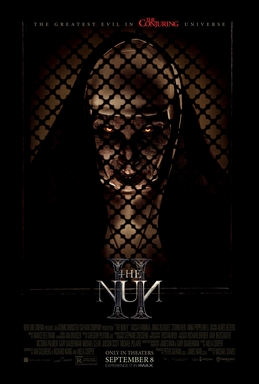
So, after The Nun, Sr. Irene has gone to a convent in Italy.  A series of bizarre clerical deaths sweeps across Europe and all the Vatican can think to do is send the one young nun who’s faced this demon before.  No priest this time because Fr. Burke is dead, rather laconically stated.  Sister Debra sneaks along and the two nuns find themselves facing a demon that immolates priests because it can’t find a relic it wants that will make it even more powerful—the eyes of St. Lucy.  Said eyes are buried in a ruined chapel in a Catholic girls’ school in Aix-en-Provence.  This is the school where Frenchie (from The Nun) now works as a handyman.  We all know he was somehow possessed at the end of that film.  The girls’ school used to be a winery and Valak is defeated when the nuns consecrate a pool of wine that banishes the demon.

At this point in time, the Conjuring universe has grossed over two billion dollars.  All of the films are explicitly religion-based horror.  Putatively in a Catholic setting, they feel like Protestants trying to guess what Catholicism must be like.  At least they feel that way to me.  The Nun sequence in particular, has demons responding to defenses that would not, in a Catholic world, work.  As much as I may disagree on the theology, nuns can’t consecrate wine.  And it turns out that Sr. Irene is a descendant of St. Lucy, one of the virgin martyrs.  Although that title is sometimes given as an honorific, it does generally mean that such saints had no progeny.  Death by thurible is fairly clever, though.  Like all the films of the franchise, The Nun II is worth watching, but it fails to convince on the religion front.  It just doesn’t feel Catholic.
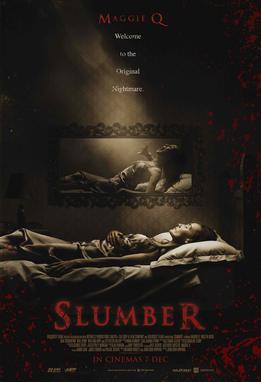

Don’t You Sleep

Sleep is pleasant but it’s such a vulnerable time.  Something deep in our animal DNA tells us to find a sheltered place to do it.  That vulnerability is compounded by demons.  So claims Slumber.  While not the most original story, it’s pretty effective for a while, but then holes begin to appear in the plot and you find it difficult not to keep asking why the problems weren’t addressed.  Let’s take a step back.  Doctor Alice Arnolds lost her younger brother to a demon when they were children.  This demon, called Mare, causes, well, nightmares.  These nightmares lead to sleepwalking and ultimately death.  As a doctor specializing in sleep disorders, Arnolds helps others scientifically.  She’s come to believe that her brother’s death was because of natural causes—the supernatural doesn’t exist.

Okay, so sleepwalking is creepy, and the idea isn’t a bad hook.  Then Arnolds meets a family of four, all of whom sleepwalk with nightmares.  The demon’s target here is their young son, who reminds Arnolds of her lost brother.  At the sleep clinic the monitors show something odd, but circumstantial evidence points to the father as the guilty party.  But here’s where the big hole appears.  Once Arnolds becomes convinced something supernatural is happening, she decides to handle it herself, at the family’s home.  Even when it’s clear they’re out of their league, nobody calls the police or even an ambulance, let alone a priest.  Instead they rely on a janitor’s father whom they’ve just met.  They try to keep the boy awake until they’re endangering his life, then they fight the demon in their dreams.  There is a kind of twist ending, and the production values are good.  

The demon, which Arnolds researches on Wikipedia, is a notsnitsa.  Why this Slavic demon targeted both her brother and the family under distress isn’t explored.  The connection is made with “the night hag”—a folkloric demon that attacks in your sleep and is generally explained as sleep paralysis.  This is not a possessing demon.  In the film it’s said to be parasitic, and the sleeping victim acts out what the demon tells it to do.  The lack of any religious tension hurts this movie.  As does that lingering question—why not call in some kind of expert?  Either sacred or secular will do!  I won’t ruin the ending of the movie, but I’ll warn those tempted to watch to come armed with a great deal of suspension of disbelief.  You’re gonna need it.


Dark House

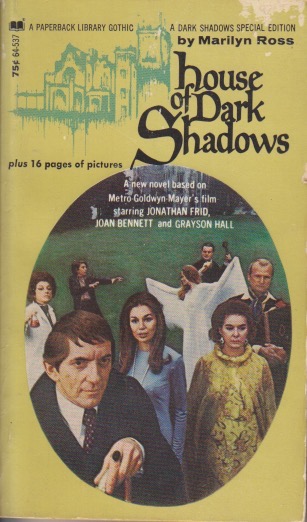
Last year I completed an odyssey that began over a decade and a half ago.  I finished reading the Dark Shadows serial novels by Marilyn Ross.  Not because they were great literature, but because they were an important part of my childhood.  Slowly, over the years, I regathered the books and read them until the whole series was done.  One of the used book sellers was offering a collection of the books, and although the collection had some duplicates of what I’d already found, it contained some of the more difficult to locate titles.  When it arrived, I found it also included House of Dark Shadows.  This novelization wasn’t part of the series, and like most things in my life, I can’t claim to know everything about Dark Shadows.  As a child I didn’t know there had been a movie, let alone a novelization.  (I bought the books as I happened to find them, at Goodwill and watched the TV show.)

In the present, I’d just finished Octavia Butler’s Parable of the Talents and felt that I needed something lighter for my next fictional project.  House of Dark Shadows proved a better read than most of the series books, perhaps because it was based on a movie script written by the screenwriters.  Marilyn Ross was actually William Edward Daniel (W. E. D.) Ross, and he wrote more than 300 novels.  His Dark Shadows oeuvre became repetitious in its dialogue, across the series.  His characters always seem to say “at once” instead of “immediately” or “right now.”  I’m pretty sure the word “mocking” appears in each of them—certainly the latter ones—multiple times.  Having the script must’ve really helped keep those trademarks to a minimum.

Of course, now that I’ve read the novelization I need to go back and watch the movie again.  It’s been almost two years and some of the details escape me.  It’s largely because the movie goes “off script” from the long-running daily show (and the other novels).  I also realized that Tim Burton’s Dark Shadows movie was really a kind of reboot of House of Dark Shadows, unfortunately screen written by Seth Grahame-Smith as a comedy.  I’m no expert on Dark Shadows, just a reasonably enthusiastic fan in search of a lost childhood.  The movie makes the premise of the series untenable—both can’t exist in the same world, so it’s kind of a Dark Shadows multiverse, rather than a simple universe.  And it’s very complex.  I’d need to start again at childhood to become an expert in it, but at least now I’ve read all the books.


Sequel Pondering

Of course I’m working on another book.  I can’t say what it is at the moment, but one of the projects I’ve long been contemplating is a kind of sequel to Holy Horror.  The problem is that if the first book didn’t sell very well (the premise is perhaps too academic), a sequel couldn’t be expected to do any better.  I’m still working on sloughing that academy skin.  But I keep watching what we insist on calling “horror” and the more I do, the more I find the Bible in it.  Others have taken up the gauntlet—mostly academics who have jobs that encourage such behavior—of connecting horror and religion.  The Bible’s role, while a subset of the larger field, has its own particular parameters.  In one of my notebooks I have a list of 23 movies to add to my analysis.  I know that there is a twenty-fourth, but it’s only streaming on an exclusive service and still costs a bit too much for something that doesn’t come with a plastic case.

In any case, Holy Horror just scratched the surface.  One of the factors I’ve mentioned before is that there is no database of the Bible’s appearances in film.  It would be an extensive list altogether, and a substantial number of horror films would be on it.  In general, it seems, people really aren’t too interested or intrigued by this fact.  I certainly am.  Our society is a curious mix of sweet and salty.  We want to think we’re too sophisticated for religion, but religion undergirds just about everything we do.  Otherwise it’s pretty difficult to explain how the Bible keeps showing up in horror.  Usually as a mysterious artifact.

I recently saw myself referred to as a biblical scholar.  There’s no doubt that I taught biblical studies for many years.  I even wrote a book interpreting one aspect of the Good Book.  My degree, and my interest, however, has always been historical.  I follow this history of ideas.  Although many people don’t understand my current horror fascination, it’s clear this is another jog down a trail of history.  How did we get to the point that a totemic (the scholarly phrase is “iconic”) Bible became a stand-in for God in movies?  I’m not sure I’ll ever be able to write Holy Sequel, although, if my profession ever permitted it, I’d certainly have the interest in doing so.  There’s a lot to be learned from such explorations.  That’s true even if the books containing the information only appear on a few dusty library shelves.


Through the Woods

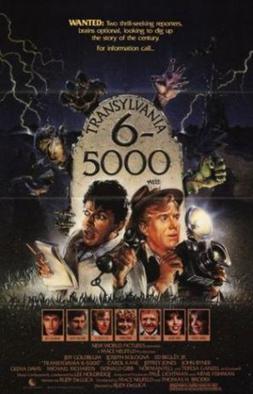
The thing about appreciating bad movies is that it’s difficult to be disappointed.  On a recent weekend I’d watched a horror film that didn’t sit well with me (or maybe it was the last night’s supper), and I decided I needed to see something else.  Something that was free on my streaming service.  I’d read about Transylvania 6-5000 someplace, but I couldn’t remember where.  The list of stars won me over: Jeff Goldblum, Ed Begley Jr., Jeffrey Jones, Geena Davis, Michael Richards—why don’t more people talk about it?  Because even for a comedy it has trouble working.  Well, a horror comedy, to be precise.  Emphasis on the comedy, which tries too hard.  I couldn’t get over the fact that this was a tall guy movie—Goldblum, Begley, Jones, and Richards are all over six feet tall.  Usually other actors literally have to look up to them.

Even though it’s a groaner, it’s not without worth.  It was filmed in what used to be Yugoslavia when it was rare for anything to come from behind the Iron Curtain.  Set in Transylvania, it wasn’t too far off.  (Transylvania is located in Romania, of course.)  Some of the performances aren’t bad, Davis’ vampire nods to Frank-N-Furter in Rocky Horror, and Carol Kane is fun to watch as Lupi.  The male roles are generally the problem.  In case you’re wondering, the plot is that two reporters—Goldblum and Begley—are sent to Transylvania to find a story.  The locals laugh at them, insisting Transylvania’s a modern country with no monsters.

When the classic monsters do appear, they all have rational explanations.  There are riffs off vampires, werewolves, Frankenstein’s monster, swamp monsters, and the mummy.  There’s even a mad scientist.  The problem is the movie really doesn’t give itself over to either comedy or horror.  There are ways to make that combination work.  And, as with C.H.U.D., the title put me off.  I didn’t know until reading about it later that it was also a riff, but from the Glenn Miller song “Pennsylvania 6-5000.”  I’d never heard the song before and was unfamiliar with its title.  Rudy De Luca, the director, had worked with Mel Brooks and perhaps if they’d collaborated on this one the results might’ve been better.  So, it’s a bad movie.  That doesn’t mean it isn’t worth watching.  Movies like this sometimes serve as an homage to the monsters with whom we grew up, and who even met Abbott and Costello in their own lifetimes.  Just be prepared not to take it too seriously and not to laugh too much.


Sinful Thoughts

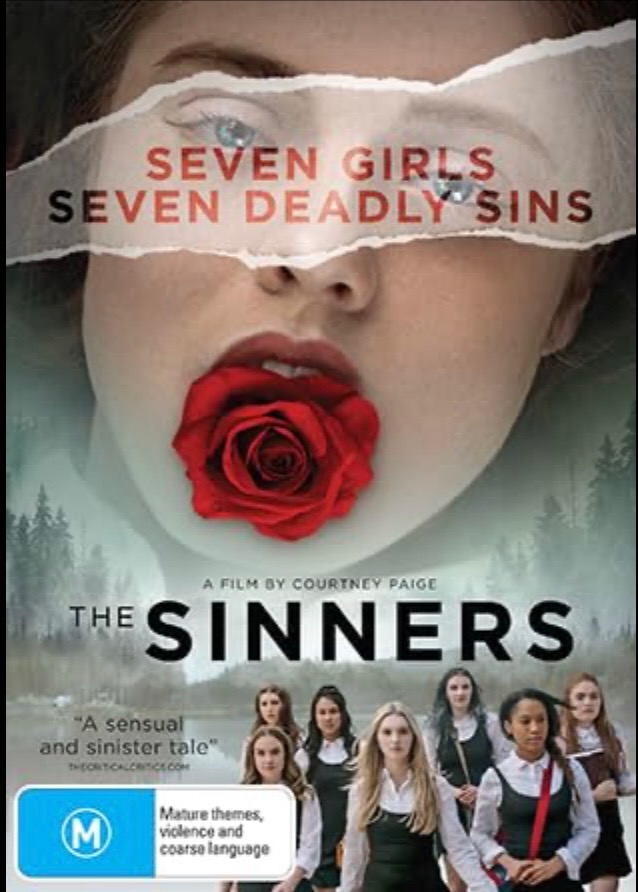
The driving force behind Holy Horror is the fact that the Bible appears in lots of horror movies.  More than might be expected.  Although I’ve moved on to other projects, I still keep an eye out.  There may not be time or opportunity in my life to write a sequel, but you can’t unnotice the Bible in The Sinners.  The title drew me in, as did its free status on Amazon Prime.  It’s a Bible-based flick, for sure, but even the basic description gets religion wrong.  I generally like movies by female directors, and this one was a project of Courtney Paige whose name, for some reason, sounds strangely familiar.  In any case, one of the biggest blunders movies like this make is that the religion doesn’t hang together.  Of course, it doesn’t say what variety of Christianity it is, but it’s of the literalist stripe.

Seven alpha females at a Christian school in a Christian community form a clique in which they’re each characterized by one of the seven deadly sins.  They’re lead by the pastor’s daughter, of course.  One of the girls keeps a journal in which she confides that she confessed their activities to the pastor.  The betrayed girls decide to scare the offender but she escapes when they’re intimidating her.  She’s found dead but then the other sinners start being murdered.  The police aren’t really effective and the girls try to figure out who’s behind this.  I won’t say who but I will say that it doesn’t really make much sense.  Scenes jump around and characters appear with little or no introduction—it’s disorienting.  But that religion…

I know enough PKs (preacher’s kids) to know they often aren’t as innocent as dad thinks (and it’s generally dad).  I also know that forced conformity of religion builds resentment and resistance.  But there’s something wrong here.  The pastor drinks wine.  Even the truly religious girls drop f-bombs.  One even attends a Satanist meeting with no explanation.  The pastor’s wife is having an affair.  The school librarian has sex with her husband at the school between classes.  They can all quote scripture, and often do.  What religion is this?  I couldn’t really engage with the movie because there were too many distracting religious gaffs.  Hey, I don’t mind when movies show the problems with religions—they’re fair game for commentary, after all.  But if you’re going to do it, try to understand the mindset of the religion you’re criticizing.  There’s a lot to think about in this movie, and it really isn’t that bad.  But for those who know religion there’ll be some question of which it is that’s under fire.  If I ever get back to Holy Horror I’ll say more.


Demonic Night

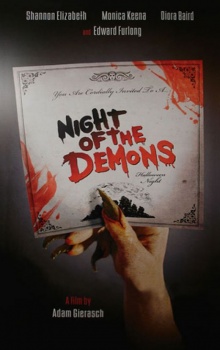
There’s a type of film—I don’t have the vocabulary for it—where the action is loud, brash, and in-your-face.  Colors are often lurid and, in horror, gross sounds are emphasized.  I’m not sure what it’s called, but it’s the style used with Night of the Demons.  I didn’t realize until after I’d seen it that it was a remake of an earlier film by the same name.  The one I saw was the 2009 version.  I’d just finished a book about demons, and I was looking over Amazon Prime and what I could watch without spending any more money.  Well, I did learn something.  But first, a little plot reveal: a group of friends are going to a Halloween party in a haunted mansion.  Mainly they’re looking for controlled substances and uninhibited sex.  The party hostess has rented said haunted mansion for the night.

Once they get there the final girl, Maddie (and you can tell from the beginning that she’ll be the final girl) starts to realize that there seem to be supernatural forces at play.  The cops show up and break up the rave, but seven kids remain behind since they’ve been locked in.  They find a hidden room where the bodies of six previous victims have decomposed.  This leads to the possession of the woman hosting the group and these demons are transferred either by bite or sex—they are sexually transmitted demons.  So, naturally, all the friends except the final girl fall victim.  These demons dissolve in the sunlight unless they get seven victims, so when Maddie makes it through Halloween night, the demons are defeated.

What makes this moving interesting is the type of demons on show.  These seven demons are so bad that they’ve been kicked out of Hell—they don’t follow the rules.  This made me think.  Logically, no demons in Hell follow the rules.  The root of the word “pandemonium” means “all demons.”  If none of them obey rules, how can any be kicked out for breaking rules?  Laws and rules are what preserve any civilization.  Those who use their money and power to flaunt the law are, in their own way, demonic.  These demons are kept at bay by spells written on the walls of one room in the house.  Those rules they must obey.  Is this a parable about free will?  It doesn’t seem sophisticated enough for that.  Night of the Demons is one of those fast, loud, lurid movies that need a monster.  Demons, which have no basic form, seem to be purpose made to fill such gaps.


Tall and Slender

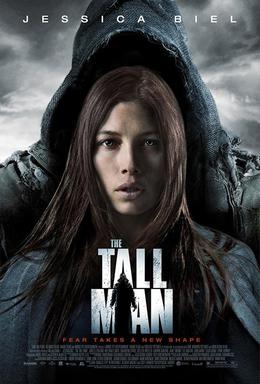
At first I thought she was mistaken.  A friend mentioned, in a litany of horror films, The Tall Man.  I thought she meant The Slender Man.  Then I saw an online post that referenced The Tall Man and I grew curious.  That curiosity almost cost me my lunch.  Not for the reasons you might assume, but because The Tall Man’s one of those movies that seems to think the camera has to be in constant motion.  I have an inner ear condition that makes me extremely susceptible to motion sickness.  It happens even if I watch train cars passing (which is, indeed, one of the images with which the movie starts).  I kept telling myself, give it a few more minutes, maybe they’ll buy a tripod.  I’m glad I stayed with it because it was inspired by the Slender Man urban legend.  Later, The Slender Man was made into a movie, perhaps inspired by The Tall Man.

Although horror, this probably isn’t what you think.  The reason I was glad that I stuck with it is that, although confusing, it has a good message and everything becomes clear at the very end.  Director misdirection is very common, of course, but this one worked on me.  There’ll be spoilers here—so you’re warned.  The common thread behind both Tall and Slender is missing children.  Some mythical or folkloristic creature snatches them away.  There’s no supernatural in this movie.  It revolves around a widowed nurse in a dying town, Cold Rock, Washington.  The children are suffering and the nurse wants them to live a better life.  Here’s a spoiler—read no further unless you want the ending ruined.  I’m serious.  The next paragraph will spill the beans!

Her husband isn’t really dead.  Working together they kidnap working class children and get them to loving, caring, affluent families.  There’s a ton of social commentary in this film.  As the nurse explains, the system is broken.  Too many children are left to suffer and the only way to break the cycle is to break the rules.  The appearance of William B. Davis made me think X-Files, but his role here is a straight-up sheriff.  There is no “Tall Man,” just like there is no Slender Man, but legends do take on lives of their own.  This isn’t one of my favorite movies, but it is better than I was led to believe.  And having a social conscience, while not rare, is always a good thing to see in a horror movie.  If only they could keep the camera still.


Cinematic Demons

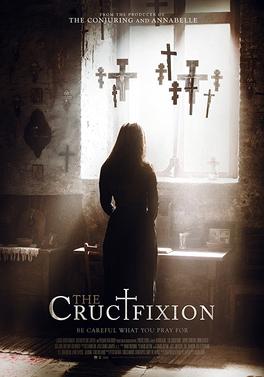
It was because I read The Exorcist Effect.  I realize that there are lots of movies that I could’ve watched for Nightmares with the Bible, but with limited time, limited budget, and limited social contact, I made choices without all the data.  I guess no one ever has all the data, really.  In any case, I could’ve discussed The Crucifixion.  I’ve been taking a bit of a break from exorcism movies, but since this one was based on a true story I’d not heard before Exorcist Effect, I decided to give it a go.  Although highly fictionalized, the movie crew did pick up on significant details from the case of Maricica Irina Cornici, who died after an exorcism in Romania.  The framing story is that of Nicole Rawlins, a journalist who wants to learn the truth.

In fact, the story is really about how Rawlins comes to faith after confronting the demon Agares.  Rawlins has guilt over being an atheist, unable to convince her dying mother to try new treatment and then by letting her die with the knowledge that her daughter has no faith.  In Romania Rawlins drives around a lot and, in one of the most difficult to accept aspects, everyone freely gives information.  Sister Adelina Marinescu, the victim, we’re led to believe, picked up a sexually transmitted demon in Germany.  Her brother, and friends, even the bishop, all freely share their opinions.  Rawlins develops a crush on the local priest, Fr. Anton.  He wants her to regain faith since, as an atheist, she’s an easy target with a demon on the loose.

It turns out that the demon was actually transmitted from a possessed priest, who got it from a possessed farmer.  It then passed to Sister Adelina and from her to Rawlins.  Her possession becomes apparent on the farm of the original possessed man and Fr. Anton performs an unplanned exorcism to save Rawlins from the same fate as Sister Adelina.  Rawlins comes to believe; she saw her mother during a brief moment when, it’s implied, Nicole died.  The film has a rather convoluted plot and many scenes where logic seems to break down, but it is certainly a passable horror film.  Rawlins earns sympathy as the lead, and the Romanian setting is a nice (if historical) touch.  The local festival “like Halloween” adds intrigue.  The movie didn’t rock the critics, but it seems like it works for what it is.  And if I even write a follow-up to Nightmares, it will definitely be included.


Revisiting the Zone

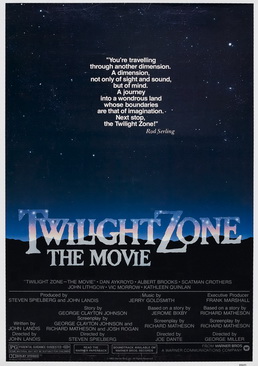
Like many people in the early eighties, I heard about the terrifying accident that killed Vic Morrow, Myca Dinh Le, and Renee Shin-Yi Chen during the filming of Twilight Zone: The Movie.  Because of that I steered away from ever seeing it.  I grew up loving The Twilight Zone, and I was probably enough of a self-assured critic at twenty to suppose the movie would never have been as good as the original series had been.  Still, it didn’t leave my consciousness.  Not entirely.  There have been a couple of television reboots of the series—most recently by Jordan Peele—and it seems that those of the present day still see the cultural value in the original.  Peele’s relaunch, although short-lived, brought the movie back to mind and I finally decided to watch it when I learned that one of the segments was based on “Nightmare at 20,000 Feet,” given my recent gremlin kick.

I knew the film was an anthology and those are always dicey.  I also knew I’d be watching an actor in his final role—the scene in which he and the children actually died was not used in the movie, of course.  I didn’t realize how many stars were in the cast, and I didn’t even know what the other three episodes were.  Critics (paid and un) have opined that the episodes increase in appeal as the movie progresses, and the opening segment has been hailed as one of the scariest introductions among films.  So some forty years after it released I watched it.  I actually found it to be largely in the spirit of Rod Serling.  I don’t know what he would’ve thought of the movie, but it seems to have continued his message.  The first segment, the one in which Morrow starred, wasn’t based on a single original Twilight Zone episode as the other three were.  A few “Easter eggs” exist for fans, such as Burgess Meredith narrating and Helen Foley saying she’s headed to Willoughby on the remake of “It’s a Good Life.”  No doubt, “It’s a Good Life” and “Nightmare at 20,000 Feet” are among the most famous of the episodes in the series.

Part of me is surprised that the film was released at all.  Deaths have occurred, of course, in the making of other movies.  Some in which millions of dollars had already been invested.  Still, watching a final performance like this has a haunted quality to it.  At times it seems that acting can be a dangerous profession.  And certain movies may always be difficult to watch because of it. But should we expect anything different from this Twilight Zone in which we live?


Loving Vampires

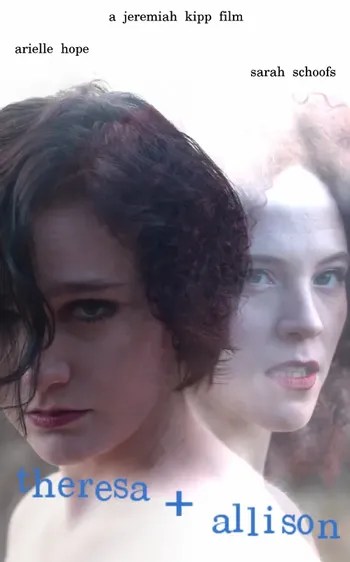
Vampires caught my attention early in life.  I believe, apart from ghosts, that they were the first monsters I learned about.  Apart from the fangs and perhaps an ironically anemic look, they appear to be just like us.  I’ve seen a great number of vampire movies over the years—I can’t seem to resist them.  I don’t care for the blood and gore, but the idea of the conflicted undead is a powerful draw.  It’s this conflicted aspect that brought Theresa & Allison to my vampire radar.  This movie is not for the squeamish, and I have to say up front that it is a lesbian vampire movie, with all that that implies.  You have been warned.  Theresa & Allison is also an indie movie—I’ve been watching quite a few of these lately because they’re often free.  This one is also smart and fairly original and it explores humanitarian concerns as well as vampiric ones.

Said Teresa is “made” when a drunken vampire (they get drunk when their victims are inebriated) decides to turn her (make her into a vampire).  She soon learns that vampires are organized and sanctioned by the government, and there are rules to be followed.  Also, some of the standards for vampire lore, we’re told, are male bovine droppings.   Teresa was lesbian before she was turned, and she’s befriended by fellow vampire Allison.  We learn that two major vampire “families” range about New York City—one graceful and kind, the other brutal and unfeeling.  Teresa has real trouble killing people for blood and she’s confused about what she’s become.  She doesn’t know what to make of it when the kinder vampires offer to let her join.  Instead, she follows Allison and finds herself in a blood-drenched nightmare.

Vampire movies are often full of social commentary.  Especially the spate of movies made available by independent auteurs.  Theresa & Allison asks the question of what makes something right or wrong.  It also explores what it means to accept who or what you are while also having the ability to change some aspects of it.  It reflects, it seems to me, the moral landscape of the young.  In that respect, it makes sense that those of us from older generations (let’s not kid ourselves) may have been raised with very different standards.  Culture, however, has continued to evolve.  The internet sped all of that up immensely.  Still, the acceptance aspect of the young is written all over movies like this.  And the internet means there will undoubtedly be more to come.  Vampires are sure getting interesting.


Christmas Monsters

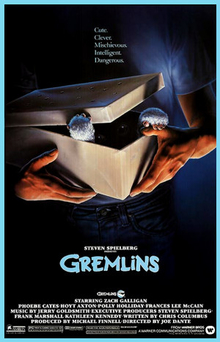
Gremlins holds up pretty well with the years.  My renewed interest was sparked by holiday horror—I had last seen the movie in a theater in 1984, when it came out.  Having grown used to CGI, I was surprised to re-learn that the gremlins were puppets but that it was so obvious was also a surprise.  Although comedy horror, or horror comedy, had been around for years at that point, as critics pointed out, the contrast here was stark.  This could be a kid’s movie (and was one of the reasons behind the shortly new PG-13 rating) but the nasty gremlins could be unexpectedly brutal.  I’d forgotten that Billy’s mother was so effective—killing a gremlin in a blender and another in a microwave.  The story has been retold and/or parodied often enough that a summary isn’t necessary, but given my recent interest in both gremlins and holiday horror, it’s worth a few moments’ reflection.

Holiday horror is more than a scary movie that happens to occur on a holiday.  In my definition, the horror has to derive from the holiday itself.  In Gremlins the gift of Gizmo is based on the fact that it’s Christmas, otherwise Rand wouldn’t have been looking for a gift for his son, starting the whole chain of events.  More than that, the reason I didn’t go back to the movie again in my college and grad school years was the story Kate tells about her father on Christmas.  Like some parents, I felt like what was a fun little story was a bit too distressing given the holiday setting.  Would the story have worked set at a different time of year—remember, it was released in summer—with the commentary that it makes about consumer culture?  No, this had to be a Christmas movie and the fear comes from that fact.

The gremlins are given minimal backstory here, although Murray Futterman tells Billy and Kate  that gremlins come from foreign merchandise and they tinker with machines.  Gremlins had been used in horror before, and given that the canon of classic movie monsters was being set from the thirties through the fifties (gremlins appeared as monsters as early as the forties) they fit right in.  They’re inspired monsters.  People naturally feel vulnerable on planes and monsters in the atmosphere can be particularly frightening.  And the fact that technology frequently malfunctions, well, wouldn’t it be nice to have a monster to blame?  Reading up on the movie made me curious to see the sequel, which, it seems wasn’t too badly received.  I’m glad to have used a small portion of the holiday season to have refreshed my memory.


Dryad?

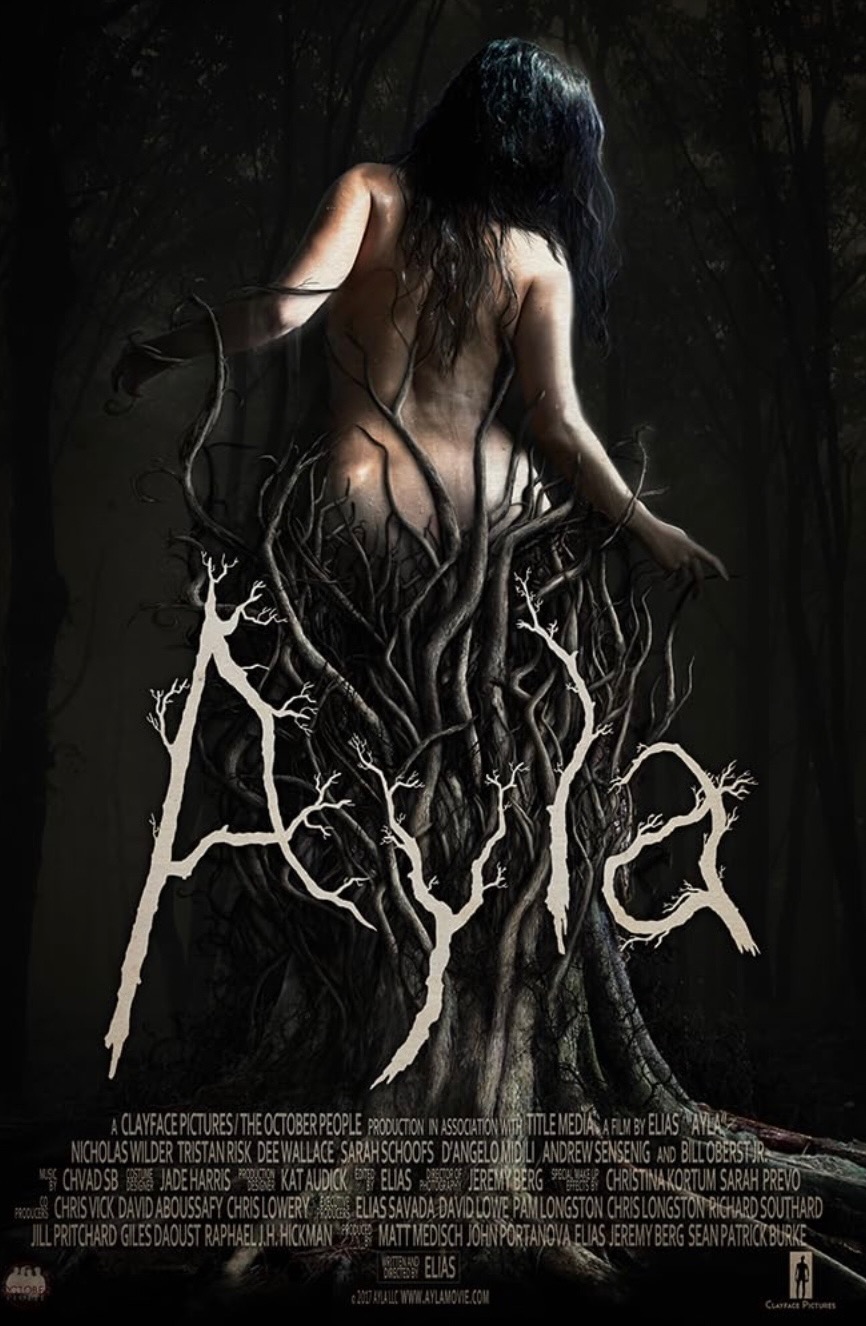
There are so many movies out there.  The prudent horror fan knows not to be nickeled and dimed to death by renting/buying everything available, so you stick with a streaming service and take what they offer.  That’s how I find many of the movies I discuss on this blog.  It’s how I found Ayla.  You won’t find much information on this indie, art-house horror beyond IMDb, and it doesn’t say much.  Although the ratings are low the premise is good and it is beautifully filmed.  It is a little weird, though.  Elton, a mentally disturbed man, has never gotten over the death of his sister when she was four.  He supports himself by working in a bookstore and has a regular girlfriend, Alex, but he hasn’t let his sister go.  Going to a remote, dilapidated house that Alex showed him, he digs under a tree until he finds an adult Ayla.

Ayla’s alive but she doesn’t talk and can’t tolerate solid food.  She seems to be part of the tree where Elton found her.  His brother and mother tell him this woman isn’t his sister.  Alex, who lost a brother when she was a child, doesn’t say whether Ayla’s Elton’s sister or not.  Accepting that this woman now lives with him, she’s just not sure if the dead do come back.  Elton quits his job and tries to move home with his mother, but it doesn’t work out.  While driving at night, Ayla, ahem, distracts him, and his car hits a tree.  Elton understands that Ayla has returned to the tree and begins digging for her, but doesn’t find her.  Alex finds evidence that Elton has begun to turn into whatever it was “Ayla” is.

Apart from being a study of grief—very much like A Ghost Story in that way—Ayla also explores mental illness and incest.  This is done with a high degree of artistry, however.  Those who rate the movie poorly probably haven’t considered metaphors much.  To me, there’s a lot going on in this film.  It’s the kind of movie where you want to talk to somebody about it after it’s over.  Was Ayla really a dryad?  She’s found in a nymph (insect variety) state and quickly transforms to, apparently, Elton’s missing sister.  Meanwhile, his family doesn’t give him the affirmation he requires.  Metaphorically, it seems, like Outpost, to be a movie about dealing with trauma.  Such films are well worth watching and pondering.  And they make me thankful for streaming services that occasionally bring good, if obscure, movies to light.


Ushering In the New

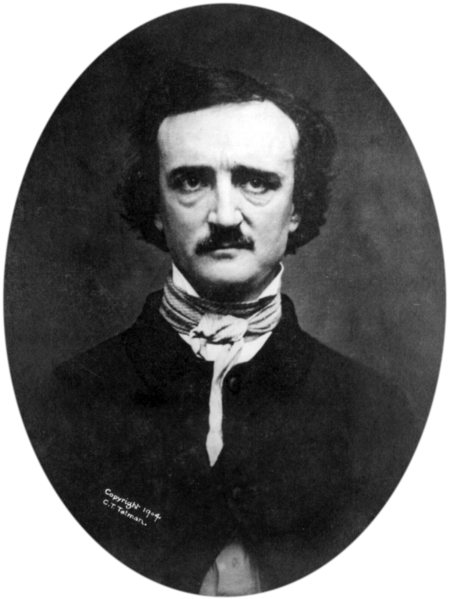
I’m not at all certain I’ll finish it, but at my daughter’s suggestion I watched the first episode of Netflix’s new series, The Fall of the House of Usher.  This isn’t set in Poe’s day.  The action is in the present and it opens with a funeral for three of Roderick Usher’s children.  What’s particularly striking about this funeral is that the priest’s homily is composed of lines from Poe.  I think we all know that Poe is undergoing a great surge of popularity these days, but this series seems not content just to name characters and companies after Poe’s names, but it also weaves his thought deeply into the fabric.  It uses his images in literal ways that add depth to the plot.  I’m not sure that I can spare the time to watch it the whole way through, but I’m sorely tempted to do so.

With C. August Dupin as the Assistant District Attorney, the series ties Poe’s ratiocination stories in with his horror tales.  Like most recent media efforts, the cast reflects diversity in many ways.  This diversity isn’t the reason the house of Usher is falling, but it’s because of disloyalty.  The family owns an unscrupulous company that has shown disregard for the suffering it causes, buying its way out of legal difficulties.  (This part is quite realistic and one can’t help but to think of Trump and others like him who simply buy injustice.)  But someone in the Usher family has decided to speak out.  Dupin won’t reveal who it is, so Roderick and Madeline Usher put the family up to the task of rooting out, and killing, the informant.

Perhaps with some time off over the holidays I’ll be able to catch more of the series.  It intrigues me, however, that Poe is being used essentially as scripture.  Literally.  The priest’s homily fades into the background as the surviving family members check in on each other, but his words are drawn from a variety of Poe’s writings.  I’ve long felt that our canon of scripture is too small.  Inspired literature did not cease to be written in the second century.  As someone who has listened, and still listens to sermons, it’s clear that the Bible alone isn’t a source for knowledge.  I haven’t read all of Poe—he left a massive paper trail through his life—but what I’ve read sticks with me and hearing him as sermon material makes me think I need to try to find time in coming weeks to pick up another episode or two.


Christmas Silence

Christmas seems to have come too fast and not fast enough this year.  Like Halloween, it’s one of those long anticipation holidays.  The older I get, the more I appreciate the silence about it.  Not in a Grinch-like way, I hope.  More along the lines of “Silent Night.”  We spend so much of the year—so much of our lives—hustling about, barely having time to think.  Speaking personally, it takes about a week off work just to begin to get to that phase.  I need time to let the daily onslaught of work and capitalism and angst tune down.  There’s a quietness about Christmas that’s profound.  I suppose that’s why I like to spend it with my small family and not feeling obligated to go anywhere.  It’s like those precious moments before sunrise that I experience daily, only all day long.  That’s truly a gift.

The newspapers and internet sites have been summarizing the year for the last couple of weeks.  That always seems premature to me.  I understand why they do it, but Christmas and the days following are some of the very best of the year, and it makes sense to include those along with the stress, darkness, and ugliness that are the daily headlines.  I can’t help but think of Simon and Garfunkel’s “7 O’Clock News/Silent Night.”  Especially this year.  Christmas is for everyone, and the insistence that we make it exclusive (putting Christ back into it) makes it divisive.  Why some people have to be right all the time I don’t know.  I prefer Hamilton Wright Mabie’s take: “Blessed is the season which engages the whole world in a conspiracy of love.”  Simon and Garfunkel are both Jewish and I think they understood “Silent Night” better than many Christians did back in 1966.

I’ve been writing quite a lot about horror movies this year.  The months and days leading up to Christmas have often been difficult ones.  Such movies are therapy.  They can even fit into the beautiful silence of this day.  That’s my hope, anyway.  May this day include enough silence for you.  The rest of the year has no difficulty filling itself with trouble.  We need holidays.  Christmas has always struck me as the most peaceful of them all.  Ministers, and even those of us who never made the cut, tend to be holiday experts.  Those who don’t get caught up in the dogmatism of it all are the most blessed.  Christmas is for everyone.  And may it be peaceful this year.