Shadowy Clouds

Okay, so it had Chloë Grace Moretz in it, and her face is on the cover of Holy Horror.  And it was tagged as action horror.  And apart from many highly improbable situations, Shadow in the Cloud is a perfectly serviceable movie.  Part “Nightmare at 20,000 Feet,” part Aliens, and part Indiana Jones and the Last Crusade, with any generic war movie thrown in, the movie is fun and a tribute to indy productions.  The plot is, admittedly, convoluted.  Moretz’s character (“Maude Garrett”) is a pilot officer who comes aboard a B-17 on a top secret mission.  She has a high priority parcel that must be kept safe.  The all-male crew use just about every sexist trope in the book but one of the crew takes her seriously.  While in the ball turret, she spies a gremlin.

This is a real gremlin, as implied in “Nightmare at 20,000 Feet.”  Set in World War II, the film has other threats.  Japanese Zeros find them and a dogfight begins.  In the meanwhile it’s revealed that the one crew member who doesn’t dismiss “Garrett” had an affair with her and the secret parcel is actually their infant son.  Meanwhile, the gremlin and the Zeros keep up their attacks, killing several of the crew, including the pilot.  Maude takes charge, and oversees the crash landing of the bomber and when the gremlin, still angry at being shot and hacked by her, steals the baby.  This leads Maude to beat the gremlin to death with her bare hands.  Improbably, both her lover and baby survive intact, along with two other not too bad crew members.

The film manages to be pretty heavy on social commentary, and even shows archival footage of women in various Air Force roles during the closing credits.  The production values and the message are what really save this from being a bad movie.  I mean, this entire mission would’ve ended with everyone dead if not for Maude, driven by maternal instinct, keeping her baby alive.  She’s a pilot, a dedicated mother, an acrobat, and, if you’ll pardon the expression, a total badass.  The film is kind of a tribute to women who served in the military despite the innate sexism of the period.  And it has a monster, so what’s not to like?  From the first few minutes on there’s nothing really believable in the plot, but a woman leading the way, both as the star and as her character, is reason enough to pay attention.


Flights of Horror

I’m never quite sure where to put him. Alfred Hitchcock, that is. Part of the problem is that “horror” is a very slippery genre. Most people classify much of Hitchcock’s work in the “thriller” genre, wanting to avoid the disrespectful older cousin, horror. I recently rewatched The Birds, a movie I first saw in college. You see, Hitchcock is an auteur demanding respect (never mind that many horror directors are highly educated and sophisticated). Even dainty colleges like Grove City considered him worthy of students’ attention. But while watching the extras it became clear that other horror directors considered The Birds horror, or, as they put it, Hitchcock’s monster movie. With its famously ambiguous ending, the film is still a frightening experience. And yet we consider it safe, because it’s Hitchcock.

I think about this quite a lot.  Even in Holy Horror I wondered whether including Psycho was fair game.  There’s no doubt that the remake is horror, and Robert Bloch, the author, was a horror writer and friend of H. P. Lovecraft.  But Psycho is Hitchcock.  Doesn’t that make it more respectable than mere horror?  Horror is often defined as being, or having, monsters.  That’s a bit simplistic in my book, but it is workable.  Pirates of the Caribbean movies all have monsters in them, but they’re blockbuster adventures.  Have the monsters deserted horror?  Or maybe is it that we have an ill-fitting genre title that we just don’t know what to do with?

The Birds is a scary movie.  Animals mass and attack, with the intent to kill.  Daphne du Maurier wasn’t really considered a horror writer, but her books and stories were adapted into horror films.  Like Hitchcock, she’s often considered above mere horror.  It seems that we’re being a bit dishonest here.  Why are we so afraid of horror?  The category, I mean.  Perhaps because the slashers—which Psycho kinda initiated—gave horror a bad rap.  Too much blood.  But there’s blood in The Birds.  Is it the mindless desire to kill?  Just ask the residents of Bodega Bay after the fire broke out.  It seems we have a real prejudice on our hands.  Horror grew up on the wrong side of the tracks and there’s nothing that can be done to make it respectable.  Horror fans object to recent attempts to call certain films “elevated horror” or “intelligent horror.”  Those who use terms like this sometimes imply that the rest of it is, well, for the birds.  It’s time, perhaps, for a new category.


Not Handel’s Messiah

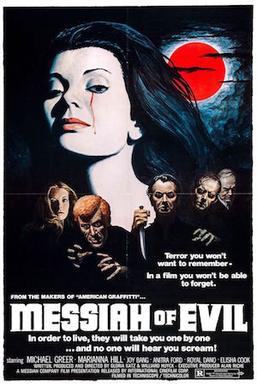
It’s polarizing.  Even now, nearing fifty, Messiah of Evil is either adored or excoriated.  So it was at its release.  I was pointed to the movie by an adorer—a somewhat unexpected New York Times seasonal article.  Suggesting that there’s nothing else like it, the article recommended it for autumnal viewing.  So, what’s it all about?  I’m not really sure, but that won’t stop me from trying.  Arletty is a young woman who wants to find her father (with you so far).  He’s moved to New Bethlehem, California, now known as Port Dome.  She finds his house abandoned, and the locals decidedly unfriendly.  Her father’s diary explains that he’s transforming into something inhuman.  The locals are cannibals, it turns out, awaiting the return of, well, the messiah of evil.  (The title is never used in the movie.)

Although I learn more towards the excoriating opinion of things, this is a great horror and religion film.  The original messiah of evil was a preacher stranded with the Donner party.  He started a new religion and, wanting to spread it, went to California.  Now, whenever a blood moon comes, he arises from the sea and his followers become aggressive.  The movie is set a century following this first appearance, and the dark master is due to return.  His followers await him on the beach, and Arletty is their intended sacrifice.  Elements of Lovecraft are clearly evident—people transforming, old gods, evil emerging from the ocean.  Yet, there are many things unexplained.  Or maybe I’m just naive.

The male lead, Thom, travels with a mini-harem.  He’s in Port Dume because he likes to gather folktales—like the blood moon—and he likes Arletty’s father’s art and came to buy some locally.  The movie features a blind art dealer, cops who apparently know nothing about the infestation of ghouls in their town, and a guy who could drive away from the attacking hordes who decides to run instead.  The directors (Willard Huyck and Gloria Katz) were a talented couple, but this wasn’t their best collaboration.  Still, many recommend this as an overlooked horror gem from decades ago.  Others not so much.  I’m glad to have seen it, although I fall into the latter camp.  Mainly because it continues a theme that I’ve tried to pick up at several points on this blog—that horror and religion have a great deal in common.  Even if one (or both) shows its age and fails to impress.


Reflecting Thanksgiving

Thanksgiving, the newest holiday horror movie, was released last Friday.  No, I haven’t seen it—I barely have time to do whatever it is that I do normally.  I suspect, however, that many will object because Thanksgiving is still a quasi-religious holiday.  If we’re giving thanks we must be giving it to someone, or something, that may or may not govern our lives.  Ironically, in many business calendars it is the only annual four-day weekend.  Christmas could come on a Wednesday, so we can’t go giving time away!  Ironically, Thanksgiving was fixed as the fourth Thursday of November (moved from the last Thursday) to ensure about four weeks of shopping time before Christmas.  Me?  I’m just glad to have a couple days off.  2023 has been a challenging year on a personal level and having a couple days out of the office is just what the doctor prescribed.

Photo by Priscilla Du Preez on Unsplash

It may seem strange to be thankful for horror movies, but I know I’m not the only person whom they help.  I also believe that the genre has been misnamed.  When you think of all the different kinds of films that get lumped under the moniker it really is odd that we have any idea at all what we’re talking about.  What are horror movies, then?  The common equation with slashers is patently wrong.  There’s nothing slash-like in the old Universal monster movies that started the whole thing.  Time and again critics point out that “horror” is generally intelligent, and often funny.  And not infrequently therapeutic.  Yet it has a bad name.  Some even consider it satanic although it produces good.  Being satanic is a matter of how you look at things.

Thanksgiving is a time for reflection.  Reflection without the distraction of work constantly trying to poke holes through our concentration.  The holiday season properly starts at Halloween and sadly ends at New Year.  It’s our reward for having made it through another one.  The holidays that fall into this season all have a great deal in common.  Early Americans celebrated Independence Day, Thanksgiving, and sometimes Christmas and New Years.  We’ve reached the point now where we have a distinctive string of holidays like stones across a rushing river.  We can just make it from one to the next.  From Halloween we can see to Thanksgiving.  From today Christmas is on the near horizon.  New Years follows only a week after.  And it’s a time for reflection and thankfulness.  Even if what we appreciate isn’t the same as everyone else.


Nesting Urge

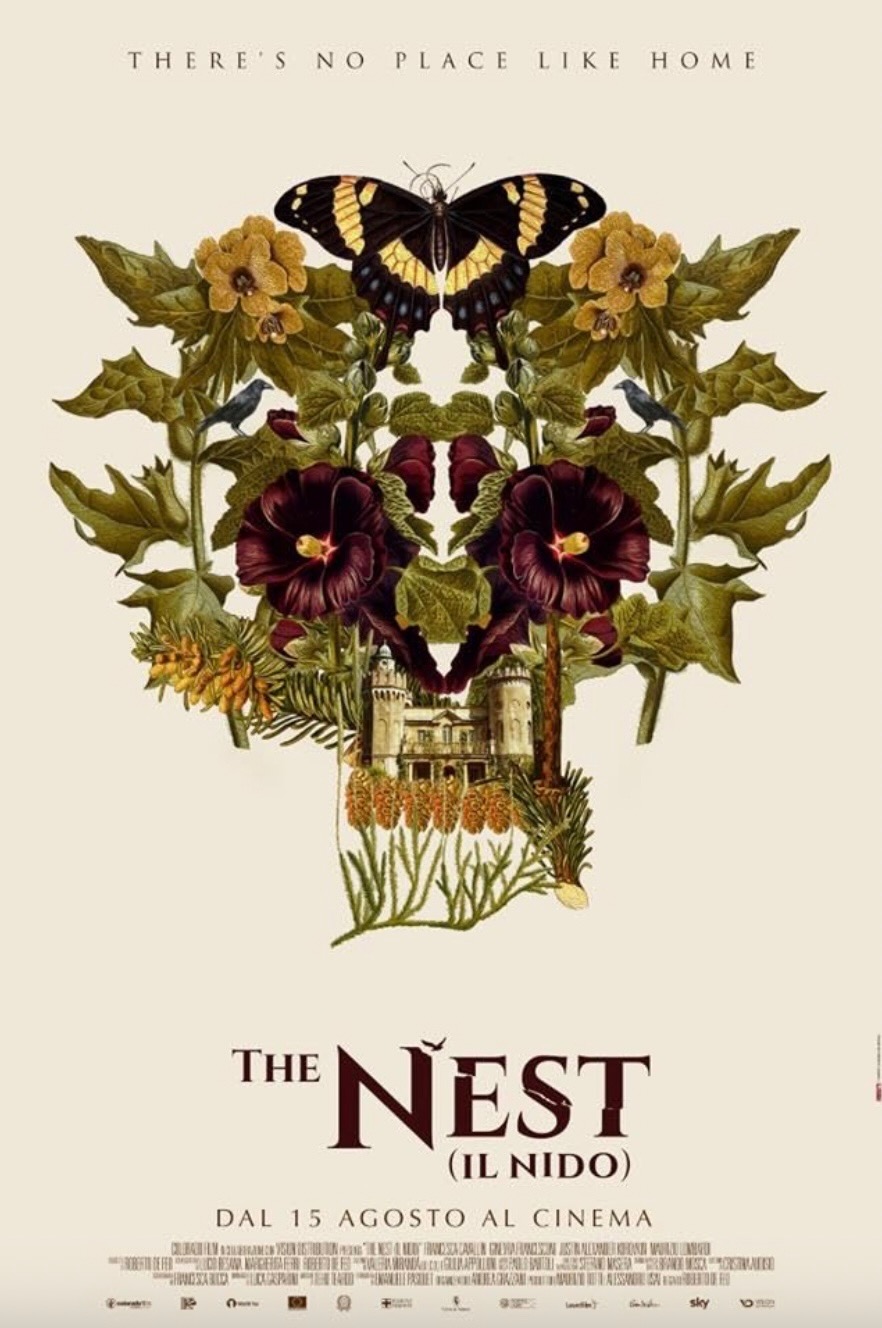
Okay, I’m going to try really hard to do this without spoilers.  There’s a twist ending here that, in my humble opinion, works.  All I’ll say is that the monster may not be what you think it is.  The only problem is that there are at least eight movies titled The Nest, and you’ll need to find one  from 2019 if you want to see what I’m talking about here.  Don’t read any summaries beforehand because you want to let this wash over you and draw you in.  Although distributed by Universal, this Italian Euro-horror remains relatively unknown.  That’s really a shame since this movie delivers.  A woman, an heiress, has a paraplegic son that she never allows to leave the estate.  She’d training him to run things when she can’t and she strictly limits the people he can see.

Teaching him classical culture, she won’t expose him to anything modern.  Then a teenage girl his age comes to live on the estate.  She was being raised by the same man who raised the heiress, but she knows things.  She knows about rock music, and she understand the way the world works.  The heiress, however, wants her son to experience none of this.  Afraid of what might happen, she sends the girl away.  In the meantime, we learn that the heiress kills those who are sick among her staff.  She employs a very creepy doctor who does whatever she orders, noting that she has saved them all.  The question is, is it best to live in such a bubble?  Is life so isolated worth living?  The heiress brings the girl back, but begins, with her doctor, to alter her behavior using electroshock treatment.

The Nest is one of those movies where you spend nearly the entire thing being misdirected.  When it’s over you think back on what you’ve seen and it does make sense.  Along the way, you know something’s not right.  It’s creepy in a way more than old, castle-like houses can account for.  I like gothic films like this.  There are disturbing moments that punctuate what seems like an idyllic lifestyle.  The heiress knows that survival equates to a cultured existence, but she never tells her son why.  This film shares some territory with M. Night Shyamalan’s The Village, in fact, they could be next door neighbors at points.  They both have a similar message, at least in part.  Efforts to build a paradise are beyond human capacity.  We need the outside world even if we fear it.


Cute Monster

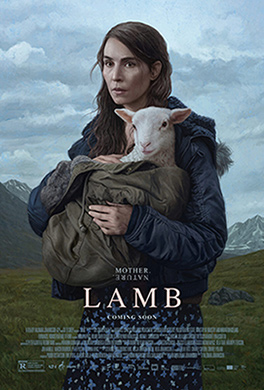
Those who make horror films often rely on the cheap and easy tricks to make viewers jump and  scream.  Some of us are more connoisseurs, preferring films that make you think and that don’t show too much, and maybe even too little.  Lamb once again underscores what has impressed me about Euro-horror over the last few years.  Slow, building dread, it’s the kind of story that you know can’t end happily because it’s, well horror.  There are spoilers here but I hope they won’t stop you from seeing this film if you haven’t.  First of all, the film is in Icelandic, and much of the cinematography focuses on the brutally beautiful cold landscape.  Its sense of isolation and the land make this a fine example of folk horror as well.

A couple, sheep farmers, make a reasonable living from the harsh land.  We come to realize that they live in regret for the death of their daughter.  Then, after the unseen visit of an unseen creature during the dark of an Icelandic Christmas, a lamb is born with a human body.  She quickly becomes their ersatz daughter.  This odd situation, we know, cannot last.  They’ve set their happiness on a gentle monster (of the classic description) and such things never end well.  The movie takes its time spelling out the story, knowing full well that viewers know something is about to happen, but are unsure of what.  Since the husband’s brother stops in (after being forcefully ejected from a car), the film only really involves four characters—six if you count the brief appearances of the lamb’s parents.  And that isolated landscape.

Part-human and part-animal generally counts as a monster.  This one is well behaved.  Cute, even.  Dad, it turns out, isn’t so cute or well behaved.  He has his reasons, though.  The film is scary by implication: What happens when the cute little monster grows up?  The movie invites us to consider that question.  Monsters are often cast as evil and dangerous, but maybe they have to grow to become like that.  With loving foster parents, such as the farmer and his wife, who knows?  This is one of those films that makes you ask questions and offers little by way of explanation.  You just have to accept it.  Something led to a monster in the hills, somewhere back along the line.  But even he may have been even-tempered had is kind been treated with civility.  Monsters have something to teach us.  Even, or maybe especially, cute ones.


Not Making Decisions

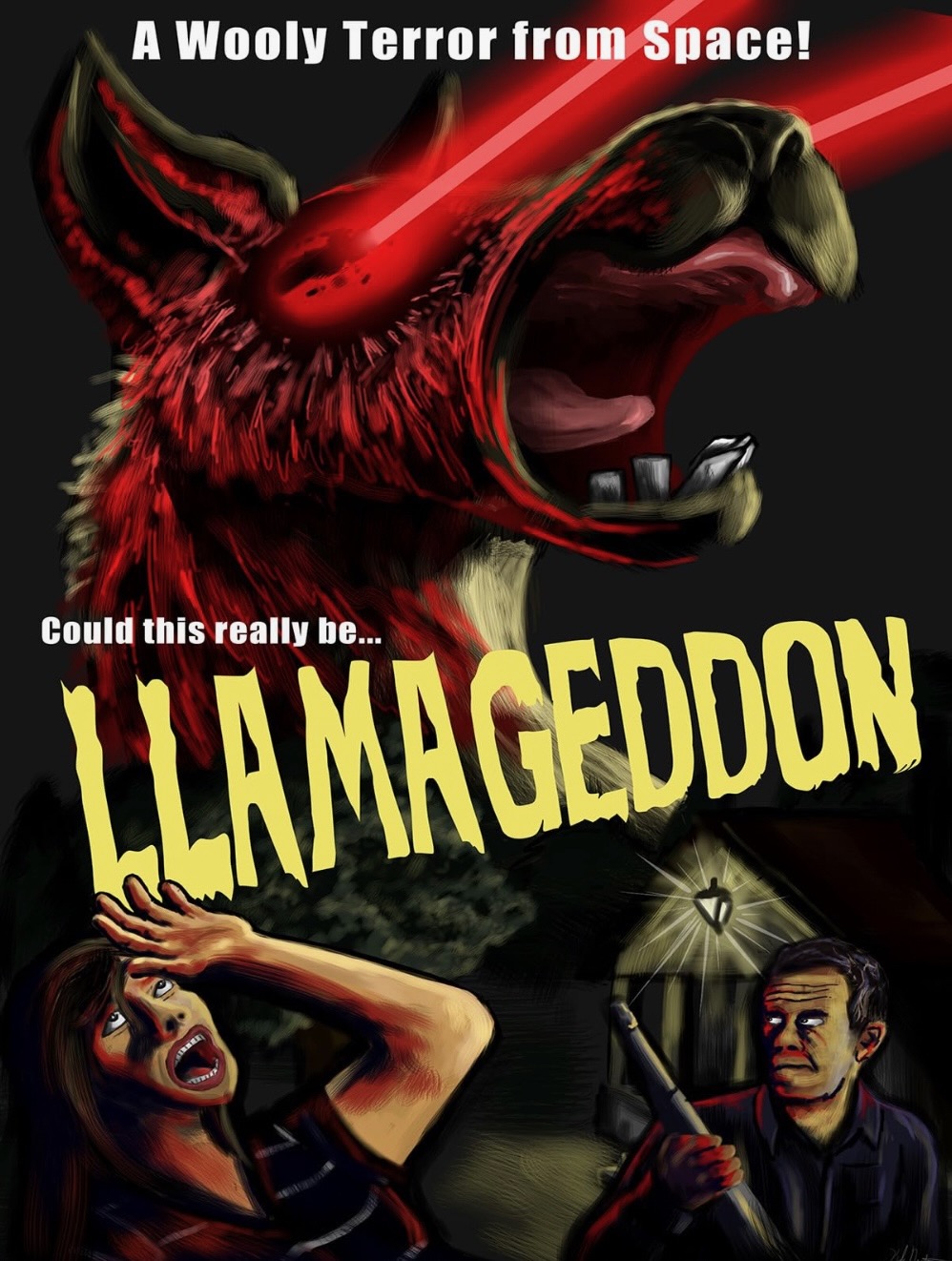
After anesthesia they tell you, “Don’t make any important decisions.”  That’s the excuse I’m using for having watched Llamageddon recently.  That, and it’s free on one of the streaming services to which I have access.  I only found out about it because of such services and I wasn’t in any shape to decide important things like how to spend the rest of the groggy day.  I’m of mixed minds regarding comedy horror.  Or is it horror comedy?  Decisions.  The fact is, quite a few horror movies do involve some amount of fun.  My favorite ones tend to be more serious, but once in a while you find yourself watching movies you know are (or you know are going to be) bad.  I knew this one was.  It’s so bad that it’s got a cult following.  It was, I’m pretty sure, made to be bad.

So a killer llama from another planet is forced to land on earth.  It kills an older couple in Ohio and after the funeral two of their teenage grandchildren, Mel and Floyd, are left to stay in the house.  Mel, who is older and more experienced, contacts all her friends so they can party that night.  Of course, the llama’s still on the loose.  It has laser-beam eyes and it bites and punches people to death and the partiers are picked off, not exactly one-by-one since many of them are electrocuted in the hot tub.  Generally they’re so drunk and/or high that they don’t believe any of this is happening.  Eventually Mel and Floyd’s father arrives and tries to save his kids.  Before dying of llama bite, he kills the quadruped by running it through a combine.

It’s worse than it sounds, but it’s played strictly for laughs.  And, I suspect, it’s one of those movies that’s meant to be watched under the influence.  Since anesthesia is about as close as I’ll ever get to that, I suppose this counts.  Some of the early horror movies have become funny with the passage of time as early special effects age and we become used to better, more convincing fare.     As it is, it’s difficult to find much about Llamageddon apart from IMDb, and the director’s name, Howie Dewin, is a red herring.  I’m fascinated by such films being able to gather a following.  Of course, I confess to enjoying Attack of the Killer Tomatoes when the mood is right.  And a day when decisions are contraindicated, anything can happen.


A Century of Horror

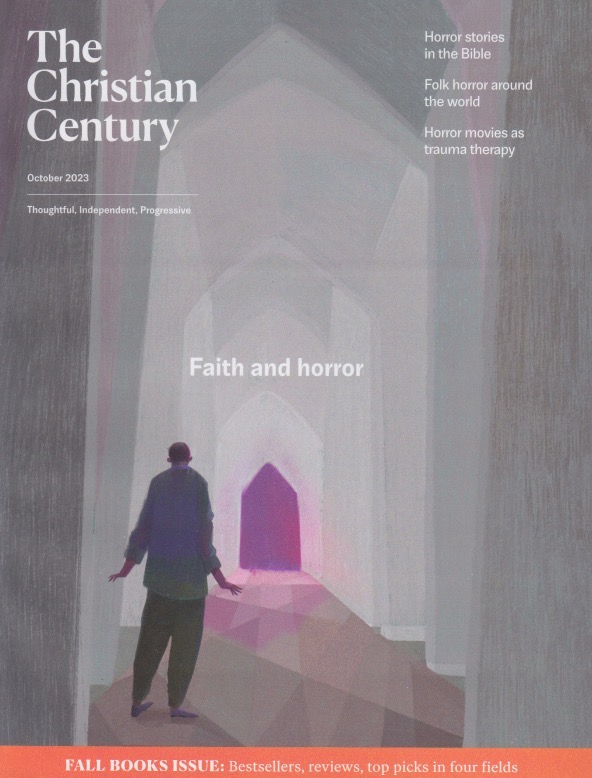
I’m not a magazine reader.  When I go to a waiting room (which is quite a bit lately), I tend to take a book.  The October issue of The Christian Century, however, caught my eye.  As a more mainstream/progressive Christian periodical, CC used to circulate in the office of one of my employers since it features books, the way progressives generally will.  This October, however, it featured five articles on “faith and horror.”  I had to take a look.  I know three of the five authors, one of them without realizing he was a horror fan.  An article by Brandon R. Grafius, “The monsters we fear,” discusses the commonalities between fear and religion, ground that he treats in Lurking under the Surface.  “The wisdom of folk horror” was written by Philip Jenkins—I didn’t know his horror interest—and it engages, briefly, The Wicker Man.  He’s making the point that folk horror is often about somebody else’s religion.

It was “Horror movie mom” by Jessica Mesman that really hit me.  Mesman was traumatized in her youth, and like many of us who were, has turned to horror for therapy.  This is a moving piece and is worth the cover price of the magazine.  Gil Stafford’s “A theology of ghosts” also gave me pause.  Stafford is an Episcopal priest who considers ghosts to be more than just woo.  In this very personal piece he thinks about what that means.  The last feature, “God’s first worst enemy,” is by Esther J. Hamori, one of the colleagues who talks monsters with me.  The piece is adapted from her recent book, God’s Monsters.  Taken together these pieces are quite a mouthful to chew on.  While numbers in mainstream Christianity are declining, Christian Century is still a pretty widespread indication of normalcy.

When I wrote Holy Horror I only knew about the work of Timothy Beal and Douglas Cowan as religion professors writing on monsters and horror.  That book admitted me to a club I didn’t know existed—the religion and monster crowd.  Since I’m not welcome in the academy, I’m particularly drawn to pieces like Mesman’s since she’s writing from the heart (as is Stafford here).  I’m just glad to see this topic getting some mainstream coverage.  I know I’m a guppy in this coy pond, but I do hope they’ll consider, over at the Century, turning this into the theme for their October issues in coming years.  If they do, they can count on at least one extra counter sale.


Double the Trouble

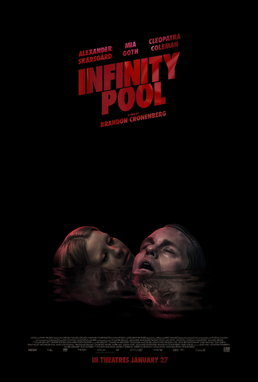
A down-on-his-luck writer (I’m with you so far) vacations on his wealthy wife’s money in a resort in La Tolqa.  La Tolqa is a brutal, very religious, but poor country.  They need tourists.  As the writer, James, discovers, their laws are very strict for a reason.  If a tourist commits a crime they are executed.  However, if they have enough money they can buy a “double,” essentially a clone of themselves, that can be executed for them.  Needless to say, this happens to James.  The name David Cronenberg evokes body horror.  Infinity Pool is the work of his son Brandon Cronenberg and although body horror’s part of it, there’s an even deeper existential fear at work.  Once James’ double dies, his wife insists they leave this horrid place immediately.  James isn’t so sure.

The trouble is that he’s befriended another couple, and the wife, Gabi, has been making no-so-subtle advances on James and he’s intrigued.  This couple sets him up so that he’s likely to break a law, which leads to the killing.  But they’re not finished.  Along with another group of Americans, they travel to La Tolqa every year to commit crimes so they can watch their doubles being killed.  “Murder tourism,” as one reviewer calls it.  They want James to become one of them.  They start putting him into positions where he has to kill his own double.  You can see the existential horror pretty clearly from this vantage point.  Finally realizing that they’ve been mocking him, James tries to escape, but can’t.  As long as the penalty for a crime can be payed by buying a double, they can commit outrageous crimes with impunity.

I have to admit that I envy those who have a family business.  (Mine was alcoholism, so I chose a different career path, such as it is.)  If your father is a well-known, even if often castigated, horror director, you have some guidance on how to get started in the business.  My sense of Infinity Pool is that it’s quite effective, almost at art film at some points.  Like some of his father’s films, it involves both sci-fi elements and horror.  Budapest and Croatia are evocative shooting locations.  The story, while not entirely satisfying, intrigues.  It raises too early the question of whether the double, which has all the memories and thoughts of the original, is really watching the death of the person who actually committed the crime.  Are these copies their own death sentence?  This isn’t resolved, but it’s strongly implied that they’re not.  Still, I’m not inclined to vacation in La Tolqa, which is no place for struggling writers.


Unexpected Gifts

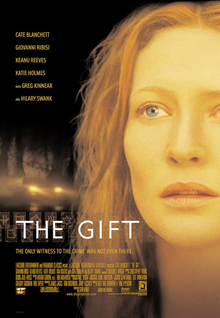
Sometimes horror movie therapy doesn’t go the way expected.  (No surprises there, so no snarky comments, please.  No therapy is “one size fits all.”)  This was brought home to me when watching The Gift.  I was attracted to the speculative aspect of the premise and although it came out over twenty years ago I hadn’t heard of it before.  Although there are speculative elements—at least two ghosts—it is largely a human drama and one that hit me unexpectedly.  As a public service for those who also practice horror movie therapy, I thought I’d consider it here.  (Then call my regular therapist.)  Annie Wilson is a psychic in rural Georgia.  She gives readings for donations to help supplement Social Security since she’s a widow and she has three young sons.  I don’t know why this didn’t start the warning bells a-jangling, but when it was over I realized her situation was like mine, growing up.  (My father was alive, but nobody knew where he was, otherwise I’m on board.)

A violent neighbor, scarily played by Keanu Reeves (forever Neo in my mind), keeps threatening the family since he’s a wife-beater and Annie recommends his wife leave him.  Then a woman is murdered and her body is in his pond (or better, bayou).  Annie realizes that this threatening bully, who’s convicted of the crime, is actually innocent.  Her lawyer, however, doesn’t see the problem—the guy was a menace to society and he’s locked up.  Annie, however, insists on finding the truth.  I have to say that this movie genuinely scared me.  I almost stopped watching.  It wasn’t the speculative part, though.  It was the human part.

Religious locals accuse Annie of being a witch and a Satan-worshipper.  She is, however, simply trying to get by in a society that has failed her.  Having an unstable neighbor threatening her kids doesn’t help.  What’s so scary is that this isn’t far from real life.  For those of us who grew up poor, safety nets are few and the weave is very, very loose.  And you’re made, even as a kid, to feel the social stigma of the crime of being poor.  Annie has a good heart.  She tries to get a man wrongly accused released from jail, knowing that he’ll probably begin threatening her again, if not actually harming her.  Society, however, doesn’t really care.  Raising three small children on welfare on your own isn’t easy.  And, in fact, those kids may well grow up needing therapy.  Even if it’s watching horror to try to make sense of life.


Enabling Vampires

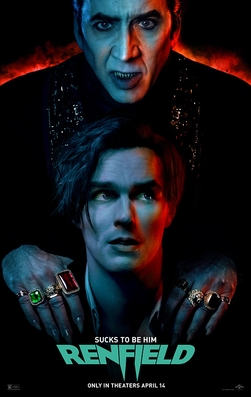
I was skeptical at first.  Nicolas Cage as Dracula?  How could this possibly work?  Nevertheless, Renfield works.  A box office flop, I suspect that audiences may not be ready for a comedic treatment of Dracula, but this is a smart, savvy take on a classic, combining superhero films with vampire lore.  Let me take a step back here.  Renfield is a bit of a slippery character, shifting places with Jonathan Harker in Bram Stoker’s original.  He is Dracula’s servant, but here he’s presented as becoming aware that he’s a codependent enabler.  In his seeking victims from the narcissists who cause pain in the lives of a church support group, Renfield comes to realize that he’s also a victim.  He teams up with the one honest New Orleans cop who’s not on the payroll of the local mob, and together they rid the Big Easy of both vampires and organized crime.

Overly ambitious?  Yes.  But the comedy actually works here.  This is a funny movie with several laugh out loud moments.  Maybe it’s CGI, but in several shots Cage actually looks like Bela Lugosi.  Nicholas Hoult does a wonderful interpretation of Renfield, the madman of the original movie, as well as factotum to the dark prince.  Those who know and appreciate vampire lore will find many subtle insider jokes here.  And Cage undertakes a campy, yet compelling version of Dracula.  Endlessly self-referential, the movie is a skillful blend of vampires, self-help wisdom, and even social commentary.  I’d heard that my expectations shouldn’t be too high here, so I was pleased when they were exceeded on almost very point.  

Horror comedy is difficult to pull off so that viewers feel satisfied that they haven’t wasted their time.  Renfield manages to do this with style, action, and even a bit of drama.  I have an inkling that over time this will become one of those movies that appreciates with age.  The story is convoluted, but this is in service of the comedy.  Everything is so wildly improbable—from eating bugs to gain super powers to Dracula’s blood bringing the dead back to life—and hilariously overblown that it overcomes the difficulties attending such a mashup.  It’s as if Cage knows viewers don’t always take him seriously, and yet he rises to the occasion.  With nods to The Matrix and Pirates of the Caribbean, as well as the vast library of Dracula films, Renfield is the result of homework done and boundaries crossed.


The Good Lurid

It takes a lifetime to make a reputation.  In high school my teachers and classmates knew mine well: religious and full of integrity.  Going on to do three degrees in religious studies confirmed all that (at least the former).  Something that nobody seemed to pick up on was that I liked watching monster movies.  I did less of it in college, but still watched some heavy-duty fare (including David Cronenberg) when I was in seminary.  Once I married life looked more optimistic and I really didn’t feel the need to watch what is called “horror” any more.  Sure, we occasionally saw films everyone was talking about, but in general I moved away from the genre.  It took Nashotah House and its aftermath to bring me back.  In any case, my reputation seems to be such that now when people who know me see religion and horror together they think of me.  I’m touched.

A regular reader of my blog sent me an article from The Guardian titled, “Schlock horror! Meet the family who made lurid movies for the Lord.”  It should be pretty clear, if my integrity is intact, that what I’m trying to do is figure out how these things fit together, religion and horror.  That they do is obvious, but how?  In any case, this article plugs a book by journalist Jimmy McDonough, The Exotic Ones.  The book explores the Ormond family and their odd filmmaking.  The father, mother, and son triad, made a living producing cheap, questionable films.  After a plane crash, which they survived, they became religious only to find their minister wanted them to keep making their bad movies for evangelistic purposes.  The films they produced for the church had religious themes, but used well recognized horror tropes, anticipating, if you will, Left Behind and its ilk.  Like a Thief in the Night scarred many of my generation.

I’m probably not alone in not recognizing any of the movies the article discusses.  If I’m reading correctly, Tim Ormond, the son and sole surviving family member, stopped making these films after the death of his parents.  In any case, I have been developing a fascination with bad movies.  The fact that they’re even made and released is incredible to me (mostly the released part).  Many of us end up reacting to life rather than following the plans we had for it.  Fate—call it what you will—has a way to stepping in.  For one family, however, fate led them to a church that paid them for what they wanted to do.  Many of the rest of us find just the opposite and we end up watching horror to try to understand.


November Nightmares

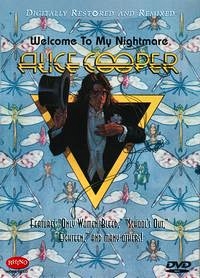
Music videos weren’t really a thing then.  And “Welcome to my Nightmare” was theater as well as rock.  I knew a movie of it existed, but I only made an effort to see it as October was slipping through my grip.  I have a strange, one-sided history with Alice Cooper.  We listened to the radio back when we were kids and we all knew Cooper from “School’s Out,” an unofficial anthem of the seventies.  We didn’t have much money when I was growing up (some things never change), but I had a copy of the album Welcome to my Nightmare.  I couldn’t recollect how I’d got it until my brother clued me in.  We were at Jamesway just outside Franklin one Friday night.  My mother, frugal to the day of her death, saw that Alice Cooper’s new album had a song called “Steven” on it and she bought it for me.

Now Mom knew full well that my official name is “Steve” (she named me).  There’s no “n” in there anywhere.  Yet still, even as I knew this, I found that song spoke to me.  Like the Steven on the album, I was prone to nightmares.  And the sequence of “Years Ago” and “Steven” on that concept album never left me.  Mom would not have approved of the movie version—I found the misogynist parts difficult to watch myself—but it did answer a question I always had: how did he perform these songs in concert?  They seemed too big for that.  They weren’t the snippets I always assumed rock stars did.  (I never attended concerts, so what did I know?)  Alice Cooper is still the only rockstar I’ve ever seen in concert, but the theatrics were brought way down and his back probably ached like mine did after that event.

I’d been looking for a horror movie to finish out the month, you see.  I keep a list of movies that, apparently, are never free on Amazon Prime or Hulu.  It ended up taking nearly all the little time I allot myself for such indulgences to try to find something.  Then I remembered Alice.  It was raining outside and I had caught up on my emails for the moment.  This step into a yesteryear I never knew made me realize just how creative people can be.  We have to get someone to pay us for doing something, and if you can sing and strut, well, you might consider sharing your nightmares.  Something many of us have in abundance, even in November.


October’s Child

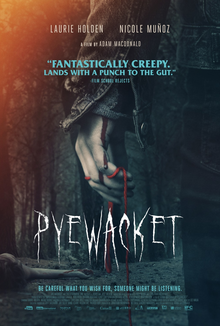
The thing about films is that there are so many of them, and they come into existence in so many ways.  Back when I was a kid, you learned about movies through the newspaper, or television or maybe radio ads.  Sometimes word of mouth, or, if you were lucky enough to see a film in a theater, through previews.  These days the internet has billions of pages and many streaming services and movies are produced faster than we can watch them.  All of which is to say Pyewacket, in my opinion, should be better known.  It’s an effective, thoughtful, and seasonal movie that caught me off guard.  It’s a Canadian independent film, not the product of a major studio, so it didn’t get the notice that massive advertising budgets provide.  I found it by scrolling on Amazon Prime.

Pyewacket is a teen angst movie (I wasn’t an angsty teenager—it came a little later for me).  Leah Reyes and her friends are into the occult.  Leah’s father has died and her mother’s having a difficult time coping.  She has decided to sell the house and move away.  Leah, who has a small circle of close friends, doesn’t want to move.  After mother and daughter are in the new house they fight, with her mother insulting Leah’s friends.  Leah goes into the woods and summons Pyewacket to kill her mother.  After this, mother and daughter make up and the tension builds.  Leah doesn’t want her to die but she’s set something in motion that she can’t control.  There are some really scary scenes in this movie, often without showing anything explicit.  In fact, views of Pyewacket are brief and indistinct, which really works.

This is an October movie.  Moody and evocative, it raises some very real questions.  Not all of them are resolved.  The occultist Leah consults informs her that Pyewacket is very deceptive and she can’t believe what she sees.  This leads to a tense resolution and somewhat abrupt ending.  It is very well done.  The point about deceptive spirits raises one of the truly potentially demonic facets of human society.  Deception throws truth off balance.  (Some of the more cynical politicians know and use this for their own ends, as we sadly know.)  Deception is dangerous and that seems to be almost the moral of this movie.  There are no villains here, but extreme actions can’t be taken back.  If you’re in the right mood, and the dark is just right, this is the kind of movie that delivers.  And I only found it by chance.


With Spiders

It gets October right, but Cobweb leaves quite a few unanswered questions.  One of the queries I always bring to movies is “where did it happen?”.  This isn’t, of course, the same thing as where it’s filmed.  Cobweb was filmed in Bulgaria—that certainly gives it an atmospheric feel.  It’s set, however, somewhere in the United States.  License plates aren’t shown long enough to really help, but a refrigerator magnet in the shape of Pennsylvania may be a hint.  In any case, the story’s a bit of a stretch, and it has some continuity issues, but I may come back to it in a future October.  The acting is pretty good, but the direction could be tighter.  So what’s it all about?  (There will be spoilers.)

A young boy, Peter, is bullied at school.  His parents are odd and they never believe Peter when he hears noises at night.  Or so they say.  As with much horror, things are not what they seem.  Peter’s parents had a somewhat Poesque solution to what turns out to be Peter’s older sister.  Born deformed, they made a pit in the basement to house her.  She gets out into the walls of the house, and talks to Peter at night.  We all know you should never listen to creepy voices in the dark, but she tells her brother he should defend himself from bullies.  And when he gets expelled from school for doing so, she suggests he give his parents the “We Have Always Lived in the Castle” treatment.  In support of this, she points out where he can find the body his parents buried in the back yard.  Now, there are many pumpkin-sized holes in the plot, but for a movie embodying October, I’m willing to let it pass.  Spooky rather than outright scary, the film does have some fairly tense moments.

Rescue comes at the hands of a teacher—and this is always a heartening development.  The name, “Miss Devine,” awoke hopes that maybe some traditional religious elements might appear, but no.  It seems to have been from the lineage of Miss Honey from Matilda.  She does read Poe’s “The Raven” to her class, though.  Overall she’s a teacher who has her students’ best interests at heart, particularly those who are sad.  The message is a little more difficult to discern.  Other than Peter and Miss Devine, pretty much everybody else is unlikeable.  Parents are murderers, sister a manipulative monster (even if made so by said parents), and all the other kids pick on Peter.  A good October effort, Cobweb is a story that needs some direction.