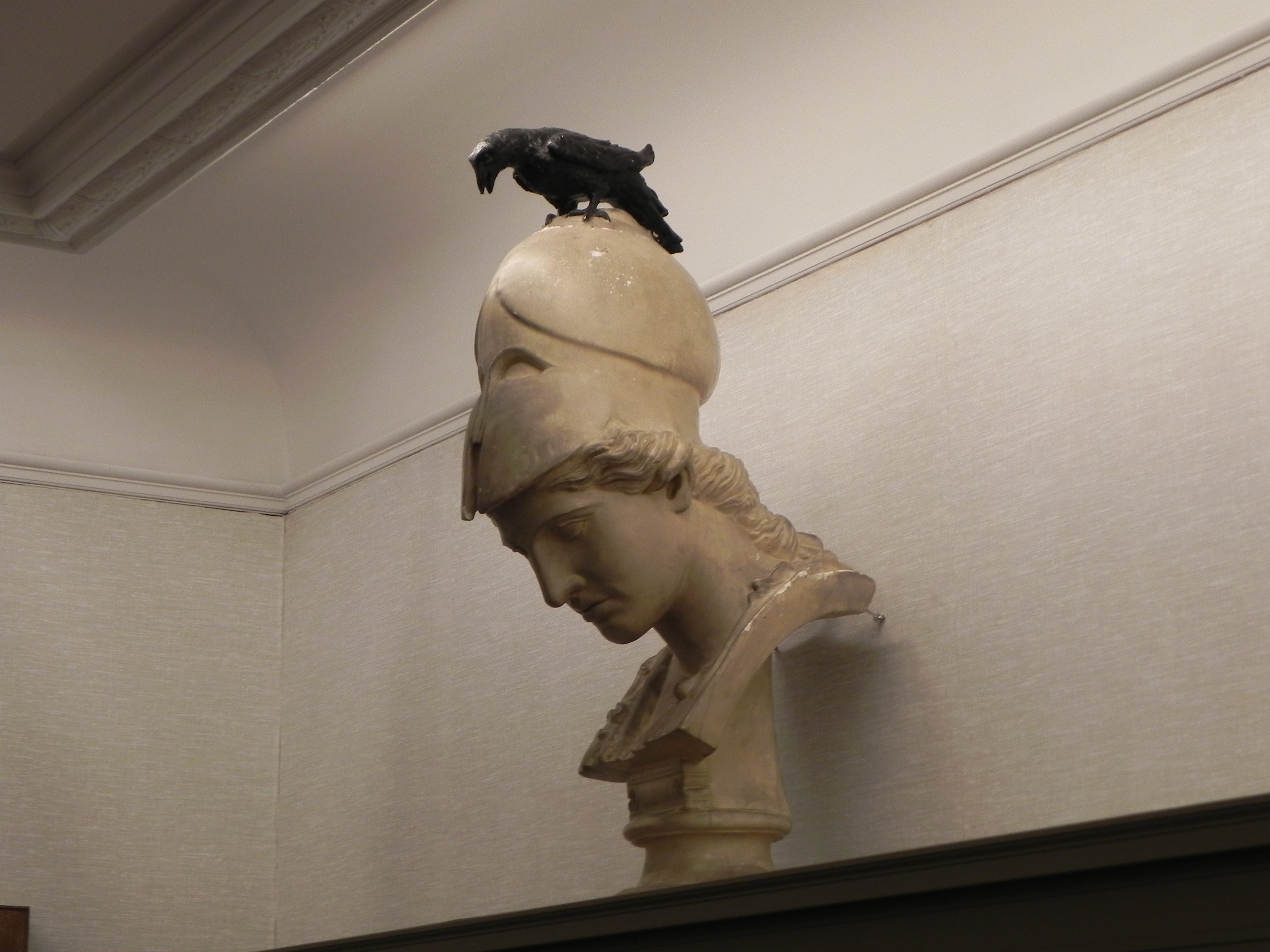
Ravens and Autumn

In need of some diversion, and seeking some way to celebrate the equinox, we made our way to Mount Gretna.  With a population of less than 300 souls, Mount Gretna is remote and an area of natural beauty.  But that’s not why we’re here.  Each year the Mount Gretna Theatre—housed in an open-air playhouse—puts on an Edgar Allan Poe performance in the autumn.  I’m not sure if it’s always titled “Nevermore,” but it is this year.  And it’s a fine evening for an outdoor performance.  The show is a walking tour of seven Poe vignettes.  A guide starts the evening by telling us a murderer is on the loose and Dupin (for Poe invented the detective story genre) warns us to trust no one.  I’m thinking this will be a murder mystery, but the first vignette is adapted from “The Fall of the House of Usher.”  My favorite short story, I smile at the choice.

The next venue—we’re walking around the parameter of the playhouse now—is from “The Masque of the Red Death,” which has taken on new significance with Covid.  These, by the way, are single actor vignettes.  We’re then led to a saucy woman who performs “The Black Cat” with a subtle humor.  As she’s led away, a madman leads us to a corner of the building where he retells “The Telltale Heart,” and you begin to realize just how much Poe wrote about revenge and guilt and murder.  We’re then led to the only two-person vignette for a retelling of “A Cask of Amontillado.”  A haunted young man crying “Lenore” next recites “The Raven,” from which the evening takes its name.  The final vignette is the only unfamiliar one in the lot, based on Poe’s humorous—if politically incorrect—stories, “How to Write a Blackwood Article,” and “A Predicament.” (Set in Edinburgh, no less.)

It’s a beautiful September night in a delightful wooded setting.  The fact that it takes some effort to get here is part of the draw.  The actors clearly enjoy themselves and the stories are told in such a way that it doesn’t matter that we’ve read them all before.  Once back home, I learn that the playhouse is in a borough founded by the Chautauqua Society.  I think how times have changed and that it was quite a world that supported adult education institutes.  Chautauquas are found around at least the rural parts of the country.  Founded by a Methodist minister, Chautauqua was a wholesome competitor to Vaudeville, offering entertainment as well as education.  I feel I’ve been both educated and entertained as we climb back in the car in a Pennsylvania night on the eve of the autumnal equinox.
Early Ghosts

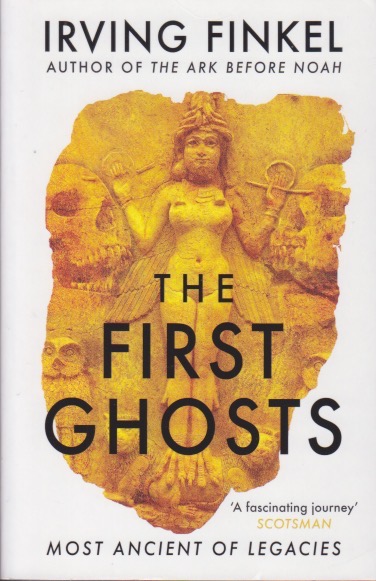
I’m not the most impulsive person in the world, but certain books I know, as soon as I see them, I will read.  Irving Finkel’s The First Ghosts was one of those books.  This wasn’t an easy book to get.  I’m guessing it was some minutiae about transAtlantic rights or some such nonsense, but it was announced a couple of years before it became available in America.  Then, of course, it had to wait its turn on my reading pile.  For those of you who don’t recognize his name, Finkel is a well-regarded Assyriologist who works at the British Museum.  Assyriology (which encompasses Babylonian and Sumerian studies as well) is, perhaps unavoidably, a highly technical field.  The languages are complex and a lot of that has to be explained before a reader can figure out what’s going on.  Some parts of this wonderful book are, unfortunately, technical.

The idea, however, is brilliant.  Ghosts have always been with us.  Finkel is well-placed to open the cuneiform world and he presents the earliest recorded ghost stories in history.  They’re not exactly modern horror, be warned.  Nevertheless, they demonstrate that from as soon as people figured out how to write, ghosts were one of their favorite topics.  Or at least, ghosts were assumed to exist and were written into many myths and legends.  Non-judgmental books like this are rare from academics; indeed, it’s difficult to imagine anyone else having written this particular book.  Even in the small world of academia not too many people read these languages and those who do are busy trying to impress tenure committees and businessmen deans.  (The reboot of Ghostbusters demonstrates this in a comical but too serious way.)

There are plenty of takeaways from this book.  A good general point in that myths do not reflect the everyday beliefs of individuals.  It’s easy to forget that.  Another striking idea occurred in his one chapter on the Bible where Finkel notes that the Good Book tends not to dwell on things considered “detestable,” such as foreign gods or demons.  That makes it an outlier concerning everyday information from antiquity.  After looking through that one window for so long, I suppose that’s why I focused by doctoral work on a “foreign” goddess.  If you can handle the technical bits and try to keep in mind multiple multi-syllabic names from forgotten languages, you’ll find a lot of really surprising and fascinating information here.  I’ve known for years that I’d be reading this book, and as autumn approached the time felt right to seek ancient ghosts.


At the Same Time

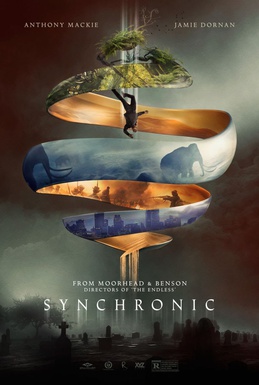
The philosophically adept movies by Justin Benson and Aaron Moorhead can be addicting.  At least for a certain kind of viewer.  These are independent films and they’re smart and worth the effort of tracking down.  Often they fall into both sci-fi and horror, but generally horror of the existential variety.  And they have social commentary.  Synchronic is gritty, delving into drug culture (as some of their other movies do as well) and taking its title from a fictional drug.  Synchronic, the drug, distorts the taker’s sensation of time.  If the user is young—their pineal gland hasn’t calcified—the drug physically transports them to the past.  Adults only experience it as ghostly images rather than physical displacement.  Two EMTs, Steve and Dennis, keep finding victims of the drug.  Steve is a black man with brain cancer that keeps his pineal gland from calcifying.  Dennis, a family man, loses a daughter to synchronic—she gets lost in time.  Steve decides to save her.

Here’s where the social commentary really kicks in (although it’s been there from the beginning).  A black man traveling back in time in Louisiana is at a distinct disadvantage.  Dennis is white but his brain won’t allow him to travel back physically.  Not only that, but it was Steve who took the initiative to find out how the drug works.  You spend only seven minutes in the past, unless you miss being in the right place when the drug wears off.  If you miss the return, you’re stuck forever in the past.  That’s where Dennis’ daughter is.  She’s caught in New Orleans in 1812.  Louisiana was, of course, a slave state.  Steve faces enslavement if he doesn’t make it back in time.  I won’t say how it ends, but it leaves you thoughtful.

Many “white” Americans feel that Black Lives Matter is too “woke” for them.  They seem to think everything is now free and equal.  It isn’t, of course, and those who are willing to look see that African Americans have an extra layer of struggles that they constantly face.  The movie addresses this as well.  When assisting an overdose victim after he misplaced his uniform, Steve is mistaken for a criminal by the police at the crime scene.  This despite the fact that the white officer who initially detains him, knows him.  A black man out of uniform must be up to no good.  I can’t believe that I went so many years without knowing about Moorhead and Benson movies.  Be careful if you start watching them—they can be addicting.


Keeping Sentinel

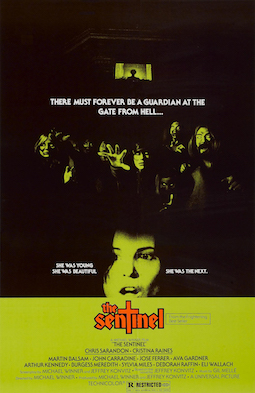
Not among the trinity of holy horrors from the late sixties and early seventies, The Sentinel takes its cues from religious horror but manages to fall into bad movie territory anyway.  While still cited from time to time, it’s largely forgotten among the films of the era.  It had a lot of competition in the seventies with The Exorcist, The Omen, and The Amityville Horror.  One of the reasons it seems to have fallen at the threshold is that it doesn’t understand the religion it tries to portray.  That religion is some form of Catholicism that involves a number of clerics who run around northern Italy wearing various liturgical vestments to oversee an apartment in Brooklyn Heights that’s actually the gateway to Hell.  They do this by way of an eponymous sentinel who lives in the apartment building that’s Hell’s portal.  The rest they, reasonably enough, rent out.

Alison Parker, a model, ends up renting the place while her boyfriend lawyer decides to have her killed—no particular motivation is given, although he had his first wife murdered too.  At the apartment Alison is disturbed by the other tenants, who are very strange.  And a mysterious priest lives in the apartment at the very top and never comes out.  (In case you haven’t gathered, the plot is pretty convoluted.)  It turns out that people who’ve formerly attempted suicide (like Parker) are targeted by the church to take over as sentinels to make up for their sin.  They have to “go missing” and reappear as a priest or nun and live in a particular apartment.  The strange neighbors, as you may have guessed, are demons trying to escape the watchful gaze of the sentinel.  Naturally, they stay in the same building.

The problem—or one of them, anyway—is that the Catholicism displayed doesn’t resemble Catholicism very much.  In the famous scene where the demonic entities are swarming on Alison and the dying sentinel she’s to replace, said sentinel carries a distinctly Protestant cross rather than a crucifix.  The mythology the film tries to construct is simply bizarre.  The classics of the period at least got the religion correct.  Catholicism in The Exorcist, Protestantism in The Omen, and, although fabricated, Satanism in Rosemary’s Baby.  Many filmmakers, it seems, think it’s easy to fake it when it comes to religion.  Looking at the movies that succeed on that front, however, and comparing them to those that become bad movies, it seems clear that doing your homework, or at least going to Sunday school, pays off.


When Will We?

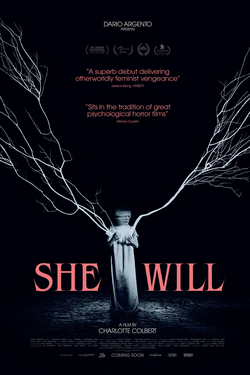
She Will is a creepy art house film from a couple years back.  Sometimes cited as a #MeToo film, it was directed and co-written by Charlotte Colbert and it follows an aging child actress recovering from traumatic surgery.  Veronica Ghent has decided to go to Scotland, to a remote retreat, to heal.  She takes her nurse with her and is chagrined to find that the retreat she booked is being shared by an art therapy retreat.  She insists on private accommodations and is put up in an even more remote cabin.  While there, it’s made abundantly clear that this was a place where witches were burnt and their ashes mingled with the soil and the very earth therefore has healing properties.  Veronica gains an ability to exact revenge from her dreams.

The target for Veronica’s revenge is a famous director who seduced her as a child while working on her first starring role.  Famous and powerful, nobody was able to touch him.  With her new-found abilities Veronica is able to exact justice through supernatural means.  Not only that, but when a local man—the retreat’s handyman—tries to rape her nurse, Veronica is able to prevent that too.  This is a moody, sad film that addresses issues that are all too real for many women in a system designed by and intended to profit men.  Either unaware of, or uncaring about women’s experiences as participants in the system, they dismiss their trauma in a way they wouldn’t for other men.  

Although the film doesn’t have tons of action and doesn’t rely on jump startles, it is an effective gothic horror movie.  The Scottish scenery is bleak and evocative and the message is important.  Horror films directed by women are starting to gain some notice.  Those familiar with Suspiria, however, will note the influence of executive producer Dario Argento.  That film also featured the difficulties women can face, and it also concerns witchcraft.  She Will is more mature in these areas, however.  Female directors—and writers—know the unique struggles women have in a society that refuses to give female leadership a chance.  It’s a simplistic world where men are in charge (because the church says so, or, more brutally, because physical strength can be used to get one’s way) and aren’t willing to consider that half the world sees things in a different way.  Movies like this force us to take the perspective of another.  And for that the world is better.


Thoughtful Transformation

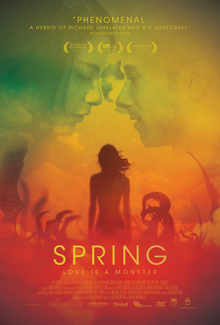
Philosophical horror’s a thing.  A friend introduced me to Moorhead and Benson films—these aren’t major studio productions—and I’ve been watching them as I can find time.  They’re intelligent and tend away from heavy gore, which is fine by me.  And they leave you with plenty to ponder.  I recently sat down with Spring, an unusual movie that sometimes gets classified as science fiction, probably because the lead actress plays a science student.  There will be spoilers here, so if you have plans to watch, please stop and do so now.  Here goes:  The story follows an aimless young man who’d given up college to take care of his dying mother.  To get away, he heads to Italy with no particular destination in mind.  He ends up in Polignano where he meets and is smitten with a young woman.  At least he thinks she’s young.

From the privileged point of view of watchers, voyeurs perhaps, we come to see that Louise isn’t who Evan thinks she is.  She’s a two-millennia-old woman who has to regenerate herself every twenty years to maintain her immortality.  When the twenty years wind down, she transforms into other creatures on the evolutionary scale on the way to humans.  Since she lives on she’s not really seeking a long-term relationship.  This leads to some discussions of religion, which I find intriguing.  Louise is a scientist, however, and even when she transforms into a monster, she refuses to call it supernatural.  Rather, she claims it’s just something that science can’t yet explain.

This perspective really does get at the heart of the debates between science and religion.  Are there things science simply can’t explain?  I.e., are there things beyond science?  Or is science really the panacea for all things?  The problem is that the human mind cannot sense or detect all things.  We don’t even have a clue as to how many things there actually are to detect.  How can one method be used to encompass everything?  Not a bad set of questions to be raised by a somewhat Lovecraftian movie.  Lovecraftian, by the way, due to its focus on the sea and some of Louise’s atavistic transformations.  Spring is an unusual and thoughtful movie.  It’s a love story as well, about willingness to face the unknown for love, and trusting evolution.  The characters are likable and you want them to thrive, which you don’t always get in this genre.  It’s one of the reasons I keep coming back to Moorhead and Benson, and always being glad I came.


Shopping Trip

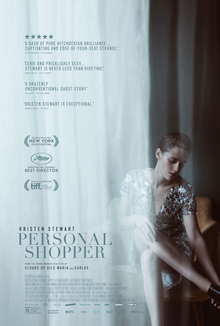
Personal Shopper is one of those movies I’m not sure I understood, but which was nevertheless profound.  It didn’t help that it was one of those “free with commercials” movies that interrupted a dense storyline just when I needed to be concentrating.  How did we ever survive growing up with commercial television as our main vehicle for movies?  This is a subtle, psychological ghost story set mainly in Paris and involving a young woman, Maureen, who is the titular personal shopper, but who stays in Paris to try to contact her fraternal twin brother’s ghost.  Her dead brother’s widow is helping her, but the wealthy woman for whom Maureen’s the personal shopper is demanding and has strict rules about how her expensive clothing and accessories are to be handled.

The film is moody in the way that I find effective, and it’s not fast-paced and full of action.  It’s more contemplative and a couple of plots are woven together so that I suspect I’ll need to see it again to try to fit it all together.  It’s also a movie that intertwines religion with horror.  In this case the religion is primarily Spiritualism.  Maureen, in addition to being a personal shopper, is a medium like her brother was.  Before he died he promised, like Houdini did, that he would try to return and leave a sign so that Maureen would know for sure about the afterlife.  She has glimpses of a spirit entity, but isn’t sure it’s him.  Meanwhile, her boss’s lover scams Maureen into believing he’s a ghost by texting her cryptic messages from an unknown number.

There’s no question, following the straight narrative of the film, that there are ghosts.  What’s uncertain is who they are and whether they can be trusted to reveal the truth.  Mostly shot in autumnal Paris, the gray skies and threat of rain complement the eerie feeling the story generates.  It ends in sun-drenched Oman, however, making for a stark contrast with what has gone before.  If my description here is confusing take that as a sign of the depth of this film.  (Or simply judge me a   poor writer.)  In either case, Personal Shopper, which was recommended to me, is a movie that hangs on after it’s over, leaving you wondering about any number of things.  The acting is compelling and there’s a melancholy about the movie that’s rare but also becoming.  I’ll need to see this again some rainy day, hopefully without commercials this time.


Cabin Stories

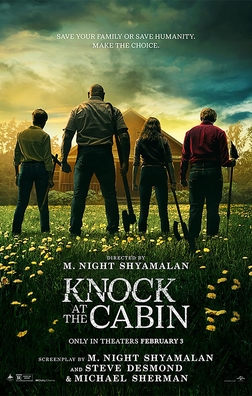
Almost always I come out on the same side of the debate.  The book is better than the movie.  The book allows things to be explained more fully and is the way the story is “supposed to go.”  Maybe it’s because I found the novel open-ended and I like closure, but M. Night Shyamalan’s Knock at the Cabin, in my humble opinion, is better than The Cabin at the End of the World by Paul Tremblay.  Now, the author’s title is better, but Shyamalan’s explanation is clearer.  In short, I think the movie works better.  If you’re not familiar with the story, four apocalypticists, responding to visions they’ve had, break into an isolated cabin occupied by a vacationing family of two daddies and an adopted daughter.  Shyamalan characteristically shifts the cabin’s location to Pennsylvania and, yes, before you think it’s all Philadelphia, there are some very isolated places in my home state.

These weaponized apocalypticists subdue the family and inform them that unless they decide which one will be sacrificed, and then carry out the deed, the world will end the next day.  The adult couple tries to explain rationally how crazy this all is.  How could four people be given this hidden knowledge and be tasked with saving the entire world?  It seems more likely that they’ve targeted a gay couple and are trying to break up their family.  One of the things the movie makes explicit that the book doesn’t is that the intruders are correct.  This is the end of the world.  In order to achieve this, Shyamalan had to rewrite the ending to remove the ambiguity.  For some of us, that really helps.

The movie, in a way that a brief blog post can’t replicate, includes quite a bit of dialogue about religion.  Religion and horror are often bedfellows, and this is one of those movies that relies on religion to fuel the fear.  Interestingly, the cabin invaders aren’t stereotypical conservative Christians.  In fact, they appear to be mostly secular everyday people who have come together around a vision that they all had in common.  In the novel there’s always some question whether this is an elaborate hoax whereas the movie makes it clear that the death of each individual apocalypticist unleashes a plague.  Indeed, they are, as the couple finally realizes, the four horsemen of the apocalypse.  Since I’m still here to tell you about it, the end of the world has obviously been avoided.  This movie is worth seeing, even if the novel has a better title.


Closure of a Trilogy

So the final part of Jessica Verday’s Hollow trilogy really moves into supernatural explanations of life after death.  At least for those destined to become shades.  Since we’re at the end here, I won’t worry about spoilers.  Also, the series has been out for over a decade now, so we’re fairly safe, I think.  (Young adults aren’t my demographic, I don’t imagine.)  To recap, Abbey is in love with Caspian, who is a shade.  Caspian isn’t seen by many people, but he does appear to Abbey.  Throughout the story she mourns the death of her best friend Kristen.  As the action builds, Revenants begin to appear in Sleepy Hollow.  Revenants are beings that assist people who are to become shades as they die.  This indicates to Abbey that she won’t live to graduate from high school.  She will, however, get to be with Caspian—“complete him”—in a form of life where few will see them but they will live on in a limited sense.

The universe here isn’t particularly Christian in background.  Revenants operate in pairs, one tending toward good, the other evil.  They are sent to do a specific job and when it’s over they move on.  As in the movie Dogma, however, one Revenant doesn’t want to move on.  He figures that if he fails to do his assigned task he’ll continue on as an immortal on earth.  At the end he reveals that he killed Kristen in Abbey’s place so a difficult decision’s in order.  To straighten out the mess that’s been made on some cosmic scale, Abbey can die, history will be altered, and Kristen will be the one who survived.  This will involve self-sacrifice, which kinda does bring us back into Christian territory.

This trilogy emerged following the obvious success of Stephanie Meyer’s Twilight saga.  Teen paranormal romances were in, and publishers hearkened to the demand.  It does reflect our times that writing for young readers has taken on an impressive quality.  This trilogy is a great example of how someone who recollects well what it was like to be a teen is able to transport many of us back to that stage of life.  The awkwardness.  The constantly making wrong decisions.  The bewilderment of falling in love.  And of course, if you throw in some ghosts and some light violence, you’ve got a winning combination.  I enjoyed getting to know these characters.  I knew, once I put volume one down that I would have to see how the rest of this story unfolded.  I’m glad I did.  I have a sense of closure, for this series at least.


Funny Scares

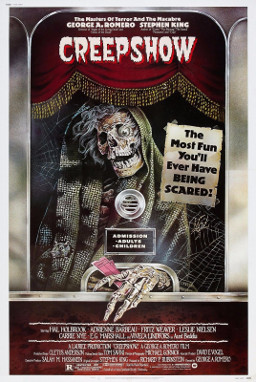
Camp has its own aesthetic.  I’m not talking about the kind with tents and sleeping bags, but that has its own aesthetic too.  No, I mean campiness in pop culture.  Creepshow, which was released in 1982, has maintained its value as camp and you pretty much still have to pay to see it (at least it’s free not on any streaming services I use).  For an episodic film it’s not bad, and since it’s comedy horror it won’t keep anyone up at night.  And of course both Stephen King (who wrote the script) and his son Joe (future horror writer as well), appear in the movie.  The elder King in a charmingly overacted segment based on one of his short stories clearly influenced by H. P. Lovecraft.  Put this all together with direction by George Romero and a cast including Leslie Nielsen and you’re in for a fun afternoon or evening.  (Or morning.  I won’t judge.)

It’s definitely a period piece.  The attitudes are those of the late seventies and early eighties.  That fact underscores, for me, how media affects everything.  Cultural outlooks change periodically and the more we know about what other people think, the more quickly they change.  Of course, since this is camp you can’t take it seriously.  And yet you somehow do.  The first vignette is, appropriately, holiday horror.  It has to do with Father’s Day which is, I suspect, a holiday to which most men acquiesce rather than anticipate.  This story is about a dad who takes it too seriously and a daughter who takes it too far.  Until…

The plots of all the stories are comic booky, and they contain many of King’s early themes.  “Something to Tide You over” is probably the most disturbing of the tales, at least by implication.  It reflects some of King’s fears as presented in some of his short stories but the method of execution is particularly distressing.  The comic book ending, however, shows it’s all for fun.  The prologue/epilogue reflects, I expect, the experience of many of us growing up.  I remember having comic books to which my mother objected because they were “too scary” for young boys (in our context).  I even recall her trying, and perhaps succeeding, to take them away and put them in the trash.  This is a situation as old as media for children.  The brothers Grimm knew just as well as King does that kids like scary stories.  Some grow out of that.  And others of us find a couple hours to watch Creepshow as an adult.  At least those of us who enjoy camp.


Reframing

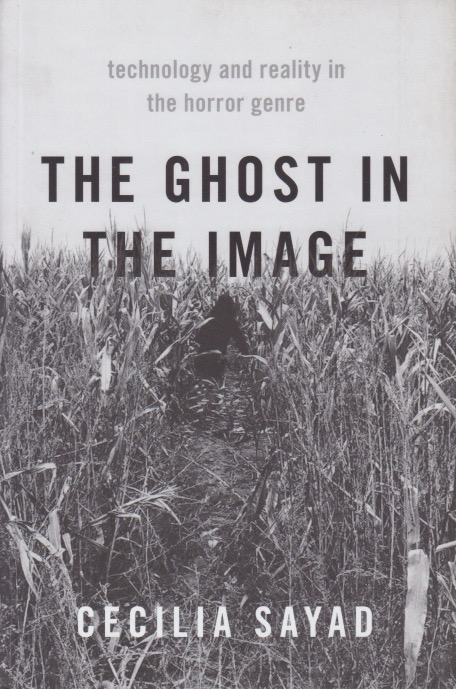
Theory can be tough to stomach, but once you get through it you can often find all kinds of valuables in an academic book.  I learned quite a lot from Cecilia Sayad’s The Ghost in the Image.  It’s a brief but powerful book.  One of the under-explored areas of life is how our inventions affect reality.  We invent things and they change us.  Photography is one of those inventions and it seems like we should step back for a decade or two and try to figure out just how it’s remade reality.  Sayad explores that specifically in the realm of horror.  Not just movies, but other technology associated with images (and even other senses).  She makes the case that the frame that separates an image from the “reality” outside the frame—think of going to an art museum and how the frame sets a painting off from the “real” wall behind it—has become permeable.  Thus the theoretical part.

Applying that principle to horror, she has fascinating chapters on Amityville and Enfield, the found-footage fictions of Paranormal Activity, and the Slender Man meme.  She also discusses spirit photography, which is really the precursor to the horror film, and what used to be called video games.  I’m not a gamer, I’m afraid, and I’m sure I’m missing out on some culture because of it, but researching and writing books beyond work takes up quite a bit of time.  In any case, the amazing thing is that Sayad does all this without judging.  She doesn’t say that ghosts are “real” but she doesn’t say that they’re not.  Part of the reason for this is that reality is part of the quest here.  We define reality partially (largely) through our technology.  Would politicians become “celebrities” without photographic media?  They’re hardly the cream of the crop anymore (let’s be honest here).

So this book left me thinking.  Imaging technology invents, instigates a new reality for creatures as visually oriented as our species tends to be.  Sayad also explores how other senses are brought into this—sound, most obviously, for movies—and help to confirm that reality.  Theaters have toyed with touch and smells to widen the diegesis of the movie (taste is a bit trickier), each layer brings the image further outside the frame.  The internet has, of course, only accelerated all of this.  The fact that horror is the genre that perhaps best lends itself to this kind of impact on society is, in itself, a telling point.  I need to step back for some time and ponder how this all fits together in what I perceive of as reality.


How Many Stairs?

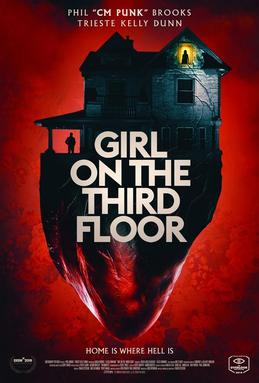
It tries.  It really does. Still, The Girl on the Third Floor is just not that good.  It got quite a few accolades, but I was waiting for something extraordinary.  It seemed to fall down on two counts—the writing isn’t very good and we’re allowed to build very little sympathy for the protagonist.  If you can’t feel for somebody and the dialogue does only light lifting, what’ve you got to go on?  Some critics suggest that if you know the star (Phil Brooks) and his persona you’ll appreciate it more.  That must be a problem for many movies where baked-in personalities are counted on—early Disney used to do this to make cartoons attractive to adults.  If you don’t know them the appeal evaporates.  In any case, a couple buys a house. He (Don) goes to renovate it while she (Liz) works to support them.  The house used to be a brothel and Don has no problem cheating on his wife when a hot ghost shows up.

The reason I watched the movie was the connection between horror and religion.  The first person to check in on Don is Ellie Mueller, the pastor of the church across the street.  She’s simply identified as “Protestant” and she drinks bourbon and swears, so it’s fair to guess she’s not Baptist.  In any case, she warns him about the house but ever confident, Don carries on.  Later, as all the ghosts come out and Liz shows up unexpectedly, Ellie shows up again.  This time she advises Liz to leave but she frames the evil of the house as a matter of choices.  Don (who succumbed to the ghosts) consistently made bad choices in order to get what he wants.  Liz and Ellie, however, think of others.  In that sense there’s a parable here.

The haunted house tropes have mostly been seen before.  Some manage to be a bit freaky, but many of them don’t really shock.  Or maybe I’ve seen too many movies for them to have an impact.  The heavy metal soundtrack is a bit—ahem—heavy-handed.  Using marbles as weapons is a little unexpected and angry ghosts often make for effective monsters.  Still, these seem to succumb to a sledge hammer pretty easily.  One of them keeps coming back, however, and one is more a monster than a ghost.  In any case, there was real effort here.  For my taste, however, good writing can cover a multitude of sins.  And it really helps if you sympathize with the main protagonist, even if just a smidgen.


More Young Fear

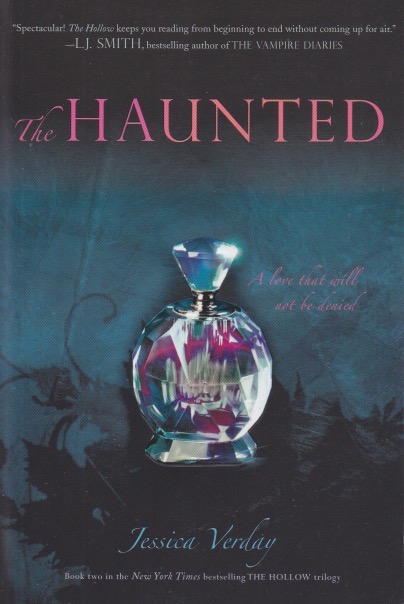
Okay, so the second one has a cliff-hanger ending.  I should’ve seen that coming.  This installment of Jessica Verday’s The Hollow Trilogy moves the story pretty directly into the realm of the dead pervading the everyday world of Sleepy Hollow.  For young adult literature from the era of Twilight, it does raise issues that, although they were around when I was young, have become more prominent in the thinking of teens.  Overdoses, college choices, attempted rape (or at least threatened), seem like things our society might’ve either overcome or matured about.  Instead, we start putting these pressures on our young and wonder why society has a hard time coping.  Sometimes I wonder if we’ve made society too complex.  As an adult it’s become so complex that I’m never quite sure if I’m getting things done correctly, or if they might come back to haunt me later.

In any case, in the first novel of the set, The Hollow, the protagonist/narrator, Abbey, discovers that her boyfriend has been dead all along.  The Haunted, volume two, is about how she copes with that.  I read many years ago that certain narratives are something like preloaded in human brains.  Given even the most basic pieces, our minds fill in the blanks.  When girl meets boy and likes him, our thoughts go toward getting them together.  Of course, a story is all about the difficulties that threaten to prevent that from happening.  For most of us, we start to experience these things as teens and even as adults we remember it well.  These are intense emotions and society complicates them because just when we think we know what we want at high school age, college separates us and we start over again.  Thus college visits.  It’s even more complicated when your boyfriend is a shade/ghost.

How the material and spiritual relate is an unresolved issue.   Materialists have already decided by cutting the spiritual out altogether, but the rest of us, perhaps trusting our feelings more, wonder.  Although these books are more paranormal romances than philosophical musings, they nevertheless raise questions that even adults struggle with (or should).  We don’t have all the answers and we hope that our children might get further along this path than we did.  Young adult literature helps them do so.  Some choose to respond by banning books.  The rest of us know that literature can help to discuss difficult topics in a world we’ve made far too complicated, for young and old alike.


Good Horror

As strange as it may seem, my goal in life has always been to bring more good into the world.  As they phrase it in Nerdfighteria, helping “to decrease world suck.”  There are many ways to do this—give encouraging words to others in a cancer support community, volunteer time (structured or otherwise) to civic organizations, even trying to help make sense of it all through an obscure blog.  My motivation in entering teaching as a profession was to help make the world a better place.  (Also, I’m pretty good at it.)  When that fell through as a profession, I began yet another odd way to try to bring good into the world.  Writing books about religion and horror.  Please hear me out—this is part of a larger plan which, in the nature of plans, may or may not work out.  It involves getting people’s attention for a moment (kind of like teaching).

There are a significant number of people who enjoy horror.  The vast majority of them are not bad people.  They find something enjoyable, or cathartic, or perhaps even spiritual in consuming horror.  I’m one of them.  My piece “Exorcising The Pope’s Exorcist” appeared yesterday on Horror Homeroom.  (Hey, it’s free—check it out!)  Exorcism, as a social/religious phenomenon, owes its popularity to a horror movie.  And if the rite brings some measure of relief to someone suffering mentally, spiritually, or physically, it has decreased—you guessed it—world suck.  It makes this planet just a little bit better for a little while.  Movies that promote exorcism can, believe it or not, help people.

Some time back I was invited to offer a course at the Miskatonic Institute of Horror Studies.  I am deeply honored because if you look at the list of names of past (and present) teachers there are some superstars in there.  By the way, my course is titled “Believing in Sleepy Hollow.”  (Maybe those of you who read daily may now understand why I’ve been posting so much on Sleepy Hollow of late.)  Teaching a course that will bring enjoyment to others is a way of bringing a small measure of good into the world.  Once you leave secondary education, you’re never obligated to take a course.  It’s something we want to do. That means if someone gets something out of my course I’ve brought just a little bit of good into the world.  It counts, I hope, toward my life’s amorphous goal.


Christian Horror

Following the lead of a friend (I don’t regularly read Christianity Today on my own), I found “How Horror Uncovers Our ‘Holy’ Hypocrisy,” by Sara Kyoungah White.  It seems that some evangelical Christians have begun to notice the popularity of horror movies.  This isn’t the same as condoning, of course, and this article took me back to the writing of Holy Horror.  One of the reasons for the book was that, at the time, few people (very few) were exploring religion and horror.  Web searches inevitably brought up the question “is it okay for Christians [subtext, “evangelicals”] to watch horror?”.  Since that time I’ve been exploring why the connection of horror and religion is so appealing.  If you’re a daily reader here, no doubt you’ve noticed it before.  I read on, noting that White has a difficult time finding anything redeeming in horror, apart from trying to stretch it to cover the usual evangelical concerns.

Photo by Stefano Pollio on Unsplash

Some of us, however, are seeking a kind of holy grail—an articulation of how horror contributes positively to spirituality.  That it does is beyond question.  The real puzzle is why.  It might help if we had a better definition of spirituality.  What exactly do we mean by that?  Even some of my Unitarian friends are put off by the word.  Still, it’s part of the human make-up.  You might call it “mind,” “psyche,” “personality,” “spirit,” “consciousness,” or “soul”—or any of a host of other words—but there’s something about people that makes us reflect on realities outside ourselves.  Some of do it with a great deal of awareness that we are undertaking such a quest.  Others may seldom or never think of it consciously.  We all do it, however.  We don’t all use horror to help us think through, or experience it.

I have long used movies for therapy.  It’s only been in the last several years that I’ve begun to notice that horror puts me into a spiritual frame of mind more than other movies tend to.  White notes “nearly every one of the top horror movies of all time deal with some kind of Christian theme or portray a Christian character.”  Some of us have noticed that in the course of our exploration of the genre.  Of course, that depends on how we decide on “the top horror movies of all time.”  The list she cites is the ever-shifting IMDb “Top 50 Horror Movies” list, which has far too many recent films on it.  Still, her claim holds if you go back to the classics and move forward.  There’s definitely a connection there, and, I suspect, it has nothing to do with the showcasing of our sins.