How Many Stairs?

It tries.  It really does. Still, The Girl on the Third Floor is just not that good.  It got quite a few accolades, but I was waiting for something extraordinary.  It seemed to fall down on two counts—the writing isn’t very good and we’re allowed to build very little sympathy for the protagonist.  If you can’t feel for somebody and the dialogue does only light lifting, what’ve you got to go on?  Some critics suggest that if you know the star (Phil Brooks) and his persona you’ll appreciate it more.  That must be a problem for many movies where baked-in personalities are counted on—early Disney used to do this to make cartoons attractive to adults.  If you don’t know them the appeal evaporates.  In any case, a couple buys a house. He (Don) goes to renovate it while she (Liz) works to support them.  The house used to be a brothel and Don has no problem cheating on his wife when a hot ghost shows up.

The reason I watched the movie was the connection between horror and religion.  The first person to check in on Don is Ellie Mueller, the pastor of the church across the street.  She’s simply identified as “Protestant” and she drinks bourbon and swears, so it’s fair to guess she’s not Baptist.  In any case, she warns him about the house but ever confident, Don carries on.  Later, as all the ghosts come out and Liz shows up unexpectedly, Ellie shows up again.  This time she advises Liz to leave but she frames the evil of the house as a matter of choices.  Don (who succumbed to the ghosts) consistently made bad choices in order to get what he wants.  Liz and Ellie, however, think of others.  In that sense there’s a parable here.

The haunted house tropes have mostly been seen before.  Some manage to be a bit freaky, but many of them don’t really shock.  Or maybe I’ve seen too many movies for them to have an impact.  The heavy metal soundtrack is a bit—ahem—heavy-handed.  Using marbles as weapons is a little unexpected and angry ghosts often make for effective monsters.  Still, these seem to succumb to a sledge hammer pretty easily.  One of them keeps coming back, however, and one is more a monster than a ghost.  In any case, there was real effort here.  For my taste, however, good writing can cover a multitude of sins.  And it really helps if you sympathize with the main protagonist, even if just a smidgen.


More Young Fear

Okay, so the second one has a cliff-hanger ending.  I should’ve seen that coming.  This installment of Jessica Verday’s The Hollow Trilogy moves the story pretty directly into the realm of the dead pervading the everyday world of Sleepy Hollow.  For young adult literature from the era of Twilight, it does raise issues that, although they were around when I was young, have become more prominent in the thinking of teens.  Overdoses, college choices, attempted rape (or at least threatened), seem like things our society might’ve either overcome or matured about.  Instead, we start putting these pressures on our young and wonder why society has a hard time coping.  Sometimes I wonder if we’ve made society too complex.  As an adult it’s become so complex that I’m never quite sure if I’m getting things done correctly, or if they might come back to haunt me later.

In any case, in the first novel of the set, The Hollow, the protagonist/narrator, Abbey, discovers that her boyfriend has been dead all along.  The Haunted, volume two, is about how she copes with that.  I read many years ago that certain narratives are something like preloaded in human brains.  Given even the most basic pieces, our minds fill in the blanks.  When girl meets boy and likes him, our thoughts go toward getting them together.  Of course, a story is all about the difficulties that threaten to prevent that from happening.  For most of us, we start to experience these things as teens and even as adults we remember it well.  These are intense emotions and society complicates them because just when we think we know what we want at high school age, college separates us and we start over again.  Thus college visits.  It’s even more complicated when your boyfriend is a shade/ghost.

How the material and spiritual relate is an unresolved issue.   Materialists have already decided by cutting the spiritual out altogether, but the rest of us, perhaps trusting our feelings more, wonder.  Although these books are more paranormal romances than philosophical musings, they nevertheless raise questions that even adults struggle with (or should).  We don’t have all the answers and we hope that our children might get further along this path than we did.  Young adult literature helps them do so.  Some choose to respond by banning books.  The rest of us know that literature can help to discuss difficult topics in a world we’ve made far too complicated, for young and old alike.


Good Horror

As strange as it may seem, my goal in life has always been to bring more good into the world.  As they phrase it in Nerdfighteria, helping “to decrease world suck.”  There are many ways to do this—give encouraging words to others in a cancer support community, volunteer time (structured or otherwise) to civic organizations, even trying to help make sense of it all through an obscure blog.  My motivation in entering teaching as a profession was to help make the world a better place.  (Also, I’m pretty good at it.)  When that fell through as a profession, I began yet another odd way to try to bring good into the world.  Writing books about religion and horror.  Please hear me out—this is part of a larger plan which, in the nature of plans, may or may not work out.  It involves getting people’s attention for a moment (kind of like teaching).

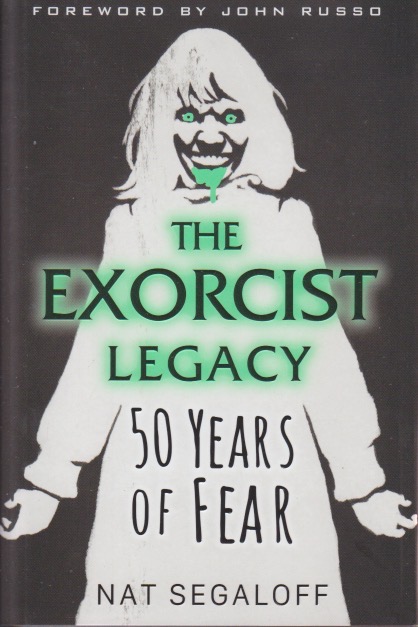
There are a significant number of people who enjoy horror.  The vast majority of them are not bad people.  They find something enjoyable, or cathartic, or perhaps even spiritual in consuming horror.  I’m one of them.  My piece “Exorcising The Pope’s Exorcist” appeared yesterday on Horror Homeroom.  (Hey, it’s free—check it out!)  Exorcism, as a social/religious phenomenon, owes its popularity to a horror movie.  And if the rite brings some measure of relief to someone suffering mentally, spiritually, or physically, it has decreased—you guessed it—world suck.  It makes this planet just a little bit better for a little while.  Movies that promote exorcism can, believe it or not, help people.

Some time back I was invited to offer a course at the Miskatonic Institute of Horror Studies.  I am deeply honored because if you look at the list of names of past (and present) teachers there are some superstars in there.  By the way, my course is titled “Believing in Sleepy Hollow.”  (Maybe those of you who read daily may now understand why I’ve been posting so much on Sleepy Hollow of late.)  Teaching a course that will bring enjoyment to others is a way of bringing a small measure of good into the world.  Once you leave secondary education, you’re never obligated to take a course.  It’s something we want to do. That means if someone gets something out of my course I’ve brought just a little bit of good into the world.  It counts, I hope, toward my life’s amorphous goal.


Christian Horror

Following the lead of a friend (I don’t regularly read Christianity Today on my own), I found “How Horror Uncovers Our ‘Holy’ Hypocrisy,” by Sara Kyoungah White.  It seems that some evangelical Christians have begun to notice the popularity of horror movies.  This isn’t the same as condoning, of course, and this article took me back to the writing of Holy Horror.  One of the reasons for the book was that, at the time, few people (very few) were exploring religion and horror.  Web searches inevitably brought up the question “is it okay for Christians [subtext, “evangelicals”] to watch horror?”.  Since that time I’ve been exploring why the connection of horror and religion is so appealing.  If you’re a daily reader here, no doubt you’ve noticed it before.  I read on, noting that White has a difficult time finding anything redeeming in horror, apart from trying to stretch it to cover the usual evangelical concerns.

Photo by Stefano Pollio on Unsplash

Some of us, however, are seeking a kind of holy grail—an articulation of how horror contributes positively to spirituality.  That it does is beyond question.  The real puzzle is why.  It might help if we had a better definition of spirituality.  What exactly do we mean by that?  Even some of my Unitarian friends are put off by the word.  Still, it’s part of the human make-up.  You might call it “mind,” “psyche,” “personality,” “spirit,” “consciousness,” or “soul”—or any of a host of other words—but there’s something about people that makes us reflect on realities outside ourselves.  Some of do it with a great deal of awareness that we are undertaking such a quest.  Others may seldom or never think of it consciously.  We all do it, however.  We don’t all use horror to help us think through, or experience it.

I have long used movies for therapy.  It’s only been in the last several years that I’ve begun to notice that horror puts me into a spiritual frame of mind more than other movies tend to.  White notes “nearly every one of the top horror movies of all time deal with some kind of Christian theme or portray a Christian character.”  Some of us have noticed that in the course of our exploration of the genre.  Of course, that depends on how we decide on “the top horror movies of all time.”  The list she cites is the ever-shifting IMDb “Top 50 Horror Movies” list, which has far too many recent films on it.  Still, her claim holds if you go back to the classics and move forward.  There’s definitely a connection there, and, I suspect, it has nothing to do with the showcasing of our sins.


Lights, Camera

I’m not quite sure how the monster in Lights Out should be classified.  Perhaps a tulpa?  A tulpa is a materialized being brought about by the power of thought, and at the end this seems to fit.  But I’m getting ahead of myself.  Rebecca and Martin are half-siblings.  Their mother Sophie has abandonment issues—I knew this was getting into personal territory here, but I kept watching.  Rebecca’s father had left when she was young and Martin’s father is killed in the film’s opening scene.  But there’s a monster who’s responsible for all of this.  Rebecca, it seems, fears attachment.  Her boyfriend Bret, however, is faithful and devoted.  All of them are threatened by the entity Diana, who can’t stand light.  She can only be seen in the dark.  She is the one who killed Martins’s father (and possibly Rebecca’s).

This intriguing premise is tied in with the idea of mental illness.  Sophie, the mother, spent some of her early years in a mental hospital being treated for depression.  It was there that she met and befriended Diana.  Diana died, but not before insinuating herself into Sophie’s mind.  This is why a tulpa suggests itself.  A woman who fears abandonment conjures an entity who ends up developing its own agenda.  Diana doesn’t want anyone to discover who or what she is.  Such knowledge would offer a way of treating Sophie’s mental illness that might prevent Diana from existing in her mind.  This is pretty sophisticated stuff.  Not only that, but the movie plays on the very natural human fear of the dark.  It makes you want to turn on all the lights.

I won’t spoil the ending here, but I will say it’s disturbing.  I also think that it’s important to note how mental illness here is implicated as a kind of strength.  Sophie felt abandoned and created a means of feeling accepted.  If, however, Diana was really a separate entity inhabiting Sophie’s mind then we have here a form of possession.  I don’t know of anyone who’s parsed movie monsters to so fine a degree but it seems to me a project worth undertaking.  I’m not suggesting science should be used to appreciate horror films—there is a science of studying monsters, called teratology, but its use in the mainstream has come to mean something different—yet we can use scientific methods to treat our various fears.  We do tend to find light from looking at and understanding what exactly our monsters are.  


Hidden Improvement

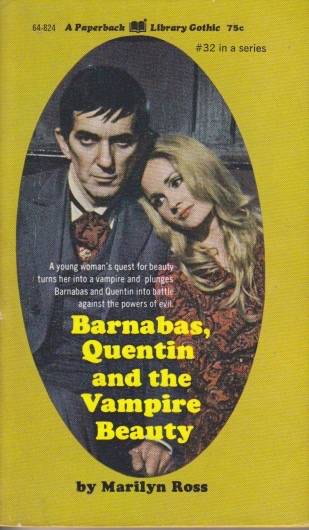
I believe in improvement.  Even for a journeyman writer like W. E. D. (Marilyn) Ross.  At least in his Dark Shadows books.  For much of the series the plot is largely the same: a young woman is threatened and finds herself in Collinwood.  Often the threat comes in the form of a mysterious stranger.  The woman falls in love with Barnabas Collins, but in the end it doesn’t work out.  The bad guys are stopped, however, whether they’re supernatural or not.  In Barnabas, Quentin and the Hidden Tomb things have moved on somewhat.  The main female character, Ellen, a southern belle from just after the Civil War, doesn’t fall for Barnabas.  She is attracted to him, of course, but not really in love.  That’s a plus.  And Barnabas is temporarily cured of his vampirism in this story.  Quentin is, despite earlier story lines, really pretty good, if misunderstood.

This installment begins in the Hudson Valley where Ellen’s intended lives.  Unbeknownst to her, her fiancé has died and has been substituted with his identical twin vampire brother.  This northern family lost their fortune during the war and need the marriage to bring Ellen’s cash into the coffers/coffin.  Ellen is rescued by Barnabas, who is a family friend.  He takes her to Maine, figuring she’ll be safe there.  Unlike other women in the series, she has already fallen in love with someone other than Barnabas, so the tension is focused elsewhere.  The disguised enemies come, of course, but this story feels a bit less formulaic.

As I’ve confessed numerous times regarding this series, these are guilty pleasure books from my childhood.  I don’t read them expecting belles lettres, but rather a rush of nostalgia.  They seldom fail to deliver on that front.  There are a limited number of them.  They hearken to a different time when the ability to crank out book after book (Ross published at least 24 novels the year this one appeared—that’s the rate of two per month) didn’t hurt your ability to find a publisher.  Some of his fiction, I’m told, is quite good.  Others, such as the Dark Shadows books, are of a different purpose.  They were meant to supplement the income on an unexpectedly successful soap opera that would go on to become a cultural icon.  It will be no surprise that Barnabas and Ellen prevail in the end.  The enemies are unmasked and, strangely for the series, the vampire is destroyed.  And the legend lives on.


Not the Exorcist

It’s too bad The Pope’s Exorcist didn’t come out before Nightmares with the Bible.  In that book I tried to make the connection between demons and nightmares and in this movie Asmodeus, the “named demon” gives his name as “Nightmare.”  Released in April of this year, The Pope’s Exorcist received a considerable amount of fanfare.  Starring Russell Crowe as Fr. Gabriele Amorth (two of whose books I’ve posted on), the entirely fictionalized account ends up coming across as, I shudder to say it, rather silly.  Using just about every exorcism movie trope available, the film goes over the top and really doesn’t have much scare in it.  Let’s start from the beginning.  Fr. Amorth is in trouble at the Vatican but the Pope’s his personal friend, so no worries there.  Meanwhile an American woman has inherited a decrepit abbey in Castille, Spain.  Her late husband owned nothing else and she has to be there personally to oversee restoration, dragging her two kids with her.

It turns out that this abbey contains evidence of a centuries’ old conspiracy during the Spanish Inquisition covered up by the Vatican.  It’s also the home of Asmodeus, king of Hell.  And one of 200 locations that fallen angels came to earth.  After the demon scorches a couple of restoration workers, the woman, Julia, is left in the spooky abbey alone with her kids.  They both end up possessed, but the boy, Henry, is the focus of the body horror.  Since Asmodeus has clearly seen The Exorcist, he says outright that he’s after Fr. Amorth, who is sent by the Pope himself to take care of this.  To save the boy Amorth has to be possessed in his stead (as in The Exorcist).  Together with a younger priest (really, is any of this sounding familiar?), the demon eventually has to capitulate.

Apart from not being “based on a true story,” the movie also takes seriously the fictionalization of characters.  “The Pope,” never named, in the 1980s was John Paul II.  He’s portrayed as bearded and in poor health.  Amorth (Crowe) is also bearded, although historically Amorth, like most Roman priests, was clean-shaven.  The “silliness” of the movie derives from not having researched Roman Catholicism thoroughly.  All of this makes me wonder if an exorcism movie can be made that surpasses The Exorcist.  Much has been written on that movie since William Friedkin recently died (and much was written on it before).  It’s difficult to put a finger on just what made that film so superior.  It doesn’t stop others from trying, of course.  And now there’s talk of a sequel for The Pope’s Exorcist.  The nightmares, it seems, never end.


In the Air

It’s a strange but strong connection.  Between Halloween and me, that is.  I’ve always loved the holiday.  I don’t like being scared, however, and gory horror movies aren’t my favorites.  Still, I’m not alone with my fascination.  Lesley Pratt Bannatyne has written a couple of thorough books on the holiday.  Halloween Nation: Behind the Scenes of America’s Fright Night looks at various aspects of Halloween as it’s celebrated in America.  It’s both an imported and exported holiday, of course.  The raw materials came in mostly from Celtic countries—Ireland in particular—and got mixed in with other traditions here before being sent out to the rest of the world as it’s now known.  The thing about Halloween, or any holiday, is that it’s impossible to capture all of it in a book.  Halloween has many associations and a good few of them are explored here. Halloween’s in the air as retail stores know. So let’s take a look.

Bannatyne’s chapters on ghosts, witches, and pumpkins are particularly good.  The pumpkin connection, which is an American innovation, is particularly telling.  It’s been a few years since I’ve carved a jack-o-lantern, but it is one of the fond memories of childhood.  The challenging orange palette that has a wonderful evocative smell and feel.  Bannatyne gives good information about pumpkins and how they’ve become central to the holiday.  Indeed, the symbol that gives Halloween away is the jack-o-lantern.  I found many little gems throughout the book.

Halloween Nation is amply illustrated, in full color, no less.  Bannatyne has a good idea of what Americans do for fun.  Capturing the fulness of the holiday in one book may be impossible, but here you’ll have tours of zombie walks, fan conferences, the Greenwich Village parade, over-the-top haunted house attractions, naked pumpkin runs, and pumpkin beer breweries.  You’ll learn about the history of trick-or-treating and how grown-ups came to embrace what really took off as a day for childish pranks.  Halloween is an expansive occasion.  Holidays also have their own local flavors.  My early memories are of small town celebrations where even poor folk like us could join in the fun.  Nashotah House, for all its problems, did Halloween well when I was there.  To really do it right takes time that seems difficult to come by these days.  It’s just as easy to cue up a horror movie and promise to do better next year.  Still, every year I hope to cut through the jungle of obligations and give the holiday its due.  It’s usually a work day (Tuesday this year), but at least now I’ll be better informed about what I wish I were doing instead.


Still Not Resolved

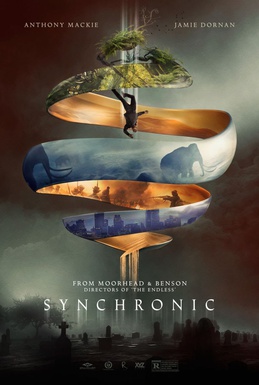
Yesterday I posted about the independent movie Resolution.   It’s actually part of a set, the other half of which is titled The Endless.  In The Endless the director and cinematographer, and co-directors of both films, interject themselves into the story.  While some suggest it’s only a partial sequel, to me it felt like a part of the same tale, giving, as it were, resolution to both movies.  Philosophical horror is something I always associate with Thomas Ligotti, but Justin Benson and Aaron Moorhead have given it a double punch with these two films.  So a pair of brothers (Justin and Aaron) go back to visit a “UFO cult” in which they were raised.  This immediately puts you on edge because Aaron doesn’t seem convinced that it was such a bad life, compared to that which they’ve been able to find on their own after leaving.

There’s definitely something very weird going on at Camp Arcadia, though.  Justin had convinced Aaron that it was a suicide cult (think Heaven’s Gate), but it turns out that everyone’s still alive, and apparently thriving.  Their means of livelihood was threatened when Justin went public that they were a cult, but they’re nevertheless glad to see their ex-members.  Once they get integrated into the camp, characters from Resolution begin appearing.  Both movies feature the same monster and the same means of delivering messages via media—often outdated.  The brothers come to understand that they are being trapped in a time loop and—spoiler here—that the cult members are in a sense dead since they live the same loop over and over.

In addition to being philosophical horror, The Endless contains substantial theological sophistication as well.  Discussions about God, and church, and belief systems run through the movie.  Thinking deeply can lead to horror scenarios such as this.  People tend to feel trapped when caught in nothing but repetition.  We’re curious and we seek a variety of experiences and new stimuli.  Eastern religions recognize the problem as well and offer ways to break out of the cycle of reincarnation (samsara).  The idea of using such things to suggest that this kind of repetition is a monster—when Justin sees it he’s convinced it’s a monster—is rich fodder for a thoughtful horror film.  At the end, it seems that “UFO cult” is an unfair characterization for the commune at Camp Arcadia, but, with enough determination, it’s just perhaps possible to break out of the cycle.  This one’s worth pondering.


Not Resolved

Some movies are intentionally mind-blowing.  Knowing the kind of movies I like, a friend suggested Resolution with the enticing note that it is free on Amazon Prime.  Since anything free is worth saving up for, and since I was having trouble staying awake on a warm, wet Sunday afternoon when the lawn couldn’t be mowed, I gave it a try.  Even after it was over I wasn’t sure what I’d seen, but I was glad that I had.  Part of the draw is how convincing the acting is.  Another is the bizarre nature of the threats.  Like Sinister (also released in 2012), Resolution involves found media that tell a disturbing story.  Only in the case of Resolution it’s set in a remote part of an Indian reservation and it involves a drug addict and his friend who’s attempting an intervention.

With the addict handcuffed to a pipe, his rescuer encounters a strange set of people in the area and has bizarre media delivered to him by an unknown party.  In fact, he goes to his friend because of a video emailed to him by the addict.  Only the addict didn’t send it.  The media (records, color slides, video tapes, computer files) tell increasingly strange stories until the media also begin to show the two friends almost instantaneously.  A stoned French researcher tells the rescuer that there might be some time-space dislocation here, or there may be a monster.  Reluctant to release the addict until he has several days to get the drugs out of his system, the friend attempts to figure out what all this means.  Then the media begin to show their short-term future.

I won’t say how it ends, but I will say that the title Resolution is well-chosen.  This is a very creepy movie.  A remote location where things just don’t seem right and the conviction that just a few days will save a friend’s life but only if they stay in place is a great concept.  In many ways it’s a movie about stories.  The resolution is the end of the story and that’s something that’s successfully kept up in the air throughout.  Anyone who writes stories knows the feeling of writing yourself into a corner.  Playing around with space-time opens up possibilities, however, corners or not.  I can’t say that I understood everything that was going on here, but it was edgy enough to keep me alert, even on a muggy, drowsy Sunday afternoon.


Fear and Reviewing

I have a confession to make.  I don’t always read reviews of my books.  I’m always a little scared, even though they made it through the review process and were accepted for publication, there will be those who don’t like them.  I’ve only seen three full reviews of Nightmares with the Bible and two of them were negative.  Eventually, however, I generally come around to taking a look.  Yesterday I found the first review of The Wicker Man on FilmJuice.  It took some time before I could settle down to read it, and to my great relief it was a positive review.  You see, I knew I was taking a chance by writing this book because I was approaching the movie from an unexpected angle.  That often makes fans uncomfortable.  I’m glad that at least one reader found it worth his time. (By the way, I tried to leave a thank you but WordPress, ironically, wouldn’t let me log in—hey guys, I’ve been blogging here for 14 years!)

I’ve watched horror movies since I was a kid.  I started writing about them in 2009, back when I started this blog.  It was tentative at first, being trained as a religion scholar as I was.  I think many of my early readers didn’t know what to make of it when I wrote about horror—wasn’t this a blog about religion?  Well, actually it’s a blog in the old sense of the word, a log.  Ship logs and diaries both depend on what’s going on at the time.  I still work with religion for a job, but I rely on horror films to help me make sense of life.  Since I watch them, I write about them.  Holy Horror was a bit of an experiment for me.  It didn’t exactly become a best seller, but it brought me into the conversation.

Holy Horror was the first book where I discussed The Wicker Man.  I’d discussed it many times on this blog, of course, but having a book published means that somebody’s invested in your thoughts, or at least thinks they can make a buck or two from them.  (This blog is entirely non-profit.)  I knew the Devil’s Advocates series was lacking a volume on The Wicker Man so I asked the series editor if he’d be interested in a new angle.  That set the direction for the next couple years of my life.  Despite my skittishness, I’m delighted to have a positive review on my reading of the film.  If negative reviews come (and they likely will) I’ll at least have the satisfaction of knowing one reader gets what I’m trying to do here.  And I confess that it feels good.


Young Fear

The amazing thing about people is that even when you’re aging you remember what it was like to be young.  I used to have to stop and consciously think of that if I wanted to realize it when talking to those older than myself.  Now that I’m no longer young I don’t need to have it explained.  I’m not afraid to read teen literature.  Those who write it well (John Green comes immediately to mind) make you feel like you did when you were a teen.  I read Jessica Verday’s The Hollow because of, well, the Hollow.  Sleepy Hollow, that is.  This is a young adult novel and even before I was half-way through I got the strong impression that to be satisfied with the story I’d need to read the entire trilogy.  This was a relief since I’ve read Sleepy Hollow novel series before where I had no real desire to press on beyond volume one.

The story isn’t a modern-day retelling of Washington Irving’s legend.  It is set pretty much in the present (although, I notice, tech changes so fast that it’s immediately clear that this was set a decade ago.  Has anyone considered how this constant change will affect literature?) where Abbey, the protagonist, is trying to come to terms with her best friend’s death.  Since her best friend was really her only friend (some of us know what that can be like), she finds solace among strangers.  Those strangers, it becomes clear late in the novel, are not what they seem to be.  Throughout the novel both quotes from and discusses Irving’s story—how could any tale set in Sleepy Hollow not do so?

In any case, this is a quick read despite its size.  Verday captures what it’s like to be a teenager.  My experience of teenage girls was always limited, but I have no reason to doubt that she represents that part accurately.  The funny thing about being an adult is that you learn that you don’t really know how to be one.  For me, dips into youth help to center me when this whole adult thing just doesn’t seem to make any sense.  I don’t want to give any spoilers for the story here, but I’ll likely move on to the second novel in the series before too long, and by the time you get to second in the series it’s okay to assume those reading about it won’t mind a bit more information.  At least that’s the way I think about it, having once been young.


Ghoulish Night

Night of the Ghouls, I like to think that even as a child I would have opined, is a bit silly.  It does show improvement over some of Ed Wood’s other films and the plot is really no more harebrained than some movies I did watch as a kid.  I’ve been trying to figure Wood out.  He was apparently incompetent, but he had no formal training and that could explain things a bit.  He was also creative.  This film is broadly a sequel to the worse Bride of the Monster.  Although only a couple of characters appear in both films, there is quite a bit of reference to the earlier story.  There was a mad scientist who made monsters.  The house burned down (actually an atomic explosion in the former), but someone—no-one knows who—rebuilt on the same location.

In a typically convoluted Wood plot (he wrote as well as directed the film), a bogus necromancer (who is actually, without knowing it, a really powerful necromancer) bilks clients out of their money by raising their dead loved ones for a few minutes.  He keeps the police and others away by having his young female assistant pretend to be a ghost outside the house.  But then she runs into an actual vampiric ghost who’s killing people who wander onto the property.  The police eventually decide to investigate and prove themselves as incompetent as the writing for the film.  They do manage to put an end to the fraudulent seances but it’s up to the real raised dead to put an end to Dr. Acula and his assistant.  At least there’s no atomic explosion at the finish.

The film, in Wood style, is black-and-white and the props are cheap and not really convincing.  A bit of the movie seems to have been intentional comic relief.  It doesn’t really work as a horror film because there’s nothing really scary about it.  Wood was a lifelong fan of horror movies, but fandom doesn’t always equal the ability to replicate the object of desire.  There are several possible horror atmospheres—Poe horror is quite different from Lovecraft horror, for example.  Wood seems to have been unable to strike a vein, however, that was close to an authentic horror feel.  The Scooby-Dooesque role of the necromancer doesn’t really help, I’m afraid.  Still, for fans this is vintage Ed Wood work.  I can’t claim to have figured him out, but if you’ve a hankering for a bad movie, this isn’t a horrible choice.


Ghostly Book

Recently I’ve been thinking about internet searching—how some information is difficult to find.  This book provides an example.  I saw what we in the biz call a “new book announcement” (NBA for bookish sorts).  Since I’ve been reading about the Hudson Valley the subtitle of Ghosts in Residence (Stories from Haunted Hudson Valley) caught my eye.  I assumed it was a new book and eagerly awaited its release.  When it arrived I discovered that it was a “new in paperback” (NiP) edition of a book published in 1986.  This edition, published this year, didn’t update things, including author information.  Given that H. A. von Behr was born in 1902, I doubt he’s still alive, but the book simply borrows the LCCP (Library of Congress Cataloging-in-Publication) data from 1986, showing the author’s dates as 1902–  .  Perhaps unintentionally appropriate for a book about ghosts.

This is an odd book, all around.  Although published in 1986, much of it deals with even earlier times—the author’s recollections of the forties—as well as some more recent events.  Hans von Behr cuts the image of a country gentleman while his neighbors in the Valley go on fox hunts and he has what seem like daily cocktail parties on the lawn.  He dashes off an article about his favorite dog and gets a healthy check from Outdoor Life.  This is a different world.  But then there are the ghosts.  But more than that, also strange happenings.  The ghost tales are intriguing, and some of the other strange events head-scratching.  The whole has a quasi-autobiographical aspect to it, but while not revealing too much.  A couple chapters deal with hauntings in Germany.

My web searching for H. A. von Behr revealed very little.  He was a retired scientist and photographer (he had some high profile clients) and the book contains many of his photographs of the locations discussed.  This short book explains how he came to purchase a haunted farmhouse upstate for a second home (again, a different world), how he discovered it was haunted, and how many of his friends and acquaintances revealed, over time, that their houses also had ghosts.  The book is charming in its own way, and a quick read.  Still, it’s a little disorienting when you can’t find more information about someone online.  The options are to do library research (my favorite kind) but am I really that curious about this author?  I wanted to read about the ghosts, and that I did.  And many other incidental things besides.


Forgetting Witch

Being forgotten.  Isn’t that one of our greatest fears?  We want to be remembered, our desperate “Kilroy was here”s scribbled on the impermanent earth.  This is the fear that’s at play in The Wretched.  This fairly low budget horror film came to hold the record of being a box-office top earner for six consecutive weeks in 2020.  This was a technicality, of course.  The pandemic was in full swing and other major motion pictures were put on hold.  The Wretched played on, earning little, but more than other films.  It’s not a great movie, but it’s not a bad one either.  It all has to do with what might best be called a “witch.”  In reality, the monster is based only in part on witch traditions, but the twist is this monster makes you forget the people she takes as her victims.

The story hinging on an impending divorce and a somewhat rudderless young man being sent to live with his father in Michigan while his parents sort things out.  Ben, the young man, notices the neighbor’s young Goth wife, but something’s strange about her.  While in the woods, she and her son encountered the monster—revealed as a witch by the occult symbol carved into a tree near her den.  She steals the family baby (you’ll probably hear echoes of The Witch here, and you wouldn’t be wrong) and the family forgets there was a baby.  She then takes over the body of the mother.  Ben spies on them, Rear Window-style, when he’s not at work.  Soon the older son of the couple is missing, and the father claims they have no children.

Ben, while starting a romance with Mallory, a girl from work, pieces together what’s going on, but nobody believes him.  The problem is the missing persons are all forgotten.  To me, anyway, that was the scary part.  Ironically, while not literally so, the movie itself has been forgotten.  We all remember those days of panic in the spring of three years ago.  Long days when we didn’t leave our homes because some killer virus was rapidly spreading and the leader of the country simply didn’t care.  Those who released movies (or published books) in 2020 know that their work was quickly forgotten.  People had other things on their minds then.  I still don’t quite get why it’s called The Wretched, unless it’s perhaps those who are forgotten.  If so, the movie may become a parable of the many creative works that emerged during a time when our collective mind was clearly elsewhere.