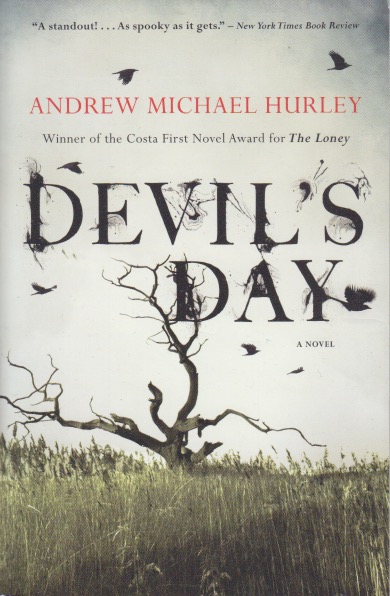
Devils and Days

The kind of devil envisioned by Andrew Michael Hurley in Devil’s Day may not be the traditional one, but it’s scary nevertheless.  In his follow-up novel to The Loney, Hurley demonstrates that he knows the devil can still be frightening.  The Endlands, in northern England are hemmed in by the moors.  The landscape plays such a commanding role here that this can only be folk horror.  And it fits folk horror to a tee.  Tradition, an unchanging life in a land untouched by technology, and forbidding moors where survival is difficult, all amid an English sensibility brings this tale into the folk category neatly.  As should be clear already, Hurley is well aware that religion and horror belong together.  This novel makes their companionship clear.

John Pentecost (note the name) has decided that he and his young, expectant wife—both of whom hold professional jobs—are going to move back to the family sheep farm.  The death of John’s grandfather means that his own father is left to run the farm alone.  Knowing that he belongs there and that his unborn child will need to tend the farm when he dies, a visit to help with the gathering of the sheep, and the celebration of Devil’s Day, turns into a lifelong commitment.  At the same time, the devil has been body-hopping as sheep are killed and family members die and a family of bullies cause more harm than their due.  There’s an inevitability to all of this and at the end you’re not really sure who the devil really is.

The story builds slowly.  By the day of the gathering you really have trouble putting it down.  Putting the Devil into a story can be a dicey proposition.  It’s been done successfully a handful of times, but that doesn’t make it an easy sell.  Our worldview has moved beyond a literal netherworld and the theology that accompanies it.  That doesn’t mean we can’t spot legitimate evil in the world.  Or that evil isn’t often vested in the garments of righteousness.  Ways of thinking that jeopardize others for theological purposes that simply don’t match what we know to be just and fair.  Powerful exploiting the weak.  Wealthy taking advantage of the poor.  Bullies getting their way through brute force.  In this novel the devil is active in a number of characters for a short time.  And you never know where that devil might turn up next.
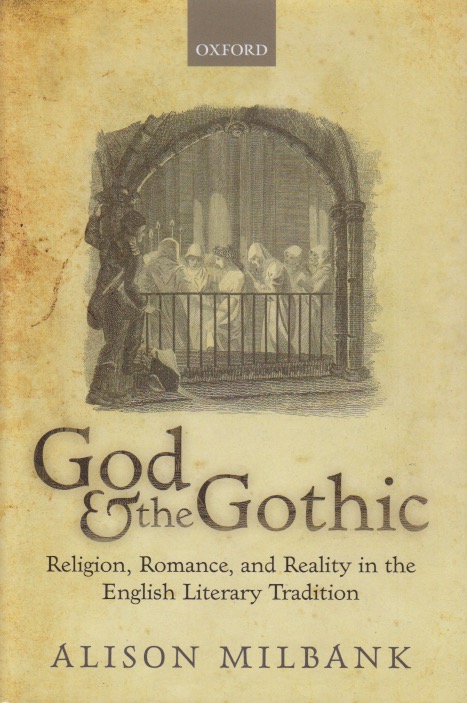

Godic

I have tried, in my halting way, to articulate what religion has to do with horror.  Alison Milbank is more experienced than I and it shows in her book God and the Gothic: Religion, Romance, and Reality in the English Literary Tradition.  There can be little doubt that the gothic is the direct ancestor to what became horror in the twentieth century.  In this intriguing study, Milbank explores just how the gothic made extensive use of religion, a sensibility that has carried over into modern horror.  Having taken a good long look at this myself—the fascination was there before Holy Horror and reaches back to my childhood—it is nevertheless affirming to find another student of human fears and fascination regarding the darkness has come to similar conclusions.  I always walk away from books like this with a renewed reading list.

Milbank points out, in the context of the literary world of England, how horror and religion not only cover the same theological ground, but come into direct contact time and again.  She does so by suggesting that Protestantism constantly seeks the lost Catholicism.  In England this came to be embodied in the Church of England, the middle way between Catholic and Protestant.  She covers various aspects of this such as melancholy, the doubling of characters, supernatural creatures, and death.  And more.  This isn’t a quick or light read, but I found myself making many connections I had missed.  Much of this, admittedly, came in books I’ve not read.  One of the problems with interest in the classic gothic is that bookstores don’t cater to selling older books and some of them weren’t successful in their own day, let alone ours.

There is a vindication in finding you’re not alone in a field.  Many of us who work on religion and horror know one another.  We’re a somewhat small, hidden group.  Milbank approaches all of this from the point of view of theology.  Theology is a somewhat distinct practice from religious studies and even from biblical studies.  There is overlap, of course, but theology is generally distinctly Christian in a context like this.  And that fits the living context of the many authors explored in this study.  Many familiar, and a few unfamiliar names appear.  What they have in common, apart from making up the cadre of gothic writers, is that religion influenced their writing and they weren’t shy about noting it.  This book explores the shadows very well and I’ll be revisiting its insights again and again.


Old Ghosts

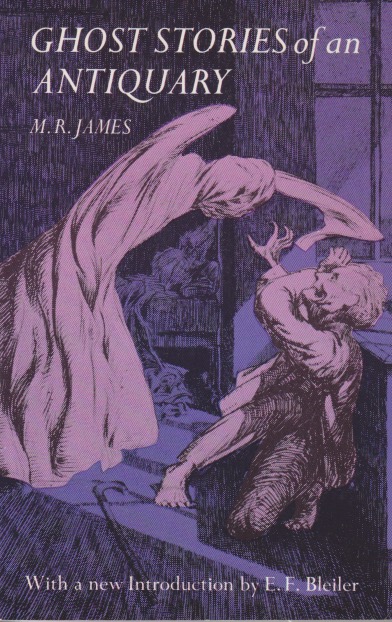
As someone who reads about ghost stories, as well as ghost stories themselves, I’ve long been aware of M. R. James.  His Ghost Stories of an Antiquary is regarded as a classic in the ghost-story genre.  Sometime in the haze, I recollect it was years ago, I found a copy at a used bookstore on the sale rack.  Something I’d been reading about ghost stories lately made me decide to read it through.  Now James was an actual antiquary.  He was also an academic at Cambridge University.  His tales are erudite, generally focusing on some ancient secret that releases ghosts, or sometimes monsters, after the individual who discovers the antiquity.  The stories are varied and inventive, but not really scary to the modern reader.  They assume a different world.  One in which antiquaries were monied individuals—often university men—who have both servants and leisure time, rarities today.

I found myself constantly asking while reading, how could they get so much time off?  How did they access such amenities that they could even get to the places where the ghosts were?  James’ world is both textual and biblical.  It’s assumed the reader knows the western canon as it stood at the turn of the nineteenth century.  The Latin, thankfully, is translated.  James, it is said, was a reluctant ghost-story writer.  A university employed medievalist, he had academic publications to mind as well.  Nevertheless he managed to publish five ghost-story collections.  Clearly the idea seemed to have had at least some appeal to him.

The aspect I find most compelling here is that an academic could admit to such an avocation.  While it’s becoming more common these days among the tenured, I always felt like I was walking the eggshell-laden pathway to academic respectability.  I was, after all, at a small, haunted seminary that few outside the Anglican communion knew about.  It was risky to admit being drawn to anything speculative.  Come to think of it, although I read novels while I was there I don’t recall reading many, if any ghost stories.  It was scary enough to be about on campus at night, particularly if you were going to the shore of the small lake to try to photograph a comet alone.  There were woods punctuated by very little light.  On campus ghost stories were fine—the librarian even showed me a photograph of a ghost in the archives—but off-campus such things could never be discussed.  I was an antiquary without any ghost stories. James showed the way.


Updating Irving

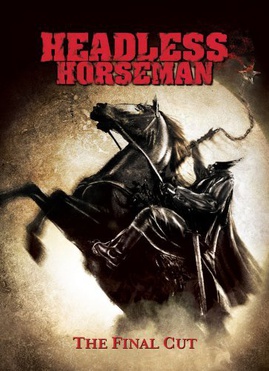
Movie quality is measured by many standards.  It’s pretty clear that budgets can make a difference—Hollywood movies generally outshine television movies.  Streaming services, like Netflix and Hulu, have been gaining ground here, but they still lack some of the qualia that come from long-term players in the industry.  Often this was measured, pre-pandemic, by box office success.  I’m not sure how it’s all quantified now, but I’m sure it still comes down to money.  To me, the deciding factor about the quality of a movie is often the writing.  Even with a modest budget excellent writing can make up a lot of ground.  Headless Horseman originally aired on the SciFi channel (now Syfy) in 2007, and I wrote a tiny bit about it in a former post.  I recently rewatched it with an eye toward how religion is integrated in it.

Headless Horseman is not a great movie.  Its writing doesn’t inspire and it leaves too many gaps in the narrative to carry the viewer along easily.  Still, religion plays an important role in the story.  This one resets Washington Irving’s tale in the south—from the license plates, Missouri.  The horseman is a serial killer who offered his victim’s heads to the hydra, the serpent that guards the entrance to Hell.  When the killer is stopped and his body sent through the gateway, he comes back every seven years to chop heads.  The town where all this takes place has the biblical name of Wormwood, and everyone in it is literally family.  So every seven years they have to trap seven outsiders to make their offering.  The person who originally stopped the killer was the local priest.

Even this brief synopsis reveals how deeply religion is engrained in this retelling.  Irving’s classic story is set in an overtly religious period (particularly Protestant, of the Reformed variety), and wears this lightly.  Everyone can be assumed to go to church and the Headless Horseman is a Hessian mercenary decapitated by a cannonball during the Revolutionary War.  Over time, with many retellings, the horror becomes more and more involved with religion.  To the point that the religion itself is the real engine of fear.  A town protecting a Hell-guarding hellion doesn’t exactly make them Satanists, but it does mean they’re not far from it.  The in-breeding is, however, a bit insensitive.  My recent rewatching wasn’t with an eye toward the Bible, as my last viewing was.  When retelling the story, however, it seems religion will surface where once it was only in the background.


Various Plagues

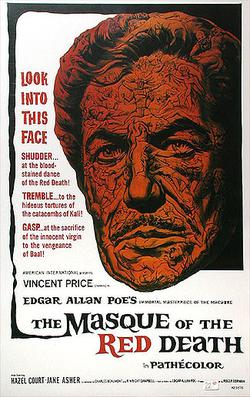
At the encouragement of a friend I watched Roger Corman’s version of Poe’s The Masque of the Red Death.  As I’ve mentioned from time to time lately, making short fiction into movies requires padding.  Poe’s tale is easily summarized: Prince Prospero and his wealthy friends attempt to socially distance themselves during the plague of the red death.  During a masquerade, one of the characters is the red death and they all succumb.  Getting about 90 minutes out of this was something to which Corman was well suited.  The interesting thing, and the reason my friend, I suspect, recommended it, is that Corman did so theologically.  Vincent Price’s Prospero is cruel to others to make them face reality.  He’s also, and not unrelatedly, a worshipper of Satan.

When the red death breaks out in a small village, Prospero holes up in his castle where he tries to win over a local girl that has caught his attention.  He’s drawn to her not only for her beauty, but for her faith.  Francesca believes in the goodness of God as strongly as he believes that Satan will welcome him.  The film is further padded out by blending it with Poe’s story “Hop-Frog.”  Despite the Corman hallmarks of quick production and low budget, this adaptation draws much from conflicting religious views.  In fact, this story centers on them.  Granted, this was in the sixties, but the ideas still resonate these decades later.  Rumors of Satanism still spread panic and spark the same kinds of discussions.

Interestingly, the film ends up suggesting that death is stronger than Satan.  And that justice dictates that at least some of the faithful will survive.  Those dedicated to their faith, their family, and their friends make it through alive.  Death specifically lets them go.  Prospero, however, seals his fate by his selfishness.  Apparently his explanations of his motives do him no good.  Death doesn’t condemn him for his devotion to Satan.  The treatment of his fellow humans, it seems, is the ultimate measure used.  Some would argue that theology is best left to theologians, but it seems to me that we all work with the same data.  Philosophers attempt to convince based on the power of their reason.  Theologians try the same, but there’s always something external and unknowable in the equation.  How you know this unknown is on the basis of sacred texts and sacred tradition, as well as reason.  Why does it seem unlikely that writers and directors might have something to add to the conversation?


Pure Fear

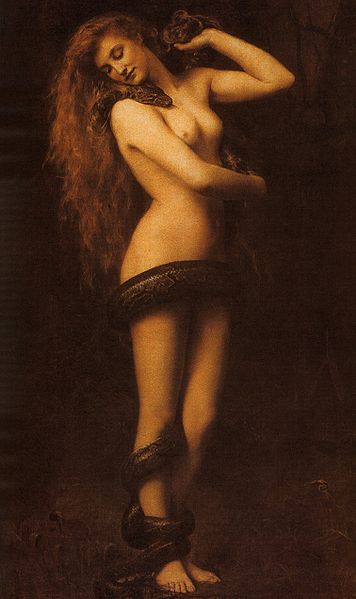
At work we have the opportunity to say a little about ourselves on a shared document for our teams.  This is a fairly new thing, so people I’ve worked with for years have no reason to look at it.  A couple of new hires, however, have noted that I watch horror movies and this has led to some budding friendships.  Since we’re all remote workers it’s mostly a matter of a line or two in an email about whether I’ve seen this or that film.  One of those recommended was the Hulu original Pure.  It’s actually pretty good.  The idea is a bunch of teenage girls are brought to a retreat center for a purity ball with their fathers.  This kind of thing can get very creepy very fast, given the incestuous overtones for such a thing.  Not only is it a religious event, it’s based on the story of Lilith.

Collier’s Lilith

The pastor preaches his first sermon about Lilith, but the girls from cabin 4 sneak out at night to meet some guys.  (Their presence is explained at the end of the movie.)  That night the girls summon Lilith, whom the minister’s daughter says is a demon.  The summoning works.  Lilith begins to interfere with services as the girls are tempted by the guys who are hanging around.  At the end, Lilith “possesses” Shay (the lead girl) and frees them from being controlled by the men in their lives.  The message is a refreshing one, and Lilith ends of being, well, somewhat as Shay puts it, “One man’s demon is another’s angel.”  

Religion and horror make a good couple.  I’ve never seen a movie that features the story of Lilith before.  The thing is, she’s not the scary part of the movie.  The religious believers, the fathers who try to control their daughters rather than giving them support after listening to them, are.  Parenting is tough, no doubt about that.  None of us are born into life with all the answers.  We quite often find ourselves not knowing for sure what we should do.  I couldn’t imagine being a parent claiming to have the solutions for all problems.  I’m a guy who watches horror for a form of therapy!  What I do think, however, is that we can try to be reasonable, loyal, and supportive.  I learn as much from being a parent as I teach.  The same was true of being a professor.  Humility, along with a willingness to continue learning your entire life is the only way that makes sense to me.  Although not a major studio production, this was one of the scariest movies I’d seen in a long time.


Shaping Water

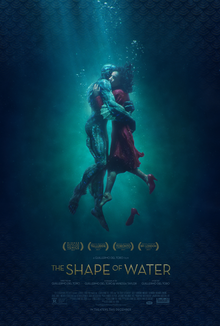
When I write fiction the genre’s difficult to define.  The other thing is I tend to be behind when it comes to pop culture.  It can take me years to find the time to watch a movie.  This preface is an excuse for why I’ve only just seen The Shape of Water.  Is it a horror movie because it features a monster?  It is, of course, primarily a love story.  As a parable the story has many gaps but it’s so enjoyable to watch that you don’t even mind.  In the rare event that you missed the hype, it’s a tale about a woman who falls in love with a somewhat more modern version of the Gill-man.  Indeed, one of the captors, Strickland, mentions finding him in the Amazon—certainly a nod toward the Black Lagoon.

There’s much you can say about a story like this, but one standout feature was that the antagonist (Strickland) frames pretty much the entire movie with the Bible.  He’s not a good man, but he uses the story of Samson to keep Zelda, the Black cleaning woman, in her place.  He uses her namesake Delilah (middle name) to note how she betrayed Samson.  He goes on to say that God is in the image of man, either him or her.  But then he adds, “Maybe a little more like me, I guess.”  This gives you an idea of his character.  He also notes that the creature was thought to be a god in the Amazon.  At the end, as Strickland sets out to kill the creature, he again uses Samson to tell Zelda that he’s going to bring “this temple” down on all of them.  That’s a healthy dose of religious imagery for a species of horror film.

The Creature from the Black Lagoon also begins with a biblical quote.  And like in this movie, the real monsters are the white men who insist on destroying what’s not like them.  Monsters and religion have similar pedigrees and share a number of features.  A concern for those marginalized by society pervades true religion as well as monster movies.  Nevertheless, the academy has trouble giving awards to any movie labelled horror.  There are definitely elements of it here.  It isn’t unusual to see horror defined as a movie that features a monster.  This monster is a god. Interesting, how often that happens. The film’s mood, however, is also romance and a very real concern for the other.  We can all learn from movies like this, even if five years late.


Annotating Irving

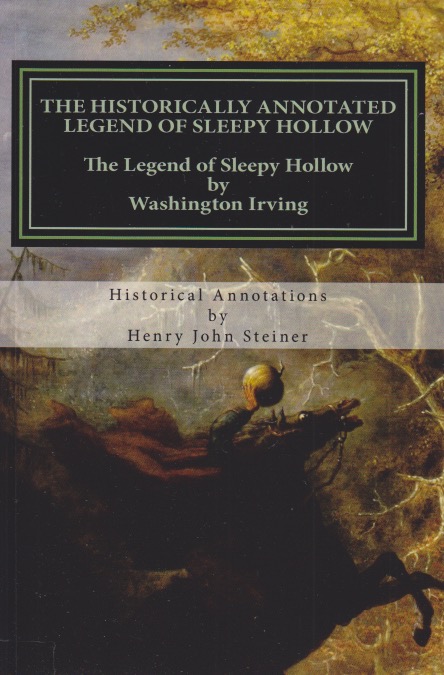
Really concentrating on a short story is sometimes difficult to do.  I don’t have a degree in literature (I took a few courses, but my specialization was religion).  I’ve been on a bit of a Sleepy Hollow kick lately and I wanted to move beyond just the short story by Washington Irving.  Although I’m sure working through the entire Sketch Book of Geoffrey Crayon, Gent., the book in which “The Legend of Sleepy Hollow” was published, would probably be rewarding, it would also be time consuming.  Irving was trying to find his way as a writer and this particular story has been his lasting contribution.  So I turned to local historian Henry John Steiner’s annotated edition.  It has a useful introduction, but still wouldn’t be “book length” without several pages of photos and a large font size.

Sleepy Hollow may lay claim to several signs of historical importance.  It featured in the Revolutionary War.  Washington Irving did eventually settle there.  As a getaway it attracted the wealthy and powerful from New York City because it’s not that far from Manhattan.  Several movie and television renditions have been made of Irving’s story.  This book generally provides local place connections in the annotations.  A visitor to Sleepy Hollow might wonder where this or that event in the story was set.  This book will help with that.  Still, it left me looking for a bit more substantial treatment.  Not necessarily a literary-theory kind.  Let’s face it, academic writers tend to write for other academics. No, a bit more of the folklore, I suppose.

It did allow me to slow down and really concentrate on the story.  Books have an endpoint that really helps in that regard.  This little book (as was the one I recently read on the Old Dutch Church) was published when the Fox series Sleepy Hollow was taking off.  That all-important media tie-in helps to sell books.  Interestingly, the details of a closer reading are revealing.  This isn’t, in origin, a Halloween story.  It’s a tall tale told American style.  Steiner indicates it was based on an older legend—this is something I’d be interested in hearing more about.  Writers are great recyclers.  I suppose a book on the folklore of the lower Hudson Valley might have more of what I’m seeking.  Nevertheless I came away from this edition feeling as if I’d gotten to know the story better.  Irving’s “Rip Van Winkle” also appears in his Sketch Book, but perhaps it’s asking too much to have both analyzed together.


Falling Usher

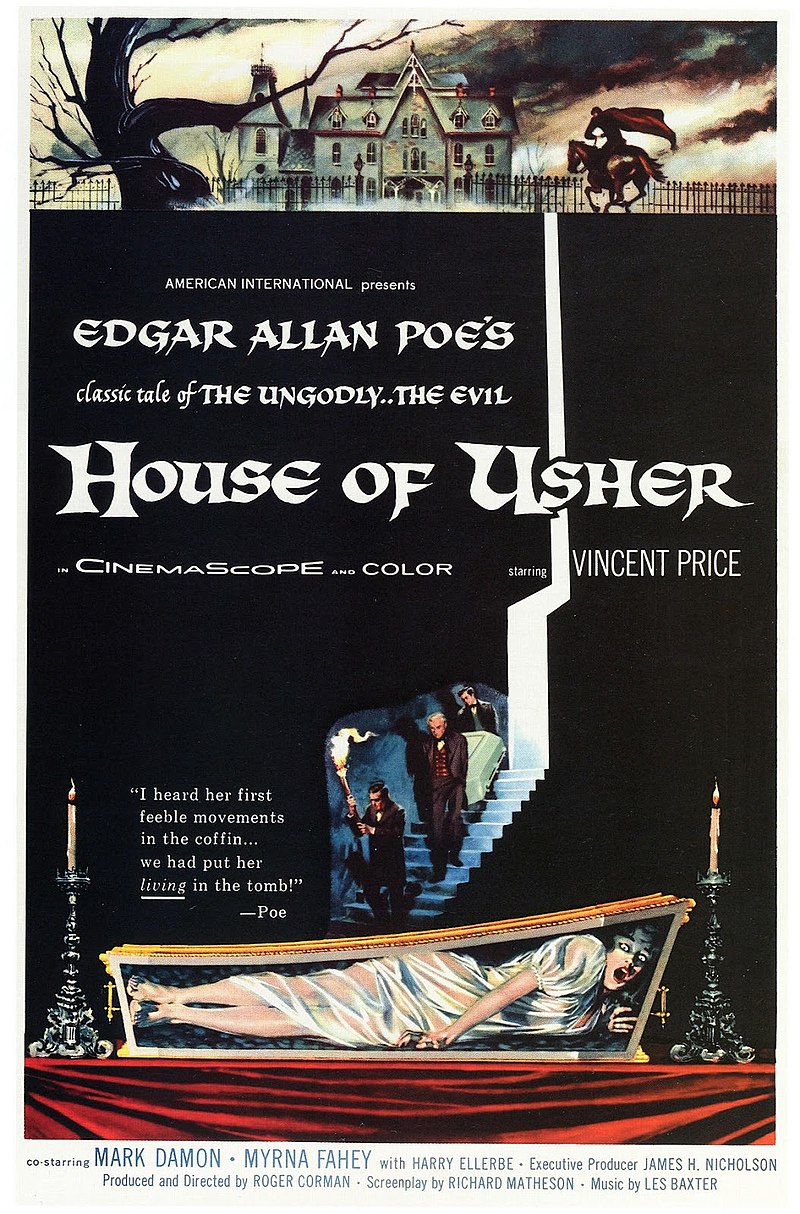
Roger Corman is a name well known to film buffs.  The producer of many low-budget, obviously cheaply filmed movies shot over a matter of days, his early career was prolific.  Often working in genre films, he directed horror (among other projects), occasionally drawing on Edgar Allan Poe.  The problem of adapting a short story to a length required for cinema release could be solved in a number of ways, but padding out the story was common.  I had only a few minutes to watch a horror movie over the weekend, so I pulled out a Vincent Price collection I’d bought some time ago.  A number of them are Corman films and I may have seen them when I was younger, but if so the path recall is completely eroded.  I decided to watch The Fall of the House of Usher.

This story by Poe remains my favorite for its sheer moodiness and imagery.  The premise is brief and the action little.  I knew Corman would have had to have changed quite a bit.  It turns out that he’d brought Richard Matheson in as the writer.  Many films can be made or broken by the writer.  While it doesn’t improve on Poe it is certainly a watchable effort that develops a mood in its own right.  The low budget is evident, but despite that the story is a slow build using many of Poe’s famous concerns such as premature burial and isolation in dangerous locations.  While not scary in the same way as modern horror, and stretched out by a dream sequence and overture, it nevertheless works.

Given my particular angle on horror, I noticed the introduced religious aspects.  While identification is difficult due to the lack of focus, there seem to have been two large, iconic Bibles in the story.  Indeed, the Ushers have a private chapel in which Roderick prays over his dead (?) sister.  The curse of the Ushers has to do with family evil that is being punished, causing Philip Winthrop to quote the Bible in his denial of the passing down of divine wrath.  The paintings of the Usher ancestor as Roderick explains this are the scariest part of the movie.  Not all Corman adaptions of Poe work well, but with the ministrations of Matheson and the rich ground for development from the original story, this is an atmospheric contribution to early horror.  And it works if you only have a few minutes on a busy weekend for your favorite avocation.


Old Churches

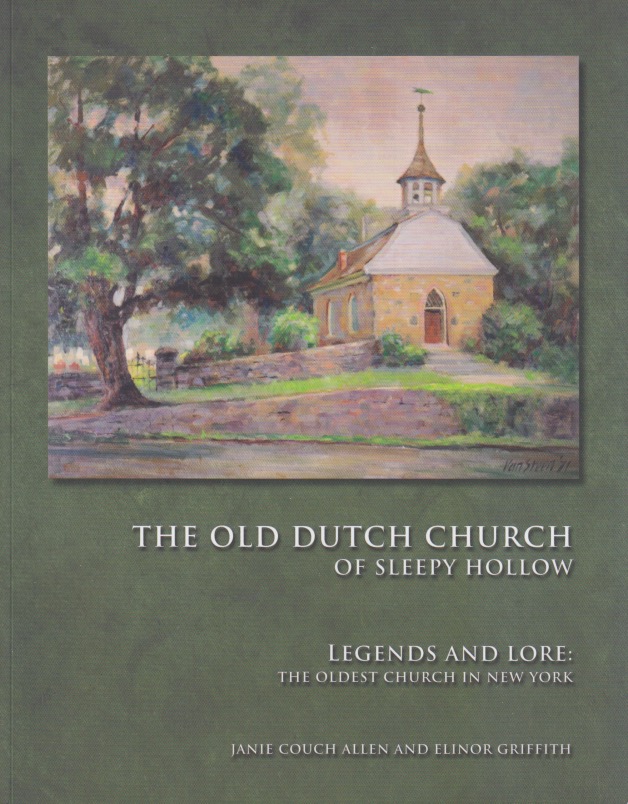
I doubled its authenticity, but it was revered in a way similar to the Shroud of Turin.  The old guide, a priest if I recall, showed us an actual lantern hung for Paul Revere’s ride.  This was the Old North Church in Boston, of course.  Its history is so storied that children across the country learned about it in school.  A similar feeling comes from reading The Old Dutch Church of Sleepy Hollow by Janie Couch Allen and Elinor Griffith.  Subtitled Legends and Lore: The Oldest Church in New York, it is clearly a celebratory work, printed in full color and with pictures on every page.  This church’s claim to fame isn’t as much historical as it’s the result of the imagination of Washington Irving.  It features in his short story “The Legend of Sleep Hollow.”

Built in 1685, it was already an old building by the time Irving had settled in North Tarrytown.  Being early enough, Irving had immense influence on the culture of a young country.  Although born in New York City, and although he lived for many years overseas, he came to represent the voice of the emerging American literary tradition.  America has been home to many writers since then, some successful, many not.  But this book is about the church, not Irving.  Irving does play a big part in its story, although he was never a member.  I kept thinking as I read how influential a single story can become.  And even a small Dutch Reformed Church can benefit from it.  This book gives a high-level overview of the history of the area and some of its colorful characters.  It turns a few times to the Headless Horseman, but it also explains the trials and triumphs of a small church.

Although most towns can’t claim such a storied structure, American churches have had an outsized influence on who we are as a people.  I’ve sat through meetings lamenting the lack of funds for the operating budget as money grows tighter even as the worldview of ancient Palestine effaces.  As an historian of religion I tend to look back.  I don’t believe our future will be entirely electronic or virtual.  If it is, I think I’d rather find myself on a chill, uncomfortable pew in the Old Dutch Church lit by candles on a Christmas Eve, shivering but still alive.  No matter what a person believes—and with the varieties of churches we can’t all be right—we know that it’s part of what makes us human.


Horror Deprivation

Is there such a thing as horror deprivation?  Life has been so busy that I haven’t been able to carve out the time to watch any horror movies for several weeks now.  That steady diet has given me blog topics and a strange kind of personal comfort in this all-too-scary world.  More than that, it is often a coping mechanism.  I sometimes think more people might read this blog if I “rebranded” it as horror-themed, but perhaps there’s a different way to go about it.  Some writers, with enough shares and likes, have their daily observations become part of the national wisdom.  The rest of us, it seems, are simply background noise.  I’ve also been told blogs are passè and that may be the case.  I have trouble keeping up.  I don’t even have time to watch horror!

As with most things in life, I keep a list of movies I need to see.  Like claws such a list continues to grow unless it’s trimmed once in a while.  A movie is a couple-hour commitment and when even weekends are programmed to the last minute it’s difficult to squeeze them in.  I always welcome the more pleasant weather of spring, but so does the yard.  I’ve always thought, like good haunted house owners, that I would let the yard go.  Here in town there are ordinances, though.  It doesn’t look tidy—right now dandelions exceed the tolerated grass length a mere day after mowing.  Like triffids they pop up and won’t go away.  I could be in, watching a movie.  My credibility’s on the line here!

The pandemic, from which horror movies will arise, led many people to having too much time.  Netflix soared.  For whatever reason, it had the opposite effect on me—is this a special effect?—I had even less time than before.  I had to cancel my Netflix account because I had no time to use it.  Horror is a coping technique.  Real horrors spill from the headlines daily.  Sometimes the antidote is in the poison itself.  The way to be less scared is to watch more horror.  We’re still in the pandemic and Putin decides to start a war.  Republicans confess that Trump tried to take over by force and then backtrack.  Global warming continues apace.  There comes a point when the only therapy is to watch something worse unfold, as long as it’s fiction.  It’s Saturday.  It’s raining.  What can one possibly do?


Free Research

I’ve lost track of how many times it’s happened, but it has been relatively few.  Someone I don’t know will approach me and ask me to post about something on my blog.  Sometimes they’ll even send me a book to highlight.  Perhaps not the most effective way to build a library, I’ll admit.  And some of the books haven’t been great.  I admire them nonetheless.  It takes great effort to write a book.  And not a small amount of faith, too.  Many books—perhaps most—never get published.  A great many are self-published.  (Those who work in publishing can be a stuck-up lot sometimes.)  Even those professionally published can use a push from time to time.  On this blog I’ve actively resisted the urge to make it about one thing.  Why?  Is life just one thing?

In a recent conversation I laid out for someone new what had been my research agenda as a young professor.  It had a direction still reflected in some of the categories you’ll find on the right column of this blog.  After writing on Asherah, I was going to give similar treatment to the other ancient goddesses attested at Ugarit.  This was perhaps ambitious for an academic waif at Nashotah House, but it was well underway.  My book on Shapshu was making good progress when the market (that dragon to every St. George) led friends to suggest turning biblical, which led to Weathering the Psalms.  A new research agenda—explore the weather terminology (the meteorotheology) of other biblical books—arose.  There were storms, after all, becalmed over lakes.  Horror entered in the jobless period and beyond.

And social justice.  I’m not a thrice-failed minister for nothing!  In fact, a recent freebie was a book on social justice.  I have a colleague as interested in monsters as me.  This particular scholar had decided to focus on the cause of the poor.  Even economists are starting to say the unequal distribution of wealth is hurting us.  While the rich fly to space on personally owned rockets, the rest of us have trouble filling up at the service station, even if we have jobs.  So it is that this blog is eclectic.  A friend told me early on that it would be more popular if I just stuck to one topic.  That’s probably true, but my mind can’t settle down like that.  And when people send me things to talk about, I’m happy to do so, if it fits somewhere in my mind.


Shadows of Childhood

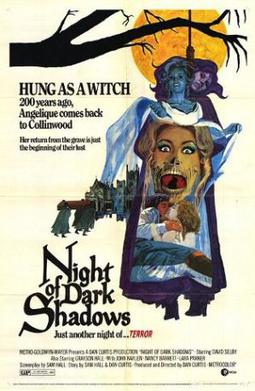
Childhood, it seems to me, is where we define ourselves.  In the days when life expectancy wasn’t terribly long and people generally lived only long enough to reproduce, there was not much of a need to revisit childhood.  Now that we live several decades, however, childhood begins to loom large.  We have time to revisit and reassess.  This is one of the reasons I’ve been addressing Dark Shadows so much, and why my memories of it have been of such interest.  I recently watched the second feature film based on the series, Night of Dark Shadows.  This was aired after the original soap opera had been cancelled.  It focuses on Quentin Collins rather than Barnabas and it again caused me to reassess.

The story is complex—the soap opera was quite literary and intelligent to begin with—and it involves several characters from the series.  In my mind Quentin is a werewolf.  In the movie he’s not.  This made me realize that my image of Quentin is largely from the Marilyn Ross novels, not from memories of the television show.  I never did see the original series through.  Nor did I ever read all the novels.  Like most people my childhood was a pastiche of this and that as I sampled the somewhat small set of offerings made available in a modest family in a small town.  Fossil collecting and exploring within two or three blocks of home were about all the options.  And then there was television.  I watched a lot of it.  When the rigors of homework started to really hit in high school, I stopped watching so much.  I’d begun reading quite a bit by middle school, and many of those books are the ones I’ve been seeking out in recent years.  Not that middle school was that great, but it was formative.

Night of Dark Shadows, although set in Maine, lacks the Collinwood I remembered.  Yes, it’s a grand old house, but there’s no hint of being on the Atlantic coast.  No crashing waves.  No theremin.  Quentin is instead haunted by the ghost of Angelique and is apparently a reincarnation of an ancient ancestor whom she loved.  Angelique decides to kill off Quentin’s young bride so as to have him to herself.  It wasn’t bad, but I guess I was expecting a werewolf movie.  My view of Quentin was formed by the imagination of W. E. D. Ross, I’m coming to realize.  Sam Hall wrote many of the original episodes.  He also co-wrote this movie.  My childhood, however, remembers all of this differently.


Wicker Lessons

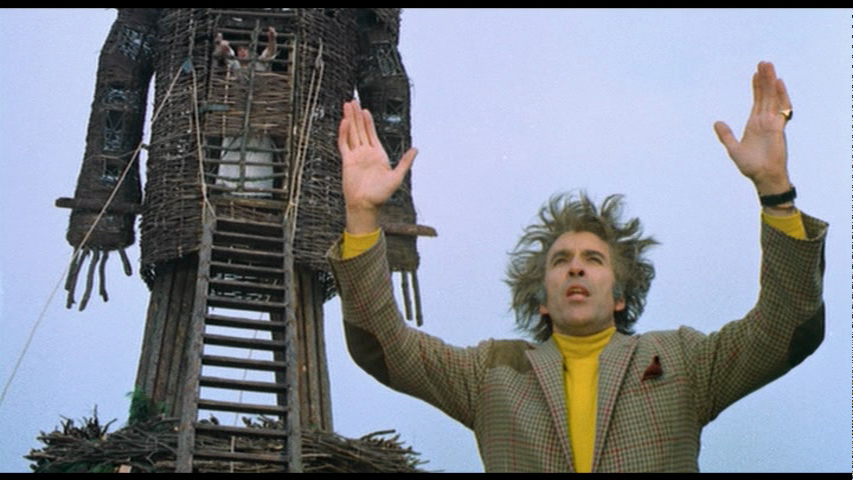
Beltane creeps up unnoticed.  Not an official holiday in these parts, it is, hopefully, a sign of slightly warmer weather than we’ve been having in April.  It’s also the day that I can’t help but think of The Wicker Man.  One of the early intelligent horror offerings, it came out 49 years ago.  My book on the movie, as far as I know, is still scheduled to come out next year, on its fiftieth anniversary.  Watch this space for further announcements.  In any case, today I have a piece on The Wicker Tree—the “spiritual sequel” to the movie, appearing on Horror Homeroom.  Societies in old Europe tended to celebrate this as the beginning of summer, which explains why Midsummer comes half-way through June.  The seasons aren’t always the same in all times and places.

In Germanic countries, Walpurgisnacht, which began last night, was a time of concern about witches.  Our modern calendar tries to concentrate our fears in late October, but they are appropriate any time of year.  These days Beltane’s more of a day when we expect warmer weather to start rolling in and perhaps, especially this year, hopes for peace.  May tends to be a hopeful time—it’s a transition.  The persistence of our fears suggests that learning to deal with them might well be a good idea.  Instead of hiding monsters away, why not face them?  The Wicker Tree isn’t a great horror movie, but something holds true for it—the monsters are us.  In that film capitalism is the real horror.

What makes The Wicker Man the classic that it is is religion.  More specifically, the clash between religions, neither of which is willing to yield.  This is largely behind religious violence throughout history, up to the present.  Religions convinced that they’re the only possible way to the truth can’t recognize that believers of other religions feel exactly the same way.  Yet May is about transitions—one season giving way to another.  It’s part of the inexorable change that marks life on this planet.  We may not fear witches in the mountains any more, but we still fear what’s out there.  Beltane is a hopeful holiday—a day of blessing animals and building fires to encourage the strengthening sun.  Instead of making it a day of clashing beliefs, perhaps we should look for our common humanity in it.  Perhaps we can learn a deeper lesson from The Wicker Man.


The Network

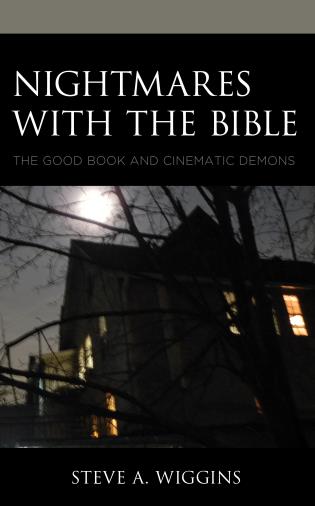
Although it’s not NBC, the New Books Network has quite a reach with academics.  That’s why I was glad they accepted my pitch for an interview about Nightmares with the Bible.  The interview is now live and can be heard here.  The experience of getting the interview made turned into quite a saga with my pitch going back to at least November, and acceptance coming early in January.  The actual interview was over a month ago and it was posted only yesterday.  I’m not naive enough to think it will boost the sales of a hundred-dollar book, but maybe a few more people will become aware of it.  Even in academia there are too many books published for all of them to get notice proportionate to the work that goes into writing them.

Some publishers are of the opinion that editors shouldn’t try to be authors.  Obviously I disagree on that particular point.  Author-editors share the ups and downs and know what it’s like to put in the work only to have a book disappear.  I haven’t received any royalties at all for Nightmares.  I have no idea how many copies have sold.  Many writers publishing into the teeth of a pandemic fall into the same category.  While trade books—including fiction—did remarkably well during the height of Covid-19, academic books languished.  Nightmares is, of course, its own kind of hybrid.  A monster, if you will.  Written for educated laity it’s packaged and priced for the academic monograph market.  That’s why I pitched it to NBN.  I’m glad to see the recording is now available.

Nobody writes this kind of book to get rich.  I’ve had friends ask me why I bother.  Believe me, that question occurs to me too.  Some of us have something to say but the auditorium’s empty.  The Bible’s at a low point outside a specific cross-section, and that cross-section generally doesn’t pay attention to horror.  Of course, that’s another reason I do this.  Bringing opposites together offers the world, even the staid academic world, something new.  Horror is at last being taken seriously by literary and cinematography scholars.  Some biblical scholars are realizing that apart from comforting words of love, and towering demands for justice, the Bible itself contains plenty of horror.  When unlike things mix, monsters are born.  I’m grateful to the NBN for taking a chance on my book.  If you’ve got some time, and the inclination, you can listen in here.