Making Noise

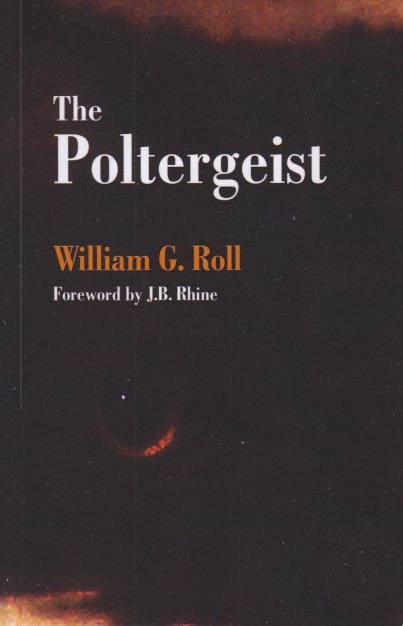
There’s a real danger, it seems, to having an open mind.  We live in a world defined and classified by materialists.  They hold sway not only over science and commerce, but in whether prestigious jobs are on offer.  Consider the case of William Roll.  Roll was a fully credentialed psychologist with an interest in parapsychology.  His book The Poltergeist is a classic in the field.  He’s now frequently called a “credulous investigator.”  What that means, of course, is that he listened to and sometimes believed the people who reported the paranormal.  For materialists that discussion is already closed.  Anyone who tries to pry it back open is ridiculed and called names.  (We’re all adults here, right?)  Yet his classic book still gives pause.

If you actually read it, “credulous” is not a word to suggest itself.  Could Roll have been tricked by clever pranksters?  Yes.  Most people, even clever pranksters, can.  If someone is caught hoaxing a phenomenon, does that mean the whole thing is a hoax?  Not necessarily.  It’s here the materialists swarm.  Interestingly, Roll acknowledges that there could be good psychological reasons for hoaxing after a genuine event.  The person caught hoaxing perhaps realized the benefits of the attention received when something unexplained occurred, and learned how to replicate, or at least imitate it.  People will do anything for attention.  Roll asked a bit more finely parsed question: does hoaxing discount genuine phenomena?  He even tried to get experiencers to the lab where controls could be put into place.  As this book demonstrates, he doubted some of the cases and did so openly.

I became interested in Roll after watching A Haunting in Georgia.  The Wyrick family maintains that the events happened (I’ve written about a book penned by two of the aunts), and they seem sincere.  The problem is money.  Once there’s potential money to be made the skeptics come out, claws bared.  The problem is we all have to make money to survive.  If that involves “capitalizing”—even that word betrays much—on weird things that happen to you, skeptics claim it’s all made up.  There’s an ulterior motive.  For most of us there’s an ulterior motive for going to work, too.  For me, Roll appears to have been sufficiently skeptical.  Statistical anomalies shouldn’t be simply dismissed.  If they are, it’s possible we’re missing something important.  While this book may not have aged particularly well, it is still worth reading with a mind at least a little bit open.  

Nightmares with Poe

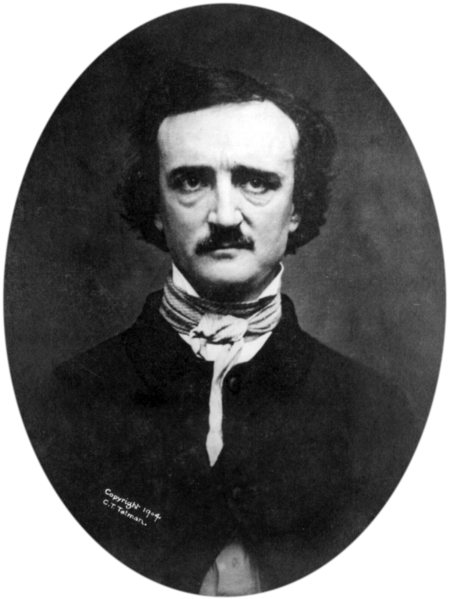
A review of Nightmares with the Bible recently appeared in which the reviewer said he didn’t get the Poe references.  Indeed, the anonymous reviewer said the same thing.  What neither of them understood is that Edgar Allan Poe has been formative for my life and that book was a tribute to him.  Did Poe write about demons?  Not really.  Did he once claim that the death of a beautiful woman was the most poetic theme?  Yes.  I saw the opportunity, in discussing possession movies, to draw Poe’s observation into the conversation.  Could the book have been written without it?  Yes and no.  Yes, I could’ve written a book on demons without mentioning Poe.  No, I would likely not be writing books at all were it not for Poe.

Today is Poe’s birthday.  What is this strange attraction I have for him?  It began, as most things do for me, with growing up poor.  We couldn’t afford bookstore prices, and that’s even assuming there was a bookstore nearby (there wasn’t).  I found the majority of my reading material at Goodwill in Seneca, Pennsylvania.  The shop had a book bin or two with prices I could afford (books were a quarter, if I recall).  I found a copy of Poe’s Tales of Mystery and Terror there.  I probably heard about Poe from my big brother—he’s a good source for scary information.  Reading Poe, I wanted to read more.  We couldn’t afford Scholastic school fare rates, but I did find a four-or-five volume collection of Poe’s writings at Goodwill.  Foolishly, I bought only two—those with his stories.

By high school I was checking out biographies of Poe from the library.  Perhaps as the child of an alcoholic I identified with a man who seemed so tormented.  I count his stories still among my favorites.  My favorite short story is, I believe, “The Fall of the House of Usher.”  It has come back to me at several points in my life and I find myself thinking about that gloomy house.  Particularly the narrator’s arrival there.  So full of possibilities.  So much potential fear.  Those of us who consume horror have a gateway to it—some event, or influence, or person who introduced the aesthetic of fear to us.  For me it was Edgar A. Poe.  Nightmares with the Bible is of a piece with Holy Horror.  To leave Poe out of it would’ve been the worst kind of sacrilege.


Are Ghosts Monsters?

It’s a question as old as my interest in horror.  As a child I kept ghosts distinct from monsters.  Ghosts may be scary, yes, but they’re people who’ve died.  Then zombies came along.  I was too young to watch Night of the Living Dead when it came out (I was only six).  Depending on how far you want to go with this, among the classic monsters they’re pretty much all human.  Dracula is undead, but originally human.  Frankenstein’s creature is dead folks stitched together.  The mummy is a person reanimated.  The invisible man is, well, a man.  So is the wolf-man.  The latest of the Universal line-up, the gill-man was more a human-like reptile with gills.  To add a few other favorites, Mr. Hyde was Dr. Jekyll.  Witches were magical women.  For sure, there are plenty of non-human monsters (Godzilla, the blob, and those various giant spiders) but it seems much of what we fear is warmed over human.

So ghosts—are they monsters?  I still have a difficult time sorting that out.  They seem different from other revenants, don’t they?  Uncle Joe or Aunt Sally don’t really pose an existential threat, do they?  (Unless one of them was a psychotic killer or something.)  Yet we still fear ghosts.  Many horror movies and novels feature them.  It seems more because they represent the unknown in a kind of ultimate way.  We can’t die to find out and then come back.  Although, it seems, that’s just what ghosts do.  That liminal line, or terminal line in the sand is the point of no return for the human imagination.  Yet on a dark night in a creaky old house it feels like more than just imagination.  Of course, other monsters could be lurking in the dark.

Image credit: Henry Justice Ford, public domain via Wikimedia Commons

The thing about horror is that it holds up a mirror.  We see what really does scare us and what we see reflected back is human.  We all die and most of us don’t like to think about that.  Ghosts force us to.  They make us confront perhaps the most primal of fears.  There are, of course, bad ghost—dybbuks and hungry ghosts and whatnot.  Of course they’re monsters.  But considering the garden variety, or perhaps haunted-house variety ghost suggests maybe our fears are misplaced.  Monsters can be scary.  Ghosts don’t have to be.  We classify them all together as horror, but that may be a hasty judgment.  As least for someone who used to be, and maybe still is, simply human.


Rusticated Fears

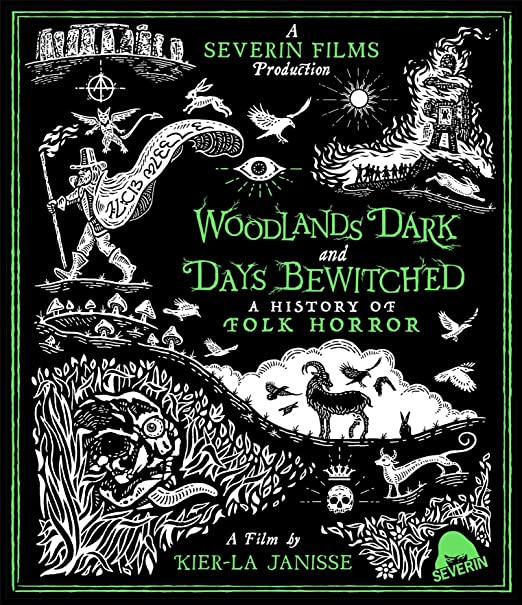
I don’t recommend sick days.  This one was weird with all the symptoms of illness but really having them just be the side-effects of a shingles vaccine.  I don’t recommend it, but I was able to use the day, between dozing off, by watching Woodlands Dark and Days Bewitched: A History of Folk Horror.  This late 2021 documentary is over 3 hours long and I’d been wondering when I’d have the chance to view such a lengthy movie.  Besides, when you’re feeling utterly miserable, horror is a kind of elixir to make it all better.  Watching the film made me aware of just how many movies I haven’t seen.  Another way of putting it is that I still have my work cut out for me.

Folk horror, you see, has a natural appeal for those of us who grew up away from urban centers.  Much that we did in the small towns of my childhood was, frankly, weird.  As the interviewees make plain, cities are the centers of economic and cultural power.  The big educational institutions are there and those of us from the hinterlands might not obey the rules that city dwellers seem to absorb through their feet.  In reality, I suspect, urban culture largely derives from folk culture.  Those who venture away into the large cities take pieces of their home with them.  Cities tend to blend all this together and transform it into something different.  Those in rural areas, however, have their own way of doing things.

Perhaps it’s embarrassing to center this much, but it was clear to me in watching Woodlands Dark and Days Bewitched that much of the fear showcased to city folks (for movies tend to be shown in urban settings) is the weird religion of the country cousins.  Both the words “pagan” and “heathen” are references to those who dwell outside urban areas.  “Pagan” comes from Latin for rustic, while “heathen” means those out in the heath.  Mainstream religion is that of the cities—the Vatican is located in Rome, and the large mosques, synagogues, and cathedrals are in population centers.  There’s no telling what the country dwellers might get up to if left to their own devices.  And religion taken seriously can be quite dangerous to outsiders, as we’ve seen time and time again.  Folk horror never really went away but it is undergoing a resurgence at the moment.  As the documentary suggests, this tends to happen in times of social instability.  At least we have something to look forward to as the world collapses around us.  Folk horror will help us cope, if my experience is anything to go by.


Homegrown Haunts

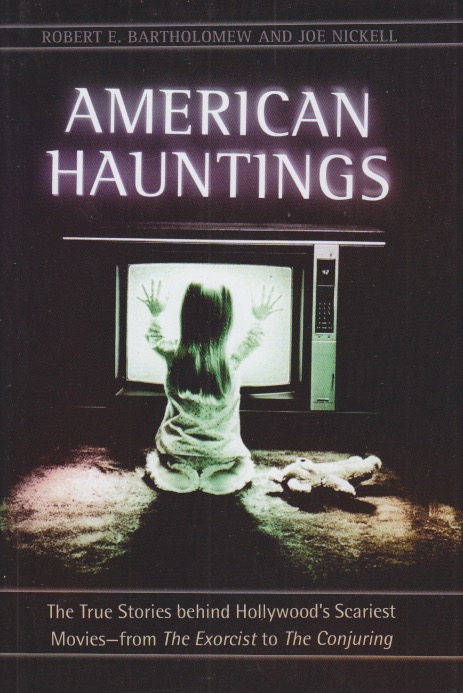
The thing about the unknown is that it’s, well, unknown.  Like many people I’m interested in getting at the truth behind ghost claims, so American Hauntings: The True Stories behind Hollywood’s Scariest Movies—from The Exorcist to The Conjuring, by Robert E. Bartholomew and Joe Nickell looked helpful.  Indeed, it is.  To a degree.  The book, however, devolves at points to debunking cases that aren’t in the movies and frequently asks “Why didn’t somebody take a picture?”  (In cases where there are pictures they say how they could be faked.)  Given the authors, you kind of know none of the claims will be accepted.  Even so, there’s a lot of good information here.  They do a great job of outlining the very probable hoax at Amityville.  For some of the lesser known cases they offer explanations harder to believe than the poltergeists they so abhor.

That’s the thing: for all the “hauntings” they default to poltergeists and then explain how poltergeists are faked.  They begin with An American Haunting, and move on to The Exorcist, Poltergeist, The Conjuring, The Amityville Horror, and The Haunting in Connecticut.  Sandwiched in there is also the non-movie Don Decker case.  What struck me as strange is they often seem offended that movies embellish stories.  That’s what movies do.  They’re quite right about the money aspect, however.  They also take in films that make no claims about being true, such as Poltergeist, which drew inspiration from an actual case but didn’t make that assertion.  It’s also odd that they didn’t ask some of the writers about this.  I once met Brent Monahan, author of An American Haunting.  He readily admitted some of it was made up.  In other words, taking offense at the “based on a true story claim” feels a bit naive.

In some cases they speculate what might’ve happened without visiting the location.  It’s hard to tell if a leaky roof can explain things when you don’t specify if the room is on the first or second floor.  Also, suggesting a young boy is faking because a professional magician can duplicate effects raises its own set of questions.  If a kid is as good as a professional, why doesn’t s/he go on the circuit and make some money from it?  That kind of question, by the way, characterizes much of the skepticism in the book.  Why not become a magician?  Because we don’t have the whole story.  It seems to me that dismissiveness doesn’t really help to get at the truth.  Nevertheless, this book contains much that is useful and skeptical voices should always be included when attempting to sort our extraordinary claims, even if you never , ever want to be caught without a camera.


Phobia Therapy

I don’t like being scared.  That’s why I watch horror.  You see, many people deal with fear by running away from it.  Embracing artificial fears, however, prepares you for the horrors life will inevitably throw at you.  We humans have created an artificial environment for ourselves with many natural dangers removed.  For example (and there are always exceptions) we’ve been able to seal ourselves up in our homes and wear masks in public to avoid a killing virus.  For the most part we’ve destroyed our large predators.  As a society we tend to avoid the things that make us afraid which, in turn, makes us fragile when we have to face truly frightening situations.  I wouldn’t suggest becoming a fear junkie, but experiencing scary scenarios can diminish the overall  fear factor.

People often make assumptions about those of us who watch horror, even though it is the majority of Americans.  We’re seen as creepy people who lurk in dark places, unable to get along with our fellow human beings.  Perhaps it’s true, or perhaps it’s a reasonable coping technique.  I tend to think of it as a spiritual practice.  Spirituality is often about feeling, but it’s not completely divorced from rationality.  Often it has to do with that gut feeling that this is really real.  This is something that my years on this weary old globe have taught me is true.  Many times it’s this way in the face of evidence.  Others have trouble believing it, although some bearded guy alone on a mountain top says it’s true.  So life goes.

Spirituality is important.  I have many humanist friends and they are often uncomfortable thinking about spirituality.  It seems dangerous, a superstition that somehow survived enlightenment.  Enlightenment, however, is itself a spiritual idea.  There’s something inside of us that makes us who we are.  Whether it’s something physical or something else, it requires nourishing in order that we might thrive.  We expend a lot of energy arguing about the right (only right) way to do it.  The way to be a more spiritual person.  To me it seems that it’s about discovering what replenishes us.  What makes us into better people.  You find that and you feed it.  Spirituality comes in many forms and shapes.  Some of us have it fed by what others dismiss as mere horror.  There’s more to it than meets the eye, however.  I watch it to learn not to be afraid.


Ghost Chasing

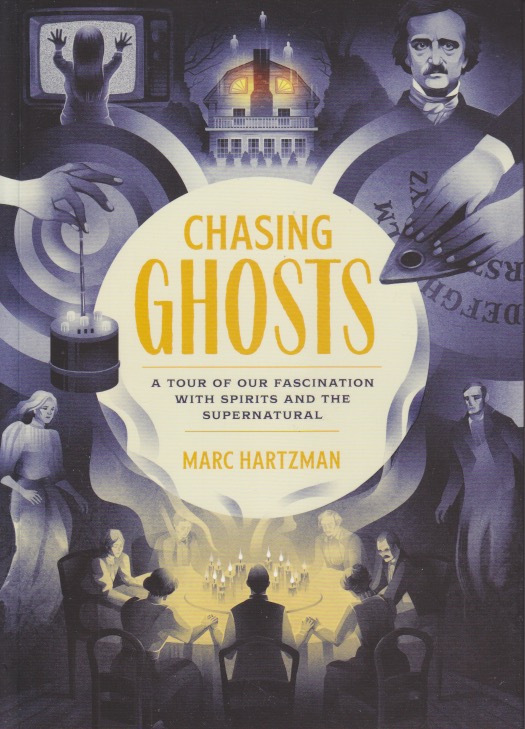
I’ve known about Quirk Books from their very first publication.  That’s a rarity, I suppose, since many publishers have been around far longer than I have.  I tend to think of Quirk as mainly a purveyor of unusual fiction.  I’ve pitched a book or two to them myself over the years.  In the last few years they’ve been producing some good nonfiction as well.  The topics are, well, quirky.  I just finished reading Marc Hartzman’s new book with them titled Chasing Ghosts: A Tour of Our Fascination with Spirits and the Supernatural.  It’s a good compendium of material that traces the very long history of human obsession with the restless dead.  It begins with some ancient ideas about ghosts and comes up to contemporary times.  Not all of this can be covered with great detail, of course.  But there’s a lot here.  And it has a great cover.

The chapter on Spiritualism and seances is necessary, but it also reveals one of the reasons, perhaps, that modern skeptics still scoff at ghosts.  Mediums (not necessarily Spiritualists) were often caught in trickery, but as Hartzman points out, that doesn’t logically imply that everything was a hoax.  For me, when the rules start to include special boxes or sitting behind a curtain the old skeptic meter starts clanging loudly.  Still, some of this happened because, it seems, you can’t force a ghost to attend.  If there are ghosts and if they retain personalities, well, how do you like it when people tell you that you must be here at this time so I can make you do what I want you to do?  

The chapter on haunted locations covers many of the expected and a few lesser known haunts.  Often a very real human tragedy has occurred in such places.  Is it unreasonable to think we might impress such things on our environment somehow?  Or that our consciousness—which we still can’t explain scientifically—might not hang around to resolve unfinished business?  The final section on using devices to “capture” ghosts brings us up to the present ghost hunter craze.  The pursuit of ghosts is extremely popular, leading to the predictable result that academics shy away from it.  It’s a shame, really.  A few universities have, and some still quietly do, sponsor(ed) departments or facilities to study such things.  It seems to me that if people have been seeing, hearing, and feeling something for millennia, it might be worth some serious effort to find out what’s going on.  Until then, quirky books like this one will always be a guilty pleasure.


A Haunting Story

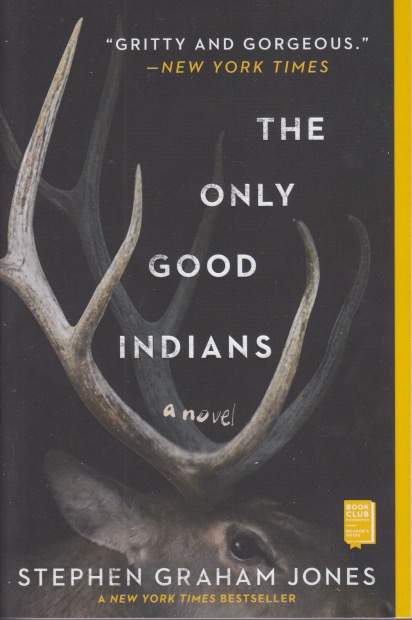
The last book I finished in 2021 didn’t quite make it under the wire for my year-end blog post.  It was the second Stephen Graham Jones novel I read in the year.  I guess I’ve been reading a lot of American Indian books lately.  The Only Good Indians is a horror story and more.  There’s reconciliation.  There’s tradition.  There’s hope.  As part of the privileged “white” class, I’m always a little afraid that writers from oppressed cultures will take it out on me.  It may’ve happened here, but if so it was done in a way that I didn’t feel the sting.  This is a story of friendship, mistakes made, and a monster who has a righteous cause.  There’s a lot going on here.

One of the persistent cultural fears of the unwoke, I suspect, is that there’ll be payback if all things were to become equal.  Perhaps on the scale of karma that’s true, but in reality the people that’ve been oppressed simply want the oppression to stop.  To be recognized and acknowledged as being human.  As if that decision is up to white folk to make.  This novel simply deals with American Indian life as it’s lived.  The characters all pretty much live in poverty but they lack the greed so many white protagonists have.  They’re happy if they have a few hundred dollars, or even a few twenties.  Life is more than playing the capitalist game.  It really all comes down to relationships.  And family.

Stephen Graham Jones writes with a deft hand.  He offers some humor amid scenes of violence and loss.  He speaks plainly and without pretense.  And there are parts of this novel that are genuinely scary.  Since I had no idea how it might end, I wasn’t even sure even while I was on the last page.  

The best monsters are those that teach us to be better human beings.  Quite often they teach us that the truly monstrous ones are those who look and act like people usually look and act.  We take the natural world, assuming it’s ours.  We think our small problems are those of the entire world.  Monsters help to fix our perceptions.  Without them we carry on as if it’s business as usual.  This is a good novel to read in the midst of a pandemic.  There’s hope here that we’ll come out of the crisis better than we went in.  Perhaps scarred and changed for good.  In every sense of the word.


Investigating Investigators

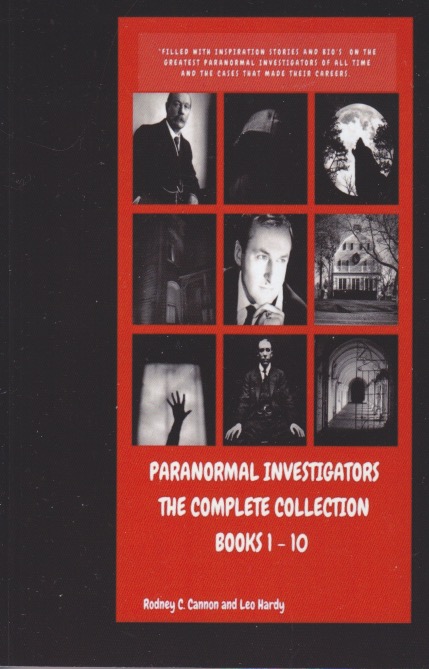
I firmly stand by my earlier assertion that you can learn a lot from reading badly written books.  It’s difficult not to attribute motives (particularly of the pecuniary kind) to a book apparently hastily written and self-published.  But still, but still.  Writing even a short book takes quite a bit of effort.  One thing that came through in my reading of Paranormal Investigators: The Complete Collection Books 1–10 is that Rodney C. Cannon and Leo Hardy have a legitimate interest in the topic.  Not everyone has the facility with wordsmithy that makes for pleasant reading.  Not everyone has years of research training.  Still, there were moments of eye-rolling and actual out loud snorting that accompanied reading this one.  It continues some useful information, but all of it will need to be double or triple-checked.

My reason for reading it is the dearth of good information on controversial figures.  This has bothered me for some time.  Academia tends to pretend figures such as Ed and Lorraine Warren, Hans Holtzer, and Montague Summers simply don’t matter.  The fact is they have very wide followings and they share the feature of being self-taught in the field of ghosts and/or monster studies.  I knew this book was self-published (itself a warning sign, but then many credible authors self publish because it’s nearly impossible to break into the commercial publishing world).  I had hopes that it was simply because publishers don’t like to take chances on authors without a platform, without household name recognition.

The book is, however, poorly organized and repetitive.  The grammar is bad enough to make an erstwhile teacher such as yours truly pull out his truly’s hair.  And yet there is information here.  I can’t accept anything as factual from a book loaded with grammatical errors, very very few citations, and factual mistakes.  That doesn’t mean there’s nothing of value to be found in it.  In fact, I learned a thing or two (that I’ll need to confirm) that may help me in my own research.  And besides, it’s a quick read.  Given the constraints in the publishing world, we can all be forgiven for not automatically dismissing those who have something to say but who need to sidestep the standard publishing world to do it.  Amazon and others have made self publishing as simple as clicking a few buttons.  Who can be blamed for taking advantage of what others have wrought?  I learned something and that is, after all, the point of reading.


Ghosts Again

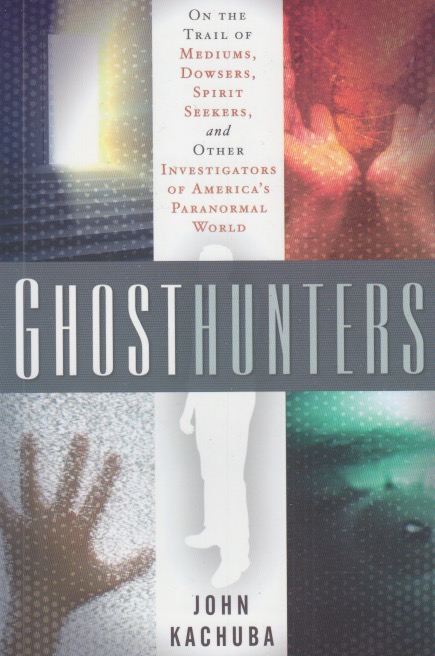
In keeping with my holiday ghost interest, I read John Kachuba’s Ghosthunters: On the Trail of Mediums, Dowsers, Spirt Seekers, and Other Investigators of America’s Paranormal World.  Yes, that subtitle is a mouthful.  The book is a series of essays without an overarching thematic arc, but it does contain some interesting accounts.  If you’re hoping to walk away with proof of ghosts this probably isn’t your book, but a few of the people the author interviews have some pretty convincing stories.  Ghosts remain one of the great unknowns.  People of all intellectual backgrounds, every socio-economic class, and every religion have encountered them, and this is true throughout history.  Ghost hunting isn’t a science and has no developed methodology, but then ghosts don’t seem to perform on demand.

I was particularly interested to see what Kachuba had to say about Ed and Lorraine Warren.  They were the original ghost hunters and their work was controversial from the beginning.  One of the consistent problems with the paranormal is that advanced degrees tend to make you quite skeptical.  You look for proof in the fields recognized by your peers and although a few departments of “parapsychology” have cropped up from time-to-time, mainstream science is doubtful and drives doubt into all comers.  Those who investigate ghosts suggest that if you don’t believe you won’t see.  Here’s the basic paradox between faith and proof.  And it only raises questions when you learn that science doesn’t prove but rather provides the best answer, given the data as currently understood.

Kachuba presents himself as neither a firm believer nor a dismisser.  He clearly enjoys ghost hunting himself and several times mentions his Ghosthuntermobile.  He interviews not only Lorraine Warren (Ed had had a stroke by this time) but also a variety of mediums, Spiritualists, and ghost whisperers.  He writes about various haunted locations, but in the accounts he shares he doesn’t see anything that can’t be explained.  Some of the essays are written with a humorous take on the subject, while others are entirely serious.  It’s kind of a grab-bag of a book in that regard.  Like many readers, I suppose, I hope to pin down something certain when it comes to the unknown.  My guess is that if anything definitive appeared we’d know about it.  Given the goings on in the world these days it probably wouldn’t be front-page news, as much as any information on eternity should be.  In the meanwhile we can read and wonder.


Twilight on Christmas

We have too many ornaments for the single Christmas tree we can afford.  There are few reasons for this.  One is that I married into a family with Christmas ornaments.  While on my own I never set up a tree and I owned very little beyond books and some LPs.  Besides, I went home for Christmas.  Another reason is that although I seldom think of Christmas before December, we tend to buy ornaments as souvenirs.  Not for everywhere we go, but we did start a ship sub-collection when visiting coastal locations.  We also have a moose sub-collection.  I spent quite a bit of my early adulthood out in the woods looking for moose, generally in Maine.  Then there’s the “other sub-collection.”  The one that’s be relegated to it’s own mini-tree.

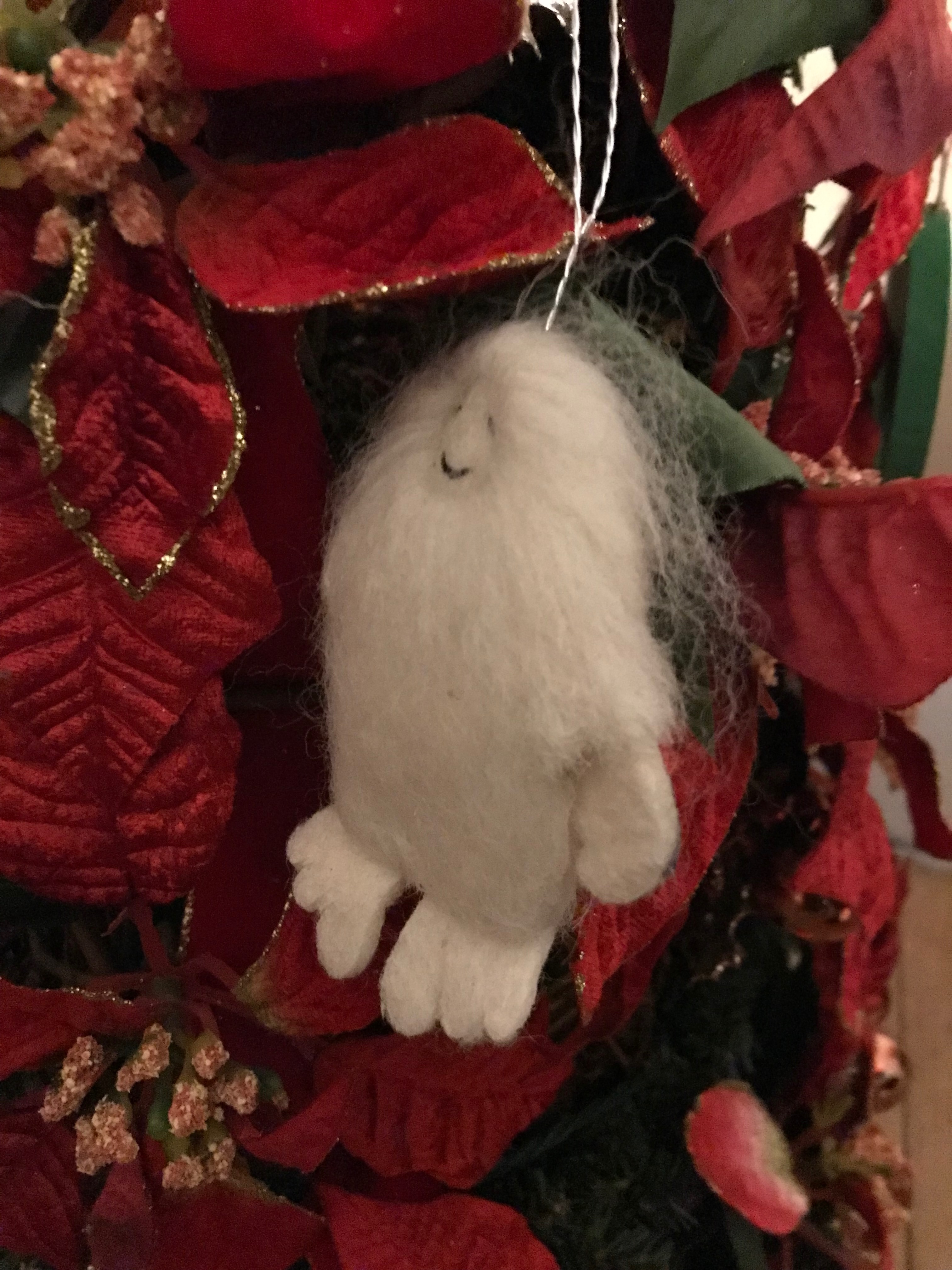
To understand this, let me begin by noting that Christmas is the birthday of Rod Serling (shoutout to my friend John Morehead for pointing this out).  Rod Serling is one of the reasons—he can’t take all the blame, of course—that I’m interested in strange things.  The Twilight Zone affected me profoundly as a child, and probably had more impact on my life trajectory than I might’ve realized.  The “other sub-collection” consists of the weird ornaments.  It began with a Cthulhu ornament I found online a few years back.  Then, at a fair trade shop in Ithaca, I found a yeti ornament.  How could I not support fair trade?  This year at Christkindlmarkt I found an alien head made from a recycled Christmas tree trunk round.  It seems my strange Christmas ideas aren’t unique.

Bethlehem styles itself “Christmas City.”  The celebration in the Lehigh Valley is palpable.  My family generally spends a December Saturday strolling up and down Main Street, visiting the quaint shops.  Last year one of them had ornaments of sasquatch skiing.  I didn’t buy it, thinking someone might pick up on my pointing it out.  This year I went back to the store but they didn’t have it any longer.  A quick online search, however, revealed many options for a cryptid Christmas.  What can I say?  These things make me happy!  This year I’ve been thinking quite a bit about ghosts and the holidays.  It’s an ancient connection that has been lost to the commercialization of Yule and Saturnalia and other December celebrations.  So, Rod Serling was actually born on Christmas day.  I hope that however you celebrate this day it will bring you joy, no matter how weird.


Rats

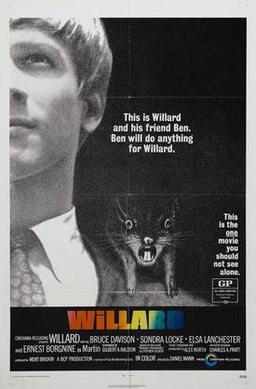
Small town living had its benefits but one of them wasn’t seeing movies.  In the seventies, before the local mall came in, there were scattered movie theaters about.  You could sometimes see reruns on television, if you were free and awake when they were aired.  VCRs weren’t widespread and DVDs and streaming were decades away.  One horror film I very much wanted to see was Willard.  Released in 1971, it did quite well at the box office.  I was only 9 at the time so I never saw it and by the time I became aware of it theaters had long lost interest.  Kids were still talking about it years later, probably from television showings.  When my second resurgence of interest in horror came around, it was still difficult to find.  The DVD wasn’t available and it took some time for it to appear on a streaming service to which I subscribe.

I have to wonder how we got through the seventies, but I finally had a chance to stream it.  The story, since there was a new millennium remake, is probably familiar.  A young man (the eponymous Willard) who doesn’t fit in eventually befriends some rats in the run-down property of his once opulent home.  He teaches them to understand him and eventually has a virtual army of rodents.  He’s a good lad, however, and only uses the rats to redress social inequities.  His boss, a real old school bad guy, stole the steel mill from his father and is trying to drive Willard out.  You can see the boss’s fate coming from afar.  It’s not much of a horror film by present-day standards, but it does have its moments.  It would likely have more impact had I seen it fifty years ago.

The theme song from the sequel, “Ben” (also the title of the next movie), performed by Michael Jackson, rose to number 1 on the charts.  Those of us in the seventies knew it was a song about a rat.  Well, at least some of us knew.  Horror, despite its detractors, often influences mainstream culture.  Indeed, Willard seems to have had some lasting knock-on effects, including the remake just into the new millennium.  Movies from the seventies, although some are excellent, often bear the brunt of the malaise of that period.  Did we ever think big, boxy cars were attractive?  Were men really such chauvinistic pigs?  Still, the story is a good one.  I wasn’t really interested in the 2007 reboot, but having seen the original I’m now curious.  It is, at least, fairly easy to find.


Not Really Nervous

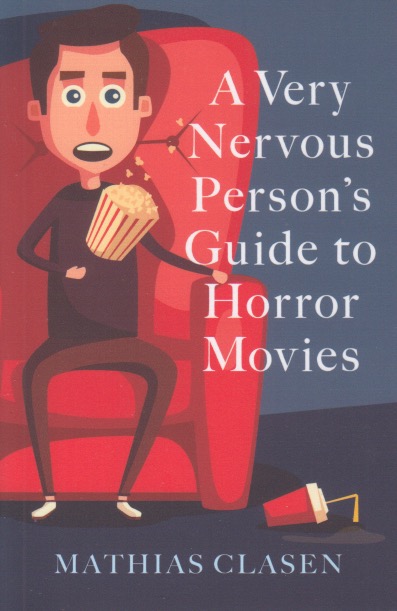
Embarrassment is a not uncommon reaction.  People who knew me as a religion professor or who now know me as a volunteer leader in my local congregation wonder why I watch and read horror.  It helps to know that you’re not alone.  Mathias Clasen is an author I’ve mentioned before.  I read his first book on horror and I was excited to see his A Very Nervous Person’s Guide to Horror Movies, recently out.  I’m not really a very nervous person in this particular regard.  As those who know me will attest, I’m nervous in many aspects of life, just not this one.  Still, after having heard the author describe what his university sponsored fear lab does I was curious how he’d approach horror for the nervous.

Clasen is an academic who clearly enjoys writing.  He’s fun to read.  He admits to being somewhat nervous around horror himself, not watching horror alone.  In fact, the book has several tips—such as not watching horror alone—on how to survive the experience for the curious but cautious.  What I inevitably take away from studies such as this is a couple of things: watching horror isn’t something only I do, and it’s actually good for you.  Studies (and here’s where Clasen is able to point to actual sources) have repeatedly demonstrated that horror has adaptive benefits.  Kids like scary stories, and there’s a reason for that.  The interest in horror generally peaks at the onset of adulthood and tends to decline from there.  Some of us, however, are perhaps arrested at that stage.  Or rediscover it.

There’s a great utility in being able to discuss horror intelligently.  Another point Clasen addresses is that horror is often intelligent but since those who don’t watch it often set the social standards it’s addressed as if it’s juvenile and unsophisticated.  Yes, there’s trash out there.  There is in every genre.  For many people, however, the popularity of slashers in the eighties forever defined horror as naughty teens getting murdered by a bloodthirsty maniac with some kind of blade.  That’s only part of the picture.  Horror has a history as old as cinema itself and the earliest exemplars were based on literature.  It has been an innovative genre from the beginning and when a particularly noteworthy horror film comes out critics and pundits are quick to relable it as a thriller or drama or anything but horror.  We need to give horror its due.  It’s always a pleasure to read a book by someone who has an appreciation of what horror has to offer, even if he’s nervous about it.


Ghosts and Puritans

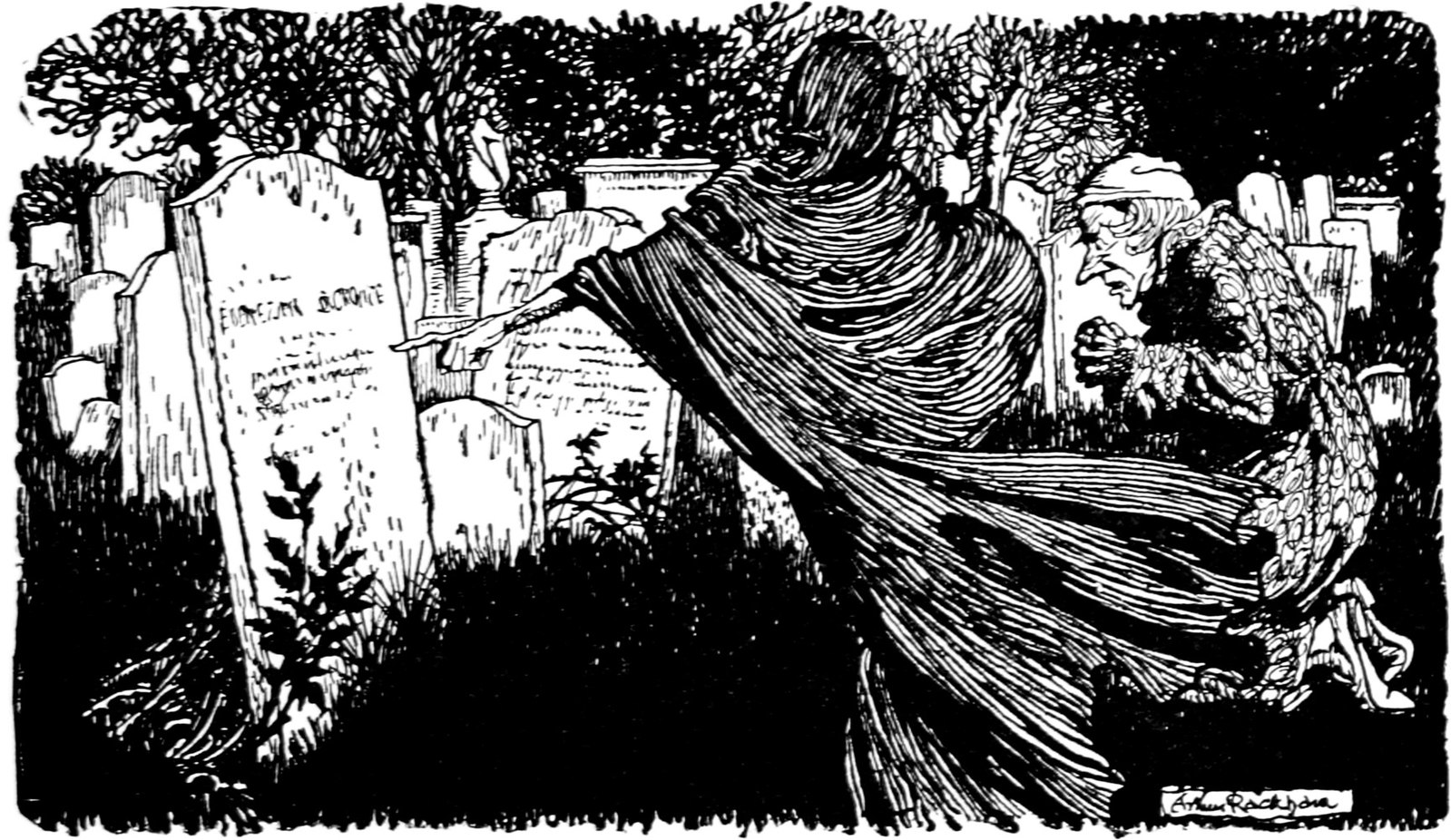
One of the victims of capitalism is the tradition of telling ghost stories at Christmas time.  We tend to relegate such downers to Halloween.  Christmas is a cozy time of getting new things, right?  Who wants to think of ghosts?  I recently read Charles Dickens’ A Christmas Carol.  An article in the Smithsonian  a few years back makes the point that Dickens was cashing in on a venerable tradition.  Instead of sending children to bed expecting Santa Claus, it used to be the custom to tell ghost stories on Christmas Eve.  That makes sense in context.  Christmas was established near the date of the Roman festival Saturnalia and the germanic Yule.  These festivities celebrated the passing of the equinox and the slow, but steady increase in light.  A liminal period.  It seems a natural time to tell ghost tales, no?

Image credit: Arthur Rackham, public domain via Wikimedia Commons

The article by Colin Dickey (who has a history of writing about ghosts), calls for bringing back the tradition.  Do we want our cozy capitalism interrupted by revenants?  Why not?  For me the Christmas season is largely about time off of work.  I spend the time working on fiction writing that I tend to put off when I have a book under contract.  Most of those stories I write are some species of horror, often ghosts.  The real haunting factor is I don’t have time during the rest of the year to do the amount of writing that recharges my batteries.  Work seems to take more and more time and the Scrooge-like results are, I think, pretty obvious.  It’s time to bring back the Christmas ghosts.

Dickey points out that one reason Christmas ghost stories never caught on in America was that Puritans had little taste for them.  The more I look at society the more amazed I am at how Puritan we still are, but without their religious ideals (apart from various prohibitions of human behavior).  The fact that this article appeared in the respectable Smithsonian makes me feel a little more accepted for my disposition.  I know there are many horror fans out there.  Poll after poll indicates that people like horror, but, it seems, most don’t like to admit it.  At least among those I know in the neighborhood.  There are a slew of Christmas monsters.  For those who keep track of holiday horror as a sub-genre the most common holiday represented is Christmas.  In fact, I just had a Christmas horror story published (under a pseudonym, of course).  Maybe ghosts will be able to frighten off the specter of capitalism and bring us back the holiday spirit.


Read Red

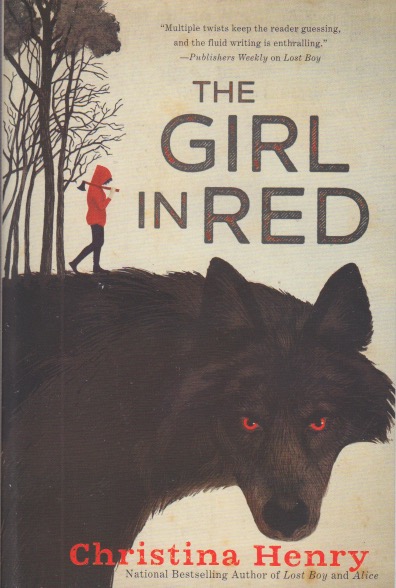
Fairy tales can be pretty gnarly.  I recently picked up a new translation of Grimm but I haven’t read it yet.  For some time I’d been aware of Christina Henry’s The Girl in Red.  As soon as I discovered it I wanted to read it.  The BISAC code says it’s science fiction but I’d call it horror.  More than that, I’d say it is the most tense book I’ve read in years.  Henry knows how to keep readers on edge.  Yes, it’s a take off from Little Red Riding Hood, but in a way that I wasn’t anticipating.  Red is a strong, believable protagonist who finds herself in a pandemic-ravaged world (imagined before Covid-19) where she has to get to her isolated grandmother’s house.  Everything between will surprise, scare, and stun.

The writing carries you along.  A government with secrets, the ever-present threat of roving groups of bandits and militias who are always on the lookout for girls, and the uncertainty of how this will all end make for a powerful tale of what people are capable of.  And not necessarily for good.  Making Red “disabled,” and black, Henry has given us a protagonist we need.  And it’s always a delight when a character finds that watching horror movies has been good training for a world where order has broken down into a Trumpian anarchy.  Scary and witty, the story has so much to like it’s difficult to know where to start beyond the recommendation to read it.

Those who analyze literature sometimes say that the great story-lines have already been taken and that the best modern writers can do is to adapt them.  There may be an element of truth to that, but even if there isn’t the clever retelling of old tales can be quite enjoyable.  This isn’t so much a retelling as a reimagining.  It’s also a poignant reminder that when things start to break down—or even in the status quo—women are put at risk.  Men too quickly resort to guns and violence.  As the story unfolds it becomes clear that Red is capable of surviving in this world, even when at a disadvantage.  There’s also no overcoming of the military.  It’s too well established and too heavily armed.  Red’s run-ins with them allow her to impress those who assume white male superiority.  In that way this is a parable within a fairy tale in a modern guise.  I’ll be reading more of Christina Henry’s books.