Screening the Dark

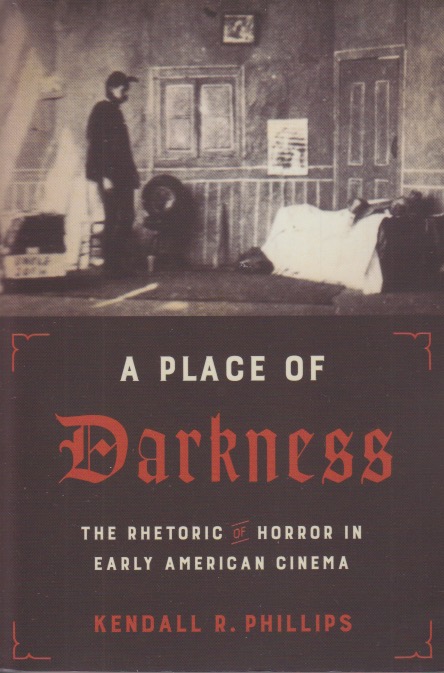
We’re spoiled.  The intensity of our media experiences makes it nearly impossible to imagine the truth of stories that viewers fainted at films such as Frankenstein even less than a century ago.  This change in outlook, this sense of being over-stimulated, occurred to me while reading Kendall R. Phillips’ excellent A Place of Darkness.  In keeping with the subtitle (The Rhetoric of Horror in Early American Cinema) Phillips primarily addresses pre-Dracula films, beginning in 1896 and demonstrates how horror themes emerged early and evolved along with society’s norms.  There is so much insight here that it’s difficult to know where to begin.  For me one of the big takeaways was how Americans at this stage were eager to appear non-superstitious and how they used that concern to keep the supernatural out of early ghost films.

Phillips isn’t afraid to address the role of religion in horror.  Other cultural historians note this as well, but many pass over it quickly, as if it’s an embarrassment.  Since my own humble books in the field of horror are based on the religious aspects of such movies, I’m always glad to find specialists who are willing to discuss that angle.  As America grew more and more enamored of the idea of rationalism, less and less energy was put into suggesting that anything supernatural might be at work.  Supernatural was considered foreign and cinema followed society’s lead.  This led to—and I want to add that this isn’t Phillips’ terminology—the Scooby-Doo Effect where every seeming monster had to be revealed as a hoax.  As a kid I watched Scooby-Doo in the vain hope that the mystery might turn out to be real.

Studies of horror films generally acknowledge that the first real member of that genre is Tod Browning’s Dracula of 1931.  Phillips demonstrates the valuable pre-history to that and does an excellent job of explaining why Dracula was such a singular movie.  Horror elements had been around from the beginning, but Browning’s film made no excuses—the vampire is real.  Audiences were shocked and thrilled by this and other studios didn’t quite know whether they should follow Universal’s Depression-Era success or not.  Mostly they decided not to.  The Universal monsters seem innocent enough today, but we go to theaters where the floors shake when heavy footsteps fall and the sound of a door creaking open comes from behind us.  Special effects make the horror seem real.  No excuse is made for religion and its monsters.  We’re spoiled. 

More Conjuring

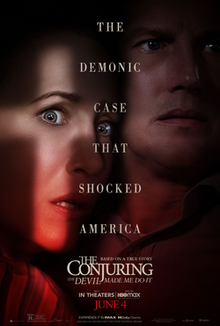
It was an almost surreal experience.  First of all, it’s been well over a year since I’ve been in a movie theater.  Secondly, I’ve never been to this particular theater before.  And in the third place, I’m absolutely alone in here.  I didn’t rent the theater out or anything, but I’ve been wanting to see The Conjuring: The Devil Made Me Do It since June 4.  Actually, since September when it’s initial release was delayed due to the pandemic.  Everyone else around here must’ve seen it already.   I knew the story of Arne Johnson and the Warrens, having found and read Gerald Brittle’s book, The Devil in Connecticut.  Loosely based on that event, this story focuses on the actual fact that this was the first time not guilty by reason of demonic possession was proffered in a US courtroom.  The story is a strange one and the movie, as movies do, makes it even stranger.

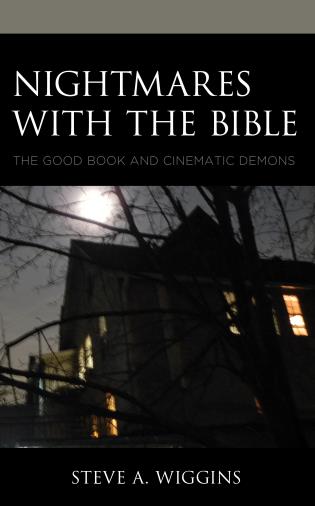
I’ve been anticipating The Conjuring: The Devil Made Me Do It, despite the title, for a few years now.  If you’re familiar with Nightmares with the Bible you’ll know that an entire chapter is devoted to The Conjuring franchise.  You may also know that it is the most lucrative horror series of all time, apart from Godzilla in its many, many iterations.  One of the points in Nightmares was to try to make sense of the demonic world presented in the Conjuring universe.  The franchise, for the most part, deals with actual case files from Ed and Lorraine Warren.  Some of the episodes are pure fiction, however, and the explanations given in the films are all, well, conjured for the big screen.  The movies call attention to the Warrens’ work, but in a way that requires an entire chapter to untangle.

My initial impression is that this isn’t the best movie in the series.  I can’t replicate my previous work here, and I’ve only seen the movie once, so there are details I certainly missed.  The demon isn’t named this time.  Indeed, the backstory proposed is drawn from the spin-off film Annabelle.  A fictional satanic group called Disciples of the Ram is posited as causing the trouble.  Like the demon behind Annabelle, they’ve placed a curse on the Glatzel family for some unknown reason.  During the opening exorcism Arne, in an Exorcist move, asks the demon to take him instead of the young David, the brother of his girlfriend.  The movie leaves the Warrens to find out who put the curse on the Glatzels in the first place, and break it.  With some time for pondering I’ll likely come back to this movie again.  I do have to say that the book was probably scarier, although sitting in a theater alone to watch a horror movie is not something I hope to make a habit of doing.


Unconventional Demon

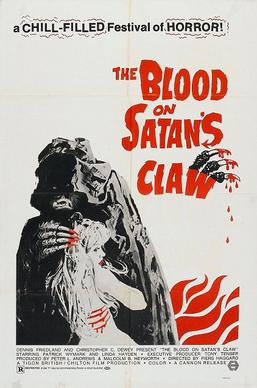
In my book Holy Horror I limited my discussion to fairly widely available and well-known films.  Part of the reason for this is that nobody can watch all horror movies and for those of us who work, there’s just limited time.  All of the films are at least American co-produced, most of them American productions.  The one exception to that is The Wicker Man.  I couldn’t bear to leave that particular movie out.  I didn’t realize at the time that it was classified as the newly coined “folk horror.”  Another film, released two years earlier was the strangely titled The Blood on Satan’s Claw.  It’s a strange but competent British horror film that has an eighteenth-century village falling prey to a demon that is accidentally plowed up in a field.

It is a film that could’ve been included in Holy Horror.  Indeed, the Bible appears in it and one of the adult characters is the local curate.  As the children are succumbing to a Satanism that’s raising a demon, he tries to teach them their Bible lessons.  Like Village of the Damned, the horror here centers on the children.  Flaunting the reverend’s rules, they play in the woods, raising the Devil.  Almost literally.  The demon they summon is called Behemoth.  Perhaps surprisingly, the judge actually saves the day in this one.  At first he’s convinced that the age of superstition is over and insists that it not be brought back.  He learns, however, that the demon is real and deals with it by rather physical means.  Who is Behemoth?

The word translates rather literally to “beasts.”  In the book of Job Behemoth is the land-bound companion to Leviathan, the two monsters that God cites to demonstrate his superiority over mere mortals.  As time wore on into the middle ages Behemoth and Leviathan were recast as demons, although it’s pretty clear that the book of Job doesn’t present them that way.  One of the points I make in Nightmares with the Bible is that demons aren’t fully formed beings in the ancient imagination.  Since the Bible says so little about them, ideas were drawn from folklore and other sources to flesh out these somewhat amorphous entities.  Descriptions of The Blood on Satan’s Claw quite often state that the children of the village are possessed.  If so, it is quite a different form of possession than will become standard two years later with the release of The Exorcist.  It is fitting, I suppose, for folk horror to have a folk demon for its antagonist.


Watching The Witch

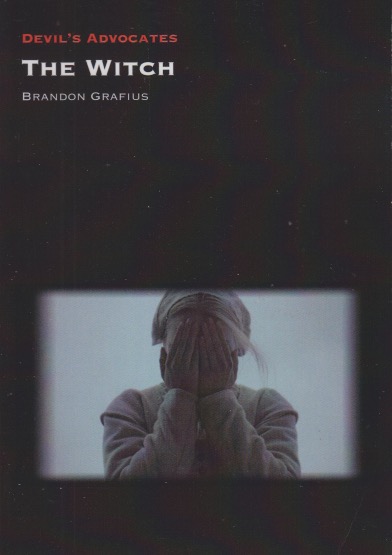
Good things often come in small packages.  I’ve read a couple of Brandon Grafius’ books before, and I’ve had The Witch on my reading list since I found out about it.  This is one of those books that benefits from knowing the raison d’être of the series of which it’s a part.  Devil’s Advocates is published by Auteur Publishing as a set of brief books on specific horror films.  If I didn’t have other financial obligations I could see myself purchasing the entire series.  Fortunately this volume was on a film I’ve seen (horror films have become so prolific that I can’t afford to see all of those I’d like either).  The Witch is a provocative movie, having gained critical acclaim as well as box office success.  It’s also a complex film.

Grafius ably takes us through the Puritan background that’s necessary to understand the social, and familial tensions that make this movie work.  Robert Eggers is a director known for his meticulous attention to period detail.  Even while weaving the fantastic into his stories, the plots are entirely believable.  Grafius has a solid grasp on how religion and horror interact.  That’s on full display here.  Looking at The Witch as an exploration of folk horror, he illustrates the importance of the landscape to the tale as well as how isolation sets a family off against one another.  The Puritan religion creates a monster, as it were.  Grafius doesn’t shy away from the misogyny behind the developing idea of the witch, either.  His explanations of—not excuses for—it are insightful.

Granted, horror films aren’t everyone’s cup of tea.  Or coffee.  As I sensed when writing Holy Horror, fans of the genre enjoy reading about it.  I often wonder why those of us who watch it do so.  In my case, in any way, it feels like a compulsion.  It’s a coping technique and perhaps an antidote to the headlines.  Horror can be an intensely creative and socially aware genre.  The best of it critiques the flaws of society.  As Grafius points out, Thomasin only wants to be a good girl.  The Puritan society into which she was born projects the image of the witch upon her.  Eggers gives us a real witch in the woods, of course.  Grafius explains how this becomes the aspiration of a young woman who’s only trying to do what’s right.  I have a feeling I’ll be going back to the Devil’s Advocates series again.


Reviewing Nightmares

If you’ve wanted a copy of Nightmares with the Bible but the cost is a little dear, I might recommend you look on the Reading Religion website where, as of my last look, a free review copy is available.  The catch is you have to write a review.  This is, of course, first come, first served service.  I tried, more than once, to get Holy Horror listed on their website for review, so I’m glad to see one of my books finally made it.  The idea of the horror hermeneutic seems to be catching on.  Technically speaking, however, what I’m doing is more history of religions than hermeneutics.  History of religions, at least part of it, examines whence ideas arise.  Nightmares asks that question specifically about demons.

The specific focus on horror in religion is a fairly new field of study.  Biblical scholars—indeed, those who specialize in very old fields of study in general—must keep looking for new angles.  Unlike any other piece of literature, the Good Book has been the target of scholarly interest from the very beginning of the western academic tradition.  It’s easy to forget, when looking at many secular powerhouse schools, that the very idea of higher education arose from what is now the discipline of the lowest paid of academic posts.  Being so old, religious studies, known at the time as theology, is hardly a venerated field.  I tend to think it’ll come back.  If you look at what’s happening in politics in this country, it’s bound too.  And yes, there will be horror.

Horror studies in the field operates by recognizing that horror and religion share common ground.  Like religion, horror is considered backward and uninformed.  Neither is really true of either horror or religion, but perception becomes reality for most people.  Finding themselves in remedial class together religion and horror have begun to speak to one another.  Horror has quite a following, even if those who like it keep mostly quiet about it.  The same is true of religion.  Many of the most effective horror films bring religion directly into the mix, often making it the actual basis of the horror.  The first books that I know of that brought the two explicitly together only began appearing at the turn of the millennium.  At first there were very few.  Now an increasing number of tomes have begun to appear.  For better or worse, two of mine are in the mix.  If you’d like to review the most recent one, you might check out Reading Religion, and maybe spare a kind word or two for what are, after all, baby steps.


More about Nightmares

I became aware of TheoFantastique many years ago.  Being new to social media myself, I was impressed at how professional and intelligent the site was.  Eventually I decided to introduce myself to John Morehead, the creator behind it.  (It is possible to be shy on the internet, so this took a few years.)  When Holy Horror came out I asked if TheoFantastique would post a review of it and got an even better response with an interview.  Now that Nightmares with the Bible is out the tradition has been kept going.  If you’d like to see an interview on the book take a look here.  One of the topics that comes up in discussion is how popular culture—TheoFantastique is cleverly named in that regard—influences the way we think about religion.

Religious studies was, not so long ago, a growing field.  Many of us have been trying to understand why interest began to sag, somewhat abruptly, and came to the point that it now feels like an endangered species.  Two of the consequences of this are important: one is that we don’t invest in studying what motivates just about everything in American politics and society, and the second is that the average person gets her or his information about religion from popular culture.  Movies, for example, are impactful, brief, and entertaining.  Humans are visual learners and although books punch above their weight in the learning division, having someone show you something is faster and requires less commitment than reading.  Academics, most of whom love reading, have been very slow to cotton onto this fact.  Society learns by looking.

That observation stands behind both Holy Horror and Nightmares with the Bible.  Both of these explorations look at how people come to understand two aspects of religion: the Bible and demons.  Instead of attempting to tackle all of religious studies (nobody can) or all of cinema (ditto), these books look at the horror genre to see how fans come to understand the Good Book.  As the interview explores, other scholars—mostly younger ones—are beginning to realize this is where people live.  It’s rare to find someone who commits to reading an academic monograph unless they’re in the academy.  Even academics, however, watch movies.  When the locus of information shifts to popular culture we need to start taking seriously what popular culture says.  More people will watch The Exorcist than will ever read an academic monograph about demons.  If we want to understand how people understand religion—what religion is—we need to pay attention.  And TheoFantastique is a great place to start. 


Creepy Houses

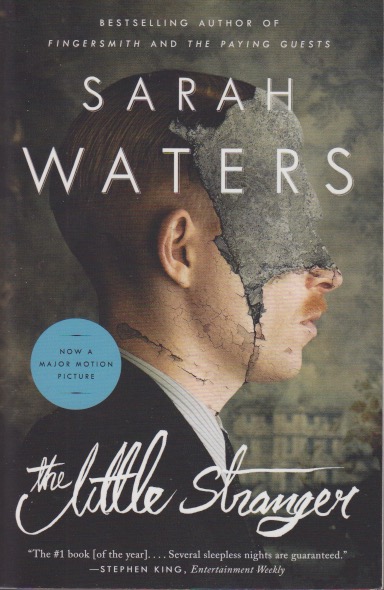
Definitions, I’m learning, are often a matter of one’s experience and taste.  I’ve read a lot of gothic novels and have tried to pinpoint what it is that creates a gothic feel for me.  I say “for me” because other people sometimes suggest works that I would put into a different category.  In any case, it’s clear that The Little Stranger, by Sarah Waters, is a gothic novel by any measure.  A large, isolated house.  A tainted family slowly fading away.  A remorseless, 400-page winter.  Inevitable decay.  The story is ambiguous and moody as Dr. Faraday, the narrator, falls in love with Caroline Ayres, the only daughter of an aristocratic family in decline.  The house may be haunted.  Or the family may be breaking down mentally.  Like The Turn of the Screw, it’s up to the reader to decide.

My preferred gothic has elements of the supernatural in it.  Melancholy without existential threat isn’t really enough to tip the scale for me.  The Little Stranger has enough of both to keep the reader guessing right up to the end.  Reader-response theory—the underlying basis for what’s being called “reception history”—posits that the reader assigns meaning.  The author has her idea of what happened in mind, but the reader contributes their own understanding.  This idea has influenced my own writing.  Once a piece is published the readers will make of it what they will.  In this way I can read Little Stranger as a haunted house story.  Although it was made into a movie I have to confess that I only heard of the novel recently while searching for gothic novels I might’ve missed.

The ambiguity fits the ambiguity of life.  The same circumstances can be interpreted by one person as entirely natural while another will add a super prefix.  No one person has all the answers and reality can be a matter of interpretation.  In that way Sarah Waters’ art follows life.  Interestingly, religion plays very little role in the story.  Church, when it appears, is perfunctory.  The source of tension here is on a rational, medical interpretation of events versus the gloomy lived experience of the Ayres family.  They believe themselves haunted and the scientific answers have difficulty convincing readers that there’s nothing more going on.  This is a gothic novel with a capital G.  Nevertheless, the debased cleric would have been welcome, but you can’t have everything.


Leap Night

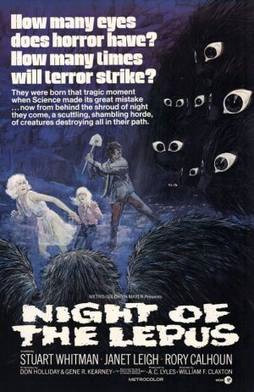
I was quite young when I saw Night of the Lepus for the first time.  Well, I had to have been at least ten, but when I recently sat down to watch it only one or two scenes looked familiar.  Like most poorly done horror films, Night of the Lepus has gained a cult following.  The story is loosely based on Russell Braddon’s comedic novel Year of the Angry Rabbit.  Without the comedy.  Or at least without intentionally being funny.  In an effort to control rabbit overpopulation in Arizona, a new virus is released into the population.  Instead of killing off the bunnies, it makes them grow as large as wolves and become carnivorous.  They go around attacking people with big, nasty, pointy teeth (to be fair, Monty Python and the Holy Grail wouldn’t be out for three more years).

Night of the Lepus was criticized for not being scary at all—a cardinal sin for a horror film.  I was kind of embarrassed when my wife walked in and found me watching it.  Nostalgia can do funny things to a person.  It is almost painful to watch the public officials make such obvious missteps each time they start to get an idea of what’s happening.  They’re almost as imbecilic as the Trump administration was.  Meanwhile rabbits are hard to make scary.  Perhaps William Claxton should’ve read Watership Down.  Ah, but Richard Adams’ classic was only published in 1972, the year the movie was released.  What was it about the mid-seventies and rabbits?  

Part of the problem is that Night of the Lepus takes itself seriously without the gravitas required to do so.  Who can believe actual rabbits are vicious when, to make them monstrous, the movie simply shows rabbits against miniature scenery?  Their human handlers occasionally smear their mouths with red, but a rabbit doesn’t appear cunning and vicious.  And to get them to attack people they had to use human actors in rabbit suits.  I’m a fan of nature going rampant as a vehicle for horror.  Hitchcock’s The Birds did it effectively.  So, I’m told, did Willard (which is remarkably difficult to access with HBO never having released it onto DVD).  The seventies were when ecology began to be recognized as perhaps the most important of global issues.  Half a century later we’re still struggling to reconcile ourselves with it.  Meanwhile the rabbits have begun to appear in our back yard.  They may nibble our perennials, but I’m not afraid.  At least as long as they don’t watch Night of the Lepus and start to get some ideas.


Scary Thoughts

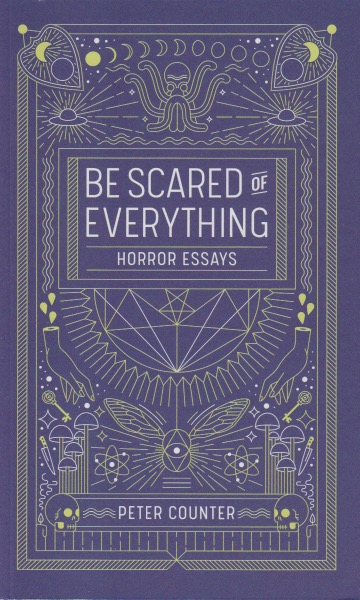
The kinds of places I hang out, online, dictate my reading.  It’s not that I like to be scared, it’s just that I’m honest.  Besides, even when hanging out in person was possible I didn’t do much of it.  So I became aware of Peter Counter’s Be Scared of Everything: Horror Essays.  Like me, Counter’s a blogger (among other things), but unlike me his blog is themed horror.  (This blog has an element of horror but is very roughly themed religion.)  Counter’s book is a fascinating collection of thoughts.  Some of the essays are funny, some are sad, and a few are downright profound.  It’s clear that what gave Counter his crisis was watching his father get shot.  Even those of us who grew up not knowing our dads can see how that experience would traumatize a life.  My own traumas were less focused than this, but we learned the same lesson—it pays to be afraid.

When I was young I never met a phobia I didn’t like.  As I grew older and left home, I came to bring them under control.  You can only get so far in life hiding under your blanket, secretly afraid you might suffocate.  I learned that if I wanted to be a minister—something that never happened—I had to overcome my fears.  Being a parent did it even more.  In order to try to teach your child not to be afraid, you find yourself doing things like scooping up bugs in your bare hands to show that they won’t hurt you.  Like putting a brave face on a truly scary situation.  Like carrying on when everything you’ve built crumbles around you.  Counter’s essays don’t shy away from the difficult things in life.  He’s right: there are many.

I was a monster boomer, but I only really came back to horror after losing my long-term teaching post and longed for career.  Horror helps you cope with trauma.  It gets a bad rap, but mostly from people who don’t understand its therapeutic value.  I don’t like being scared.  Horror, however, reminds me of that cozy childhood feeling of watching monster movies and knowing when it was over the threat would be gone.  Only it never was.  Not really.  Sleepless nights and their febrile dreams may’ve been triggered by the movies, but the realities happening behind the scenes were their real source.  I couldn’t know that at the time, and most of the time I’m not conscious of it now.  Still, I read books like Be Scared of Everything and I think maybe I’m on the right track.


Learned Ghosts

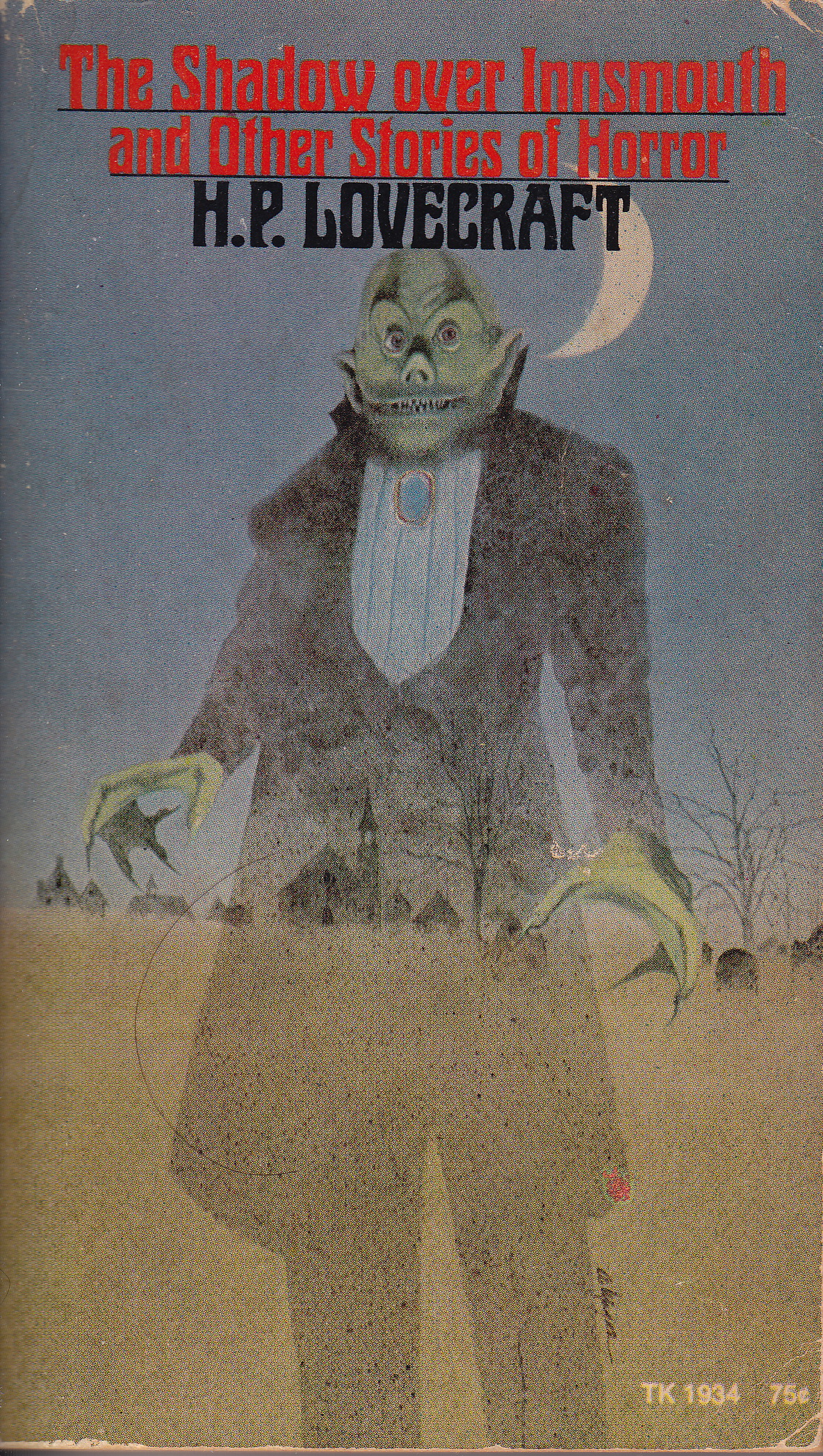
For one memorable year of what I call a career, I taught at the University of Wisconsin Oshkosh.  One in a series of near misses, this came close to becoming a full-time job.  Apart from a couple of rather humorless colleagues, the department was welcoming and an enjoyable place to be.  I even got to know the dean, now elsewhere, and planned on working on a project with him.  It was a memorable year in many respects.  One was its inherent strangeness.  I was living away from home while teaching there, and saw some odd things on my drives through the Wisconsin countryside.  It also happened to be at Oshkosh that I first discovered H. P. Lovecraft, so the weirdness was, in a word, enhanced.

Students like to tell ghost stories.  A recent article by Jocelyne LeBlanc on Mysterious Universe caught my eye because it tells of students in Oshkosh that live in a haunted dorm.  These kinds of stories are ubiquitous and Oshkosh is in no way singular here.  Students, whose brains haven’t yet ossified, are often open to new experiences.  Most of them, however, don’t possess the research skills to get behind the origins of some such tales.  Sometimes there’s an explanation.  Other times there’s not.  At Grove City College, when I was there, students told of a haunted playing field.  It was the site, it was said, of a former gymnasium.  What made it haunted was the death of a basketball player who’d smashed through a glass gymnasium door during a game and bled out before help could arrive.  It sounds improbable and I never had time to research it.

We all, I suspect, have a longing for the supernatural.  We want to believe that there’s more to this world than physics and earning money.  And strange things do happen.  I never saw any ghosts in Oshkosh, but the things I did see helped to make up for that particular lack.  Edinburgh, where I studied for my doctorate, is widely rumored to be among the most haunted cities in the world.  Although I saw no ghosts there, people flock to the ghost tours.  In fact, one stopped right below our first apartment’s window every night during the tourist season.  By the time we moved out we had every word memorized.  The haunted dorm story is a revered tradition.  Thinking about it makes me wish I could afford to be a student again.


Helpful Horror

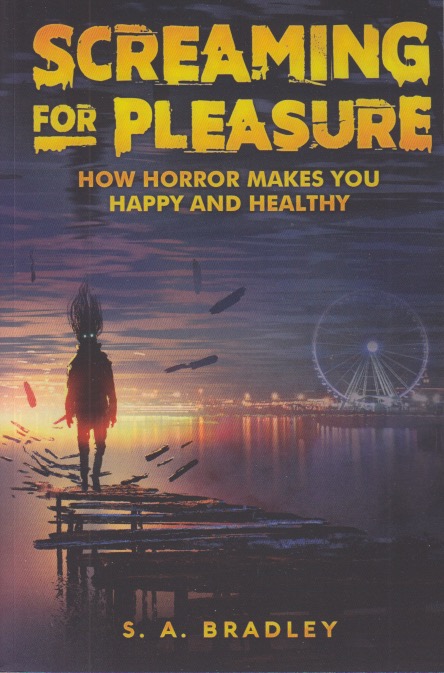
It’s pretty obvious when you meet one.  A horror fan, that is.  For one thing, they’re mostly decent people who often feel like outcasts for their tastes.  They also tend to have a well-developed critical sense for films.  While I’ve never actually met S. A. Bradley, I feel like I know him after reading Screaming with Pleasure: How Horror Makes You Happy and Healthy.  This is a must-read for horror fans and it comes with enticing descriptions of movies you’ll want to see afterward.  Bradley’s range is truly exceptional.  Not only that, but his taste in films leads to an inherent trust that he won’t steer you wrong.  The movies he recommends—the ones that I’ve seen—wholly bear him out.  The man’s a connoisseur.

Perhaps it was because I, like Bradley, was raised in a very religious household, but his recognition that horror and religion are closely related really spoke to me.  With a similar radar toward the religious impact of horror, he notes at several points how the two interact. His discussion includes horror in music and literature as well as cinema.  The benefits of the genre are unapologetically discussed, including the relatively high proportion of women who direct horror compared to other genres.  Unlike other movie genres, horror suffers from a perennial bad image.  Bradley confronts why this is so and also why it is misguided.  The bias is deep and undeserved.  Ironically, many of the same kinds of criticisms are now being leveled at religions as well.

Bradley’s book isn’t about religion and horror.  As someone raised in a religious household and who used horror to cope, however, he understands how the two are related.  Horror can heal.  When those of us in similar settings come to realize that horror is offering a means of getting along in a cruel world, it answers questions in a way that theodicy can’t.  Horror can be an intellectual experience.  It can be thoughtful.  But what comes through here is that it is also honest.  Life is complex and difficult.  Horror doesn’t shy away from that, but brings it out into the open.  I’ve read many books that analyze horror, and there are many more yet to read.  Bradley does something a bit different from many of them—he writes from a broad experience both in life and in the genre and comes up with an eloquent statement about a genre often dismissed.  And those willing to read it come away the better for it.


Rabbit Years

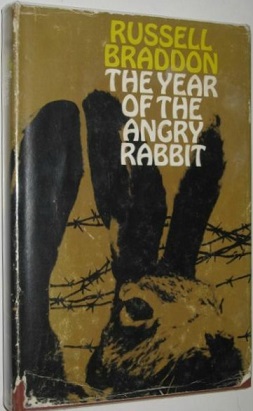
A childhood horror movie that I only recall in the most wispy of fringe memories is Night of the Lepus.  It’s one of those monster movies that involves mutated animals, in this case the unexpected rabbit.  I’m not sure why it’s been on my mind lately, but a little research indicated that it was based on the Russell Braddon novel, The Year of the Angry Rabbit.  This book is out of print and still under copyright, so finding a copy wasn’t easy.  Apart from vague images of giant rabbits, I had no idea what to expect.  The book turned out to be a comedy horror, in that order.  Remembering that the movie wasn’t funny (although it is consistently considered one of the worst cinematic efforts of the time), I wasn’t prepared for this.

You see, I don’t like to read about books before I read them.  I don’t read cover copy.  (I tend not to watch movie trailers either, unless it can’t be helped, like when you’re in a theater.)  I suppose knowing a genre of a book helps, but I just wanted the experience of reading the story behind a movie that won’t completely vacate my memory cells.  The Year of the Angry Rabbit is a satire on government, war, and capitalism.  If you’re not expecting a serious horror story it’s quite funny.  Russell Braddon never became a household name—he was from Australia and a person’s cultural impact tends to be greatest on their own continent—but if you knew this was a satire from the start you’d probably enjoy it as such.  Although written in the sixties, it’s climax takes place at the millennium, now two decades past.  It’s always interesting to see what people thought we might be up to by now.

Although there are elements of humor to our politics, Orwell seems to have been more on the money than Braddon.  Nevertheless it’s important to keep the old stories alive.  There are still people like me who will seek out rather obscure novels from many decades ago.  They might have to have sat on library shelves for years without having been checked out—this used to be the glory of the library, before “evidence-based usage” studies ruined them.  I search for things I want to read in my local small town library and find that my tastes are too obscure.  Besides, old stuff has to be cleared out to make room for the more recent books hoi polloi wish to consume.  I’m glad they’re still reading.  For me, however, I’ll need to stretch back to a time before I was old enough to read to satisfy an unrelenting memory. It was rabbit years ago.


Movie Demons

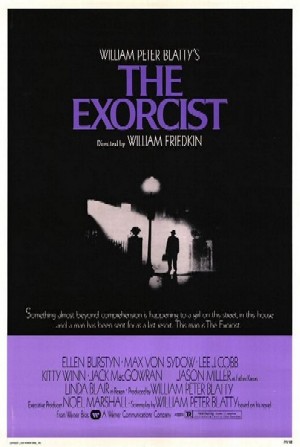
There’s an old tradition regarding demons that even discussing them is dangerous.  This was certainly in my mind as I wrote Nightmares with the Bible, as the topic is an uncomfortable one, at best.  A recent story by Paul Seaburn on Mysterious Universe references this danger in the title “Exorcist Claims ‘The Exorcist’ and Other Horror Movies are Sources for Actual Demons.”  Others have made similar suggestions that merely mentioning a demon is a form of summoning.  The post focuses on Fr. Ronnie Ablong, a Catholic priest in the Philippines, and an exorcist to boot.  Fr. Ablong claims that a number of recent cases involve fictitious demons from horror movies that possess those who watch them.  This is scary by implication and indeed is similar to what I learned growing up.

One of the things researching  Nightmares revealed was that demons in the ancient world come in many varieties.  There wasn’t one origin story behind them and ideas that make it seem that way had to evolve over time.  Of course, you can’t write a book like that without watching the movies and reading lots of books about demons.  It is a creepy thing until you start to reach the point where the material starts to break down.  In the case of Fr. Ablong, the demons come from movies, but often movie demons are based on ancient grimoires that name various entities.  The real question, and one which Seaburn raises, is whether such demons are real.  Given that we don’t know what demons are, and that some of the movies mentioned use made-up demons, such as Annabelle, it becomes suspect.

After finishing Nightmares with the Bible I was ready to put the subject aside for a while.  I’ve got other projects going and it’s important to have some balance, even in horror watching.  Still, the article caught my attention because it was one I’ve frequently heard—the danger of “opening doors.”  Often this is done unintentionally.  There’s no doubt that in the biblical world demons were frightening.  They still are.  Part of the reason is that they are so poorly defined.  In many more recent treatments they’ve become somewhat secularized, but they are, by their nature, religious monsters.  There is some truth to the Mysterious Universe story, however; our modern conception of demons goes back to the movie The Exorcist.  This is something I discuss at length in Nightmares and I don’t want to give too many spoilers here.  The topic, it seems, remains relevant even in our technological era.


Holy or un?

It’s either brave or stupid.  Maybe both.  Writing about a movie you haven’t watched, I mean.  Multiple people (do I have a reputation, or what?) have pointed out to me that Good Friday (for some) is the release date for The Unholy.  Since Good Friday’s a week away I guess we’re getting an early start this year.  The Unholy is a new horror movie and although I try not to watch trailers before seeing a movie—too many of them show too much in advance—I already have a sense of what it’s about.  This post isn’t really about the movie, however.  It’s about the bigger issue.  The concern many have is that it’s being released on Good Friday.  One thing I’ve learned is that to get attention you have to shock people, no, Donald?  Getting noticed is difficult and outrage generally works.

Friday, for many, is movie night.  Good Friday is, for some Christians, a day for church.  I’ve yet to have an employer (other than Nashotah House) that recognized it as a special day at all.  Easter always falls on Sunday so there’s no need to give time off work, at least in this capitalist, Christian culture.  But if you try to release a horror movie that day, people notice.  Mel Gibson knew that crucifixion could make the basis of a horror film, and people noticed.  Sitting over here in the backwaters just outside academe, I took to horror as a means of keeping my book writing active.  One reason was that horror gets people’s attention.  (It also helps if your books are reasonably priced.)

As a young man I used to spend a good deal of Good Friday in church.  Since I was serious about school I’m thinking we probably had the day off in my district.  Attending a Christian college, followed by seminary, I suspect these also paid attention to the liturgical year.  Then in the real world I learned the truth—it’s just another day.  A day for going to work and increasing the profits for whatever company may have hired you.  When the day’s over you’ll be inclined to relax, and perhaps watch a movie.  Right now going to a theater opens the possibility for horror itself so I won’t be there on opening night for The Unholy, but I think there was some savvy thinking going on, in any case.  And it may just be that the movie was titled specifically to fit the occasion.


Horror Story

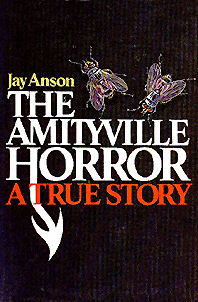
Last week, according to an article a friend sent, Ronald DeFeo died in prison.  DeFeo was made infamous by the Amityville murders in 1974 that led to the Amityville Horror franchise, a series that I covered in Nightmares with the Bible.  Many of the other individuals in that famous haunting/possession have also passed away, including both George and Kathy Lutz, the owners who bought the house and brought it to the public notice.  Controversy still surrounds the story with some claiming it was all a hoax and others suggesting that the hoax doesn’t add up to the sum of what happened there.  DeFeo and the Lutzes were all considered unreliable narrators—DeFeo because he was mentally unstable and the Lutzes because they made money out of their misfortune.  If anything can complicate truth, it’s money.

Academics, of course, won’t touch the story.  Claims and counterclaims, all swirling around lucre, fog one’s vision.  The story illustrates just how difficult it can be to get at the truth.  Even allowing for exaggeration, it seems something happened there.  A worldview that dismisses any possibility of spiritual entities—however defined—will necessarily come up negative.  No doubt, considerable money changed hands.  The franchise is still going with no less than four movies being released last year with Amityville in their titles.  Getting at the truth involves decided which human beings you trust.  The one Lutz child that has been willing to talk, Daniel, has continued the claims.  How can we ever know?

I object to those who claim that such inquiry is a waste of time.  If such things as claimed in Jay Anson’s book do happen (even if exaggerated), it may be that they’re exceptionally rare.  Rarity of objects in the physical world is seldom in doubt.  Ask any auctioneer.  Getting into the accounts around the events, however, betrays a list of money-seeking individuals.  Just about anyone making a counter-claim had a book deal in mind, and given the phenomenal success of Anson’s original the possibility of getting to the truth after that would always involve wading through greed.  No wonder politicians so easily become crooked!  Money makes people do strange things.  Not surprisingly, those left with questions regarding the truth of the matter are left hungry.  It’s clear that Ronald DeFeo killed his family.  It’s a matter of record that the Lutz family moved into the house just over a year later and moved out without their belongings less than a month after that.  Beyond this what happened is less and less likely ever to be known.