Book or Movie?

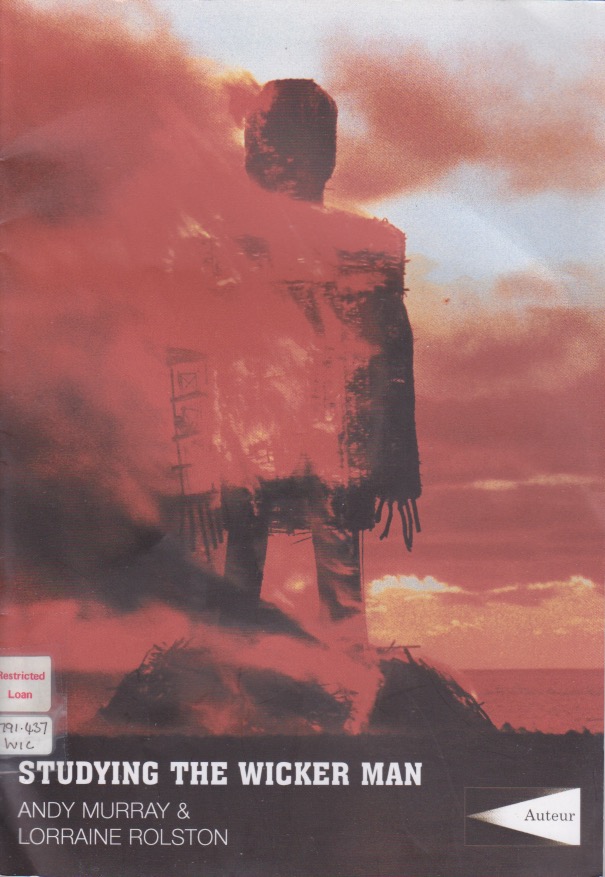
The funny thing about people, or at least one of the funny things, is that when individuals get together we notice different things.  It can happen at in-person meetings or “virtually” through books.  I’m working on a book on The Wicker Man, as I recently noted.  Others have written on the movie, of course, and I’ve read some of their analyses already, but I’m continuing to read more.  Recently I finished Studying The Wicker Man by Andy Murray and Lorraine Rolston.  This particular book—more along the lines of a booklet, actually—has quite a few observations about the movie that I had missed.  Connections, or interpretations, that I’d failed to make despite having watched the movie many times.  It takes the meeting of the minds to bring many things to light.

One of the questions they raised (and there will be spoilers here) is why the movie bears the title it does.  Obviously the climatic moment of the film features a wicker man.  Murray and Rolston noted, however, that more could be going on in this title than is obvious.  Sgt. Neil Howie, the protagonist, is a lot like a wicker man himself.  I won’t repeat their wonderful work here but I will say it’s convincing.  The literary trope of “the hollow man” (it could be woman, or hollow person, but I’m writing from personal experience) can be a poignant one.  We know that life may carry on biologically, but what makes us who we are is what goes on inside.  The hollowness may be intellectual or emotional.  Either way it’s a trial.  It’s something that I wouldn’t have thought of without help.

Studying The Wicker Man may be slim, but it has some powerful ideas.  As a society we’re often impressed with size.  When a promotional photo wants to show an author with gravitas, they generally ask him or her to hold a thick book.  There is certainly a place for large books, but insight can come in any size.  This particular book is obviously designed for film studies courses focusing on this particular movie.  It does point out that “cult classics” become such by not being widely seen, so I realize many of my readers (presuming there are many) won’t be terribly interested in a book that analyzes a movie they haven’t seen.  If you’re one of them, and if you don’t mind a movie with an ending that will stay with you, I would recommend watching the film before reading the book.

Podcast Live

Have you ever had one of those weeks where you forgot what day it was?  (Come on, now, it’s a pandemic—you can admit it!)  I spent yesterday unaware that it was Tuesday.  Tuesday is important because I knew that The Incarcerated Christian was going to be posting my interview on Holy Horror on their podcast.  It’s live now—give a listen!  I’ve been toying with rebooting my own podcasts, but like most other things in life I just can’t find the time to do it.  I still enjoy talking about my ideas and I thank Robin Mitchell Stroud and Debra Levy Martinelli for allowing me to yak their ears off for an hour.  There are many interesting podcasts on their site, so it you decide to listen the interview be sure to hang around a while and explore.

My hosts understand that Holy Horror was written for general readers, if not priced for them.  Being asked questions keeps you sharp, and sometimes it feels like my blade has been dulled from sitting in the drawer too long.  At the risk of sounding too biblical, iron sharpen iron, right?  Conversation is increasingly important in a polarized world where minds are already made up and the preferred solution is to hate others based on differences of opinion.  Why not talk about things?  Interviews also keep me sharp in asking about things I wrote years ago.  It may not seem like it, but the main body of Holy Horror was finished nearly five years ago.  Books take a long time to write and then a long time to publish.  It’s good to be asked about what one has written.

The questions asked on this interview were well thought out and reflective.  I can only hope that my responses were the same.  If you decide to listen and like what you hear, please share it with others.  The interview actually spilled over into a part two that will be posted in a couple weeks.  There’s a lot to say about religion and horror.  I’ve continued to watch movies since the interview and I notice further affirmations.  The Wicker Tree, for example, is a very biblical movie.  Or at least it quotes from the Bible quite a bit.  Holy Horror was very much an experiment on my part to find out if there was any room for a book like this.  After I wrote it I found others shared some interest in these topics, and two people cared enough to schedule an interview about it.  Please give it a listen.


More Ethnic Monsters

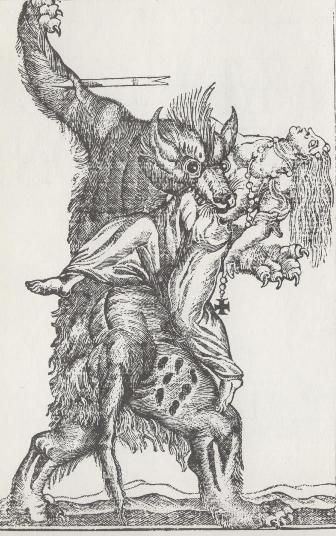
There seems to be a real interest, this haunting season, for cultures to claim their monsters.  I recently wrote about a story on the Jewish background to Frankenstein.  I also saw an article in Greek Reporter titled “The Ancient Greek Origin of Werewolves,” by Tanika Koosmen.  Earlier this year I read a book about the werewolf in the ancient world.  Unlike Frankenstein, or even Dracula, the werewolf has no defining novel.  Perhaps one of the reasons is that human-animal transformation stories have been around a very long time and have been extremely common.  Since monsters are finally becoming a (somewhat) respectable area of academic study, and since the standard role of the werewolf is well established, it’s too late for anyone to write the defining novel now.

As the article, as well as many books, point(s) out, Lycaon was transformed to a wolf by Zeus as punishment.  The ancient Greeks liked stories of such transmutations, as the work of Ovid clearly shows.  Although these aren’t monsters in the Greek way of thinking—they had plenty of monsters—there is a real wonder in the ability to transform.  Becoming something else.  People have long found the idea compelling.  Almost religious.  Animals, although closely related, have incredible abilities we crave for ourselves.  The werewolf, of course, represent the freedom of the beast.  Outside society it lets the pent up violence and frustration out through attacking others.  It’s very primal.  And so very human.

What makes most monsters monstrous is their occluded humanity.  They’re scary sometimes because we wonder what they’re thinking.  Are they thinking of us as humans or as prey?  Do they intend us harm or are they innocently trying to communicate with us?  Are they evil or just misunderstood?  Werewolves, for all of their violence, don’t seem to have been evil in antiquity.  By the late Middle Ages into early modernity, however, they’ve been associated with the Devil rather than with the gods.  People who’ve purposely decided to transform, via a pact with evil, are a different class of monster.  Like the concept of witches at the same time period, Christianity demonized them by making them associates of Satan.  Part of the problem is that werewolves have no origin story that we can point to, no myth that says “here’s what they really are.”  As Koosmen’s article points out, transformations go back much further in history, to ancient Mesopotamia.  The beast, it seems, has always been with us.


Jewish and Christian Frankenstein

Among my many potential book projects already started (I tend to work on several at any given time) is one on Frankenstein.  I’ve read several studies of Mary Shelley’s novel and its afterlives, and I have at least three awaiting my attention on my “to read” shelf.  One of the ideas regarding Frankenstein’s monster, about which I’ve written for Horror Homeroom, is whether it might’ve been influenced by legends of the golem.  The golem was a Jewish monster that was animated clay or mud, brought to life to protect Jews from persecution.  The golem, however, is soulless.  As such, he (and he’s generally male) eventually goes berserk, killing indiscriminately.  The tale has been around for centuries and one of the questions asked by Seth Rogovoy in “The Secret Jewish History of Frankenstein,” is whether Shelley could’ve known of the legend.

Frankenstein’s monster and the golem have quite a bit in common, so the question makes a lot of sense.  Shelley and family friend Lord Byron were certainly well read.  The article points out something I hadn’t realized—one of the Grimm brothers (Jacob, according to the piece on Forward) published a version of the golem story a decade before Frankenstein. Whether Shelley knew of it or not is the question.  The two tales might well have been a case of convergent evolution.  Frankenstein’s creature wasn’t intended as a protector.  He was made of body parts, not mud.  The main thing the two stories have in common is the god-like power to animate inanimate matter and the lack of ability to control what one has created.

Over time Frankenstein’s creature has become a classic monster.  The golem, until about a century after Shelley’s novel and its endless adaptations, remained fairly obscure. A silent film series on the golem appeared in the 1920a.  The golem has, however, more recently come into the light.  Several novels feature a golem and two of my favorite monster-of-the-week shows (The X-Files and Sleepy Hollow) had episodes featuring one.  Frankenstein, it seems to me, has a Christian worldview behind it.  The horror, as noted by Shelley—herself leaning heavily atheistic—was in animating something that nature had declared dead.  Victor Frankenstein, as the subtitle indicated, was a modern Prometheus—a human standing in for a Greek god.  The poetic justice here is that this atheistic, yet Christian context, monster ends up doing the same thing as the Jewish golem.  Both throw society into chaos.  Both warn that creating can be a real problem for those who don’t think through the implications of what they’re doing.  This is a message all people could still stand to learn.


Strange Happenings

It all began with a lazy Saturday, back in those days of trying to make a living as an adjunct professor.  People often ask why such folks don’t do more publishing, but the fact is that as an adjunct most of your time outside class prep and teaching is spent looking for a full-time job.  On a weekend, after all the job postings had been examined, I’d sometimes head to the local FYE and look through the bargain bins.  I’d taken to watching horror as an inexpensive kind of therapy years before.  I came home with a two-fer A Haunting in Connecticut and A Haunting in Georgia.  I hadn’t heard of either one, but hey, this was bargain bin entertainment.  It turned out they were television movie documentaries and they were scary, but not what I was looking for.  I resisted watching the theatrical movies when they came out.

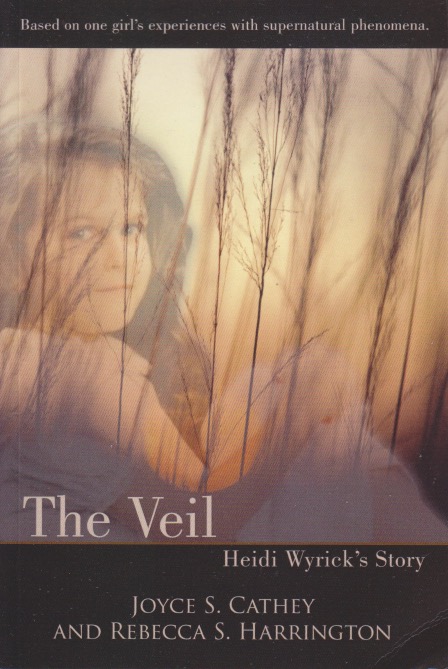
Eventually curiosity got the better of me, and I watched The Haunting in Connecticut and its sequel long after their release.  The strangely named The Haunting in Connecticut 2: Ghosts of Georgia dramatized the story of Heidi Wyrick almost beyond recognition.  Since the documentary had been based on a true story I wondered what had happened.  This wasn’t an Ed and Lorraine Warren case, so I turned to The Veil: Heidi Wyrick’s Story, written by two of Wyrick’s aunts.  Much of the book follows the documentary, only, strangely, with less detail about some of the hauntings.  It’s a quick read, and it’s fairly well paced.  It is, however, self-published.

A real dilemma, I imagine, for anyone wanting to publish their paranormal activities (unless they’re already influentially famous), is how to find a publisher.  From my own experience (and I work in the biz), finding a publisher isn’t getting any easier.  Self, or vanity publishing offers a physical book, but the usual gateways to believability (editors, editorial boards, etc.) are missing.  Established presses have reputation to worry about, and why take a chance when you can afford the luxury of buying projects that come to the top of an agent’s pile?  I enjoyed The Veil—I appreciate the effort of those who have a heartfelt story to tell.  But I couldn’t help thinking how much better it could’ve been with an editor’s guidance.  Those of us who write are often too close to our own work to see the problems—this is the real danger in self-publishing.  Hiring an editor is expensive and you need to have the income to do so, often creating a cycle of unaffordability.  I’m curious as to what really happened in Georgia, and I’m still curious after both the book and movie.


Banning Banning

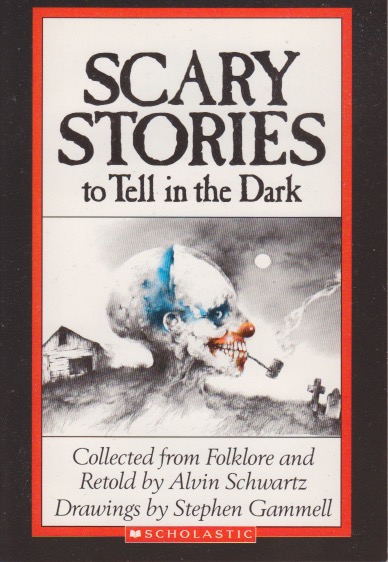
Banned Book Week gets me all aflutter.  There have been years at I’m so busy that it slips by before I notice it, but each year I try to incorporate it somehow into my reading challenges.  This year my book was Scary Stories to Tell in the Dark, by Alvin Schwartz and Stephen Gammell.  Yes, it’s a young readers’ book.  Most banned and challenged books are.  Why censorious adults feel the need to keep ideas out of print is pretty obvious in these Trumpian times.  (Please note, dear Republicans, many Democrats criticize Biden on a regular basis; we do not worship him.  American Marxist my donkey!)  Book censoring only serves fascist tendencies.  Ideas will find a way to be born, regardless.

Scary Stories, of course received a shot in the arm by Guillermo del Toro and his interest in making a movie based on it.  The stories themselves are drawn from folklore—they’re populist, you might say—and reflect what passes around from perhaps less insane times.  As an adult a reader tends not to find these stories frightening.  For one thing, many of them are stories we’ve heard before.  For another, life has already thrown many scary things at us.  Not only that, but we try to ban books to make adulthood even scarier.  You see, folklore doesn’t go away just because children are kept from the books.  These stories find the gaps just as water does.  They get told in the dark.  Instead of trying to censor them we should try to talk about them.

Adults’ own discomfort with ideas such as death and decay often stand behind our efforts to “protect” our children.  Then they reach maturity not prepared for the adult world of sex, exploitation, and dying.  Our modern comfort-based lifestyle tries to shut away the unpleasant aspects of existence.  Books, however, are the food of the imagination.  To ban them is to try to suppress the truths that authors have uncovered.  Growing up in a conservative household, we weren’t subjected to censorship.  I couldn’t afford many books, but my mother never said “No, you can’t read that.”  Some of my early reading faced uncomfortable facts.  I read both Jaws and The Godfather long before I ever saw the movies.  I read Scary Stories to Tell in the Dark as a form of solidarity with young minds.  There are benefits to learning to deal with fear early on in life.  And Scary Stories, even if not so frightening, has an appropriate place in it.


Discount Nightmares

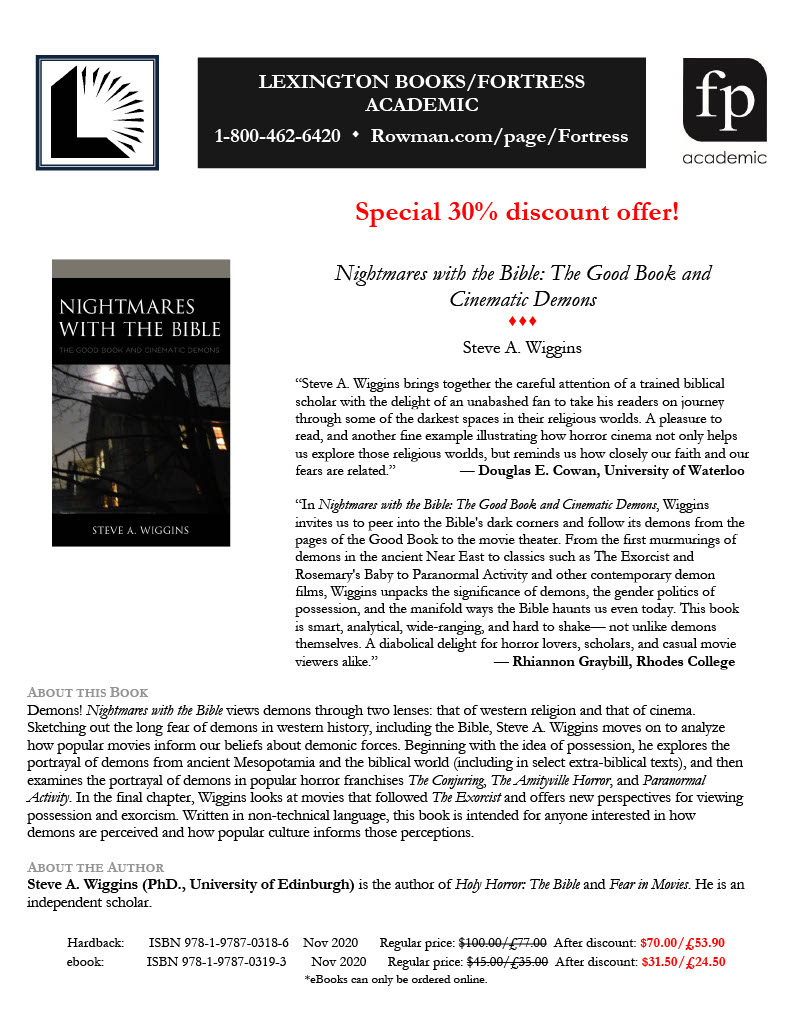
Now that we’re past the equinox it’s officially okay to obsess with monsters, right?  (Any excuse will do.)  Nightmares with the Bible was officially a pandemic book.  Academic publishers (especially) found out that books released in 2020 tended to flop.  People weren’t thinking about much other than the pandemic (or crying about losing an election fair and square).  Books, of course, take a long time to write and a long time to produce—it’s not as simple as it looks.  And if your production schedule falls during a pandemic, well, be prepared.  In the case of Nightmares there was the added burden of price point.  When all you’re thinking about is survival, cashing out a Franklin to read about demons seems hardly wise.

Just yesterday I received a flyer, that I’m passing along to you, for the book.  It has a discount code on it (look at part 2 below) so that the book is merely expensive rather than very expensive. Nightmares is part of a series titled Horror and Scripture.  The series, published by Fortress Academic and Lexington Books, is now coming out with its third volume.  The publisher, starting to recover from the pandemic, is promoting all the books in the series.  You see, Nightmares was not only a pandemic book, it also missed that highly sought-after pre-Halloween release.  Books that deal with horror get a boost during the holiday season.  Ironically the same thing happened with Holy Horror.  Both books came out in December when nobody but Charles Dickens is thinking about scary things.

Academic book pricing is based on a model that’s beginning to crumble.  It’s that capitalistic trope of what the market will bear.  The market is academic libraries, and it has been demonstrating lately that even they aren’t made of money.  I don’t know if libraries get to use discount codes or not—it can’t hurt to ask your librarian.  Fully employed academics, however, will sometimes pay a hefty price for a book they really want or need.  My shelves upstairs are filled with books that were overpriced but were required for the books and articles I wrote when it was an expectation of my job.  My next book, which is now in the negotiation stage with the publisher, will be more reasonably priced.  It will likely have a smaller appeal, but you’ve got to start somewhere.  I sincerely hope I’m through writing hundred-dollar books.  Please pass the flyer along to all your rich friends—it’s just in time for the haunting month of October.


Mental Health

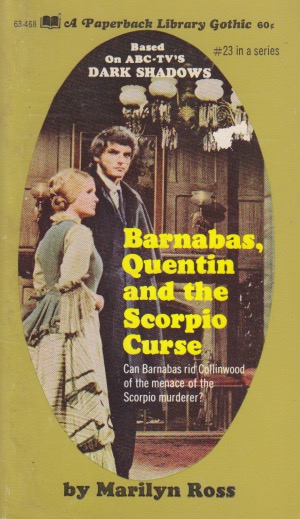
Dark Shadows was a formative part of my childhood.  I don’t recall specifics, or even how I found out about it, but I do recall watching it after school and being completely taken by it.  When I do the math I realize I had to have been watching it primarily before I was ten, and then after that I started reading the books when I found them in the used bin at the local Goodwill where they usually cost a quarter or less.  Now they’re collector’s items.  That fact doesn’t change the reality that they are journeyman writing through and through.  William Edward Daniel Ross, under the pen name Marilyn Ross, wrote thirty-three novels in the series as part of his oeuvre of over 300 books.  The stories are formulaic and feature odd word choices, but they are gothic.  Sometimes gothic is just what you need.

Barnabas, Quentin and the Scorpio Curse is a fun romp through a period when Barnabas has—with no explanation in the novel—overcome the vampire curse.  It introduces some Collins cousins who come to an asylum conveniently located next door to Collinwood where murder breaks out and mayhem ensues.  I have to keep reminding myself to put my critical faculties aside when I read these guilty pleasures.  There are gaps and incredulities that are simply glossed over, and that’s part of the world in which they take place.  Astrology plays a part in this episode, as the title indicates.  It features a psychologist who, it would seem, doesn’t know how to do background checks.

The truly scary part of this Scooby-Doo tale is that the protagonists, Diana and Barnabas Collins, aren’t believed because they’re voluntarily admitted to the asylum.  Mental illness is a serious matter, of course, and it can be difficult to diagnose.  The difficulty here is that it’s used simply to dismiss what Diana observes.  Time and again, as the Scorpio murders continue she’s dismissed as “a mental patient.”  It’s all part of a plot, of course.  It does raise serious issues, though.  In the late sixties and early seventies there was a real stigma attached to mental illness.  There still is, in fact.  Ironically, the more we learn about mental disorders the more common they become.  Just about everyone has some neurosis or worse.  In our efforts to define the “normal” we dismiss those with actually diagnosed conditions.  We’ve come a long way since then, but we still need to work at dispelling the stigma.  One way to do it is, I suppose, to put conflicted vampires into the mix.


Ancient Near Ideas

Looking backwards has its issues.  I still think about the Ancient Near East.  My reputation on Academia.edu is based entirely on it.  (From the user stats, nobody’s really interested in my horror writing there.)  Let’s face the facts, though.  If you an expert in a field (mine is Ugaritic mythology, a form of history of religions), you can’t just write things off the cuff for publication.  I need to be very precise and accurate.  I like to think that’s why my articles on Academia get attention.  To do that kind of writing you need time—when I was a professor most of my “free time” was spent reading in that field—and either research funding or an incredible library.  Professional researchers (i.e., professors) get paid to do that kind of thing.  I don’t do it anymore but that doesn’t mean I don’t think about it.

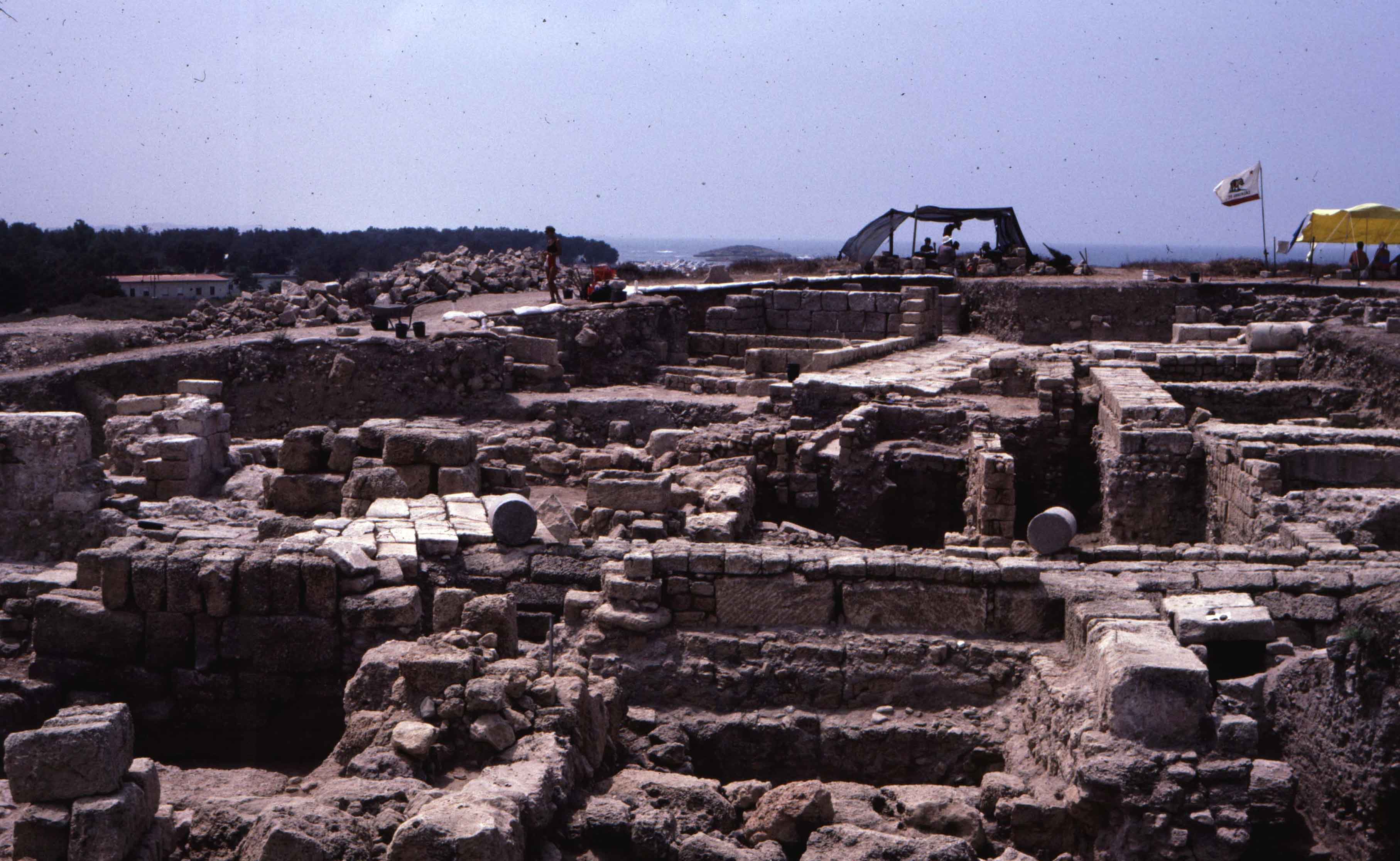
The other day I saw an article about Mehrdad Sadigh.  Although this antiquities dealer operated mere blocks away from where I worked when I commuted to Manhattan, I’d never heard of him.  It turns out that he had (has) a full-scale forging operation right in the city that never sleeps.  He has made a living, allegedly, for years by selling fake antiquities as genuine.  The story is tragic, but it underscores the point with which I began—people are interested in antiquity.  We want to be in touch with the past.  I can attest that there’s nothing quite like the thrill of being the person who unearths something on an archaeological dig.  Touching an artifact than no human hand has touched for two or three thousand years.  Looking back.

Looking back makes it easy to get distracted.  As much as I enjoy and appreciate my friends who still get to do Ancient Near Eastern studies for a living, I sometimes think how it’s good to move on.  Who knows, maybe I have another Ph.D. left in me yet.  Moving on increases the breadth of your knowledge.  Since university jobs are as mythical as the texts I used to study, doing a doctorate for a job is a fool’s errand.  Doing it to learn, however, is something I still heartily recommend.  There’s nothing like immersing yourself into a single topic for three-to-five years so that you come out with more knowledge than is practical about it.  I still think about the Ancient Near East.  I’m still tempted to buy new books that come out on the topic.  Instead, I watch horror and think it might be fun to earn a doctorate in monsters.


Screaming Season

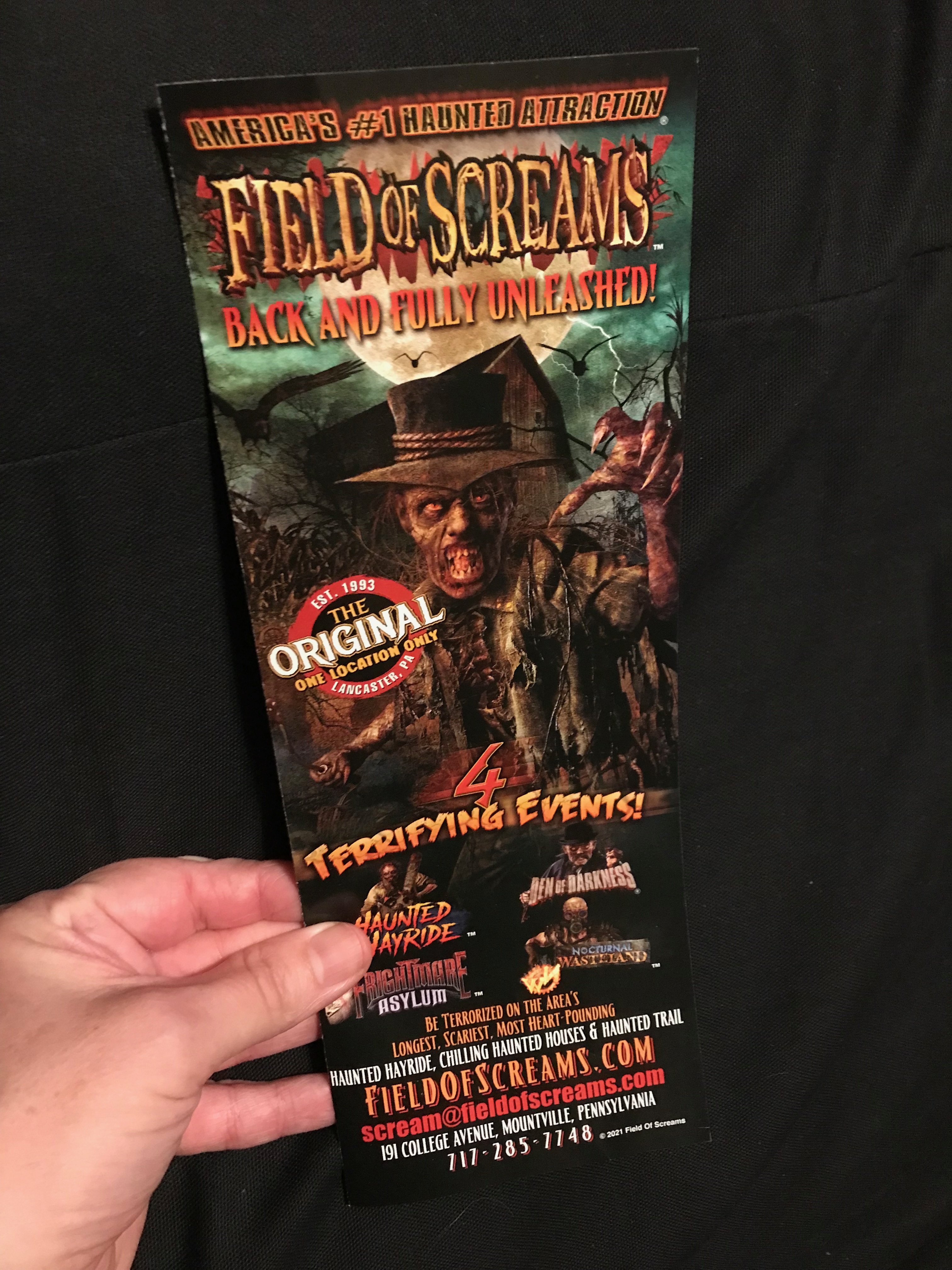
The signs are all around.  The orange and black Spirit Halloween signs are appearing where vacant storefronts stand.  Advertisements for autumnal activities are cropping up.  Brochures broadcasting local haunted festivities now adorn store counters, free for the taking.  I picked up a leaflet for the local Field of Screams the other day although I really don’t like to be in scary situations.  I do appreciate the spooky sense that they generate, however.  This local event runs from early September through early November—the two months enterprising farmers can draw urbanites to their land, cash in hand.  Halloween has been a major money-maker for many years now.  The less doleful minded wonder why, but I think that lots of us are really afraid.  Halloween says it’s okay to be so.

Perhaps it’s the realization that it’s all in good fun and nobody will really hurt you.  I’ve attended a few of these haunted events over the years, but it was more fun to participate in them.  Perhaps it goes back to Nashotah House.  I’m guessing that most of you’ve never been.  Nashotah is a gothic campus, at one time pretty isolated, out in the woods.  Halloween was, once upon a time, a real celebration there.  Our maintenance crew would offer a hayride through farm fields owned by the school, then through the cemetery on campus.  I used to dress in a grim reaper costume and carry a kerosene lamp through the graveyard, awaiting the tractor.  Nobody instructed me to do it, but we all knew it was in good fun.  And I wasn’t the only volunteer who’d pop out from behind headstones.  Students got into the spirit of it too.

These days remembering such shenanigans is more appealing than actually going out at night to have other people scare me.  The last time I went to a haunted maze it was really too unnerving for me to enjoy.  I volunteered instead for a local haunted house in New Jersey.  The run up to Halloween was usually an intensely creative time of designing and fabricating homemade costumes, and thinking of ways to make pumpkins look scary.  Now it’s become a season in its own right.  An important segment of the economy.  I won’t be going to our local Field of Screams, but I will understand those who do.  Changes are in the air.  It’s dark quite a bit earlier these days.  The air is chilly in the morning.  And the local fear fields open this weekend.


Witches of September

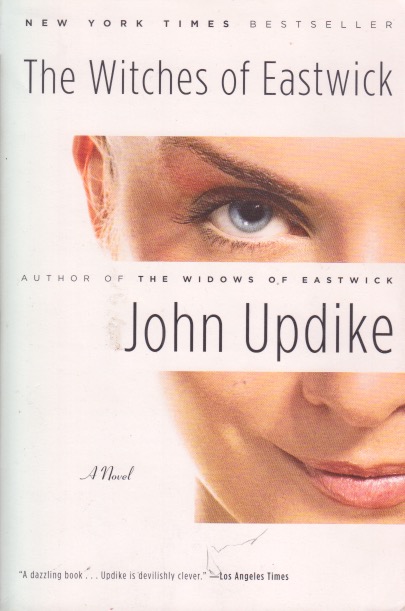
I’ve never read any John Updike before.  I understand that his novels foreground religion, which I didn’t realize.  I have watched The Witches of Eastwick, in movie form, a time or two.  In fact, I wrote a bit about the film in one of my books.  This got me curious to read the novel and I found a copy at a used book sale up in Ithaca some months back.  Now that September’s here, it seemed like an opportunity to see what the original story had to say about witches.  There is a problem, of course, in having watched the movie first.  Not only does it tell you which actors the characters should look like, but it also predisposes your orientation to what will happen.  In this case all that will mislead you.

The movie centers on Jack Nicholson’s Darryl Van Horne—like most Nicholson movies, his character takes over—whereas the novel is definitely centered on the three witches, Alexandra, Jane, and Sukie.  They don’t fall into the background, but neither do they always work in concert.  The movie tells, in other words, a very different story.  Updike’s literary treatment focuses on female characters and the mischief they cause.  Nor is it entirely clear that Van Horne is demonic, as in the movie.  A church features prominently in both versions, amusingly Unitarian in the novel, with Van Horne not upstaging the sermon but giving an invited one himself.  No fear of sacred places here.

The wrath of the witches isn’t directed toward Van Horne either.  A character left out of the film, who marries Van Horne and whose brother is his real target of affection, is hexed and killed by the witches instead.  In many ways this could be construed as a kind of gentle horror story, although it’s never marketed that way.  I kept waiting for certain scenes in the movie to be narrated, as it were, in the flesh.  This led to the revelation that these scenes were invented for the cinematic version.  Both novels and movies are stories.  When shown on the big screen, we expect them to be adapted.  My personal preference is for the film to present the same story.  It can’t always be done, of course.  In this case the movie left some questions open that I hoped the novel would answer.  Since the stories are so different, the questions remain.  I have a feeling I’ll read more Updike down the road, but I’ll avoid watching the movie first.


A Symphony of Horror

Horror season is upon us.  One could argue that it never left since summer has its fair share of horror when air conditioning is required.  The one horror director my wife seems to like, apart from the departed Alfred Hitchcock (and some would say he’s thriller, not horror), is Robert Eggers.  Eggers’ breakout The Witch worked on so many levels, even for non-horror fans.  The attention to historical detail and the solemnity of his approach and the slow build all helped.  The Lighthouse was moody and profound, with superb acting throughout.  The Northman, his viking epic shot in Iceland, is due out next year.  Rumor has it that his fourth film will be Nosferatu.  Anya Taylor-Joy, it is said, will be returning for it.

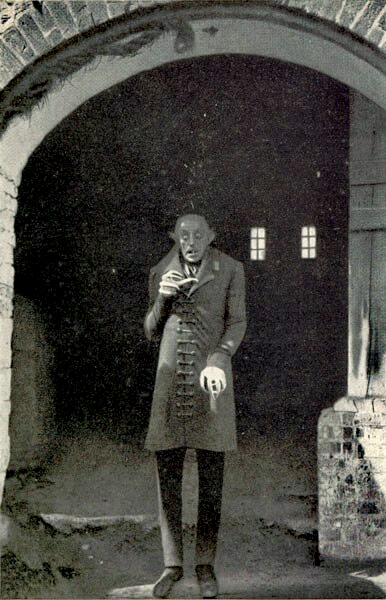
Nosferatu has, as of next year, a century of credibility.  F. W. Murnau’s classic, released in 1922, was technically a violation of copyright and was very nearly lost as copies were ordered destroyed.  This now iconic film, despite its subtitle A Symphony of Horror (eine Symphonie des Grauens), appeared before the category of “horror film” was assigned, and so it’s normally not considered as part of the genre.  The original was given a shot in the arm by Werner Herzog’s Nosferatu the Vampyre in 1979.  My long-suffering wife once agreed to watch it with me.  There are parts of the movie that are distinctly disturbing, but it remains one of the best vampire films ever made.  Many would classify it as an art film more than a horror film, just as Murnau’s was considered Expressionism rather than horror.

It remains to see how Eggers will handle this script.  The original plot was based on Bram Stoker’s Dracula, one of the formative novels of the western canon.  The story of an unassuming individual unexpectedly encountering, through a small conspiracy (in the films), the supernatural.  That which we’re all told is not really there.  Many are beginning to wake, after the election of Trump revealed that evil does really exist, to the understanding that not all is as it seems.  It’s hard not to sympathize with the vampire in the movies, particularly when he’s the victim of a curse.  A vampire’s got to eat, right?  The original, of course, made him out as a devil.  That was in the days when selfish bloodsucking was considered evil, not business as usual.  We have a lot to learn from vampires, and I, for one, am eager to see how Eggers will handle Nosferatu.

Image credit F. W. MurnauHenrik Galeen, and Fritz Arno Wagner; Public Domain in the United States, via Wikipedia

Who Ya Gonna Call?

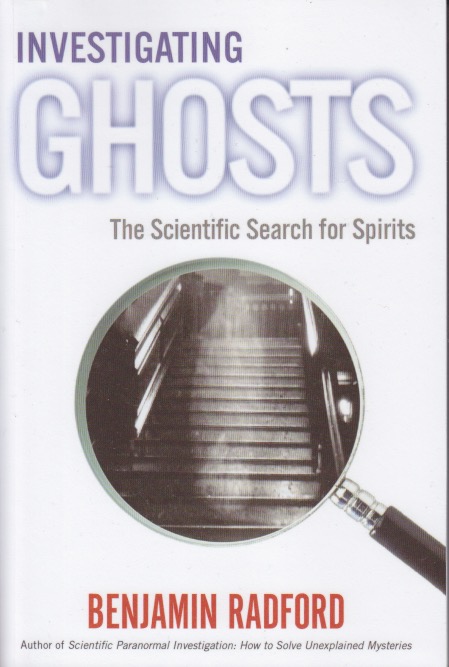
The haunting season is nearly upon us.  Apart from the usual fun of ghost stories, those of us with appreciation of science wonder about whether there’s any hope of confirming some of these tales.  Benjamin Radford’s Investigating Ghosts: The Scientific Search for Spirits is a handy guidebook for those who don’t wish to be gullible.  Radford demonstrates just why much of popular ghost hunting reality television really isn’t scientific at all.  Knowing how science works, Radford is unusual in that he’s open to the possibility of ghosts.  He points out, however, that from the point of view of science there’s a conundrum—there is no consensus on what a ghost actually is.  Different readers and experimenters and experiencers have different ideas about them—everything from the spirits of the dead to “recordings” made by the environment to demons to time-travelers.  Radford’s quite right that to test an hypothesis you need to agree on what you’re testing for.

Ghost hunting groups, as he points out, are actually gathering evidence hoping to prove the existence of ghosts (whatever they are).  Evidence gathering isn’t the same as science, however.  If you’ve ever watched any of these shows you’ll likely enjoy Radford’s take-down of their flawed methodology.  Wandering an unfamiliar location at night with the lights off and gadgets in hand, they go here and there, possibly contaminating each others’ “evidence.”  Their theories behind why ghosts do this or that—make cold spots, turn lights on and off, make white noise into EVPs, or electronic voice phenomena—don’t match the science of basic ideas of ambient temperature, wiring, and audio pareidolia.  These things are well understood, but you have to read about them to apply them. 

The larger question, however, remains.  If ghosts exist, and if they choose (if they have will) not to cooperate, how can we learn about them?  Radford makes the valid point that coming in for one night with lots of equipment and little knowledge of what we might term “the deep history of a location” stands very little chance of achieving results.  It may be fun, and entertaining, and it may catch a legitimate anomaly or two, but it doesn’t, can’t scientifically prove the existence of ghosts.  We still seem to be stuck with the materialism that only measures the physical.  This fact may indeed fuel skeptics to suggest it’s “only this and nothing more.”  But science isn’t the only way we know the world.  It’s a pleasure to read a book from an investigator of this topic who has his head on straight.


Which Wednesday

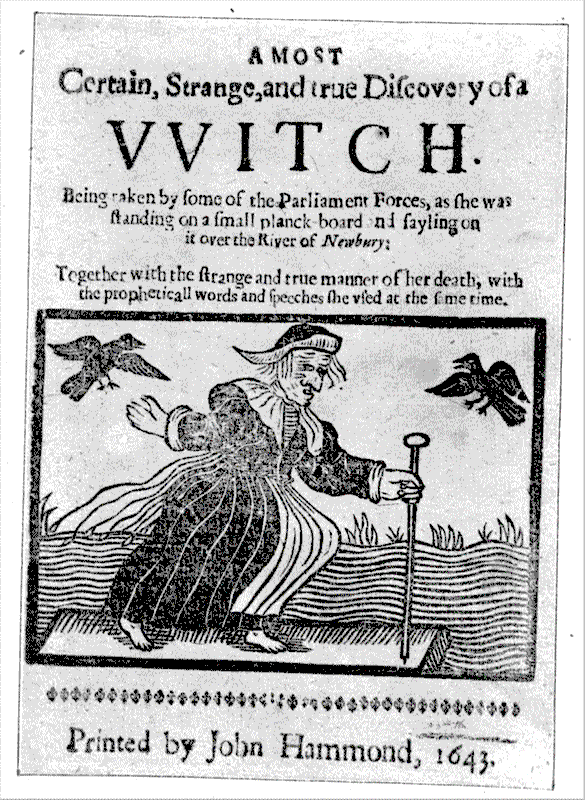
I’m not superstitious but it’s still pretty dusky when I go for my constitutional on cloudy days.  I was walking along thinking about Cernunnos, the way one does, when a black cat darted out of the underbrush and across my path.  My thoughts turned to witches.  Then a large toad jumped out in front of me in the half-light.  Perhaps it was because I picked up a booklet about witches recently, but this felt very uncanny to me.  There’s a place where the woods close in on both sides of the path.  The sun wasn’t yet up, and the clouds meant it wouldn’t have much mattered anyway.  When the bird calls stopped I began thinking about turning around and going home.  Nobody else was out this morning and although I don’t mind starting my day with the weird, I was thinking “not on a Wednesday.”

A thick mist lay over part of the path and I realized just how uncomfortable we tend to be when we can’t see clearly.  Despite that, and the black cat and the toad, I’ve never really been afraid of witches.  I guess I try to please people too much to think that someone might want to harm me supernaturally (at least among those who know me).  I recently found a booklet on witches—one of those strange impulse buys after being mostly house-bound for the better part of a year-and-a-half—that perhaps prompted my thinking this morning.  Although it seems to be most interested in earth-centered religions, it has an article about Salem.  Despite the more modern embrace of witchcraft in Salem, historically it had to do with human fear and hatred, a combination that is scary indeed when applied by those who are superstitious.

Cernunnos is a Celtic god generally portrayed with deer antlers.  Although lack of literature means we know little about him, he’s been adopted as the male counterpart to the female earth-goddess in some traditions.  Modern witchcraft is based on an orientation toward nature.  It’s kind of a ground-up religion rather than a top-down one.  Christians traditionally labelled it “Devil worship,” as they tended to do with anything they objected to.  Such demonizing helps no one, of course.  And when these ideas grow into superstitions people get hurt.  So I’m out here in the half-light because in the mornings days are shortening quickly and I have less and less time before work begin after the sun rises.  And I have witchery on my mind.


The Clairvoyant and the Demonologist

As a special bonus, here’s a post by a Guest Author. Enjoy!

For almost half a century, the couple known as a clairvoyant and a demonologist investigated thousands of paranormal cases that led to film franchises and book deals. You can find films based on their investigations wherever there are streaming horror movies.

Although the Warrens’ wider-known cases spent half a century splashing the headlines, there’s more to their legacy than how Hollywood portrays them.

Ed and Lorraine’s Spooky Origins

Even as children, the two were destined to unite over the supernatural. Ed grew up in a haunted house, witnessing apparitions of his deceased relatives while Lorraine experienced clairvoyant visions. 

After dating as teenagers, the two later married while Ed served in the Navy during World War II. They had a child, Judy. 

Despite Lorraine’s skills as a trance medium, she remained a skeptic until she witnessed more substantial first-hand accounts through their business.

Haunted House Hunters

The couple’s haunted house hunting began as a means for Ed to make a living as a landscape artist. The project quickly grew bigger as they traveled across New England painting potential haunted sites

Ed’s sketches became a friendly gesture to gain entry for tours and then investigations. Their novel networking attempts and cases eventually led to newspaper coverage and TV appearances.

Religious But Not Occultists

The Warrens’ religious beliefs as Catholics both hindered and aided their cause. As self-taught investigators, they aspired to balance their religious beliefs with scientific research.

“The Haunted” TV Series

Though much about The Warrens’ work is showcased in The Conjuring franchise and features spawned from their experiences at Amityville House, Hollywood also adapted an unsung investigation with a television show called The Haunted (1991). 

From the smell of rotting flesh to the sounds of anonymous screams, Jack and Janet Smurl experienced diabolical activity in their Pennsylvania house for years. After going public with their encounters, they gained national attention and then reached out to the Warrens. 

The Warrens confirmed a dark entity inhabiting the Smurls’ house and tried to expel it. Unfortunately, the evil presence refused to vacate.

The Warren’s Occult Museum

The couple founded the New England Society of Psychic Research (NESPR) in 1952, which solved thousands of cases over 50 years. They also opened their home to the public with a museum of the occult featuring artifacts such as the possessed Raggedy Ann doll that inspired Annabelle

Following their deaths over the past decade, their son-in-law now manages NESPR, but the museum closed in 2019.

Today, there is still more ground to cover learning about the supernatural and paranormal. Without the Warrens bridging the gap between the living and dead, vast mysteries about the afterlife could’ve been buried in the dark. 

Their legacy ultimately encourages believers and skeptics to continue searching for answers.