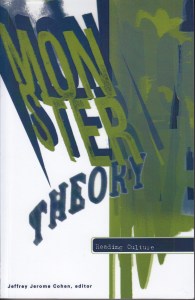
Monsters, in Theory

MonsterTheoryI want to understand monsters. I suppose that’s pretty common among Monster Boomers, but the thing is academics have been slow to give credence to our creatures. Yes, monsters are a throw back to the Medieval Period or worse, and reflect superstition, the supernatural, and things that go bump in the night. Our scientific worldview has no place for them, but they continually come back to peek in our windows and stomp on our cities. Horror movies, for example, consistently rate high in box-office grosses. And even adults, if caught in unguarded moments, might confess to enjoying the uncanny. So it was that I read Jeffrey Jerome Cohen’s Monster Theory: Reading Culture. Yes, it’s dated, but by humanities’ standards, it’s not too bad. Jurassic Park, one gets the feeling, was the rage when the book was being written.

As with most collections of essays, this is a Forest Gump of papers. Some of them were quite good and others were that kind filled with po-mo nougat. The one thing that was missing, sadly, is, well, monster theory. I’ve read just about every academic book available on monsters. I have yet to find a serviceable theory to help make sense of them. Yes, there are plenty of theories of origins—where monsters come from—but how to we handle them? Everyone knows that a stake is useful for vampires and a headshot is necessary for a zombie, but what are these revenants telling us really? Why do we still, when we can carry the internet in our pockets and call for help in the middle of nowhere, fear monsters? How do we construct, rather than deconstruct them?

Psychologists, of course, have a couch day with monsters. They represent parents, or phobias, or penises, or any number of things that make us uncomfortable. But how do we know a monster when we see it? Monster Theory, for example, has two chapters on conjoined twins. Now, at the time “monster” was a term used occasionally, but it is highly insensitive, let alone politically incorrect, to refer to humans that way. Then there were chapters on vampires and ghosts. Well, I suppose the dead can’t help their state either, but if they come back they could at least behave. Monstrosity is a concept, like religion, that we just can’t live without. We need our monsters in the dark just as we need dreams and desires. The question is what to do about them, and even after reading this weighty tome, I still don’t know.
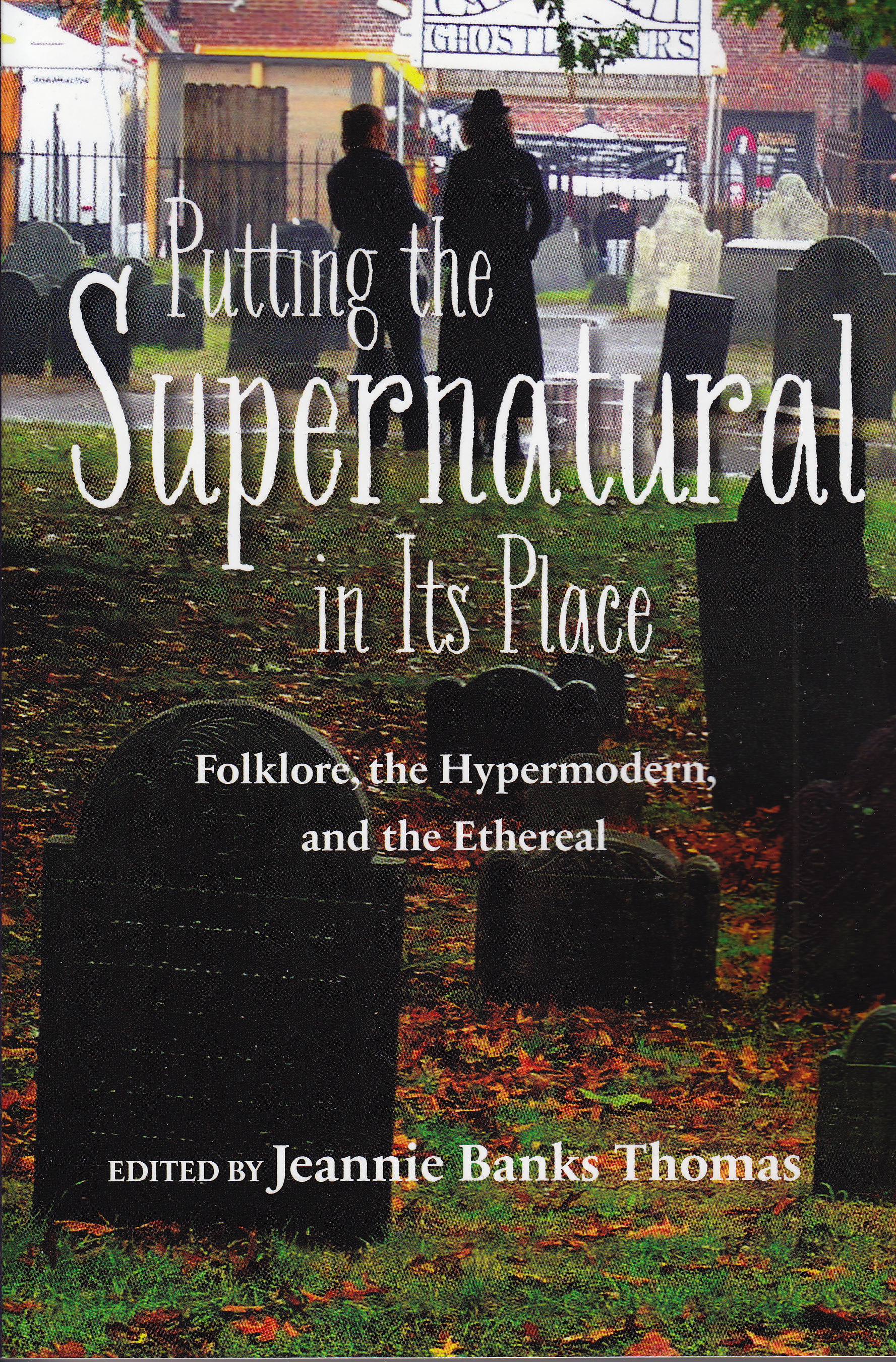
Supernatural Quest

SupernaturalTwo things we’re told about the supernatural: one, it doesn’t exist and two, it can’t be studied. Of course the vast majority of people in the world don’t buy into number one and hardly care about number two. Both, it seems to me, could be wrong. As Jeannie Banks Thomas says in her introduction to Putting the Supernatural in Its Place: Folklore, the Hypermodern, and the Ethereal, belief in the supernatural is not declining. In fact, the more we’re told by cocksure scientists that all of reality is quantifiable and material, the more we become aware of the many exceptions to the rules. Of course, “supernatural” may be a misnomer. It could be that anything sloughed off into that category is simply not understood well enough to be empirically studied. Thinking back over the history of science I find it ironic that the very system that had to convince people that something couldn’t be seen (many gases) could be deadly. Now if it can’t be seen it can’t exist. We certainly don’t want any deities hanging out around here.

But back to the book. Putting the Supernatural in Its Place is a folkloric study of place. The contributors to the volume look at popular beliefs, some serious, some not, that accrue around certain places. As I’ve often stated on this blog, we are aware as humans that some places are fraught with meaning. Scientifically we know this shouldn’t be true, but we feel it when we approach any space of significance. The contributors to Thomas’ book look to some very interesting places: New Orleans, Salem, St. Ann’s Retreat, Lily Dale, Japan, and even movies and the internet. If any of these places aren’t familiar to you, it’s worth picking up a copy of this accessible book to learn more. Supporting folklore is a very good thing. Folklore, after all, is the wisdom of the people.

The places in this book are rumored to be haunted by ghosts, witches, zombies, vampires, and even fairies. Folklorists, of course, don’t try to prove that beliefs are true. Like any academic they study and analyze. The main form of exploration for the non-academic is the legend quest. Many of us have gone legend questing from time to time. A place where something happened is said to have a certain feel or manifestation, so we go to see what it’s all about. If such trips are given religious sanction we call them pilgrimages. We want to see. But more than that, we want to experience something that the past has left behind. In the part of the year when each night grows longer than the last, my thoughts turn to what is usually termed “the supernatural.” And I, for one, am glad to have able guides along the way to make the simple voyage into a quest.


Still There?

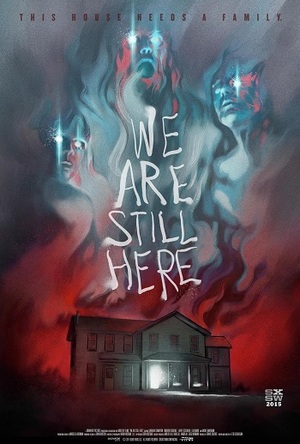
We_Are_Still_Here_film_festival_poster_2015

Keeping up with much of anything is hard to do, given work and commuting schedules. Often a horror movie will pass without even a notice until it’s on the sale shelf or free on Amazon Prime. On an October afternoon nothing feels more appropriate than a moody, ghost driven film. All these caveats are to introduce We Are Still Here, a movie that has received commendable ratings from the critics but which seemed pretty conventional to me. I’m not a fan of gore, and the finale has plenty to go around, still, the pacing is about right and the landscape is vacuously beautiful. I have to confess that I’m not sure of what was happening, although the newspaper shots during the credits were supposed to explain things. Haunted house, check. Townspeople acting badly, check. Spooky presence in the domicile, check. The menace is referred to in several different ways, but what is clear is that it wants a sacrifice.

To me this is what is at the heart of the connection between religion and horror. Sacrifice is wasteful by definition. Gods, who are demanding creatures, ask for people to give up something they could use to propitiate divine displeasure. We’re never really sure why gods have such anger issues, but it does seem like a universal trait. In We Are Still Here the “god” lives in the basement described as “hotter than Hell” and its choice of not slaying the intended victims is never really clearly explained. Perhaps that’s the point. Sacrifice is something that gods want. Reason has nothing to do with it. People in films like this seem to be minding their own business, doing what people do. Then the gods demand death. It is a religious trope older than the Bronze Age.

The film reminded me about the somewhat earlier and scarier Burnt Offerings. Ironically in the latter, there aren’t any burnings as there are in We Are Still Here, but there is a house that thrives on human sacrifice. Both houses demand a family and destroy it. Indeed, apart from sacrifice, such movies tend to be a critique of ownership. The house owns the people, not the other way around. And the house, in some sense, is a deity. We Are Still Here doesn’t give a full explanation. It puts the viewer through the usual paces for a horror movie with appropriate startles and grotesque deaths. Like most members of its genre, it reaches for religious backing to make it all hang together. It has the good grace not to be obvious about it as well.


The State Demon

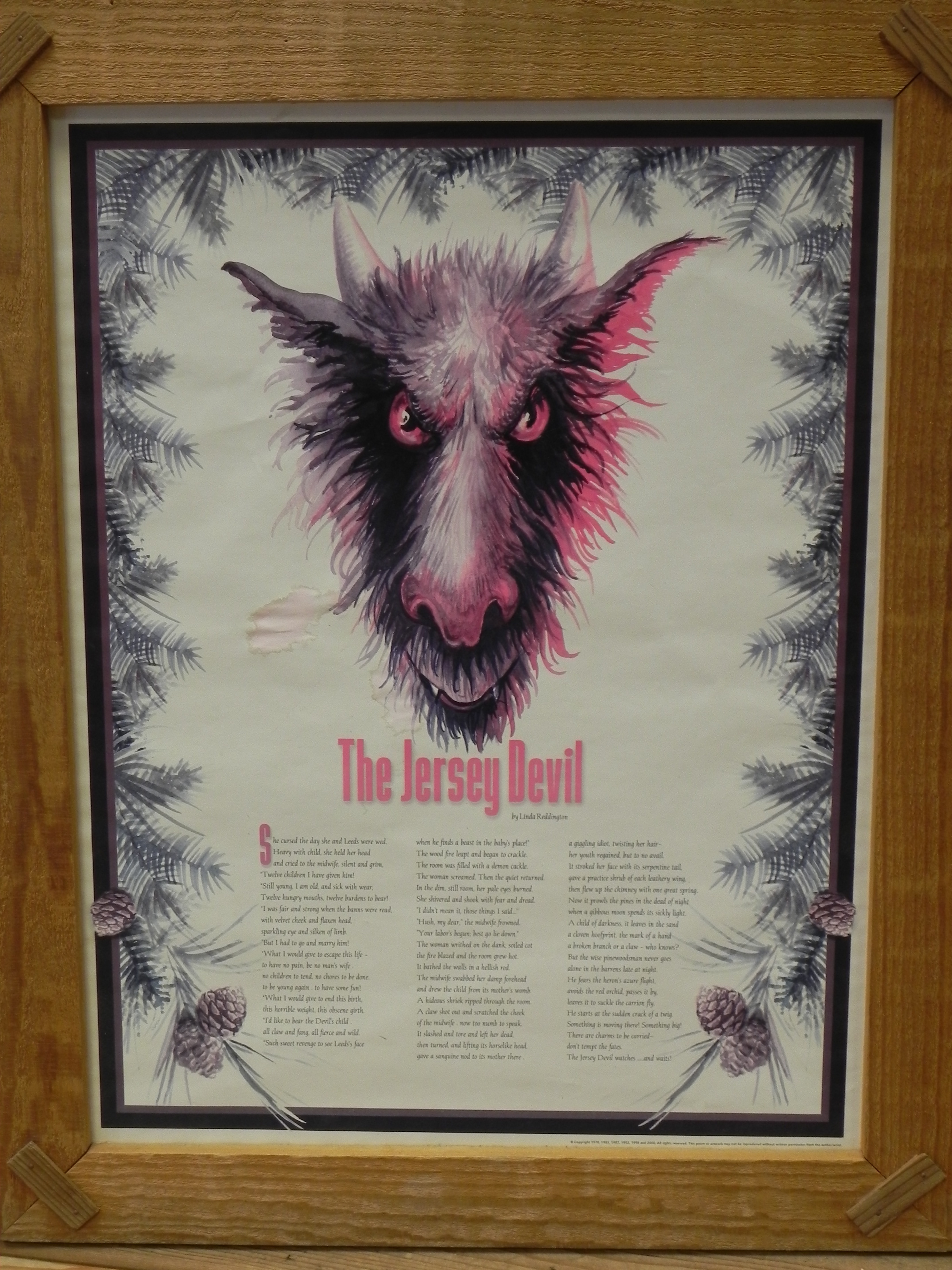
It’s the time of year for seeing things. I suppose that’s why there have been two supposed sightings of the Jersey Devil flying around the internet this past week. The credulous take these kinds of things for evidence, and the posters claim complete sincerity and who doesn’t want to believe? Still, the photos and videos fail to convince. It’s the time of year when we want to see monsters.

DSCN0128

While the origin story of the Jersey Devil is one of the main strikes against it for sheer impossibility: Mother Leeds, who had twelve children, finding herself pregnant with a thirteenth, wished that it would be born a devil. The cursed child, meeting motherly expectations, came out a devil, flew up the chimney, and has haunted southern New Jersey ever since. The folklore elements are thick in this tale: the thirteenth child, the exasperated mother, devils in the woods. This doesn’t, however, suggest much confidence in the literal truth of the story. This traditional tale circulated in the same region where legitimately strange things were seen, especially around the turn of the last century. Every now and again the devil reappears in a present-day venue. At one time the Jersey Devil was even the official state demon of New Jersey.

The ease of use of photo-altering software has taken us further and further from the truth. It is an impoverished world that has no mystery to it, but the easily hoaxed world of Photoshopped monsters will cast doubt on all contenders, I fear, forevermore. We can no longer trust the veracity of the lens. Our world has become an electronic illusion. The creature spotted in the Pine Barrens can be more readily believed without photographic proof. The sober, shaken witness who can’t explain what s/he saw one dark night is more believable than a goat with wings or a stuffed animal on a string. Our religious sensibilities urge us to believe in the impossible. Our cameras urge caution. After all, internet fame is often the only kind available to those whose videos and photos go viral. The devil, they say, is in the details.


Living Undead

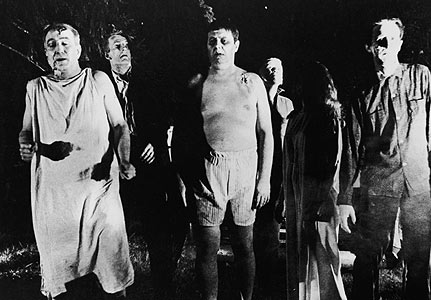
Now that autumn is in the air, my thoughts turn to zombies. I’ve read a few monster books lately, and as I pondered the attraction of zombies to the post-modern psyche, I began to wonder if they weren’t becoming, in their own secular way, a religion. Think about it. Zombies, first and foremost, are about resurrection. In a world ruled by rationality and science, we know that resurrection is impossible. What isn’t possible in science may indeed emerge in the world of monsters. The zombie, often not speaking, proclaims a distorted kind of gospel that the end is not really the end. Resurrection is not all that it seems. Zombies are spattered with gore, reminding us that the visceral existence we know as quotidian experience is temporary. Resurrection comes at the loss of a soul. The zombie is the monster of science: the animating principle is no longer spiritual. It’s just physical.

NightoftheLivingDead

Not only do zombies proclaim resurrection, they are the ultimate proselytizers. Their zealous hunger leads them to bite and their biting infects and creates new zombies. Their brainless goal—as they are unthinking consumers—is to convert the entire human world to their point of view. Once the zombies take over completely, there will be nowhere left to go. The way of the undead flesh may be a dead end, but rationality doesn’t always play a role in zealotry. The zombie is all about making more zombies. They are unbelievable, and unbelieving, but they have the making of a mega-religion nonetheless.

As a student of religion, I wonder how belief systems get started. We hold irrational beliefs on any number of things, including our religions. The difference that zombies make is, in real life, nil. And yet we can’t help tuning into the Walking Dead, or watching World War Z. The zombie is the most recognized symbol of the proletariate among the workers of the world—the brainless, soulless drone in the machine. Mega-churches draw in thousands every week for a religion that doesn’t require much intellectual engagement. Keep doing what you’re doing. Think of others once in a while. God really does want you to be rich. And the minions go out and make disciples of all nations. It is a world full of zombies. We see them in our dreams and in our mirrors. And although we think they’re only entertainment, they are oh so much more.


Monster Smash

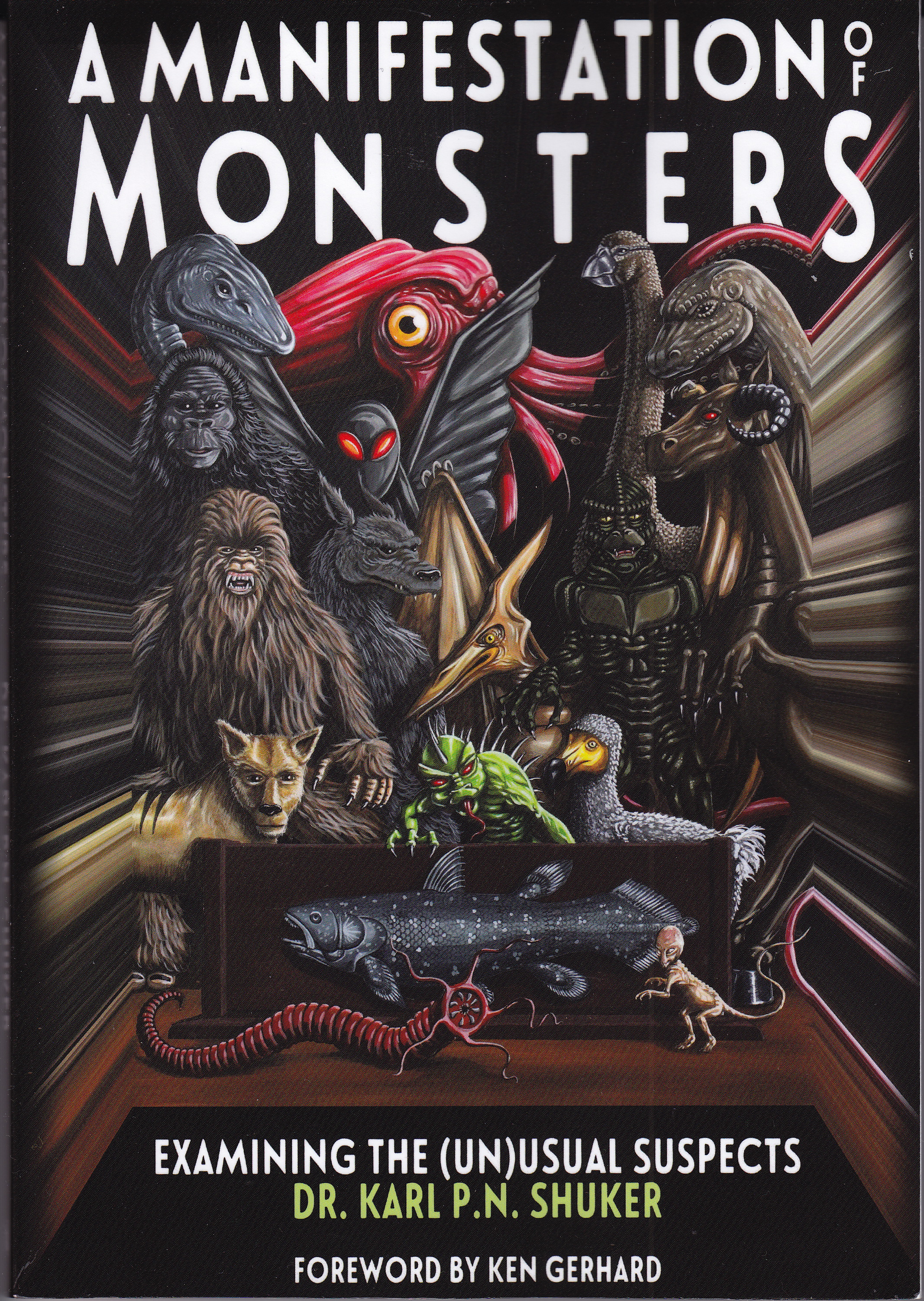
MnfsttnMnstrsIt’s the time of year when young men’s minds turn to monsters. Well, at least this middle-aged man’s does. Seeing a book by Karl P. N. Shuker entitled A Manifestation of Monsters, I was intrigued. I had some Amazon points burning a hole in my internet, so I took a chance on it. The fact is good books on monsters are hard to find and Shuker is listed as “Doctor” and that sometimes stands for something. Subtitled Examining the (Un)usual Suspects, the book is a curious Mischwesen of folklore, actual animals, and cryptozoology. The latter should be no surprise as Shuker is a noted cryptozoologist. Compiled from many of his previously published articles, the book contains some fascinating accounts of extinct creatures and some improbable accounts of modern monsters.

Since Banned Book Week is a time to explore challenged ideas, why not read about some cryptids? They are anti-establishment monsters. Banned creatures. As is usual with monsters, there’s little rhyme or reason to the arrangement. Unlike many in the field of cryptozoology, Shuker is skeptical of outlandish claims, and has actual training as a zoologist. What stood out to me as I read accounts of unusual creatures is that some people report seeing the oddest things, and that other people are driven to hoax all kinds of monsters. It is clear that the human mind is programmed to believe in the possibility of the improbable. Critical thinking, as anyone with advanced training knows, is hard work. Belief can be a far simpler matter. We crave a world with the exotic, and potentially dangerous. Shuker’s piece on the mythical chupacabra demonstrates that nicely.

While I’m pondering things that are banned, I consider how some who use critical faculties well like to disparage others. This, of course, is not in the best interest of science. We haven’t discovered everything yet. We think that because of the internet we’ve gone about as far as we can go in hive-mind mentality. Never mind that bees and ants beat us to it. People, many of them very intelligent, continue to see things they can’t explain. Others say that any living creature larger than a breadbox has already been discovered. I tend to think the world is a pretty big place and that people prefer to huddle together in cities for a reason. The mountain gorilla, for example, was discovered just in 1902. Now that the season for monsters is upon us, I like to imagine what else might be wandering around unseen by human eyes. And I hope banned ideas may continue to thrive in the forests of our minds.


Teaching Vampires

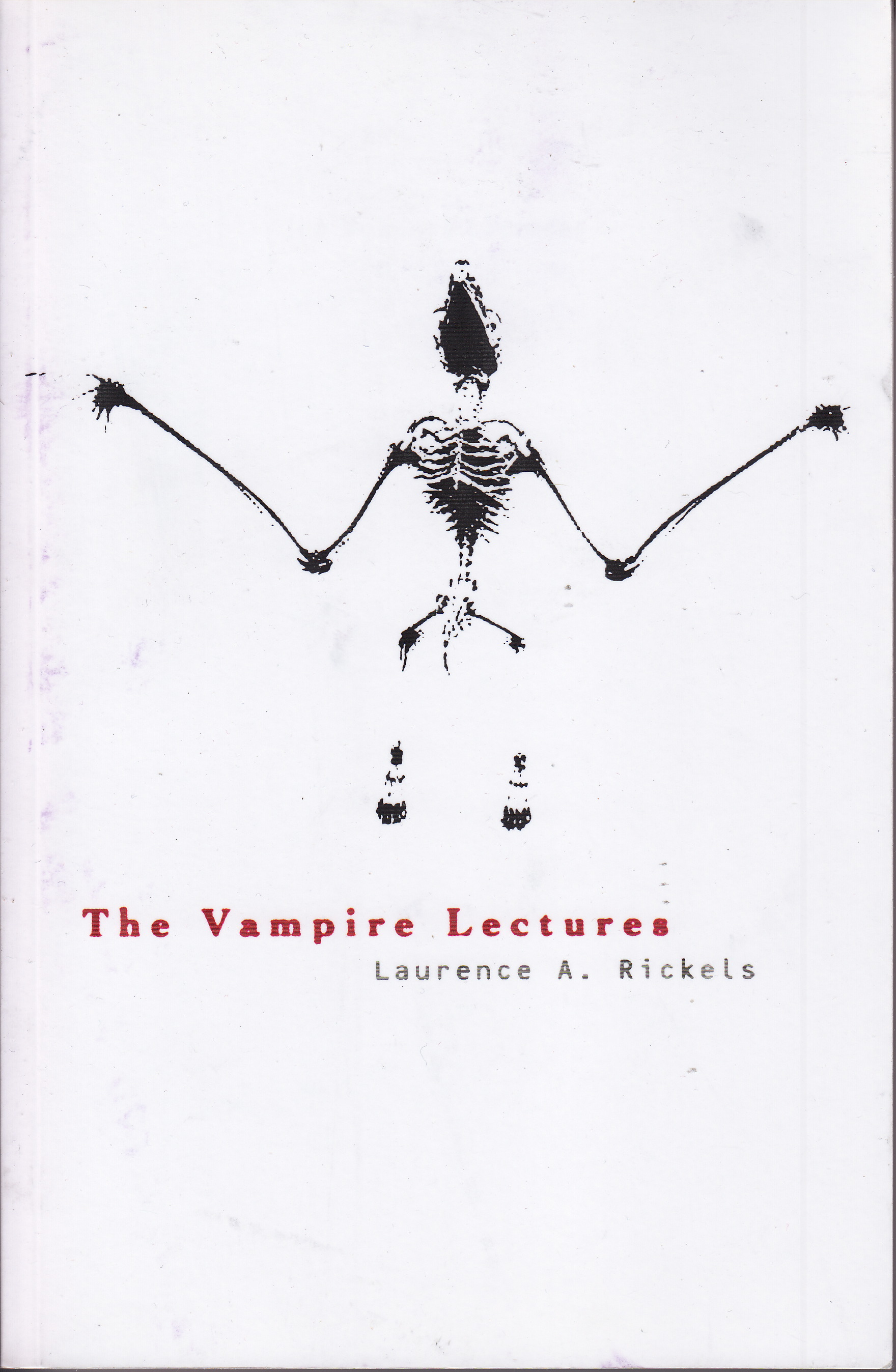
VampireLecturesWhat do you get when you cross German literature, psychology, and the undead? The Vampire Lectures, of course. Laurence A. Rickels, one gets the feeling, must be one interesting guy in the classroom. When I was a student the thought that anyone would take vampires seriously enough to offer college credit to study them was, well, a foreign concept. We all know that there’s no such thing as vampires, or werewolves, or Frankenstein’s monsters, or mummies—wait, mummies are real, but just not animated. In the reigning cultural paradigm, if something’s not real, it’s a waste of time. The human psyche, however, disagrees. The fact is there’s an awful lot of mental baggage that the vampire addresses. So much so that the University of California at Santa Barbara can offer a twenty-six lecture course on the topic. The results are what we have in this unusual book.

Rickels has read widely in the literature of the undead. The vampire’s share of the material goes to Bram Stoker’s Dracula, the novel that defined, in many ways, the modern concept of vampires. The lectures do cover earlier and later literary representations, but when movies began to be made, they started with Stoker. One of the most interesting aspects of the lectures is the utter breadth of movies Rickels addresses. Movies that I’d never heard anyone else mention, let alone analyze, are here, alongside the more famous examples. It becomes clear that vampires have been a favorite of film-makers as well as readers. Culturally they are omnipresent. One gets the impression that Rickels might have an inkling of why we have this fascination, although his analysis is often Freudian, he does come back to the concept of mourning. Vampires (who would’ve guessed?) mask our unresolved sense of loss.

The style of The Vampire Lectures reflects the kind of literary criticism that isn’t always easy to follow. The book has more puns per hour than any other academic title I’ve ever read. Perhaps such serious topics as loss, parental relationships, and sexuality require a good dose of humor to make them less overwhelming. Still, the puns show the shifting nature of the ground beneath your feet when you try to take a topic like this seriously. Not surprisingly, Rickels does spent some time reflecting on the religious nature of vampires. There’s no question that monsters trespass on—or maybe even arise from—sacred precincts. They also occupy similar mental spaces. Perhaps it’s no surprise that as the number of nones grows so do the fans of monsterdom. We need an outlet for our surfeit of fear and loss. Come to think of it, perhaps I need to take a class in this as well.


My Beloved Monsters

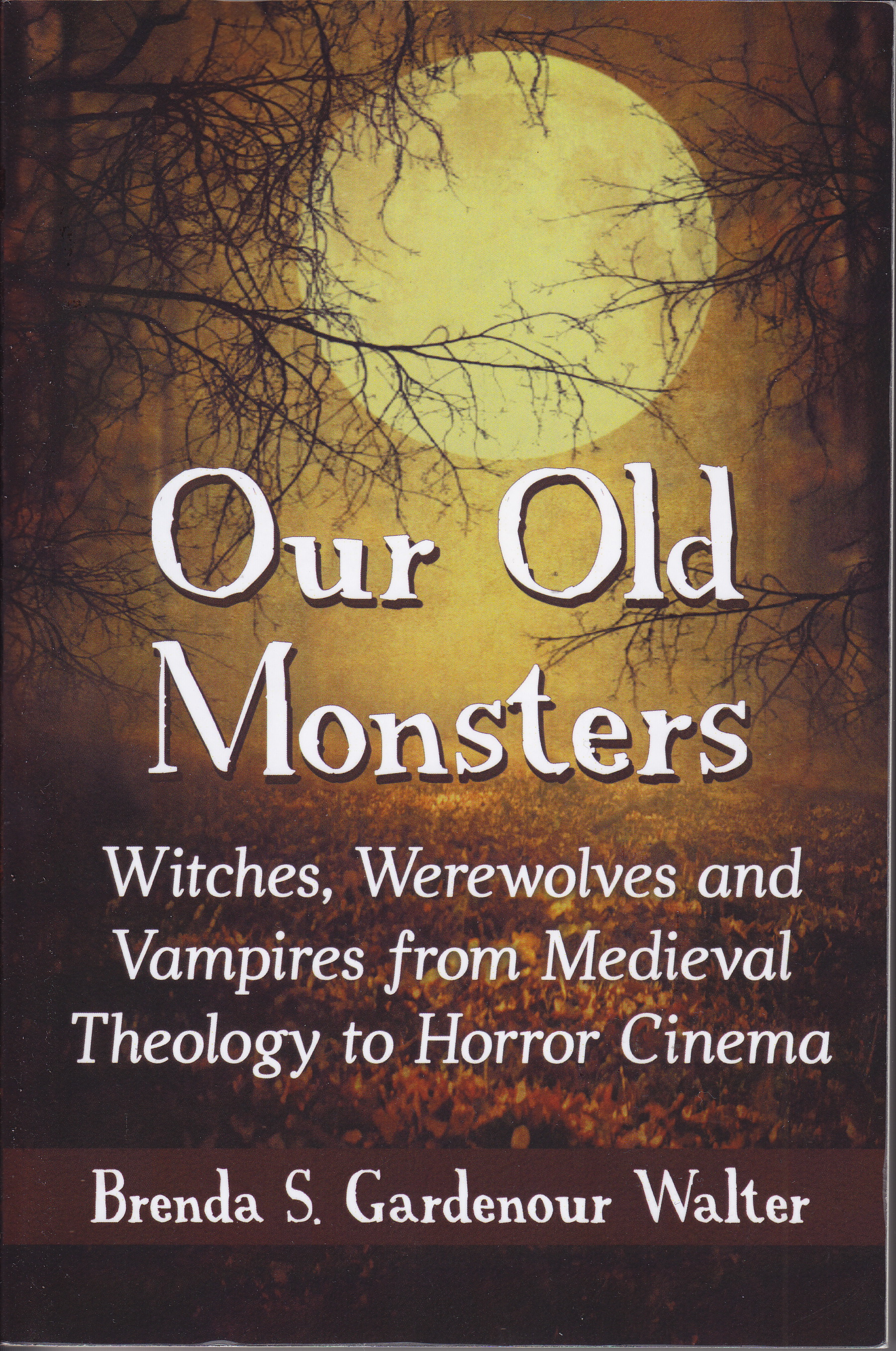
OurOldMonsters copyOnce upon a time I felt radical in claiming that monsters and religion shared a pedigree. Having grown up fascinated by Universal, as well as much cheaper and more tawdry, monster movies, I always experienced a twinge of guilt. My family was very religious, and these monsters were, well, evil, weren’t they? Yet I couldn’t let them go. Although college, seminary, and graduate school each took their toll on this early fascination as I was restructured as a more rational man, the monsters always lurked. In college a friend and I named an invented monster “the lurking.” In seminary and graduate school, demons and ghosts still captured my imagination. Brenda S. Gardenour Walter has, quite unintentionally, vindicated my outlook. Our Old Monsters: Witches, Werewolves and Vampires from Medieval Theology to Horror Cinema just about says it all. Not limiting herself to witches, werewolves, and vampires, Gardenour Walter has given us a novel thesis: monsters come from theology.

Well, not exactly. Medieval theology, as many of us learned in seminary, continued the ancient Greek practice of dividing the universe into four substances: air, fire, water, and earth. Each was associated with a humor in the human body: blood, yellow bile, phlegm, and black bile. Keeping these humors in balance led to healthy bodies. Gardenour Walter, who teaches history in a Pharmacology school, shows how monsters were often viewed against this paradigm. As she notes, this Weltanschauung was not friendly to women. Seeing man as the perfect, rational being, women were considered less rational and more controled by their base urges, leading to the concept of witches. Witches were also associated with demons at a later time, and there is a considerable discussion of that transition.

Vampires were often associated with black bile. Although there are vampiric beliefs going back to very ancient times, Gardenour Walter shows how the modern vampire indeed derives from medieval theology as eastern ideas met western. Unfortunately, in unenlightened times, the concepts were anti-semitically applied, with unwonted liberality. Werewolves were generally dismissed as illusions wrought by demons, although, there always remained an ambiguity. I have to admit not having known that even Augustine discussed werewolves in The City of God, which, it comes to mind, would make an excellent horror movie. The book brings each of these medieval monsters up to the silver screen and considers how their theological pedigree plays out in modern times. This is a book I would have enjoyed as a college student, but maybe, secretly, enjoy even more now as an adult.


Musical Magic

IMG_2327


In-flight magazines aren’t a place I turn for inspiration. Having been raised in poverty, I’ve never found the jet-set interests to be at all engaging. I can’t turn my brain off, however, even when on vacation. Still, I hate to miss anything and I know I’ve got plenty of time in the air ahead of me. I was flying Alaska Air, so the in-flight magazine possessed a native exoticism. This particular issue focused on music. Music reveals a tremendous amount about the interior life, it seems to me. Some people live their lives to a constant soundtrack, while others listen to music seldom. Music, like religion, has the capacity to stir profound pleasure centers in the brain and, if I might be so bold, where your music is, there your heart is also.

One of the music festivals highlighted in the magazine was Voodoo Music and Art Experience in New Orleans. Right across the page was Sasquatch! Music Festival in Washington state. This unusual juxtaposition caught my eye. New Orleans, in the popular imagination, at least, has an association with the “exotic,” hybrid religions of the Caribbean. Voodoo is particularly feared by those who believe that somehow the supernatural can break into this mundane realm. Magic, although difficult to define, persists even in Richard Dawkins’ neatly ordered world. What better way to celebrate it other than music? There’s a homespun charm to it. Magic, despite the best efforts of many, won’t go away.

Since I was flying to the Pacific Northwest, the Sasquatch! Festival demanded my attention. Sasquatch, while disputed, has become the gentle giant frequently connected with magic. The stigma associated with believing in a New World ape has been eroding slowly, although it’s still on the list of “woo” factors for many. Like Voodoo, Bigfoot is an American concept that keeps a belief in magic alive. Well, we were in the air by now, and many had their earbuds in, passing the time with their own soundtracks. For me, music is often looking out the window while making no demands on that probable harmony the rational know as magic.


Monster Impulse

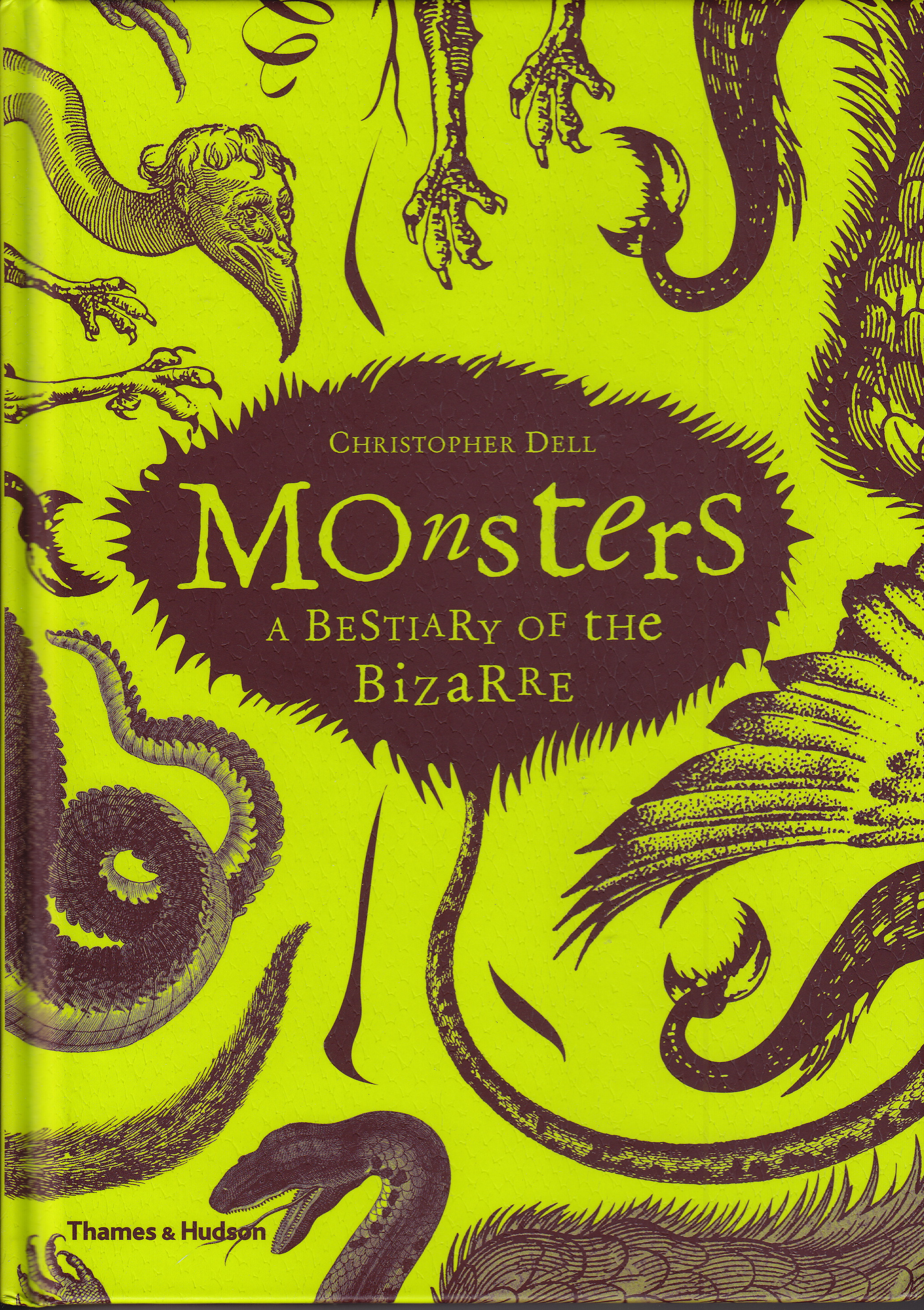
MonstersSome people are impulse buyers. In fact, retailers count on it. All those last-minute items next to the cash register while you wait your turn to consume—they beckon the unwary. I have to admit to being an impulse book buyer. I have to keep it under control, of course, since books are “durable goods” and last more than a single lifetime, with any luck at all. A few years ago I was in the shop of the National Museum of Scotland in Edinburgh. It was my last day in the city where I’d spent my post-graduate years and I didn’t know when I’d ever be back. What could help me remember this visit? A book, of course. Why I chose Monsters, by Christopher Dell, to mark this particular occasion, I don’t know. I love monsters, yes, but why here? Why now? Why in the last hours I had in my favorite European city? It was a heavy book, hardcover and unyielding in my luggage. I had to have it.

More of an extended essay than a narrative book, Dell’s Monsters begins with a premise that I never tire of contemplating: religions give us our monsters. At least historically, they have. There is an element of the divine as well as the diabolical in the world of monsters. As a student of art, what Dell has put together in this book is a full-color unlikely bestiary. These are the creatures that have haunted our imaginations since people began to draw, and probably before. One exception I would take to Dell’s narrative is that the Bible does have its share of monsters. He mentions Leviathan, Behemoth, and the beast of Revelation, but the Bible is populated with the bizarre and weird. Nebuchadnezzar becomes a monster. Demons caper through the New Testament. The Bible opens with a talking serpent. These may not be the monsters of a robust Medieval imagination, but they are strange creatures in their own rights. We have ghosts as well, and people rising from the dead. Monsters and religion are, it seems, very well acquainted.

The illustrations, of course, are what bring Dell’s book to market. Many classic and, in some cases, relatively unknown creatures populate his pages. They won’t keep you awake at night, for we have grown accustomed to a scientific world where monsters have been banished forever. And yet, we turn to books like Monsters to meet a need that persists into this technological age. About to get on a plane for vacation, I know I will be groped and prodded by a government that wants to know every detail of my body. Sometimes I’ll be forced into the private screening room for more intimate encounters. And for all this I know that William Shatner was on a plane at 20,000 feet when he saw a gremlin on the wing. Like our religions, our monsters never leave us. No matter how bright technology may make our lights.


One Flew Over Cthulhu’s Nest

Pluto is a metaphor for the ultimate of outer limits. Just one of many largish objects in the Kuiper Belt, Pluto for a while held the status of the final planet in the solar system. With the photos from New Horizons coming in, we’re discovering a world more complex than most have imagined. It’s not just a snowball after all. With discovery, of course, comes naming. The planets are all named after Roman gods, just as our weekdays are named after Germanic deities. The features on our celestial neighbors often bear more prosaic names, such as those of astronomers or decidedly non-mythological human beings. As the rules of nomenclature go, the first to find claims the privilege to christen. What shall the new features of Pluto be called?

I was gratified when the New York Times photos displayed the informal names by the New Horizons’ team. There is a large area called “the Heart,” but lurking to the lower left there’s a feature being called “the Whale,” or, more appropriately, “Cthulhu.” The internet breathed new life into H. P. Lovecraft’s literary fame. Like most writers, he remained obscure for his entire life, finding really only one publisher who favored his work. Genre fiction has always been considered the bargain basement of literary artists, and Lovecraft wrote in the lowest part of that basement, horror. (Okay, well, romance might be further down, on purely literary grounds.) Only within the last few years has horror literature begun to be recognized by academics as worthy of serious exploration. Nevertheless, it was as the Monster Boomers grew up—or failed to—that Lovecraft reemerged. The world-wide web has become the lair of Cthulhu and of his minions.

Far out in the most remote reaches of our solar system, Cthulhu awaits. Lovecraft fans know Cthulhu is one of the Old Gods, but that he is also a being from the stars. His murky, dark presence has thrived on the underworld of the internet, and now has fired imagination on the darkest planet of an obscure solar system. What more could a writer dream? A fictional creation being suggested as the name of a planetary feature. H. P. Lovecraft lies decomposing under the loam of Providence, Rhode Island. His imagination, however, has reached as far as, at least to date, humanity can possibly go and find some kind of land beneath our feet. And that land, appropriately enough, is peopled with monsters. The Old Gods lie dead but dreaming, and they will rise again.

15-152


Night Terrors

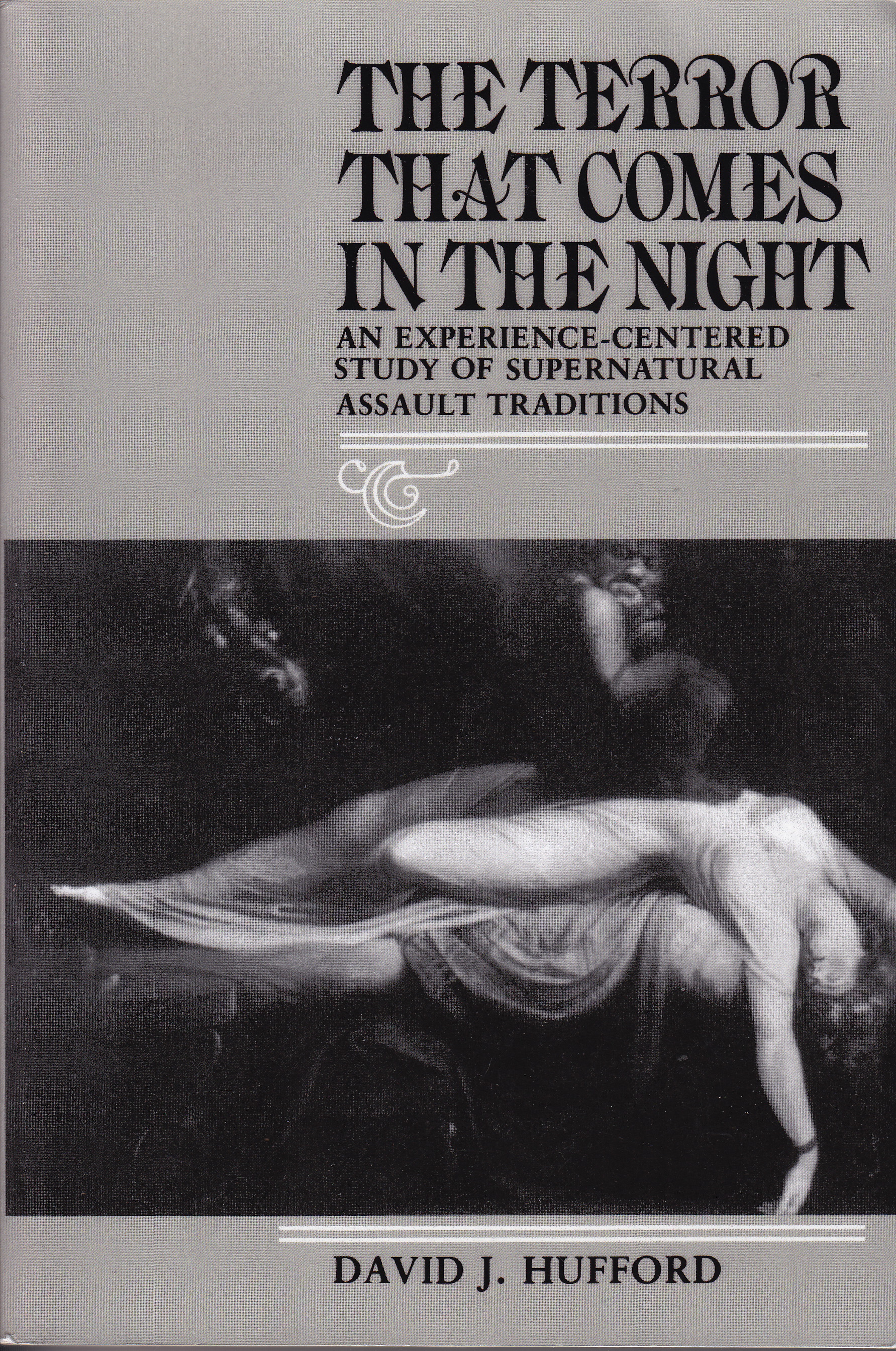
TerrorInTheNightNightmares are the stuff dreams are made of. Or maybe I’ve got that the wrong way around. Having grown up subject to frequent nightmares, I still occasionally have them. I suppose it is easy enough to assume someone who reads about monsters and watches horror films should not find this unexpected, however, I’m not sure they’re related. My nightmares visit issues that horror films avoid, and most of my monster reading is, well, academic. Surely the scientific study of nightmares has advanced since David J. Hufford’s The Terror That Comes in the Night: An Experience-Centered Study of Supernatural Assault Traditions, but it remains a very important book. As someone familiar with the phenomenon, I found Hufford’s study somewhat therapeutic, and it certainly does raise some interesting questions.

Apart from the unfortunately, inherently sexist, folk-title “the old hag,” Hufford is addressing a universal experience of people of all ages. Using his original setting in remote Newfoundland where his work began, Hufford collected tales of what might technically be called sleep paralysis with a specific hypnogogic hallucination of being attacked. A designation, he acknowledges, that is quite awkward for repeated use. Back in the early 1980’s, when the book was published, these accounts of nighttime attacks—a person waking up, or not having yet fallen asleep, sensing a presence in the room, finding her- or himself unable to move, and sometimes seeing or hearing an entity and feeling it on his or her chest—were rarely discussed. Especially in scientific literature. They seem a kind of embarrassing medievalism related to the ancient concepts of incubi and succubi, and even vampires. Having “the old hag” (a moniker relating to witches) is what the experience is known as in Newfoundland. Hufford, taking these accounts seriously, investigated what the sufferers had experienced. Unwilling to judge whether the event “actually happened,” Hufford’s scientific objectivity is truly admirable. Since the time of his book, the concept has become widely known and the argument is often made that having heard of sleep paralysis episodes feeds those with hypnogogic hallucinations the idea of a supernatural oppressor. In other words, now that we know about it, we don’t have to take it seriously.

Hufford is one of a small number of academics that is willing to engage with the supernatural on its own terms. Religion scholars do, of course, but we are generally dismissed from the starting block anyway. Most scientists disregard the possibility of anything beyond deluded brains and say nightmares are normal. Just deal with it. Those who’ve experienced the nighttime attack know that it feels very different than a garden variety nightmare. You can tell when you’re awake. Of course, we’re of the generation who’ve seen The Matrix and Inception, and we know that, at least in popular thought, reality has become negotiable. Nobody is much surprised any more by the idea of such an attack in the night. Waking nightmares have become as common as the headlines. If only more scholars would take human experience as more than just “old wives tales” we might all be surprised at how just rolling over can change everything for the better.


Christian Horrorshow

Books & Culture is the review organ of Christianity Today. Christianity Today is the evangelical answer to the more liberal Christian Century. Working in publishing, particularly in the field of religion, it is important to keep an eye on what the popular magazines are saying about our books. Well, neither is as popular as it used to be, but still. I’ll grown used to Books & Culture taking a rather wholesome reaction to books that challenge worldviews. In fact, it’s not unusual to find a fairly mild tome castigated as somewhat insidious. Negative reviews tend to sell books as well as positive reviews. Sometimes better.

I was a bit surprised to see a two-page spread in a recent edition of Books & Culture focusing on horror stories. Horror and evangelical generally don’t play well together. Well, maybe I should temper that a little bit. The first article was actually on Shirley Jackson, best known for her excellently moody The Haunting of Hill House. That particular book has spawned or inspired at least five scary movies, two of them versions of the book itself. I have to confess that this is the only Shirley Jackson novel I’ve read. The article, somewhat strangely for an evangelical magazine, had made me want to explore some of her other offerings. Horror doesn’t have to be splatter to be effective.

DSCN0216

The second review in this issue was for an Oxford anthology called Horror Stories. The reviewer, Victor LeValle, also comes out with a positive review of the collection. All of this makes me wonder if I missed something growing up as a conservative Christian who felt distinctively unsavory because his love of monsters and the macabre. I can’t remember ever not liking mild horror stories. They manage to evoke parts of my psyche that most other literature bypasses. I discovered Poe at an early age. That’s not to say that I like being afraid. Fear is not what I’m seeking here. It is a kind of strange redemption. In college many of my evangelical friends couldn’t understand my fascination. “Why don’t you watch something more uplifting?” I’d be asked. I was as surprised as anyone when one of my very few Grove City dates agreed to see Nightmare on Elm Street with me. Not even Shirley Jackson could’ve seen that one coming. I wonder how she’d respond to being written up as an evangelical inspiration?


Becoming an Icon

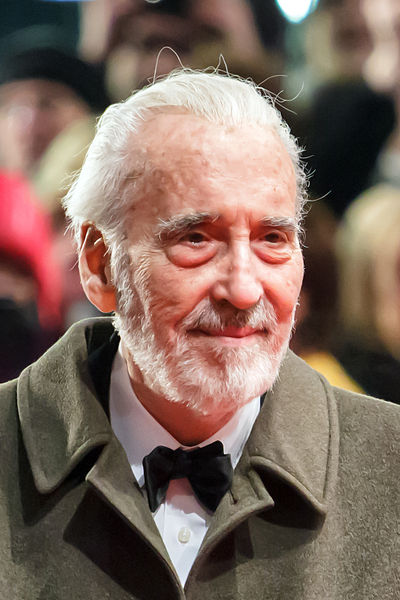
A kid among the Monster Boomers can’t let the death of Christopher Lee go by without comment. How many hours of my childhood were spent watching movies on Saturday afternoon TV with his many personae arresting my attention? And, of course, his prolific output just kept on coming. The Wicker Man, for instance, would never have been among my childhood fare, but his performance as Lord Summerisle is still captivating and sends shivers down my spine. Of course, he wasn’t always a horror movie star. His voice nevertheless conditioned us to be on our guard, for we knew something untoward was about to happen.

Photo credit: Avda, Wikimedia Commons

Photo credit: Avda, Wikimedia Commons

I often ponder the lure of monster movies. As a young boy, I couldn’t get enough of them. I tried to grow out of this stage, and managed pretty well through my doctoral work, but then when I found myself in a Gothic seminary where my life would be shredded and discarded, I suddenly found myself sitting up late to watch movies my family would not care to see. There was a catharsis happening here. Some would claim that it is puerile and immature—they would be the same people who’ve not been forced from careers and faced with unemployment and been dealt a failing hand by an institution that received full commitment during the formative years of an aborted career. No, those who’ve faced monsters cannot easily leave them alone.

Of course, Christopher Lee was only playing monsters. Now many people around the world can instantly recognize his name, face, or voice. We all face monsters. Our society teaches us to deny that they exist, much to our own peril. Little children, bewildered by this insanely complex world that adults have constructed, may be the ones to see most clearly. We watch the monsters on the screen so that we might figure out how to deal with them on the playground or in the boardroom. Christopher Lee was more than an actor. He was a teacher. And his best students learned something of human nature from him.


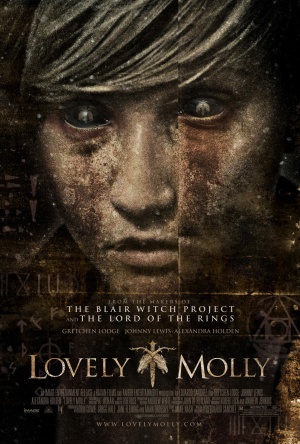
Molly Picture

Lovely-molly-posterMaybe I’m getting out of practice with my horror movies—I don’t have time to watch them like I used to—but Lovely Molly left me a little confused. I suppose I’m more susceptible to big advertising than I’d like to admit, but I knew about Lovely Molly from the massive Times Square ads back when I was still with Routledge. I’m ambivalent about demonic possession movies, but I put it in my mental bucket list until I had a weekend evening alone to fire it up on Amazon Prime. As I’ve noted, it left me more confused than scared. Yes, watching it kept me tense, not knowing what was going to happen next (I knew nothing of the story beyond that it was a possession story) but as gruesome as a couple scenes were, the question of what’s going on never really got resolved. It’s pretty clear that Molly was abused as a child, turned to drugs to cope, and is having a breakdown after moving into her creepy childhood home. If her newlywed husband didn’t hear some of the sounds, it would seem to be a conventional breakdown story. Eduardo Sánchez doesn’t show us the monster until the very end, and even then, not clearly. I had to turn to online discussion groups to understand what I’d just watched.

While in this post-modern age no one is qualified to say what anything really means, if fans are to be believed, the DVD extra implicate the demon Orobas. I’m no expert on demons, and I couldn’t recall having heard the name before. In the “found footage” scenes where Molly eerily hums to herself while visiting the sites of childhood memory in the house, she does uncover what seems to be the symbol of Orobas. This is a horse-headed, horse-footed demon with the body of a man. Indeed, when she is being stalked by what she believes to be the ghost of her father, Molly hears horse hooves on the floor. In the final scene, she leaves a photo album for her sister to find with her father’s head covered with pictures of horse heads that she’d cut from his wall of framed pictures, apparently of prized beasts.

The real horror here, however, is in what seems to be a misogynistic implication, no matter how justified, that Molly (and her sister) are the murderers. Molly reveals that her sister killed their father, and Molly herself dispatches, it seems, the preacher, her husband, and the girl of the neighbor next door. She, however, is the one who had been victimized. If this is a case of possession, at least by implication, then the male demon is to blame, but it looks like Molly pays the price. The evidence is circumstantial and Molly disappears at the end, leaving open the room for a sequel. While I felt no need to sleep with the lights on after watching it, the movie has enough provocative material to make me think about it, trying to figure out what was supposed to have transpired. I suppose that many horror movies are more straightforward, but the more easily forgotten for being so.