Horrorshow

Halloween may be over, and more’s the pity. Still, Halloween is simply the entry point to longer nights and opportunities to revisit what scares us in the dark. I have to admit to feeling a twinge of justification at reading Richard Corliss’s article “Never Watch Alone: Hollywood’s newest horror films remind us why fear loves company,” in this week’s Time magazine. One sentence in his piece on culture made me smile: “Horror movies are a rite of passage audiences never outgrow.” Okay, sure, the demographics may catapult me into the more geriatric of viewers, but I generally take my medicine neat. I do watch horror movies alone at night. And I never hit “pause.” To be honest, I have no idea why I do it. I do not like being scared, and I certainly don’t enjoy slashers. I am, however, seeking something profound.
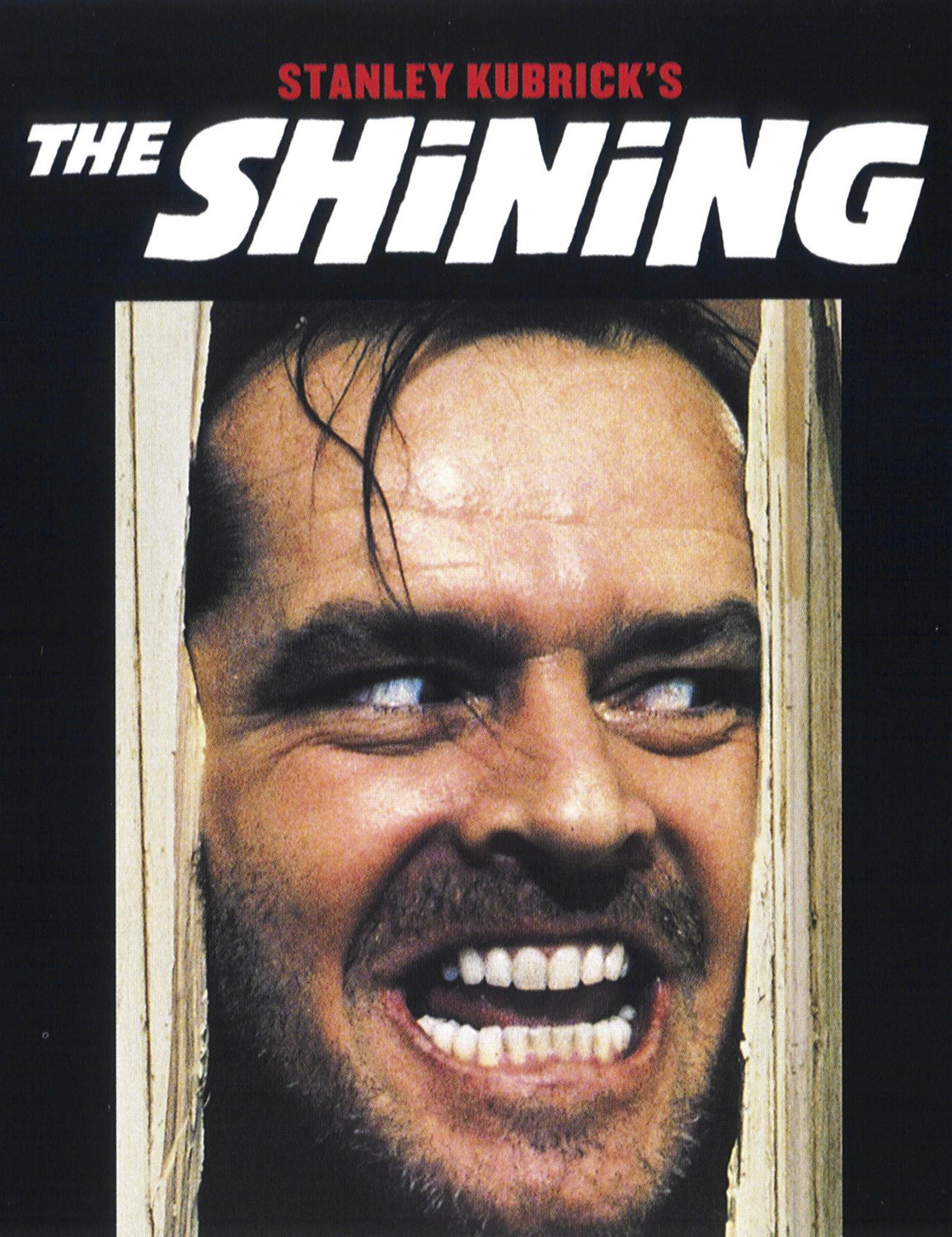
the-shiningOver the weekend my wife volunteered to watch The Shining all the way through with me. I’ve seen the movie five or six times, and I can’t seem to tire of it. The use of blood is sparing, and the pacing is positively Kubrickian, but it never fails to leave me contemplative. Don’t we all fear the madman that lurks inside? There may be ghosts in The Shining, but it is one of the least supernatural of thrillers. The monster is the protector, and nothing quite equals that disconnect for night chills. Corliss highlights the prequel to The Conjuring in his article, a movie called Annabelle. It is now on my must-see list, although dolls need not be haunted or possessed to be scary. Like Jack Torrence, they inhabit the uncanny valley of that which is close enough to human to be frightening. According to the pundits on the web, there is a real Annabelle doll collected by Ed and Lorraine Warren as a possessed toy. Debriefing with my wife after The Shining demonstrated the point Corliss was making, however. It helps to talk it out.

We spend much of our lives, I contend, trying to avoid those things that frighten us. Horror films do us a psychological service by bringing them to the surface, like desensitizing a child to spiders or snakes (at least the harmless kind). As we watch we learn what it is to be human. Religion, like horror films, is often a response to fear. Despite all our science, the world does not operate according to logic. The inexplicable happens. The horror movie allows us to explore the “what if” that science disallows. Once upon a time we went to church and held onto a crucifix. Today’s vampire is unfazed by our religious baubles. Exorcisms don’t always work—at least not completely. And the longer nights may be because the northern hemisphere is tilting away from the sun. Or maybe, just maybe, it is something more.
Fear and Dissembling

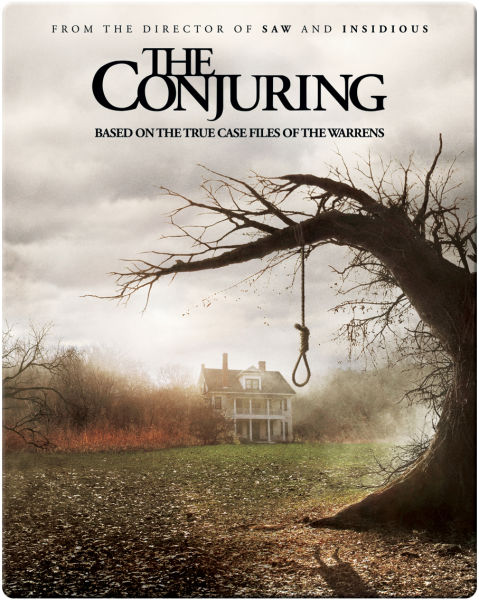
The ConjuringLast year, when The Conjuring was released, it quickly became one of the (if not the) top earning horror films of all time at the box office. Based on a “true case” of Ed and Lorraine Warren—real life paranormal investigators—the film is a demonic possession movie that ties in the Warren’s most notorious case of a haunted (or possessed) doll, with a haunting of the Perron family of Rhode Island. (The Warrens were also known as the investigators behind the Lutz family in the case of the “Amityville Horror,” showing their pedigree in the field.) Given that Halloween has been in the air, I decided to give it a viewing. As with most horror movies, the events have to be dramatized in order to fit cinematographic expectations. Apparently the Warrens did believe the Perron house was possessed by a witch. In the film this became somewhat personal as the dialogue tied her in with Mary Eastey, who was hanged as a witch at Salem (and who was a great-great (and a few more greats) aunt of my wife). Bringing this cheap shot into the film immediately made the remainder of it seem like fiction of a baser sort.

Witches may be standard Halloween fare, but when innocent women executed for the religious imagination are brought into it, justice demands separating fact from fiction. Writers of all sorts have toyed with the idea of real witches in Salem—it was a trope H. P. Lovecraft explored freely—but there is no pretense of misappropriation here. Lovecraft did not believe in witchcraft and made no attempt to present those tragically murdered as what the religious imagination made them out to be. The Conjuring could have done better here. It reminds me of Mr. Ullman having to drop the line about the Overlook Hotel being built on an Indian burial ground. Was that really necessary? (Well, Room 237 has those who suggest it is, in all fairness.) The actual past of oppressed peoples is scary enough without putting it behind horror entertainment.

A doctoral student in sociology interviewed me while I was at Boston University. She’d put an ad in the paper (there was no public internet those days) for students who watched horror movies. I was a bit surprised when I realized that I did. I had avoided the demonic ones, but I had been in the theatre the opening week of A Nightmare on Elm Street (on a date, no less) and things had grown from there. I recall my answer to her question of why I thought I did it: it is better to feel scared than to feel nothing at all. Thinking over the oppressed groups that have lived in fear, in reality, I have been reassessing that statement. What do you really know when you’re a student? As I’ve watched horror movies over the years, I have come to realize that the fantasy world they represent is an escape from a reality which, if viewed directly, may be far more scary than conjured ghosts.


Transformations

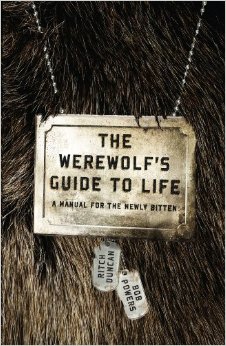
WerewolfsGuideToLifeHalloween, when you think about it, is an odd holiday. I know many who claim it as their favorite although you get no presents and not even a day off work. I suspect that part of the mystique comes in the form of Halloween representing autumn in miniature. The slow death of summer as the chill of winter settles in. The trees, vibrant in their dramatic death throes, are beautiful and melancholy at the same time. The long hours of darkness leave plenty of opportunities to see ghosts. Rich Duncan and Bob Powers’ book, The Werewolf’s Guide to Life: A Manual for the Newly Bitten, is appropriate for the season. This lighthearted parody of self-help books nicely illustrates how monsters often come into contact with religion. As a secular handbook, the Guide nevertheless addresses itself to the religious questions of life: should a werewolf go to confession? How do you deal with guilt? Do werewolves go to heaven? Monsters often force us to face the questions we just can’t answer.

The werewolf, of course, is the manifestation of a person gone feral. While people don’t actually physically change into animals, evolution has left us with a deep kinship to our fellow creatures. At times when work, or school, or relationships become trying, we are tempted to let the beast loose. One size doesn’t fit all, despite the many attempts of society to keep the vast majority of people in the same plight. Halloween is a cathartic holiday that permits us to be someone else and, perchance, to howl at the moon. Not exactly like Carnival, Halloween thrives on false appearances. We wear costumes. The trees and sunlight that apparently die are really only cycling through an annual death and resurrection.

Halloween can’t touch Christmas for a holiday that commemorates new beginnings, but in many ways Halloween is the more visceral of the two. In Manhattan, although Halloween decorations show up early in October, the holiday is lost in the city. The werewolves pretty much keep to themselves. As Christmas, with its lucre, becomes the next obvious holiday (in stores Halloween decorations already give way to those of Christmas at the start of October now) the city transforms. Despite its multi-ethnic and multi-religious makeup, Christmas trees will begin to appear, some impressively large, and the greens will remind everyone that it is time to spend. You’ll get days off work and the days will be painfully brief. Light will slowly return to the skies and the cycle will begin all over. Some will watch this all with wolf-like eyes, however, awaiting the next season of monsters and myths, knowing they are what make us truly human.


Devil’s Food

One figure among the standard repertoire of Halloween characters has never appeared on my list of favorite monsters. I suppose it may be because as a child I fervently believed there was a devil that he never made my A-list. Satan was real, according to my church, in some almost biological, corporeal form. Even as a youngster I knew vampires, werewolves, Frankenstein’s monster, and the rest, really didn’t exist (even after I hid under my covers all night once, after putting my head down on a bat that had flown into my bedroom). The devil was, however, biblical. And I never felt tempted to dress up with red horns and pointy tail, carrying a plastic pitchfork. Halloween was always among my favorite holidays, but it was for pretend monsters and ghosts (which might perhaps be real, but which were not diabolical, according to my childhood economy of the spiritual world). The consequences of devil imitation seemed eternal, and even today, in the rational light of the twenty-first century, I can still be given pause even though I know the concept is a Zoroastrian one that morphed into early Christianity’s need for a kind of anti-Christ.

IMG_0276 copy

There are many who still believe in a real devil. Some branches of Christianity (and Islam) teach that a literal devil lurks about in our world. In western culture he is a figure instantly recognizable, although there are differences of opinion in his anti-iconography. Last weekend I visited a fine little restaurant in a New Jersey town that has a reputation for being haunted (the town, not the restaurant). It was a seat-yourself day and the table my wife and I ended up selecting had shellacked cards on top as part of the decoration. There in front of me was the devil. I pondered this. The cards, all captioned in Spanish, had mundane subjects: an umbrella, a musician, plants, a spider (okay, so that last one’s a little scary too), but only one supernatural figure. Perhaps the entire deck, had I seen it, might have had more. No doubt, for a world that postulates a good God, a devil covers, well, a host of evils.

The word “devil” is somewhat loosely applied these days. New Jersey has its own cryptid called the Jersey Devil, which has led to iconic names for sports teams and perhaps a public official or two. But even in the aftermath of 9/11 there were those who seriously postulated seeing the face of the devil in the tumbling debris of the twin towers. For a character of the religious imagination, the devil has managed to impress deeply on the human psyche. I know in my rational mind that I should simply dismiss all of this and get on with the business of enjoying the monsters that will show up at my door later this week. Nevertheless, when the waiter comes out with our food, I look down at the table and decide to pass on the hot sauce for today, just in case.


The Fate of Goddesses

The goddesses Asherah and Astarte are sometimes confused, even by experts. Astarte, also known as Ashtart, Ashtarte, Athtart, and Astaroth, among other names, is the lesser attested of the two among the Ugaritic texts. Indeed, to read some accounts of the latter goddess, she becomes dangerously close to being labelled generic, the sort of all-purpose female deity embodying love and war, and sometimes horses. In the Bible Astarte lived on to become the bad-girl of Canaanite goddesses. Her corrupting ways were a conscious danger to the orthodox (as much as that is read back into the texts). She became, over time, literally demonized. It seems that originally she, like most goddesses, had a soft spot for humans. Since she wasn’t the one true (male) God, however, she had to be made evil. It is an unfortunate pattern as old as monotheism. One of my original interests in studying Asherah (not Astarte) was precisely that—the obviously benevolent divine female seems to have been chucked wholesale when the divine masculine walked into the room. Why? Well, many explanations and excuses have been given, but whatever the ultimate cause, Astarte lingered on.

IMG_1620

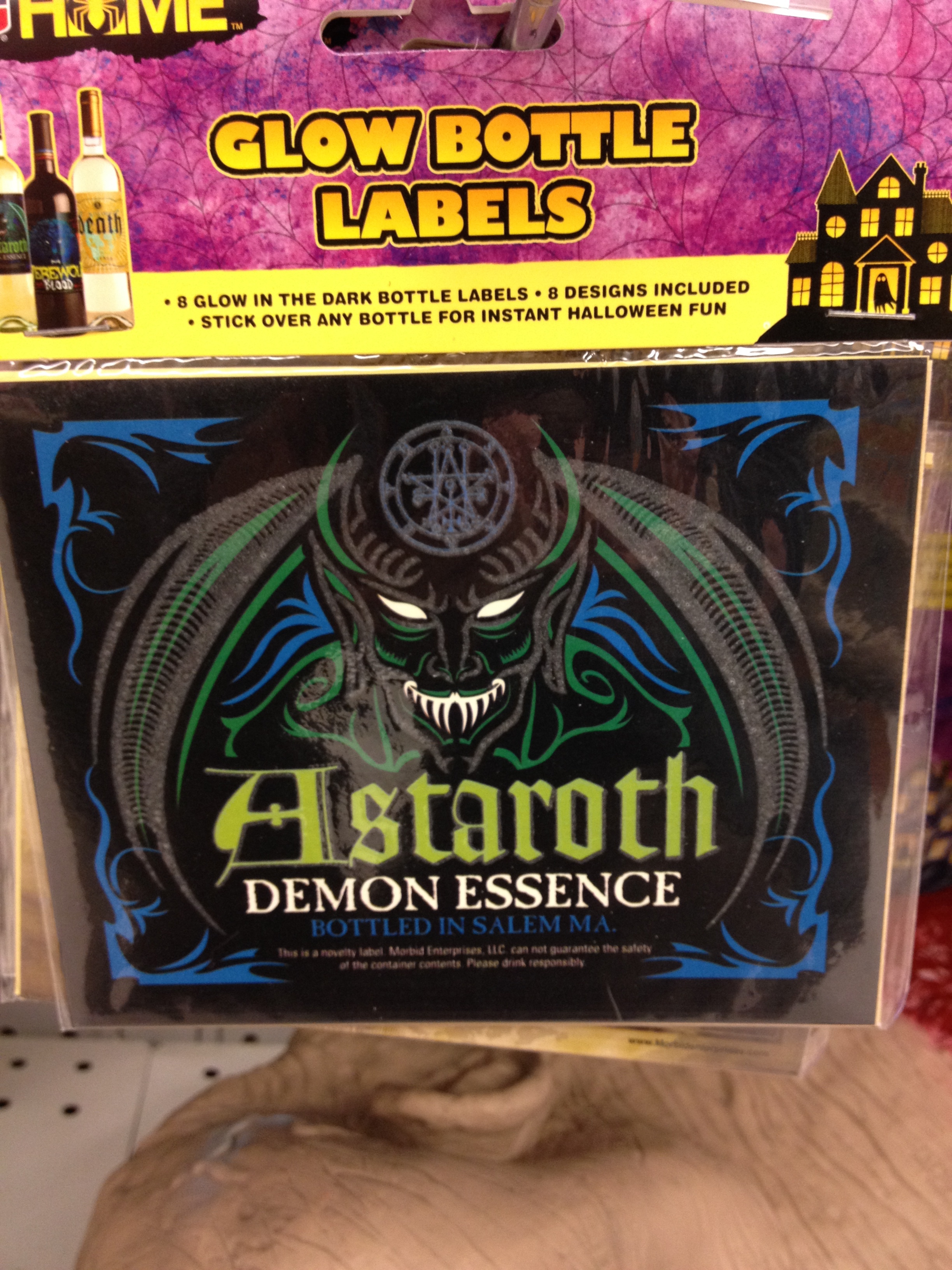
In a local pharmacy the other day, I was looking over the Halloween tchotchkes. Amid the usual assortment of pumpkins, skeletons, and ghosts, I found bottle labels reading “Ashtaroth Demon Essence.” Although I’ve spent a good deal of my life cloistered in academia, I was not surprised by this. I know that in popular culture the goddesses of antiquity live on as supernatural powers, sometimes good, sometimes evil. Astarte, once depicted as the friend to at least some of the humans devoted to her, is now commonly a demonic force. The image on the bottle label, however, was most unflattering. I know, this is just kid’s stuff. Still, as I stood there among last-minute costume seekers and distracted parents, I knew that I was witnessing the influence of ancient religions in an unexpected way. Did any of the goddesses survive as a force for good? How could they when the only god was male?

We know very little about ancient Astarte beyond the fact that she took away some of the luster of the omnipotent (as now conceived) deity of the Bible. A jealous God, as Holy Writ readily admits, visiting iniquity down to the third and fourth generation. (That might explain a lot.) Prior to monotheism benevolence and malevolence could arise from goddesses as well as gods. Compassion, it was believed, was largely a feminine trait. Monotheism decided for the jealous male instead. We won’t find a bottle label for the Almighty, although the accouterment of the arch-enemy are everywhere evident this time of year. And speaking of the diabolical, the Ashtaroth Demon Essence, I noted, was available at a steep discount.


Monsters of Science

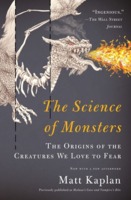
ScienceOfMonstersMaybe it’s the ebola in the air, or perhaps the gas from all the midterm elections verbiage, but I’ve been on a monster run this October. I just finished Matt Kaplan’s The Science of Monsters: The Origins of the Creatures We Love to Fear. It is a charmingly written book, at parts approaching the finesse of Mary Roach. Beginning with the ancient Greeks (and sometimes stepping back into the world of the Bible or the Mesopotamians) Kaplan examines the major categories of monsters and tries to offer scientific explanations for why people came up with them. It is a keen conceit and it is deftly handled. Noting that animals sometimes got jumbled in the fossilization process, he offers explanations for creatures such as the Chimera, Griffon, and perhaps even the Sphinx. Some of the unlikely episodes are quite fun to visualize as well, as when a snake slithers over a tar pit where a goat got stuck and was eaten by a lion that also got stuck. Beast after hideous beast he brings down to analytical size, sometimes convincing even this old monster lover.

One of the problems, however, is that science often doesn’t comprehend the symbolic nature of mythical thought. Quite apart from sheer creativity—and it does exist!—some of the material in Kaplan’s analysis would have benefited from having a mythographer’s look. For example, demons do not suddenly appear as monsters in the Middle Ages. Kaplan knows this, but that’s where he starts. The ancient Mesopotamians knew of them very, perhaps, too, well. And Lilith isn’t even mentioned when discussing succubi. Still, there’s a great deal of interesting conjecture here, and some scientifically, if not mythographically, viable suggestions on whence vampires and werewolves. As expected, modern sightings of cryptids are simply swept off the table, but I almost shouted aloud when I read that he gave credence to Wade Davis’s work on Haitian zombies.

The larger question here is one of approach. Do monsters lend themselves to scientific explanations at all? The case that elephant/mammoth skulls might suggest a cyclops seems reasonable enough, and the occasional dinosaur bone that represented a giant in ancient times is entirely possible. (Who can tell one femur from another anyway?) But the monster is primarily a creature inhabiting the shadowy realms of religion and psychology. Our fears are seldom directed toward science, although, now that I’ve read his chapter on “The Created” I’m not so sure. Constructing backward toward the unknown is always a dicey proposition, as those of us who’ve studied history of religions know. We may be able to find the genesis of modern monsters, but, admittedly, the fun for most of our scary friends is that they are mysterious. Impervious, as it were, even to science.


Monster Mash

American MonstersIn one of those ironies of personal history, I never met Linda Godfrey although we lived not far from one another and shared a great many common interests. I’m not sure she would return the sentiment, but while I lived at Nashotah House many odd things happened. Academics can be pretty deep in denial about what they experience, and although I never saw any man-wolves, as I stood outside one night to photograph a comet I felt terribly exposed and in not a little danger. This was on a rural seminary campus. Nashotah was still wooded then, before evangelical shaving of the landscape, and certainly among the most gothic of seminaries I’ve ever seen. Meanwhile Linda Godfrey was researching, just a few miles down the road, weird animal sightings on Bray Road. I began a correspondence with her after we left Wisconsin and I have read all of her books. Local history has always fascinated me, and although I was an accidental Wisconsonite, I nevertheless enjoyed learning about the strangeness of the state I formerly called home.

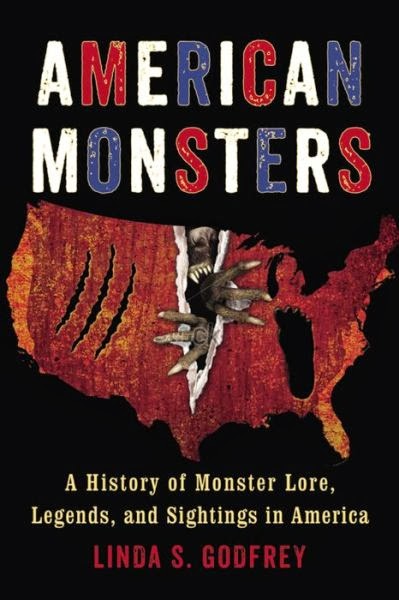
Godfrey’s latest book, American Monsters: A History of Monster Lore, Legends, and Sightings in America, throws a wider net. We are all in here with the monsters. Blending, as the subtitle suggests, lore and legends with eyewitness accounts, American Monsters can leave the reader a little disoriented, in a good way. We’ve been taught to discount anything that doesn’t match the everyday—what boss wants a worker with a higher vision?—and pretend that such things don’t exist. Weird creatures don’t donate their bodies to science readily, and we are left wondering if something is really peering at us from these October woods. Inside you’ll find stories of flying, swimming, and running monsters. We are safe nowhere. Either from the scientifically undocumented or from those that are purely imaginary. I stand outside in the dark in a smallish town waiting for a bus. What was that sound behind me?

Monsters are only now beginning to gain academic respectability. When I was in graduate school the topic felt so puerile that no respectable Ph.D. candidate would dare suggest such a dissertation to a button-down committee. Now they are beginning to roll off the presses. As part of the religious imagination, monsters are not so easily dismissed. We can assign them to the dark caverns of fantasy and under-stimulated imagination, but they will burst out in their own time and, like gods, demand our devotion. I have no idea whether these cryptids creep, flap, or swish around in our world. People see them all the same. And believing may be seeing. I’m glad for Godfrey’s success at pointing out that our rational world is full of monsters. Hers is a perfect book for days of effacing light and lengthening shadows, all across the country.


See Serpent

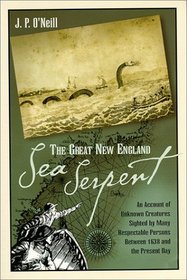
GreatNewEnglandSeaSerpentSeeing, it is said, is believing. I have a feeling that this truism may have become effaced somewhat in this age of deft photo manipulation and apps that are marketed to insert ghosts and UFOs into any picture. Nevertheless, anyone who has seen anything genuinely puzzling knows that it creates a lasting impression. A world without mystery, although a capitalist’s dream, is a nightmare for everyone else. So it was, now that October is here, I settled down with J. P. O’Neill’s The Great New England Sea Serpent. I found O’Neill’s book in a used bookstore a few weekends ago (appropriately water-damaged), and since I have a fascination with the ocean and monsters, this seemed like it would appeal to both of my avocations. It did indeed. O’Neill isn’t a sensationalist writer, but rather she is a normal person with normal jobs who has an interest in strange animals. Beginning in 1751 and up to three-quarters through the twentieth century, people had been spotting a classical sea serpent along the New England coast, and occasionally on ocean voyages across the Atlantic. Of course, we’re told, sea serpents don’t exist.

The Great New England Sea Serpent is a compendium of sightings from many reliable witnesses over the centuries. Of course, to many it is impossible. To me this appears to be the same kind of arrogance we apply to the universe—if we haven’t catalogued it by now, it doesn’t exist—to suggest there are no monsters of the deep. As any oceanographer will tell you, we know more about the surface of the moon than we do about our own oceans. If you turn your globe (or app) just right, there are views of our planet where virtually no land is visible. We are a watery planet. Even with current technology, the deep ocean is difficult, and very expensive, to explore. Who knows what might be lurking there right off the bow? O’Neill’s account is full of old salts and snarky journalists, but at the core of it all is a humility in the face of the largeness of the sea. What do we really know?

Of course, there is a fear of literalism. The Bible (and other ancient texts) take sea monsters for granted. Leviathan is a dangerous beast and, no matter what the pundits say, is no crocodile. And yet, for the past several decades the reports of the New England beast have dried up. Where has our beloved sea serpent gone? I have to wonder with both our polluting our oceans and our increasingly efficient (and massive) ships, if we haven’t simply forgotten that ancient maps used to leave space for dragons. Our great ships, guided by GPS, and our oceans running a temperature, are sure signs that greed has surpassed wonder. Have we, in our self-centeredness, slain the last of our dragons? O’Neill, please understand, does not call them dragons. Hers is a sober and straightforward account. But when October comes I just can’t help but hope there are still some monsters out there, deep under the waves.


Banned Magic

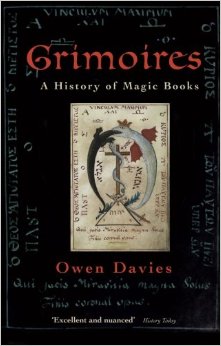
Grimoires“If you believe in the power of magic,” Eric Woolfson plaintively sang, “then I can change your mind.” A song that bewitched my younger years, when the atmosphere is just right, it can still bring a silent tear to my eye. Magic is a powerful elixir.

On my own personal almanac of holidays, Banned Book Week is one that takes the most preparation. In anticipation, for it is next week already, I read Owen Davies’ Grimoires: A History of Magic Books. Since this blog doesn’t get nearly the readership of a banned book, I might explain that witches are among my favorite topics. Despite that, and despite growing up with constant curiosity about religion, I only learned about grimoires recently. Davies makes it clear in his book that apart from some standard texts that have been around for a few centuries, the idea of a magic book is really relatively recent. Yes, the Egyptians and Mesopotamians had books of magic, but the concept of a grimoire only really fits the Zeitgeist of medieval Europe particularly well. Such books may draw on or cite oriental wisdom, frequently stepping into the forbidden territory of Arabic learning and alchemy, but they reflect the worldview of the Middle Ages when magic still seemed possible. In earlier centuries conjuring seems to have been subsumed under the miracles associated with Jesus, and we don’t hear much about magi beyond people like Simon Magus.

Davies packs a lot of information into his book, but my reason for focusing on it here, now, is the banned nature of grimoires. Many of them are considered rare and valuable books today, but in their day they were dangerous and forbidden. The concept that an idea can be suppressed is an odd one. In fact, many ideas have a very difficult time finding receptive minds. Once it is written down, however, an idea can circulate. The surest way to guarantee that it will is to ban it. People want to know what is so dangerous about this idea that it must be kept hidden. It makes an idea powerful, esoteric. Forbidden fruit, we all know if we’ll only be honest, is the sweetest.

Grimoires were considered most efficacious when written by hand. Although it took the printing press to proliferate such books, magic was believed to be most potent in the hand-written form. By writing text, one engages intimately with it. This is a reality we are in danger of losing in the computerized age. I grew up with only a second-hand typewriter acquired by my family when I was in high school. Most of what I wrote—for inspiration seldom comes when you’re sitting at your desk—was done by hand. My own little grimoires. Now we’ve added the interface of a keyboard. It is faster, and more efficient. Clinical even. But often the magic seems to be gone. And that is testified in many banned books. They especially, I would aver, believe in the power of magic.


Fighting with Monsters

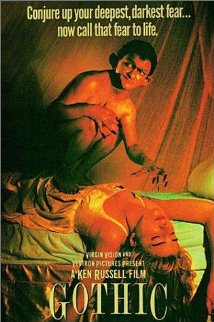
GothicThe Lady and Her Monsters reminded me of Gothic. A friend of mine in seminary showed me this “shocking” movie by Ken Russell just after it was released on VHS (I always was fond of ancient history). To my young eyes this was a challenging film, but it rated higher in moodiness than scariness. Roseanne Montillo’s book brought the movie to mind because, it turns out, several of the incidents in the movie were based on fact. Perhaps I need to take a step back because Gothic never made it big, and many may not realize that the movie is about the legendary night Mary Godwin (soon to be Shelley) came up with the idea for Frankenstein. In an early nineteenth-century walk of fame, Percy Shelley, Mary Godwin, Lord Byron, and John Polidori decided to write scary stories, as a kind of contest. Only two ever made it to print, Polidori’s The Vampyre, which inspired Bram Stoker’s Dracula many decades later, and Mary Shelley’s Frankenstein. The movie, with Ken Russell’s famous flamboyance, traced an unlikely story of the friends conjuring a ghost and then banishing it once again before the stormy night is over.

Ken Russell had the reputation for being obsessed with the church and sexuality. These interests are certainly well represented in Gothic, where Percy Shelley, famously an atheist and believer in the supernatural, struggles to make sense of it all. Polidori, Byron’s personal physician, is presented as a Catholic who admits, when each has to confess his or her deepest fears, that God terrifies him. The friends (perhaps in an unwitting prelude to a television series by that name) explore sexuality and the supernatural through the long night. Waking nightmares meet them at every turn. They even have a skull of “the black monk,” a character attested in all sincerity, at one time, at the most gothic seminary in the Wisconsin woods.

“He who fights with monsters,” Friedrich Nietzsche opined, “might take care lest he thereby become a monster. And if you gaze long enough into an abyss, the abyss gazes also into you.” That which we worship is that which we fear. Certainly the Christianity of the Middle Ages had as much of Hell as of Heaven in it. Bursting out into the light of rationalism, it seems, did not banish the darkness after all. We still have many questions left unanswered, and many intelligent people have begun to question whether any one paradigm fits all of the evidence. I suspect not. Human experience goes in multiple directions at once. We have ladies, we have monsters, we have scientists, we have God. And on rainy nights we have movies that make us see that we have combined them all into a tale often repeated but never fully understood.


Dark and Stormy Night

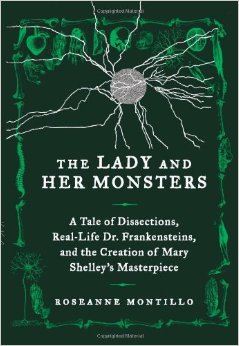
LadyAndHerMonstersI miss my monsters, especially when I stay away too long. I had eyeballed Roseanne Montillo’s The Lady and Her Monsters: A Tale of Dissections, Real-Life Dr. Frankensteins, and the Creation of Mary Shelley’s Masterpiece nearly a year ago in a busy Port Authority bookshop, and wanted to curl up with it right away. Well, work and the world intervened, but finally I found time for the beast. Although a member of the monster kid generation, as a child I never felt much kinship with Frankenstein’s creation. I think it is because there was so much human intention involved in his origins. Almost ungodly. Too godly. Vampires and werewolves, and even mummies, seemed to have come up on the wrong side of a curse and couldn’t be blamed for being what they were. Frankenstein’s monster had a willful, if neglectful, creator. A human being, and fully so. There was, it seemed, some kind of blasphemy at work here.

Montillo’s book, however, gives me pause to rethink this. I had never realized, foe example, that Shelley’s book unfolds over nine months, and that Mary Godwin Shelley had suffered as her own fate unfolded—or unraveled—after Percy Shelley’s death. Nor had I stopped to consider that in the lifetime of these young lovers scientists and poets were overlapping careers with philosophy holding them together. I also hadn’t realized that Percy Shelley also shared his beau’s enchantment with the fantastic. But Montillo gives us so much more, wandering through the seedy world of body-snatchers and scientists who experimented on the dead, often with an eye toward a secular resurrection.

Frankenstein’s monster has, of course, become an instantly recognizable fixture in our society. Indeed, it is almost the definition of monstrosity: the ultimate mischwesen while being technically only one species. A creature that crosses boundaries and is both dead and alive, a miracle and a curse, innocent and evil. Morillo places this creature in the context of a world where galvanism was thought to bring life and medical schools scrambled to find corpses to dissect and on which to experiment. A world where the Shelleys would visit Lord Byron and Polidori, literally on a stormy night, and give the world both Frankenstein and the prototype of Dracula. Where the three men of that night all died prematurely and tragically, survived by a struggling Mary who lived only to fifty-three and who gave the world one of its most memorable nightmares. Horror fiction was, and is, considered lowbrow entertainment, but there is something profound here. And we are richer, if more unsettled, for having it.


Watchers and (Un)holy Ones

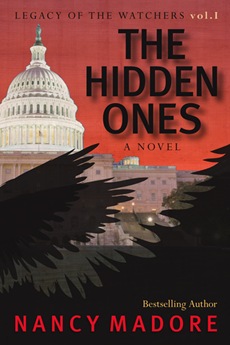
HiddenOnes Angels, demons, djinn, watchers, giants, and a healthy dose of fantasy pervade Nancy Madore’s novel, The Hidden Ones. In this present world where, I’m told, the supernatural is irrelevant, it is pleasant to come across a work of fiction that delves so deeply into the pagan roots of Judaism, Christianity, and Islam. Monotheism does have its own skeletons in its capacious closets. Madore is a novelist who insists on prying open those doors long shut, and spinning a tale that involves first responders, shady military officers, and a band of rather hapless archaeologists. And Lilith. Throughout the story Madore comes up with clever etiologies for stories that will appear in canonical form much later, and at one point I couldn’t help wondering if the screen writers of Noah had read her book. Well, actually, The Hidden Ones is the first of a trilogy, Legacy of the Watchers. I’m sure the next two books will contain many surprises as well.

The Hidden Ones put me in mind of Michael Heiser’s novel, The Facade. Both take on the mythology of the Nephilim, the fallen ones about which the Bible tells us enough only to leave us hungry. The early chapters of Genesis are like that. There’s so much going on that those of us reading it many centuries after it was written are left wondering what the full story was. The writers of the Bible had no compunction to disbelieve in monsters and beings beyond the human ken. Nor does the Bible attempt to systematize them in any sustained way. These creatures just are. As the old saying goes, however, fiction has to make sense—those who write with gods and angels have to make them fit into a system.

No doubt, the uncanny occasionally intrudes upon our rational world. The Hidden Ones presents one such intrusion that, ironically, takes some of the fact of the Bible while leaving the theology suspect. We know that even before the Hebrew Bible was complete ancient scribes were attempting similar things. The book Jubilees, for example, tries to fill in some of the unanswered questions of Genesis, including the watchers and details of the flood. Jubilees, however, never made it into the Bible thus depriving canonical status to the backstory that demonstrates how religion often chooses for ambiguity, leaving it to theologians to bring it all into a system. And novelists. And among those novels that tread where even J, E, P, and D quail, is The Hidden Ones.


Founding Principles

That feeling is in the air. Autumn began to stretch its melancholy fingers into August this year. Even before the month was half over the mornings had that chill in them that sparked the trees to begin their slow process of shutting down for the winter. Not wanting to admit that it was time to send my daughter back to college, I resisted what is one of the most compelling senses of self-abnegation that can be known—fall, in all its glory. When I saw a blog post on the Salem Witch Trials, I knew I wasn’t alone. The nights are already longer, and that sunset over summer’s beach comes earlier each day. Salem has a way of bringing that home to me. Innocent people murdered for fictitious crimes. Much of the fear that led to this miscarriage of justice was, of course, inspired by religion. The colonials had a great fear of new religious movements. Although it is difficult to believe, Baptists were such a new religion at the time. Considering how Baptist sensibilities now drive much of the Religious Right, it is difficult to imagine that once upon a time, being a Baptist could lead to accusations of being a witch.

As much as the Religious Right likes to make claims to a primitivism that is completely fiction (Christianity has always been this way), we have lost touch with what it meant to be a Christian in early America. States (still colonies) had their religious preferences, some even established. If you were a Baptist you’d be most comfortable in Rhode Island. If you leaned Quaker, Pennsylvania was for you. When these disparate colonies banded together into a country, it was quickly realized that religious freedom was the only way for them to work together. The government, the state, could not determine matters of individual conscience. Until, that is, that we could declare that the views of particular individuals on birth control—as informed by their religious authorities—could legally deny their employees full health benefits. Oyer and Terminer, anyone?

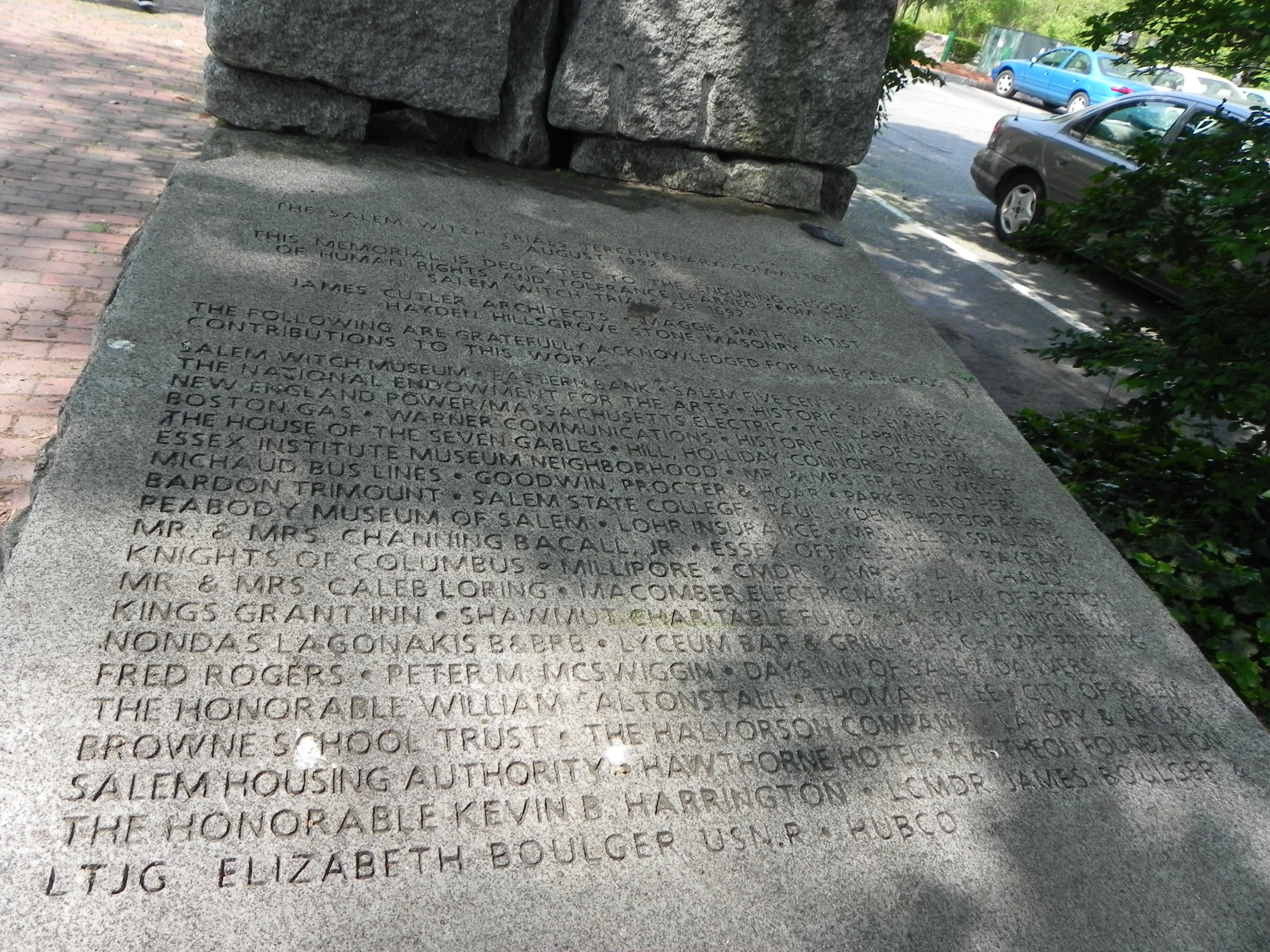
Freedom is a beautiful idea. It is a concept that only works, however, if it is shared equally. When one faction claims liberty for itself while limiting it for others, we’ve fallen back into times when the Baptist at your door was more dangerous than the Devil in his Hell. And so we revise our history and make claims that America was founded as a Christian nation. Evidence can be ignored, or, failing that, revised. Nothing is written in stone. When you visit Salem, there is a quiet little park, off the beaten path. Under some weary old trees are a set of stone benches against a stone wall. On each of the benches are engraved the names of those executed for being imaginary monsters. The leaves on those trees are, I’m sure, beginning to turn. Soon they will silently fall, and only those who are made of stone will deny that autumn is upon us again.

DSCN0562


Cowboys and Demons

Cowboys_&_Aliens

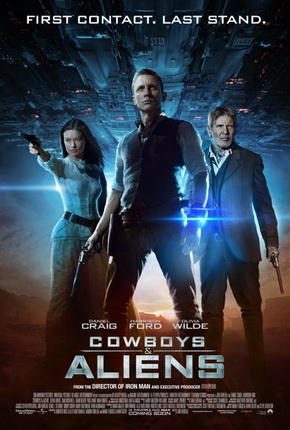
Cowboys & Aliens finally came down into my price range. For movies I’d have to view alone, I generally wait until they appear for free on some online movie service or for less then ten dollars at Target. I’ve been waiting for this one since 2011, but my patience paid off. Inspired, so the rumor goes, by the Roswell incident, the film follows the adventures of some old western stereotypes as they encounter the superior power of aliens. The aliens, it seems, are just as materialistic as humans, coming to the old west in an extraterrestrial gold rush. They abduct humans to learn their weaknesses (which really seems superfluous given the technological imbalance between the species) and anger a number of ornery hombres in the process. Then we have an old-fashioned shootout with ray guns versus bows, arrows, and bullets. Human devotion, however, defeats the evolved armor and flying machines of the—well, what are they exactly?

The cowboys scratch their heads, not quite having the consarned concept to categorize these flying machines and their occupants. The local preacher, who is a pretty handy shot, tries to help the confused cowboys, who settle on the term “demons” to describe the extraterrestrials. We forget that in the early part of the last century other galaxies had not yet been discovered, and although we knew of other planets, there was assuredly no way to get there from here. Ugly things that come from the sky are demons. This doesn’t lead to a whole load of speculation—nobody suggests praying to take care of the menace, although the Native Americans resort to a religious ritual to unlock the mystery of where the demonic hoard is hiding. Through her resurrection we discover that Alice is a good alien, planted in the town to stop the invaders from doing to the earth what they did to her planet. And winning the heart of Jake Lonergan (whose very name suggests lone gunman to insiders) along the way.

Since the movie is three years old, I won’t worry about spoilers—if you’re inspired to watch for the first time, however, you might want to do so before finishing this. When Alice figures out how to stop the alien mining operation for good, Jake is left, for the second time, with his woman being killed by demons. Woodrow Dolarhyde, realizing that the outlaw Jake isn’t such a bad guy after all, seeks to console him at his loss. At the end of the movie, in a camera angle that goes from Woodrow to Jake, the focus falls on the cross atop the local mission as Woody says, “She’s in a better place.” All aliens go to heaven. Literally. With echoes of the X-Files, Cowboys & Aliens is sufficient for a dark night where demons and angels are a little too close to tell apart.


Candle, Book, and Bell

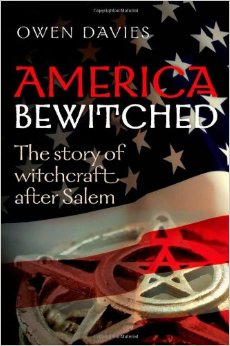
AmericaBewitchedHaving married into a family descended from the surviving relatives of women executed as witches at Salem, I have long been saddened and fascinated by the story. Not just the story, but also by the cultural milieu. We all know about the witch trials and the tragic massacre of innocents (mostly women) that took place in late Medieval and early modern Europe; the Salem miscarriage of justice came at the very end of that, after the start of the Enlightenment. Owen Davies is also fascinated by witchcraft, and his America Bewitched: The story of witchcraft after Salem is an exploration—mostly via newspapers and court trial records—of witchcraft accusations in America that continued up until about the 1950s. The coincidence of the 1950s with the “witch hunts” of McCarthyism will not escape some readers, and indeed, from the time of Arthur Miller’s nemesis on, those who vociferate against witches have kept rather quiet. Unless, of course, you count those who subsequently feared “terrorists” or any other group that might be profiled. We could learn from history, if we’d let ourselves.

Davies’s book brings together largely overlooked, nearly forgotten instances of how many cultures, including that cultural mix of Europeans who were to become “whites,” feared and sometimes killed witches. The difference from Salem was that almost all of these cases took place at the hands of self-appointed accusers (vigilantes) who hounded, punished, or killed someone suspected of being a witch. Surveys still show that a large percentage of people in the United States, although not a majority, believe in witches. It is an idea that has a primal hold on human psyches, and, as Davies points out, it is often used to explain misfortune. As I read this book I reflected how Americans come across as pretty gullible and not exactly sensible in this matter. The germanic strains of immigrants, it seems, were particularly susceptible to such beliefs. We also find witches, however, among Native Americans and African Americans as well. Misfortunate plays no favorites.

There are those who claim technology will save our culture. The other day a friend reminded me of the third of Arthur C. Clarke’s laws: “Any sufficiently advanced technology is indistinguishable from magic.” Even the most scientific of us knows, whether or not s/he will admit it, that “spooky action at a distance” does occur. It is perhaps only a matter of time before we find the hidden laws that operate the mechanism, but I can’t help but feel a little bit uncanny when I see more and more lifelike robots operating with what seem like human intentions. Of course, those intentions are programmed by humans. And it is often otherwise rational adults who with gun in hand, up until fairly recent times, accused flesh-and-blood neighbors as witches. America Bewitched can be a scary book, especially since unlike vampires, witches do cast their reflections in a mirror.